Free Printable Electricity Worksheets for Grade 10
Grade 10 electricity worksheets and printables help students master electrical concepts through comprehensive practice problems, free PDF resources, and detailed answer keys for effective physics learning.
Explore printable Electricity worksheets for Grade 10
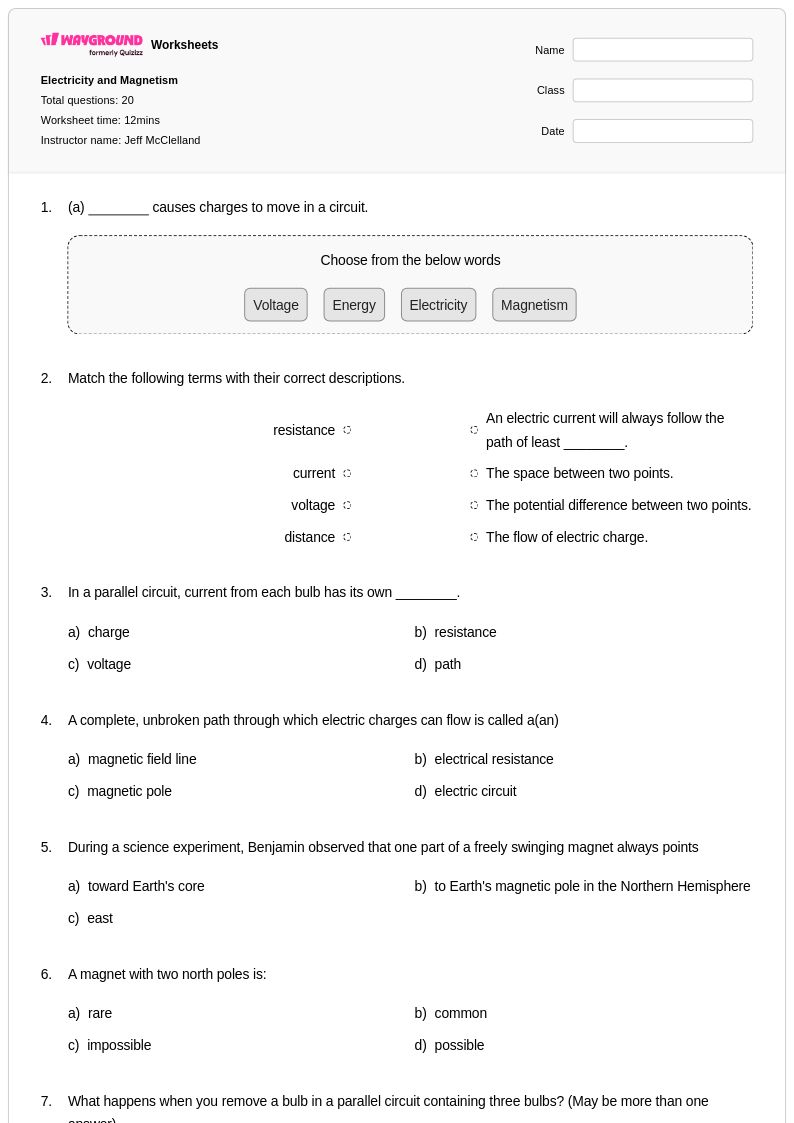
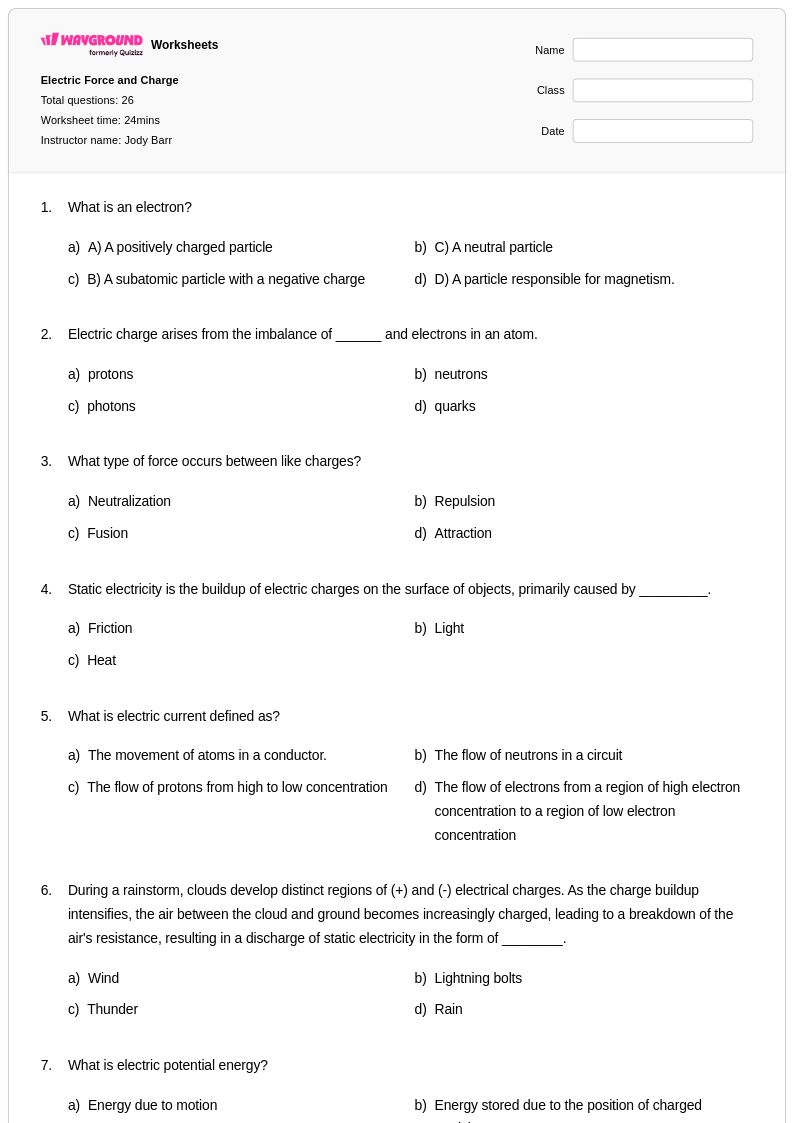
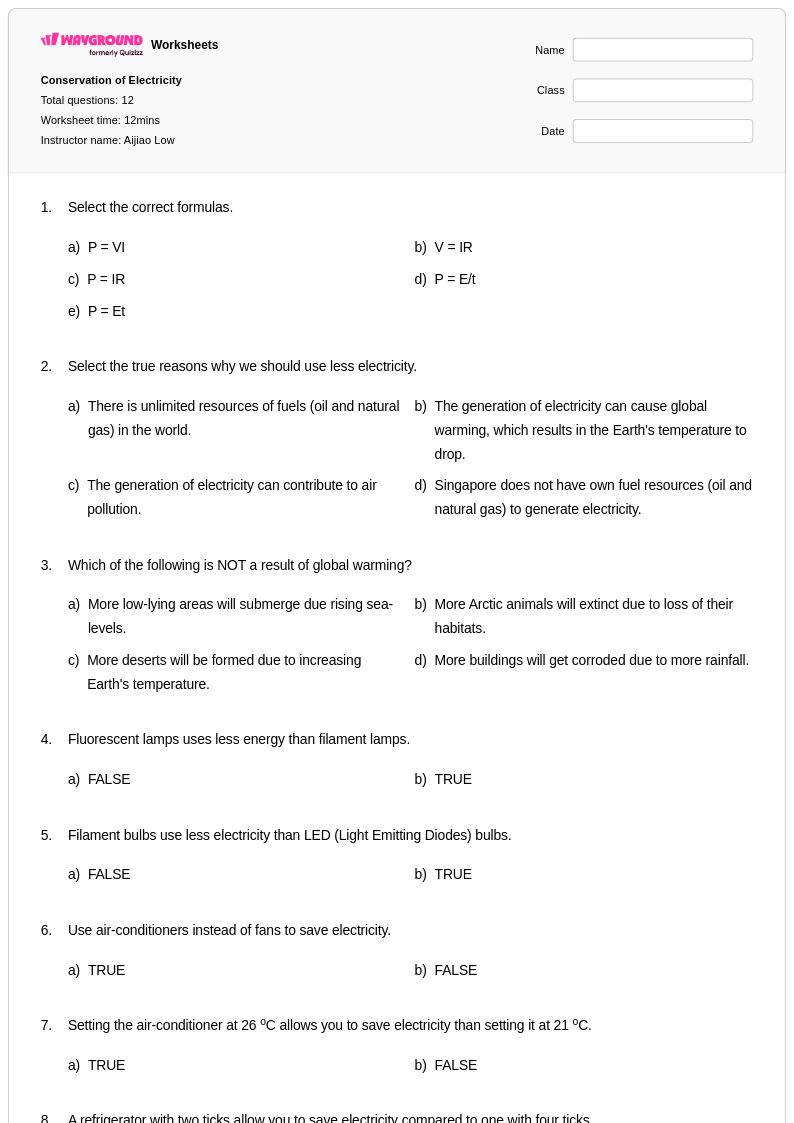
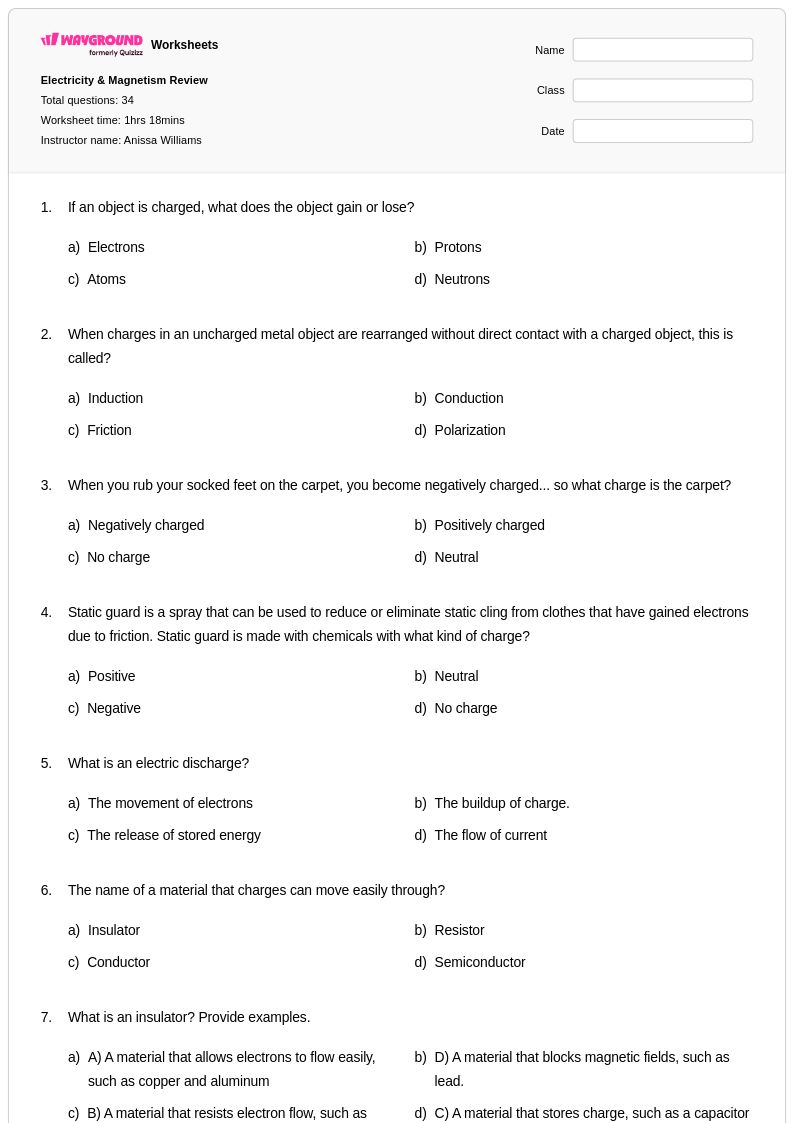
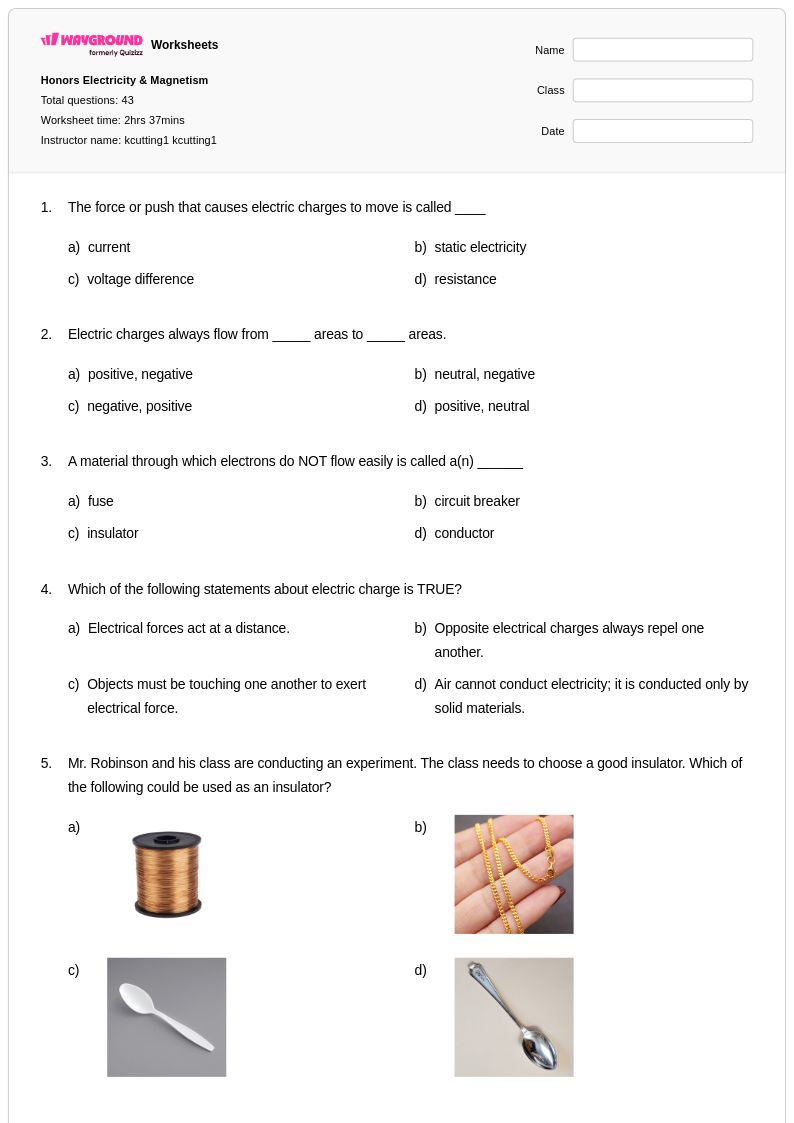
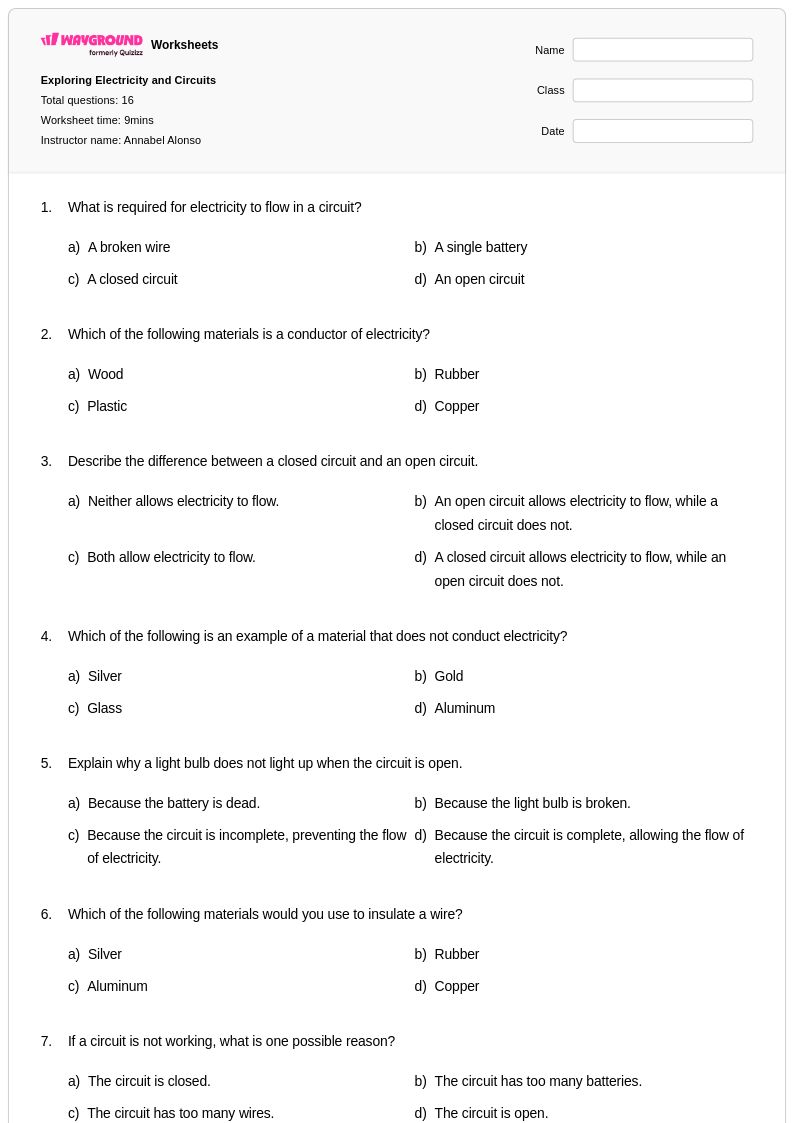
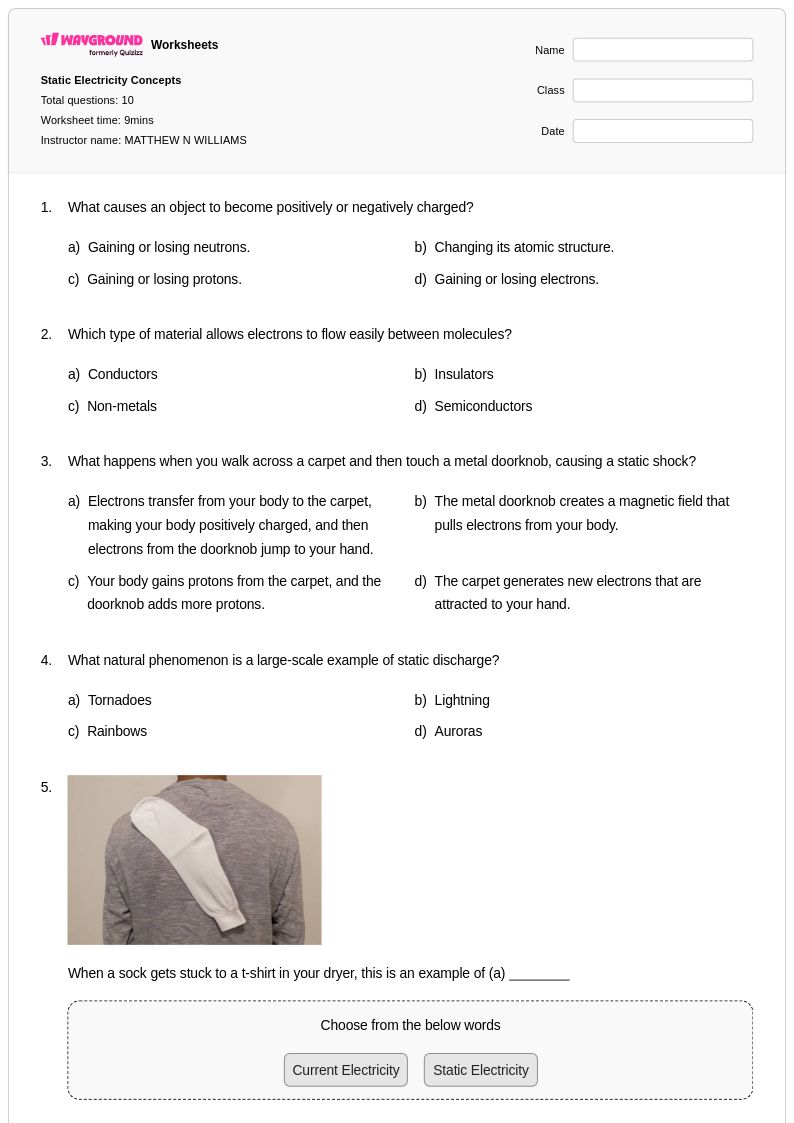
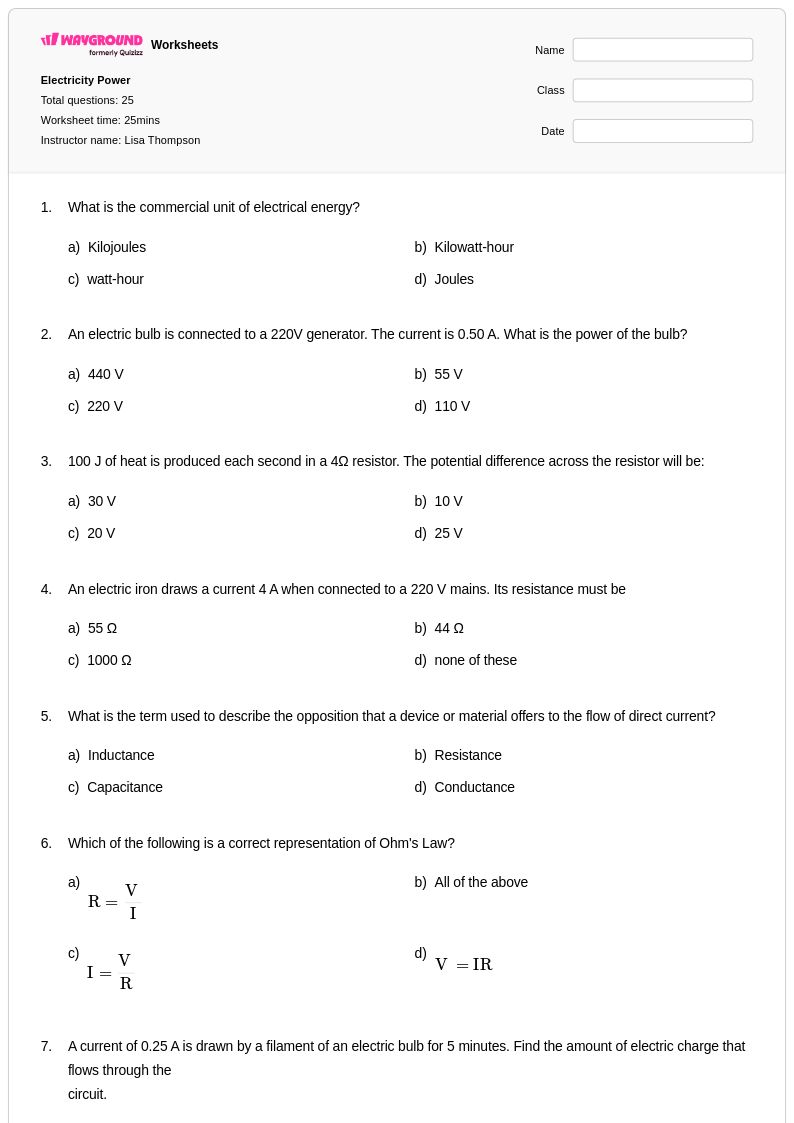
Grade 10 electricity worksheets available through Wayground (formerly Quizizz) provide comprehensive coverage of fundamental electrical concepts that form the cornerstone of high school physics education. These carefully crafted resources strengthen students' understanding of electric charge, current, voltage, resistance, and circuit analysis through systematic practice problems that progress from basic definitions to complex calculations. Each worksheet collection includes detailed answer keys that enable both independent study and instructor-guided review, while the pdf format ensures easy access for classroom distribution or homework assignments. The free printables cover essential topics such as Ohm's Law applications, series and parallel circuit analysis, electrical power calculations, and the relationship between voltage, current, and resistance in various circuit configurations.
Wayground (formerly Quizizz) empowers educators with an extensive library of millions of teacher-created electricity resources that can be precisely filtered by specific learning objectives, difficulty levels, and curriculum standards alignment. The platform's robust search functionality allows instructors to quickly locate materials that match their exact teaching needs, whether for introductory lessons on static electricity or advanced problem-solving involving complex circuit diagrams. Teachers can seamlessly customize existing worksheets or combine multiple resources to create differentiated instruction materials that address diverse learning styles and academic levels within their Grade 10 physics classes. The flexibility of both printable pdf formats and digital interactive versions supports varied classroom environments while facilitating targeted remediation for struggling students and enrichment opportunities for advanced learners, making lesson planning more efficient and instruction more effective.
FAQs
How do I teach electricity concepts to students who struggle with abstract ideas like current and voltage?
Start by grounding abstract concepts in physical analogies — water flowing through pipes is a reliable model for current moving through a circuit, with voltage acting as water pressure. Once students can visualize the analogy, introduce circuit diagrams and have them label components before attempting calculations. Building from concrete to symbolic representations significantly reduces early confusion around terms like current, voltage, and resistance.
What worksheets help students practice Ohm's Law and circuit calculations?
Worksheets that present progressively complex Ohm's Law problems are the most effective, starting with single-variable solve-fors and advancing to multi-step problems involving series and parallel circuits. Practice should include both formula application and circuit diagram interpretation, since students need to extract values from diagrams before they can calculate. Repeated exposure to varied problem formats builds the fluency needed for assessments and real-world application.
What mistakes do students most commonly make when working with series and parallel circuits?
The most frequent error is applying series circuit rules to parallel circuits and vice versa — students often forget that voltage is constant across parallel branches while current divides, and that the opposite is true in series. Many students also make arithmetic errors when calculating equivalent resistance in parallel circuits because the reciprocal formula is unfamiliar. Targeted practice with clearly labeled circuit diagrams helps students distinguish between the two configurations before they attempt calculations.
How can I use electricity worksheets to differentiate instruction for students at different skill levels?
Tiered worksheets work well for electricity topics — lower-tier tasks might involve identifying circuit components and completing simple Ohm's Law calculations, while higher-tier tasks require students to analyze multi-loop circuits or troubleshoot faults. On Wayground, teachers can apply student-level accommodations such as reduced answer choices to lower cognitive load for struggling learners, or enable read aloud for students who need audio support, while other students receive default settings without disruption.
How do I use Wayground's electricity worksheets in my classroom?
Wayground's electricity worksheets are available as printable PDFs for traditional classroom use and in digital formats for technology-integrated environments, making them flexible for in-person lessons, homework, or independent study. Teachers can also host worksheets directly as a quiz on Wayground, enabling real-time student responses and automatic grading. Each worksheet includes a complete answer key, so teachers can deliver instruction and check student understanding without additional preparation.
How do I assess whether my students actually understand electrical concepts versus just memorizing formulas?
Conceptual understanding shows up when students can explain why a formula applies in a given context, not just plug in numbers. Assess this by including circuit diagram interpretation tasks alongside calculation problems — a student who truly understands Ohm's Law can identify which values to extract from a diagram and explain the relationship between them. Misconception-targeted questions, such as asking students to find the error in a worked problem, are especially effective at revealing surface-level versus deep understanding.