Free Printable Electron Dot Diagram Worksheets for Grade 12
Grade 12 electron dot diagram worksheets from Wayground help students master Lewis structures and chemical bonding through comprehensive practice problems, printable PDFs, and detailed answer keys.
Explore printable Electron Dot Diagram worksheets for Grade 12
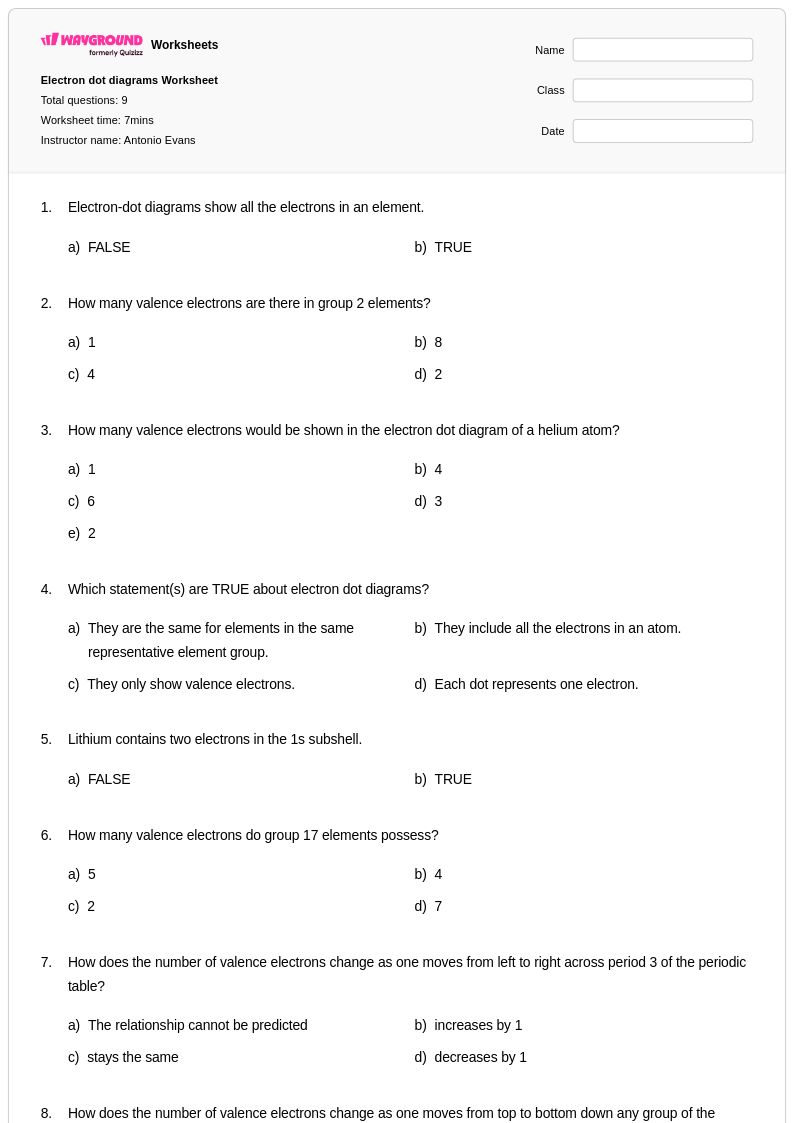
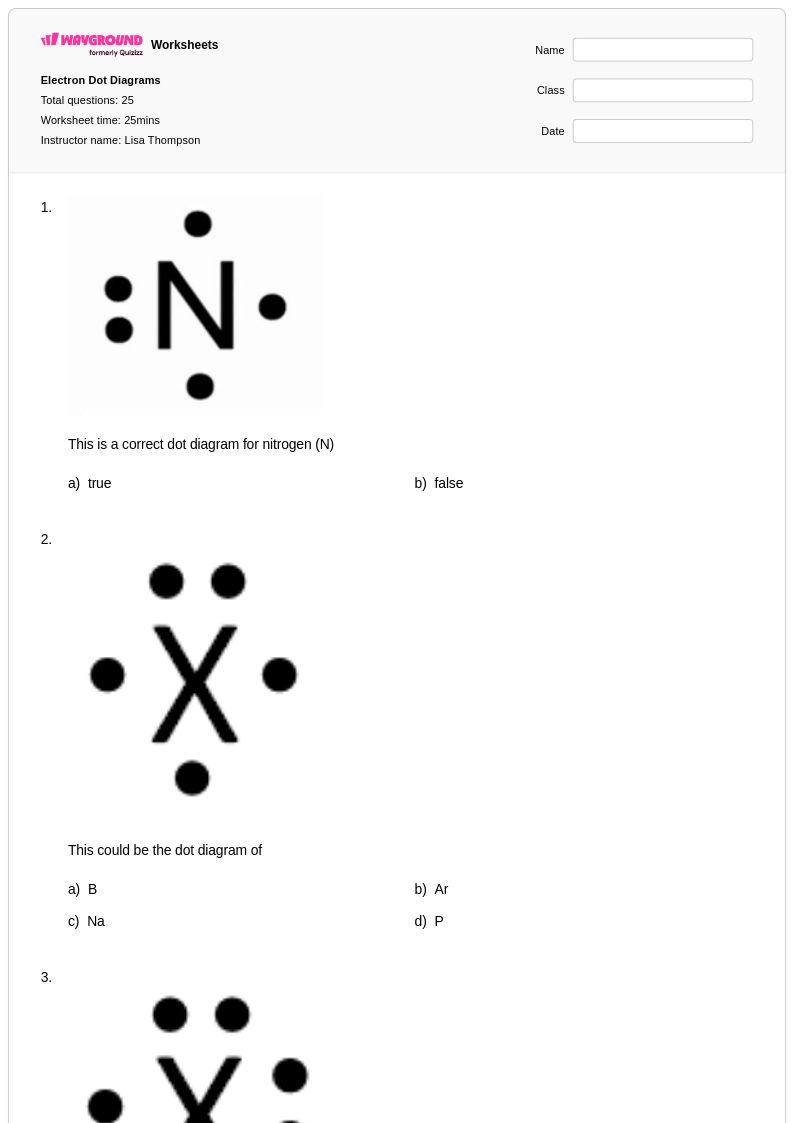
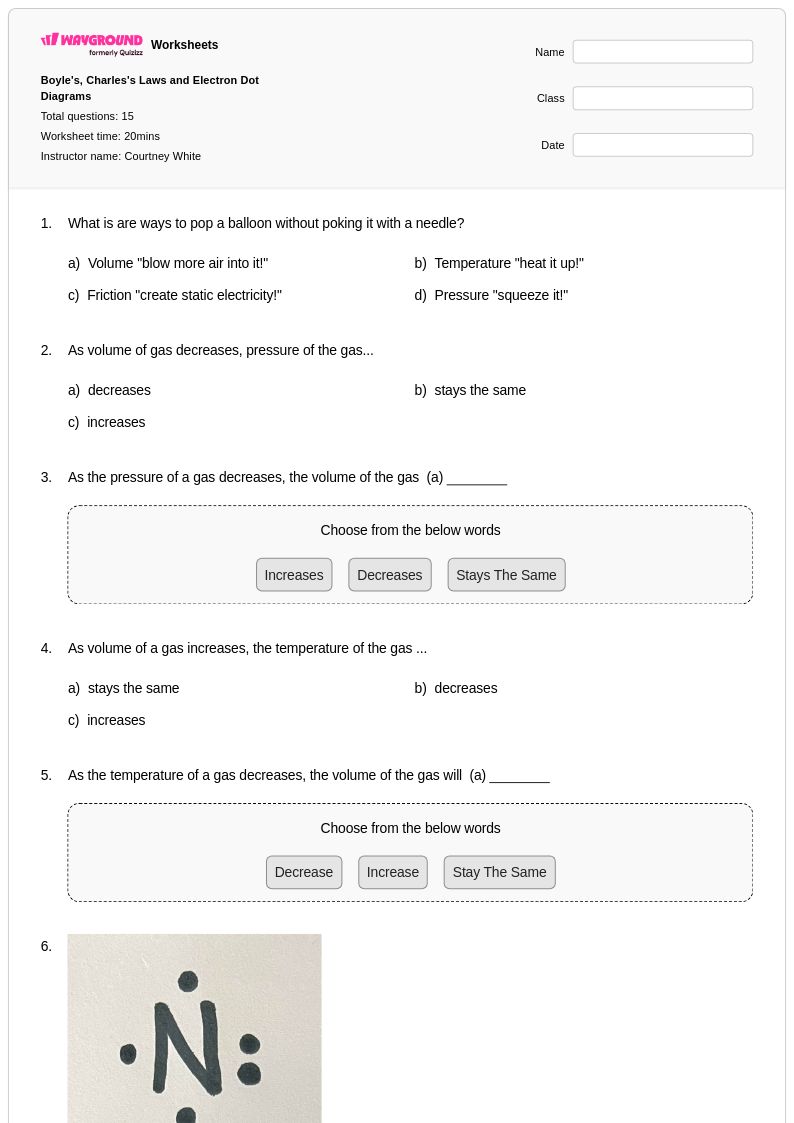
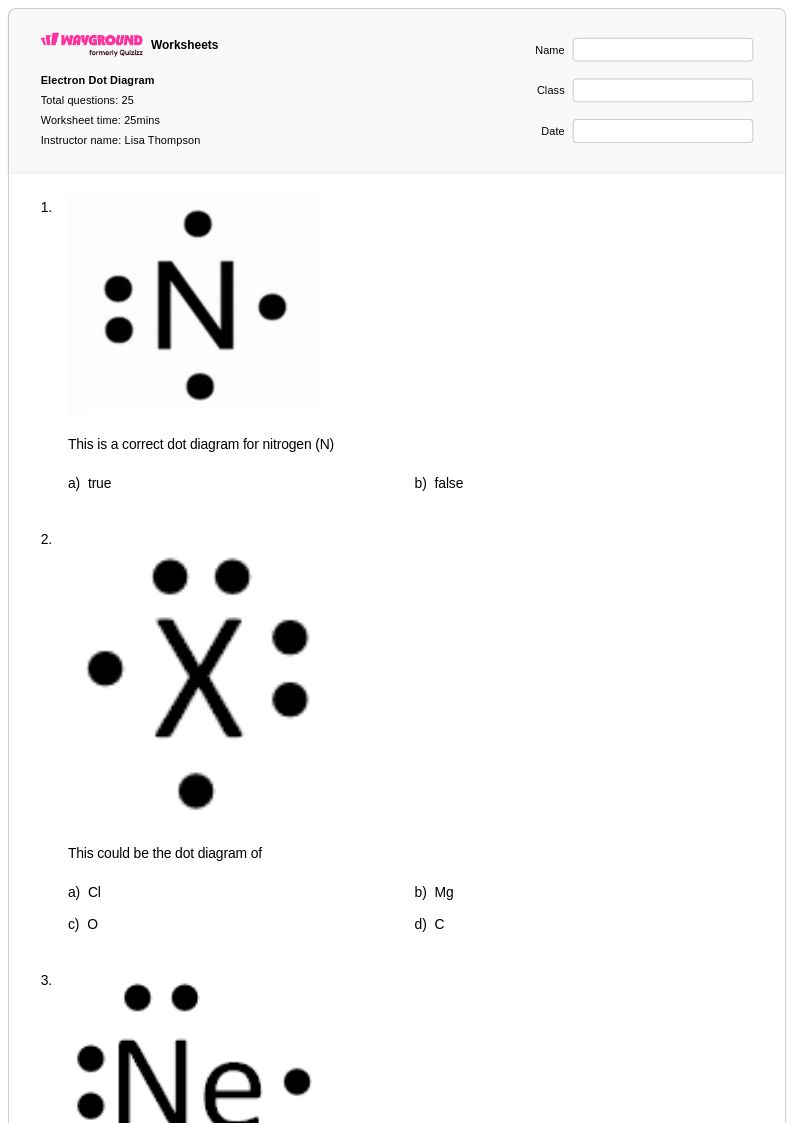
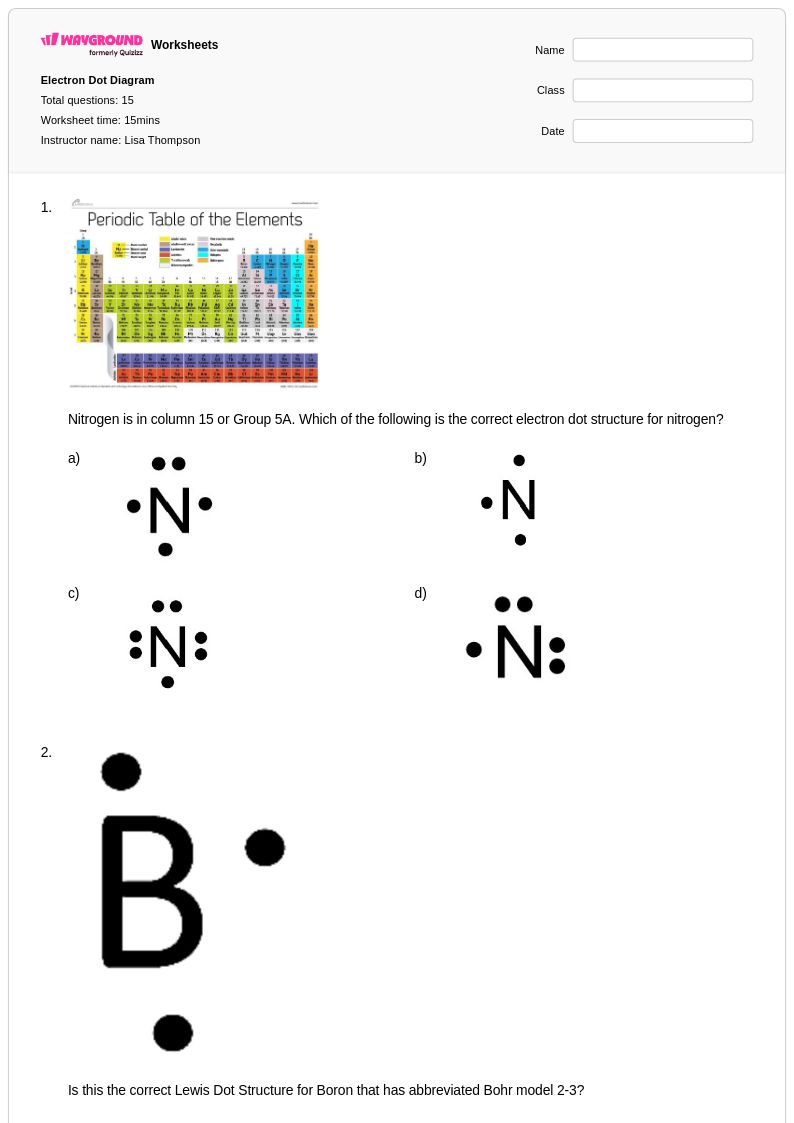
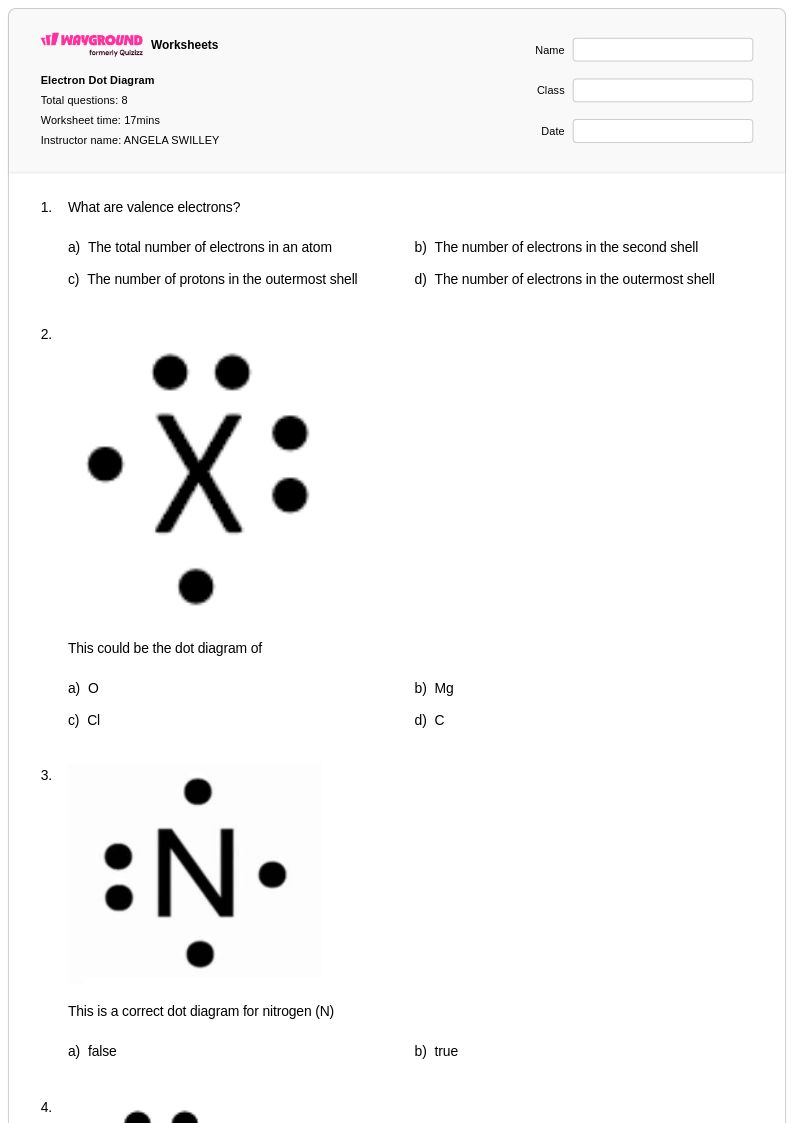
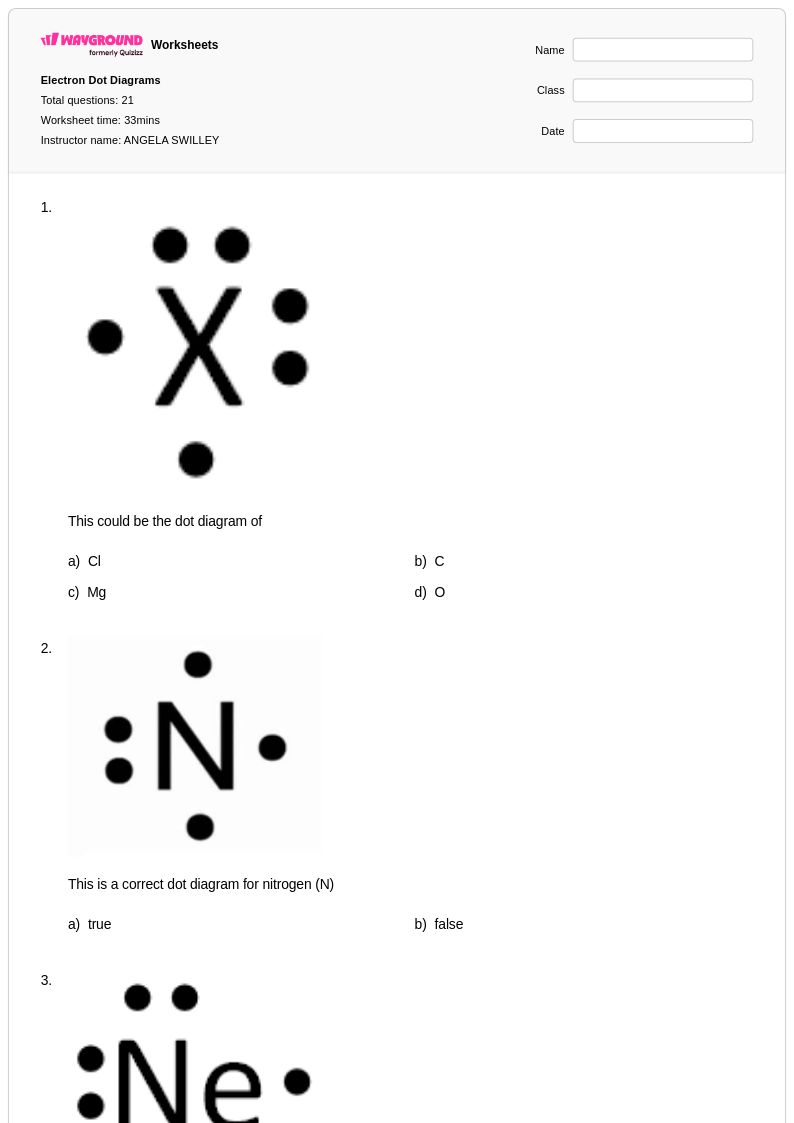
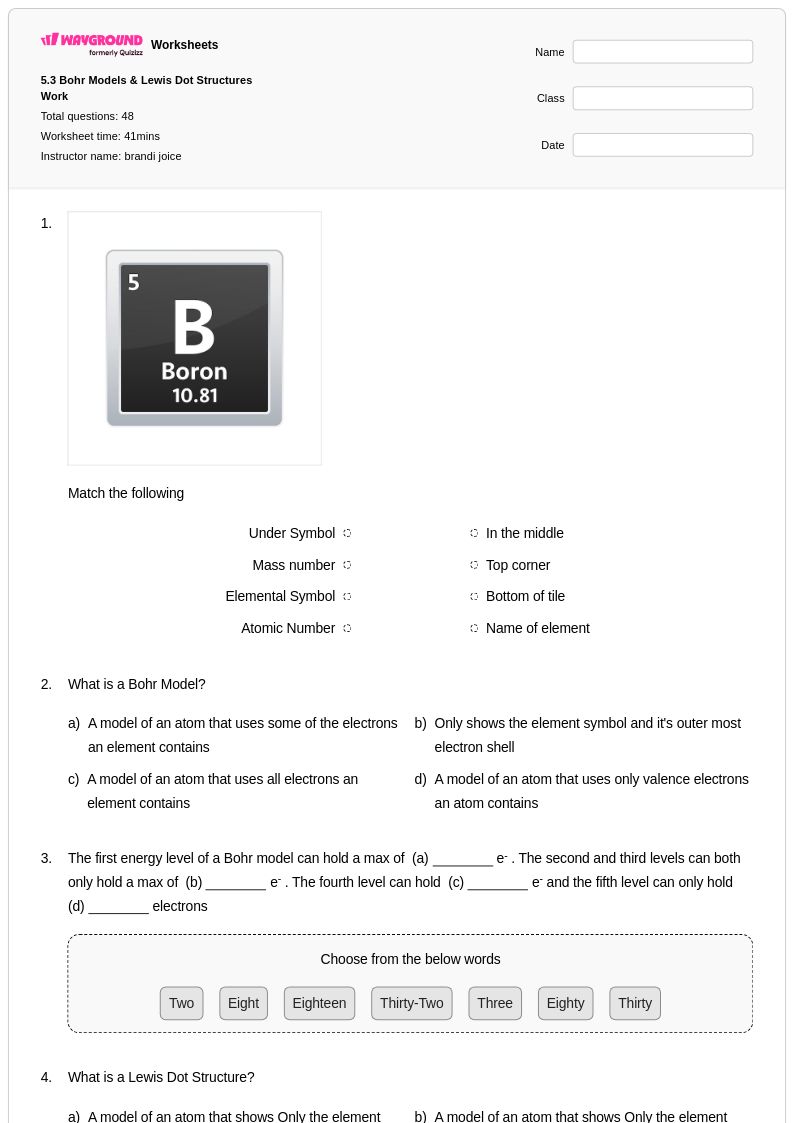
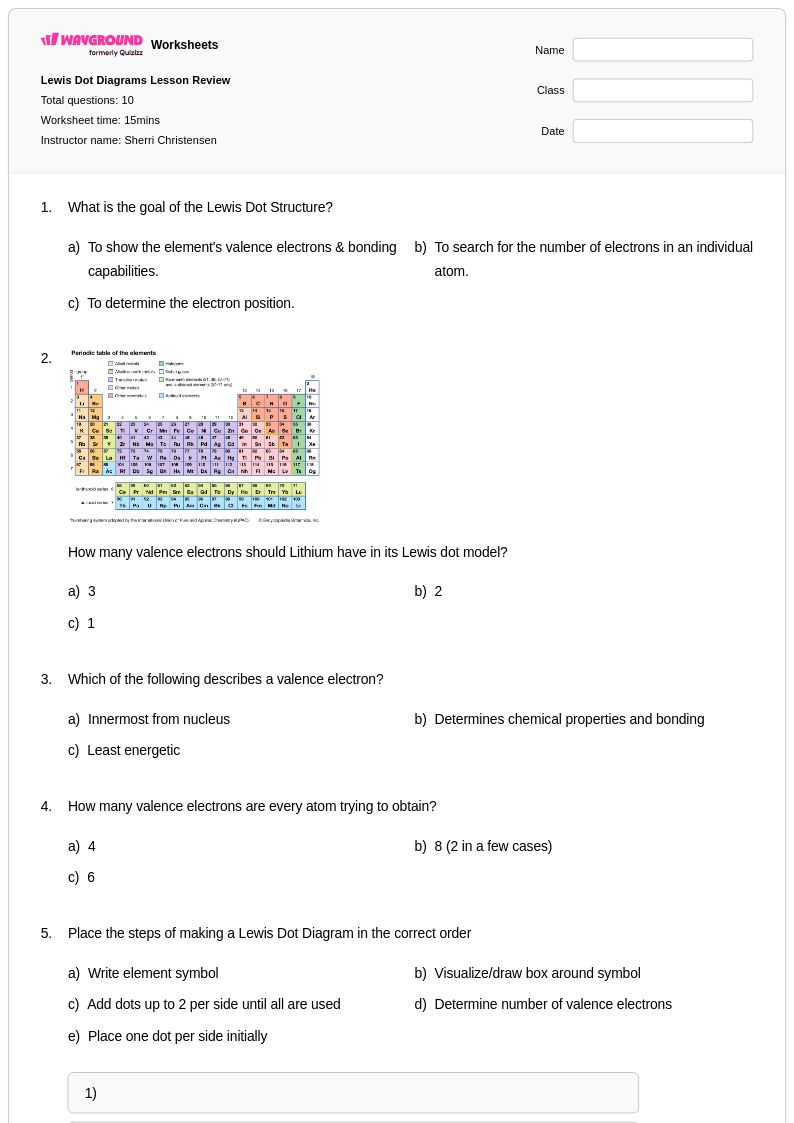
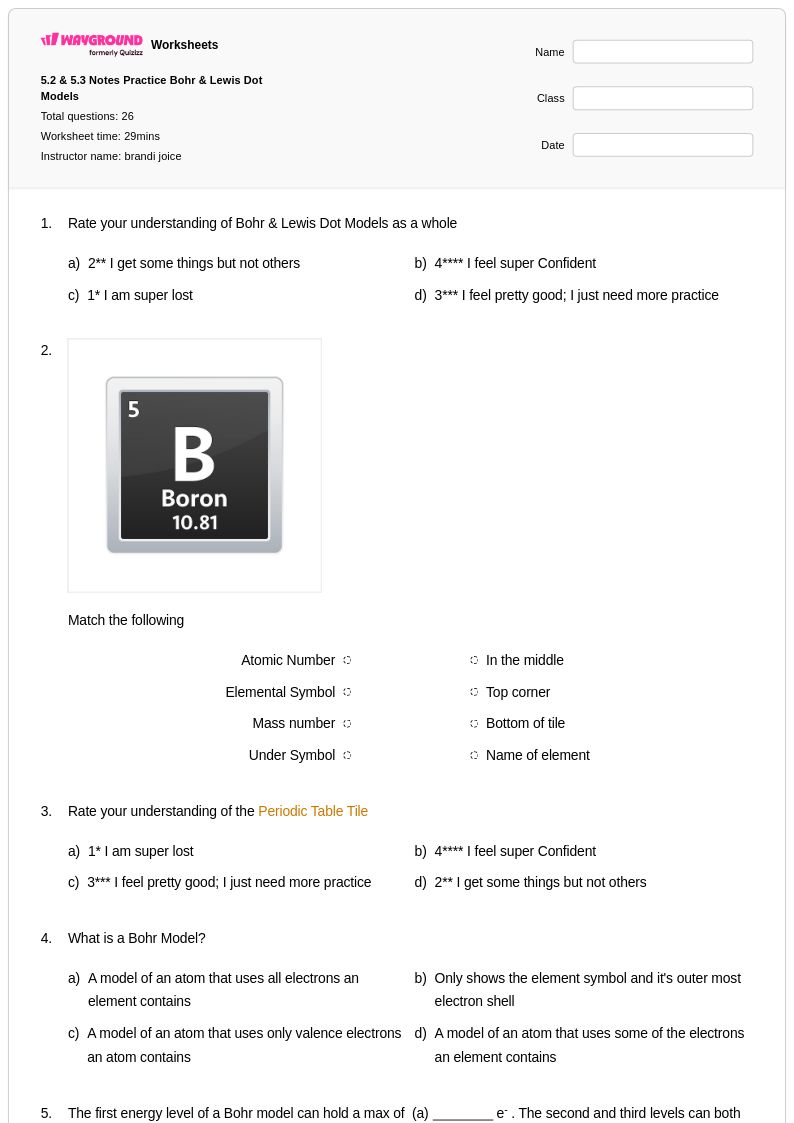
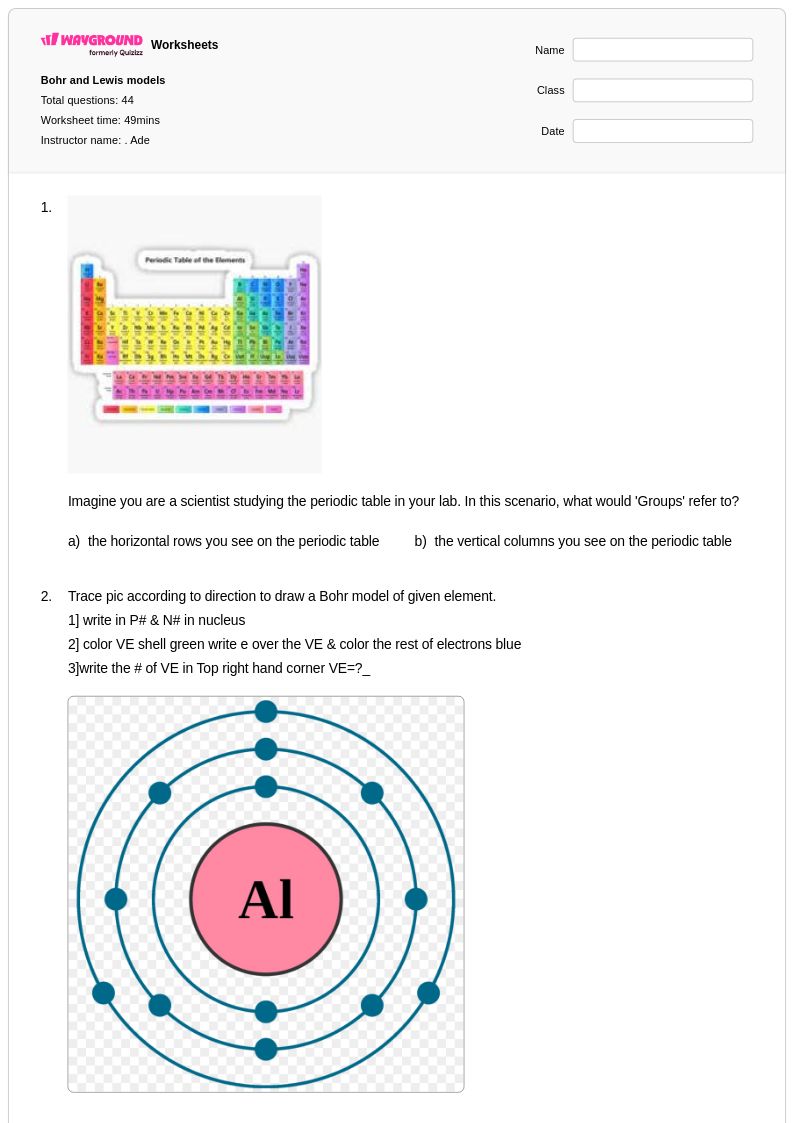
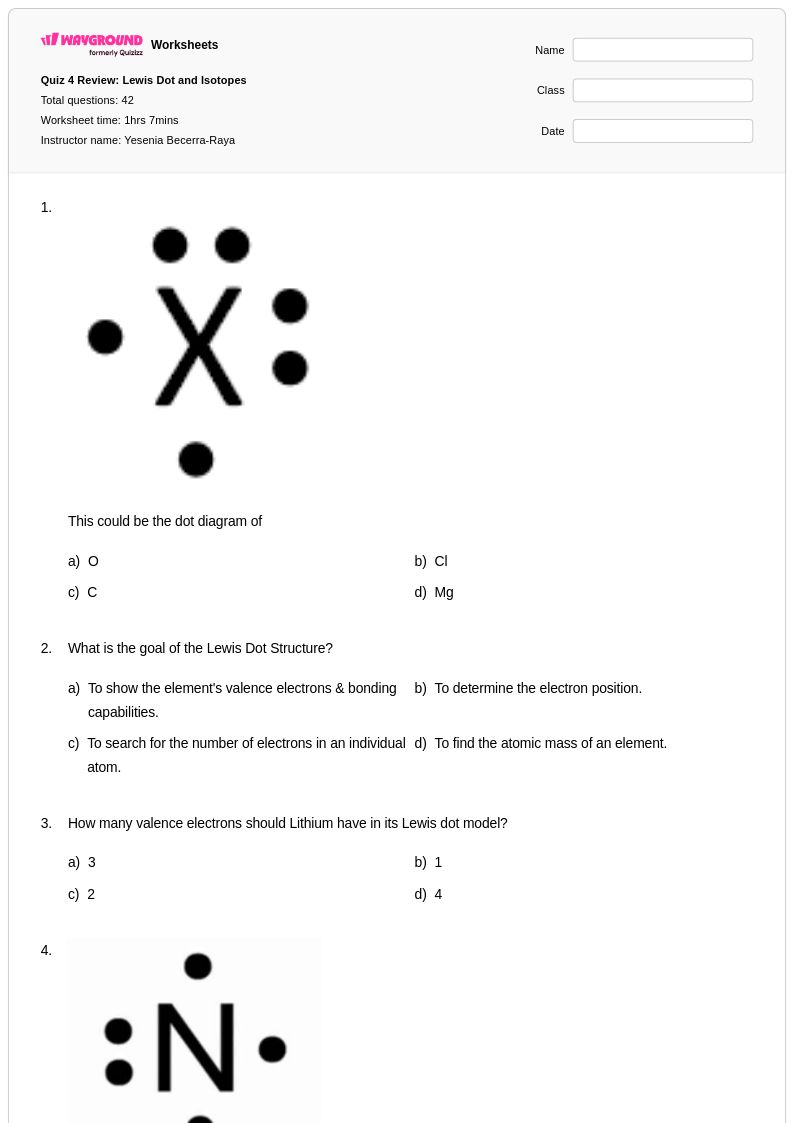
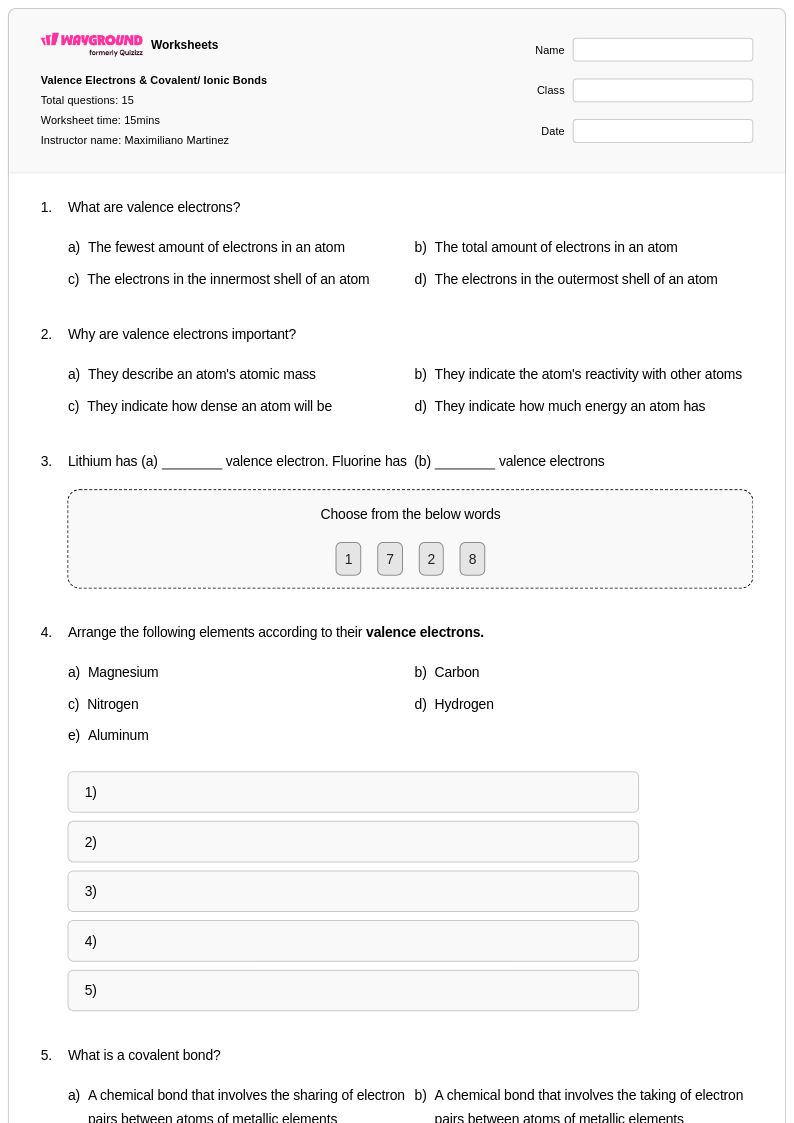
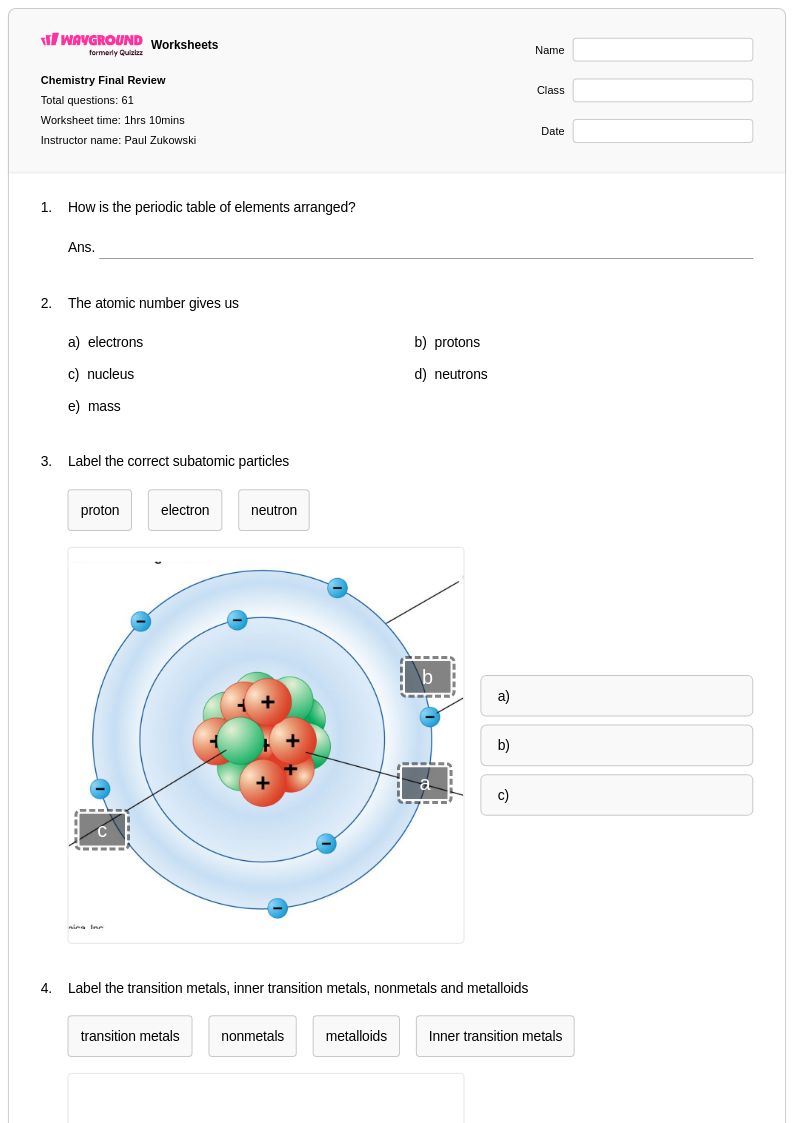
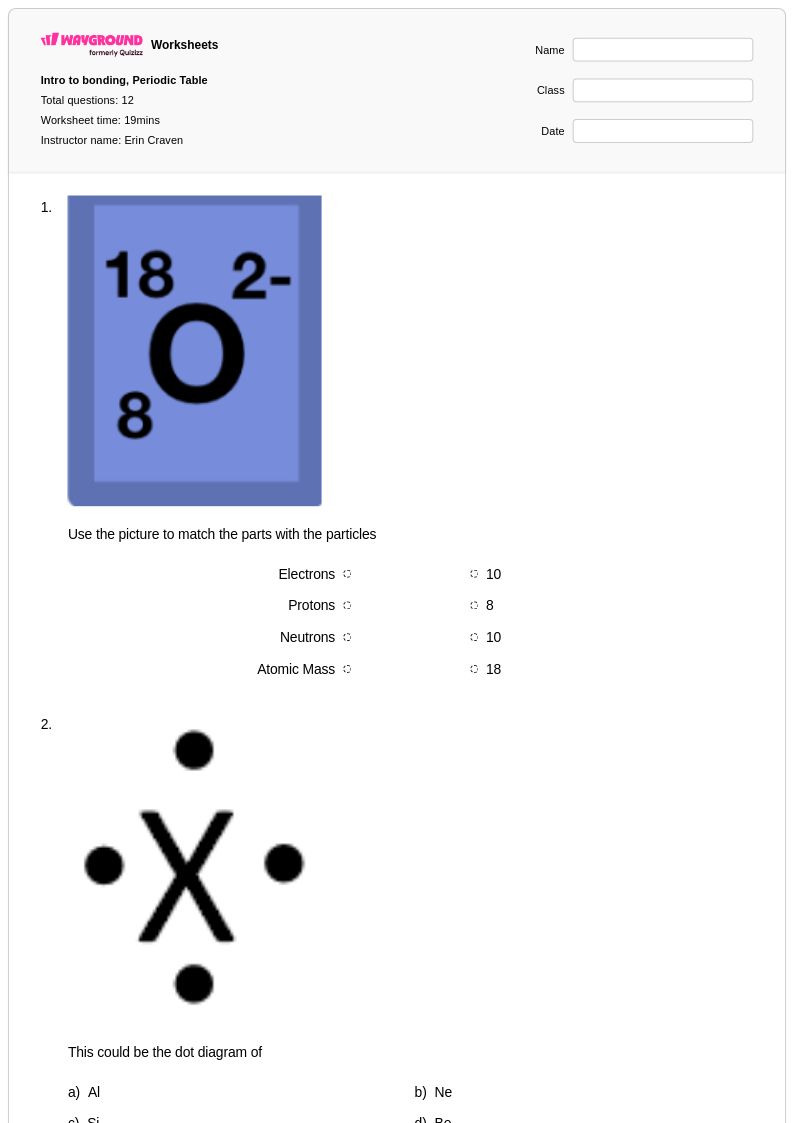
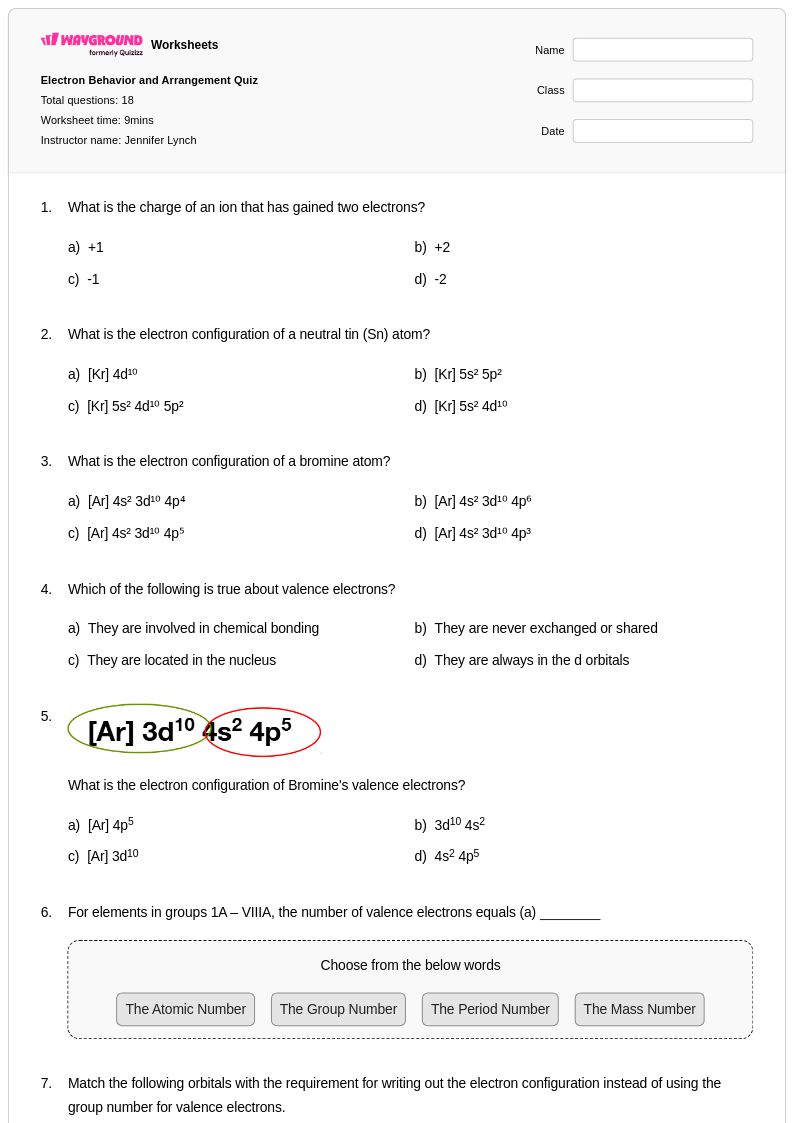
Electron dot diagram worksheets for Grade 12 chemistry students through Wayground (formerly Quizizz) provide comprehensive practice in representing valence electrons and chemical bonding through Lewis structures. These expertly designed worksheets strengthen students' ability to determine electron configurations, predict molecular geometry, and understand how atoms achieve stable electron arrangements through ionic and covalent bonding. Students work through practice problems that range from simple atoms and ions to complex polyatomic molecules, developing proficiency in counting valence electrons, applying the octet rule, and identifying exceptions to standard bonding patterns. Each worksheet collection includes detailed answer keys and is available as free printables in pdf format, allowing students to master this fundamental chemistry concept through systematic practice and self-assessment.
Wayground (formerly Quizizz) supports chemistry educators with an extensive library of millions of teacher-created electron dot diagram resources that can be easily searched, filtered, and customized to meet diverse classroom needs. Teachers can access worksheets aligned with state and national chemistry standards, then modify content difficulty, add personalized instructions, or combine multiple resources to create comprehensive lesson materials. The platform's differentiation tools enable educators to provide targeted practice for students who need additional support with basic Lewis structures while simultaneously offering advanced problems involving resonance structures and formal charge calculations for enrichment. Available in both printable pdf format and interactive digital versions, these resources streamline lesson planning while providing flexible options for in-class instruction, homework assignments, and remediation sessions that help students build confidence in representing chemical bonding.
FAQs
How do I teach electron dot diagrams to chemistry students?
Start by teaching students to identify the number of valence electrons for each element using the periodic table, then model how to place electrons as dots around the element symbol. Progress from simple atoms to diatomic molecules, then to polyatomic ions and covalent compounds, reinforcing the octet rule at each stage. Using color-coded dot placements and step-by-step guided practice helps students build confidence before tackling more complex Lewis structures.
What exercises help students practice drawing electron dot diagrams?
Effective practice exercises include drawing Lewis structures for single atoms, simple molecules like H₂O and CO₂, and progressively more complex polyatomic ions. Worksheets that sequence problems from basic atomic representations to formal charge calculations and resonance structures provide a strong scaffolded progression. Guided practice problems with detailed answer keys allow students to self-correct and reinforce proper dot placement techniques independently.
What mistakes do students commonly make when drawing electron dot diagrams?
The most common error is miscounting valence electrons, particularly for elements in groups that don't follow a straightforward pattern, such as transition metals or elements like sulfur and phosphorus that can expand their octets. Students also frequently place all electrons as lone pairs before forming bonds, rather than distributing shared pairs correctly. Confusing formal charge with oxidation state is another persistent misconception that leads to incorrect structure selection when multiple valid Lewis structures exist.
How do I use electron dot diagram worksheets to support different skill levels in my class?
Electron dot diagram worksheets work well for differentiation because problems can be tiered from simple atomic dot diagrams to resonance structures and molecular geometry prediction. On Wayground, teachers can apply student-level accommodations such as read aloud support, reduced answer choices, and extended time, which are particularly helpful for students who struggle with the visual-spatial demands of Lewis structure problems. These settings can be assigned to individual students while the rest of the class works with default settings, allowing seamless differentiated instruction within the same activity.
How can I use Wayground's electron dot diagram worksheets in my classroom?
Wayground's electron dot diagram worksheets are available as printable PDFs for traditional pen-and-paper practice and in digital formats for technology-integrated classrooms. Teachers can also host worksheets directly as a quiz on Wayground, enabling real-time student response tracking and immediate feedback. Both formats include detailed answer keys, making them suitable for independent practice, in-class guided work, or homework assignments.
How do electron dot diagrams connect to predicting molecular geometry?
Electron dot diagrams are the foundation of VSEPR theory, where the arrangement of bonding pairs and lone pairs around a central atom determines molecular shape. Once students can accurately draw a Lewis structure, they can count electron groups to predict geometry, distinguishing between shapes like bent, trigonal planar, and tetrahedral. Teaching students to identify lone pairs explicitly in their dot diagrams before applying VSEPR rules significantly reduces errors in geometry prediction.