Explore printable Theoretical Yield worksheets for Grade 12
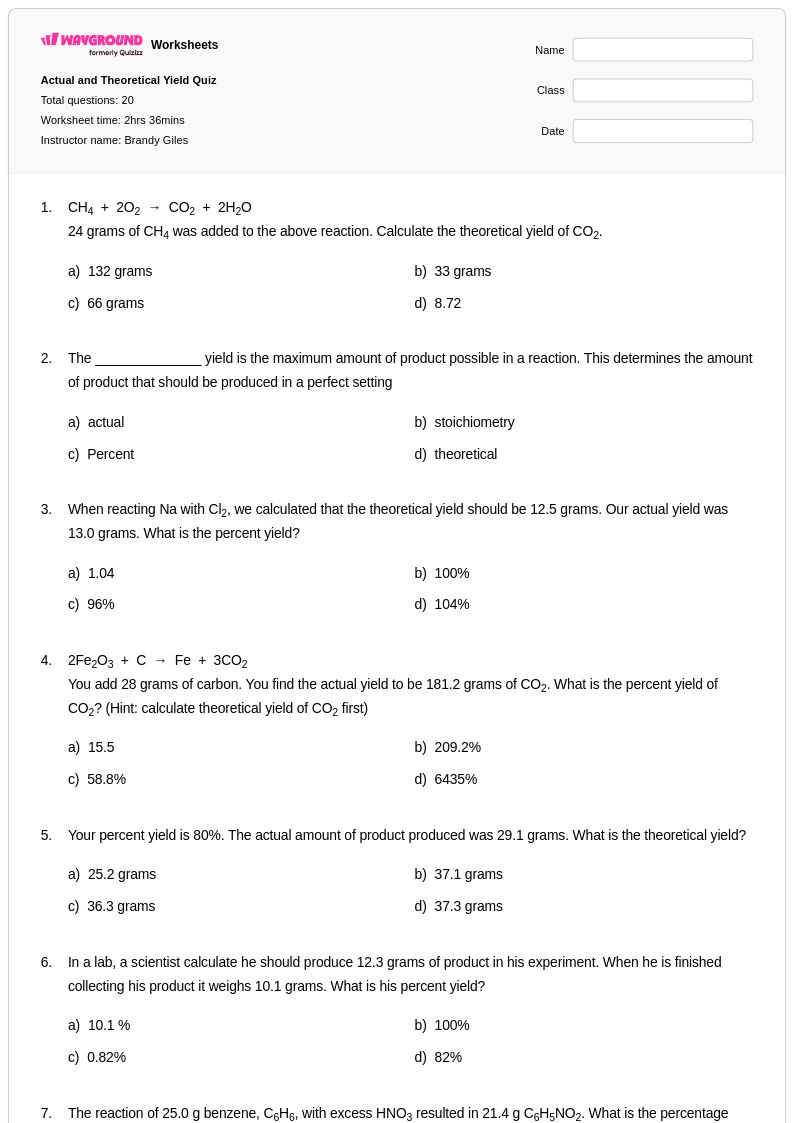
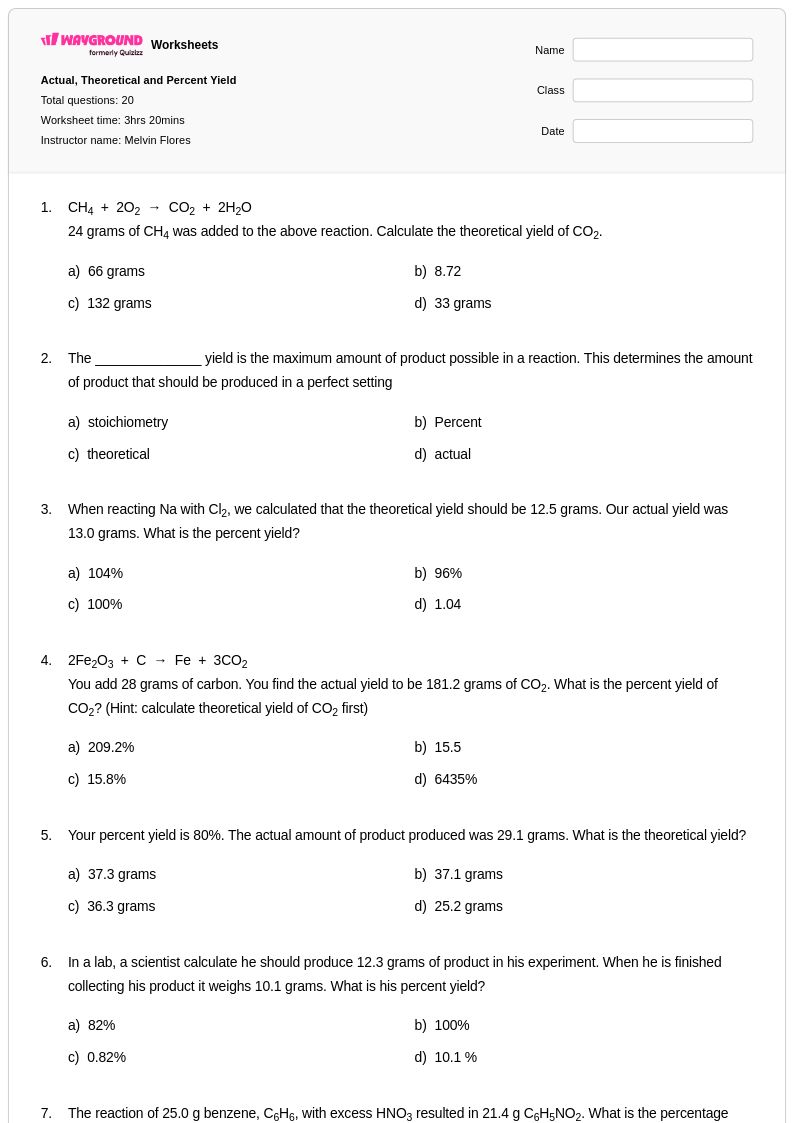
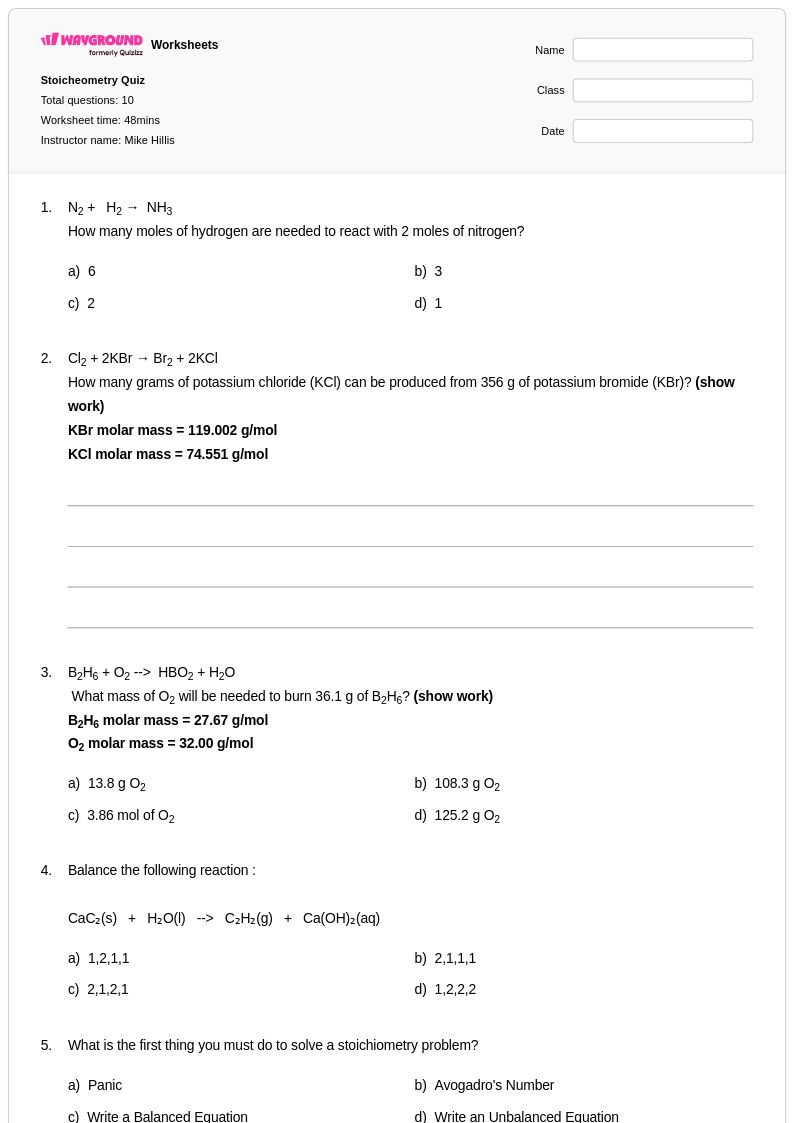
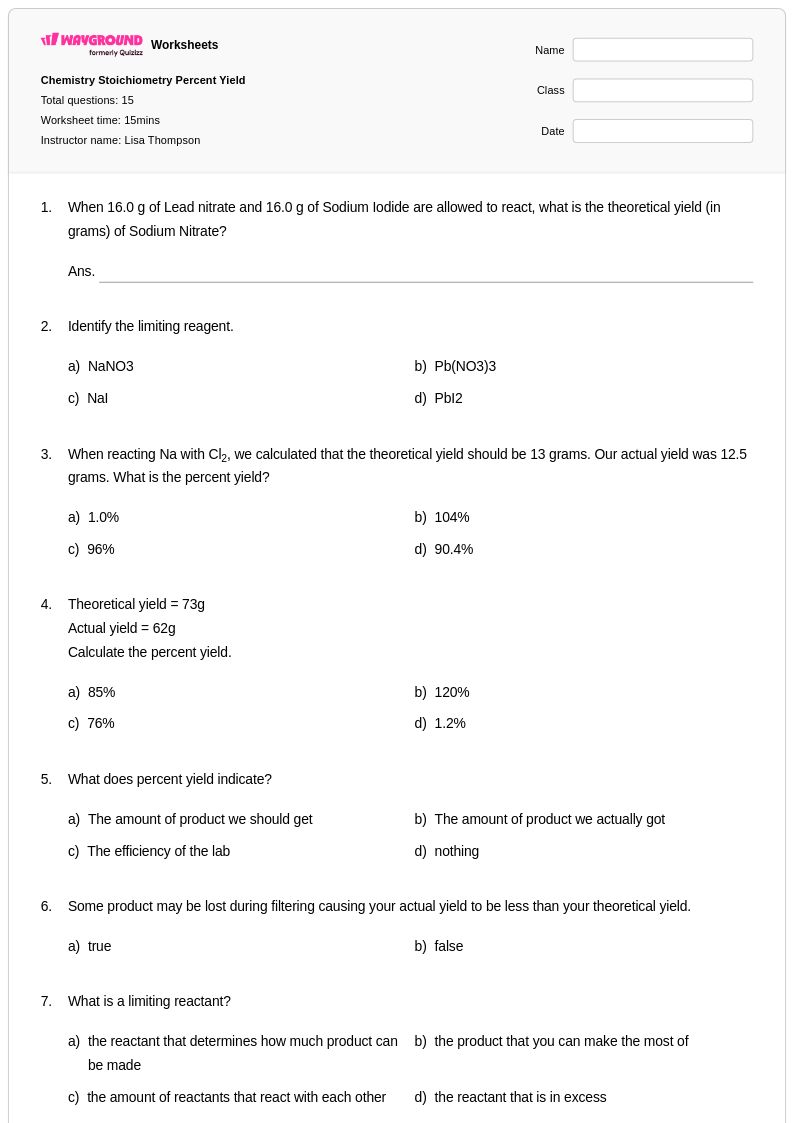
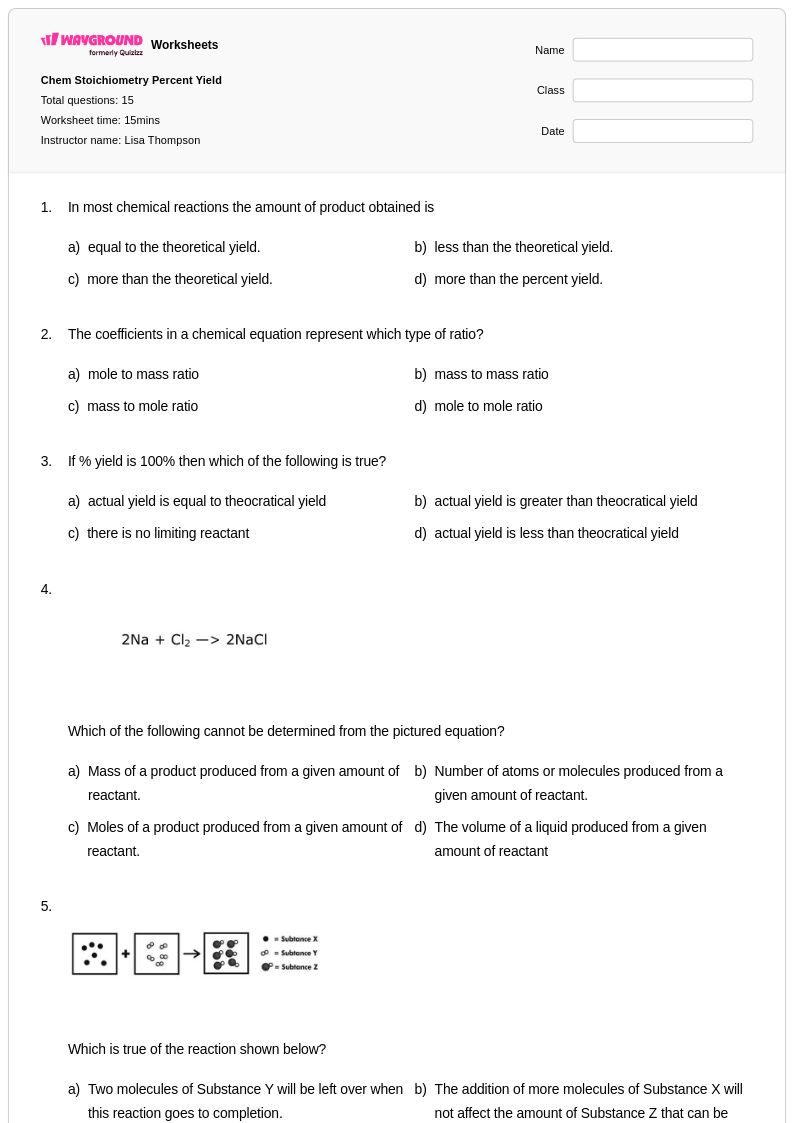
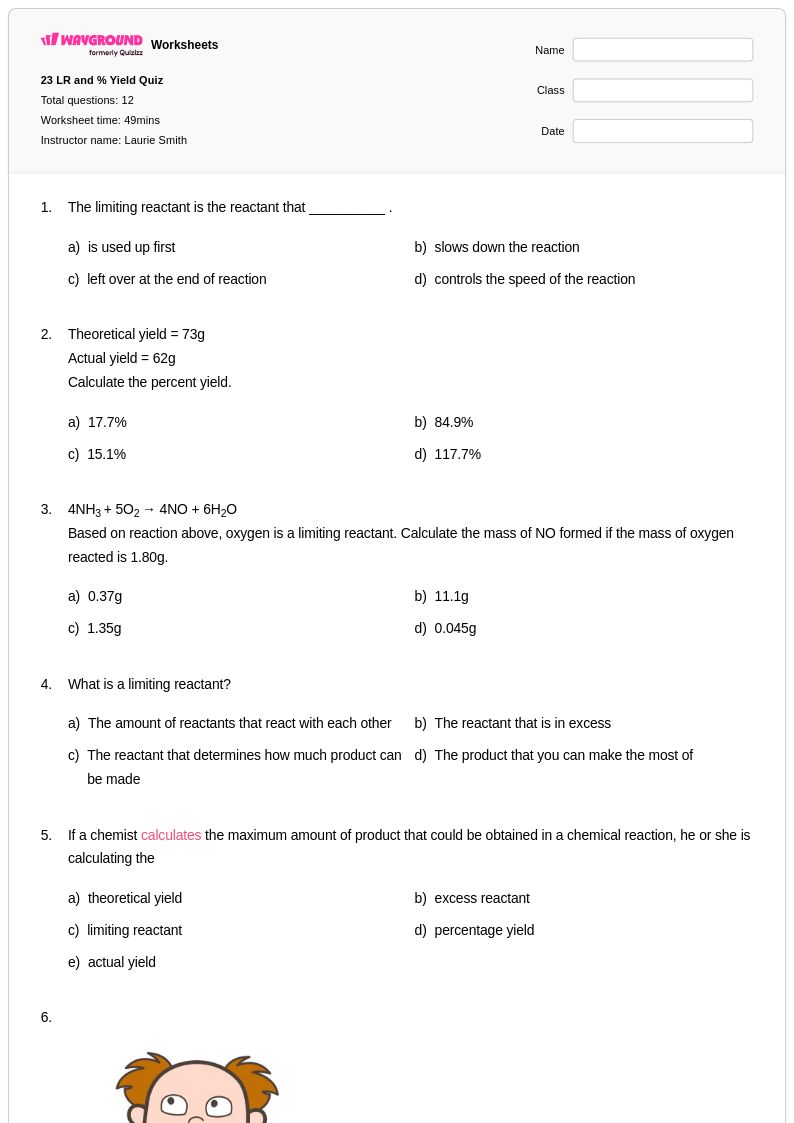
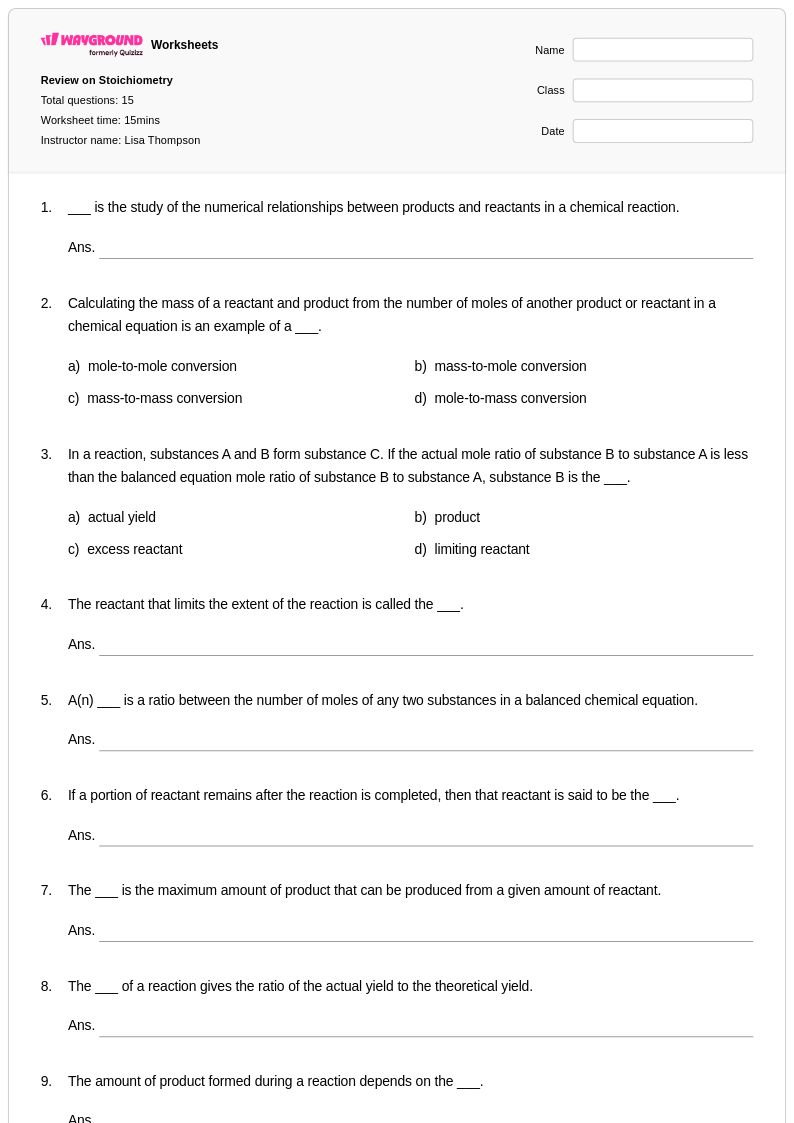
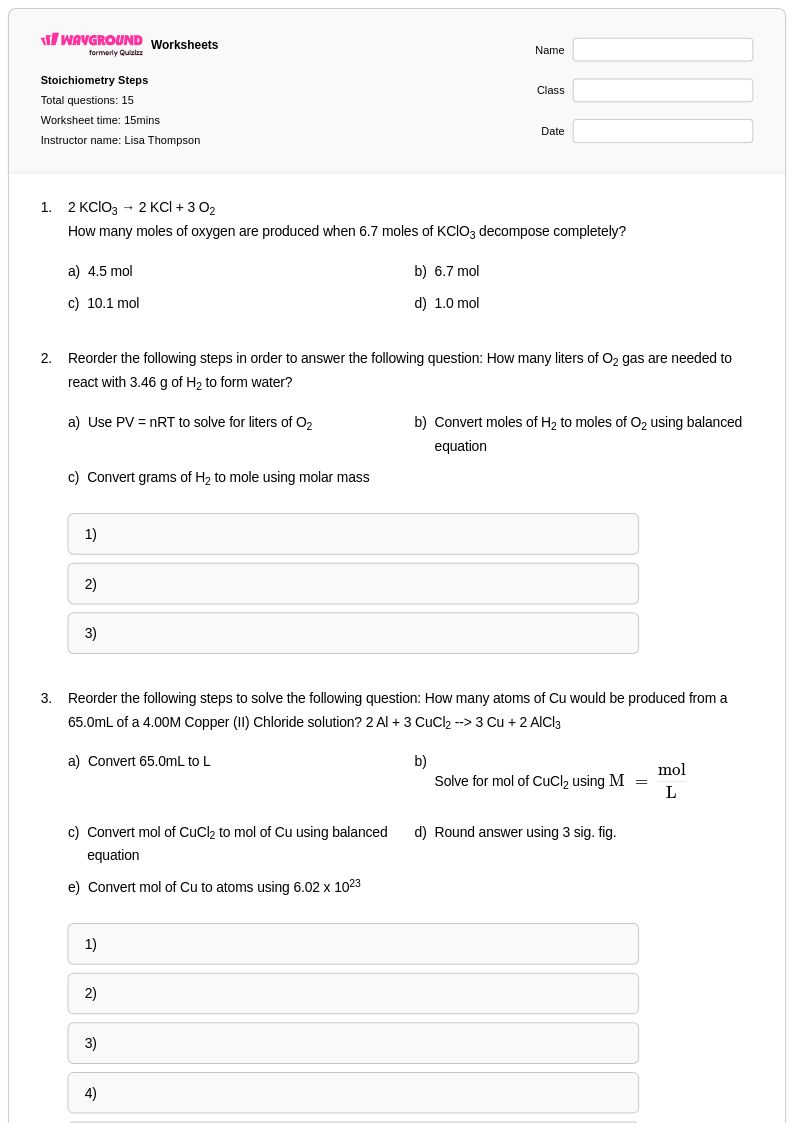
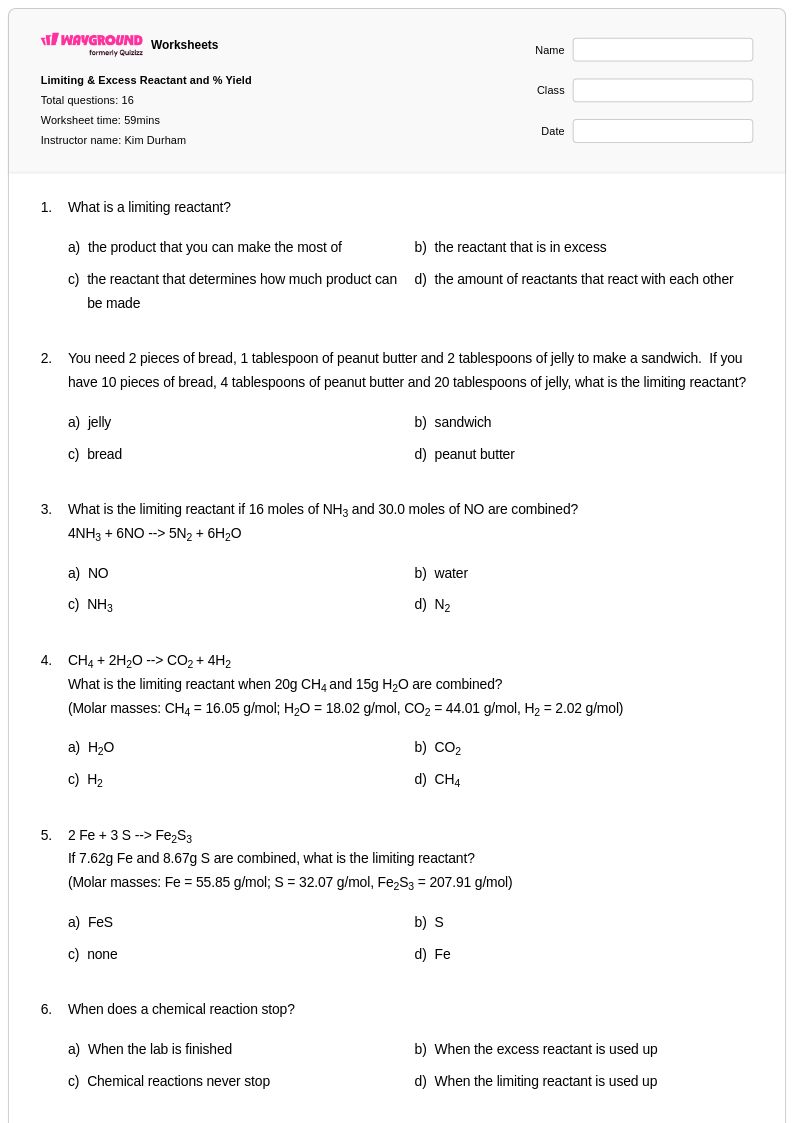
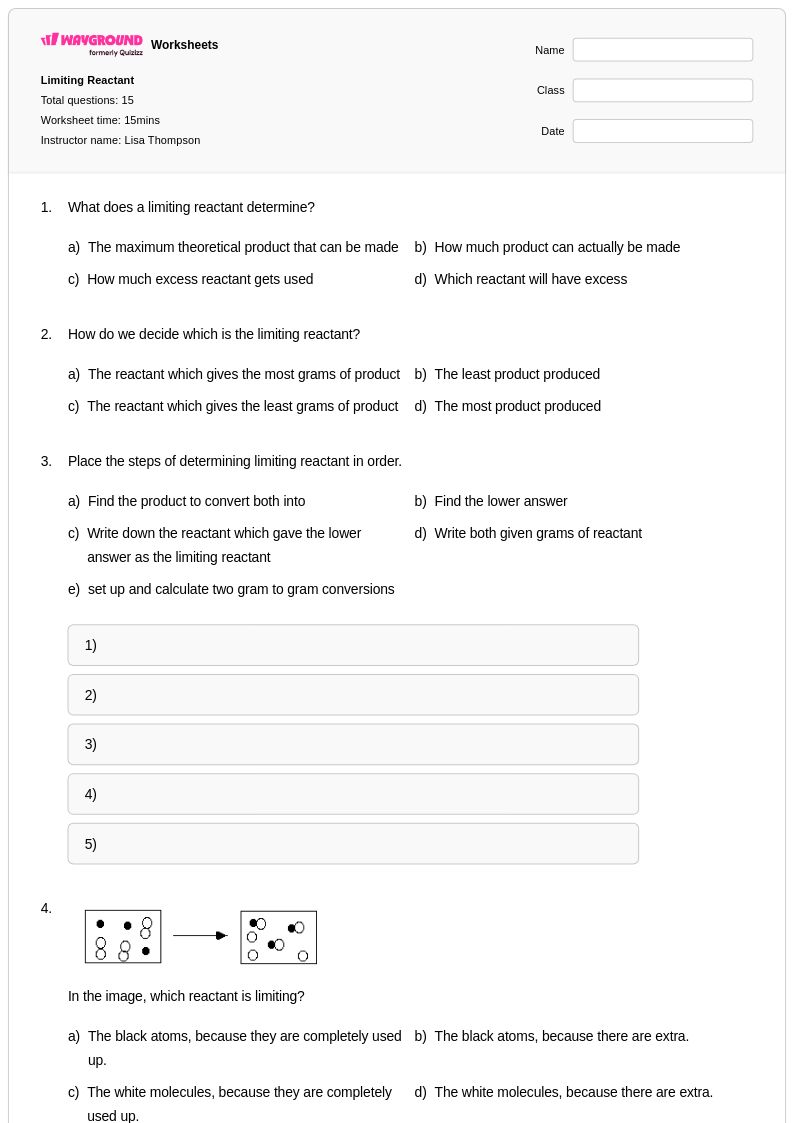
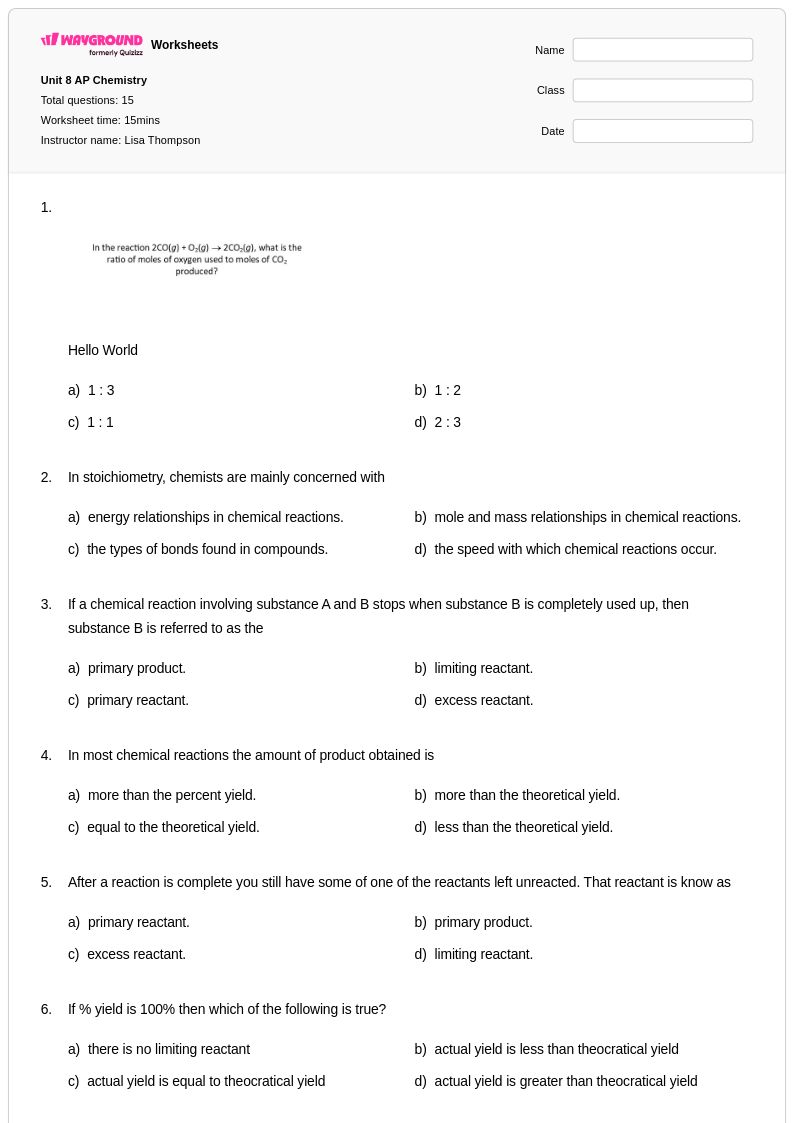
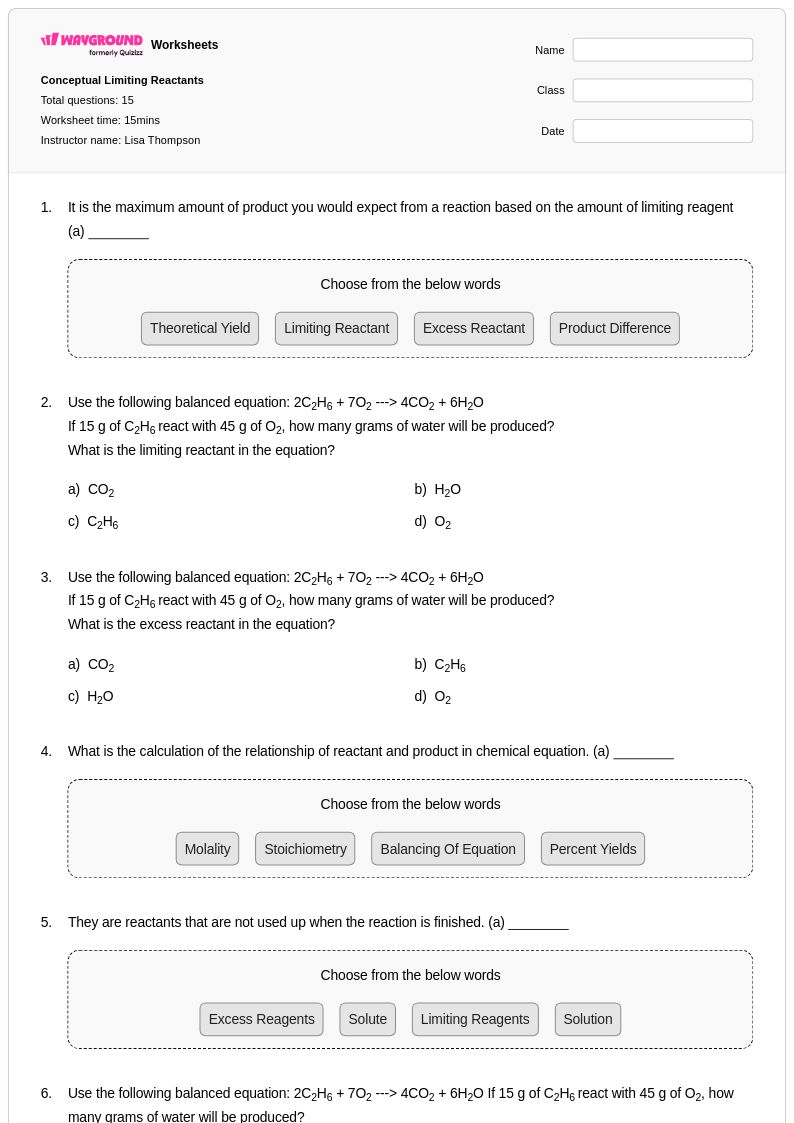
Theoretical yield worksheets for Grade 12 chemistry students available through Wayground (formerly Quizizz) provide comprehensive practice with stoichiometric calculations that determine the maximum amount of product that can be formed from given reactants under ideal conditions. These expertly designed worksheets strengthen critical analytical skills by guiding students through multi-step problem-solving processes that involve balanced chemical equations, mole-to-mole ratios, and mass conversions. Students work through practice problems that challenge them to identify limiting reactants, calculate theoretical yields using dimensional analysis, and compare predicted outcomes with actual experimental results. Each worksheet collection includes detailed answer keys that break down complex calculations step-by-step, while the free printable pdf format ensures accessibility for both classroom instruction and independent study sessions.
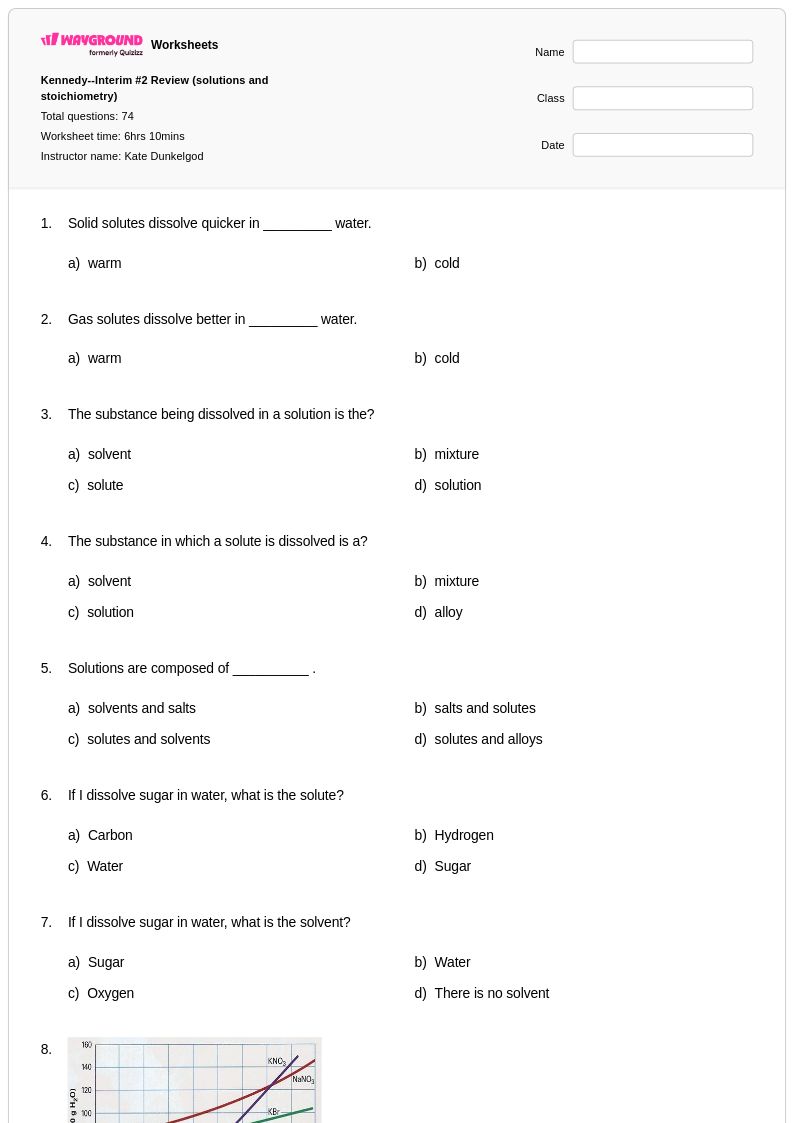
Wayground (formerly Quizizz) empowers chemistry educators with millions of teacher-created theoretical yield resources that feature robust search and filtering capabilities aligned with advanced chemistry standards. Teachers can easily differentiate instruction by selecting worksheets that match varying skill levels, from basic stoichiometry review to complex multi-reaction scenarios involving percentage yield calculations. The platform's flexible customization tools allow educators to modify existing materials or combine multiple worksheet elements to address specific learning objectives during lesson planning. These comprehensive collections support targeted remediation for students struggling with molar mass conversions while providing enrichment opportunities through challenging real-world applications in pharmaceutical and industrial chemistry contexts. Available in both printable and digital formats, these resources seamlessly integrate into diverse teaching environments to reinforce essential quantitative reasoning skills that prepare students for advanced chemistry coursework and laboratory experiences.
FAQs
How do I teach theoretical yield to chemistry students?
Teach theoretical yield by first ensuring students are comfortable with mole-to-mole conversions and balanced chemical equations before introducing yield calculations. Start with single-reactant problems where students convert from a given reactant mass to a predicted product mass, then progressively introduce limiting reagent identification as complexity increases. Using real-world chemical scenarios, such as industrial synthesis examples, helps students connect stoichiometric calculations to practical applications and reinforces why theoretical yield is a foundational chemistry skill.
What practice problems help students master theoretical yield calculations?
Effective theoretical yield practice should include a range of problem types, beginning with single-step mole conversions and building toward multi-reactant systems that require limiting reagent identification. Problems that ask students to show each step, including molar mass calculations and conversion factors, reinforce procedural accuracy and help identify where errors occur. Varied problem sets that alternate between different compound types and reaction formats build the flexibility students need to handle yield calculations across different chemistry contexts.
What mistakes do students commonly make when calculating theoretical yield?
The most common error is skipping limiting reagent identification in reactions with multiple reactants, causing students to calculate yield from the wrong reactant and arrive at an inflated answer. Students also frequently use incorrect molar masses by failing to account for subscripts in molecular formulas or by rounding atomic masses too aggressively. A third common mistake is failing to use a balanced equation before setting up conversion factors, which produces stoichiometrically invalid ratios and incorrect final yields.
How do theoretical yield worksheets help students understand stoichiometry?
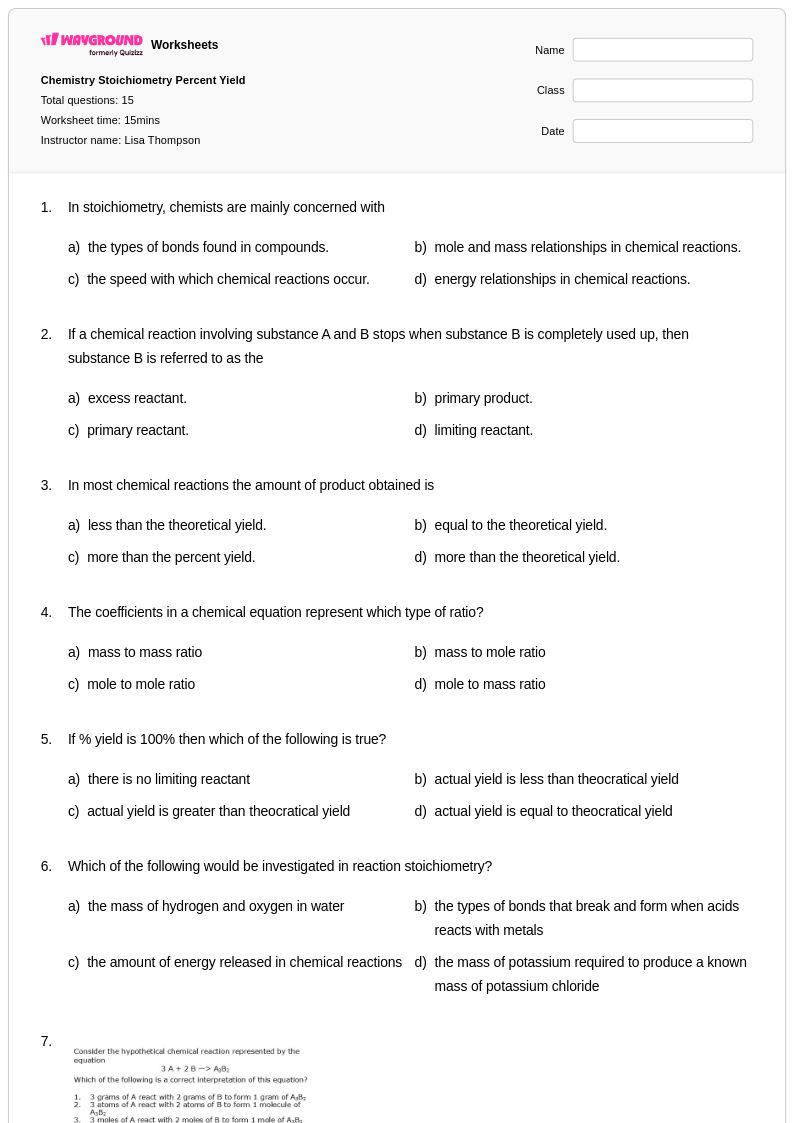
Theoretical yield problems require students to integrate multiple stoichiometric skills simultaneously, including balanced equation interpretation, molar mass calculation, and mole-to-mole conversion, making them an effective consolidation exercise for a broader stoichiometry unit. Working through structured practice problems reinforces the logical sequence of steps required in any yield calculation, which builds both procedural fluency and conceptual understanding of why reactant quantities constrain product formation. Over repeated practice, students internalize the relationship between reactant amounts and maximum product output, which is central to predicting and evaluating chemical reactions.
How can I differentiate theoretical yield practice for students at different ability levels?
For struggling students, begin with problems that provide partially completed conversion factor setups so they can focus on identifying the correct stoichiometric ratio without being overwhelmed by the full problem structure. Advanced students benefit from multi-reactant problems where limiting reagent identification is required before the yield calculation can begin. On Wayground, teachers can apply accommodations such as reduced answer choices and read-aloud support for individual students, allowing the same worksheet to serve diverse learners without disrupting the rest of the class.
How do I use Wayground's theoretical yield worksheets in my classroom?
Wayground's theoretical yield worksheets are available as printable PDFs for traditional classroom use and in digital formats for technology-integrated learning environments, including the option to host them as a quiz directly on the platform. Teachers can use the worksheets as guided practice during instruction, assign them as independent homework, or deploy the digital version as a formative assessment to quickly gauge student understanding before moving to percent yield or limiting reagent topics. Each worksheet includes detailed answer keys, supporting both self-paced student review and efficient teacher grading.