Free Printable Lewis Dot Diagram Worksheets for Grade 12
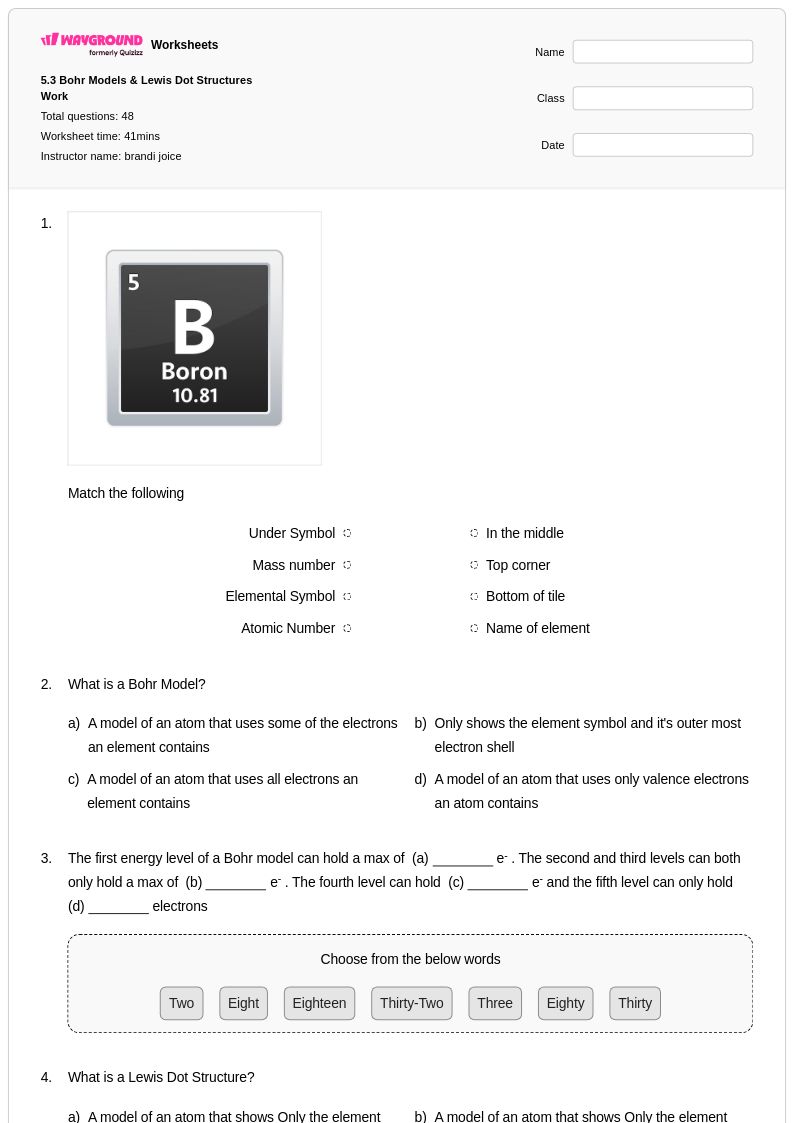
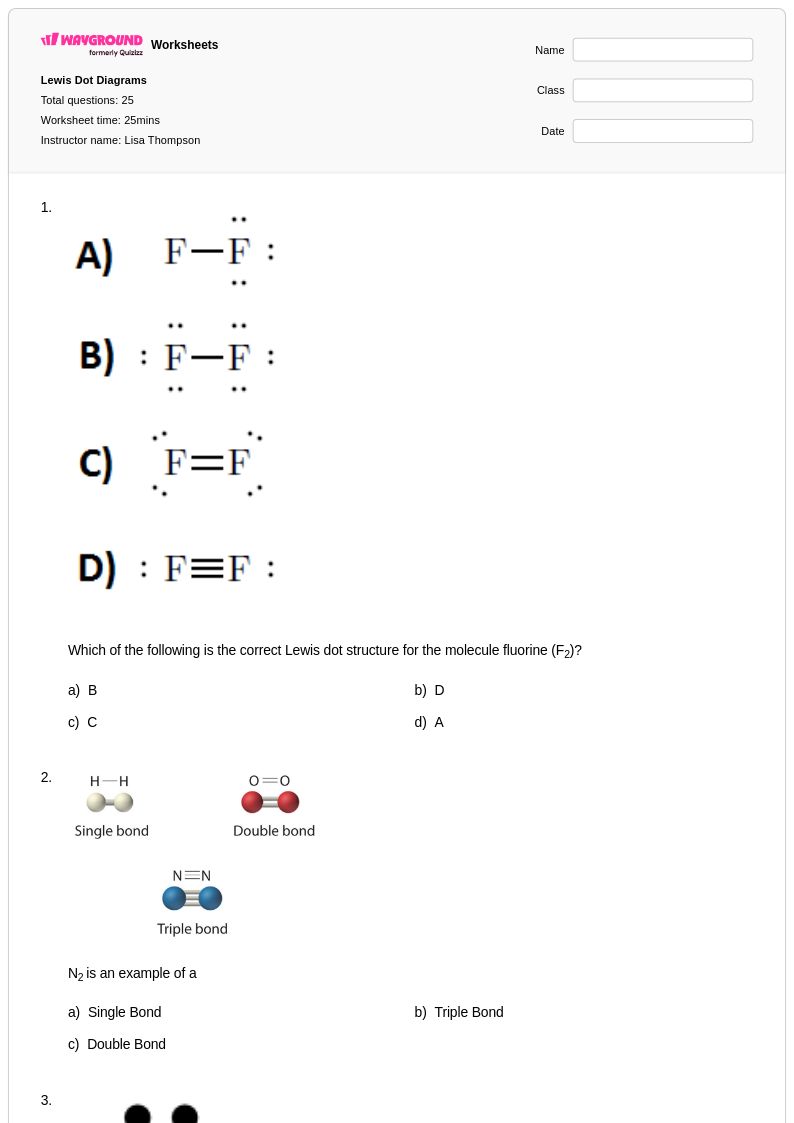
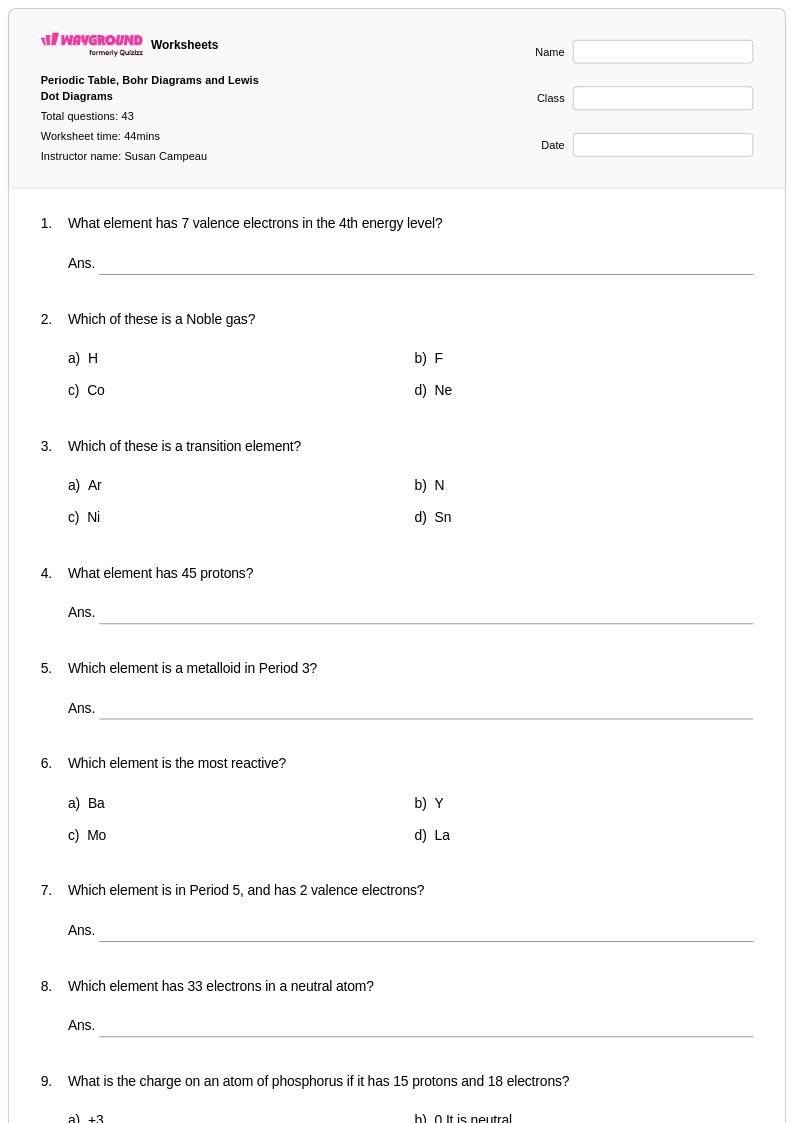
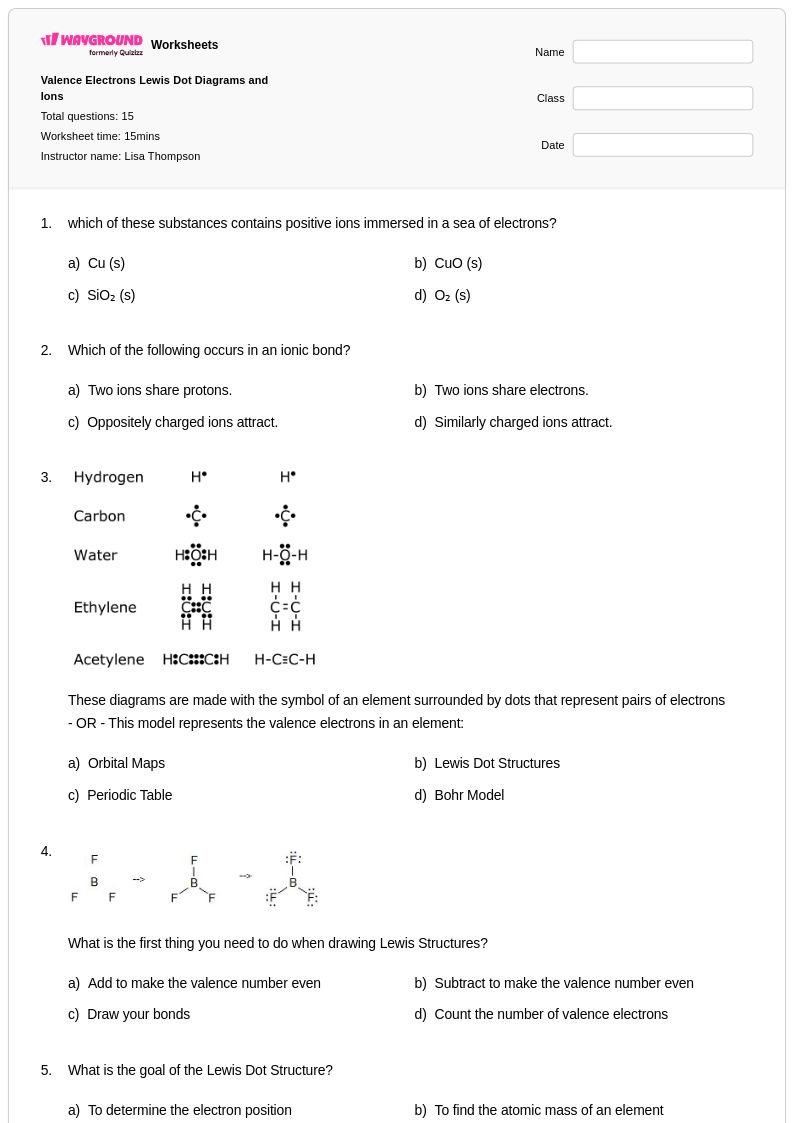
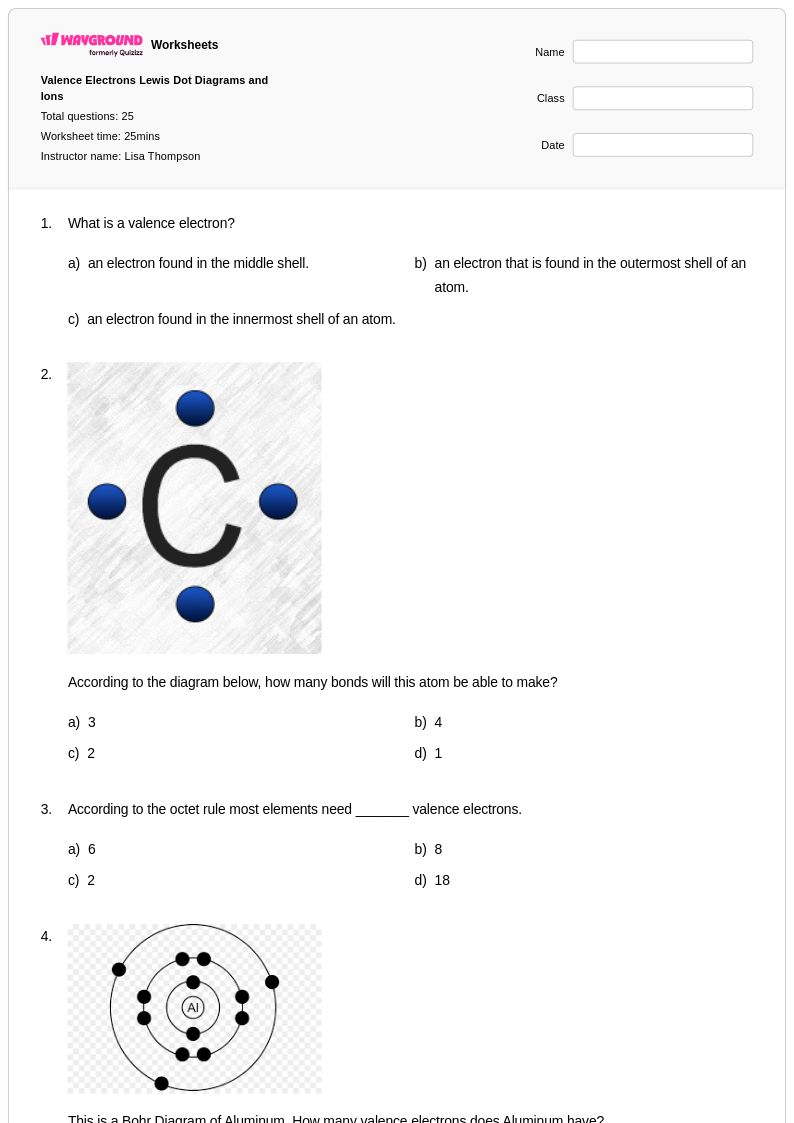
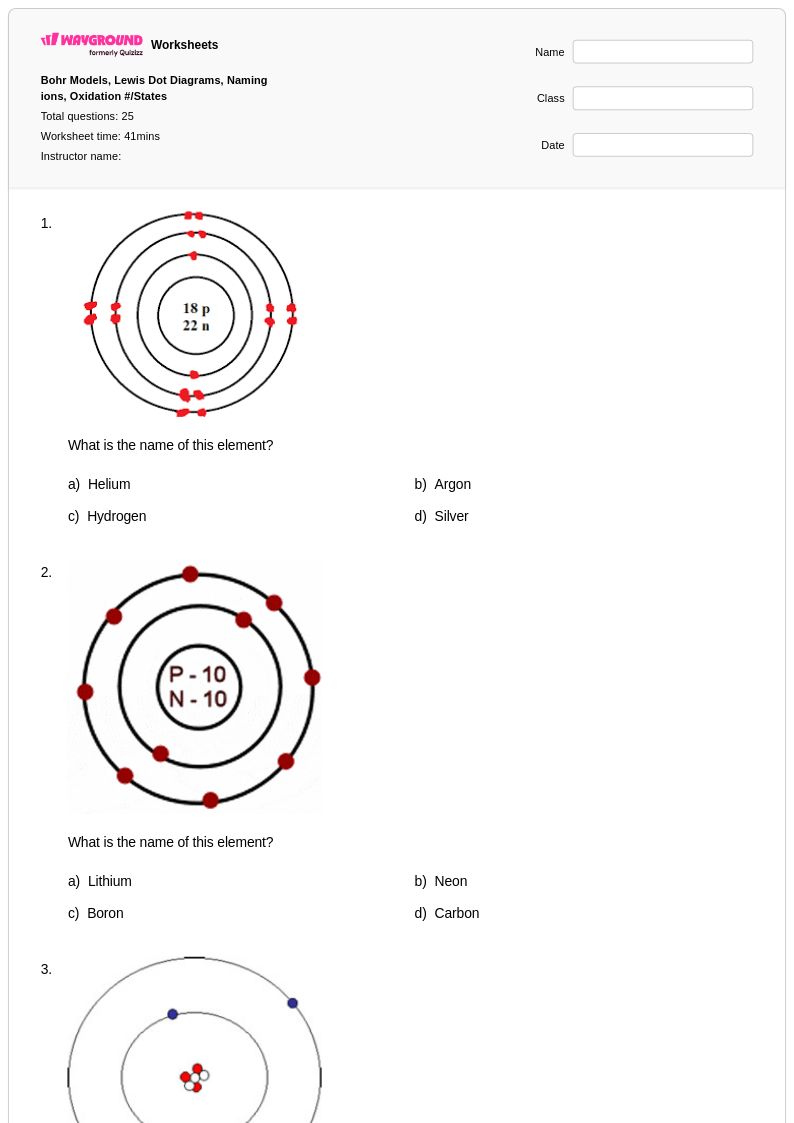
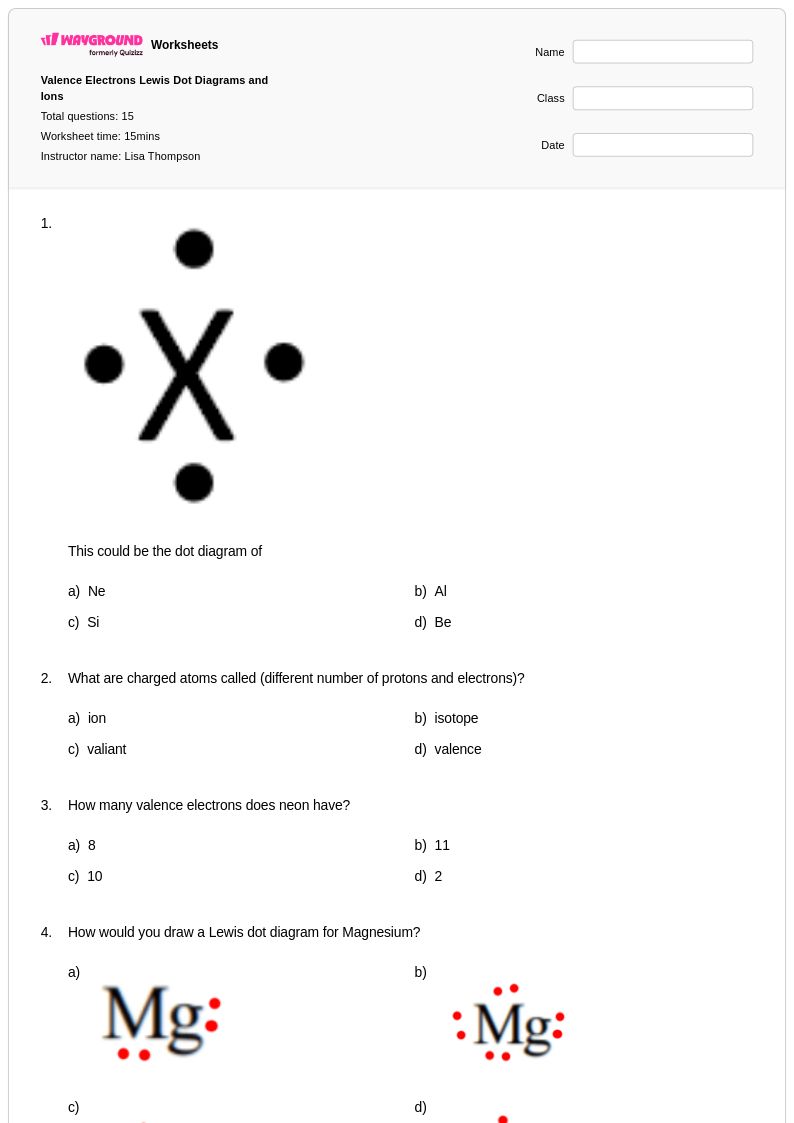
Grade 12 Lewis Dot Diagram worksheets from Wayground provide comprehensive printables and practice problems with answer keys to help students master electron configuration and molecular bonding representations in chemistry.
Explore printable Lewis Dot Diagram worksheets for Grade 12
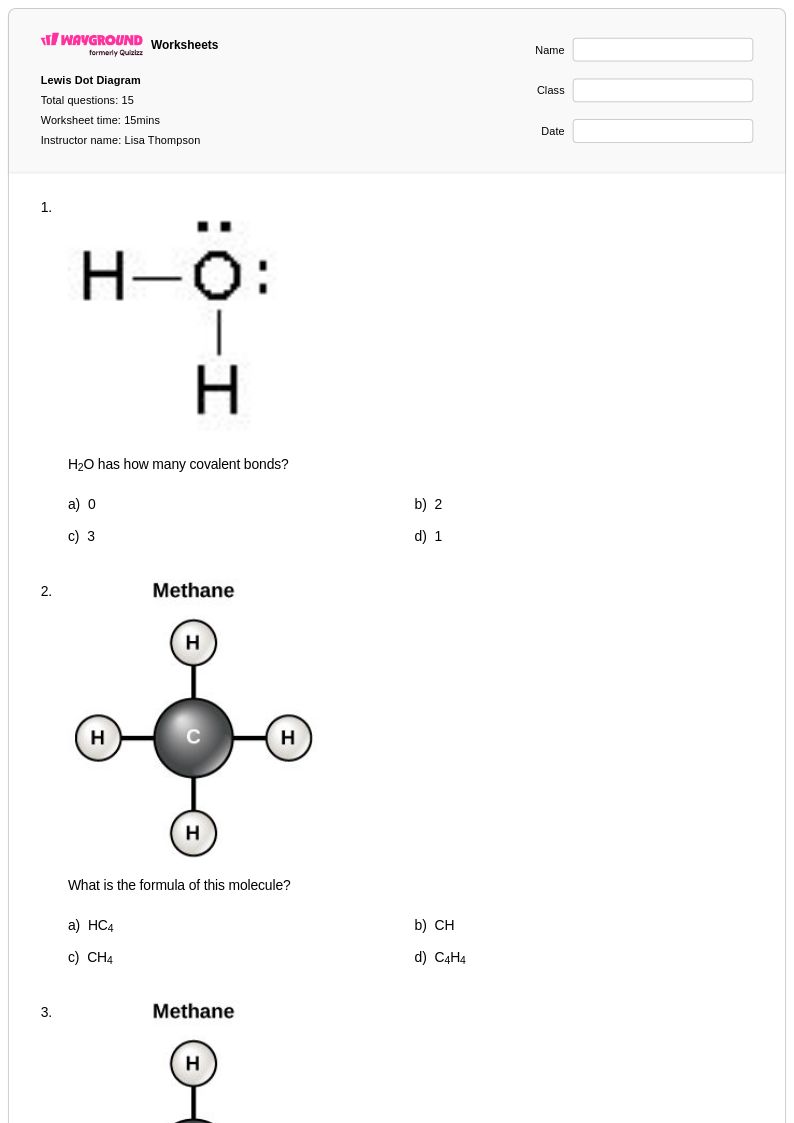
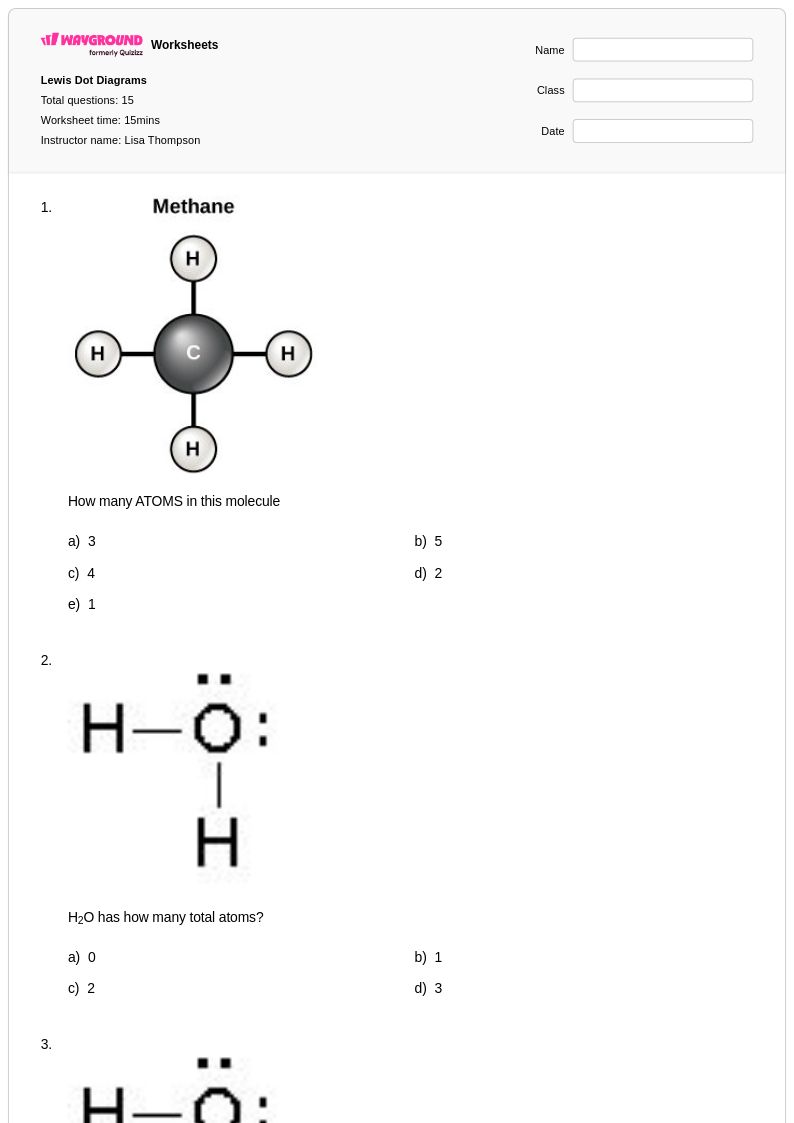
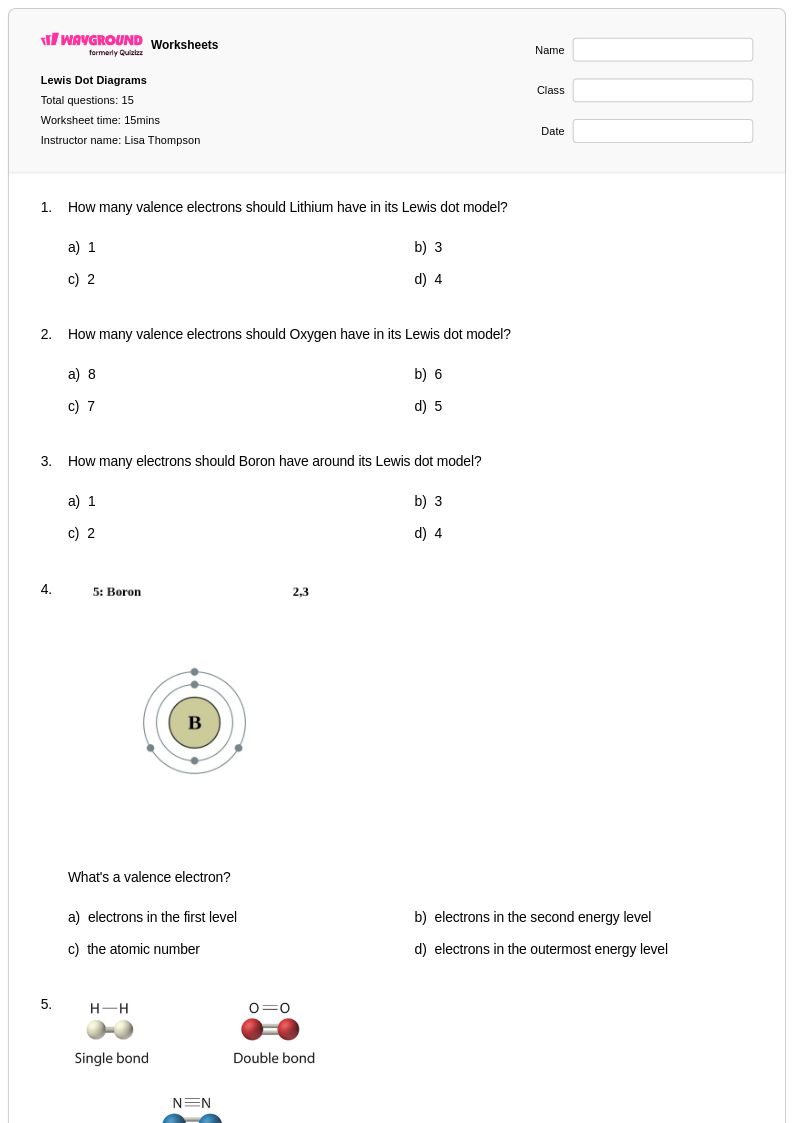
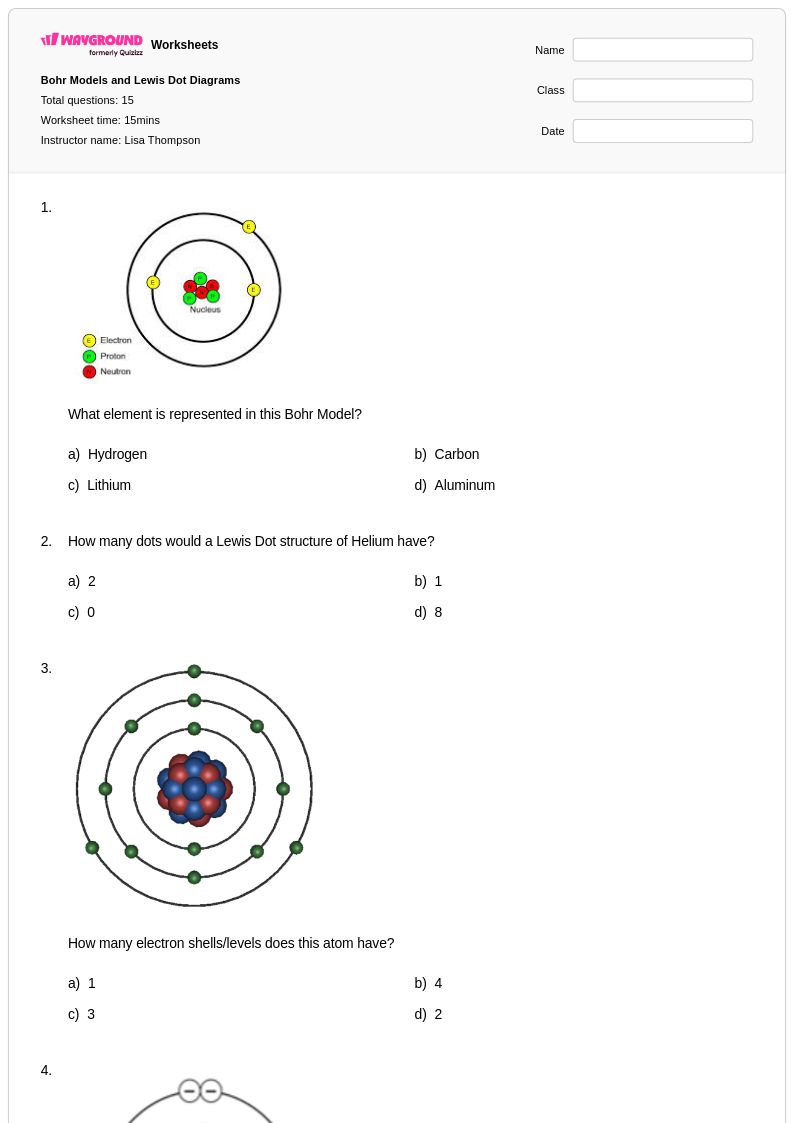
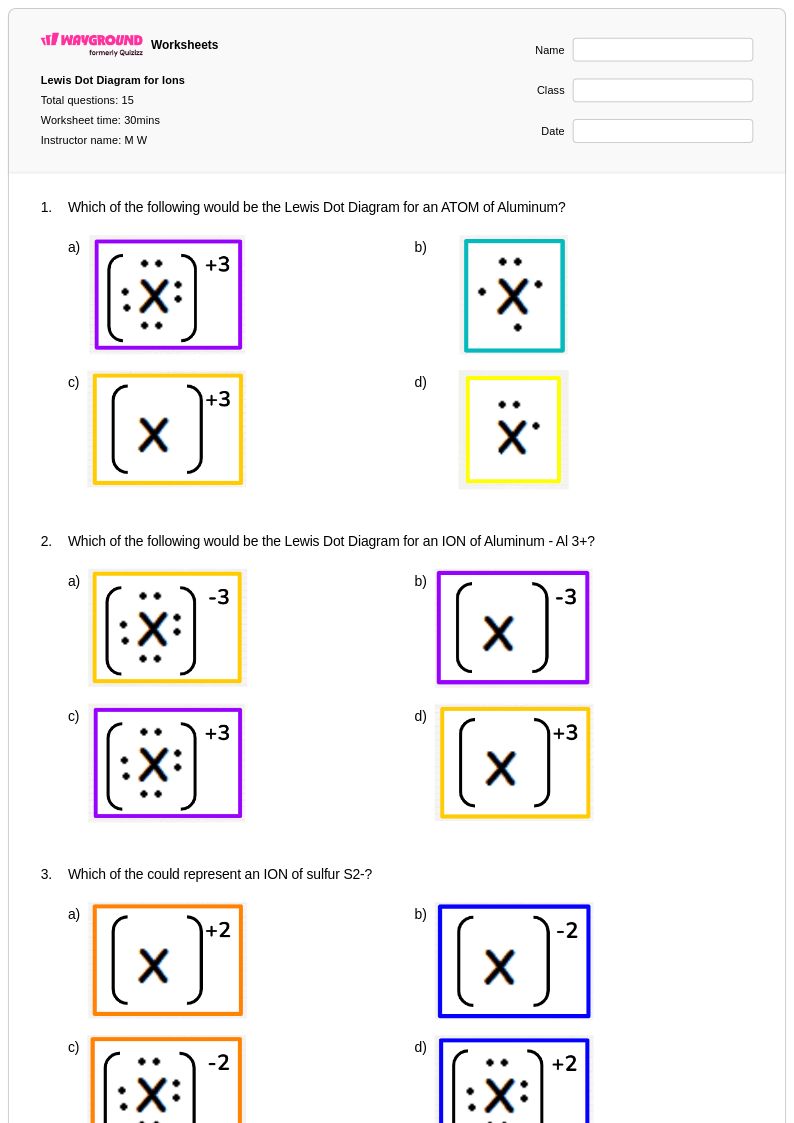
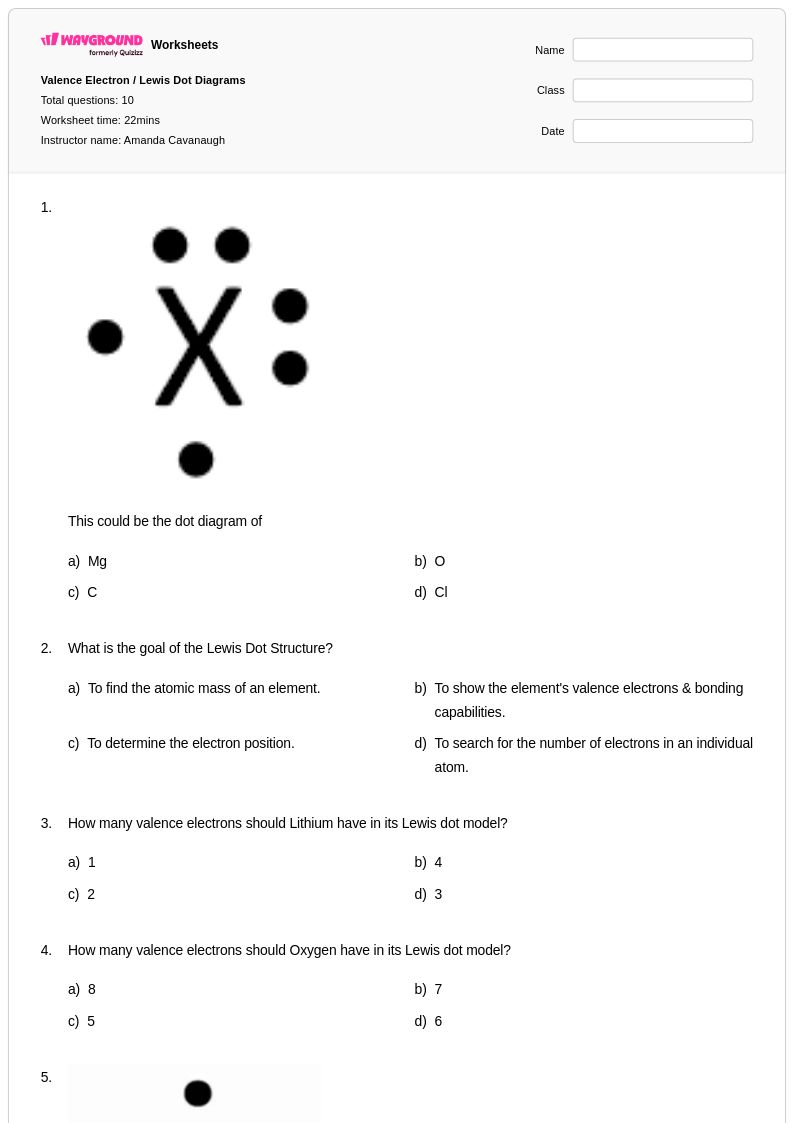
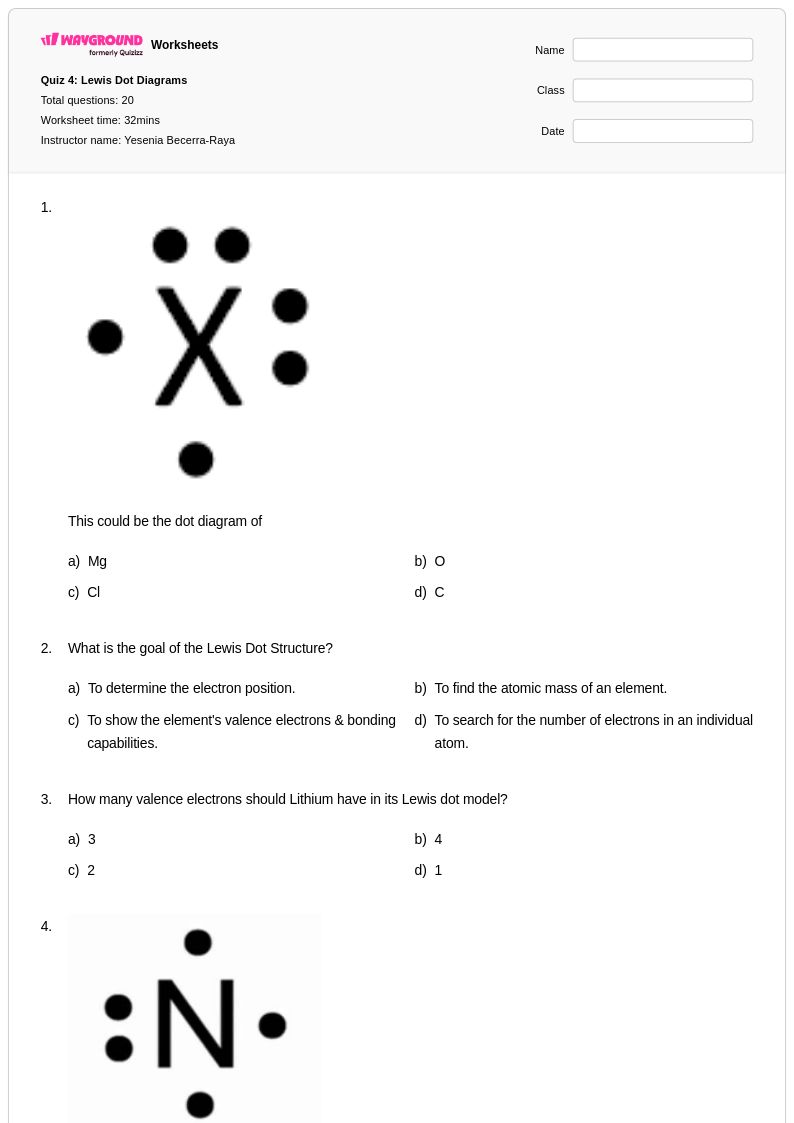
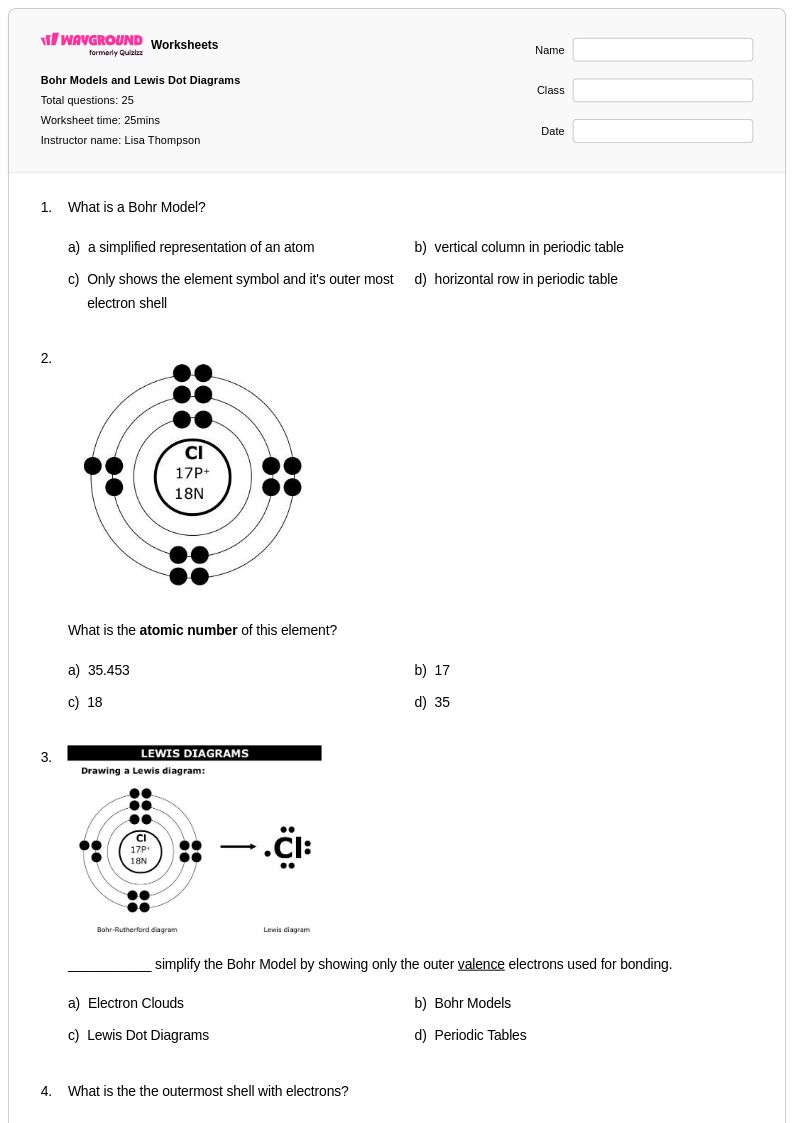
Lewis Dot Diagram worksheets for Grade 12 chemistry students available through Wayground (formerly Quizizz) provide comprehensive practice in representing valence electrons and chemical bonding patterns for complex molecular structures. These expertly designed worksheets strengthen students' abilities to draw electron configurations, predict molecular geometry, and understand the relationship between electron arrangement and chemical properties in advanced compounds including polyatomic ions, resonance structures, and coordinate covalent bonds. Each worksheet collection includes detailed answer keys and step-by-step solutions, with free printable pdf formats that allow students to work through practice problems systematically while developing mastery of formal charge calculations and VSEPR theory applications essential for advanced placement chemistry success.
Wayground (formerly Quizizz) supports chemistry educators with millions of teacher-created Lewis Dot Diagram resources that feature robust search and filtering capabilities aligned to state and national chemistry standards for Grade 12 coursework. The platform's differentiation tools enable teachers to customize worksheet difficulty levels and problem types, accommodating students working on basic electron dot structures through advanced molecular orbital concepts, while flexible formatting options provide both printable pdf versions for traditional classroom use and digital formats for interactive learning environments. These comprehensive worksheet collections facilitate efficient lesson planning and targeted skill practice, allowing educators to address individual student needs through remediation exercises for struggling learners and enrichment activities that challenge advanced students to apply Lewis structure principles to complex organic molecules and coordination compounds.
FAQs
How do I teach Lewis dot diagrams to chemistry students?
Start by ensuring students have a solid grasp of valence electrons and the periodic table before introducing dot notation. Teach the process stepwise: identify the element or compound, count total valence electrons, place bonding pairs first, then distribute lone pairs to satisfy the octet rule. Using visual models and guided practice problems alongside direct instruction helps students internalize the logic before working independently on compounds and polyatomic ions.
What exercises help students practice drawing Lewis dot structures?
Structured practice should progress from single elements to diatomic molecules, then to polyatomic ions and more complex compounds. Worksheets that require students to draw electron dot structures, identify bonding vs. lone pairs, and predict molecular geometry are especially effective because they connect notation to real chemical meaning. Repetition across a variety of molecules builds the pattern recognition students need to handle resonance structures and exceptions to the octet rule.
What mistakes do students commonly make when drawing Lewis dot diagrams?
The most frequent errors include miscounting total valence electrons, especially for polyatomic ions where charge must be factored in, and placing all electrons as lone pairs before forming bonds. Students also commonly violate the octet rule by either under-filling or over-filling electron shells, and they often struggle to identify the central atom in multi-atom molecules. Targeted practice that asks students to check their electron count before and after drawing helps catch these errors early.
How can I use Lewis dot diagram worksheets to differentiate instruction in my chemistry class?
Lewis dot diagram worksheets can be tiered so foundational problems cover single-element dot notation and simple molecules, while advanced problems introduce polyatomic ions, formal charge, and resonance structures. On Wayground, teachers can apply individual accommodations such as Read Aloud for students who need auditory support, reduced answer choices to lower cognitive load for struggling learners, and extended time settings that carry over across sessions. This allows every student to engage with the same core chemistry concept at an appropriate level of challenge without requiring separate lesson plans.
How do I use Wayground's Lewis dot diagram worksheets in my classroom?
Wayground's Lewis dot diagram worksheets are available as printable PDFs for traditional classroom use and in digital formats for technology-integrated or remote learning environments, and teachers can also host them as a quiz directly on Wayground. Each worksheet includes a detailed answer key, so teachers can use them for guided practice, independent work, or review sessions without additional preparation. The digital format supports quick assignment and collection, while the printable version works seamlessly for in-class or homework distribution.
How do Lewis dot diagrams connect to molecular geometry and chemical bonding?
Lewis dot diagrams are the foundational step for predicting molecular geometry because they reveal the number of bonding pairs and lone pairs around a central atom, which VSEPR theory then uses to determine 3D shape. Understanding bonding patterns from dot structures also helps students distinguish between single, double, and triple bonds and grasp concepts like polarity and electronegativity differences. Teachers who treat Lewis structures as a gateway skill rather than an isolated task find that students transfer this knowledge more effectively to later topics like intermolecular forces and reaction mechanisms.