Free Printable Physical Properties Worksheets for Grade 12
Explore Grade 12 physical properties chemistry worksheets and printables from Wayground that help students master concepts through comprehensive practice problems, free PDF downloads, and detailed answer keys.
Explore printable Physical Properties worksheets for Grade 12
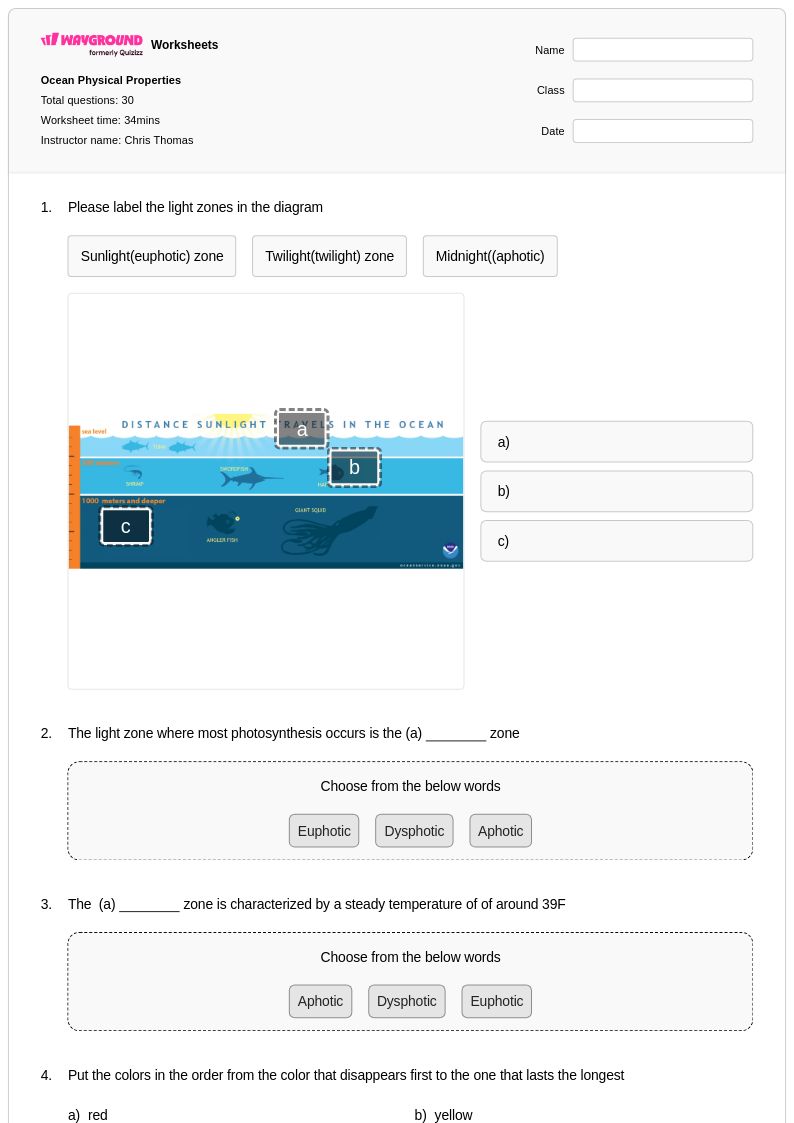
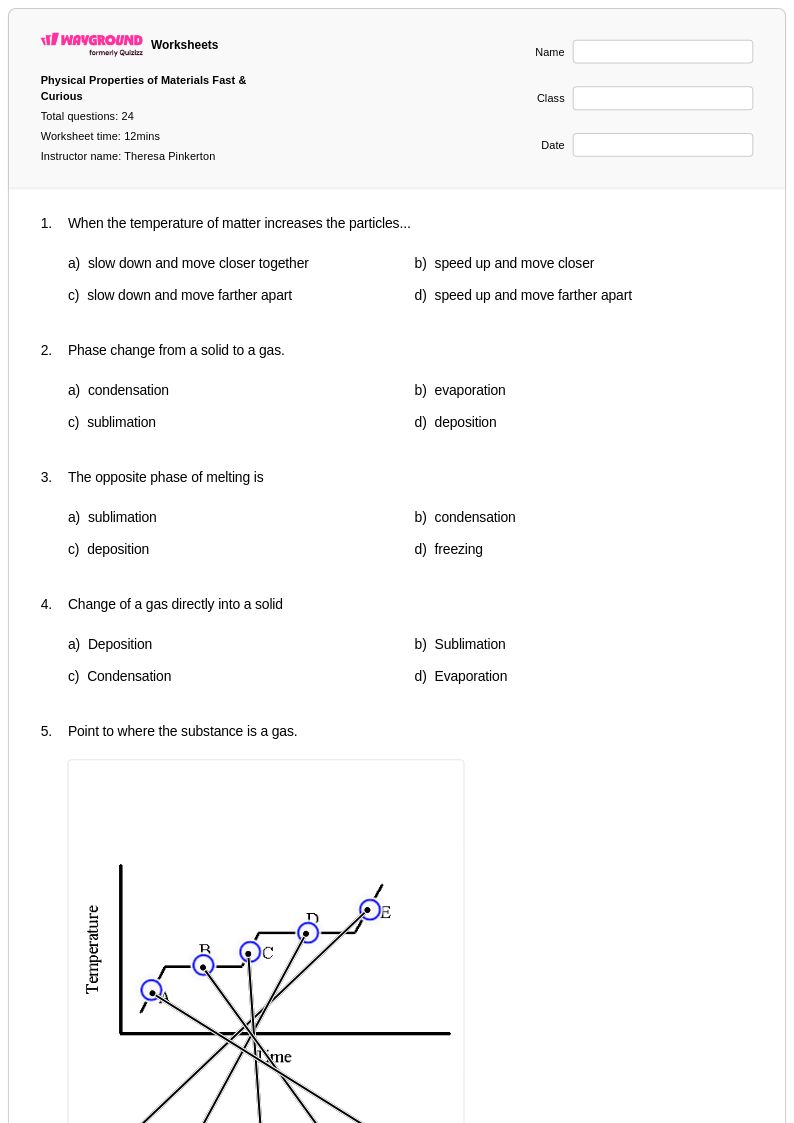
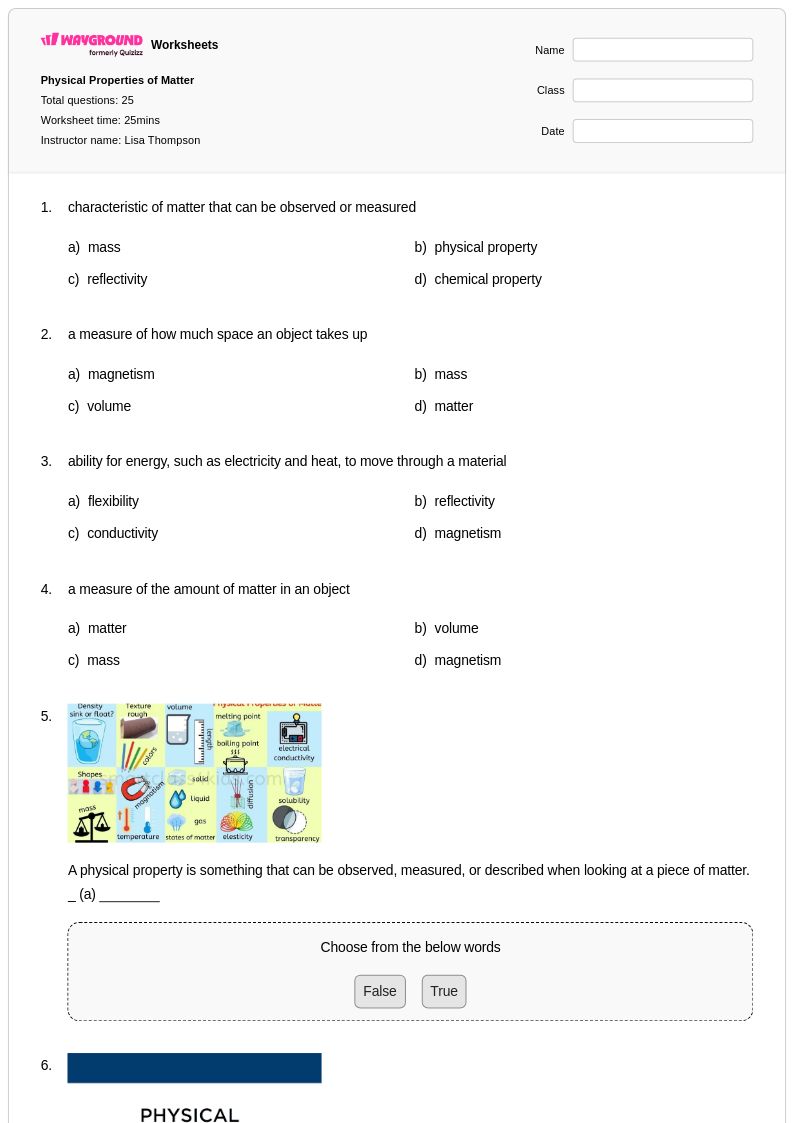
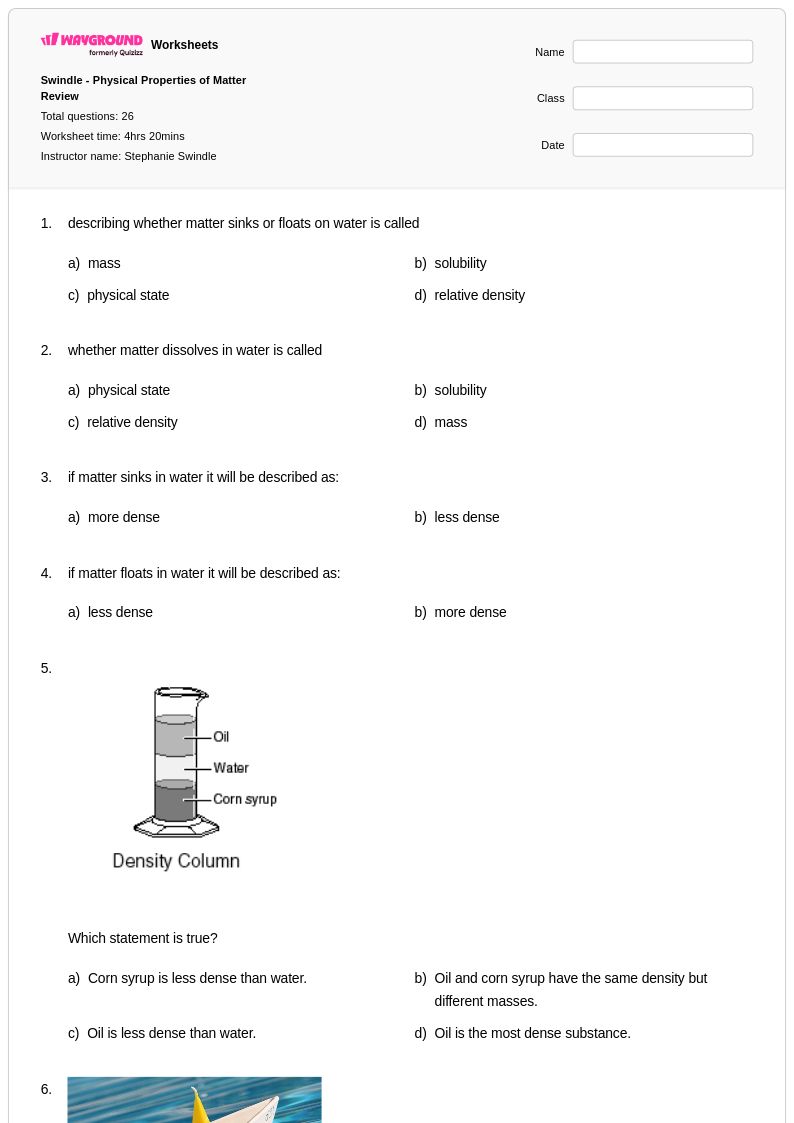
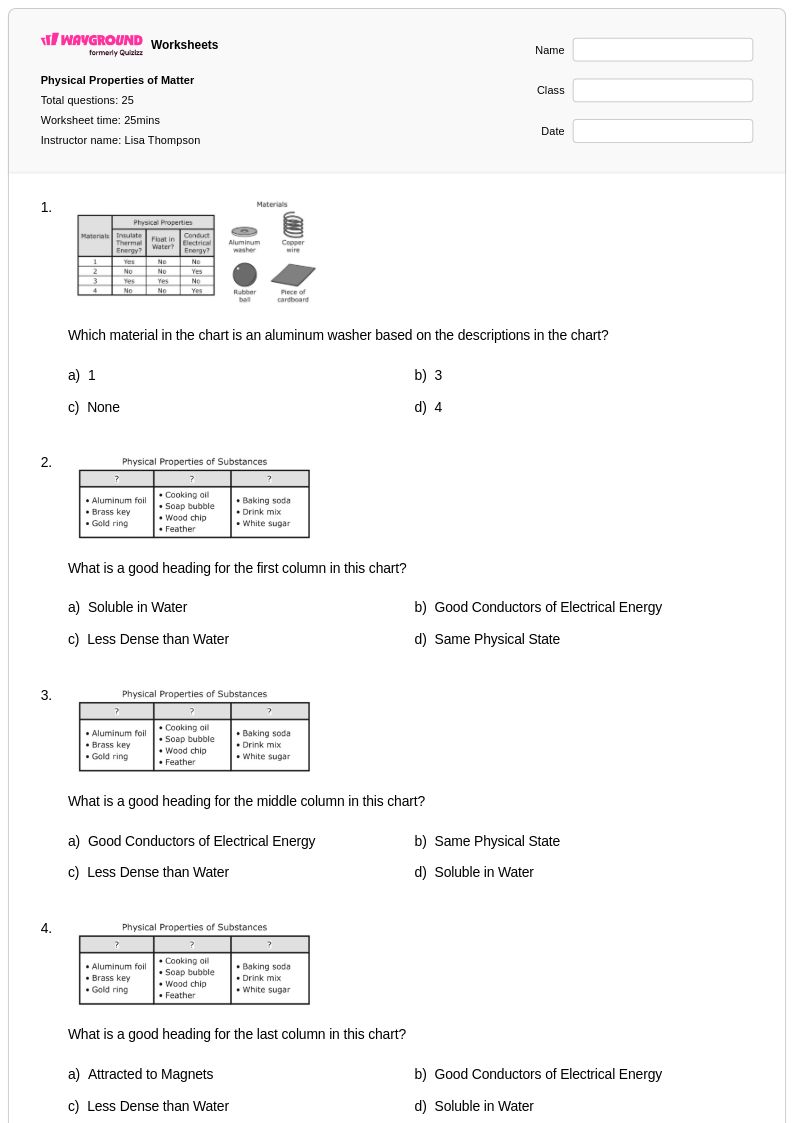
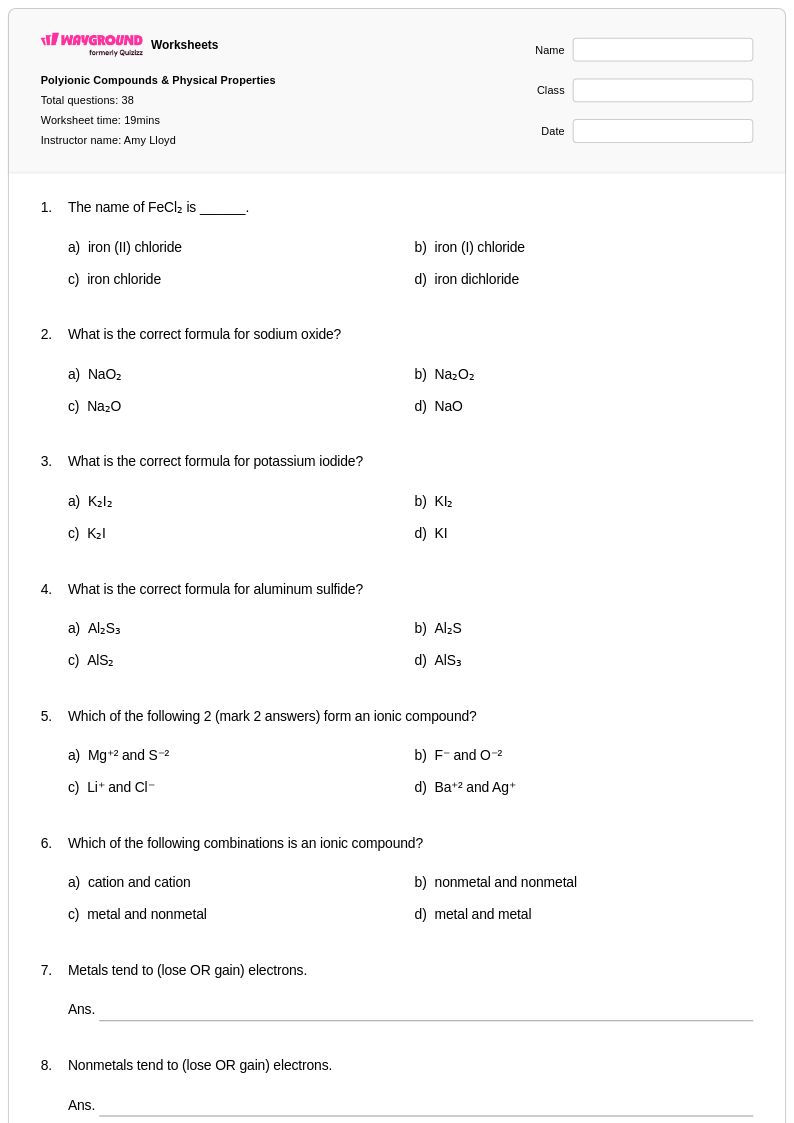
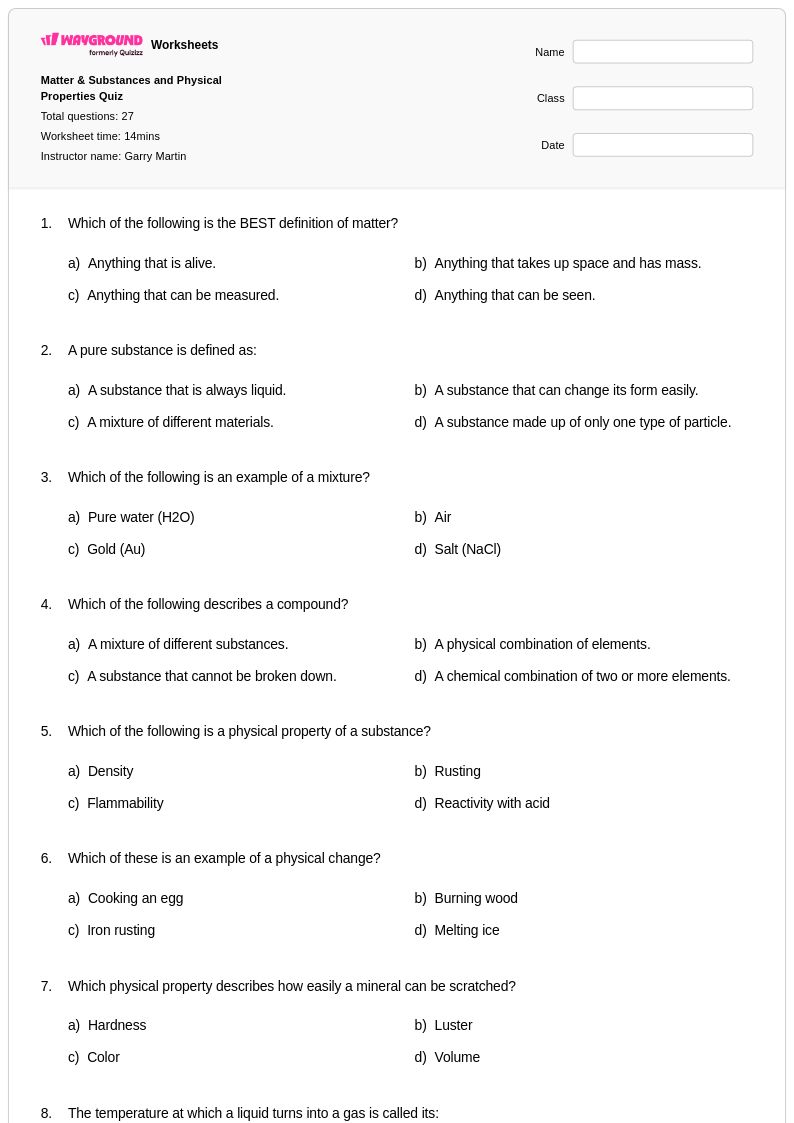
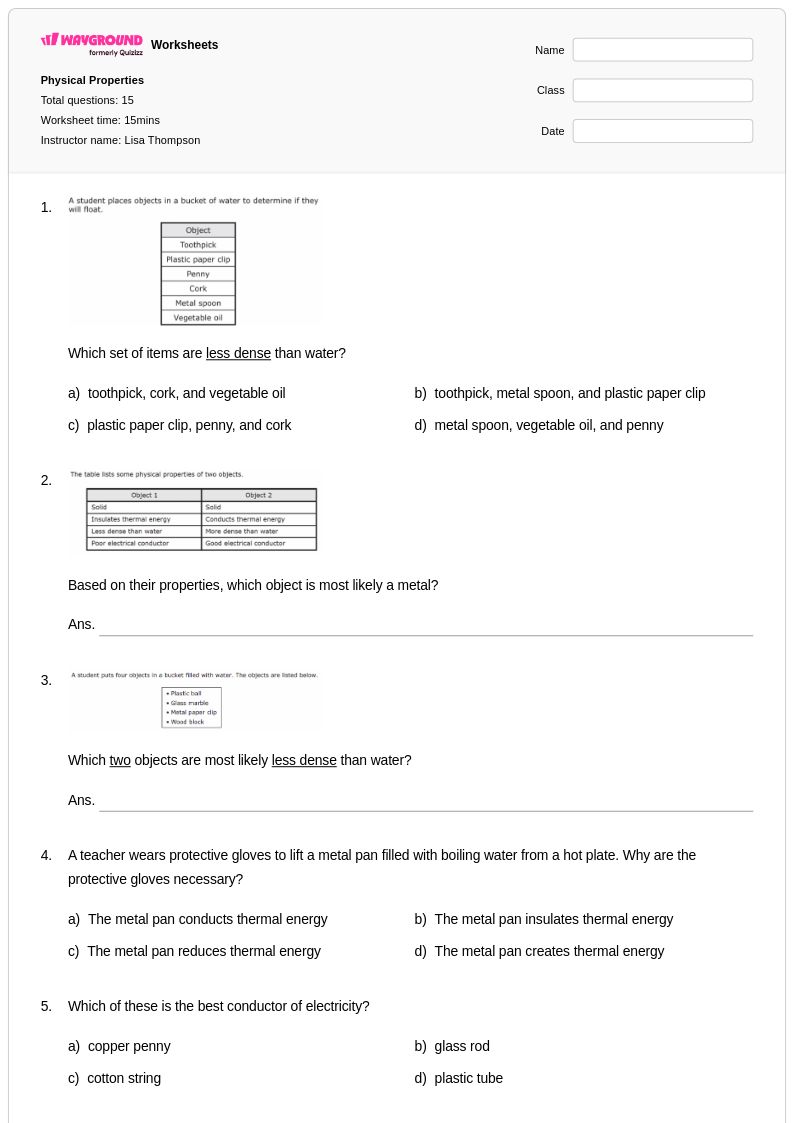
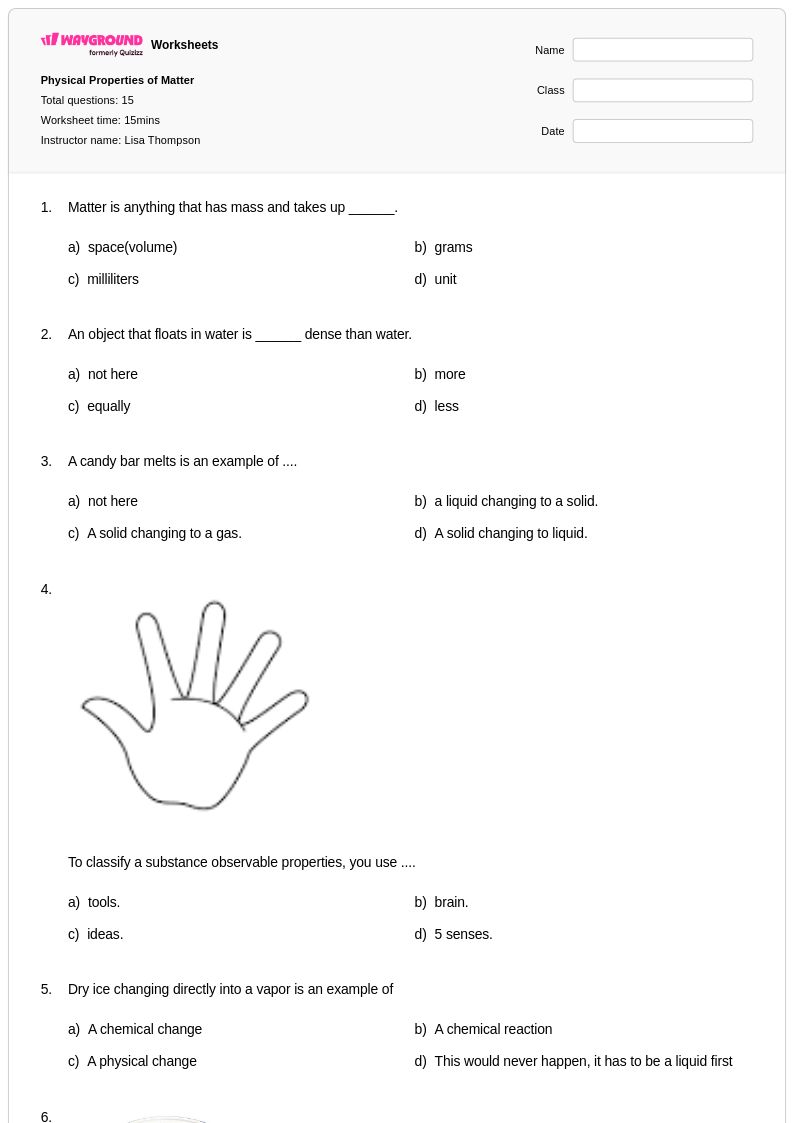
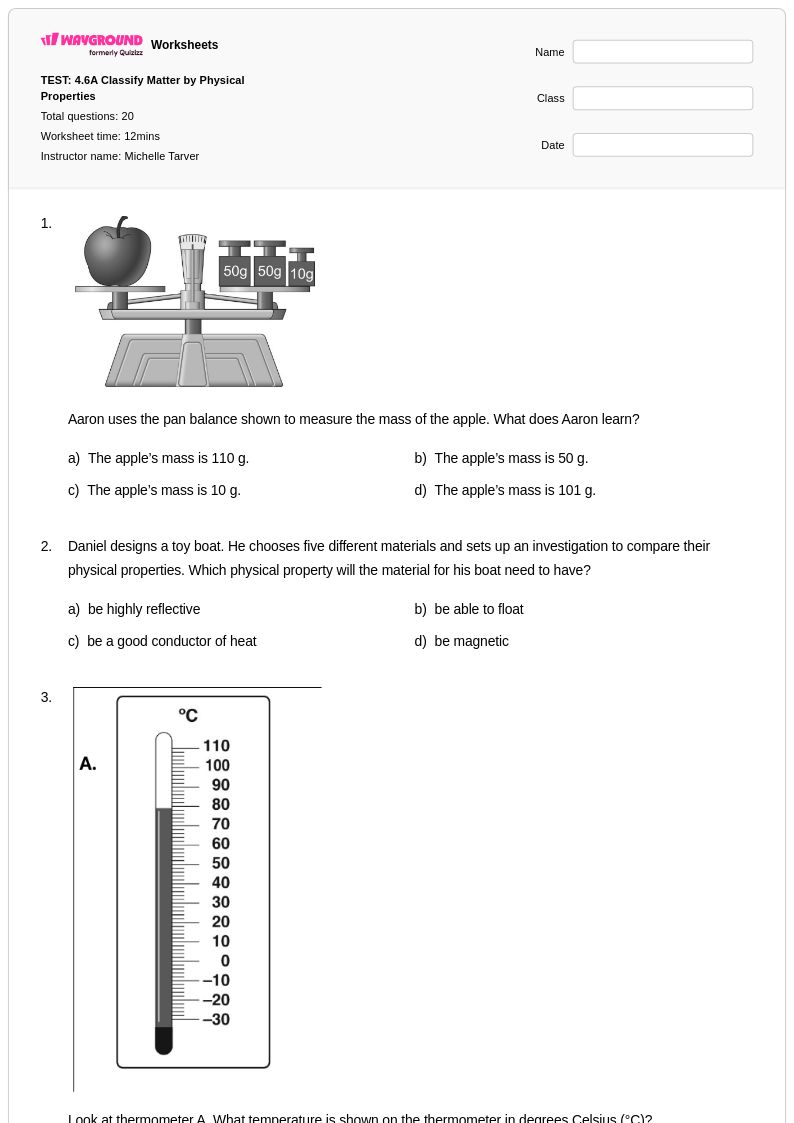
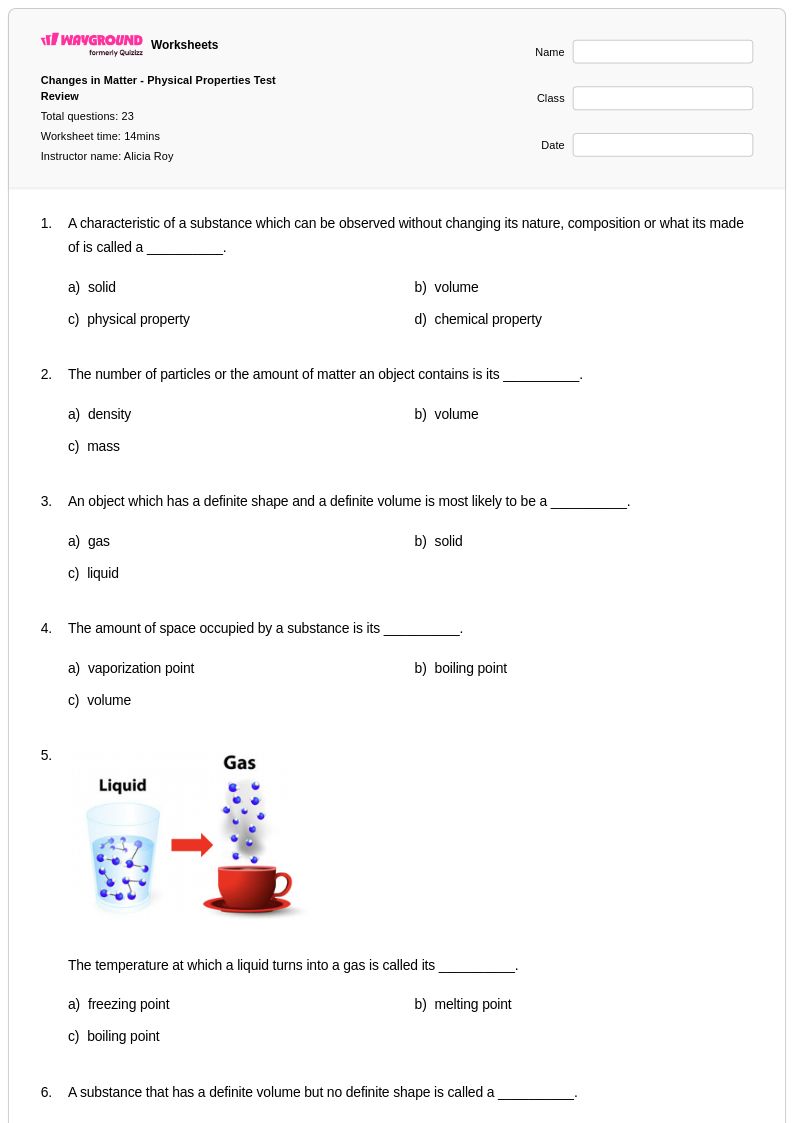
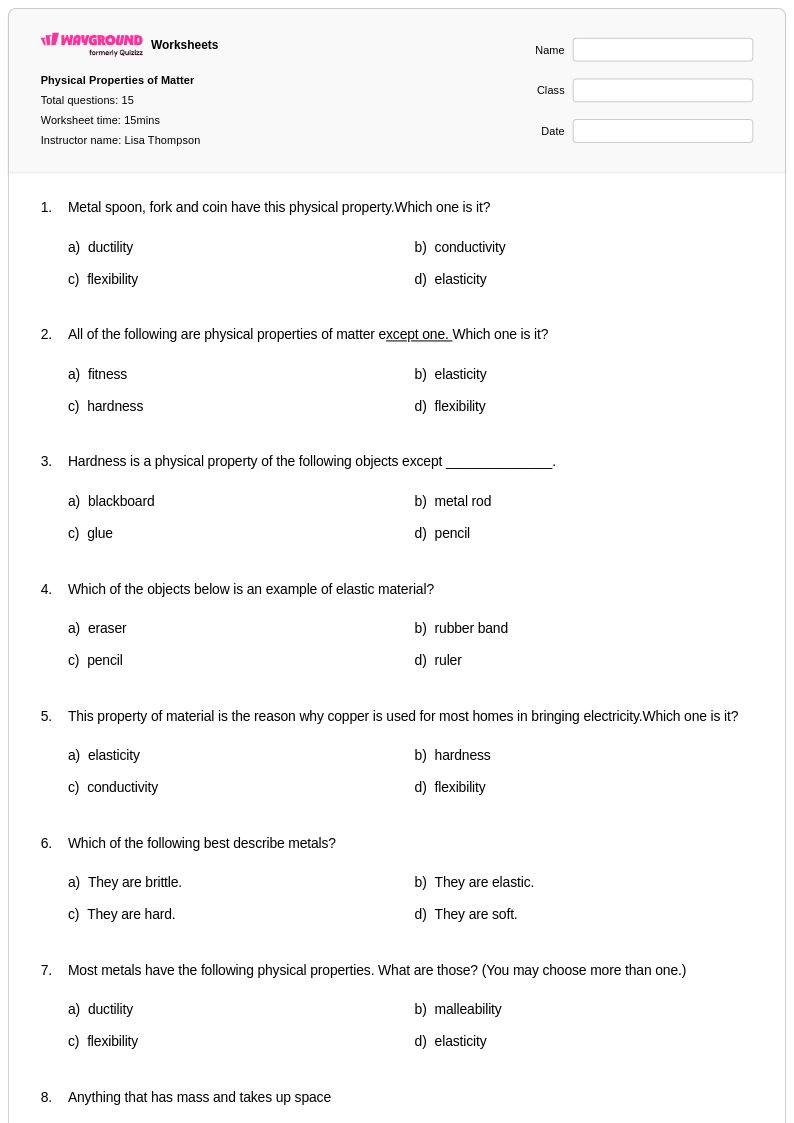
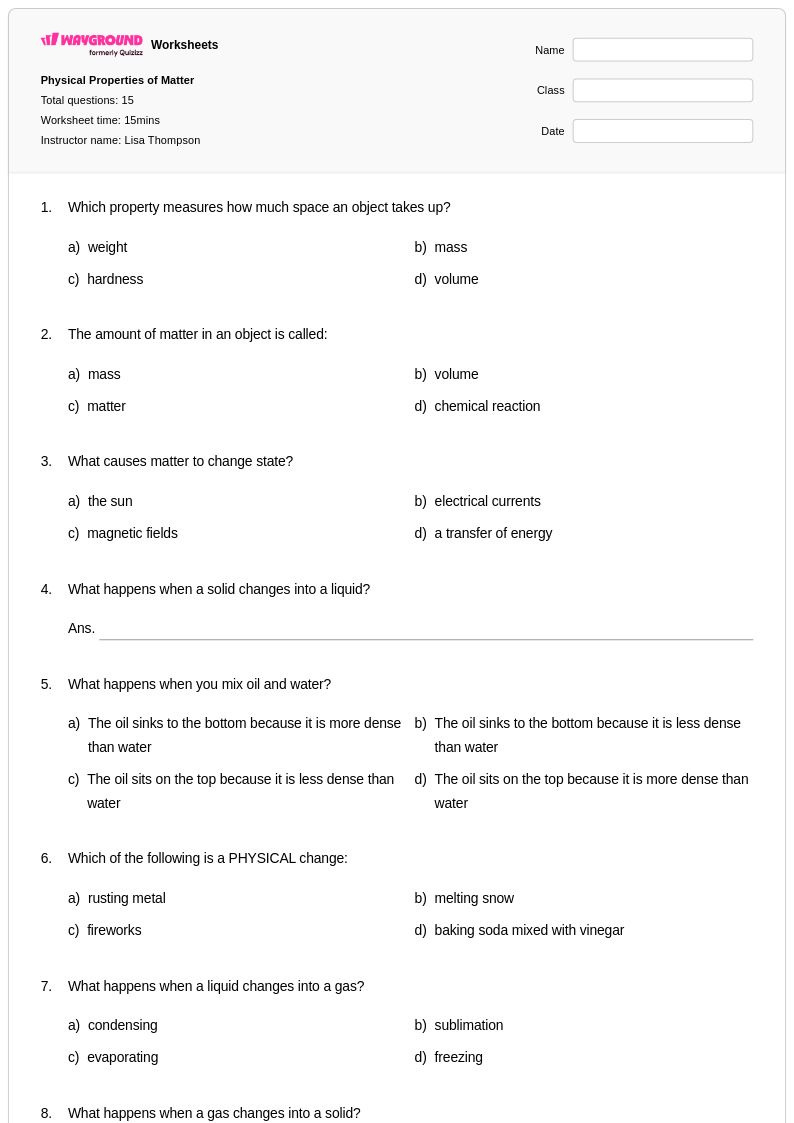
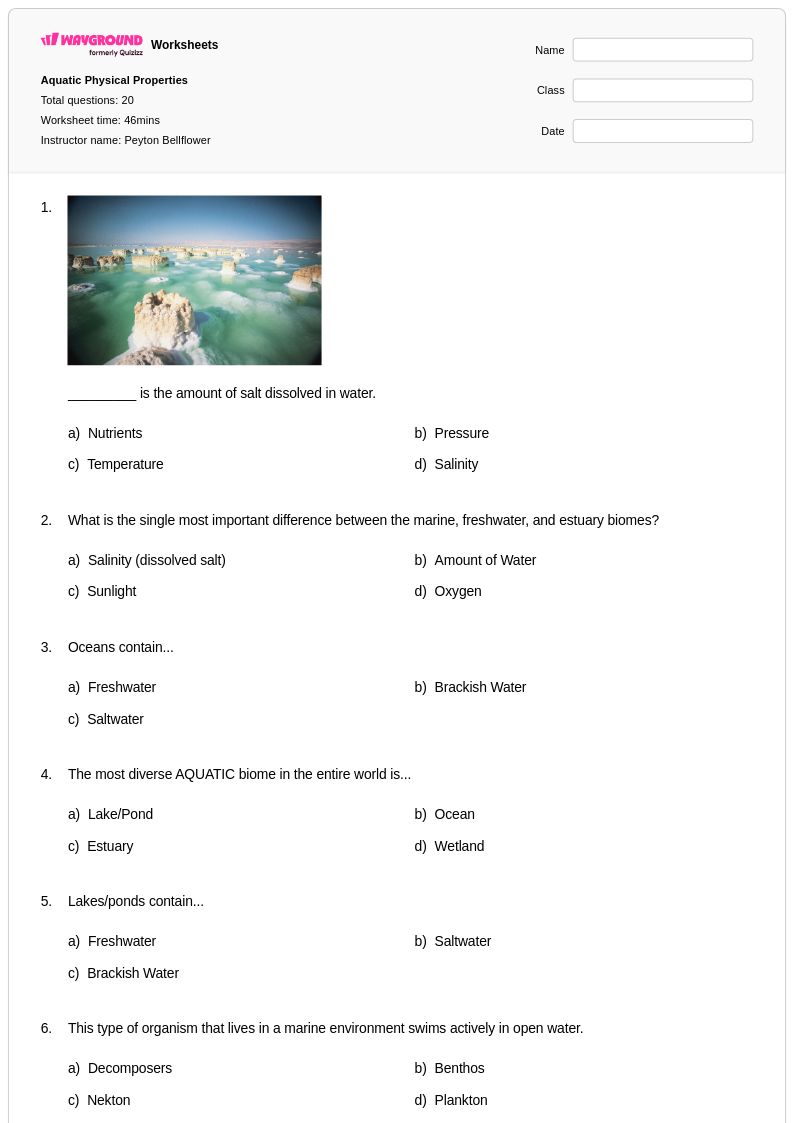
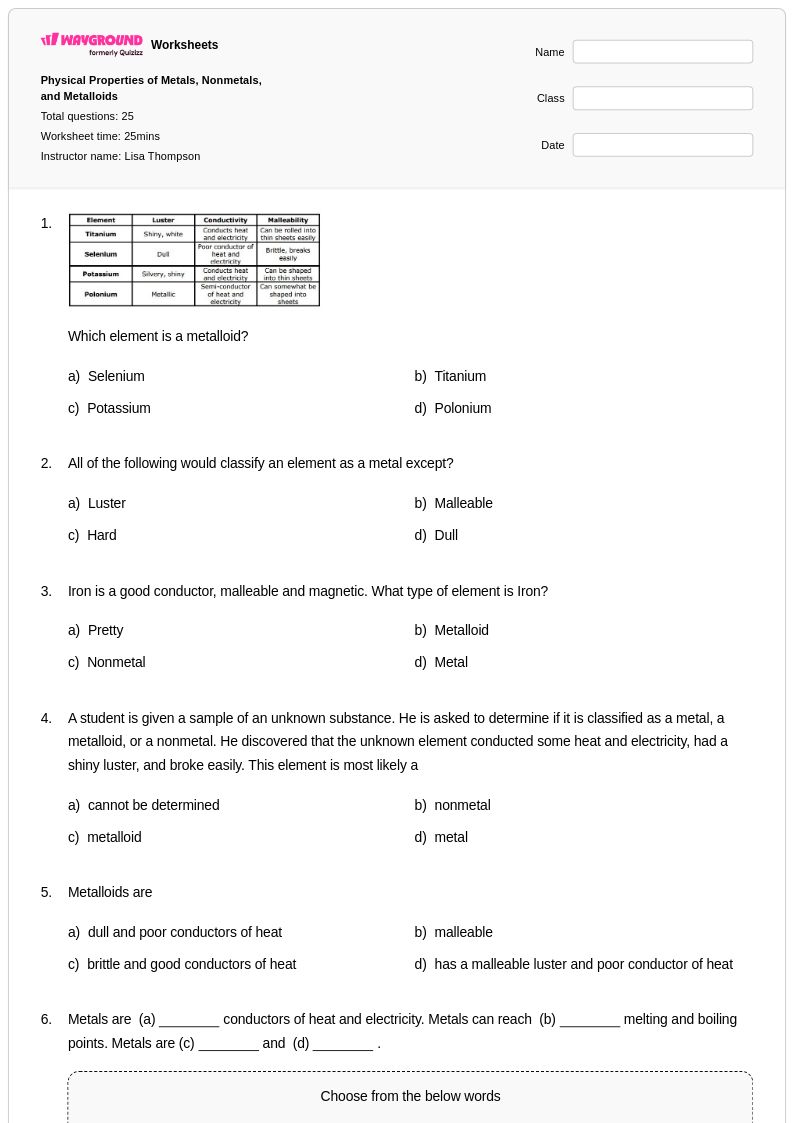
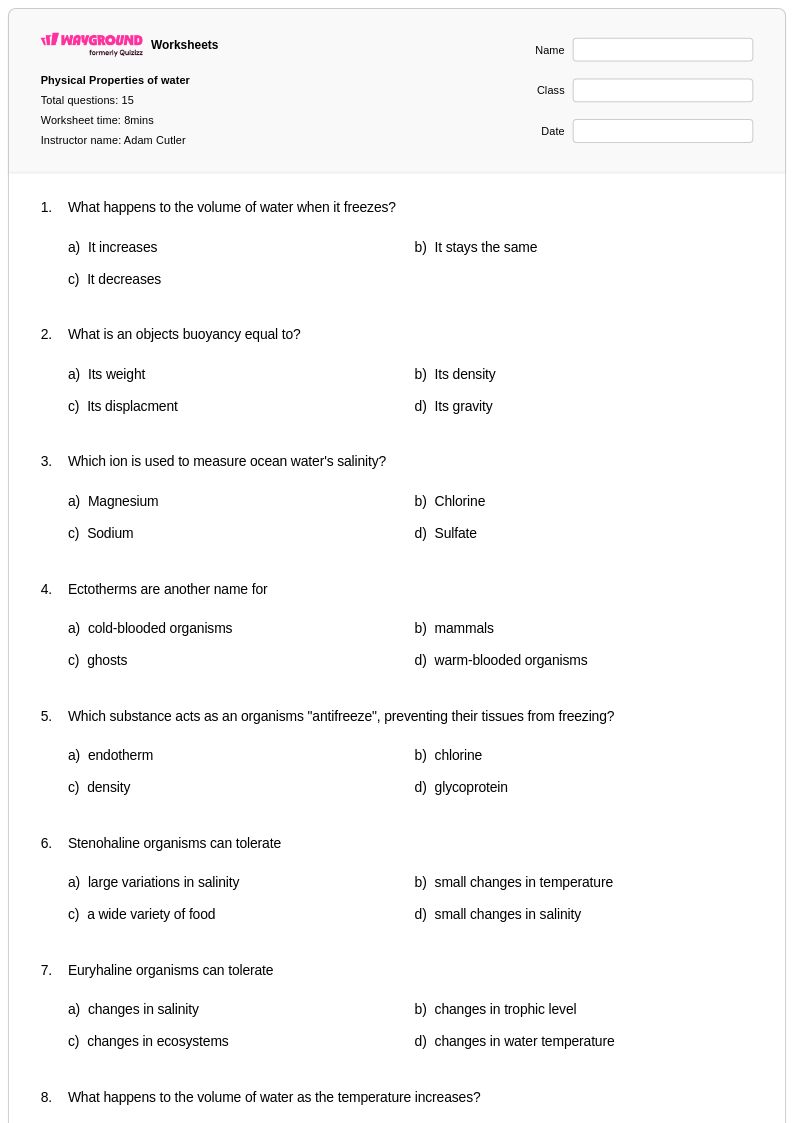
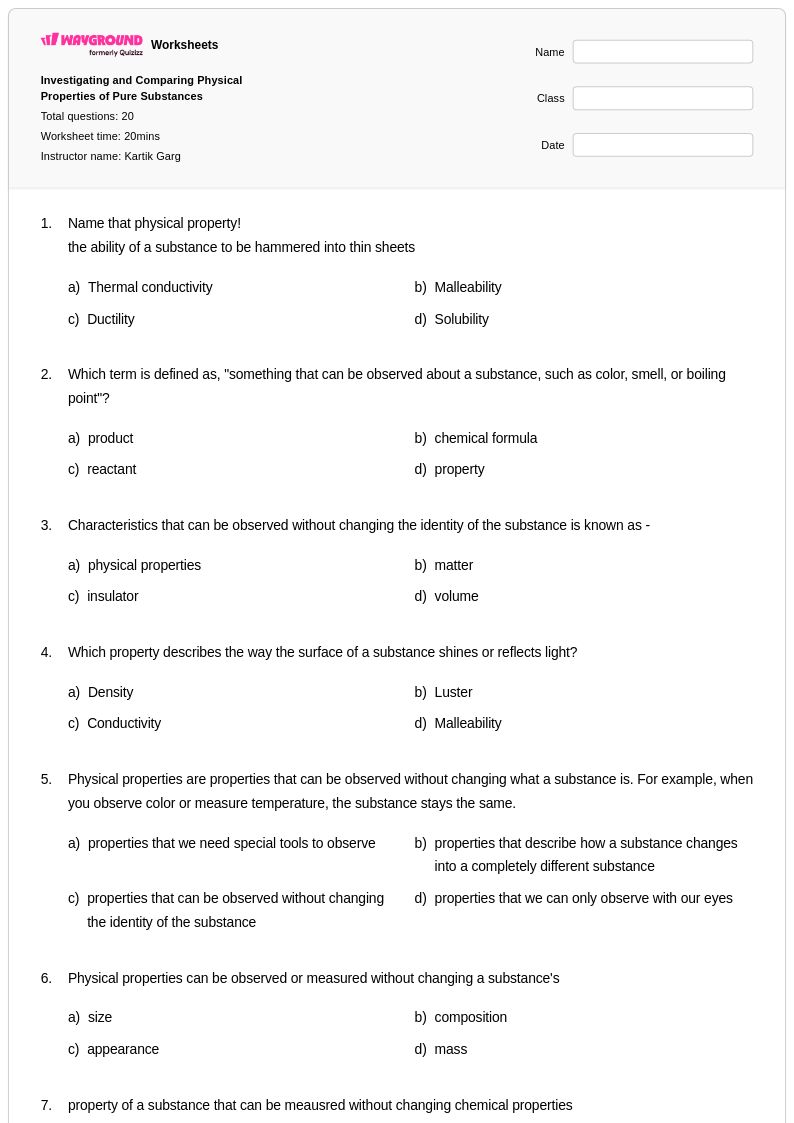
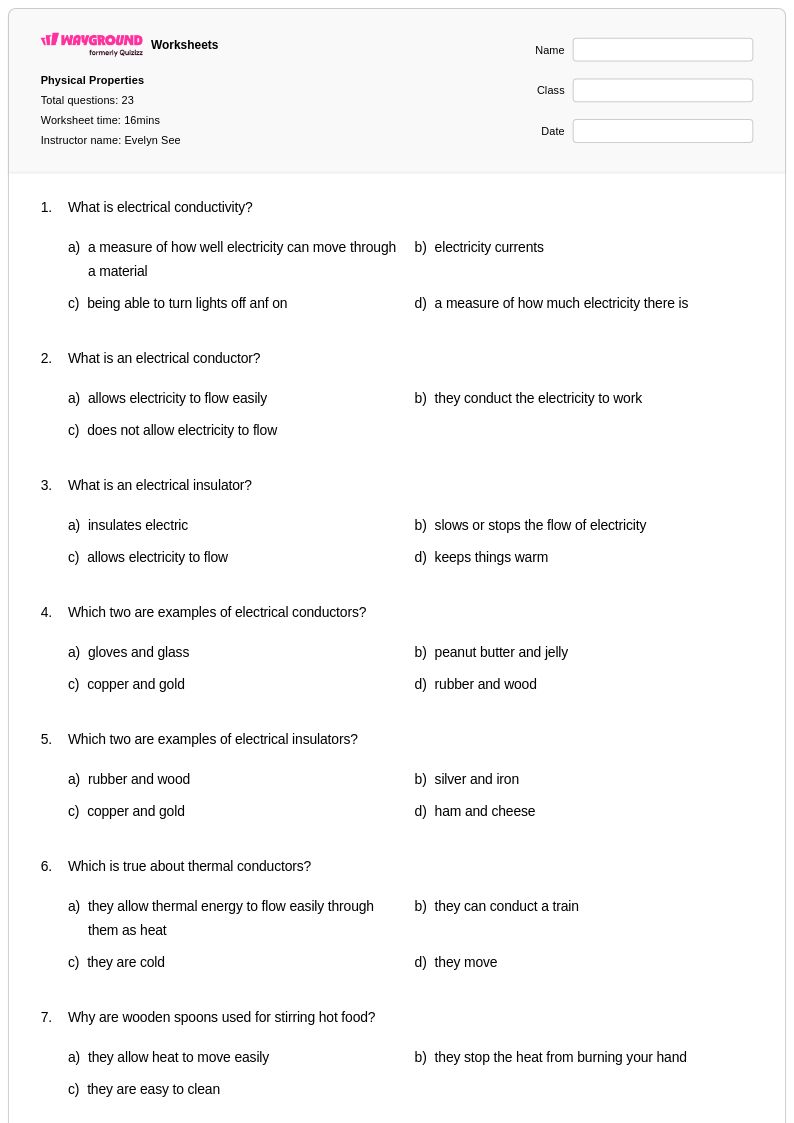
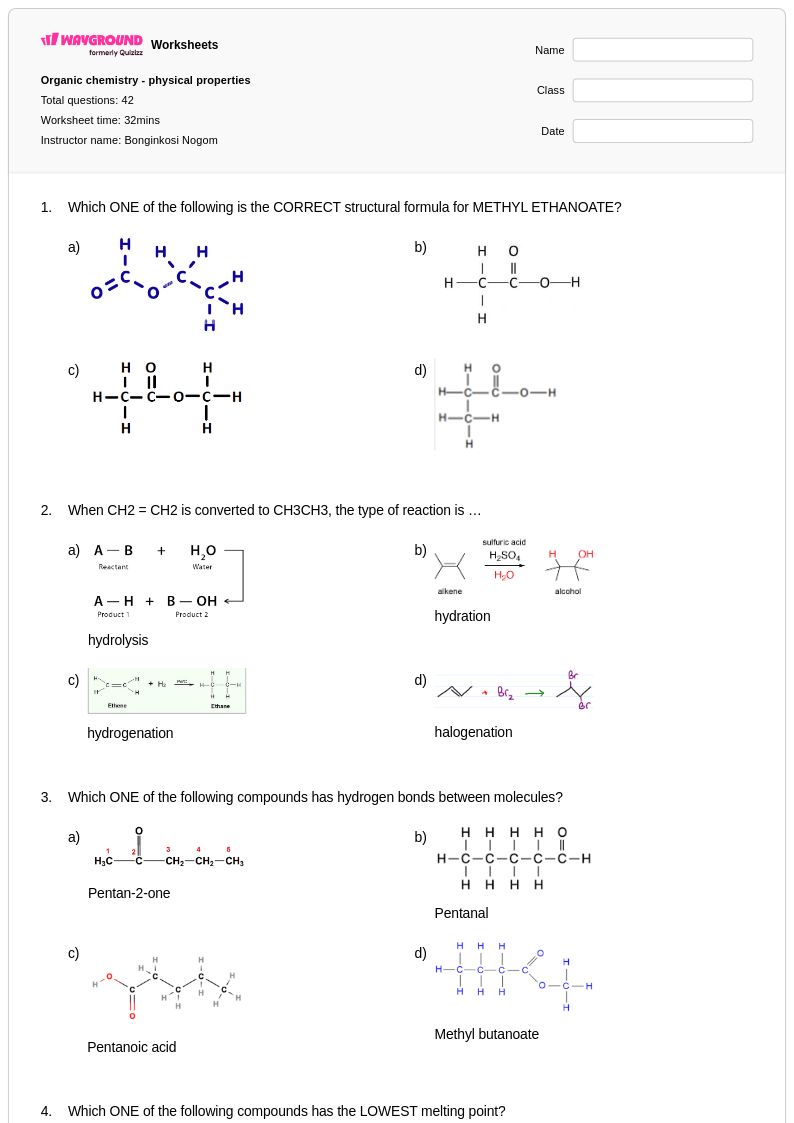
Grade 12 physical properties worksheets available through Wayground (formerly Quizizz) provide comprehensive practice with the fundamental characteristics that define matter without altering its chemical composition. These expertly designed resources strengthen students' analytical skills in identifying, measuring, and interpreting properties such as density, melting point, boiling point, solubility, electrical conductivity, and magnetic behavior. The worksheet collections feature systematic practice problems that guide students through data analysis, graph interpretation, and experimental design while reinforcing the relationship between molecular structure and observable properties. Each resource includes detailed answer keys and is available as free printables in convenient pdf format, enabling students to master the quantitative and qualitative aspects of physical property determination essential for advanced chemistry coursework.
Wayground (formerly Quizizz) empowers educators with millions of teacher-created physical properties worksheets that streamline lesson planning and enhance student understanding through targeted skill practice. The platform's robust search and filtering capabilities allow teachers to quickly locate resources aligned with specific learning standards and curriculum requirements, while built-in differentiation tools enable customization for varying ability levels within the classroom. These comprehensive worksheet collections are available in both printable and digital formats, including downloadable pdf versions, providing flexibility for in-class activities, homework assignments, and assessment preparation. Teachers can efficiently support remediation for struggling students and provide enrichment opportunities for advanced learners, ensuring all Grade 12 students develop the critical thinking skills necessary to analyze and predict physical property behavior across diverse chemical systems.
FAQs
How do I teach physical properties of matter to my students?
Start by grounding students in the core distinction: physical properties can be observed or measured without changing a substance's chemical composition. Anchor instruction around concrete, measurable examples like density, melting point, boiling point, solubility, and conductivity before moving to more abstract comparisons. Hands-on lab activities where students observe color, texture, and state of matter help build scientific observation habits early. Connecting each property to a real-world classification task, such as sorting materials by conductivity or solubility, reinforces why these properties matter to scientists.
What exercises help students practice identifying physical properties?
Practice exercises should progress from simple observation tasks, such as identifying color, shape, and texture, to more data-intensive problems involving density calculations, solubility curves, and melting or boiling point comparisons. Worksheets that present matter in different states and ask students to identify which properties apply push them to think systematically rather than recite definitions. Including problems that require students to distinguish physical properties from chemical properties is especially effective at solidifying conceptual boundaries.
What mistakes do students commonly make when learning about physical properties?
The most persistent misconception is confusing physical properties with chemical properties, particularly when a property like flammability seems observable but actually involves a chemical change. Students also frequently treat density as synonymous with weight, failing to account for volume in their reasoning. Another common error is assuming that a physical change always alters physical properties, when in fact properties like density and melting point remain constant regardless of sample size or shape.
How can I differentiate physical properties instruction for students at different levels?
For struggling students, reduce the number of properties covered at once and focus on direct observation tasks before introducing measurement-based problems. Advanced learners benefit from multi-step problems that require data analysis, such as using density and solubility data together to identify an unknown substance. On Wayground, teachers can apply individual accommodations including read aloud support, reduced answer choices, and extended time, so differentiation can be set per student without disrupting the rest of the class.
How do I use Wayground's physical properties worksheets in my classroom?
Wayground's physical properties worksheets are available as printable PDFs for traditional classroom use and in digital formats for technology-integrated or remote learning environments. Teachers can also host the worksheets as a quiz directly on Wayground, enabling automatic grading and real-time progress tracking. All worksheets include complete answer keys, making them practical for independent practice, guided instruction, or remediation sessions.