Free Printable Molecular Shapes Worksheets for Grade 12
Grade 12 molecular shapes worksheets from Wayground offer free printables and practice problems with answer keys to help students master VSEPR theory, molecular geometry, and three-dimensional chemical structures.
Explore printable Molecular Shapes worksheets for Grade 12
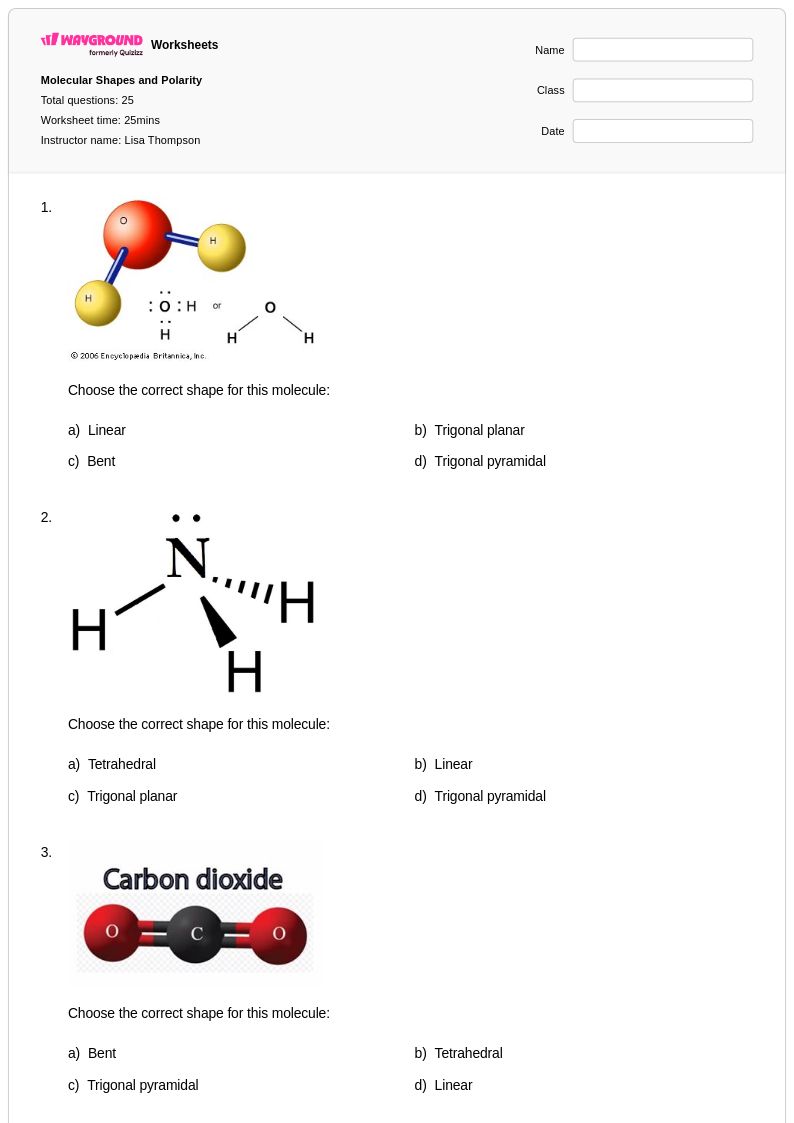
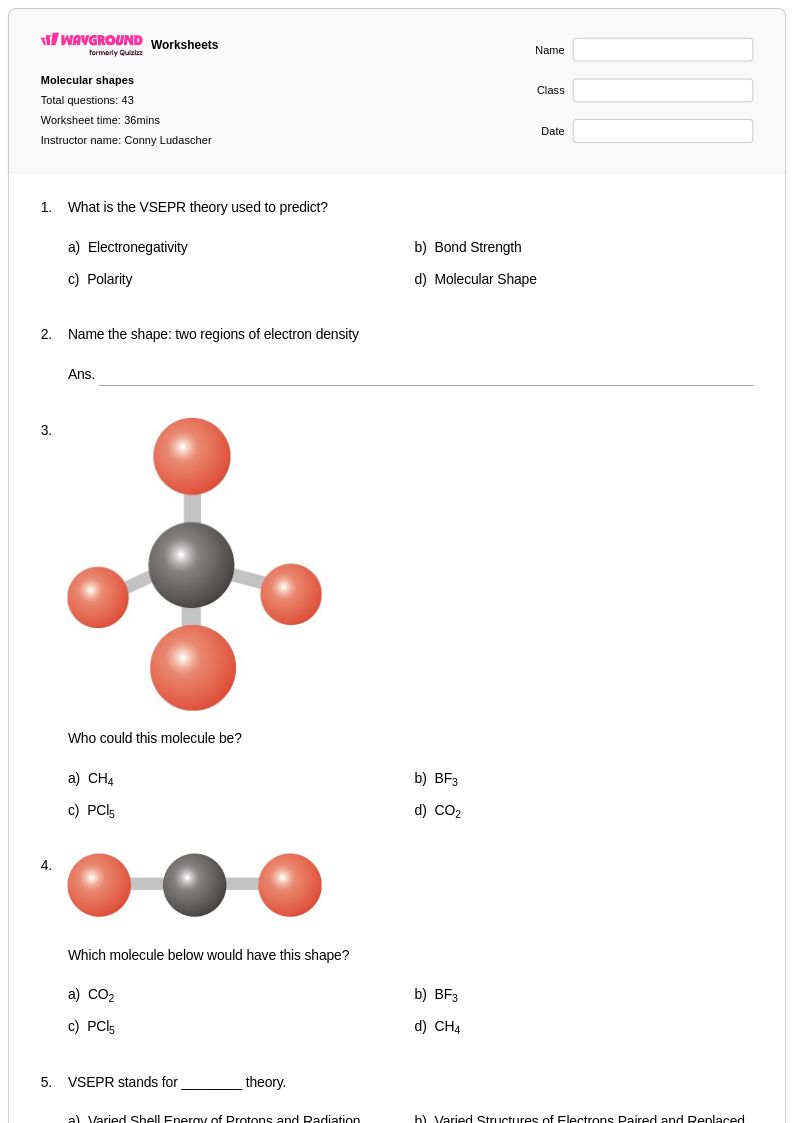
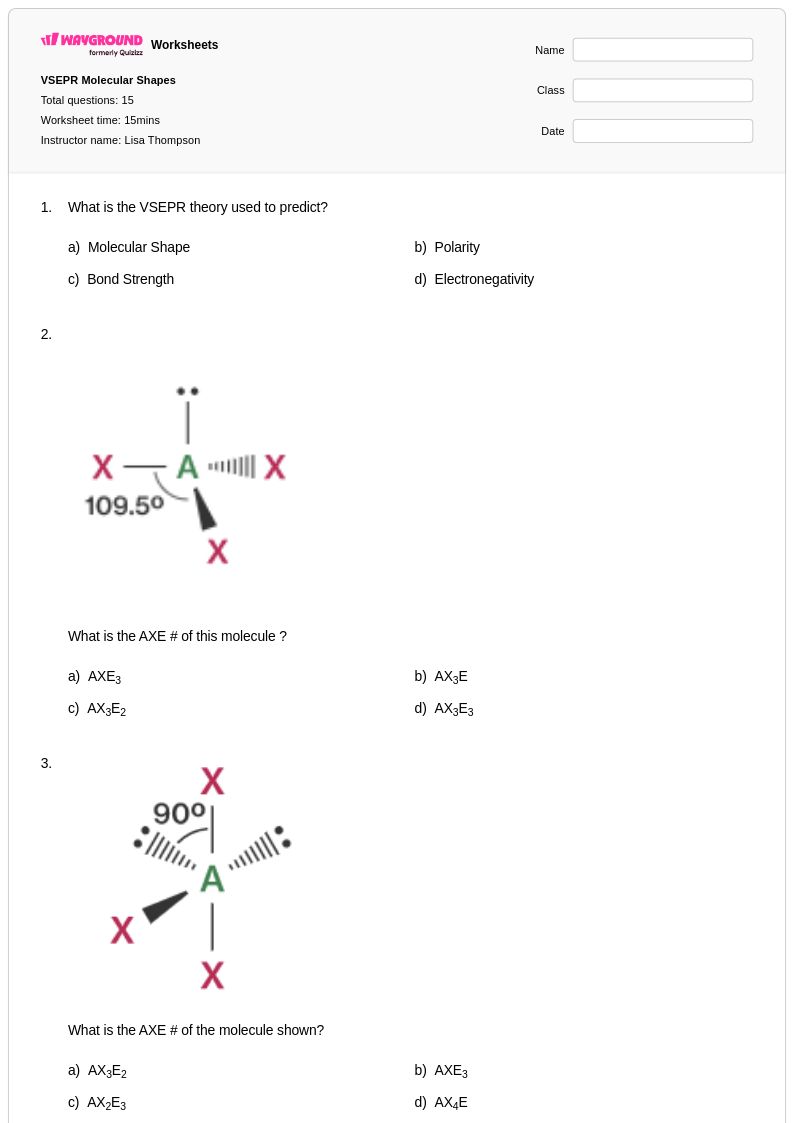
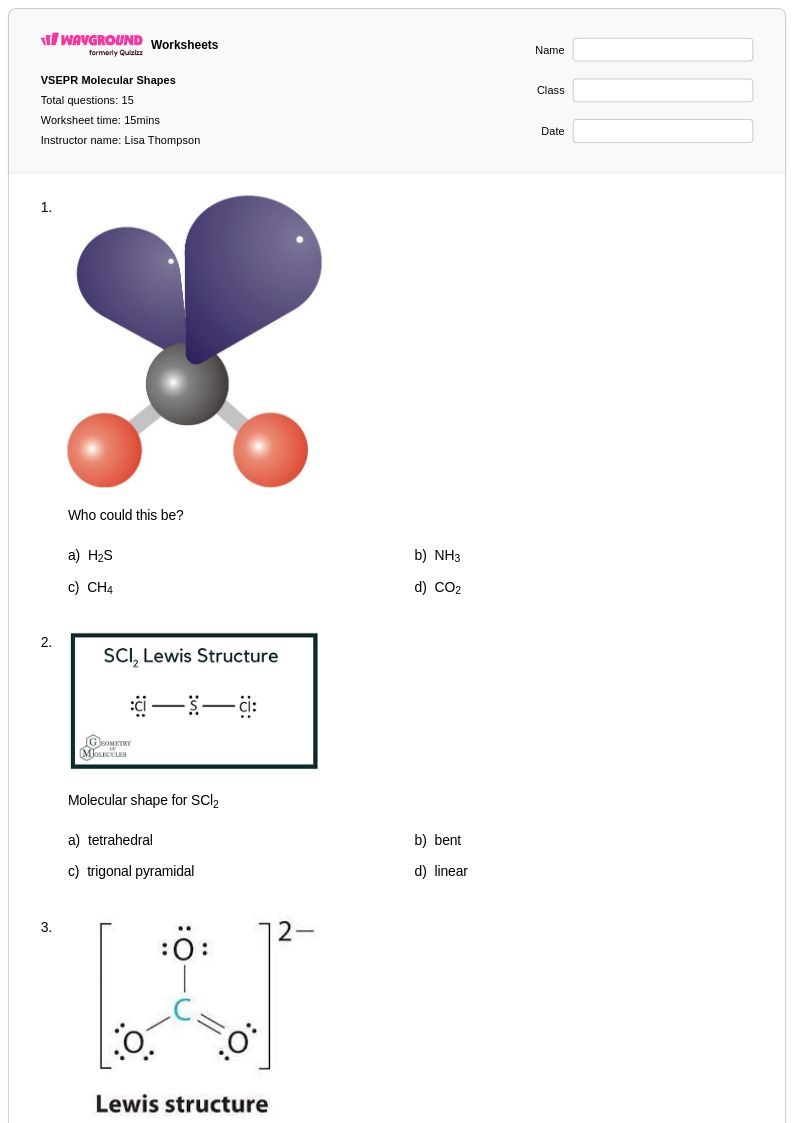
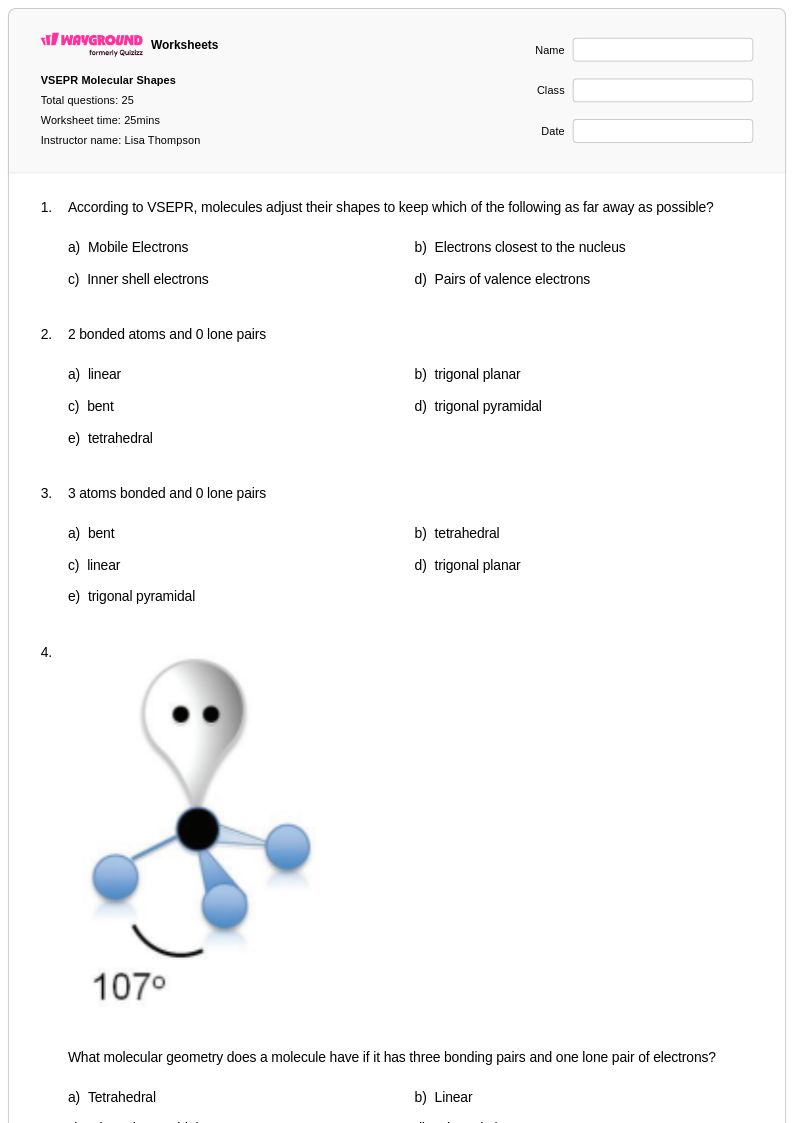
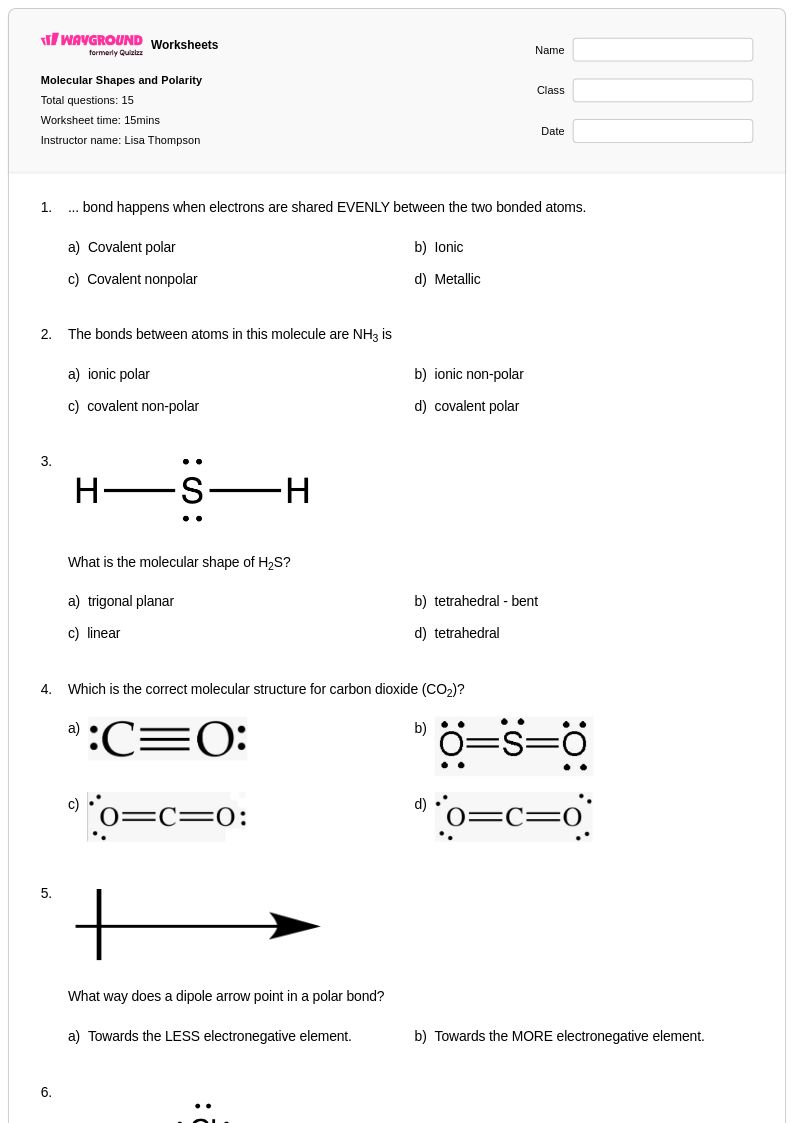
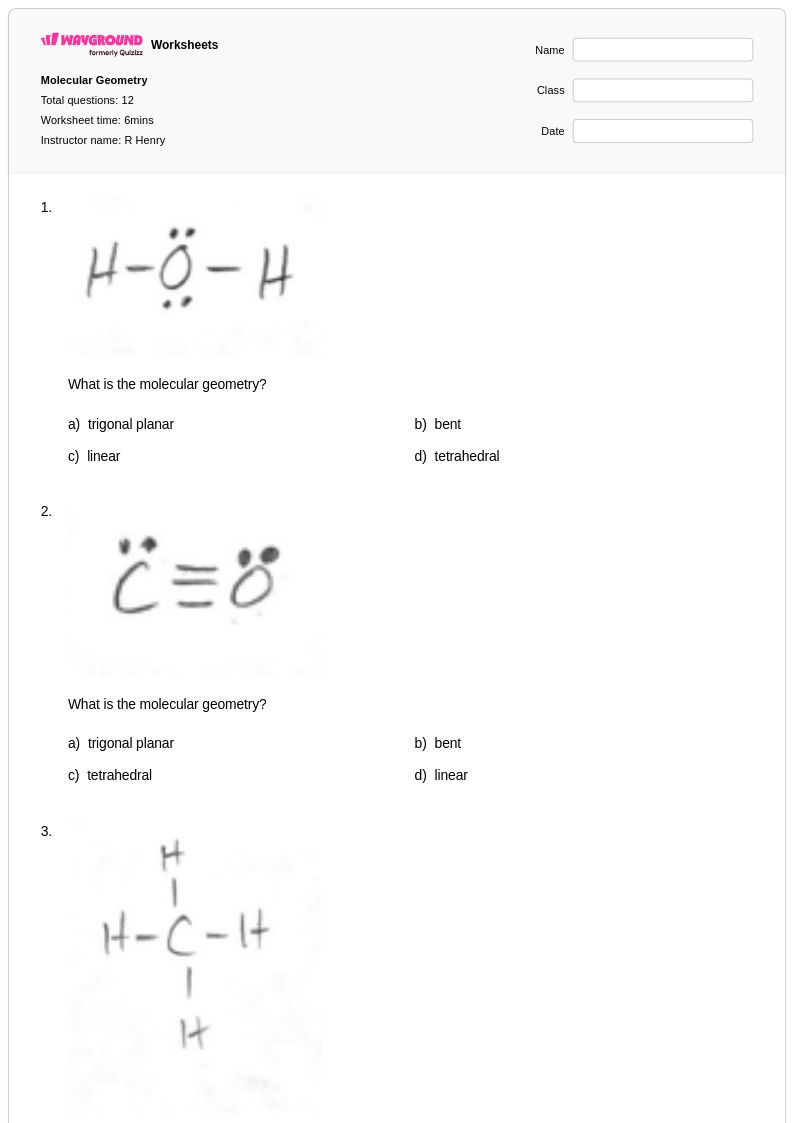
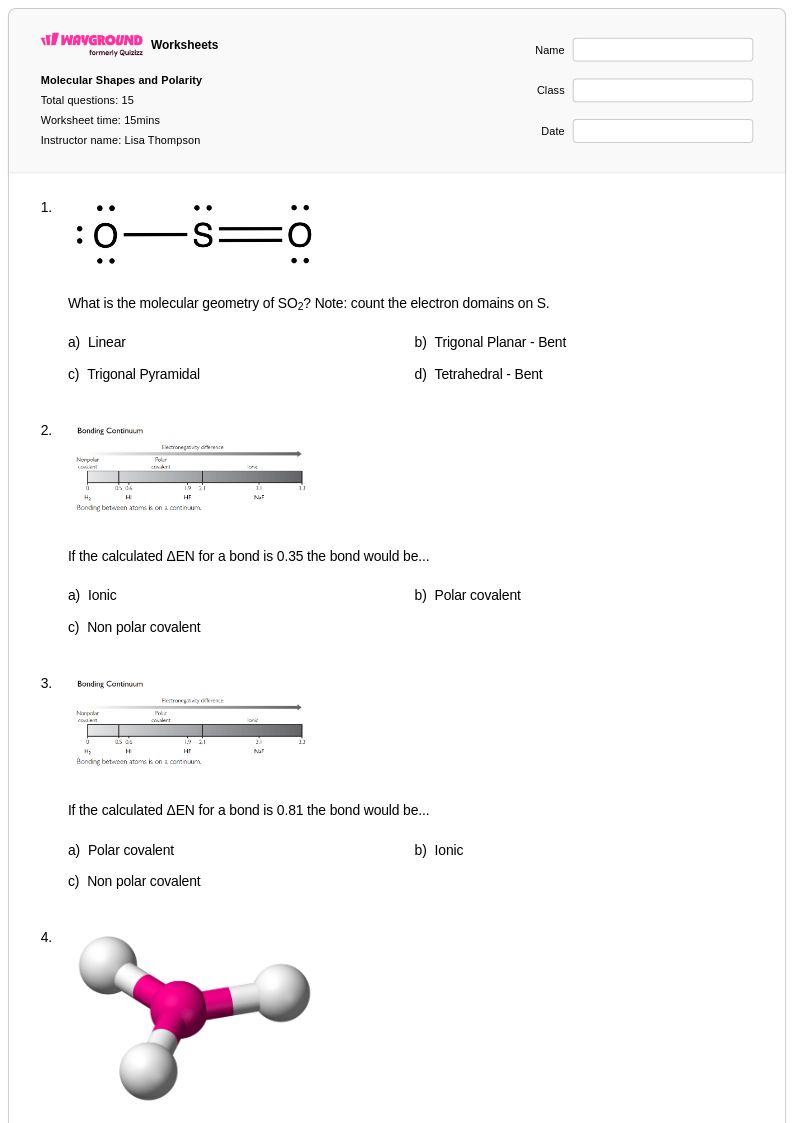
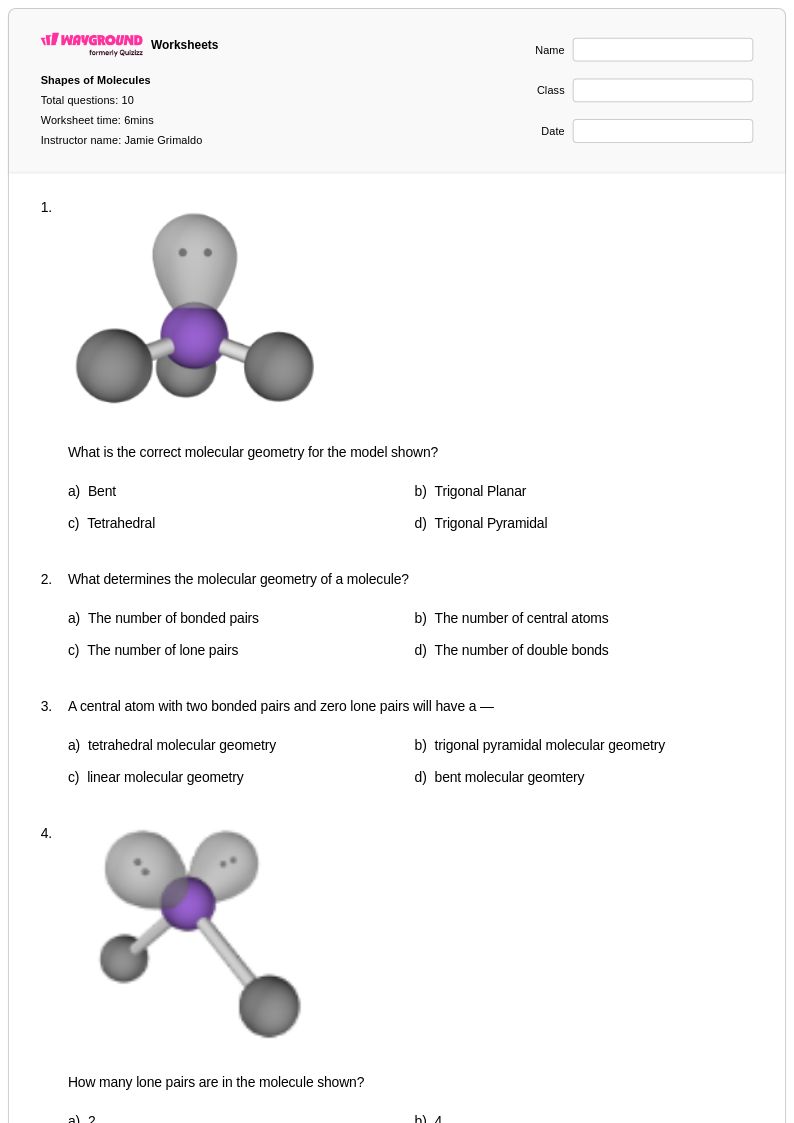
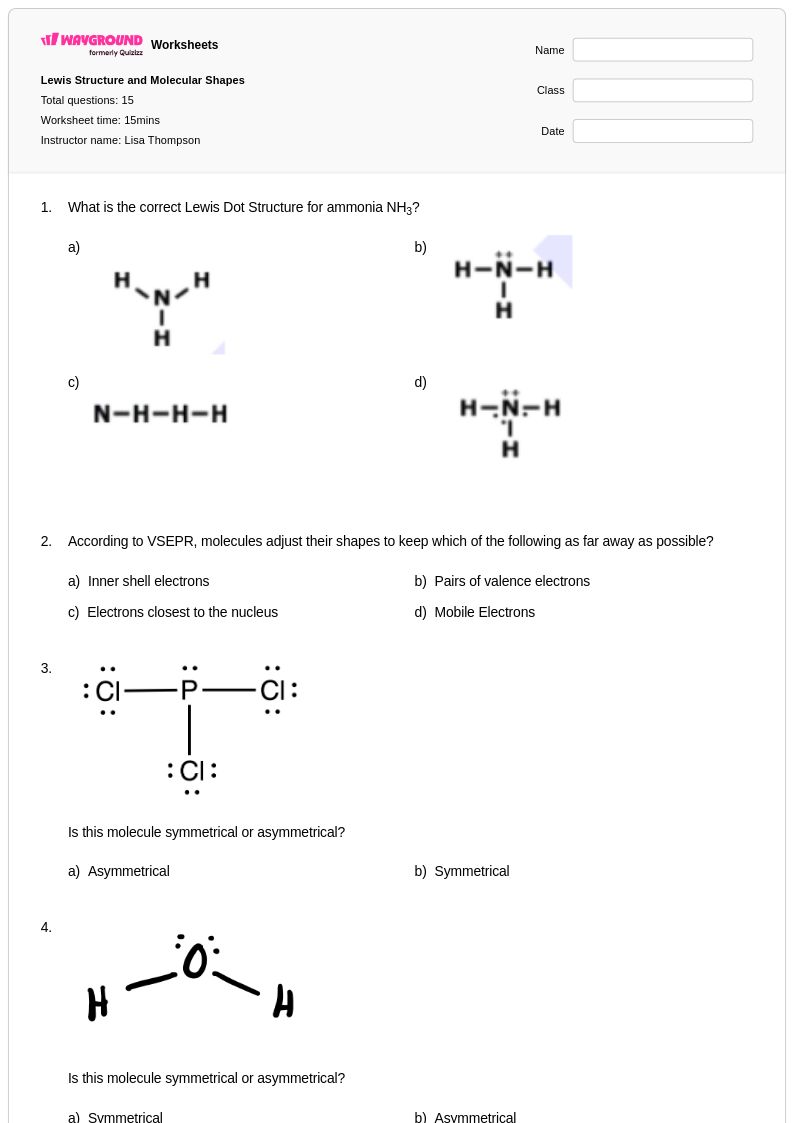
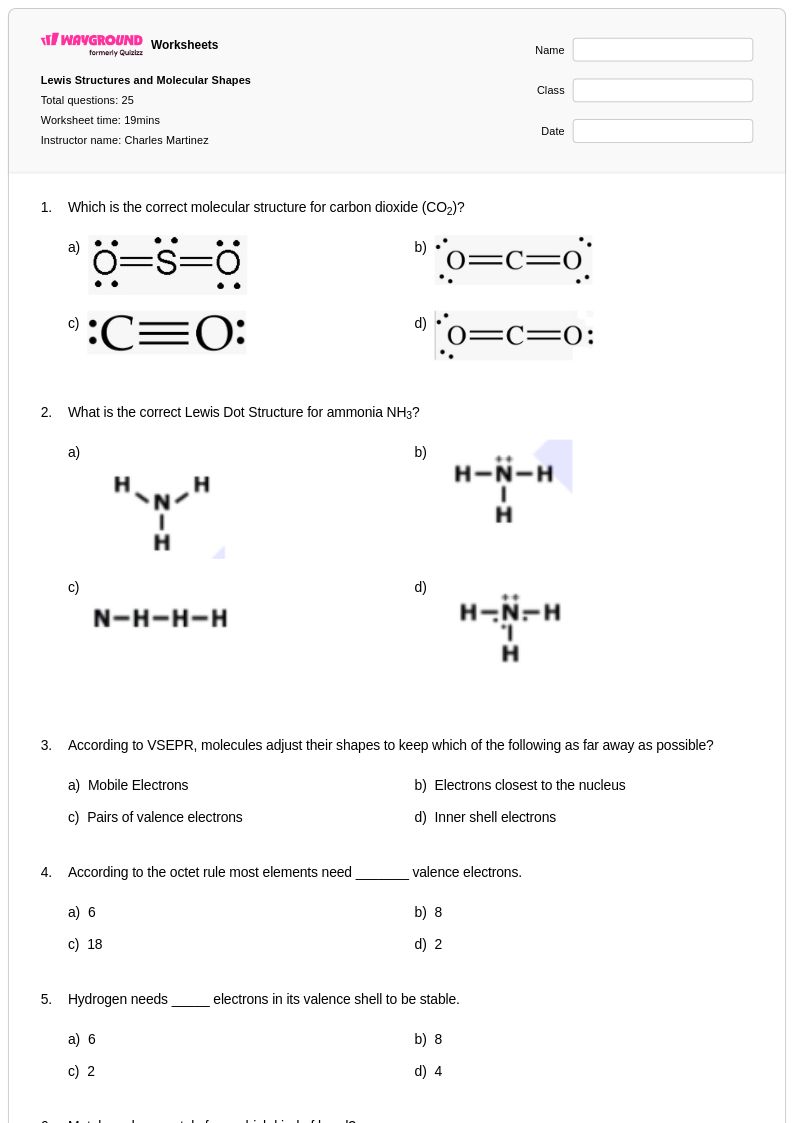
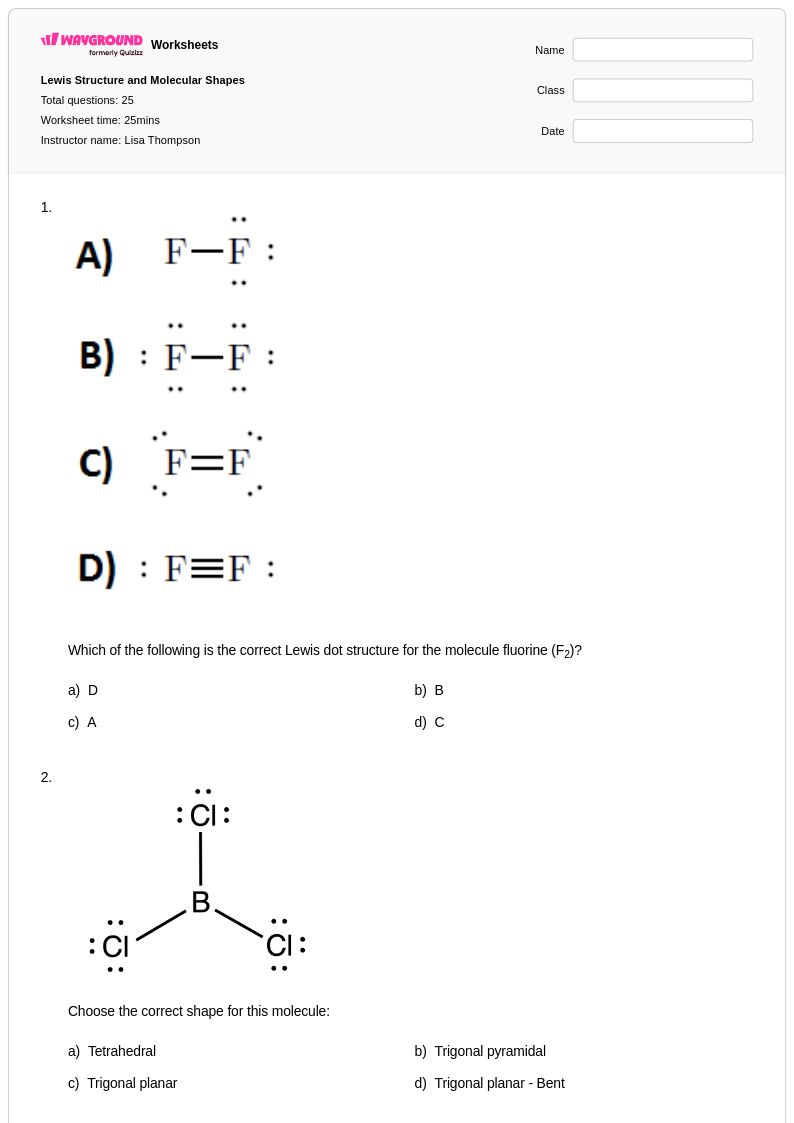
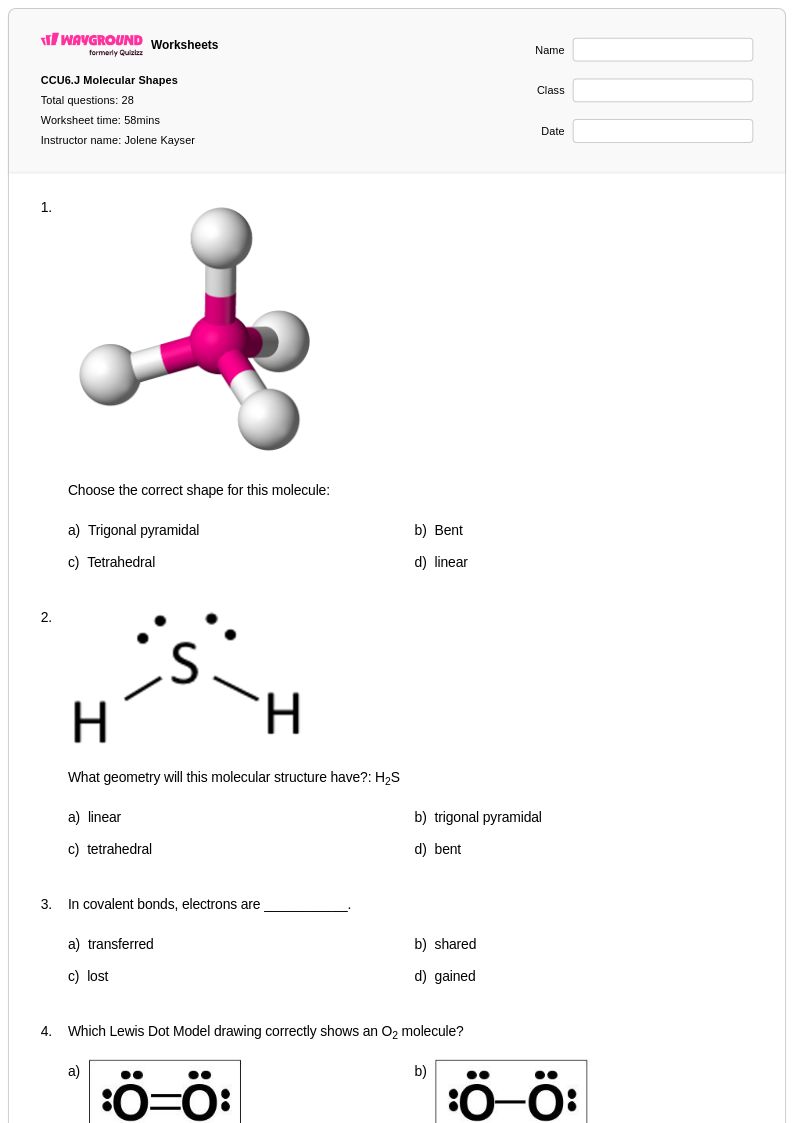
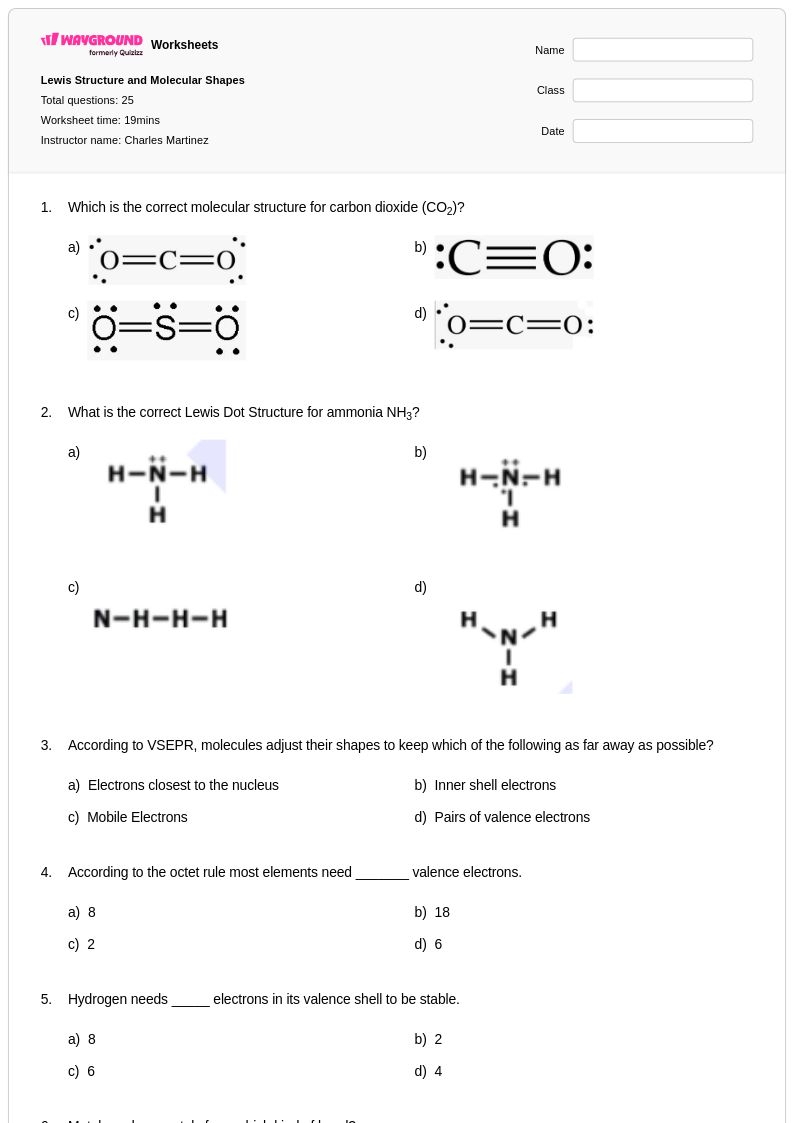
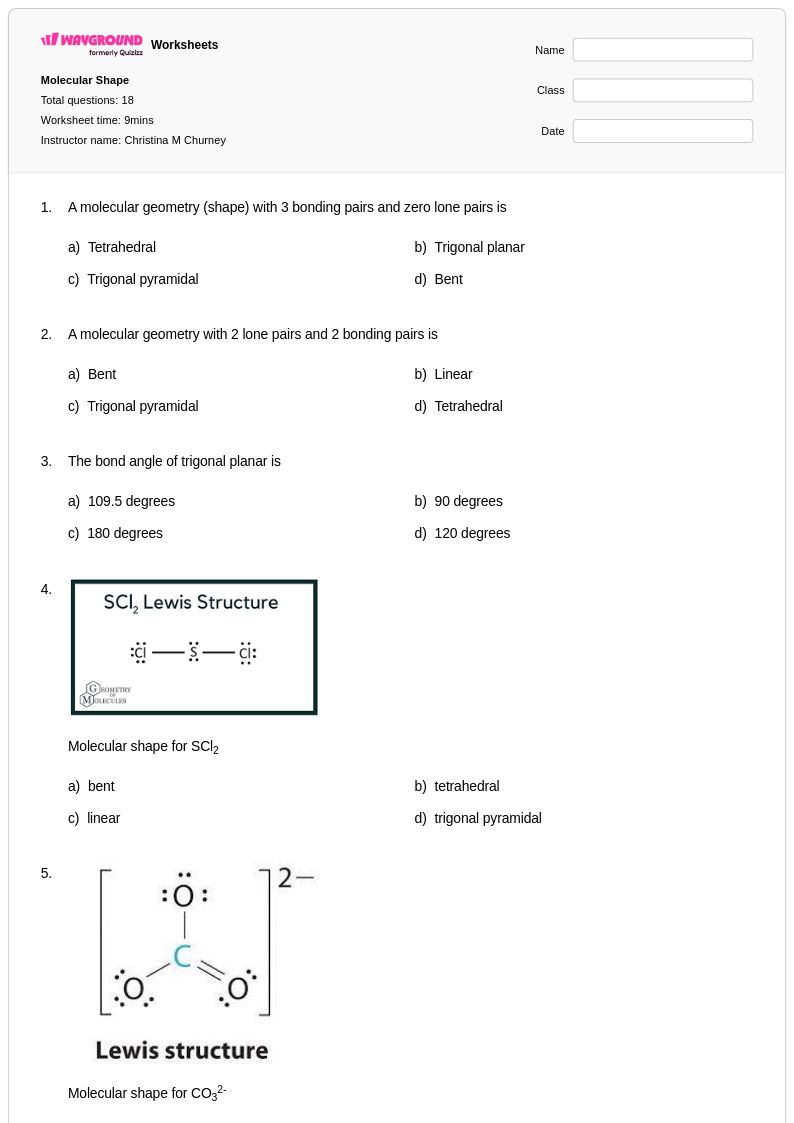
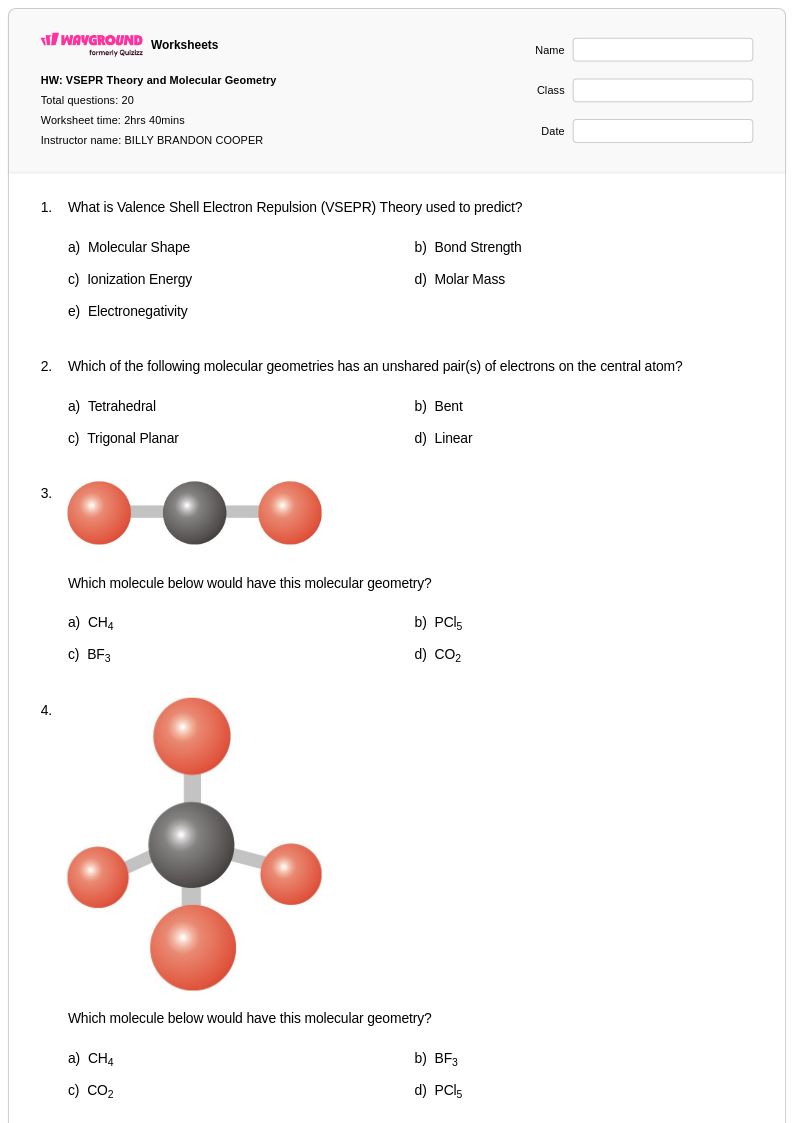
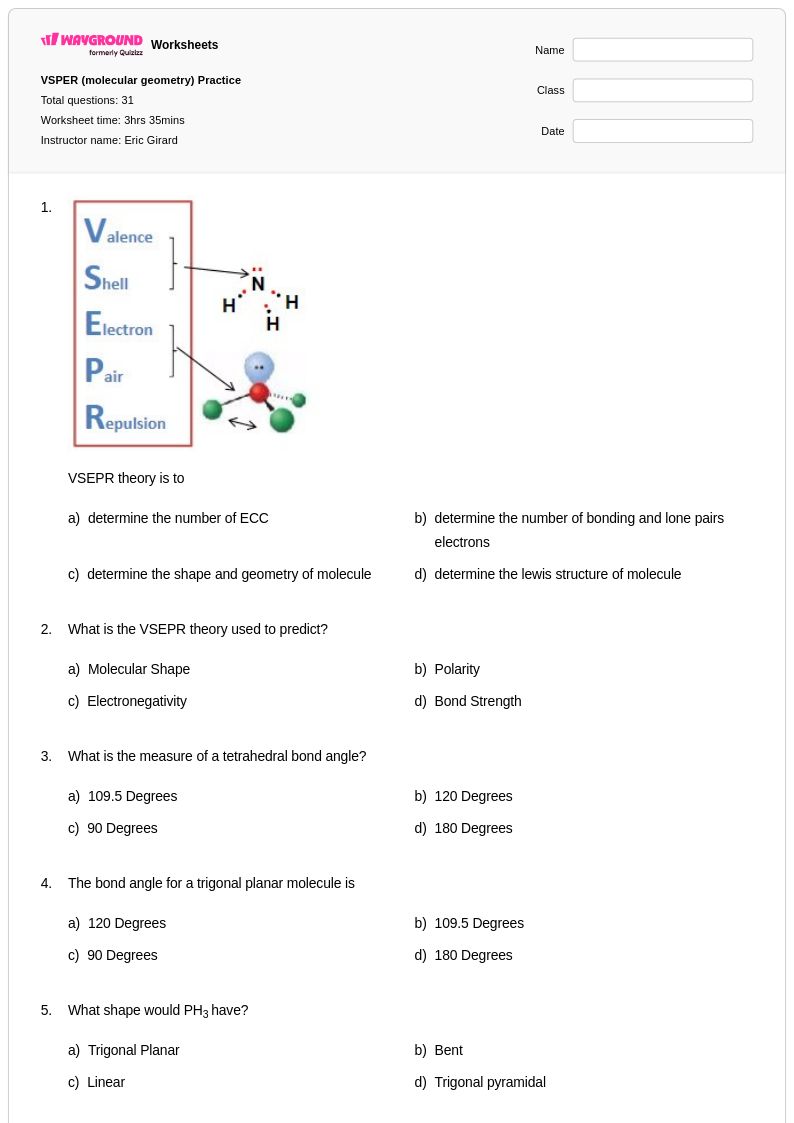
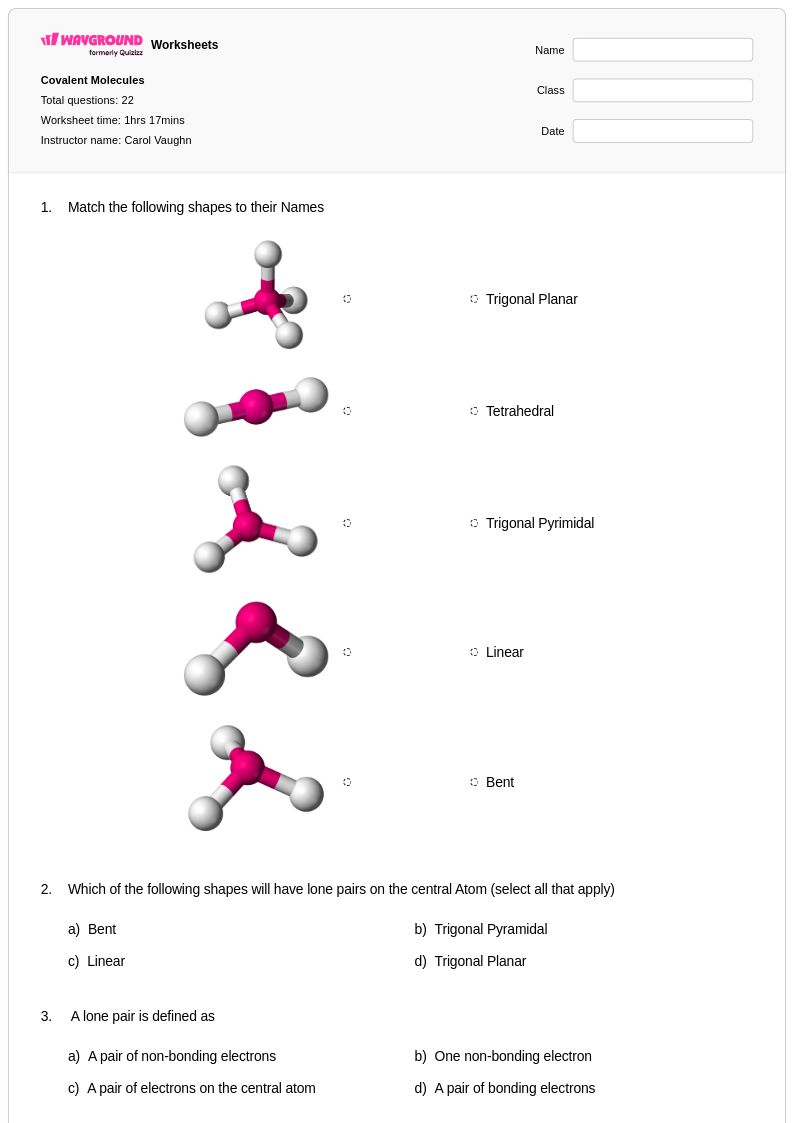
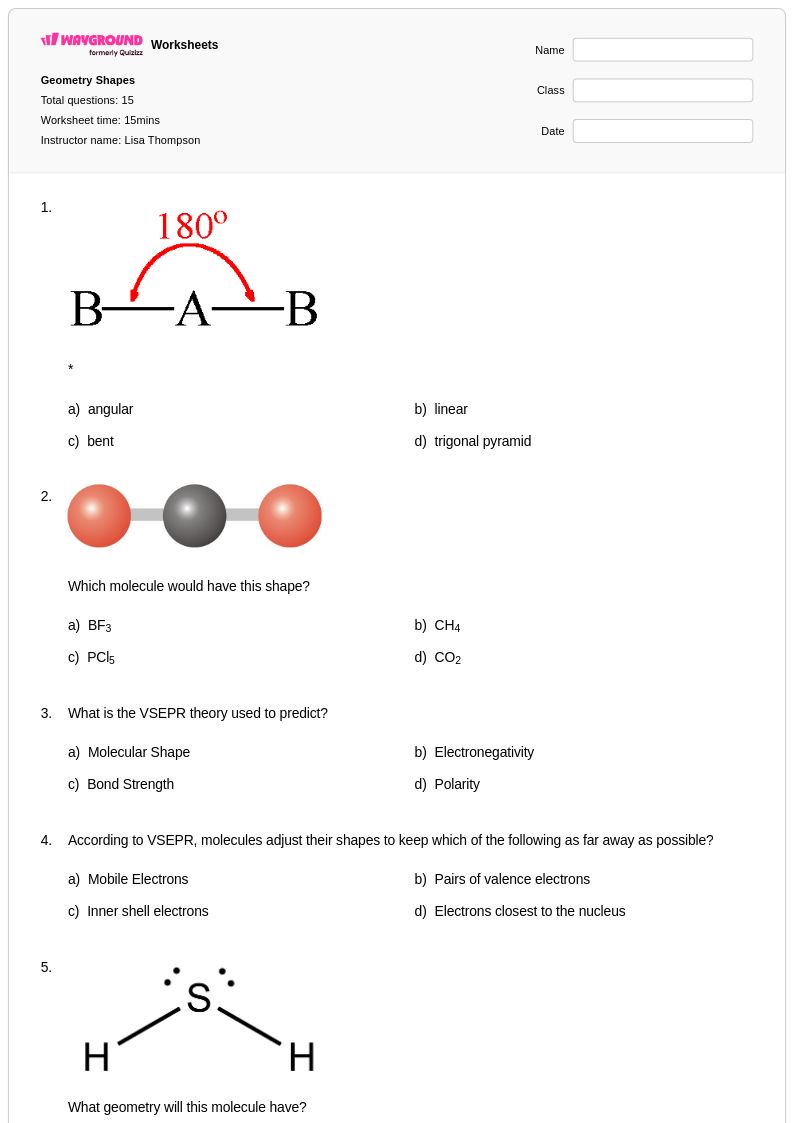
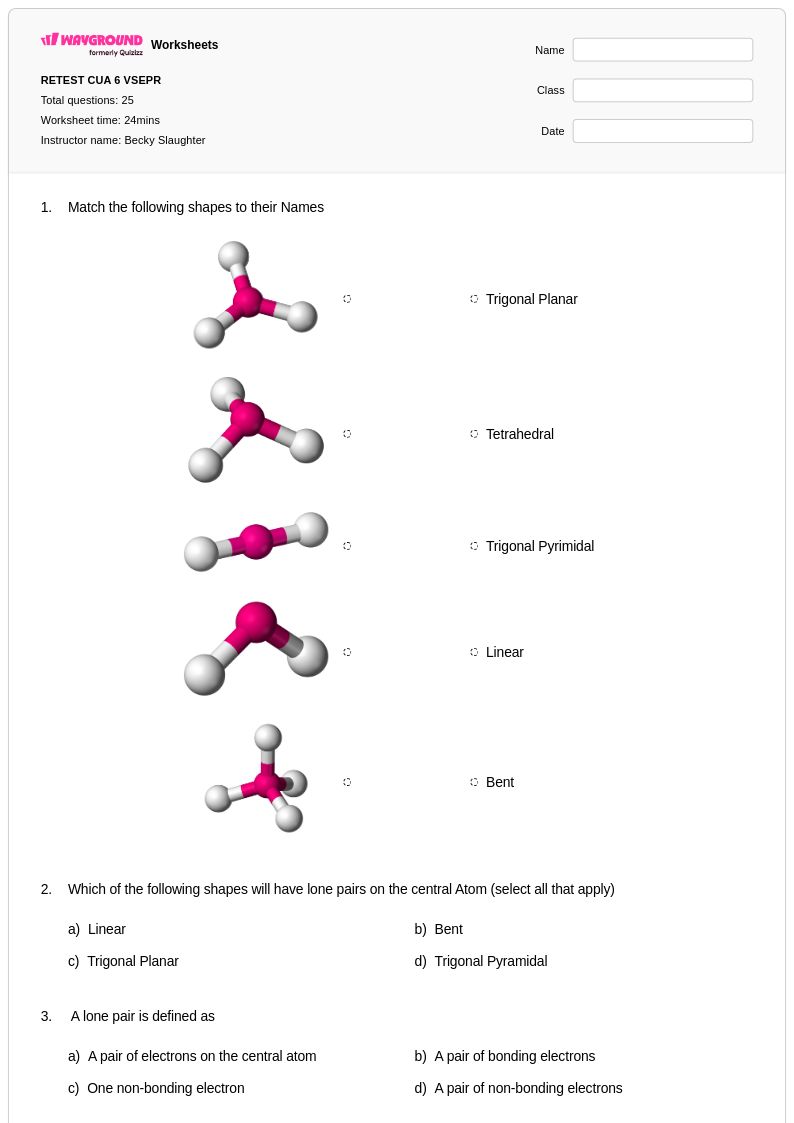
Grade 12 molecular shapes worksheets available through Wayground (formerly Quizizz) provide comprehensive practice for students mastering VSEPR theory and three-dimensional molecular geometry. These expertly designed printables strengthen essential skills including predicting molecular shapes using electron pair repulsion principles, determining bond angles for various geometric configurations, and understanding the relationship between Lewis structures and molecular geometry. Students work through systematic practice problems that cover linear, trigonal planar, tetrahedral, trigonal bipyramidal, and octahedral arrangements, while also exploring how lone pairs influence molecular shape. Each worksheet collection includes detailed answer keys that guide students through the step-by-step process of applying VSEPR theory, making these free resources invaluable for both classroom instruction and independent study as students prepare for advanced chemistry assessments.
Wayground (formerly Quizizz) empowers chemistry educators with millions of teacher-created molecular shapes resources that can be easily searched, filtered, and customized to match specific curriculum standards and student needs. The platform's robust differentiation tools allow teachers to modify worksheets for various ability levels, ensuring that all Grade 12 students can access appropriately challenging content while building proficiency in molecular geometry concepts. These flexible resources are available in both printable pdf format for traditional classroom use and digital formats for technology-enhanced learning environments. Teachers can efficiently plan lessons, provide targeted remediation for students struggling with three-dimensional visualization, offer enrichment activities for advanced learners, and create focused skill practice sessions that reinforce the connection between electron configuration, bonding theory, and molecular architecture.
FAQs
How do I teach molecular shapes and VSEPR theory effectively?
Start by grounding students in Lewis structures before introducing VSEPR theory, since predicting molecular geometry depends on accurately counting bonding and lone electron pairs. Use physical or digital 3D models alongside instruction so students can visualize why electron repulsion determines shape. Progress from simple linear and bent molecules to more complex tetrahedral and trigonal bipyramidal arrangements, reinforcing each geometry with bond angle values and real-world molecular examples like water and methane.
What exercises help students practice identifying molecular geometry?
Effective practice exercises ask students to draw Lewis structures, count electron domains, identify electron pair geometry, and then determine molecular shape by accounting for lone pairs. Worksheets that include a mix of written prediction tasks, bond angle labeling, and polarity determination reinforce the full VSEPR workflow. Including molecules that share the same electron geometry but differ in molecular shape, such as tetrahedral versus bent, helps students distinguish between the two concepts accurately.
What mistakes do students commonly make when learning molecular shapes?
The most frequent error is confusing electron pair geometry with molecular geometry — students often report the shape based on all electron domains rather than only the atoms. Another common mistake is misidentifying lone pairs in Lewis structures, which cascades into incorrect shape predictions. Students also frequently misapply bond angles, defaulting to idealized values without adjusting for the greater repulsion exerted by lone pairs, which compresses bond angles in molecules like water and ammonia.
How do molecular shapes worksheets connect to polarity and hybridization concepts?
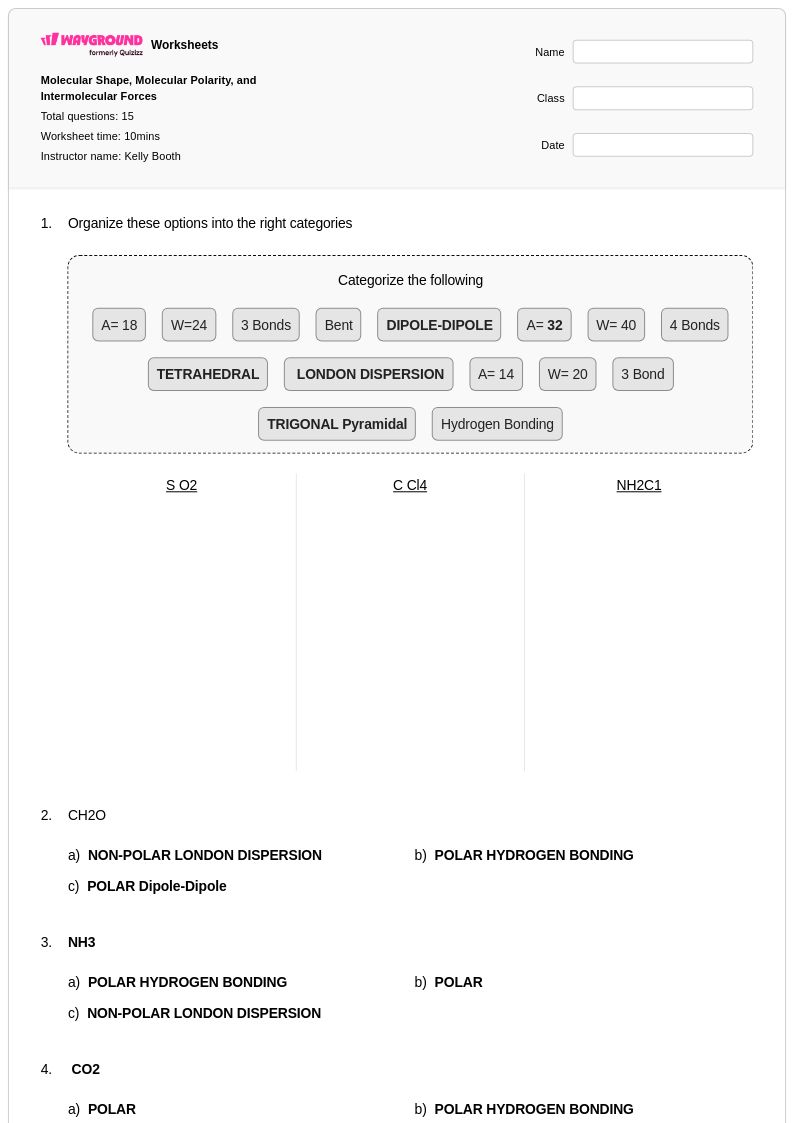
Molecular shape is a prerequisite for determining polarity because students must know a molecule's geometry before they can assess whether bond dipoles cancel out. A symmetrical shape like carbon dioxide is linear and nonpolar despite having polar bonds, while a bent molecule like water is polar because the dipoles do not cancel. Connecting shape to hybridization gives students a mechanistic explanation for why certain geometries occur, linking sp, sp², and sp³ hybridization to linear, trigonal planar, and tetrahedral arrangements respectively.
How can I use molecular shapes worksheets to support students at different skill levels?
For introductory learners, use worksheets that focus on simple diatomic and triatomic molecules with step-by-step VSEPR scaffolding. More advanced students benefit from problems involving expanded octets, molecular polarity analysis, and hybridization predictions. On Wayground, teachers can apply individual accommodations such as reduced answer choices to lower cognitive load for struggling students, or extended time settings for those who need additional processing support, without disrupting the experience for the rest of the class.
How do I use Wayground's molecular shapes worksheets in my classroom?
Wayground's molecular shapes worksheets are available as printable PDFs for traditional classroom use and in digital formats for technology-integrated environments, giving teachers flexibility regardless of their setup. Digital worksheets can be hosted as a quiz directly on Wayground, making them easy to assign for in-class practice, homework, or formative assessment. Each worksheet includes a complete answer key, which supports both teacher-led review and independent student self-assessment.