Free Printable Heat Transfer and Thermal Equilibrium Worksheets for Grade 12
Grade 12 chemistry students can master heat transfer and thermal equilibrium concepts with Wayground's comprehensive collection of free worksheets, printable PDFs, practice problems, and detailed answer keys.
Explore printable Heat Transfer and Thermal Equilibrium worksheets for Grade 12
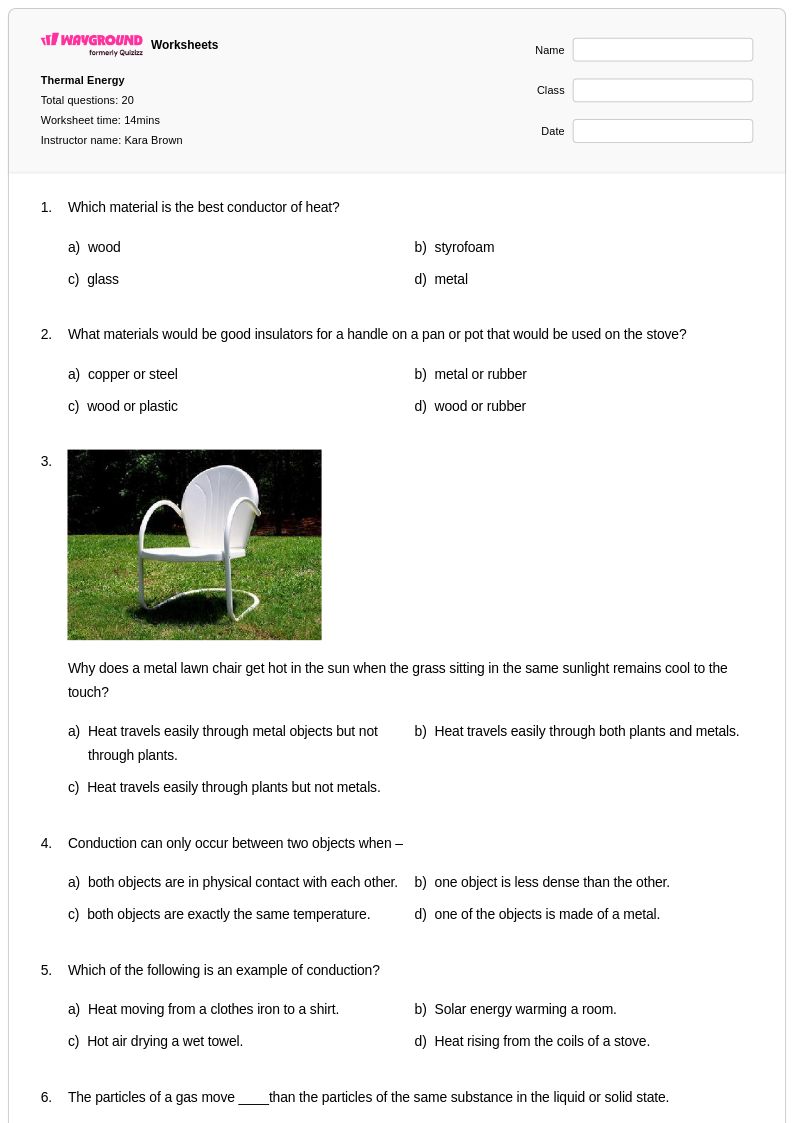
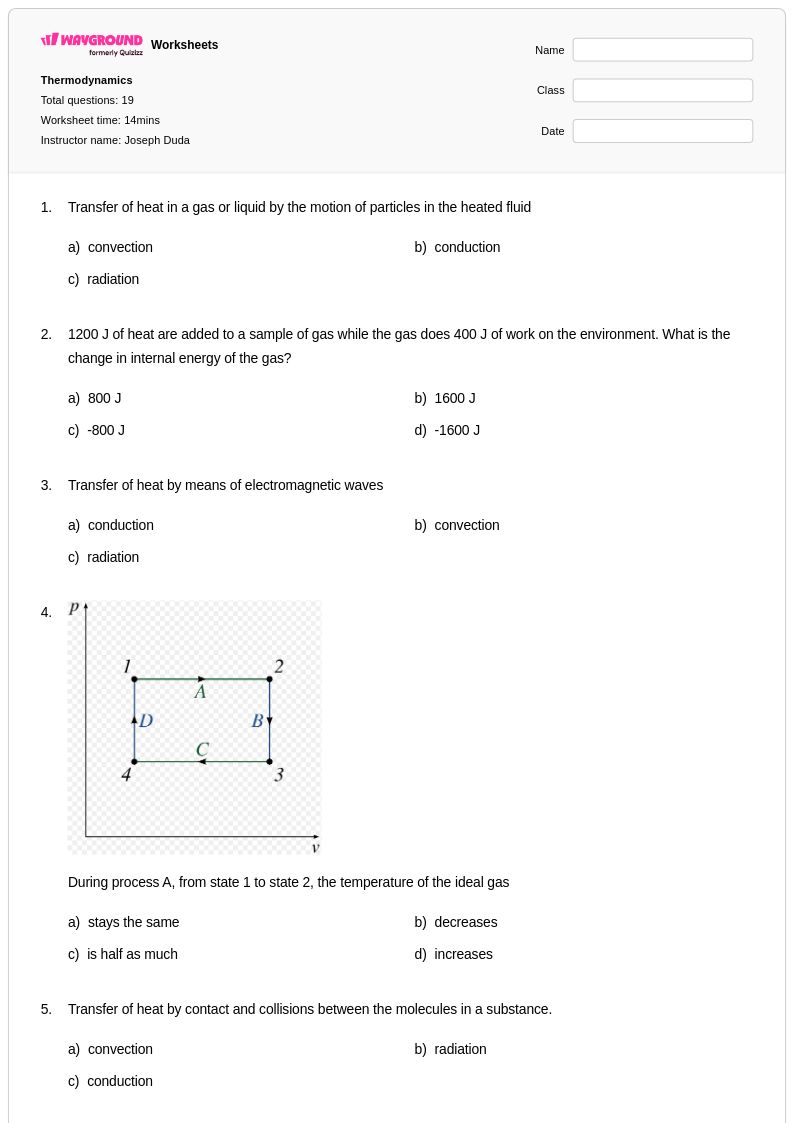
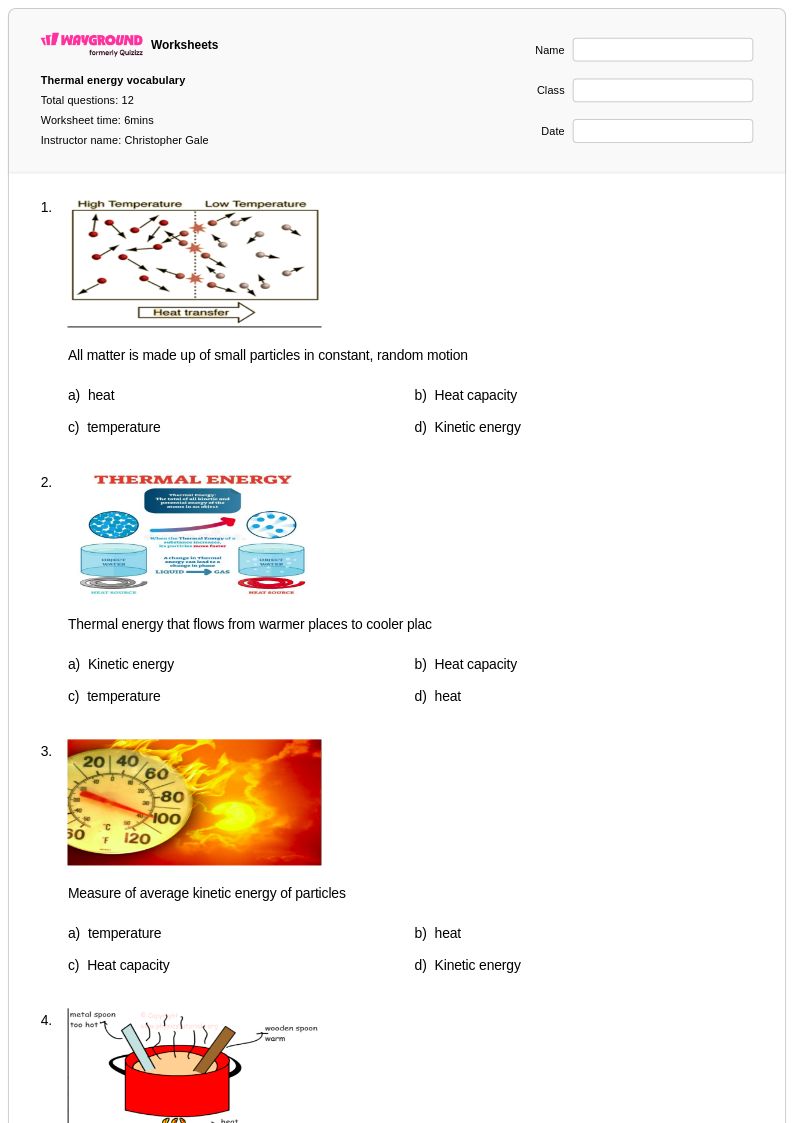
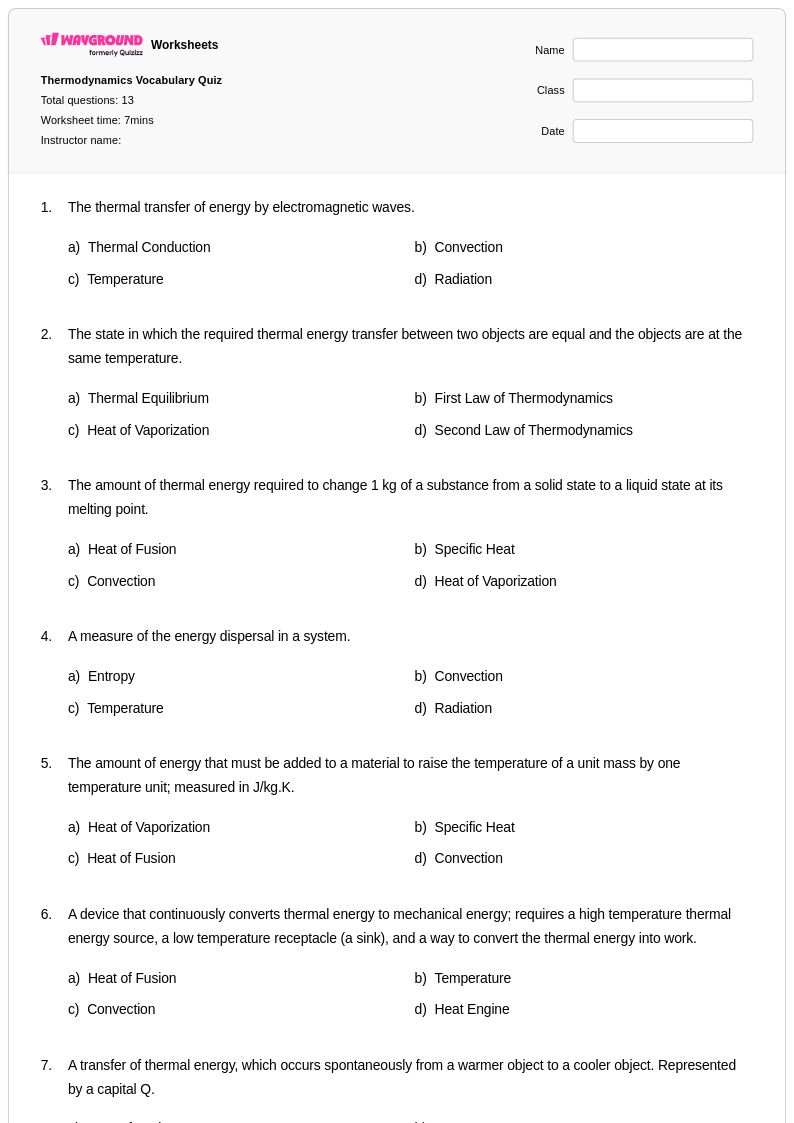
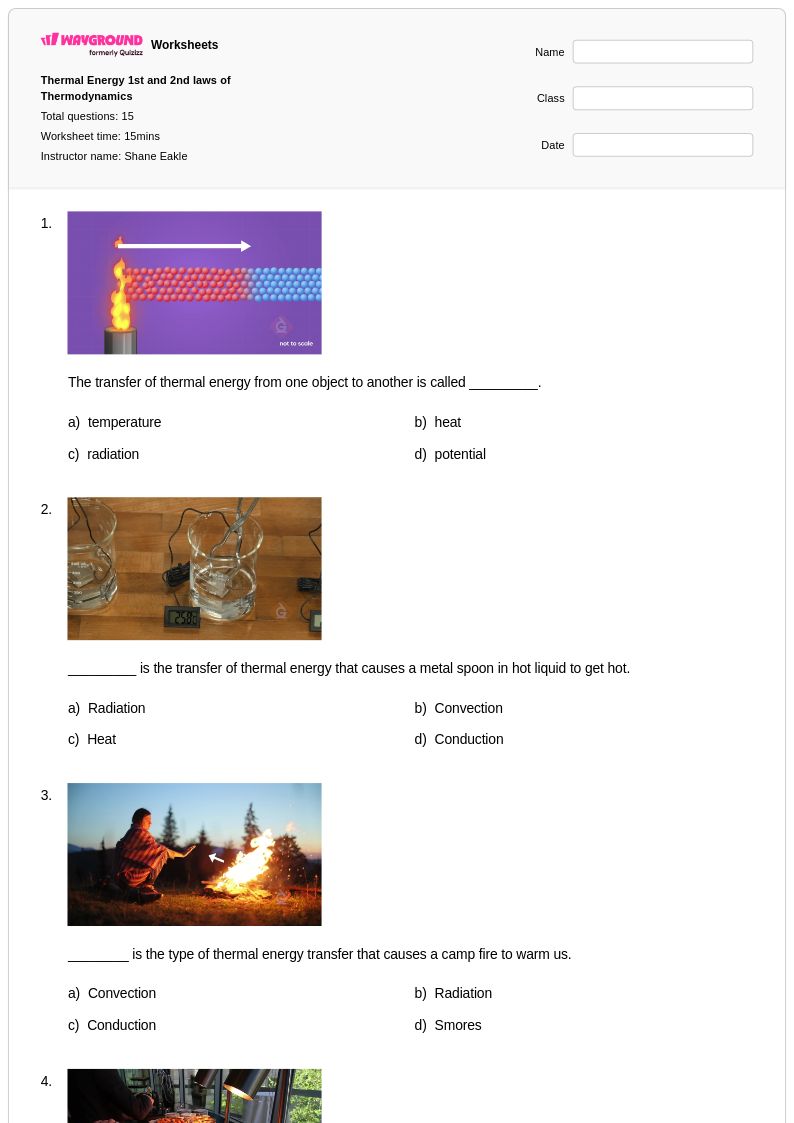
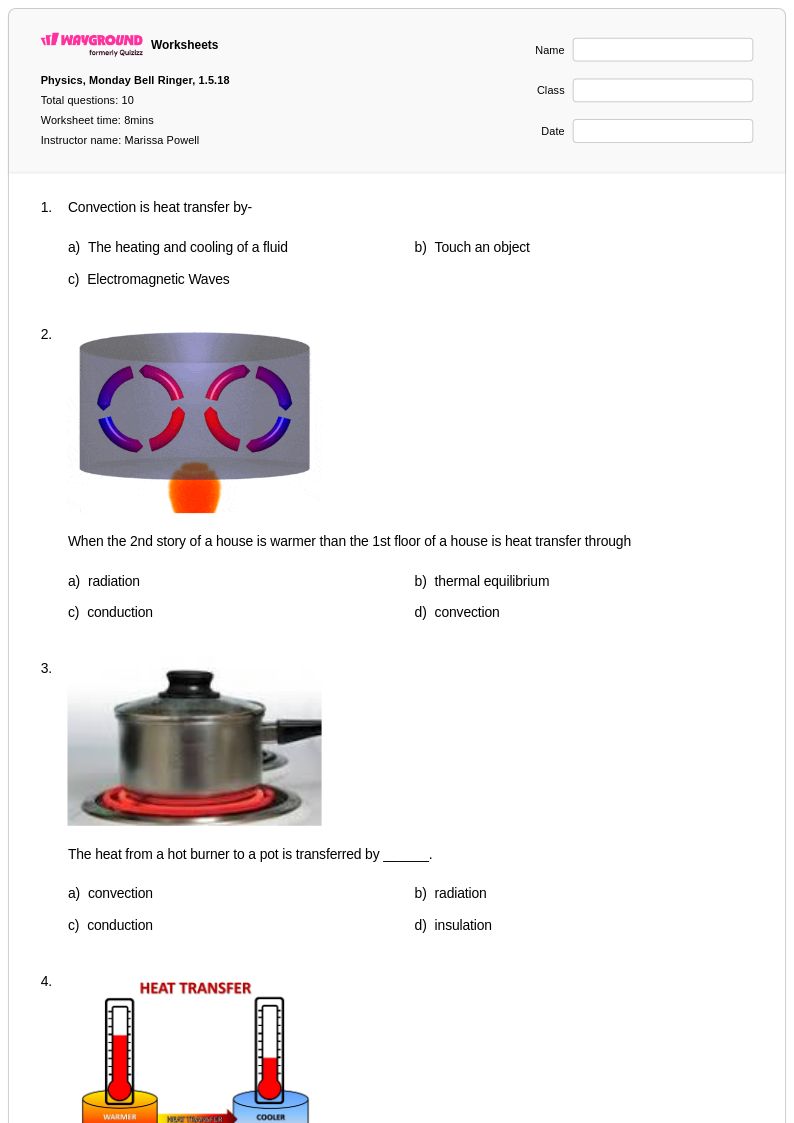
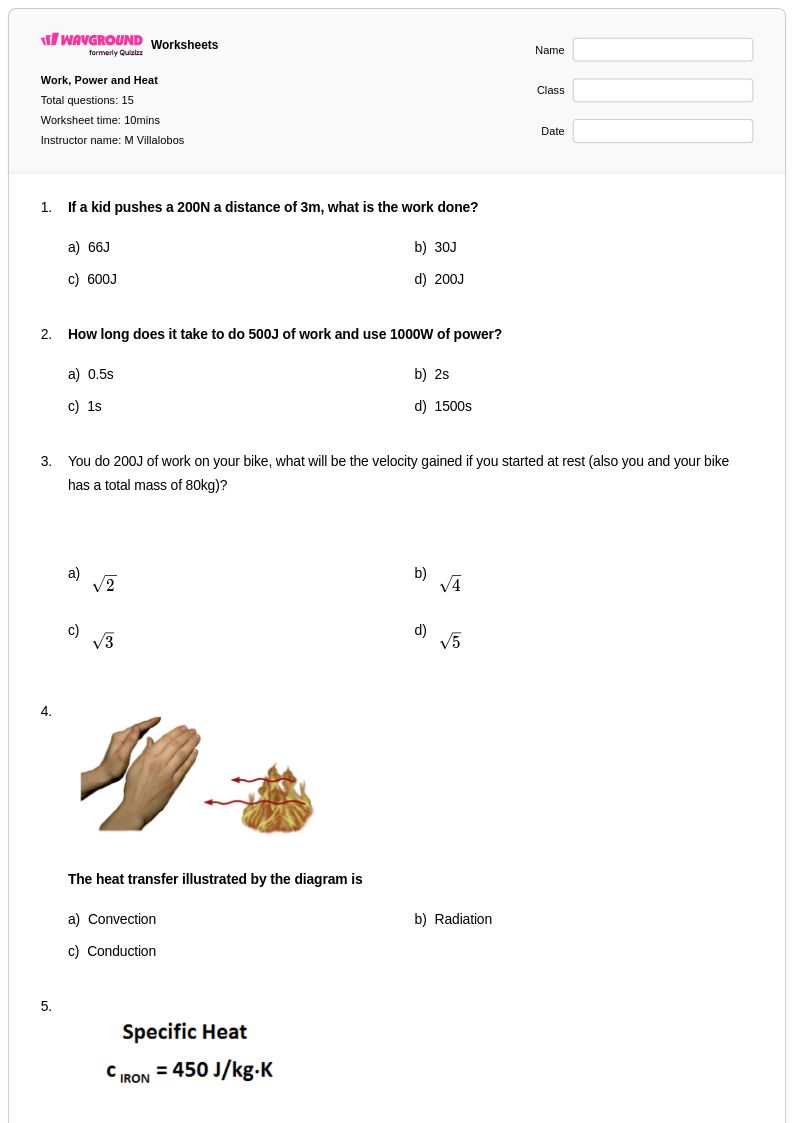
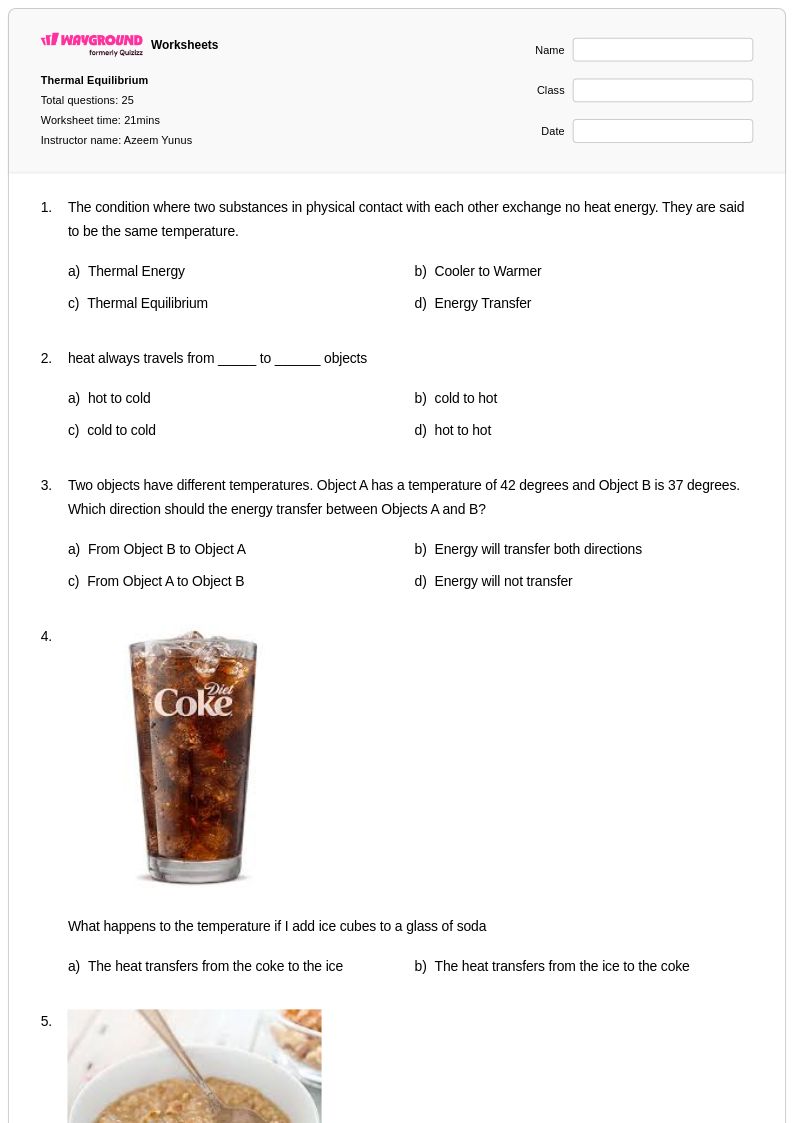
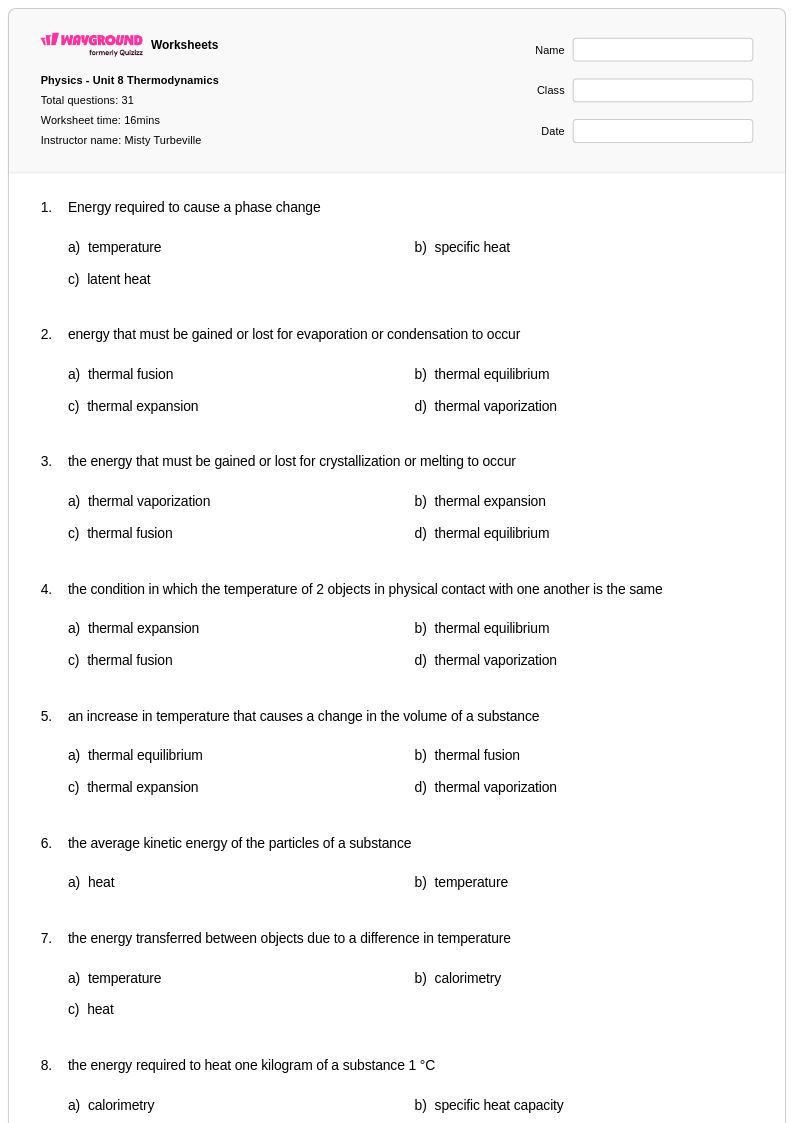
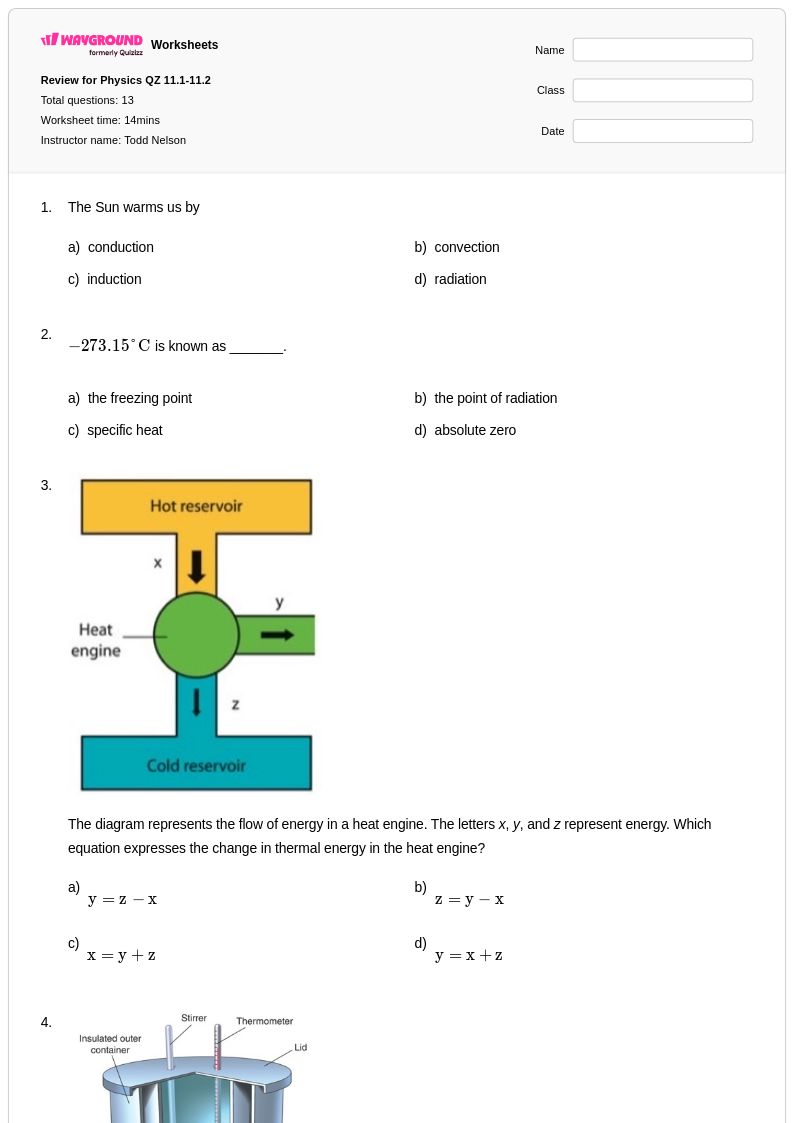
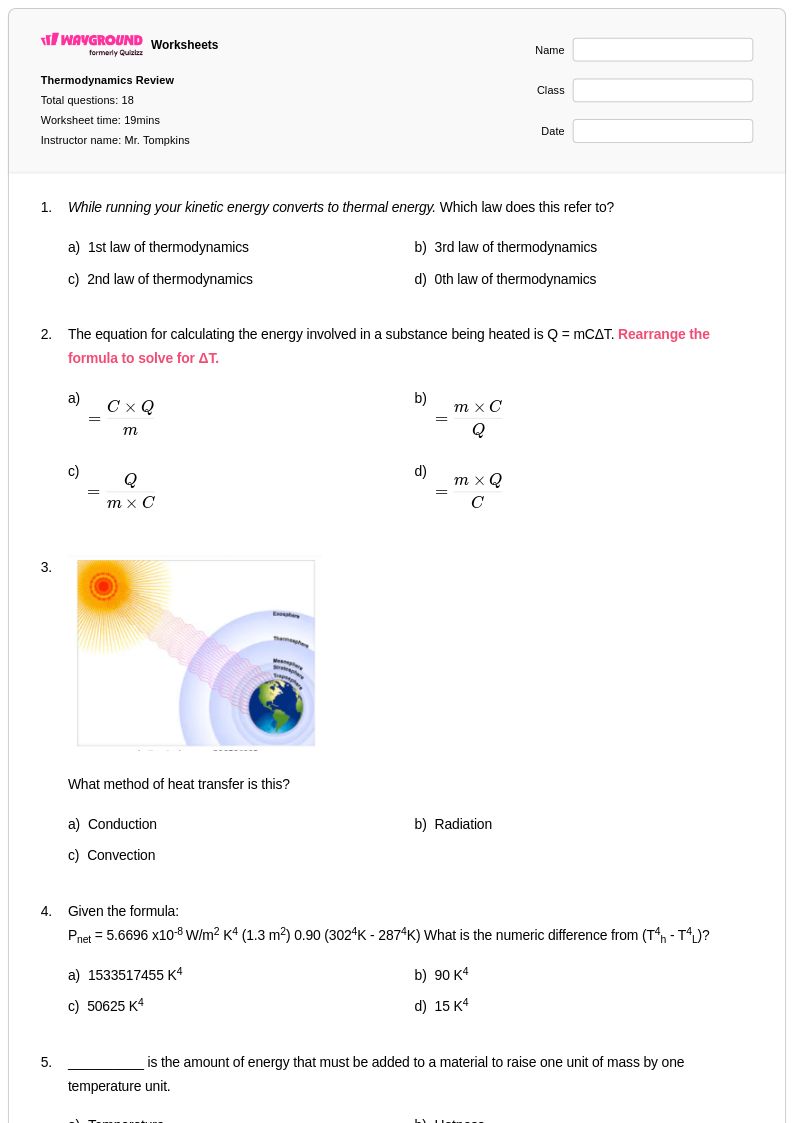
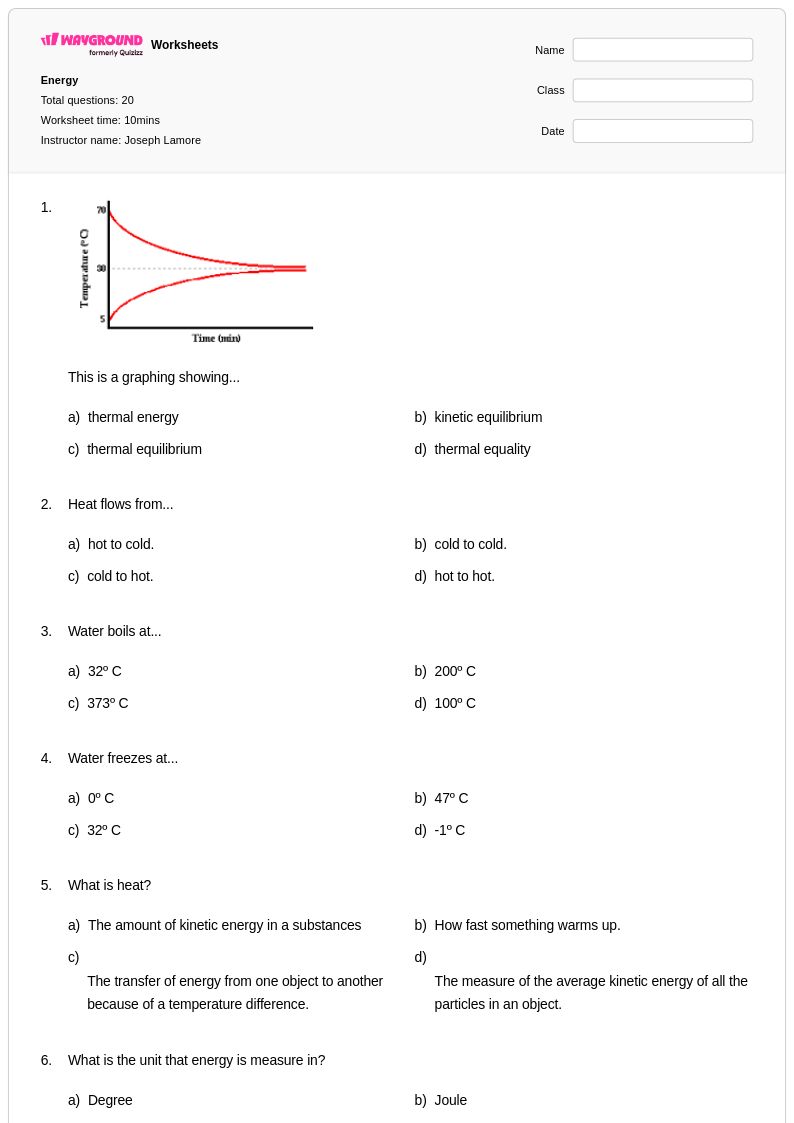
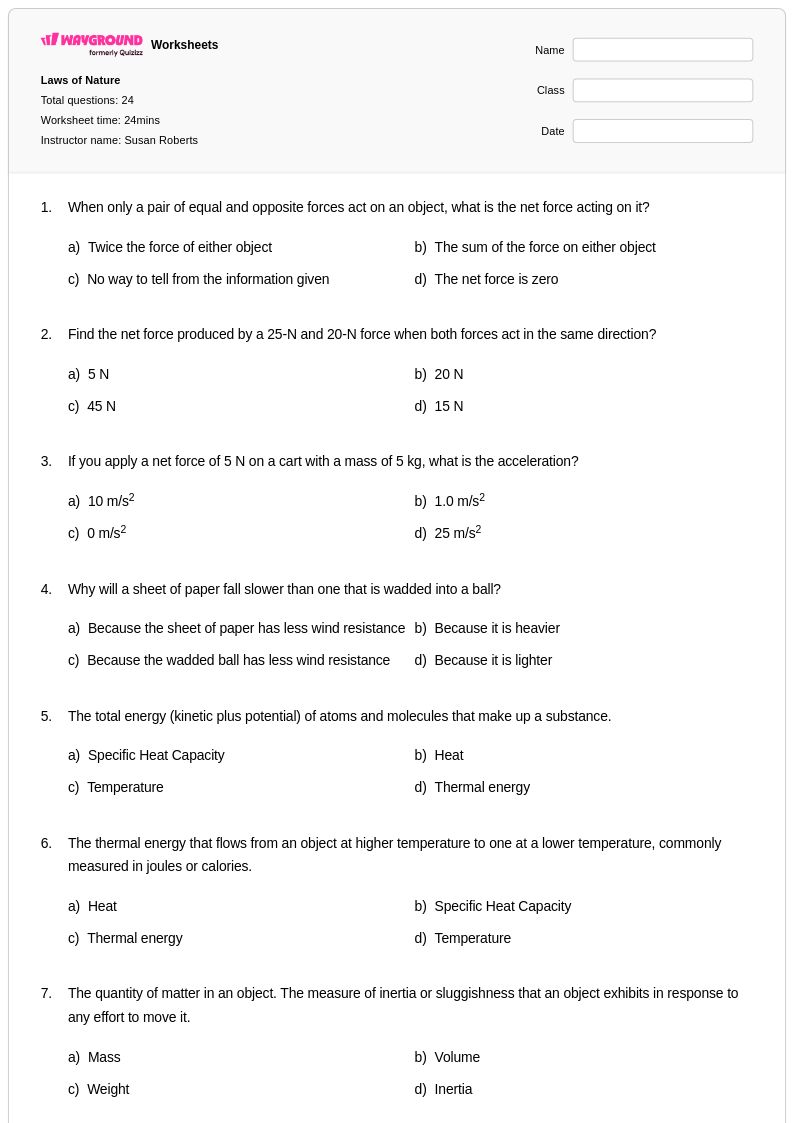
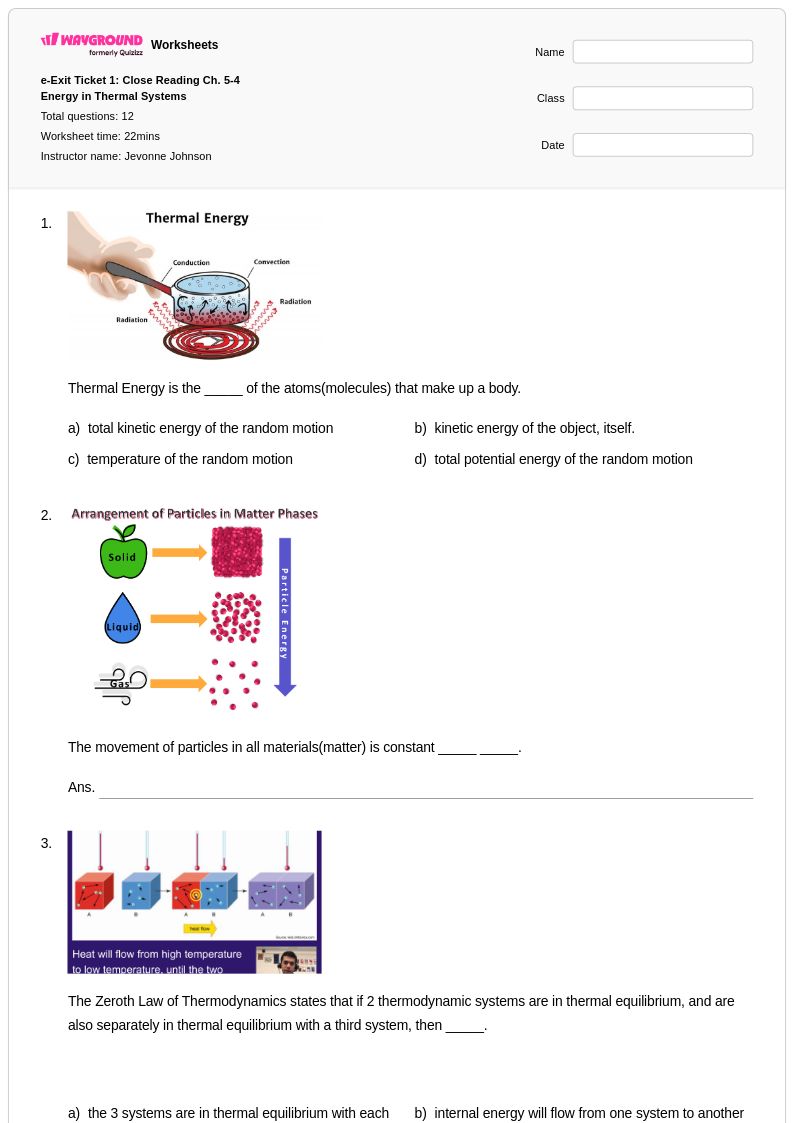
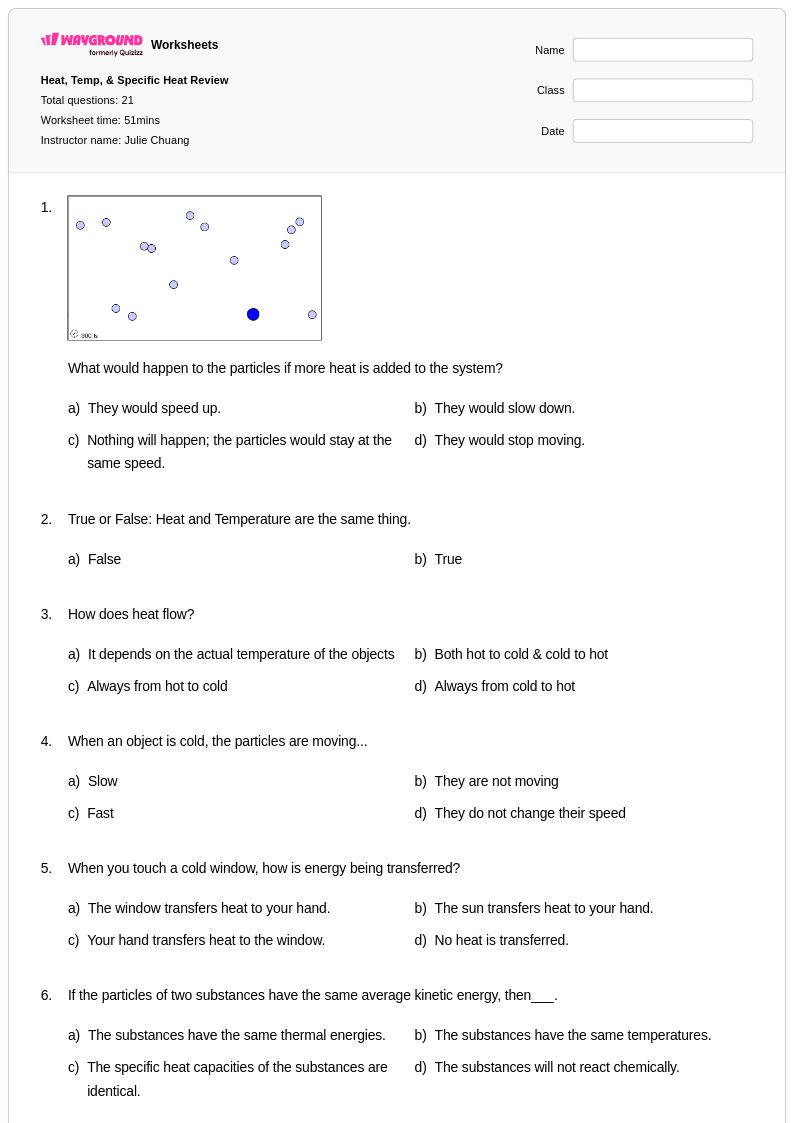
Heat transfer and thermal equilibrium worksheets for Grade 12 chemistry provide comprehensive practice opportunities for students to master fundamental thermodynamic concepts. These expertly crafted resources help students understand the mechanisms of conductive, convective, and radiative heat transfer while exploring how systems reach thermal equilibrium through energy exchange. The worksheets strengthen critical analytical skills by challenging students to calculate heat flow rates, determine specific heat capacities, and predict temperature changes in various materials and systems. Each printable worksheet comes complete with detailed answer keys that guide students through complex problem-solving processes, while free practice problems reinforce understanding of calorimetry principles, the laws of thermodynamics, and real-world applications of thermal energy transfer in pdf format.
Wayground, formerly Quizizz, empowers chemistry teachers with an extensive collection of millions of teacher-created heat transfer and thermal equilibrium resources that streamline lesson planning and enhance student learning outcomes. The platform's robust search and filtering capabilities enable educators to quickly locate worksheets aligned with specific curriculum standards and learning objectives, while differentiation tools allow for seamless customization to meet diverse student needs and ability levels. Teachers can access these comprehensive resources in both printable and digital formats, including downloadable pdf versions, making it effortless to implement targeted skill practice, provide remediation for struggling students, or offer enrichment opportunities for advanced learners. The flexible customization options ensure that educators can adapt worksheets to align perfectly with their instructional goals, whether focusing on quantitative problem-solving, conceptual understanding, or laboratory applications of thermal equilibrium principles.
FAQs
How do I teach heat transfer and thermal equilibrium to chemistry students?
Start by establishing the distinction between heat and temperature, then introduce the three mechanisms of heat transfer — conduction, convection, and radiation — using concrete, everyday examples like metal spoons heating in hot soup or warm air rising near a radiator. Once students grasp how thermal energy moves, transition to thermal equilibrium by having them predict what happens when two objects at different temperatures come into contact. Connecting particle-level motion to macroscopic temperature change helps students build the conceptual foundation they need before tackling quantitative problems.
What practice problems help students get better at heat transfer calculations?
Students benefit most from problems that require them to apply the specific heat capacity formula (q = mcΔT) across multiple contexts — calculating heat gained or lost, comparing how different materials respond to the same energy input, and working through calorimetry scenarios. Problems that ask students to predict which object reaches equilibrium temperature first, or to calculate the final equilibrium temperature of two mixed substances, reinforce both the mathematical skill and the conceptual logic simultaneously. Layering problem complexity gradually prevents students from memorizing steps without understanding the underlying thermodynamic principles.
What mistakes do students commonly make with thermal equilibrium?
The most persistent misconception is that heat and temperature are the same thing — students often assume a larger object at the same temperature contains less heat than a smaller object, or that equilibrium means both objects reach a temperature that is exactly the midpoint of their starting values. Another common error is failing to apply conservation of energy correctly in calorimetry problems, particularly when students forget that heat lost by one substance must equal heat gained by another. Explicitly addressing these misconceptions with targeted practice problems before students move to quantitative work significantly reduces calculation errors downstream.
How do I use Wayground's heat transfer and thermal equilibrium worksheets in my class?
Wayground's heat transfer and thermal equilibrium worksheets are available as free printable PDFs for traditional classroom instruction and in interactive digital formats for blended or technology-integrated learning environments, giving you flexibility depending on your setting. You can host any worksheet as a live quiz on Wayground, which allows you to monitor student responses in real time and identify misconceptions as they emerge. All worksheets include complete answer keys, so they work equally well for guided in-class practice, independent review, or assigned homework without requiring additional teacher preparation.
How can I differentiate heat transfer worksheets for students at different skill levels?
When using Wayground's digital format, you can apply student-level accommodations such as reduced answer choices to lower cognitive load for struggling learners, or enable the Read Aloud feature for students who need audio support when processing dense scientific language. Extended time settings can be configured individually per student, so advanced learners work under standard conditions while others receive the support they need — without any student being notified of another's accommodations. These settings are saved and reusable across future sessions, making differentiation sustainable rather than a one-time setup.
How does understanding thermal equilibrium connect to broader chemistry topics?
Thermal equilibrium is foundational to calorimetry, a core technique in physical chemistry used to measure enthalpy changes in chemical reactions. Students who solidly understand how systems exchange heat until they reach equilibrium are better prepared to interpret heating and cooling curves, analyze phase changes, and engage with the laws of thermodynamics at a deeper level. This concept also underpins real-world applications in chemical engineering and materials science, making it one of the more transferable ideas students encounter in a chemistry curriculum.