Free Printable Ionic Compound Formula Writing Worksheets for Grade 9
Grade 9 ionic compound formula writing worksheets from Wayground provide free printables and practice problems with answer keys to help students master chemical formulas and bonding principles.
Explore printable Ionic Compound Formula Writing worksheets for Grade 9
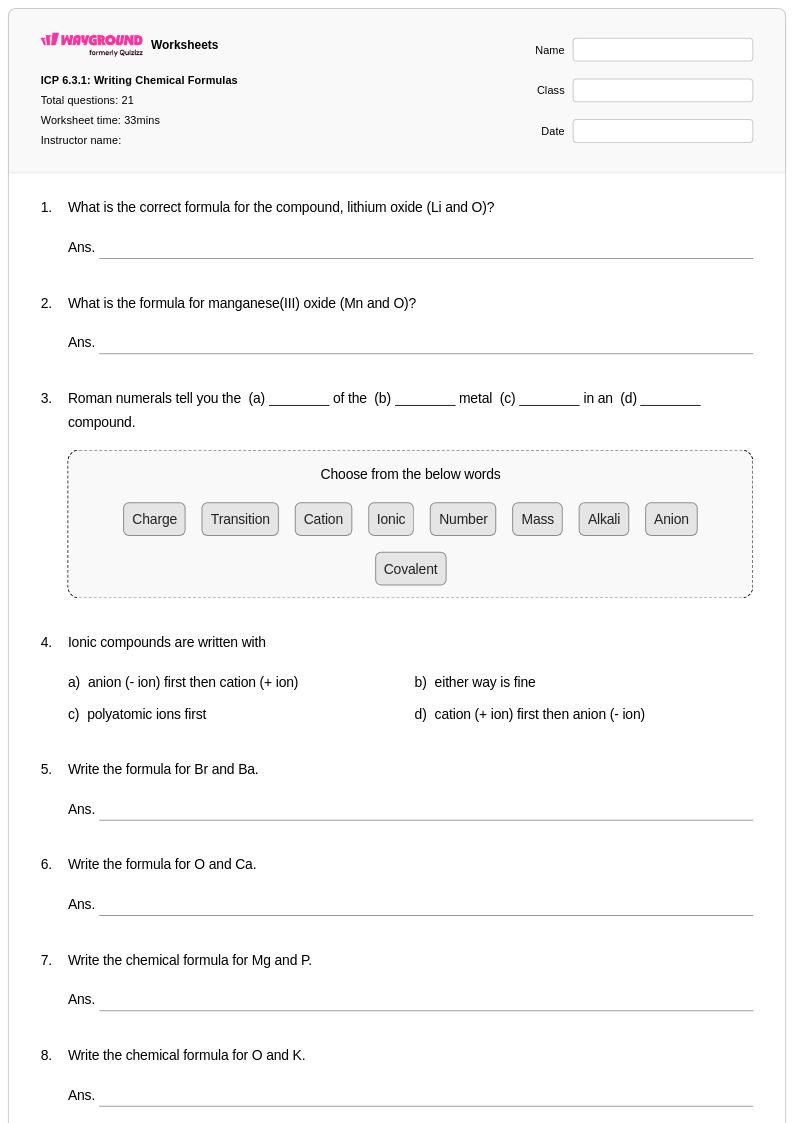
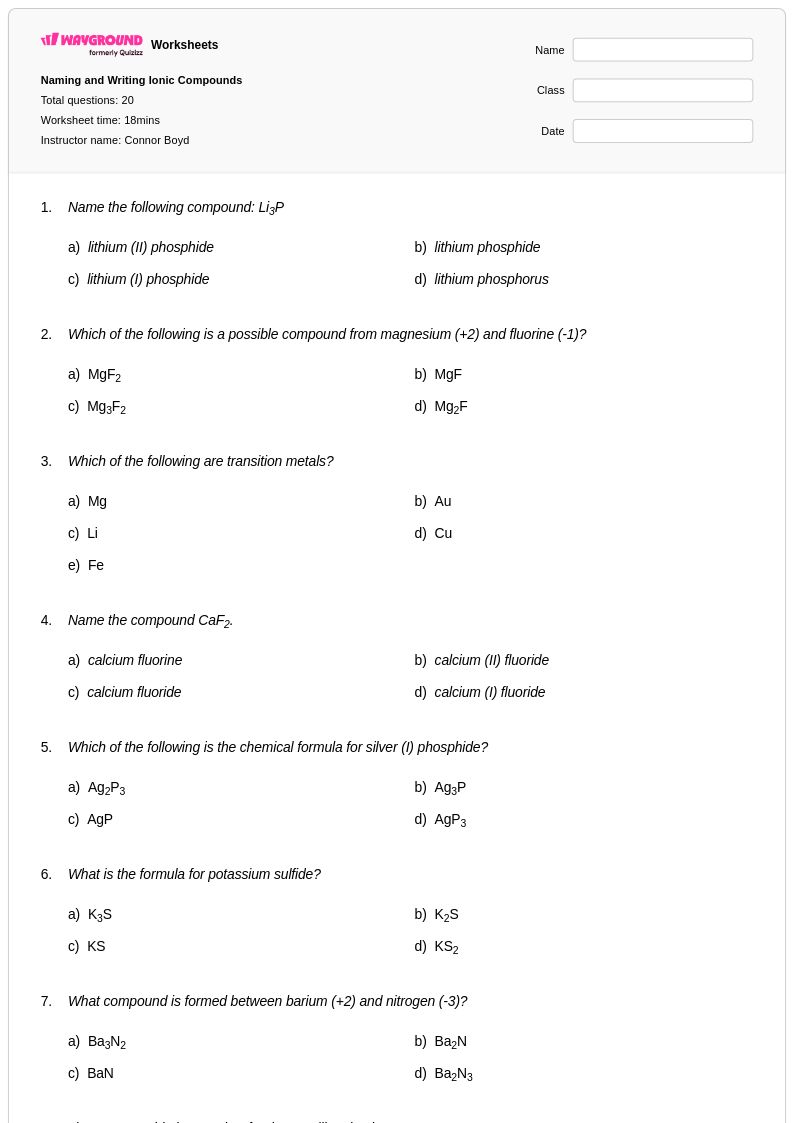
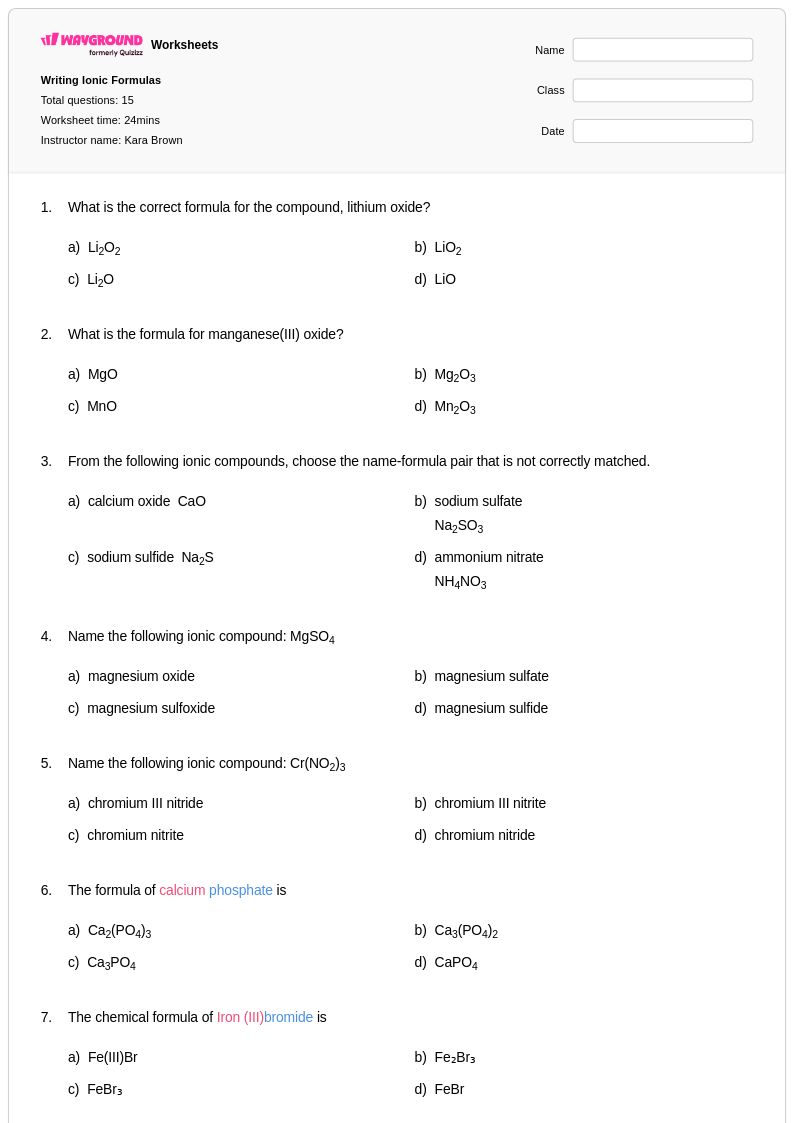
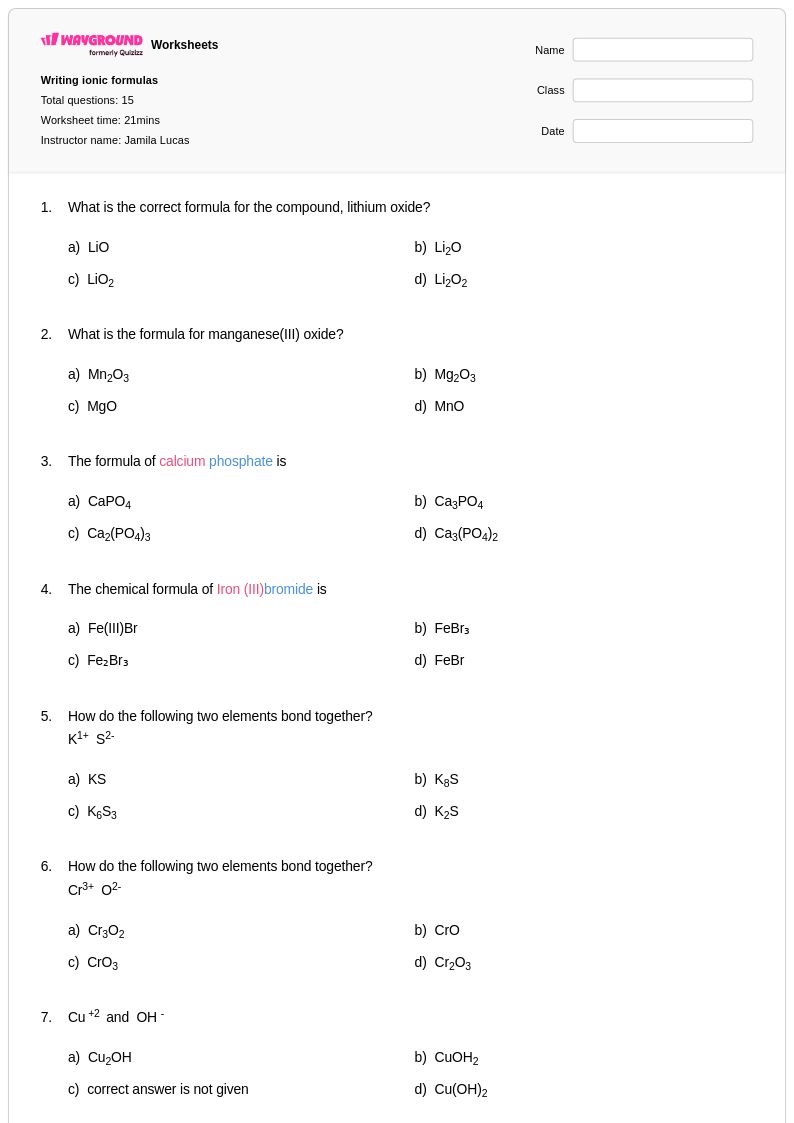
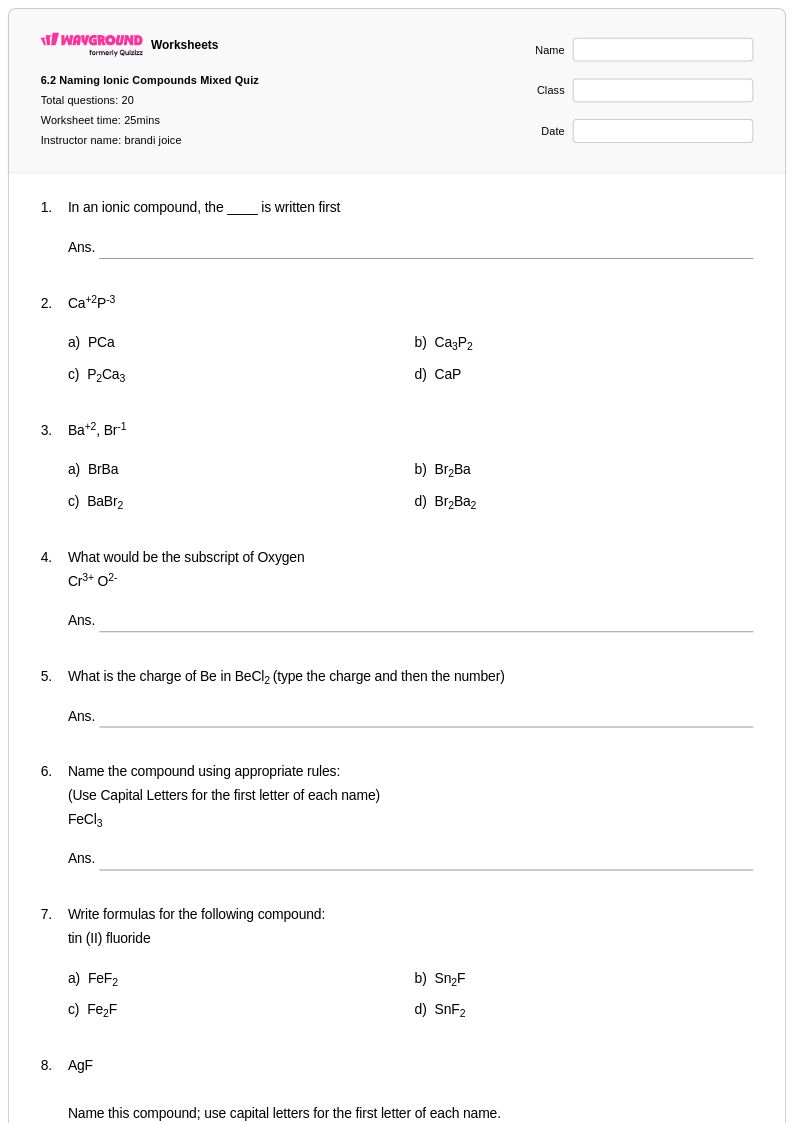
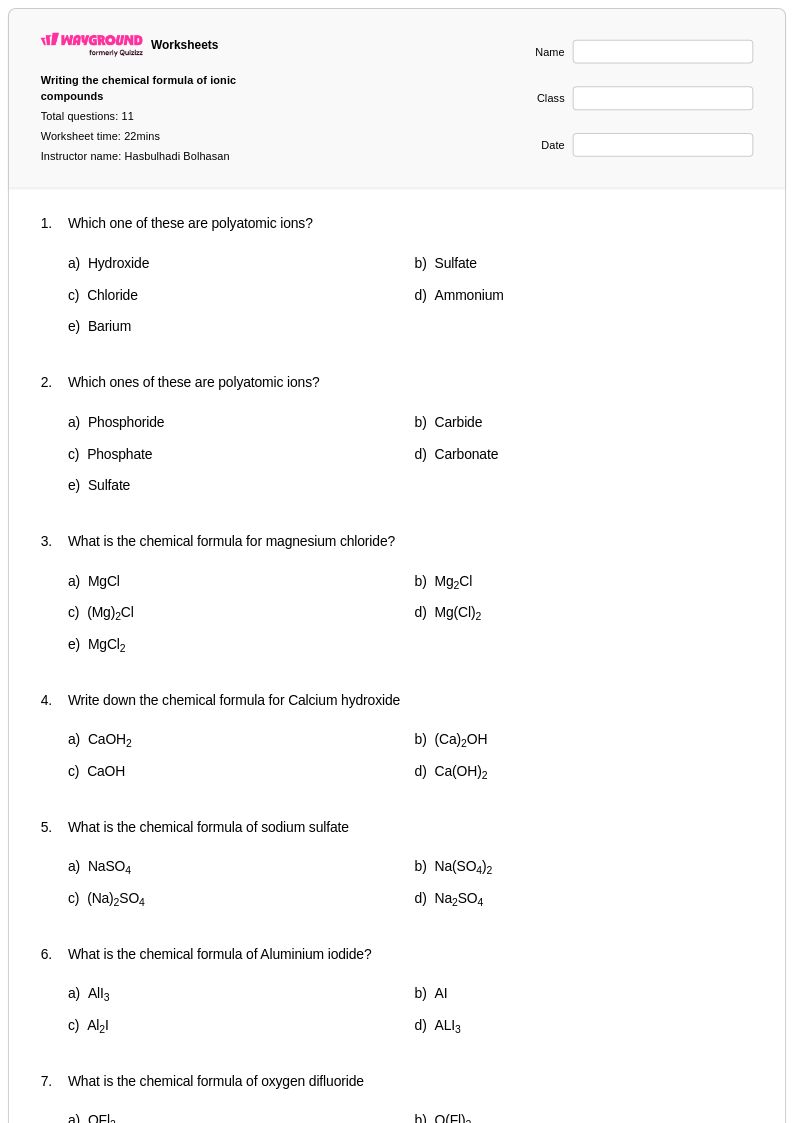
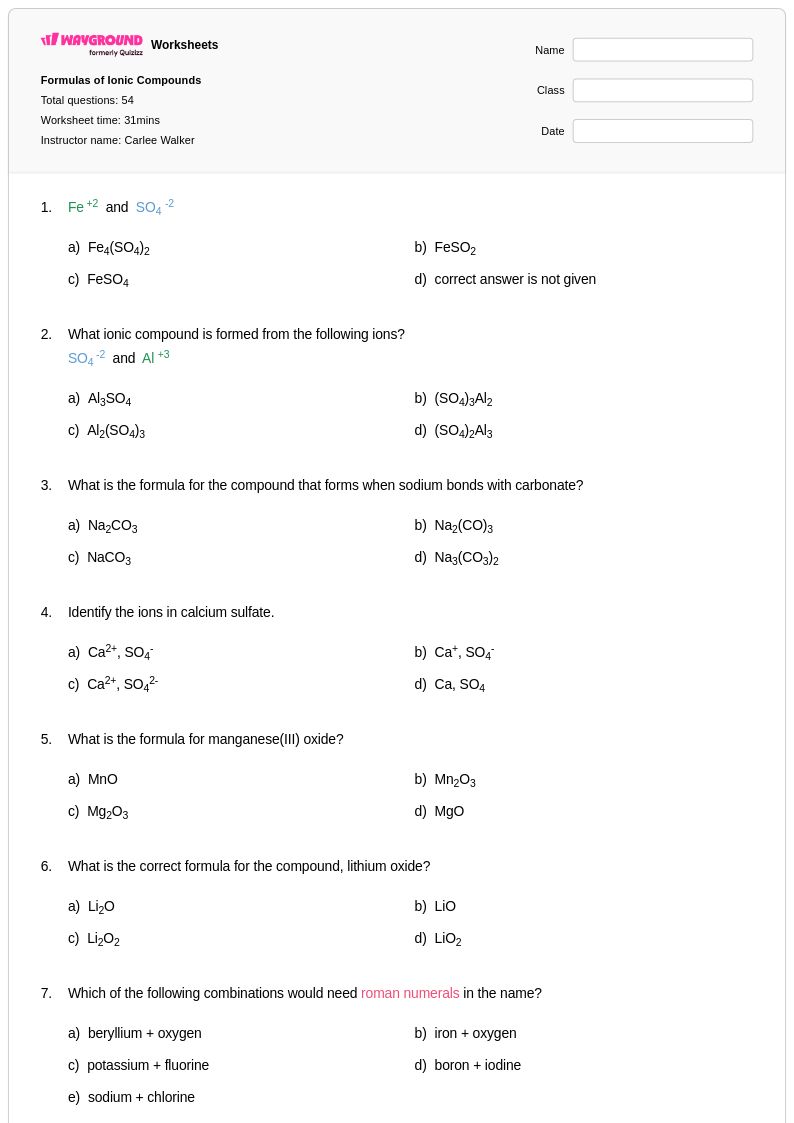
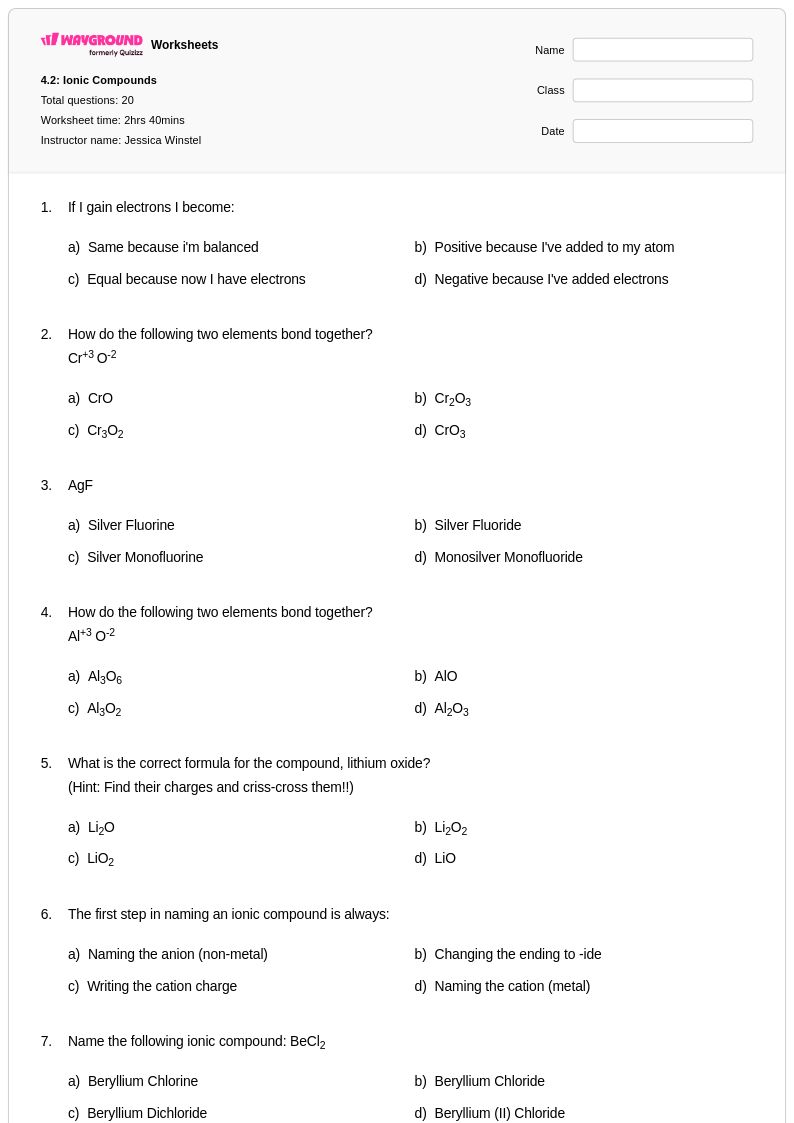
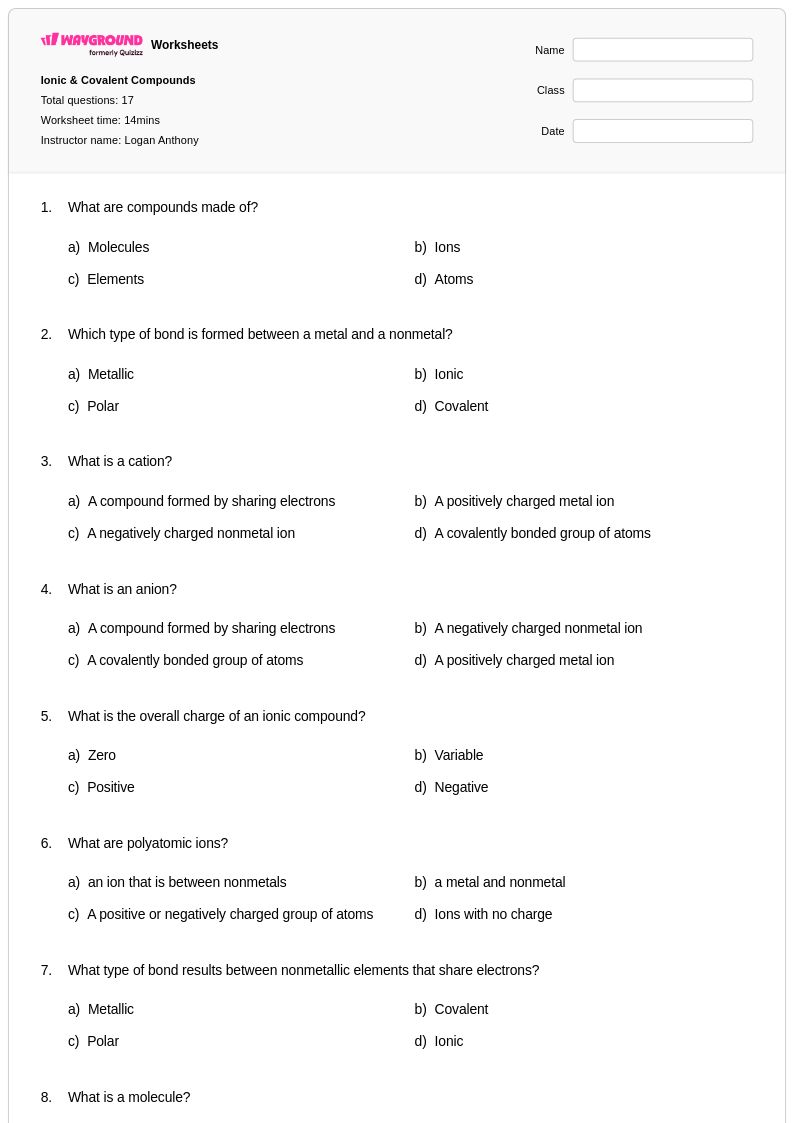
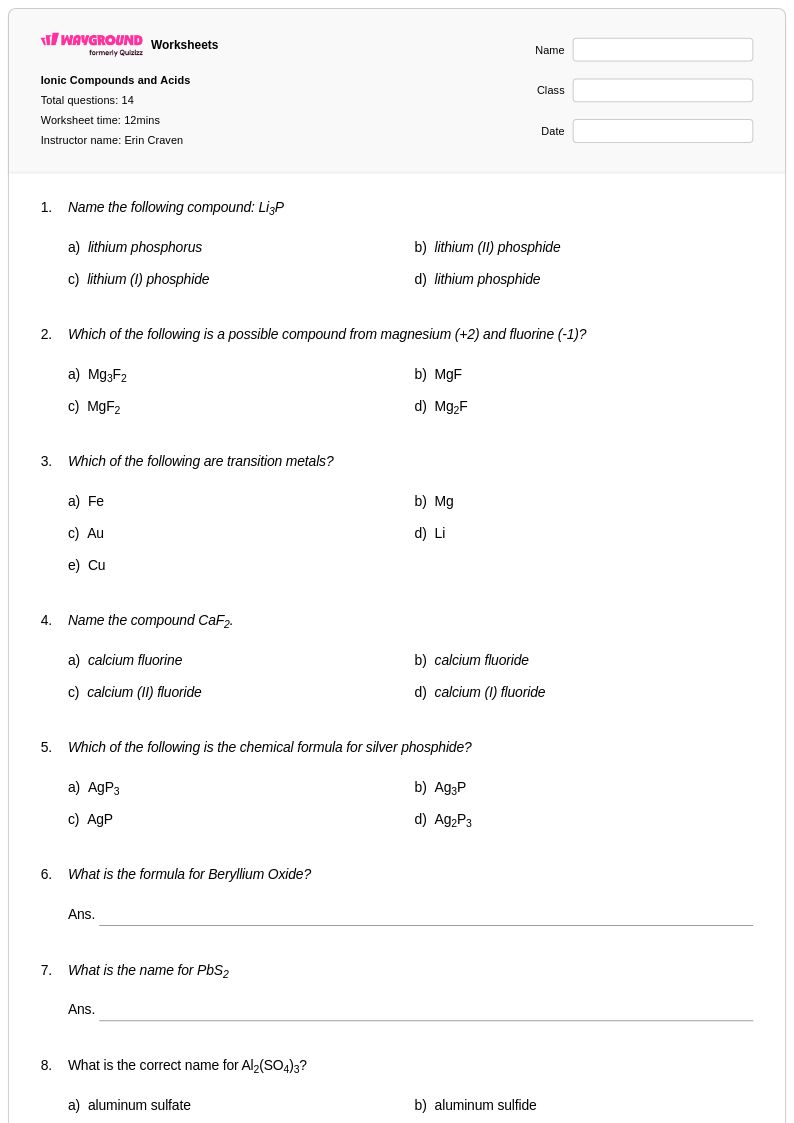
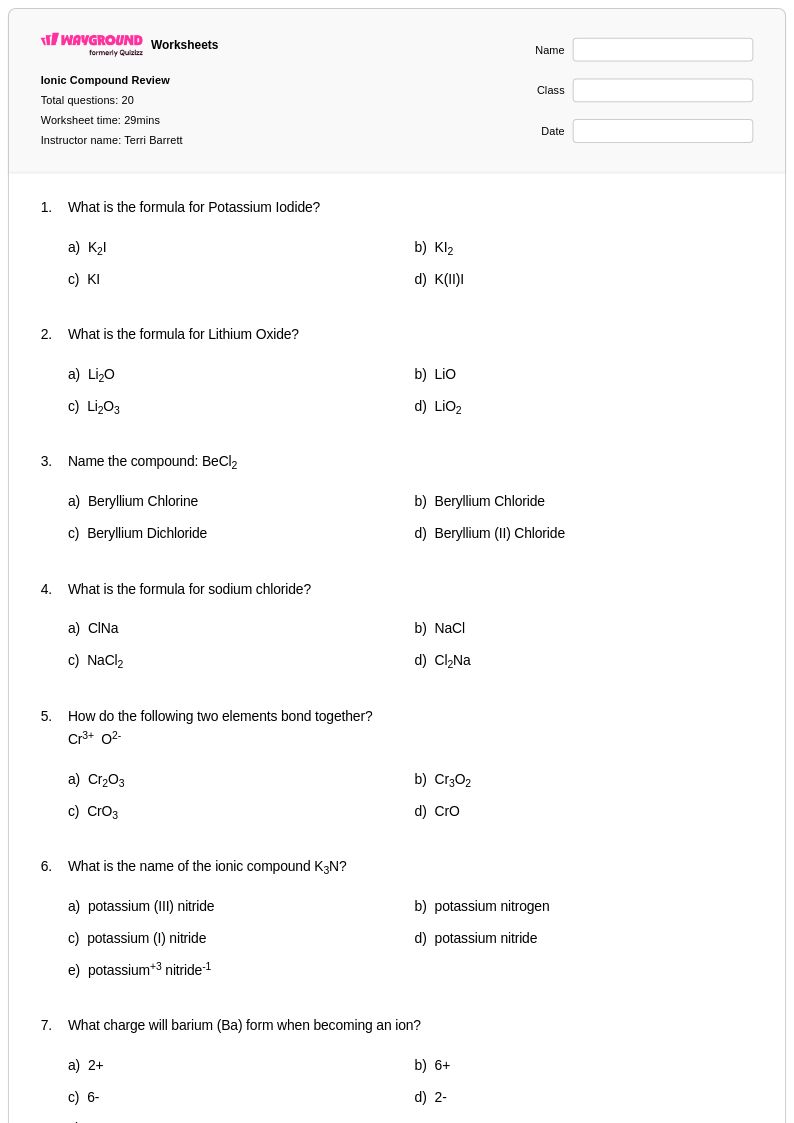
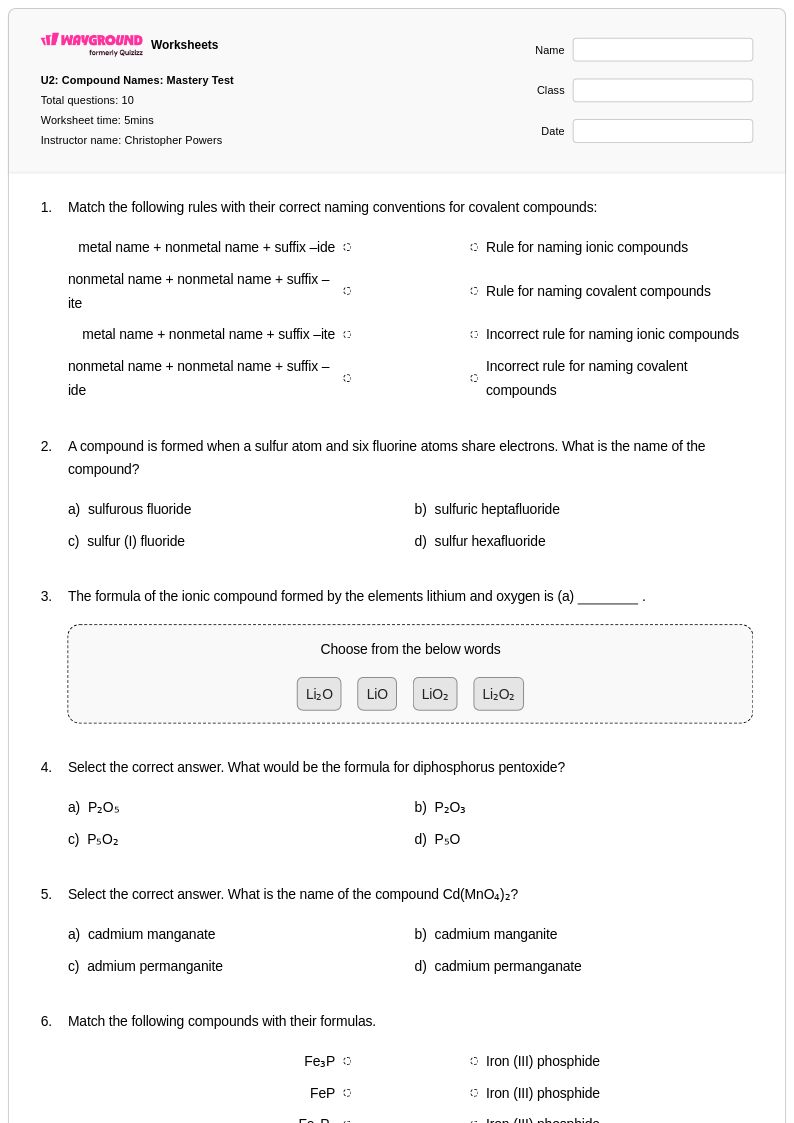
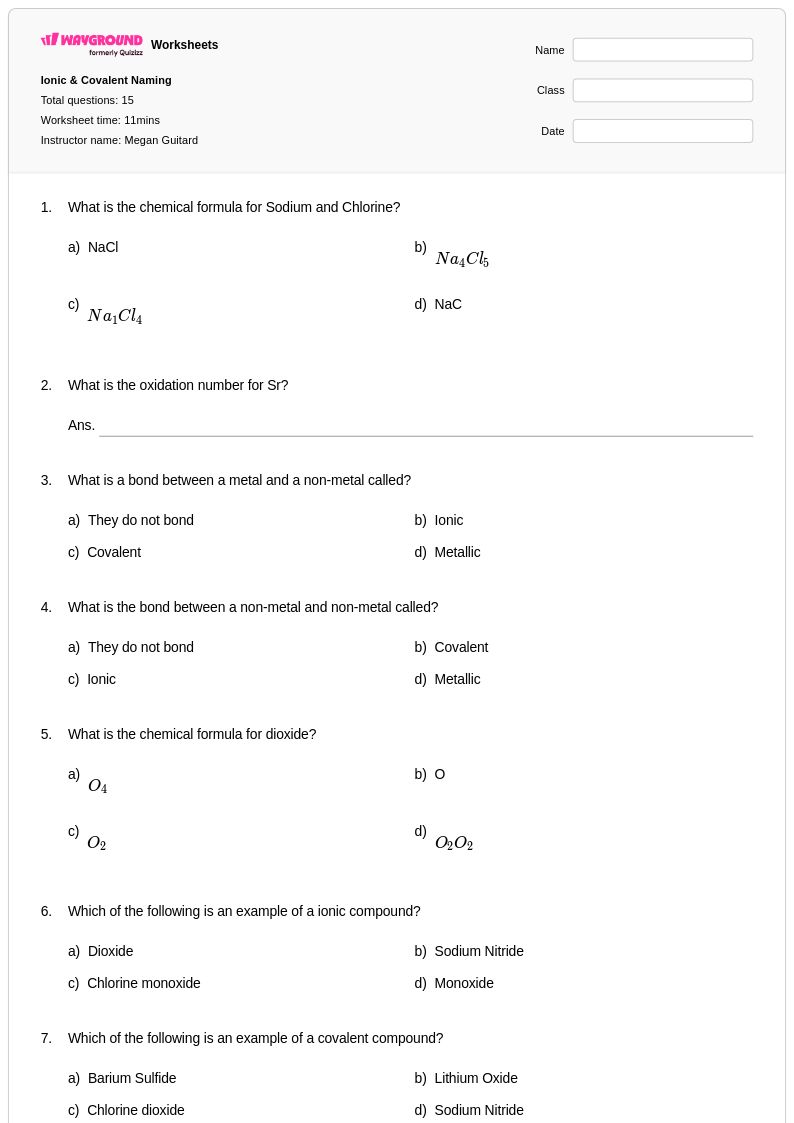
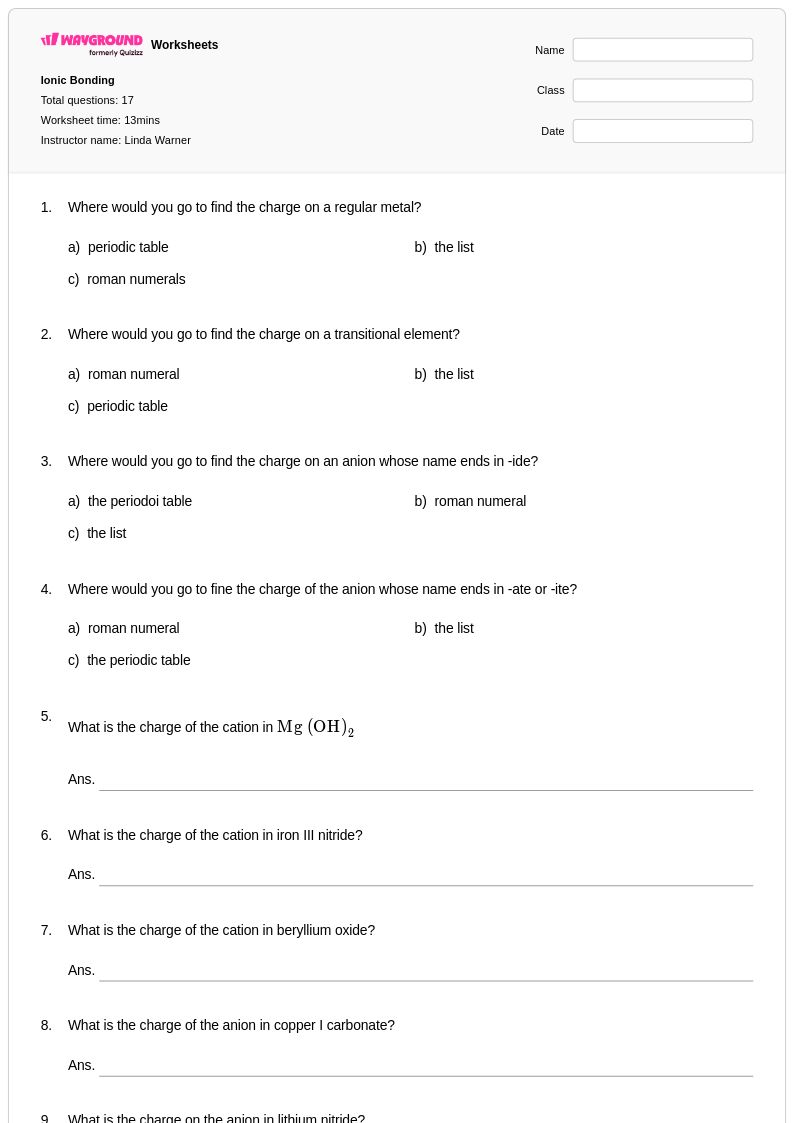
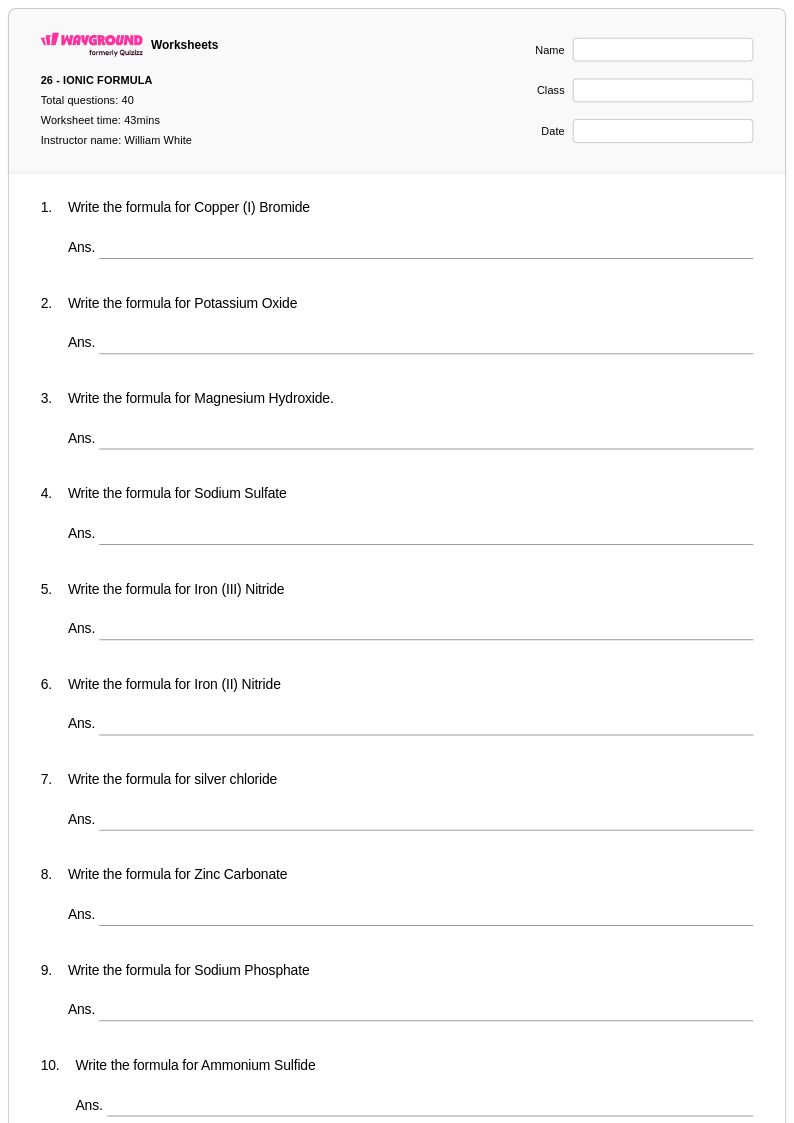
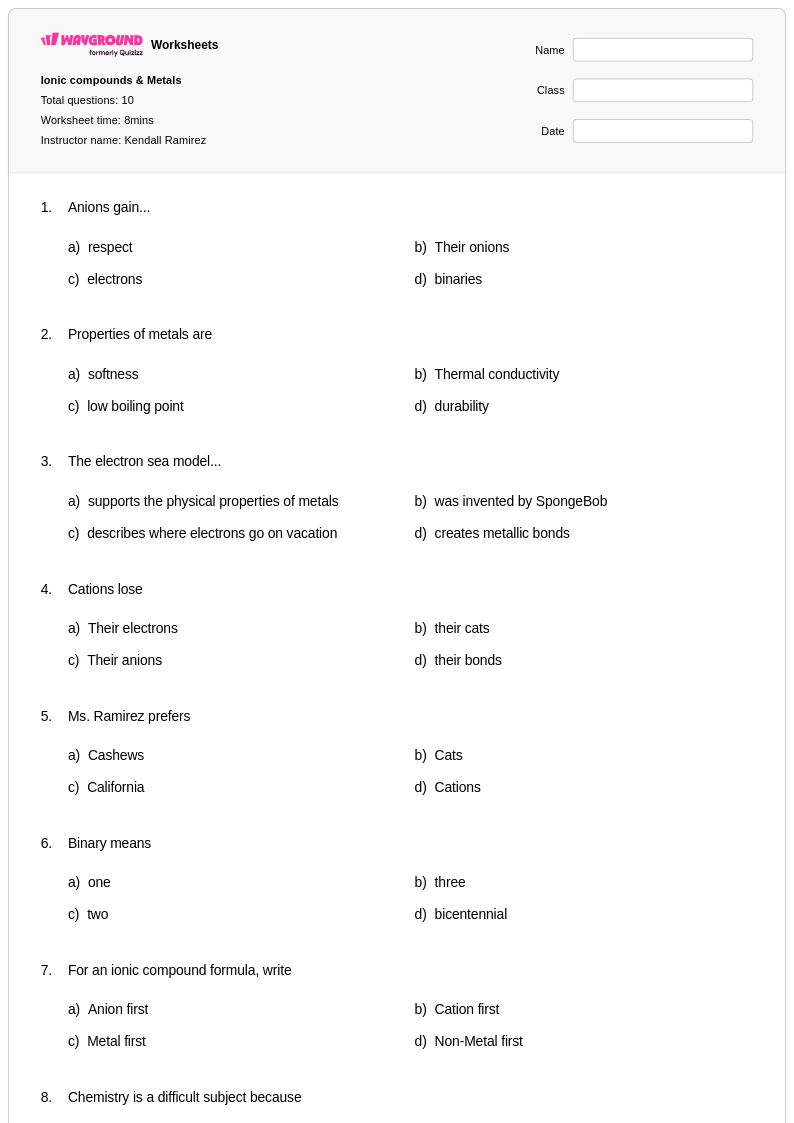
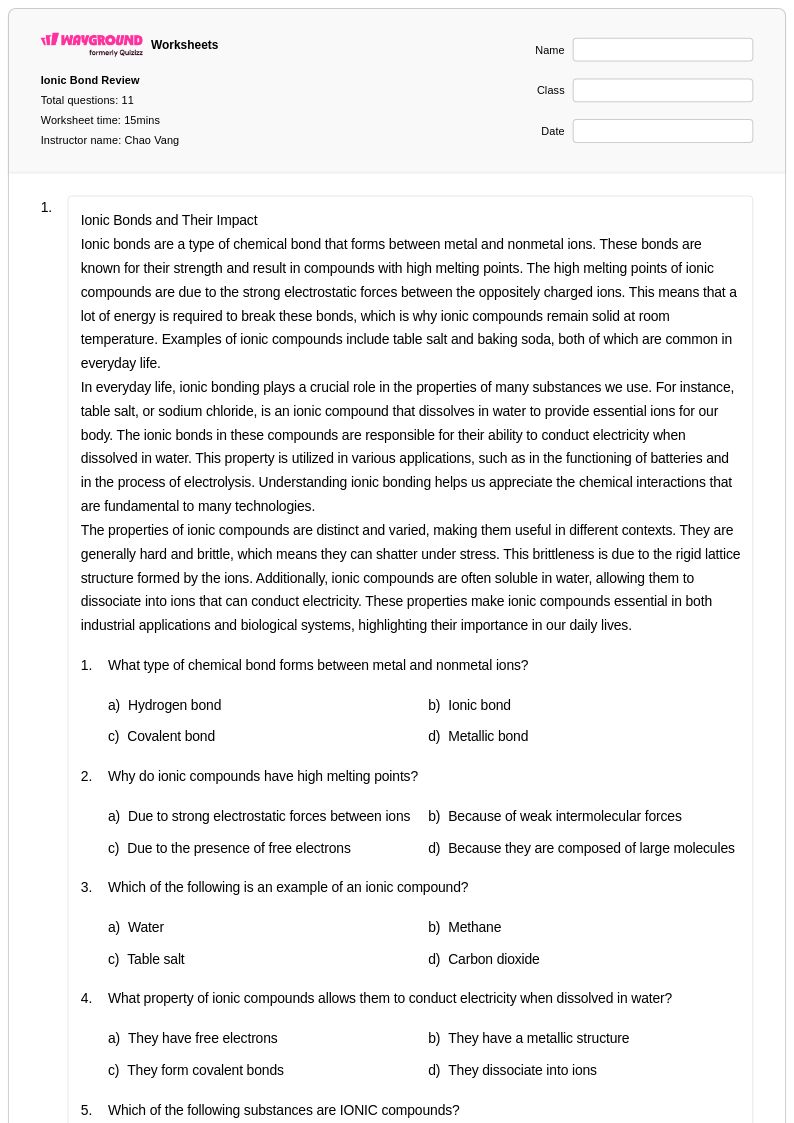
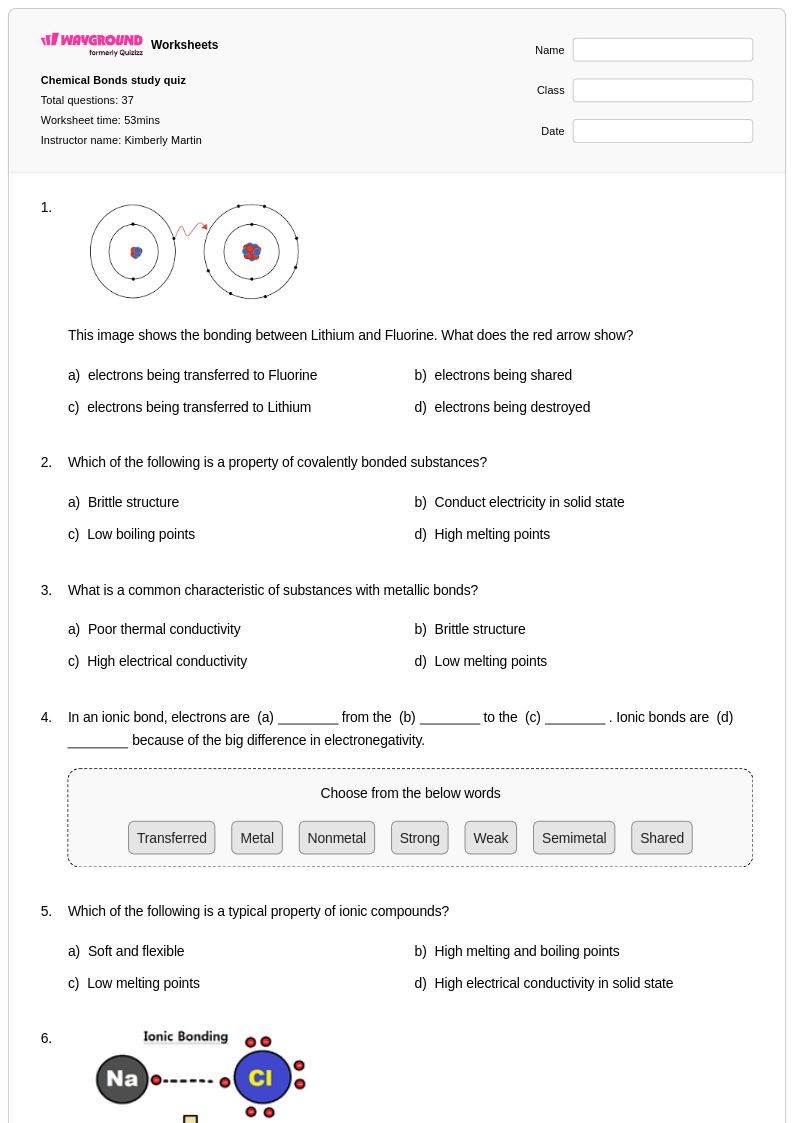
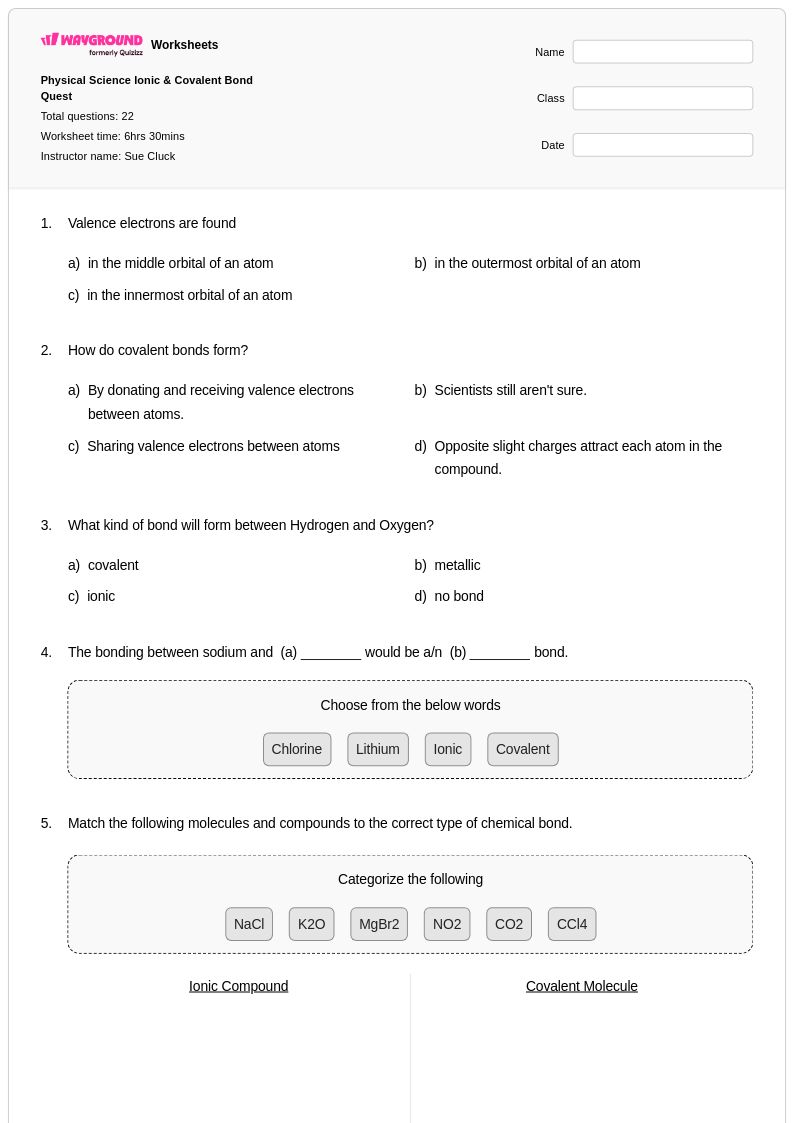
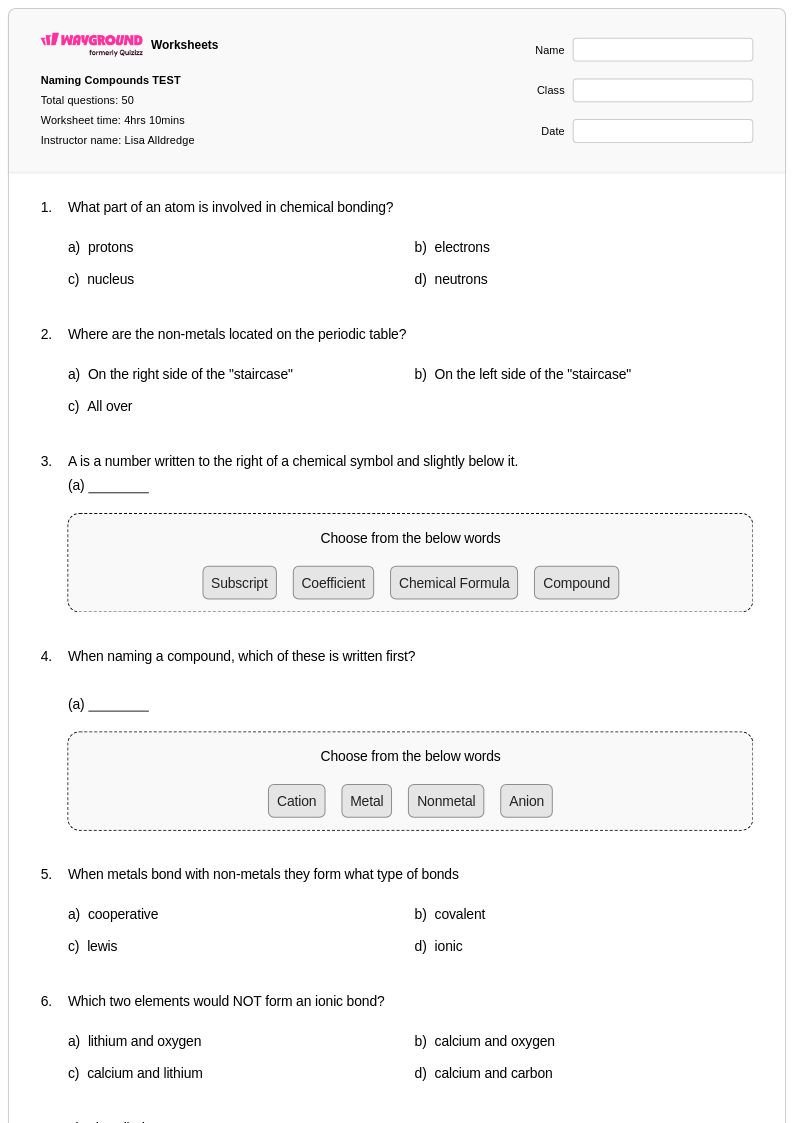
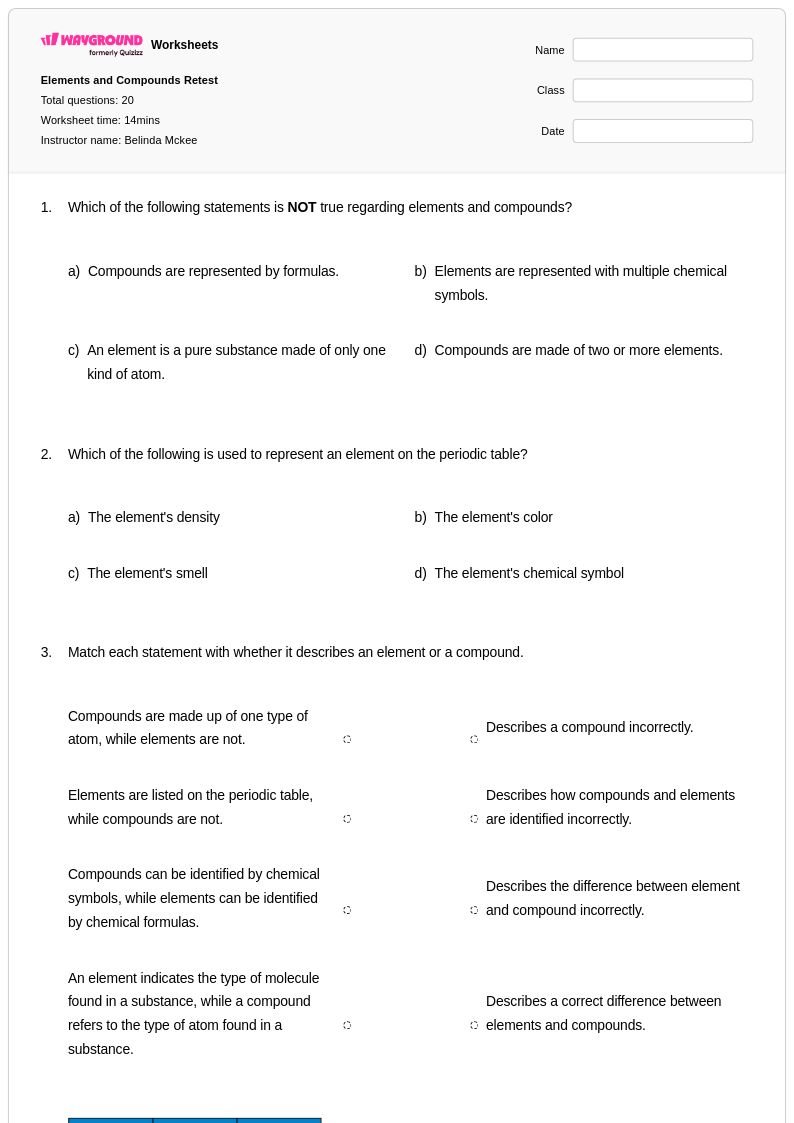
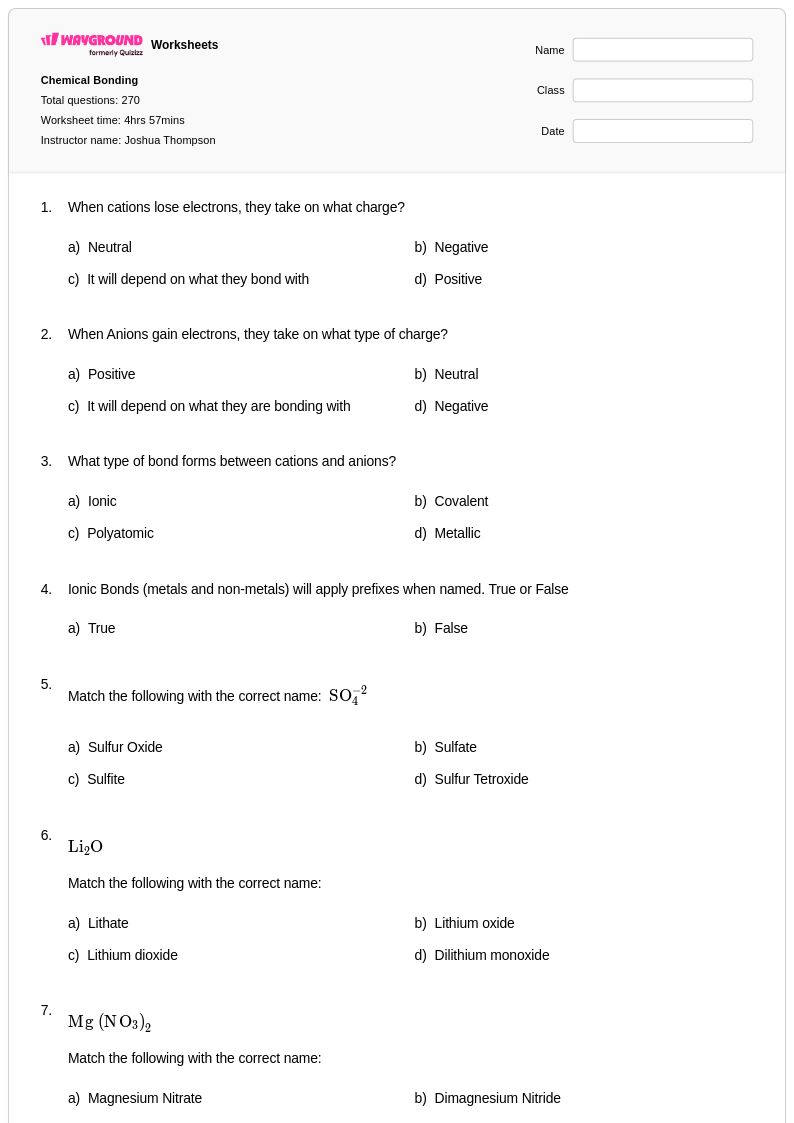
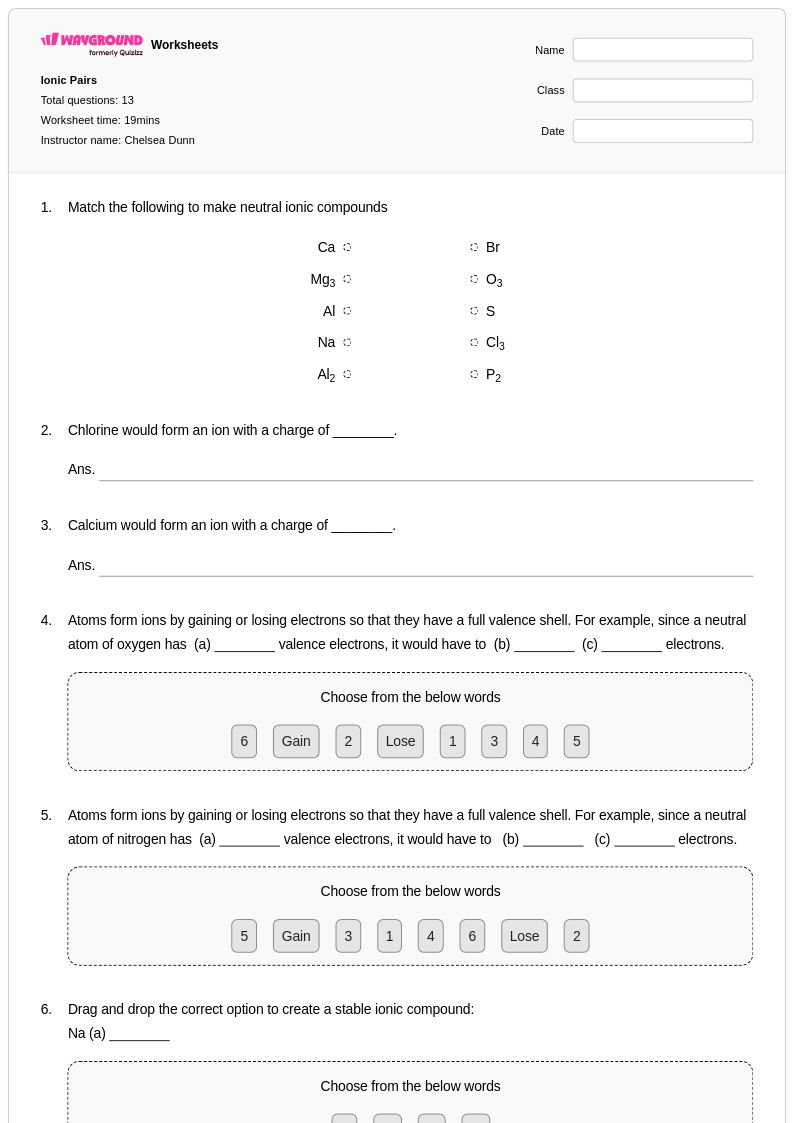
Ionic compound formula writing worksheets for Grade 9 students available through Wayground (formerly Quizizz) provide comprehensive practice in one of chemistry's most fundamental skills. These educational resources guide students through the systematic process of determining correct formulas by applying knowledge of ion charges, polyatomic ions, and the principle of electrical neutrality. The worksheets feature varied practice problems that progress from simple binary ionic compounds like sodium chloride to more complex formulas involving transition metals and polyatomic ions such as sulfates and phosphates. Each printable resource includes detailed answer keys that not only provide correct formulas but also demonstrate the step-by-step reasoning process, making these free materials invaluable for both independent study and classroom instruction where students need to master the relationship between ionic charges and chemical formulas.
Wayground (formerly Quizizz) empowers chemistry teachers with access to millions of educator-created worksheet collections specifically designed for ionic compound formula writing instruction. The platform's robust search and filtering capabilities allow teachers to locate materials that align with specific curriculum standards and match their students' skill levels, from introductory concepts through advanced applications involving variable oxidation states. Teachers can customize existing worksheets or create entirely new versions to address individual learning needs, supporting both remediation for struggling students and enrichment challenges for advanced learners. These resources are available in both digital formats for online learning environments and printable PDF versions for traditional classroom settings, giving educators the flexibility to seamlessly integrate formula writing practice into lesson plans, homework assignments, and assessment preparation while ensuring students develop the analytical thinking skills essential for success in chemistry.
FAQs
How do I teach students to write ionic compound formulas?
Start by ensuring students can reliably identify the charges of common cations and anions before introducing formula writing. Teach the principle of electrical neutrality explicitly — the total positive charge must equal the total negative charge in any ionic compound. The criss-cross method is a reliable procedural scaffold: swap the charge values (without signs) of each ion to determine the subscripts, then simplify if needed. Reinforce with systematic practice that progresses from simple binary compounds like NaCl to more complex polyatomic ions such as calcium nitrate.
What exercises help students practice writing ionic compound formulas?
The most effective practice exercises give students a cation and anion and ask them to determine the correct formula, covering both monatomic and polyatomic ions. Charge-balancing drills, formula-to-name and name-to-formula conversion tasks, and error-correction exercises where students identify mistakes in given formulas all build procedural fluency. Progressing from low-stakes binary compound problems to multi-step polyatomic combinations ensures students build confidence incrementally before tackling more complex nomenclature.
What mistakes do students commonly make when writing ionic compound formulas?
The most frequent error is failing to reduce subscripts to the lowest whole-number ratio — for example, writing Ca2O2 instead of CaO. Students also commonly forget to use parentheses around polyatomic ions when subscripts greater than one are needed, writing NO32 instead of (NO3)2. Confusing the charge of variable-charge transition metals is another persistent issue, as is mixing up the charges of commonly tested polyatomic ions like sulfate (SO4²⁻) and sulfite (SO3²⁻). Regular targeted practice with answer key feedback helps students catch and correct these patterns early.
How do I use Wayground's ionic compound formula writing worksheets in my chemistry class?
Wayground's ionic compound formula writing worksheets are available as printable PDFs for traditional classroom use and in digital formats for technology-integrated or online learning environments, making them flexible for both in-person and remote instruction. Teachers can host worksheets as a quiz directly on Wayground, enabling real-time student response tracking. Each worksheet includes a detailed answer key, so they work well for independent practice, homework, or guided review sessions. For students who need additional support, Wayground's accommodation tools allow teachers to enable features such as read aloud or reduced answer choices on an individual basis without disrupting the experience for the rest of the class.
How do I differentiate ionic compound formula writing practice for students at different skill levels?
Differentiation works best when students first demonstrate mastery of monatomic ion charges before moving to polyatomic combinations. For struggling students, provide a reference table of common ion charges alongside practice problems and consider enabling Wayground's reduced answer choices accommodation to lower cognitive load on assessments. Advanced students benefit from open-ended tasks such as predicting formulas for unfamiliar ions or working with transition metals that have variable oxidation states. Wayground's platform allows teachers to apply individual accommodations — including extended time and read aloud — to specific students while the rest of the class works under default settings.
How is ionic compound formula writing different from covalent compound naming?
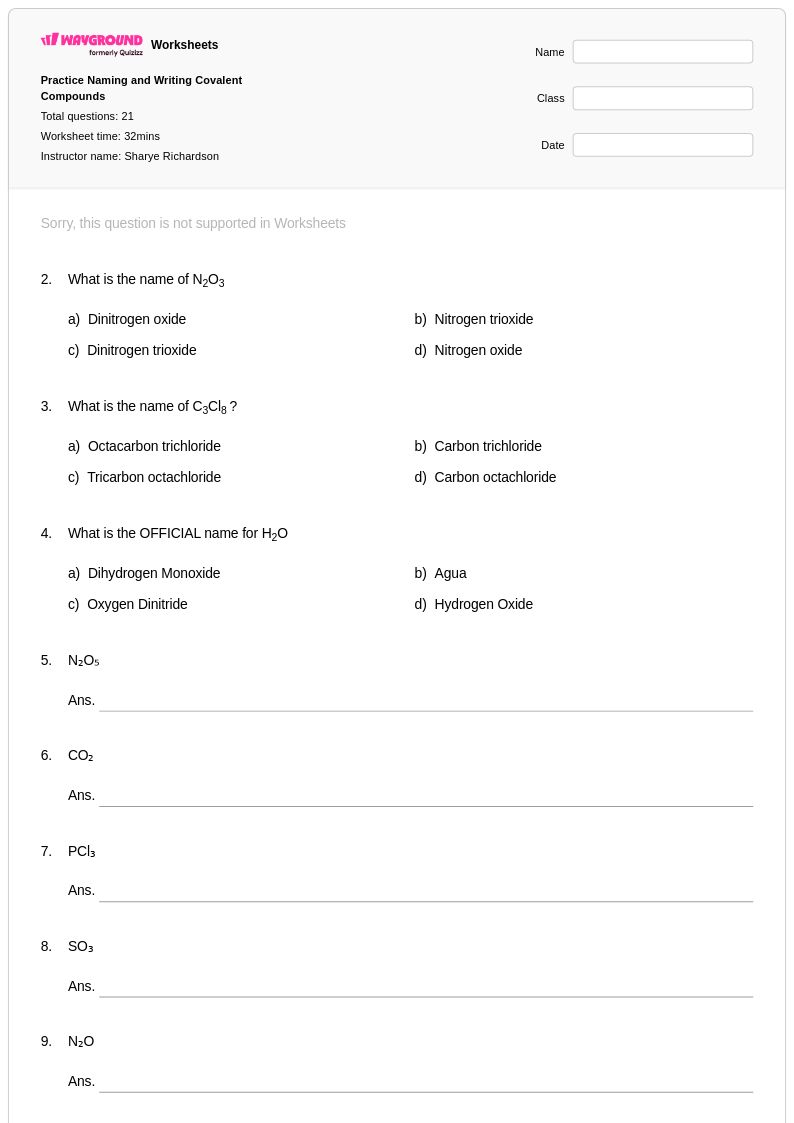
Ionic compound formulas are determined by the charges of the constituent ions and the requirement for electrical neutrality, not by fixed sharing ratios as in covalent compounds. Unlike covalent nomenclature, which uses prefixes like di- and tri- to indicate atom counts, ionic compound names are derived directly from the ion names — the cation name comes first, followed by the anion name. Transition metal cations require Roman numerals to specify their charge, a rule that does not apply in covalent naming. Teaching this contrast explicitly helps students avoid applying covalent naming conventions to ionic compounds and vice versa.