Free Printable Mole Conversions Worksheets for Grade 9
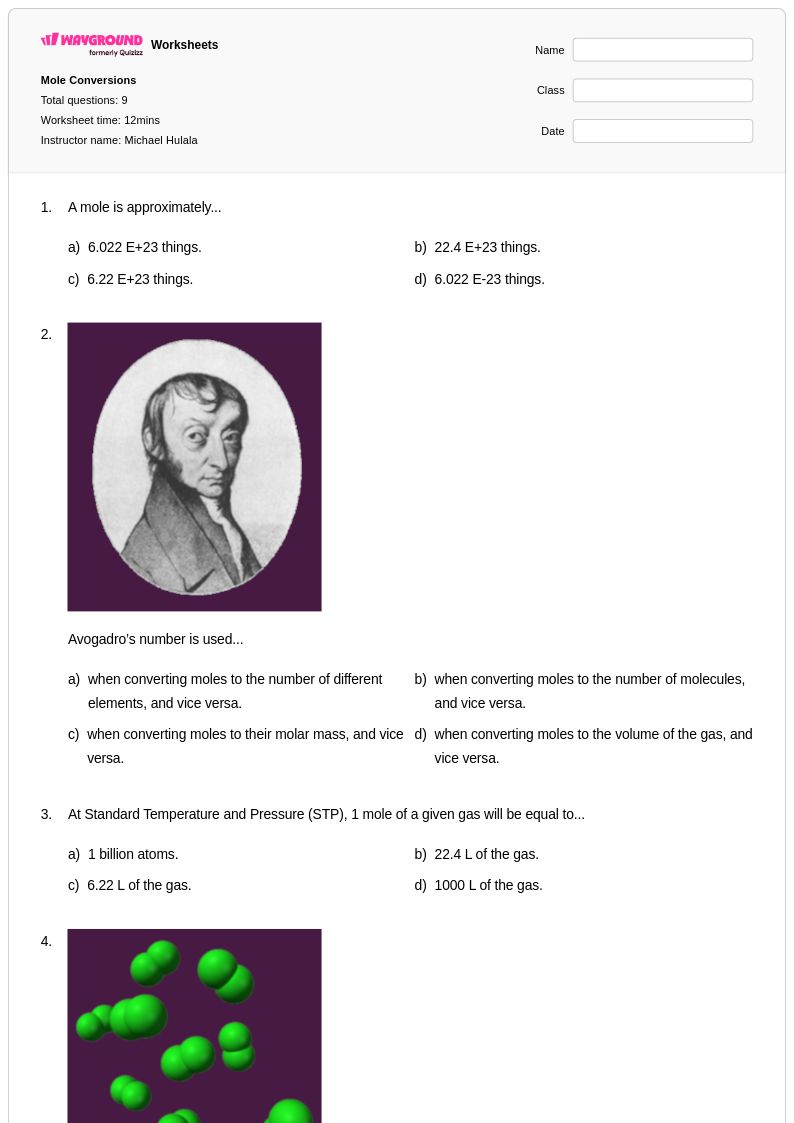
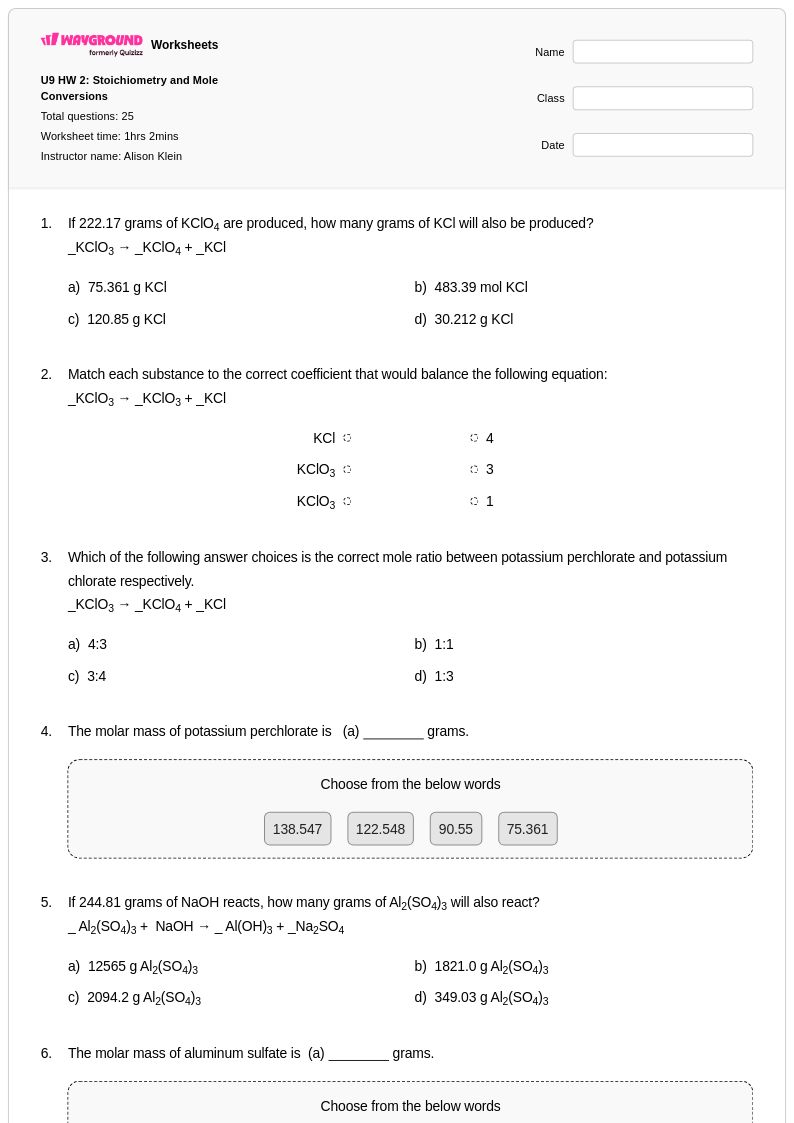
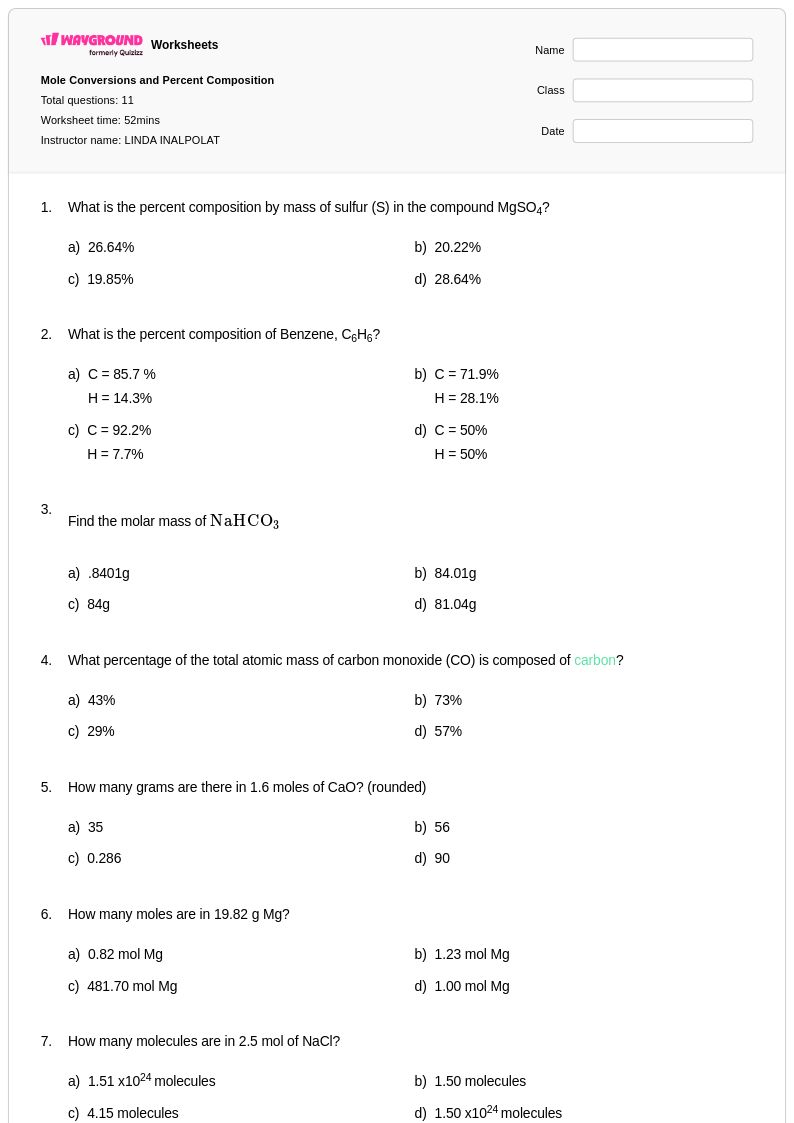
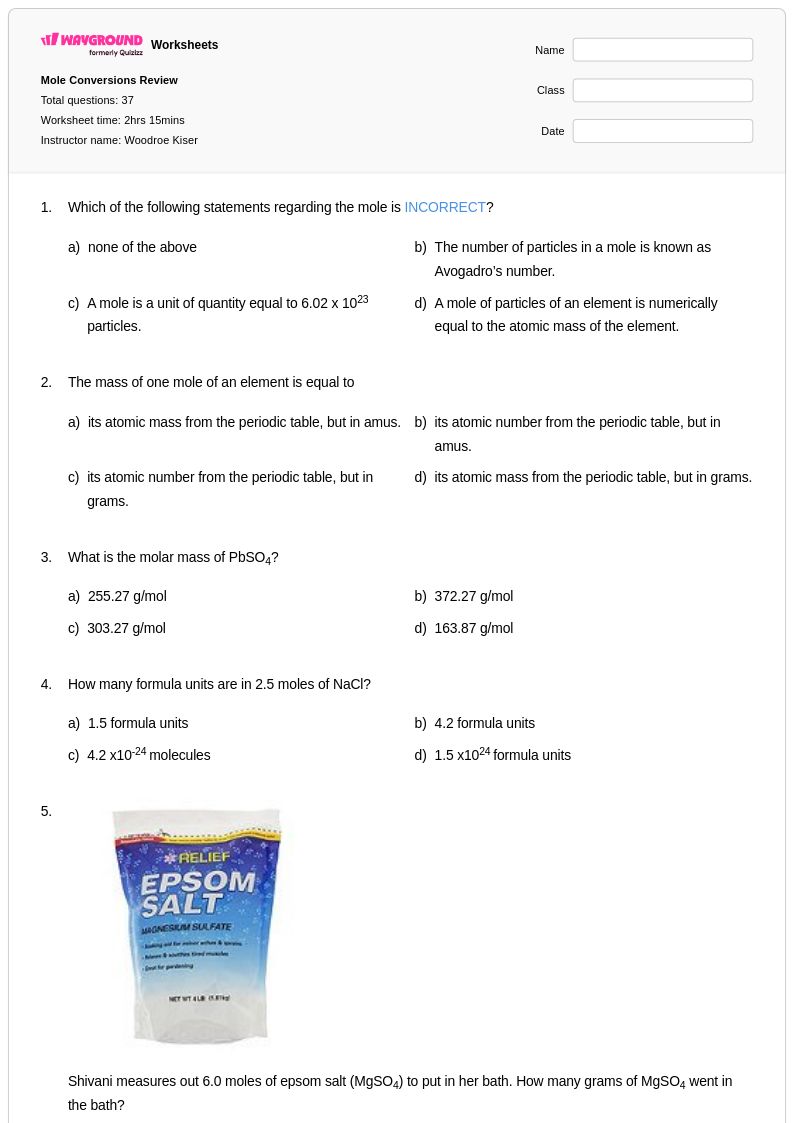
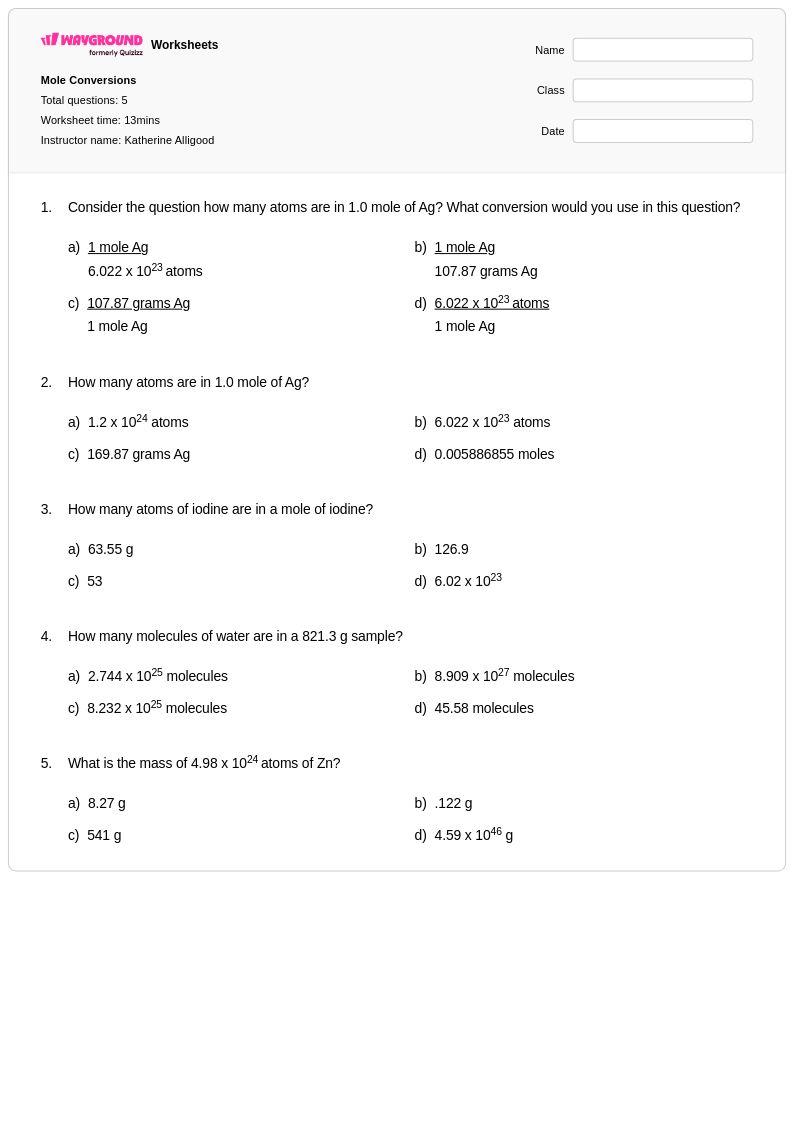
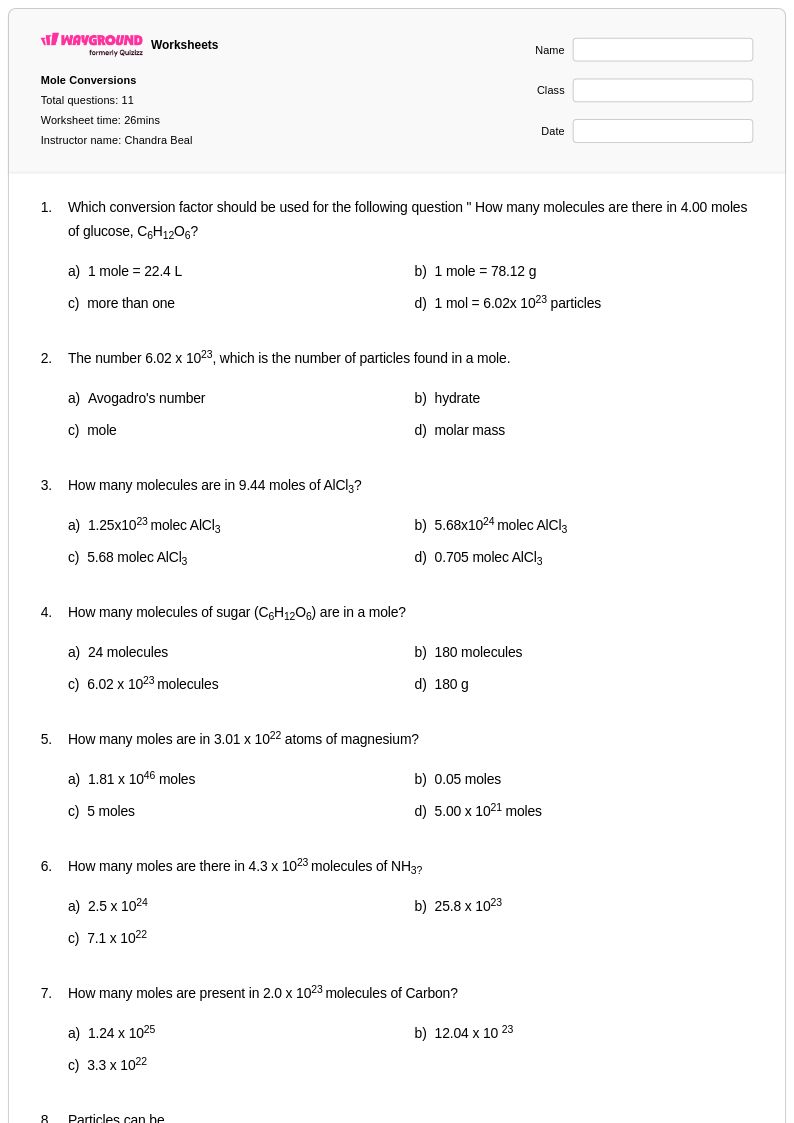
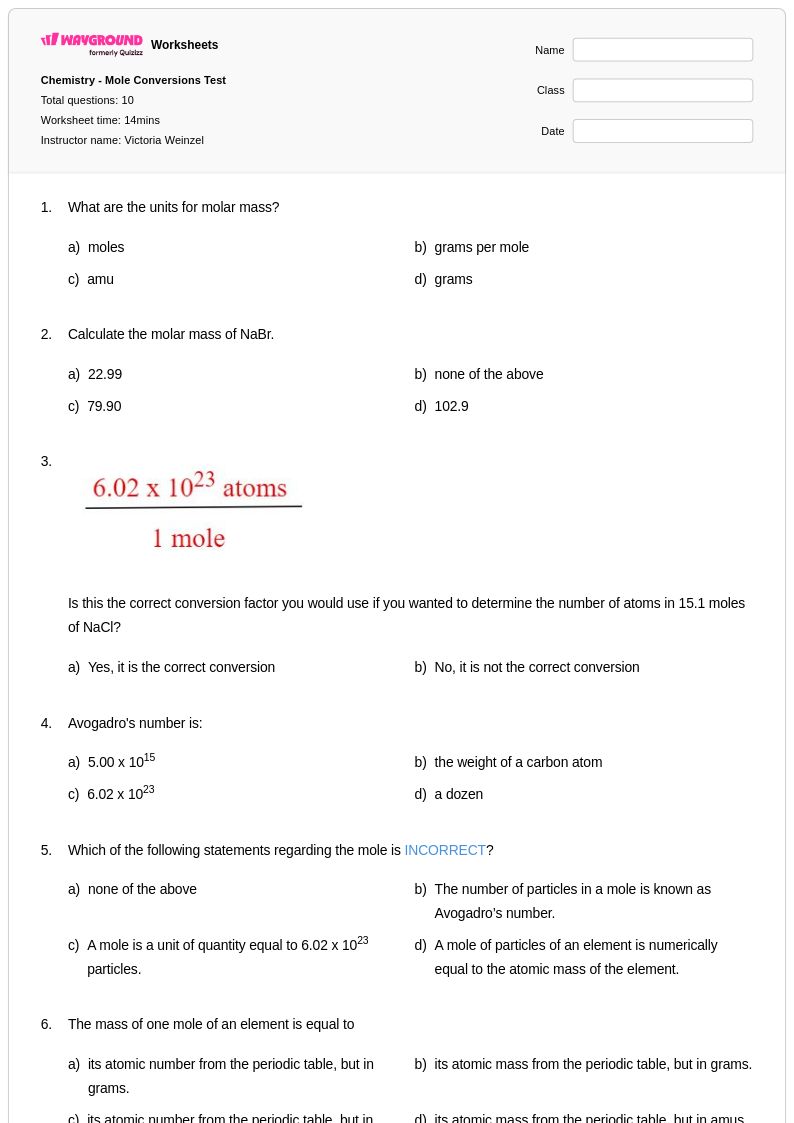
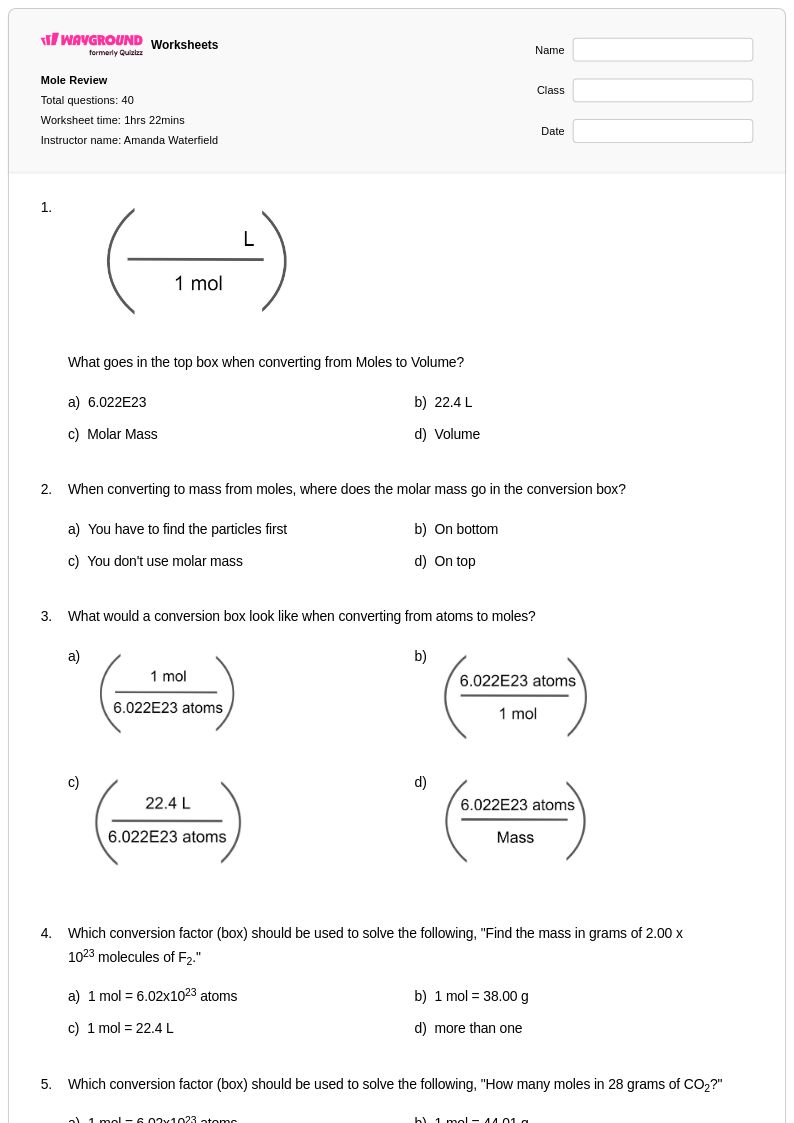
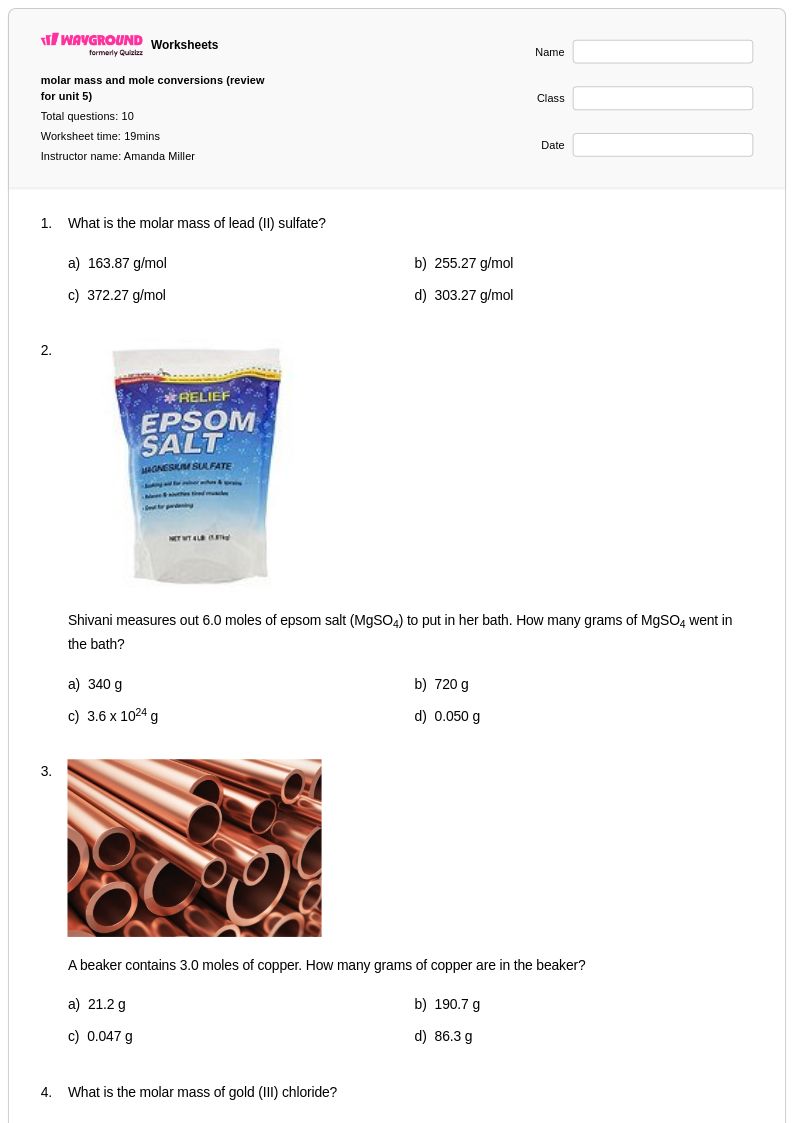
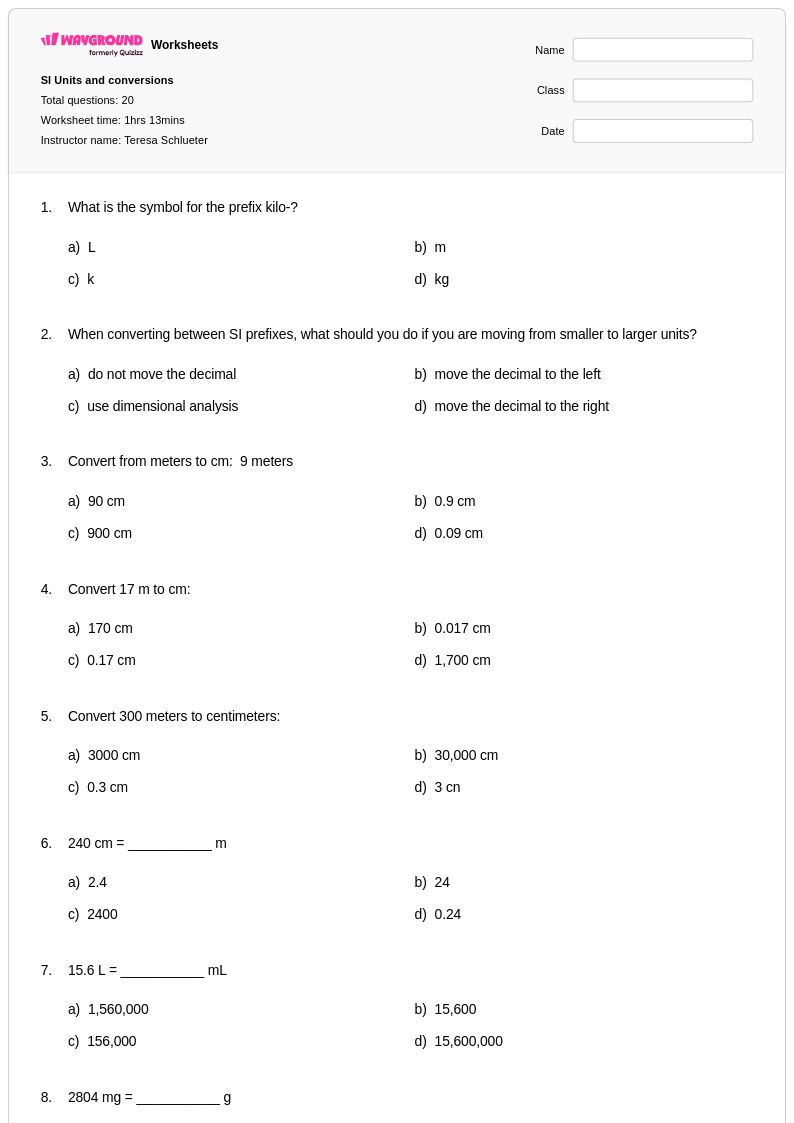
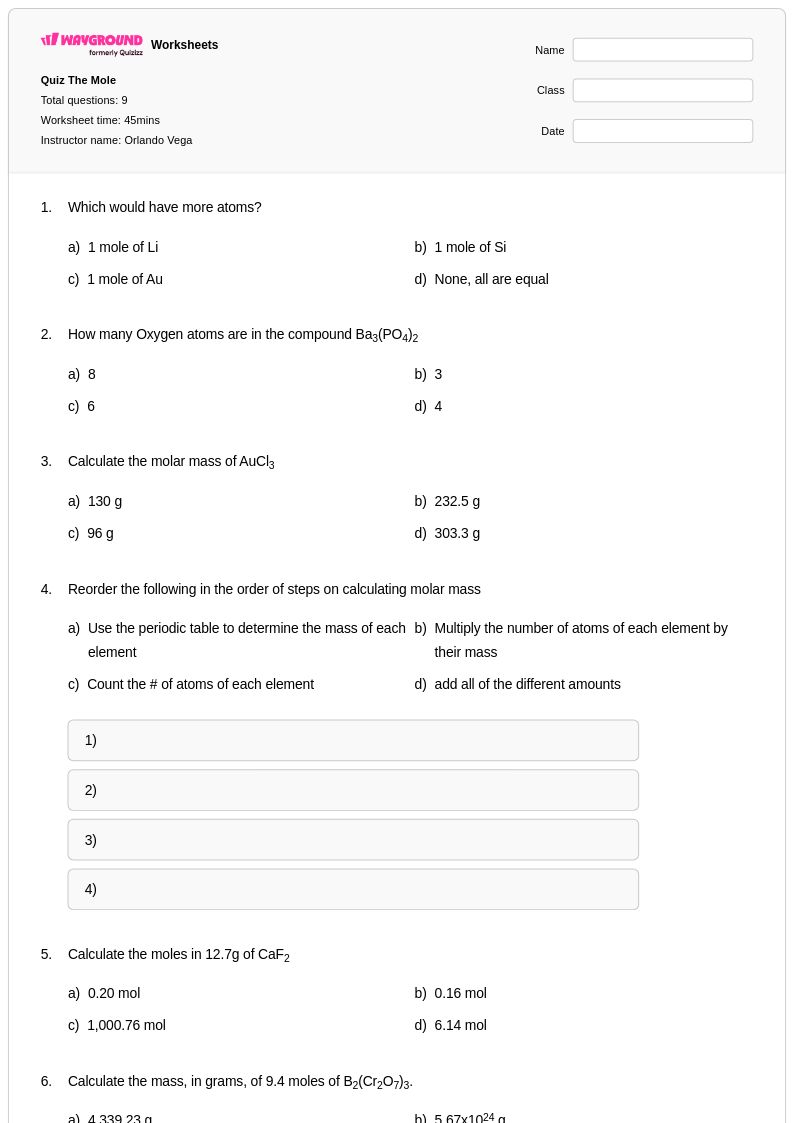
Grade 9 mole conversions worksheets from Wayground help students master stoichiometric calculations through comprehensive practice problems, featuring free printable PDFs with detailed answer keys for chemistry success.
Explore printable Mole Conversions worksheets for Grade 9
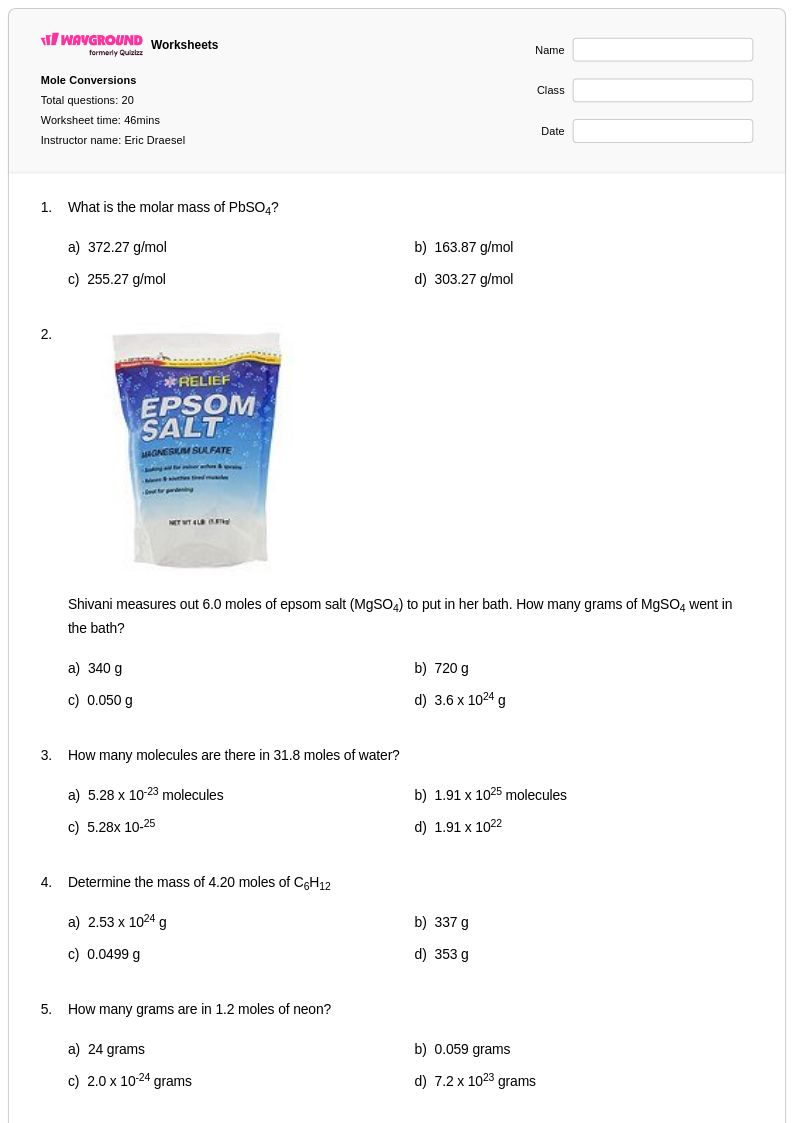
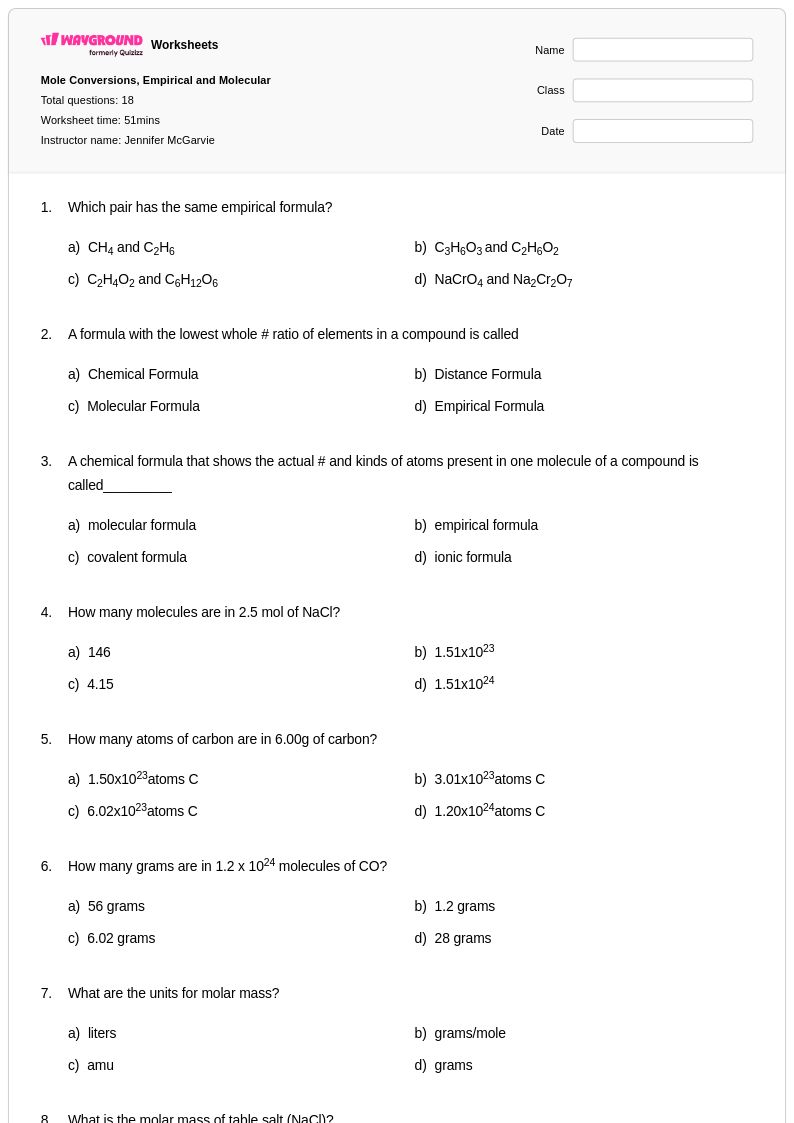
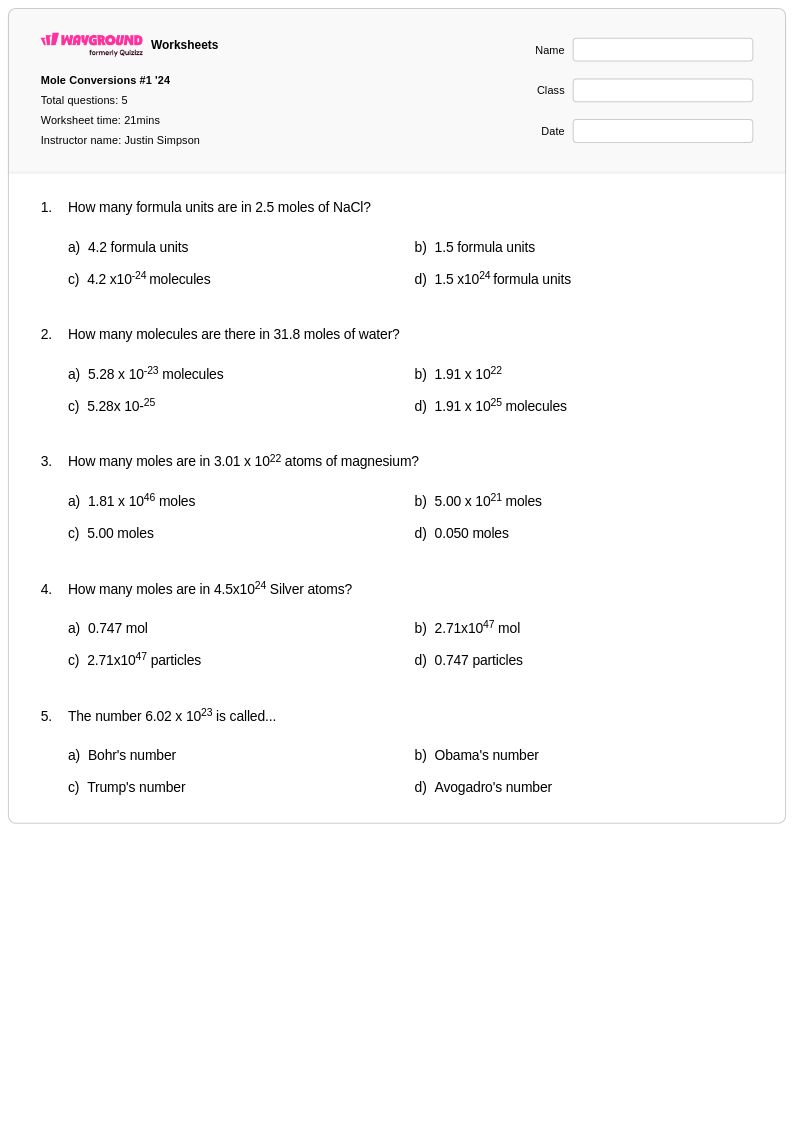
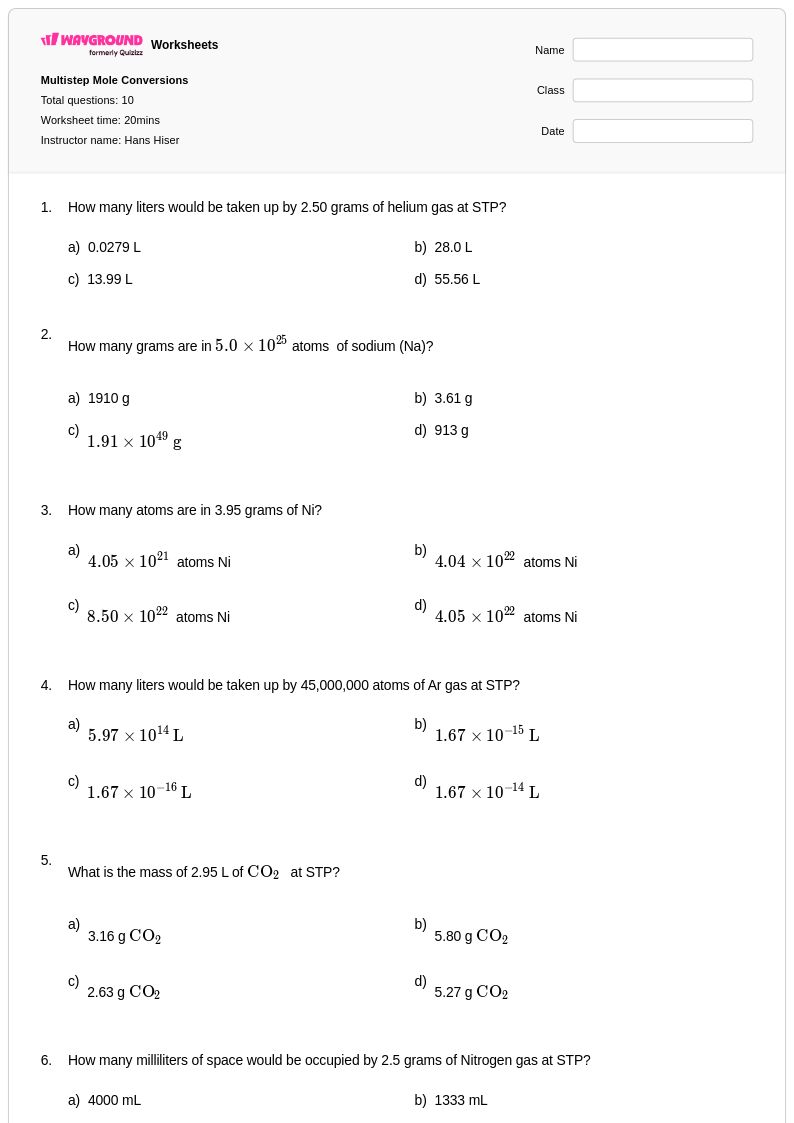
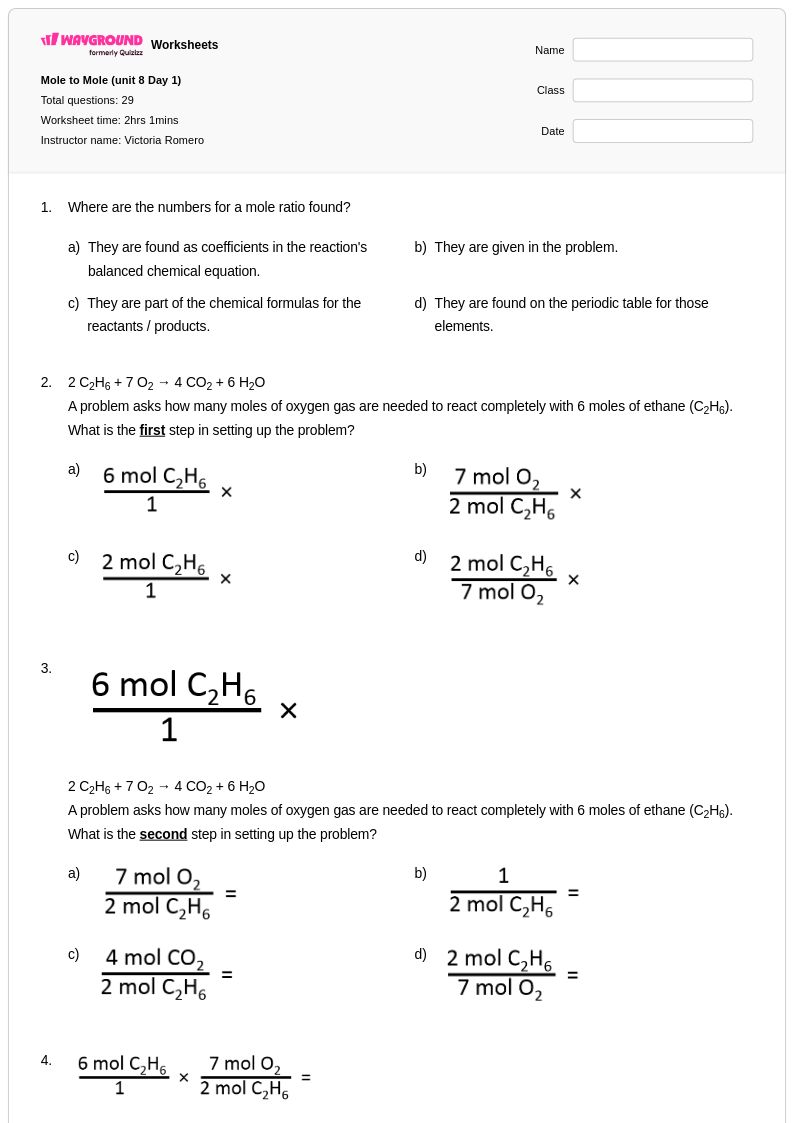
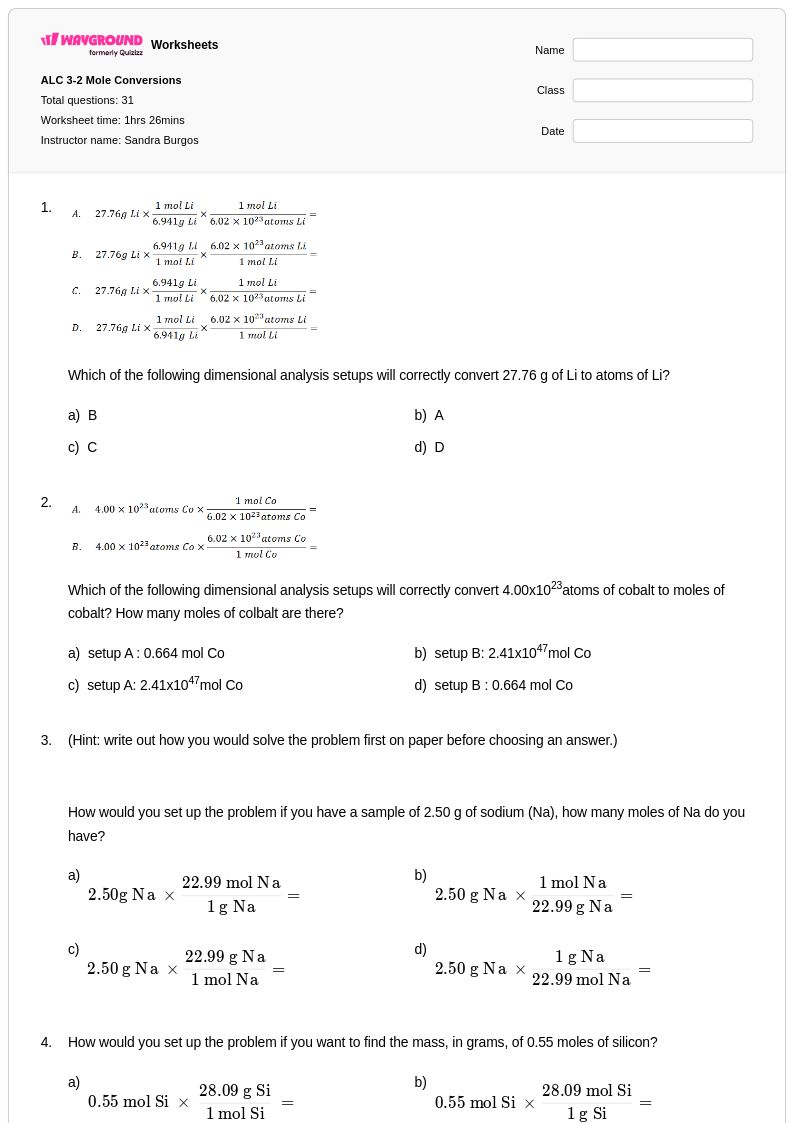
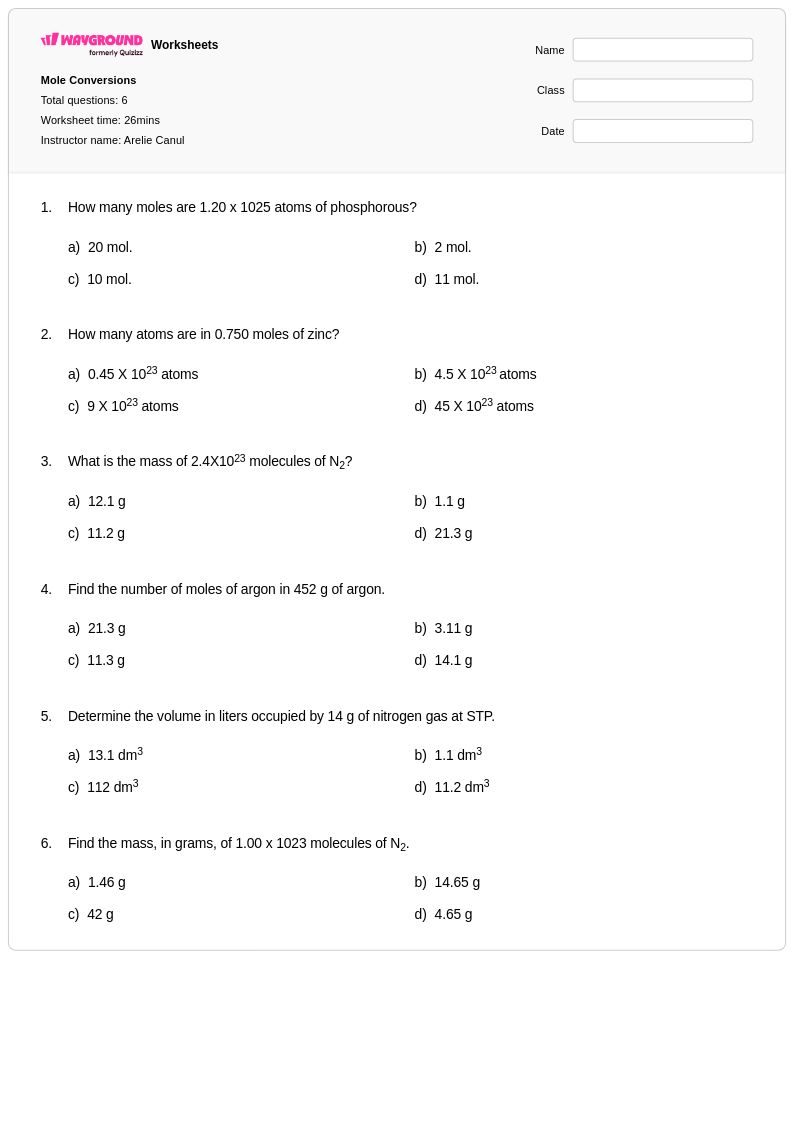
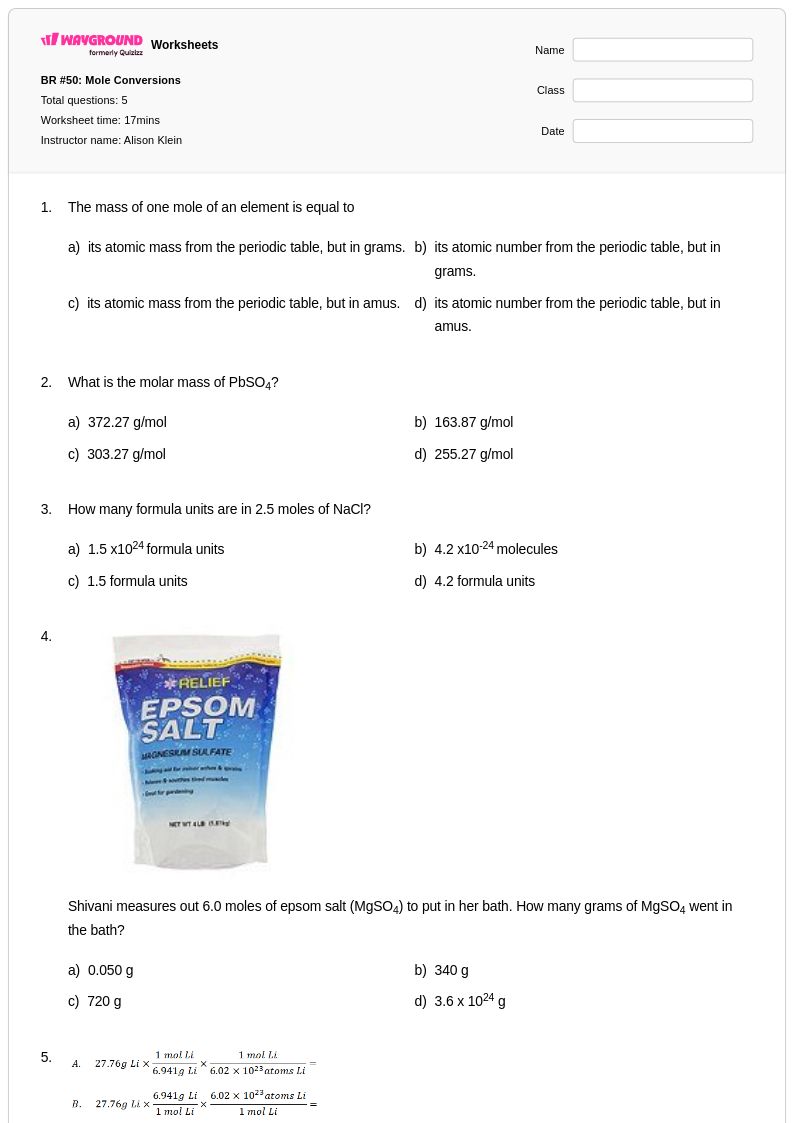
Mole conversions represent one of the most fundamental yet challenging concepts that Grade 9 chemistry students encounter, requiring mastery of dimensional analysis and understanding of Avogadro's number to successfully navigate between moles, atoms, molecules, and mass. Wayground's comprehensive collection of mole conversion worksheets provides students with extensive practice problems that systematically build proficiency in converting between different units of measurement in chemistry. These carefully crafted printables strengthen critical thinking skills by presenting real-world scenarios where students must identify conversion factors, set up dimensional analysis problems correctly, and perform accurate calculations. Each worksheet includes a detailed answer key that allows students to check their work independently, while the free pdf format ensures accessibility for both classroom instruction and independent study sessions.
Wayground, formerly Quizizz, empowers chemistry educators with millions of teacher-created resources specifically designed to support mole conversion instruction across diverse learning environments. The platform's robust search and filtering capabilities enable teachers to quickly locate worksheets that align with specific curriculum standards and match their students' skill levels, while built-in differentiation tools allow for seamless customization of practice problems to meet individual learning needs. These flexible resources are available in both printable and digital formats, including downloadable pdfs, making them ideal for traditional classroom settings, remote learning environments, and hybrid instruction models. Teachers can efficiently plan targeted remediation sessions for struggling students, provide enrichment activities for advanced learners, and create comprehensive skill practice sequences that build computational confidence and conceptual understanding in stoichiometry foundations.
FAQs
How do I teach mole conversions to chemistry students?
Start by building fluency with a single conversion type before introducing multi-step problems. Teach dimensional analysis as the core technique, showing students how to set up conversion factors using Avogadro's number (6.022 × 10²³), molar mass from the periodic table, and molar volume at STP (22.4 L/mol). Once students can move confidently between moles, grams, and particles in isolation, introduce chained conversions that require two or more steps. Anchoring every conversion in the mole as the central unit helps students see the logic rather than memorize disconnected formulas.
What exercises help students practice mole conversions?
Structured problem sets that isolate one conversion type at a time are the most effective starting point — for example, a worksheet focused exclusively on mole-to-gram calculations before combining it with particle-count problems. Step-by-step dimensional analysis problems that require students to show their work and cancel units explicitly are especially valuable because they expose procedural errors early. Progressing from single-step to multi-step conversions involving molecular formulas and empirical relationships builds the fluency needed for broader stoichiometry work.
What mistakes do students commonly make with mole conversions?
The most frequent error is inverting the conversion factor — for instance, multiplying by molar mass when they should be dividing, or vice versa. Students also commonly confuse Avogadro's number with molar volume, applying the wrong constant for particle or volume conversions. Skipping dimensional analysis and working from memory rather than unit-tracking leads to errors that are hard to self-diagnose. Requiring students to write out units at every step and explicitly cancel them reduces these mistakes significantly.
How do I use Wayground's mole conversion worksheets in my class?
Wayground's mole conversion worksheets are available as printable PDFs, making them easy to use for in-class practice, homework, or lab pre-work in traditional classroom settings. They are also available in digital formats, so students can complete them on devices in tech-integrated or hybrid environments. Teachers can host any worksheet as a quiz directly on Wayground, enabling real-time tracking of student responses. Each worksheet includes a detailed answer key demonstrating proper dimensional analysis technique, which supports both teacher grading and student self-correction.
How can I differentiate mole conversion practice for students at different levels?
For struggling students, begin with single-step conversions using simple compounds and provide a reference sheet listing Avogadro's number, molar volume at STP, and how to read molar mass from the periodic table. For advanced students, introduce multi-step problems that combine mole-to-gram and mole-to-particle conversions within a single problem, or incorporate molecular formula and empirical formula relationships. On Wayground, teachers can also apply individual accommodations such as reduced answer choices or read-aloud support to specific students, allowing the rest of the class to work under default settings without disruption.
At what point in a chemistry course should I introduce mole conversion worksheets?
Mole conversions should be introduced after students have a working understanding of atomic mass, the periodic table, and the concept of the mole as a counting unit. In most high school chemistry sequences, this falls early in a stoichiometry unit, typically in grades 10 or 11. Establishing mole conversion fluency at this stage is essential because it underpins nearly every quantitative calculation that follows, including limiting reagents, solution concentration, and gas law applications.