Free Printable Organic Molecules Worksheets for Grade 9
Grade 9 organic molecules worksheets from Wayground provide comprehensive printables and practice problems to help students master carbon compounds, molecular structures, and chemical bonding with detailed answer keys included.
Explore printable Organic Molecules worksheets for Grade 9
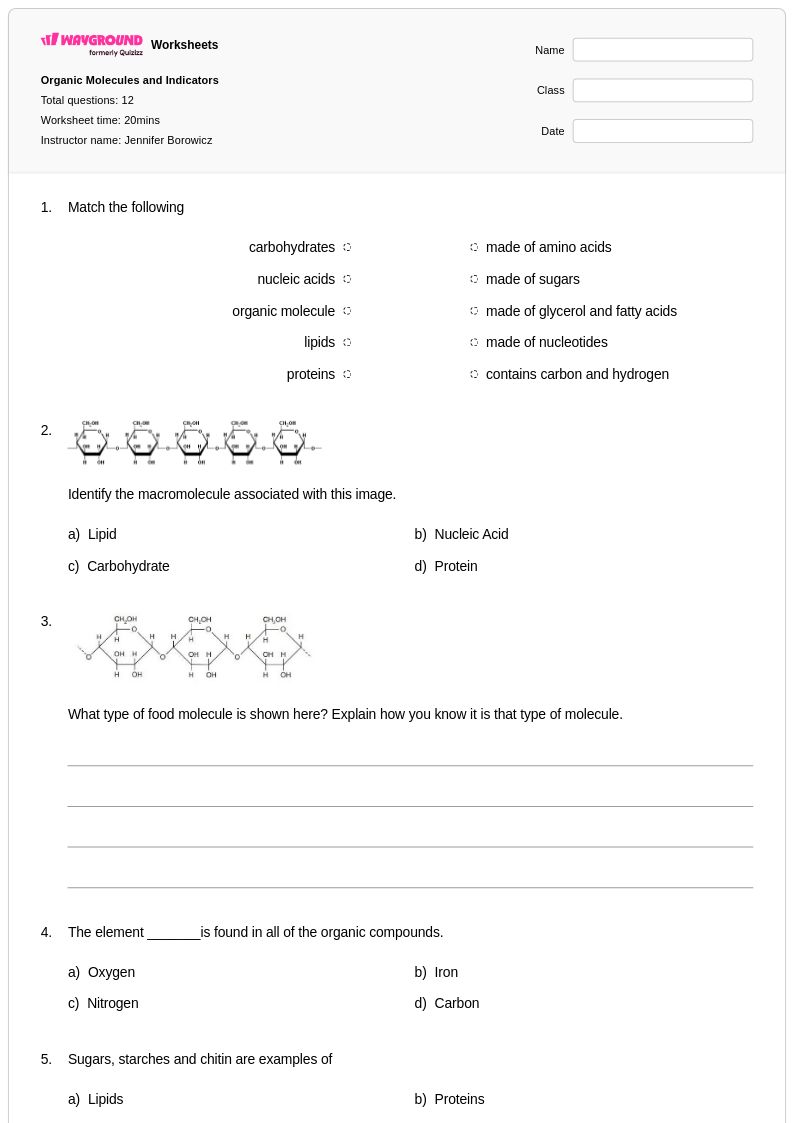
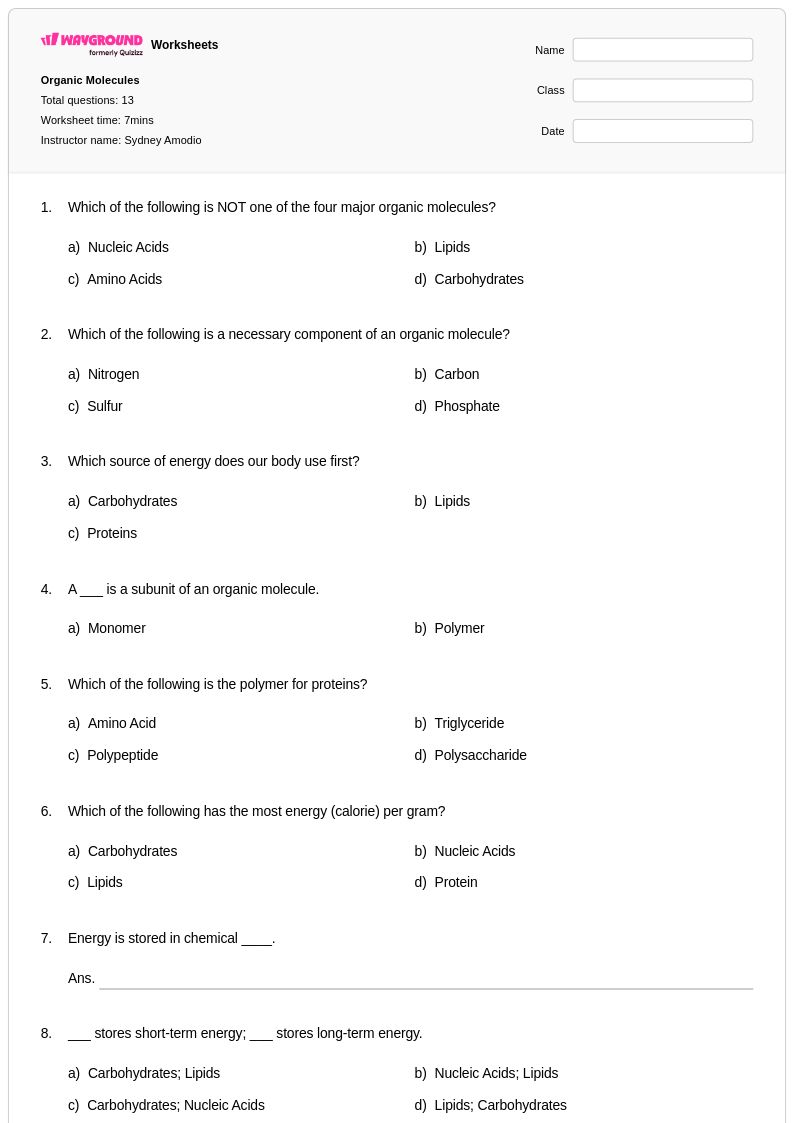
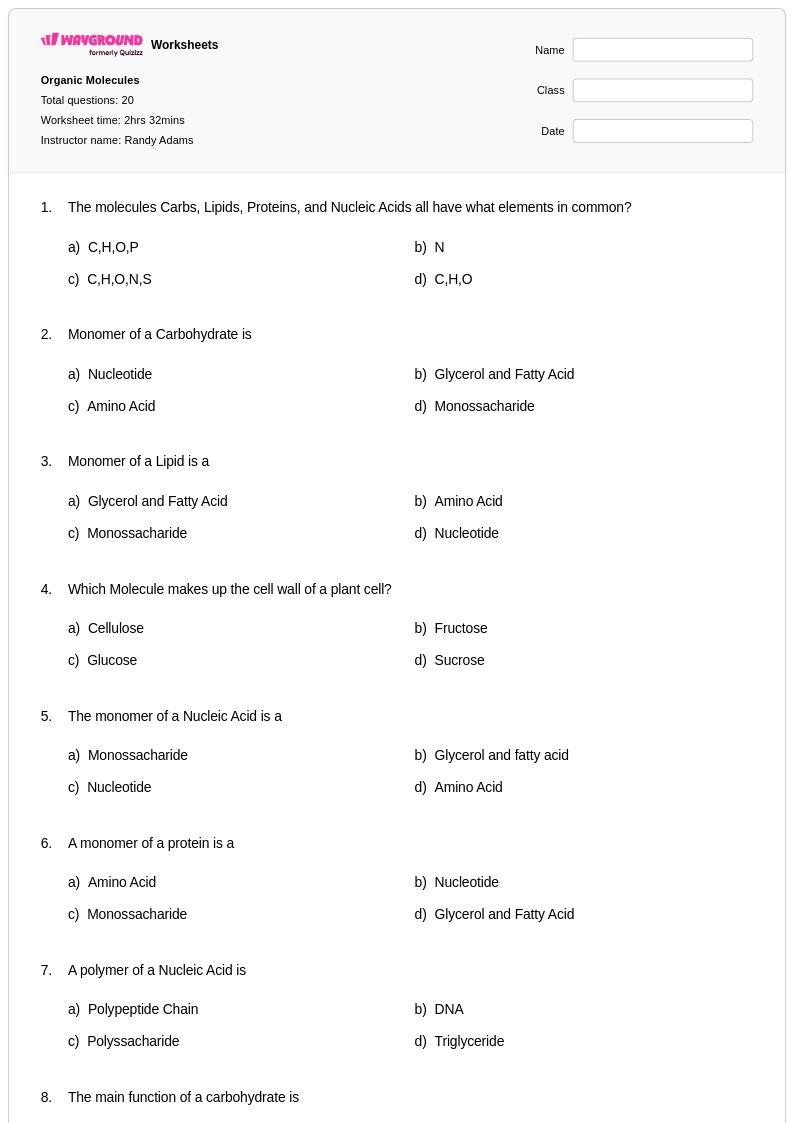
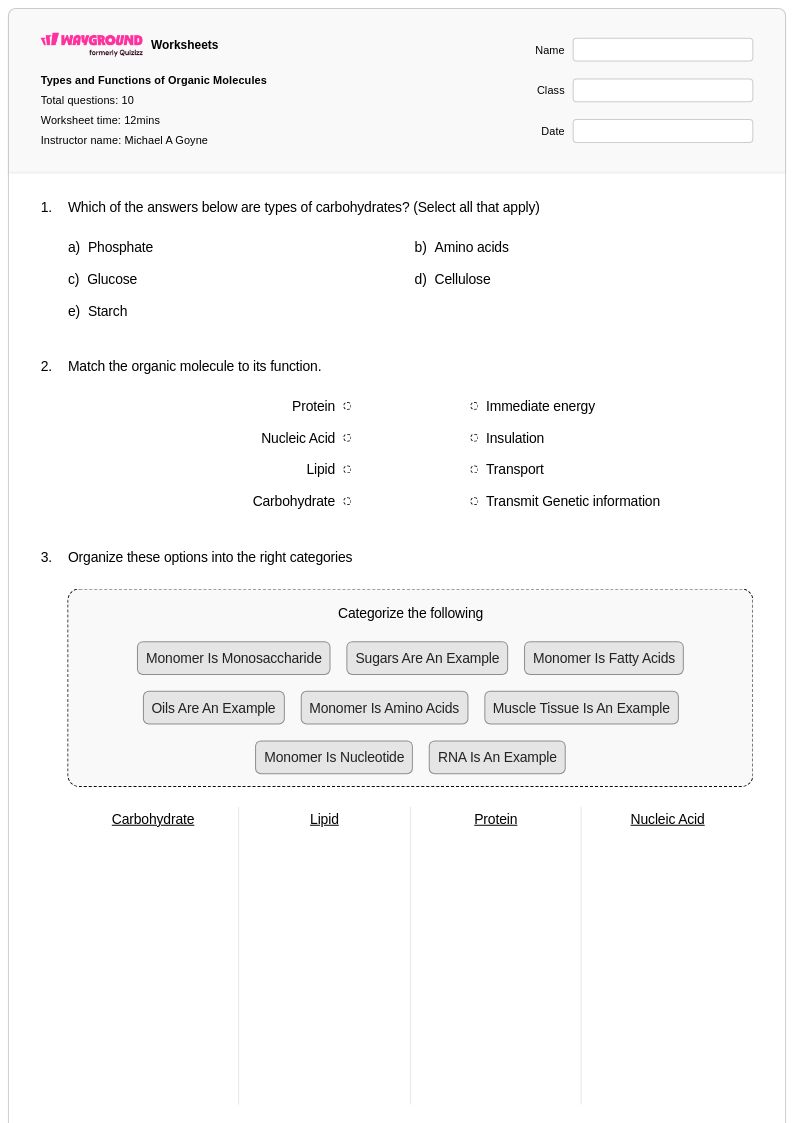
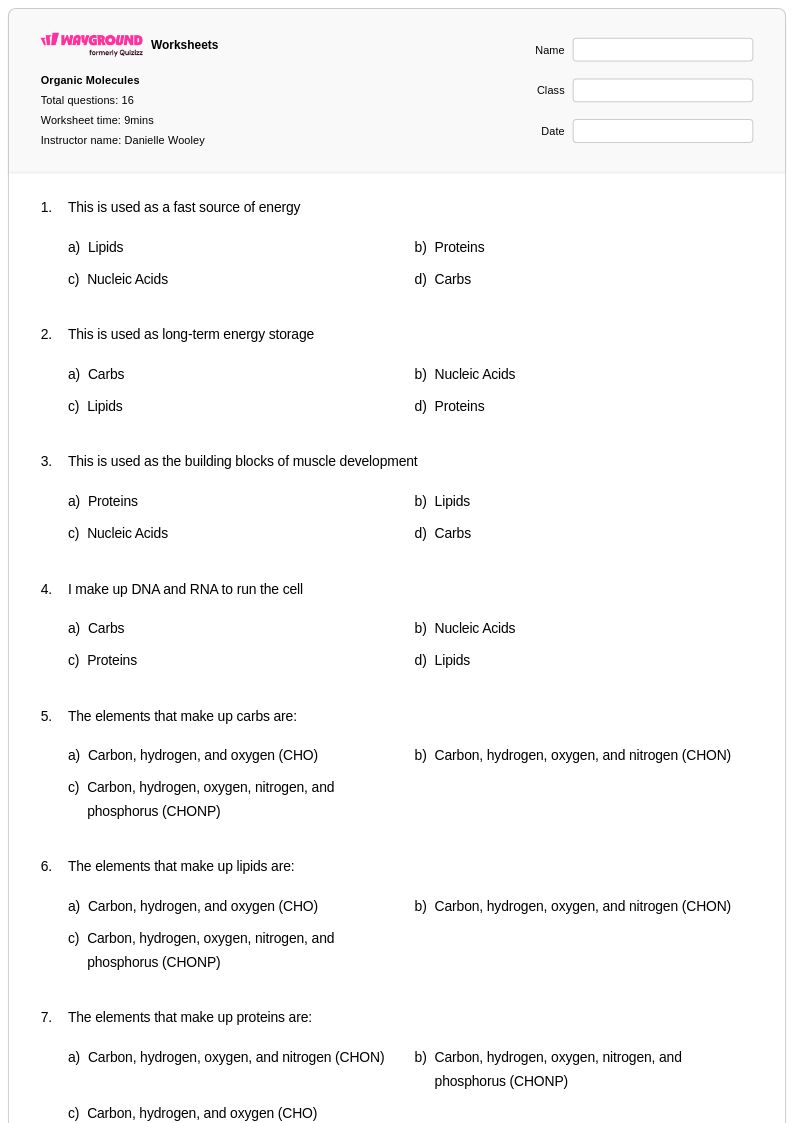
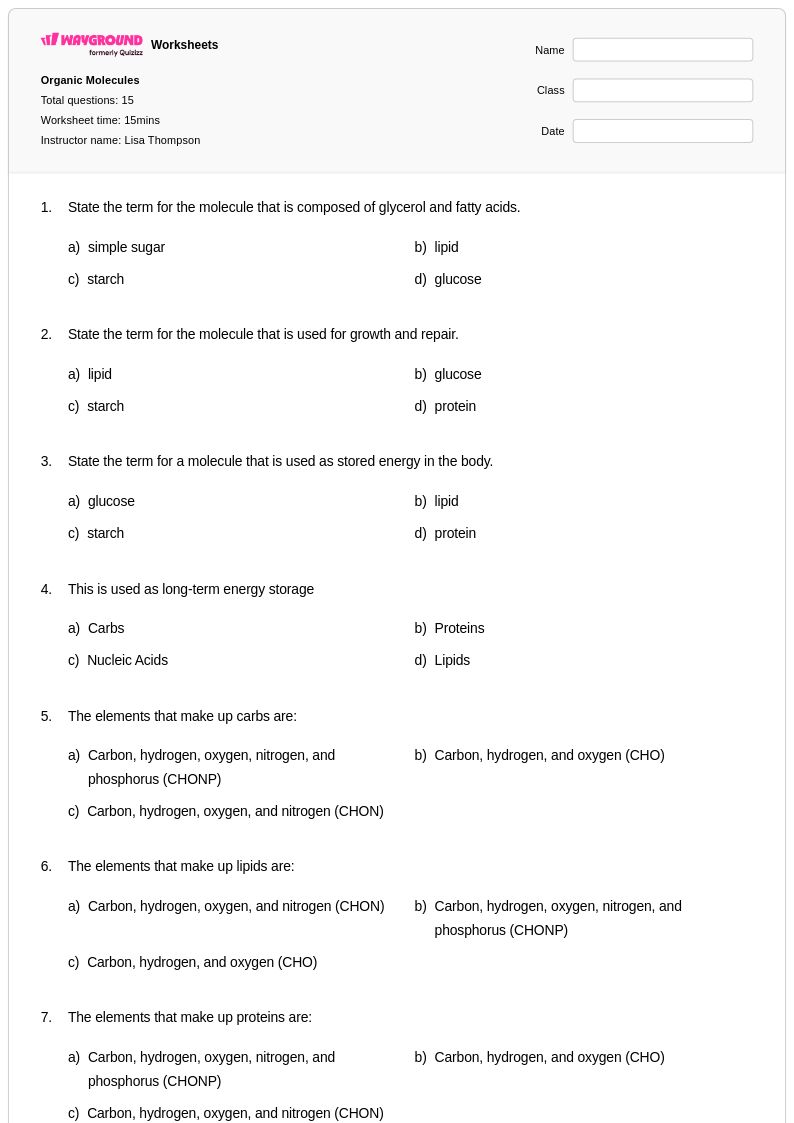
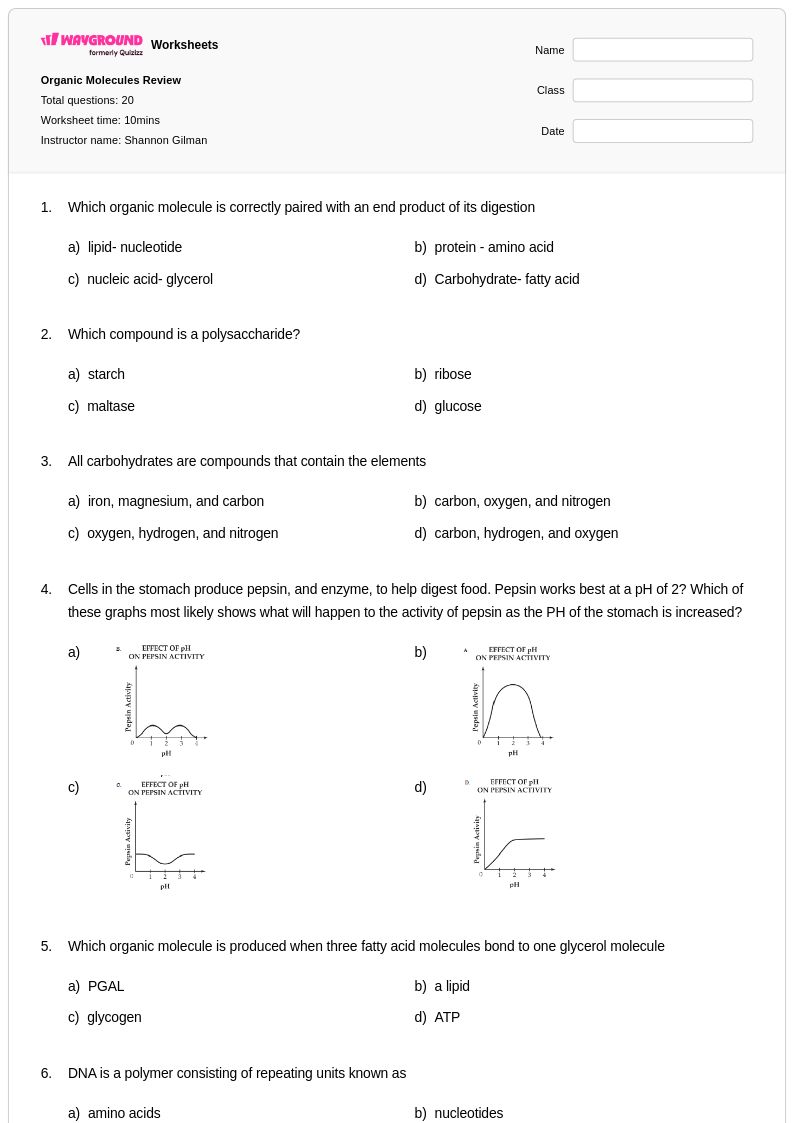
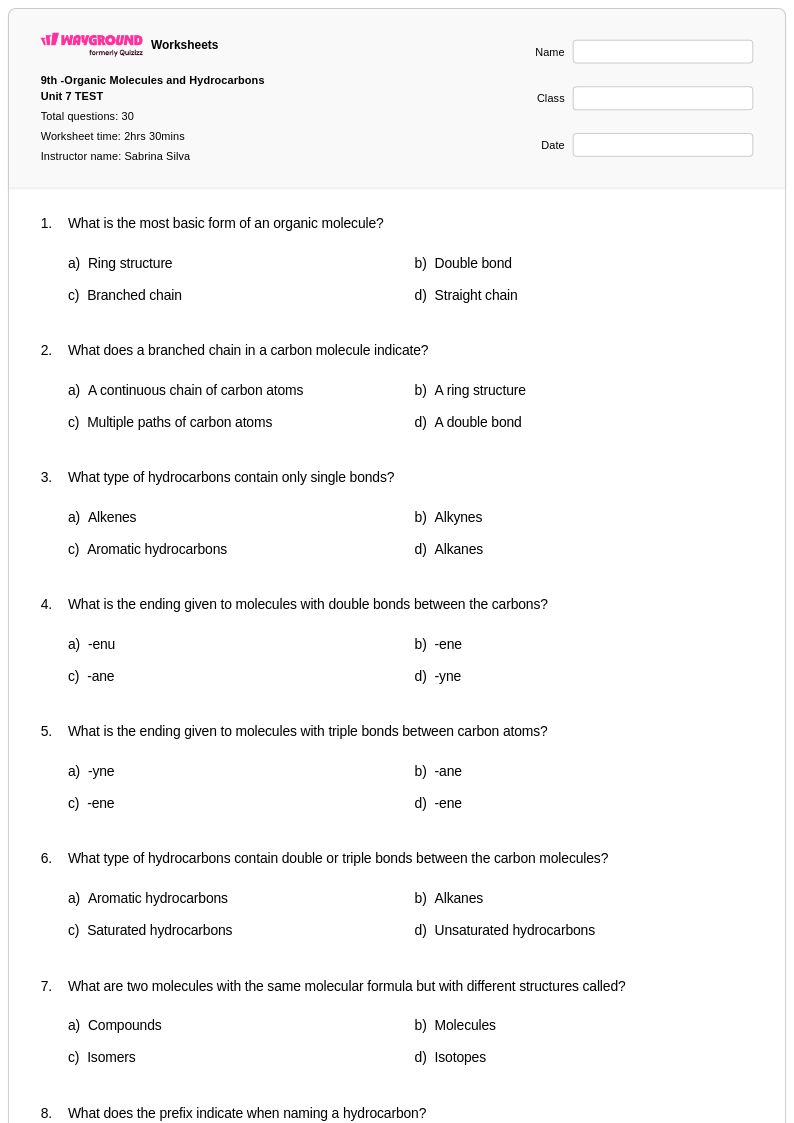
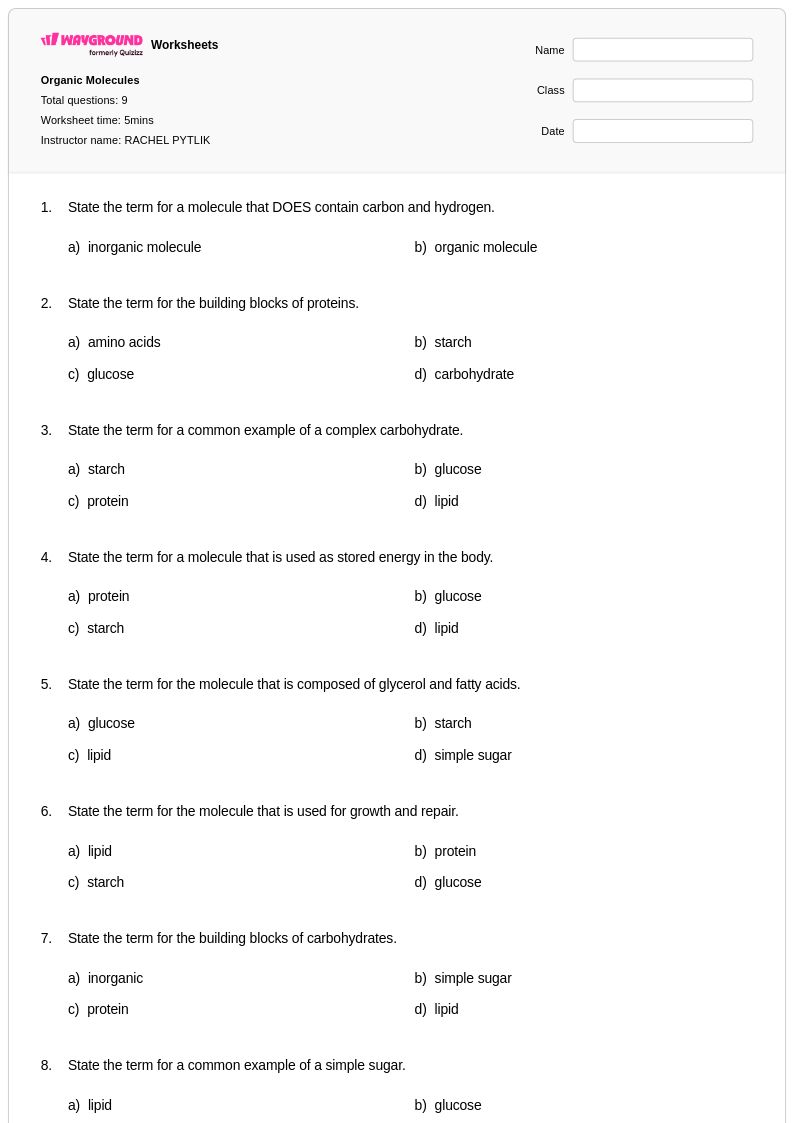
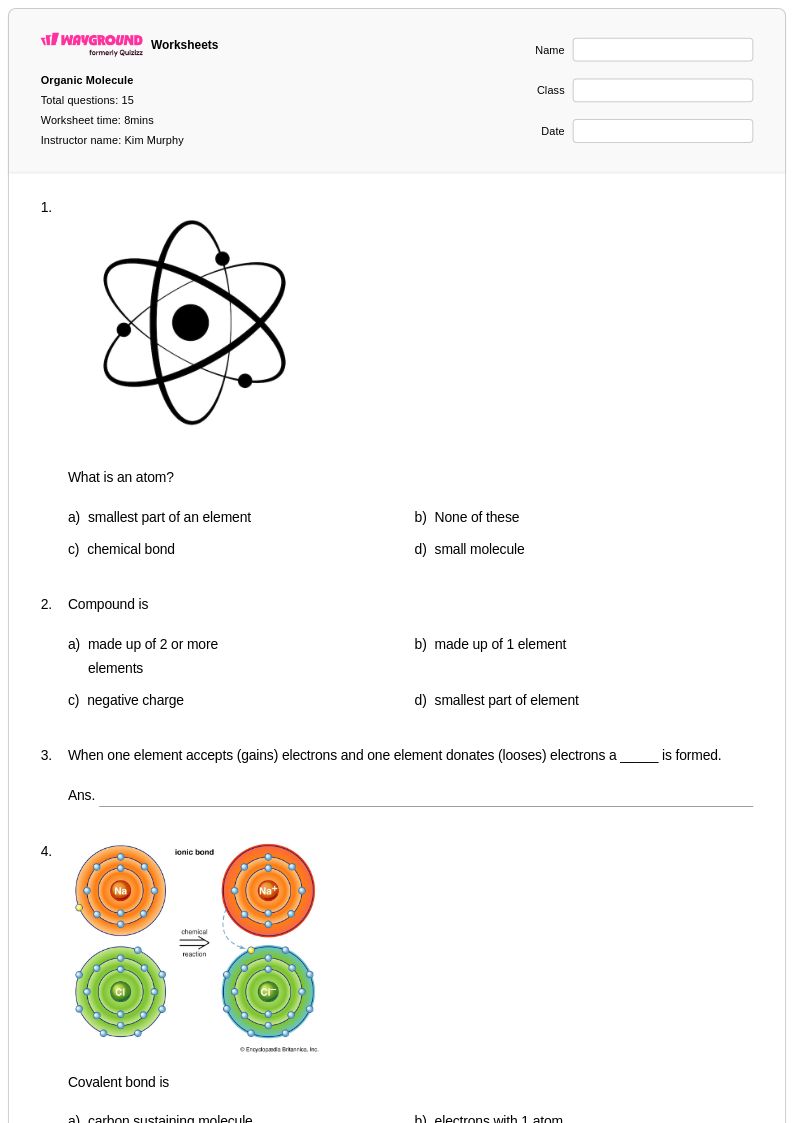
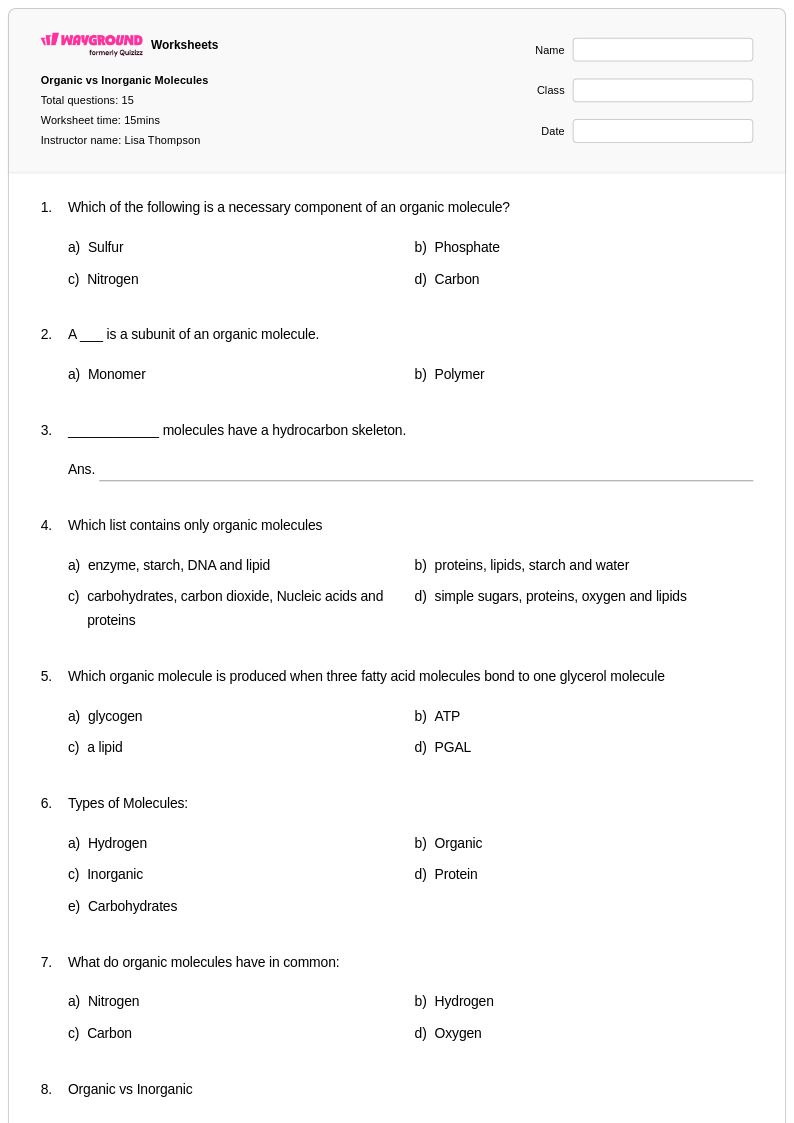
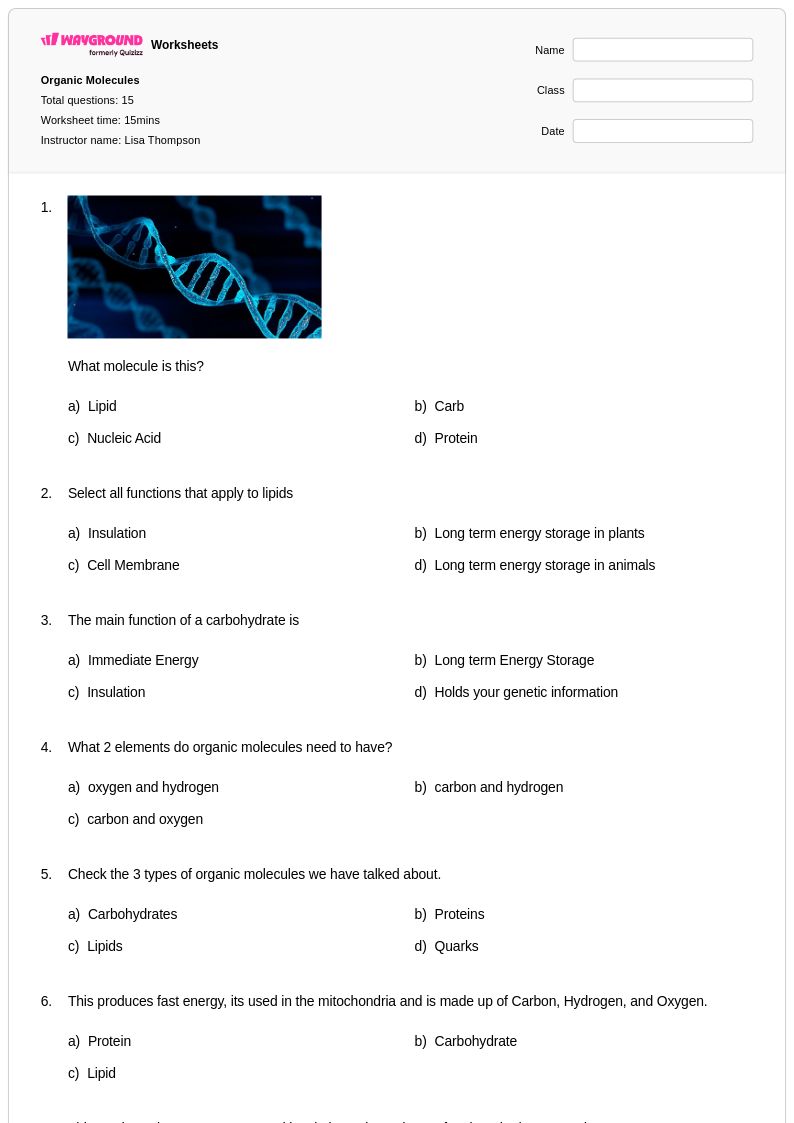
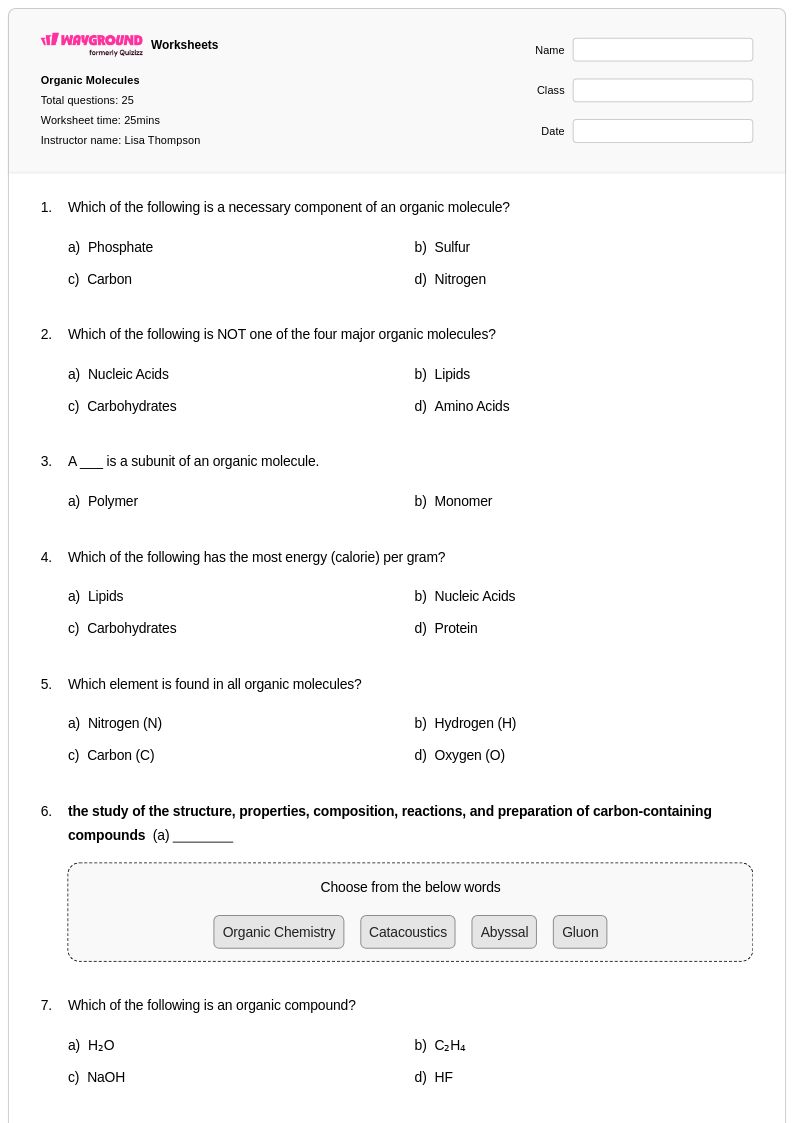
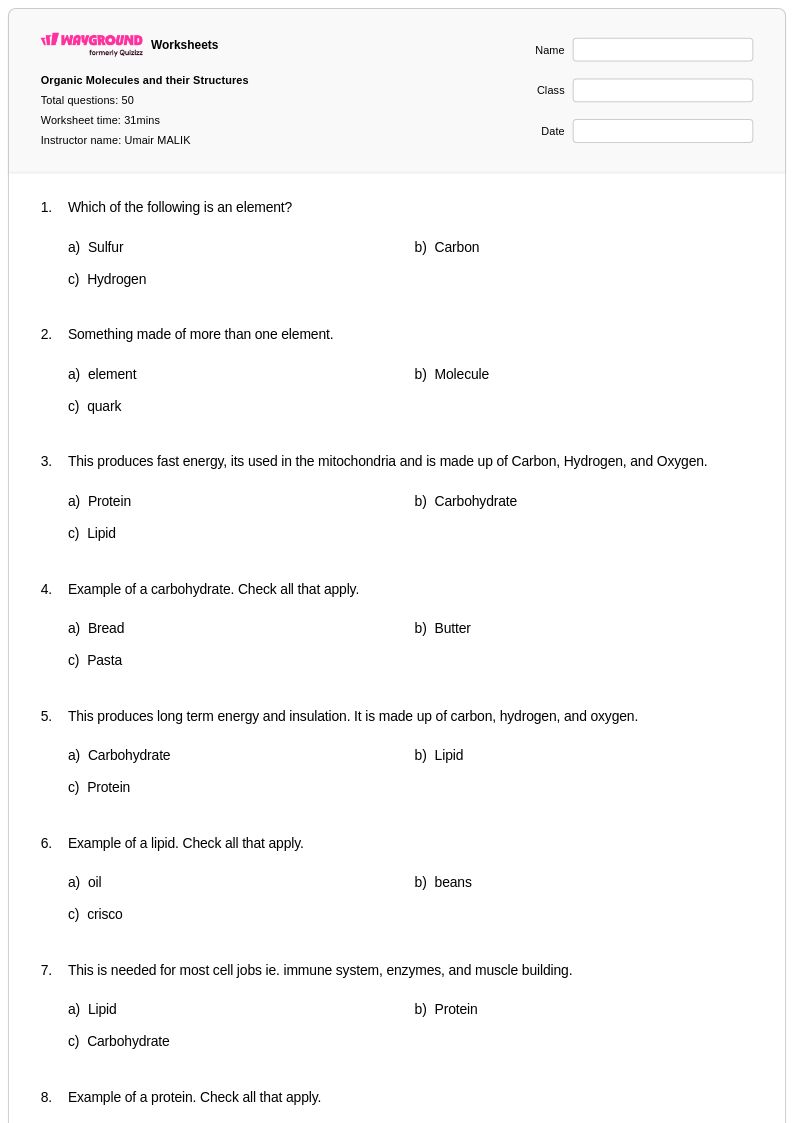
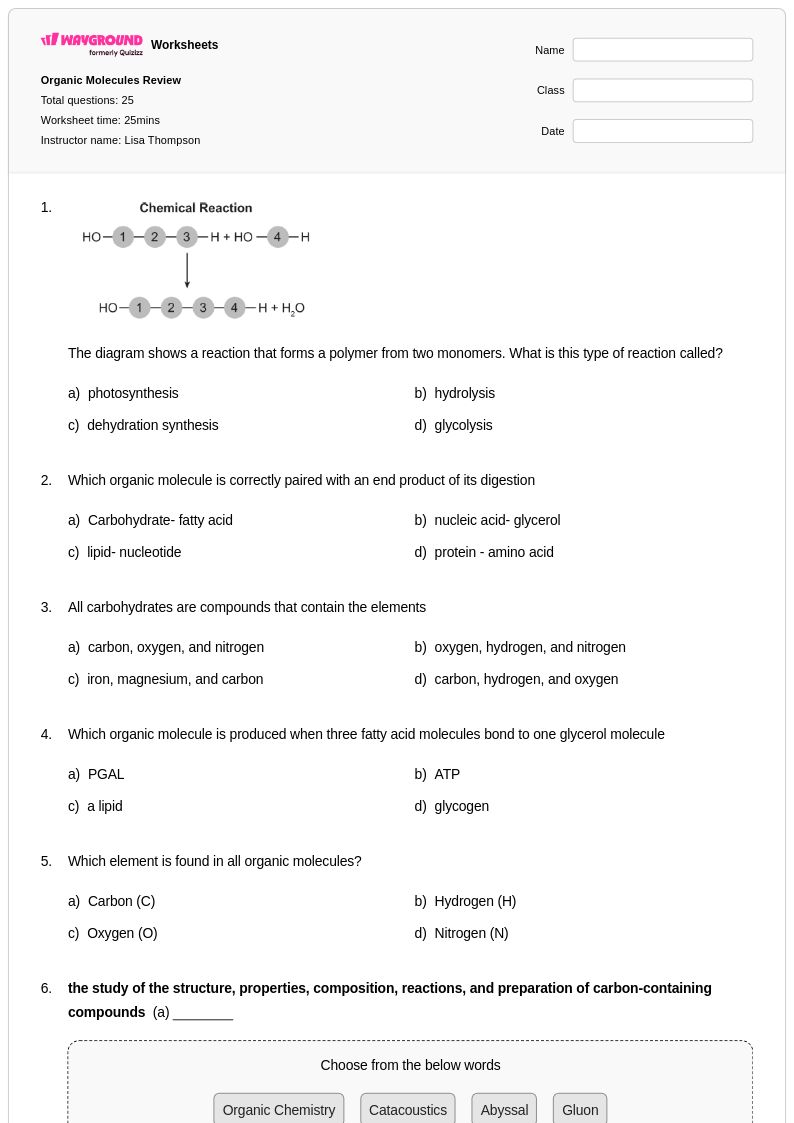
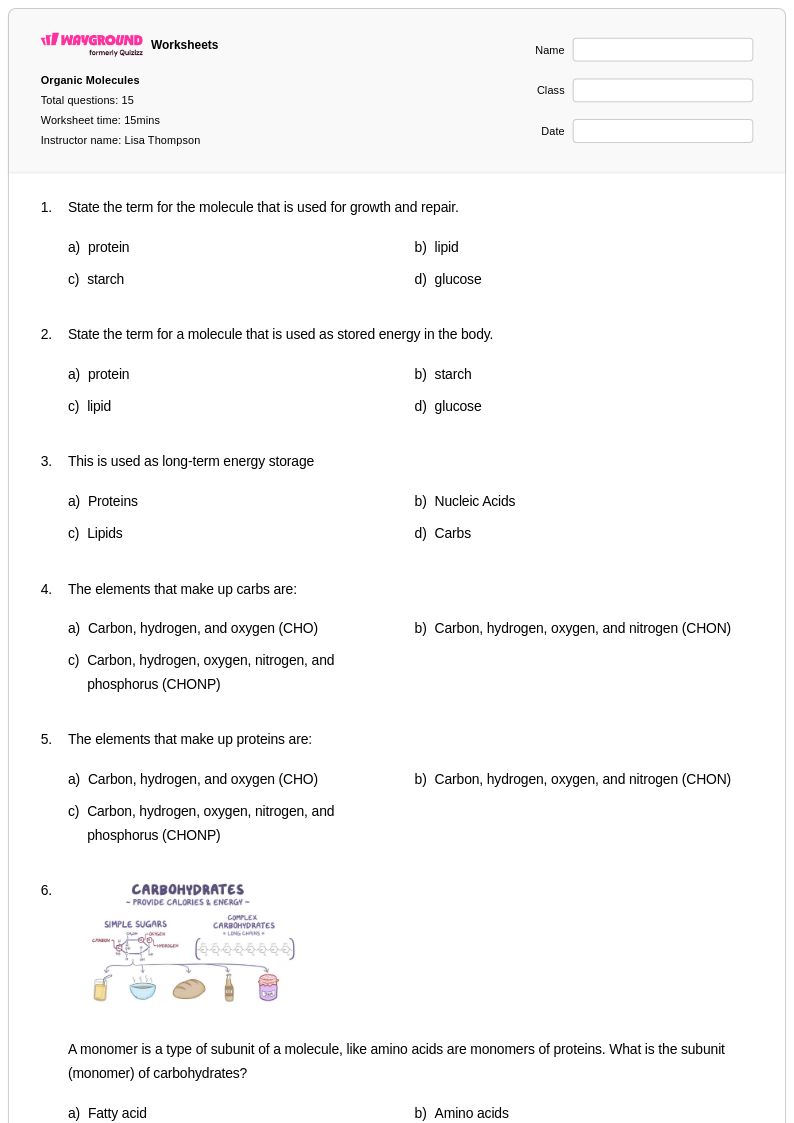
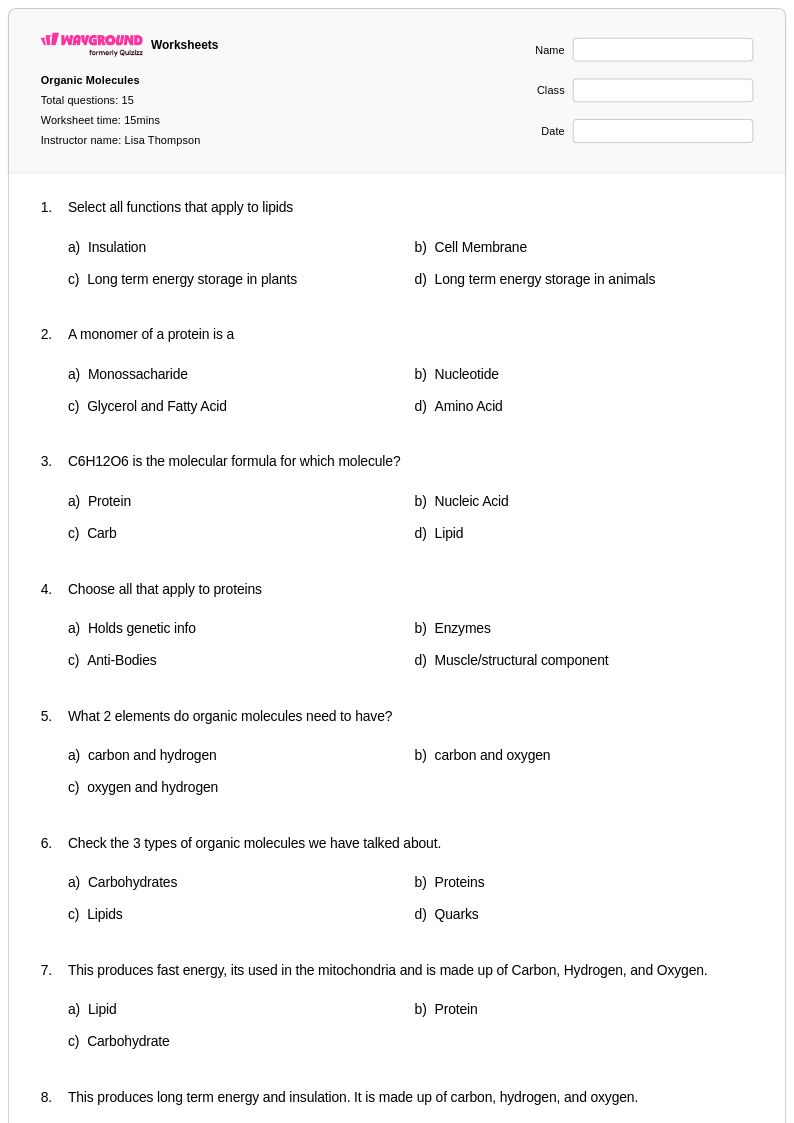
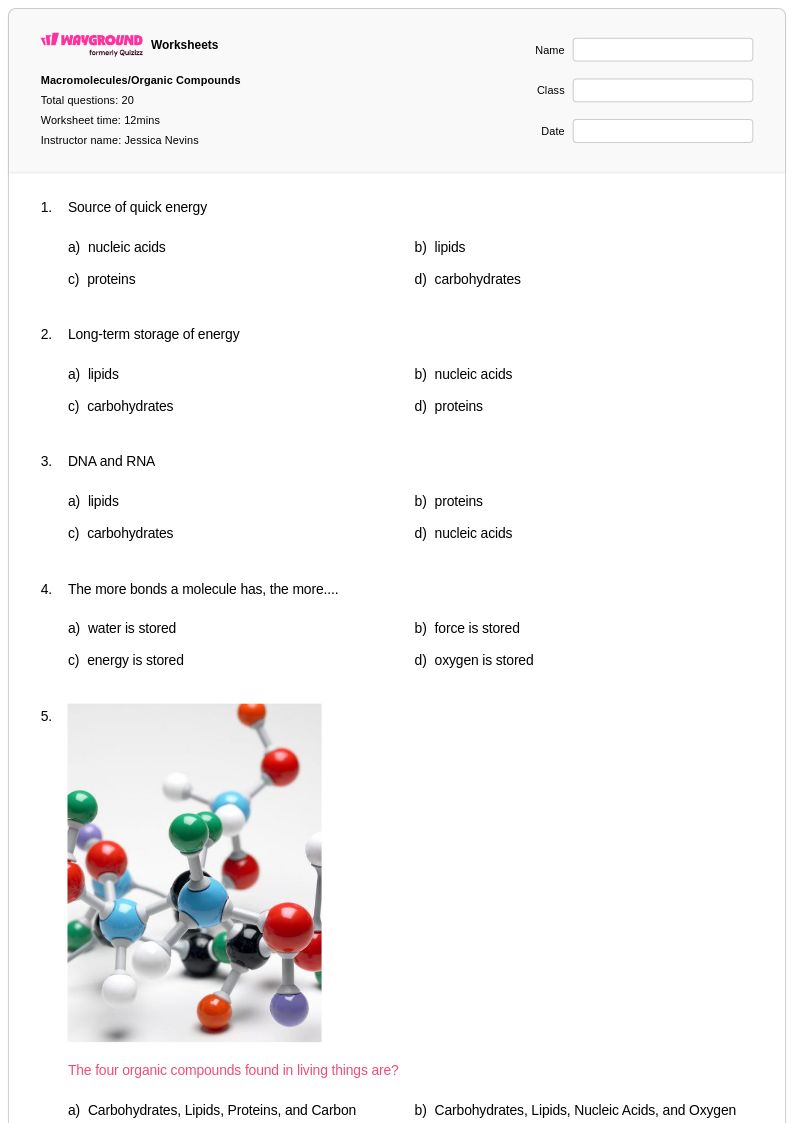
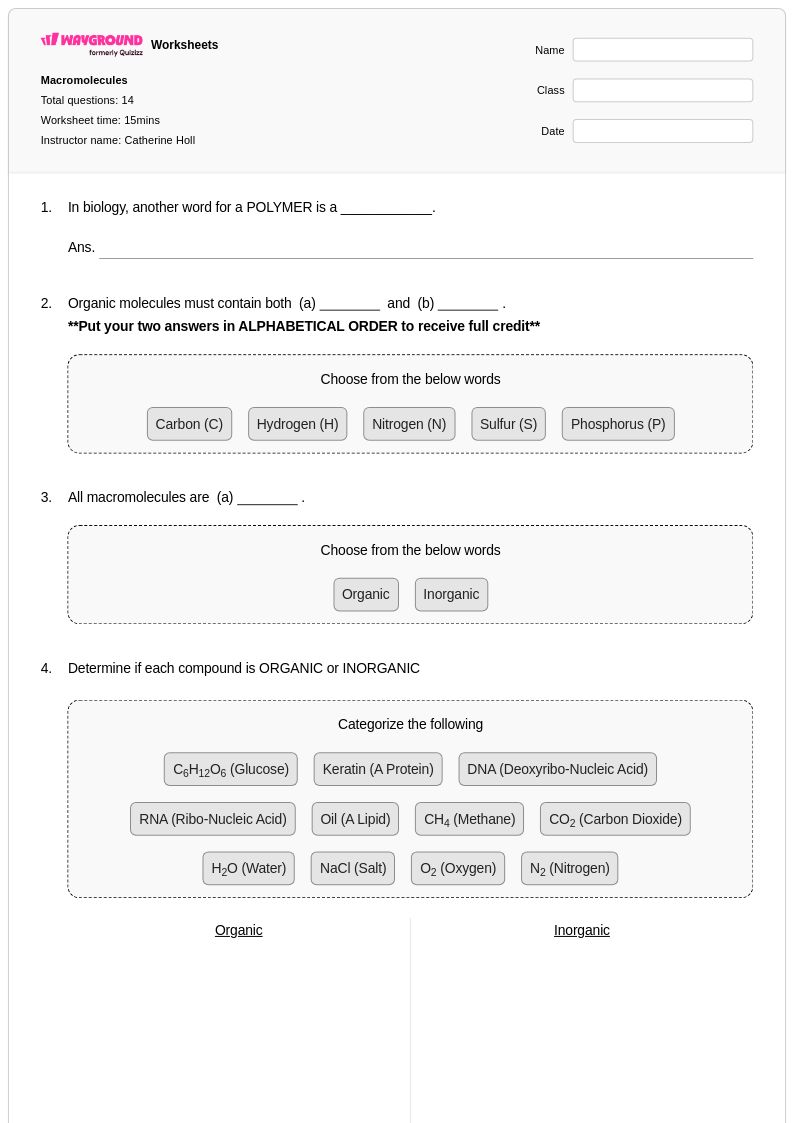
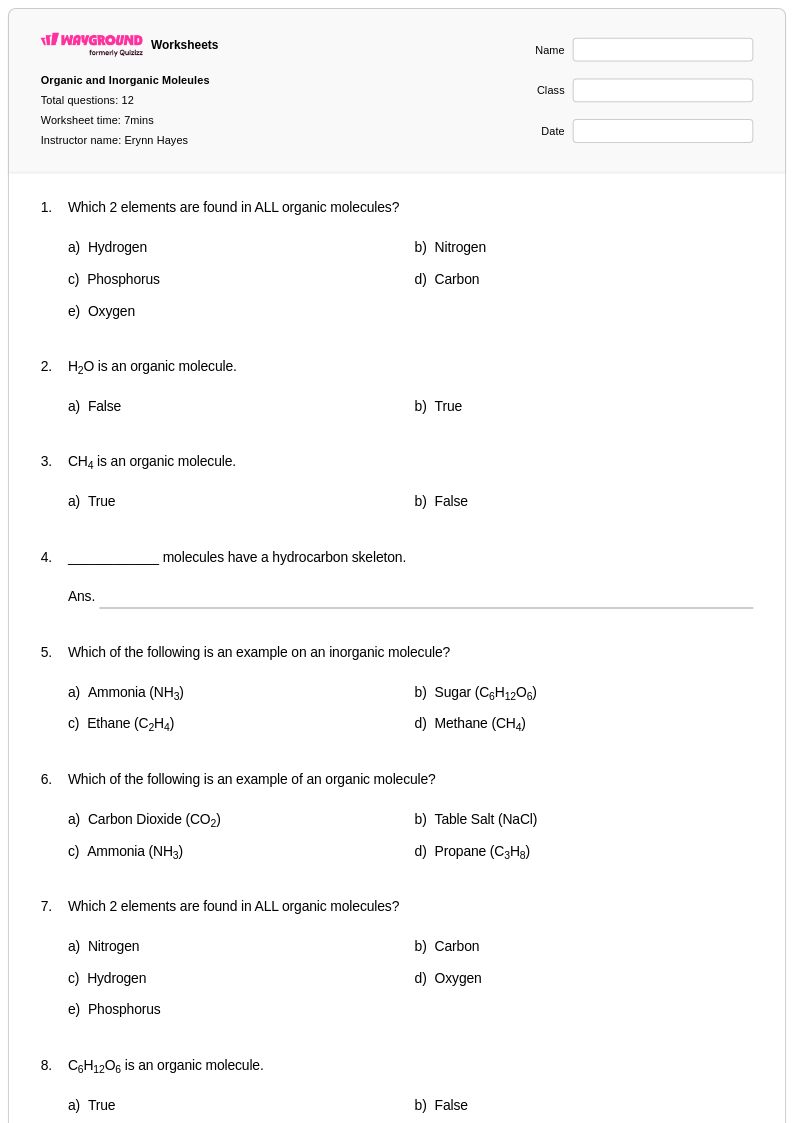
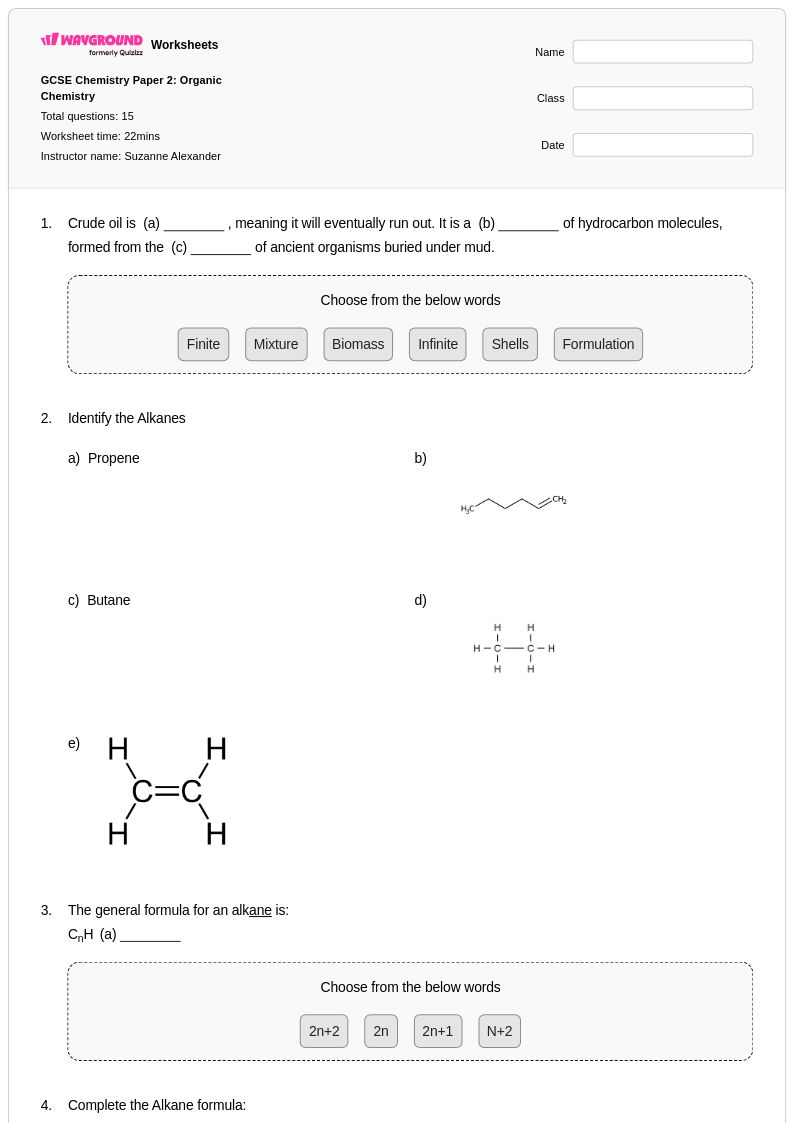
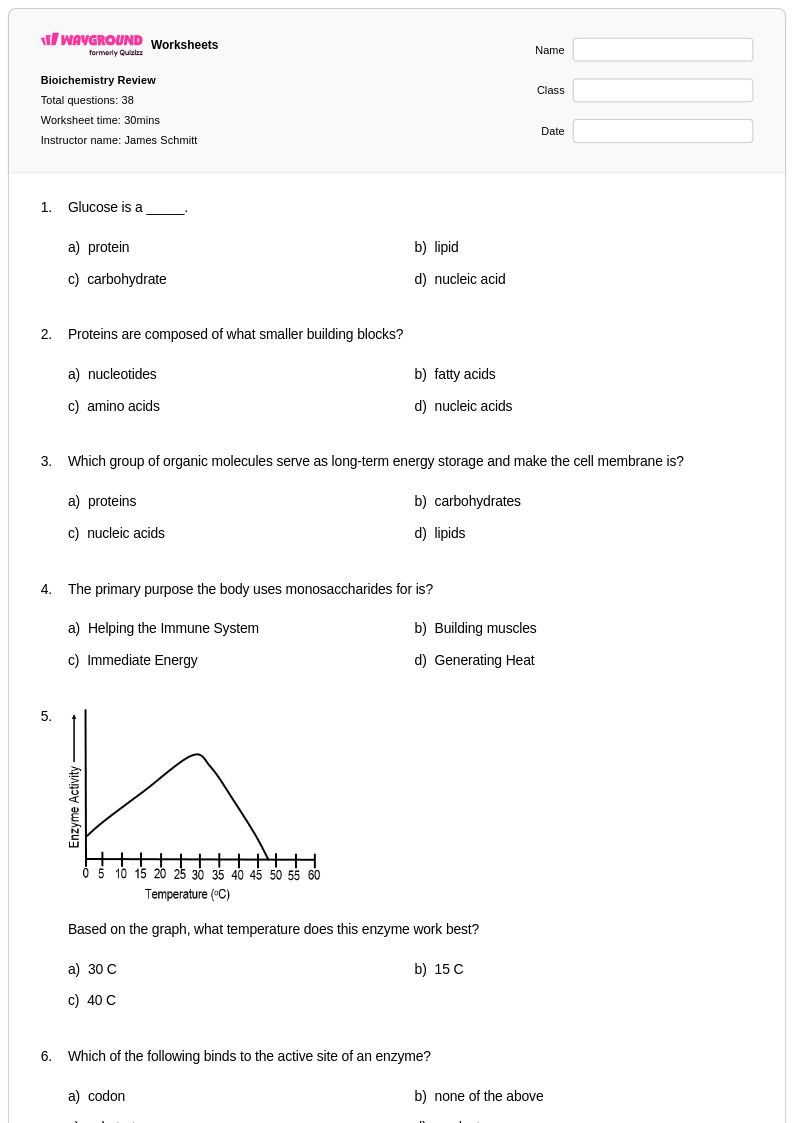
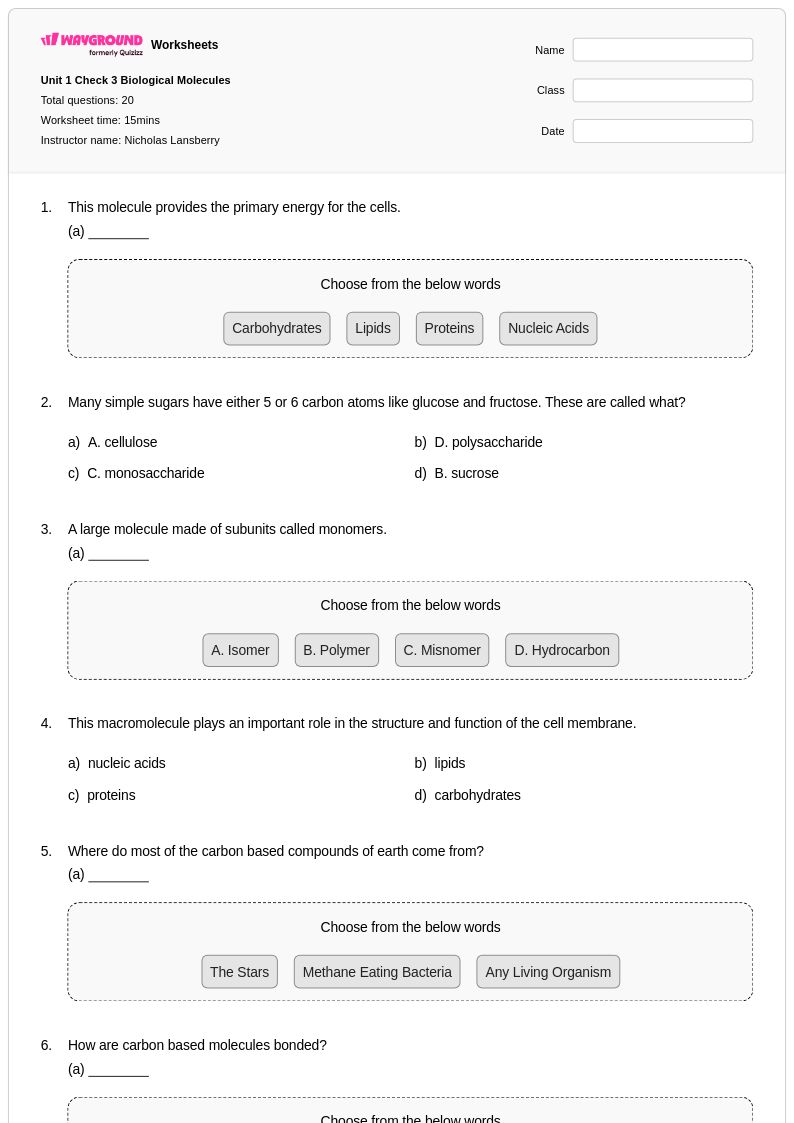
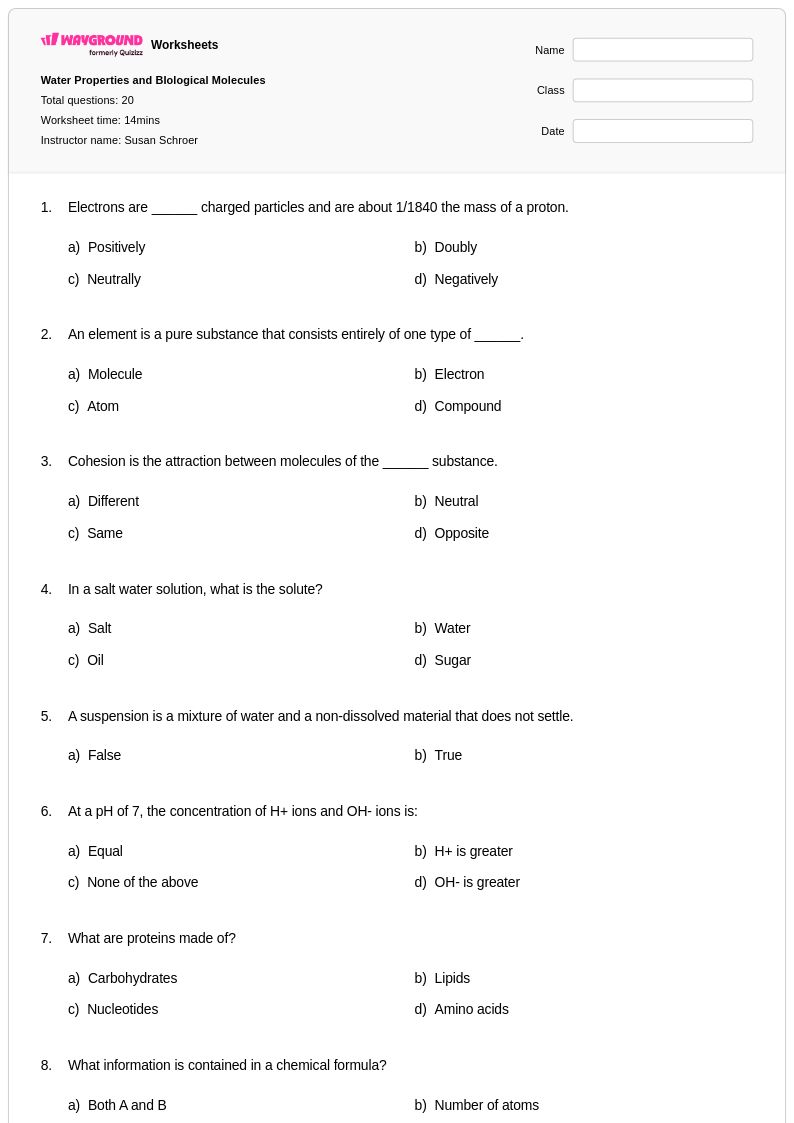
Organic molecules worksheets for Grade 9 students through Wayground (formerly Quizizz) provide comprehensive practice materials that build foundational understanding of carbon-based compounds and their properties. These expertly designed worksheets strengthen critical skills including identifying functional groups, drawing structural formulas, understanding isomerism, and analyzing the relationship between molecular structure and biological function. Students engage with practice problems covering hydrocarbons, carbohydrates, lipids, proteins, and nucleic acids while developing proficiency in organic nomenclature and chemical bonding patterns. Each worksheet includes detailed answer keys that support independent learning and self-assessment, with free printable pdf formats ensuring accessibility for diverse classroom needs and home study environments.
Wayground (formerly Quizizz) empowers chemistry teachers with millions of teacher-created organic molecules resources that streamline lesson planning and enhance student outcomes. The platform's robust search and filtering capabilities allow educators to quickly locate worksheets aligned with specific curriculum standards and learning objectives, while differentiation tools enable customization for varying skill levels within Grade 9 classrooms. Teachers can seamlessly adapt content for remediation of struggling learners or enrichment activities for advanced students, with flexible options including both printable worksheets and interactive digital formats. This comprehensive collection supports systematic skill practice in organic chemistry concepts, allowing educators to provide targeted instruction that builds student confidence and mastery in understanding the molecular foundations of life sciences.
FAQs
How do I teach organic molecules to high school chemistry students?
Start by grounding students in carbon's bonding behavior before introducing functional groups, since understanding why carbon forms four bonds explains the diversity of organic structures. Use visual representations early and often — structural formulas, ball-and-stick models, and line-angle drawings all reinforce the same concept from different angles. Sequence instruction from simple hydrocarbons through increasingly complex compound classes (alcohols, aldehydes, ketones, carboxylic acids) so students build on prior knowledge rather than treating each class as isolated vocabulary.
What are the most common mistakes students make when learning organic molecules?
Students frequently confuse structural isomers with the same compound, failing to recognize that different connectivity means a different molecule even when molecular formulas match. Another common error is misidentifying functional groups by focusing only on the atoms present rather than the bonding pattern — for example, conflating an aldehyde with a ketone because both contain a carbonyl group. Students also struggle to predict physical and chemical properties from structure, which is a sign they are memorizing functional group names without understanding how bonding drives behavior.
What practice exercises help students master functional groups and molecular structure?
Identification drills where students classify compounds from structural drawings are highly effective for building fluency with functional group recognition. Naming exercises that move between IUPAC names and structural representations reinforce both vocabulary and spatial reasoning. Practice problems that ask students to predict reaction outcomes — such as what happens when a carboxylic acid reacts with an alcohol — push beyond memorization and develop genuine conceptual understanding of organic chemistry principles.
How can I use organic molecules worksheets to prepare students for exams?
Organic chemistry exams typically test identification, nomenclature, property prediction, and reaction mechanisms, so effective exam prep worksheets should address all four. Use structured practice problems that begin with single-concept questions and escalate to multi-step problems requiring students to connect functional group identity with reactivity and physical properties. Comprehensive answer keys allow students to self-assess and identify specific gaps before the exam rather than discovering misunderstandings during it.
How do I differentiate organic molecules instruction for students at different skill levels?
For students who are still developing foundational understanding, reduce problem complexity by focusing on one compound class at a time and providing partially completed structures they can finish rather than draw from scratch. Advanced students benefit from synthesis pathway problems that require planning multi-step reactions and justifying each step. On Wayground, teachers can apply accommodations such as read aloud support and reduced answer choices for individual students, ensuring struggling learners access the same content without being overwhelmed by its complexity.
How do I use Wayground's organic molecules worksheets in my classroom?
Wayground's organic molecules worksheets are available as printable PDFs for traditional classroom use and in digital formats for technology-integrated environments, making them flexible for homework, in-class practice, laboratory preparation, and review sessions. Teachers can also host worksheets directly as a quiz on Wayground, enabling real-time student responses and automatic grading. Each worksheet includes a complete answer key, so they work equally well for teacher-led instruction and independent student study.