Free Printable Polar Molecules Worksheets for Grade 9
Enhance Grade 9 students' understanding of polar molecules with Wayground's comprehensive collection of free chemistry worksheets, featuring printable PDFs, practice problems, and detailed answer keys for classroom learning.
Explore printable Polar Molecules worksheets for Grade 9
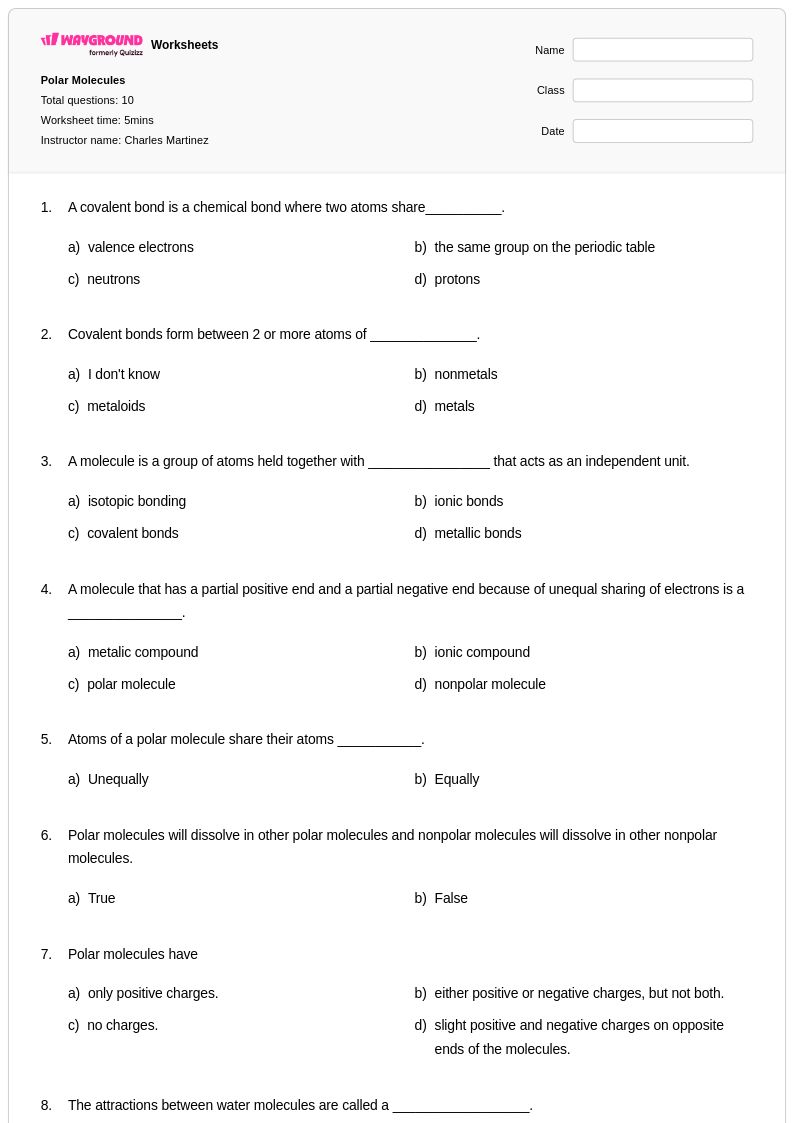
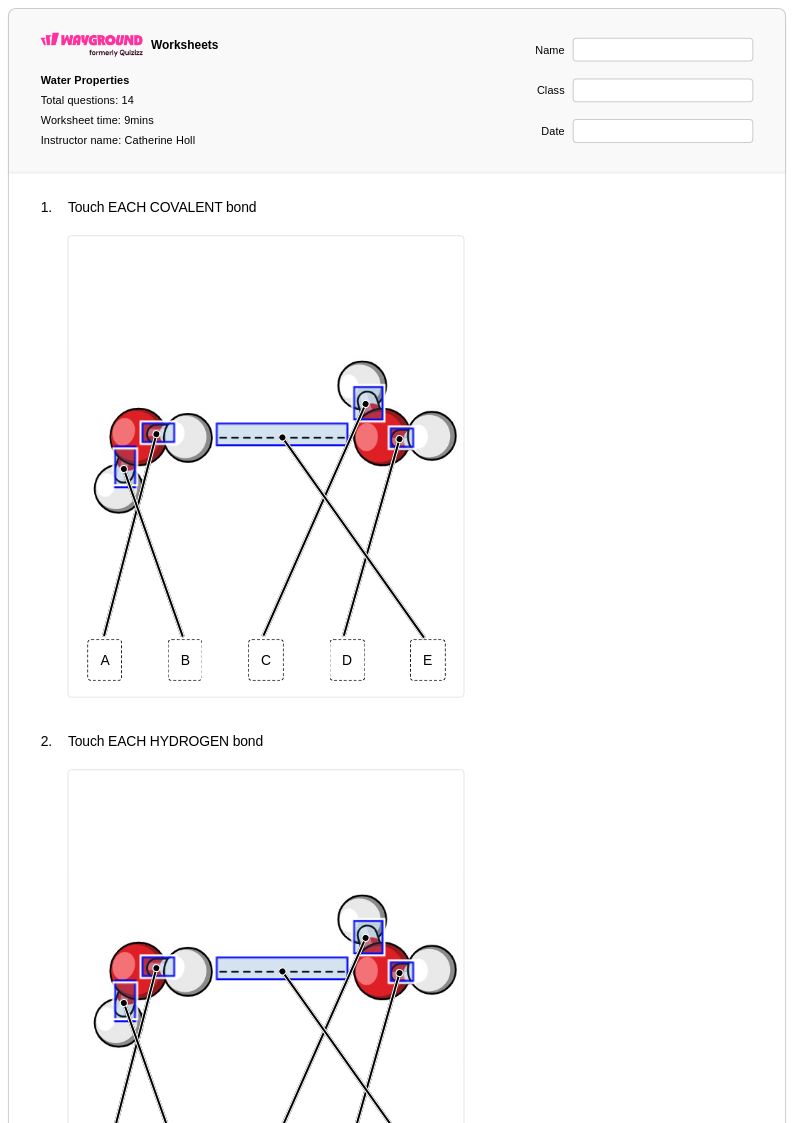
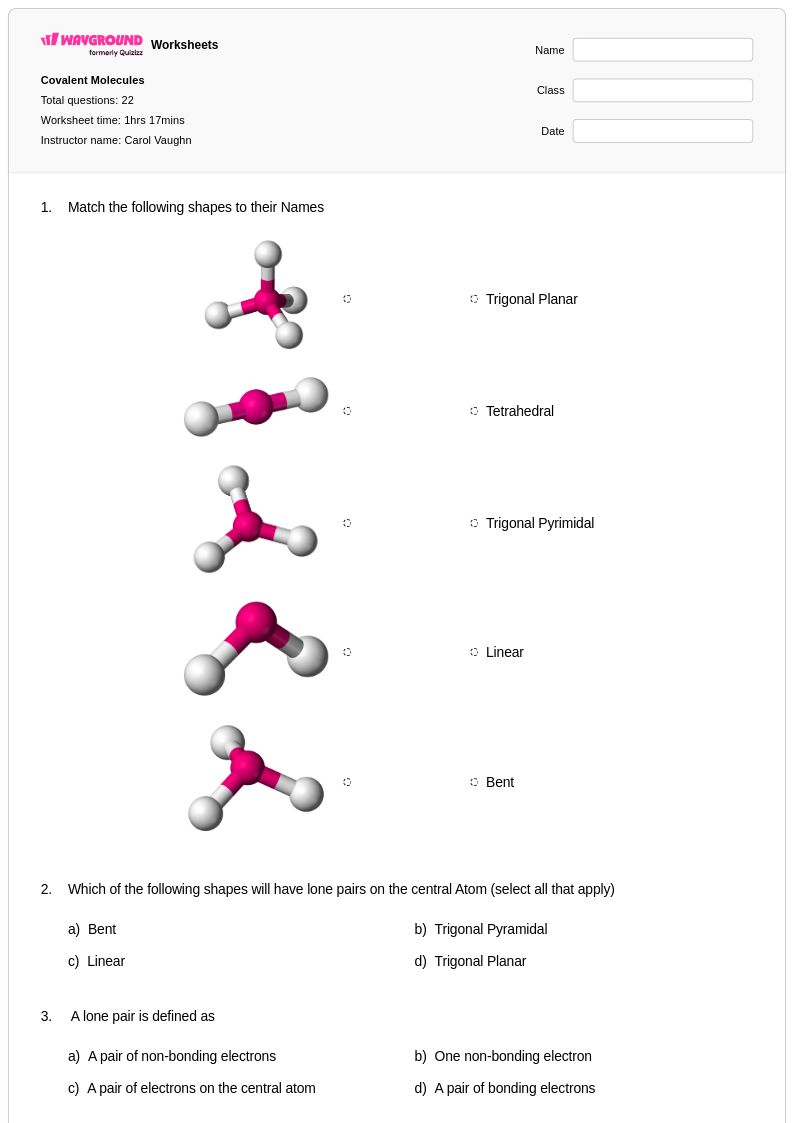
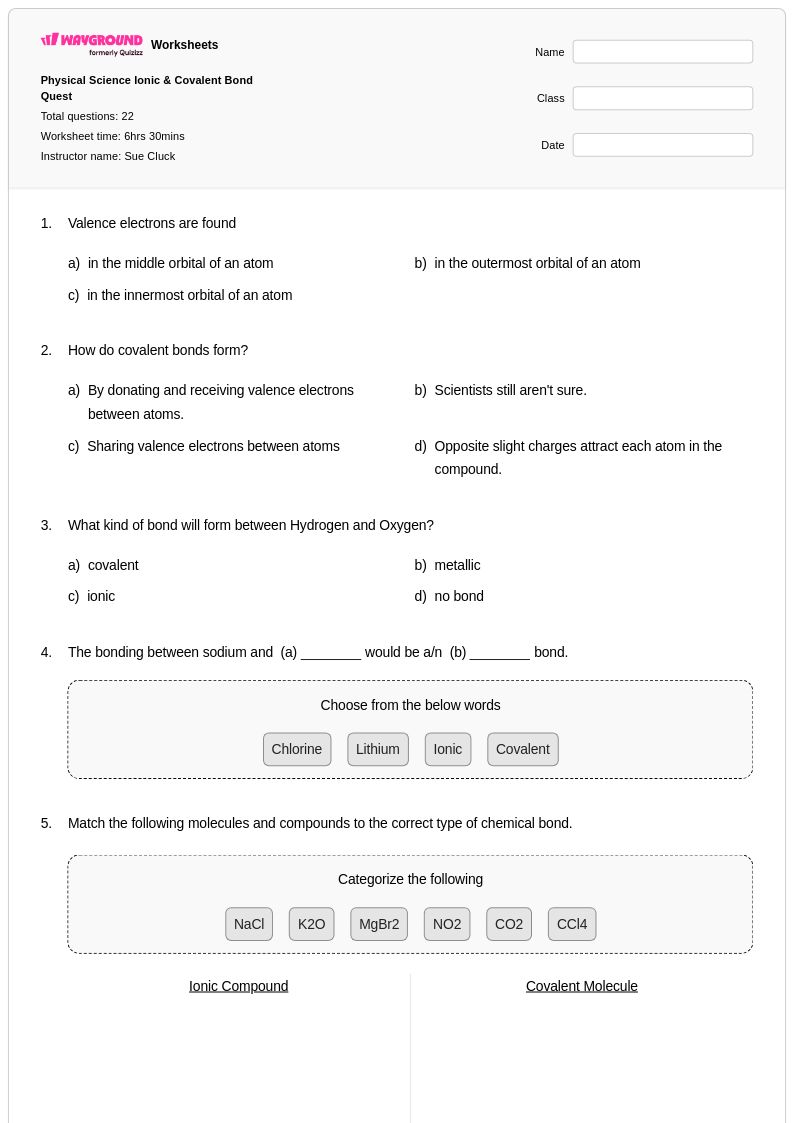
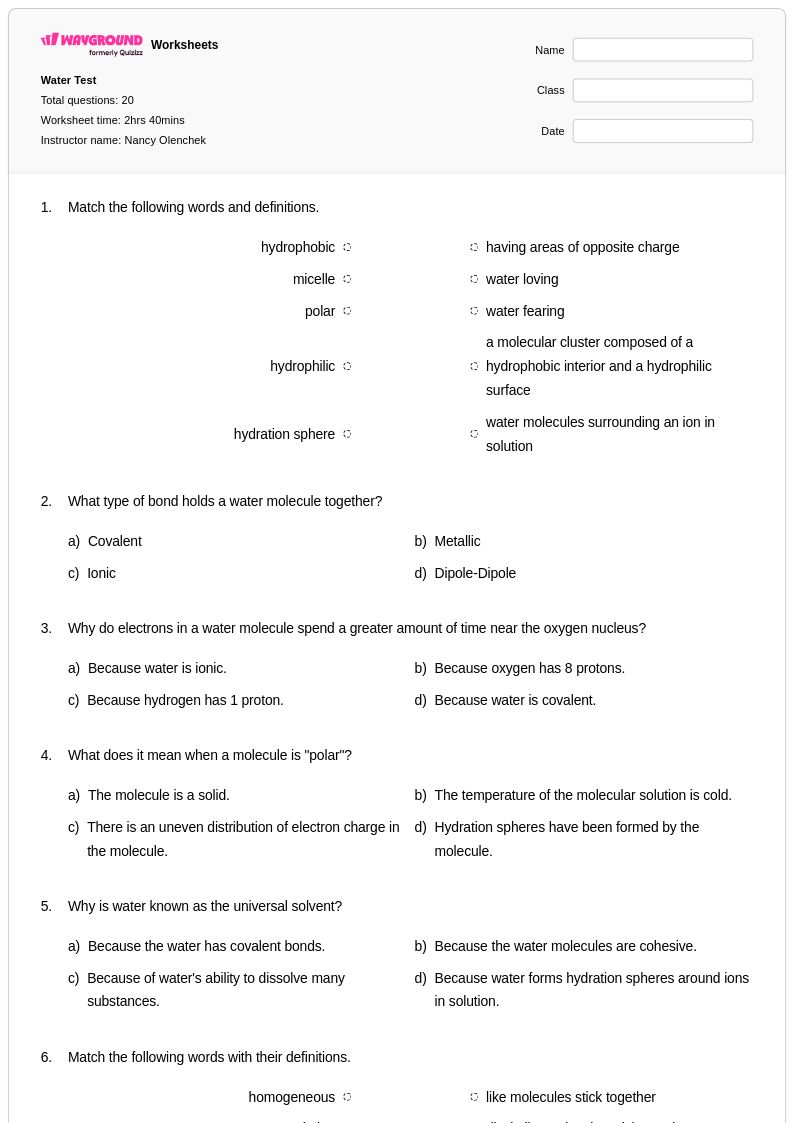
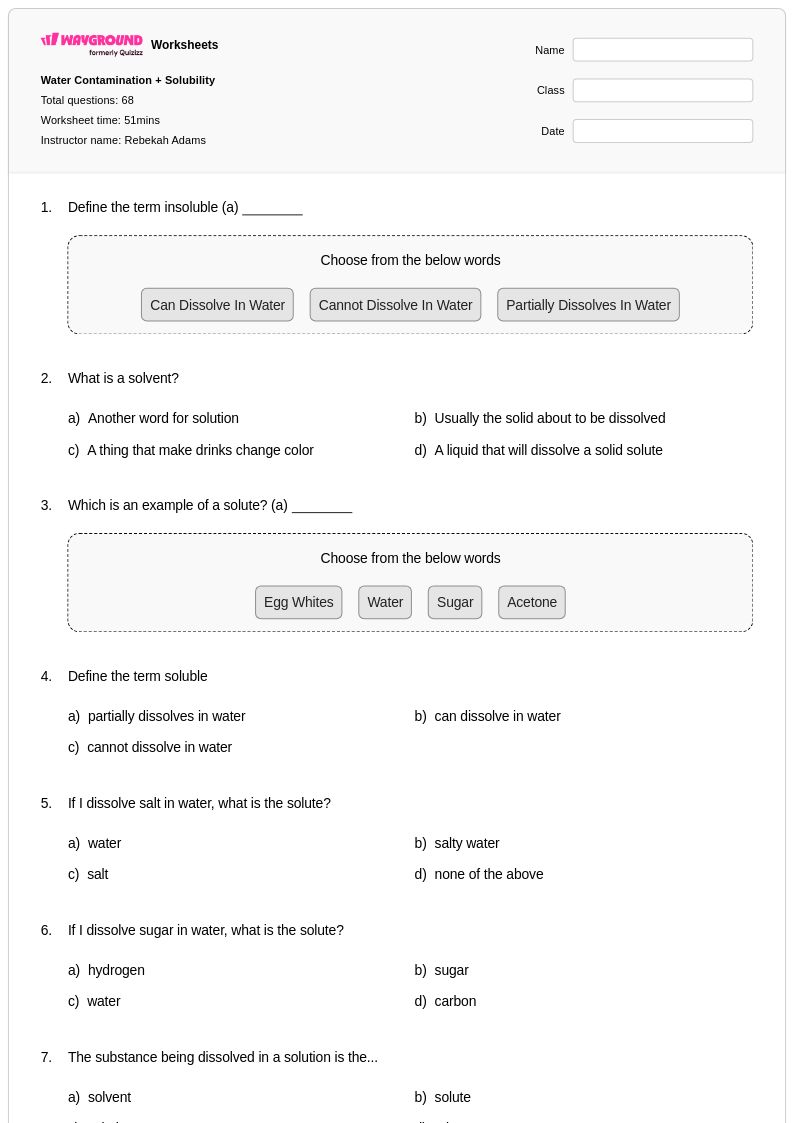
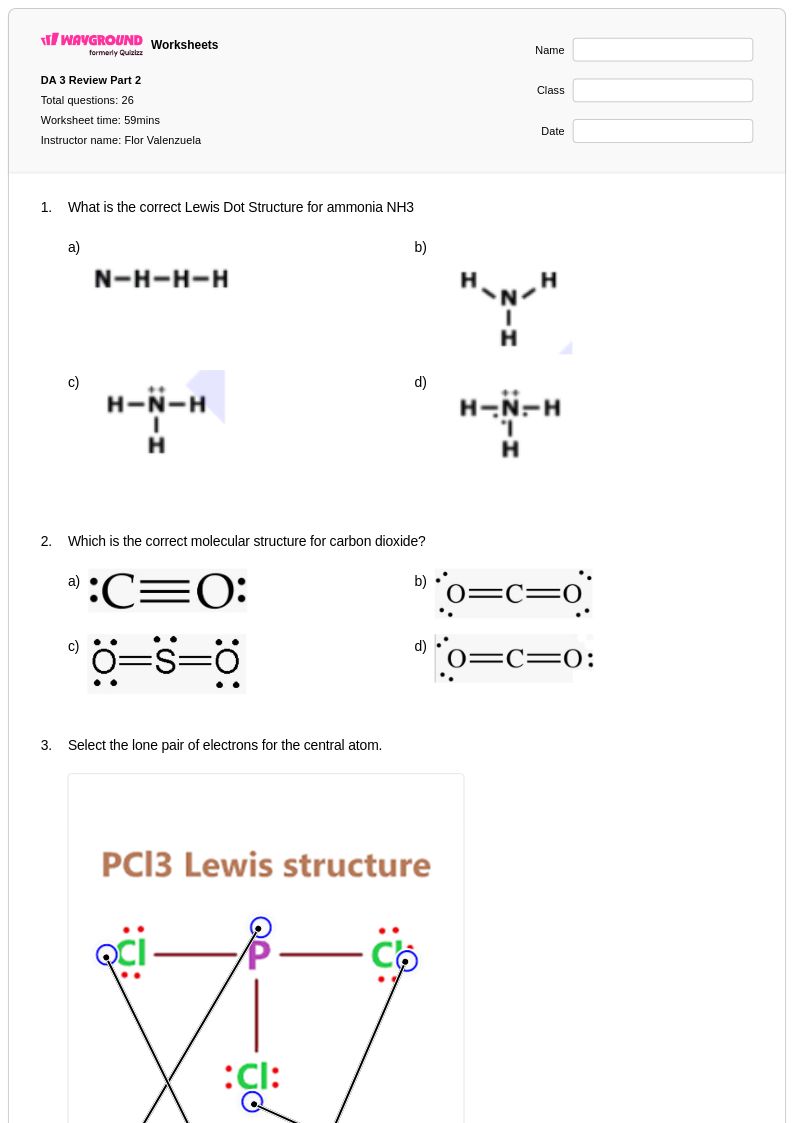
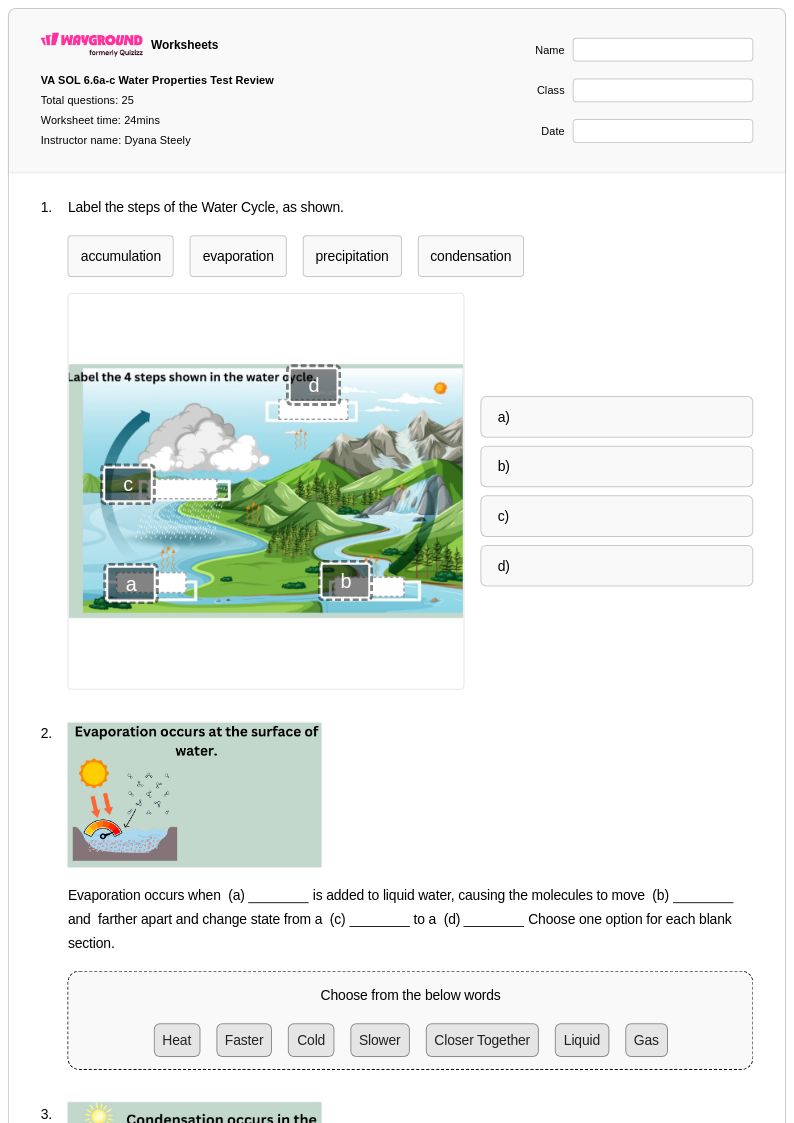
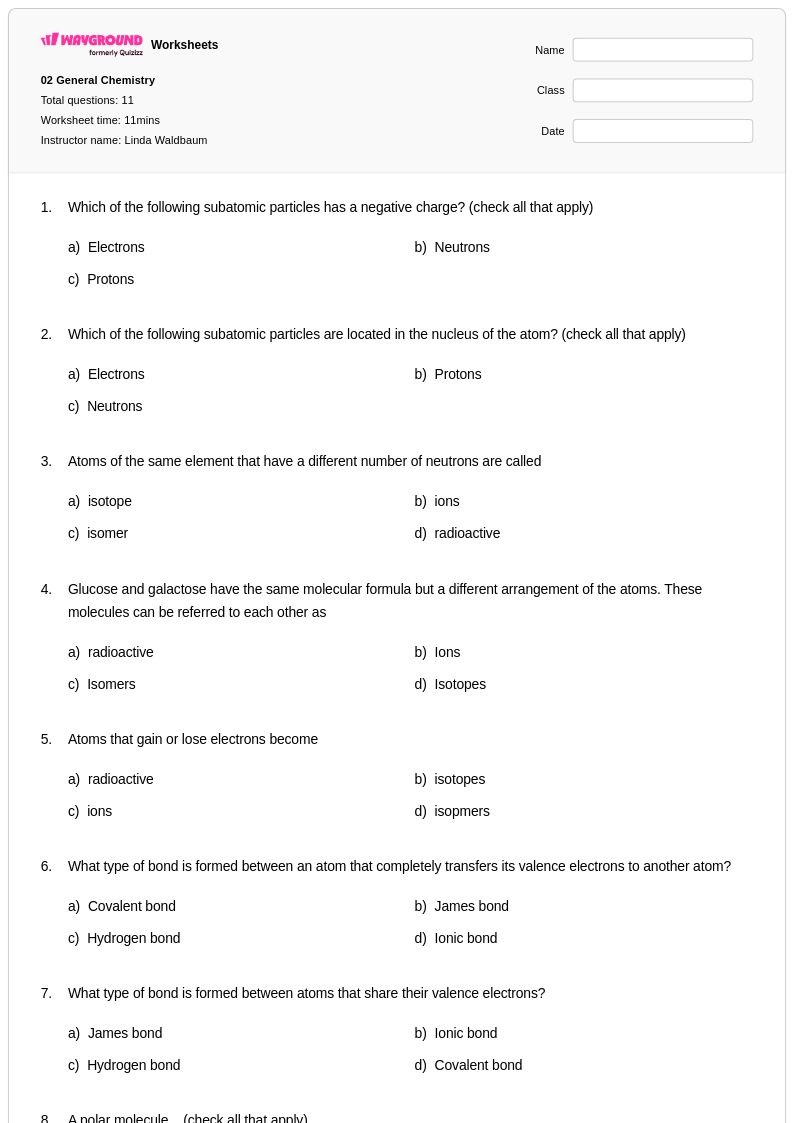
Polar molecules represent a fundamental concept in Grade 9 chemistry that bridges atomic structure with molecular behavior and intermolecular forces. Wayground's comprehensive collection of polar molecule worksheets provides students with essential practice problems that reinforce their understanding of electronegativity differences, dipole moments, and molecular geometry. These carefully crafted printables guide students through identifying polar and nonpolar molecules, predicting molecular polarity based on Lewis structures, and understanding how molecular shape influences polarity. Each worksheet comes with a detailed answer key that supports independent learning and allows students to check their work systematically. The free pdf resources progressively build complexity, starting with simple diatomic molecules and advancing to more complex organic compounds, ensuring students develop a thorough grasp of how unequal electron sharing creates permanent dipoles.
Wayground, formerly Quizizz, empowers teachers with millions of educator-created resources specifically designed for chemistry instruction, featuring robust search and filtering capabilities that make finding grade-appropriate polar molecule materials effortless. The platform's standards-aligned worksheets support differentiated instruction through customizable difficulty levels and varied question formats, enabling teachers to address diverse learning needs within their Grade 9 classrooms. Teachers can seamlessly integrate these resources into their lesson planning, utilizing both printable pdf versions for traditional classroom work and digital formats for interactive learning experiences. The extensive collection serves multiple instructional purposes, from initial skill-building exercises to targeted remediation for struggling students and enrichment activities for advanced learners, all while maintaining consistent quality and pedagogical soundness across the vast library of polar molecule practice materials.
FAQs
How do I teach polar molecules to high school chemistry students?
Start by building student understanding of electronegativity differences between bonded atoms, then connect those differences to bond dipoles before scaling up to whole-molecule polarity. Use VSEPR theory to show how molecular geometry determines whether individual bond dipoles cancel out or produce a net dipole moment. Molecules like water (polar) and carbon dioxide (nonpolar despite polar bonds) are effective contrasting examples that make the geometry-polarity relationship concrete.
What practice problems help students understand molecular polarity?
Effective practice problems ask students to draw Lewis structures, apply VSEPR theory to determine molecular geometry, identify bond dipoles using electronegativity values, and then predict whether the dipole moments cancel. Problems that require students to justify their polarity predictions in writing are especially useful because they reveal whether students understand the geometry argument or are simply pattern-matching. Including both symmetrical nonpolar molecules (like BF₃) and asymmetrical polar molecules (like NH₃) in the same problem set strengthens comparative reasoning.
What mistakes do students commonly make when predicting molecular polarity?
The most frequent error is concluding that any molecule with polar bonds must itself be polar, without accounting for molecular geometry. Students often overlook lone pairs when applying VSEPR theory, which leads them to assign incorrect geometries and incorrect polarity predictions. Another common misconception is conflating bond polarity with molecular polarity, so explicitly practicing both concepts separately before combining them reduces confusion.
How does molecular geometry affect whether a molecule is polar or nonpolar?
Molecular geometry determines whether the individual bond dipoles in a molecule add together or cancel each other out. In symmetrical geometries such as linear, trigonal planar, or tetrahedral with identical surrounding atoms, bond dipoles point in equal and opposite directions and cancel, producing a nonpolar molecule. When lone pairs distort the geometry or when surrounding atoms differ in electronegativity, the dipoles do not cancel and the molecule has a net dipole moment, making it polar.
How can I use polar molecules worksheets in my chemistry class?
Polar molecules worksheets on Wayground are available as printable PDFs for traditional classroom use and in digital formats for technology-integrated instruction, including the option to host them as a live quiz on the Wayground platform. Printable versions work well for guided practice, lab prelabs, or homework assignments, while the digital format supports formative assessment with immediate feedback. Both formats include answer keys, so the resources are practical for independent student review as well as teacher-led instruction.
How can I differentiate polar molecules instruction for students at different skill levels?
For students who are still building foundational skills, start with diatomic molecules to isolate the concept of bond polarity before introducing geometry. More advanced students can be challenged with molecules that have expanded octets or multiple lone pairs, where geometry predictions require careful VSEPR analysis. On Wayground, teachers can apply accommodations such as reduced answer choices, read-aloud support, and extended time to individual students without affecting the rest of the class, making it practical to support a range of learners within the same assignment.