Free Printable Laboratory Equipment Worksheets for Grade 9
Grade 9 laboratory equipment worksheets from Wayground provide comprehensive printables and practice problems to help students master scientific instruments, measurement tools, and safety procedures with detailed answer keys and free PDF downloads.
Explore printable Laboratory Equipment worksheets for Grade 9
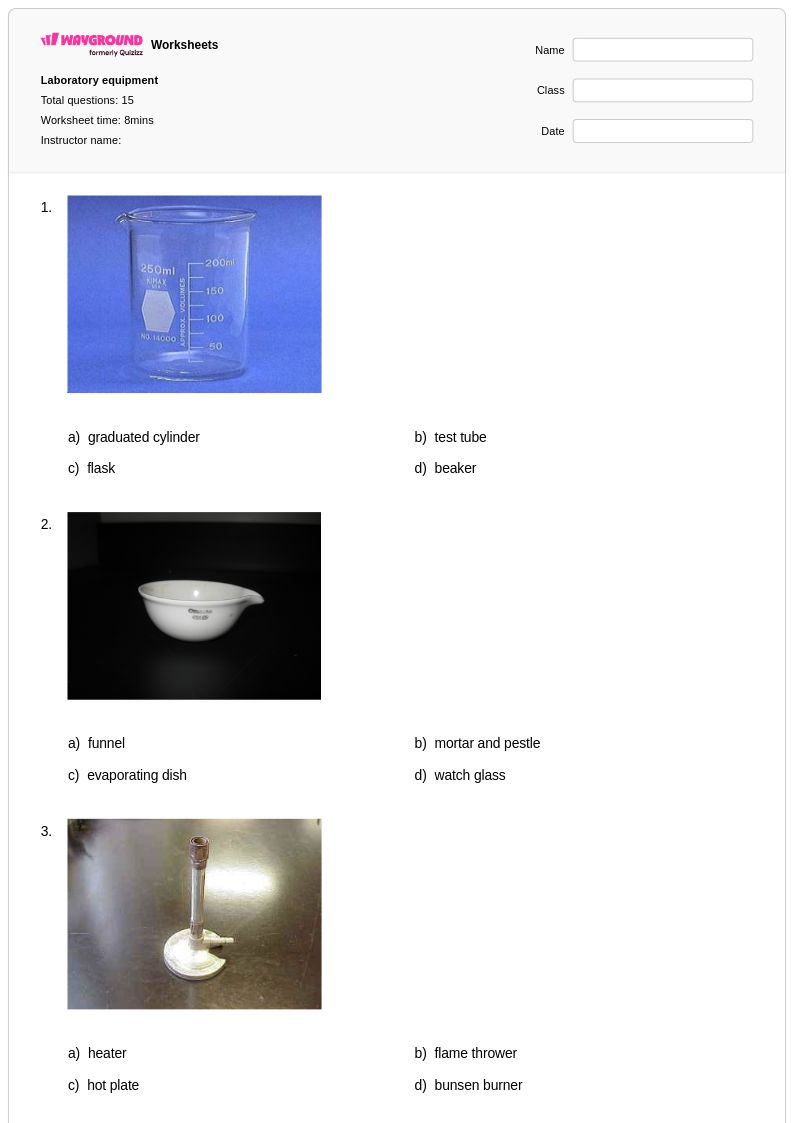
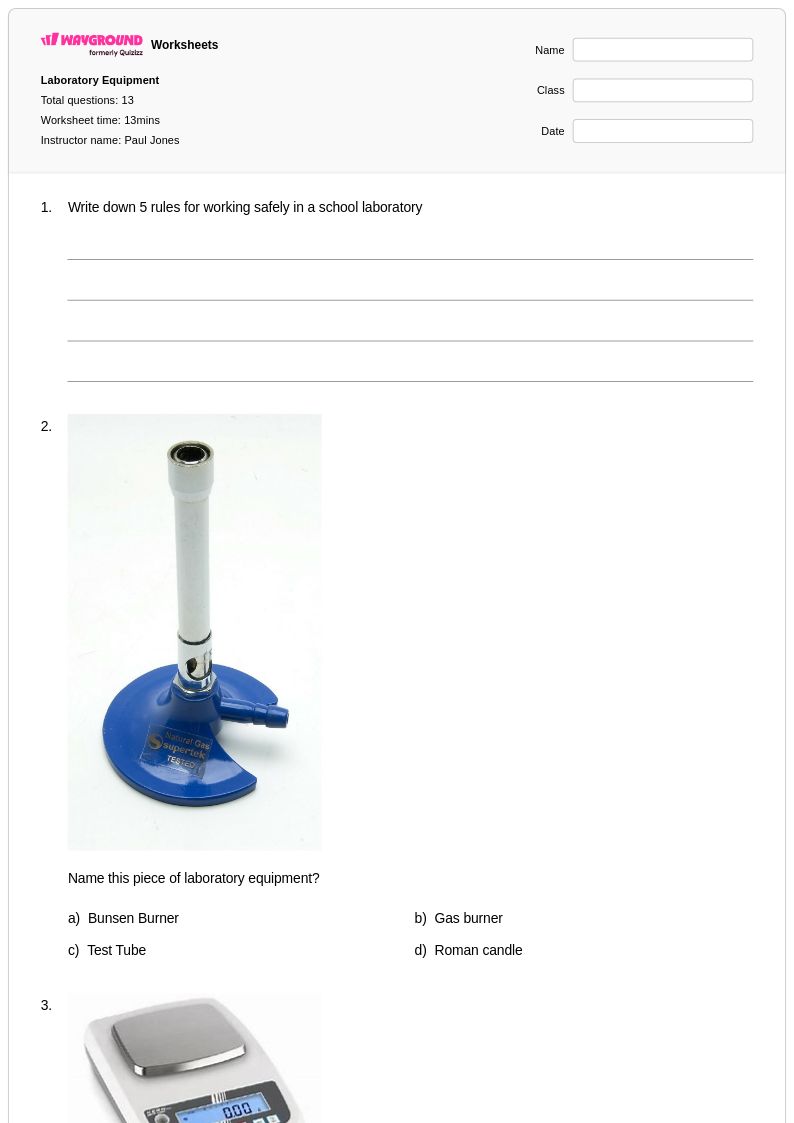
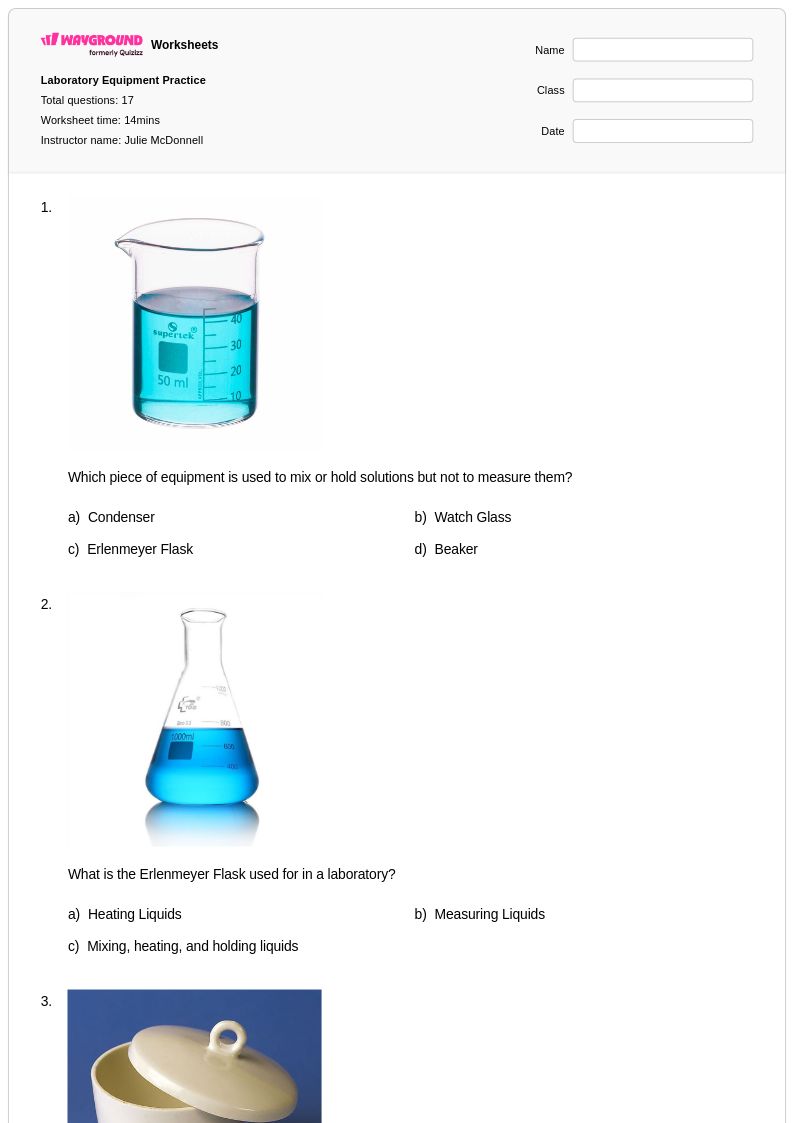
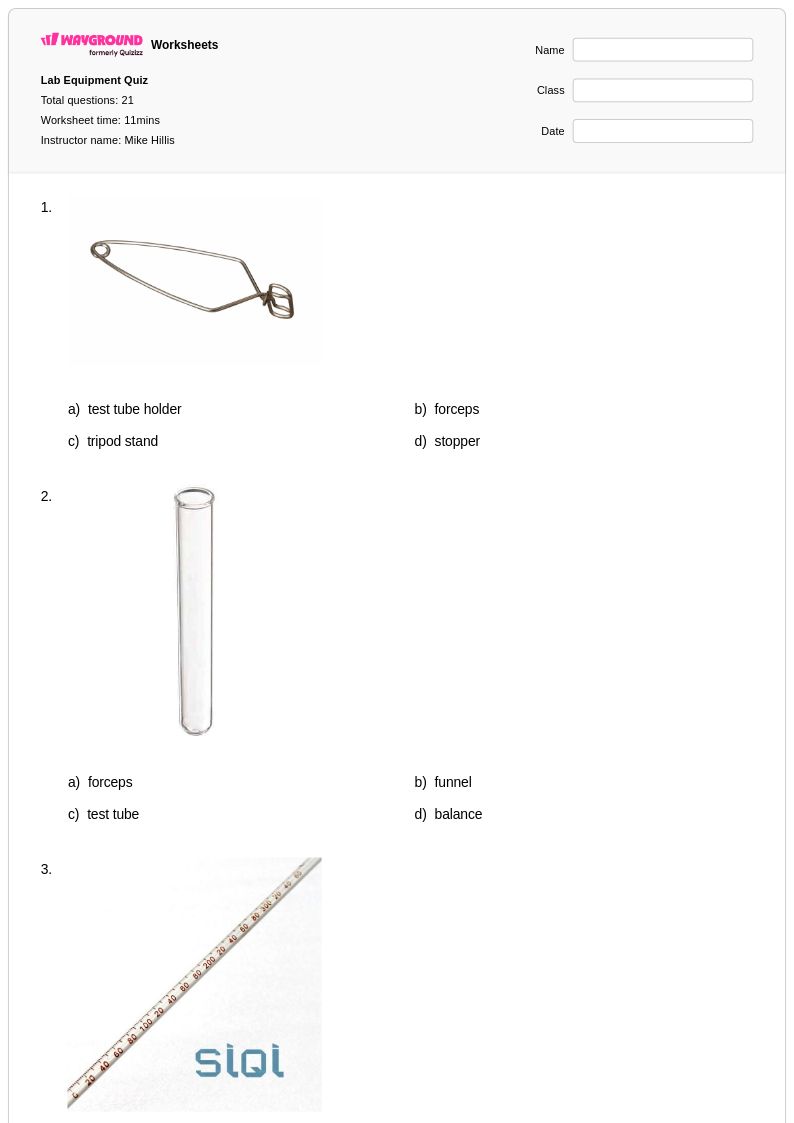
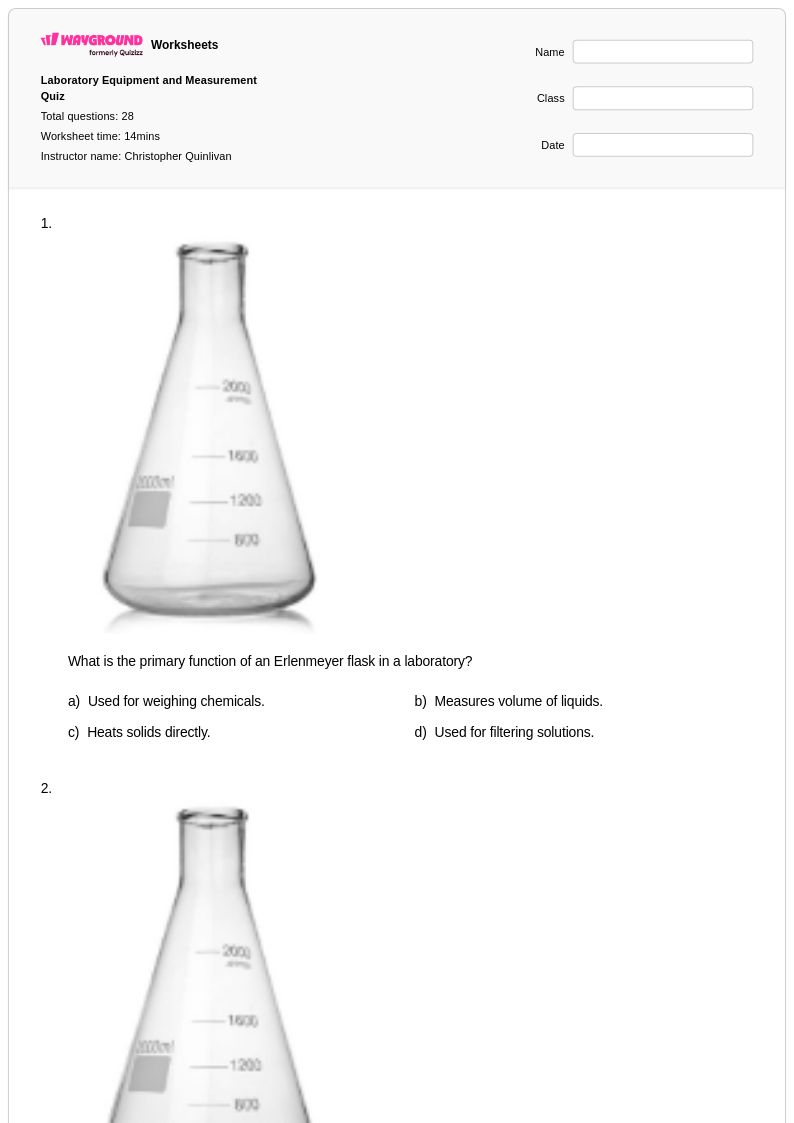
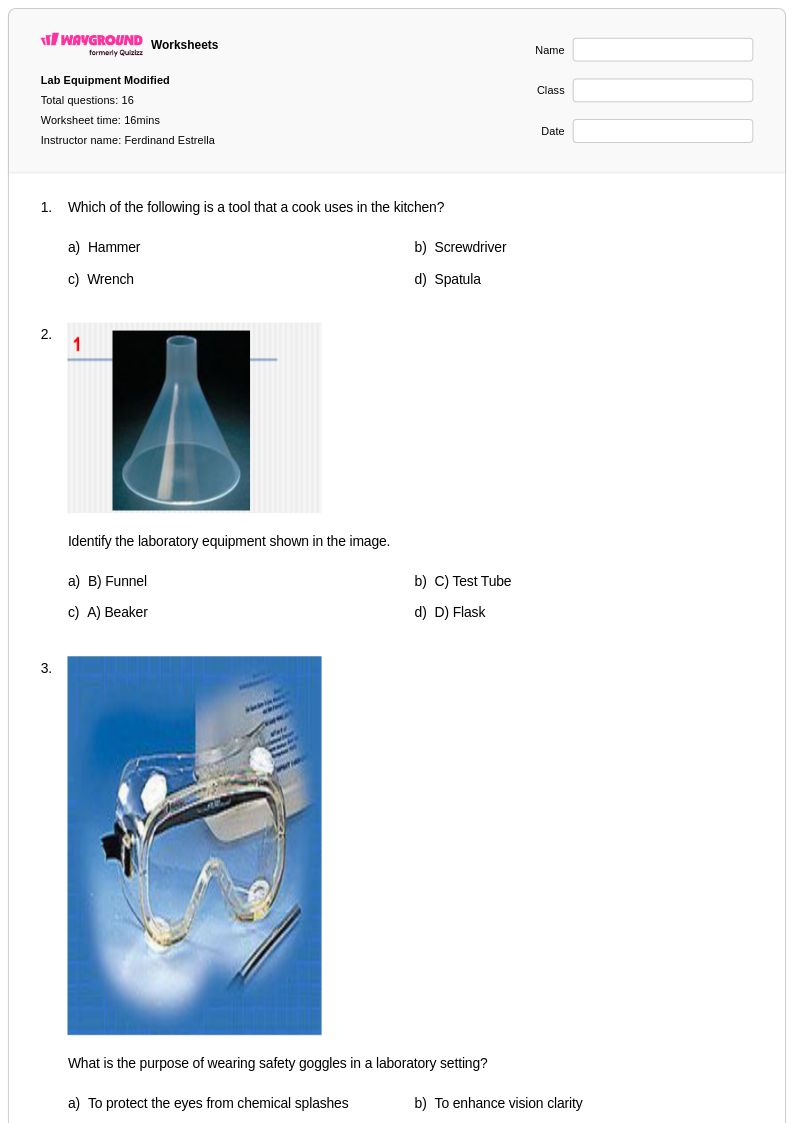
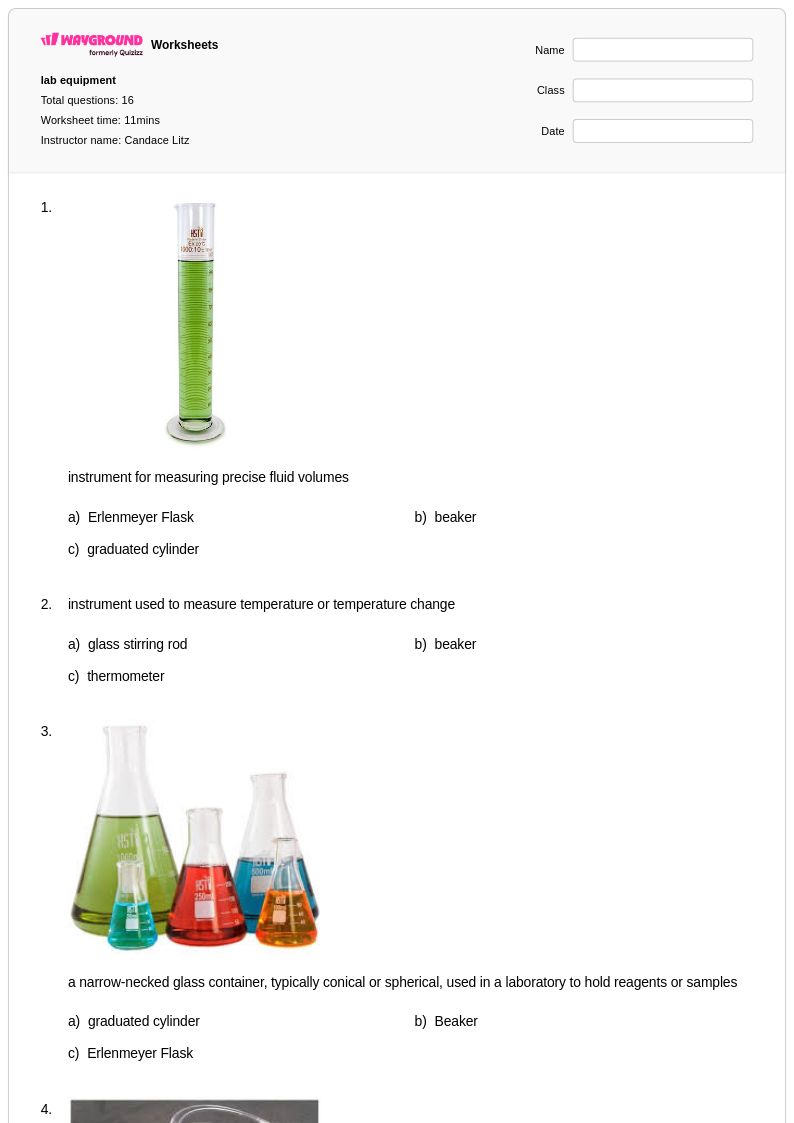
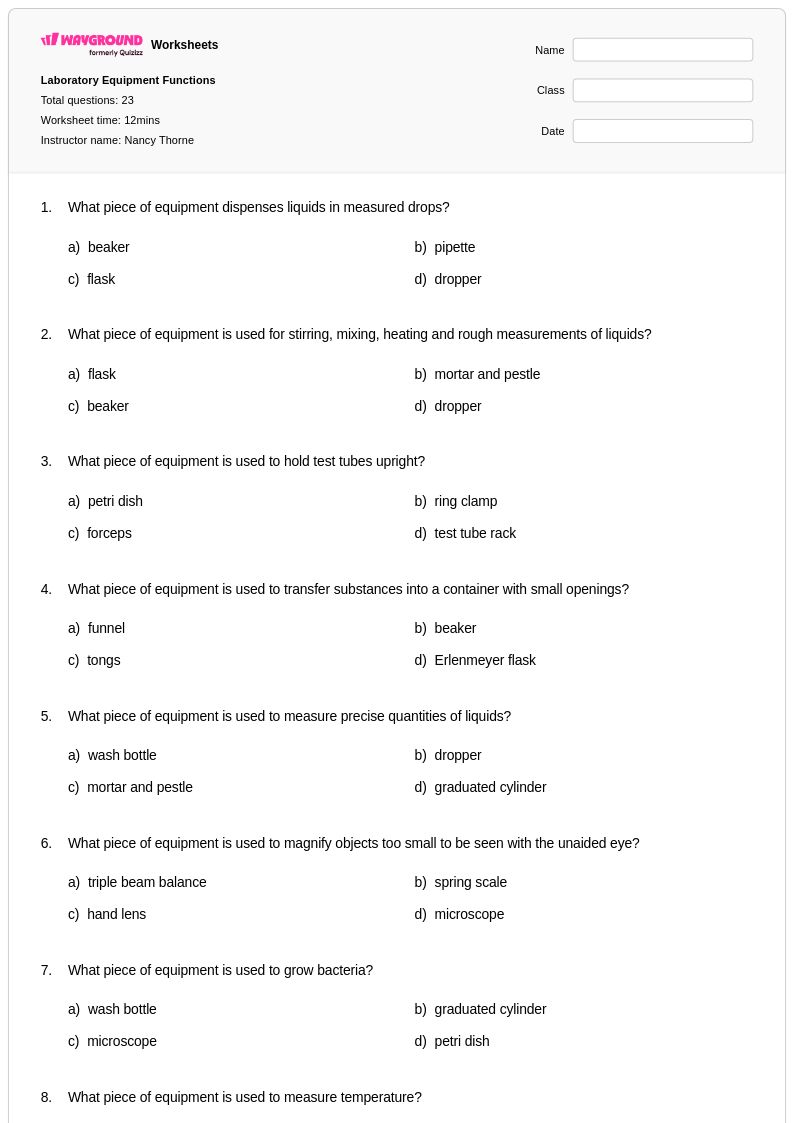
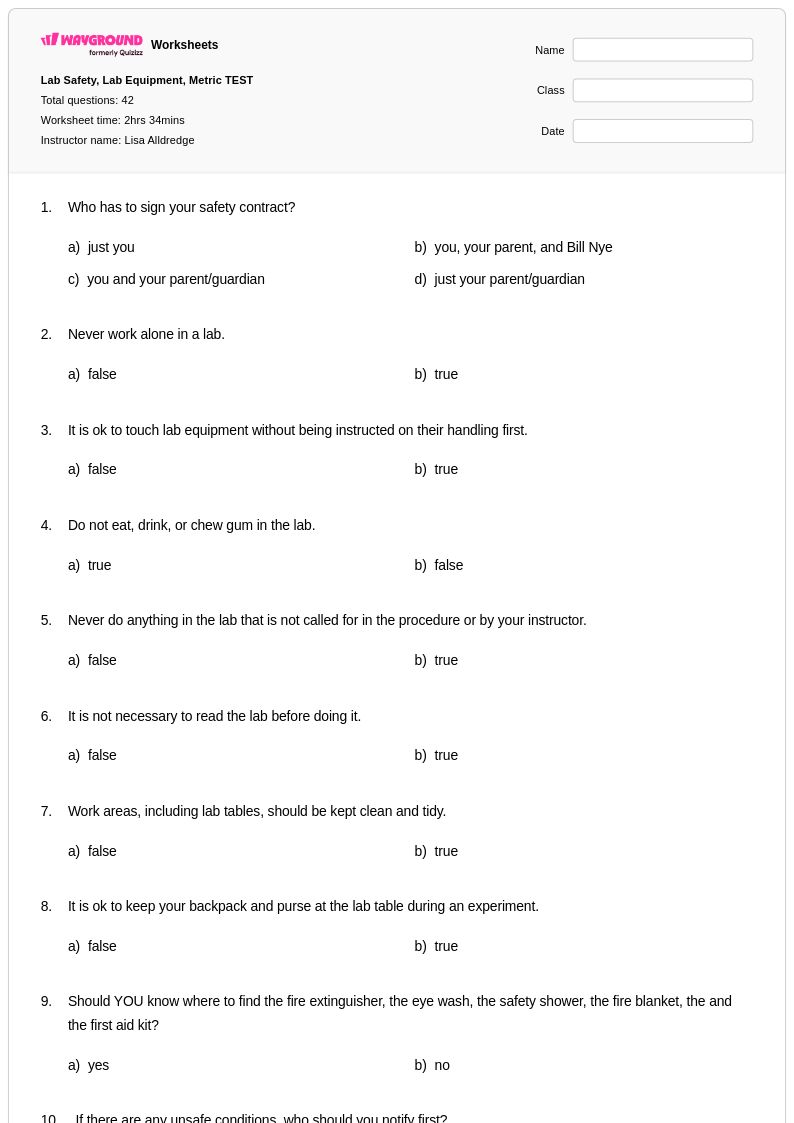
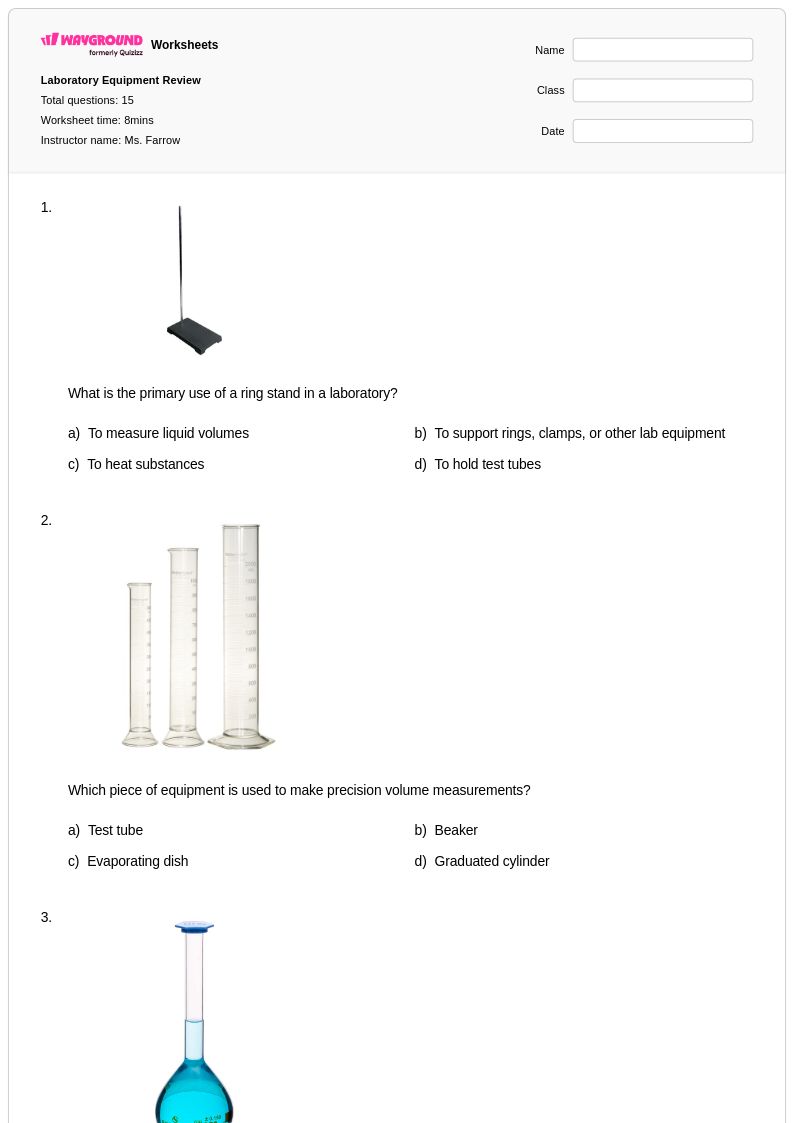
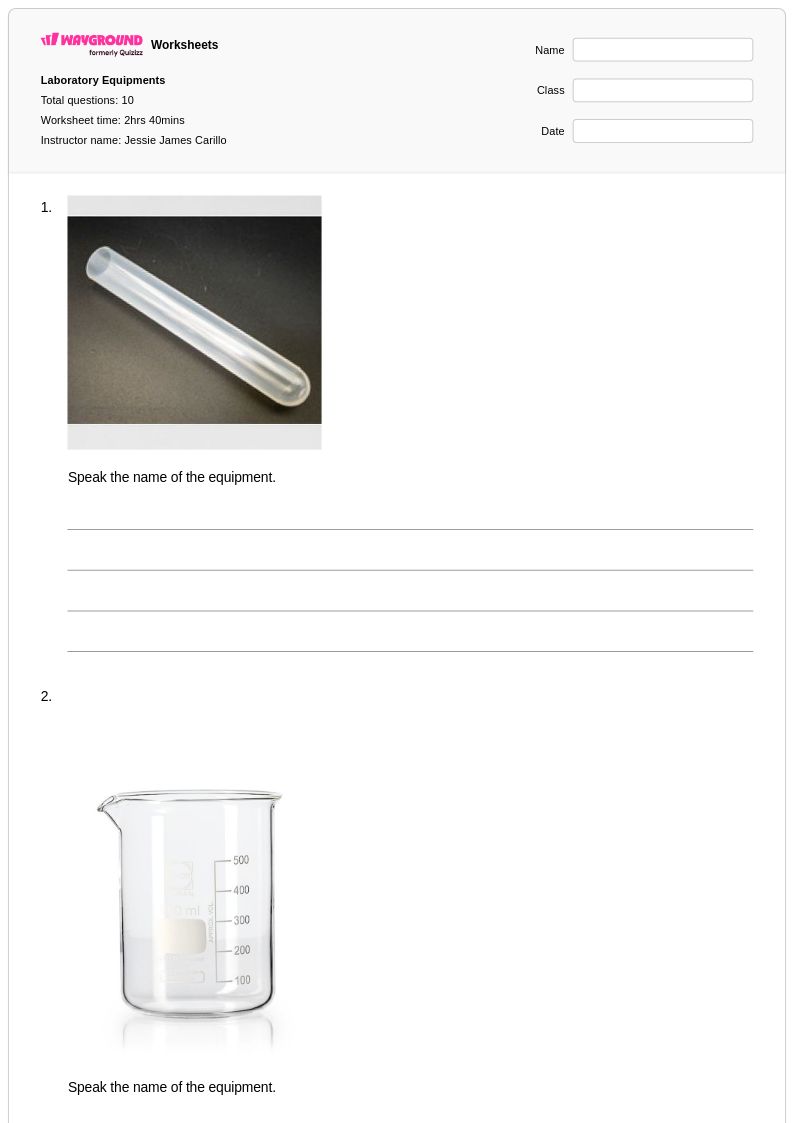
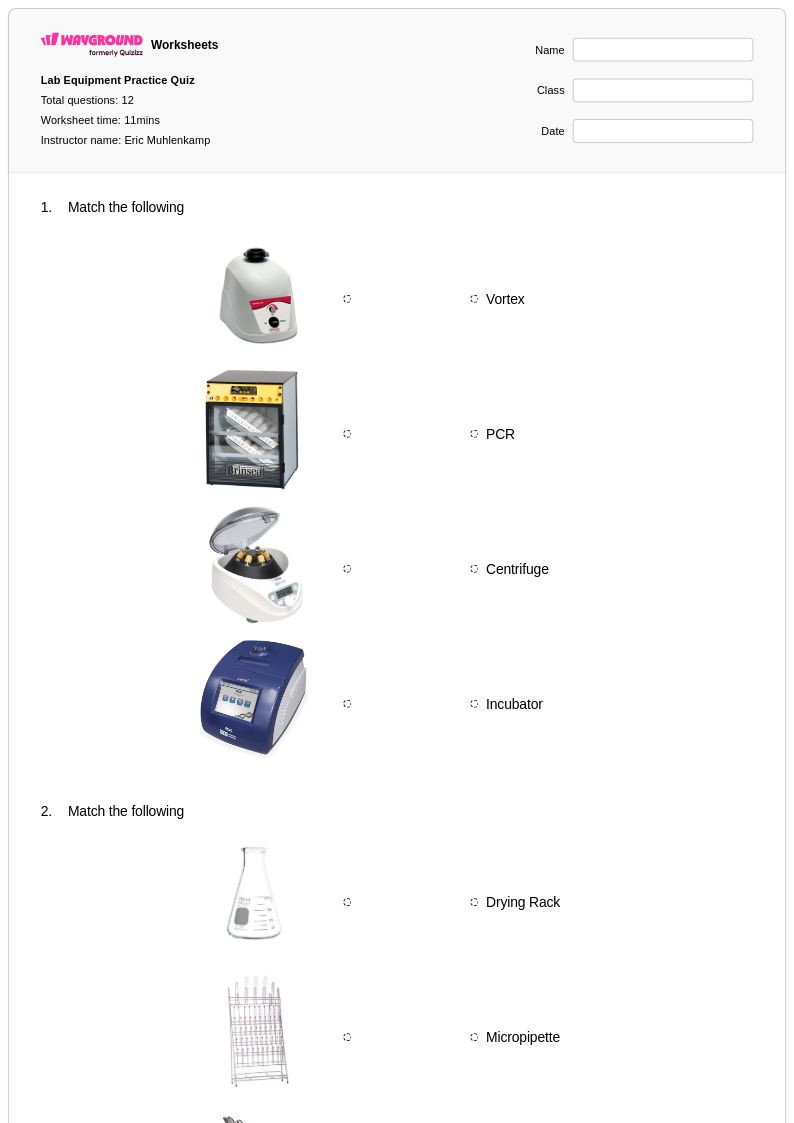
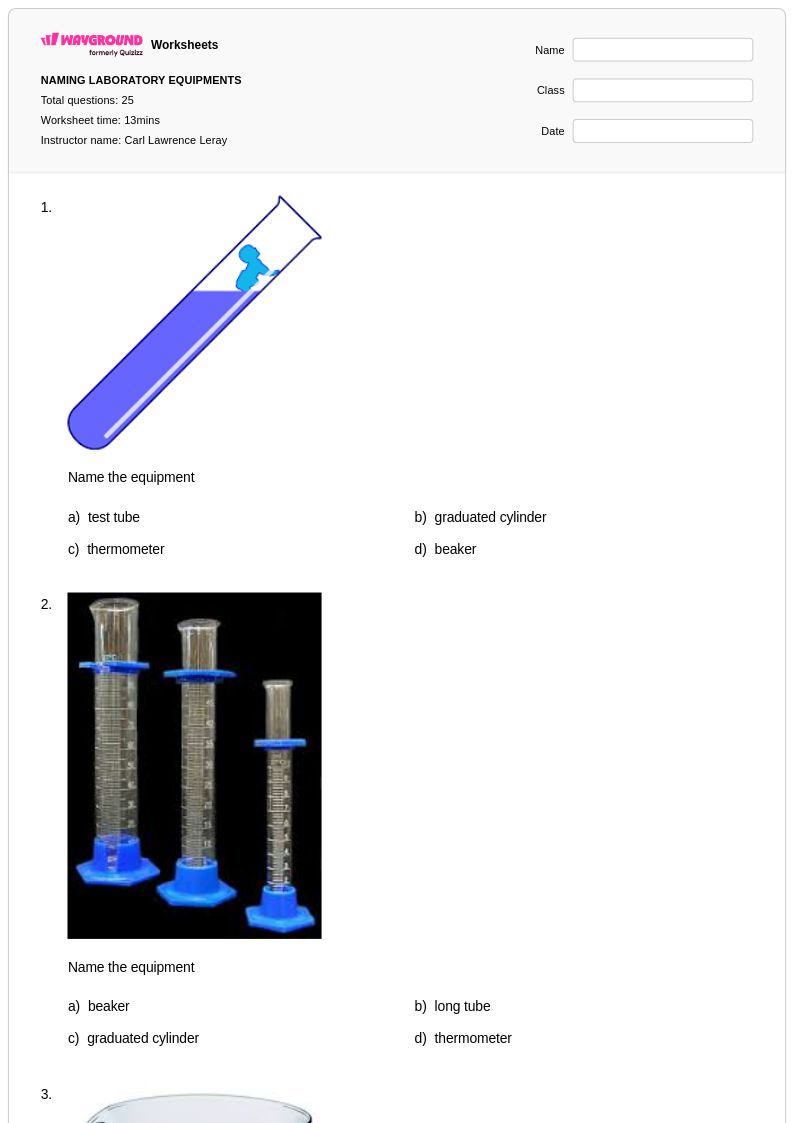
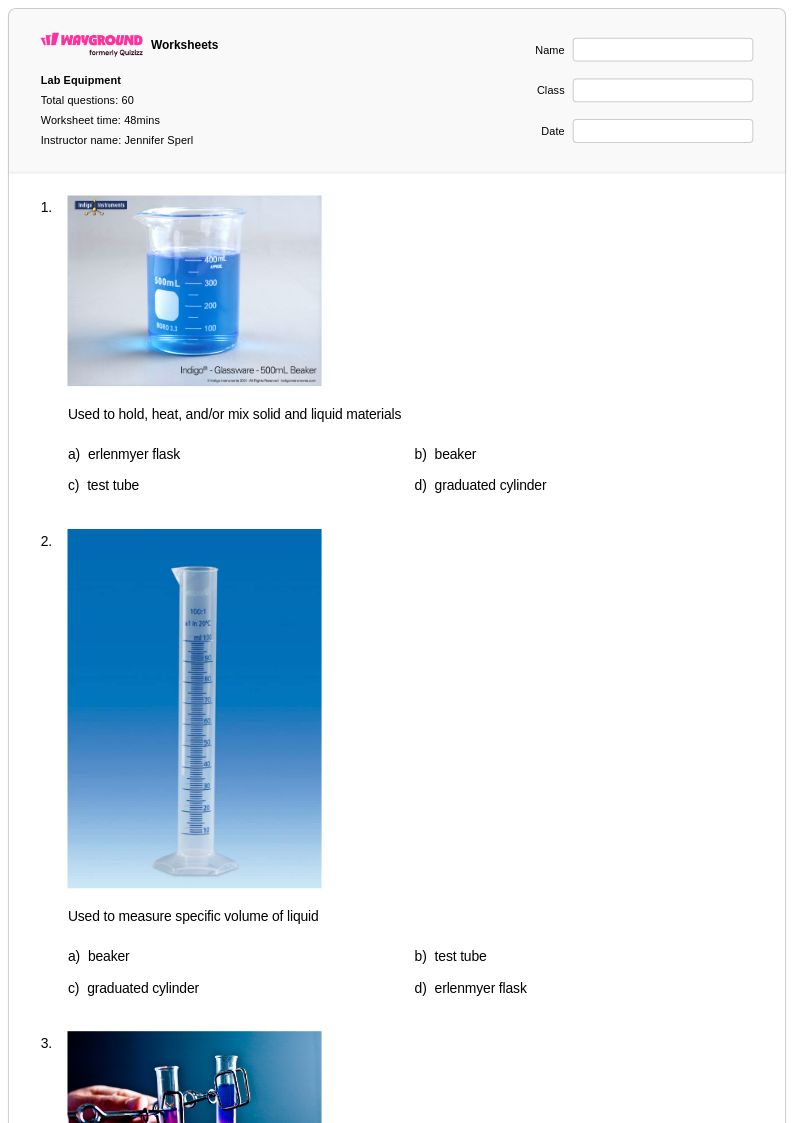
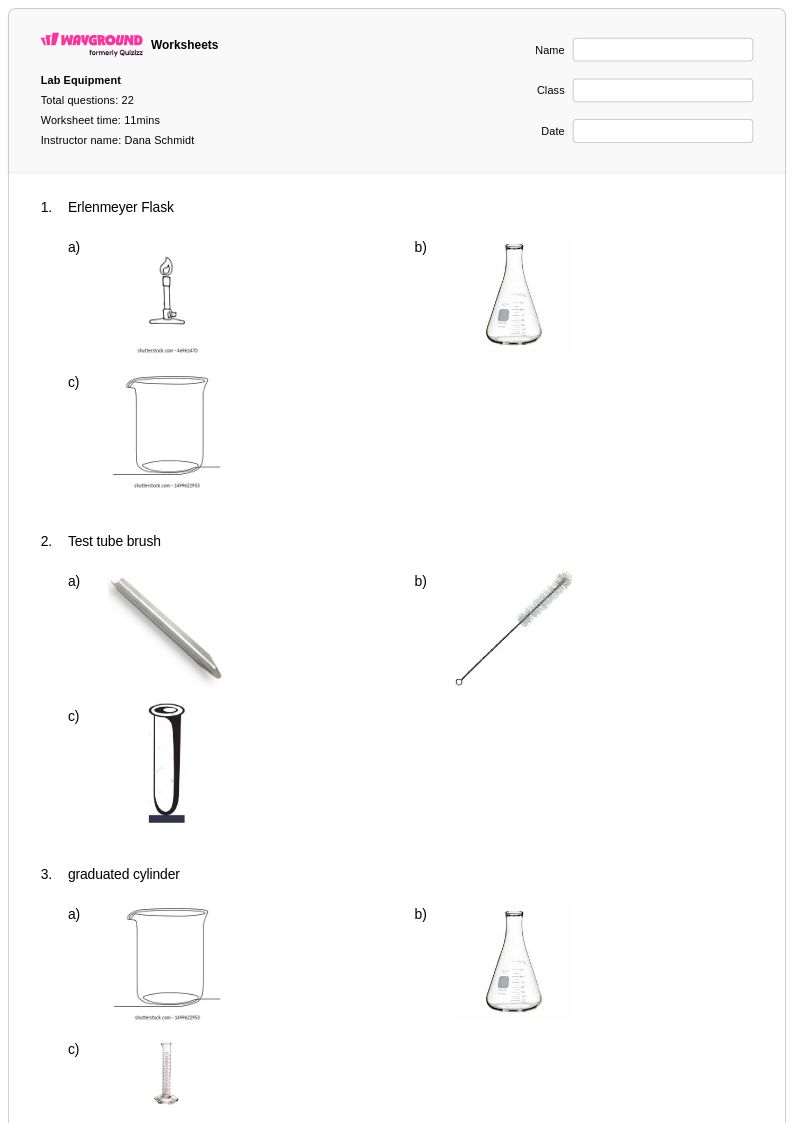
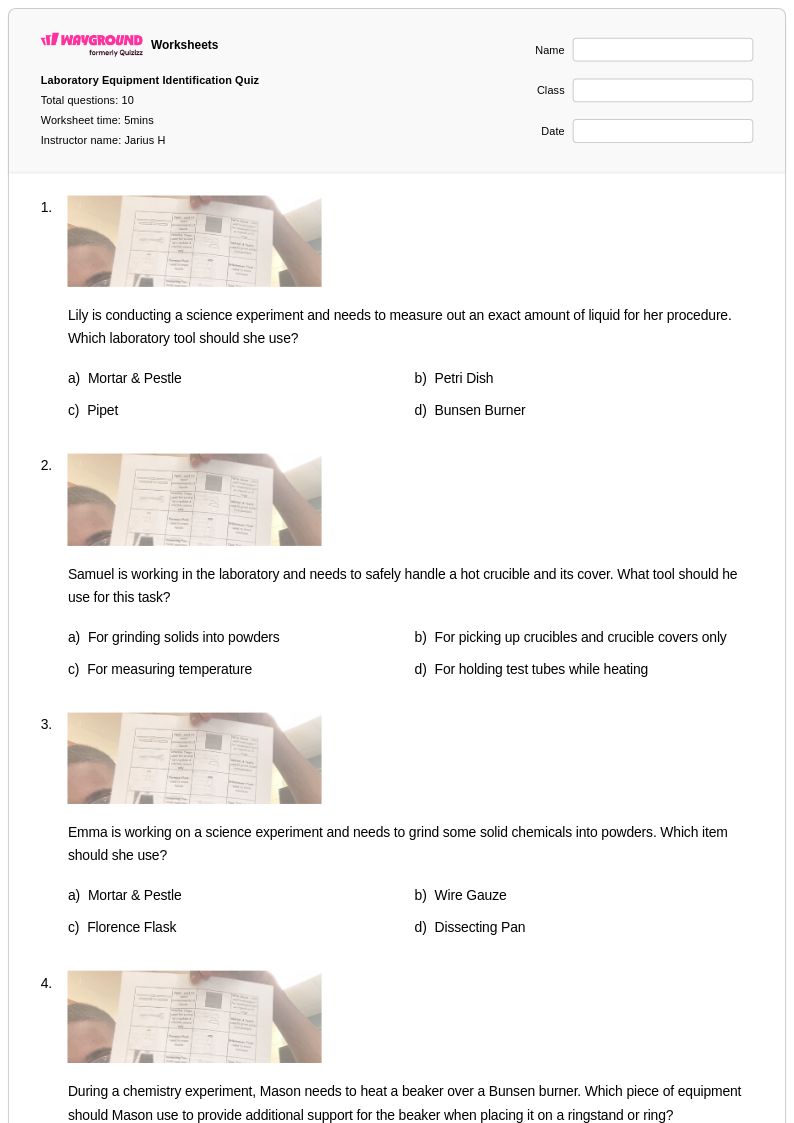
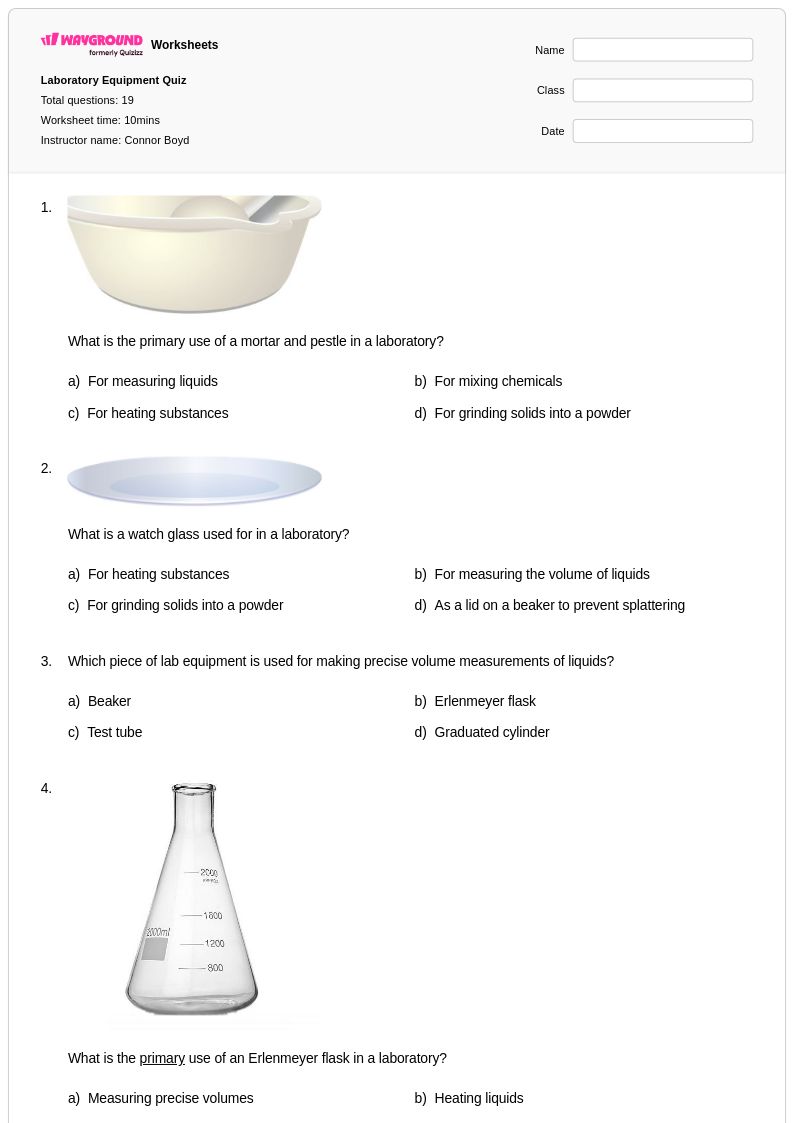
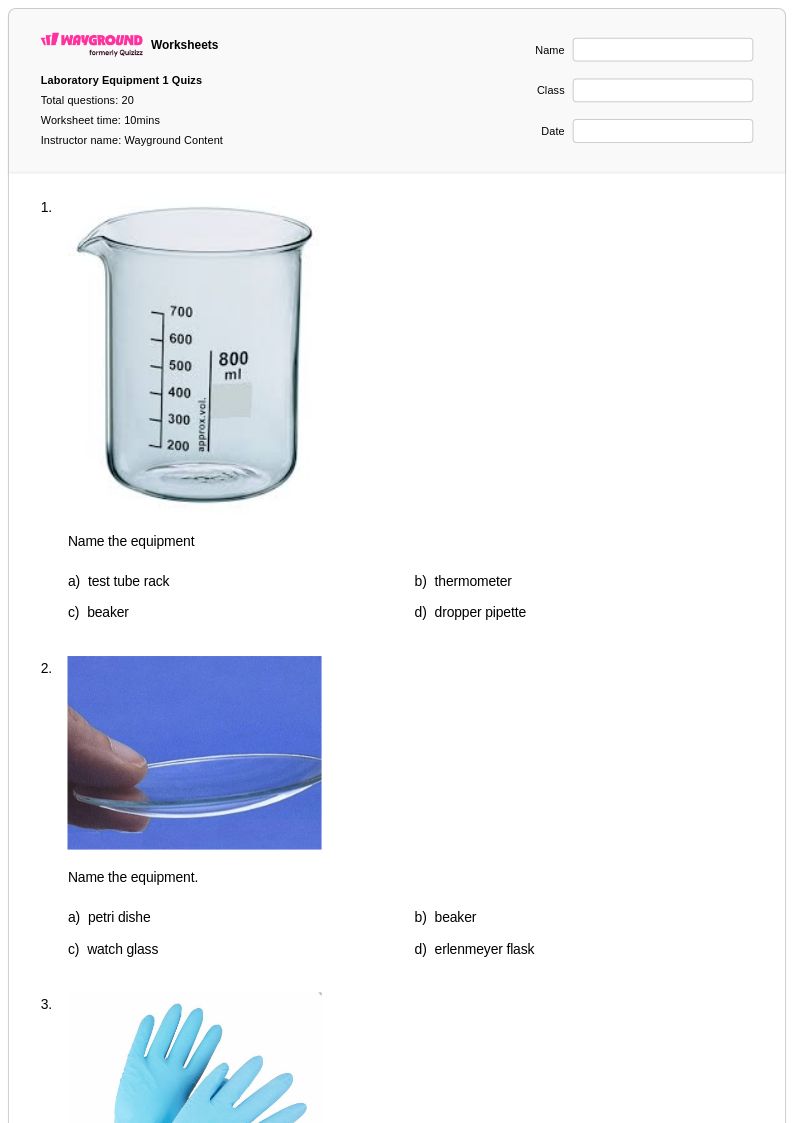
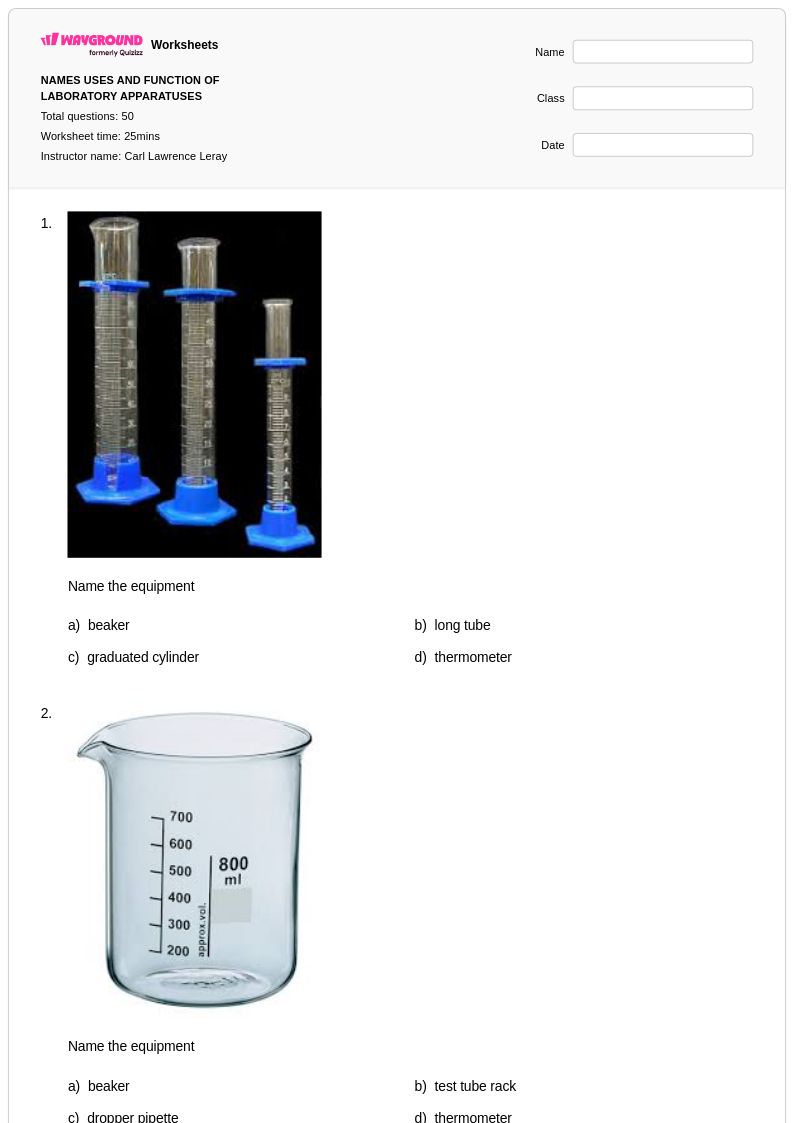
Laboratory equipment worksheets for Grade 9 students available through Wayground (formerly Quizizz) provide comprehensive practice in identifying, understanding, and properly utilizing essential chemistry apparatus. These educational resources strengthen critical laboratory skills by engaging students with detailed diagrams, function-based questions, and safety protocol exercises that cover fundamental equipment such as beakers, graduated cylinders, burettes, pipettes, balances, and spectrophotometers. The worksheets incorporate diverse practice problems that challenge students to match equipment with appropriate uses, calculate measurements and uncertainties, and demonstrate proper handling techniques. Each worksheet comes with a complete answer key and is available as a free printable pdf, making it easy for educators to assess student understanding and provide immediate feedback on laboratory preparedness.
Wayground (formerly Quizizz) supports chemistry educators with millions of teacher-created resources specifically designed for Grade 9 laboratory equipment instruction, featuring robust search and filtering capabilities that allow teachers to quickly locate materials aligned with specific curriculum standards and learning objectives. The platform's differentiation tools enable instructors to customize worksheets for varying skill levels, ensuring that both struggling students and advanced learners can engage meaningfully with laboratory concepts. These versatile resources are available in both printable and digital formats, including downloadable pdfs, providing flexibility for classroom instruction, homework assignments, and independent study sessions. Teachers can seamlessly integrate these materials into lesson planning for initial concept introduction, targeted remediation for students who need additional support, enrichment activities for accelerated learners, and ongoing skill practice to reinforce proper laboratory techniques and safety awareness.
FAQs
How do I teach students to identify and use laboratory equipment?
Start by introducing equipment in functional categories: measuring tools (graduated cylinders, pipettes, balances), heating tools (Bunsen burners, hot plates), and containment tools (beakers, Erlenmeyer flasks, test tubes). Use labeled diagrams and matching exercises before students handle physical equipment, so they can name each item and explain its purpose. Connecting each tool to a real lab procedure helps students understand not just what it is, but when and why it gets used.
What exercises help students practice recognizing and using lab equipment?
Effective practice includes equipment identification tasks where students label diagrams, match tools to their functions, and select the correct instrument for a given measurement scenario. Calculation-based problems, such as reading a graduated cylinder or interpreting a balance scale, reinforce measurement accuracy alongside equipment recognition. These structured exercises build both procedural knowledge and the judgment students need to choose the right tool in an actual lab setting.
What mistakes do students commonly make when identifying or using laboratory equipment?
One of the most common errors is confusing equipment with similar appearances, such as beakers and Erlenmeyer flasks, or graduated cylinders and measuring cylinders, without understanding the functional differences. Students also frequently misread measurement tools by ignoring the meniscus when reading liquid volume or misaligning the eye level with the scale. Another recurring mistake is applying the wrong tool to a task, such as using a beaker instead of a volumetric flask when precision is required.
How do I use laboratory equipment worksheets to prepare students before a lab session?
Laboratory equipment worksheets work best as pre-lab primers: assign them before students enter the lab so they arrive already able to name the tools, understand their functions, and recall relevant safety protocols. Wayground's laboratory equipment worksheets are available as printable PDFs for traditional classroom use and in digital formats for technology-integrated environments, and can also be hosted as a quiz directly on Wayground. This flexibility lets you assign them as independent practice, homework, or a whole-class warm-up depending on your instructional context.
How can I differentiate laboratory equipment worksheets for students at different skill levels?
For students who are still building foundational recognition skills, focus on identification and matching tasks with visual supports. More advanced students can work through measurement calculation problems and scenario-based questions that require selecting appropriate equipment and justifying their choice. On Wayground, you can also apply individual accommodations such as read aloud support, reduced answer choices, or extended time for students who need them, without affecting the experience of the rest of the class.
What safety topics should be covered alongside laboratory equipment instruction?
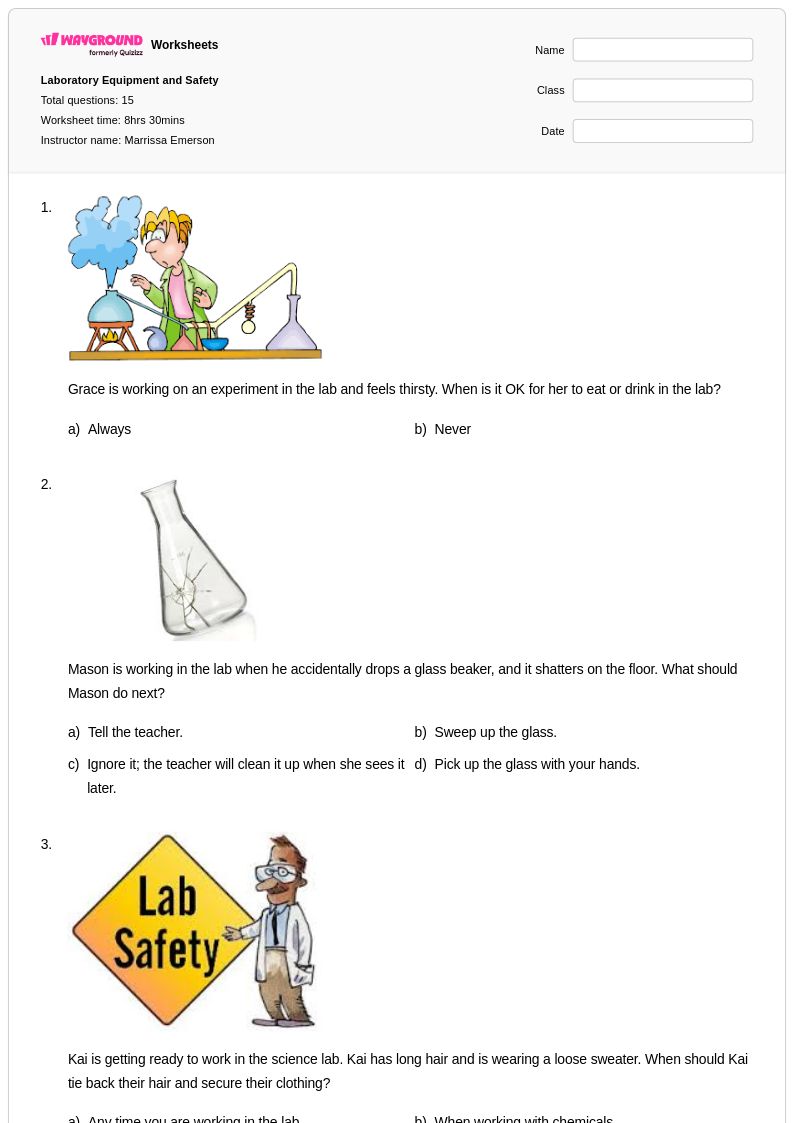
Students should learn the safety protocols specific to each piece of equipment, not just its name and function. This includes proper handling of glassware to prevent breakage and chemical exposure, correct lighting and adjustment procedures for Bunsen burners, and safe disposal or storage practices after use. Incorporating safety scenarios into equipment practice, such as asking students what to do if a beaker breaks or a Bunsen burner does not light correctly, builds the procedural awareness needed for safe lab participation.