Free Printable Molecular Mass Worksheets for Grade 9
Explore Grade 9 molecular mass worksheets and printables from Wayground that help students master calculating molecular weights through engaging practice problems, free PDF downloads, and comprehensive answer keys.
Explore printable Molecular Mass worksheets for Grade 9
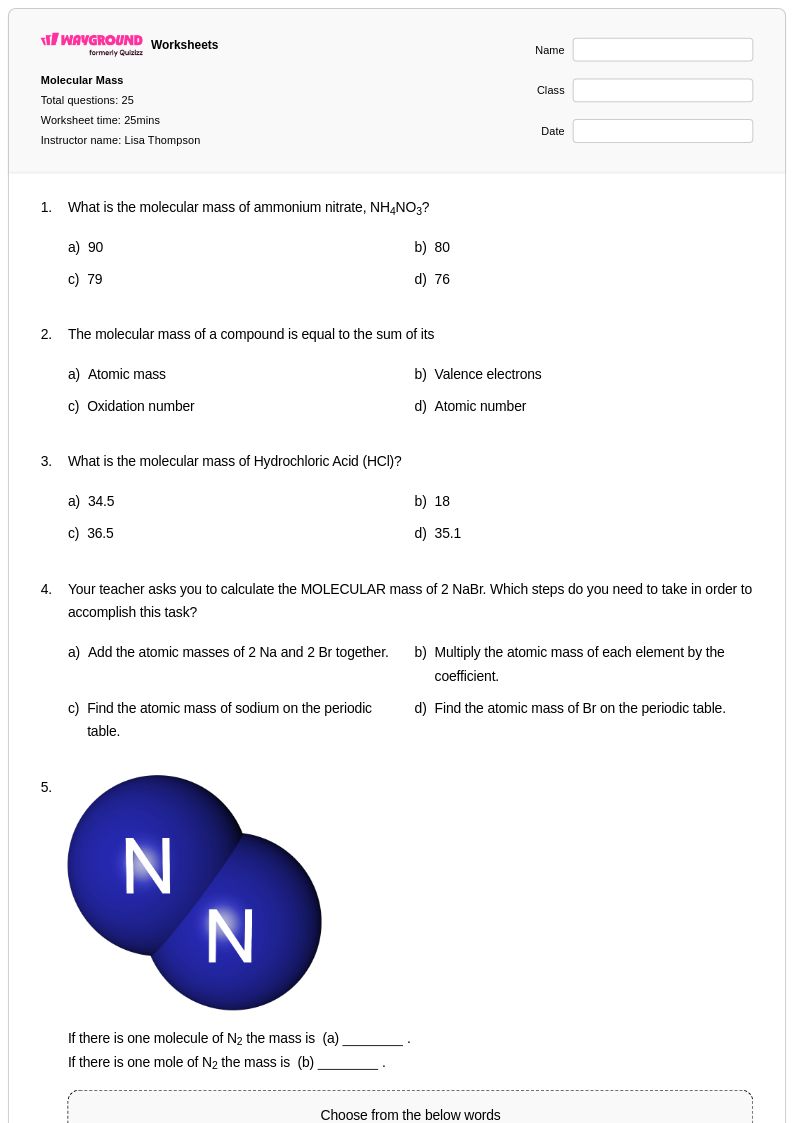
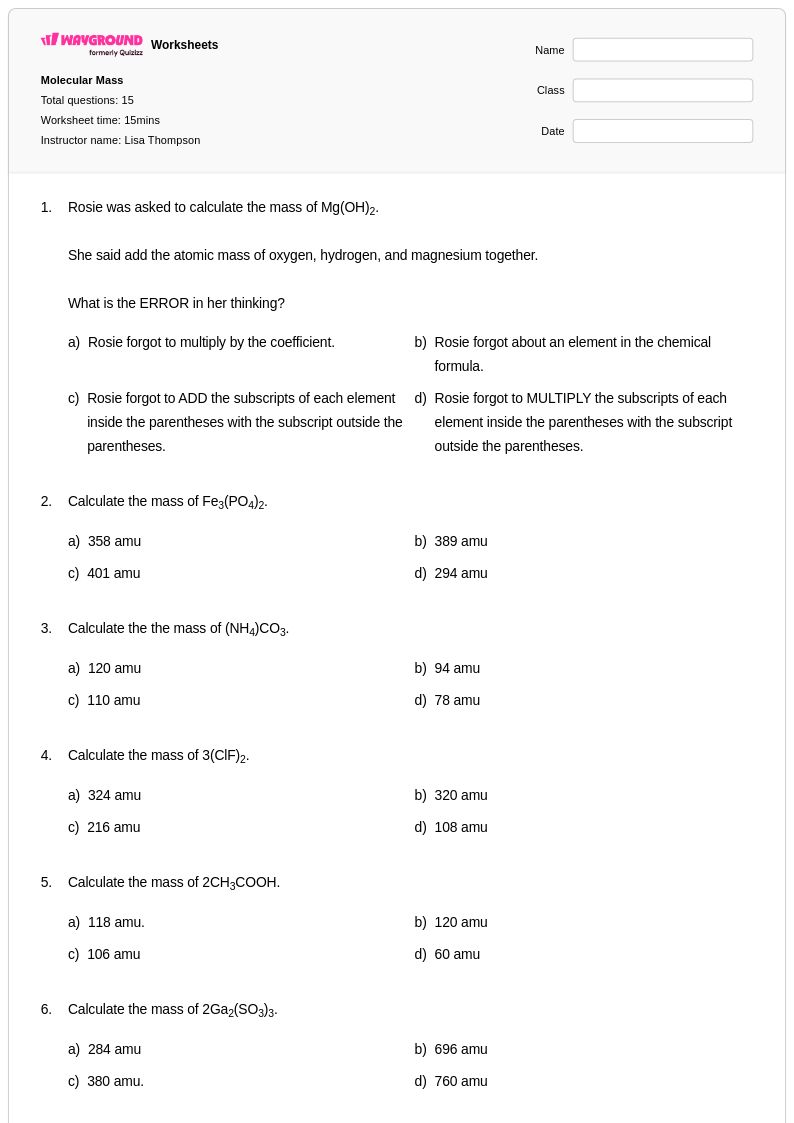
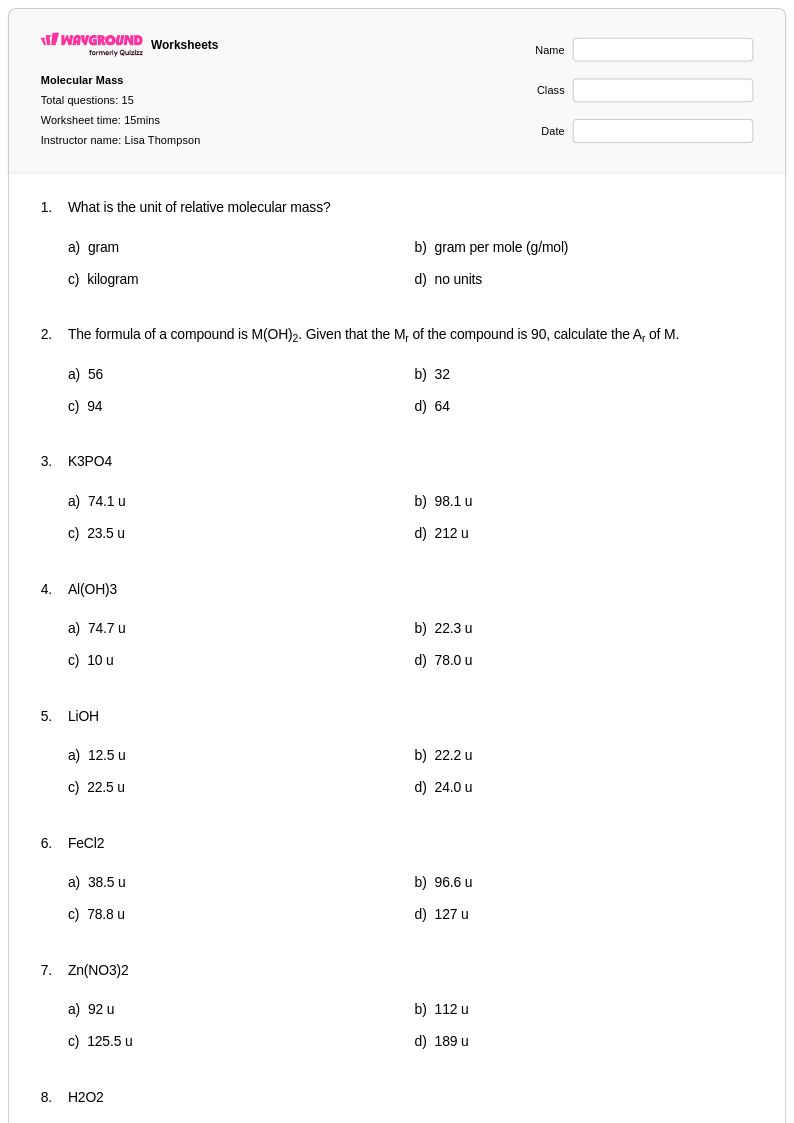
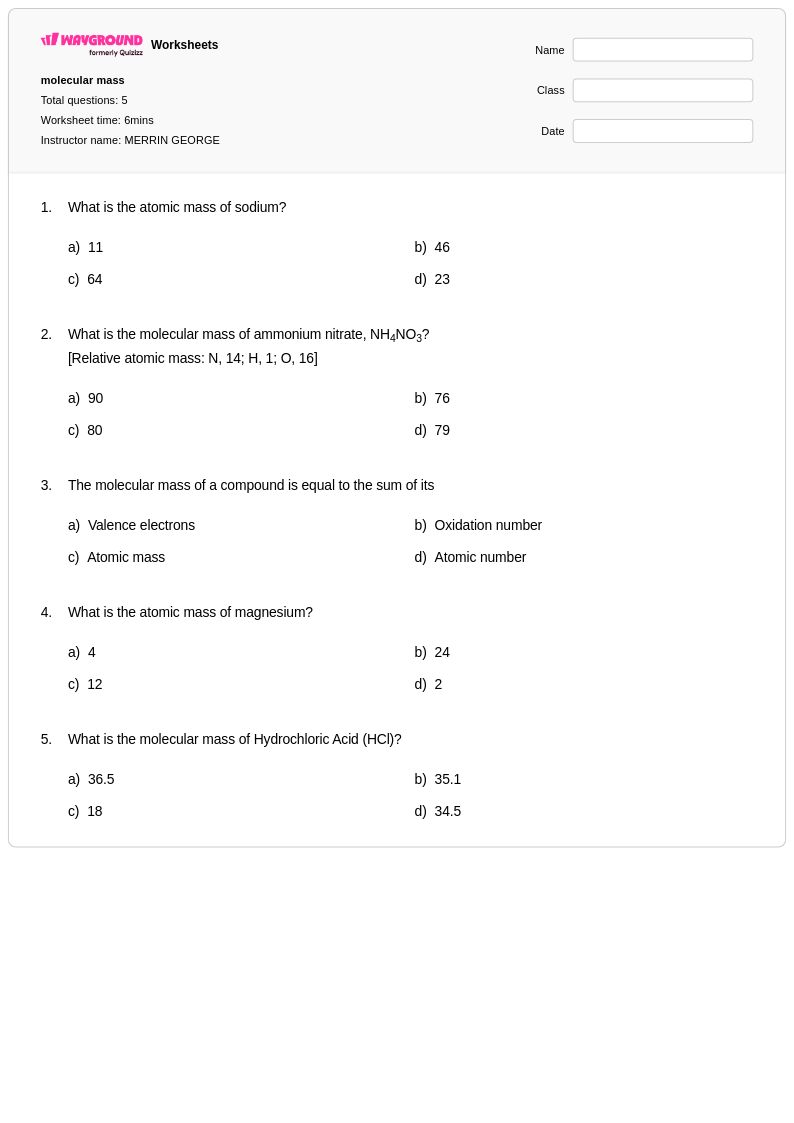
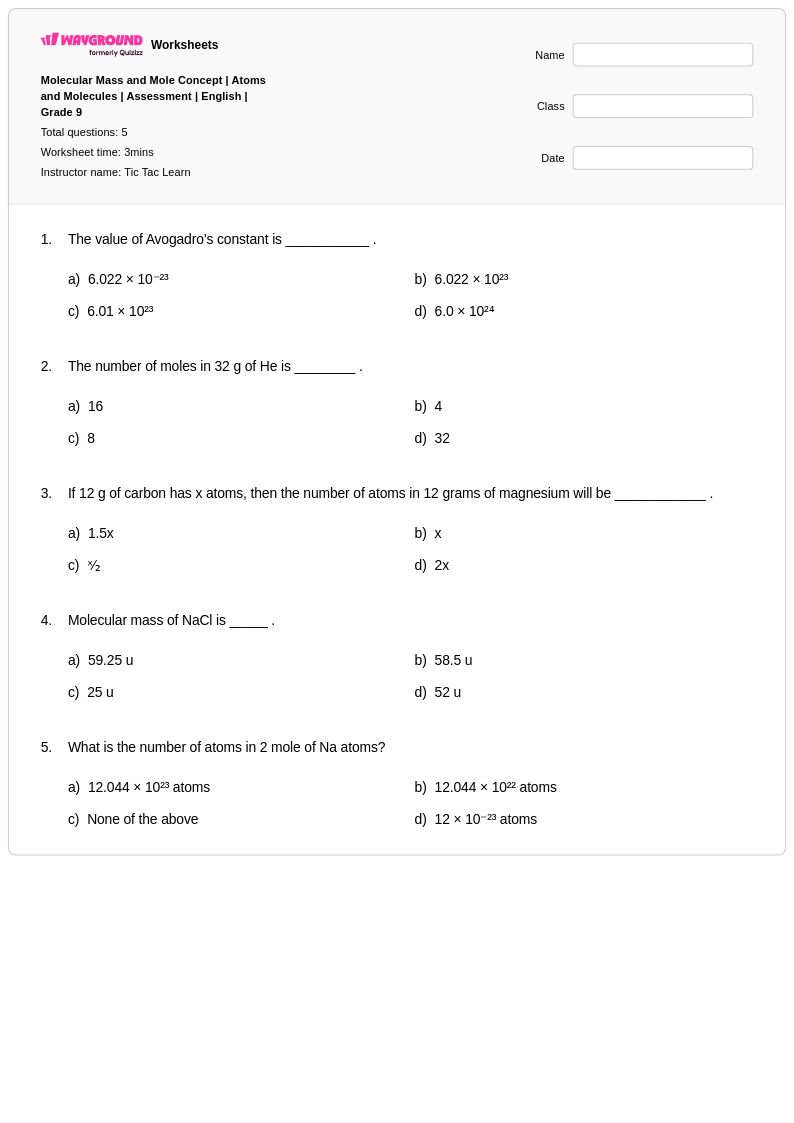
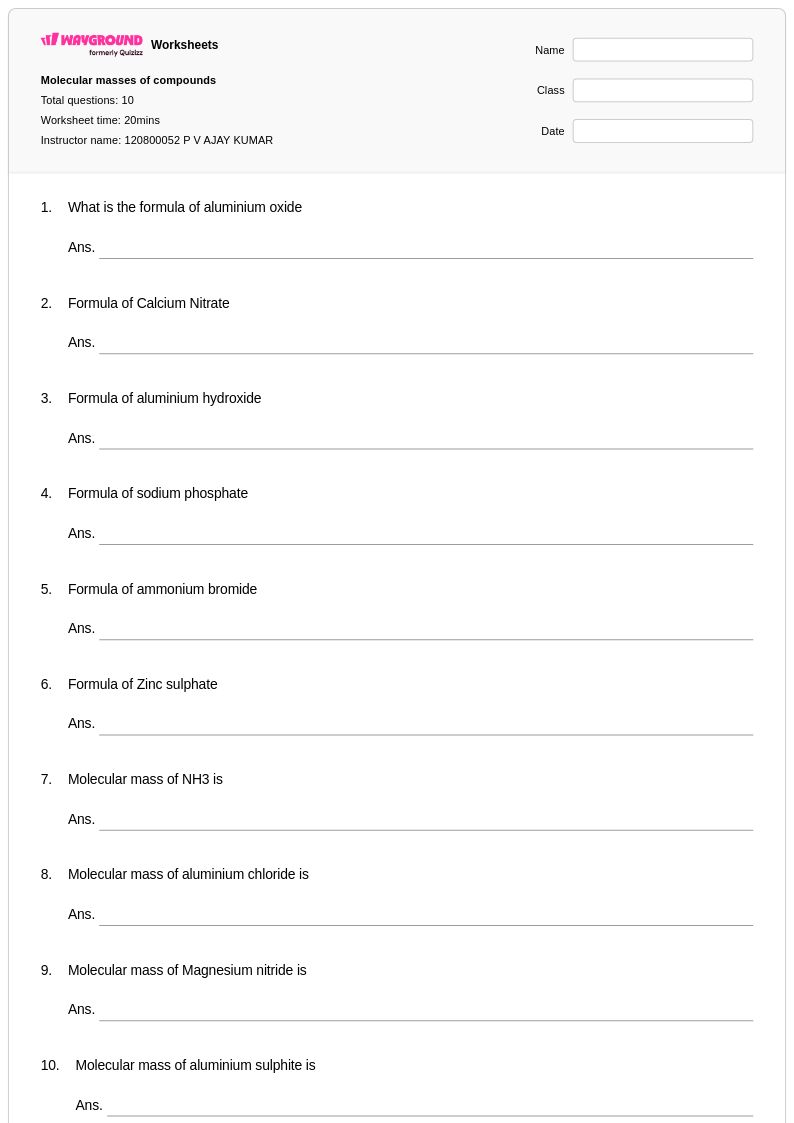
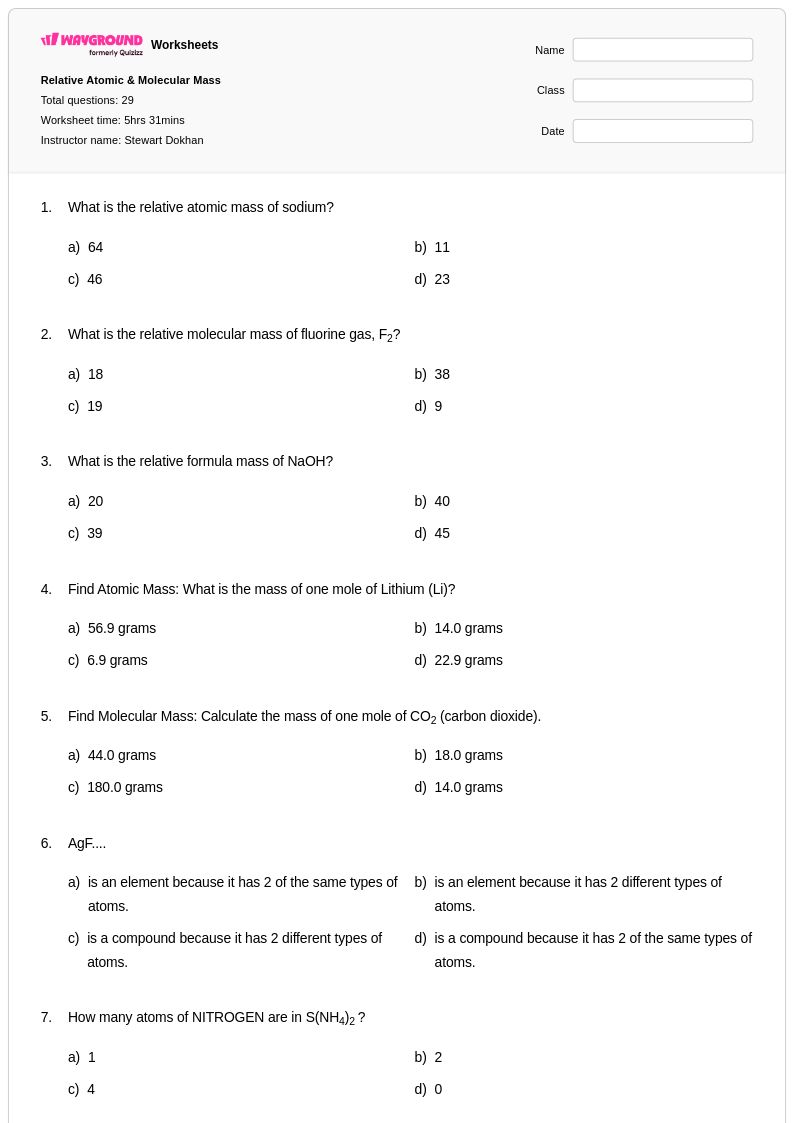
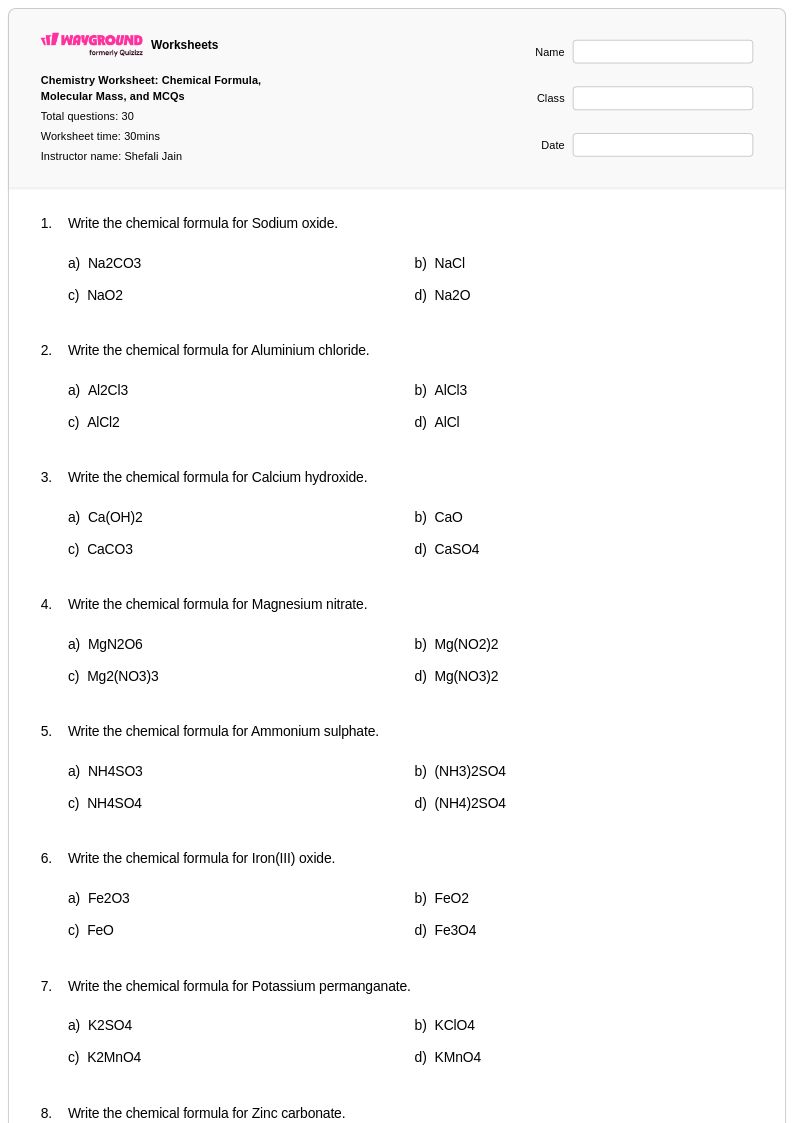
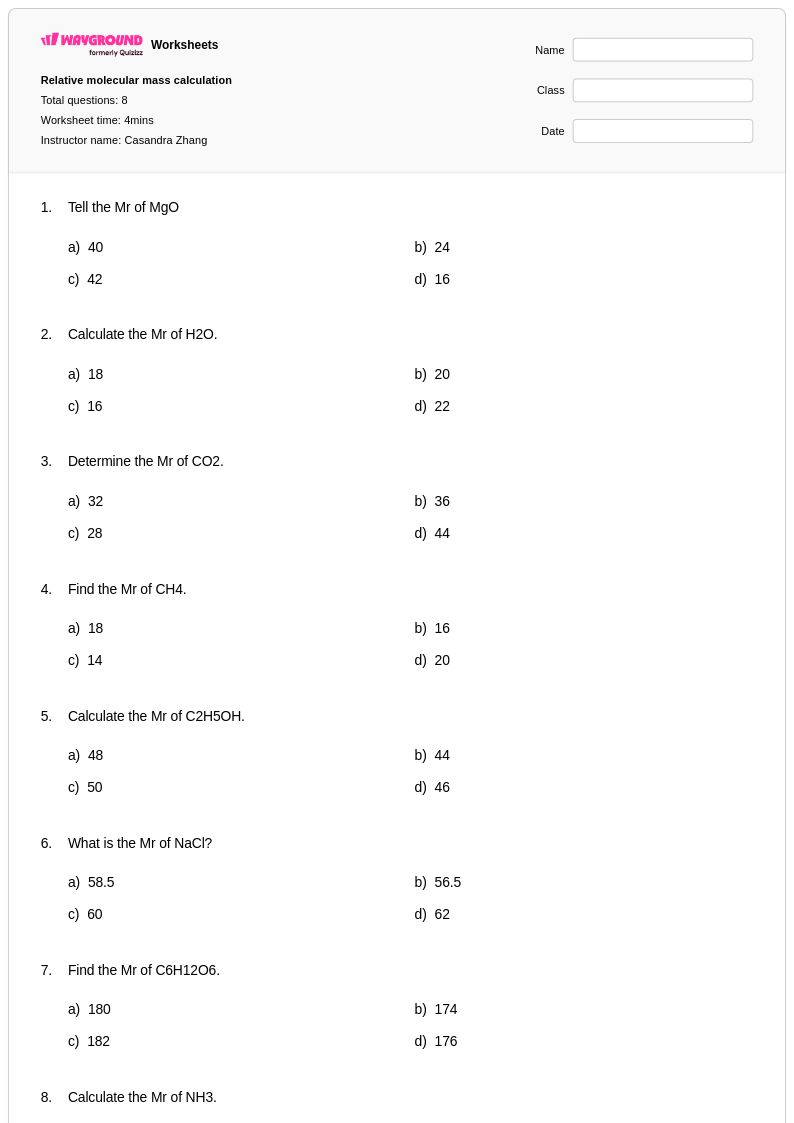
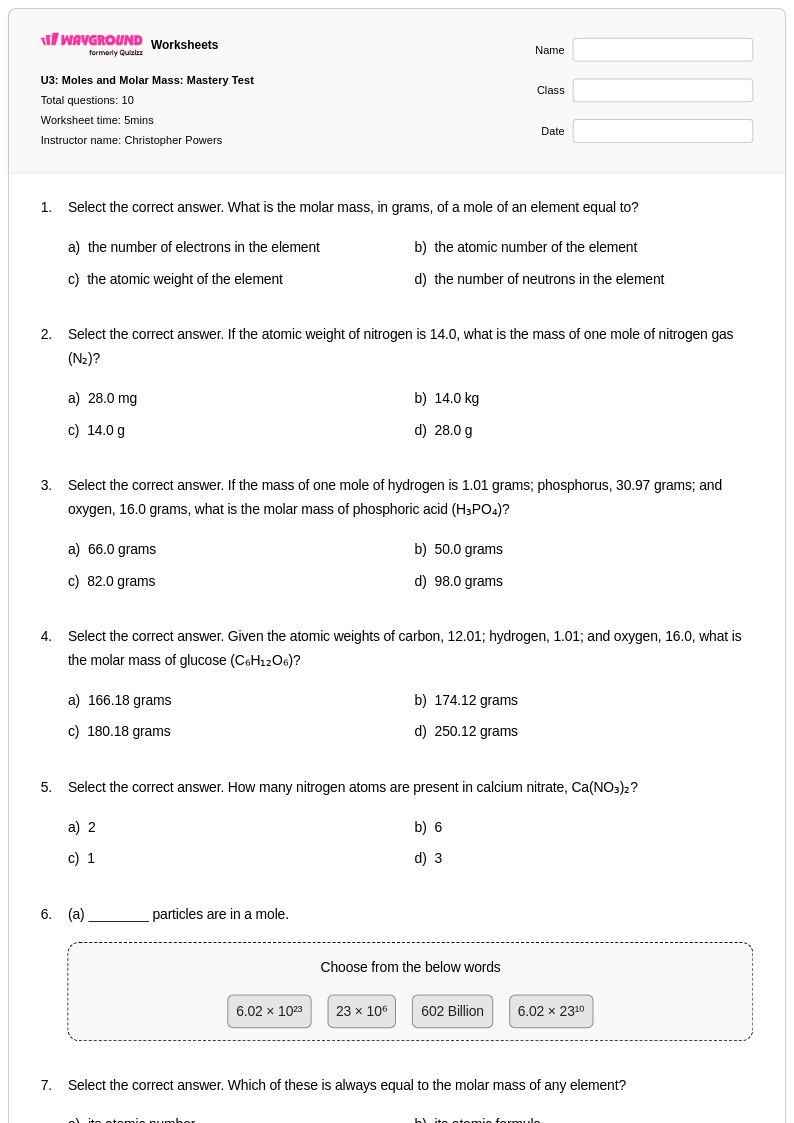
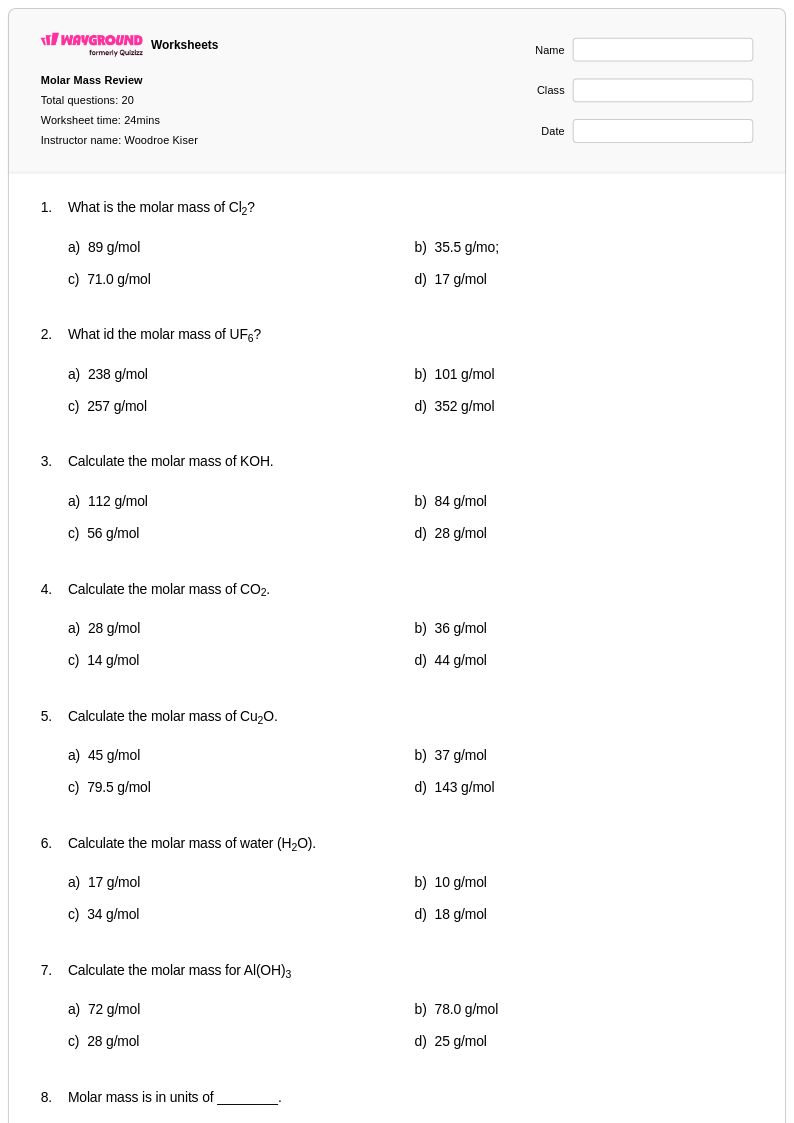
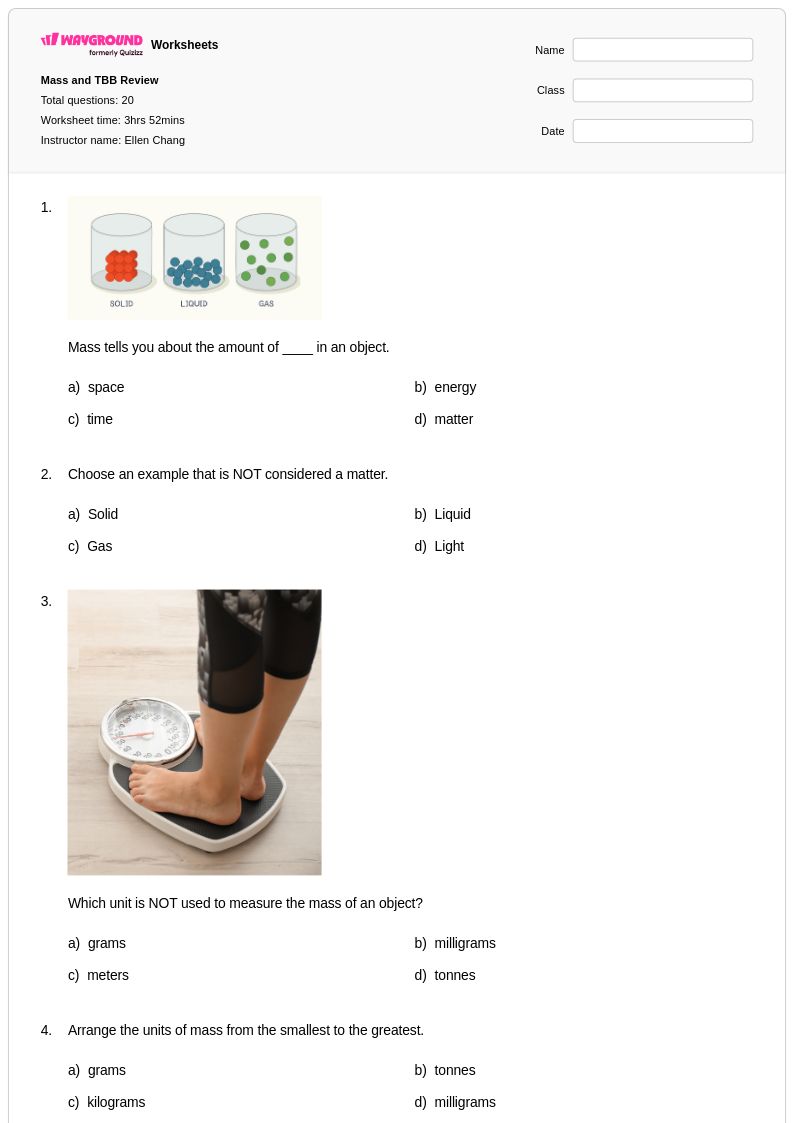
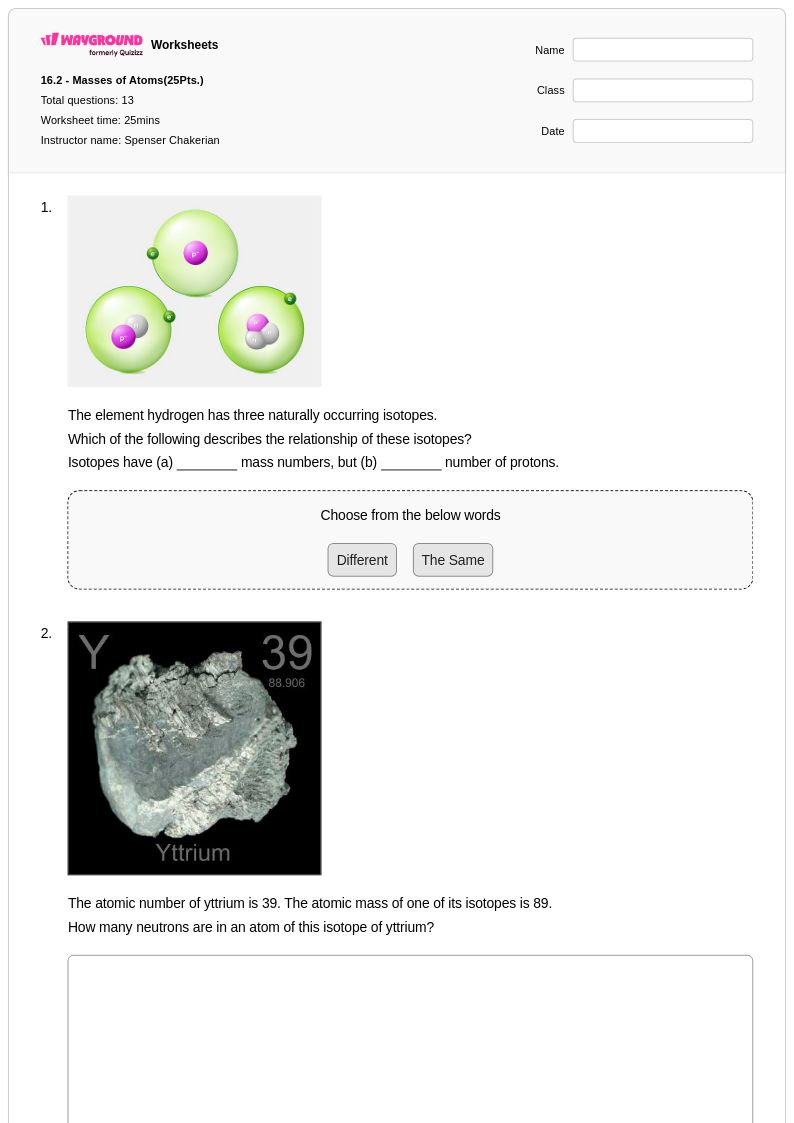
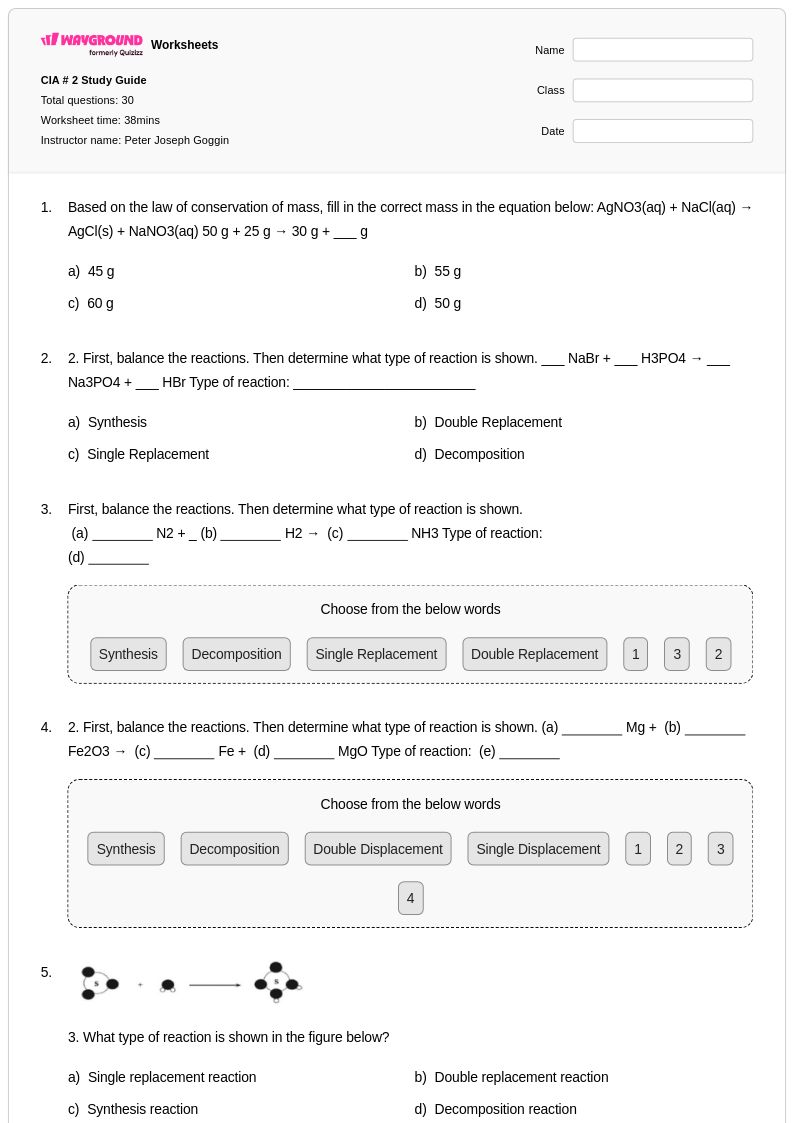
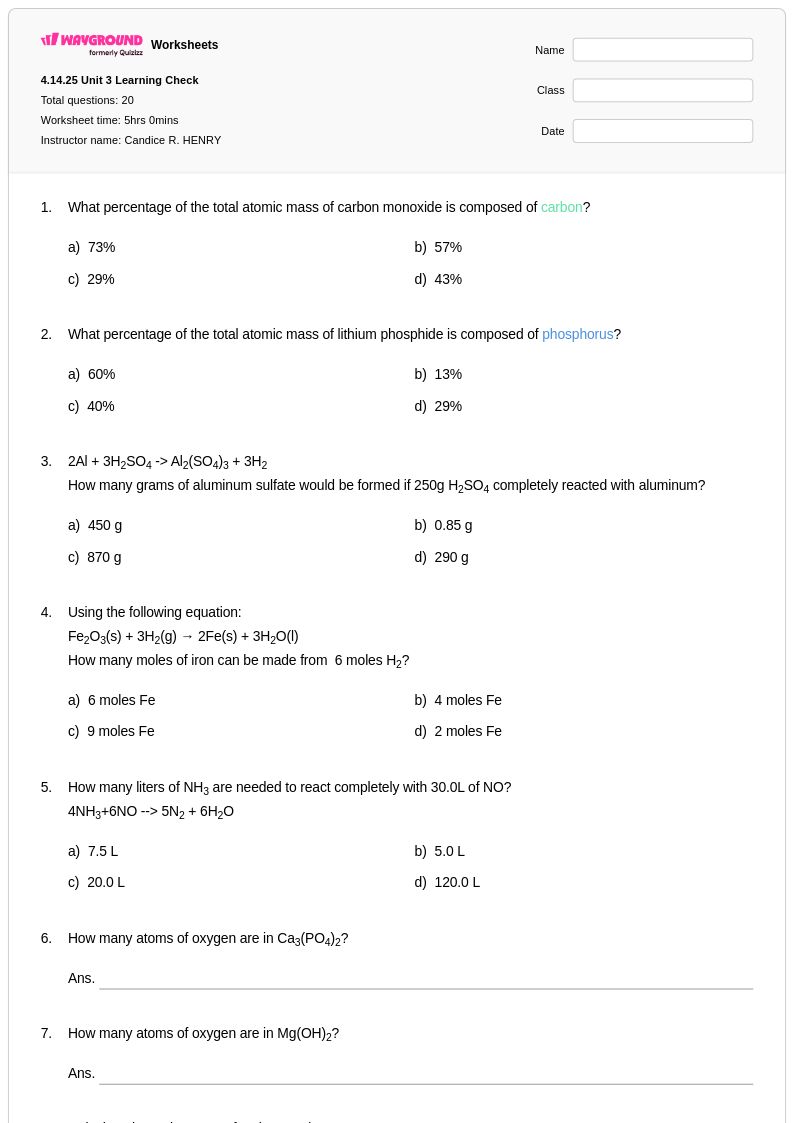
Molecular mass worksheets for Grade 9 students through Wayground (formerly Quizizz) provide comprehensive practice with calculating and understanding the mass of molecules and compounds. These expertly designed worksheets strengthen essential chemistry skills including atomic mass identification, formula interpretation, and stoichiometric calculations that form the foundation for advanced chemical concepts. Students work through systematic practice problems that progress from simple diatomic molecules to complex organic compounds, building confidence in applying periodic table data and mathematical reasoning. Each worksheet collection includes detailed answer keys and free printable pdf formats, making them accessible resources for both classroom instruction and independent study sessions.
Wayground (formerly Quizizz) supports chemistry educators with millions of teacher-created molecular mass resources that streamline lesson planning and differentiated instruction. The platform's robust search and filtering capabilities allow teachers to locate worksheets aligned with specific curriculum standards and learning objectives, while customization tools enable modification of practice problems to match varying skill levels within Grade 9 classrooms. These molecular mass worksheet collections are available in both printable and digital formats, including downloadable pdf versions, facilitating seamless integration into hybrid learning environments. Teachers utilize these resources for targeted remediation of struggling students, enrichment activities for advanced learners, and regular skill practice that reinforces conceptual understanding throughout the chemistry curriculum.
FAQs
How do I teach students to calculate molecular mass?
Start by ensuring students can read and interpret chemical formulas correctly, then show them how to locate atomic masses on the periodic table for each element in the compound. Walk through the process step by step: identify each element, note its subscript, multiply the atomic mass by the subscript, and sum all values to find the total molecular mass. Practice first with simple diatomic molecules like H₂O or O₂ before moving to more complex compounds, so students build procedural fluency before tackling multi-element formulas.
What exercises best help students practice calculating molecular mass?
Structured practice problems that progress from simple to complex are most effective — begin with single-element molecules, then move to binary compounds, and finally to multi-element organic or ionic compounds. Including a mix of problem types, such as calculating molecular mass from a given formula and working backwards to identify an unknown element, strengthens both procedural and conceptual understanding. Molecular mass worksheets that provide varied problem sets with immediate answer key feedback help students self-correct and build fluency through repetition.
What mistakes do students commonly make when calculating molecular mass?
The most frequent error is failing to multiply the atomic mass of an element by its subscript in the chemical formula, treating all elements as if they appear only once. Students also commonly confuse atomic mass with atomic number, pulling the wrong value from the periodic table. Another common mistake is misreading polyatomic ion formulas in parentheses — for example, in Ca(OH)₂, students often forget to distribute the subscript 2 to both oxygen and hydrogen.
How is molecular mass different from molar mass, and should I teach both?
Molecular mass refers to the mass of a single molecule expressed in atomic mass units (amu), while molar mass refers to the mass of one mole of a substance expressed in grams per mole (g/mol). Numerically, the values are identical, but the distinction matters conceptually for stoichiometry and quantitative chemistry. Teaching both together is effective because students can see that the same calculation applies at the molecular and macroscopic scale, reinforcing why the skill is foundational to broader chemistry problem solving.
How can I use these molecular mass worksheets in my classroom?
Molecular mass worksheets on Wayground are available as printable PDFs for traditional classroom use and in digital formats for technology-integrated learning environments, including the option to host them as a quiz directly on Wayground. Teachers can distribute PDF versions as independent practice, homework, or in-class problem sets, while the digital format supports interactive engagement and automatic grading. Wayground also allows teachers to customize worksheets and apply student-level accommodations such as extended time, read aloud, or reduced answer choices to support diverse learners within the same assignment.
How do I support struggling students who can't keep up with molecular mass calculations?
Provide a structured reference sheet that lists the steps for calculating molecular mass alongside a simplified periodic table showing only atomic masses, reducing the cognitive load of locating information mid-calculation. Breaking problems into explicit substeps — identify, look up, multiply, add — gives struggling students a repeatable scaffold. On Wayground, teachers can apply accommodations such as read aloud for students who struggle with text processing, reduced answer choices to lower cognitive demand, or extended time for students who need more processing time, all configurable per student without impacting the rest of the class.