Discover comprehensive Grade 10 isotope worksheets and printables through Wayground that help students master atomic variations, mass numbers, and radioactive decay with engaging practice problems, free PDF downloads, and complete answer keys.
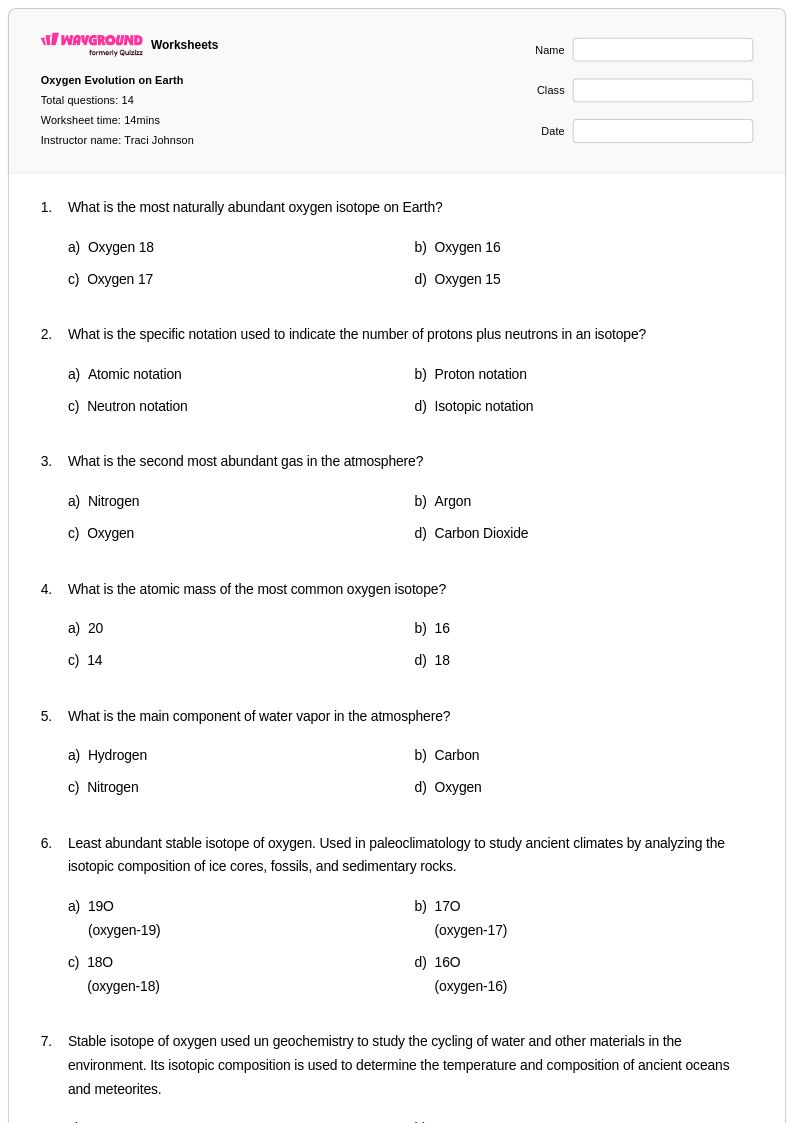
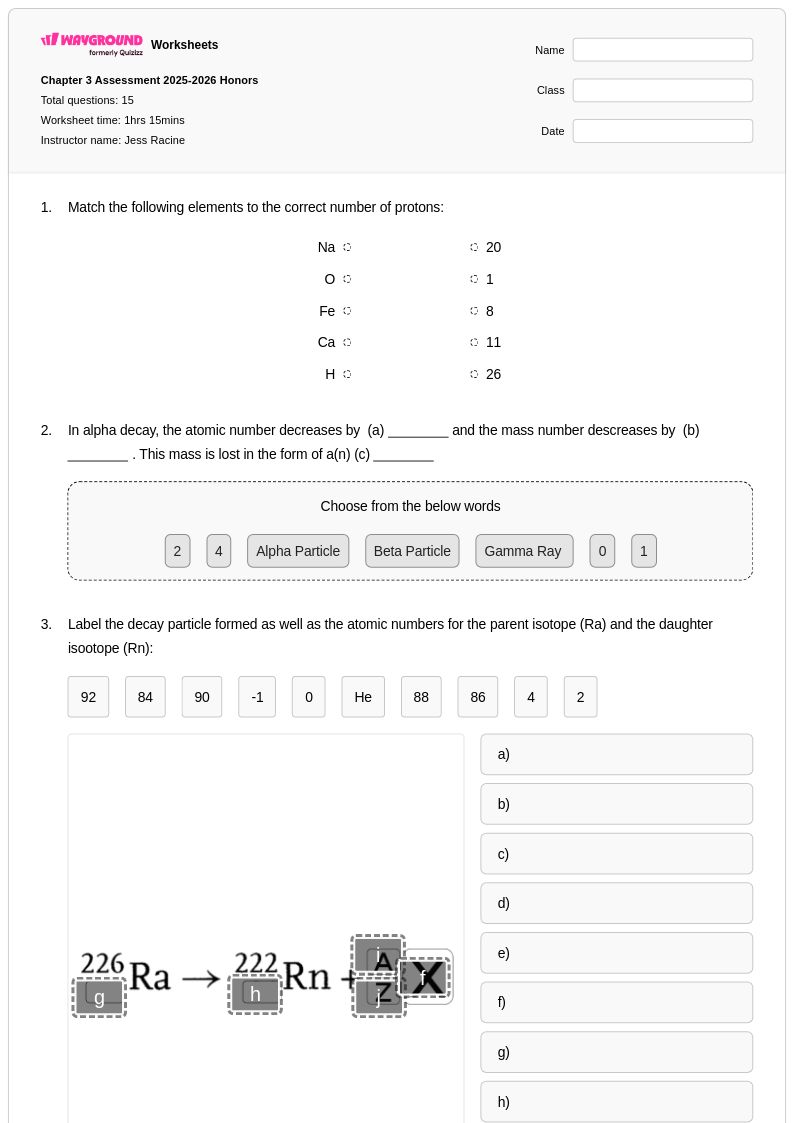
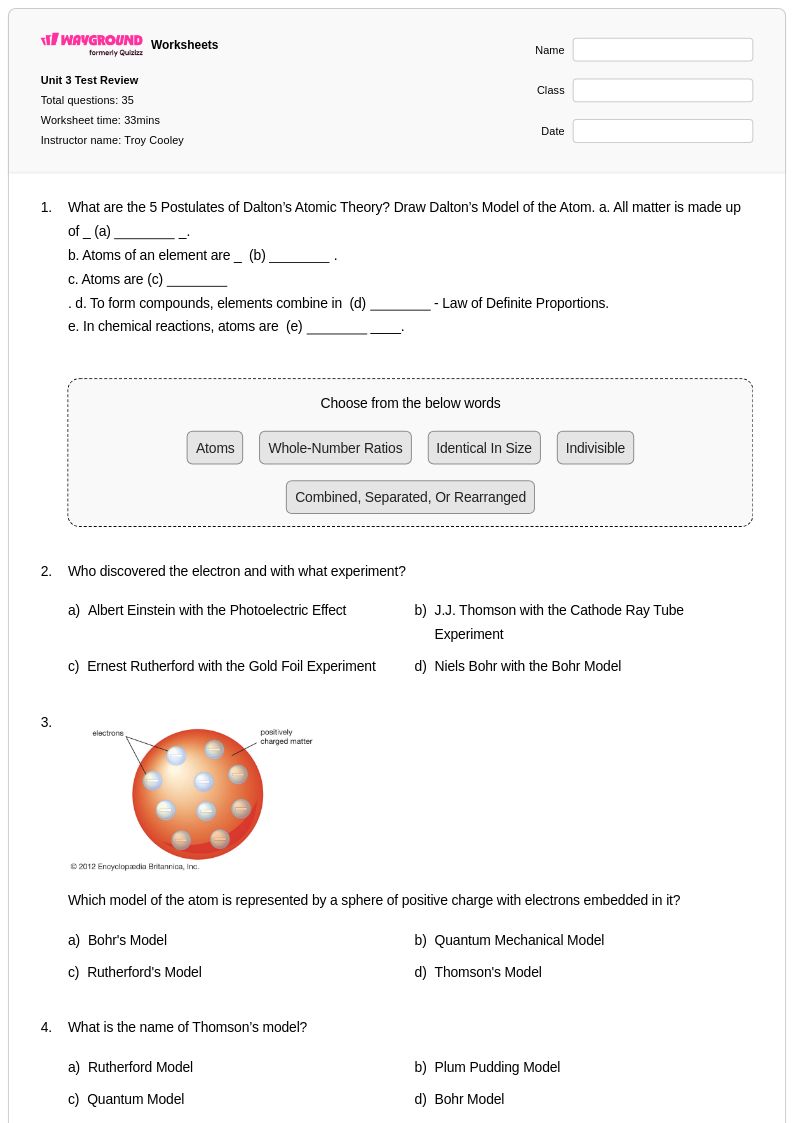
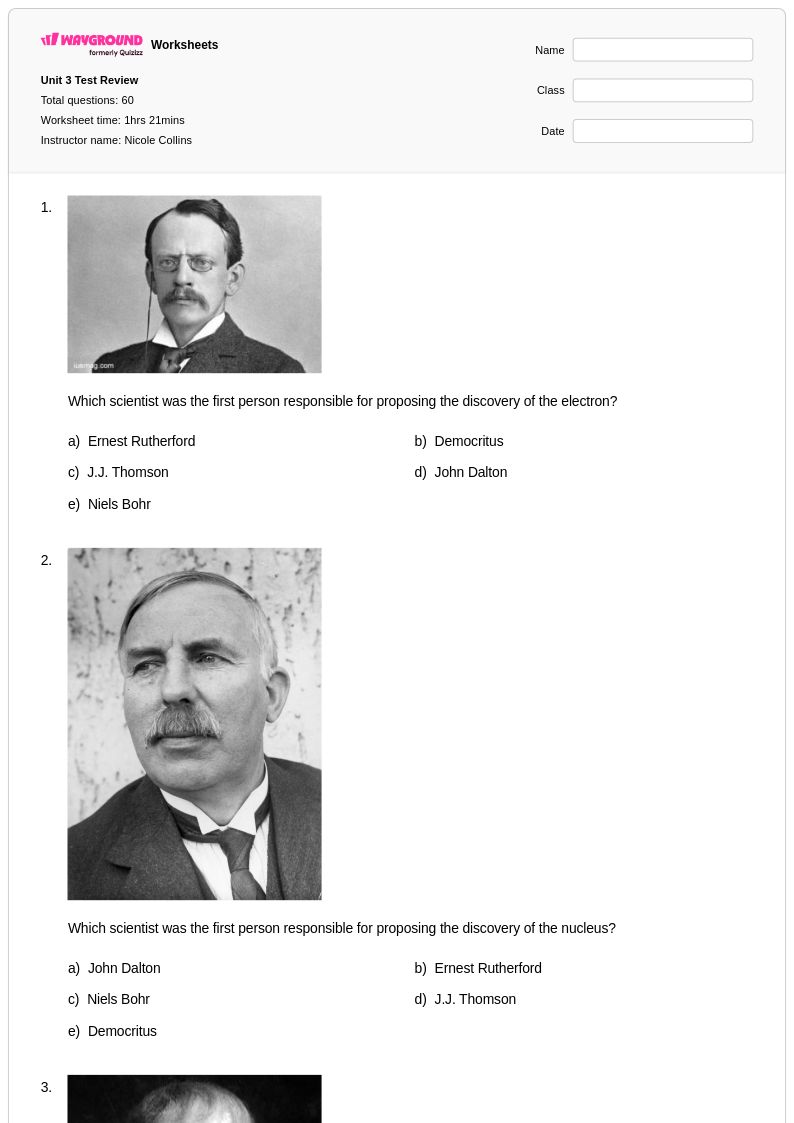
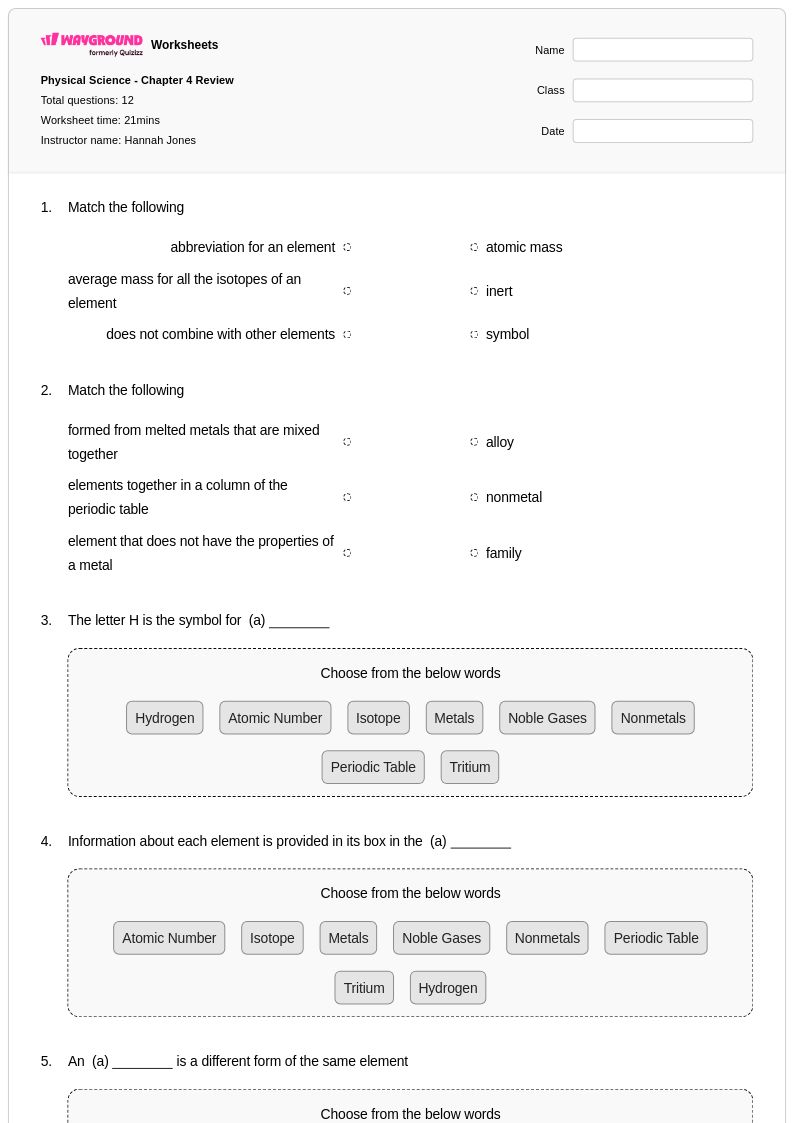
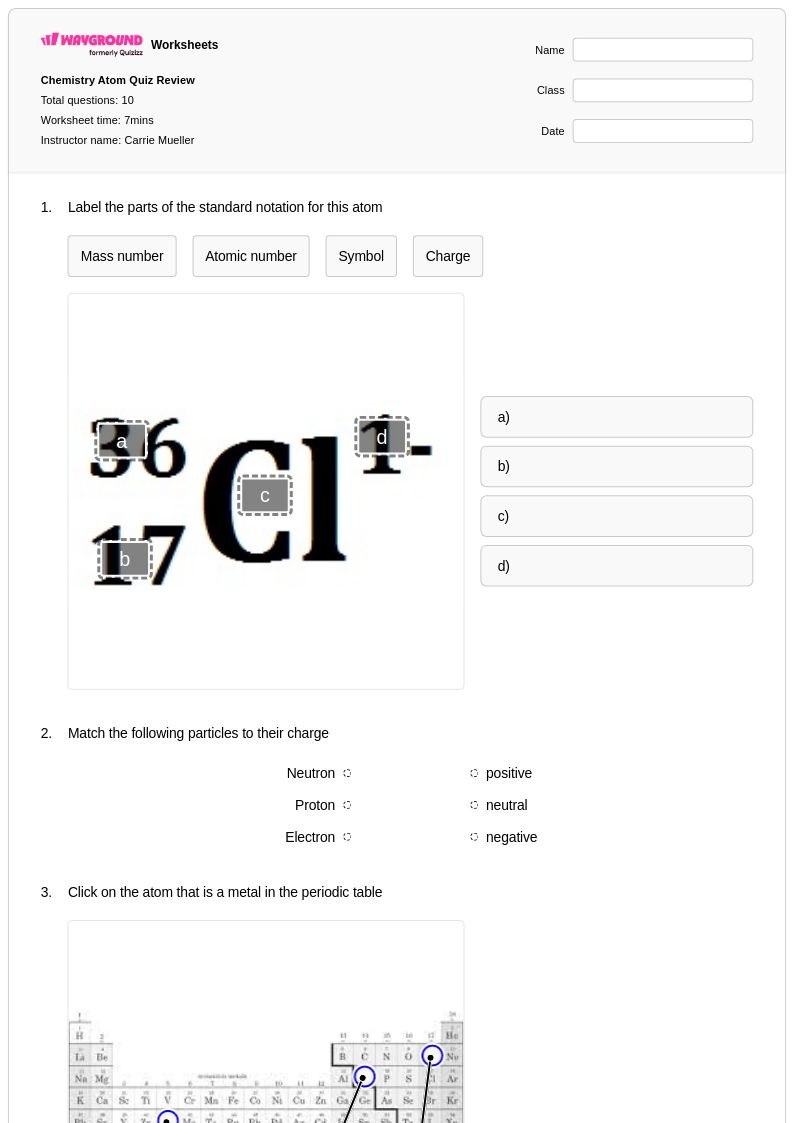
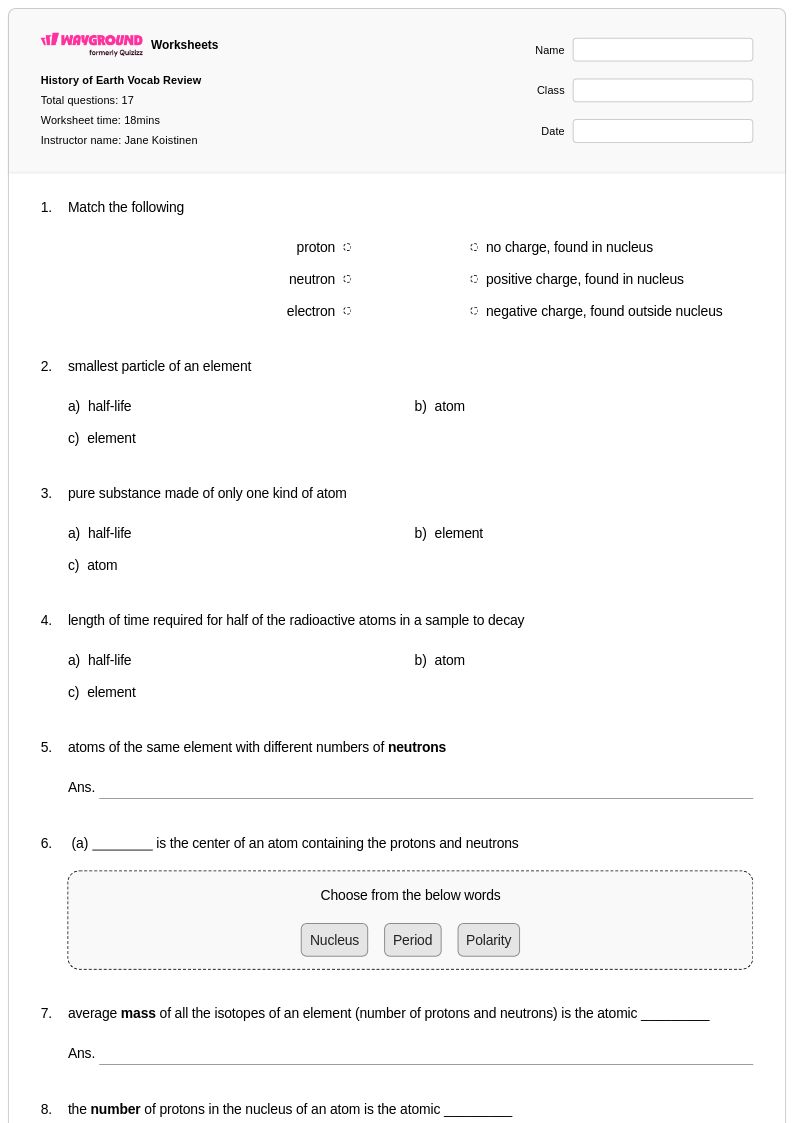
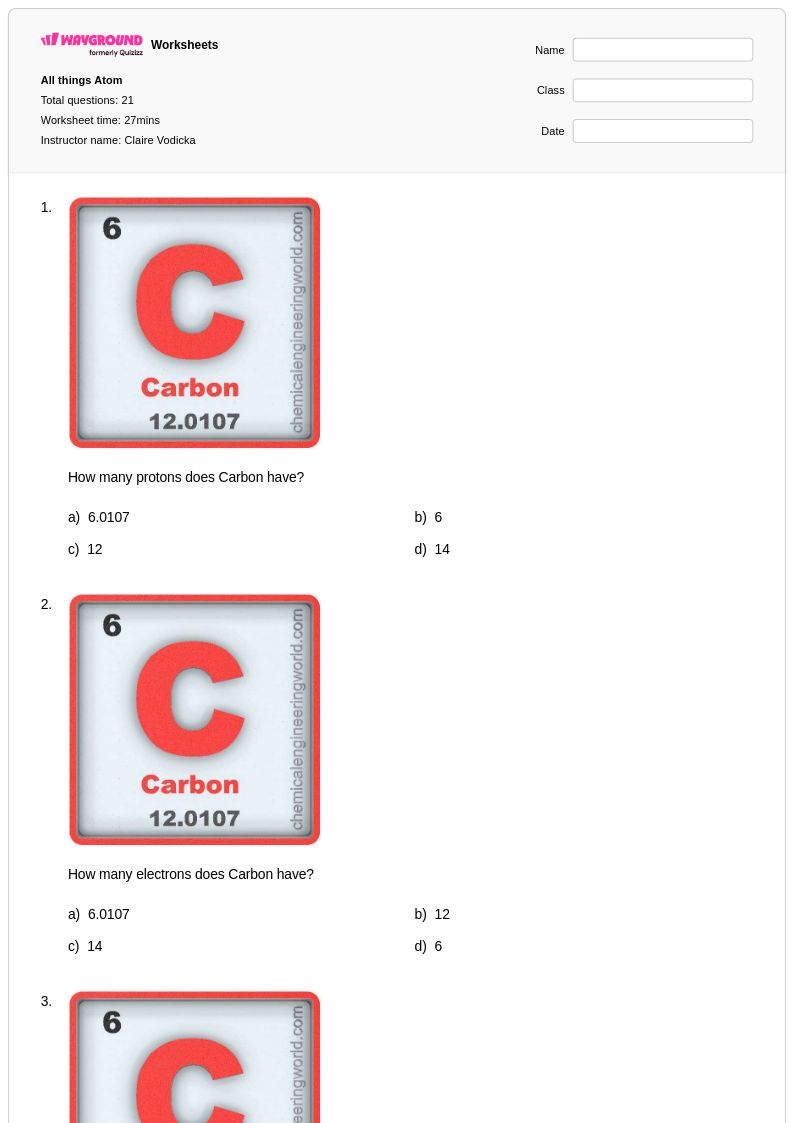
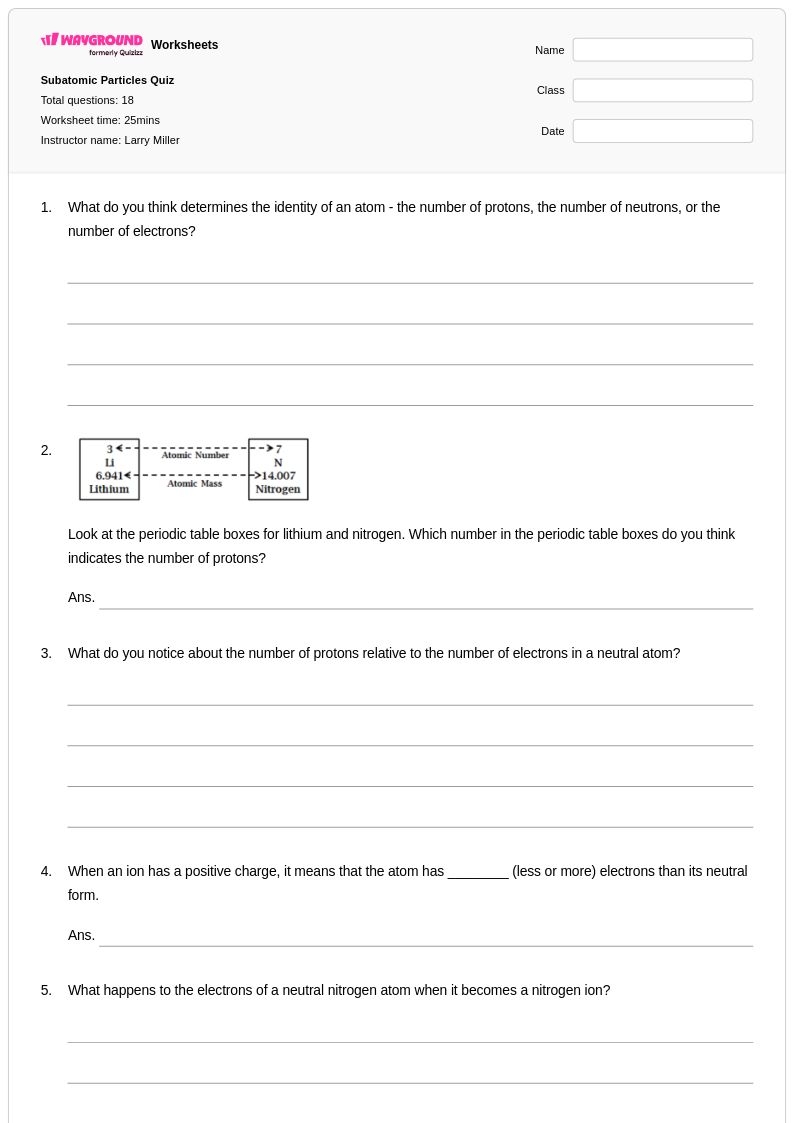
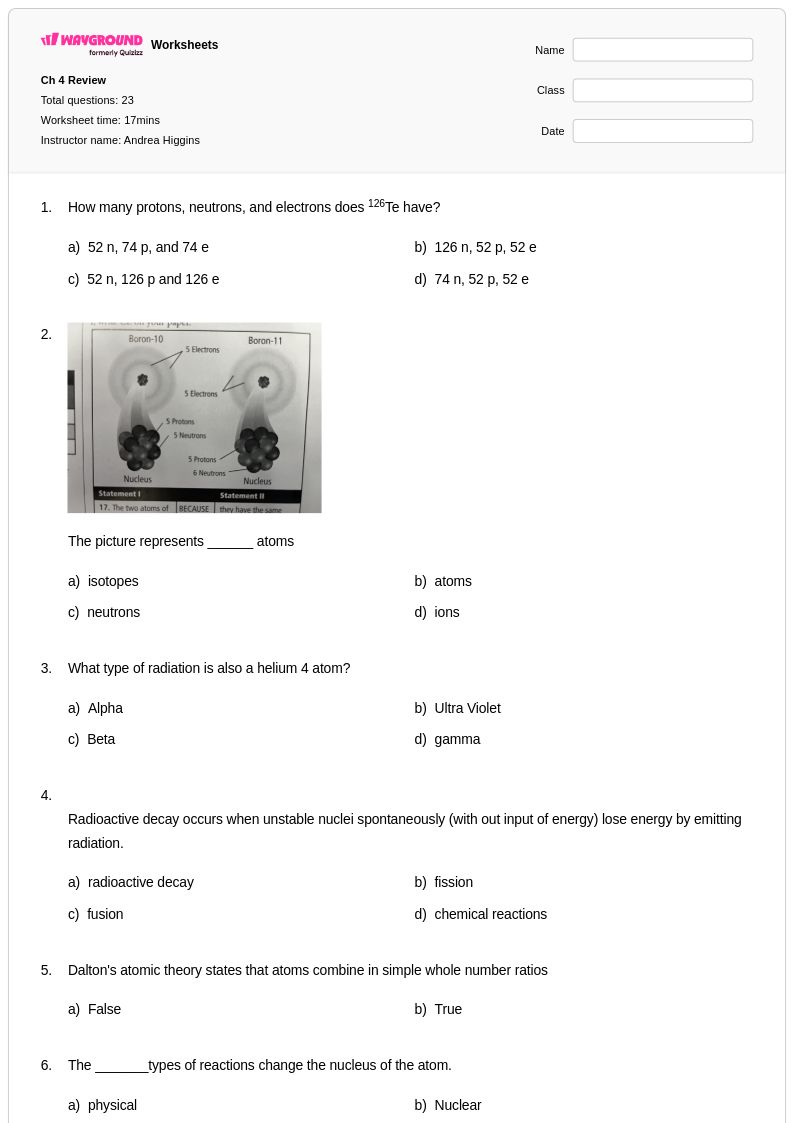
Isotope worksheets for Grade 10 students available through Wayground (formerly Quizizz) provide comprehensive practice opportunities for mastering one of chemistry's most fundamental concepts. These carefully designed educational resources help students develop critical skills in identifying isotopes, calculating atomic mass, understanding nuclear notation, and analyzing the relationship between protons, neutrons, and electrons in different atomic forms. The worksheets feature a variety of practice problems that challenge students to work with isotopic symbols, determine mass numbers, and explore real-world applications of isotopes in fields like medicine, archaeology, and energy production. Each worksheet comes with a detailed answer key to support independent learning and self-assessment, while the free printable format in pdf makes these resources easily accessible for both classroom instruction and homework assignments.
Wayground (formerly Quizizz) empowers educators with an extensive collection of millions of teacher-created isotope worksheets specifically designed for Grade 10 chemistry instruction. The platform's robust search and filtering capabilities allow teachers to quickly locate materials that align with their specific curriculum standards and learning objectives, whether focusing on radioactive decay, stable isotopes, or isotopic abundance calculations. These versatile resources support differentiated instruction through customizable difficulty levels and can be seamlessly integrated into lesson planning for initial concept introduction, skill remediation, or enrichment activities for advanced learners. Available in both printable and digital formats, including downloadable pdf versions, these isotope worksheets provide the flexibility teachers need to deliver effective chemistry instruction while ensuring students build a solid foundation in atomic structure and nuclear chemistry concepts.
FAQs
How do I teach isotopes to high school chemistry students?
Start by grounding students in atomic structure — specifically the role of neutrons — before introducing isotopes as atoms of the same element with different neutron counts. Use concrete examples like carbon-12 and carbon-14 to illustrate how isotopic identity is preserved despite mass differences. From there, build toward calculating weighted average atomic mass using isotopic abundance data, which connects isotopes to the periodic table values students already encounter.
What practice problems help students master isotopes?
Effective isotope practice should cover four core skill areas: identifying isotopes from nuclear notation, calculating the number of neutrons from mass number and atomic number, solving weighted average atomic mass problems using percent abundance, and interpreting mass spectrometry data. Problems that mix these skill types in a single worksheet help students see how the concepts connect rather than treating them as isolated procedures.
What mistakes do students commonly make when working with isotopes?
The most frequent error is confusing mass number with atomic mass — students often treat the whole-number mass number as interchangeable with the decimal atomic mass listed on the periodic table. A related misconception is assuming all atoms of an element have the same mass, which undermines understanding of isotopic abundance. Students also frequently subtract incorrectly when finding neutron count, mixing up which value to subtract from which.
How do I help struggling students understand isotopic abundance calculations?
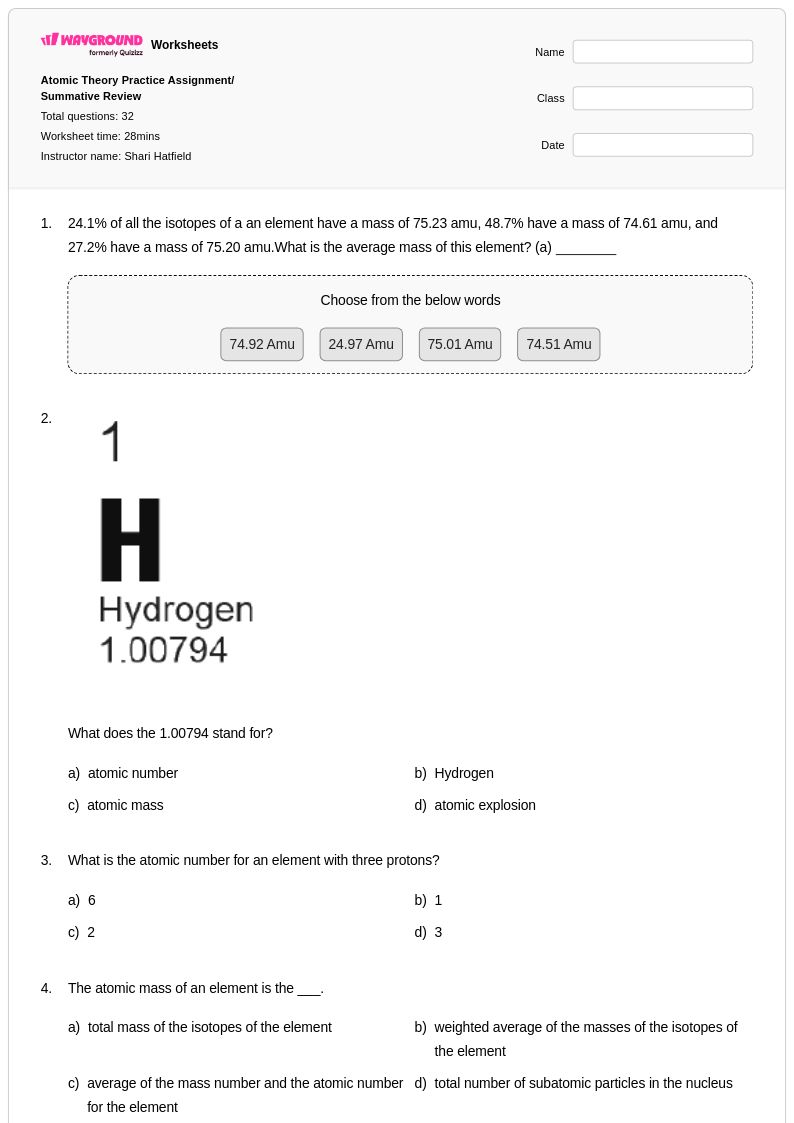
Break the weighted average calculation into explicit steps: convert percent abundance to a decimal, multiply each isotope's mass by its decimal abundance, then sum the results. Students who struggle often skip the conversion step or add percentages before multiplying. Providing a structured template or partially worked examples before moving to independent practice reduces procedural errors significantly. On Wayground, teachers can assign reduced answer choices to students who need additional support, lowering cognitive load while they build procedural fluency.
How do I use Wayground's isotope worksheets in my classroom?
Wayground's isotope worksheets are available as printable PDFs for traditional classroom use and in digital formats for technology-integrated or hybrid learning environments. Teachers can also host the worksheets as a quiz directly on Wayground, enabling real-time student responses and automatic grading. Each worksheet includes a complete answer key, making them practical for independent practice, homework, lab follow-up, or formative assessment without additional prep work.
How do isotope worksheets support differentiation in a chemistry class?
Isotope worksheets can be differentiated by targeting specific sub-skills — foundational worksheets focusing on isotope identification and neutron calculation for students still building atomic structure knowledge, and advanced worksheets involving isotopic abundance and mass spectrometry interpretation for students ready for greater challenge. Wayground's differentiation tools allow teachers to customize materials based on student ability levels, and platform accommodations such as extended time and read-aloud support can be applied to individual students without disrupting the rest of the class.