
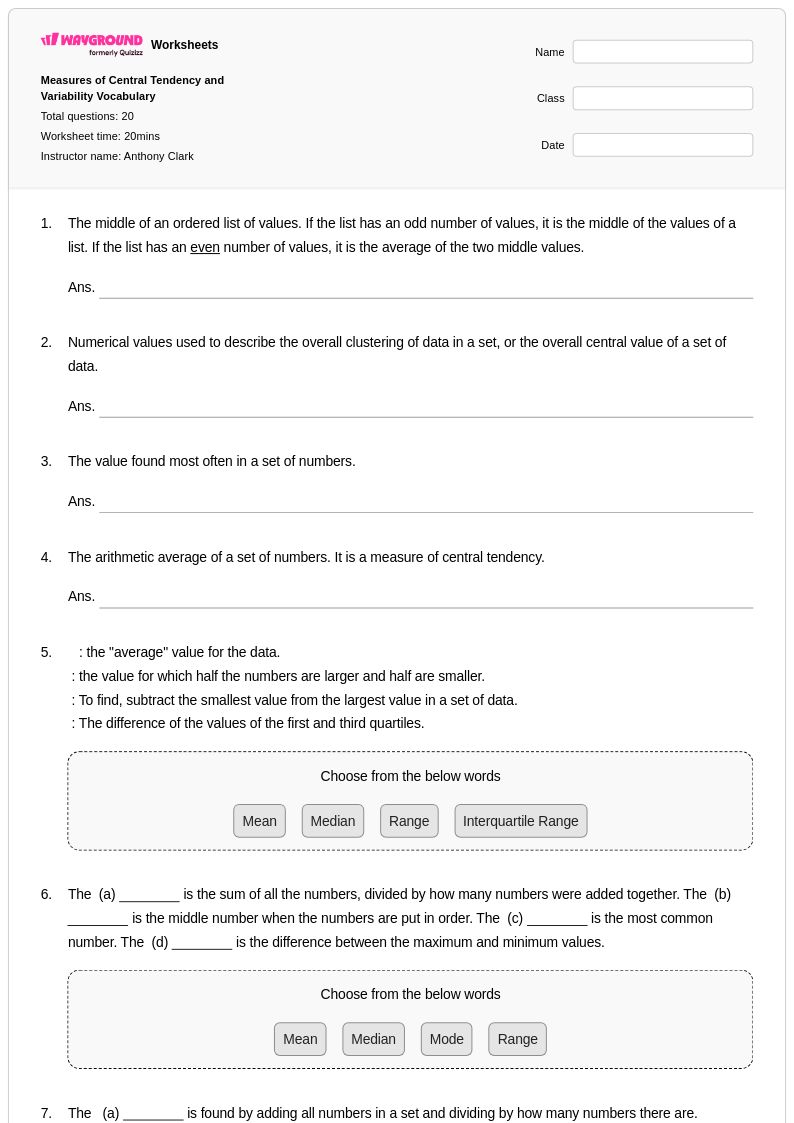
20 Q
7th - Uni
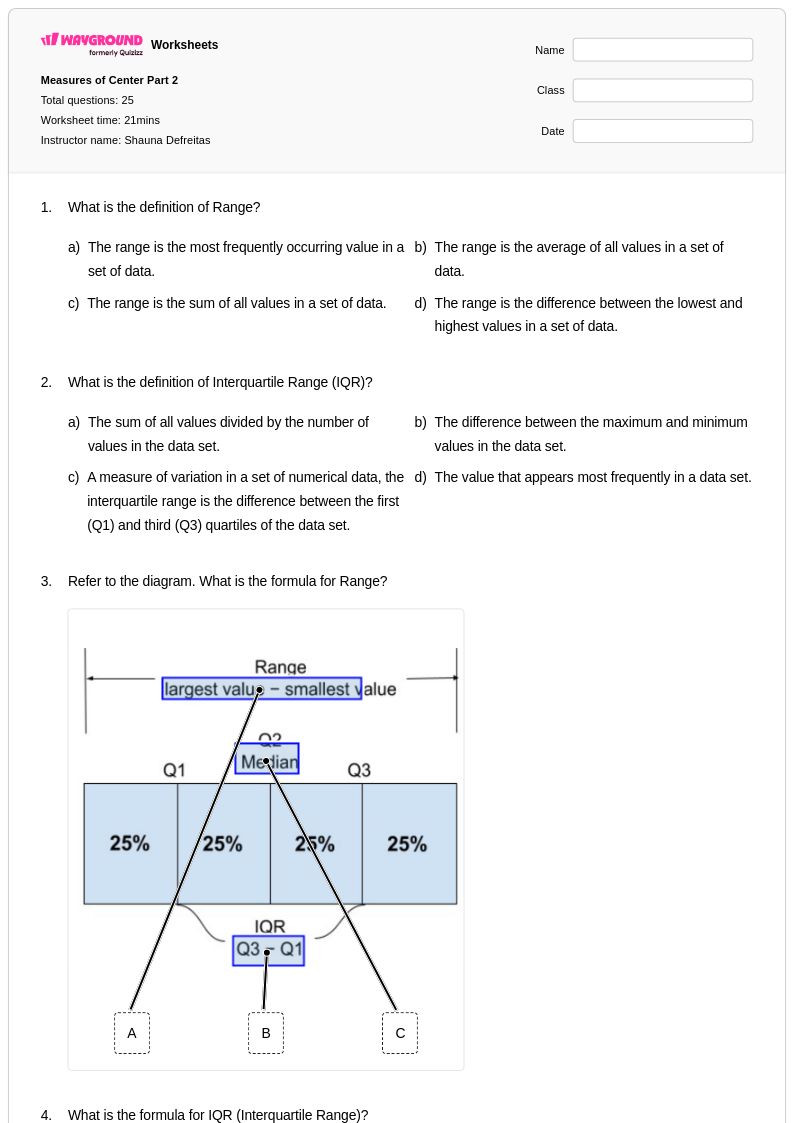
25 Q
9th
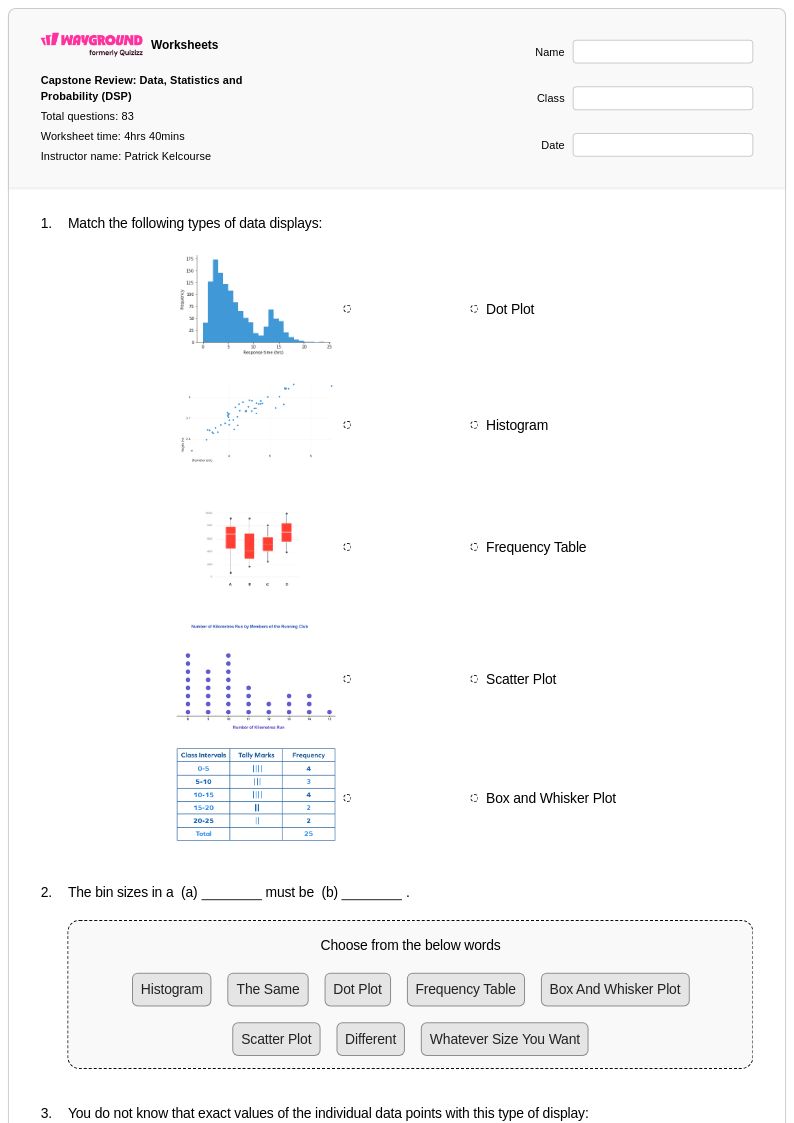
83 Q
9th
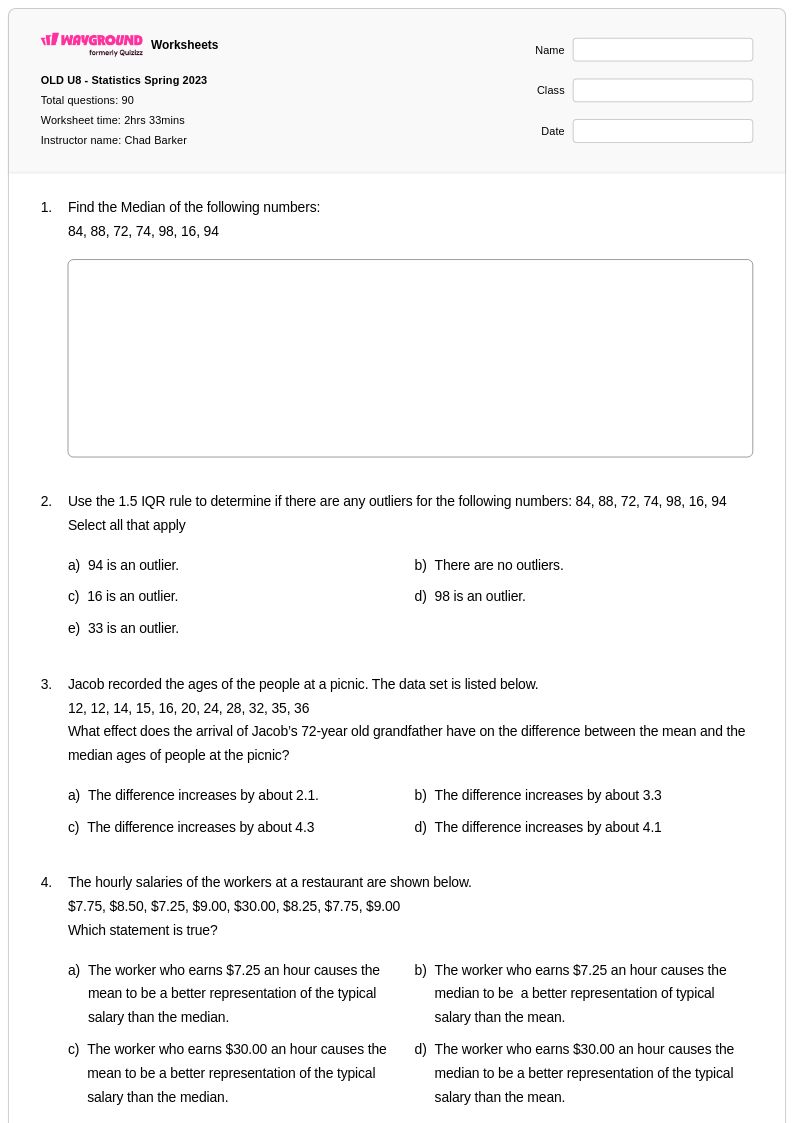
90 Q
9th
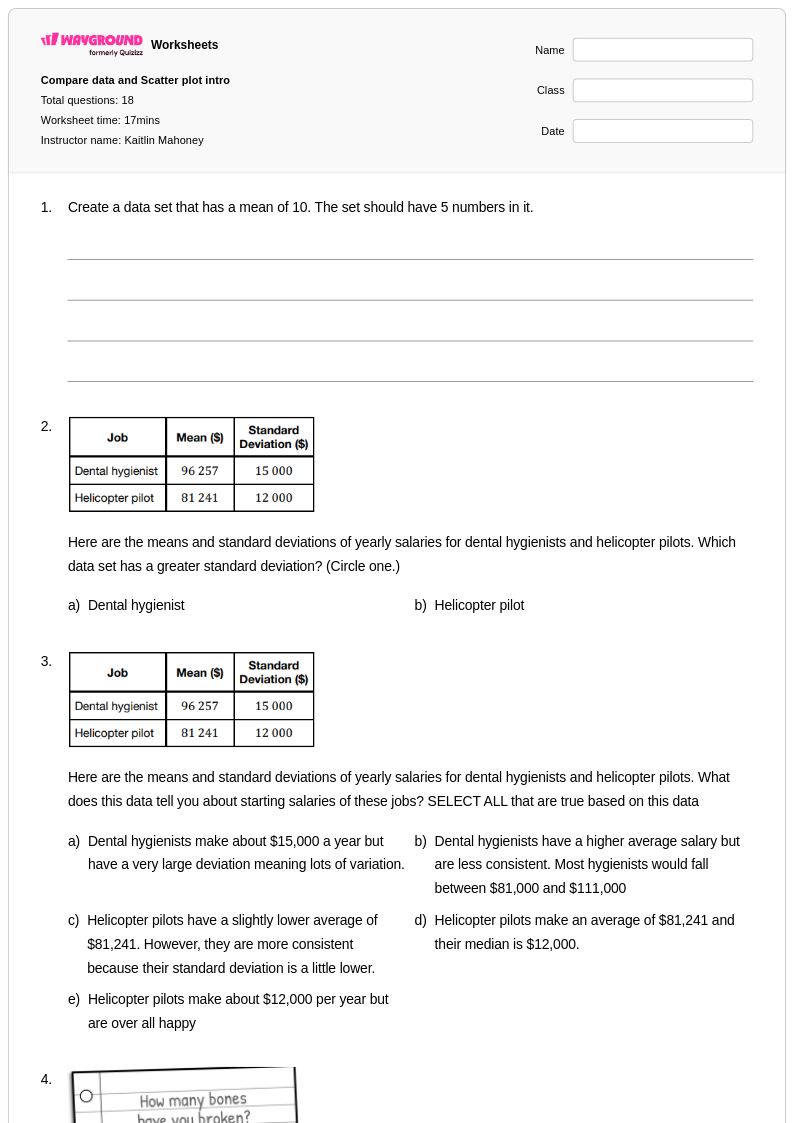
18 Q
9th - 12th
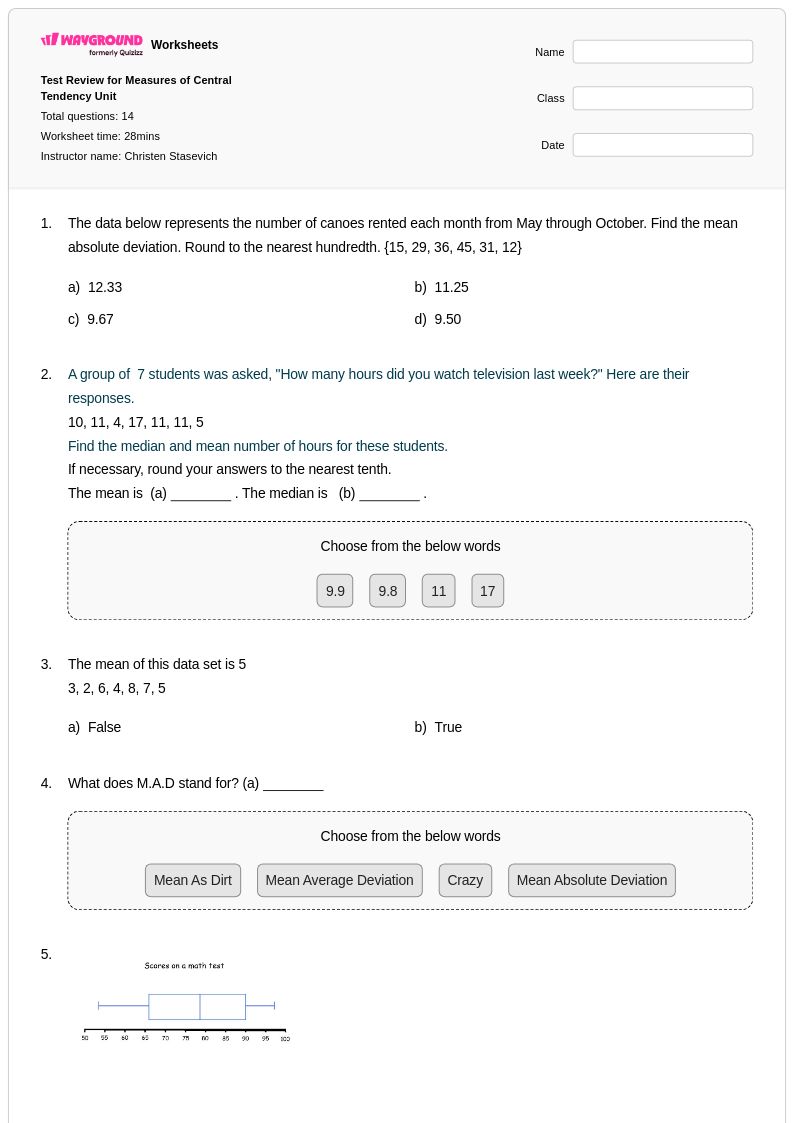
14 Q
9th
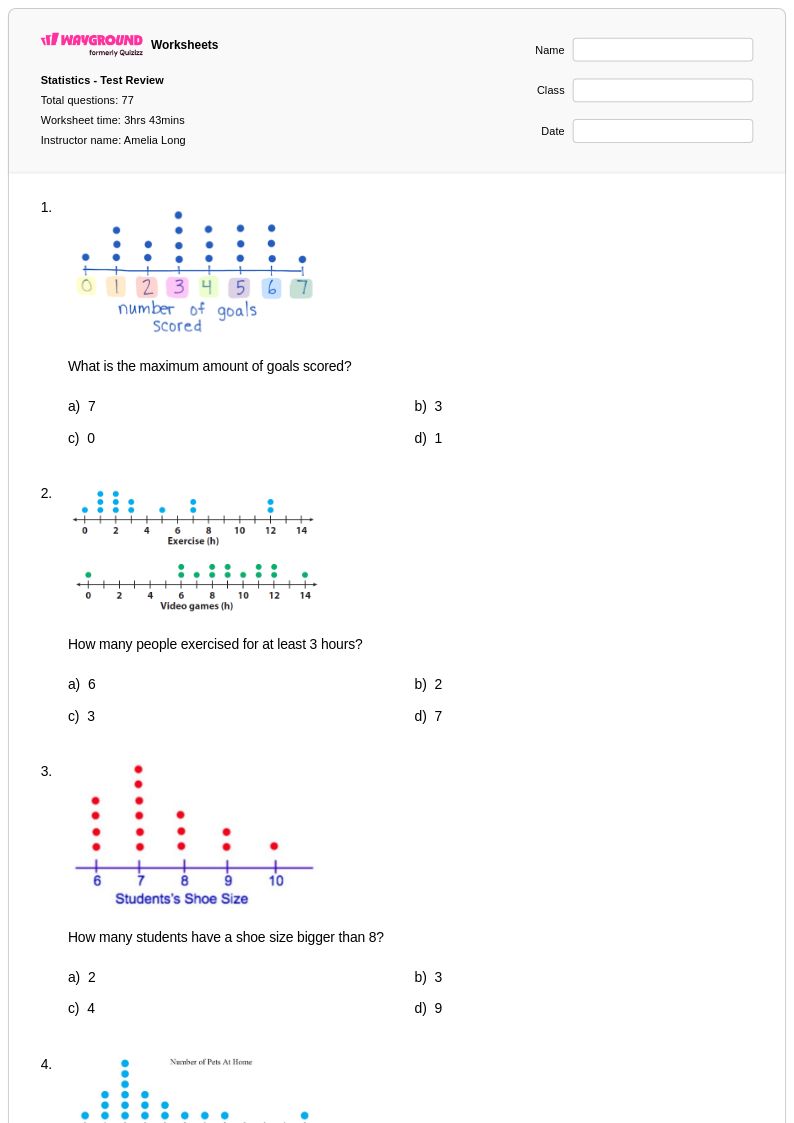
77 Q
9th
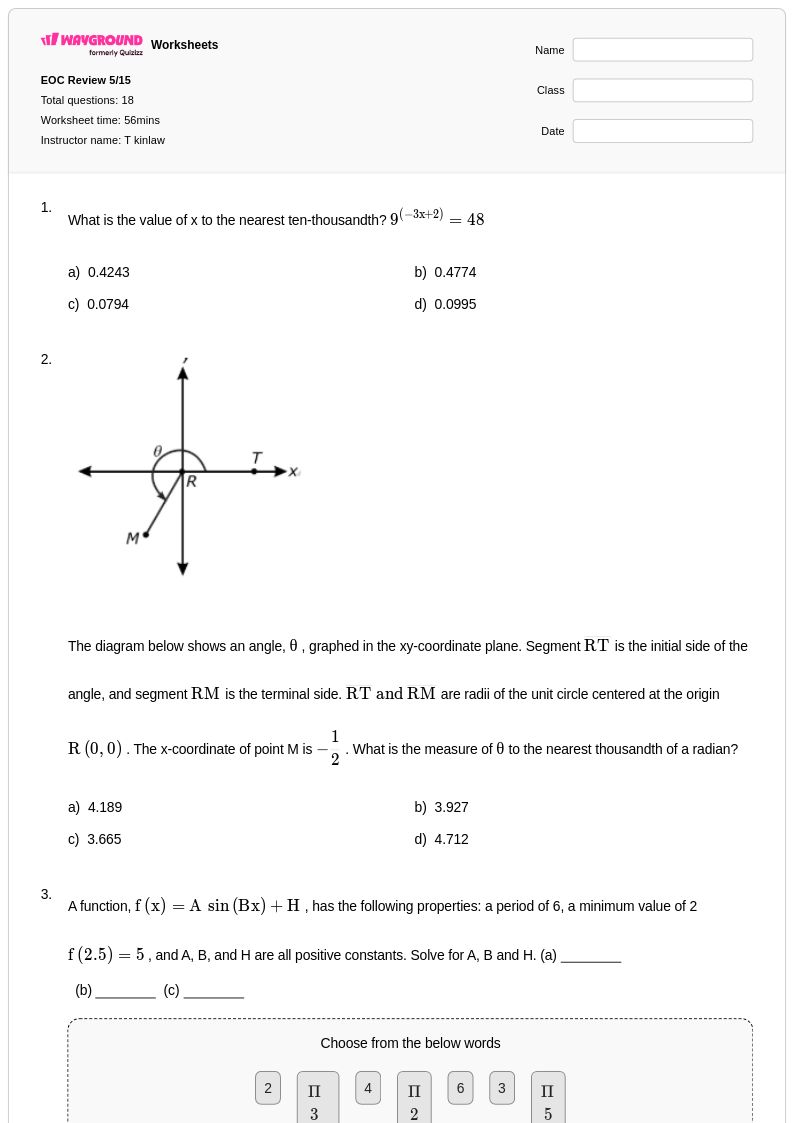
18 Q
9th - 12th
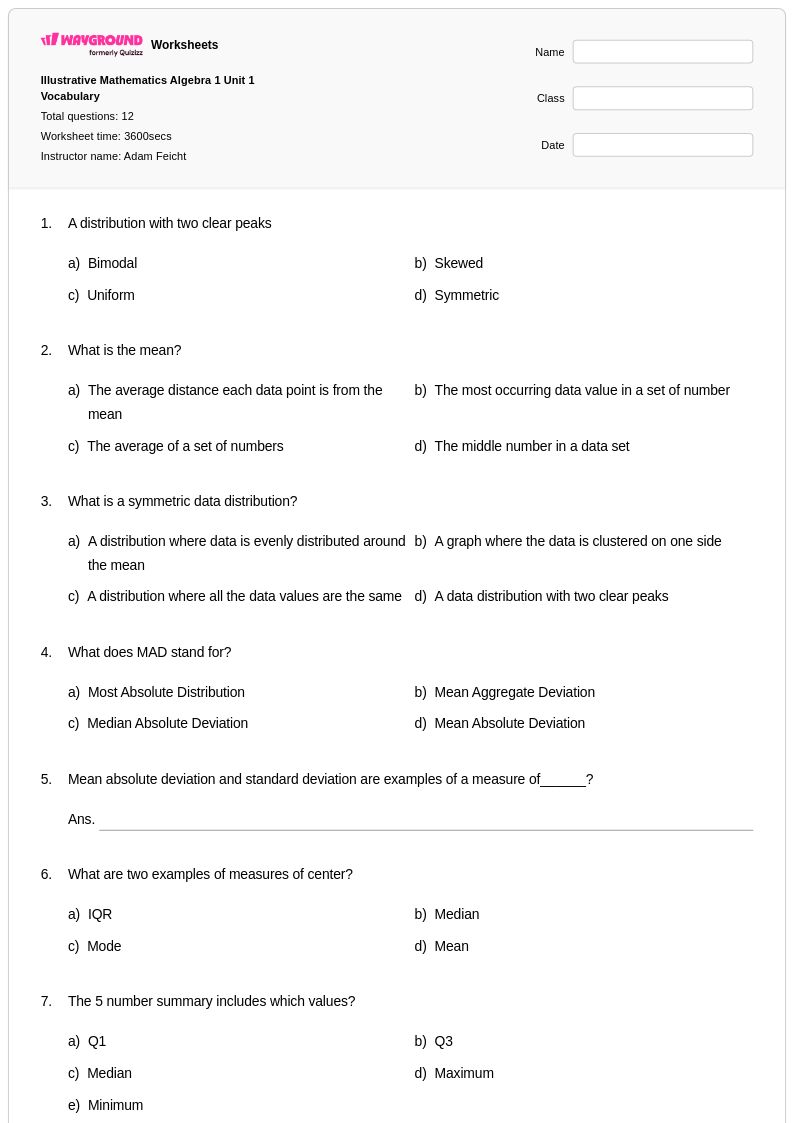
12 Q
9th
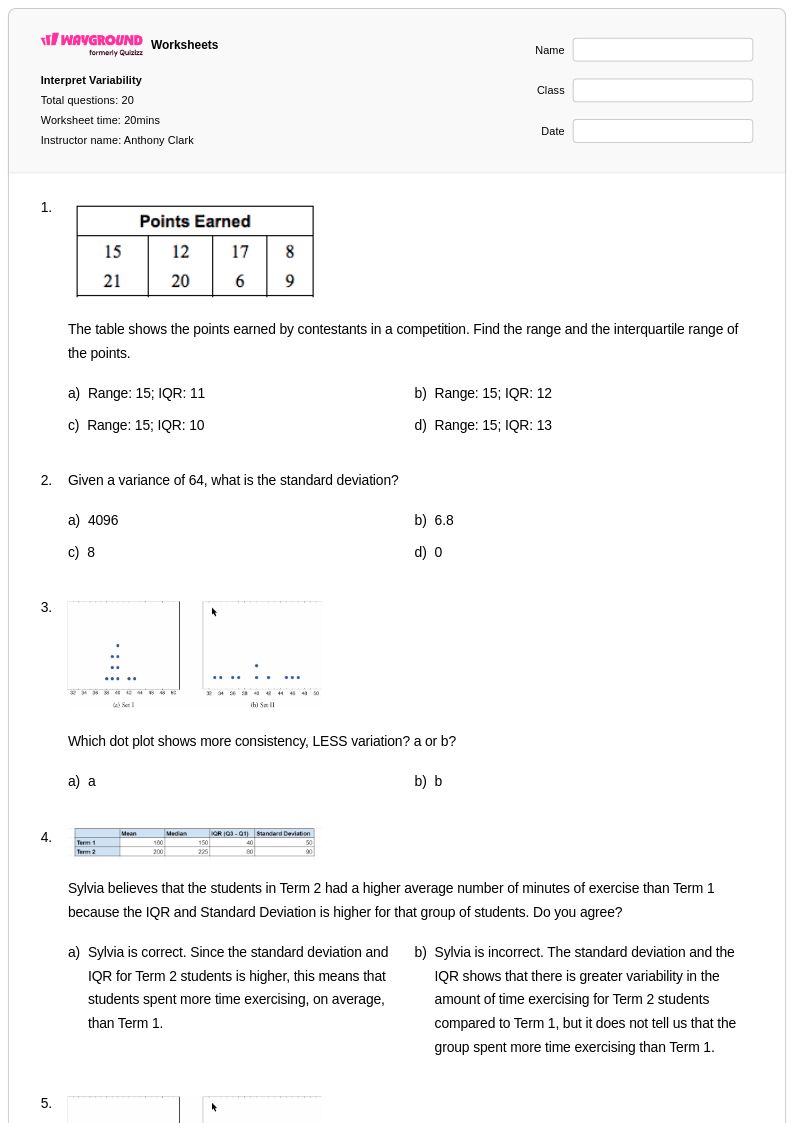
20 Q
7th - Uni
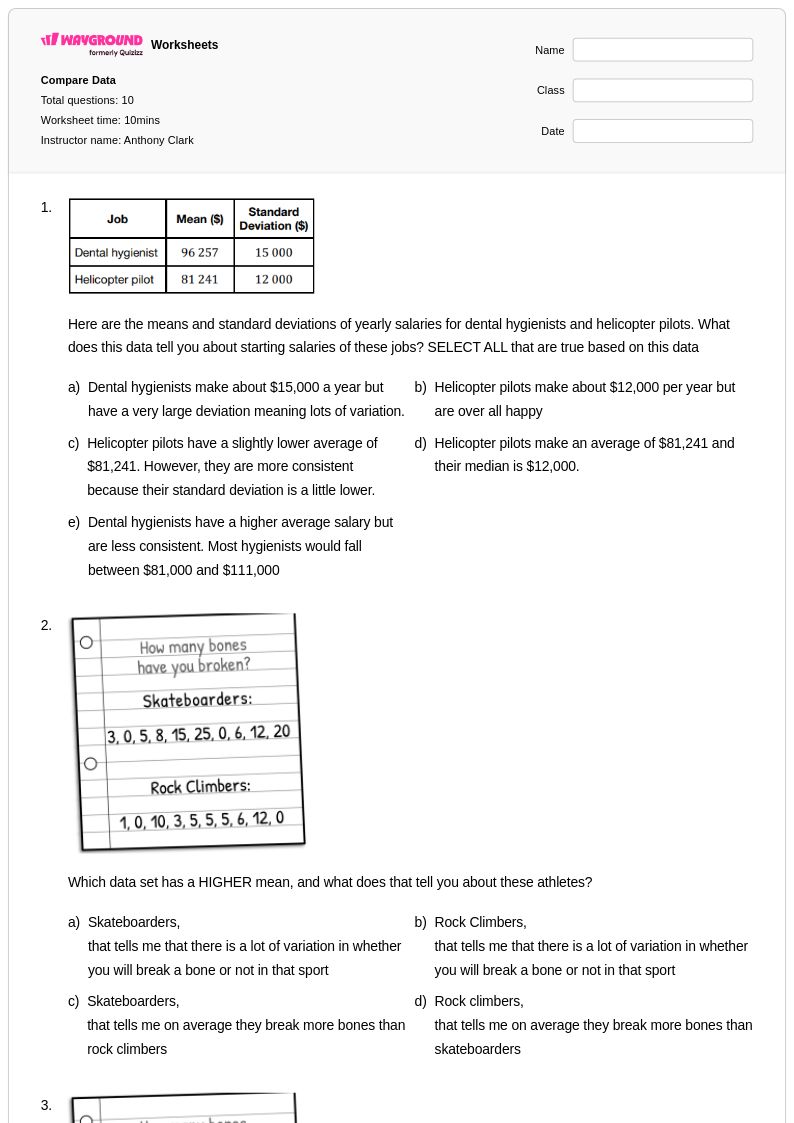
10 Q
7th - Uni
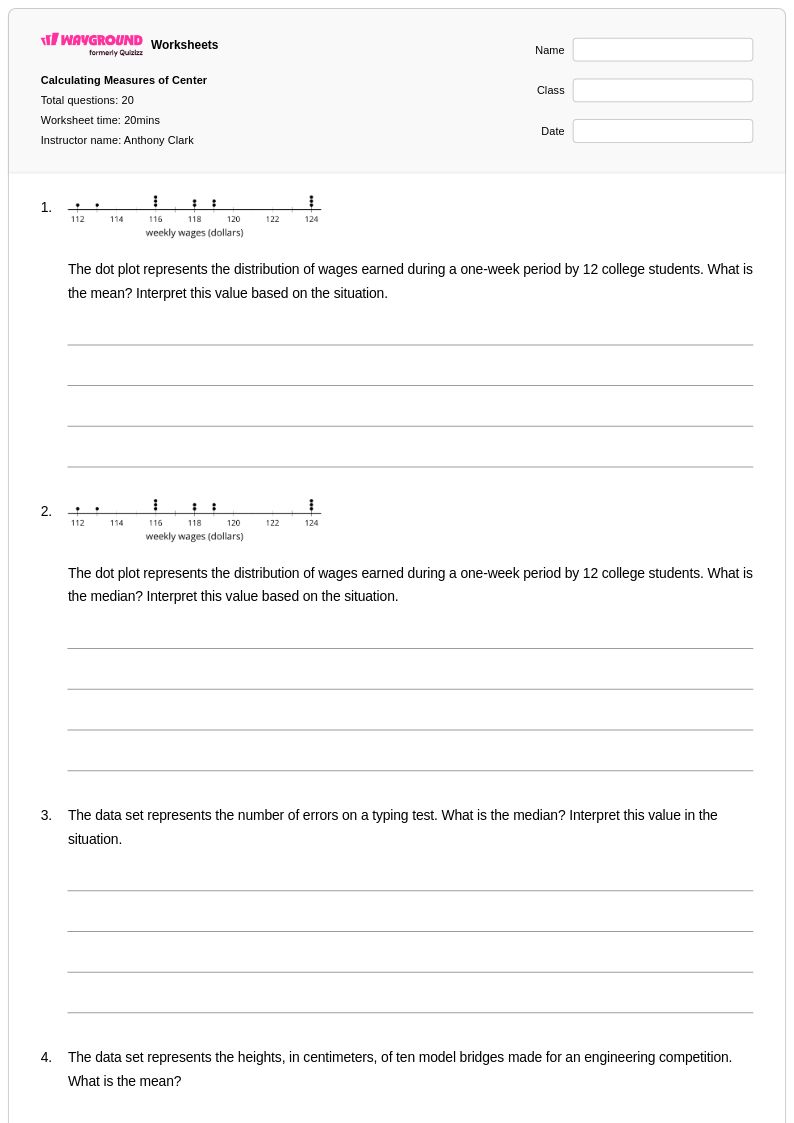
20 Q
6th - Uni
41 Q
9th - 12th
15 Q
9th - 12th
17 Q
9th - 12th
23 Q
9th - 12th
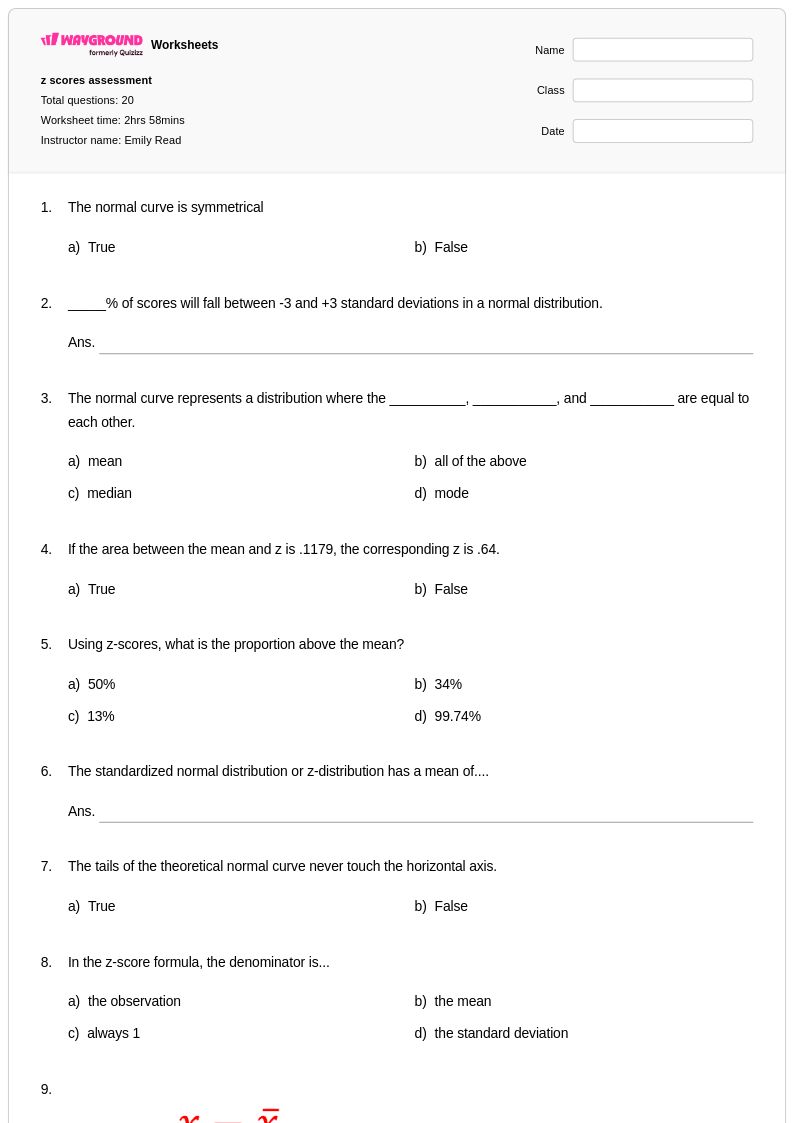
20 Q
9th - 12th
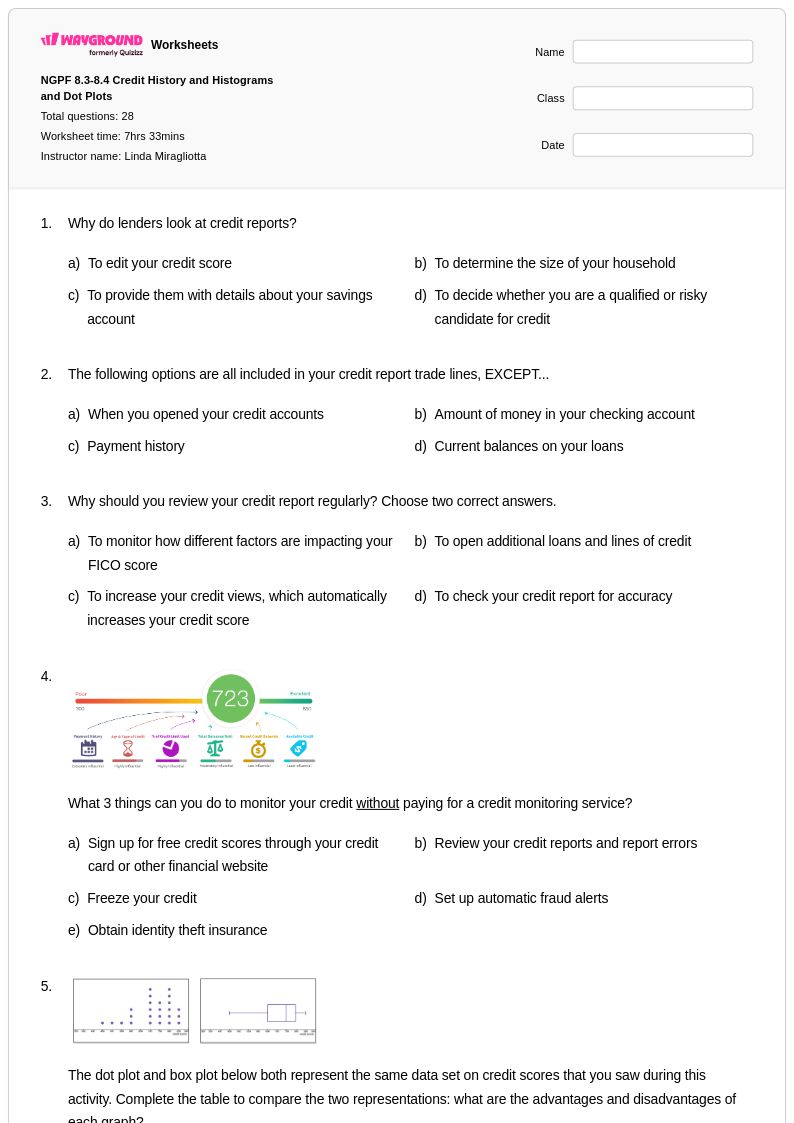
28 Q
9th - 12th
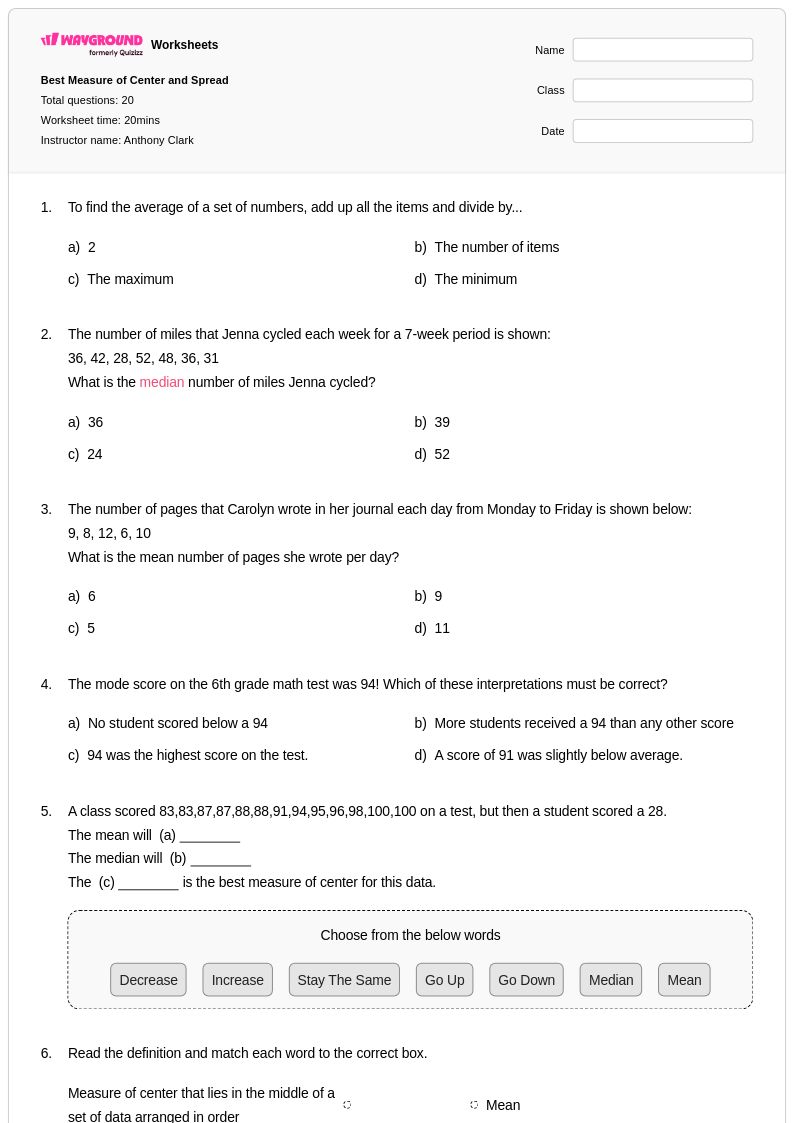
20 Q
6th - Uni
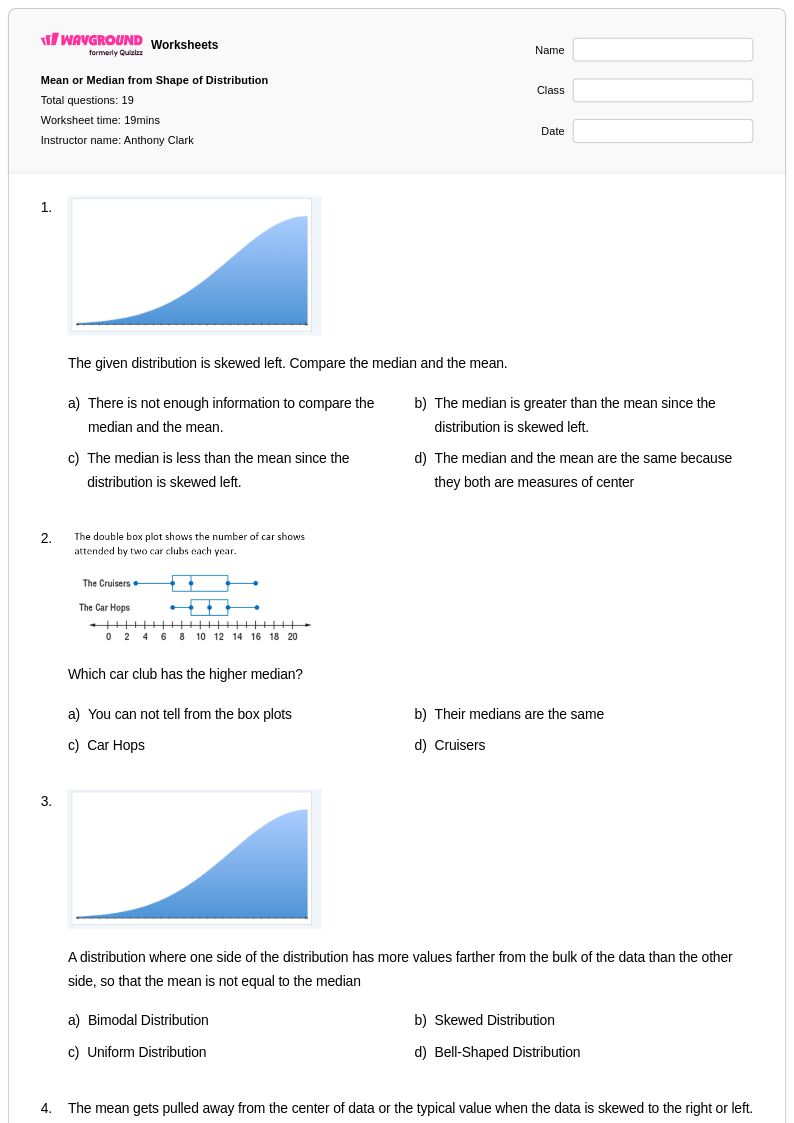
19 Q
9th - Uni
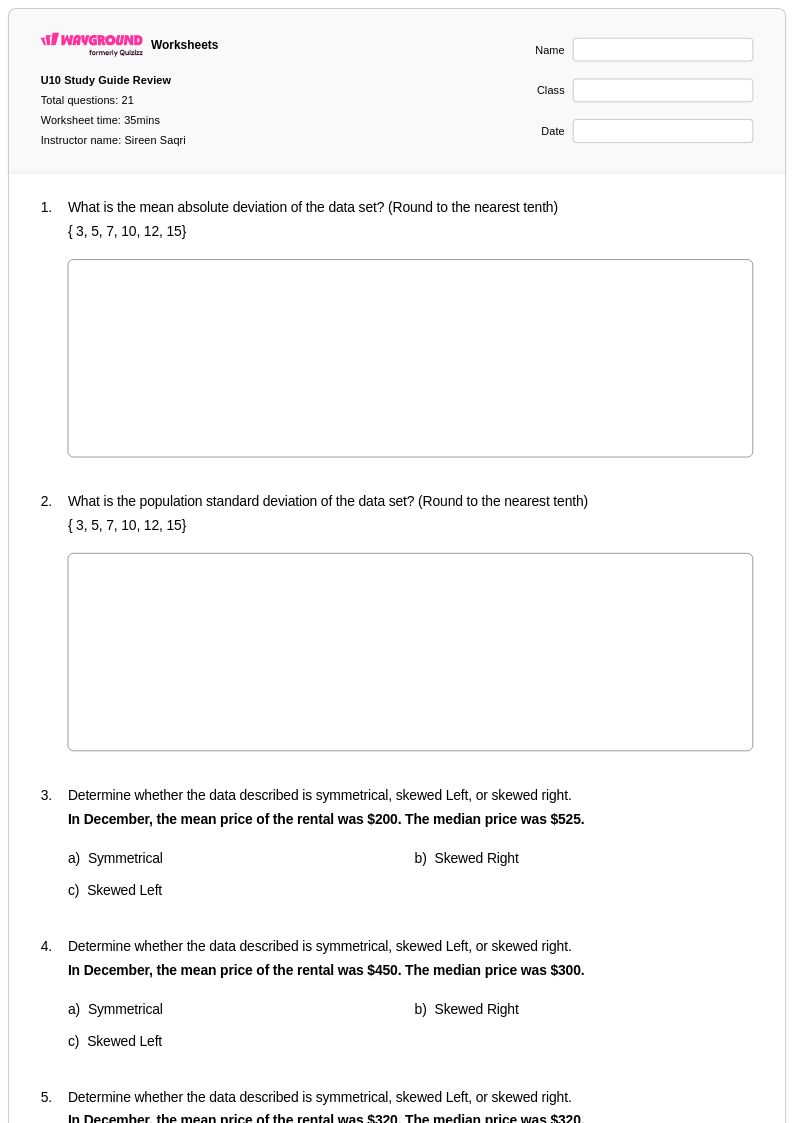
21 Q
9th
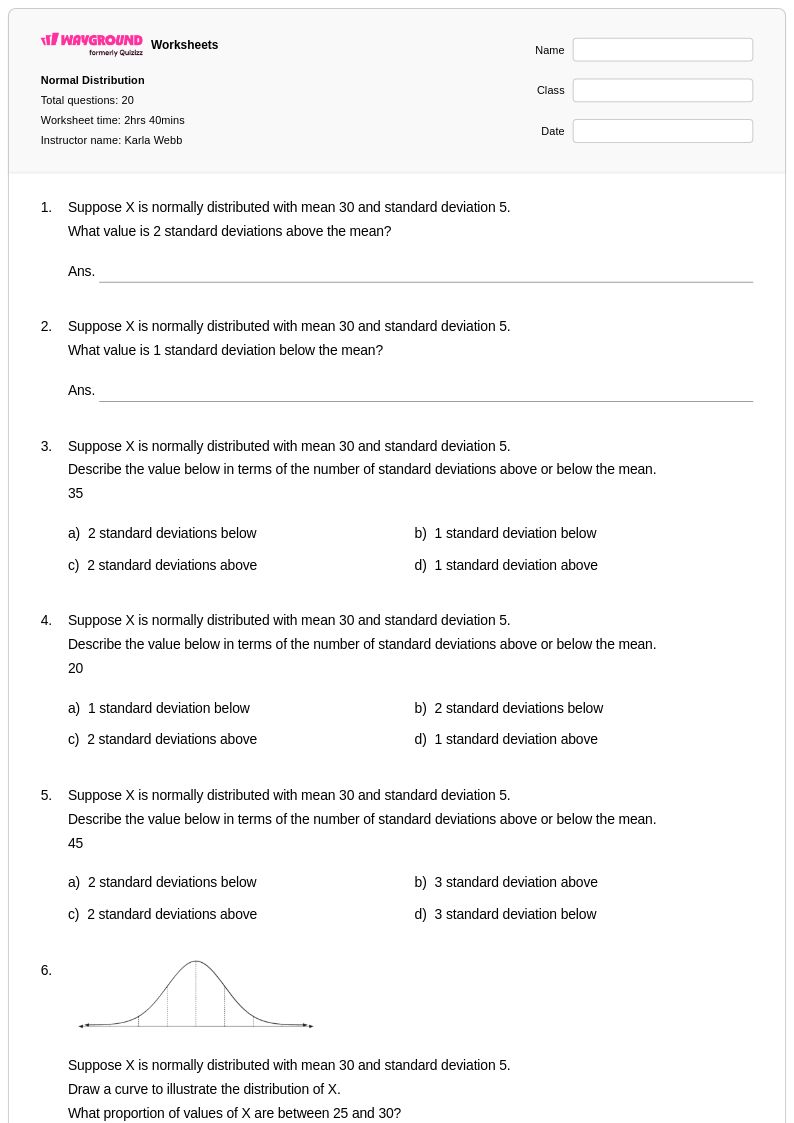
20 Q
9th - 12th
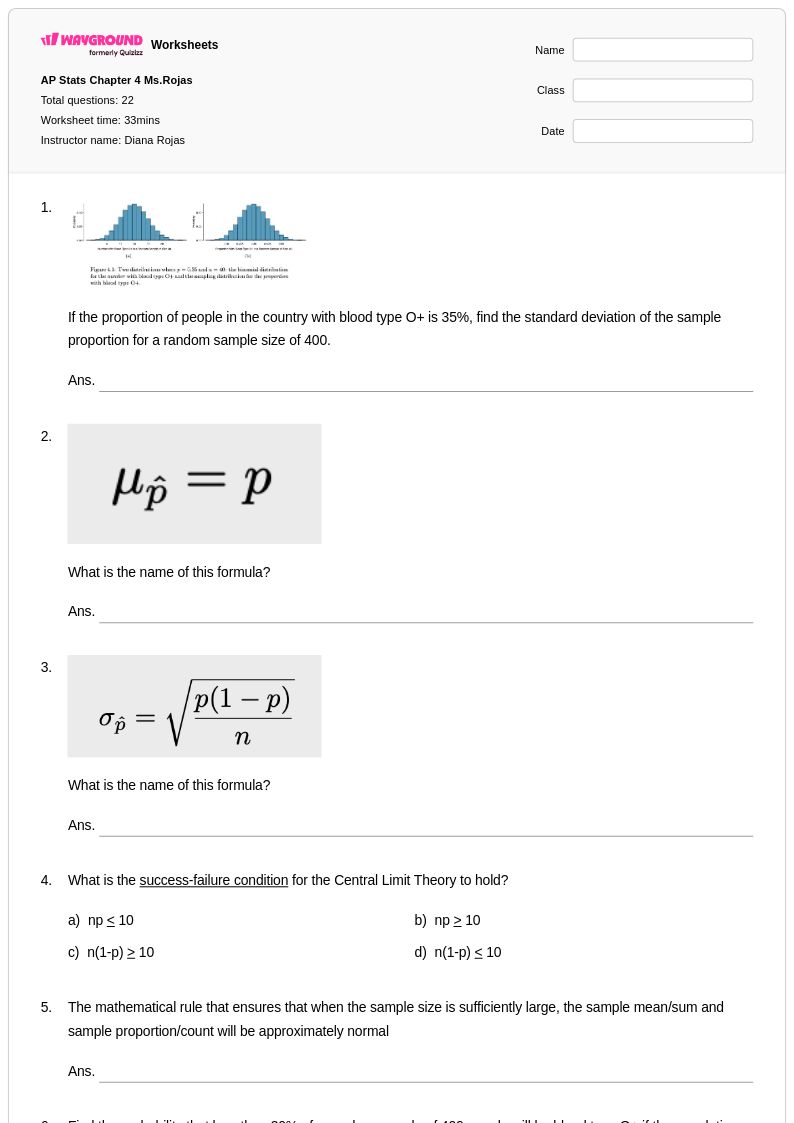
22 Q
9th - Uni
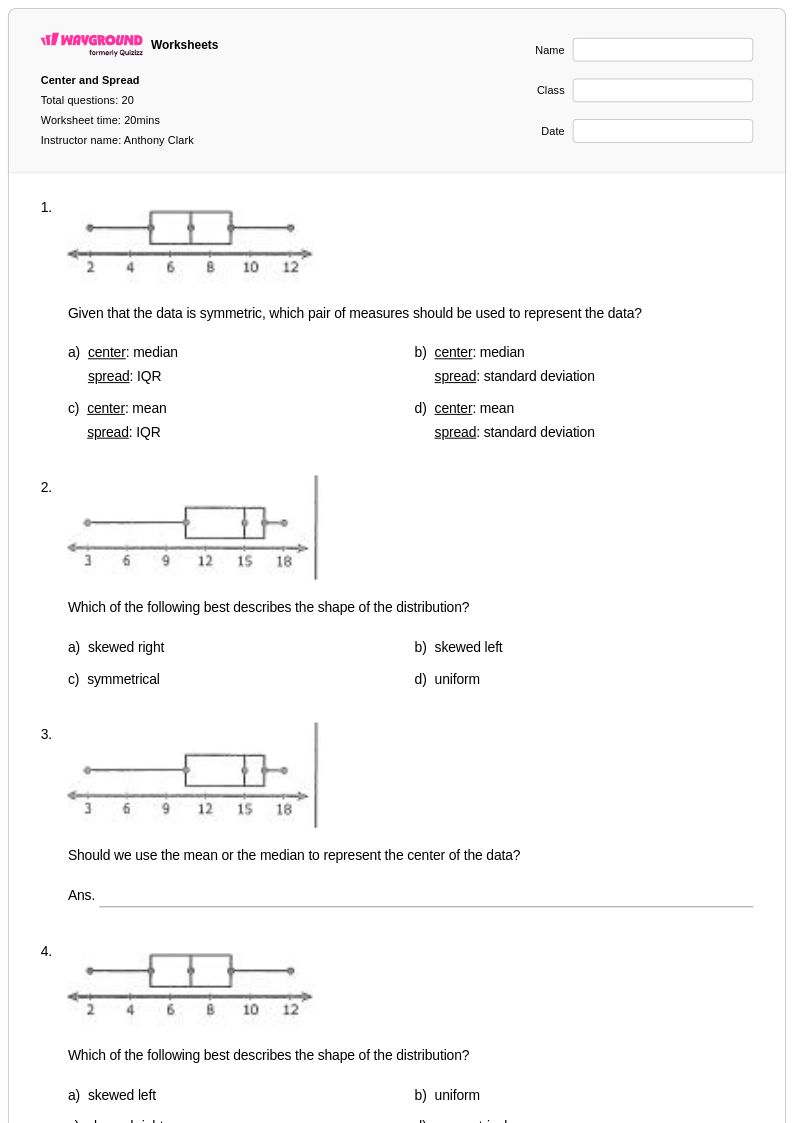
20 Q
9th - Uni
Explore Other Subject Worksheets for grade 9
Explore printable Mean Average Deviation worksheets for Grade 9
Mean Average Deviation worksheets for Grade 9 students available through Wayground (formerly Quizizz) provide comprehensive practice in calculating and interpreting this essential measure of statistical dispersion. These expertly designed worksheets guide students through the systematic process of finding the mean absolute deviation by calculating the average distance of data points from the mean, strengthening their understanding of how data spreads around central tendencies. The collection includes free printables with detailed answer keys that walk students through each calculation step, from finding the mean to determining absolute deviations and computing the final average. These practice problems range from basic datasets with whole numbers to more complex scenarios involving decimal values and real-world applications, ensuring students develop both computational fluency and conceptual understanding of variability in statistical analysis.
Wayground (formerly Quizizz) supports mathematics educators with millions of teacher-created Mean Average Deviation resources that streamline instruction and assessment planning for Grade 9 statistics units. The platform's robust search and filtering capabilities allow teachers to quickly locate worksheets aligned with specific curriculum standards and difficulty levels, while differentiation tools enable customization for diverse learning needs within the classroom. Teachers can access these resources in both printable pdf formats for traditional paper-based practice and digital formats for interactive online learning environments. This flexibility proves invaluable for targeted remediation with struggling students, enrichment activities for advanced learners, and systematic skill practice that builds confidence in statistical reasoning, helping educators efficiently address the varying mathematical backgrounds and learning paces typical in ninth-grade probability and statistics courses.
FAQs
What grade do students learn mean average deviation?
What's a good way to introduce mean average deviation to 9th graders?
What kind of practice is best for mastering mean average deviation?
Where do 9th graders get stuck when calculating mean average deviation?
How can I assign this Grade 9 worksheet?
How does this topic connect to the high school math curriculum?