Free Printable Naming Alkynes Worksheets for Grade 10
Grade 10 students can master naming alkynes with Wayground's comprehensive collection of free worksheets, printables, and practice problems that include detailed answer keys and PDF downloads.
Explore printable Naming Alkynes worksheets for Grade 10
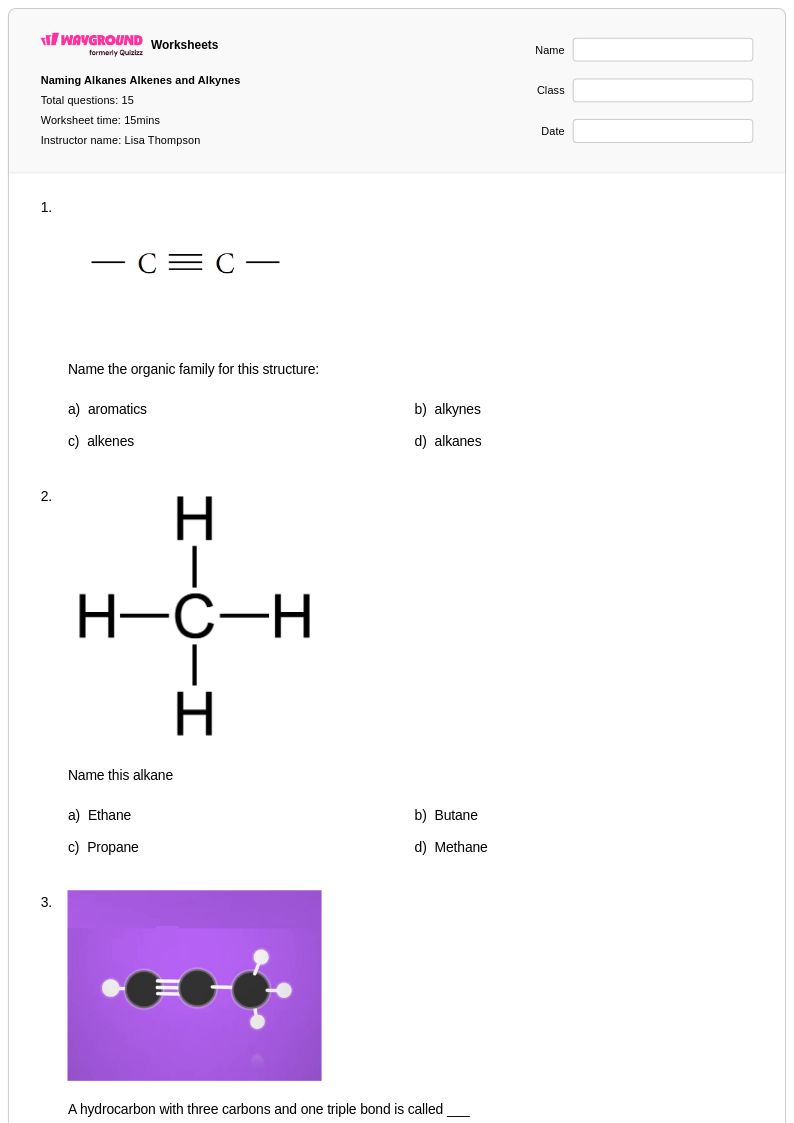
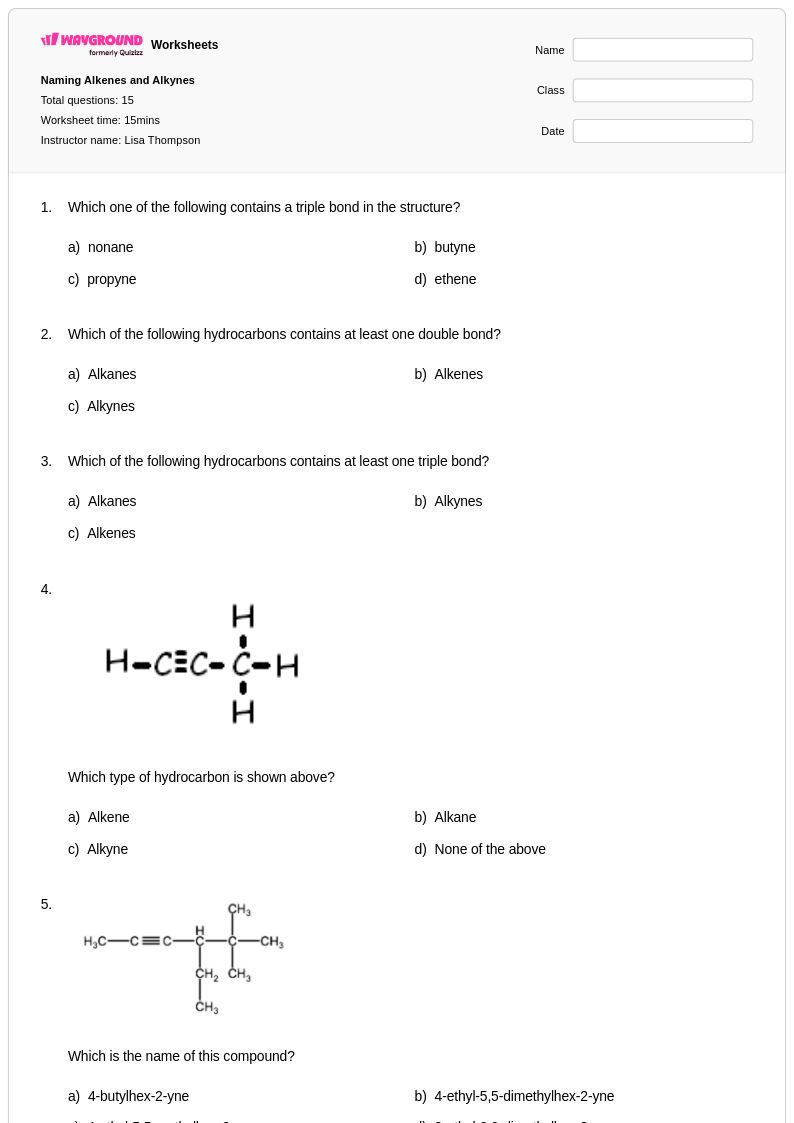
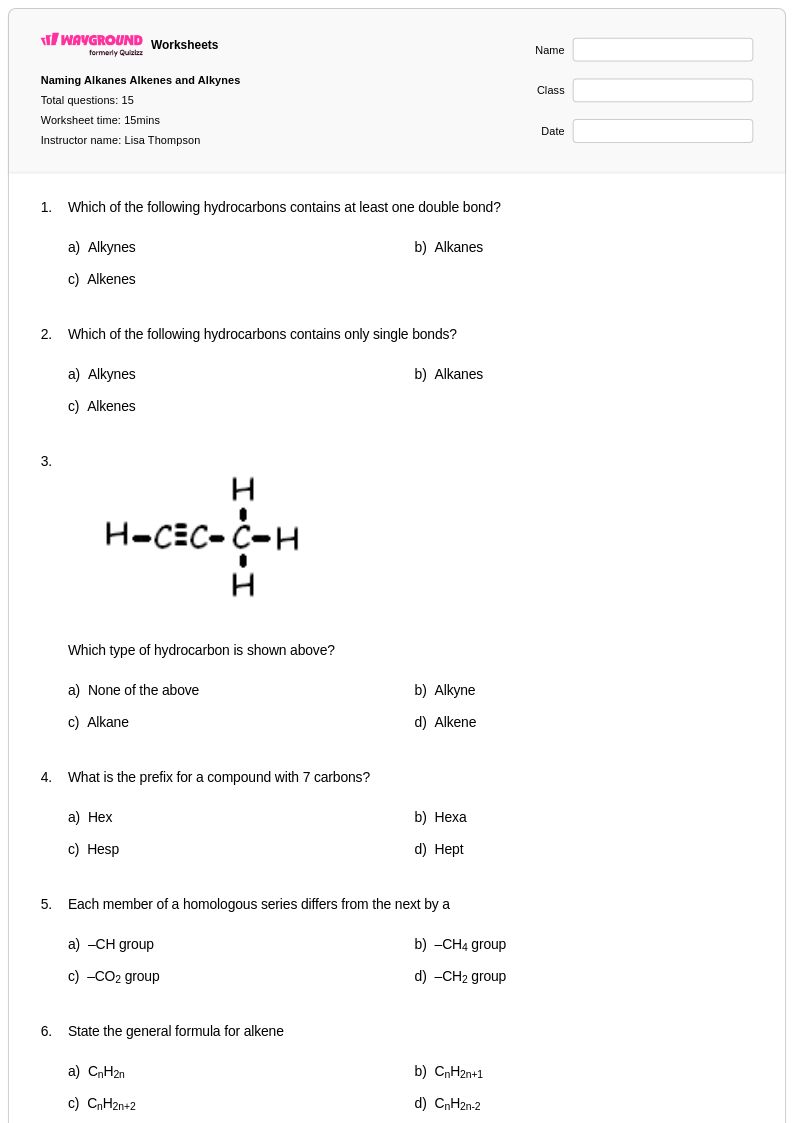
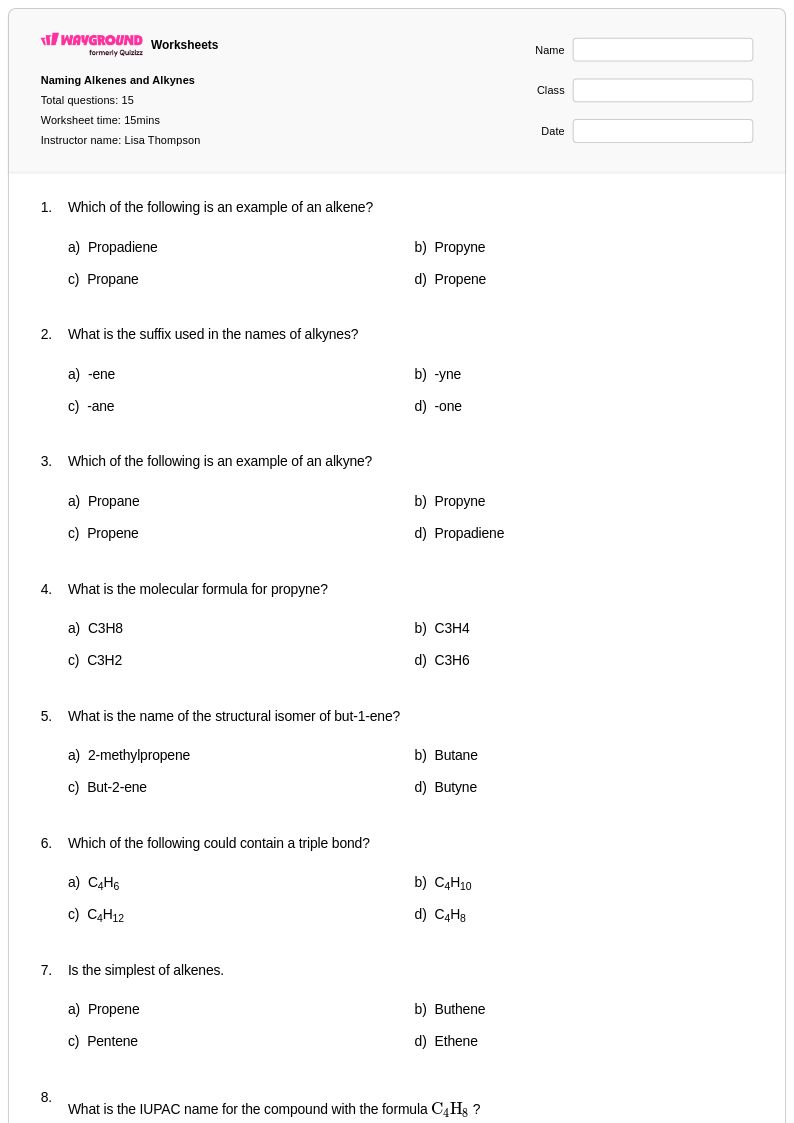
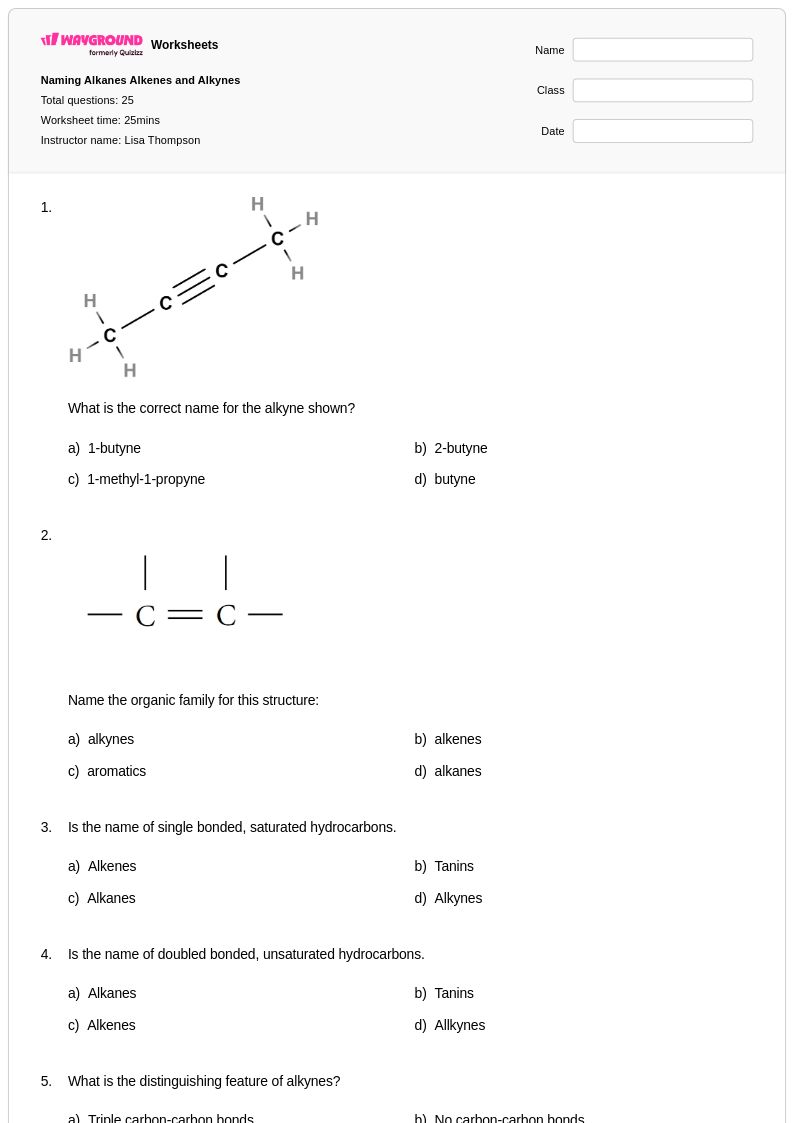
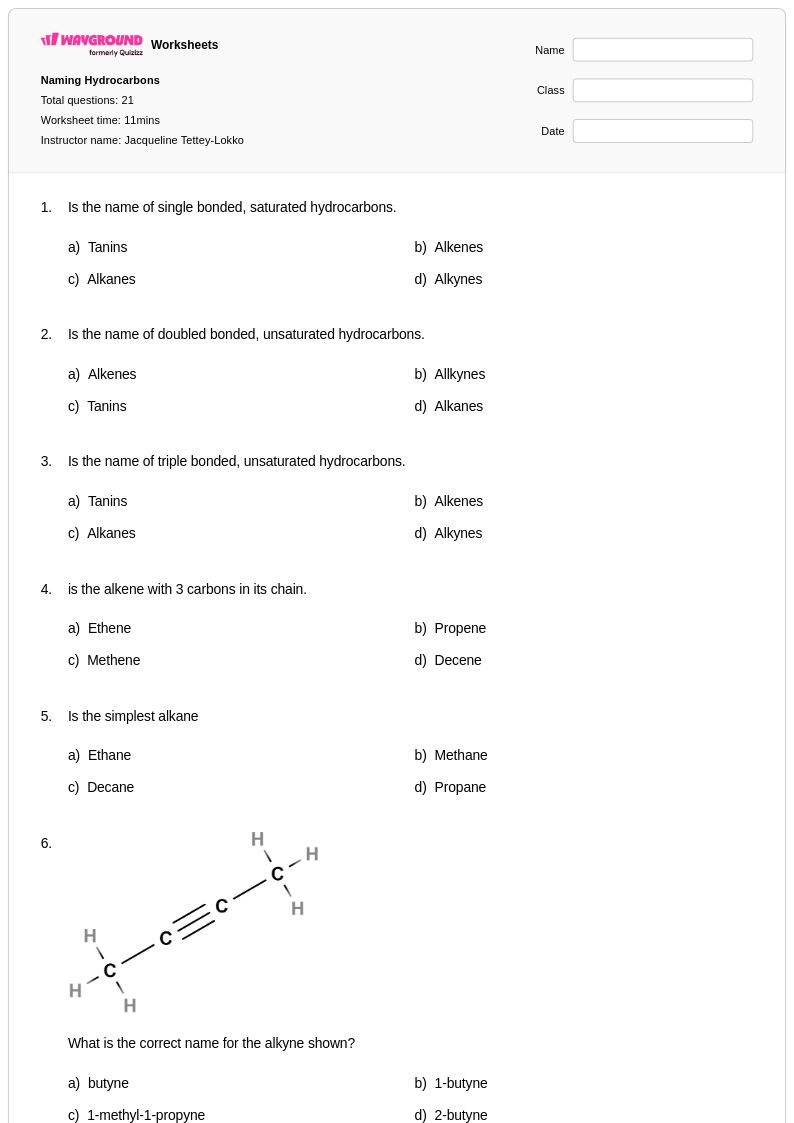
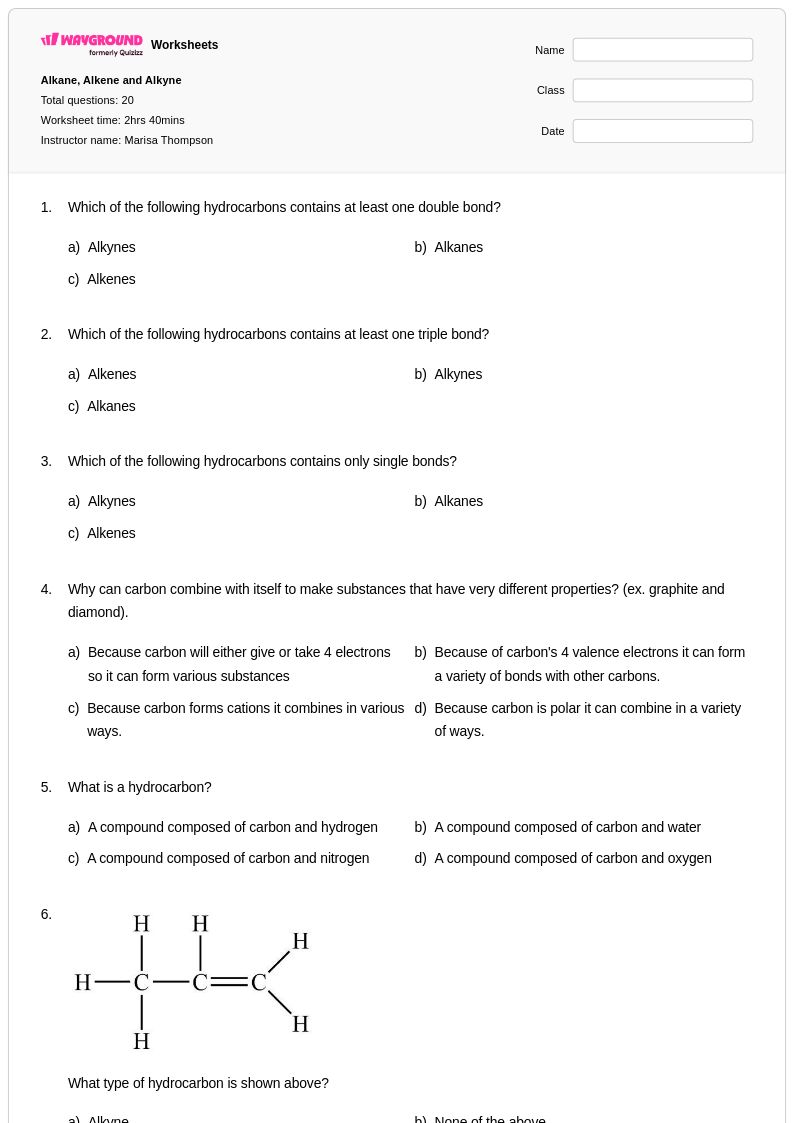
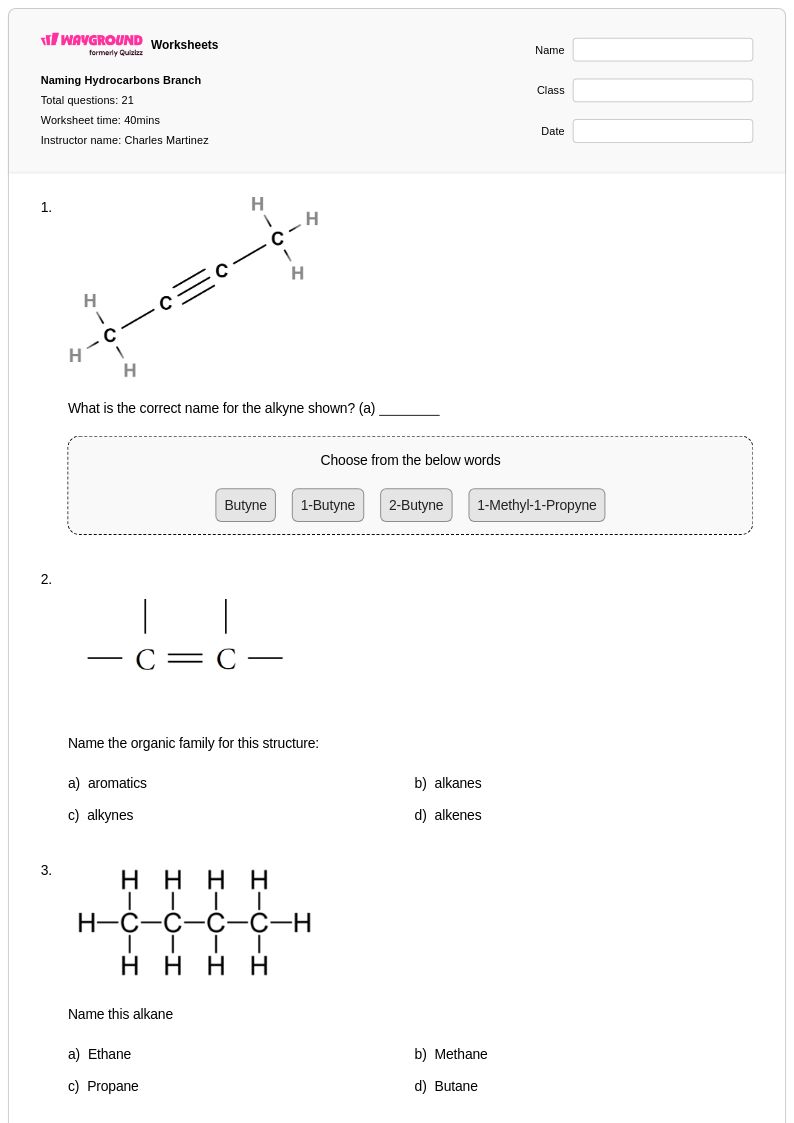
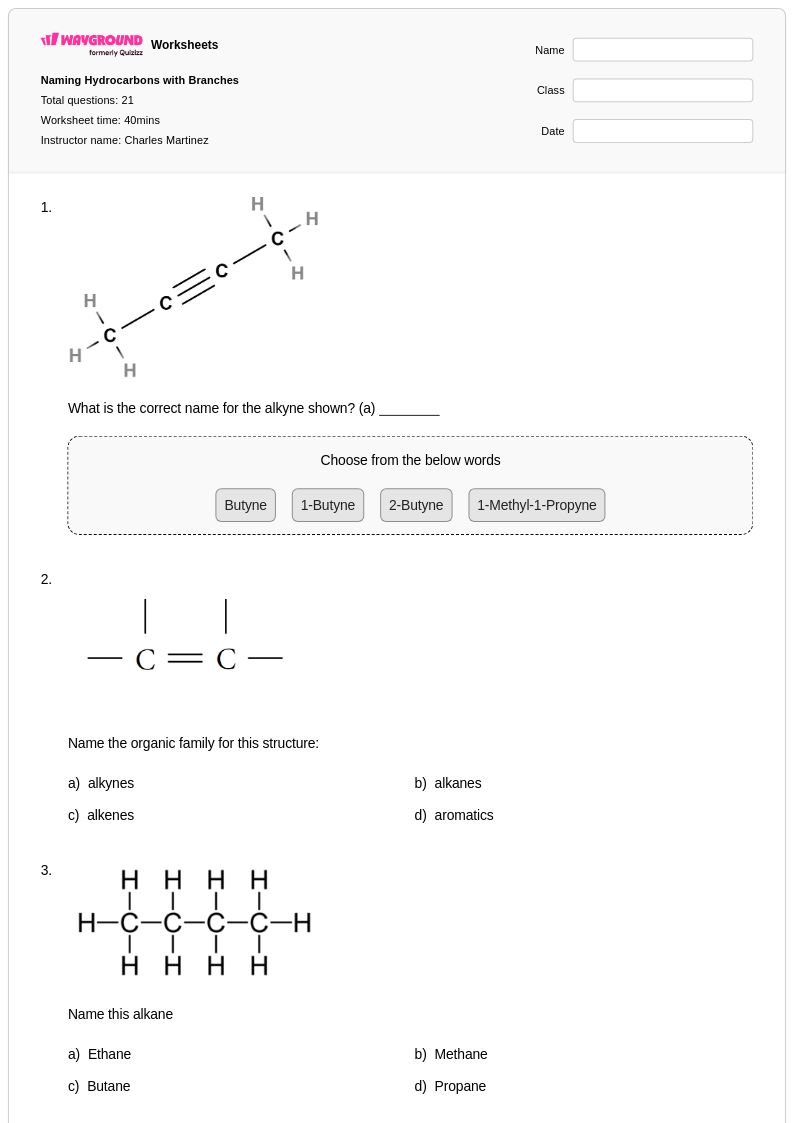
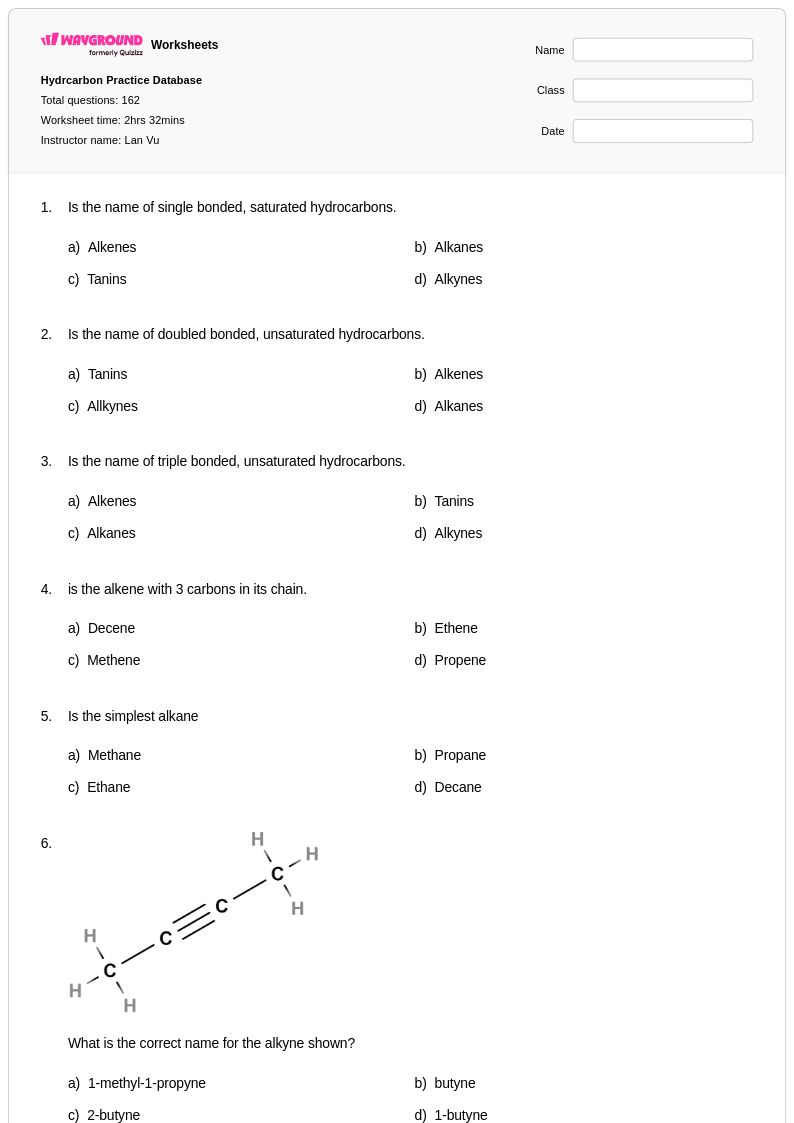
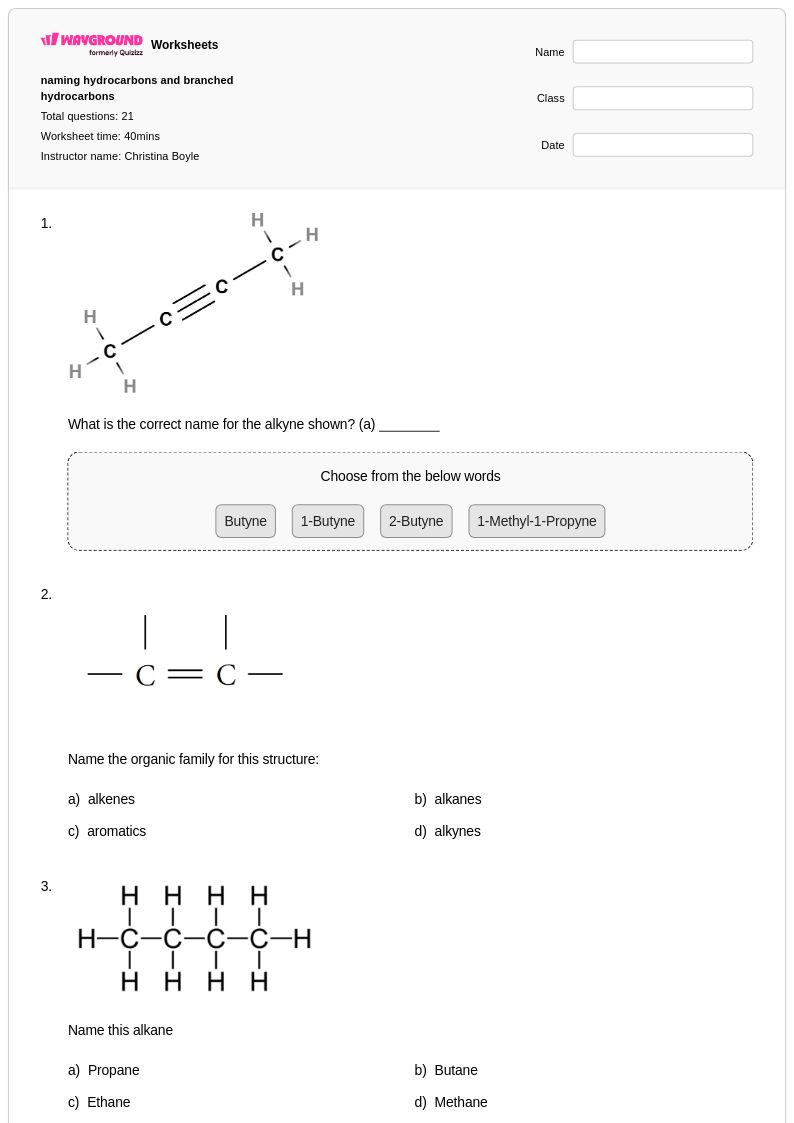
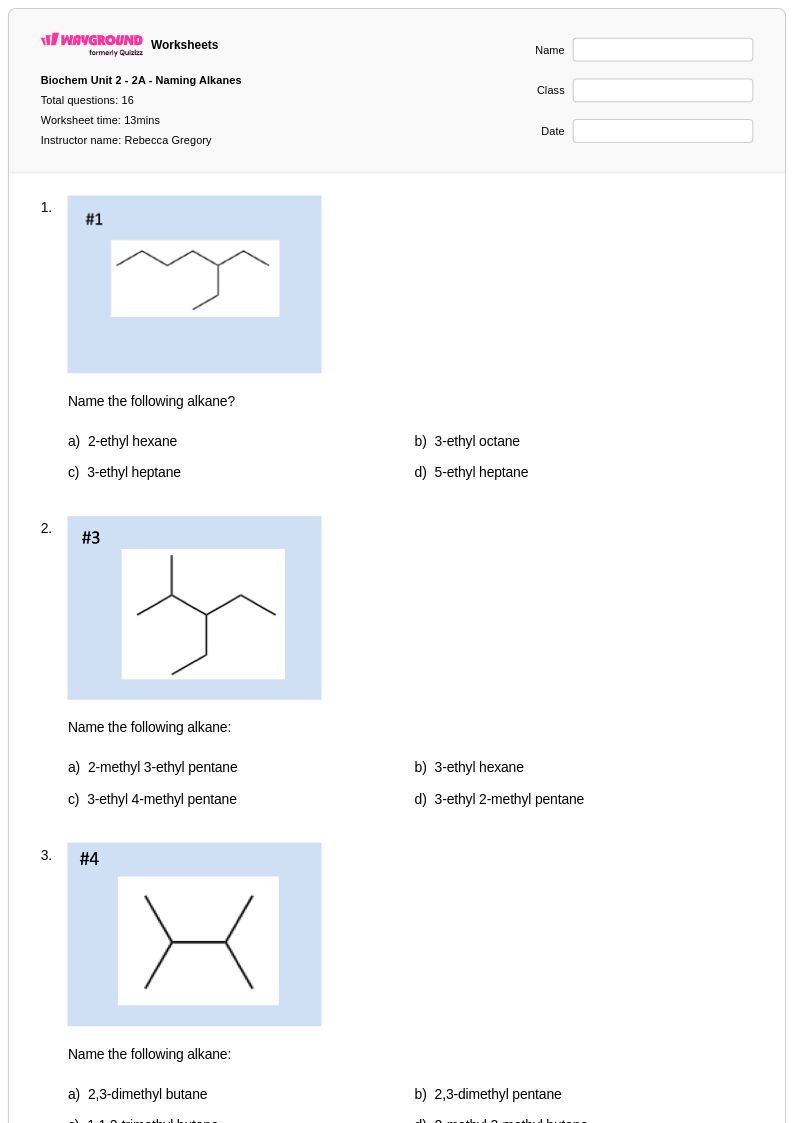
Naming alkynes represents a fundamental skill in Grade 10 organic chemistry that requires students to master systematic nomenclature rules for these triple-bonded hydrocarbons. Wayground's comprehensive collection of naming alkynes worksheets provides students with extensive practice problems that reinforce IUPAC naming conventions, including identifying the longest carbon chain containing the triple bond, numbering from the end that gives the alkyne the lowest possible number, and incorporating substituent groups with proper prefixes and suffixes. These printable resources feature structured exercises that progress from simple terminal alkynes to complex branched structures, complete with detailed answer keys that allow students to verify their understanding and identify areas requiring additional focus. The free pdf worksheets emphasize pattern recognition and systematic thinking, helping students develop confidence in applying nomenclature rules consistently across various molecular structures.
Wayground's platform supports chemistry educators with millions of teacher-created resources specifically designed for organic chemistry instruction, including comprehensive worksheet collections that address naming alkynes at the Grade 10 level. Teachers benefit from robust search and filtering capabilities that enable them to locate worksheets aligned with specific curriculum standards and learning objectives, while differentiation tools allow for customization based on individual student needs and skill levels. The platform's flexible format options include both printable pdf versions for traditional classroom use and digital formats for online learning environments, making these resources accessible for various teaching scenarios. These naming alkynes worksheets serve multiple instructional purposes, from initial skill development and guided practice to remediation for struggling students and enrichment activities for advanced learners, providing chemistry teachers with versatile tools that enhance lesson planning and support comprehensive understanding of organic compound nomenclature.
FAQs
How do I teach students to name alkynes using IUPAC rules?
Start by ensuring students can identify the longest carbon chain containing the triple bond, which becomes the parent chain and takes the '-yne' suffix. Teach them to number the chain from the end closest to the triple bond, then apply substituent prefixes using standard IUPAC conventions. A step-by-step approach works best: identify the parent chain, locate the triple bond, number the chain, name and number any branches, and assemble the full name. Reinforcing each step with worked examples before moving to independent practice builds procedural fluency.
What exercises help students practice naming alkynes?
Effective practice exercises include drawing structural formulas from IUPAC names, writing names from given structures, and identifying errors in incorrectly named alkynes. Problems should progress from simple unbranched alkynes like propyne and 1-butyne to branched chains and molecules with multiple functional groups. Worksheets that require students to both name and draw structures reinforce bidirectional understanding, which is particularly important for organic chemistry success.
What mistakes do students commonly make when naming alkynes?
The most common error is numbering the carbon chain from the wrong end, resulting in a higher locant for the triple bond than necessary. Students also frequently forget that the triple bond takes numbering priority over substituents, or they misidentify the longest chain that contains the triple bond. Another frequent mistake is applying the '-ene' suffix instead of '-yne', especially when students have recently practiced naming alkenes. Targeted practice with problems that isolate each of these error patterns helps students correct misconceptions before they become habitual.
How do I differentiate alkyne naming practice for students at different skill levels?
Begin with simple terminal alkynes for students who are new to the topic, then introduce internal alkynes and branched chains as proficiency grows. For struggling students, scaffolded worksheets that break naming into discrete numbered steps reduce cognitive load and build confidence. Wayground supports additional accommodations such as reduced answer choices and read-aloud features, which can be assigned to individual students while the rest of the class works with standard settings.
How do I use Wayground's naming alkynes worksheets in my chemistry class?
Wayground's naming alkynes worksheets are available as printable PDFs for traditional classroom use and in digital formats for technology-integrated environments, giving teachers flexibility for in-class practice, homework, or remediation. Teachers can also host the worksheets as a quiz directly on Wayground, enabling real-time student responses and automated scoring. Each worksheet includes a complete answer key, so students working independently or in small groups can check their reasoning without additional teacher support.
When in an organic chemistry unit should I introduce alkyne naming?
Alkyne naming is typically introduced after students have a solid grasp of alkane and alkene nomenclature, since it builds directly on those conventions and adds the rule that triple bonds take locant priority. Introducing alkynes as the third step in a hydrocarbon naming sequence allows students to recognize the consistent logic of IUPAC rules rather than treating each class of compounds as entirely new material. Most teachers cover alkyne naming mid-unit, before moving on to functional groups that require more complex priority rules.