Free Printable Predator-prey Relationships Worksheets for Grade 5
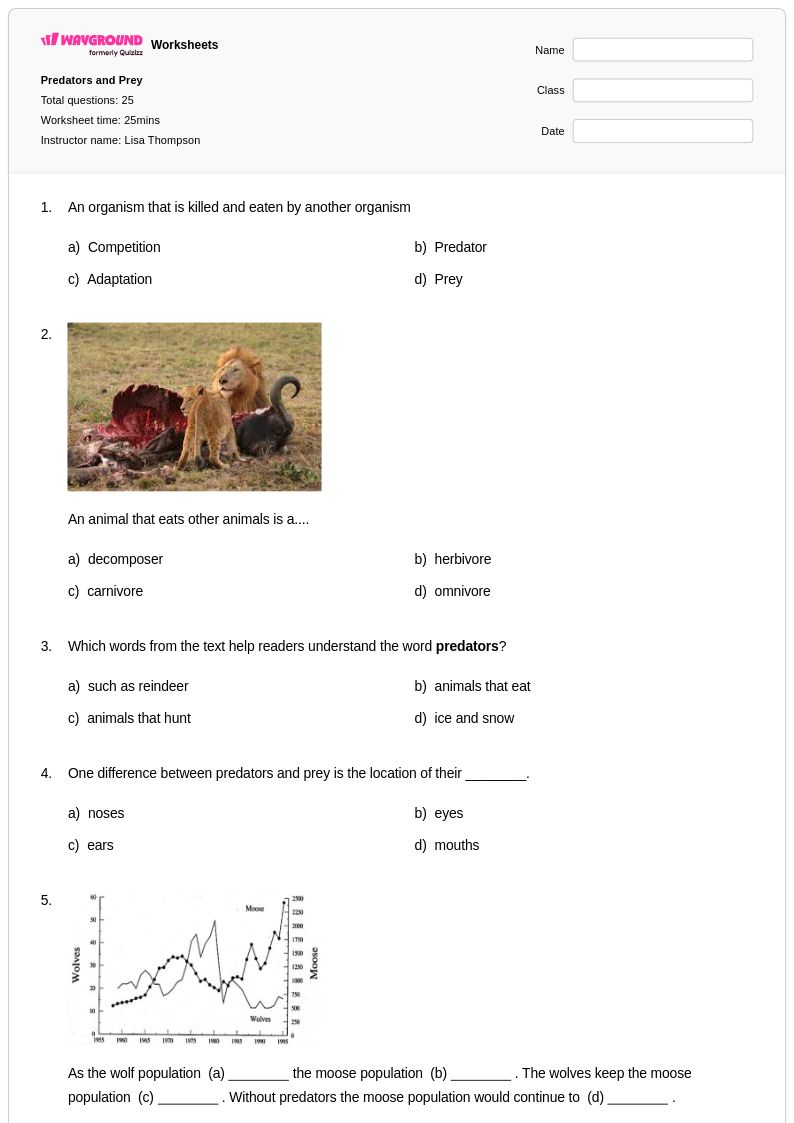
Explore Grade 5 predator-prey relationships with Wayground's free science worksheets and printables that help students understand ecosystem dynamics through engaging practice problems and comprehensive answer keys.
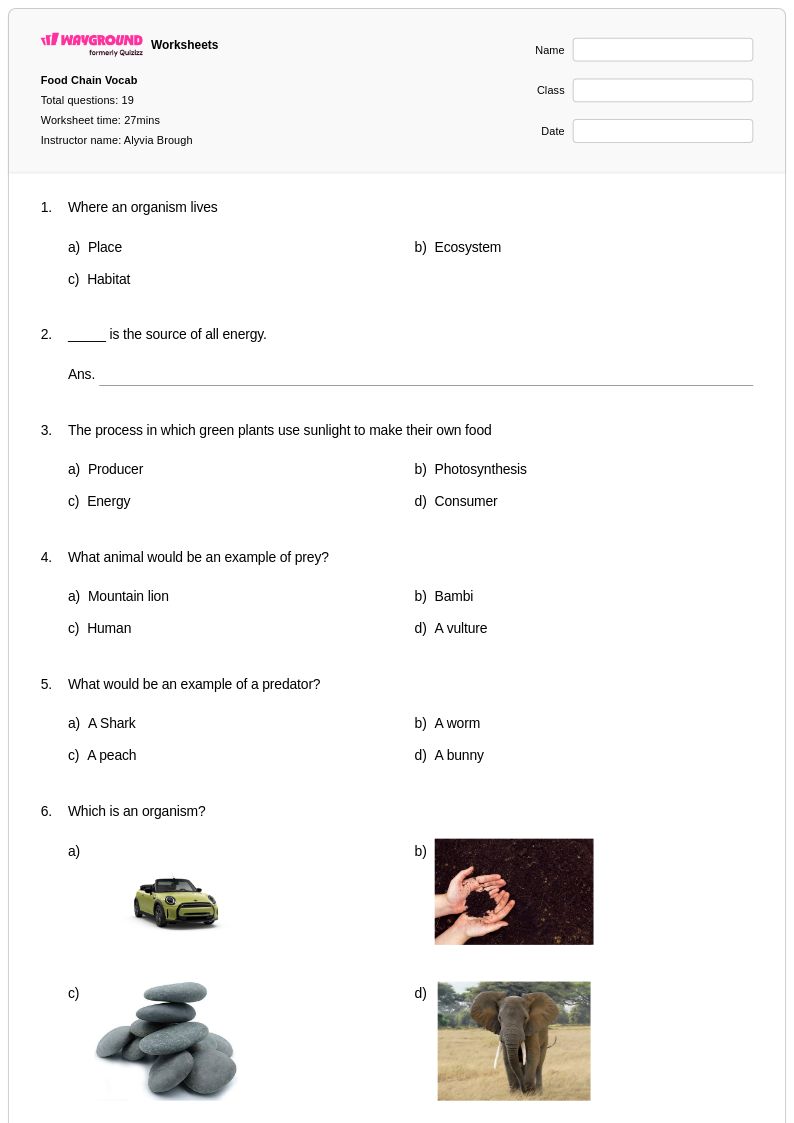
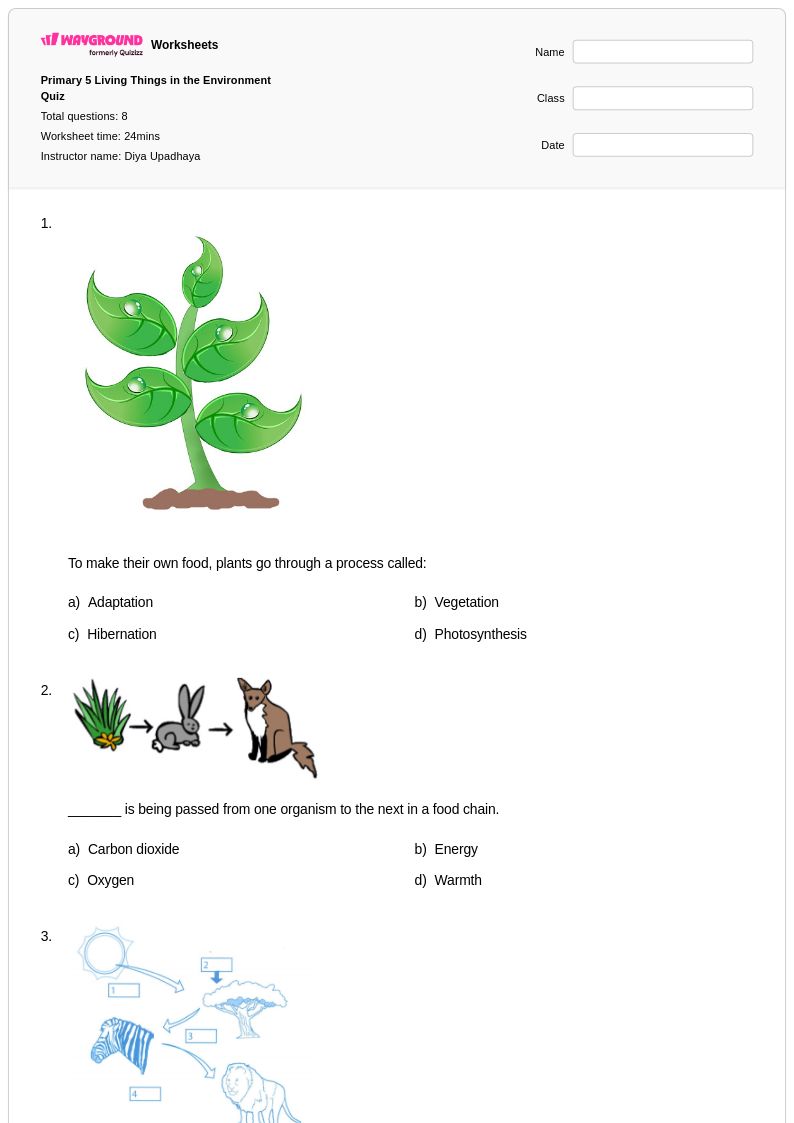
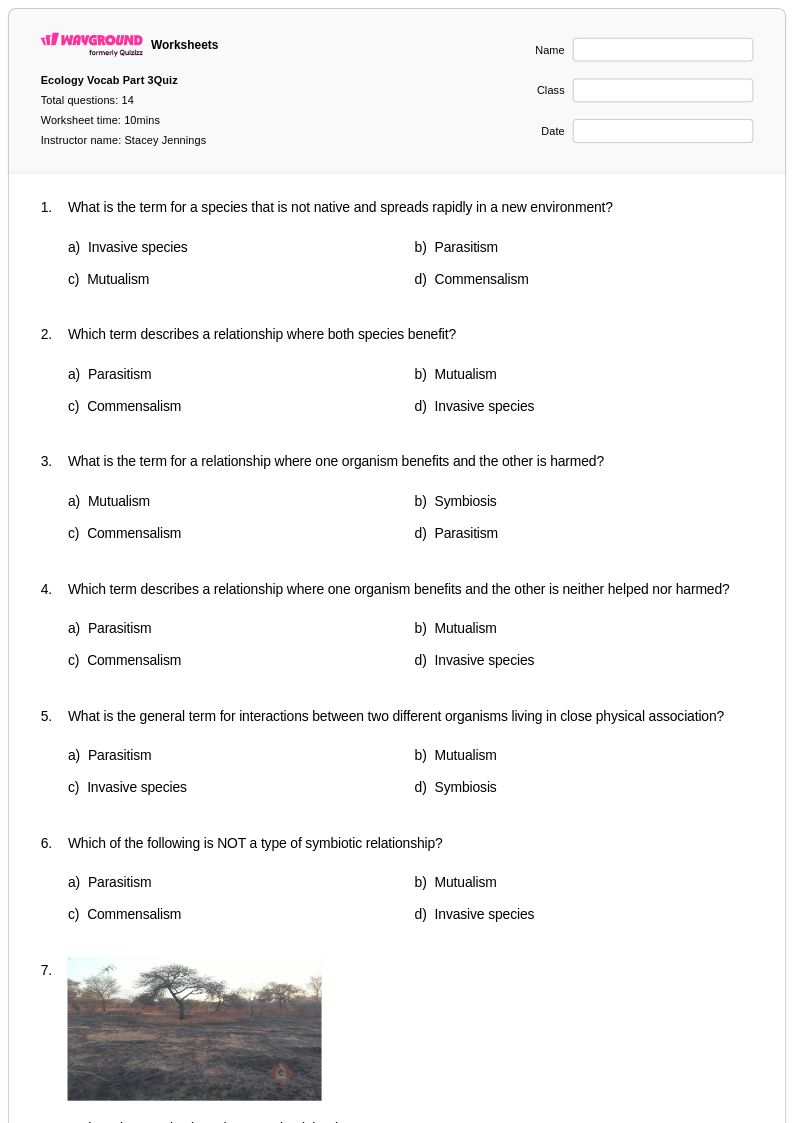
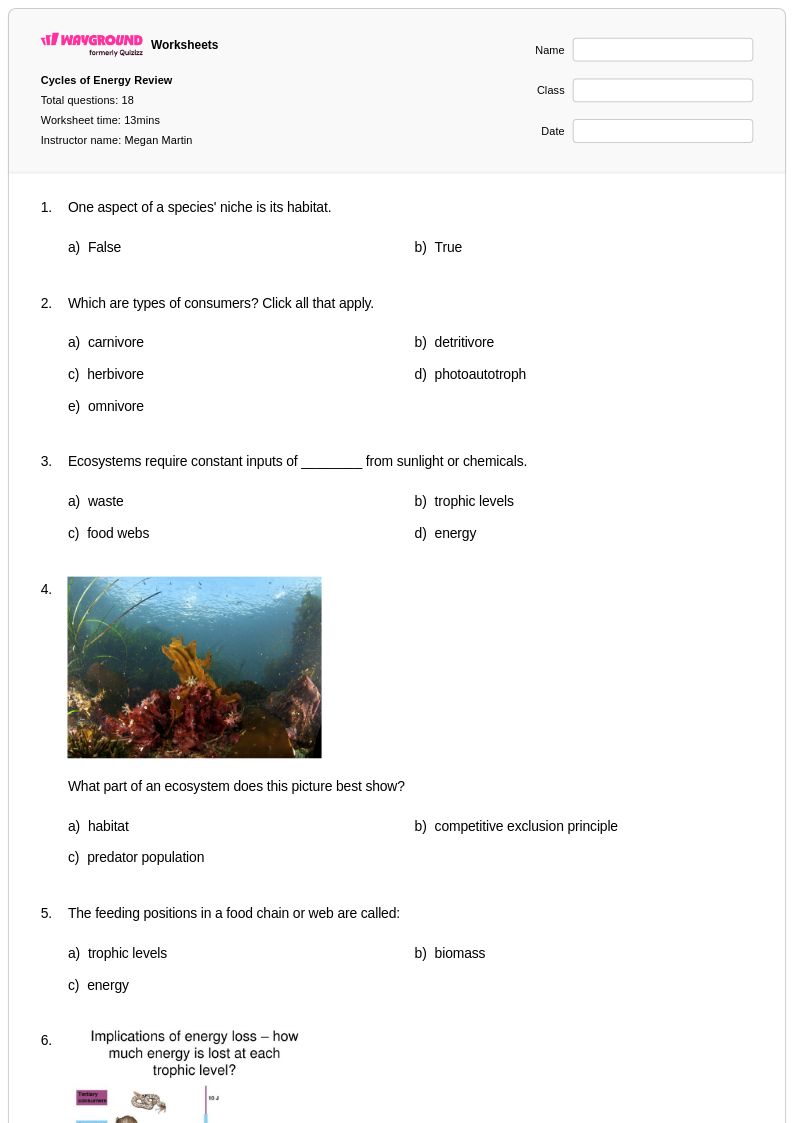
Explore printable Predator-prey Relationships worksheets for Grade 5
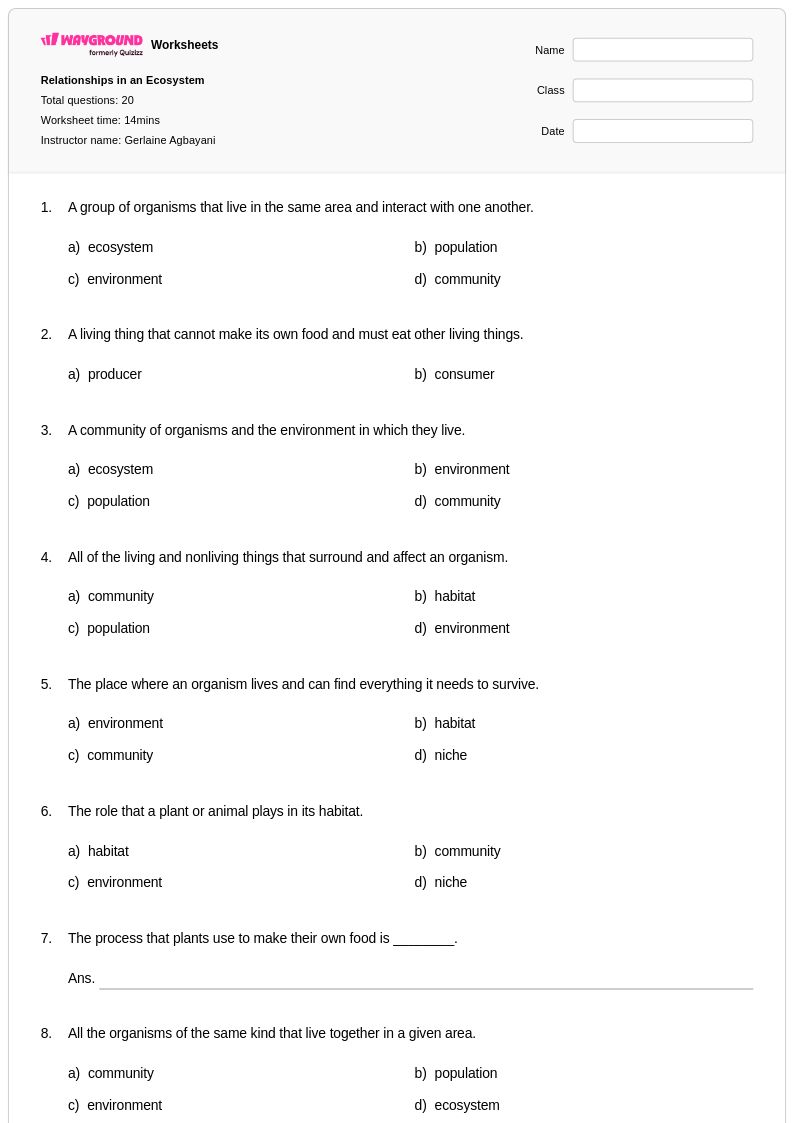
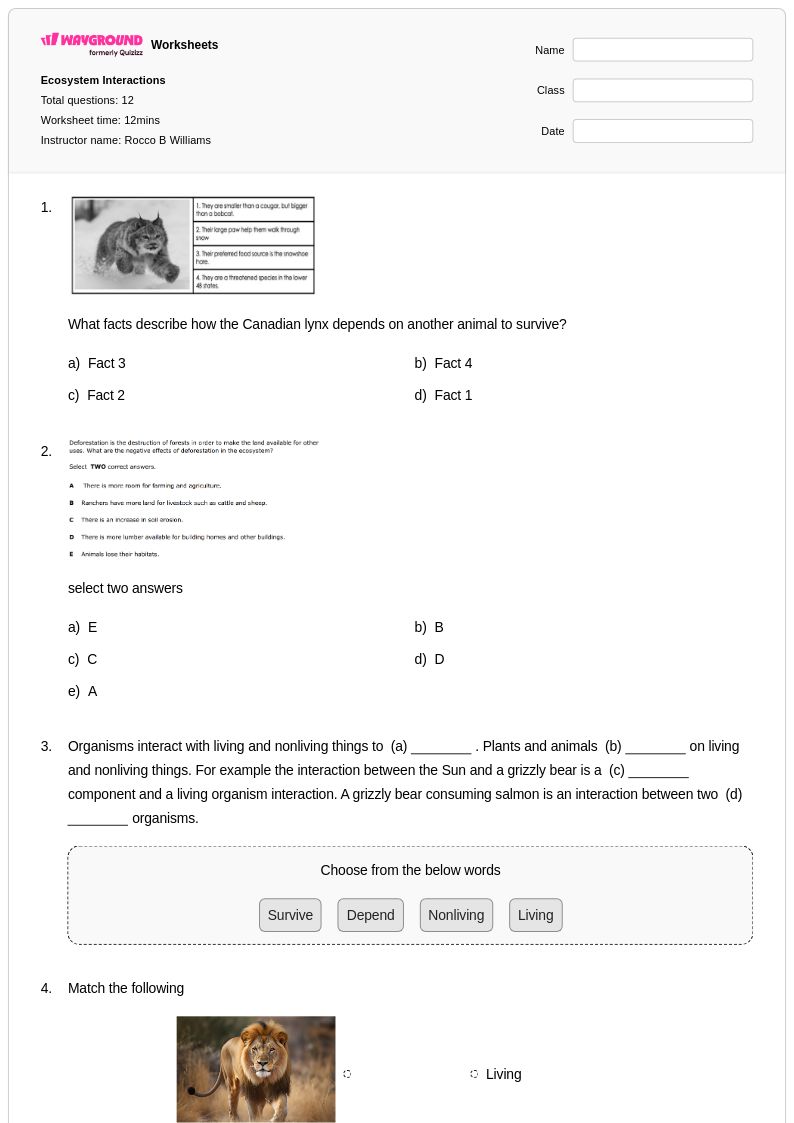
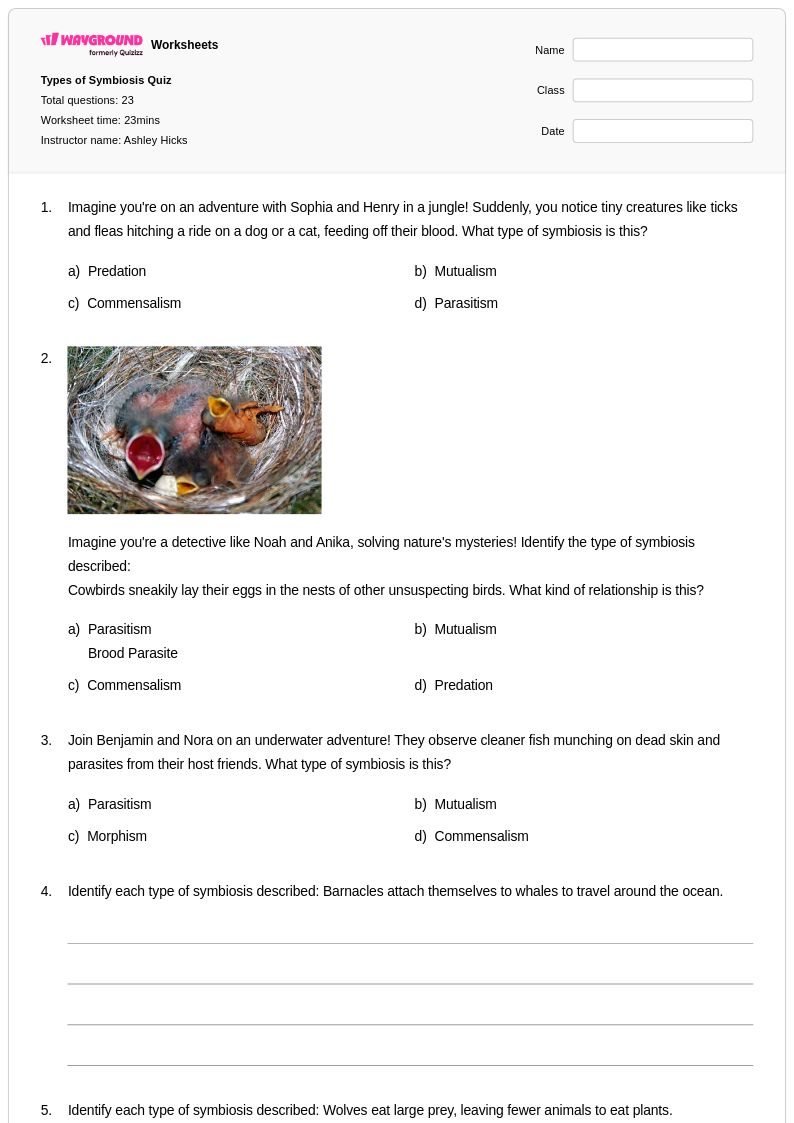
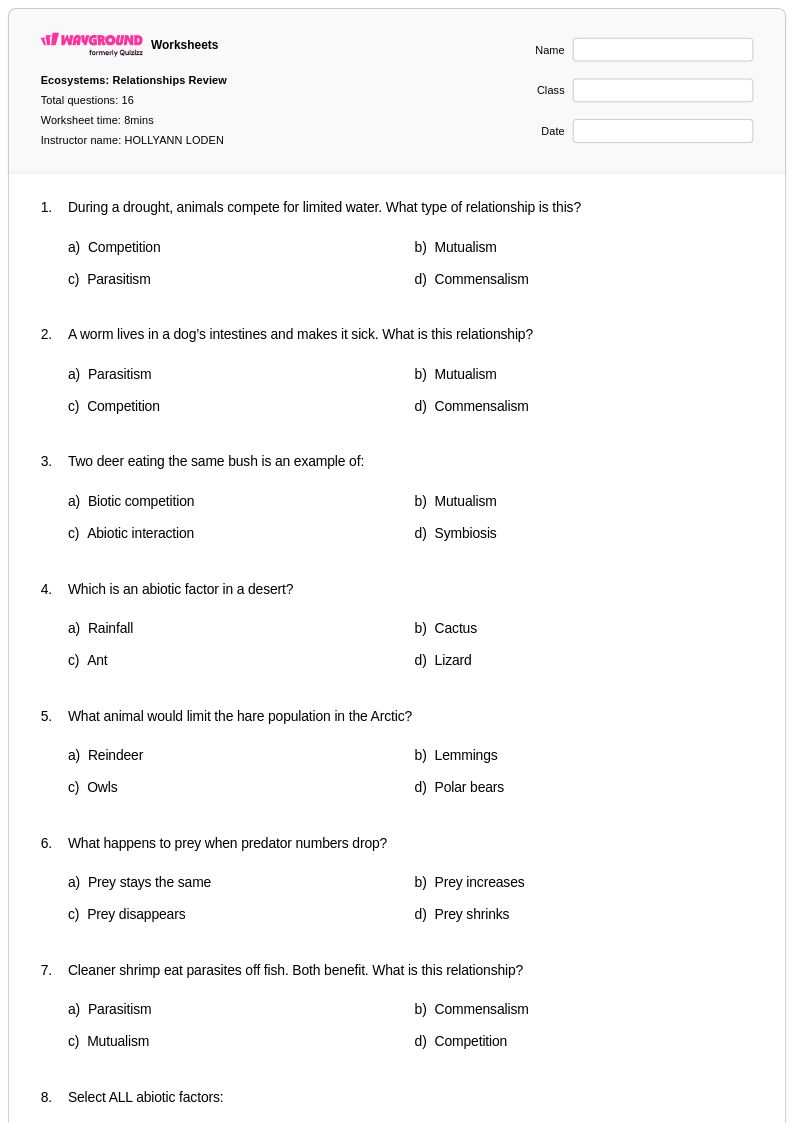
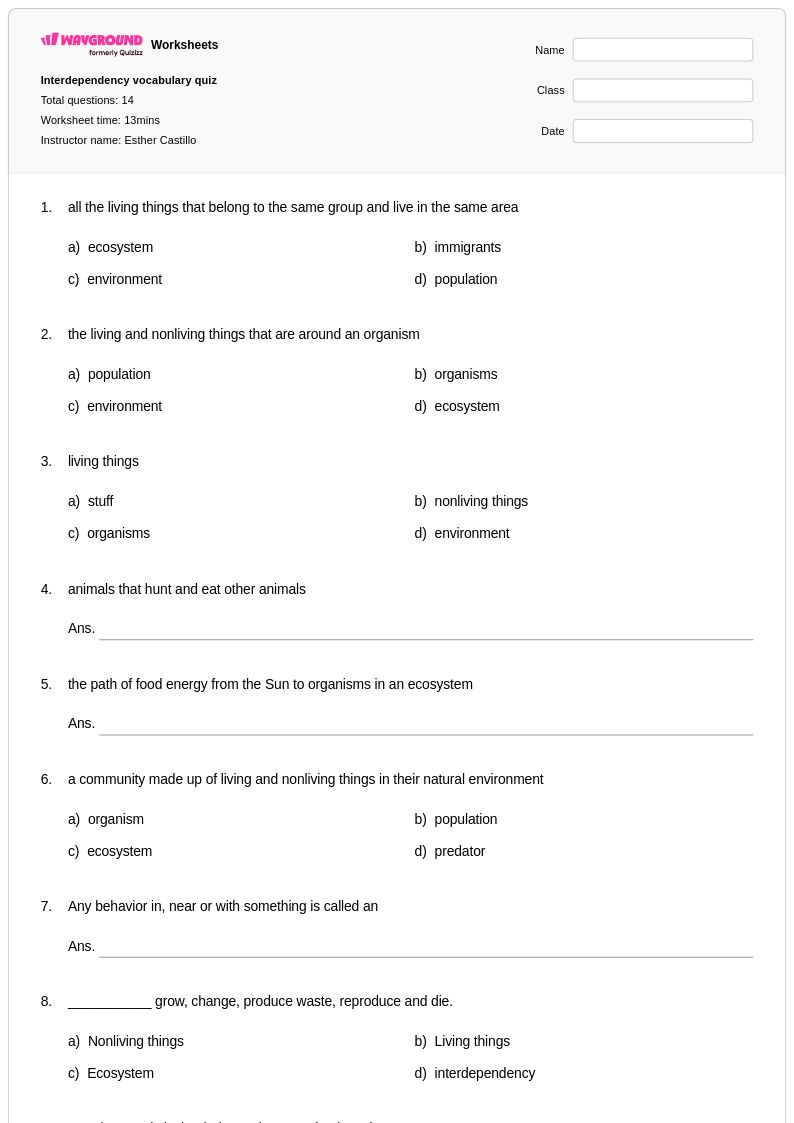
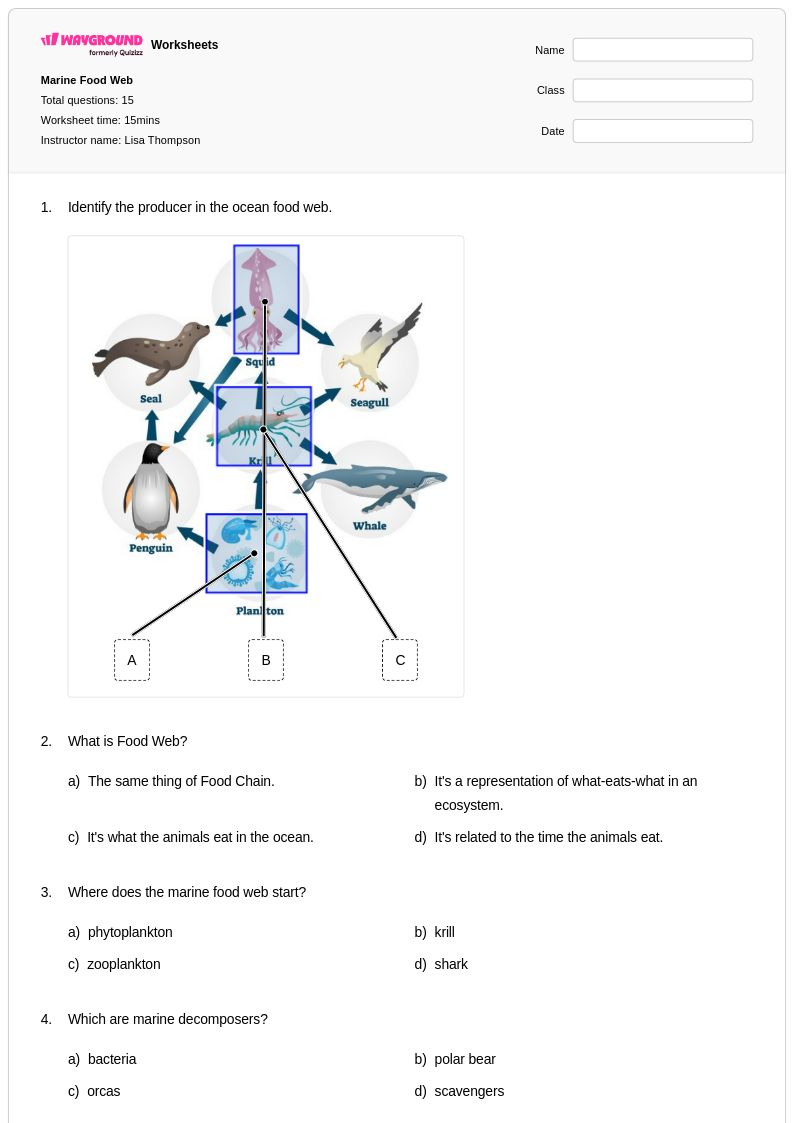
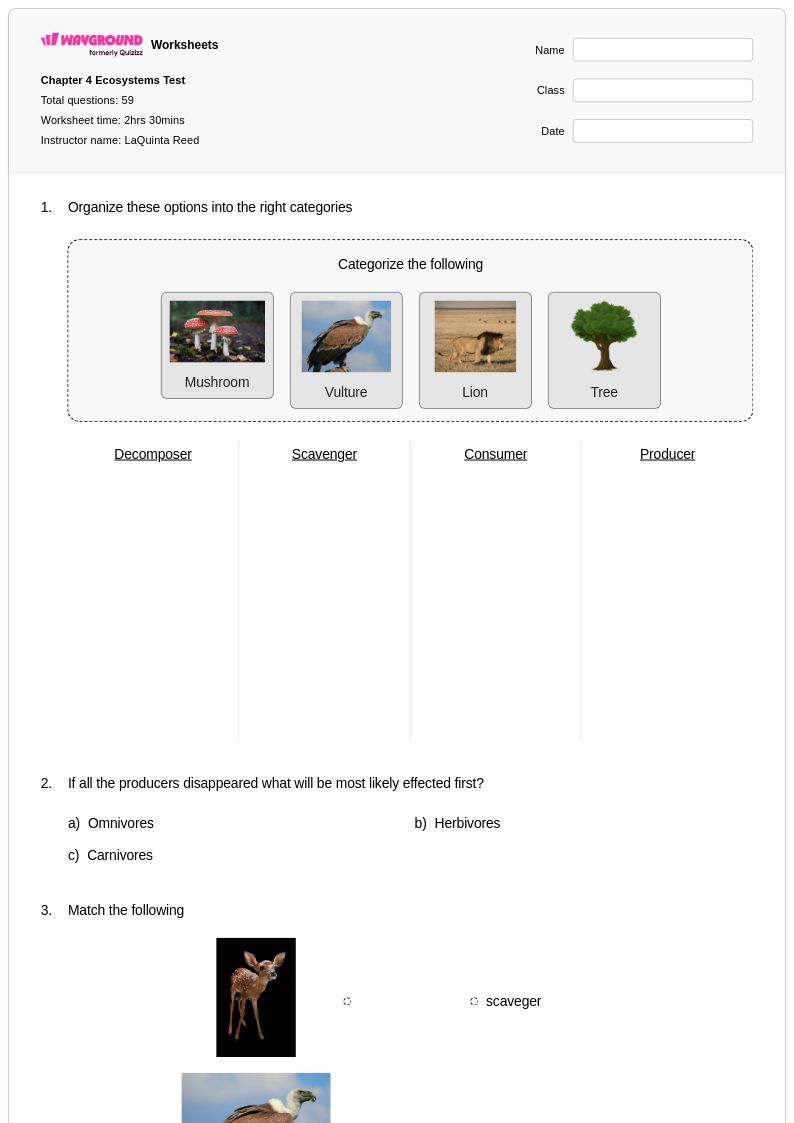
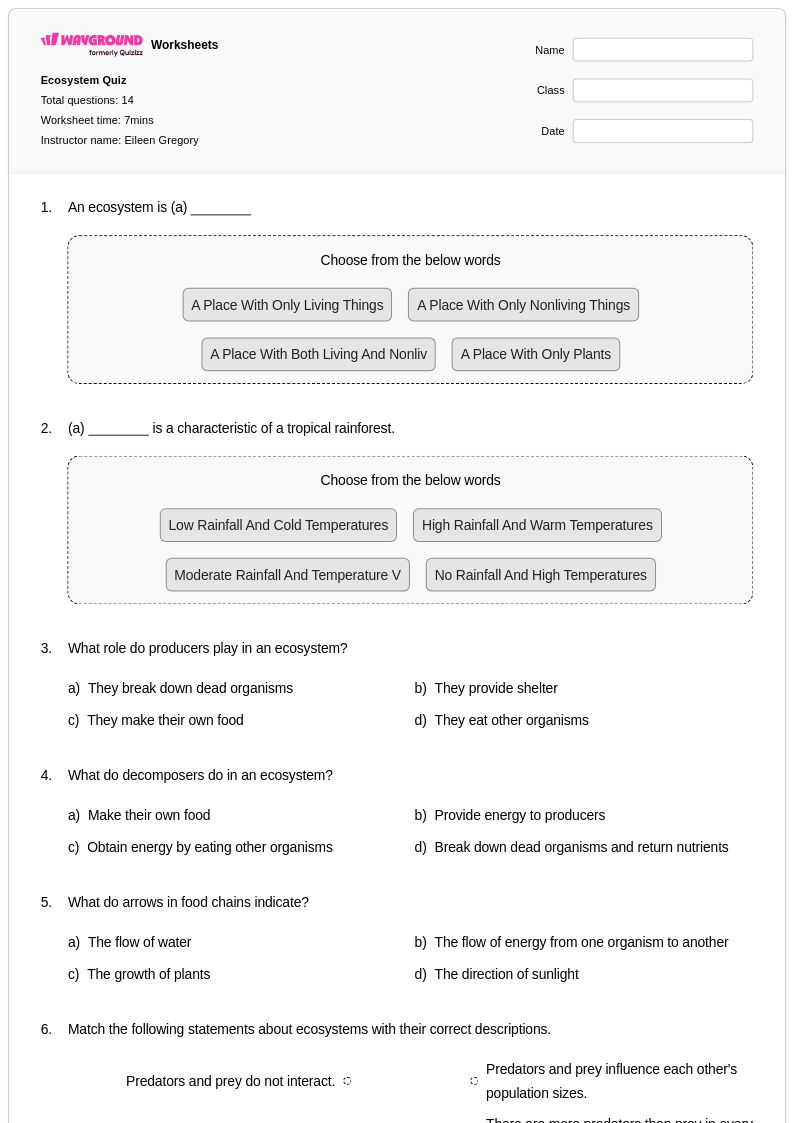
Predator-prey relationships form a fundamental concept in Grade 5 science education, and Wayground's comprehensive worksheet collection provides students with engaging opportunities to explore these critical ecosystem dynamics. These educational resources help fifth-grade learners understand how predators and prey interact within food webs, examining concepts such as population balance, adaptation strategies, and energy transfer between different trophic levels. The worksheets strengthen essential scientific thinking skills including data analysis, pattern recognition, and ecological reasoning through carefully designed practice problems that challenge students to identify predator-prey pairs, analyze population graphs, and predict ecosystem changes. Teachers can access complete materials including detailed answer keys and printable pdf formats, making it easy to implement these free educational resources in both classroom instruction and independent study sessions.
Wayground's extensive database, featuring millions of teacher-created resources, offers exceptional support for educators seeking high-quality predator-prey relationship worksheets for Grade 5 science instruction. The platform's advanced search and filtering capabilities allow teachers to quickly locate materials that align with specific curriculum standards and learning objectives, while built-in differentiation tools enable customization for diverse student needs and ability levels. These versatile resources are available in both digital and printable pdf formats, providing flexibility for various teaching environments and learning preferences. Whether used for initial concept introduction, skill reinforcement, remediation support, or enrichment activities, these worksheets serve as valuable tools for lesson planning and help teachers create comprehensive learning experiences that deepen students' understanding of ecosystem interactions and ecological relationships.
FAQs
How do I teach predator-prey relationships in a science class?
Start by anchoring the concept in a familiar real-world example, such as wolves and elk in Yellowstone, before introducing population cycle graphs that show how predator and prey numbers rise and fall together over time. From there, layer in supporting concepts like behavioral adaptations, energy transfer through food chains, and coevolution so students see predator-prey dynamics as part of a broader ecological system. Hands-on activities such as role-play simulations or graph interpretation exercises help students move from abstract understanding to applied analysis.
What types of exercises help students practice predator-prey relationships?
The most effective exercises require students to interpret population graphs, such as Lotka-Volterra curves, and explain the cause-and-effect relationship between predator and prey population changes. Scenario-based problems that ask students to predict what happens when a predator is removed or a prey population booms build critical thinking alongside content knowledge. Case studies drawn from real ecosystems, like the lynx-snowshoe hare cycle, give students concrete data to analyze rather than abstract generalizations.
What mistakes do students commonly make when learning about predator-prey relationships?
A common misconception is that predators always cause prey populations to decrease permanently, when in reality the relationship is cyclical and self-regulating. Students also frequently confuse correlation with causation when reading population graphs, assuming that because predator numbers rise after prey numbers rise, one event simply causes the other without understanding the lag time involved. Another frequent error is treating predator-prey relationships in isolation, ignoring how factors like food availability, disease, and habitat change also influence both populations.
How can I use predator-prey worksheets to support students with different learning needs?
Predator-prey worksheets work well for differentiated instruction because the same core concept can be scaffolded across difficulty levels, from labeling a basic food chain to analyzing multi-variable population data. On Wayground, teachers can apply student-level accommodations such as Read Aloud for students who need audio support, reduced answer choices to lower cognitive load, and extended time for assessments, all configurable per student without other students being notified. These settings are reusable across sessions, making it straightforward to maintain consistent support as students move through a unit on ecosystem dynamics.
How do I use Wayground's predator-prey relationship worksheets in my classroom?
Wayground's predator-prey worksheets are available as printable PDFs for traditional classroom use and in digital formats for technology-integrated environments, so they fit into both lab settings and homework assignments. Teachers can also host worksheets as a quiz directly on Wayground, enabling in-class assessment with built-in tracking. Each worksheet includes a complete answer key, which reduces prep time and allows for immediate, targeted feedback on student understanding.
How do predator-prey relationships connect to other ecology concepts students need to know?
Predator-prey relationships are a core mechanism within broader ecosystem concepts including energy flow through trophic levels, food web stability, and biodiversity. Understanding population cycles in a predator-prey context prepares students to analyze trophic cascades, where the removal of a top predator can restructure an entire ecosystem. This makes predator-prey dynamics an ideal entry point for teaching interconnected ecological principles that appear across middle and high school life science and environmental science standards.