
21 Q
8th - 12th
21 Q
10th
21 Q
8th - 12th
20 Q
9th - 12th
10 Q
9th - 10th
28 Q
9th - 12th
13 Q
9th - 12th
12 Q
9th - 10th
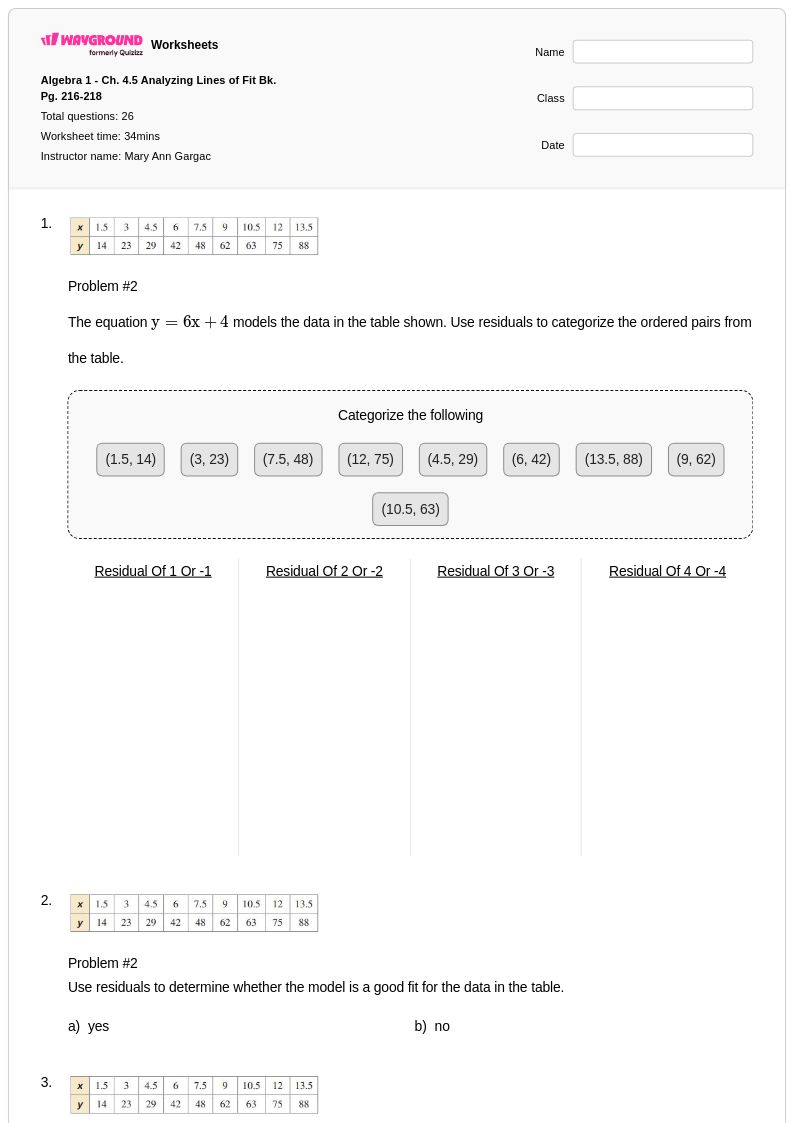
26 Q
9th - Uni
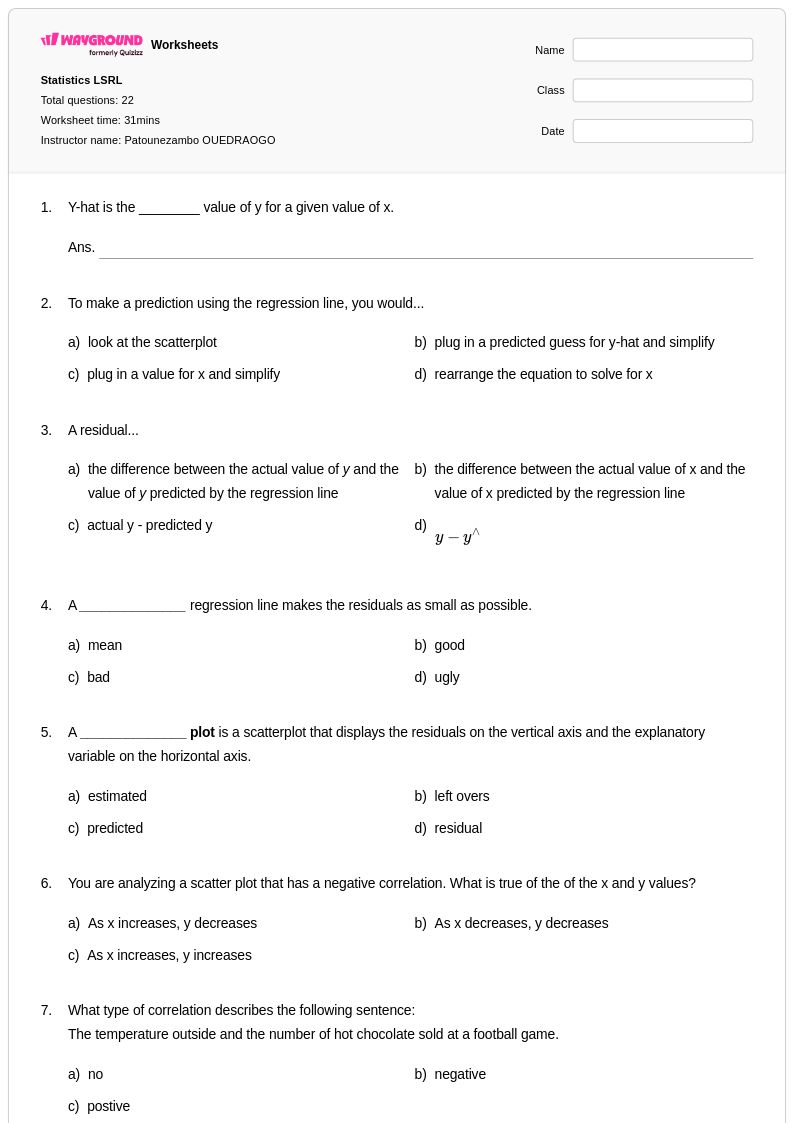
22 Q
9th - 10th
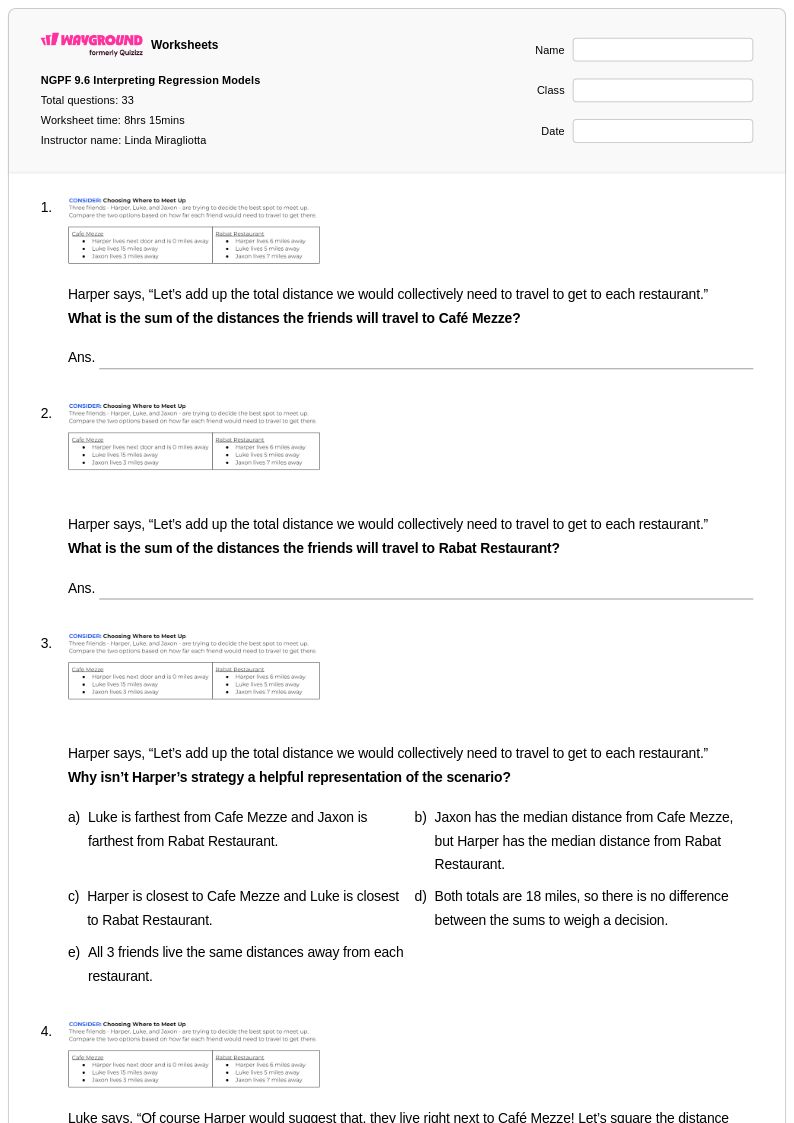
33 Q
9th - 12th
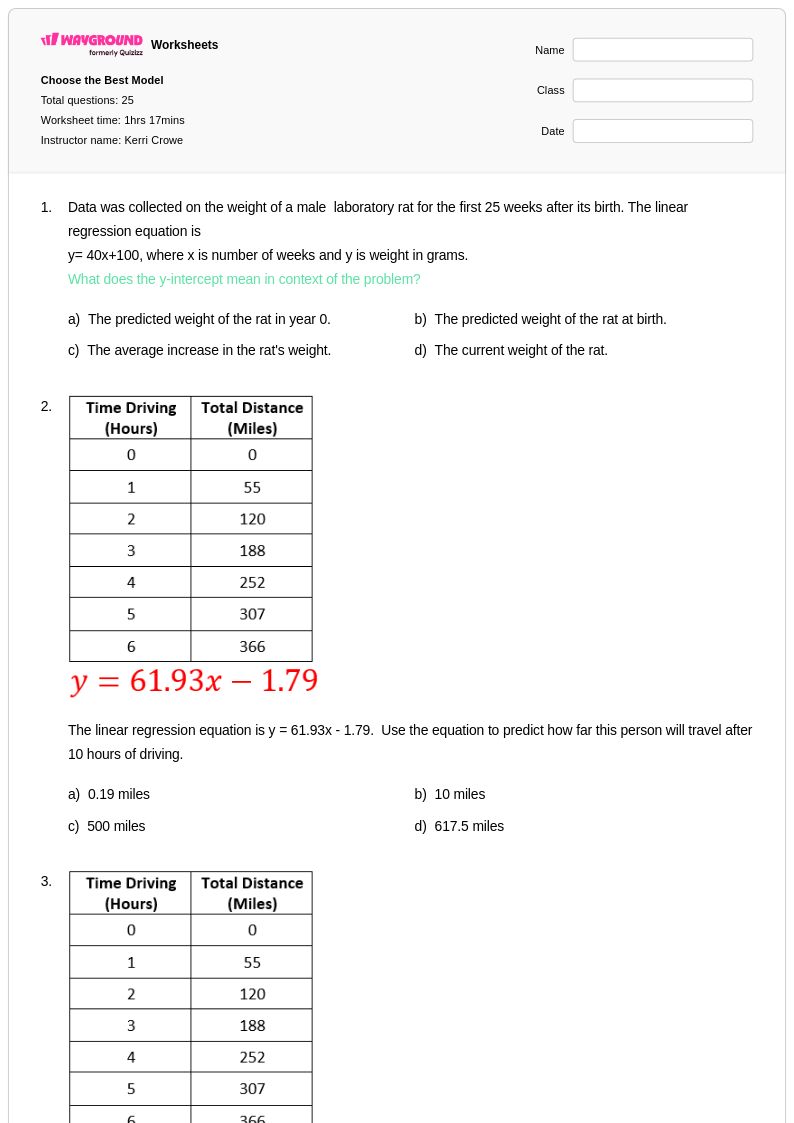
25 Q
9th - 12th
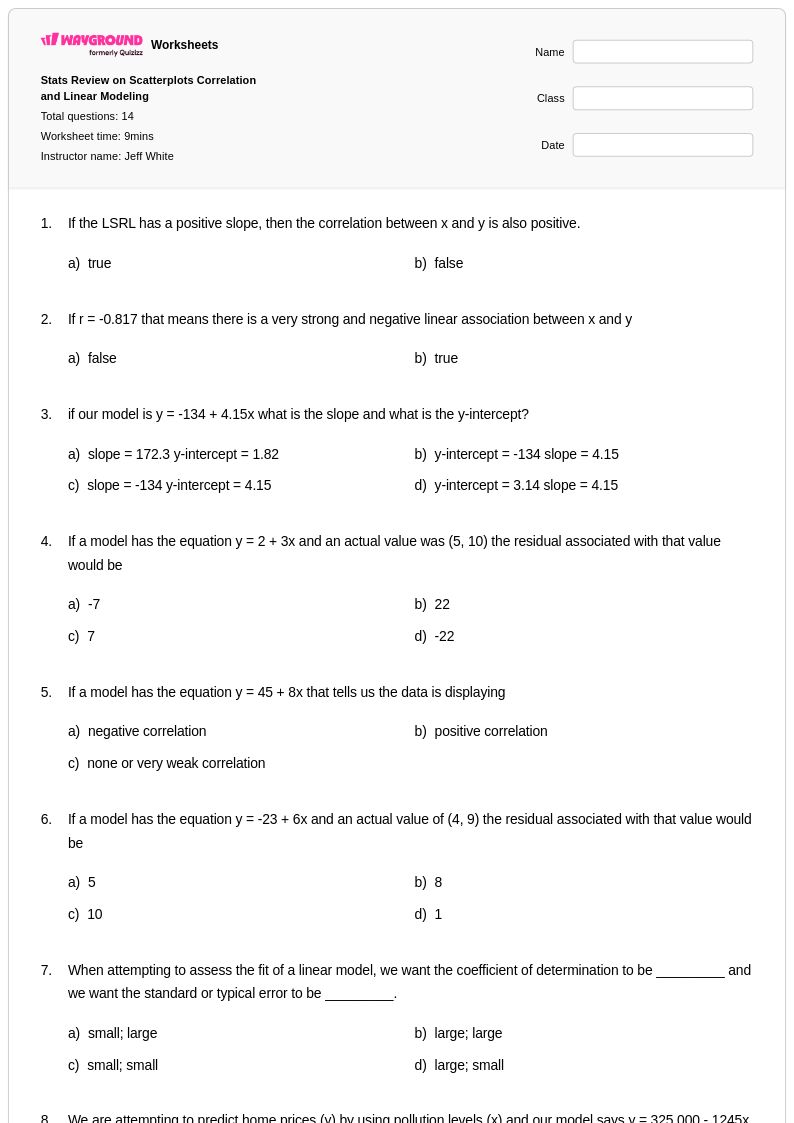
14 Q
9th - 12th
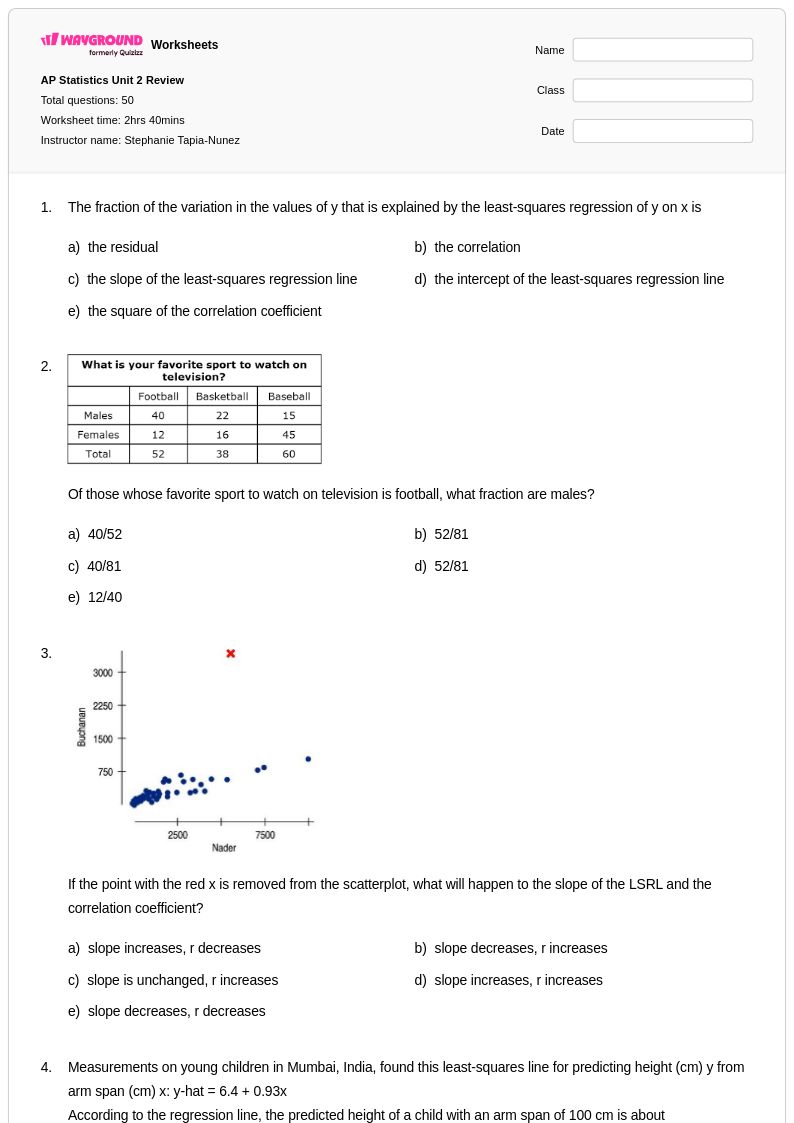
50 Q
10th
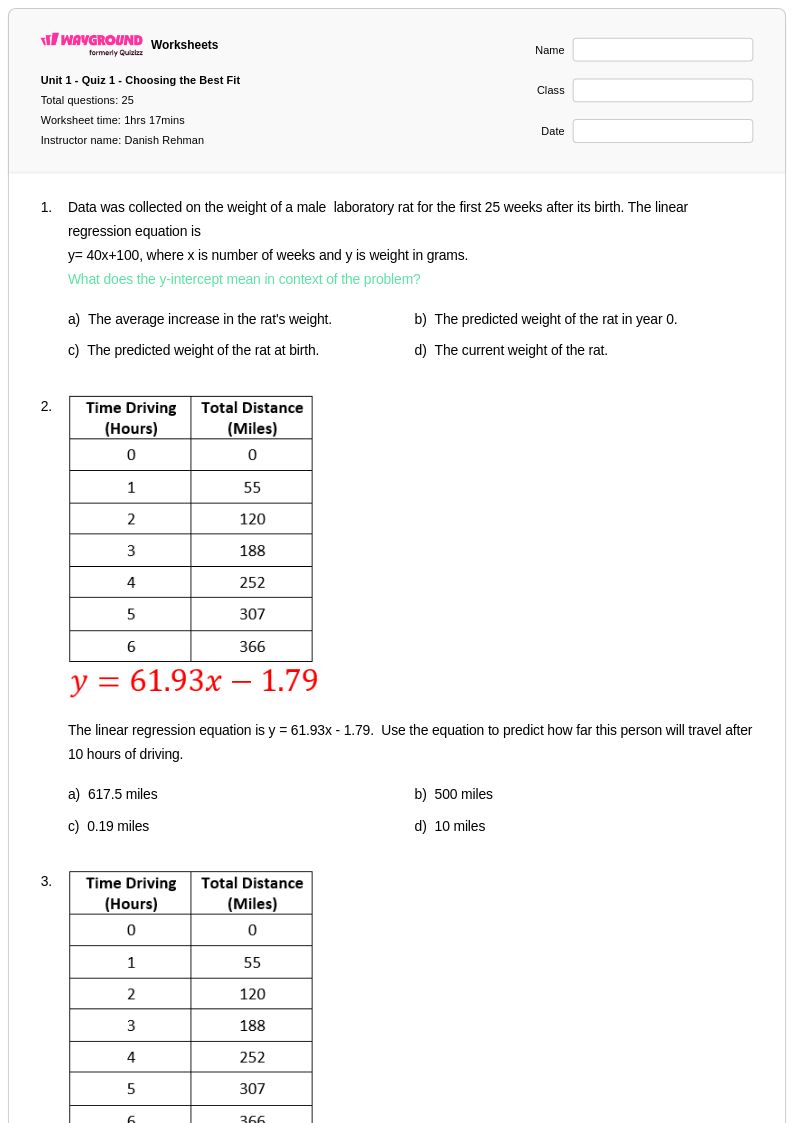
25 Q
9th - 12th
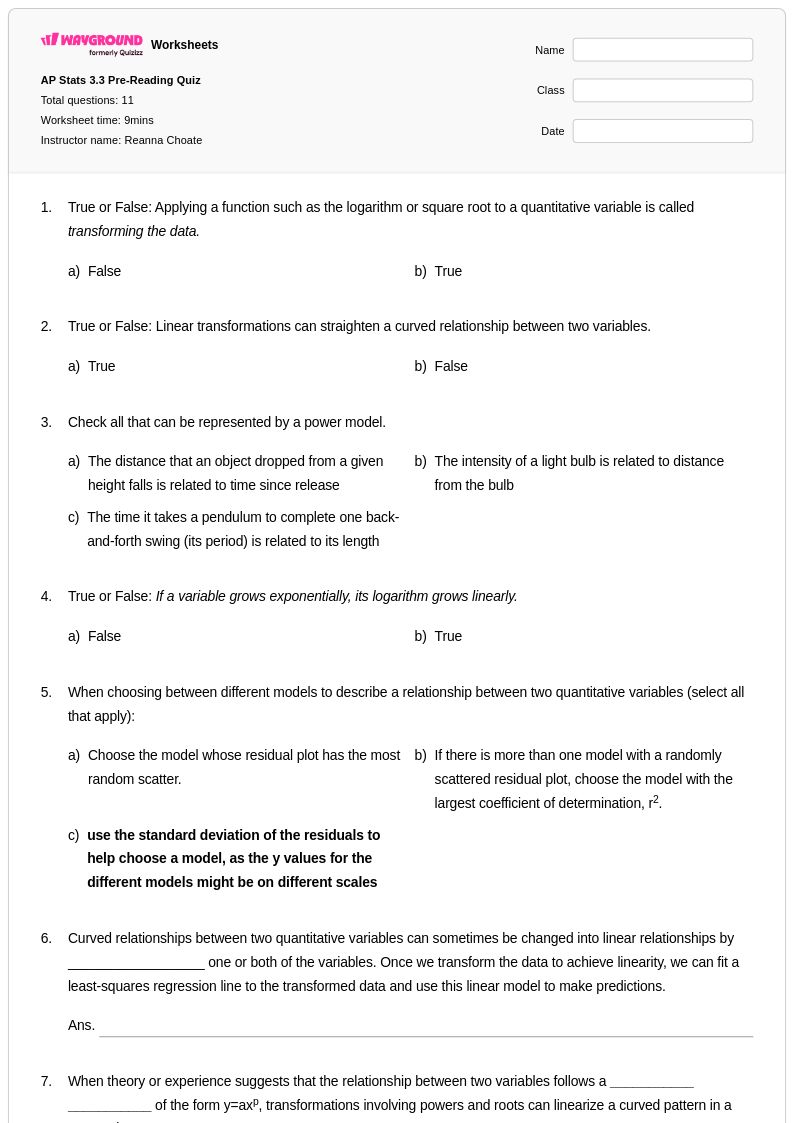
11 Q
10th - 12th

10 Q
9th - Uni
23 Q
9th - 12th
13 Q
9th - 12th
20 Q
9th - 12th
8 Q
7th - 12th
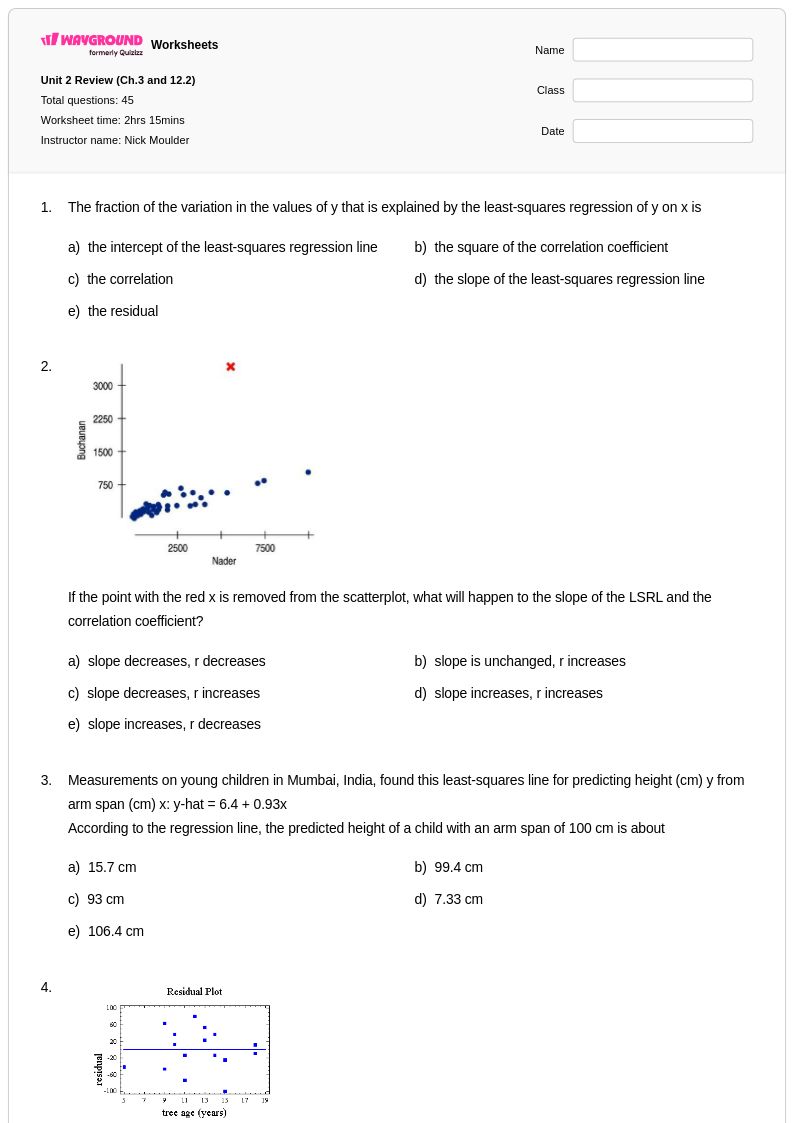
45 Q
9th - 12th
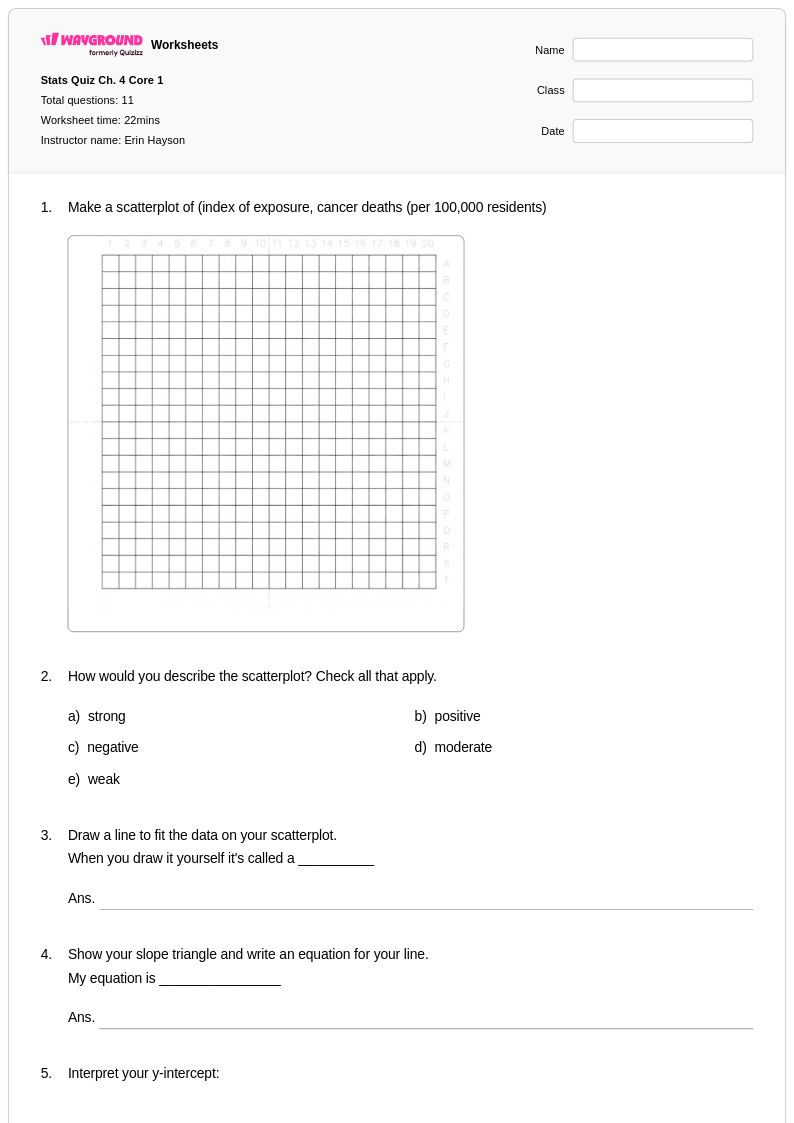
11 Q
8th - 11th
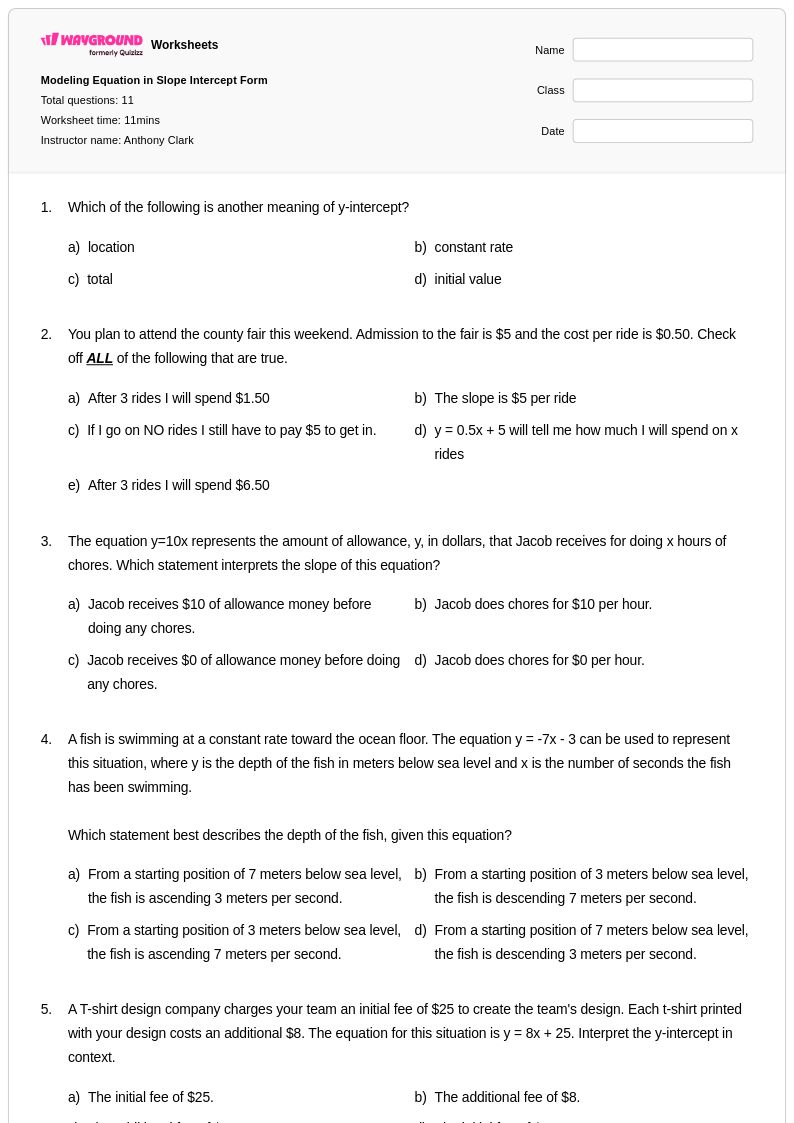
11 Q
9th - Uni
Explore Other Subject Worksheets for grade 10
Explore printable Residuals worksheets for Grade 10
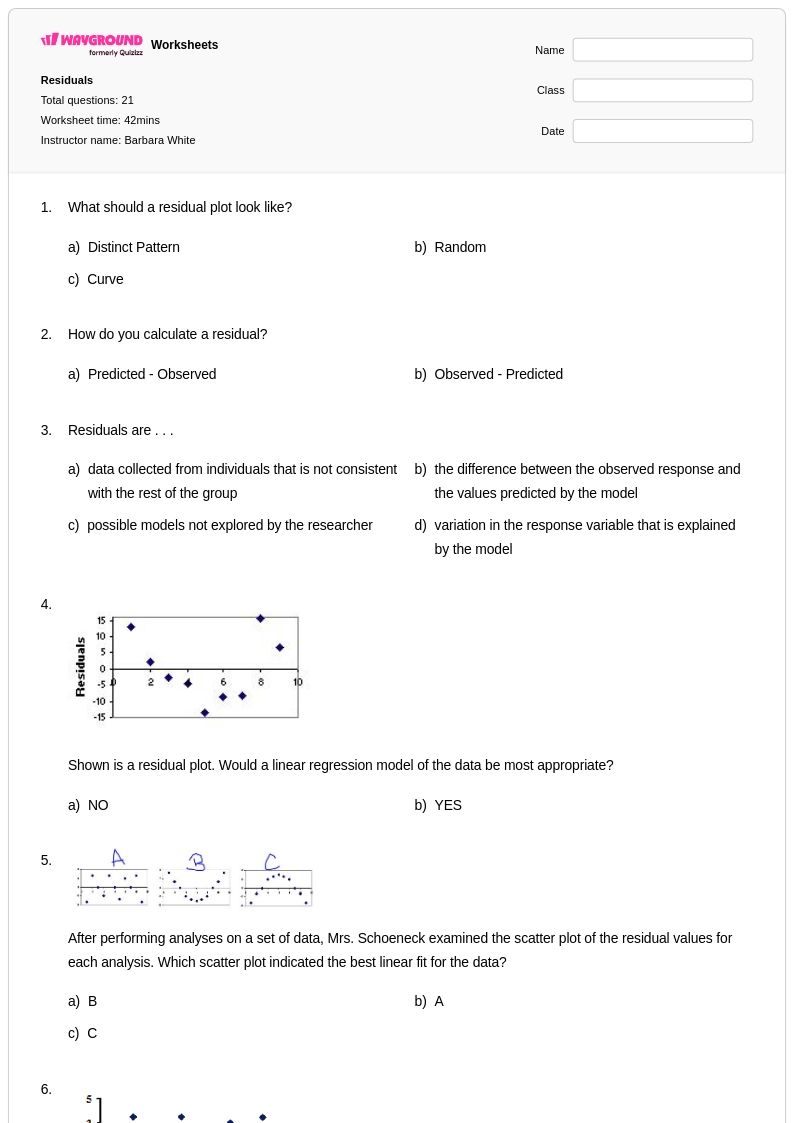
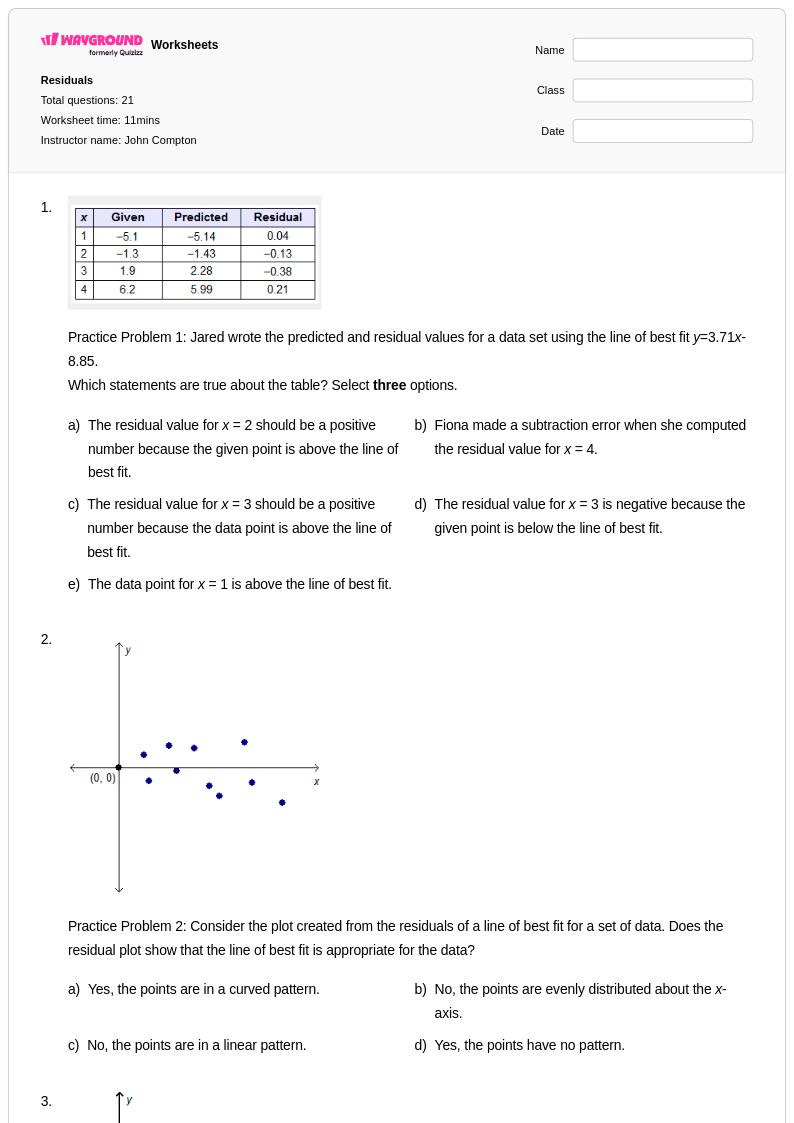
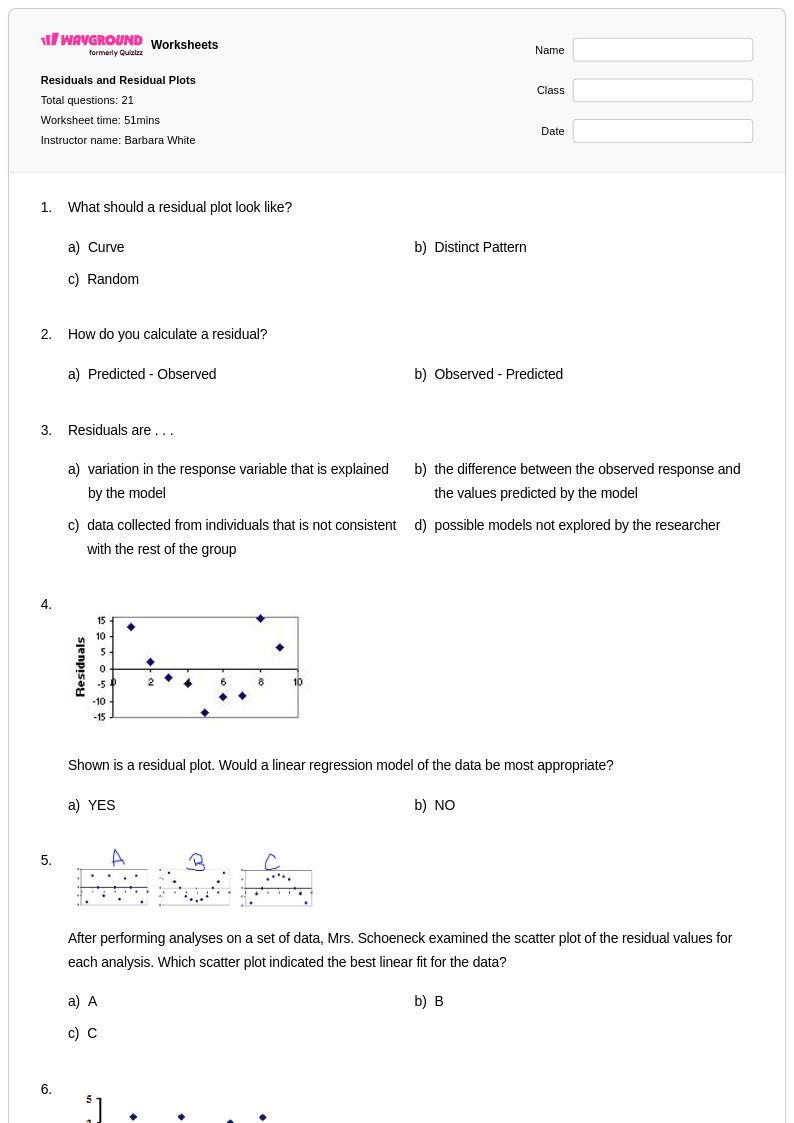
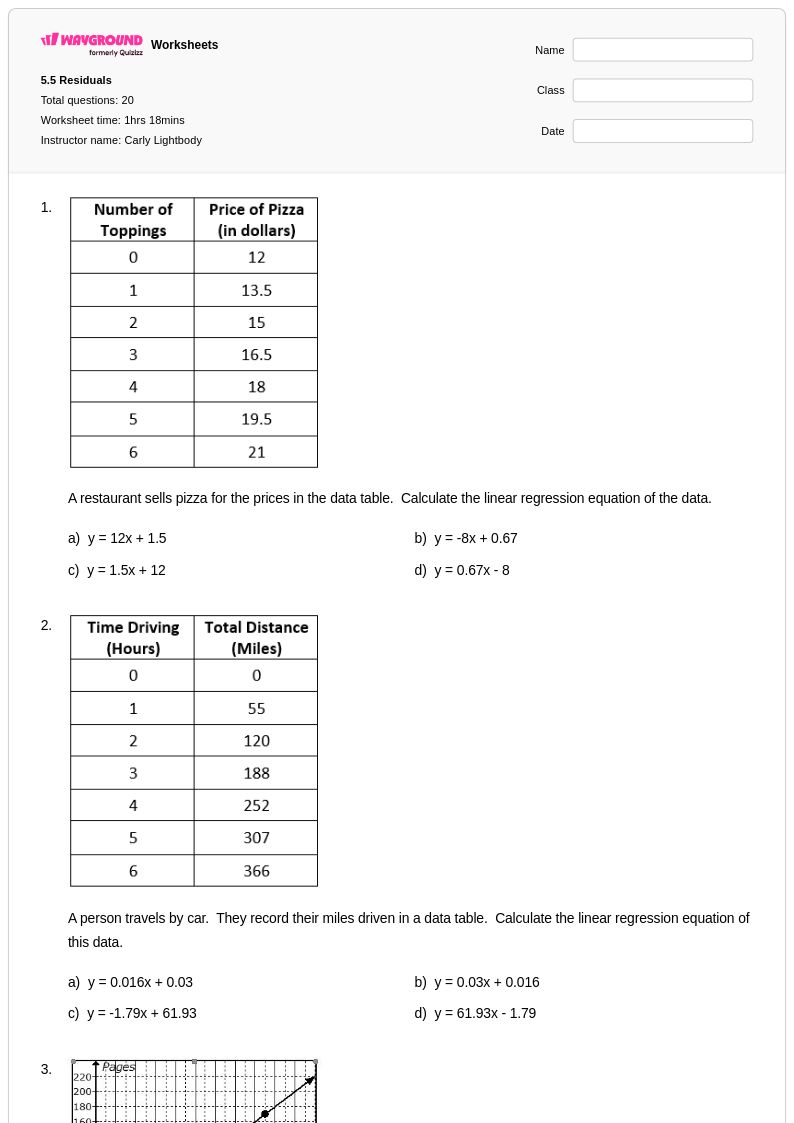
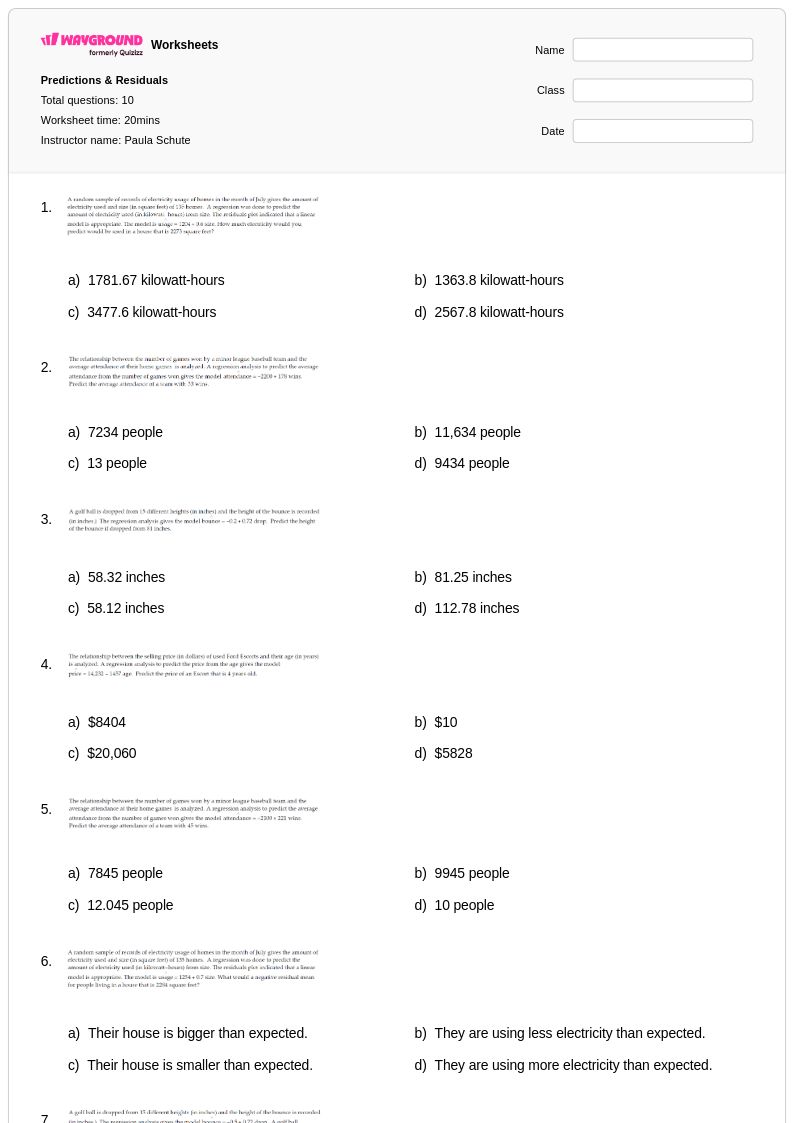
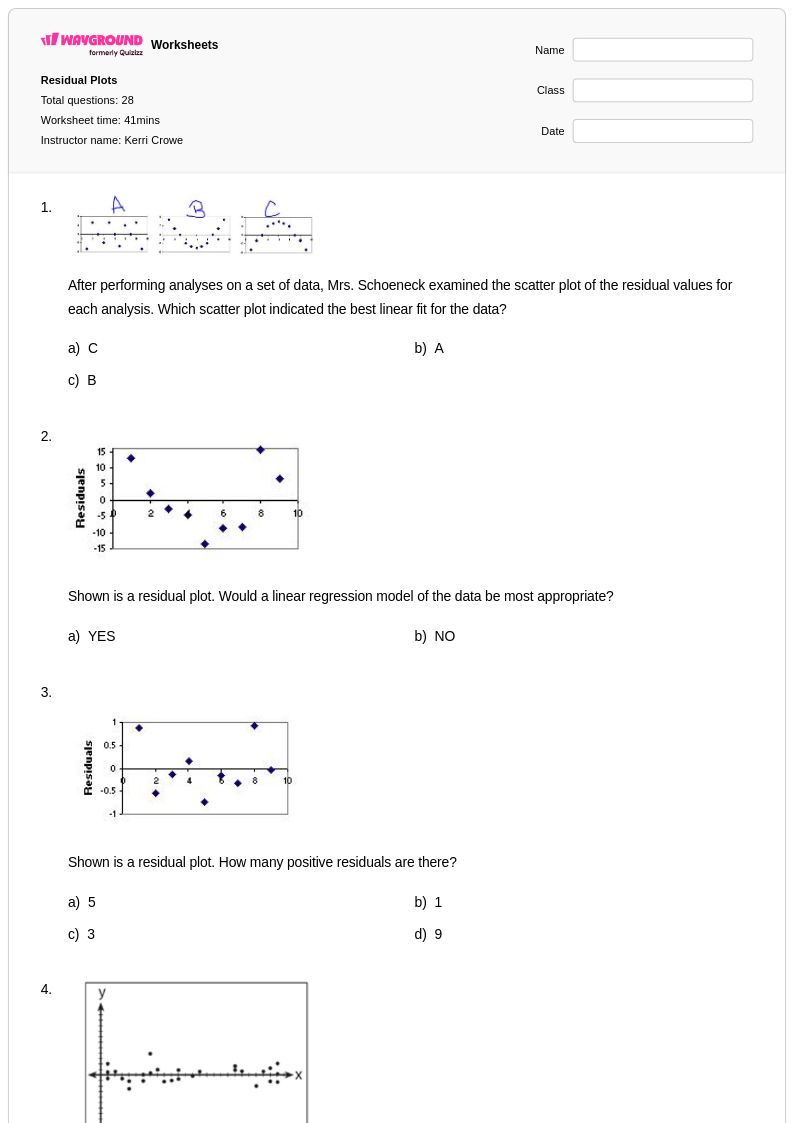
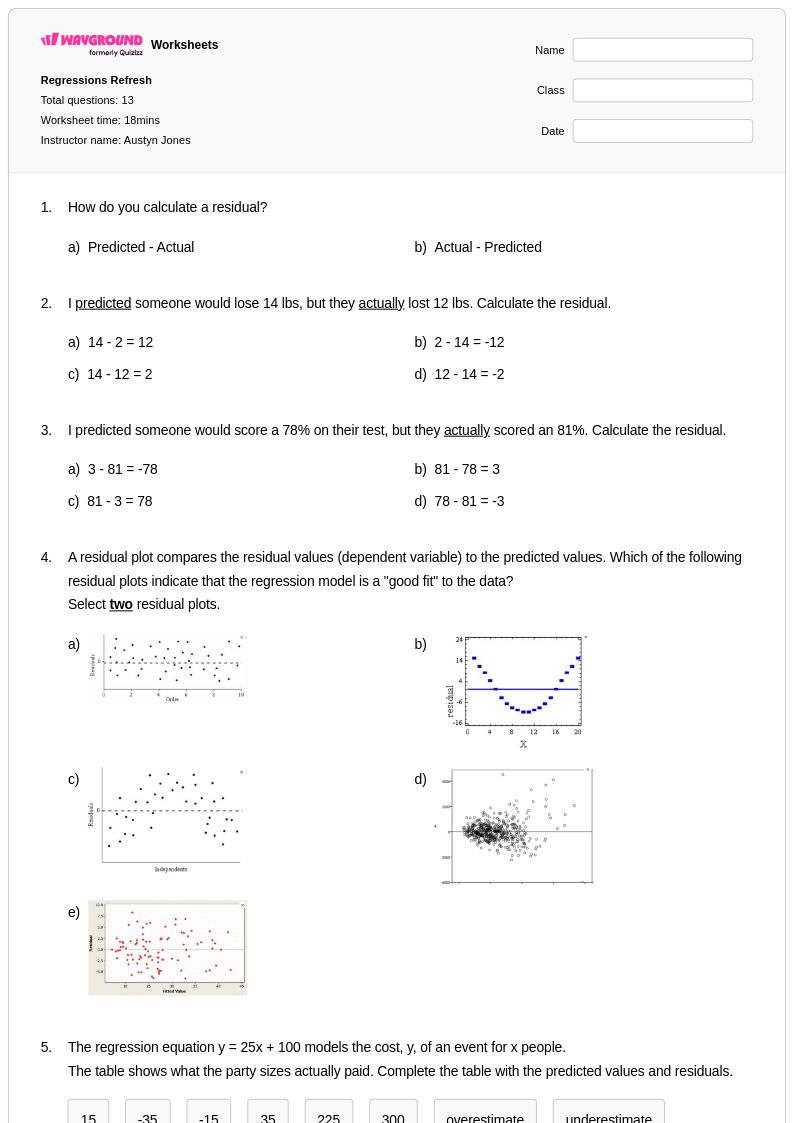
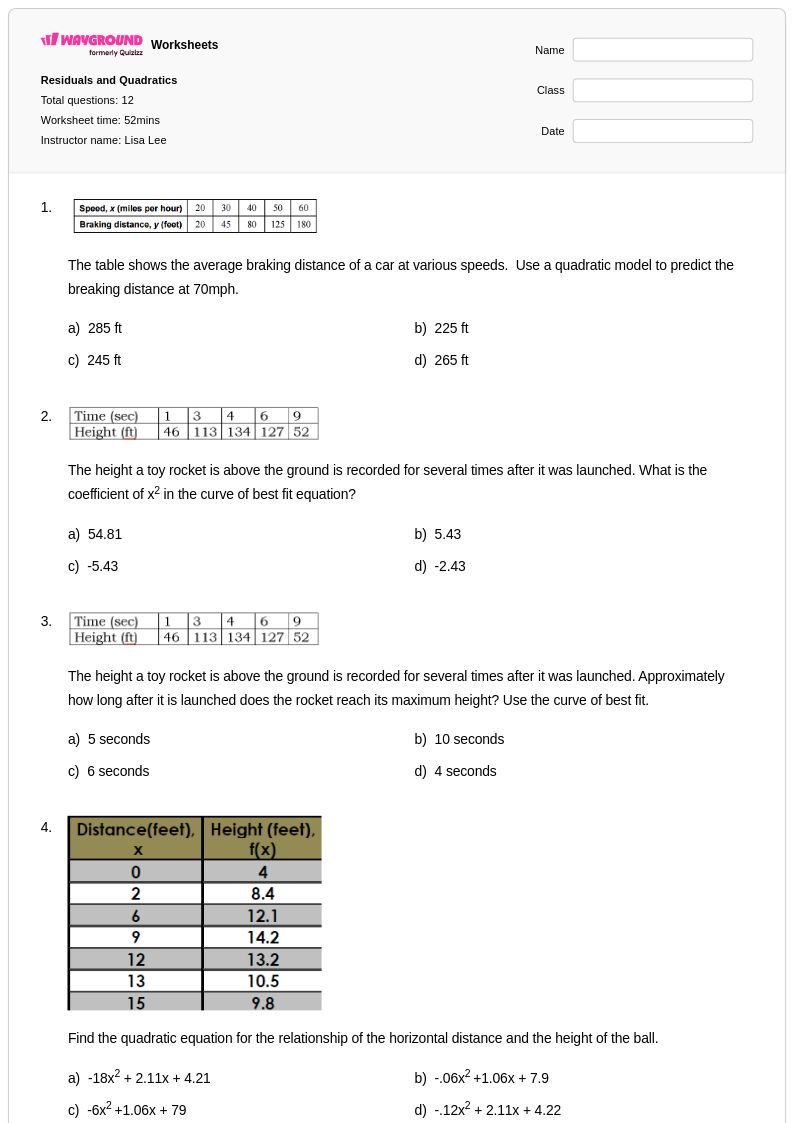
Residuals worksheets for Grade 10 students available through Wayground (formerly Quizizz) provide comprehensive practice in analyzing the differences between observed and predicted values in statistical models. These carefully crafted resources help students master the fundamental concept of measuring how well a regression line fits data points, strengthening their ability to interpret scatter plots, calculate residual values, and assess the accuracy of linear models. Each worksheet includes detailed practice problems that guide students through plotting residuals, identifying patterns that indicate model appropriateness, and understanding how residual analysis reveals whether linear regression assumptions are met. The collection features complete answer keys and is available as free printables in pdf format, making it easy for educators to provide targeted practice in this essential statistics skill that bridges data analysis and predictive modeling.
Wayground (formerly Quizizz) supports mathematics teachers with an extensive collection of millions of teacher-created resources specifically designed for Grade 10 probability and statistics instruction, including comprehensive residuals worksheets that align with curriculum standards. The platform's robust search and filtering capabilities allow educators to quickly locate materials that match their specific teaching objectives, whether focusing on basic residual calculations or advanced residual plot interpretation. Teachers benefit from powerful differentiation tools that enable customization of worksheets to accommodate diverse learning needs, while the flexibility of both printable and digital formats, including downloadable pdf versions, ensures seamless integration into any classroom environment. These features collectively support effective lesson planning, targeted remediation for students struggling with statistical concepts, enrichment opportunities for advanced learners, and consistent skill practice that builds confidence in analyzing the effectiveness of mathematical models through residual analysis.
FAQs
What is the focus of residuals in Grade 10?
What's an effective way to teach residual plot analysis in 10th grade?
What skills do these Grade 10 residuals worksheets build?
What's a common error 10th graders make when interpreting residual plots?
How can I assign this Grade 10 residuals worksheet?
How does this topic progress from earlier grades in the Common Core?