Free Printable Seed Structure Worksheets for Grade 5
Enhance Grade 5 students' understanding of seed structure with Wayground's comprehensive collection of free biology worksheets, featuring detailed printables, practice problems, and answer keys in PDF format.
Explore printable Seed Structure worksheets for Grade 5
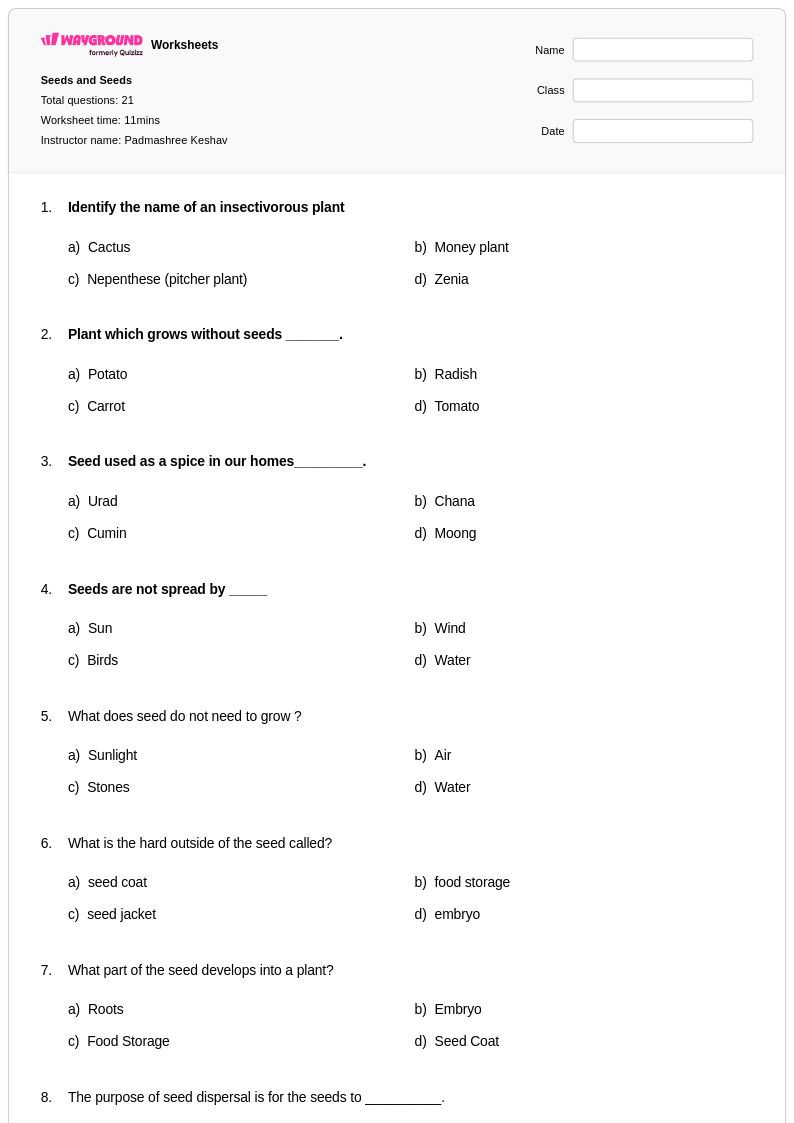
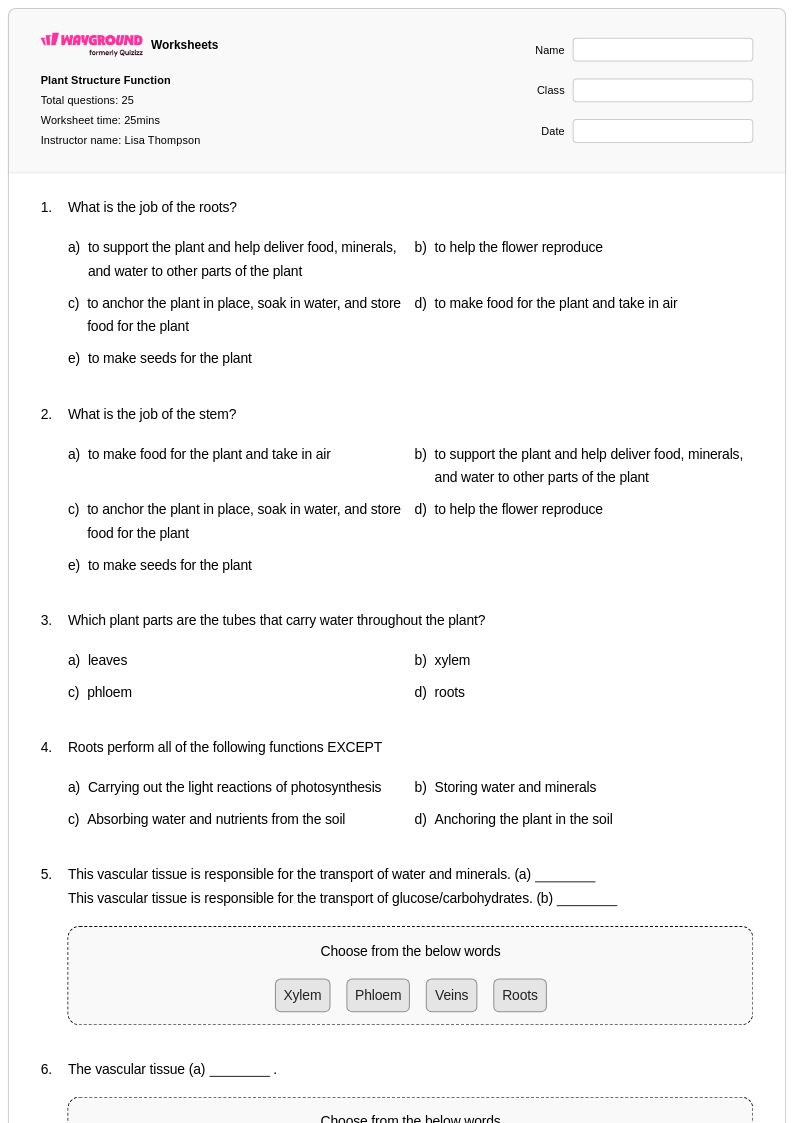
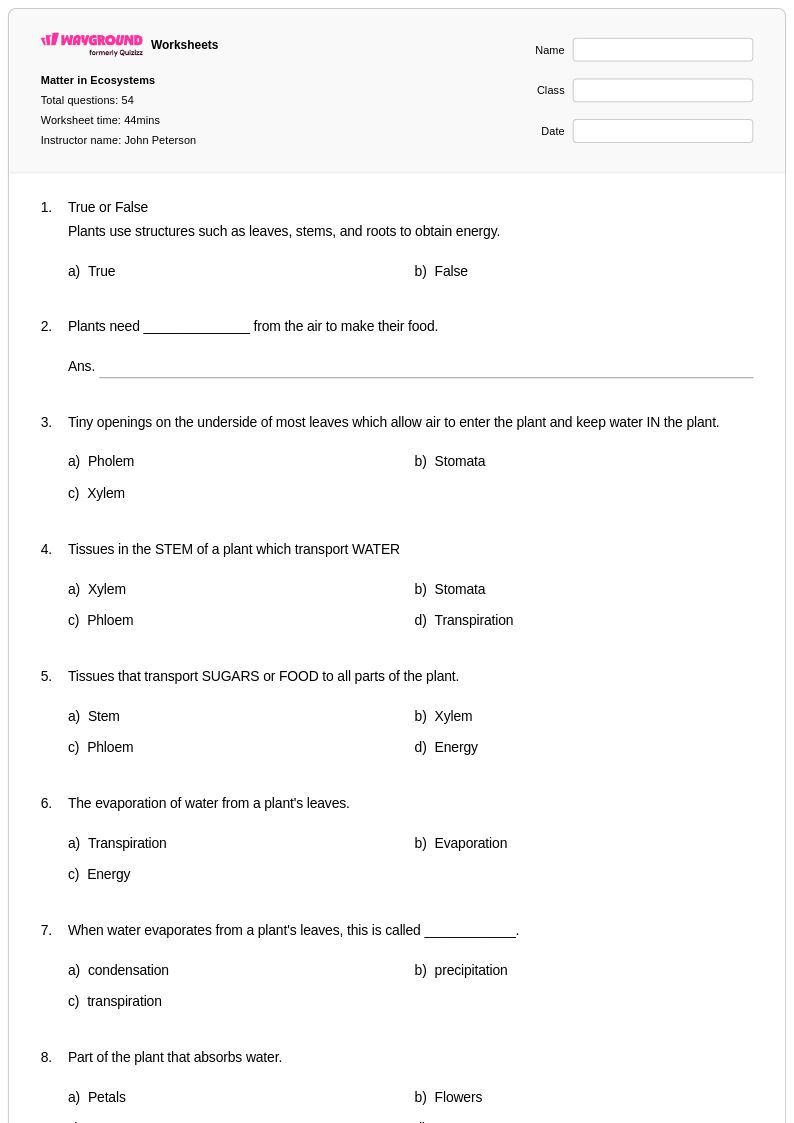
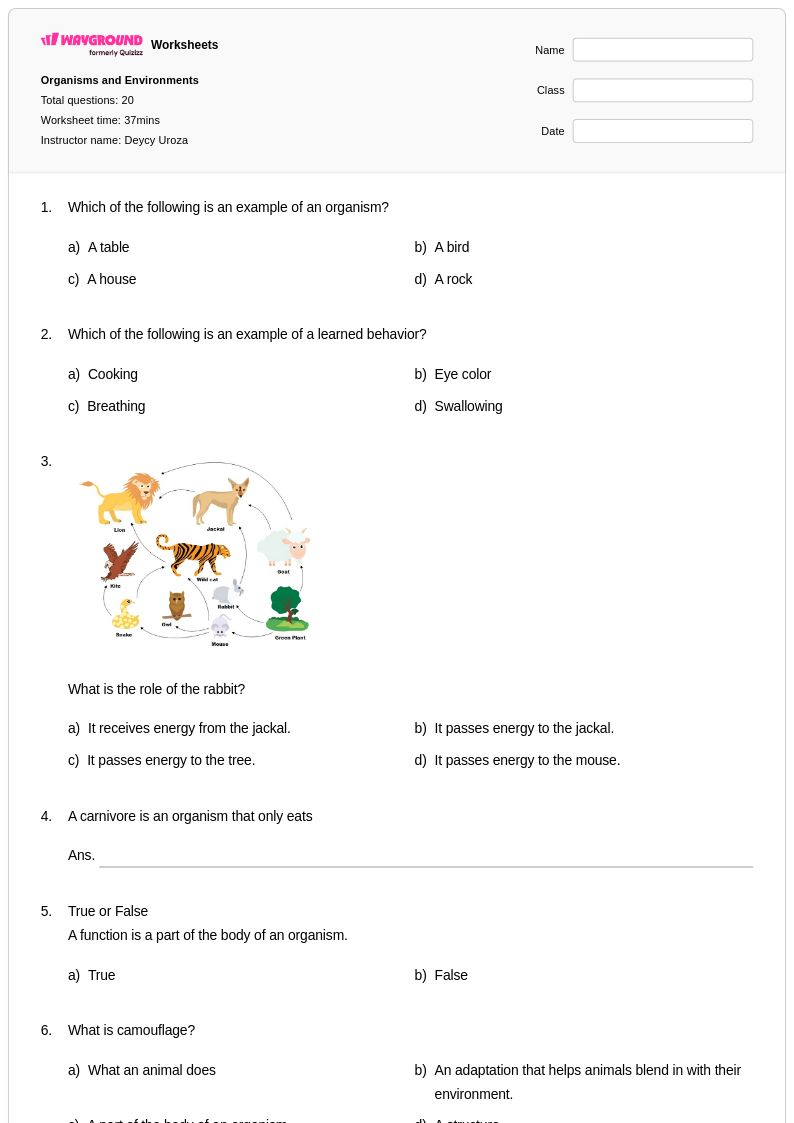
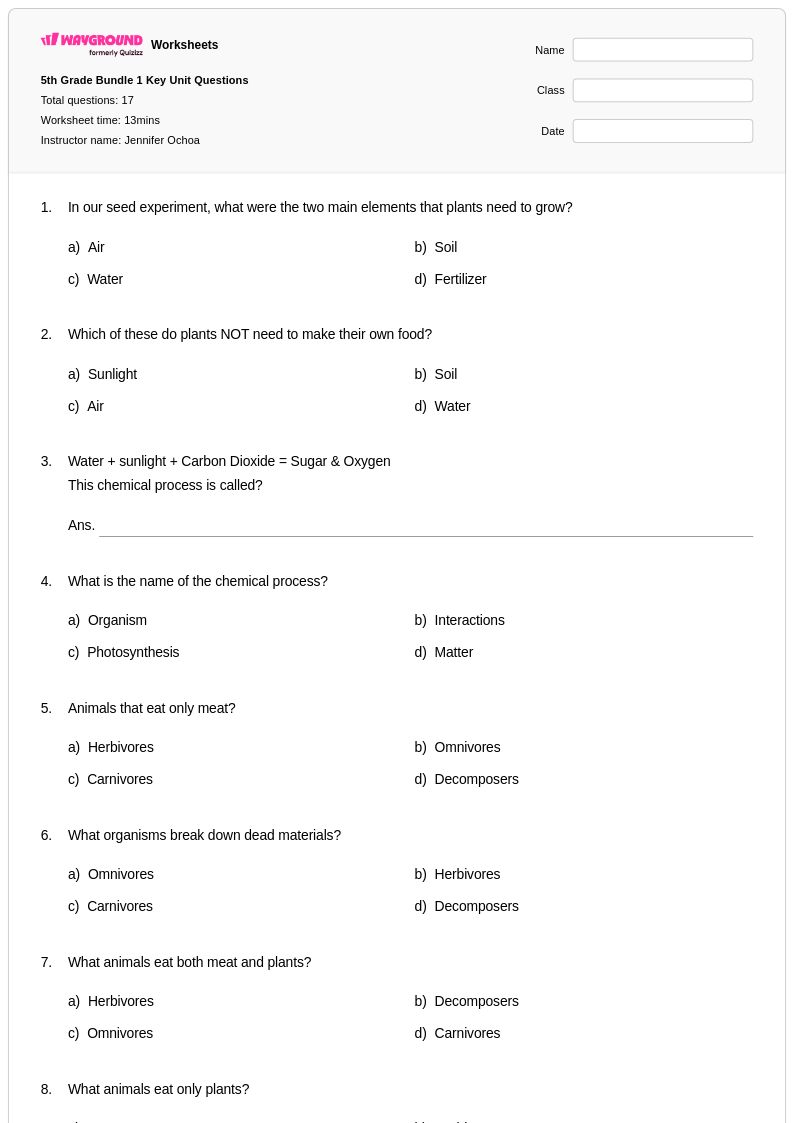
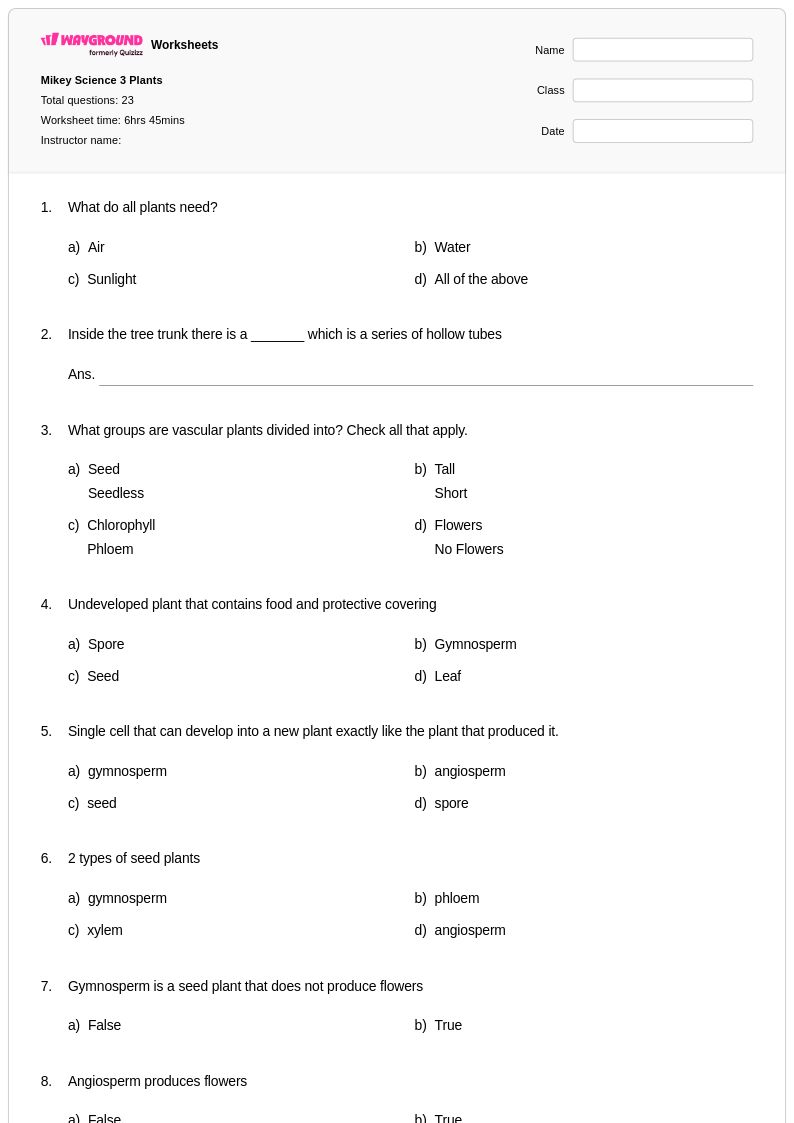
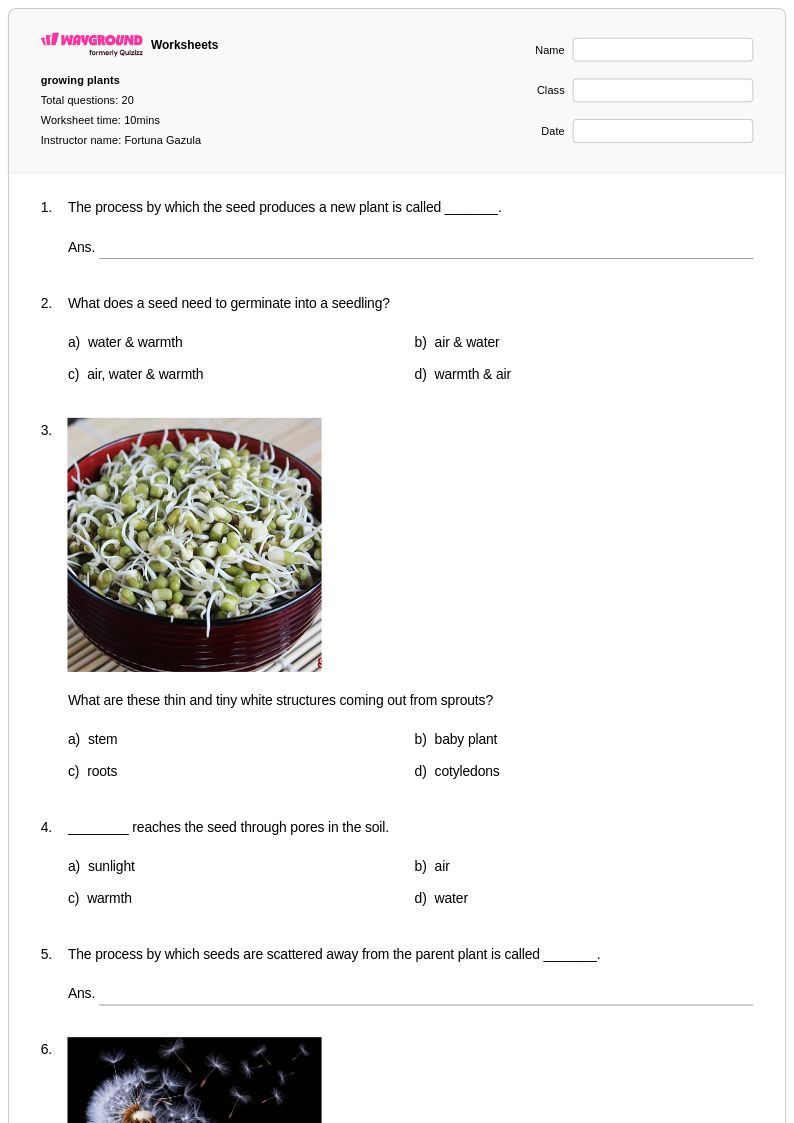
Seed structure worksheets for Grade 5 students available through Wayground (formerly Quizizz) provide comprehensive exploration of the fundamental components that make up seeds and their essential functions in plant reproduction and growth. These carefully designed educational resources help students develop critical observation skills while learning to identify and understand the roles of key seed parts including the seed coat, embryo, cotyledons, and endosperm. The worksheets strengthen scientific vocabulary, analytical thinking, and botanical knowledge through engaging practice problems that encourage students to examine, compare, and classify different types of seeds. Each worksheet collection includes detailed answer keys and is available as free printables in convenient PDF format, making it easy for educators to incorporate hands-on seed dissection activities and visual learning experiences into their biology curriculum.
Wayground (formerly Quizizz) empowers teachers with an extensive library of millions of educator-created resources specifically designed to support Grade 5 seed structure instruction across diverse learning environments. The platform's robust search and filtering capabilities allow teachers to quickly locate worksheets that align with specific science standards and match their students' varying skill levels, while built-in differentiation tools enable seamless customization for remediation and enrichment activities. These comprehensive worksheet collections are available in both printable and digital formats, including downloadable PDFs, providing maximum flexibility for classroom instruction, homework assignments, and independent practice sessions. Teachers can efficiently plan engaging lessons that combine theoretical knowledge with practical observation skills, helping students build a solid foundation in plant biology while developing the scientific inquiry skills essential for future learning in the life sciences.
FAQs
How do I teach seed structure to biology students?
Teaching seed structure is most effective when students move from the whole seed to its internal parts, starting with the seed coat as a protective layer before examining the embryo, cotyledons, and endosperm. Using cross-section diagrams alongside real seeds (such as soaked bean seeds, which are easy to dissect) gives students a concrete reference for each structure. Connecting each part to its function — for example, explaining that the endosperm is the embryo's food supply — helps students retain anatomical labels within a functional framework rather than memorizing terms in isolation.
What are the most common mistakes students make when labeling seed structures?
The most frequent error is confusing the cotyledon with the endosperm — students often conflate both as 'food storage' without distinguishing that cotyledons are part of the embryo itself while the endosperm is a separate nutritive tissue. Students also commonly mislabel the radicle and plumule, reversing which becomes the root and which becomes the shoot. Emphasizing that the embryo is a miniature plant with distinct parts (radicle, plumule, hypocotyl, and cotyledons) helps students build a more accurate mental model before attempting labeling exercises.
What worksheet activities help students practice identifying seed anatomy?
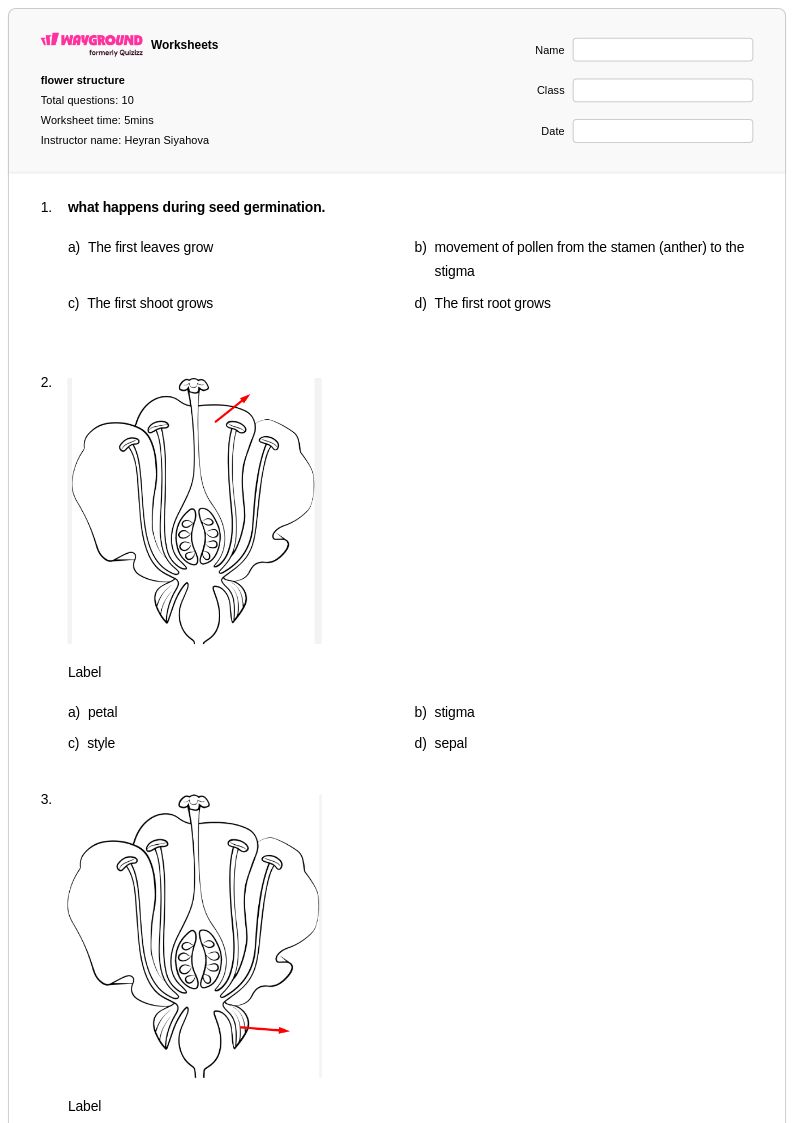
Labeling diagrams of dicot and monocot seeds are among the most effective practice formats because they require students to recall both the name and location of each structure simultaneously. Fill-in-the-blank exercises that describe the function of a part (e.g., 'the _____ protects the seed from physical damage and desiccation') push students beyond recognition into applied understanding. Pairing these with short-answer questions about the role of each structure in germination reinforces how anatomy connects to plant life cycles.
How do I differentiate seed structure activities for students at different ability levels?
For students who need additional support, word banks on labeling diagrams reduce cognitive load without removing the identification challenge, while pre-labeled diagrams with matching columns can scaffold early learners. More advanced students benefit from comparative tasks that contrast monocot and dicot seed anatomy or from open-response questions asking them to predict what would happen if a specific structure were absent or damaged. On Wayground, teachers can apply accommodations such as reduced answer choices or read-aloud support to individual students, ensuring each learner accesses the same content at an appropriate challenge level.
How can I use Wayground's seed structure worksheets in my classroom?
Wayground's seed structure worksheets are available as printable PDF downloads for traditional paper-based instruction and in digital formats for technology-integrated classrooms, giving teachers flexibility depending on their setting. Teachers can also host any worksheet as a live quiz on Wayground, making it easy to assign as a formative check or bell-ringer with real-time visibility into student responses. Each worksheet includes a complete answer key, reducing prep time and making the resources equally effective for independent practice, small-group review, or whole-class instruction.
How does seed structure connect to broader plant biology concepts?
Seed structure is foundational to understanding the plant life cycle because the seed represents the stage at which a new plant embryo is packaged for dispersal and dormancy. The structures within a seed — particularly the embryo, cotyledons, and endosperm — directly determine how and when germination occurs, which connects to broader topics like plant reproduction, nutrient cycling, and ecosystem dynamics. Teaching seed anatomy before germination and plant growth units gives students a structural vocabulary that makes subsequent concepts significantly easier to understand.