
10 Q
9th - 12th
10 Q
6th - 12th
16 Q
9th - 12th
20 Q
7th - Uni
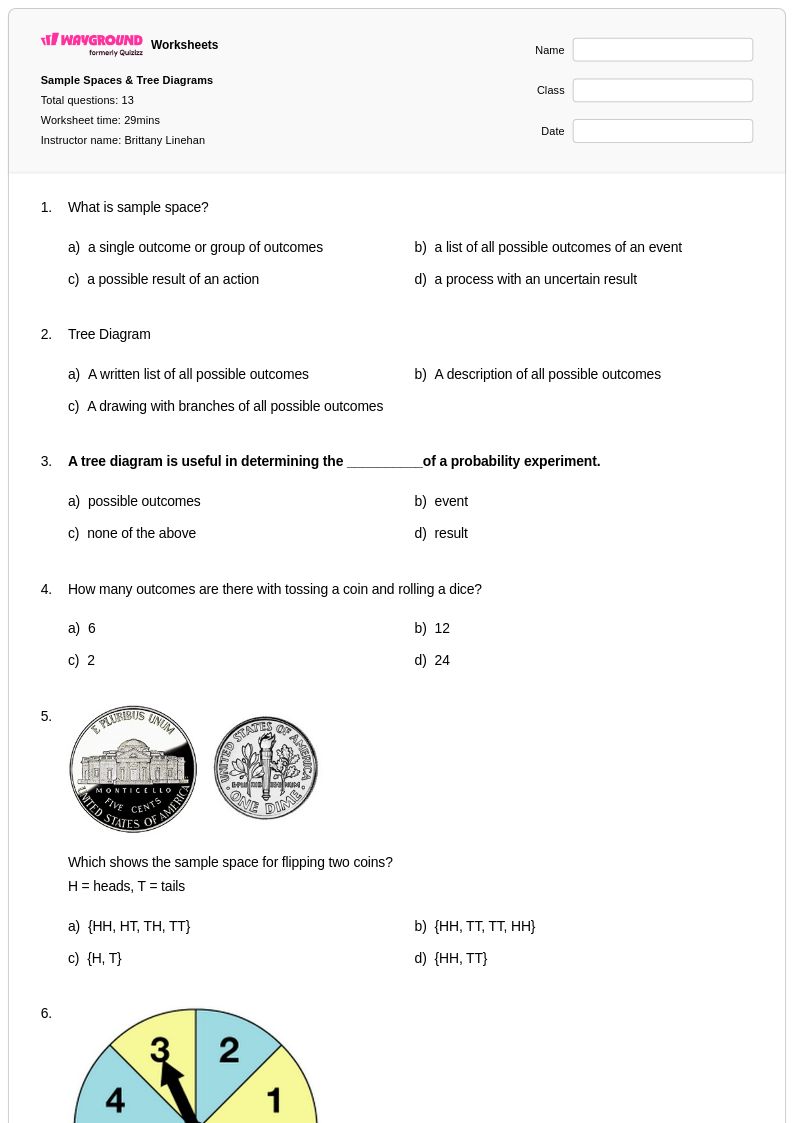
13 Q
9th - 12th
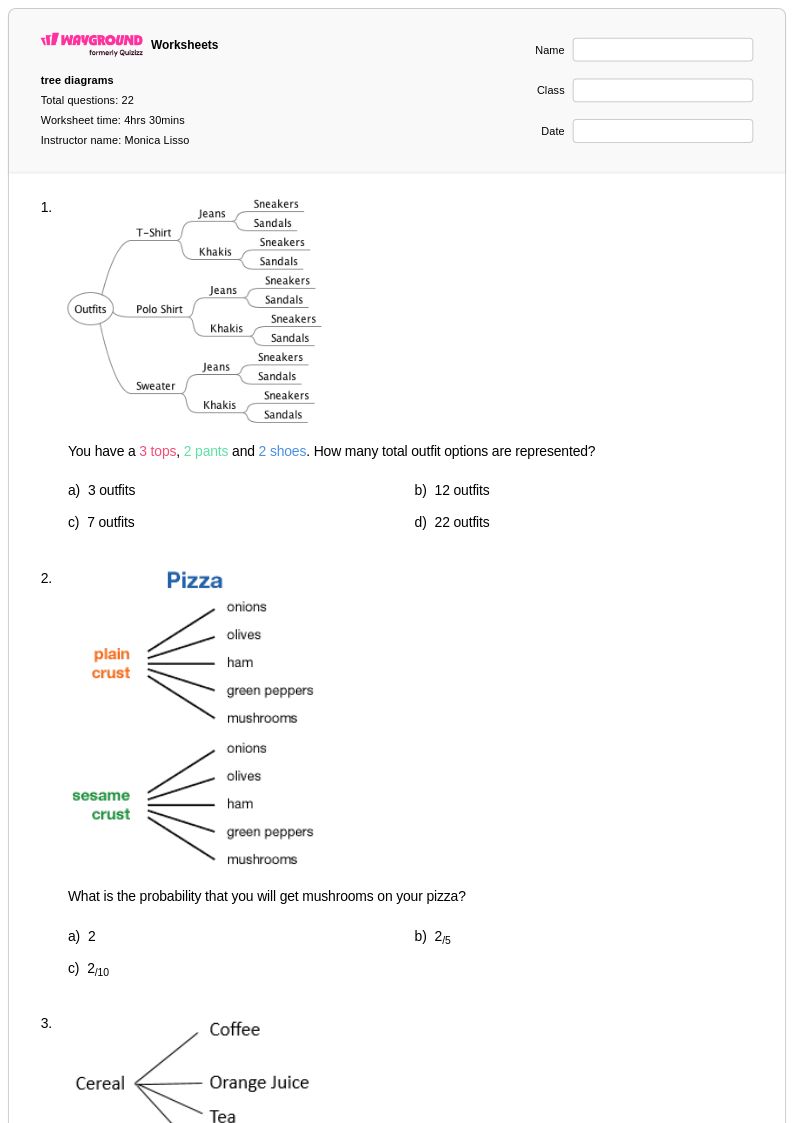
22 Q
9th
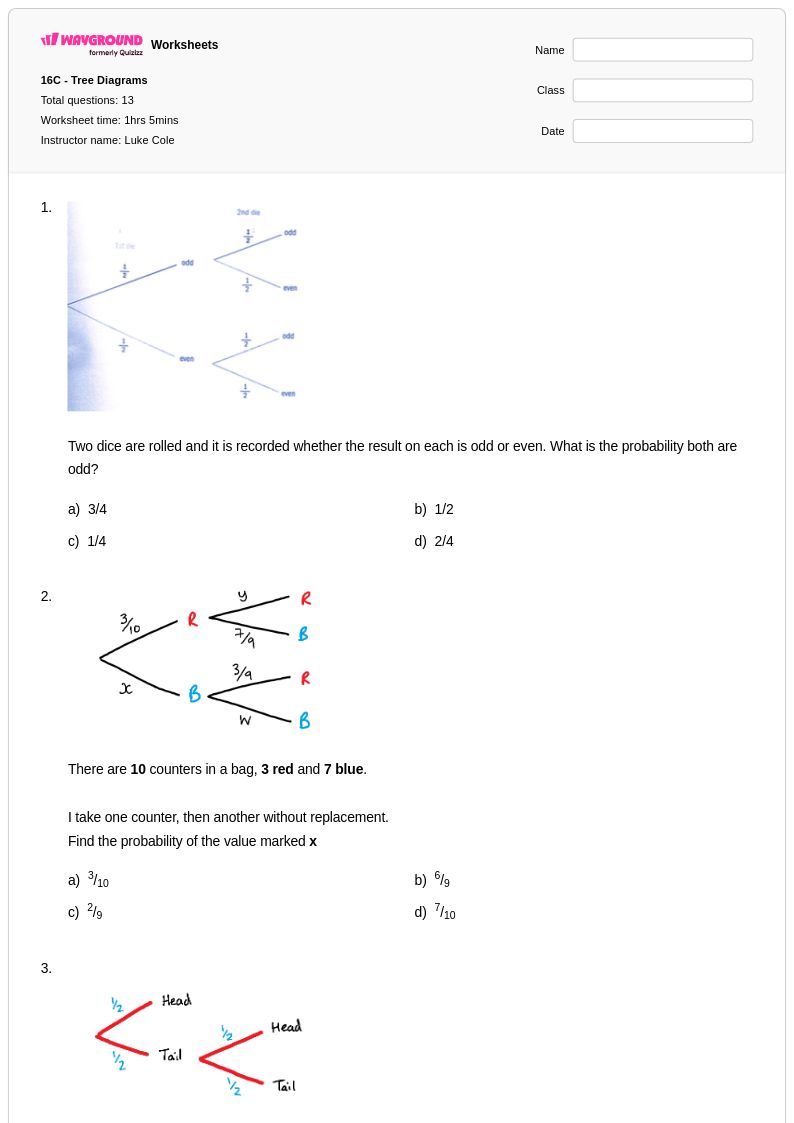
13 Q
9th
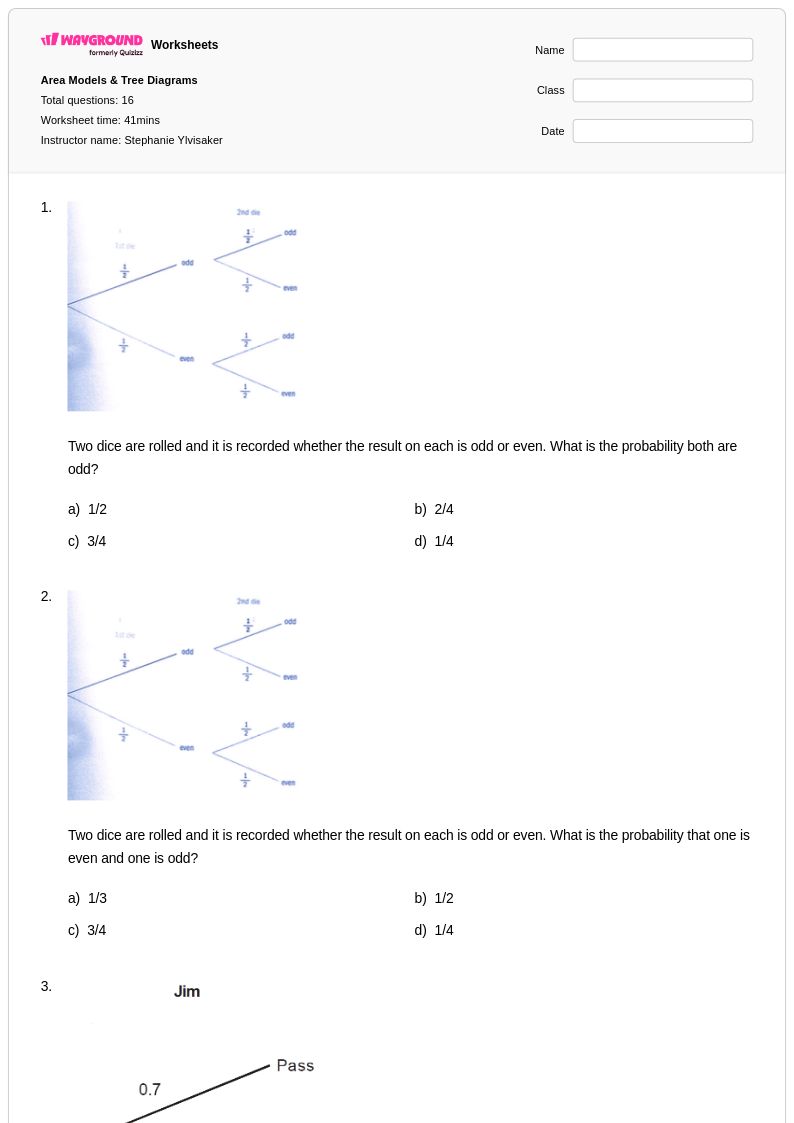
16 Q
9th - 12th
18 Q
9th - 12th
10 Q
7th - Uni
18 Q
9th - 12th
10 Q
9th - 12th
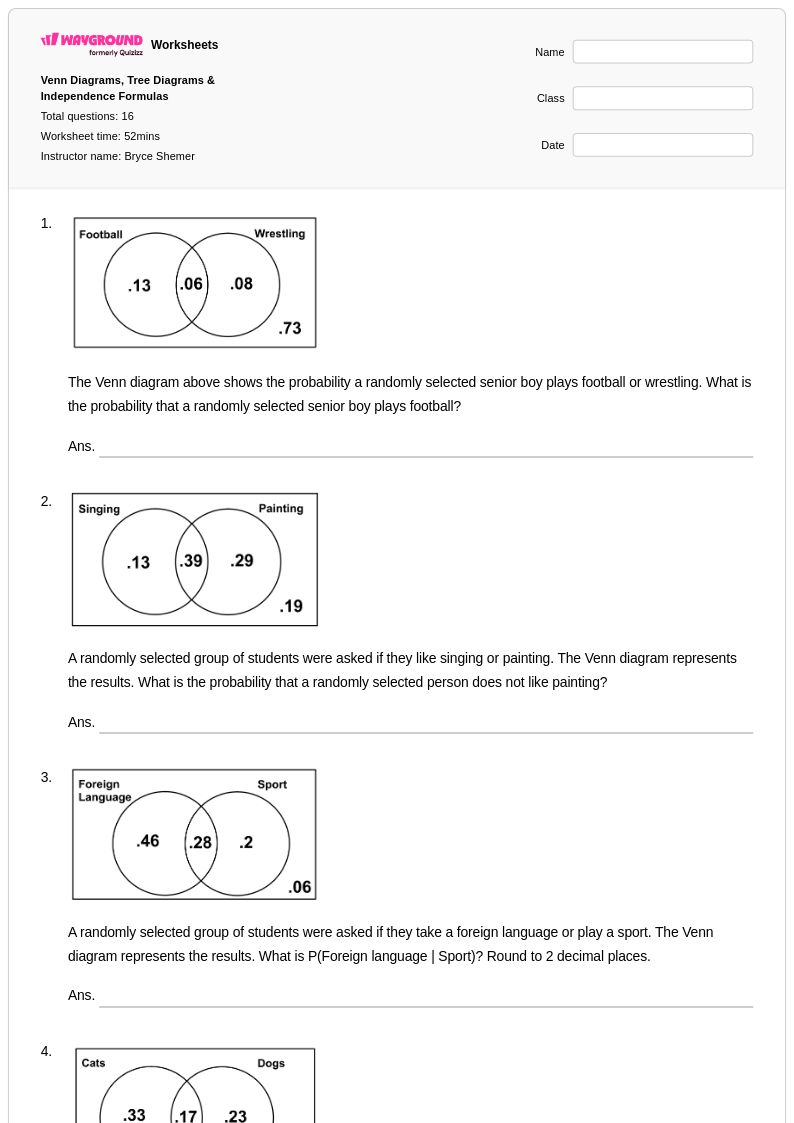
16 Q
9th - 12th
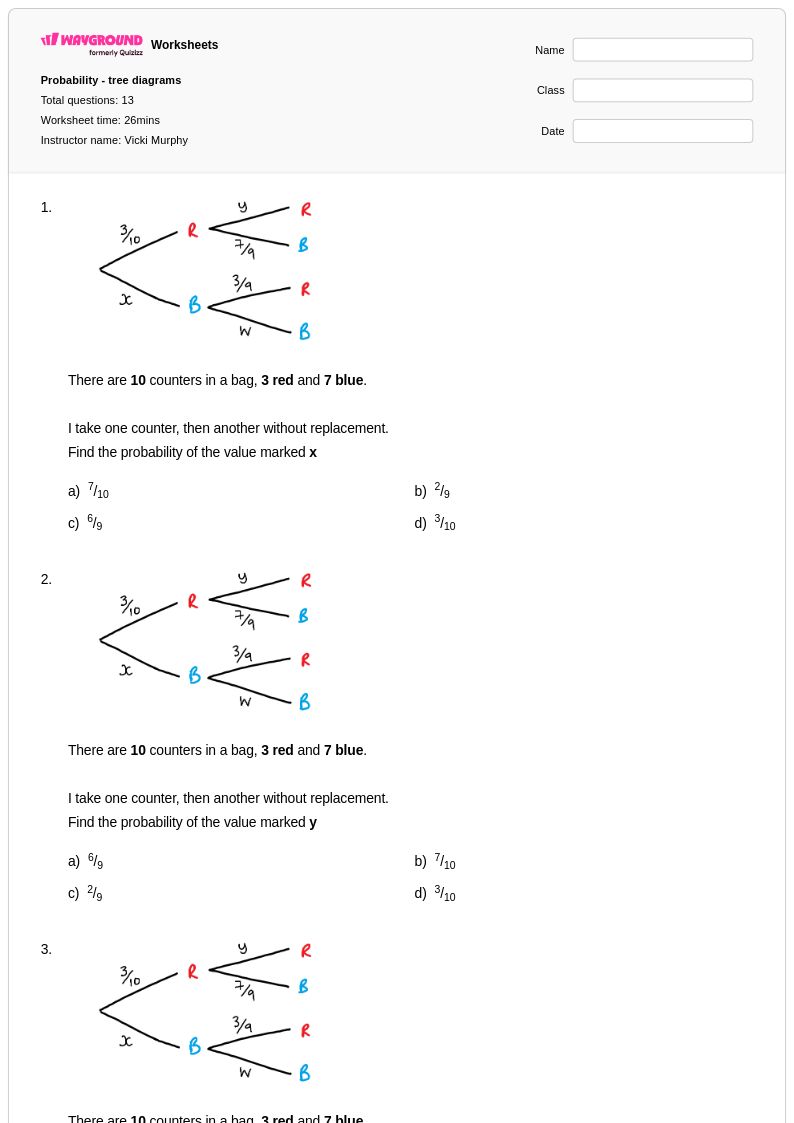
13 Q
6th - 10th
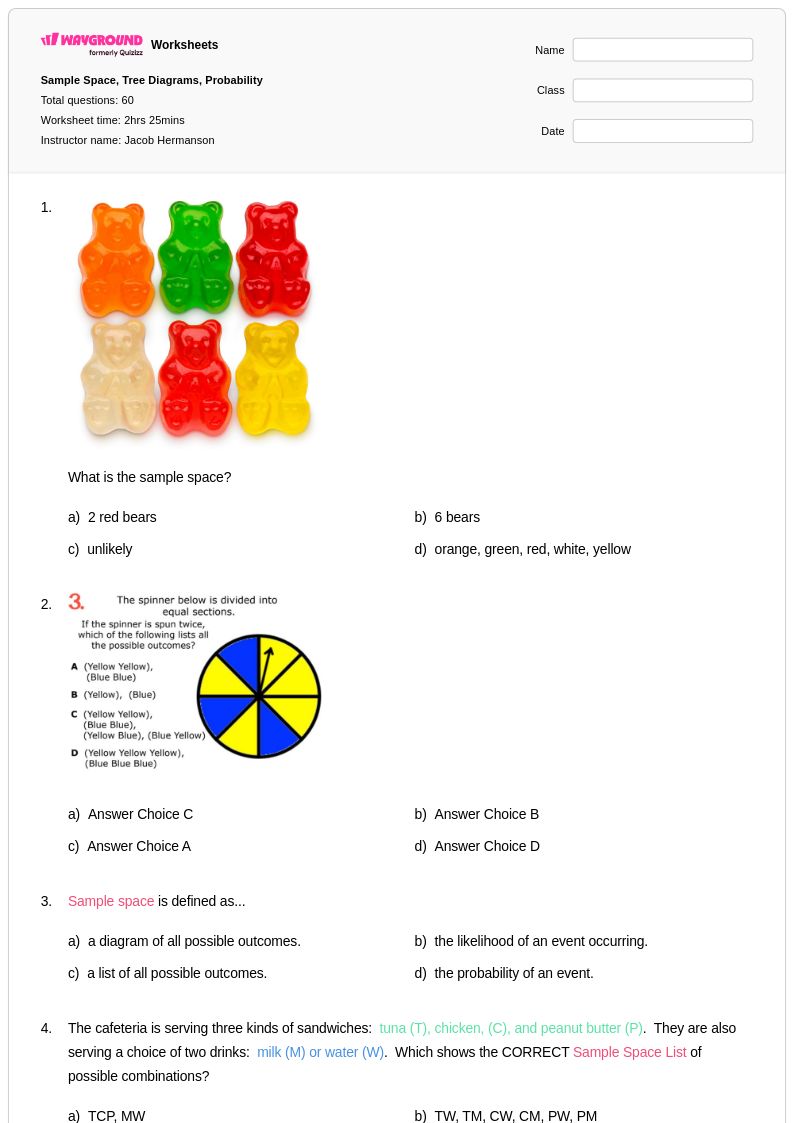
60 Q
7th - Uni
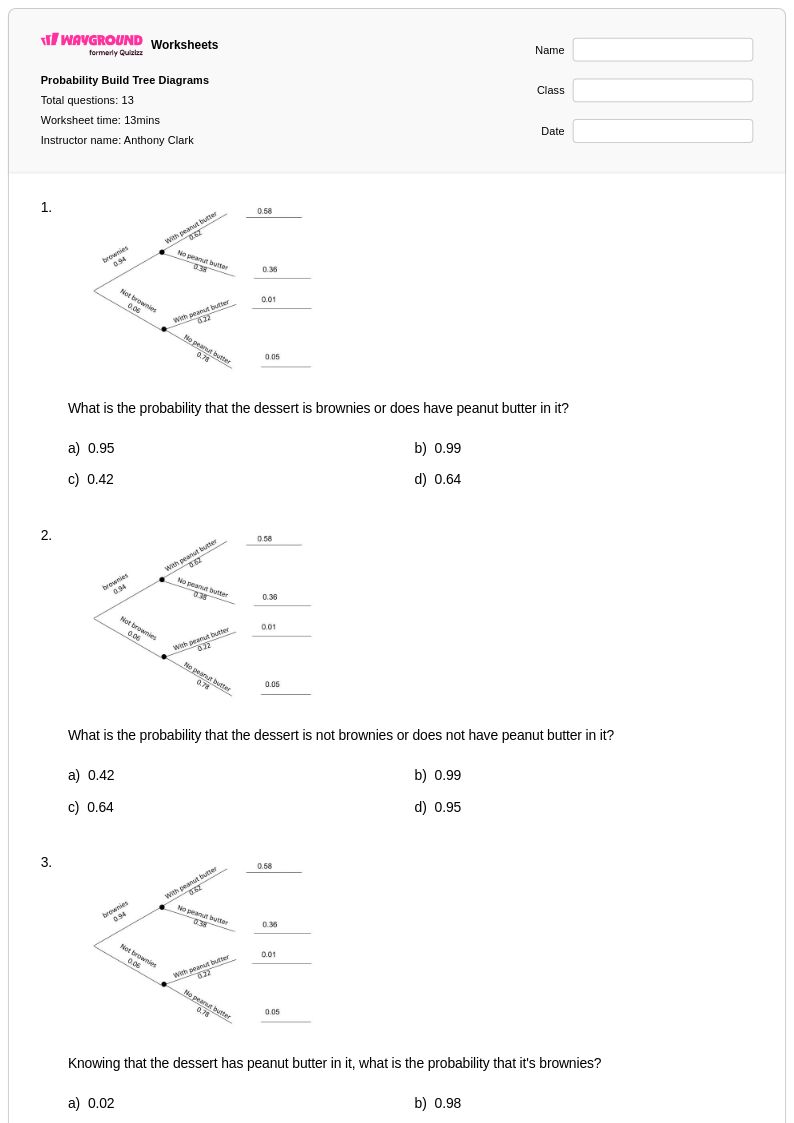
13 Q
7th - Uni
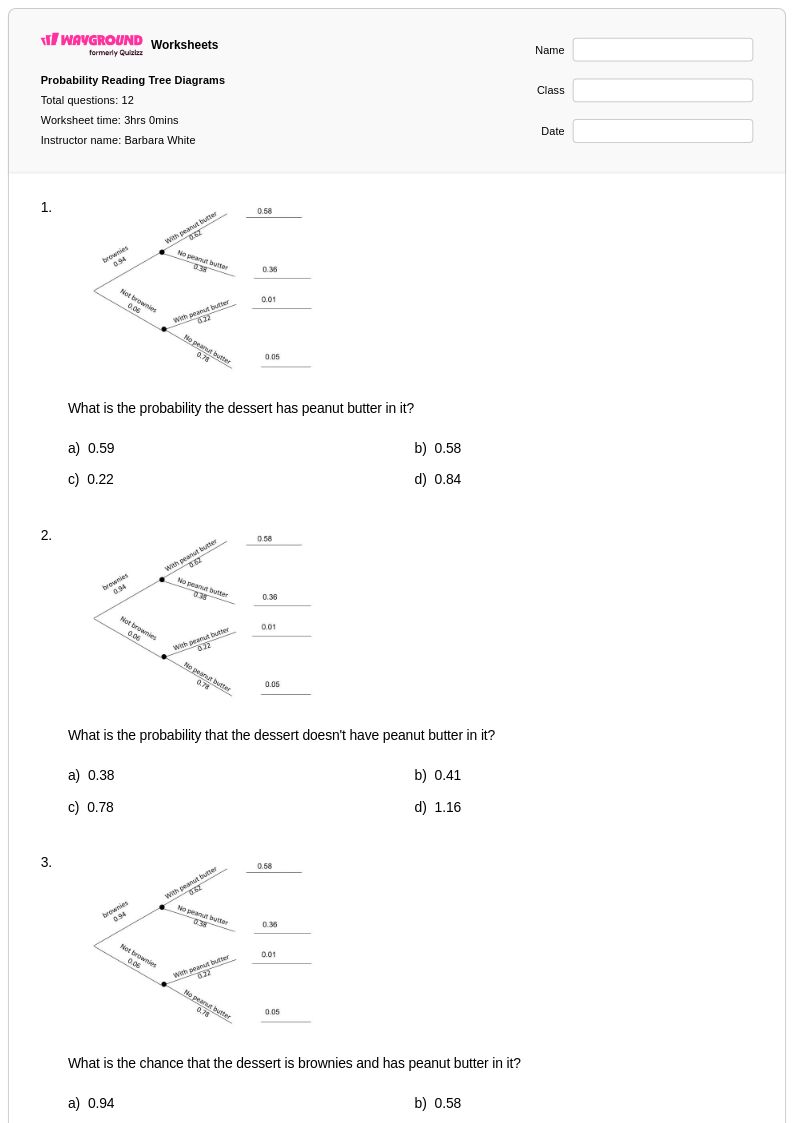
12 Q
9th - 12th
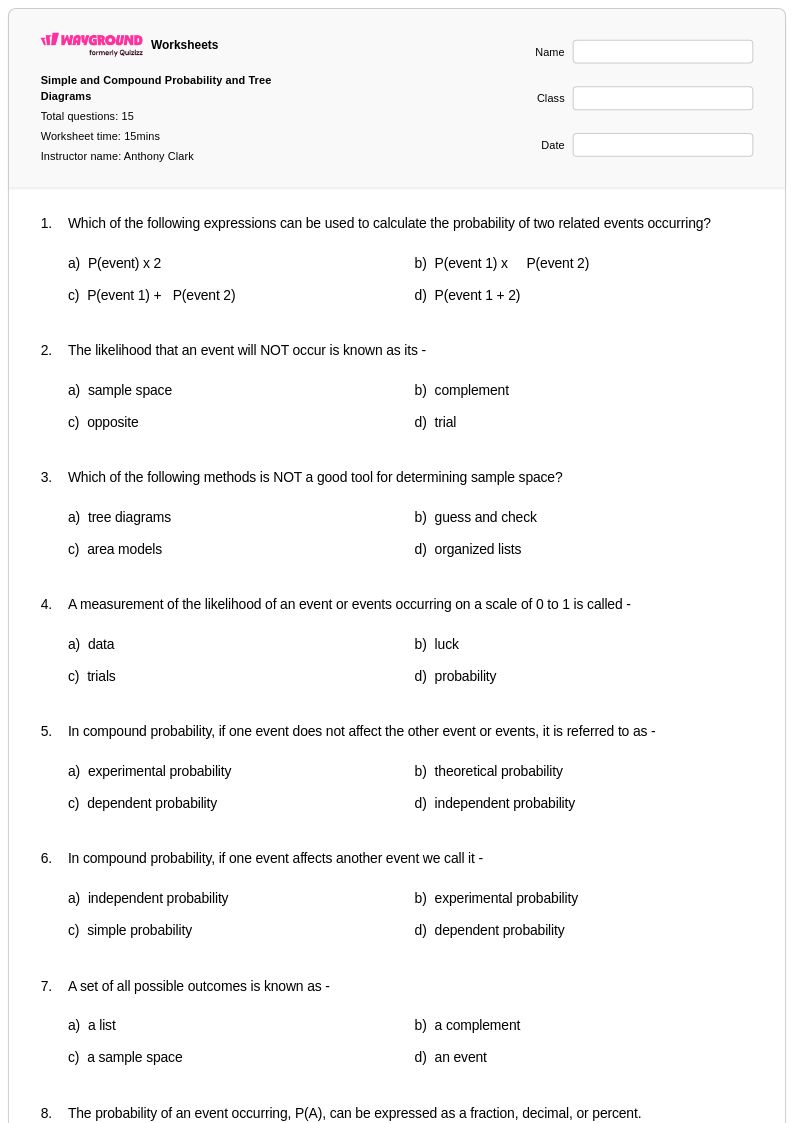
15 Q
7th - Uni
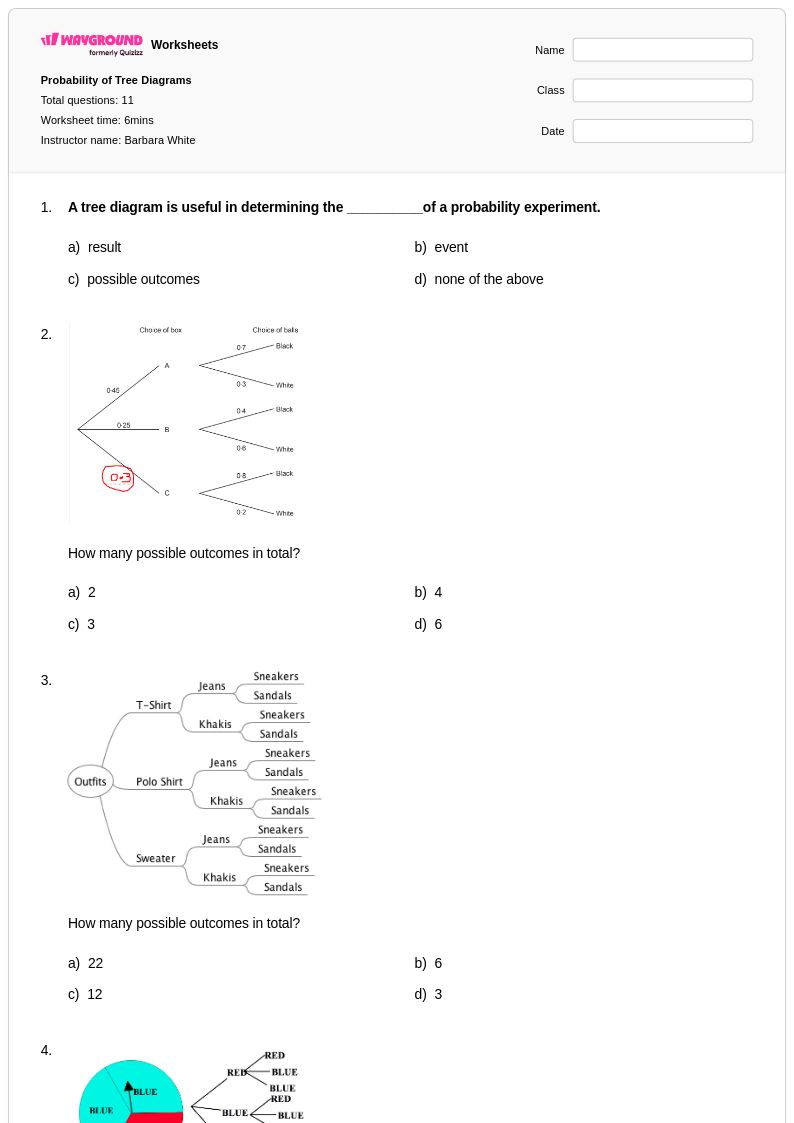
11 Q
9th
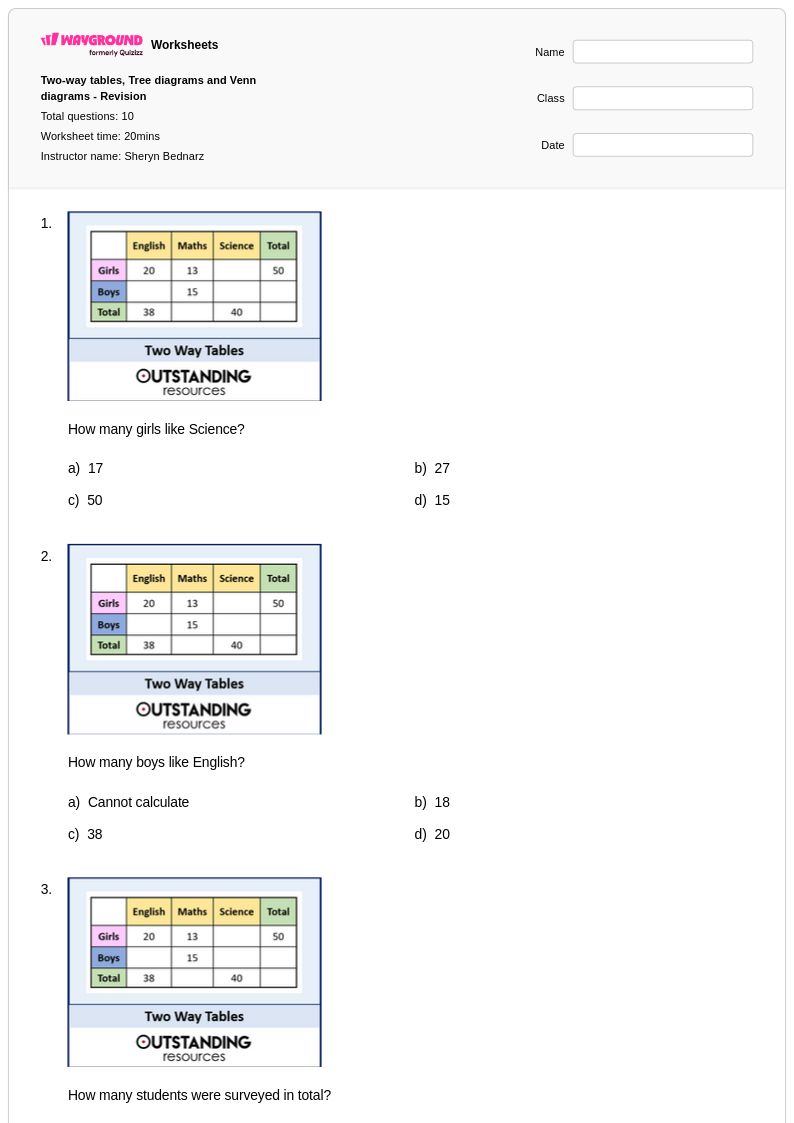
10 Q
8th - 9th
13 Q
8th - Uni
17 Q
9th
56 Q
9th
13 Q
9th
Explore Other Subject Worksheets for grade 9
Explore printable Tree Diagrams worksheets for Grade 9
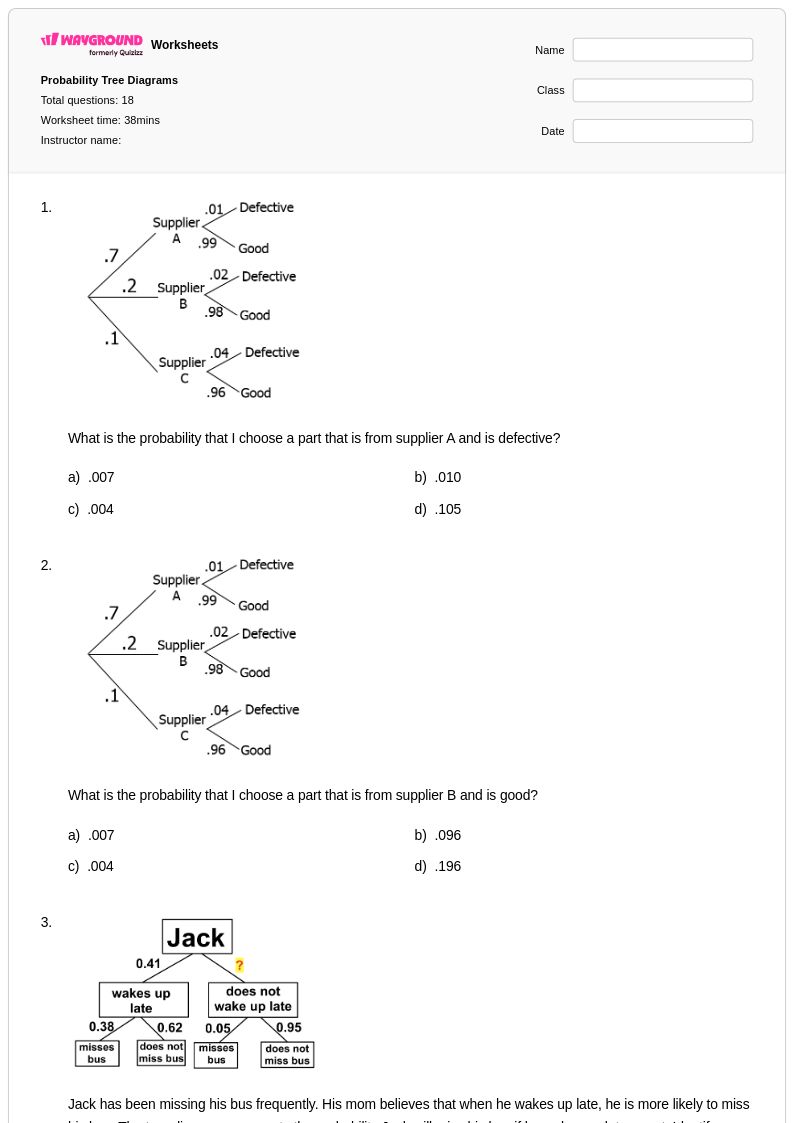
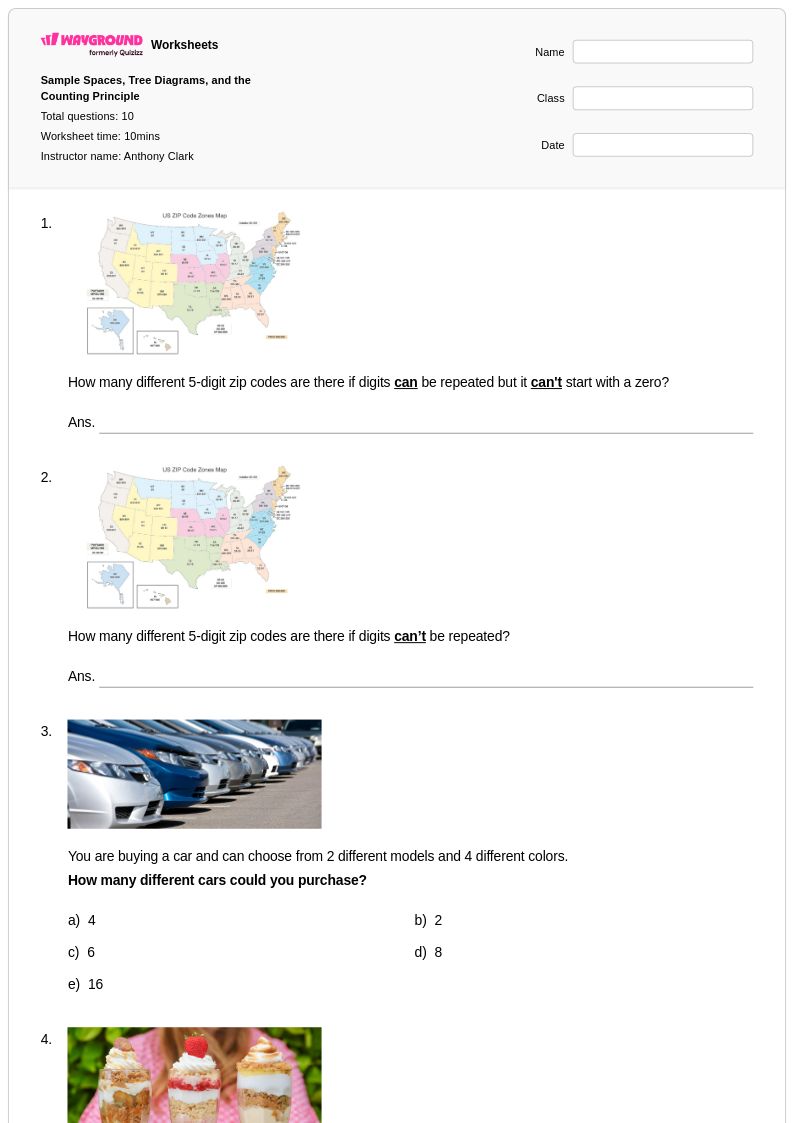
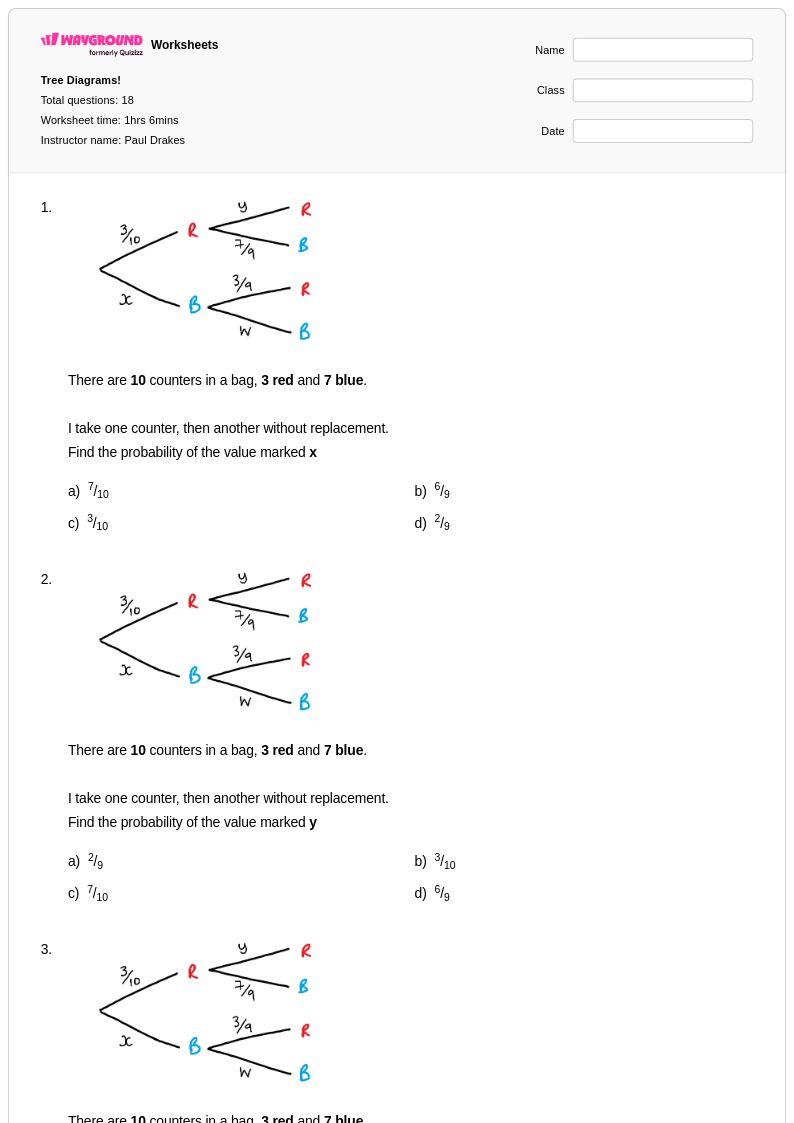
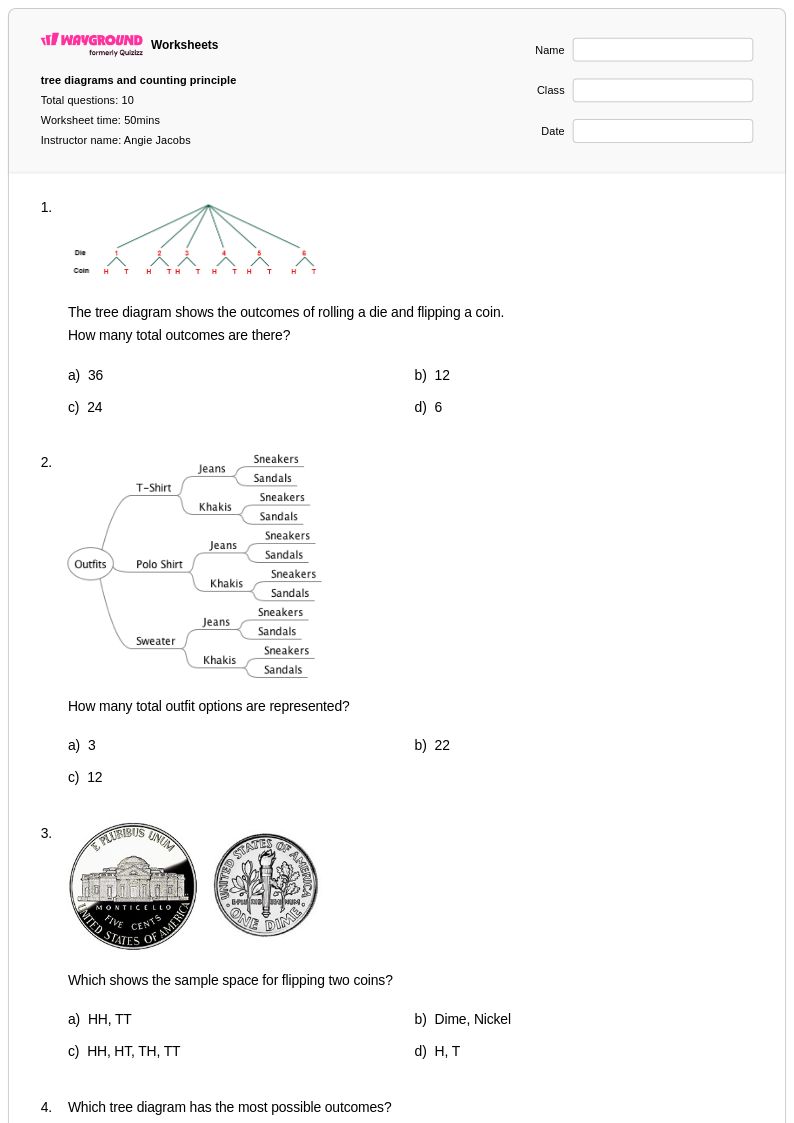
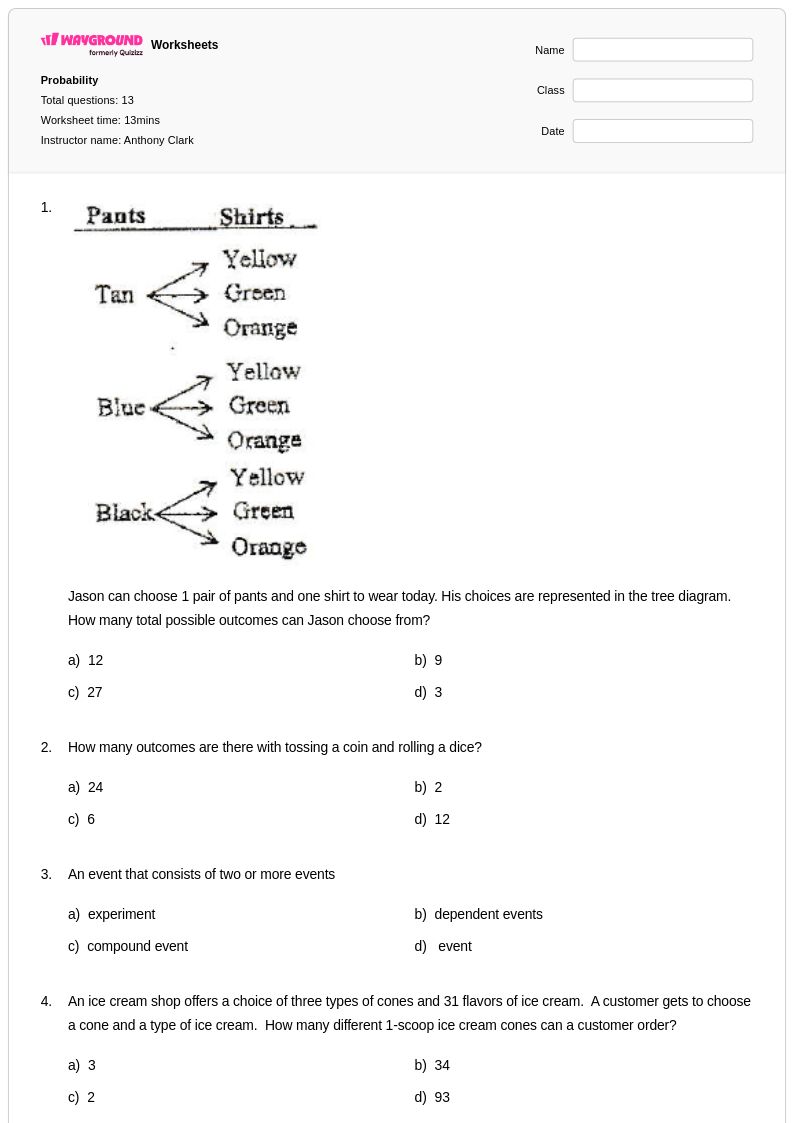
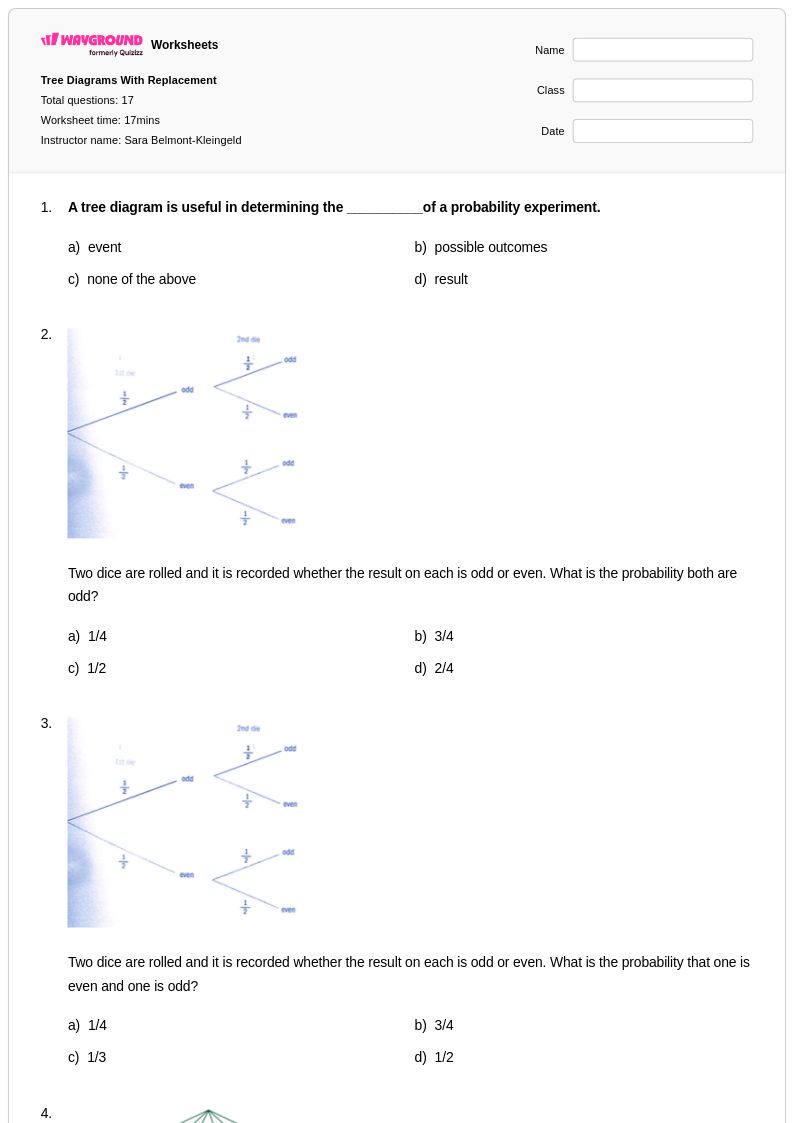
Tree diagrams serve as fundamental visual tools in Grade 9 probability and statistics, helping students systematically organize and calculate probabilities for multi-step events and conditional outcomes. The comprehensive tree diagram worksheets available through Wayground (formerly Quizizz) strengthen essential mathematical reasoning skills by guiding students through the construction and interpretation of these branching probability models. These carefully designed practice problems cover sequential events, independent and dependent probabilities, and compound probability calculations, with each worksheet featuring detailed answer keys that demonstrate proper tree diagram methodology. Students work through realistic scenarios involving coin tosses, card draws, weather patterns, and survey data, building confidence in their ability to visualize probability relationships. The free printable resources include step-by-step examples and graduated difficulty levels, ensuring students master both the conceptual understanding and computational skills necessary for advanced probability work.
Wayground (formerly Quizizz) empowers mathematics educators with an extensive collection of millions of teacher-created tree diagram resources that streamline lesson planning and enhance student learning outcomes. The platform's sophisticated search and filtering capabilities allow teachers to quickly locate worksheets aligned with specific curriculum standards and tailored to diverse learning needs within their Grade 9 classrooms. These differentiation tools enable educators to provide targeted remediation for struggling students while offering enrichment opportunities for advanced learners, all within the same probability and statistics unit. The flexible customization features support both traditional instruction and modern pedagogical approaches, with resources available in printable PDF format for classroom distribution and digital formats for interactive learning environments. This comprehensive approach to skill practice ensures that teachers can effectively address individual student needs while maintaining rigorous academic standards in probability education.