
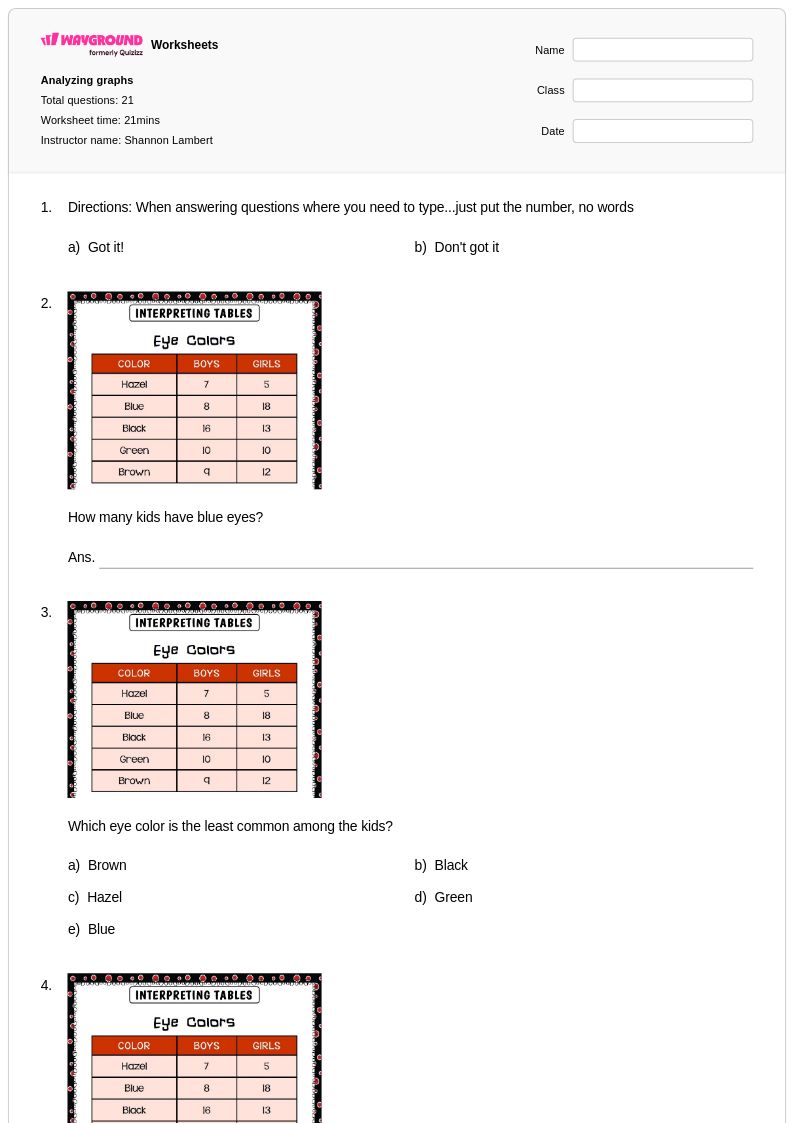
21 Q
6th
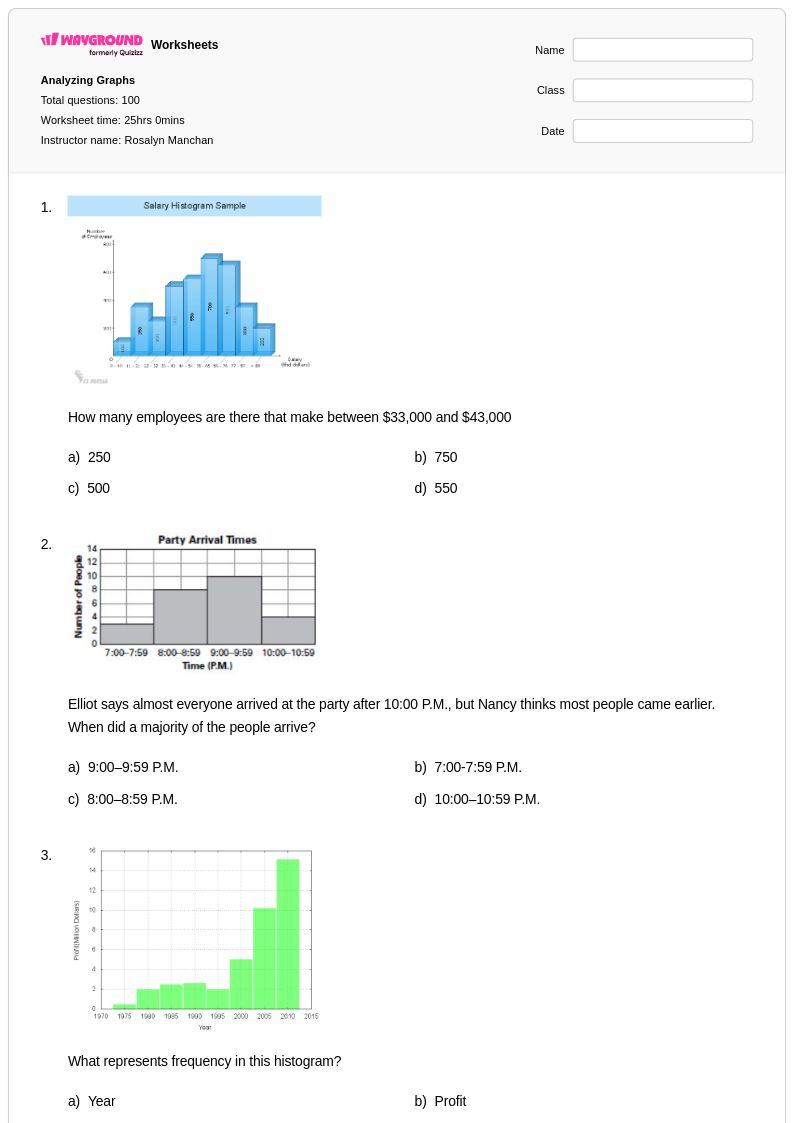
100 Q
6th - 8th
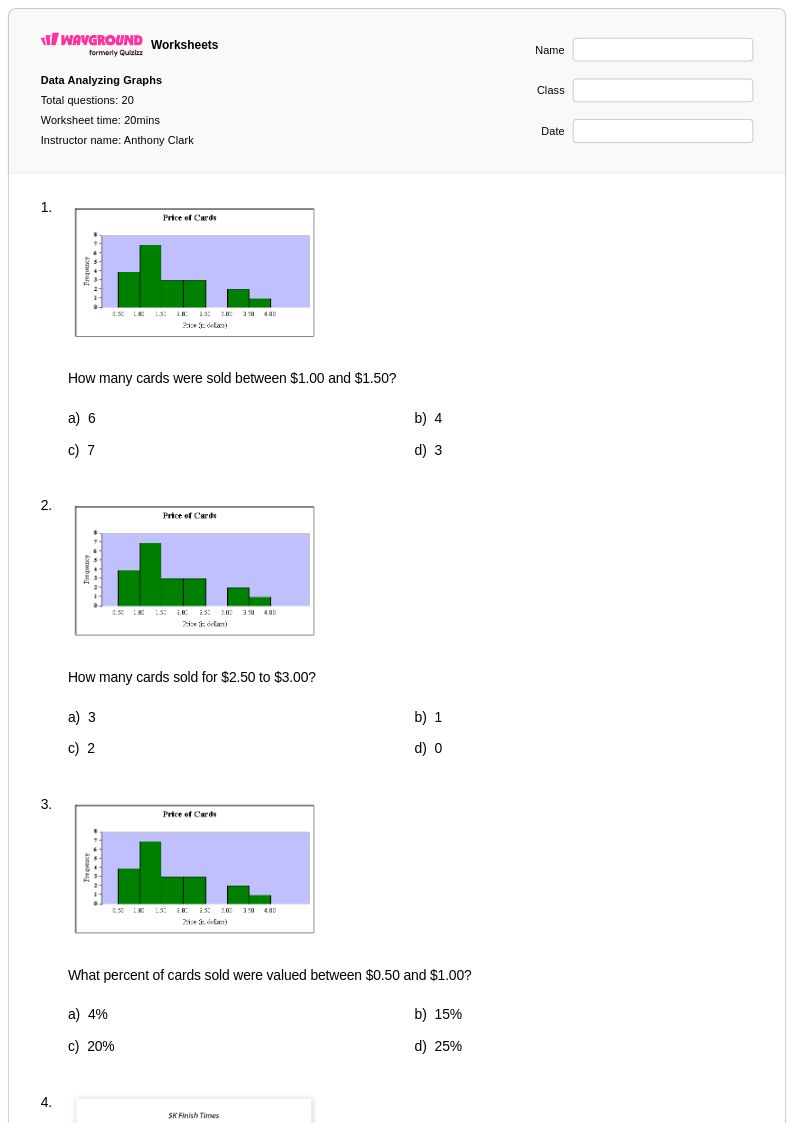
20 Q
6th - Uni
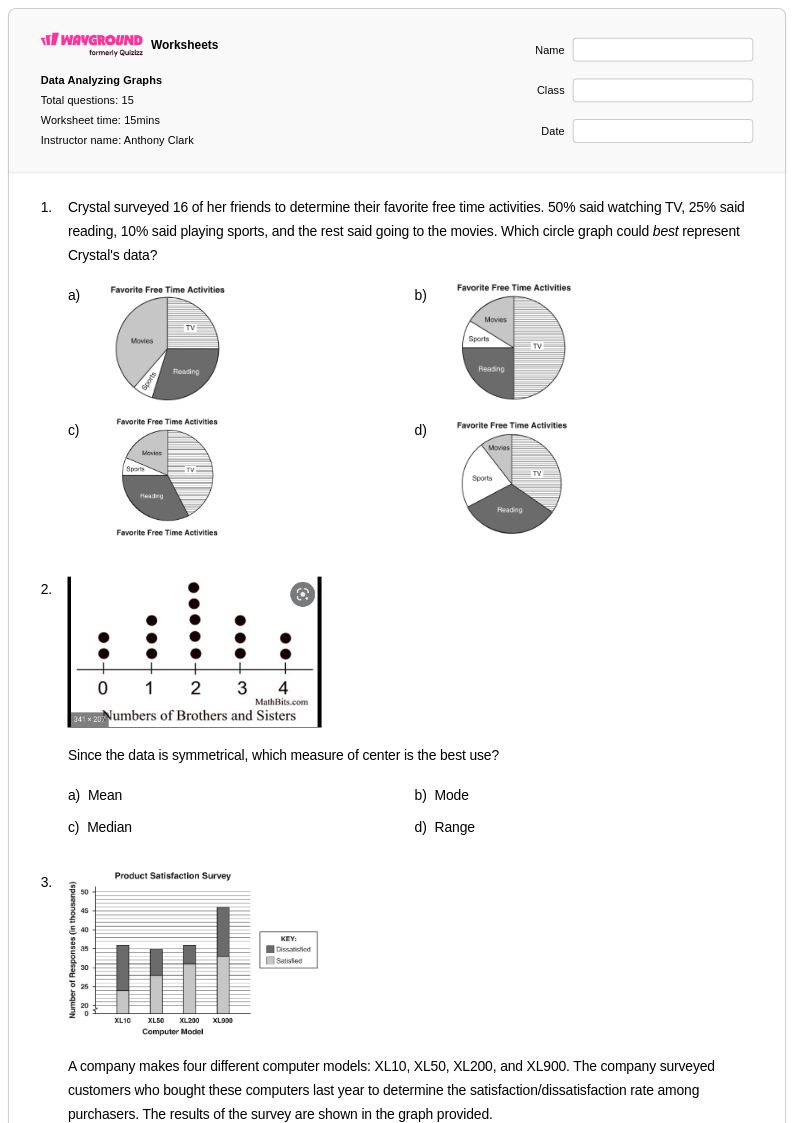
15 Q
6th - Uni
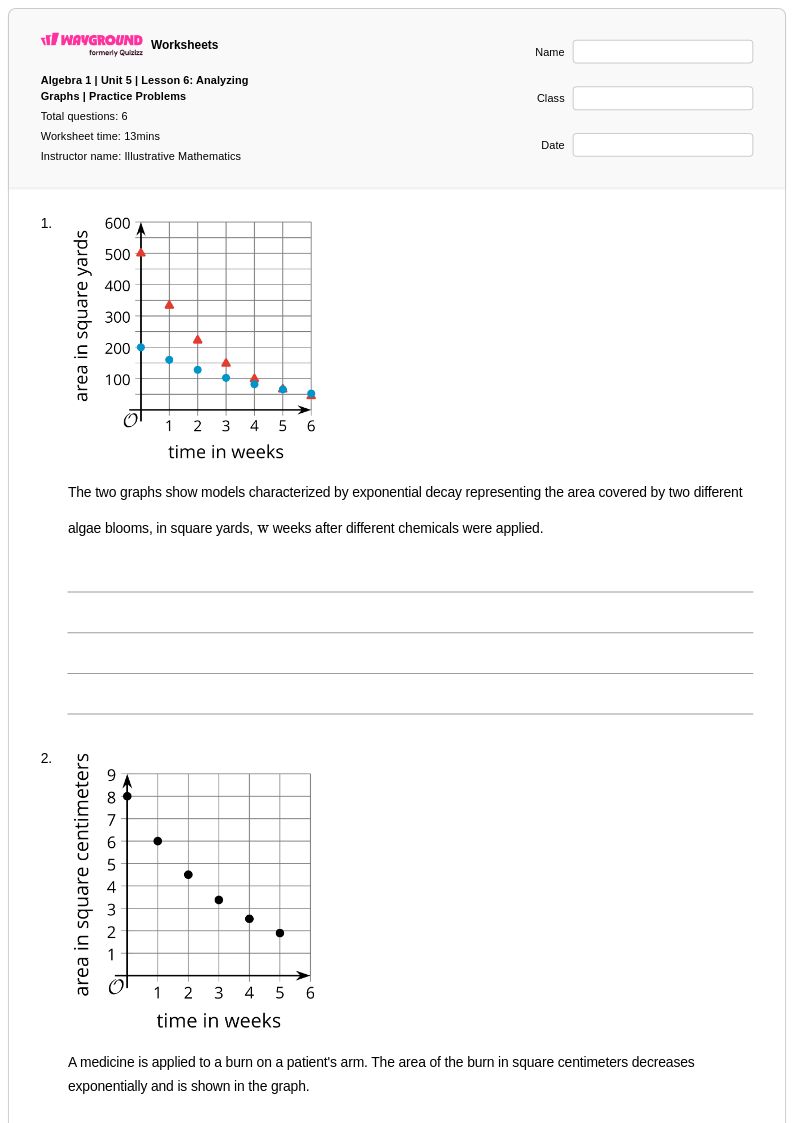
6 Q
6th - Uni
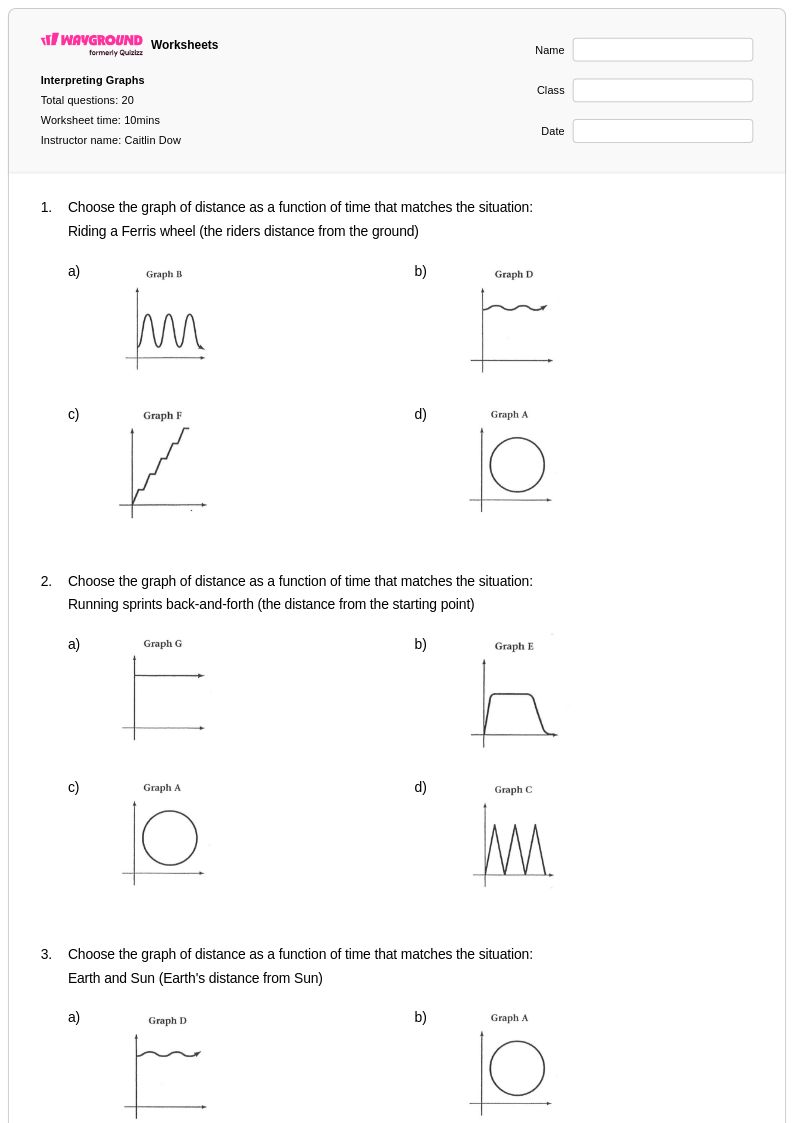
20 Q
6th - 8th
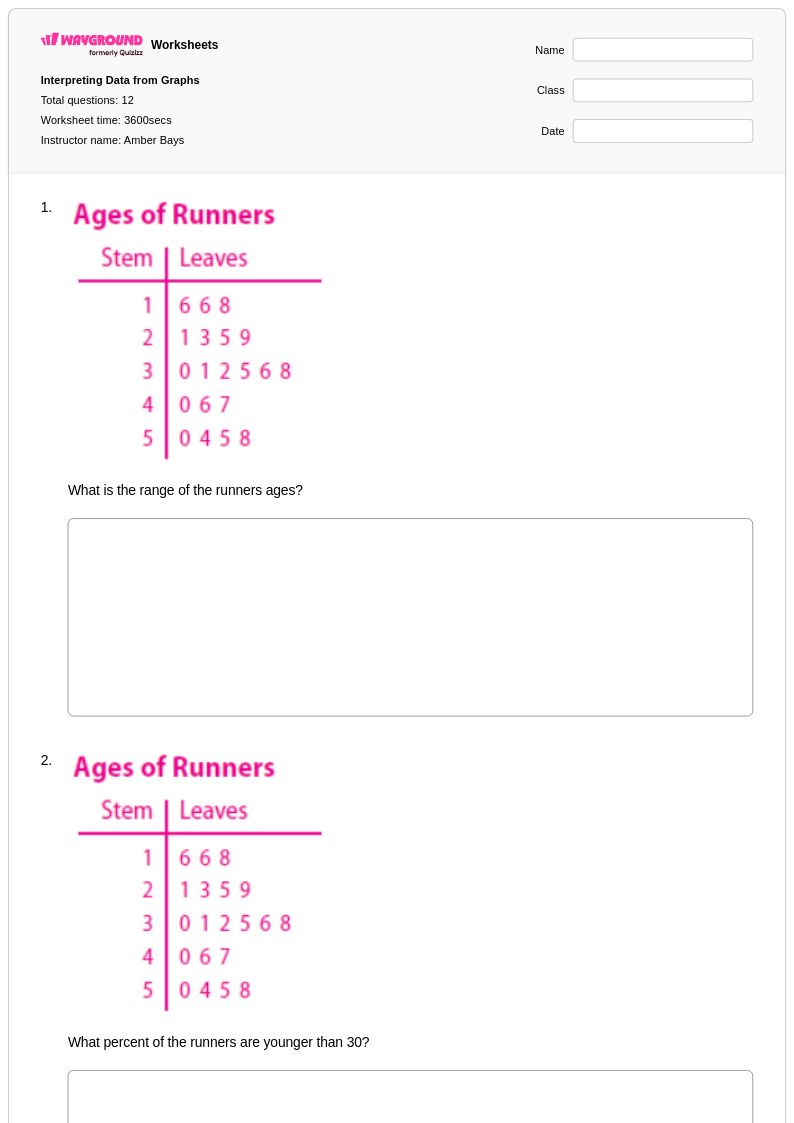
12 Q
6th
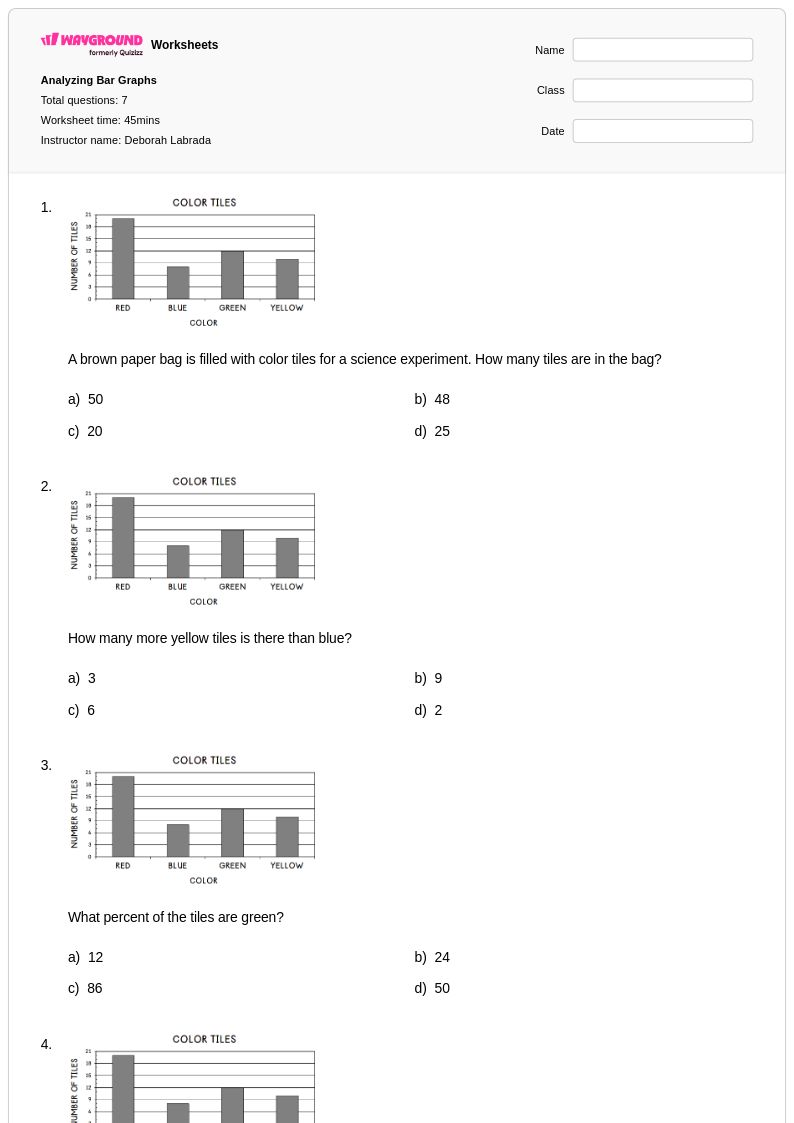
7 Q
6th - 8th
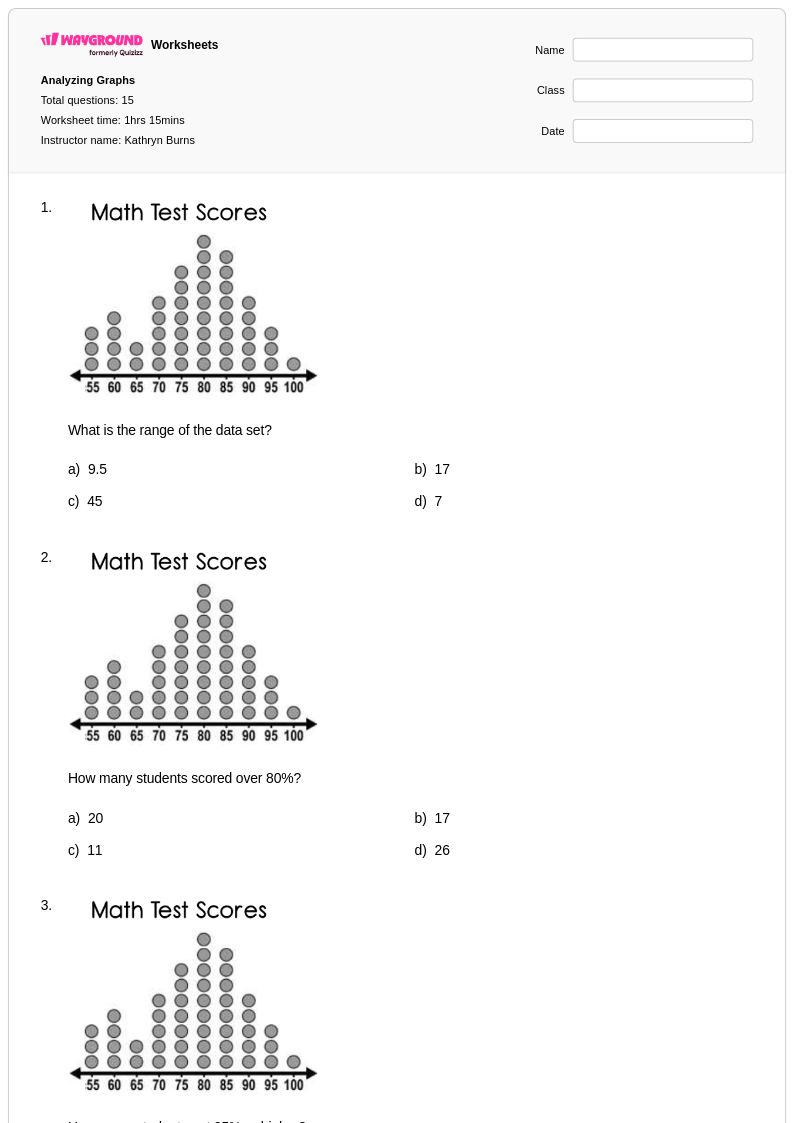
15 Q
6th - 8th
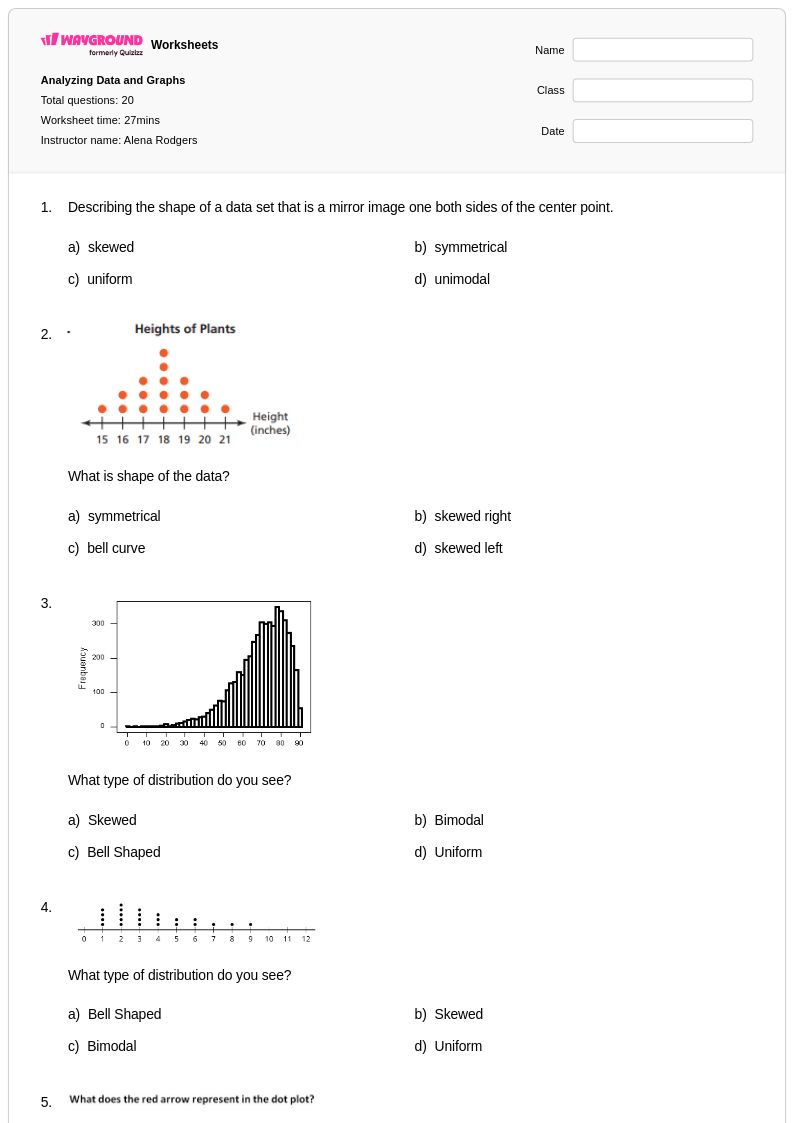
20 Q
6th - 8th
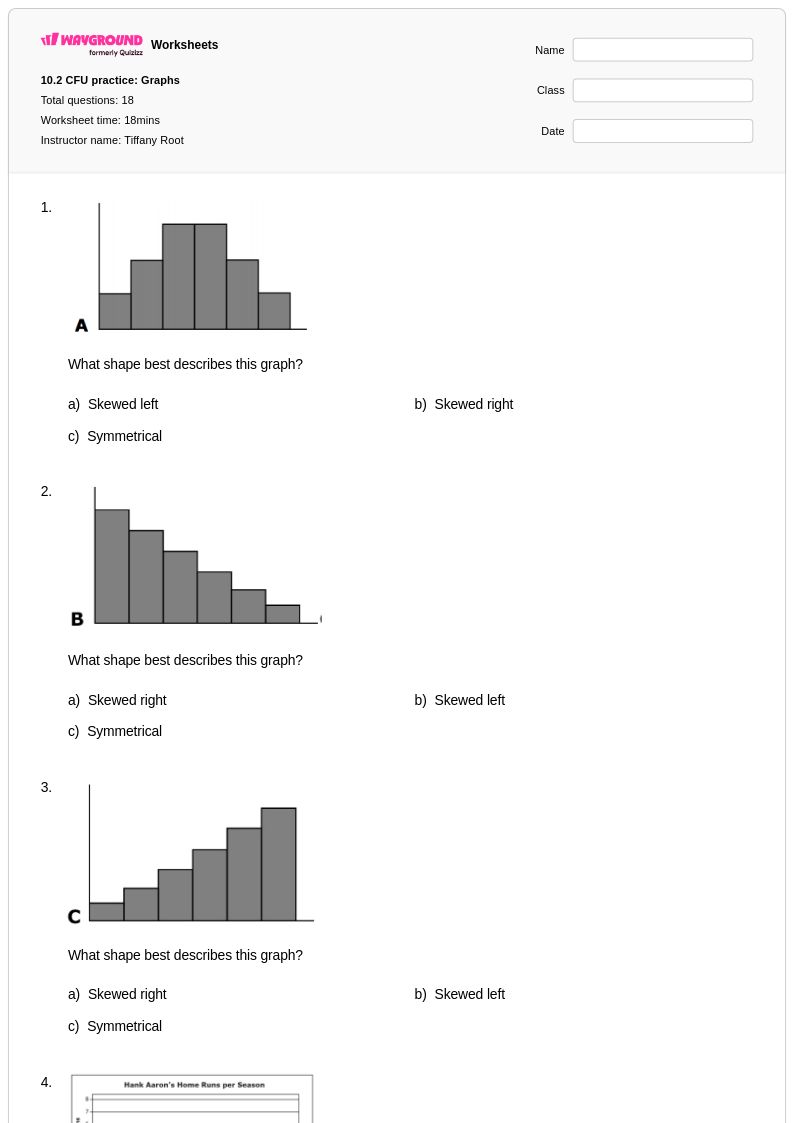
18 Q
6th
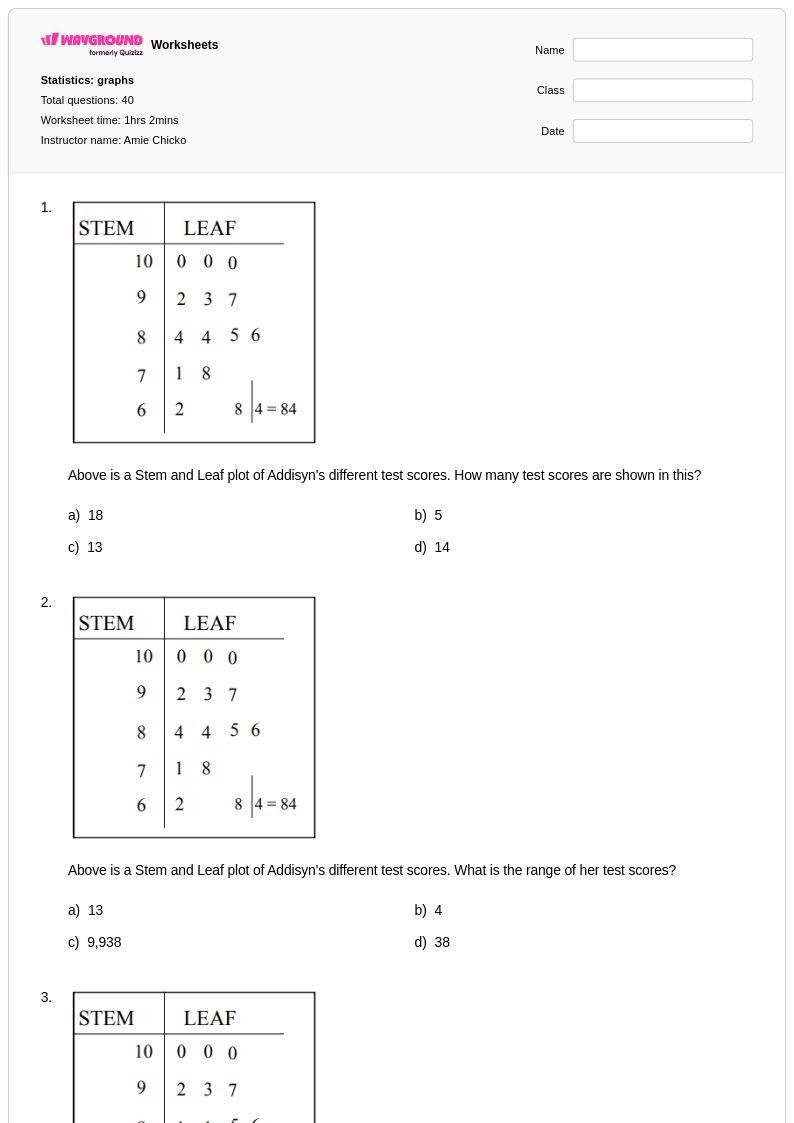
40 Q
5th - 6th
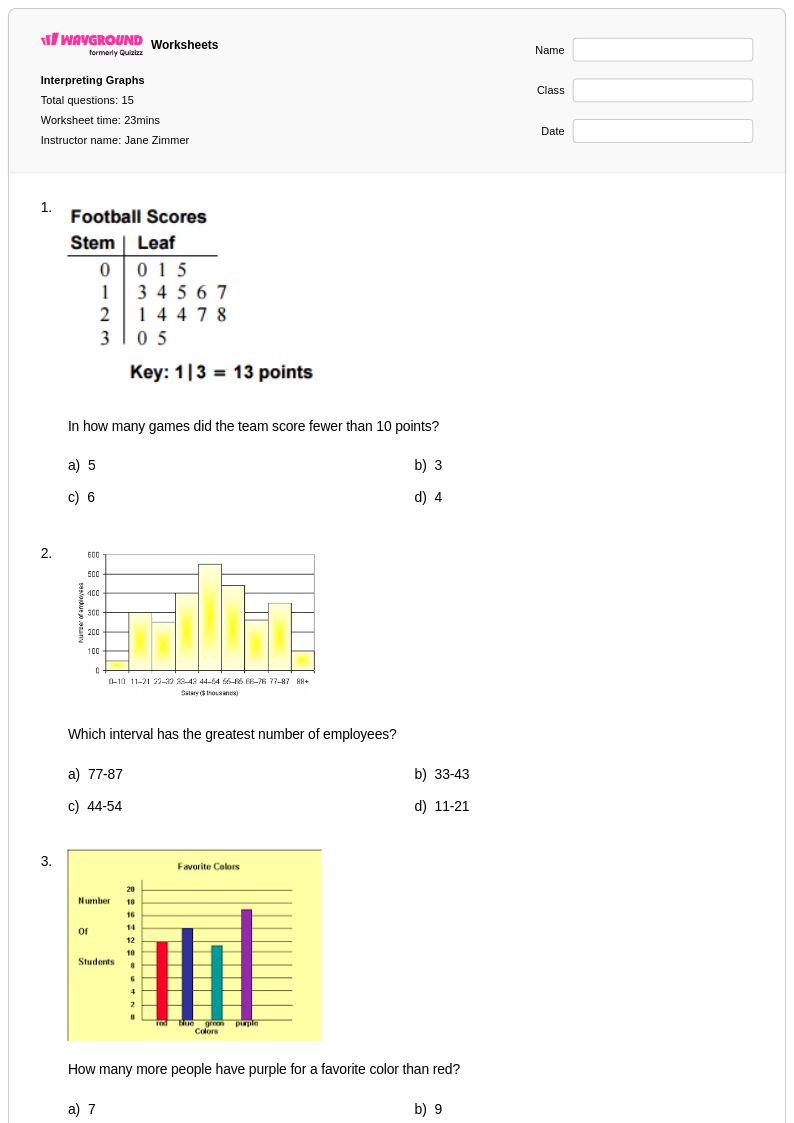
15 Q
5th - 7th
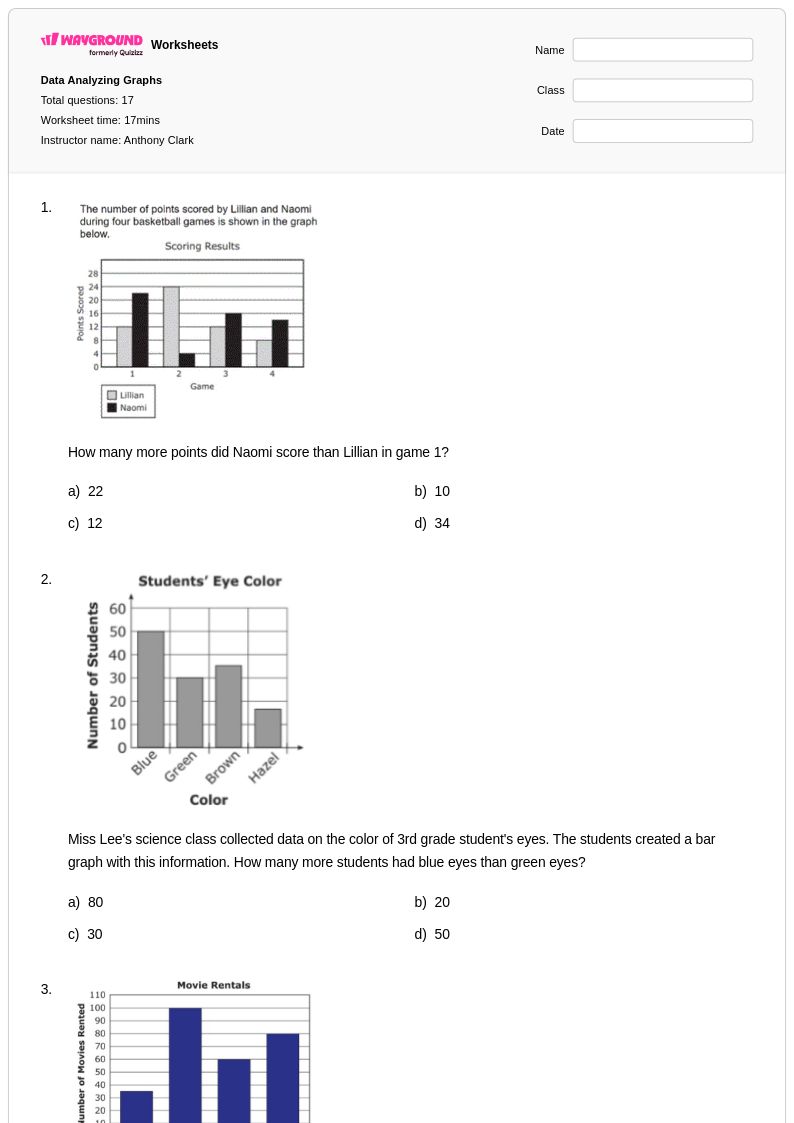
17 Q
6th - Uni
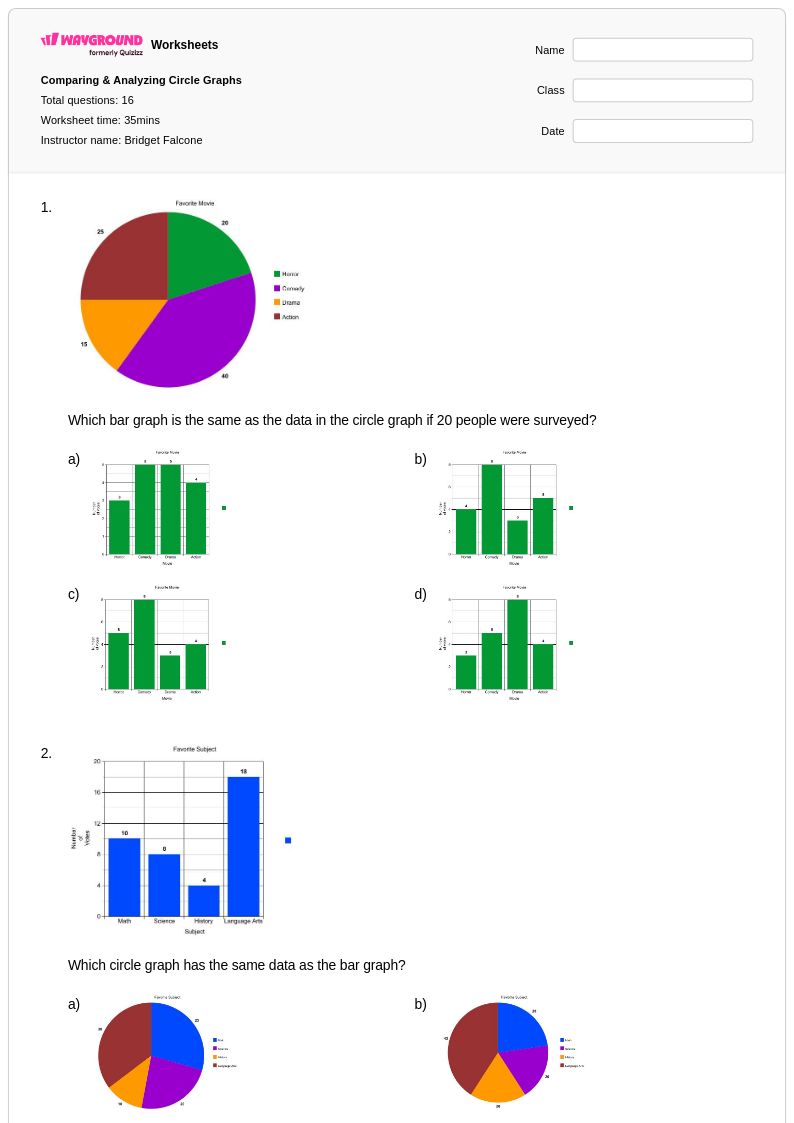
16 Q
6th
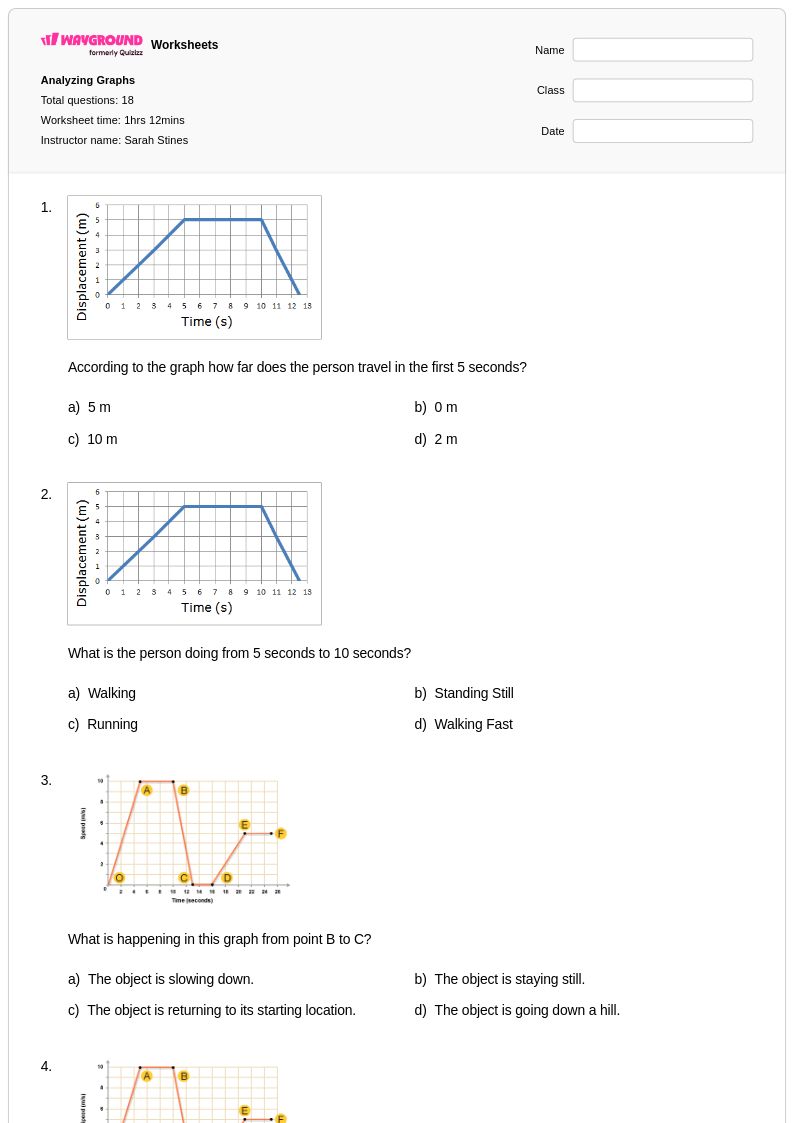
18 Q
5th - 8th
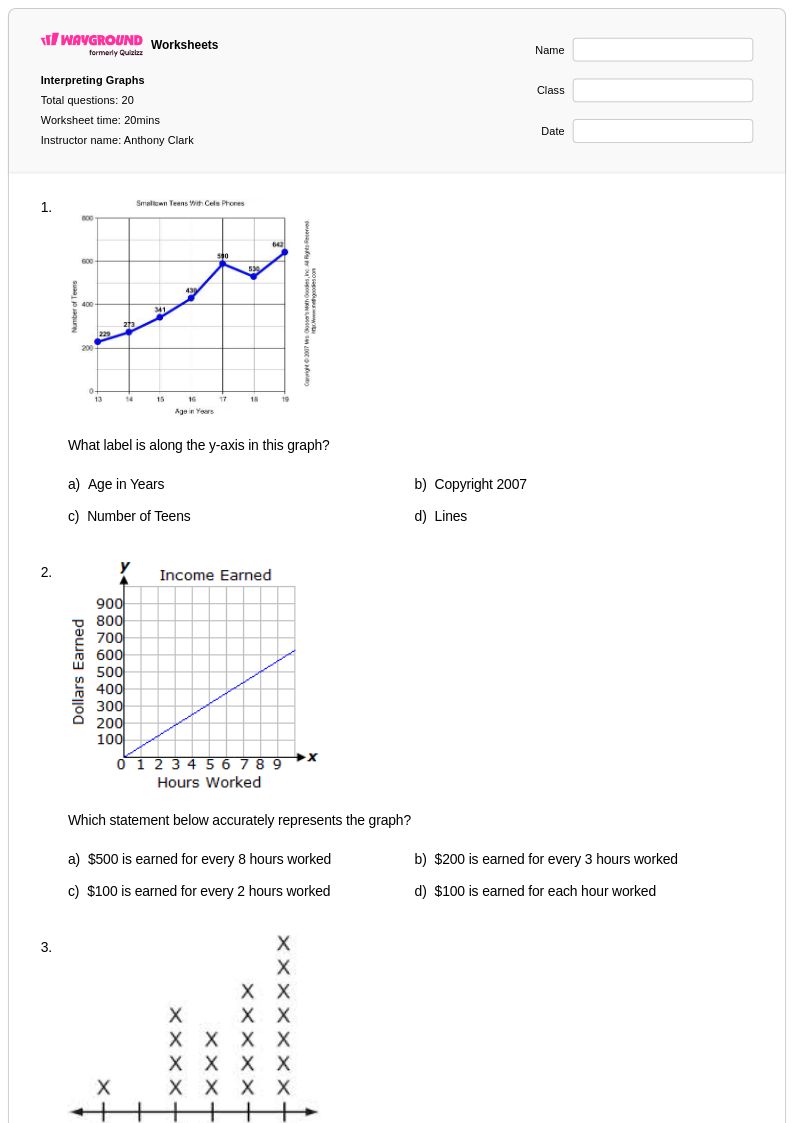
20 Q
6th - Uni
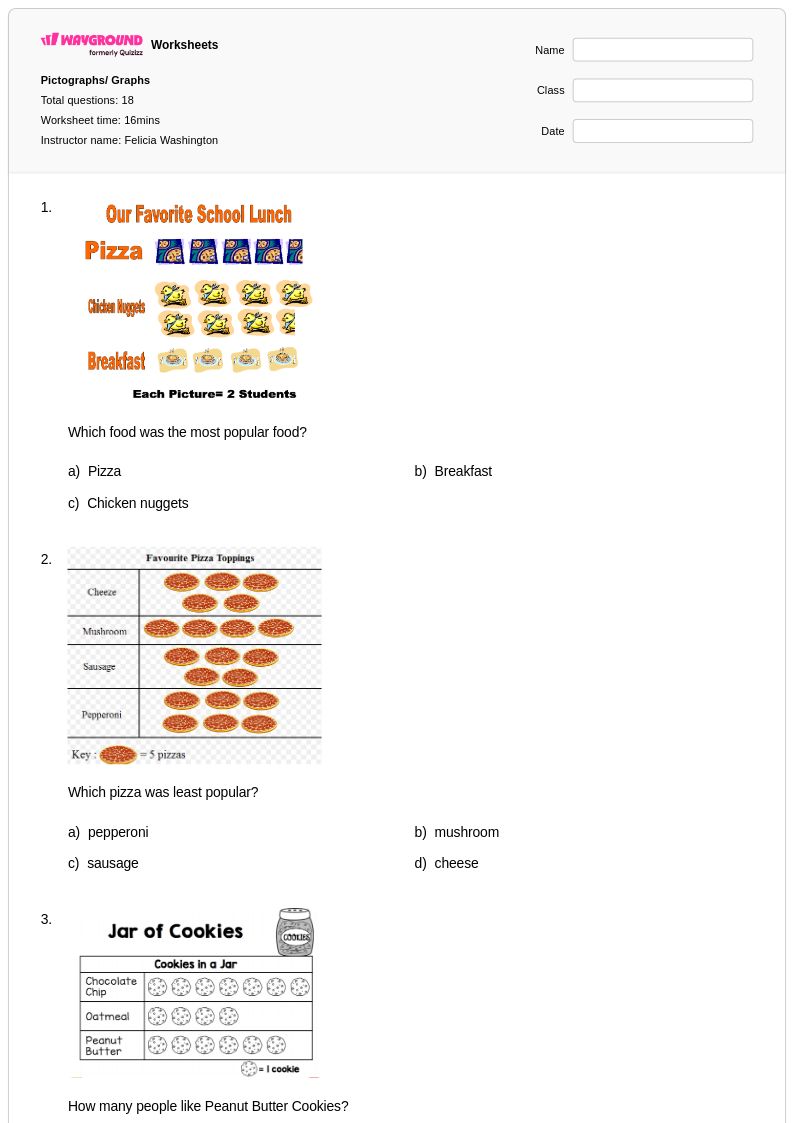
18 Q
6th - 8th
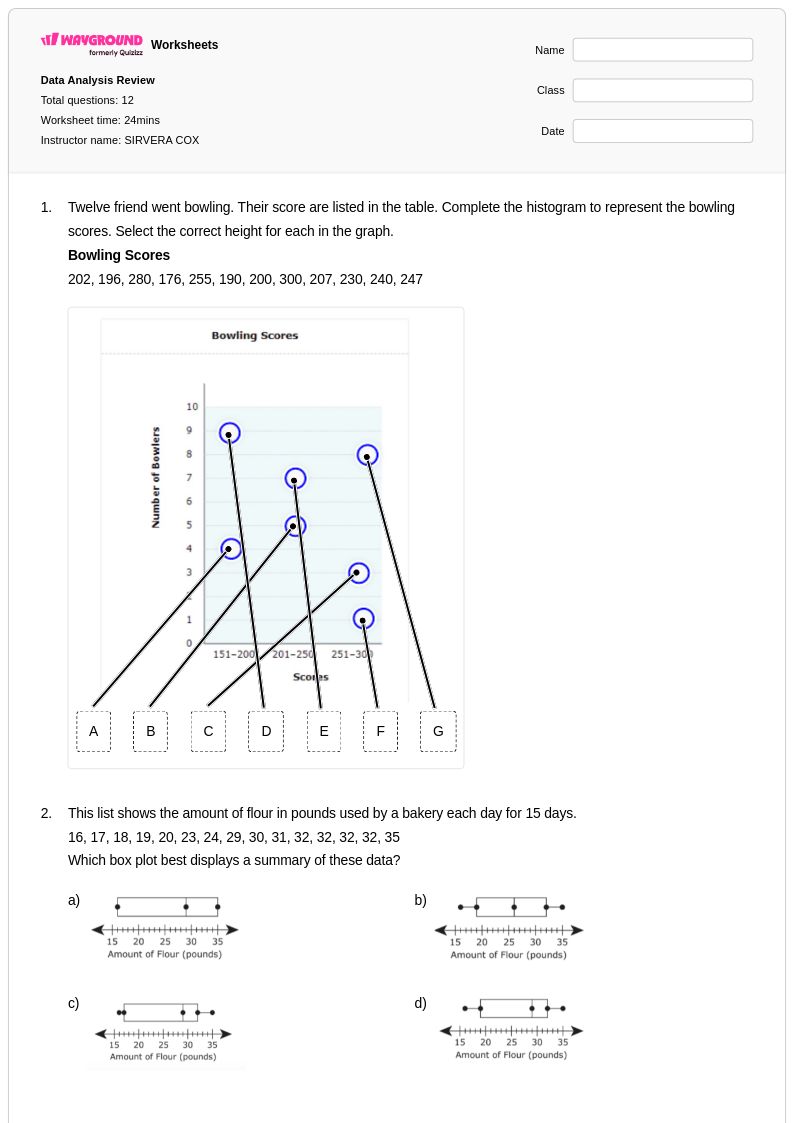
12 Q
6th
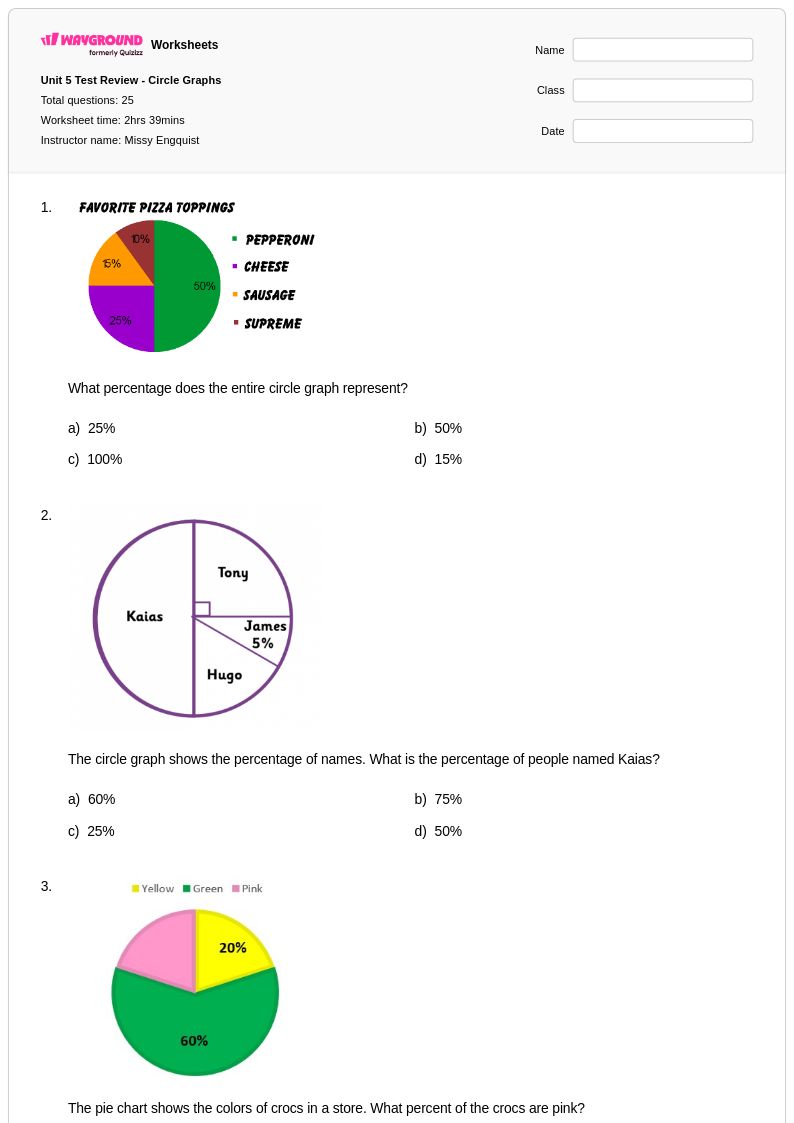
25 Q
6th
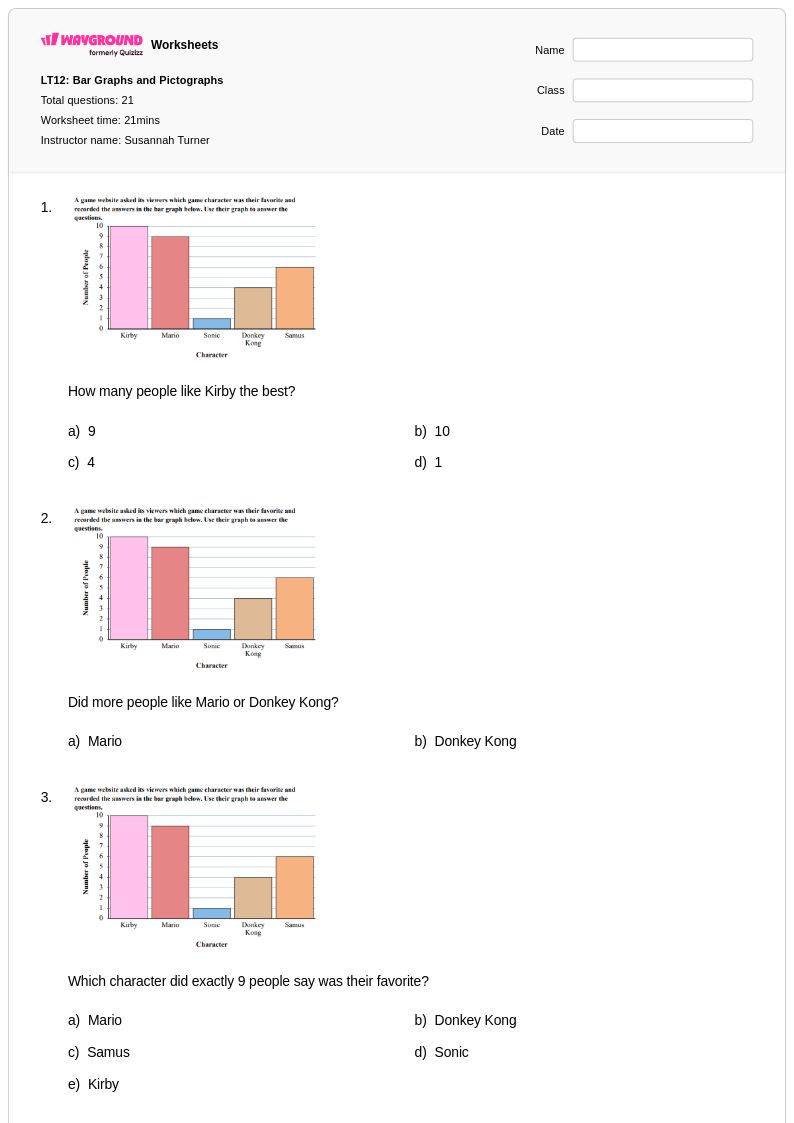
21 Q
6th
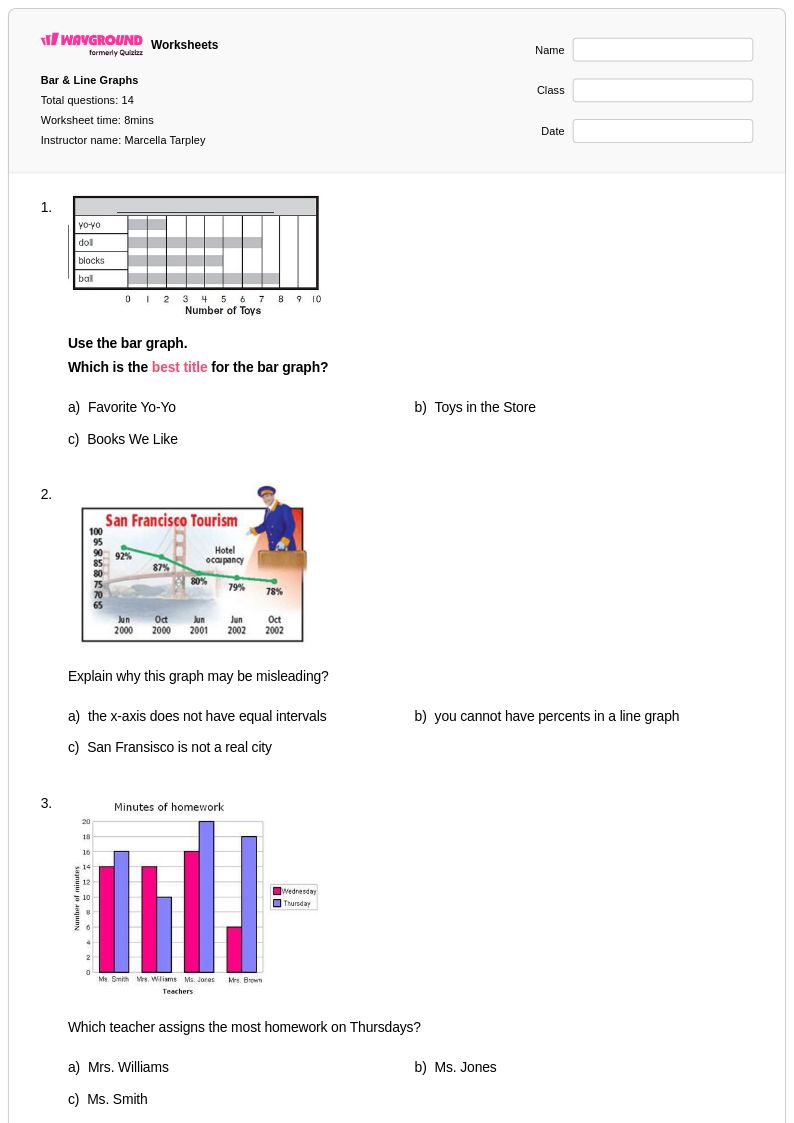
14 Q
6th
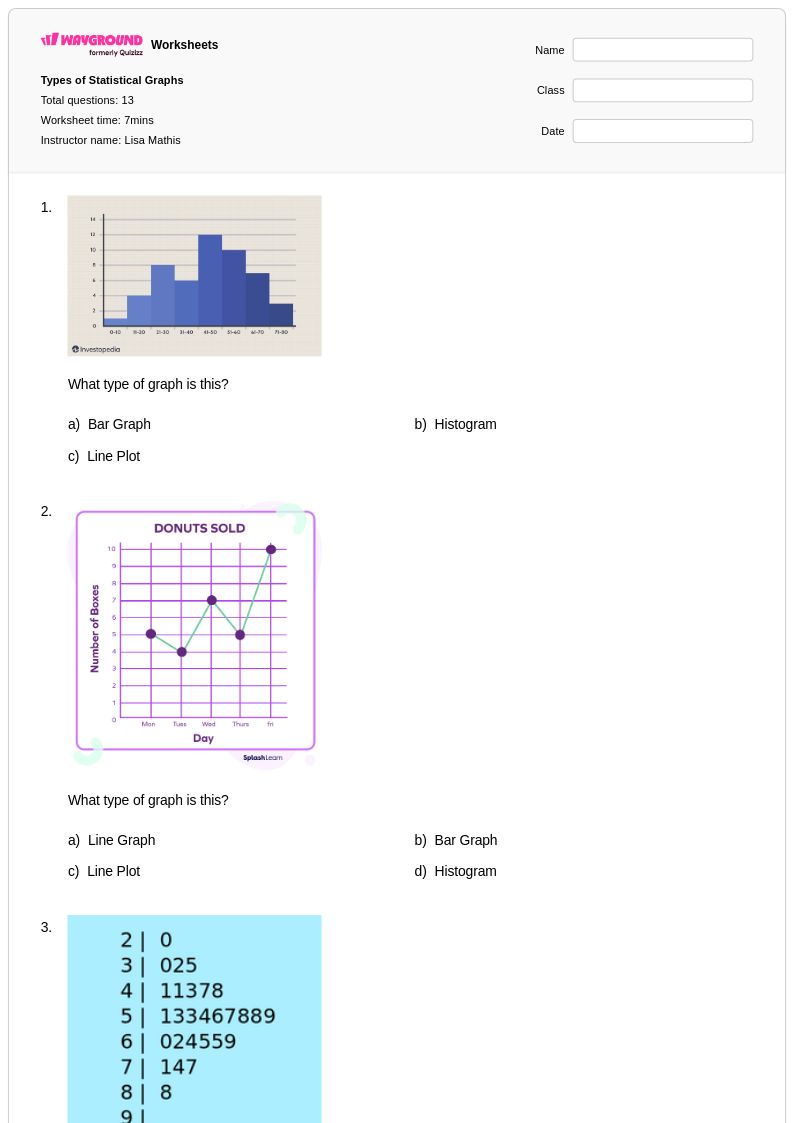
13 Q
6th
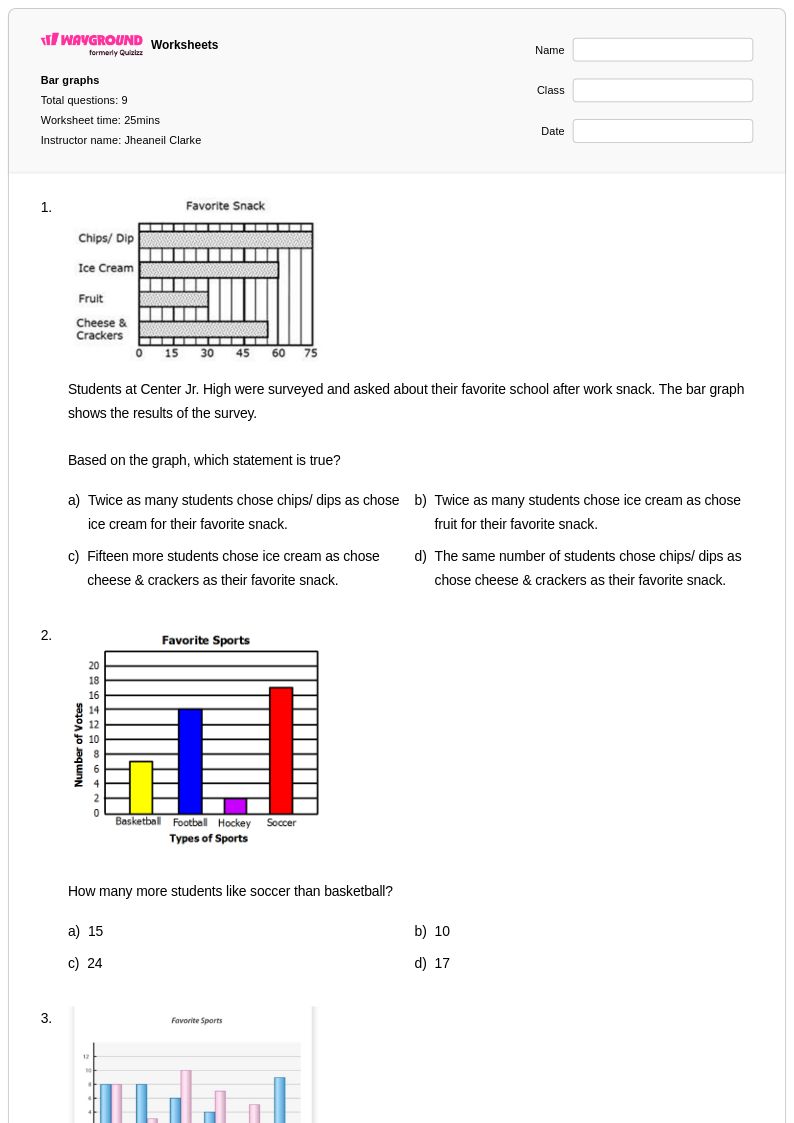
9 Q
6th
Explore Other Subject Worksheets for class 6
Explore printable Analyzing Graphs worksheets for Class 6
Analyzing graphs worksheets for Class 6 students available through Wayground (formerly Quizizz) provide comprehensive practice in interpreting and evaluating various types of data visualizations including bar graphs, line graphs, pie charts, and histograms. These expertly designed resources strengthen students' critical thinking skills as they learn to extract meaningful information from graphical representations, identify trends and patterns, compare data sets, and draw logical conclusions based on visual evidence. Each worksheet collection includes detailed answer keys and is available as free printables in convenient PDF format, offering practice problems that progressively build students' analytical abilities from basic graph reading to more complex interpretation tasks that require synthesizing information across multiple data sources.
Wayground (formerly Quizizz) empowers educators with access to millions of teacher-created analyzing graphs resources that streamline lesson planning and support differentiated instruction for Class 6 mathematics classrooms. The platform's robust search and filtering capabilities allow teachers to quickly locate worksheets aligned with specific curriculum standards while customization tools enable easy modification of content to meet diverse learning needs. These versatile materials are available in both printable PDF and interactive digital formats, making them ideal for traditional classroom instruction, homework assignments, remediation sessions, and enrichment activities. Teachers can efficiently identify students who need additional support in graph analysis while providing advanced learners with more challenging interpretation scenarios that deepen their understanding of data representation and statistical reasoning.
FAQs
How do I teach Grade 6 students to analyze graphs?
What exercises help sixth graders practice analyzing graphs?
What mistakes do Grade 6 students make when reading graphs?
How can I use these Grade 6 analyzing graphs worksheets?
How does analyzing graphs fit into the Grade 6 Common Core math progression?
How can I differentiate graph-analysis practice for sixth graders?
What grade level is this analyzing graphs practice designed for?