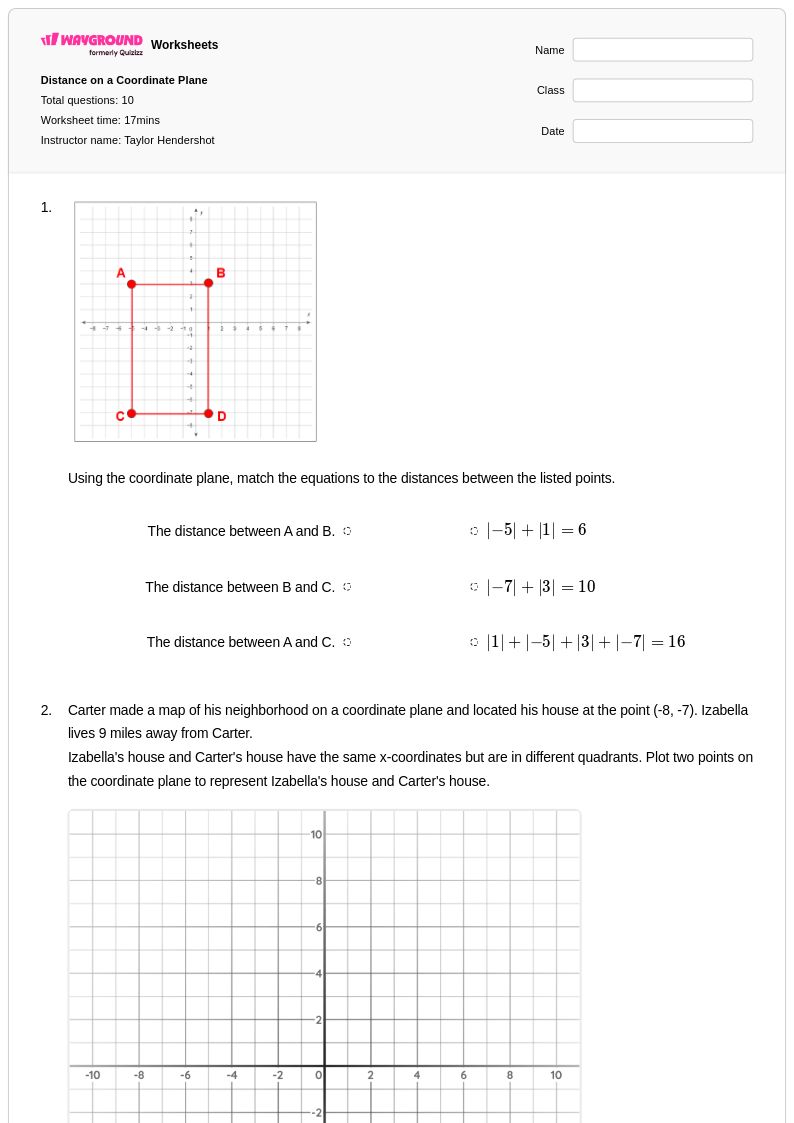
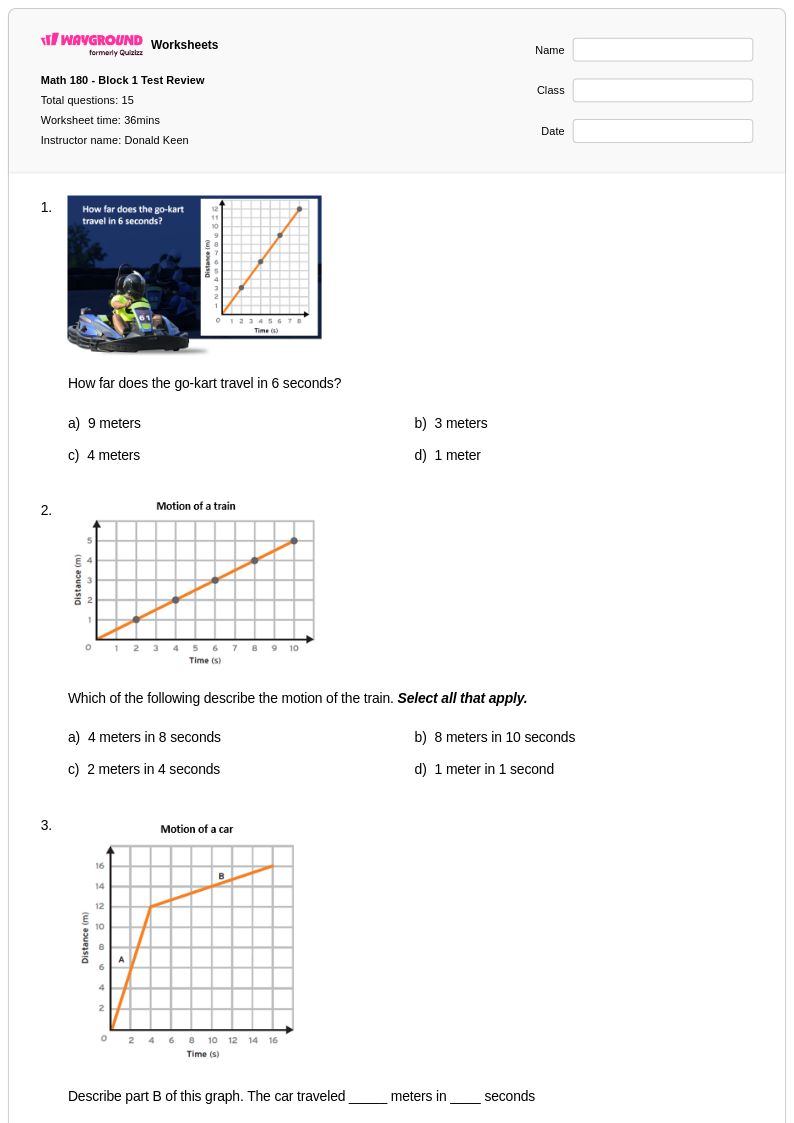
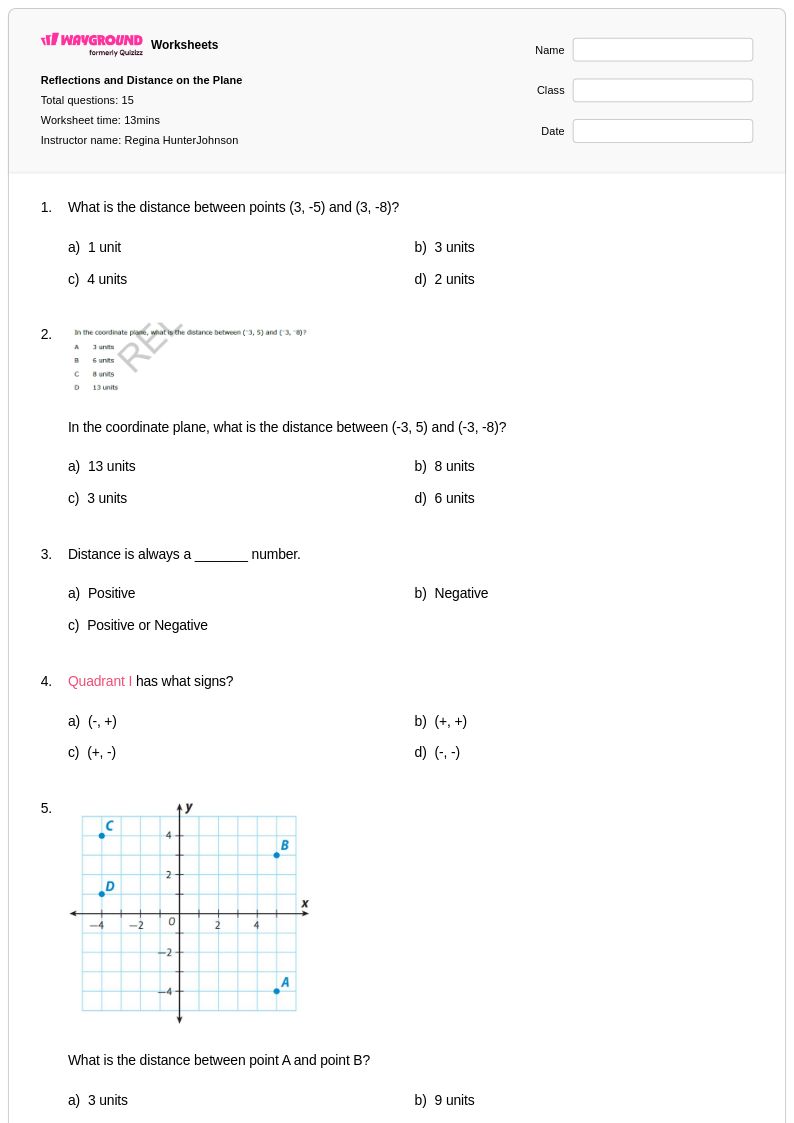
Free Printable Distance and Time Graphs Worksheets for Class 6
Enhance Class 6 students' understanding of distance and time graphs with Wayground's comprehensive collection of free worksheets, printables, and practice problems that include detailed answer keys for mastering data interpretation skills.
Explore printable Distance and Time Graphs worksheets for Class 6
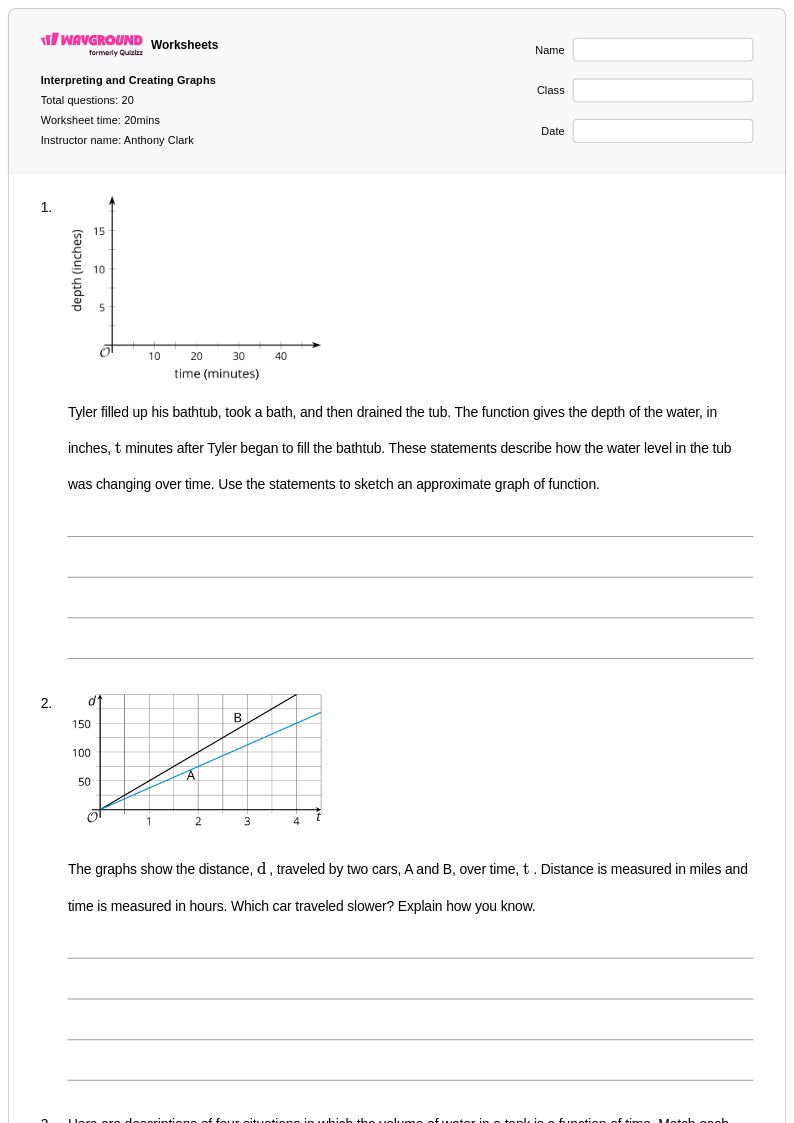
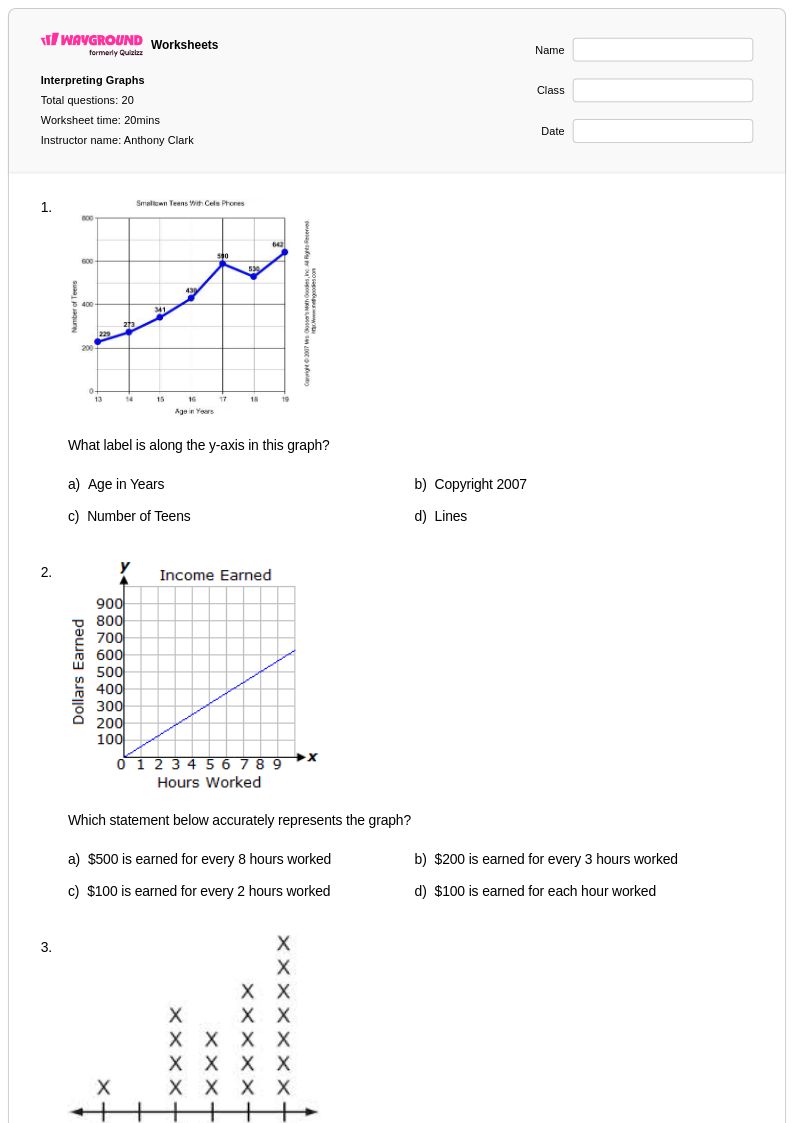
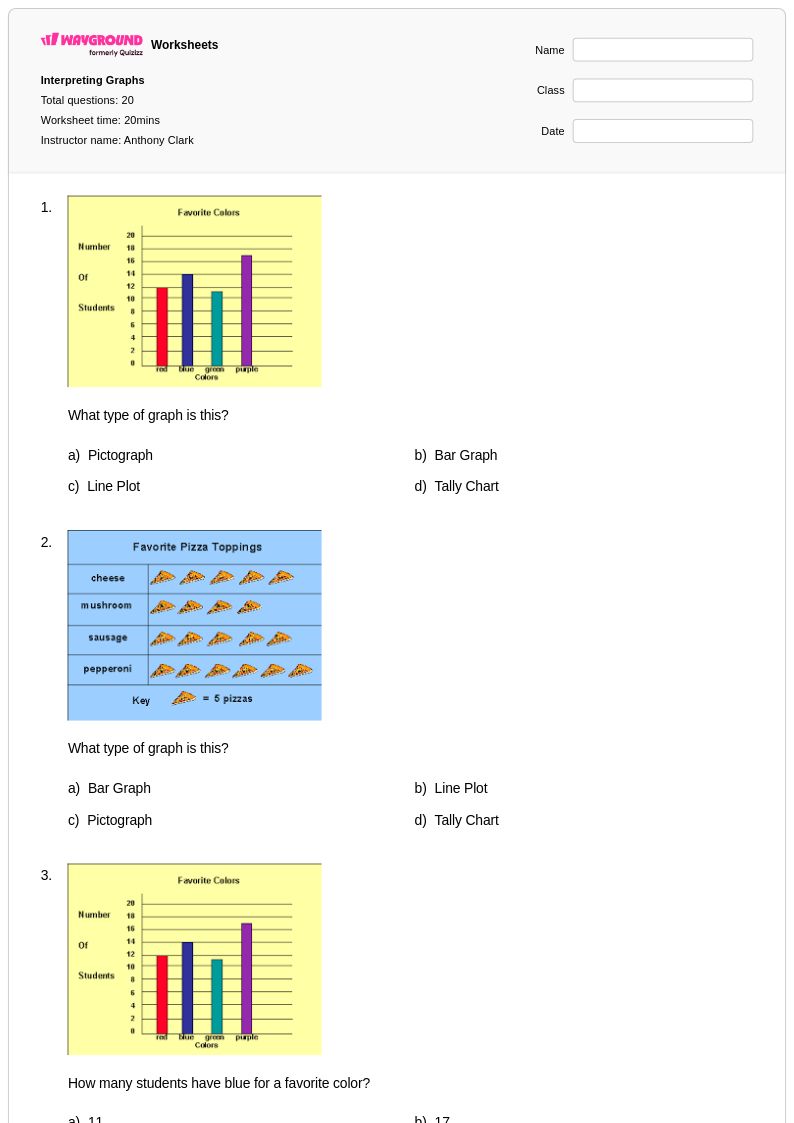
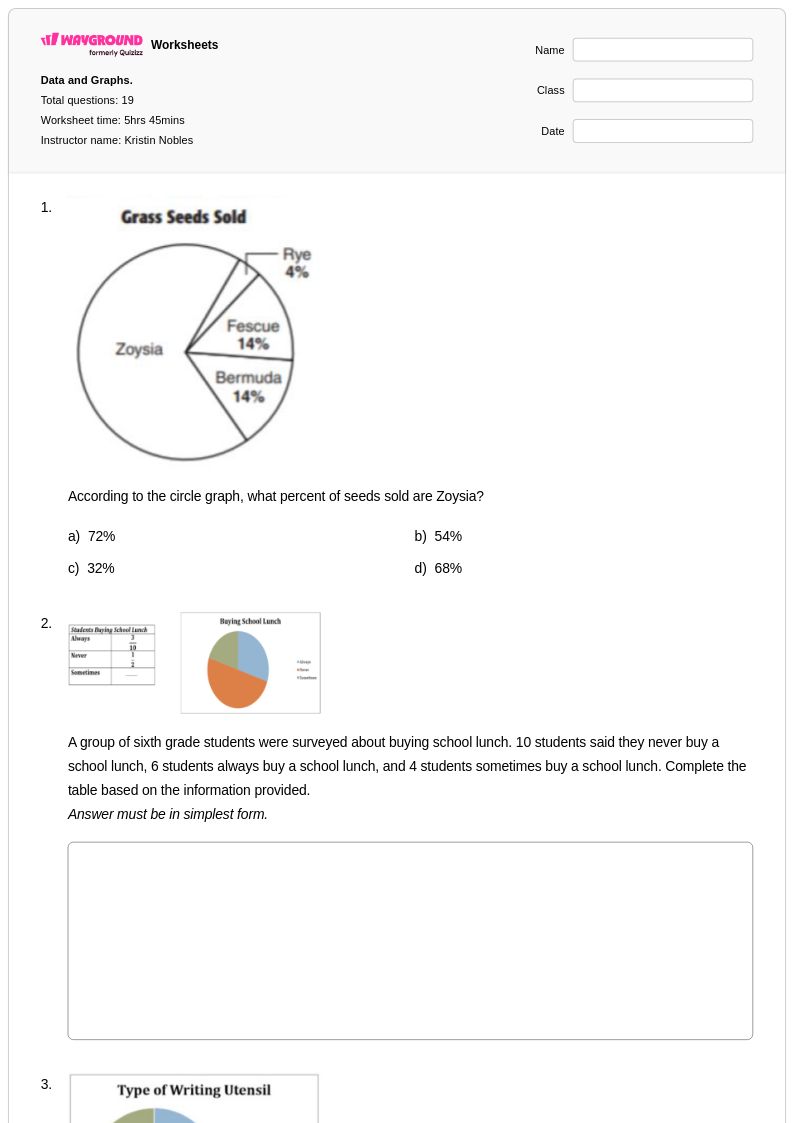
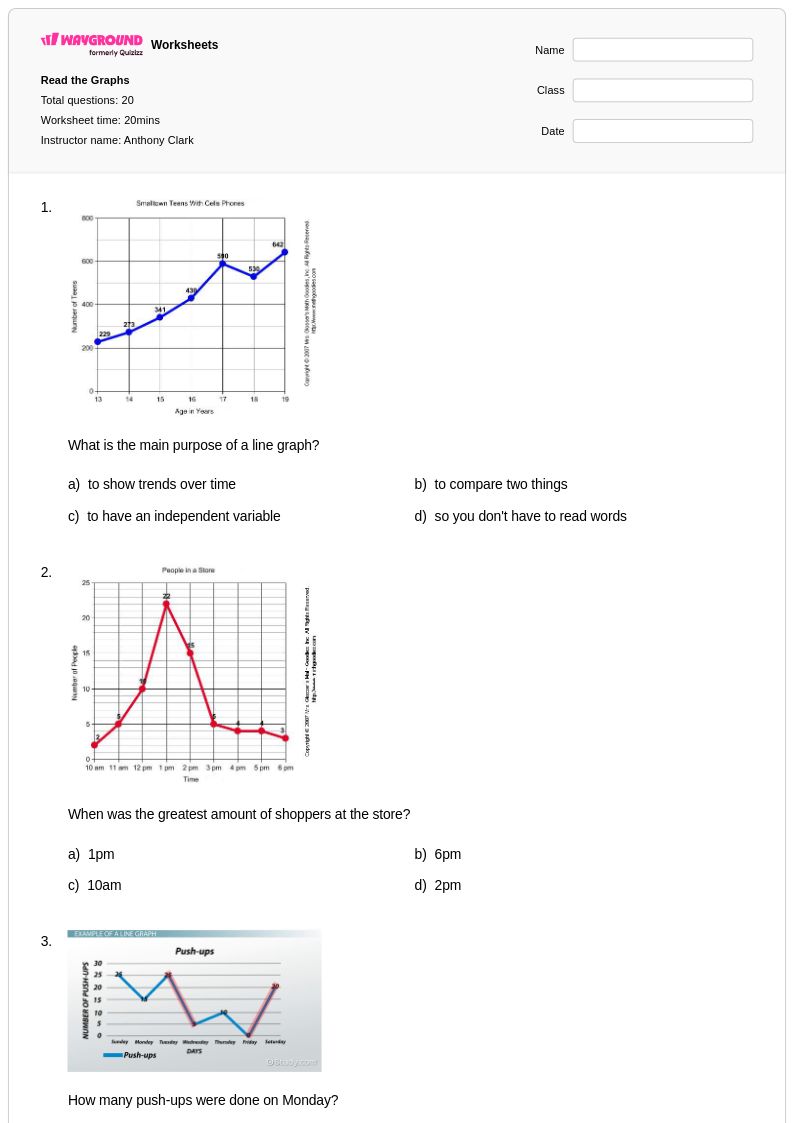
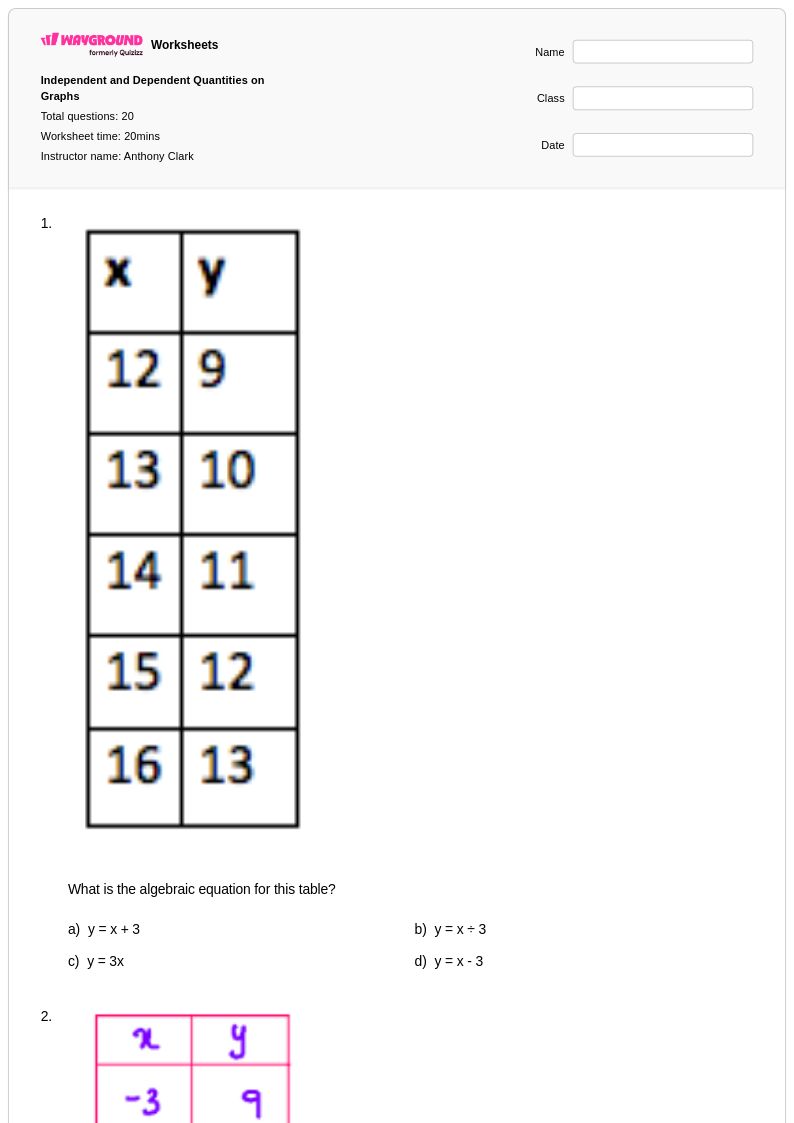
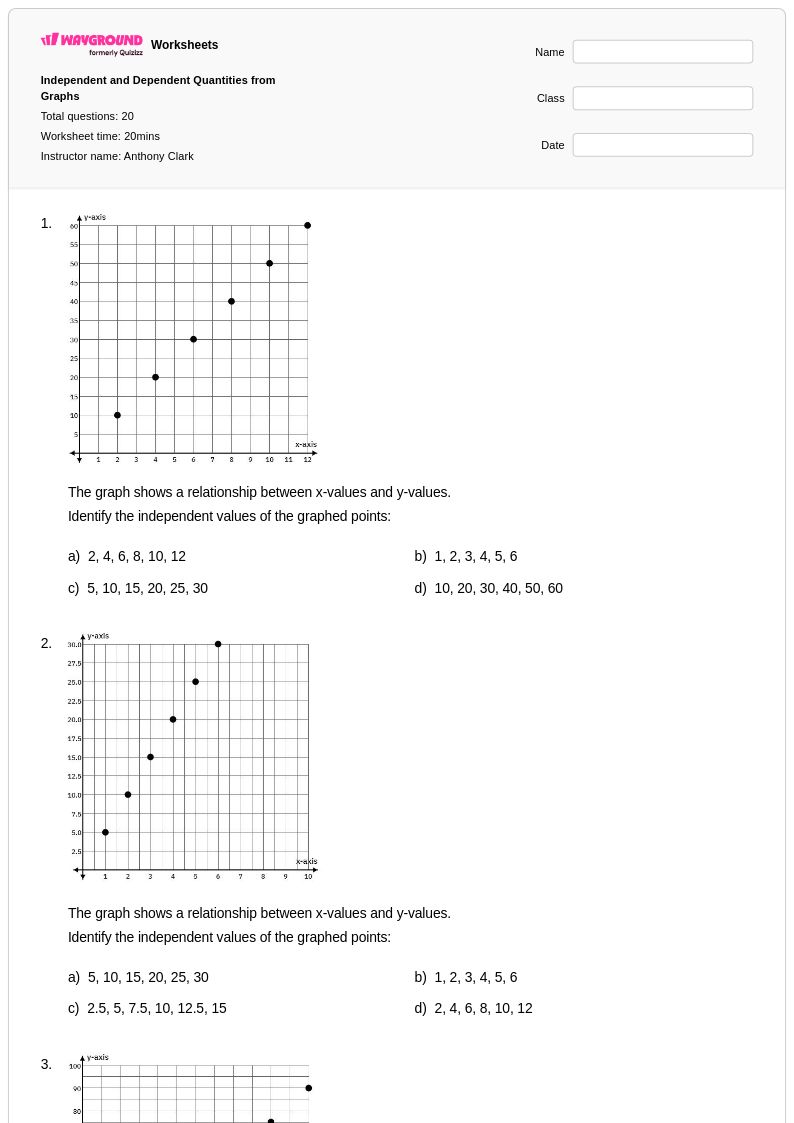
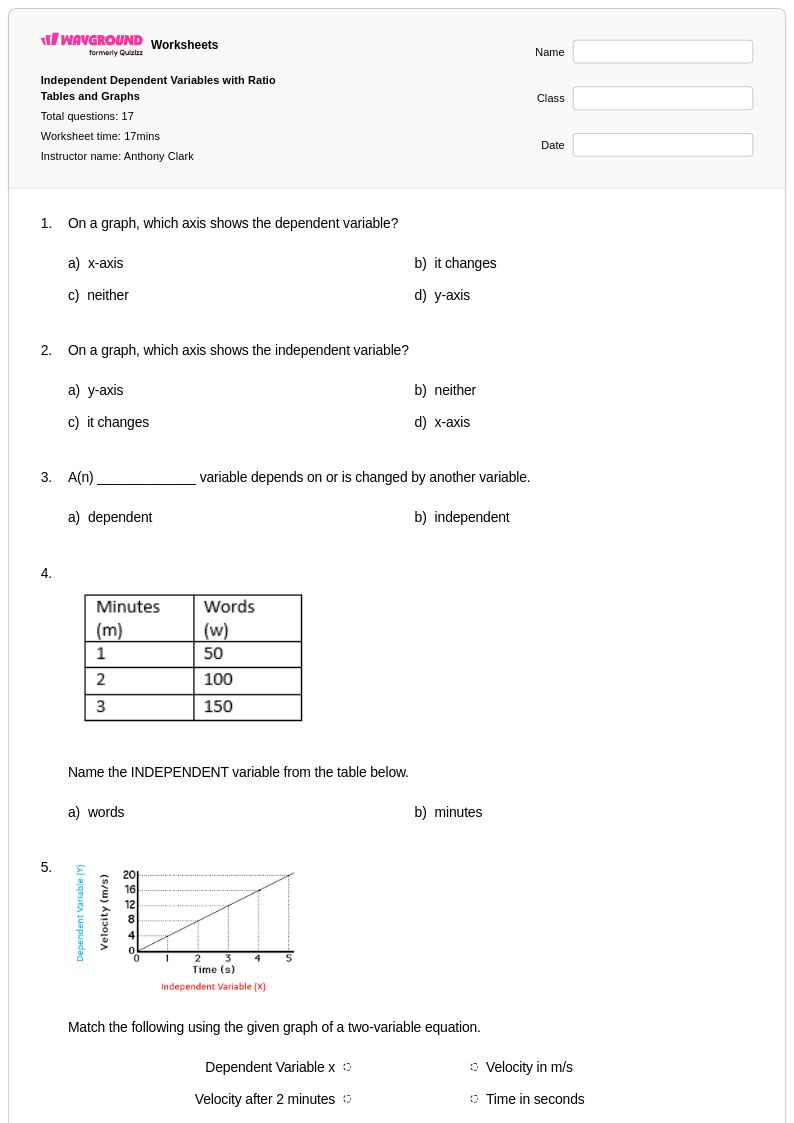
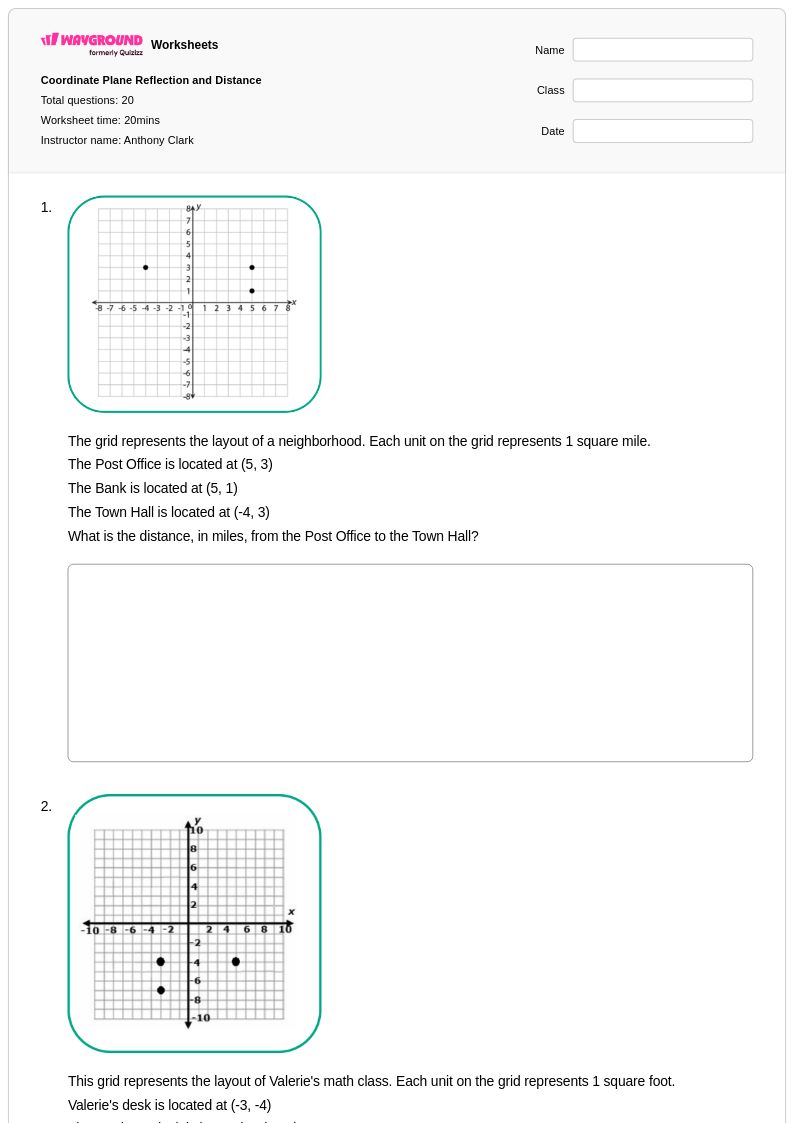
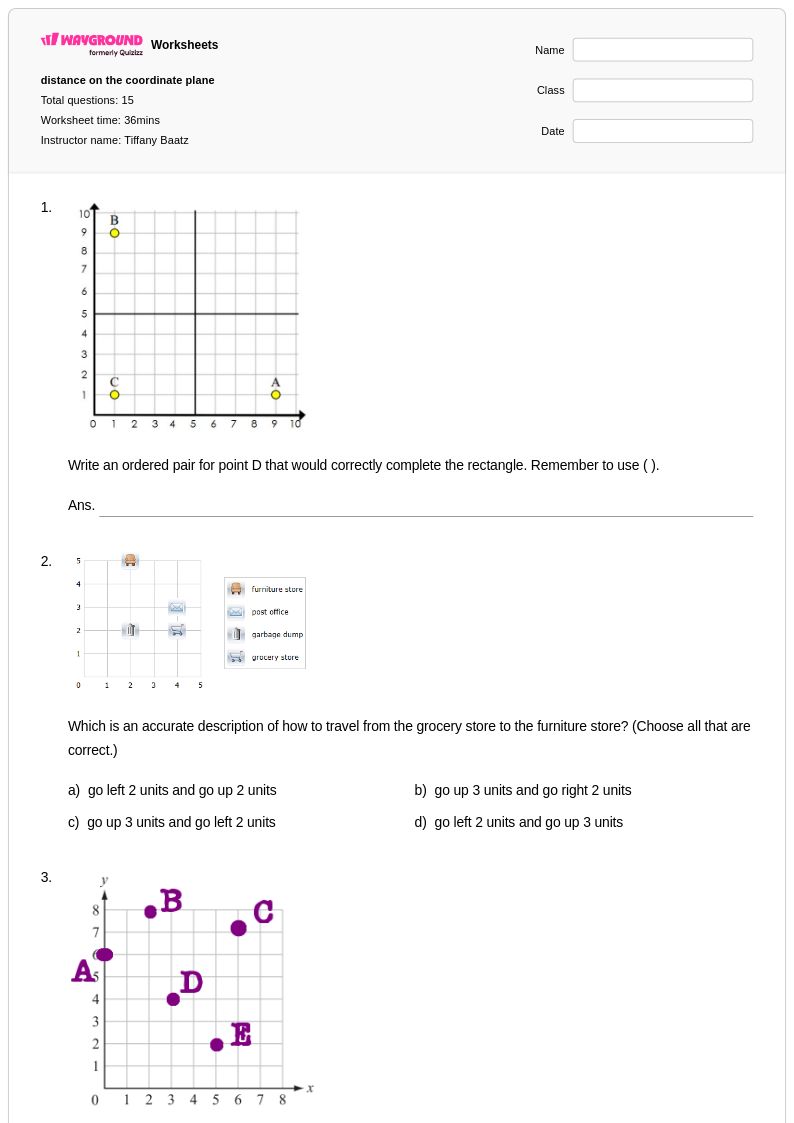
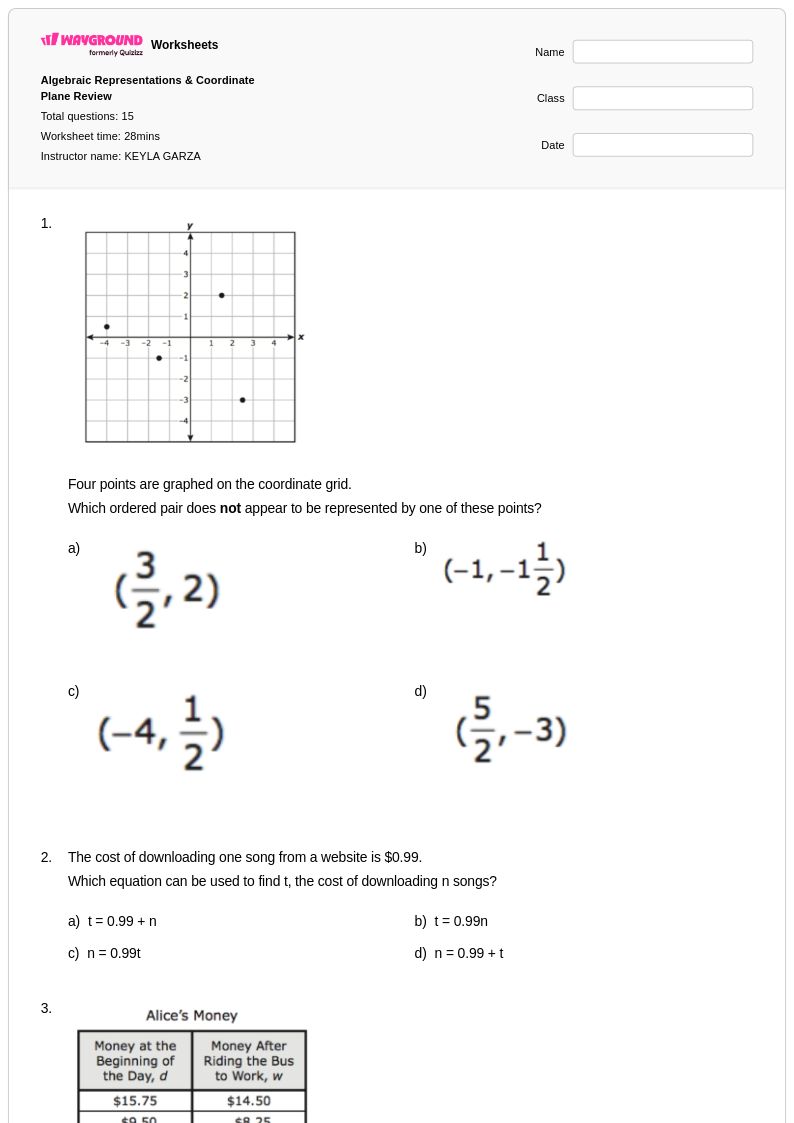
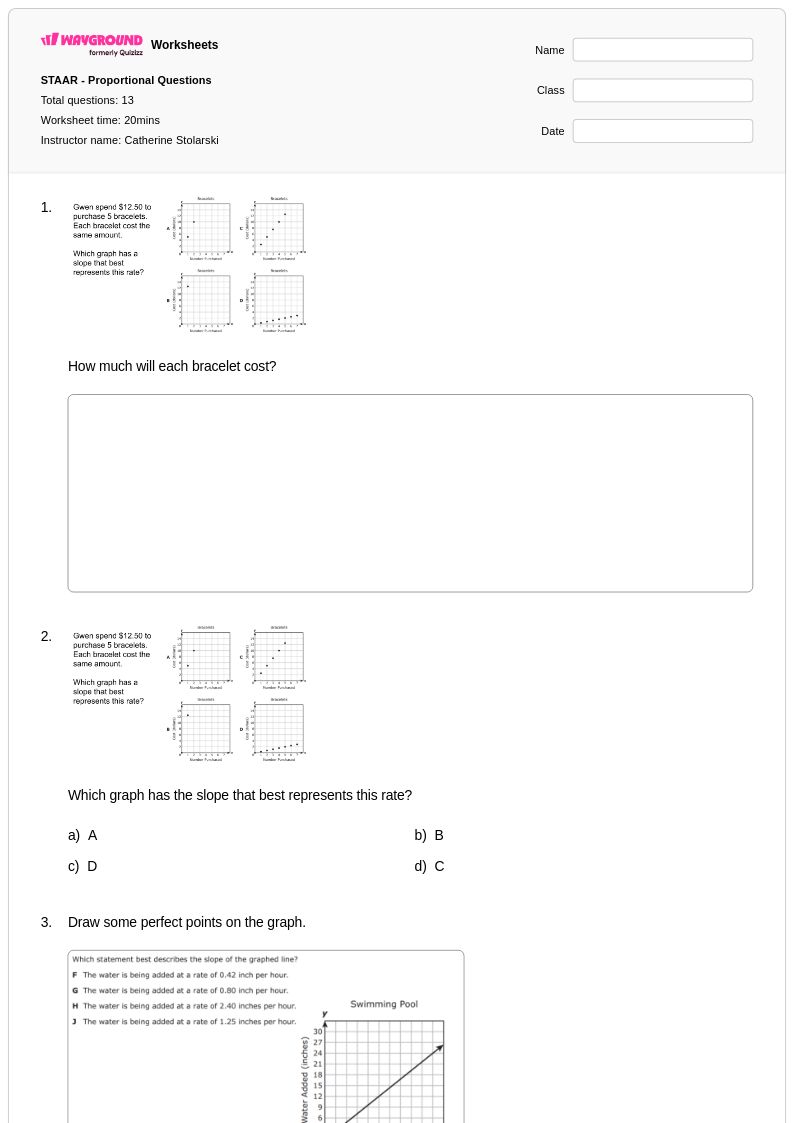
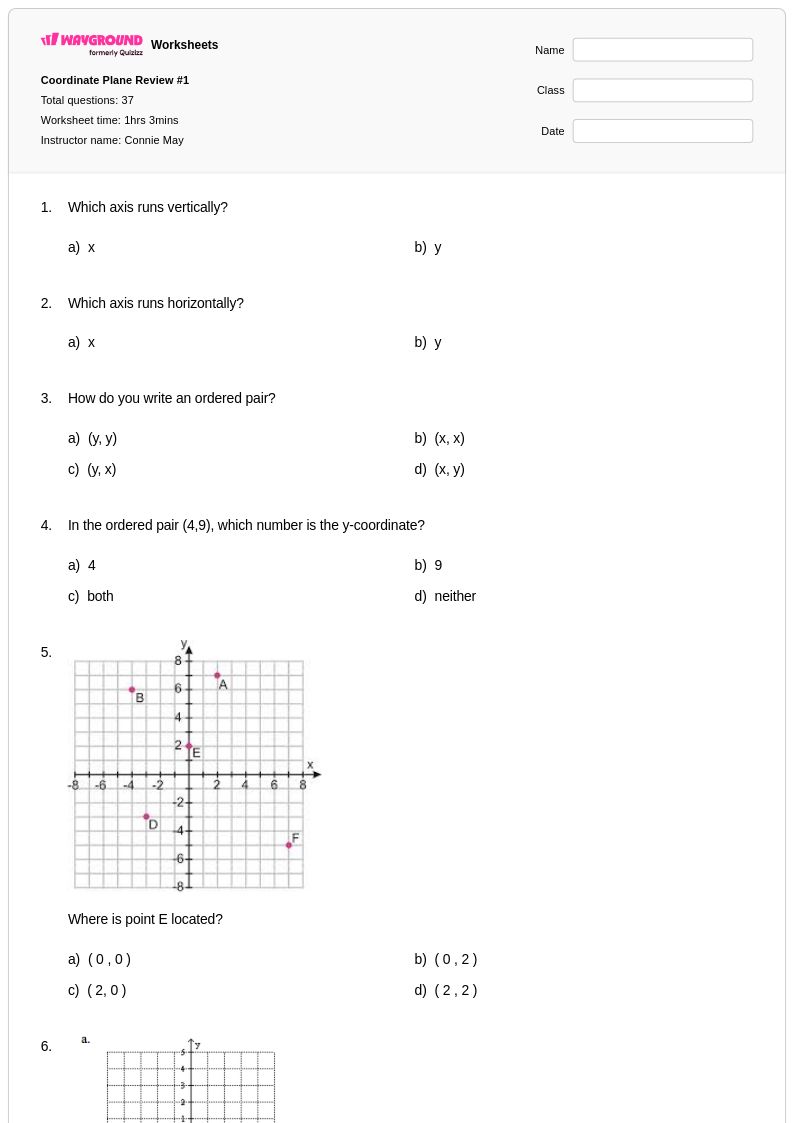
Distance and time graphs represent a fundamental concept in Class 6 mathematics that bridges data interpretation with real-world applications of motion and measurement. Wayground worksheets focusing on distance and time graphs provide students with structured practice in reading, interpreting, and creating graphs that display the relationship between these two critical variables. These comprehensive practice problems strengthen essential skills including analyzing coordinate pairs, understanding rate of change, identifying patterns in motion data, and translating between graphical and verbal descriptions of movement scenarios. Each worksheet collection includes detailed answer keys and is available as free printable pdf resources, enabling students to work through problems involving walking speeds, vehicle travel, and other everyday motion situations while developing their graphical literacy and mathematical reasoning abilities.
Wayground's extensive collection of distance and time graph worksheets draws from millions of teacher-created resources, providing educators with robust search and filtering capabilities to locate materials perfectly aligned with curriculum standards and individual classroom needs. The platform's differentiation tools allow teachers to customize worksheets for various skill levels, offering both remediation support for students struggling with basic graph interpretation and enrichment opportunities for advanced learners ready to tackle complex motion scenarios. These flexible resources are available in both printable and digital formats, including downloadable pdf versions, making them ideal for lesson planning, homework assignments, assessment preparation, and targeted skill practice. Teachers can efficiently organize their instruction around specific learning objectives while ensuring students receive appropriate challenge levels and comprehensive practice with this essential mathematical concept.
FAQs
How do I introduce distance-time graphs to Grade 6 students?
Grade 6 students are just building their ratio intuition, so anchor the graph in something physical first. Have students walk across the classroom at different speeds while you sketch the graph in real time — they immediately see that faster walking produces a steeper line. Once that connection is made, reading a pre-drawn graph feels like reading a story rather than decoding a math problem. Save slope calculations for after students can narrate a graph confidently.
What skills do Grade 6 distance-time graph worksheets practice?
At Grade 6, the focus is on reading and interpreting: identifying what a flat segment means (the object is stopped), comparing the speeds of two objects by comparing line steepness, and translating between a graph and a written description of motion. Calculating speed as a unit rate — distance divided by time — is the natural extension once basic interpretation is solid, and it connects directly to the ratio and proportional reasoning Grade 6 students are developing across the curriculum.
What misconceptions do Grade 6 students have about distance-time graphs?
Two come up constantly. First, students read a horizontal line as "moving slowly" rather than "not moving at all" — they expect some upward slope to indicate any motion. Second, many students treat the graph as a literal picture of the path, so a line that goes up then comes back down gets interpreted as the object going uphill and then downhill. Both misconceptions are worth addressing directly with a concrete example before assigning independent practice.
How do I use these Grade 6 worksheets in my classroom?
Wayground worksheets can be printed as PDFs for paper practice — useful when you want students working without a screen — or assigned as digital quizzes directly through the platform. Both formats include a complete answer key. If you go the paper route, the Wayground for Teachers app lets you scan student submissions for grading without re-entering everything manually.
Are distance-time graphs part of the Grade 6 Common Core standards?
Yes. Common Core's Grade 6 focus on ratios and proportional relationships is the direct foundation for distance-time graphs. Students at this level are expected to understand unit rates and represent them in tables and graphs — speed as distance per unit of time is a textbook application of that standard. Distance-time graphs also connect to the Grade 6 statistics strand, where students interpret data displays, making this a concept that reinforces multiple areas of the curriculum at once.
How can I support struggling readers or ELL students with these worksheets?
Wayground's Read Aloud feature can read question text aloud for students who need it, which removes the reading barrier from what is fundamentally a math task. For ELL students, you can generate a translated version of the worksheet directly in the platform, so the graph and math remain identical while the instructions appear in the student's home language. These settings are saved per student, so you only configure them once.