
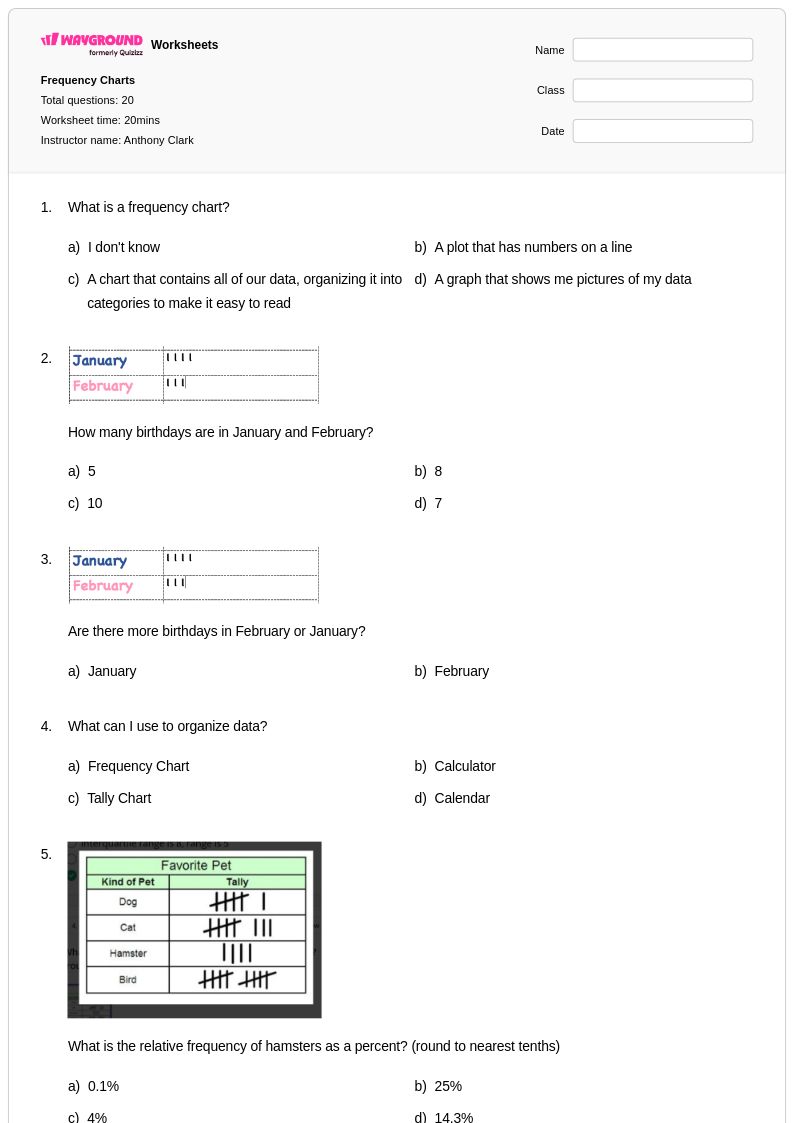
20 Q
3rd - Uni
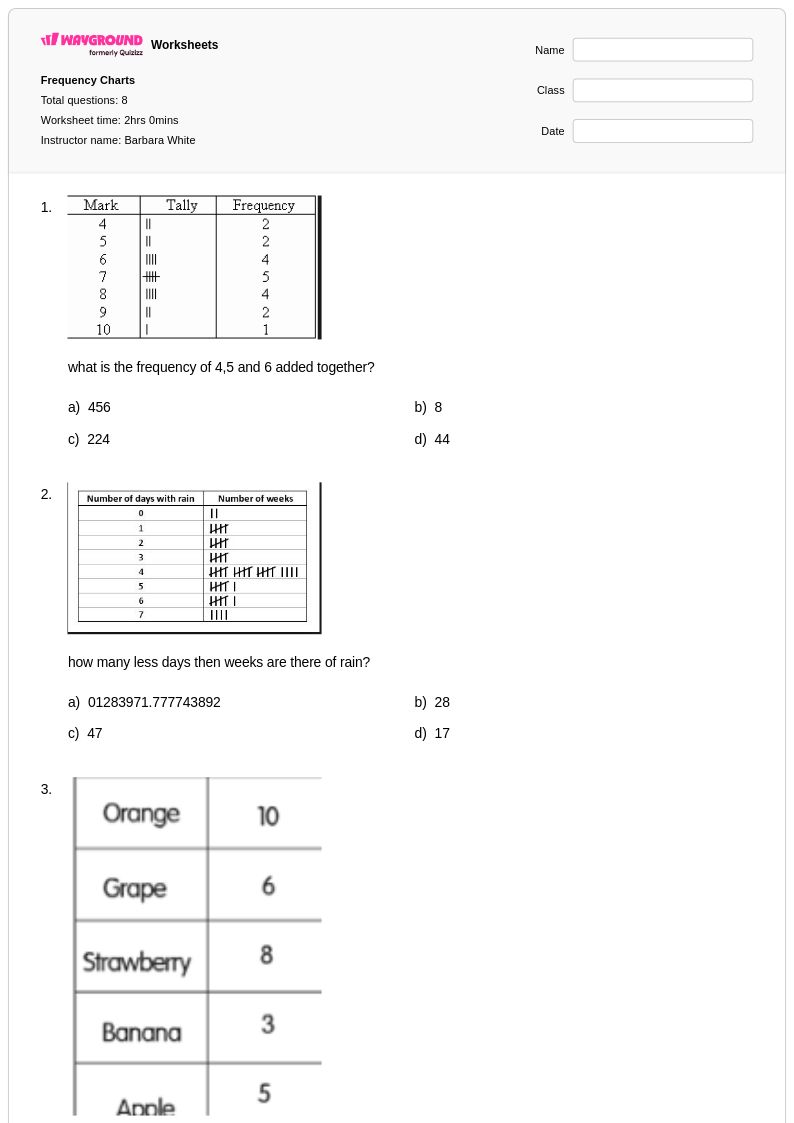
8 Q
5th - 7th
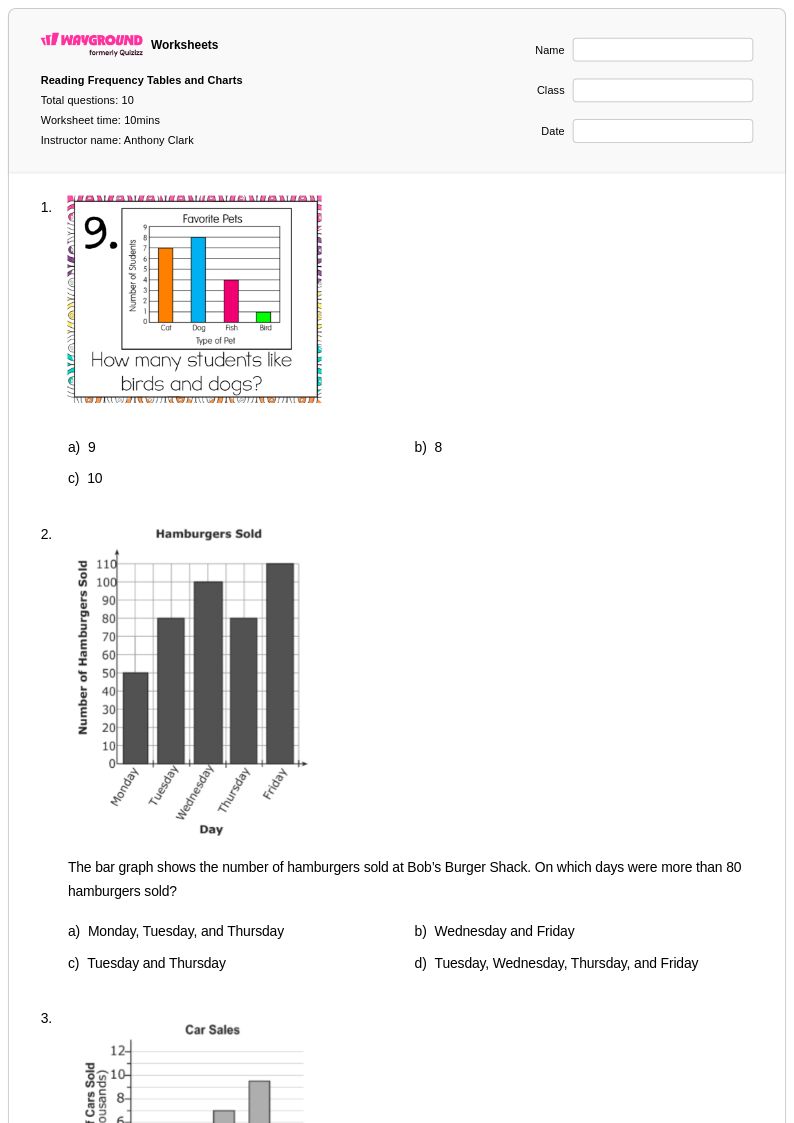
10 Q
5th - Uni
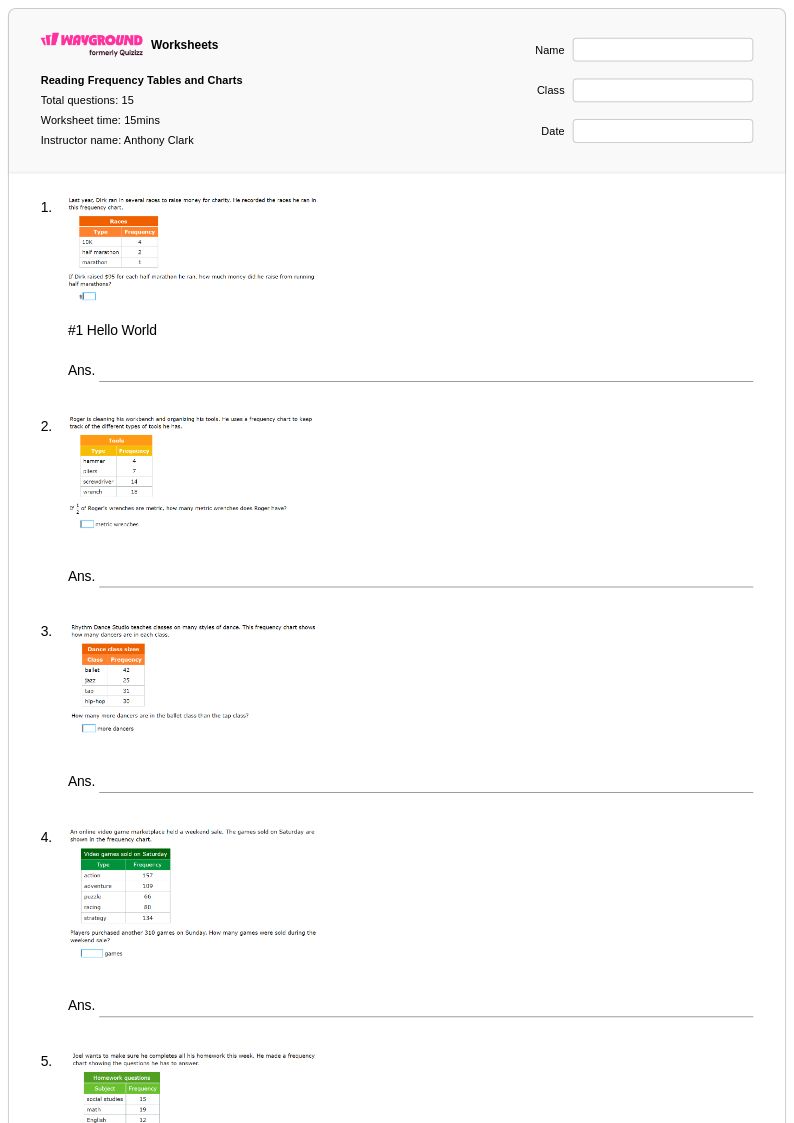
15 Q
5th - Uni
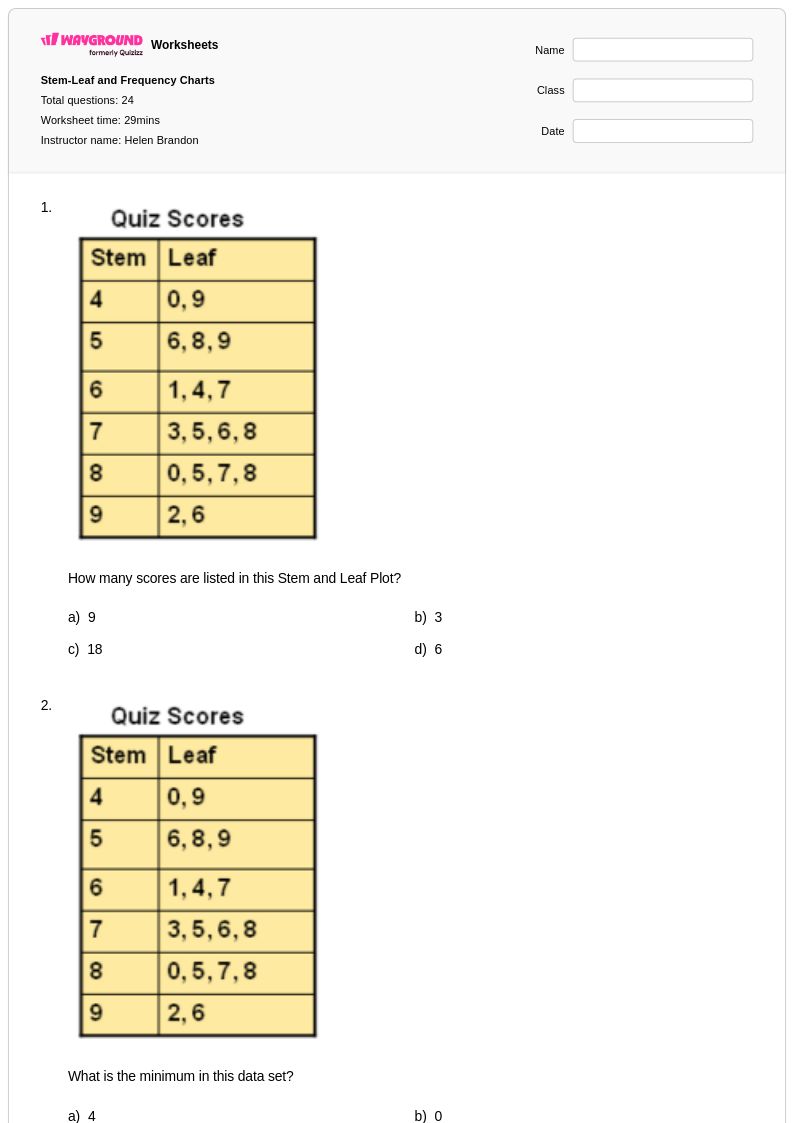
24 Q
6th
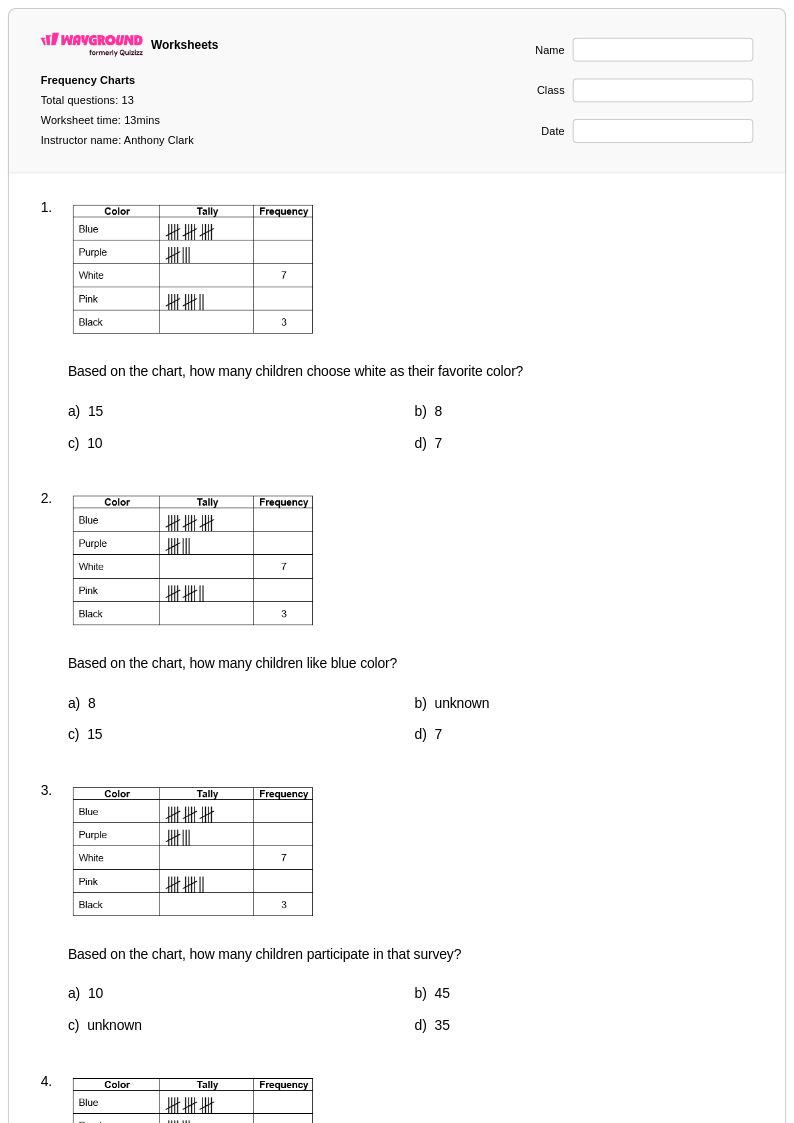
13 Q
3rd - Uni
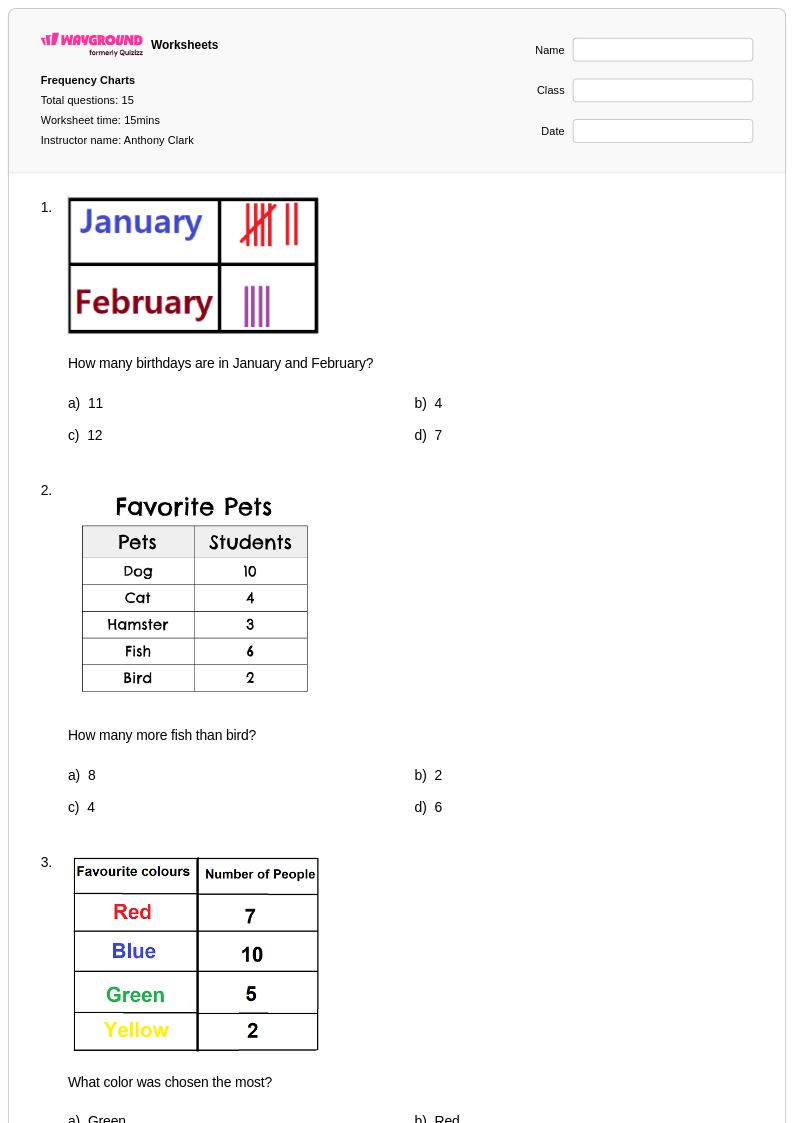
15 Q
3rd - Uni
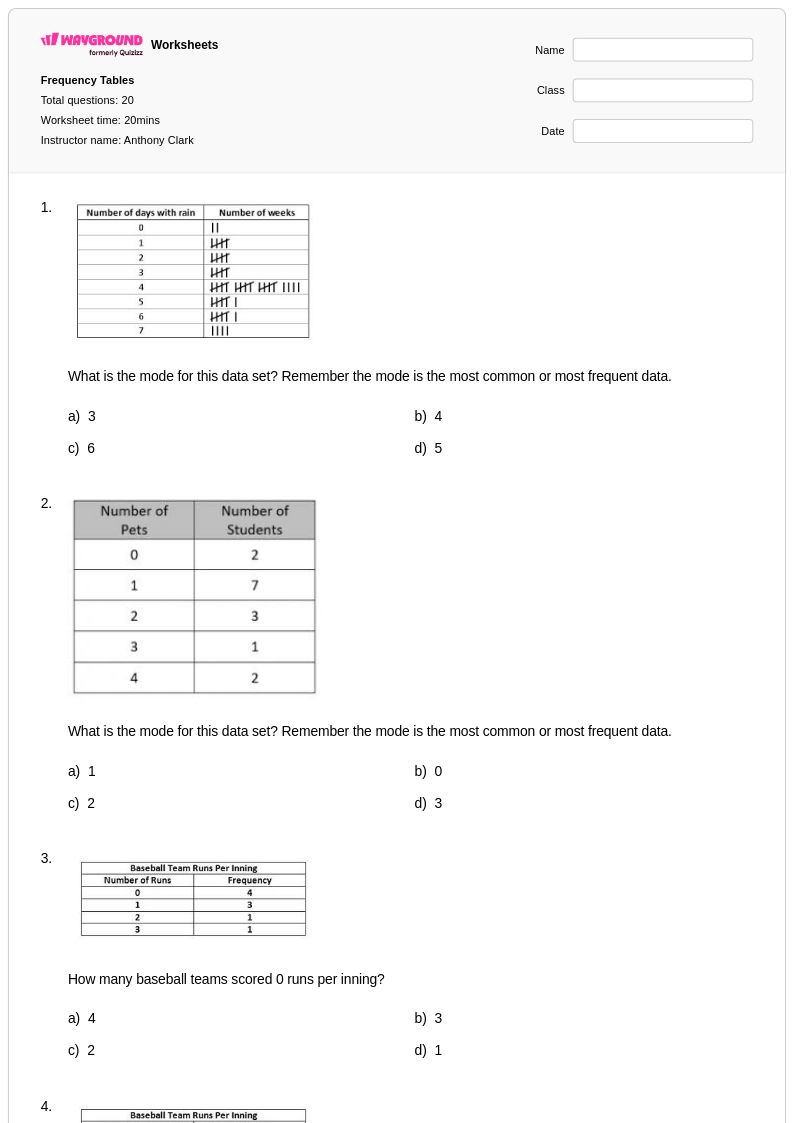
20 Q
5th - Uni
8 Q
5th - 7th
23 Q
5th - 7th
10 Q
6th
20 Q
6th - Uni
13 Q
6th - 10th
20 Q
6th - Uni
14 Q
6th
20 Q
6th - Uni
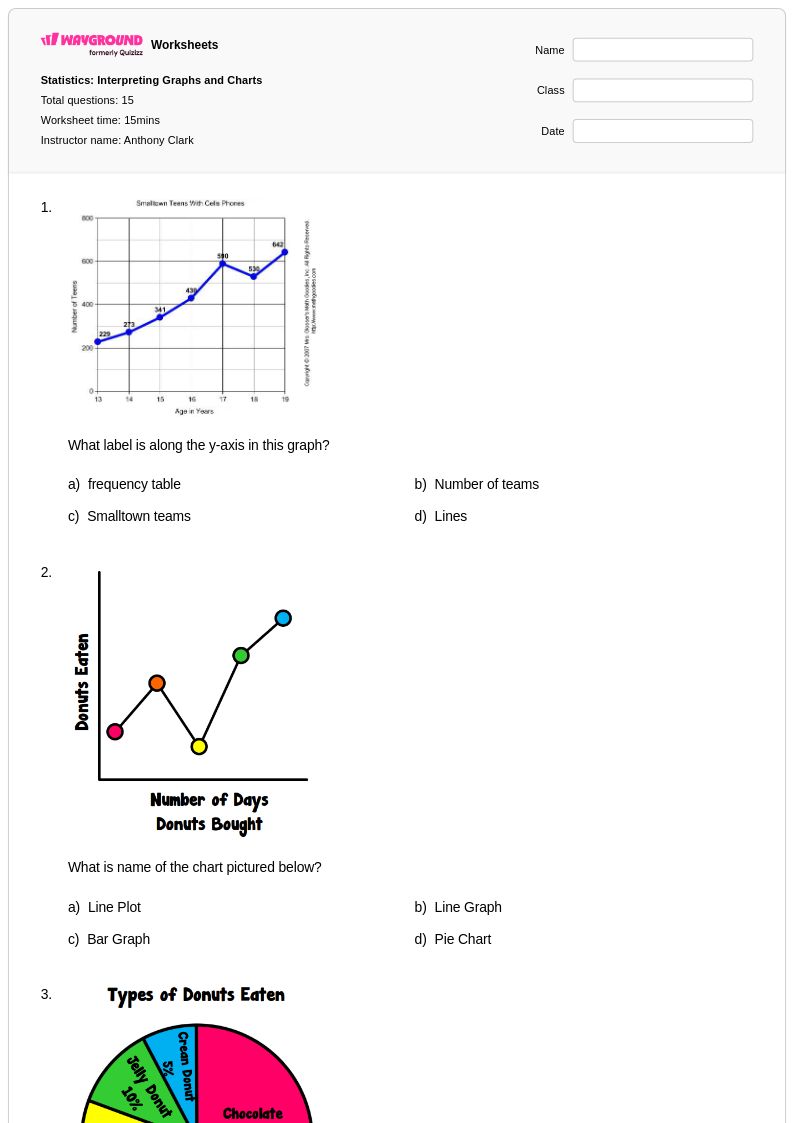
15 Q
6th - Uni
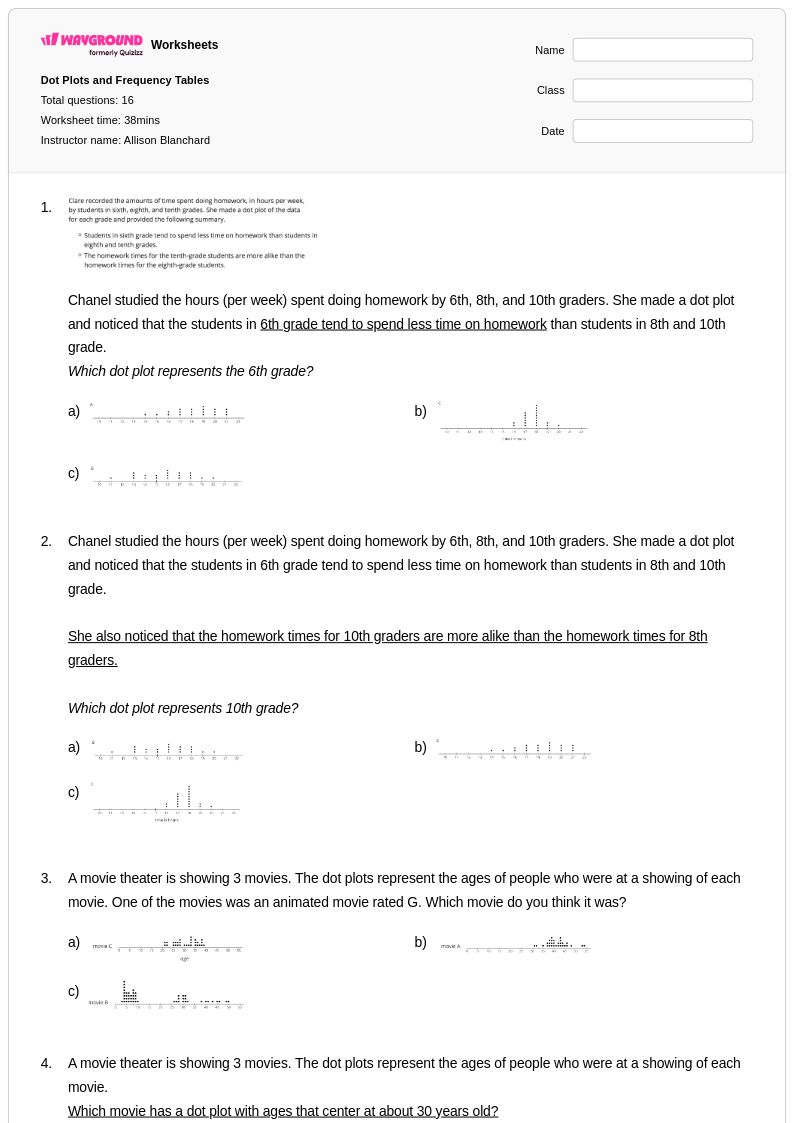
16 Q
6th
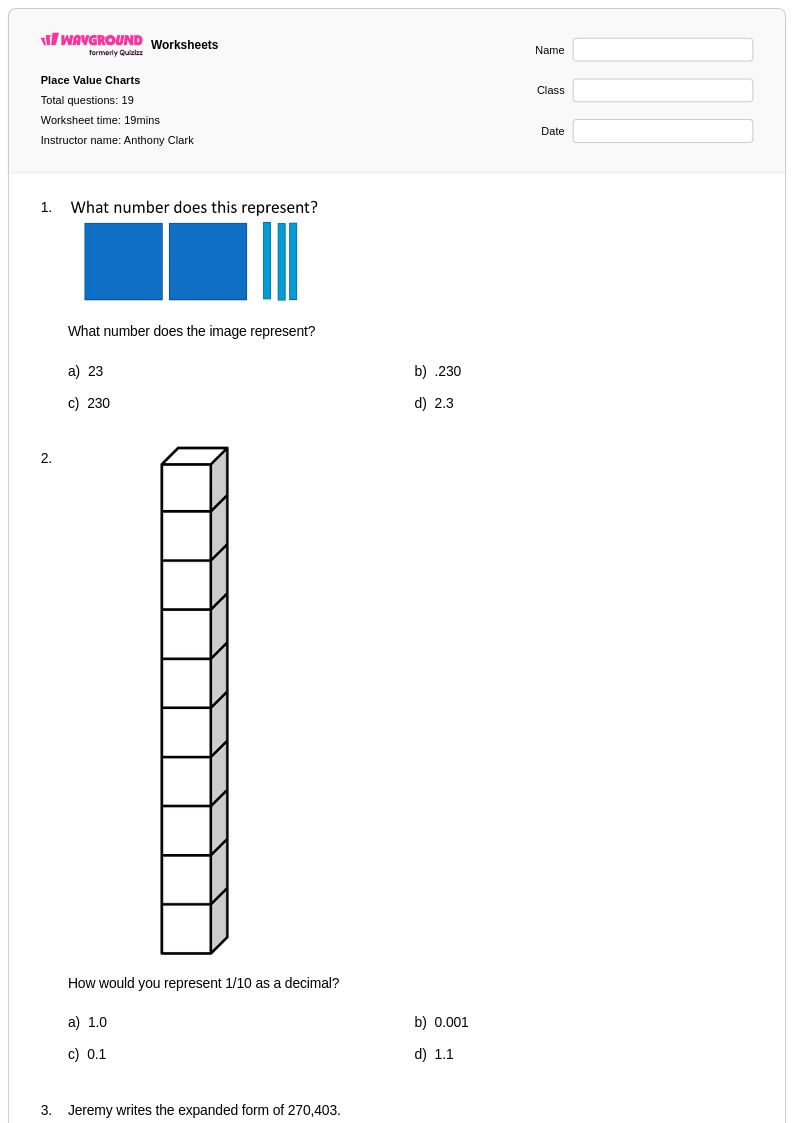
19 Q
4th - Uni
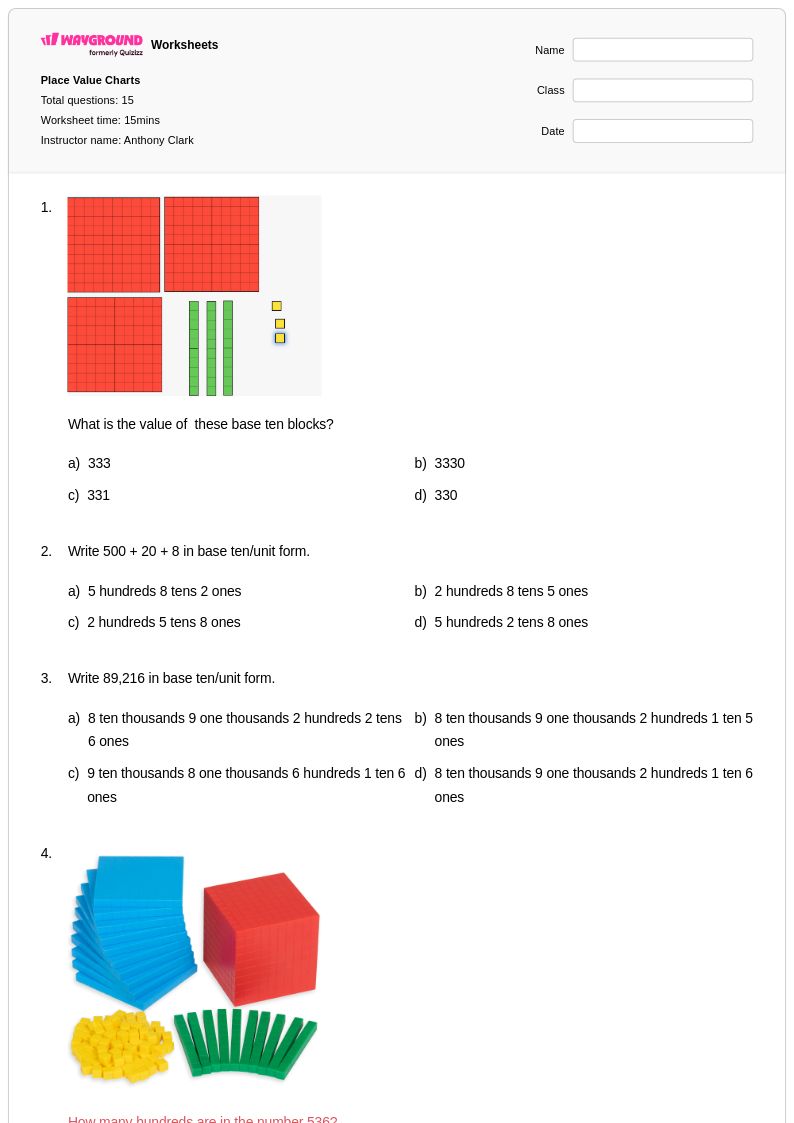
15 Q
4th - Uni
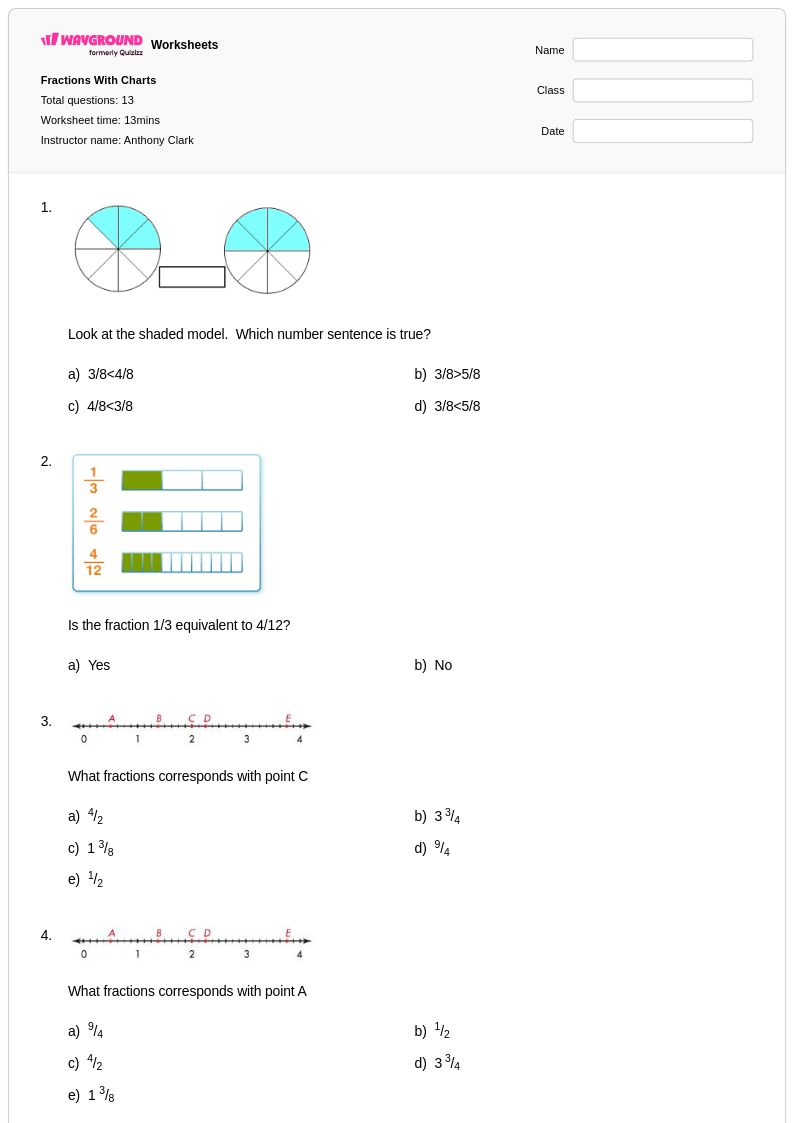
13 Q
4th - Uni
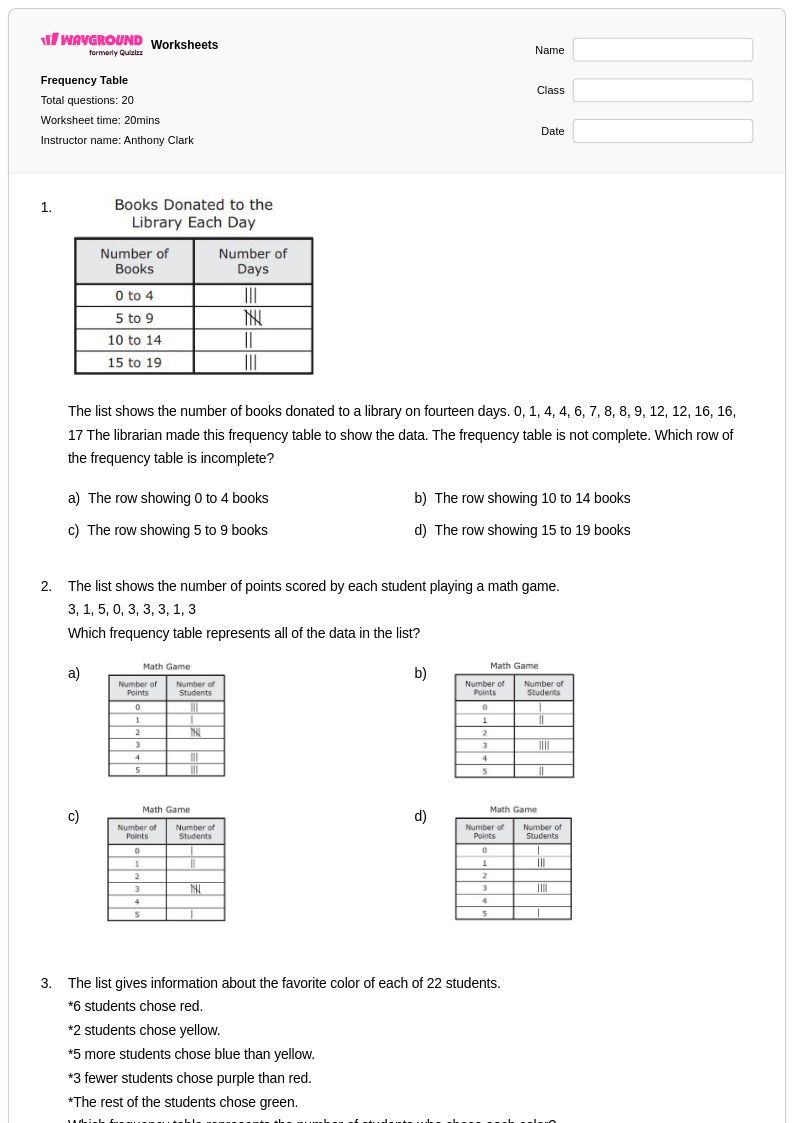
20 Q
4th - Uni
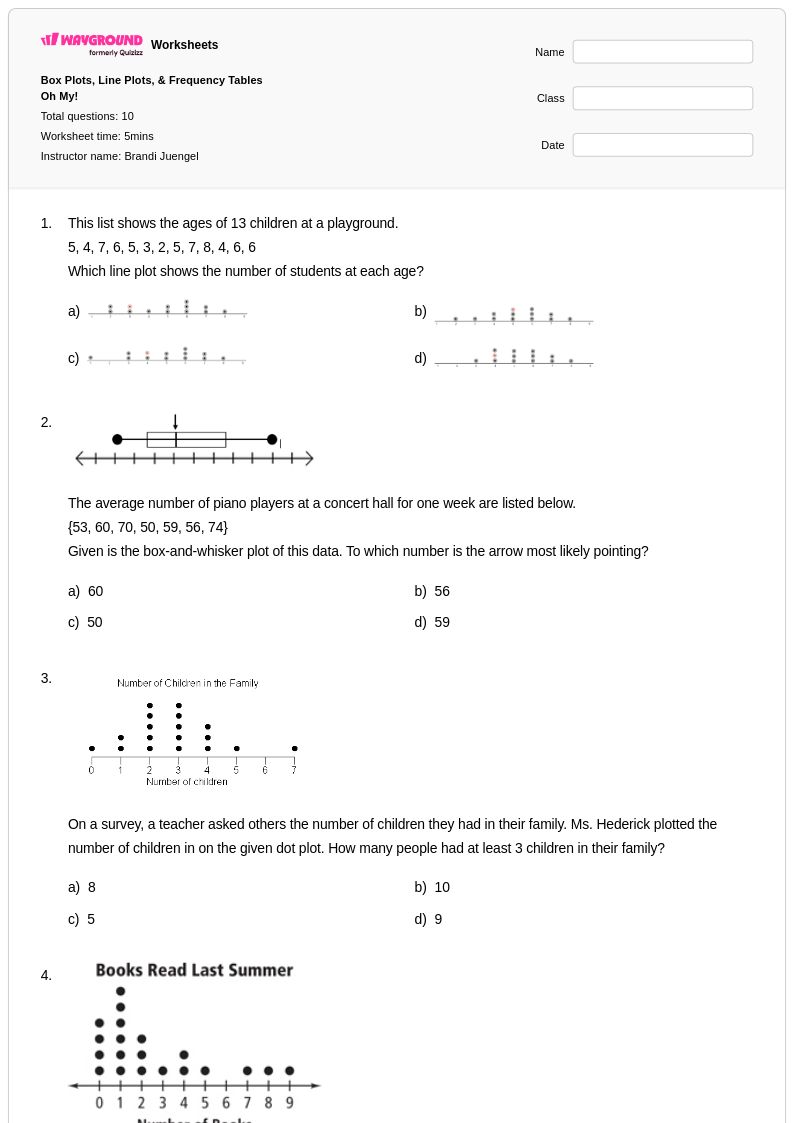
10 Q
6th
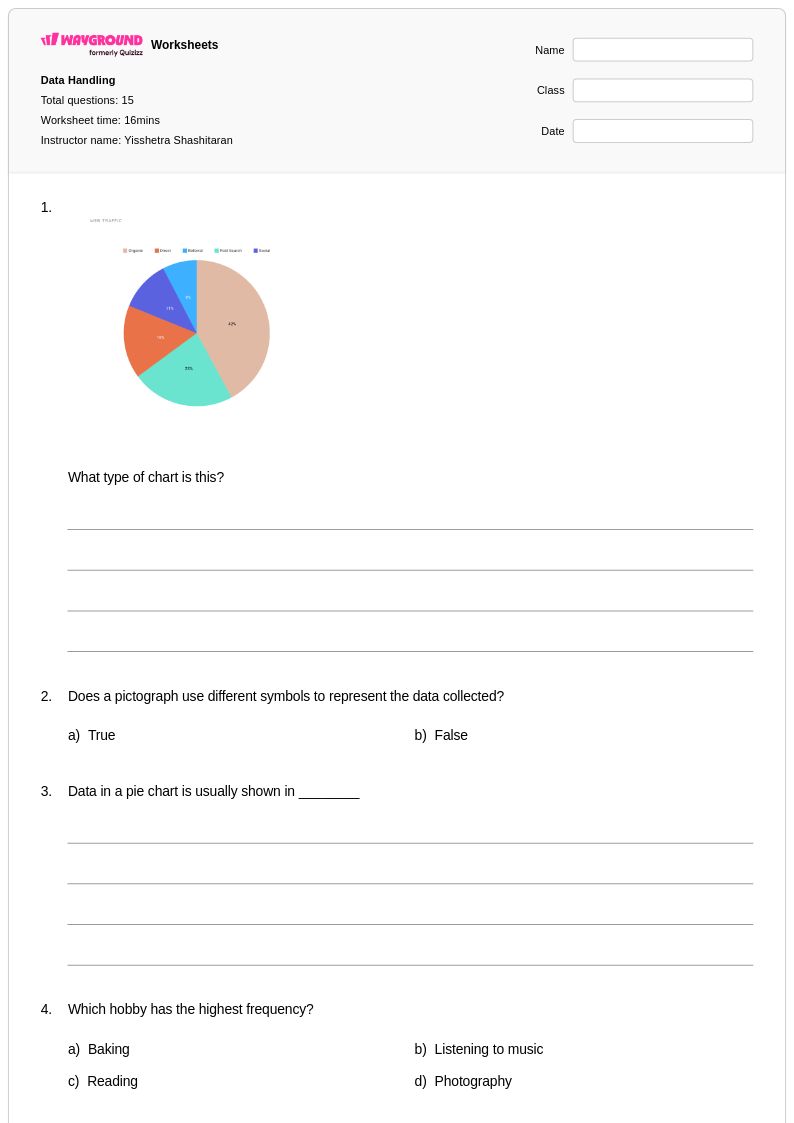
15 Q
1st - 12th
Explore Other Subject Worksheets for class 6
Explore printable Frequency Charts worksheets for Class 6
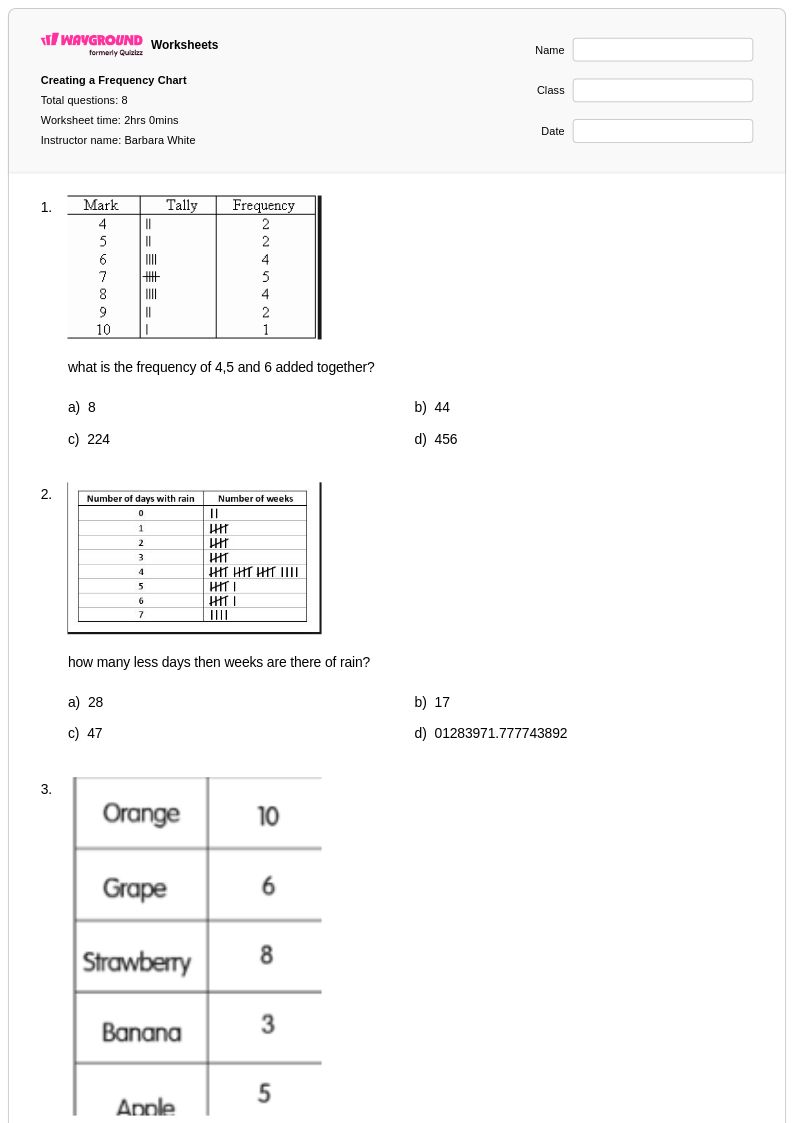
Frequency charts represent a fundamental component of Class 6 data and graphing instruction, helping students organize, analyze, and interpret numerical information in systematic ways. Wayground's comprehensive frequency charts worksheets guide sixth-grade students through essential skills including data collection, tally mark usage, frequency table construction, and pattern identification within datasets. These carefully crafted practice problems enable students to master key concepts such as counting occurrences, organizing raw data into meaningful categories, and drawing conclusions from frequency distributions. Each worksheet includes a detailed answer key to support independent learning and self-assessment, while the free printable format ensures easy classroom integration and at-home practice opportunities.
Wayground's extensive collection of frequency charts resources draws from millions of teacher-created materials, providing educators with robust search and filtering capabilities to locate grade-appropriate content that aligns with curriculum standards and individual classroom needs. Teachers can customize worksheets to address diverse learning levels through built-in differentiation tools, making remediation and enrichment seamless for students requiring additional support or advanced challenges. The platform's flexible format options include both printable pdf versions for traditional instruction and digital formats for technology-integrated classrooms, supporting varied teaching approaches and learning preferences. These comprehensive resources streamline lesson planning while ensuring students receive targeted skill practice in frequency chart interpretation, data organization techniques, and analytical thinking that forms the foundation for advanced statistical concepts.
FAQs
What is the role of frequency charts in 6th-grade math?
How do I connect frequency charts to 6th-grade statistics?
How does this worksheet prepare 6th graders for more advanced data analysis?
What challenges do 6th graders face with frequency charts?
How do frequency charts align with 6th-grade Common Core statistics?
What formats are available for this 6th-grade frequency chart worksheet?
How can I accommodate diverse learners with this statistics worksheet?