
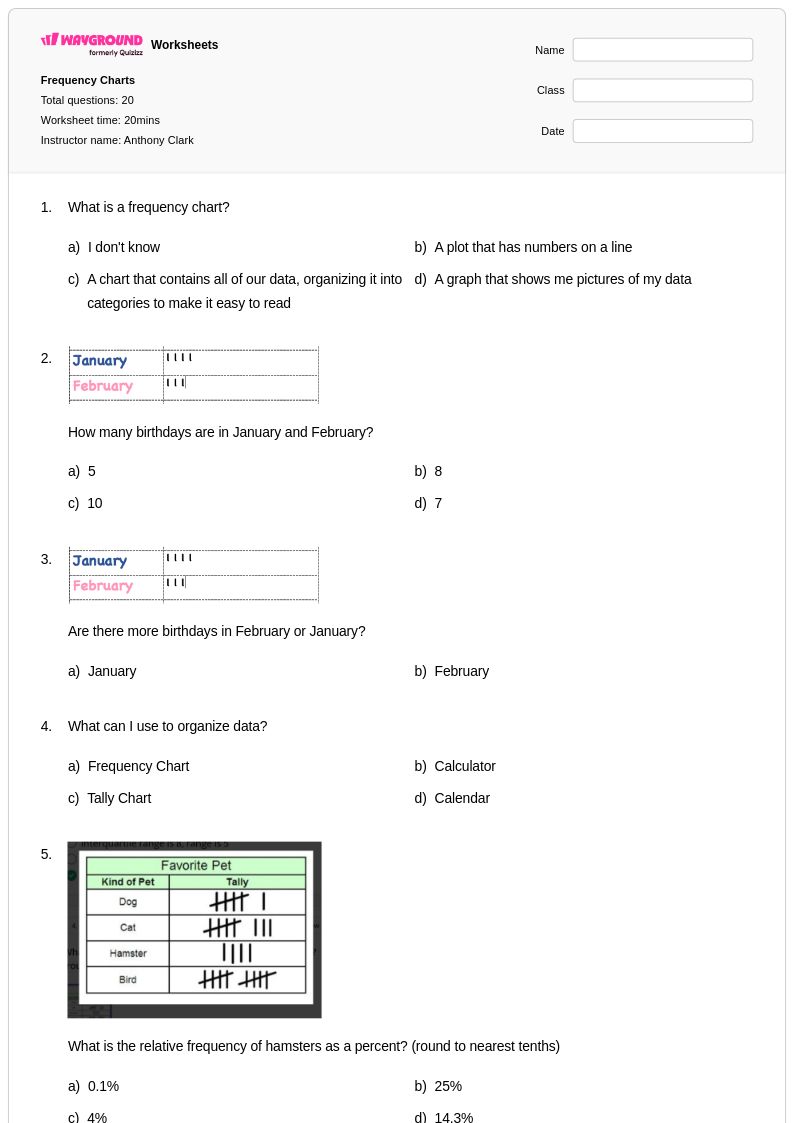
20 Q
3rd - Uni
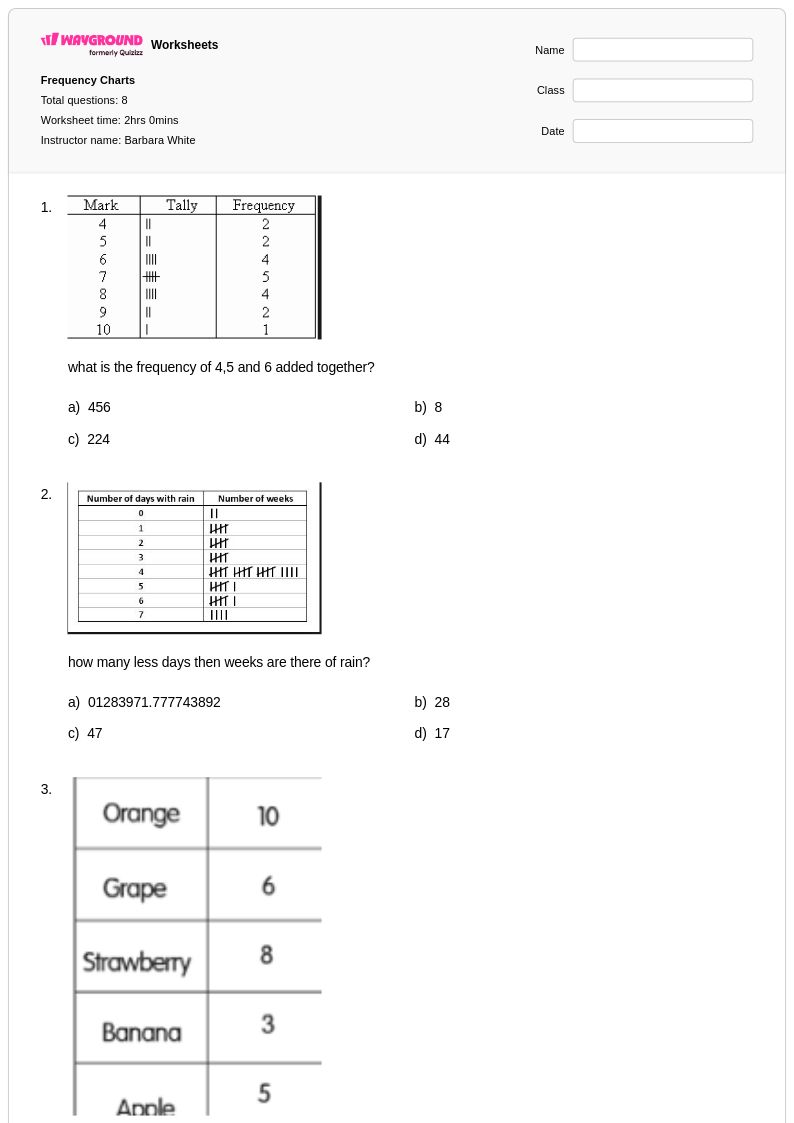
8 Q
5th - 7th
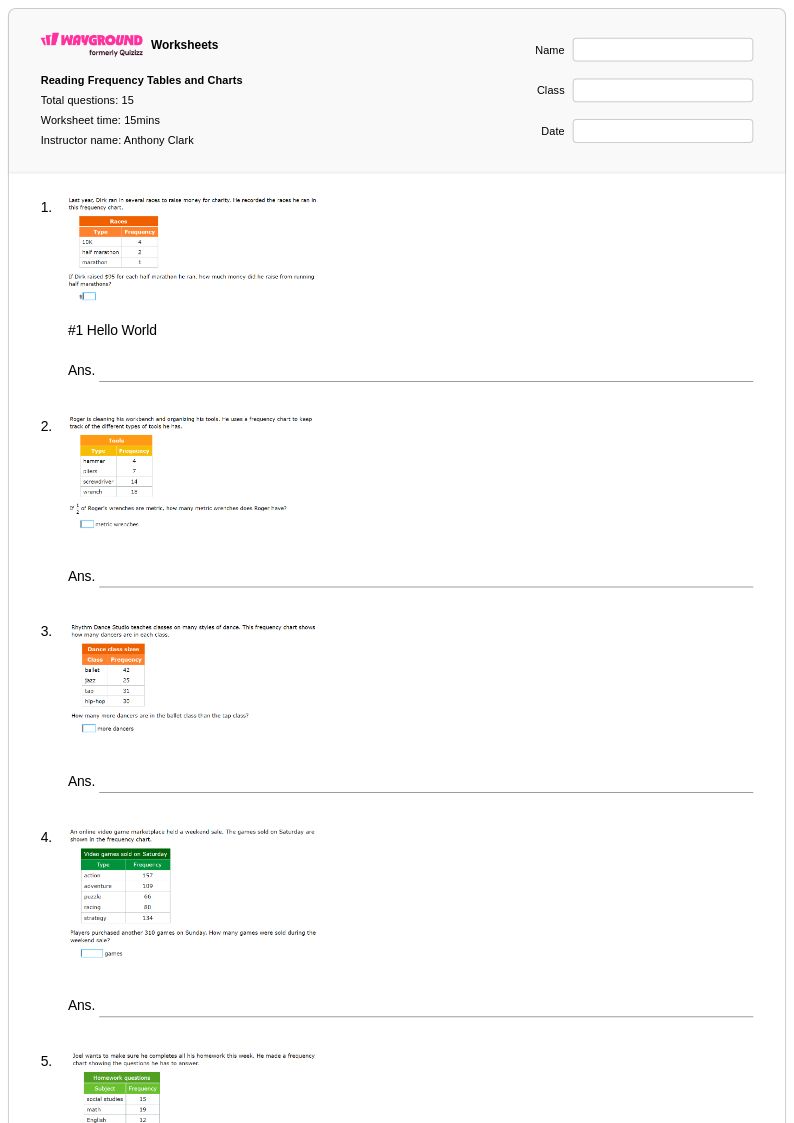
15 Q
5th - Uni
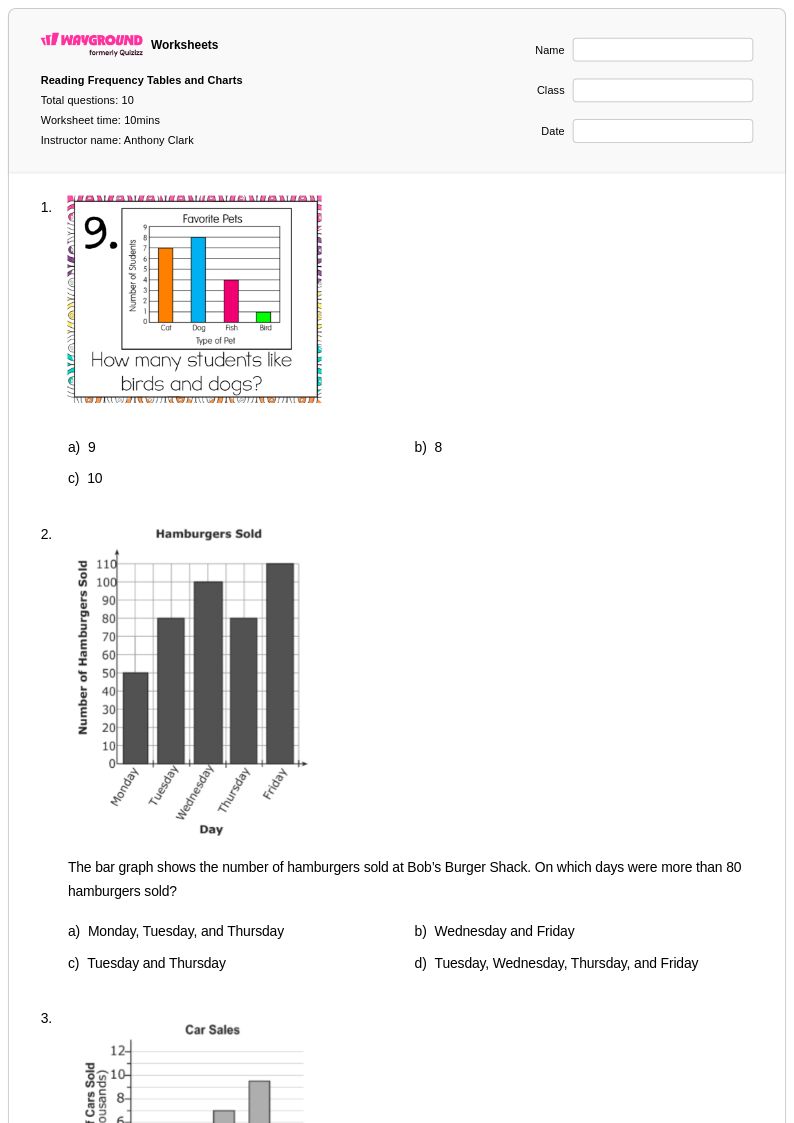
10 Q
5th - Uni
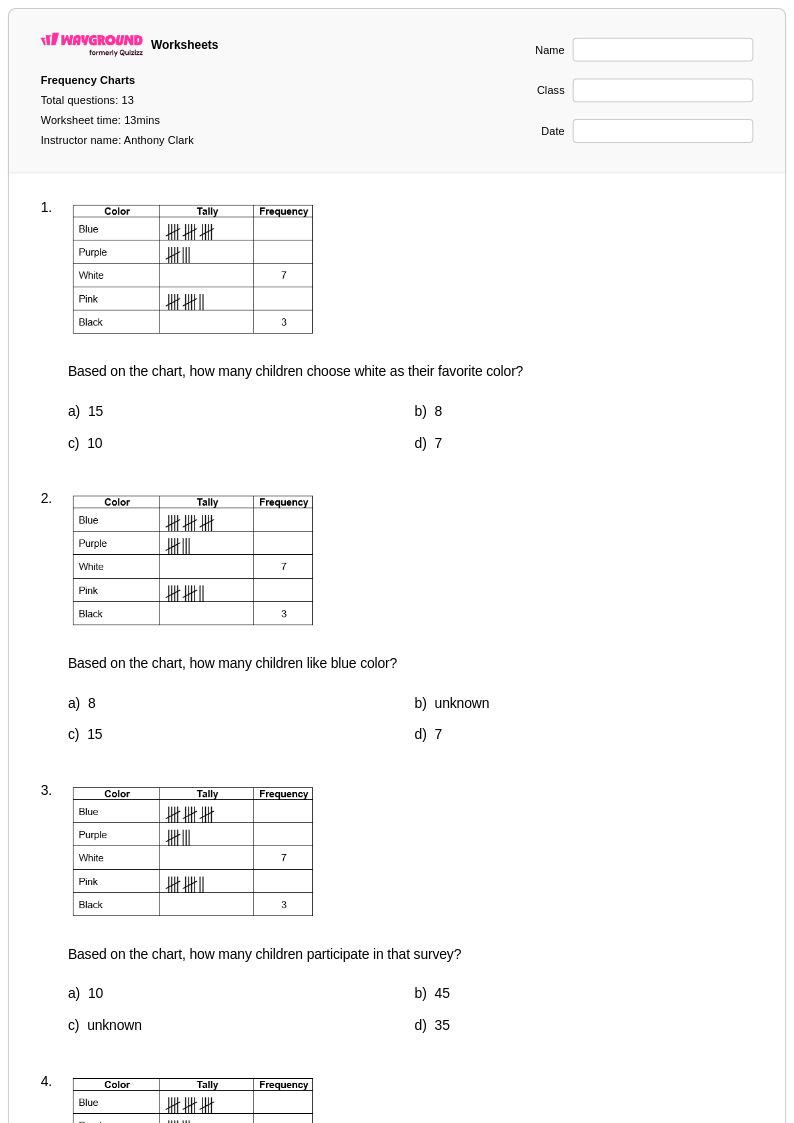
13 Q
3rd - Uni
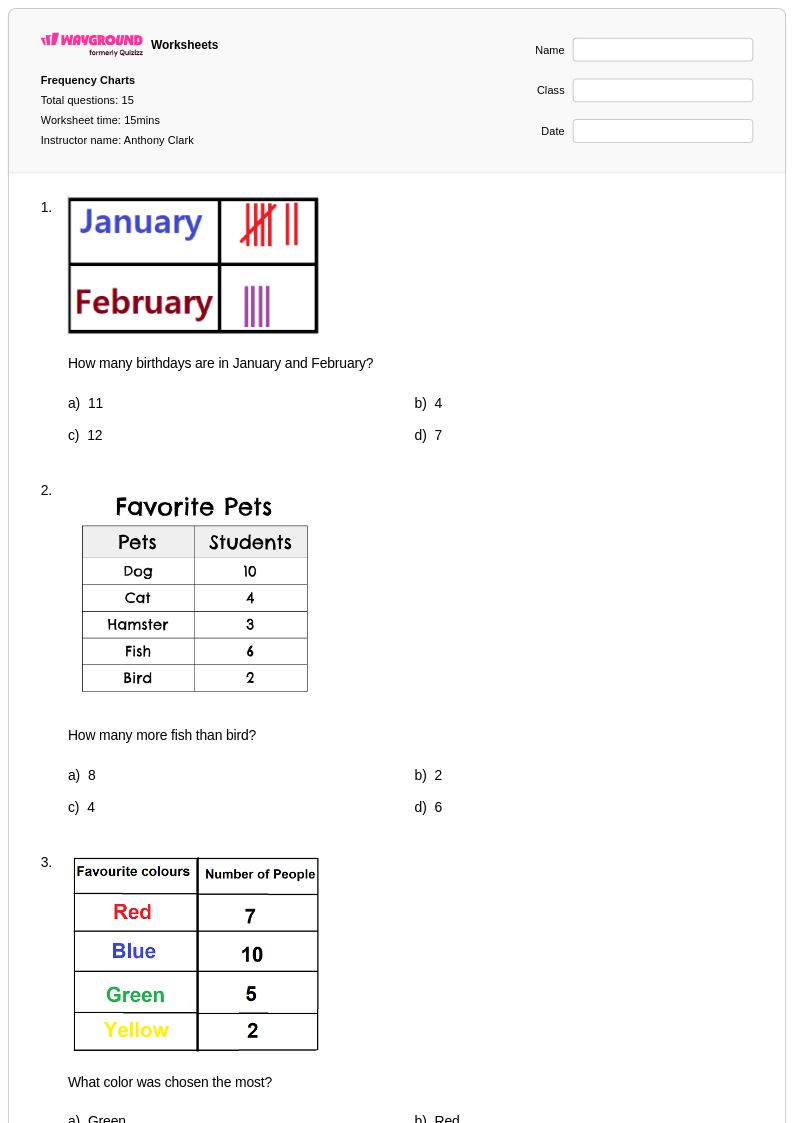
15 Q
3rd - Uni
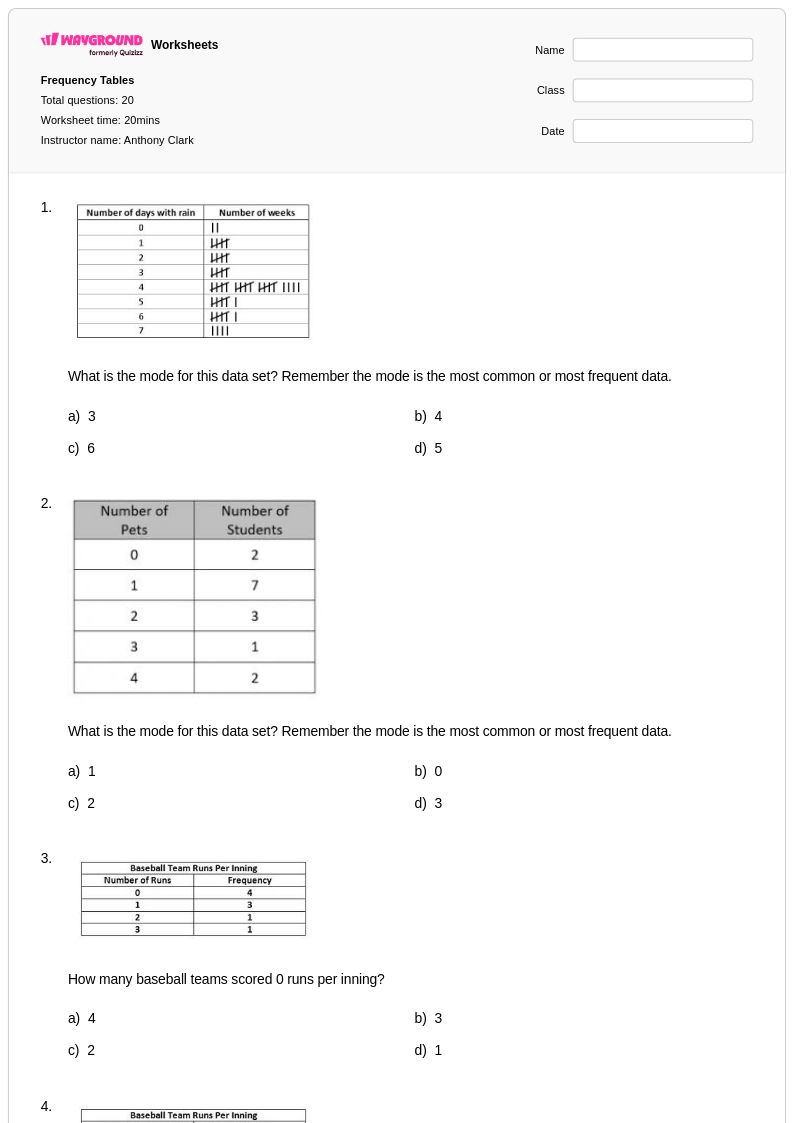
20 Q
5th - Uni
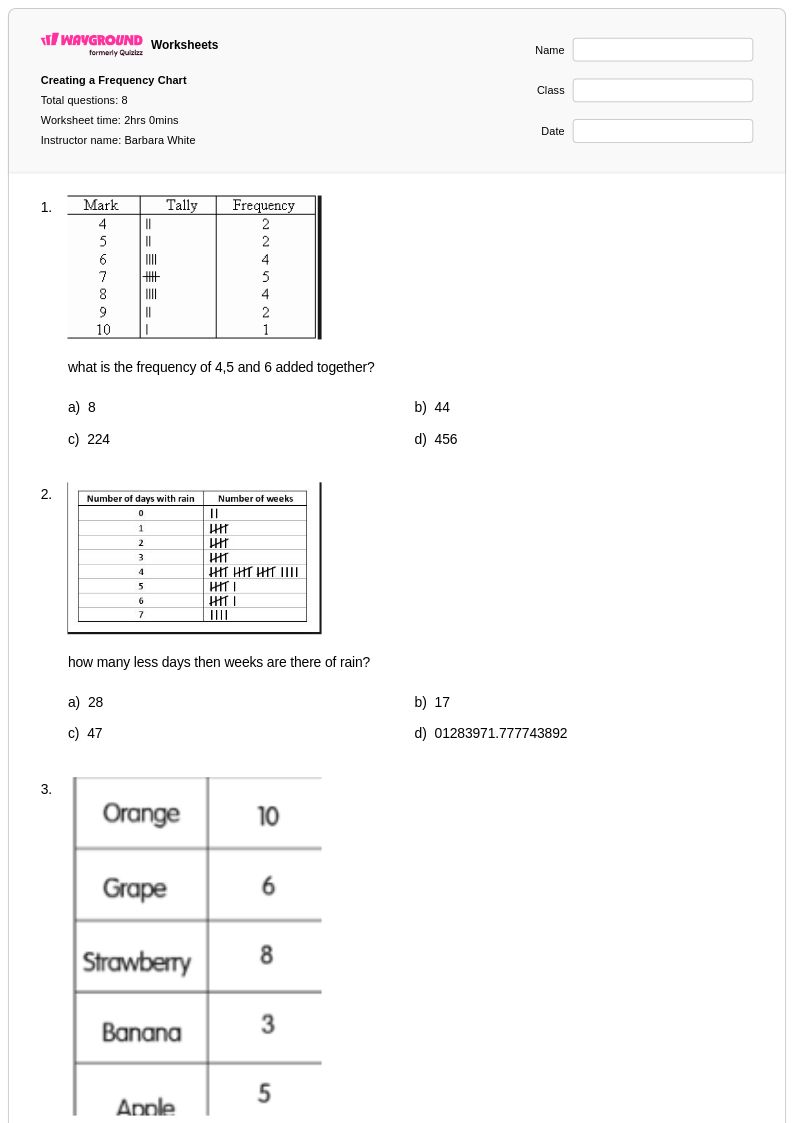
8 Q
5th - 7th
23 Q
5th - 7th
20 Q
7th - Uni
20 Q
6th - Uni
13 Q
6th - 10th
20 Q
6th - Uni
20 Q
6th - Uni
15 Q
6th - Uni
19 Q
4th - Uni
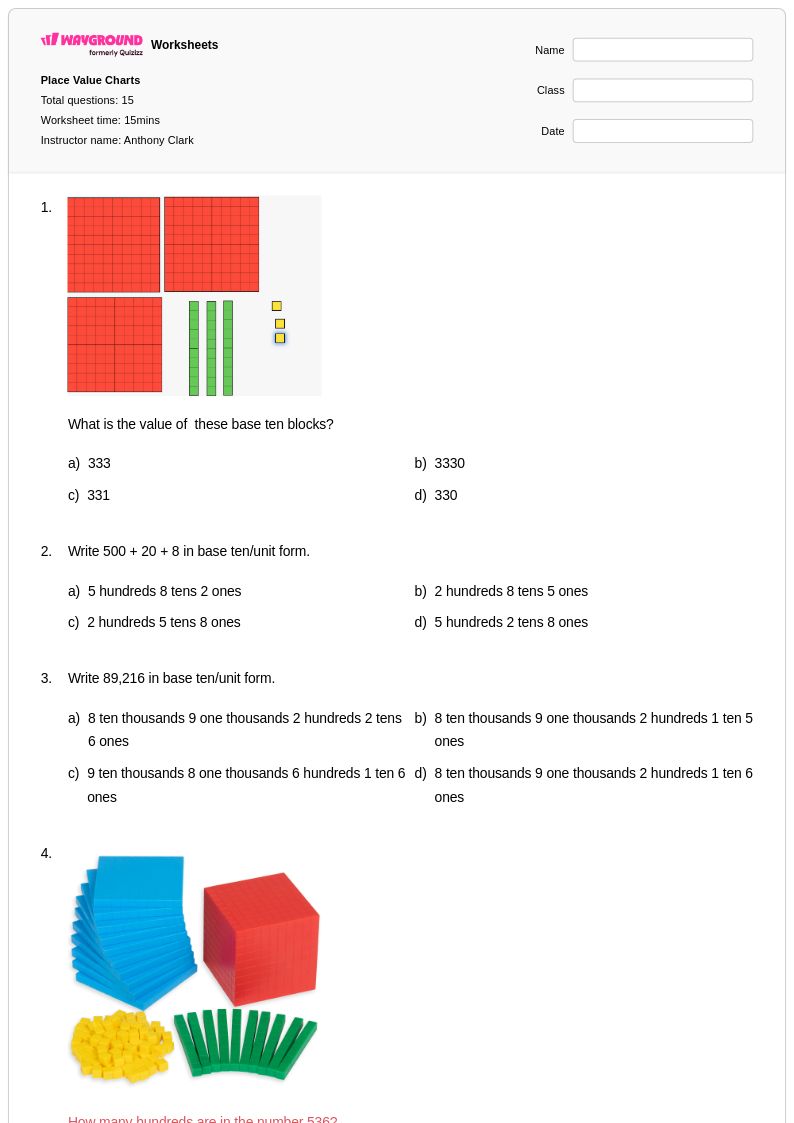
15 Q
4th - Uni
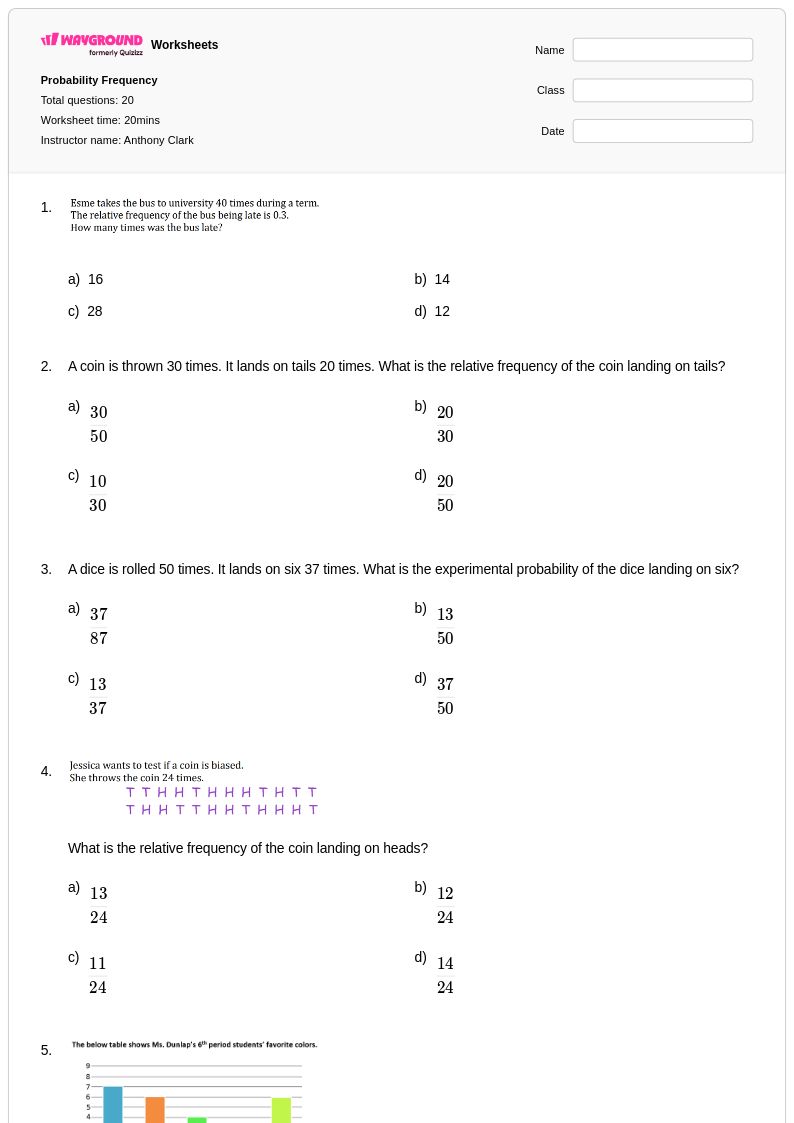
20 Q
7th - Uni
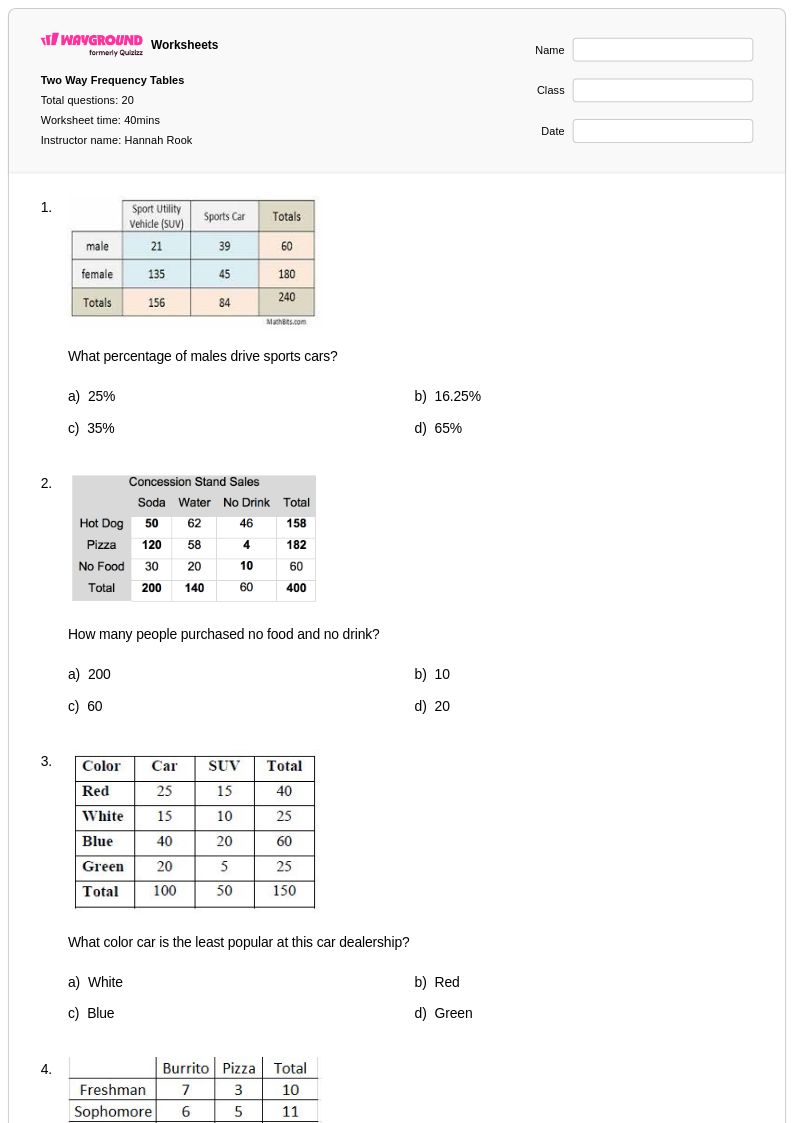
20 Q
7th - 10th
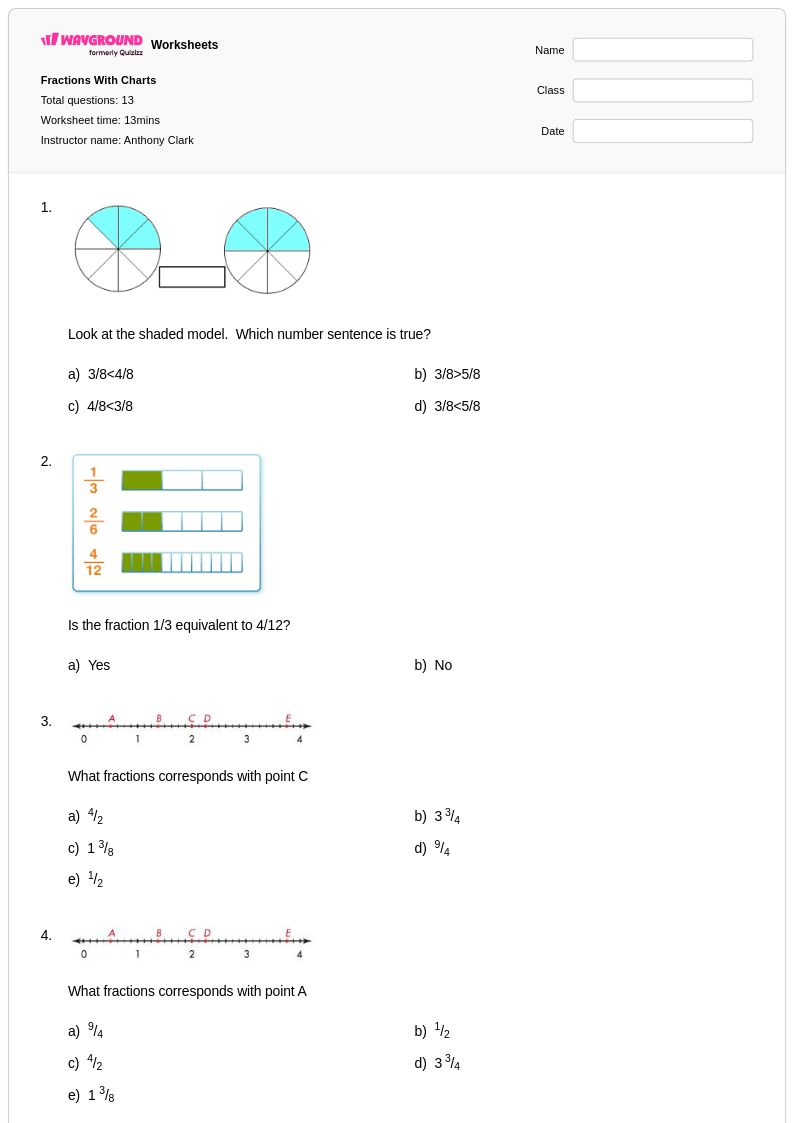
13 Q
4th - Uni
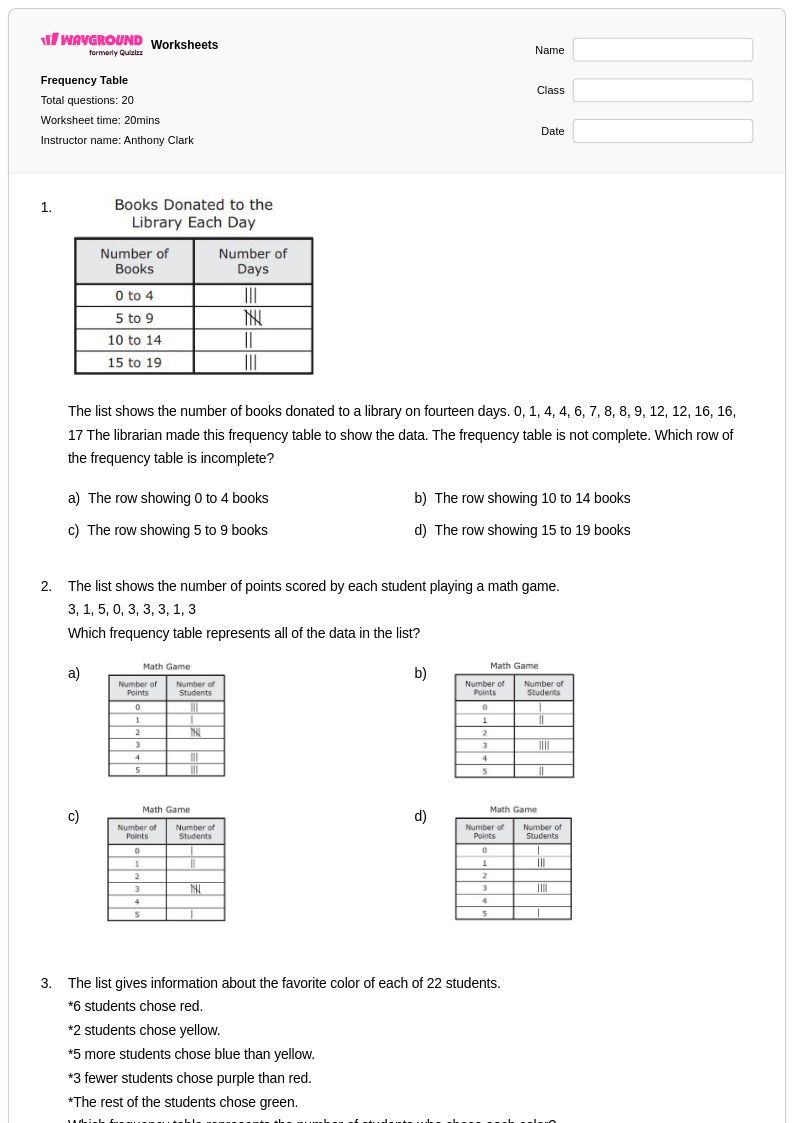
20 Q
4th - Uni
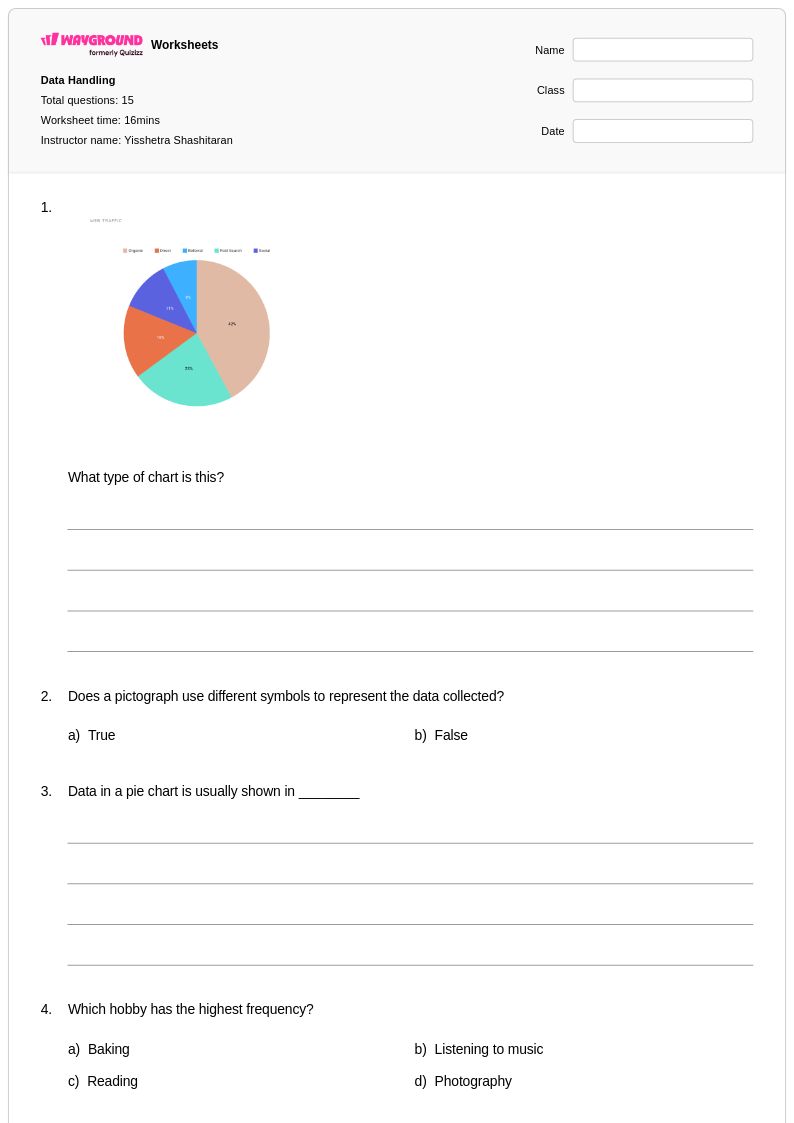
15 Q
1st - 12th
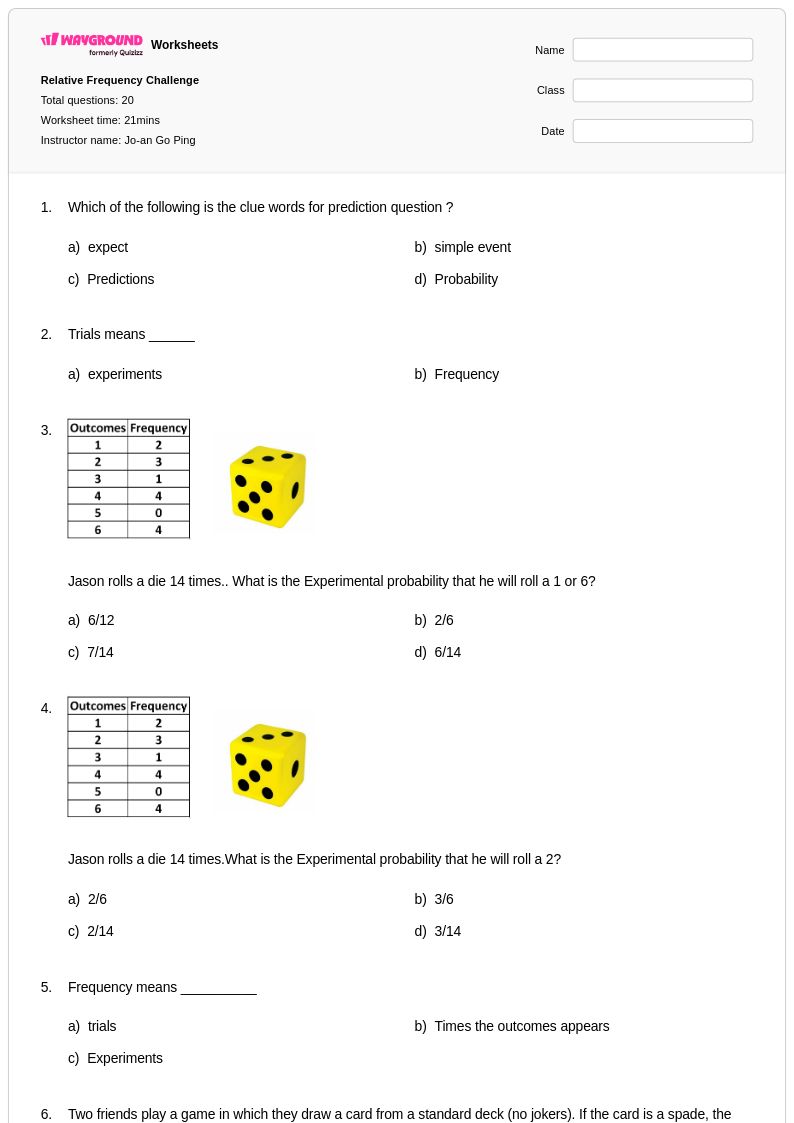
20 Q
7th
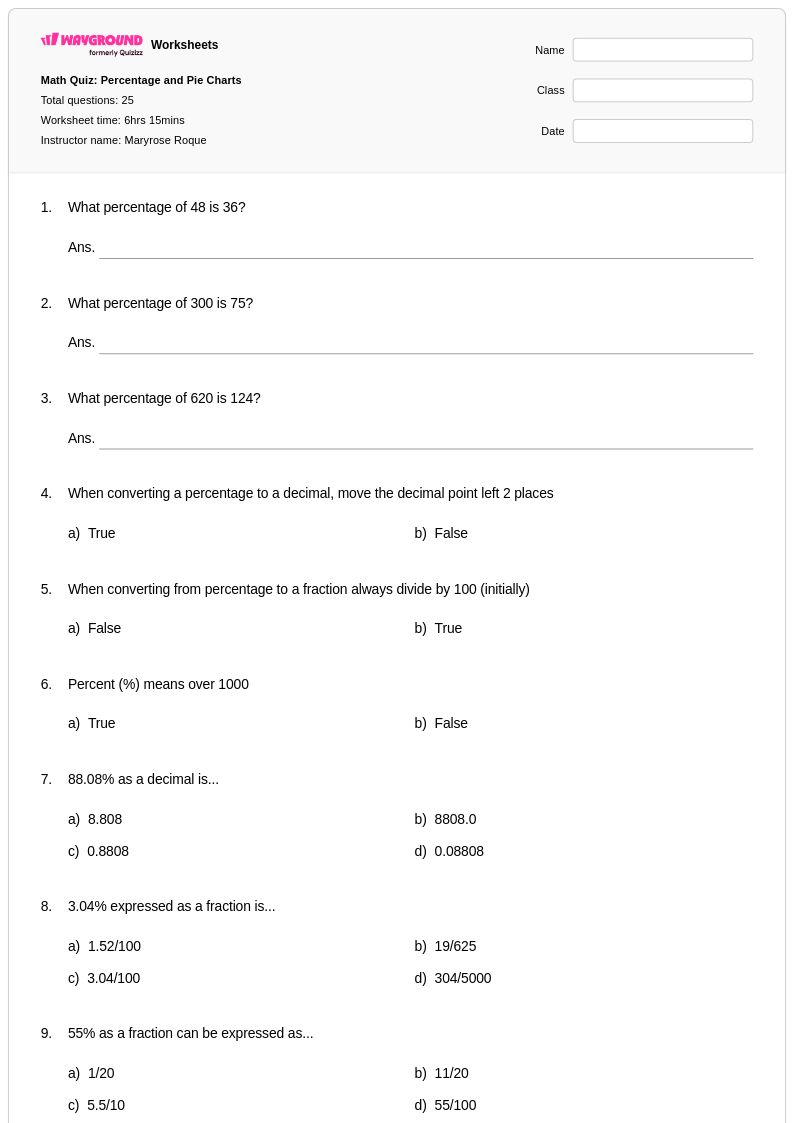
25 Q
6th - 7th
Explore Other Subject Worksheets for class 7
Explore printable Frequency Charts worksheets for Class 7
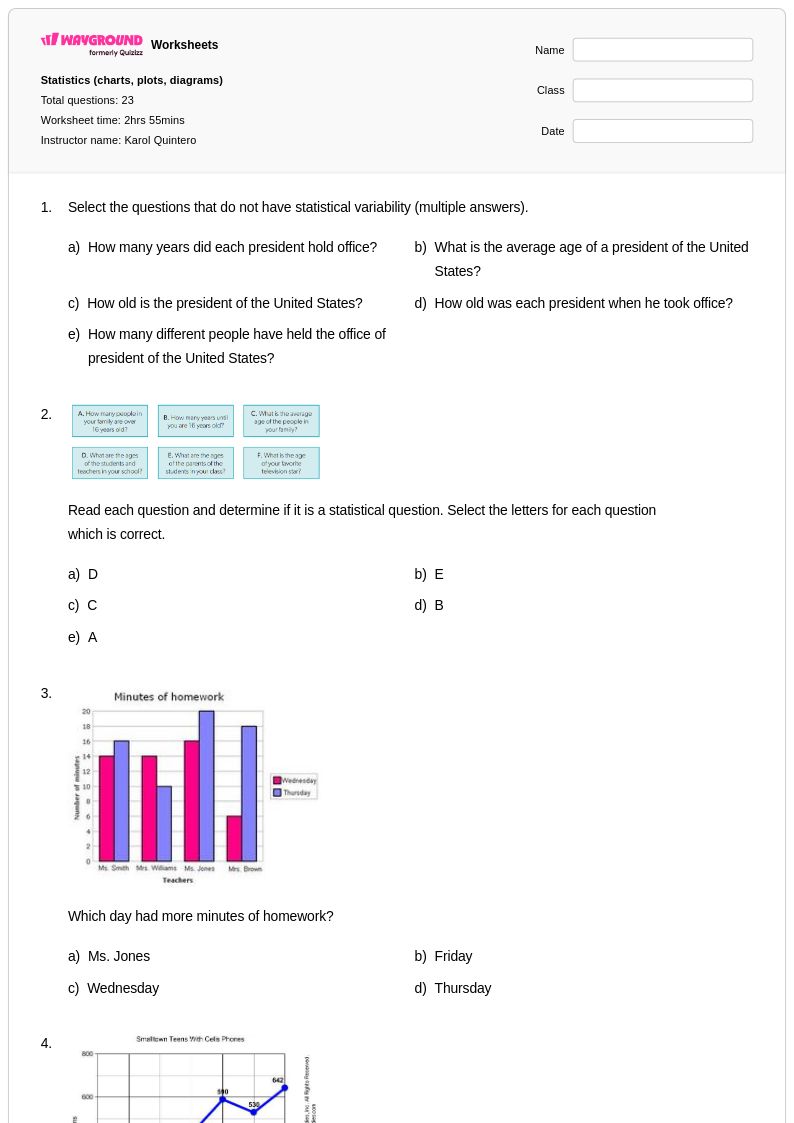
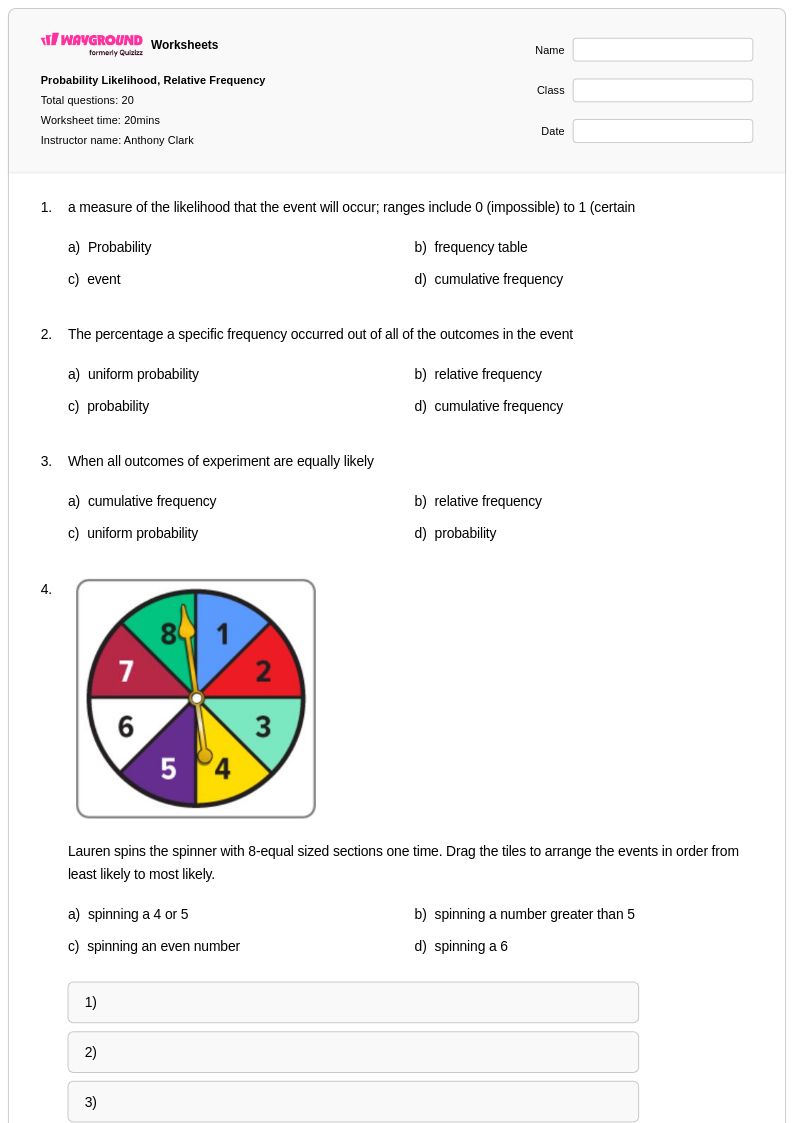
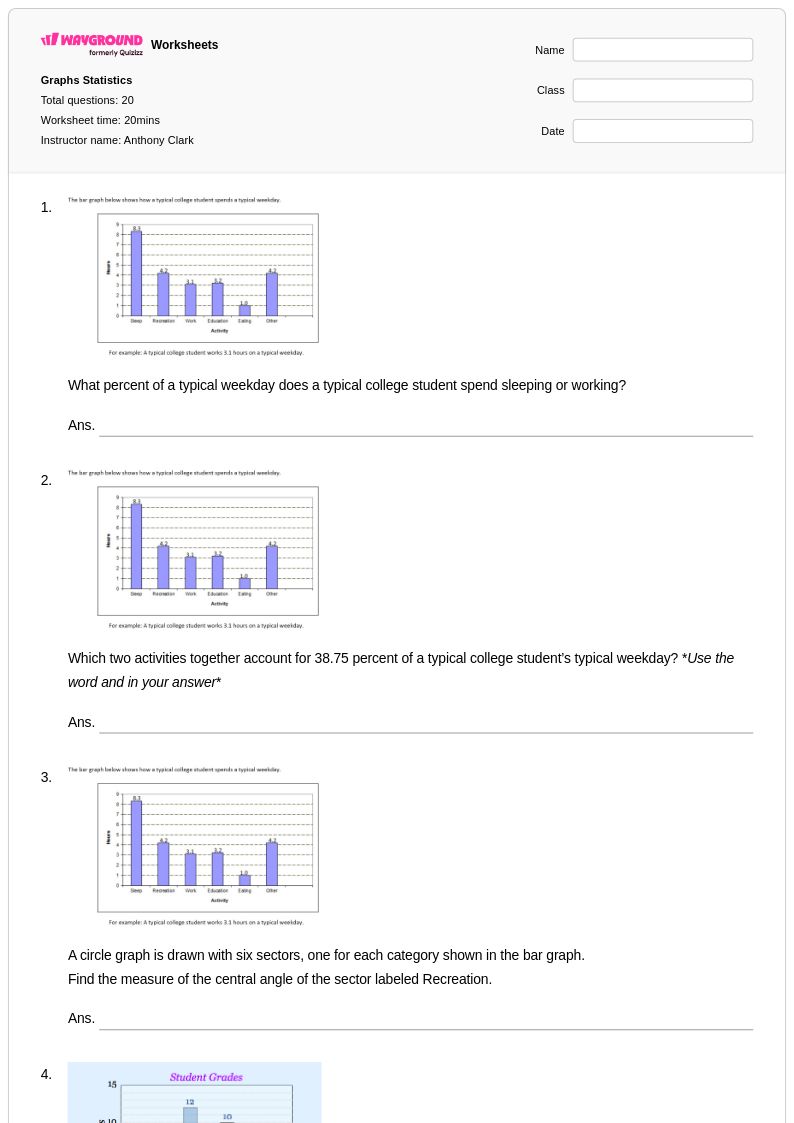
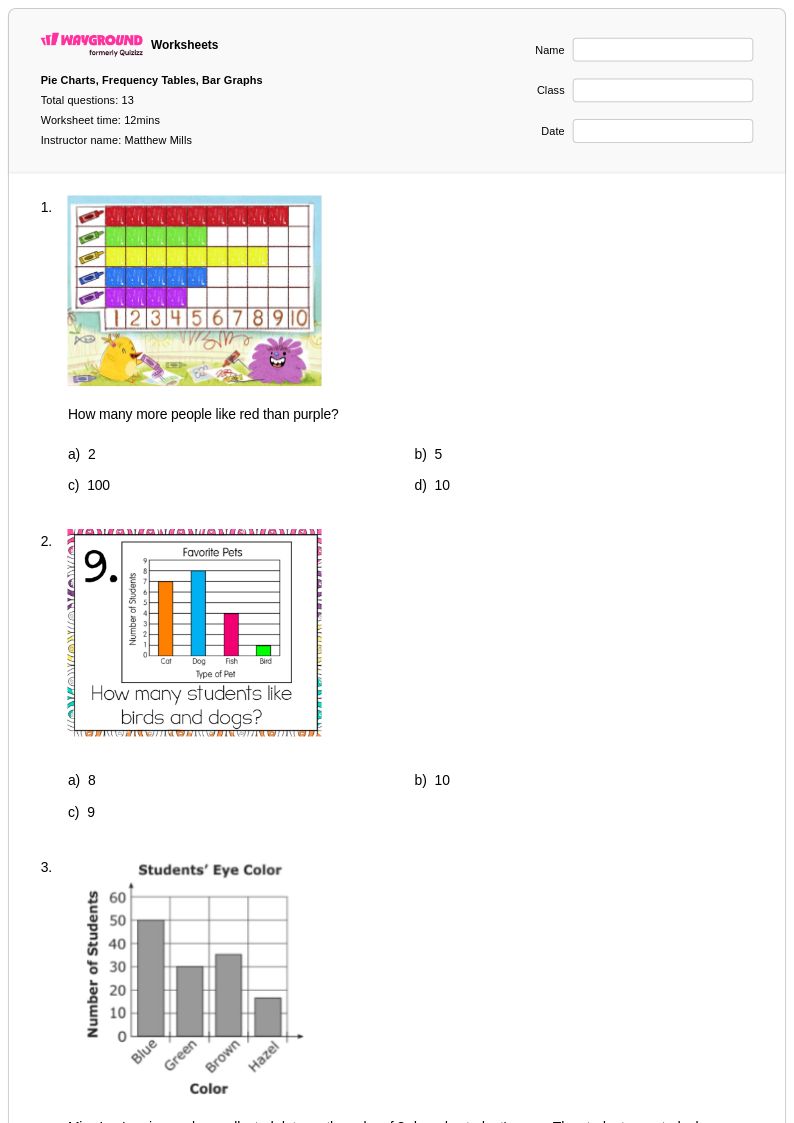
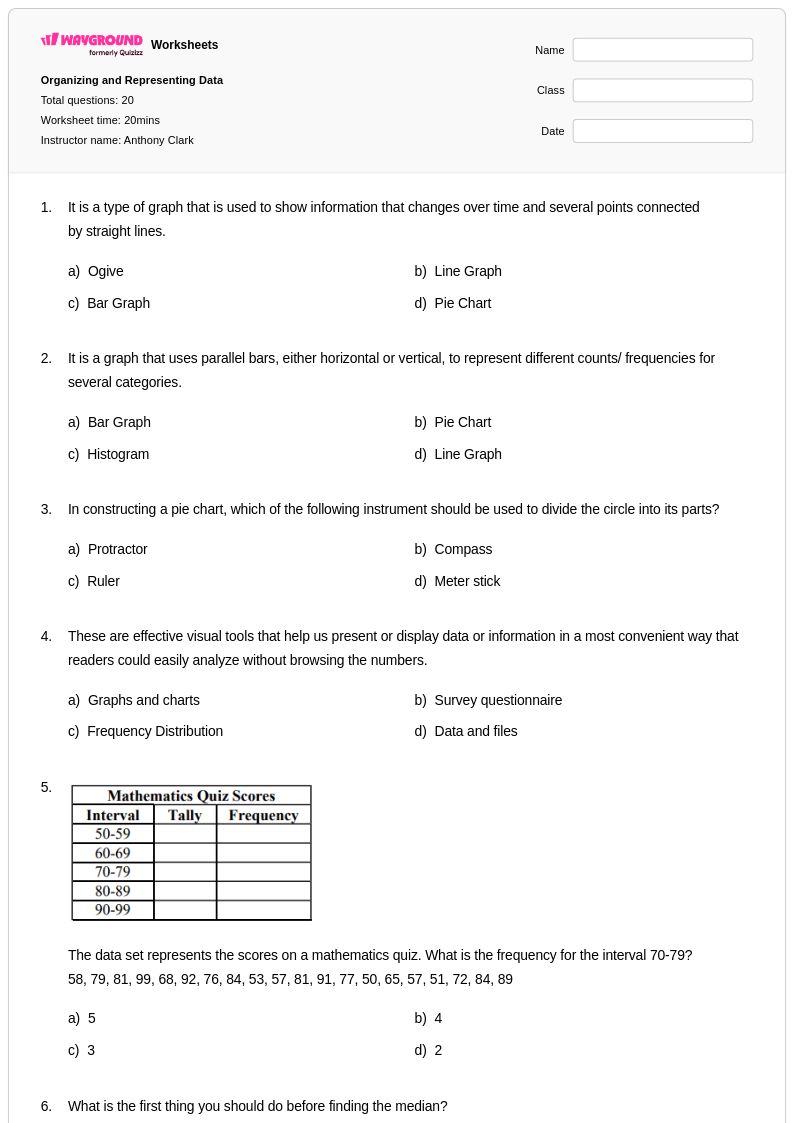
Frequency charts represent a fundamental component of Class 7 data analysis, providing students with essential tools for organizing, interpreting, and presenting quantitative information. Wayground's comprehensive collection of frequency chart worksheets guides seventh-grade students through the systematic process of constructing tally charts, frequency tables, and grouped frequency distributions while developing critical analytical thinking skills. These carefully structured practice problems progress from basic data collection and organization to more complex applications involving class intervals, cumulative frequencies, and data interpretation. Each worksheet includes a detailed answer key and is available as a free printable pdf, enabling students to master the mathematical reasoning required for creating accurate frequency distributions and drawing meaningful conclusions from statistical data sets.
Wayground's extensive library draws from millions of teacher-created resources specifically designed to support Class 7 frequency chart instruction across diverse learning environments and student ability levels. The platform's robust search and filtering capabilities allow educators to quickly locate worksheets that align with state mathematics standards and specific curriculum requirements, while built-in differentiation tools enable seamless customization for remediation and enrichment activities. Teachers can access these frequency chart materials in both printable pdf format and interactive digital versions, facilitating flexible lesson planning that accommodates various instructional approaches from guided practice sessions to independent skill reinforcement. This comprehensive resource collection streamlines the process of providing targeted practice opportunities that strengthen students' foundational understanding of data organization and statistical reasoning essential for advanced mathematical concepts.
FAQs
How do I teach frequency charts to seventh graders?
What exercises help Grade 7 students practice frequency charts?
What mistakes do students make when creating frequency charts?
How can I use a Grade 7 frequency charts worksheet in class?
How do frequency charts fit into the Grade 7 Common Core math progression?
How can I differentiate frequency chart practice for mixed-ability students?
What grade do students learn frequency charts?