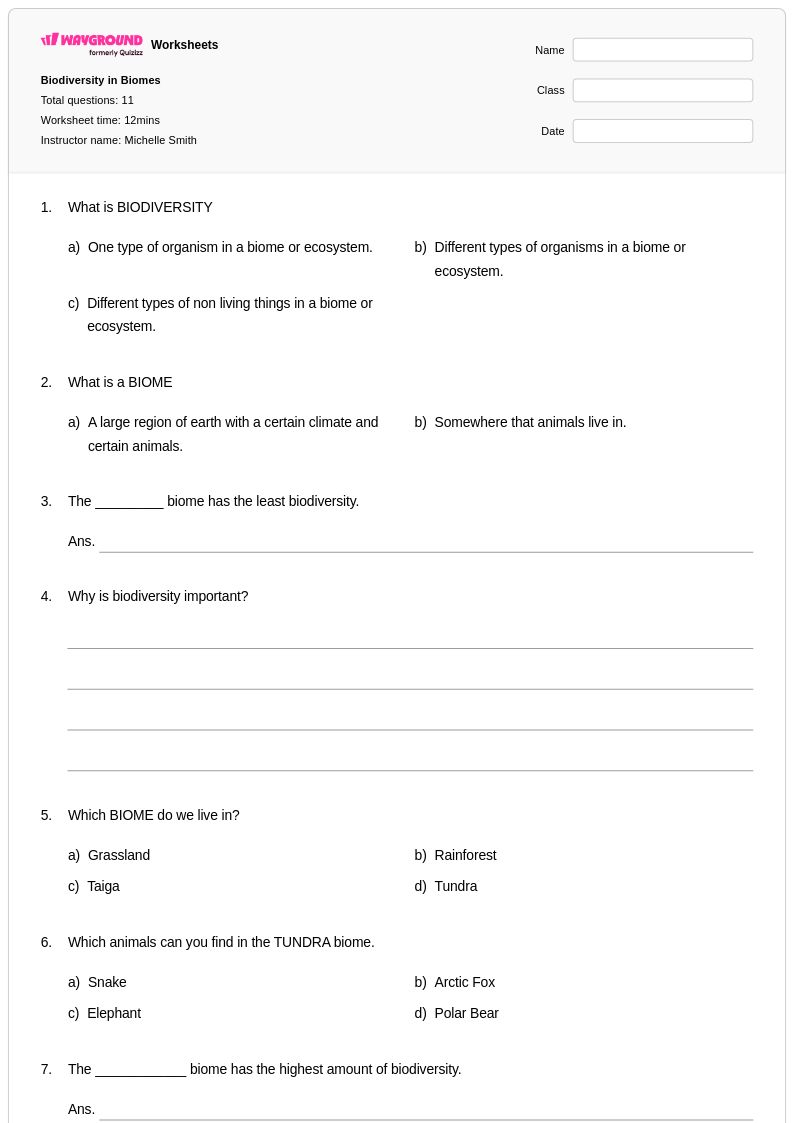
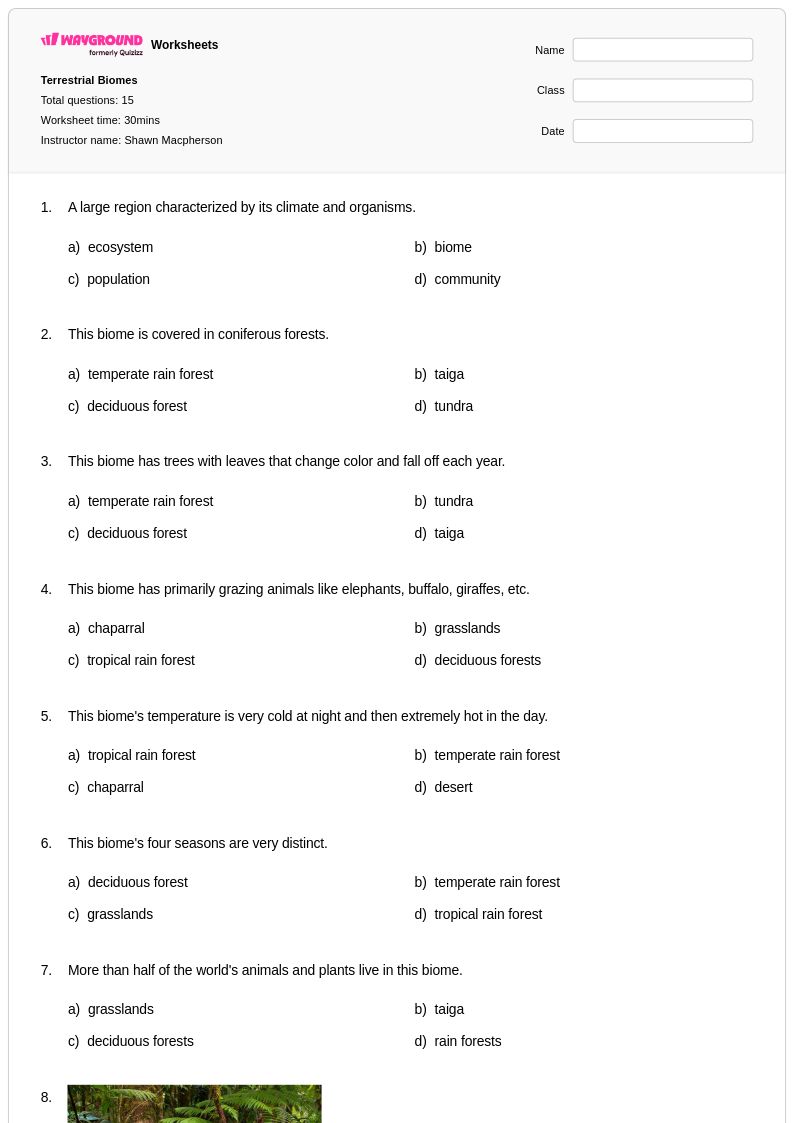
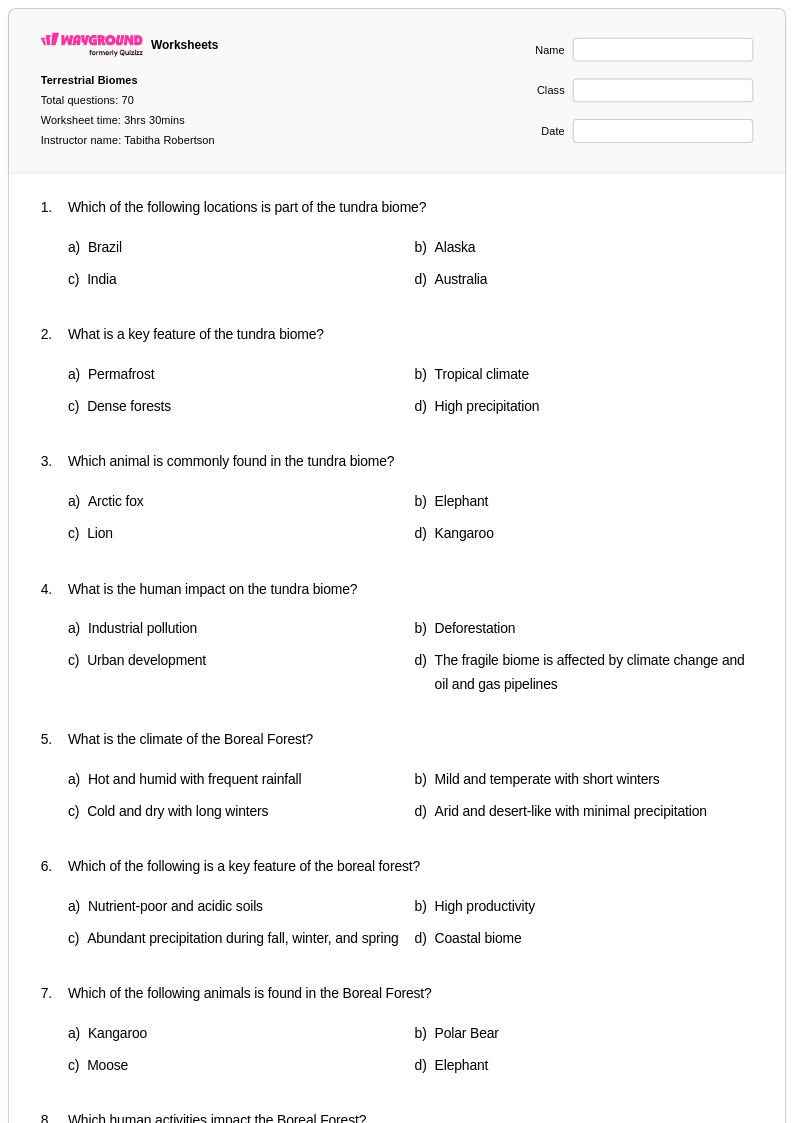
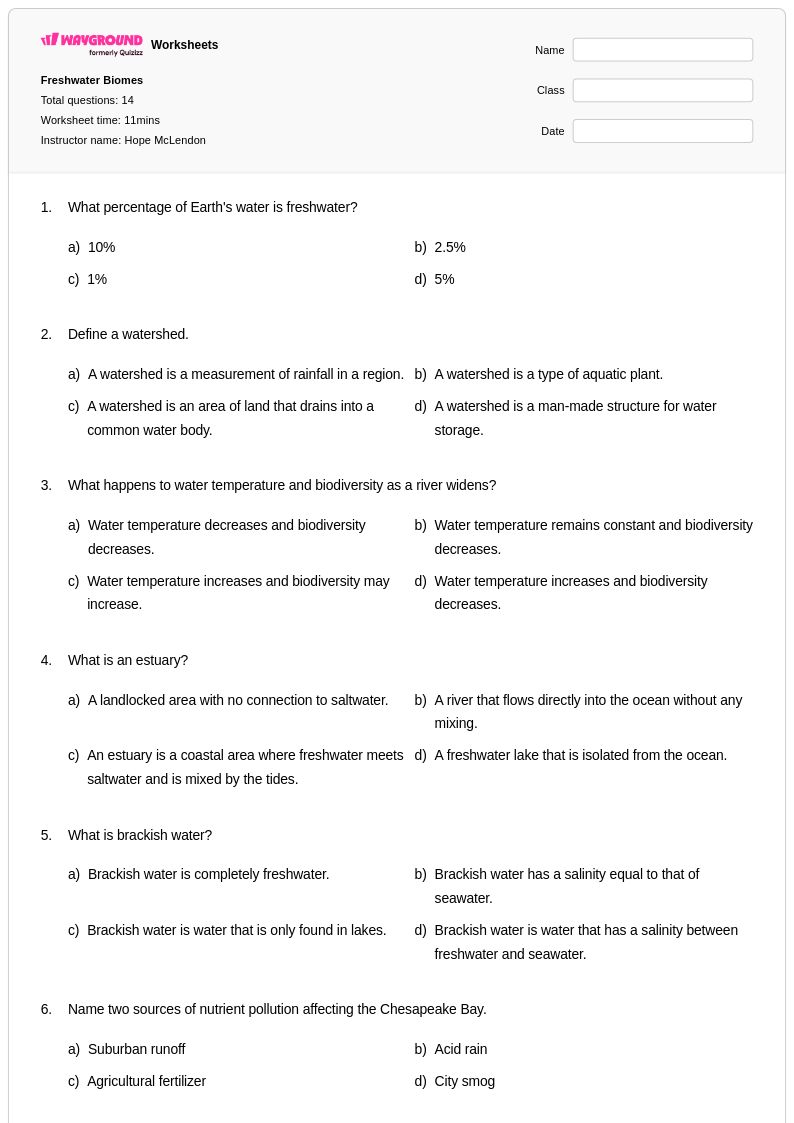
Explore Wayground's comprehensive collection of free biomes worksheets and printables that help students discover Earth's diverse ecosystems through engaging practice problems, interactive activities, and detailed answer keys.
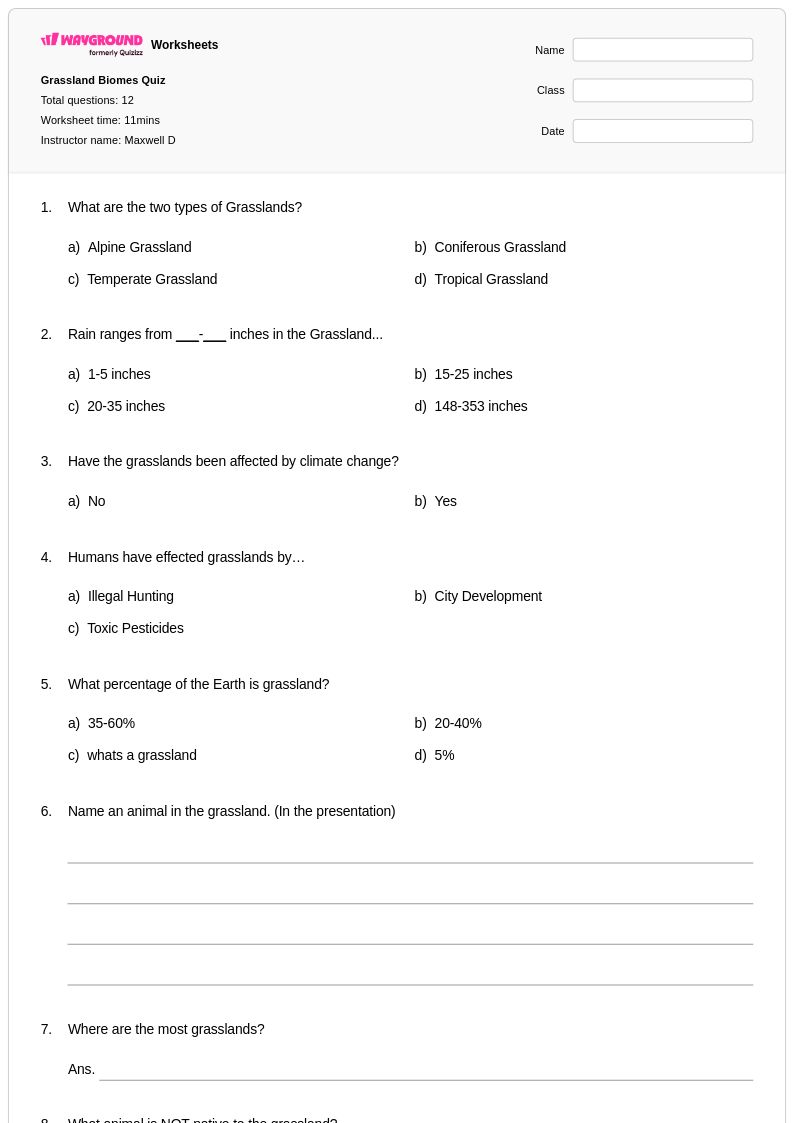
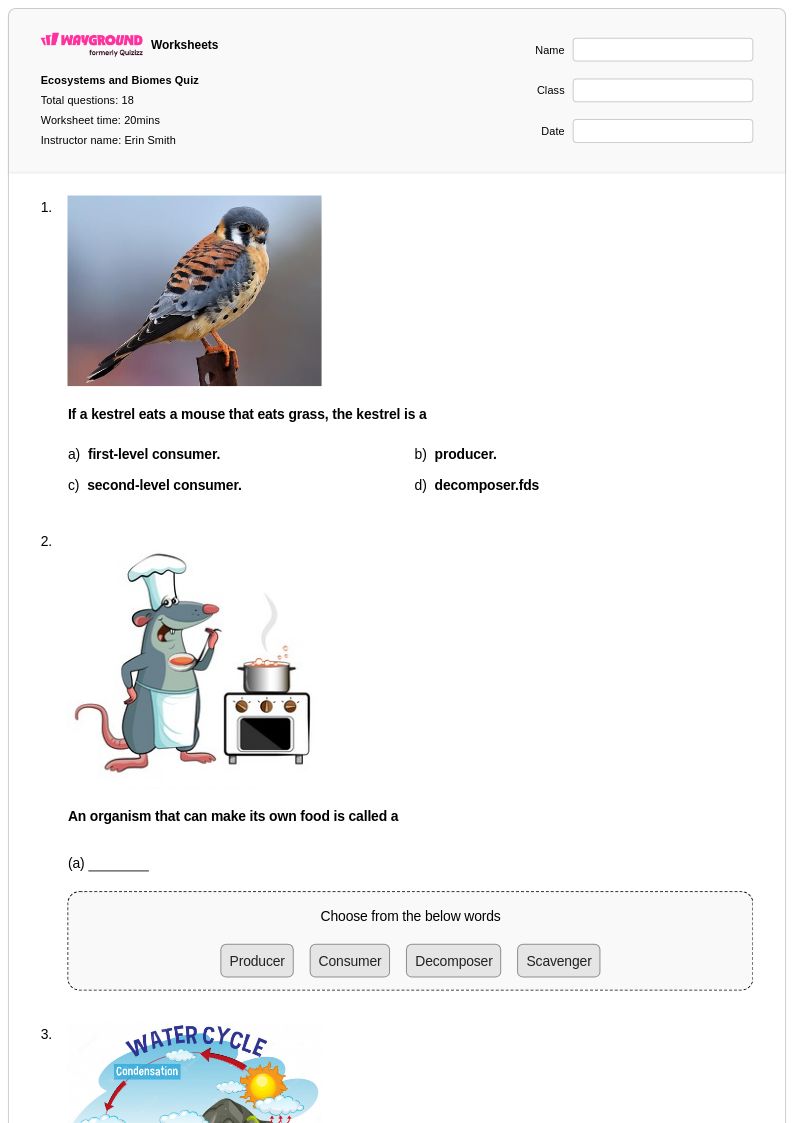
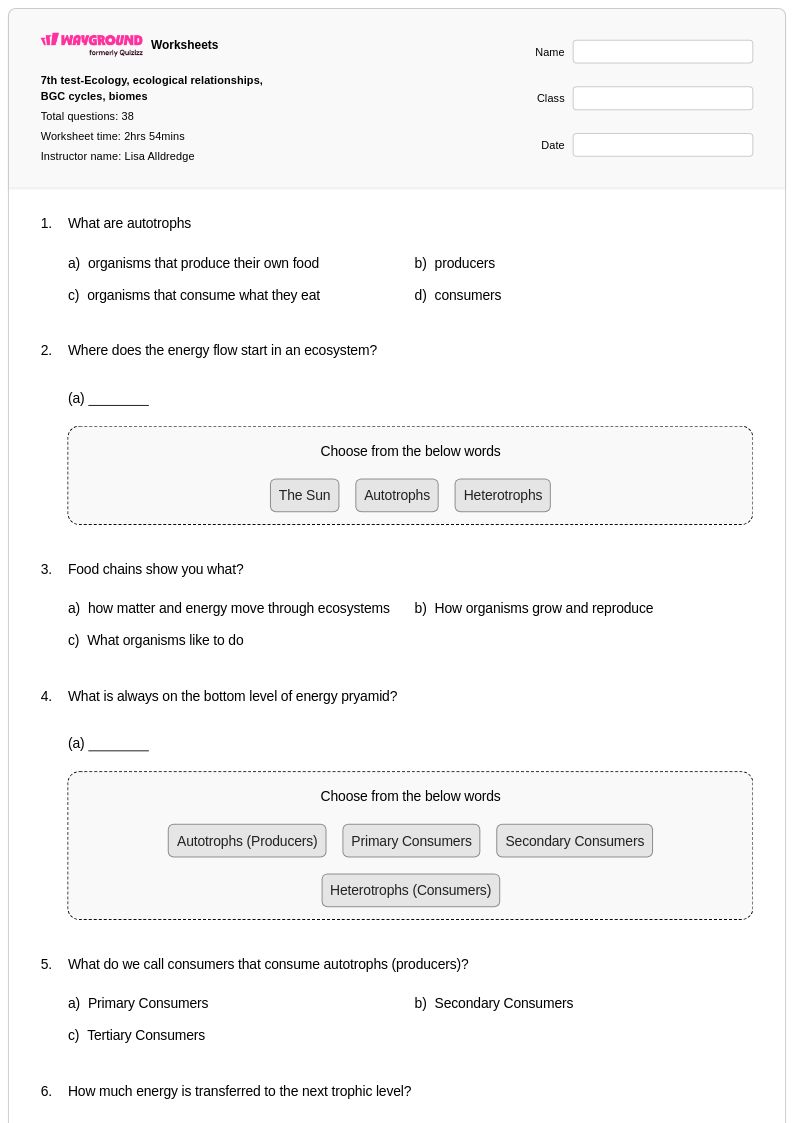
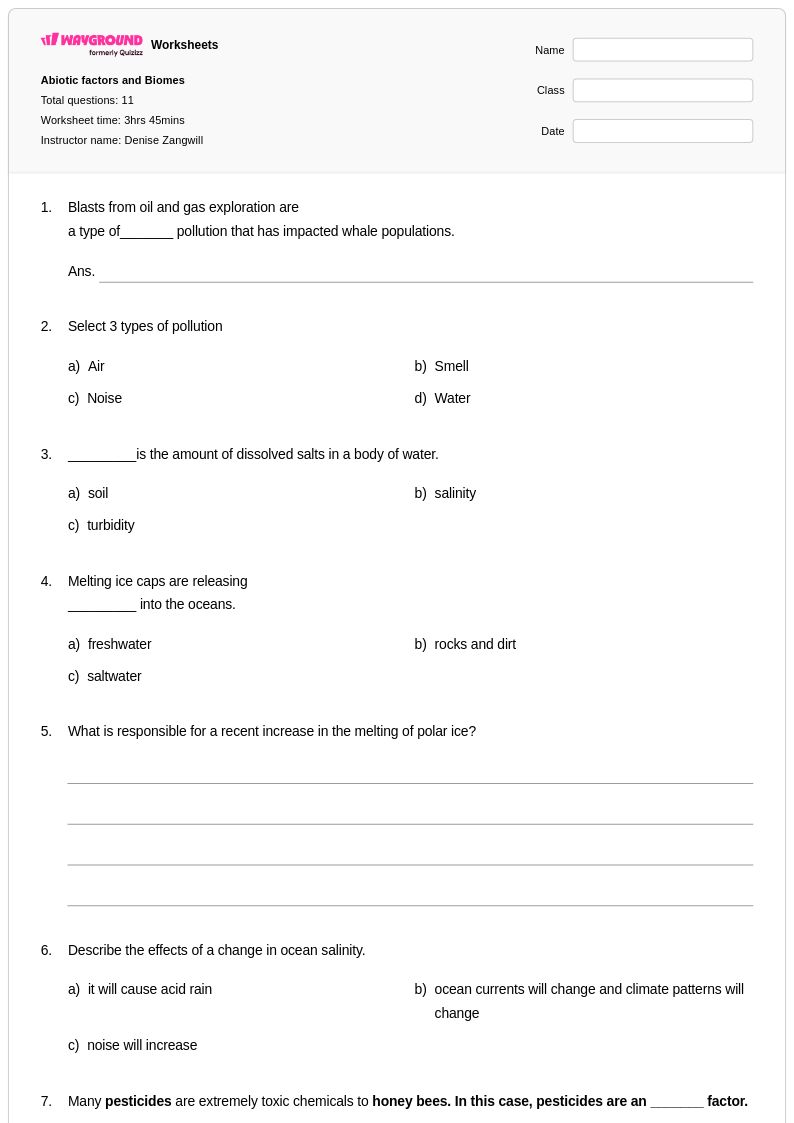
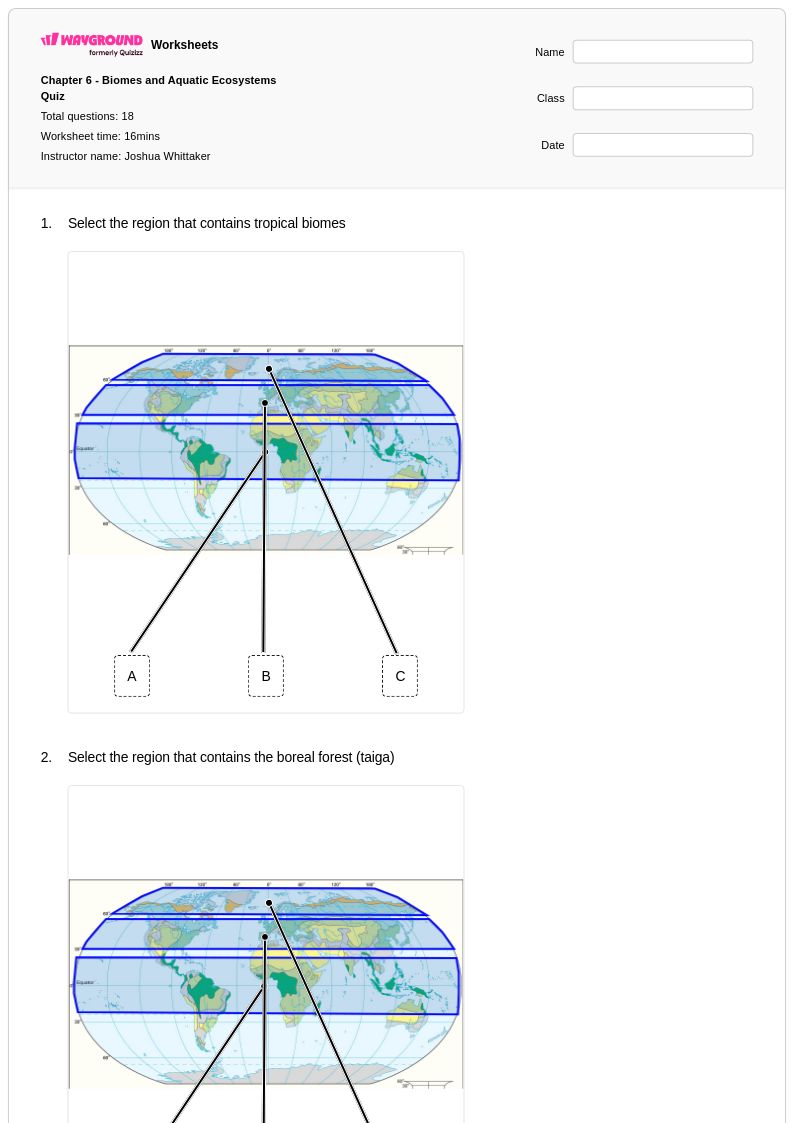
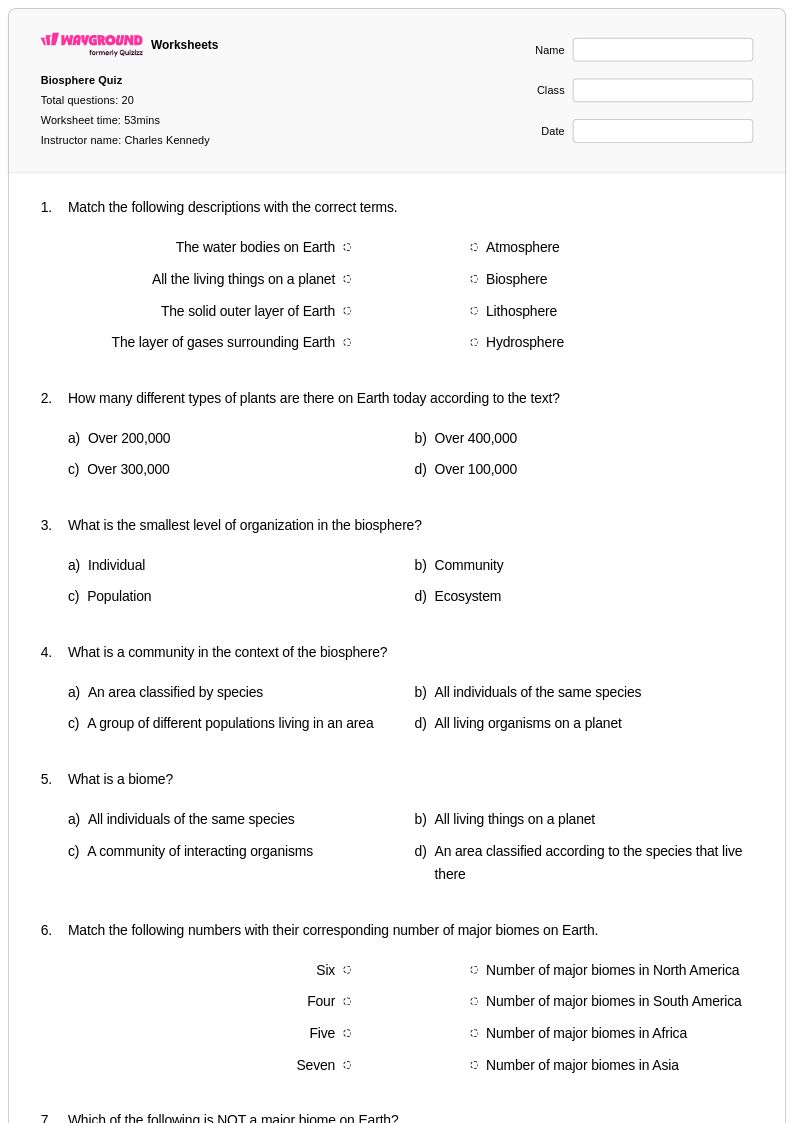
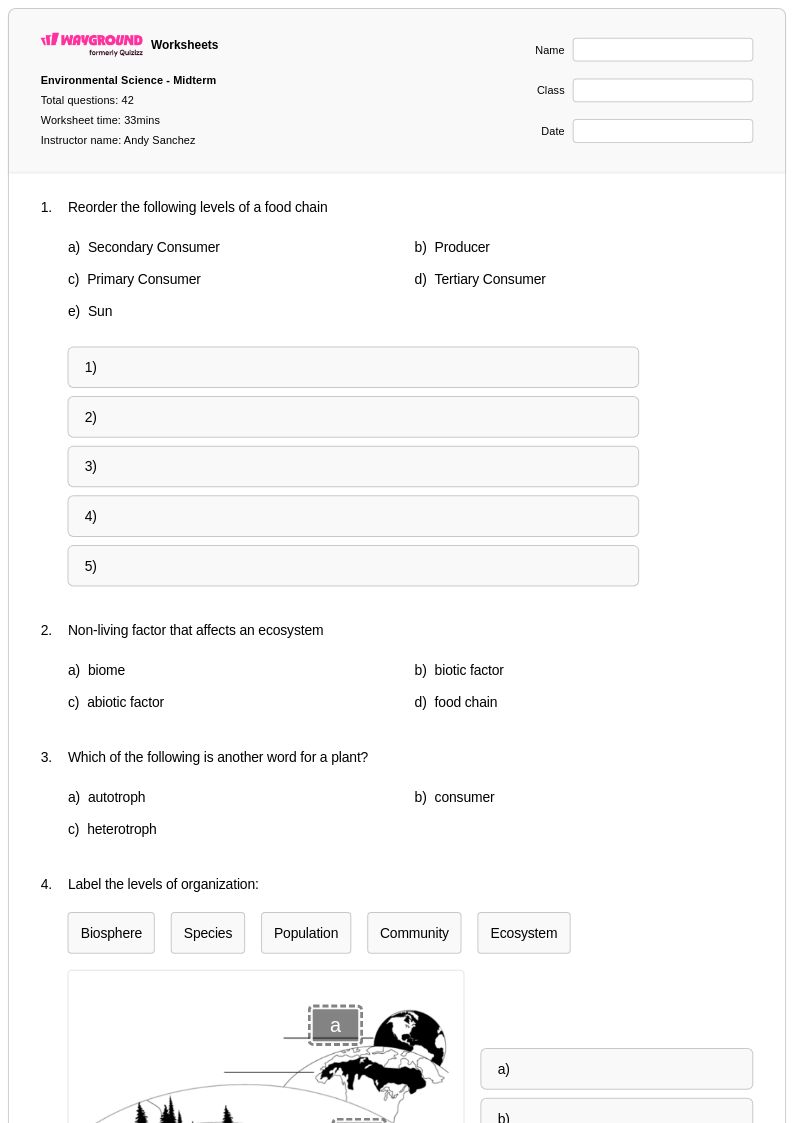
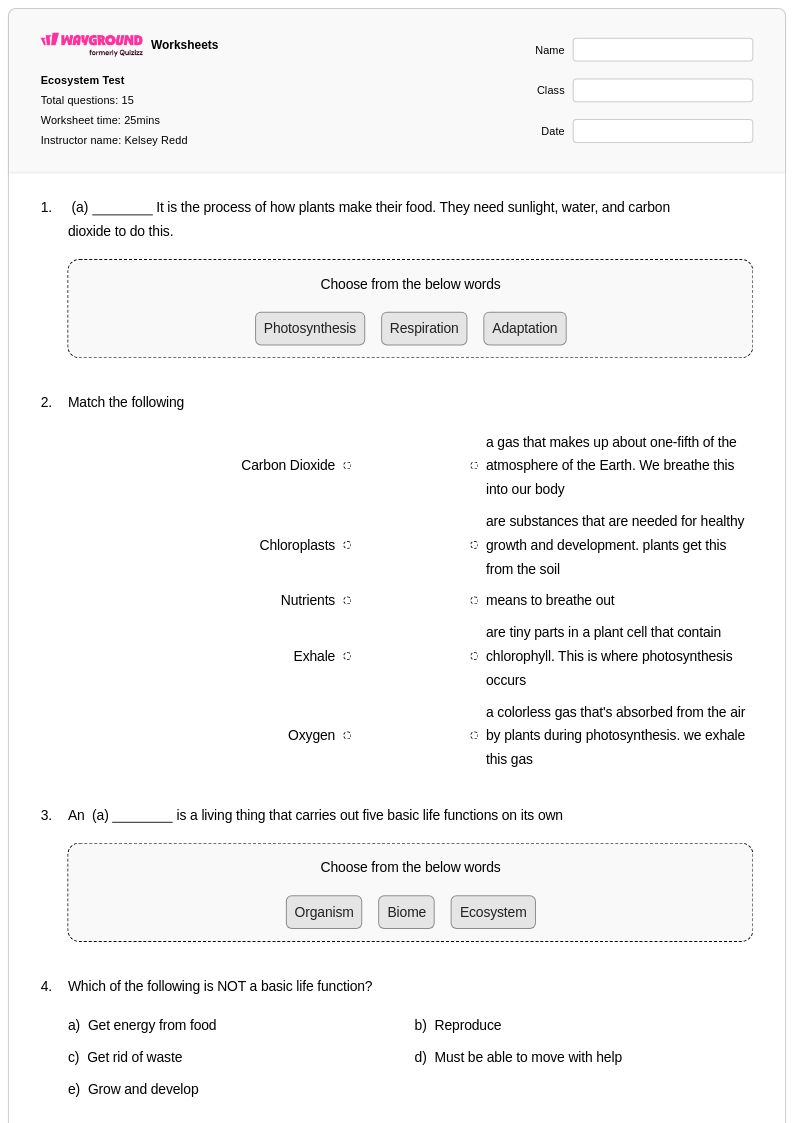
Biomes worksheets available through Wayground (formerly Quizizz) provide comprehensive coverage of Earth's major ecological regions, enabling students to explore the intricate relationships between climate, geography, and living organisms. These educational resources strengthen critical thinking skills as students analyze precipitation patterns, temperature ranges, and biodiversity characteristics that define tropical rainforests, temperate deciduous forests, grasslands, deserts, tundra, and aquatic biomes. The collection includes practice problems that challenge students to identify biome-specific adaptations, compare and contrast different ecosystems, and examine human impacts on various environmental zones. Each worksheet comes with a detailed answer key to support independent learning and assessment, while the free printables are available in convenient PDF format for seamless classroom integration and homework assignments.
Wayground (formerly Quizizz) empowers educators with millions of teacher-created biomes resources that streamline lesson planning and enhance student understanding of Earth's diverse ecosystems. The platform's robust search and filtering capabilities allow teachers to quickly locate materials aligned with specific science standards and learning objectives, while differentiation tools enable customization for varying ability levels within the same classroom. These flexible worksheets are available in both printable and digital formats, including downloadable PDFs, making them ideal for traditional classroom instruction, remote learning environments, and blended educational approaches. Teachers can effectively use these resources for skill practice, targeted remediation of challenging concepts like ecological succession and limiting factors, and enrichment activities that extend learning beyond basic biome identification to complex ecosystem interactions and conservation strategies.
FAQs
How do I teach biomes in a way that helps students understand more than just memorizing names?
Effective biome instruction connects climate data to organism adaptations rather than treating each biome as an isolated list of facts. Start by having students analyze temperature and precipitation graphs to infer which biome they describe before revealing the answer. This builds the reasoning habit that climate drives vegetation, which drives animal adaptation, which is the core logic students need to understand all biomes systematically.
What kinds of practice activities help students actually learn to distinguish between biomes?
The most effective practice asks students to compare and contrast biomes using specific variables like annual rainfall, temperature range, and dominant plant types rather than asking them to recall names from memory. Activities that present an organism's adaptations and ask students to identify the matching biome are especially useful because they require applied reasoning. Worksheets that address human impacts on specific biomes also deepen comprehension by connecting ecology to real-world consequences.
What misconceptions do students commonly have when learning about biomes?
A frequent misconception is that biomes are defined by temperature alone, leading students to confuse tundra and desert because both feel 'extreme.' In reality, precipitation is often the more decisive variable, which is why cold deserts and hot deserts are grouped together while tundra is not. Students also commonly confuse biomes with ecosystems, not recognizing that a single biome can contain many distinct ecosystems within it.
How do I use biomes worksheets to support students at different ability levels in the same class?
For students who need additional support, reduce the cognitive load by providing partially completed comparison charts or word banks so they can focus on the ecological reasoning rather than recall. More advanced students benefit from open-ended tasks like analyzing a case study of ecological succession or evaluating conservation strategies for a specific biome. On Wayground, teachers can apply individual accommodations such as read aloud, reduced answer choices, and extended time so that differentiation happens at the platform level without singling out individual students.
How do I use Wayground's biomes worksheets in my classroom?
Wayground's biomes worksheets are available as printable PDFs for traditional classroom and homework use, and in digital formats for technology-integrated or remote learning environments. Teachers can also host the worksheet directly as a quiz on Wayground, enabling real-time student responses and automated grading. Each worksheet includes a complete answer key, making them practical for independent practice, stations, or formative assessment.
What are the most important concepts students should master about biomes by the end of a unit?
Students should be able to explain why a biome exists where it does by linking latitude, elevation, and climate patterns to the types of organisms found there. They should be able to identify structural adaptations of organisms and connect those adaptations to the specific conditions of their biome. Beyond identification, students should understand how human activity, such as deforestation or desertification, disrupts biome stability and affects biodiversity.