Free Printable California Gold Rush Worksheets for Class 6
Explore Wayground's comprehensive collection of Class 6 California Gold Rush worksheets and printables that help students discover this pivotal period in American history through engaging practice problems, free PDF resources, and complete answer keys.
Explore printable California Gold Rush worksheets for Class 6
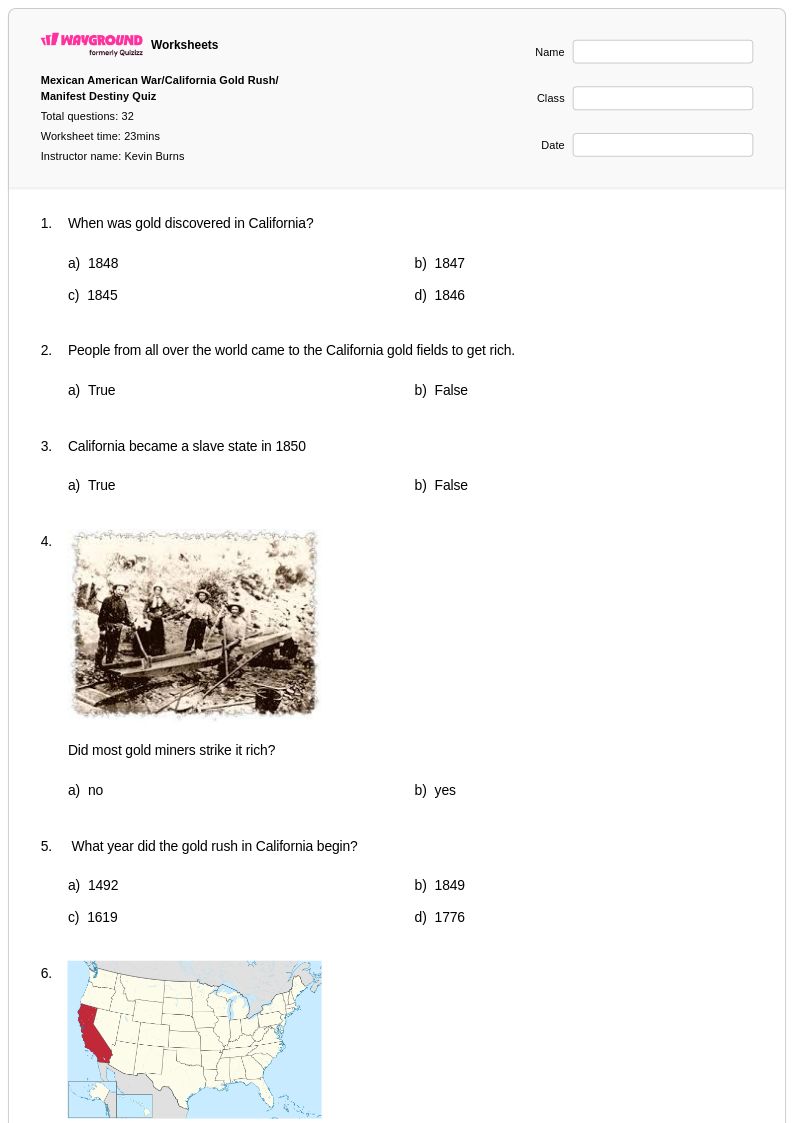
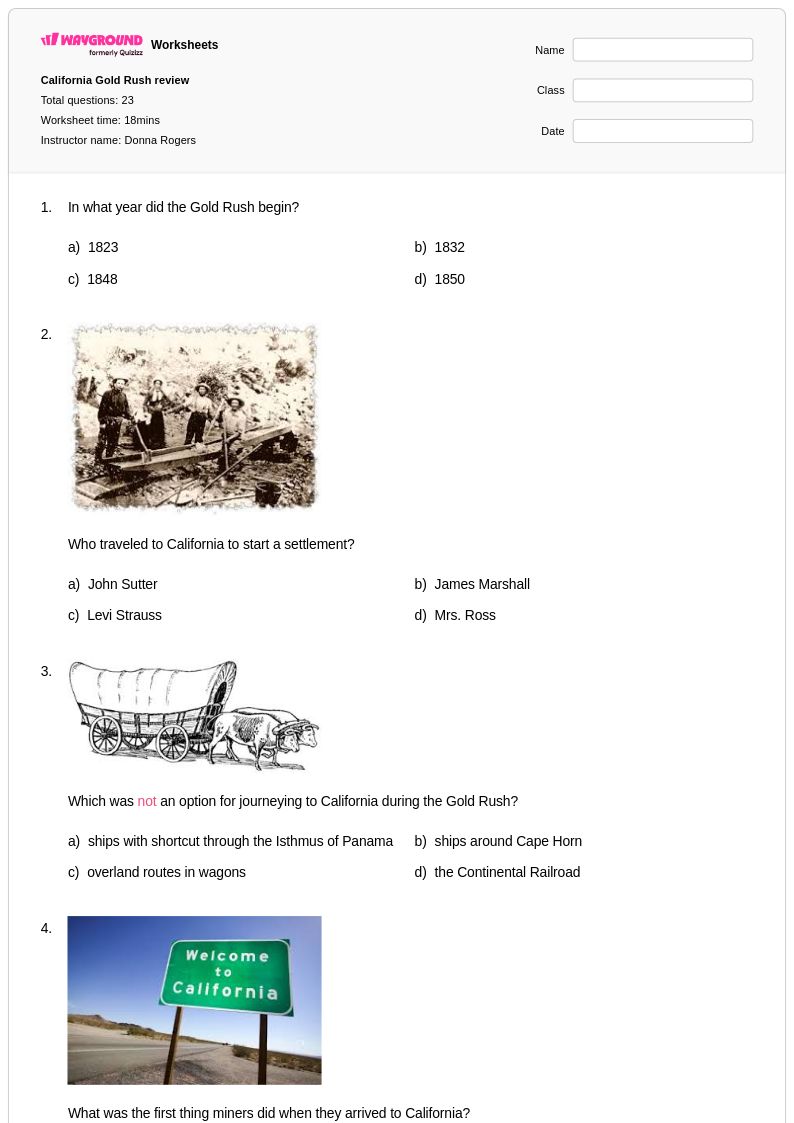
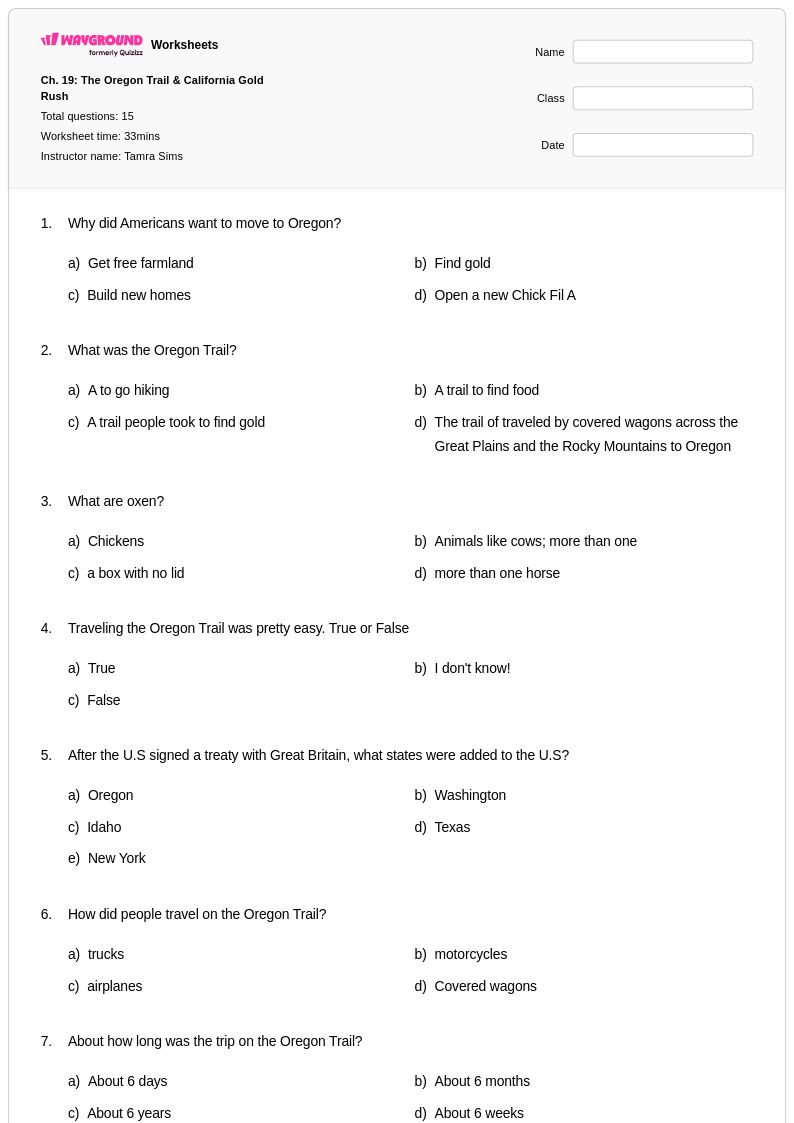
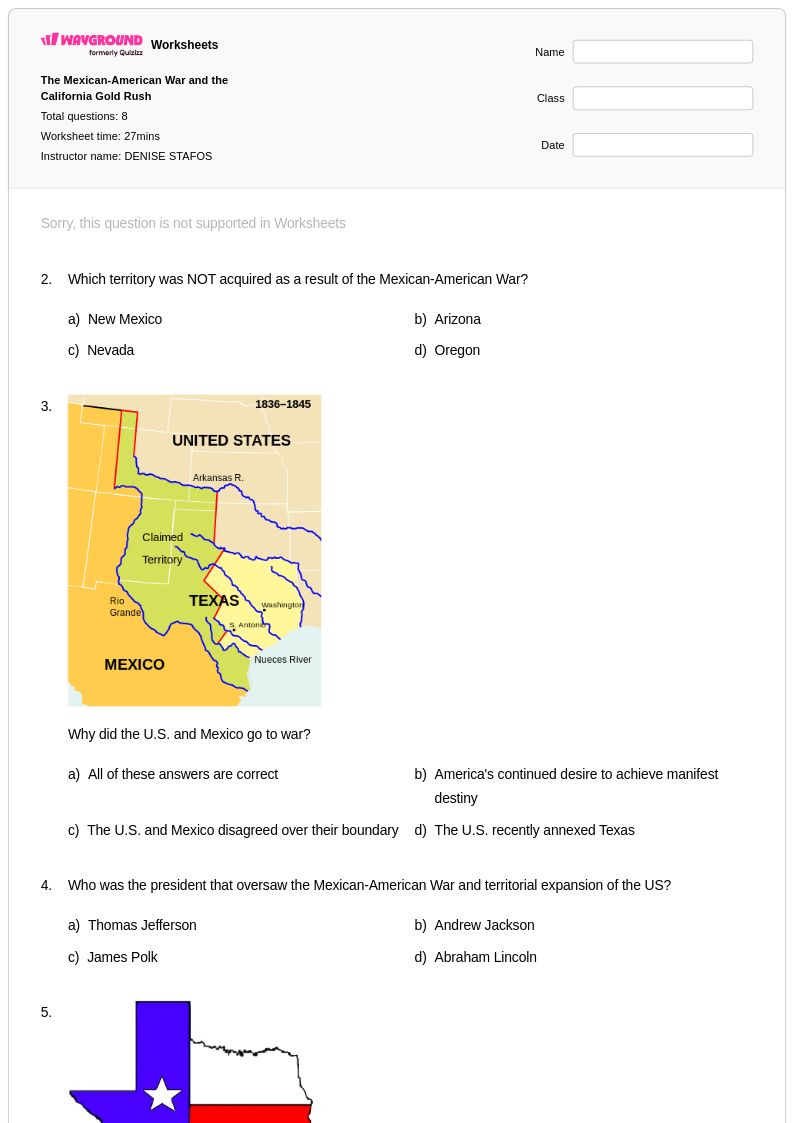
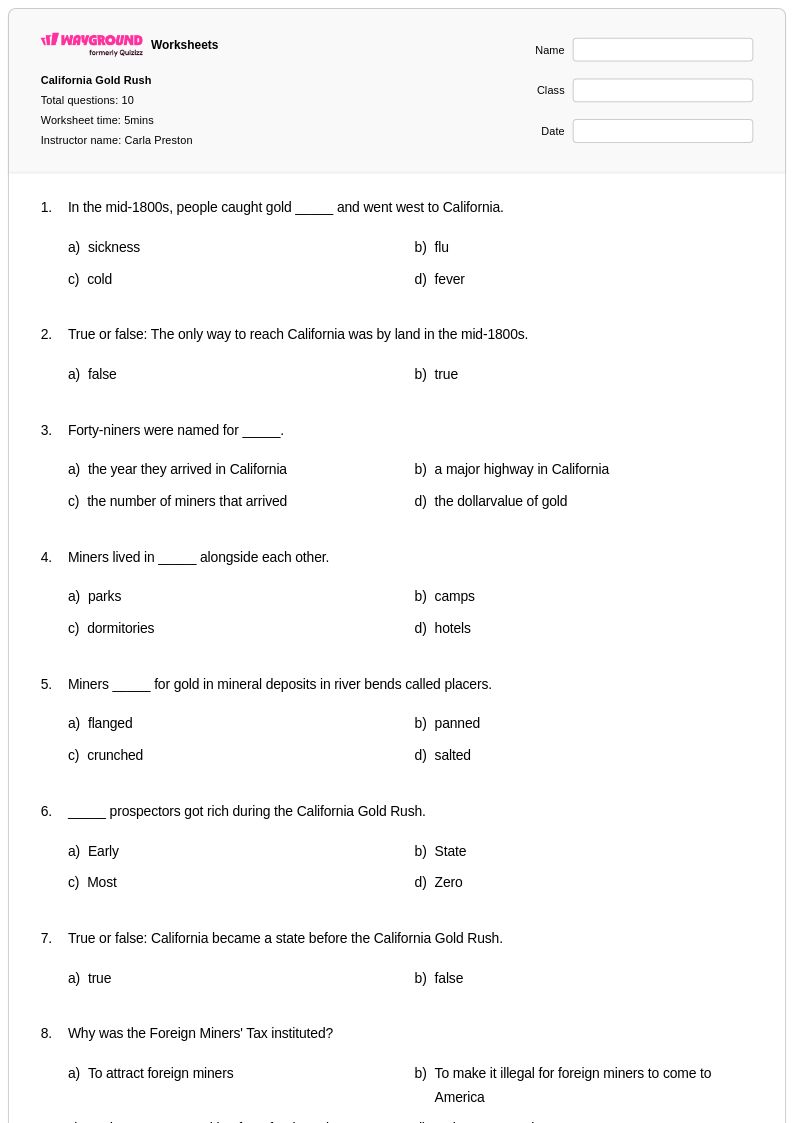
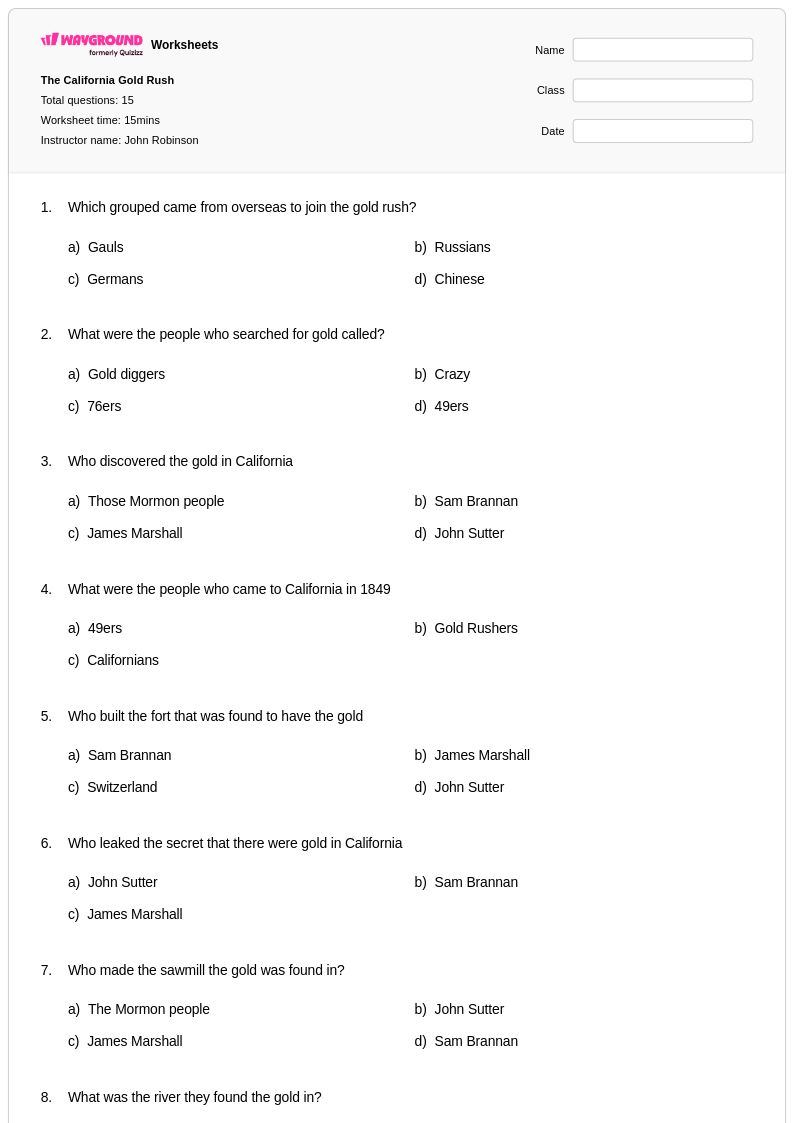
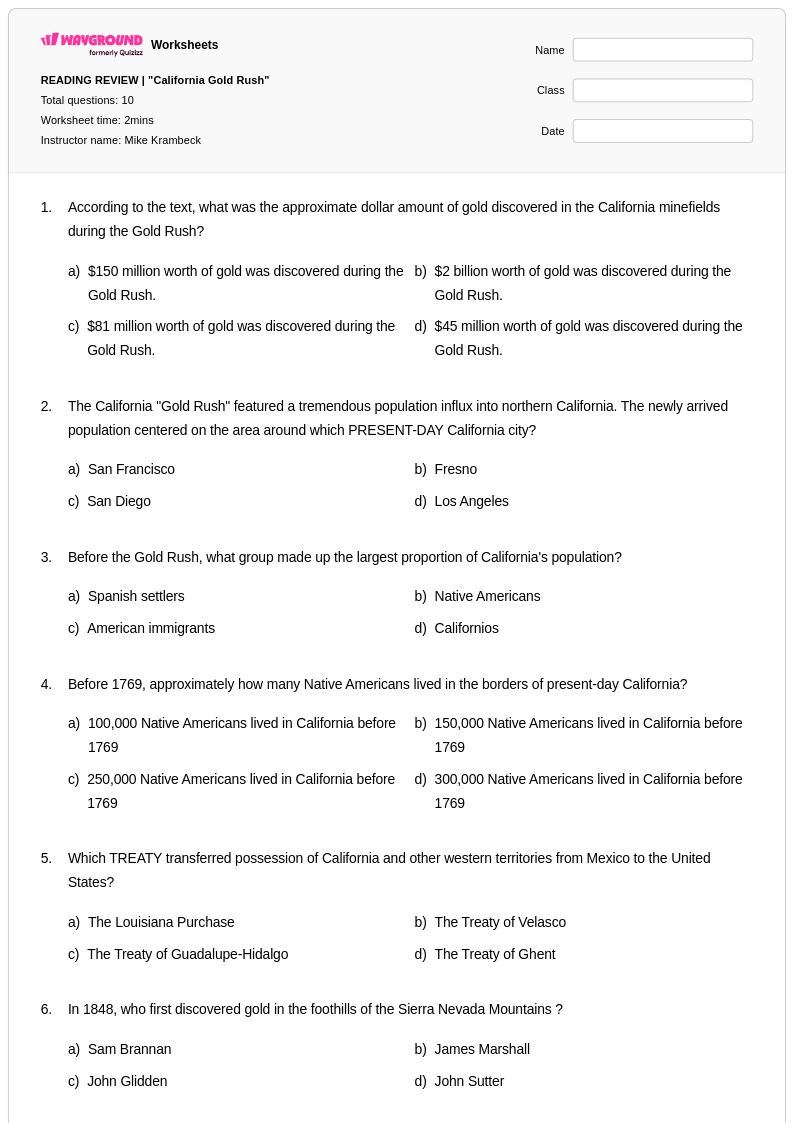
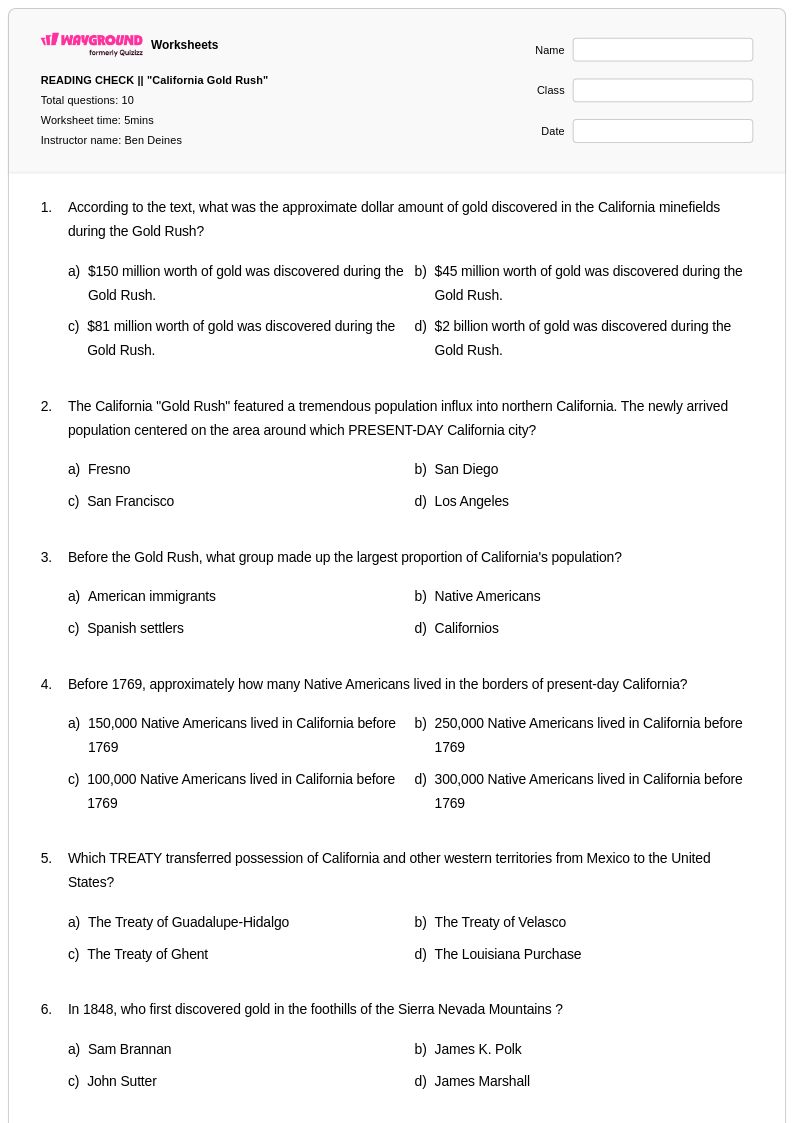
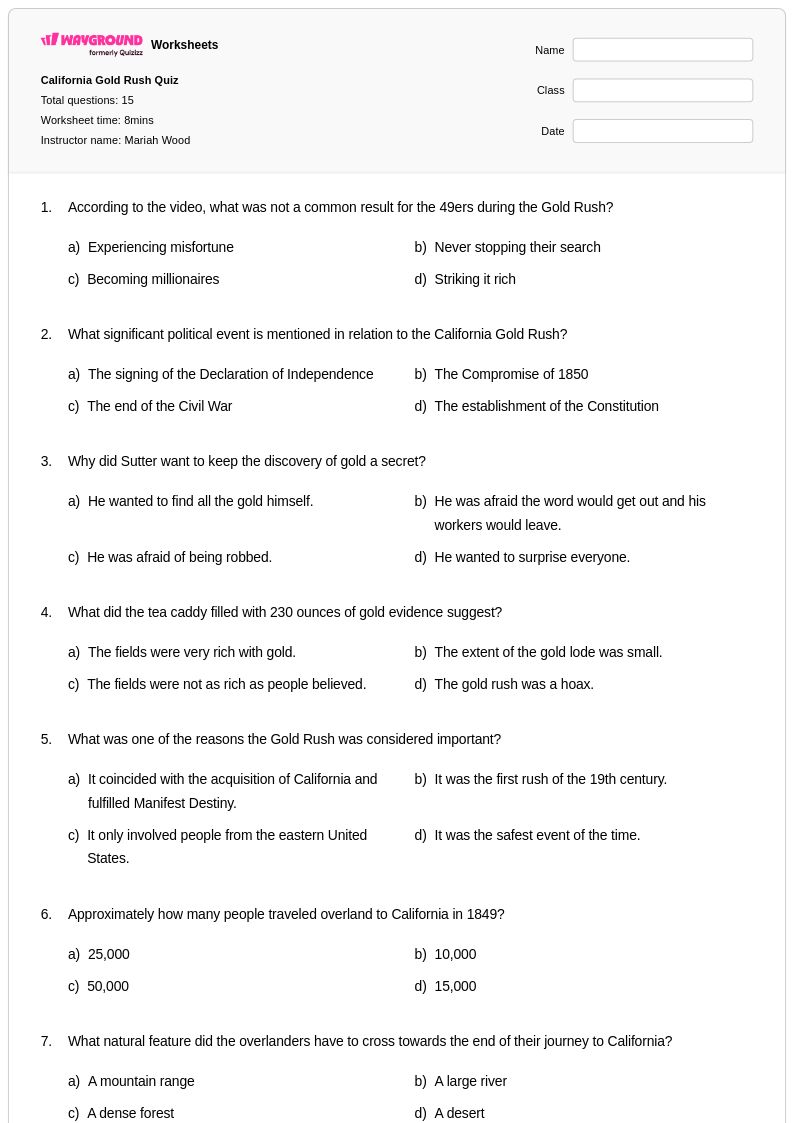
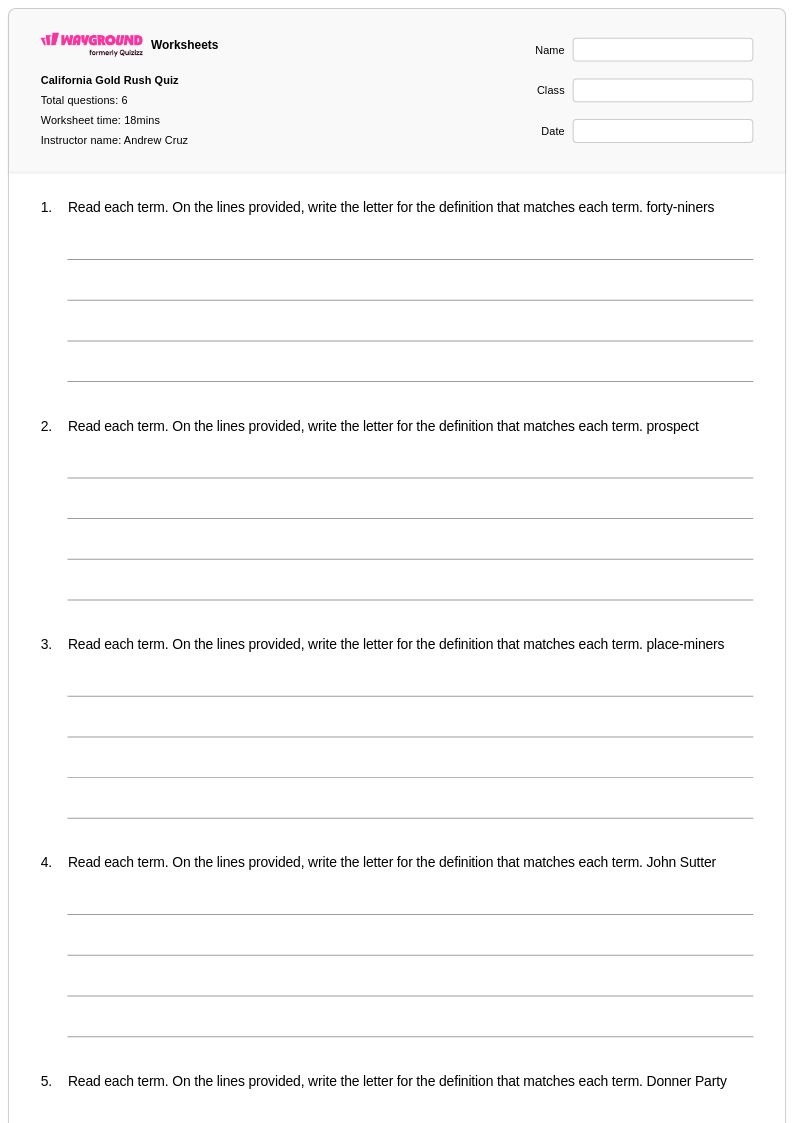
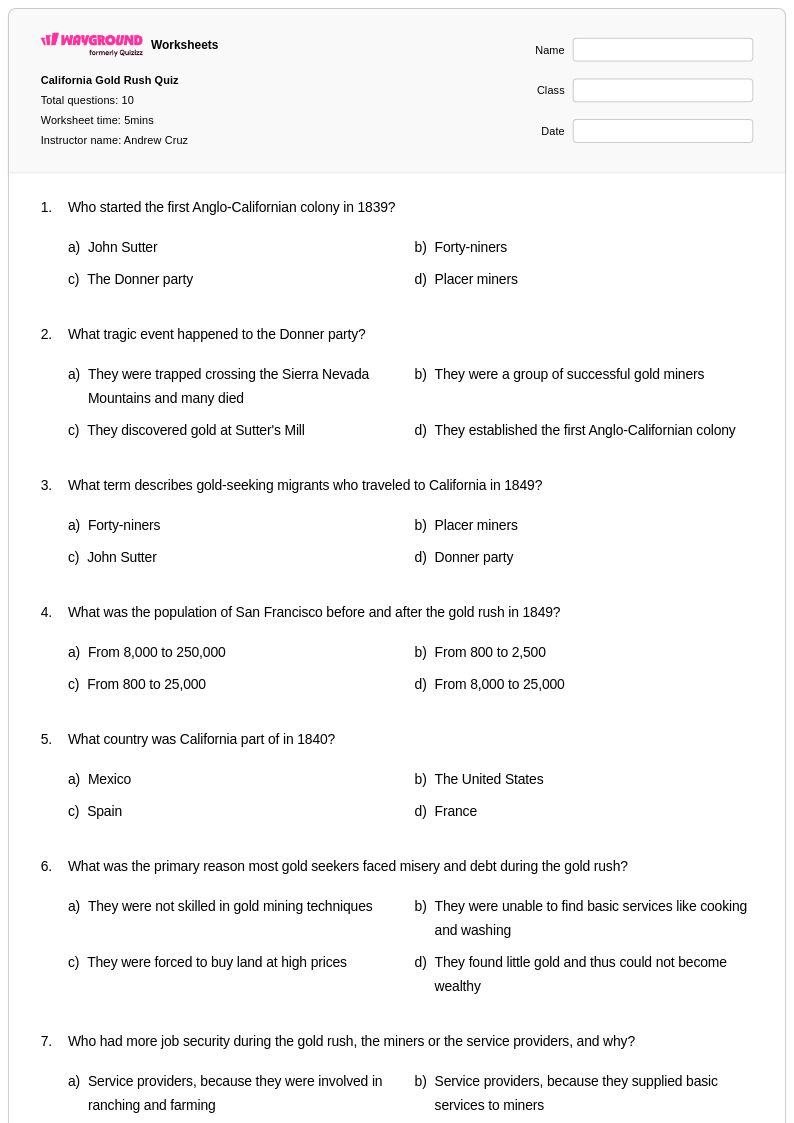
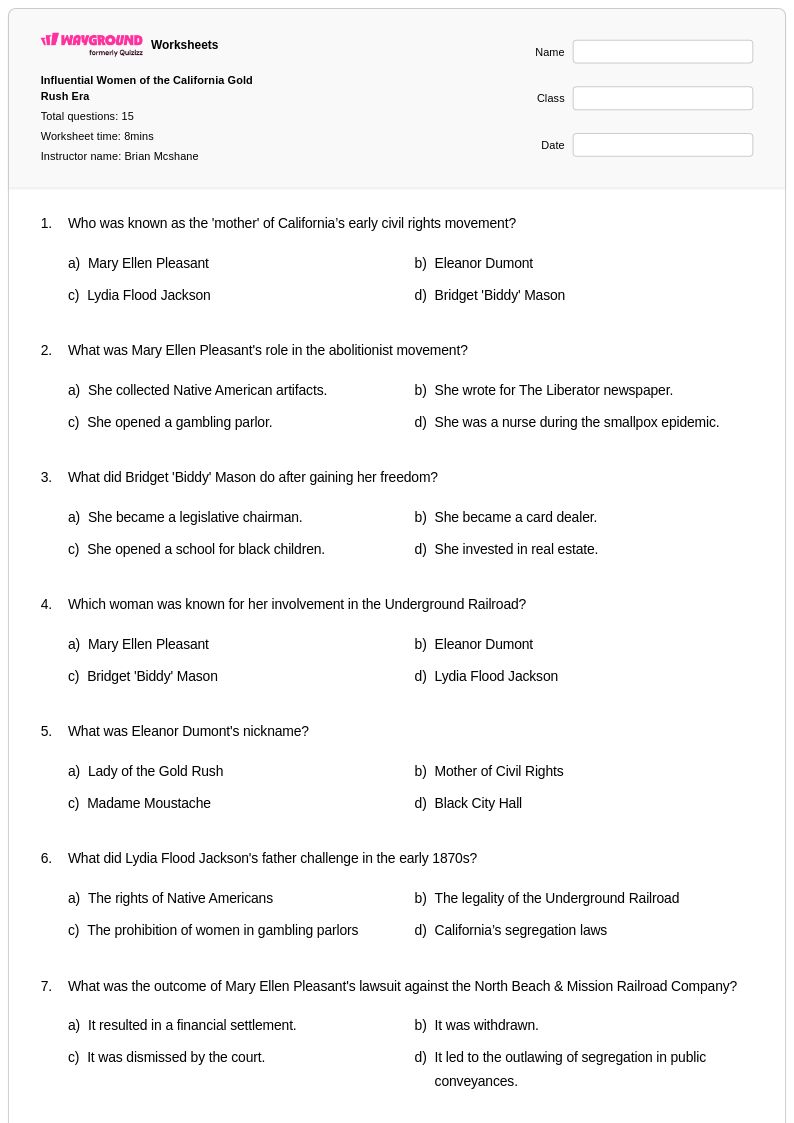
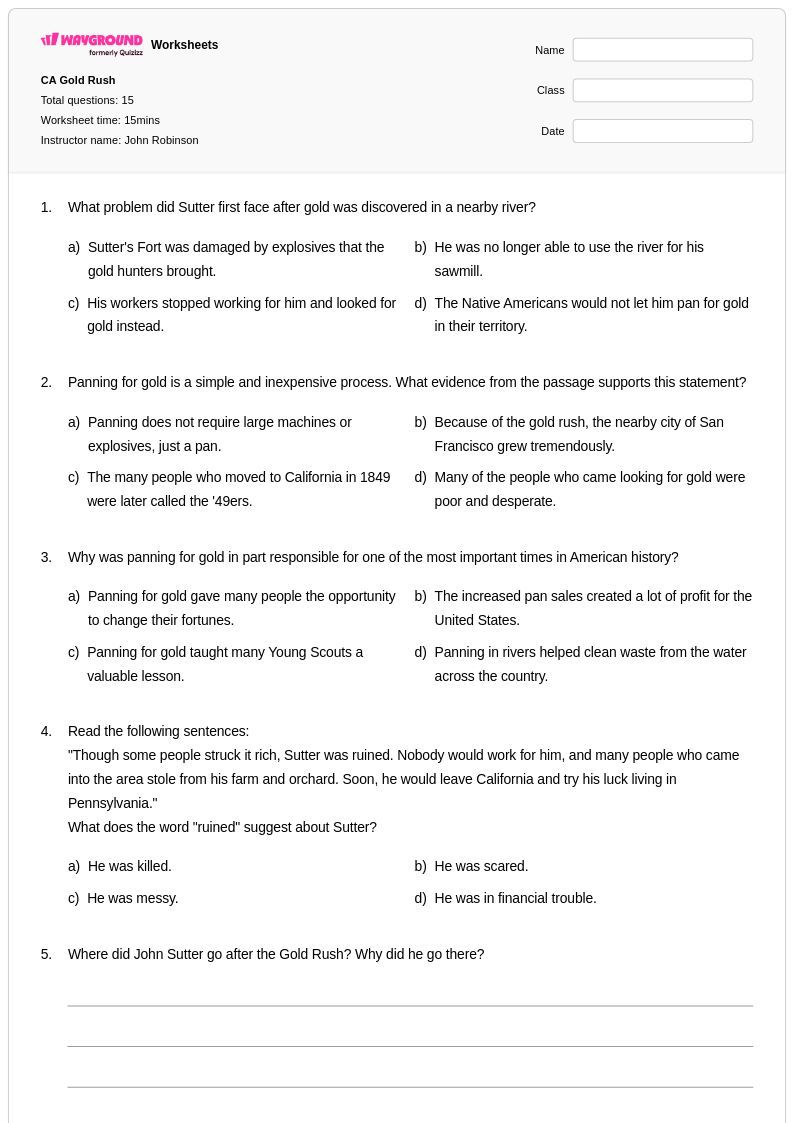
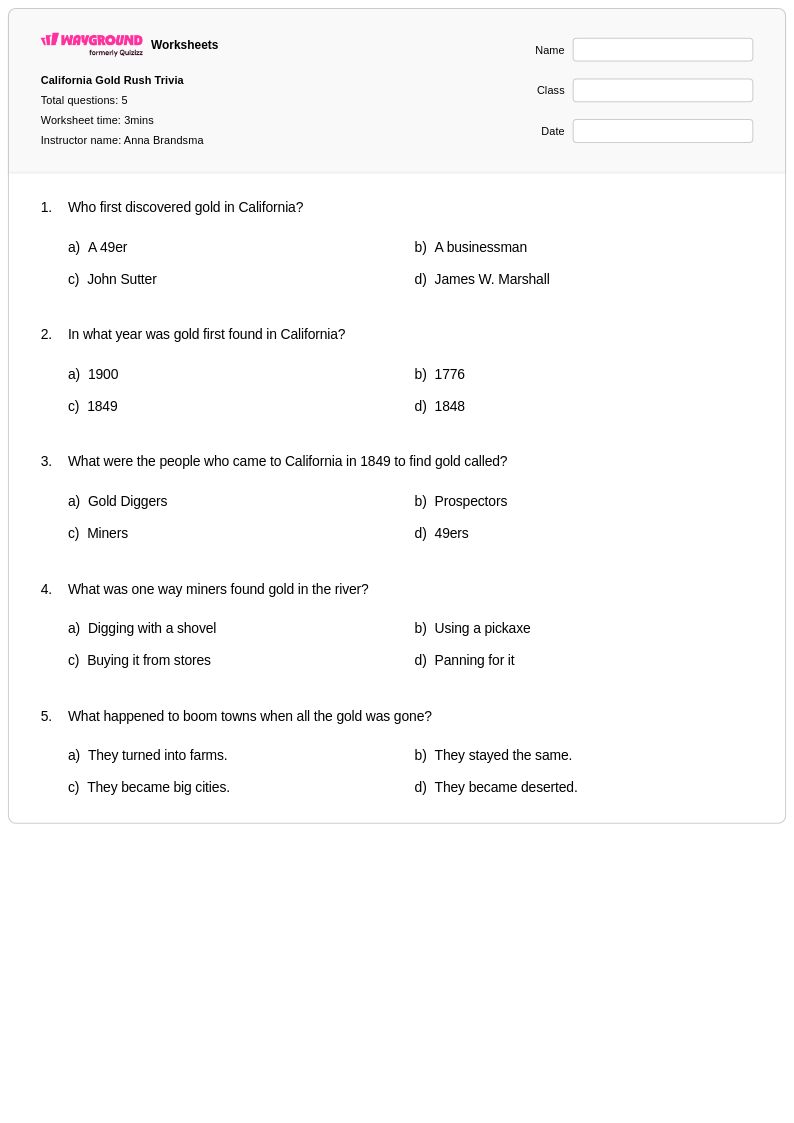
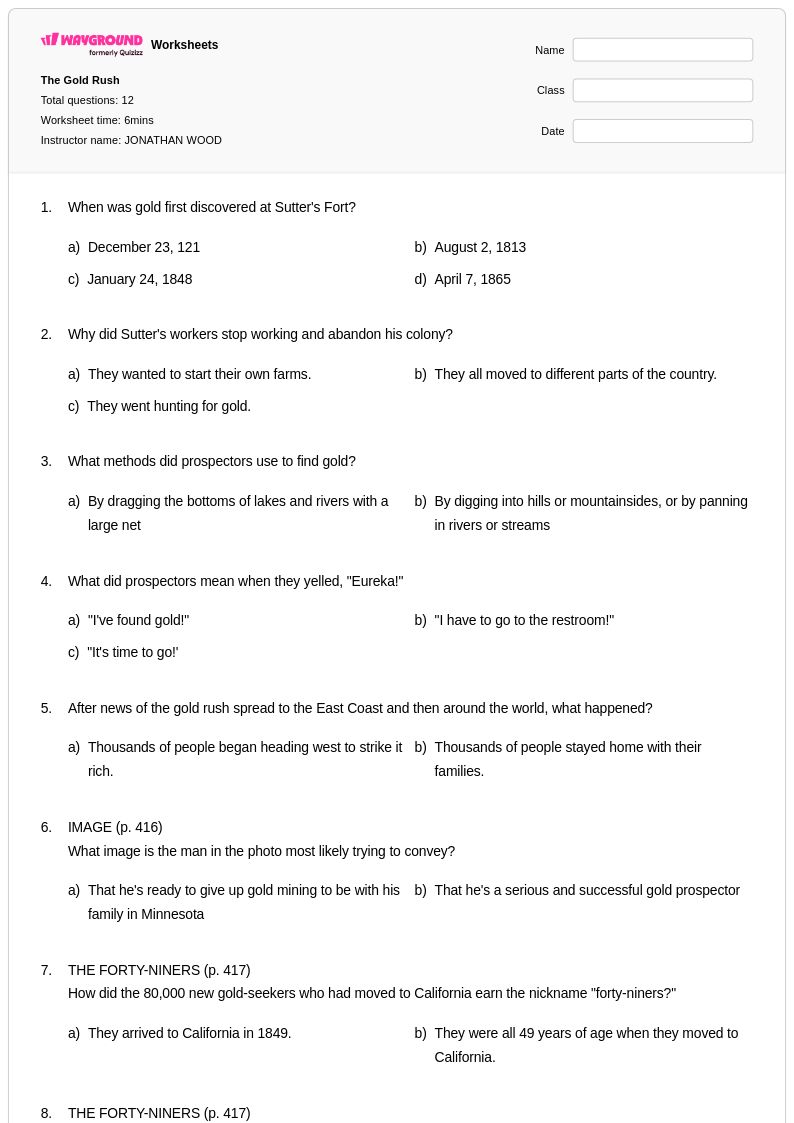
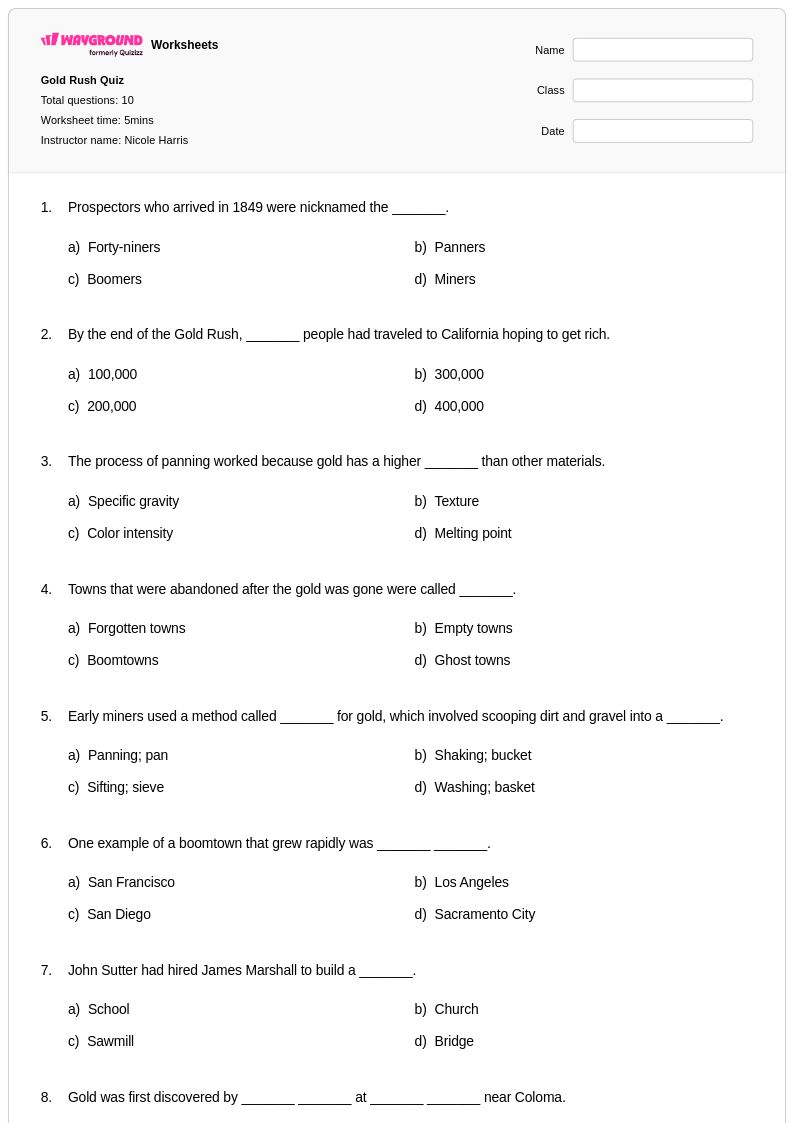
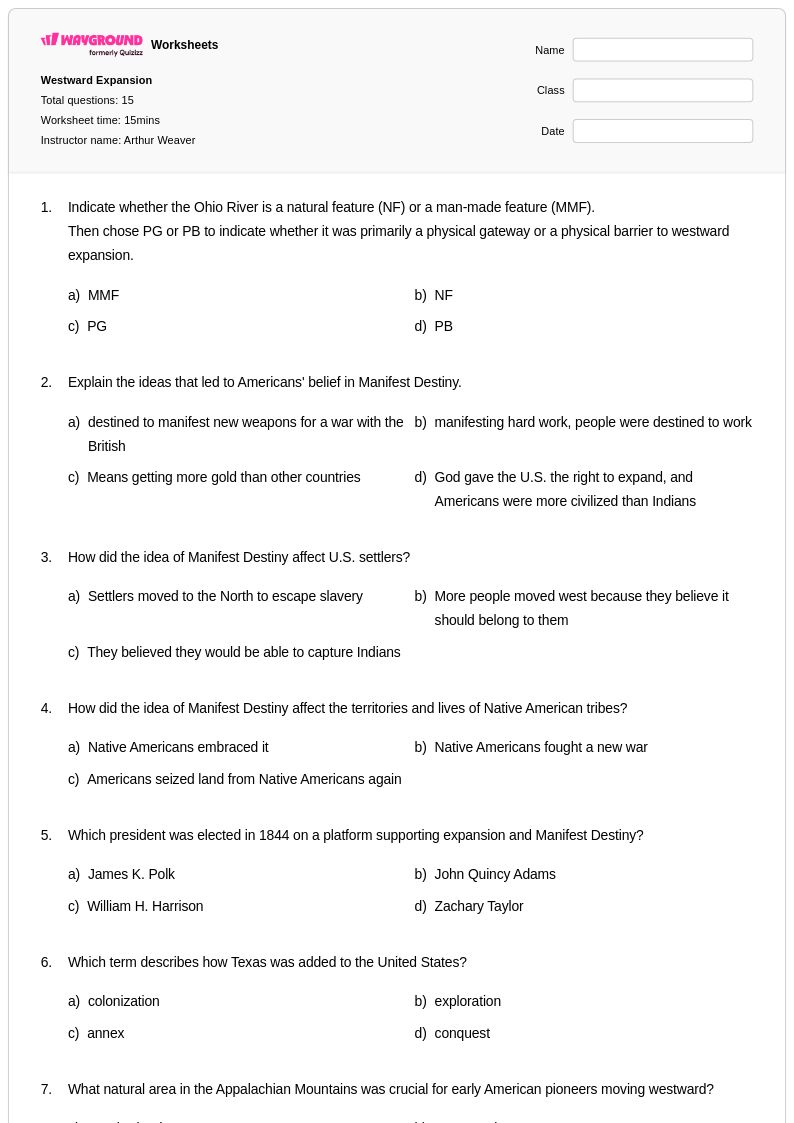
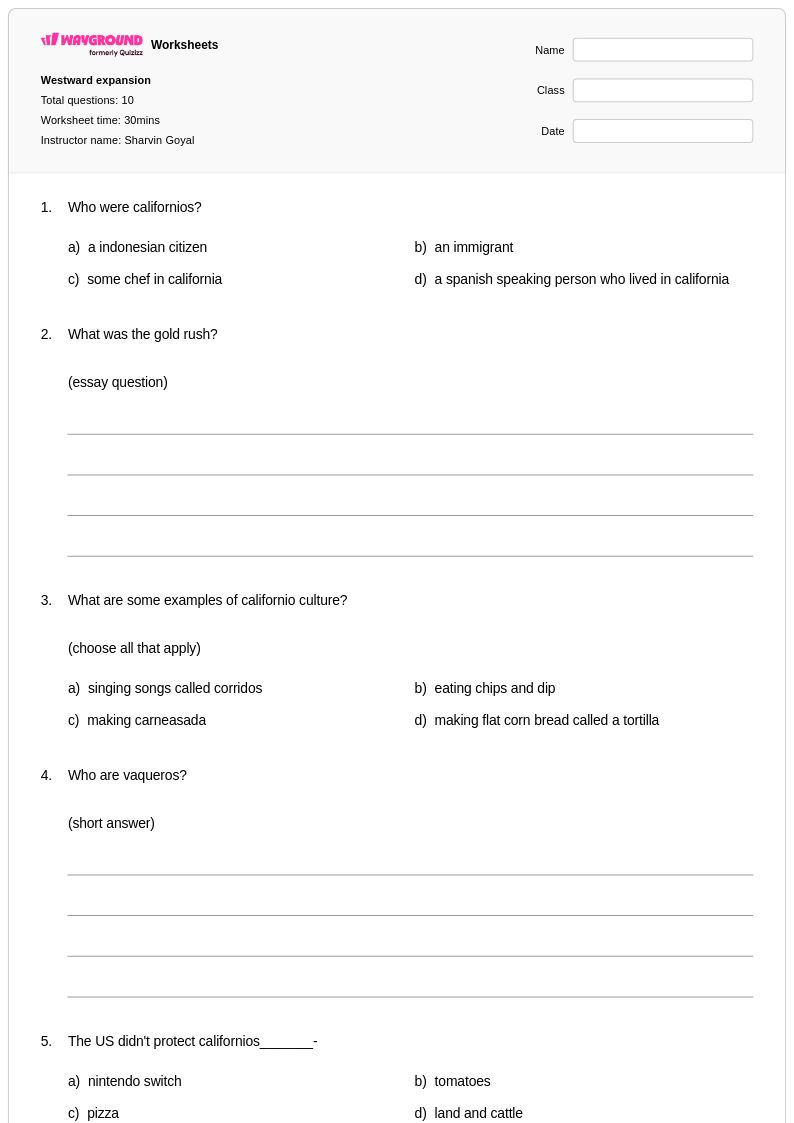
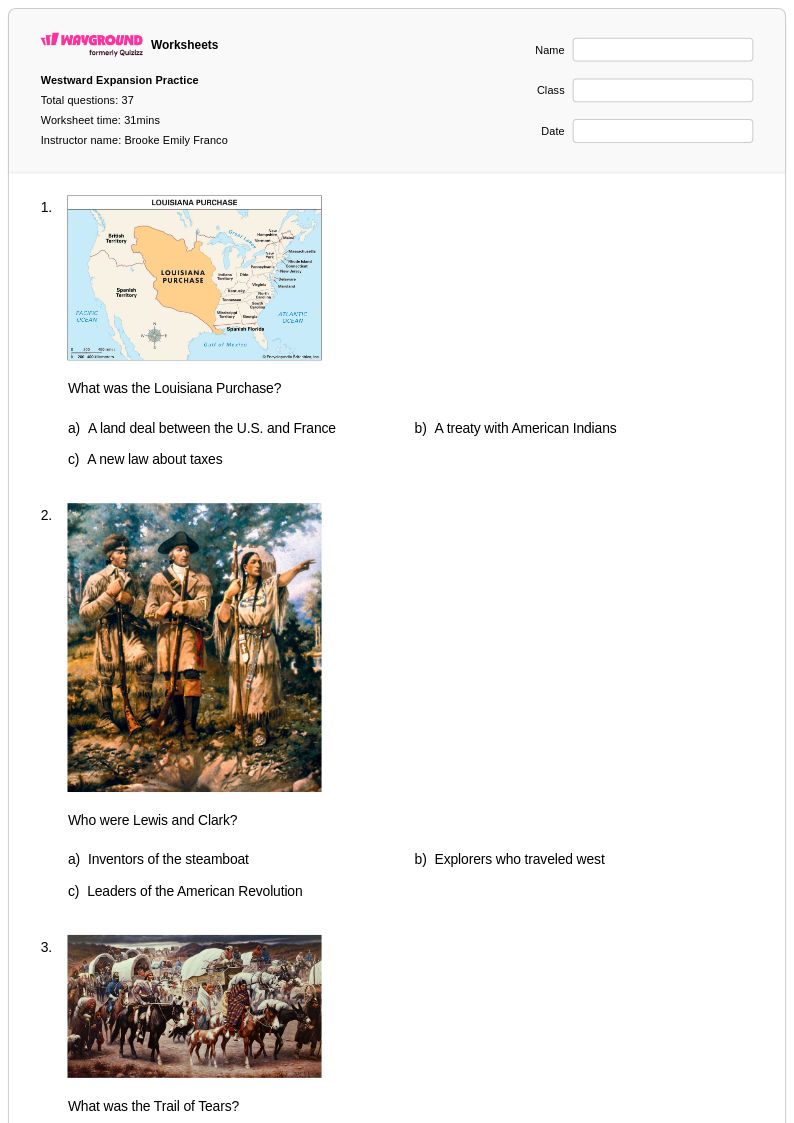
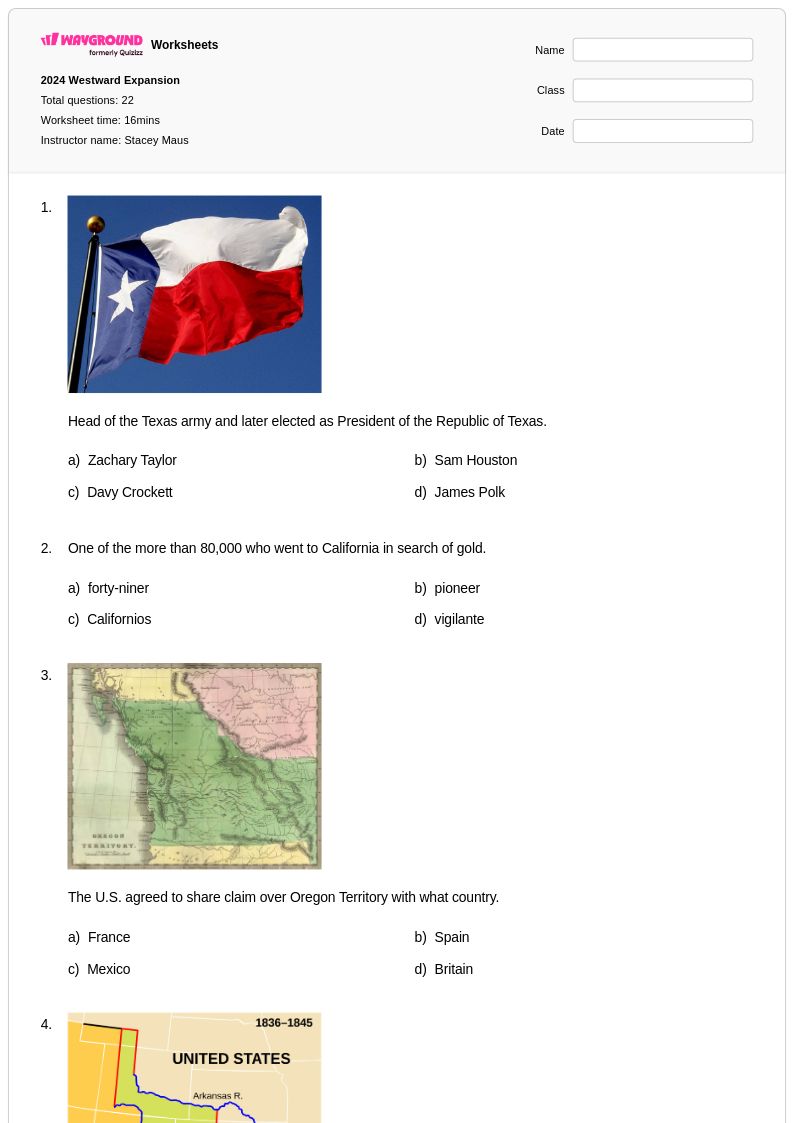
California Gold Rush worksheets for Class 6 students through Wayground (formerly Quizizz) provide comprehensive coverage of this pivotal period in American westward expansion. These educational resources strengthen students' understanding of the economic, social, and geographical transformations that occurred during the mid-1800s gold discovery in California. The worksheet collections include practice problems that explore the causes and effects of mass migration, the development of mining towns, and the impact on Native American populations. Students engage with primary source analysis, timeline construction, and map interpretation activities that build critical thinking skills essential for historical inquiry. Each worksheet comes with a detailed answer key to support independent learning and includes free printable pdf formats for classroom flexibility.
Wayground's extensive library contains millions of teacher-created California Gold Rush resources that support comprehensive lesson planning and differentiated instruction for Class 6 social studies educators. The platform's advanced search and filtering capabilities allow teachers to quickly locate materials aligned with state standards and specific learning objectives related to westward expansion and economic development. Teachers can customize existing worksheets or create new ones using the platform's flexible tools, ensuring content matches their students' diverse learning needs and abilities. These digital and printable resources facilitate targeted remediation for struggling learners, enrichment opportunities for advanced students, and consistent skill practice across various instructional settings, making it easier for educators to address the complex historical concepts surrounding America's gold rush era.
FAQs
How do I teach the California Gold Rush to elementary or middle school students?
Teaching the California Gold Rush effectively begins with grounding students in the historical context of westward expansion before introducing the 1848 gold discovery at Sutter's Mill. Use primary source documents, maps of migration routes, and timeline activities to help students understand the sequence of events and the scale of population movement into California. Connecting the economic motives of '49ers to the social consequences for Native Americans and Chinese immigrants builds the critical thinking skills students need to analyze this period beyond surface-level facts.
What exercises help students practice cause-and-effect relationships when studying the California Gold Rush?
Cause-and-effect graphic organizers work well for this topic because the Gold Rush triggered cascading consequences across economics, demographics, and the environment. Students can trace how the 1848 discovery caused rapid migration, which in turn caused boomtown development, labor competition, and environmental damage from hydraulic mining. Timeline construction exercises that ask students to sequence events and label their effects reinforce this skill while keeping the content historically grounded.
What are the most common misconceptions students have about the California Gold Rush?
One of the most persistent misconceptions is that the Gold Rush was uniformly beneficial and that most miners struck it rich. In reality, the majority of prospectors earned little, while merchants and landowners profited most. Students also frequently overlook the severe consequences for Native Californians, whose populations declined drastically due to violence, disease, and displacement, and for Chinese immigrants, who faced discriminatory laws like the Foreign Miners' Tax. Worksheets that require students to analyze the experiences of different demographic groups directly address these gaps.
How can I use California Gold Rush worksheets to assess student understanding of economic and social impacts?
Worksheets that ask students to evaluate migration patterns, analyze primary sources, and compare the experiences of different groups such as Chinese immigrants, Native Americans, and female settlers provide strong formative assessment data on historical thinking skills. Tasks focused on assessing the long-term consequences of rapid population growth in California can reveal whether students understand the difference between short-term economic gains and long-term social and environmental costs. Answer keys aligned to these tasks make it straightforward to identify gaps and plan targeted follow-up instruction.
How do I use California Gold Rush worksheets from Wayground in my classroom?
California Gold Rush worksheets on Wayground are available as printable PDFs for traditional classroom use and in digital formats for technology-integrated learning environments, giving teachers flexibility in how they assign and deliver the material. Teachers can also host worksheets as a quiz directly on Wayground, making it easy to collect and review student responses in one place. All worksheets include complete answer keys, so they work equally well for direct instruction, independent practice, or take-home assignments.
How can I differentiate California Gold Rush instruction for students with different learning needs?
Differentiating instruction on the Gold Rush can involve varying the complexity of primary sources, providing sentence frames for analysis tasks, or reducing the number of answer choices on assessment questions to lower cognitive load for struggling learners. On Wayground, teachers can apply individual accommodations such as extended time, read-aloud support, and reduced answer choices to specific students without affecting the experience of the rest of the class. These settings are saved per student and carry over to future sessions, reducing setup time for repeated use.