Free Printable Martin Luther King Jr. Day Worksheets for Class 6
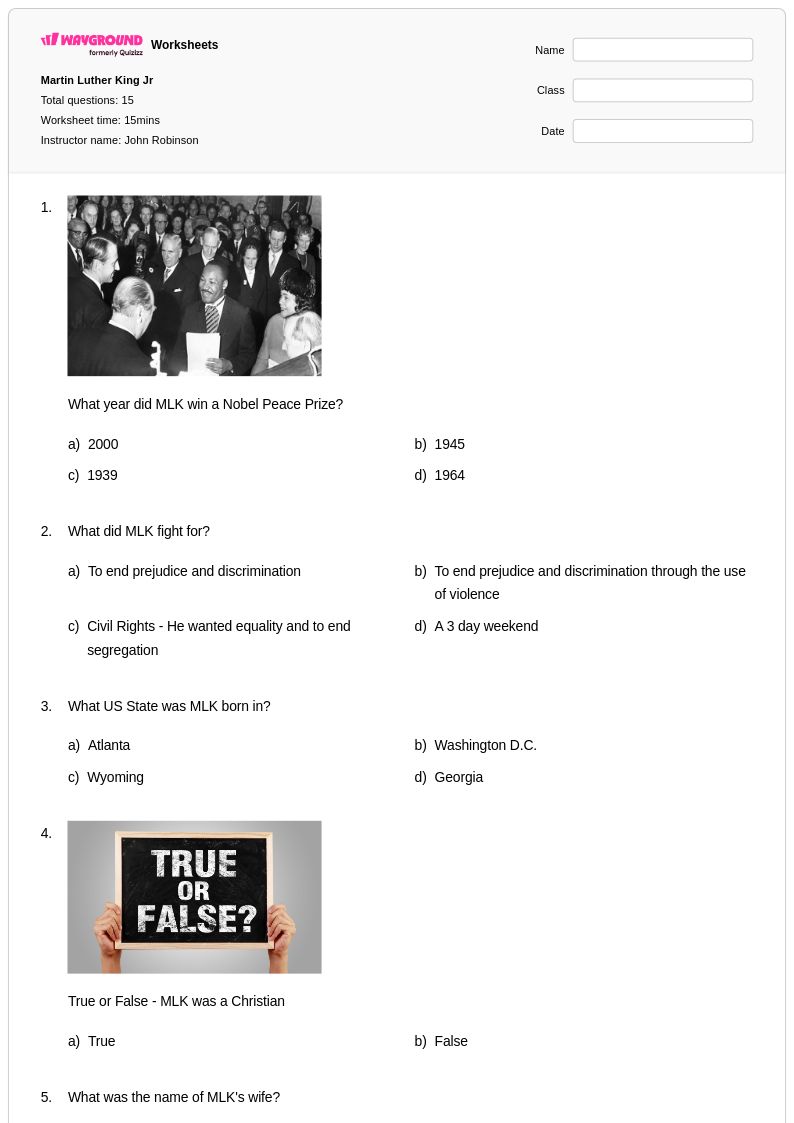
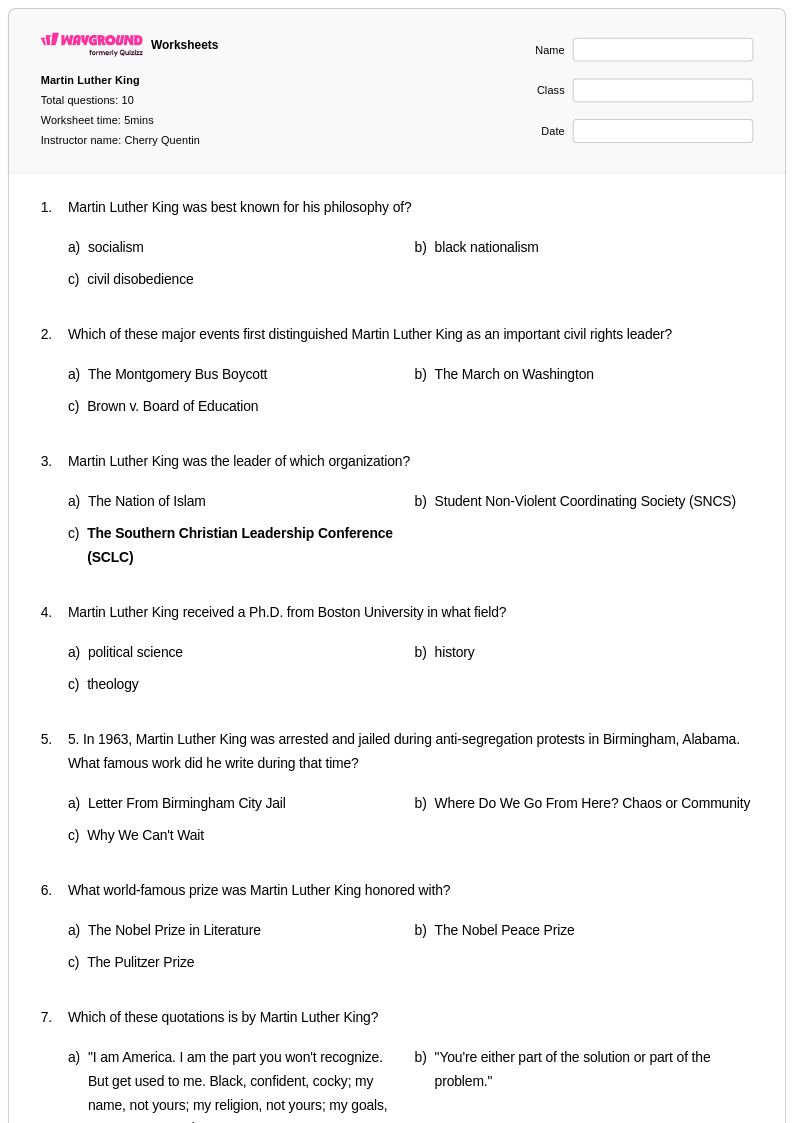
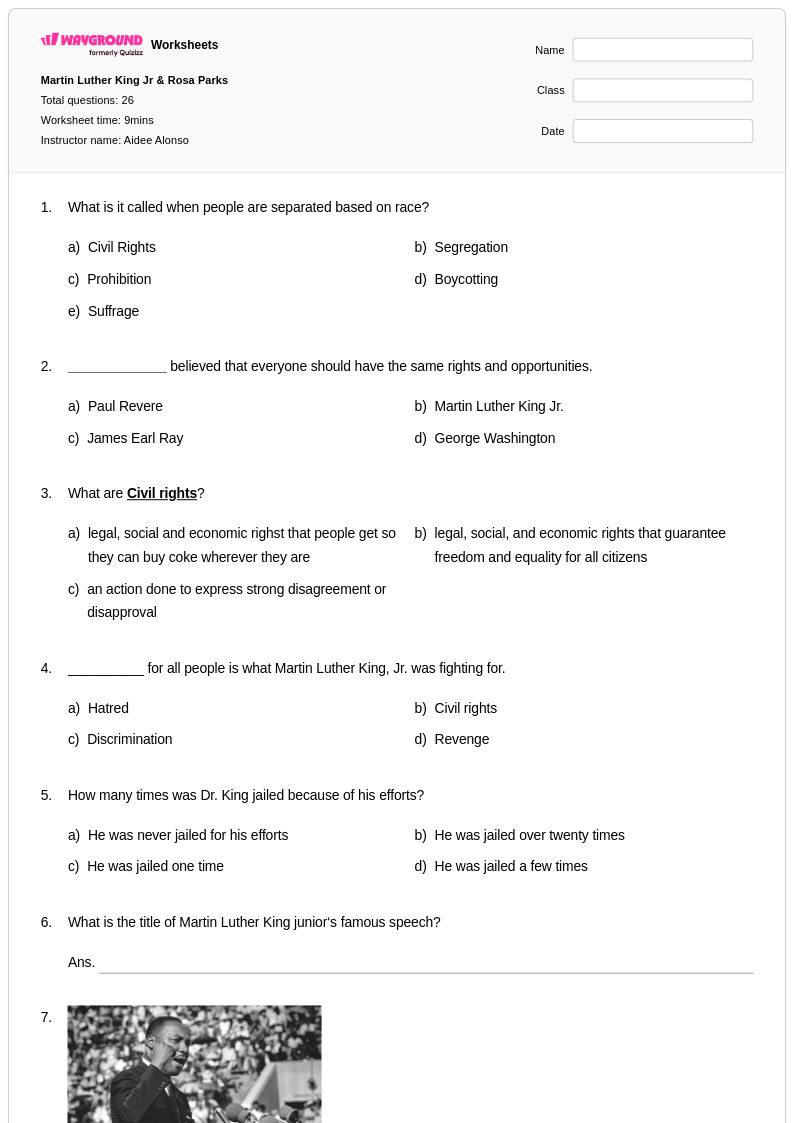
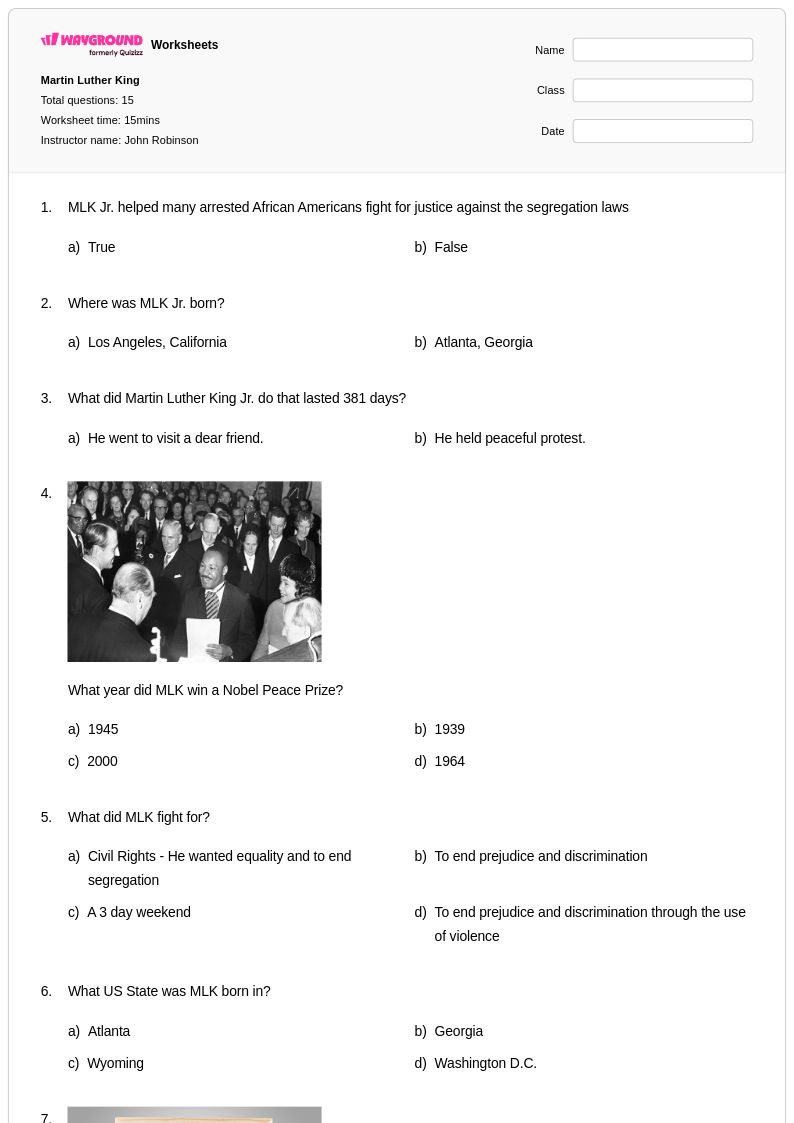
Explore Wayground's free Class 6 Martin Luther King Jr. Day worksheets and printables that help students learn about this influential civil rights leader through engaging practice problems, activities, and comprehensive answer keys in convenient PDF format.
Explore printable Martin Luther King Jr. Day worksheets for Class 6
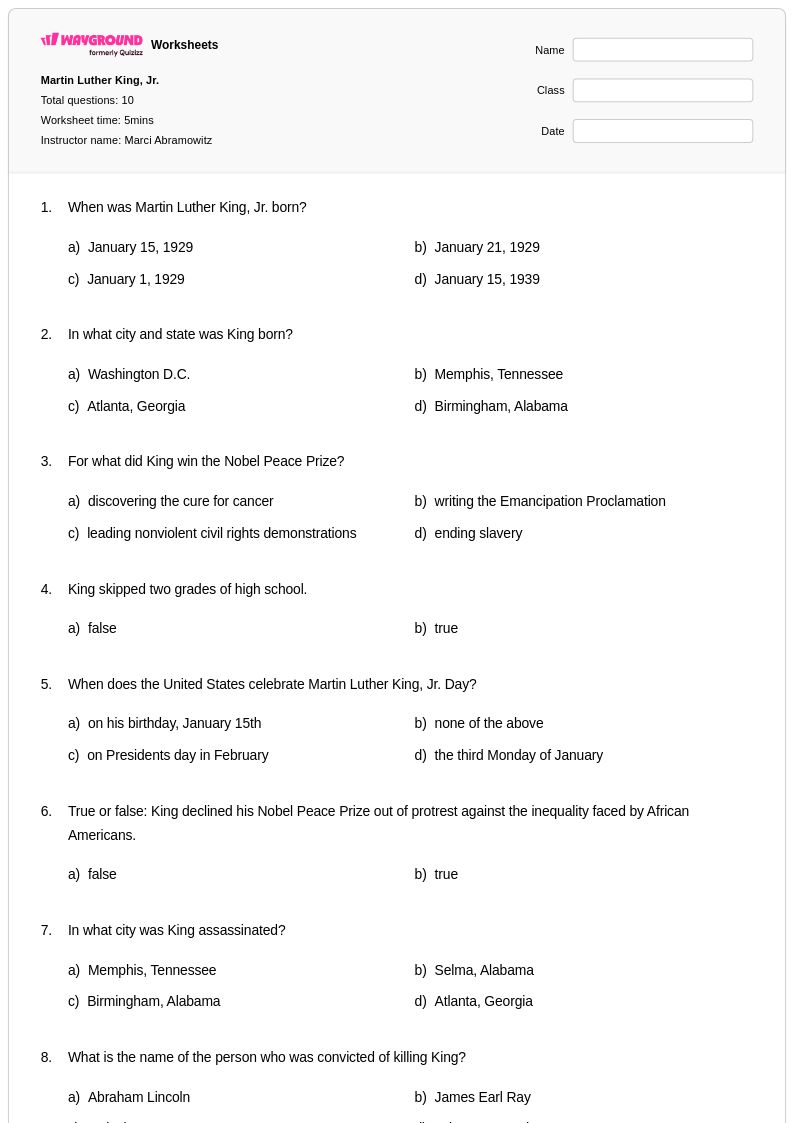
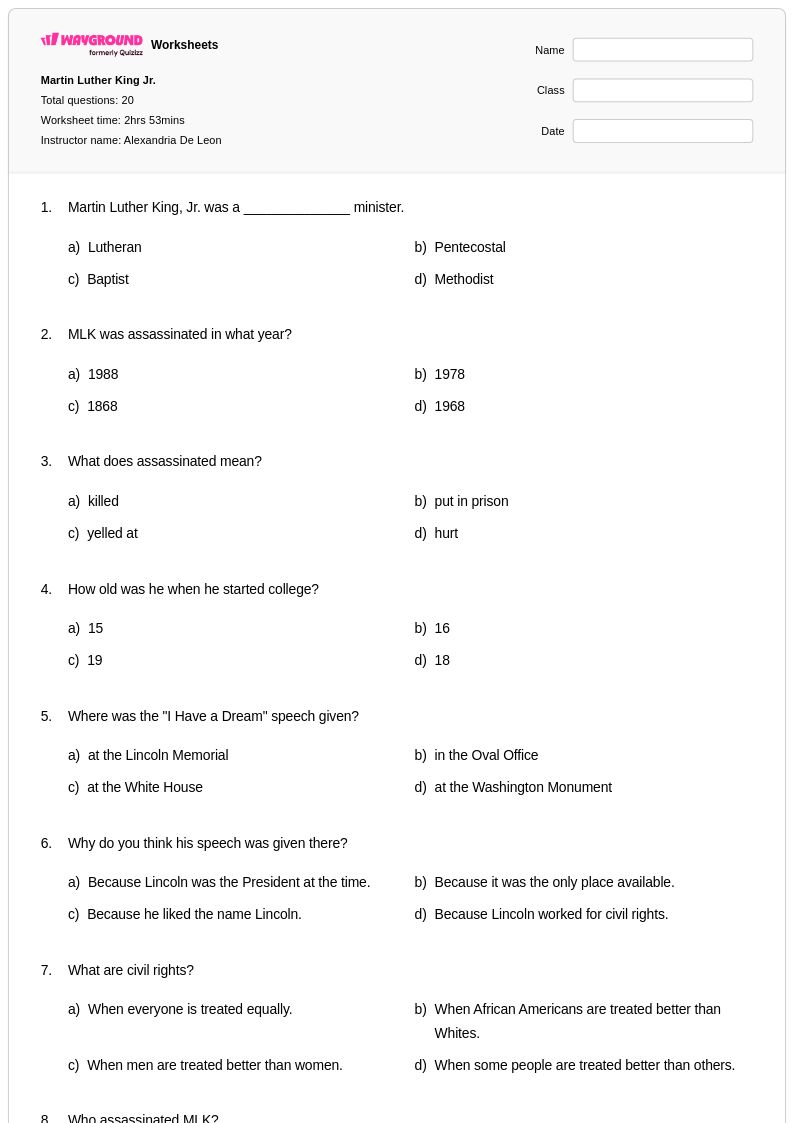
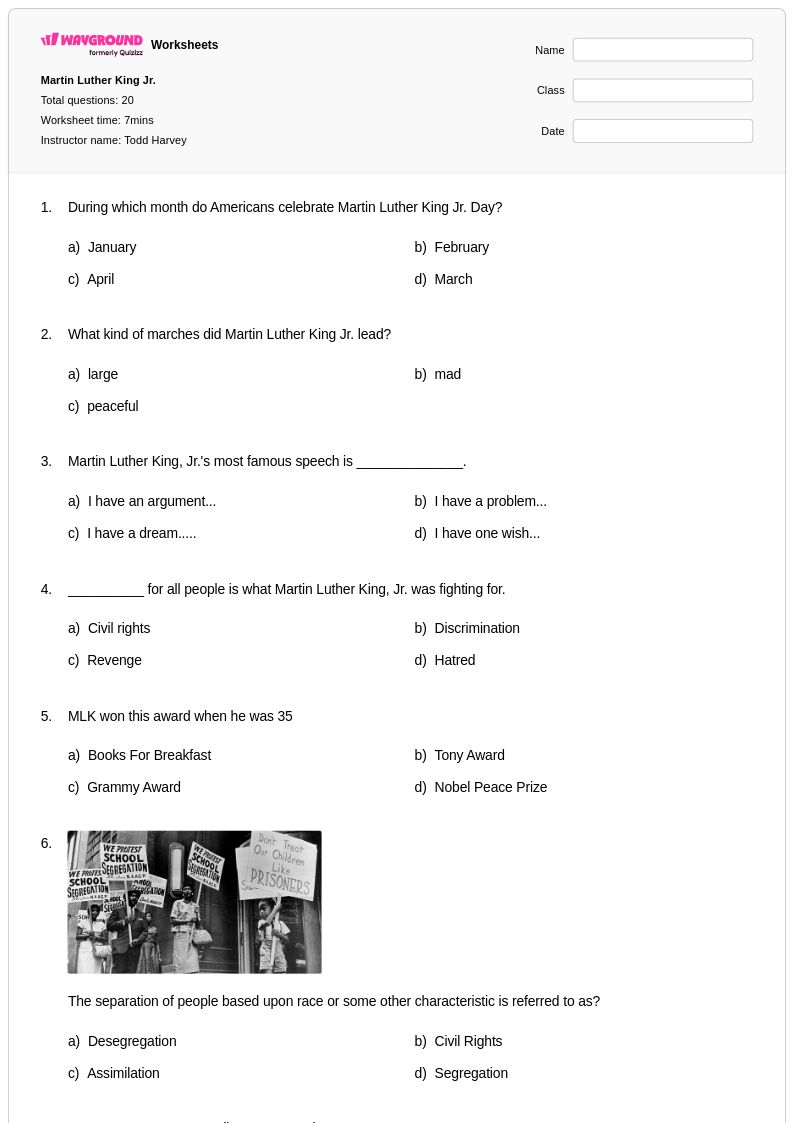
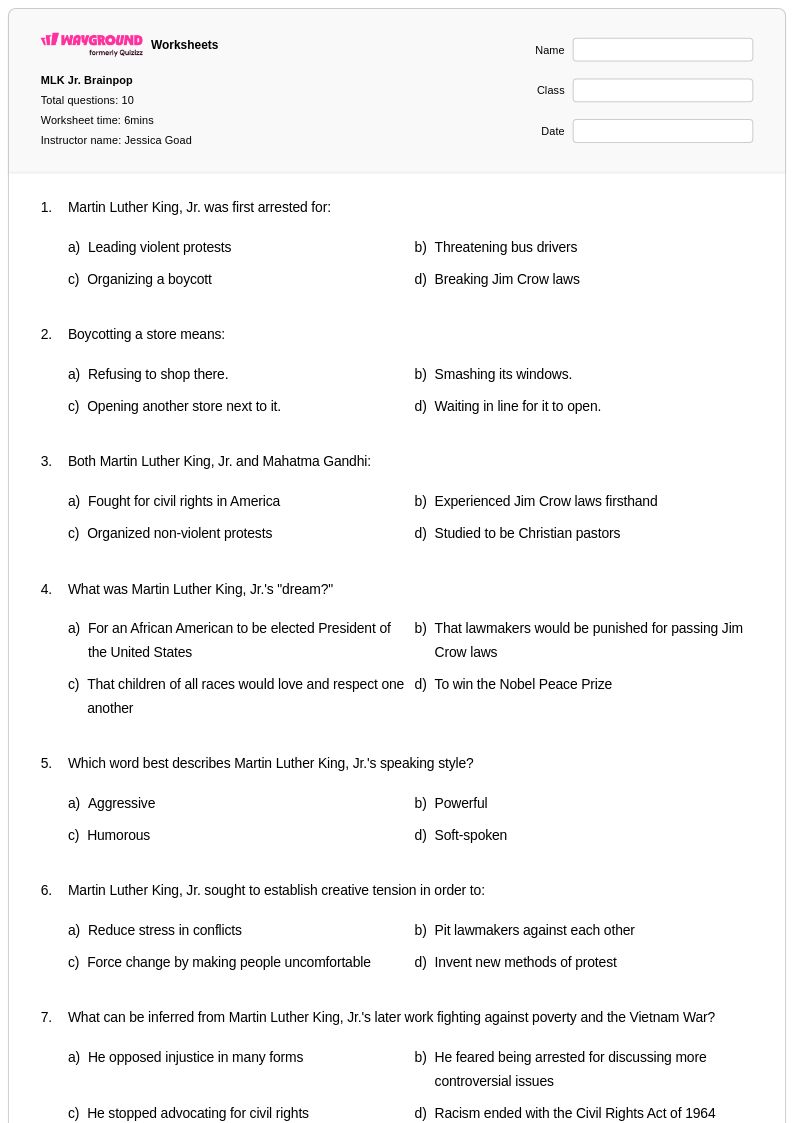
Martin Luther King Jr. Day worksheets for Class 6 students provide comprehensive educational resources that explore the life, legacy, and impact of this pivotal civil rights leader in American history. These carefully crafted materials from Wayground (formerly Quizizz) help sixth-grade students develop critical thinking skills while examining Dr. King's philosophy of nonviolent resistance, his role in the Montgomery Bus Boycott, the March on Washington, and his famous "I Have a Dream" speech. Students engage with practice problems that analyze primary source documents, timeline activities, and comprehension exercises that deepen their understanding of the civil rights movement's significance. Each worksheet collection includes detailed answer keys and is available as free printables in PDF format, making them accessible for both classroom instruction and independent study while reinforcing essential social studies concepts about equality, justice, and peaceful social change.
Wayground's extensive collection of teacher-created Martin Luther King Jr. Day resources draws from millions of high-quality educational materials designed specifically for middle school social studies instruction. The platform's robust search and filtering capabilities allow educators to quickly locate standards-aligned worksheets that match their specific curriculum requirements and student needs. Teachers can easily differentiate instruction by selecting from various complexity levels and formats, whether they need printable PDF worksheets for traditional classroom activities or digital versions for remote learning environments. These flexible customization options support diverse teaching approaches, from whole-class discussions to individual skill practice, while providing valuable tools for lesson planning, targeted remediation for struggling learners, and enrichment opportunities for advanced students seeking deeper exploration of civil rights history and its contemporary relevance.
FAQs
How do I teach students about Martin Luther King Jr. and the civil rights movement?
Effective instruction on Martin Luther King Jr. begins with grounding students in the historical context of segregation and systemic inequality before introducing Dr. King's philosophy of nonviolent resistance. Teachers should connect key events — such as the Montgomery Bus Boycott and the March on Washington — to broader themes of justice, equality, and social change in American history. Pairing primary sources like the 'I Have a Dream' speech with structured analysis activities helps students move beyond surface-level familiarity toward genuine historical understanding.
What activities help students practice analyzing Dr. King's speeches and legacy?
Structured close-reading exercises work well for helping students analyze the rhetoric and arguments in Dr. King's speeches, particularly 'I Have a Dream.' Activities that ask students to identify Dr. King's central claims, evidence of nonviolent philosophy, and connections to the Declaration of Independence build critical thinking alongside content knowledge. Connecting his activism to present-day civil rights issues also deepens comprehension and encourages meaningful reflection.
What misconceptions do students commonly have about Martin Luther King Jr. and the civil rights movement?
A common misconception is that Dr. King was the sole leader of the civil rights movement, which can obscure the collective and organized nature of activism during this period. Students also frequently misunderstand nonviolent resistance as passive acceptance rather than as a deliberate, disciplined, and confrontational strategy. Another error is treating the civil rights movement as a completed chapter of history rather than recognizing its ongoing relevance to contemporary social and political life.
How can I use Martin Luther King Jr. Day worksheets in my classroom?
Martin Luther King Jr. Day worksheets on Wayground are available as printable PDFs for traditional classroom use and in digital formats for technology-integrated learning environments, giving teachers flexibility regardless of their setup. Teachers can also host these worksheets as a quiz directly on Wayground, enabling real-time student responses and instant feedback. Built-in accommodations such as read aloud, extended time, and reduced answer choices can be configured per student, making the worksheets accessible for diverse learners without disrupting the rest of the class.
How do I differentiate Martin Luther King Jr. Day lessons for students at different skill levels?
For students who need additional support, scaffolded worksheets with vocabulary support, simplified text, and guided questions can make civil rights content more accessible. Advanced learners benefit from open-ended analysis tasks that require them to evaluate Dr. King's rhetorical strategies or compare his philosophy to other civil rights approaches. On Wayground, teachers can apply individual accommodations — such as read aloud or reduced answer choices — to specific students while the rest of the class works through standard settings.
What grade levels are Martin Luther King Jr. Day worksheets appropriate for?
Martin Luther King Jr. Day worksheets can be adapted for a wide range of grade levels, from early elementary students learning basic biographical facts to middle and high school students conducting historical analysis of his speeches, strategies, and legacy. The complexity of tasks should align with students' reading level and prior knowledge of American history. Wayground's filtering tools allow teachers to search for resources matched to specific grade bands and learning objectives.