Free Printable Manifest Destiny Worksheets for Class 6
Class 6 Manifest Destiny worksheets and printables help students explore westward expansion through engaging practice problems, free PDF resources, and comprehensive answer keys for effective U.S. History learning.
Explore printable Manifest Destiny worksheets for Class 6
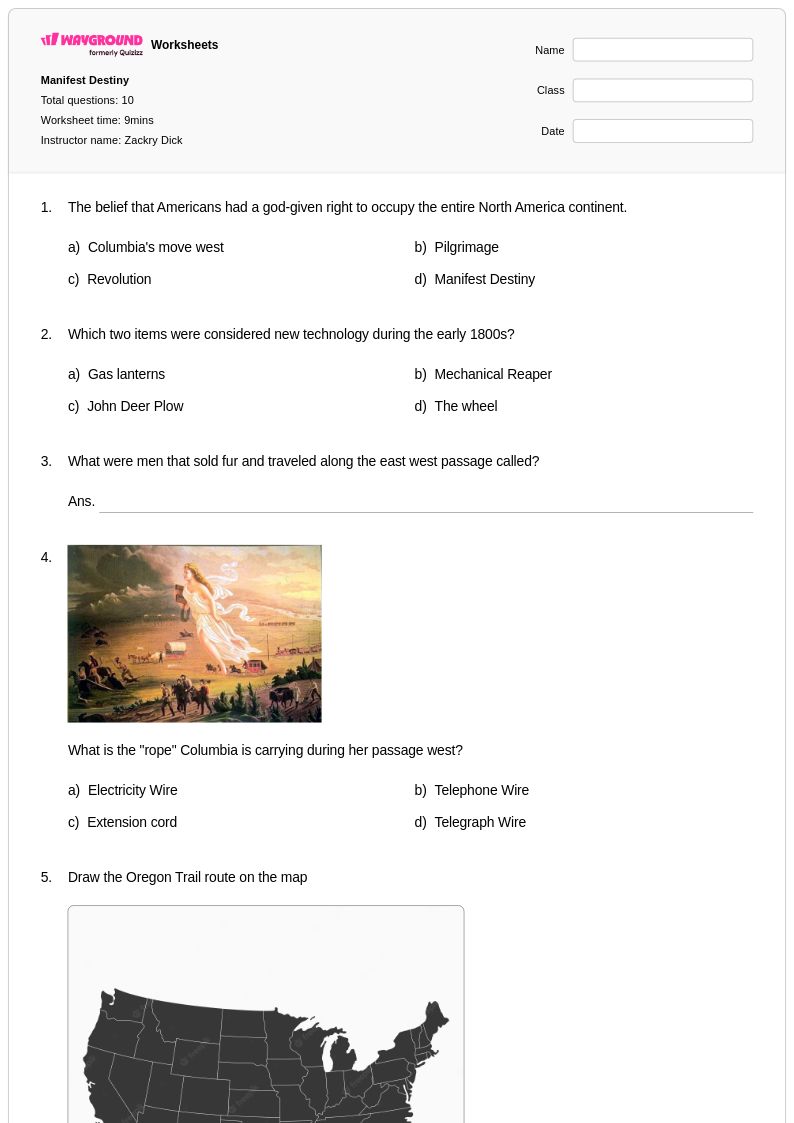
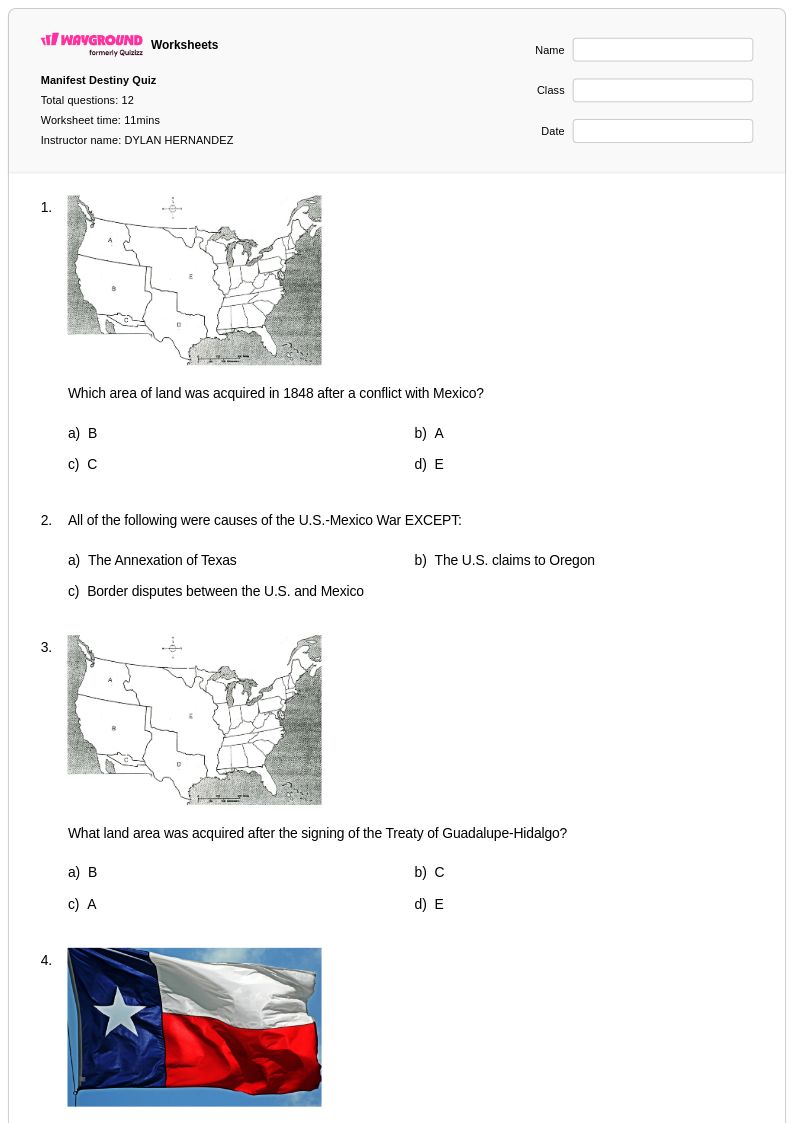
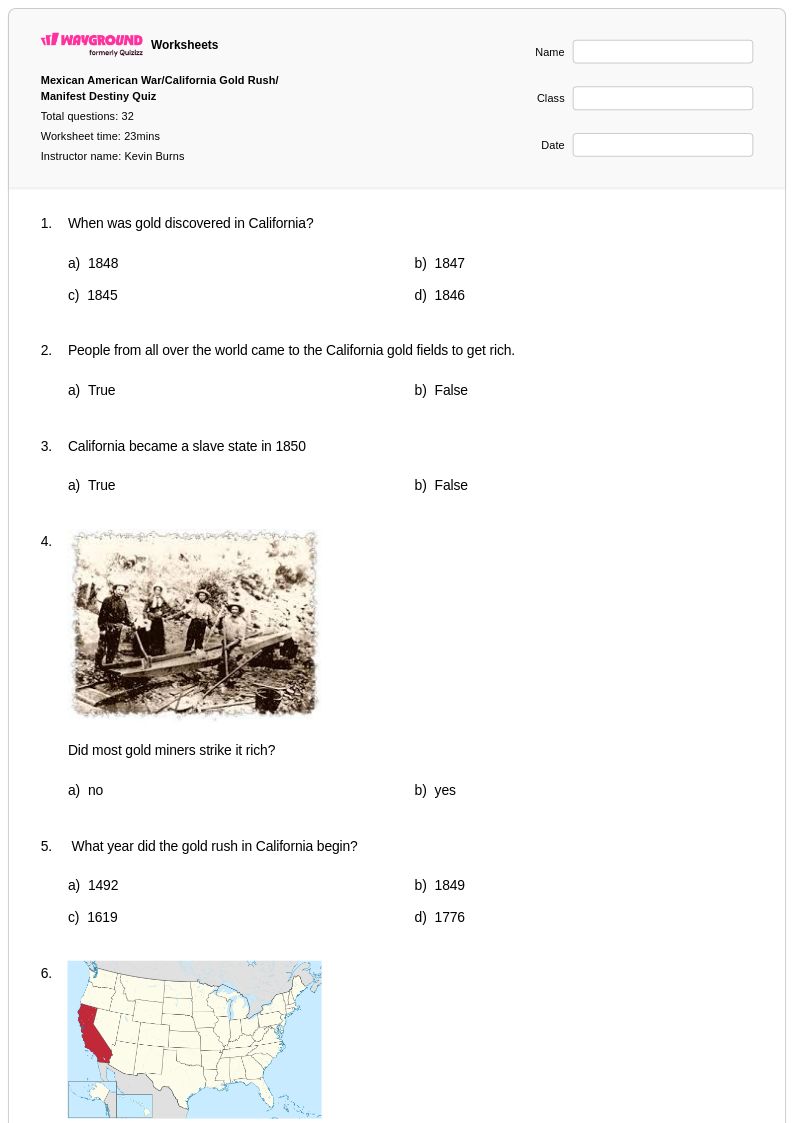
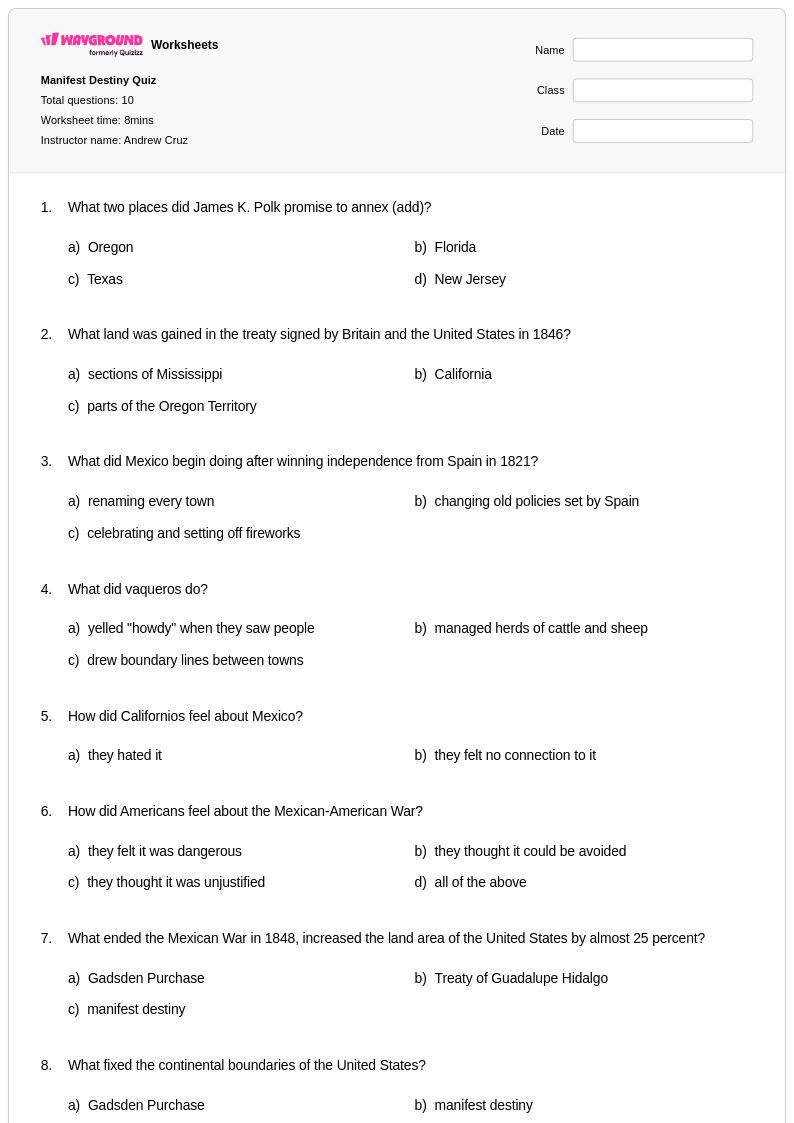
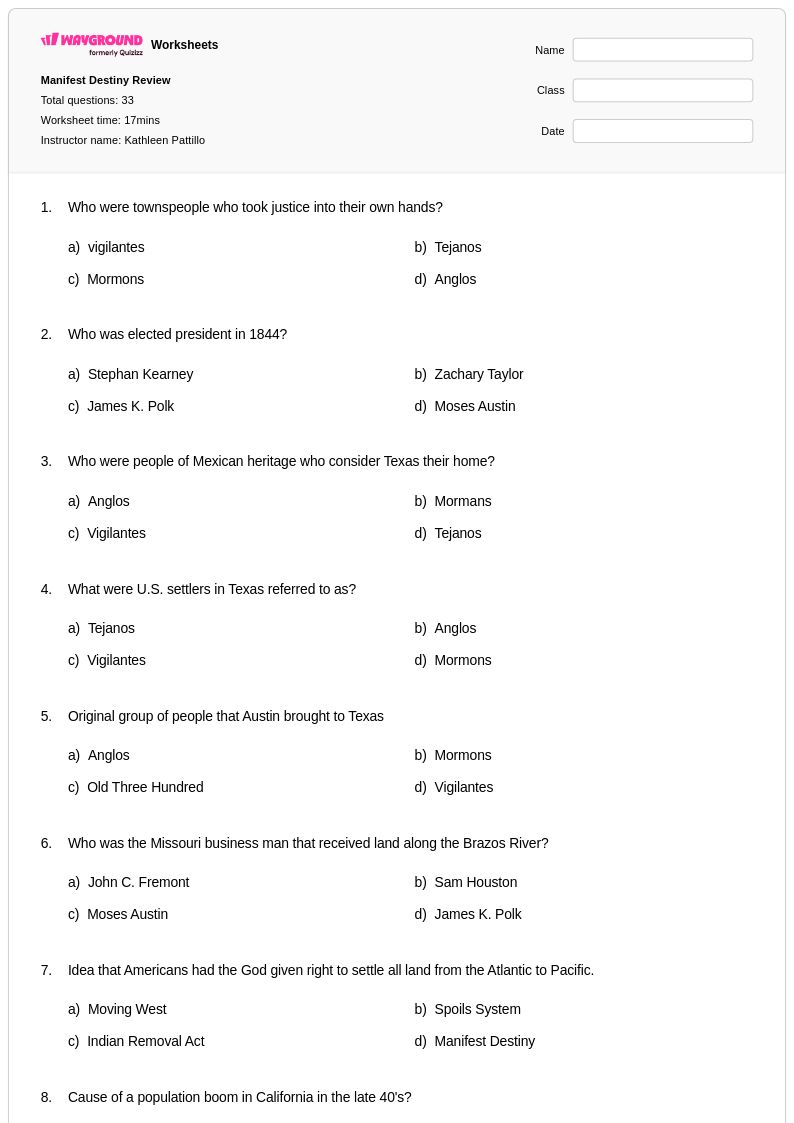
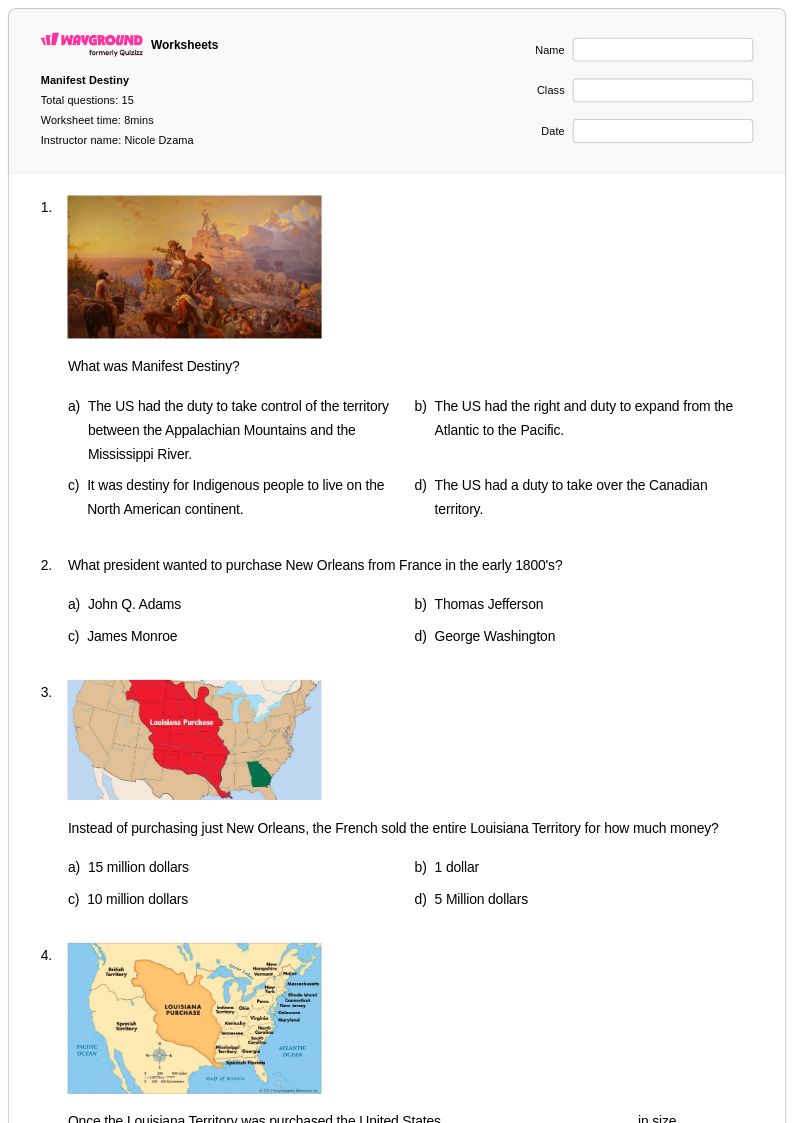
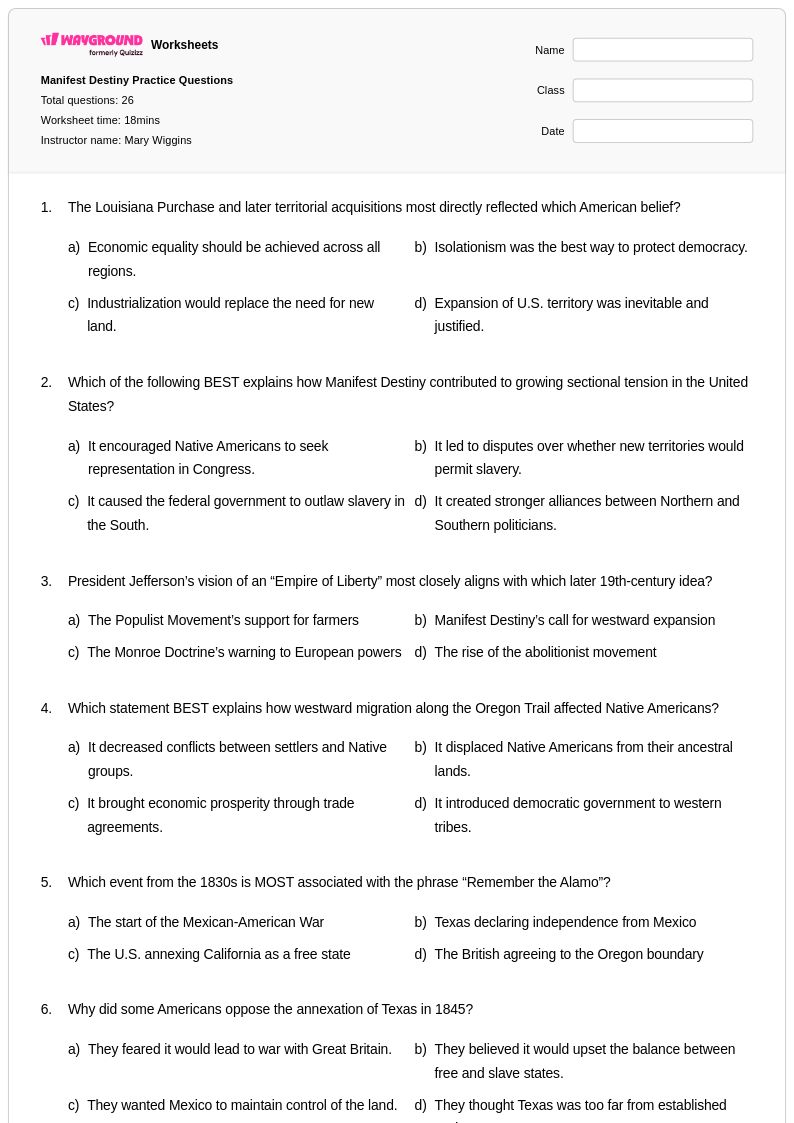
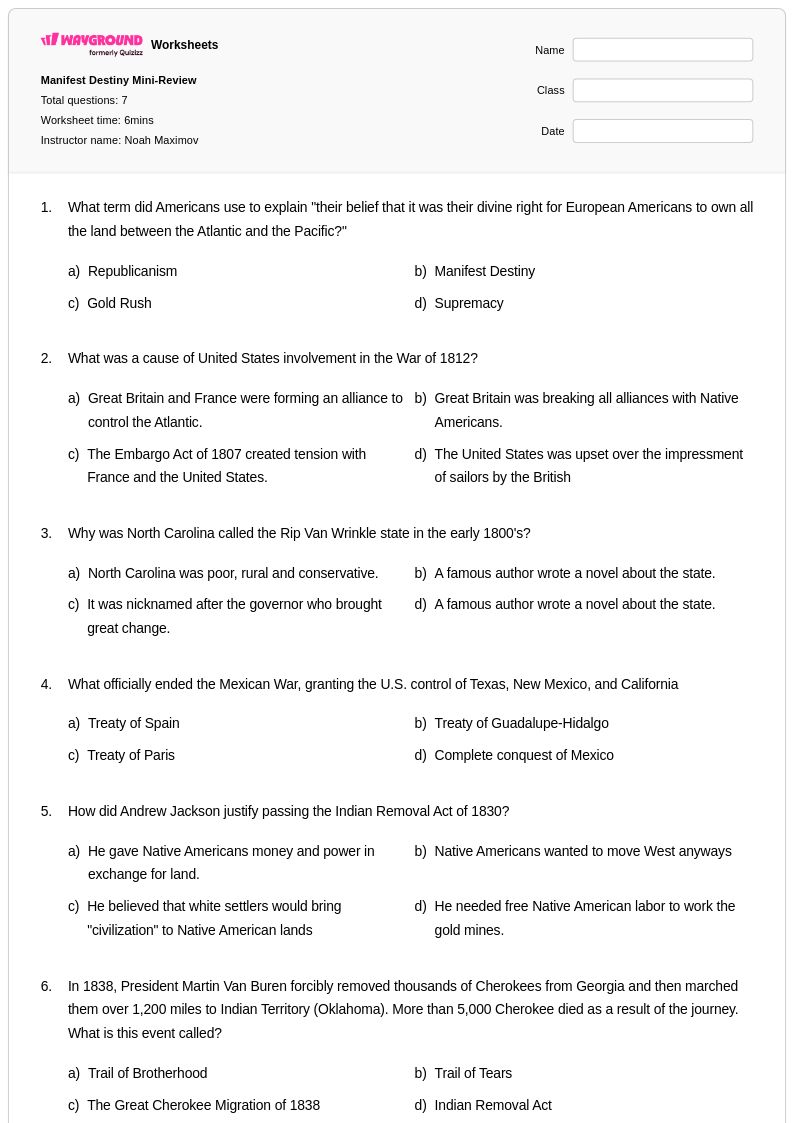
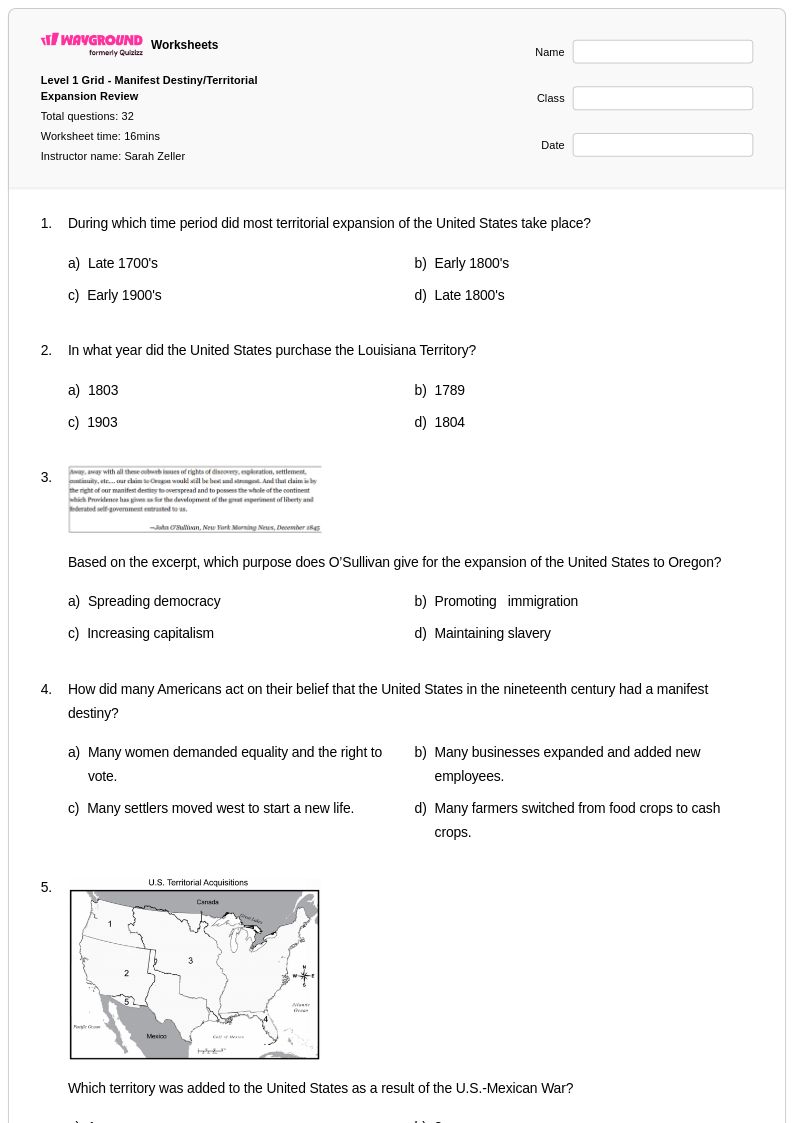
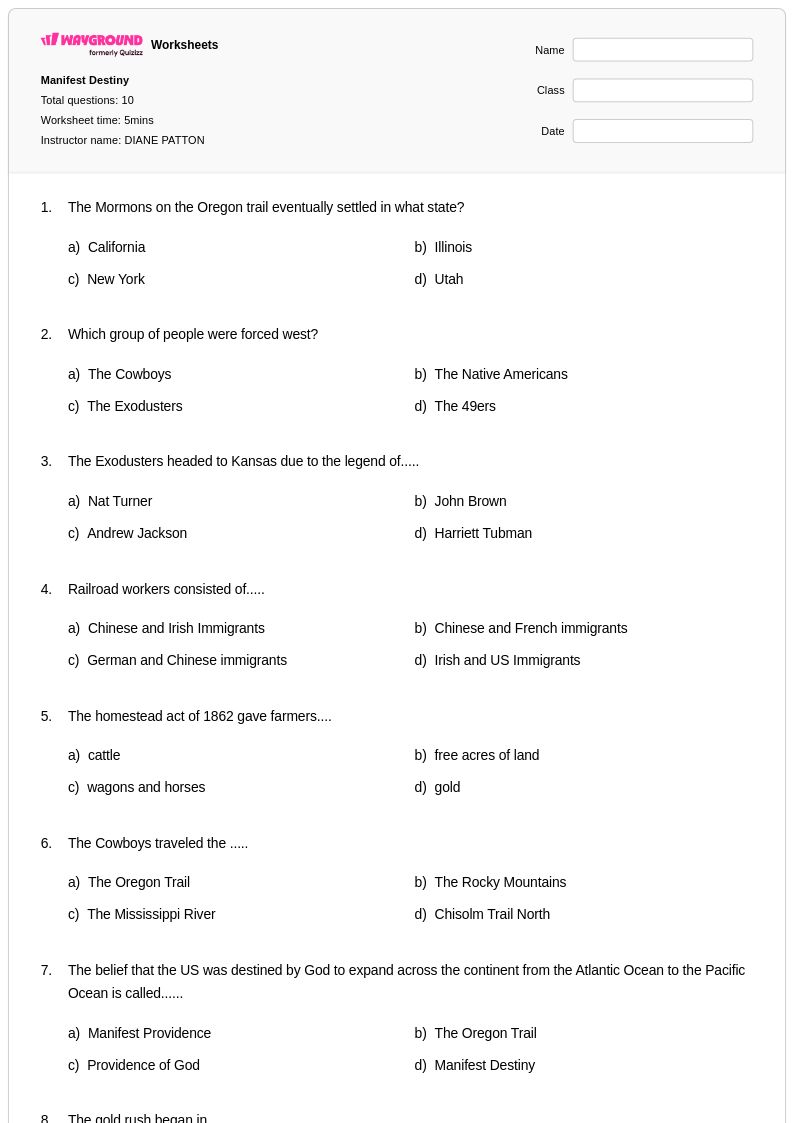
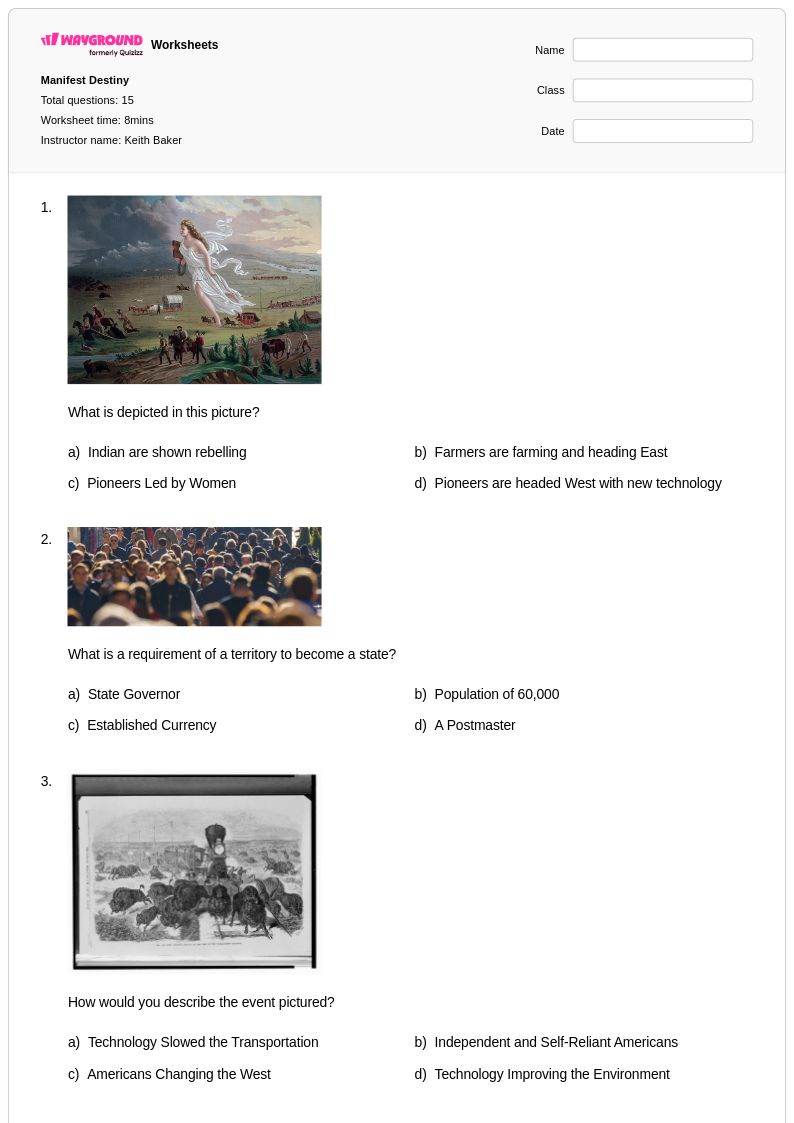
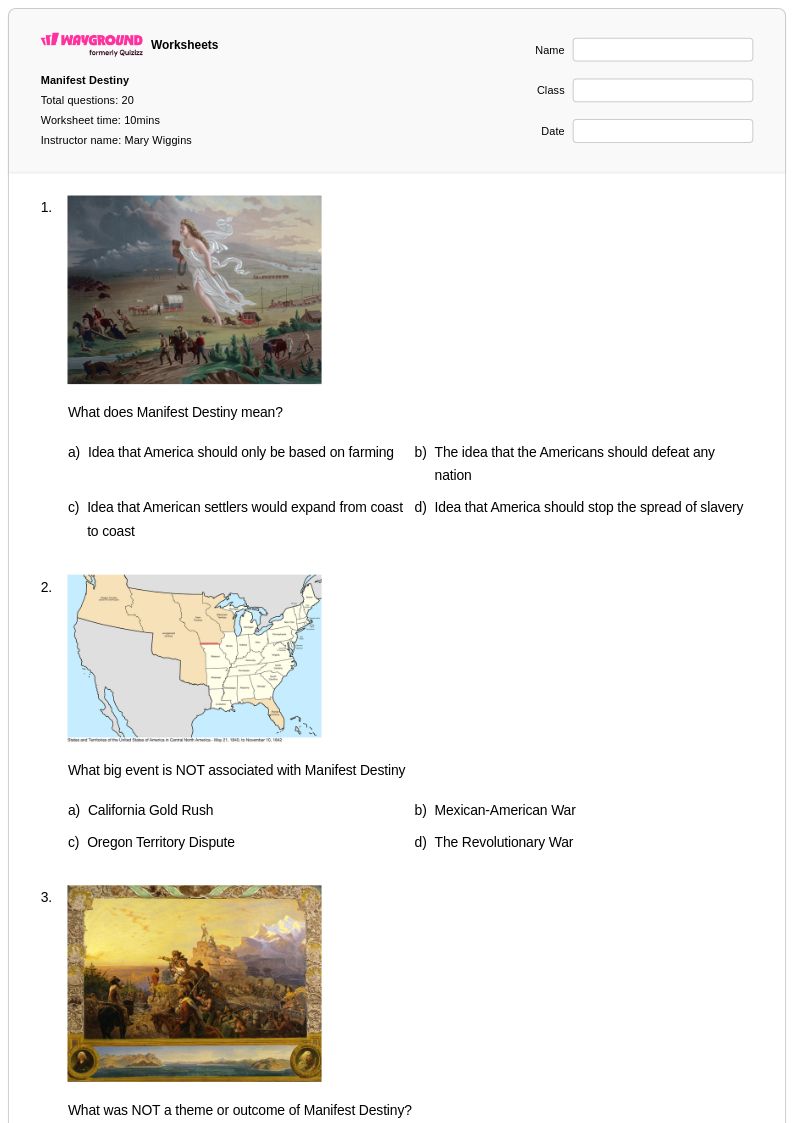
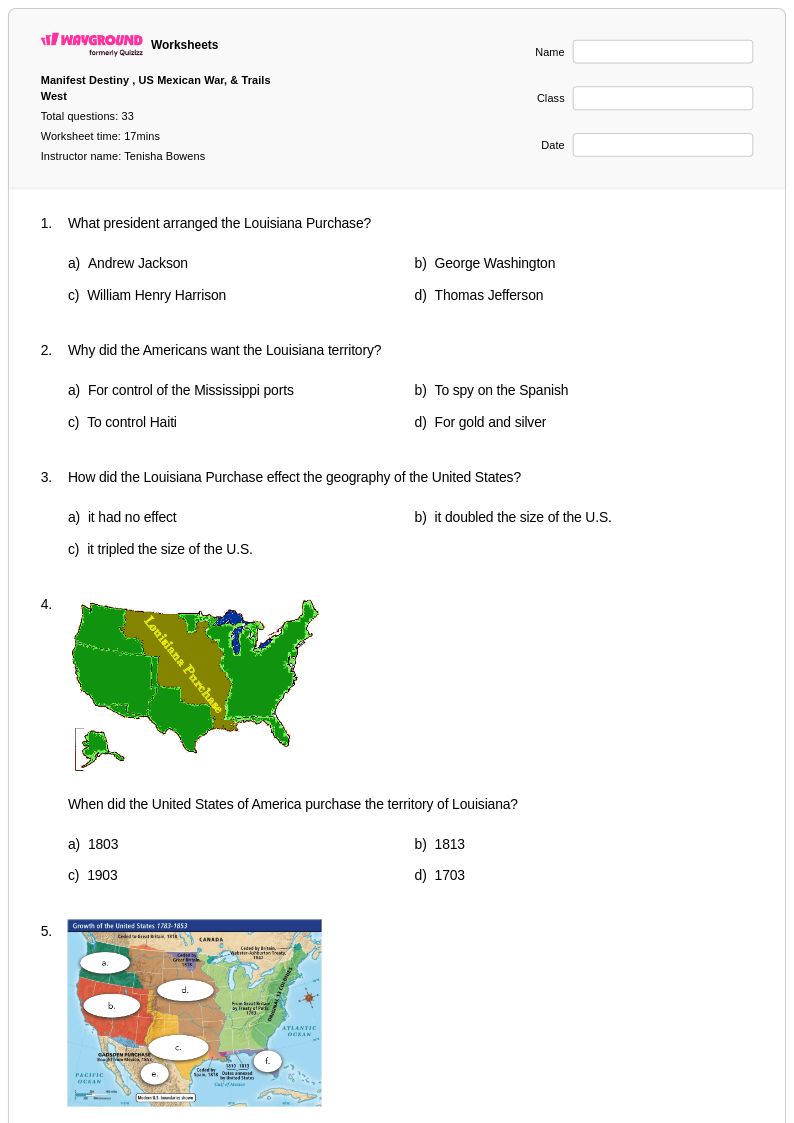
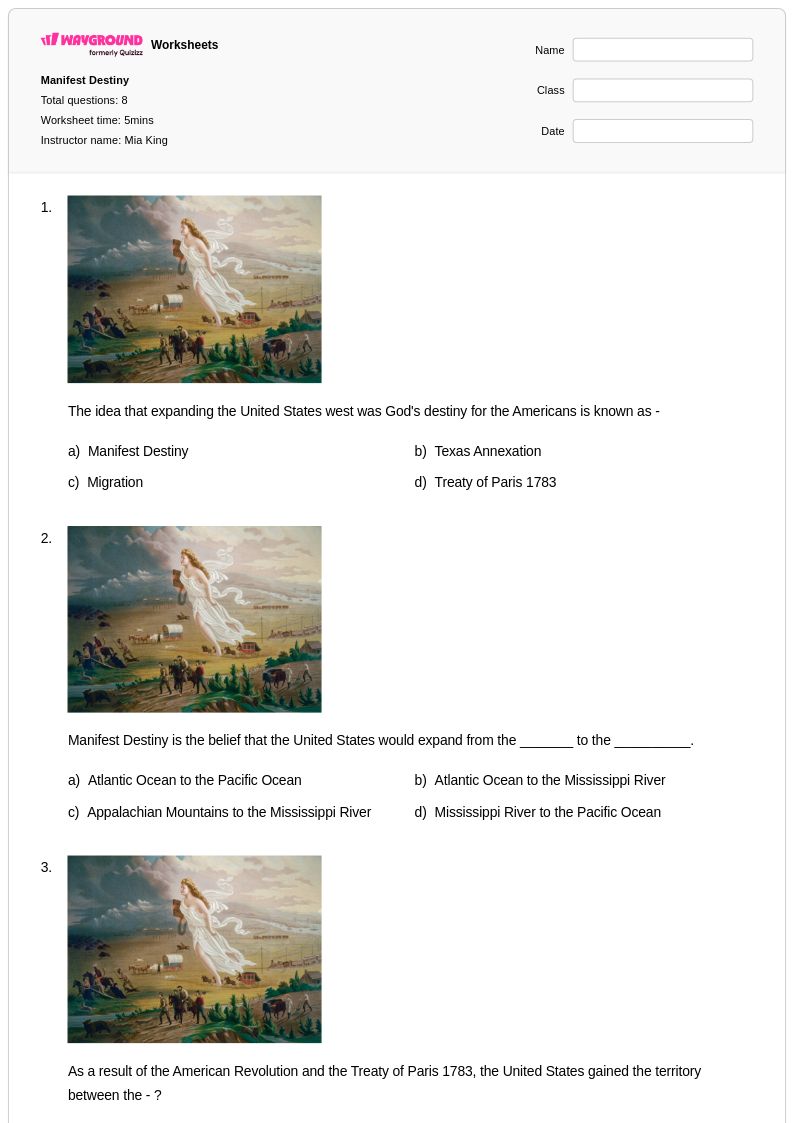
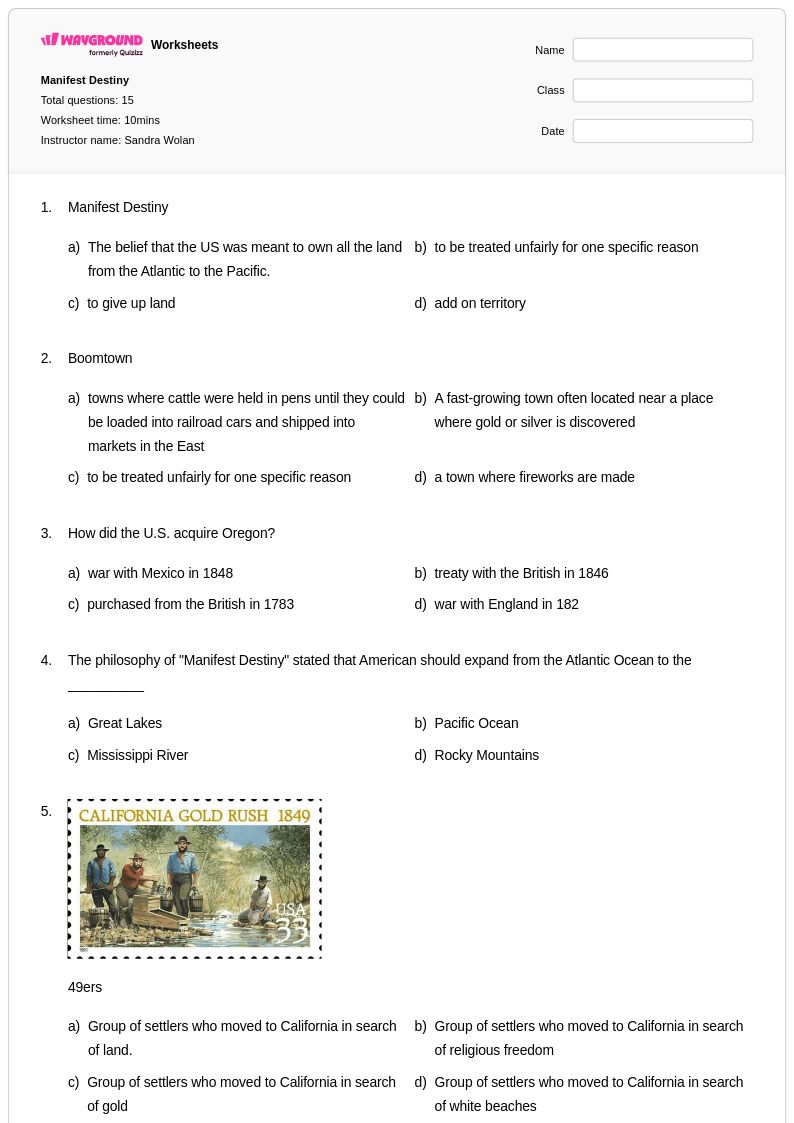
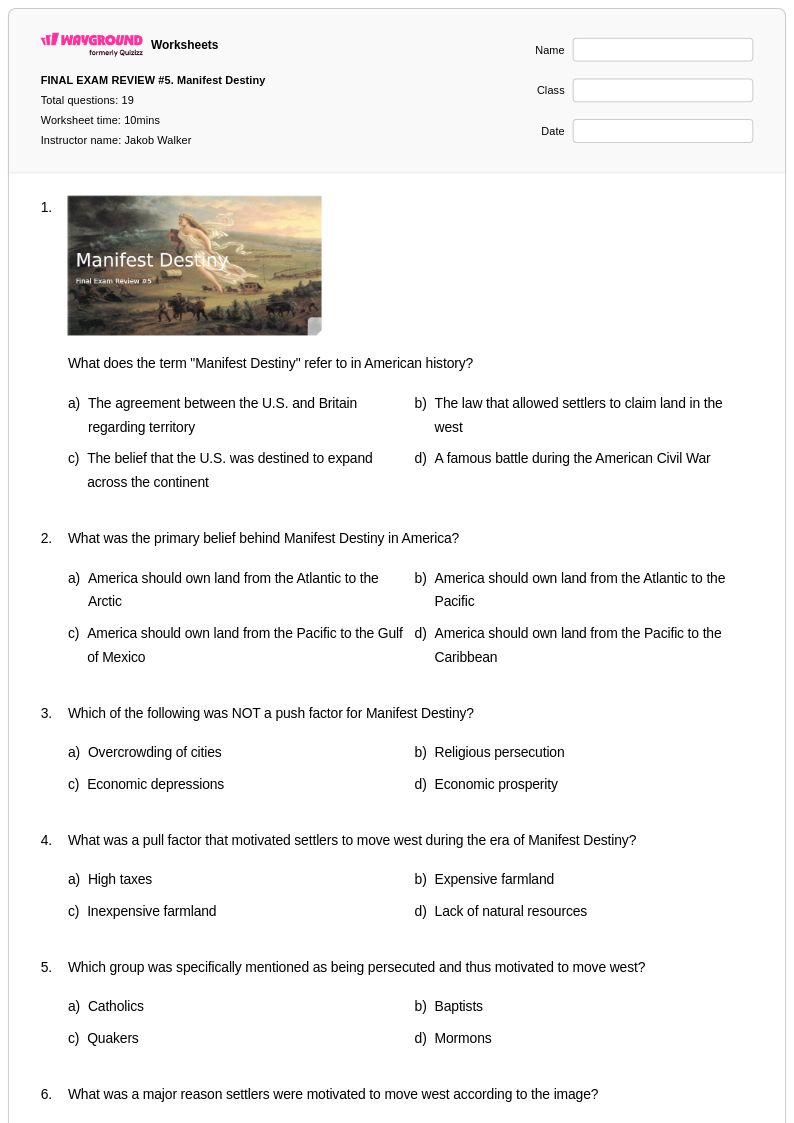
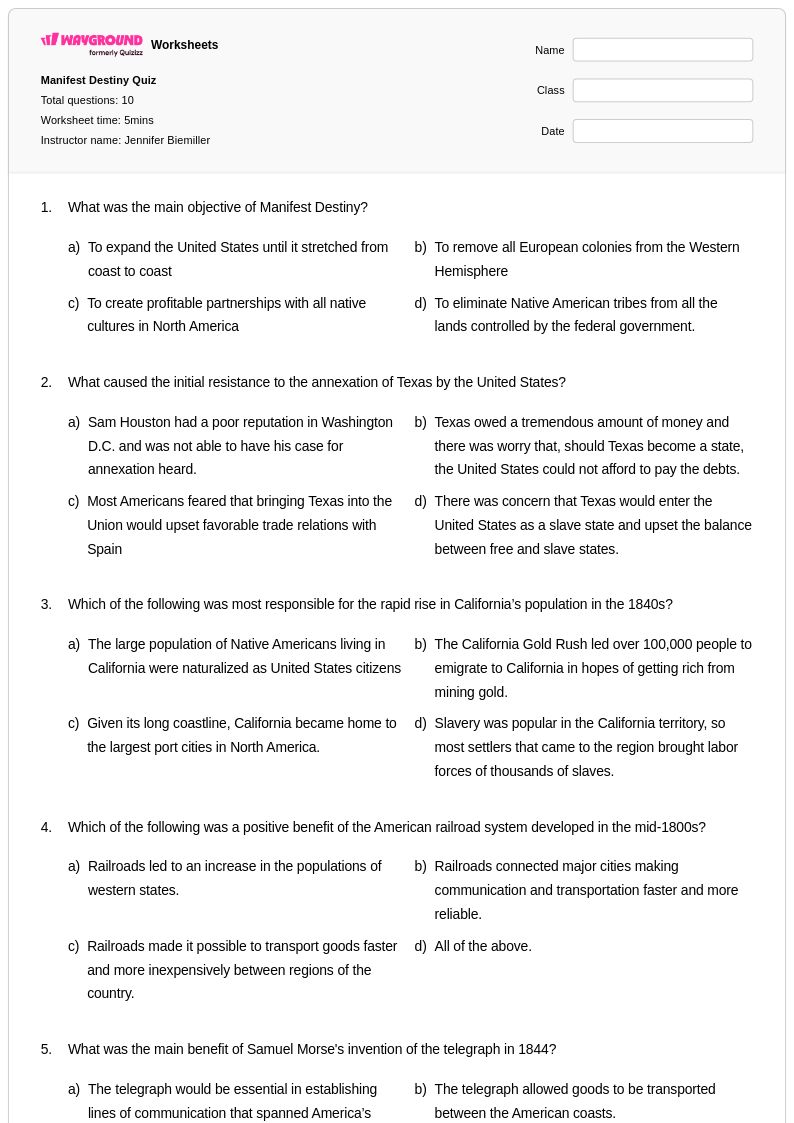
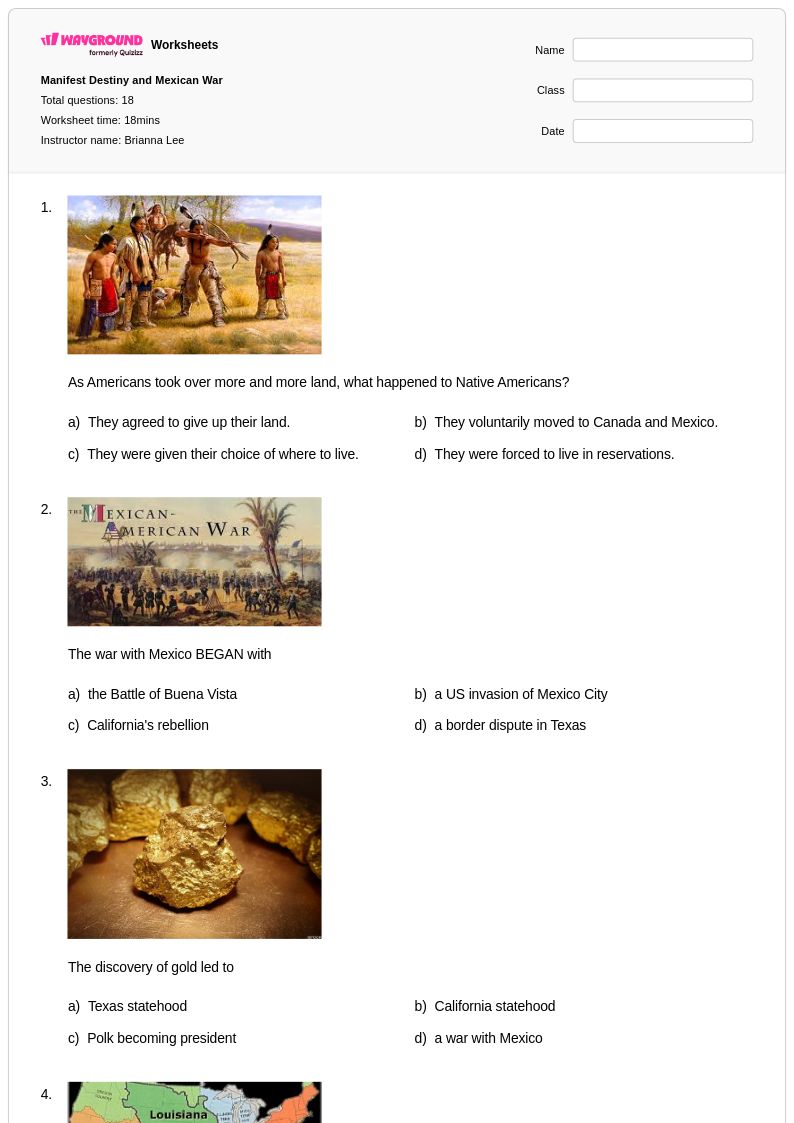
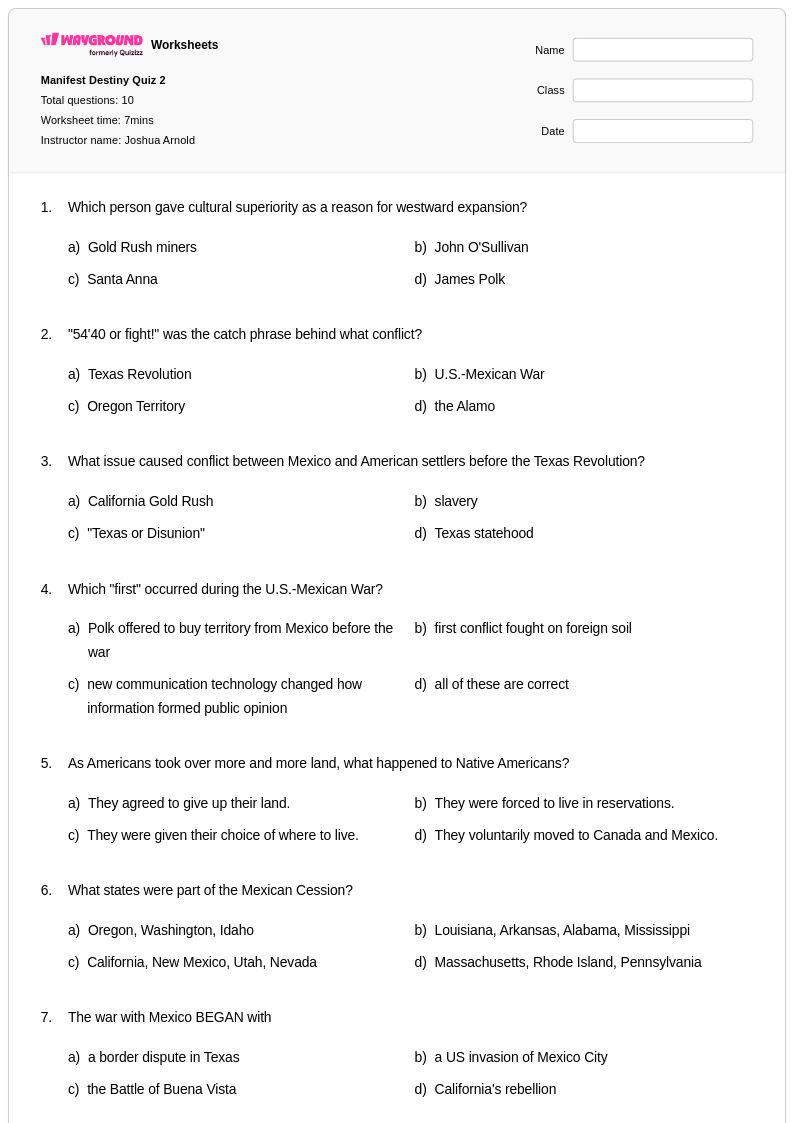
Manifest Destiny worksheets for Class 6 students provide comprehensive exploration of this pivotal concept in American westward expansion during the 19th century. These educational resources help students understand the belief that American settlers were destined to expand across the North American continent, examining both the motivations behind this ideology and its profound consequences for Native American populations, Mexican territories, and the growing nation. Through carefully designed practice problems, students analyze primary source documents, maps, and historical accounts that illustrate how Manifest Destiny influenced major events like the Oregon Trail migration, the Mexican-American War, and the California Gold Rush. Each worksheet collection includes detailed answer keys to support independent learning and includes free printables that reinforce critical thinking skills about cause and effect, geographic reasoning, and the complex moral questions surrounding territorial expansion.
Wayground, formerly Quizizz, empowers educators with an extensive library of millions of teacher-created Manifest Destiny worksheet resources that streamline lesson planning and enhance student engagement with this essential U.S. History topic. The platform's robust search and filtering capabilities allow teachers to quickly locate materials aligned with specific state and national social studies standards, while differentiation tools enable customization for diverse learning needs within the sixth-grade classroom. Whether accessed as printable PDF handouts for traditional instruction or interactive digital assignments for technology-integrated learning, these flexible worksheet collections support targeted skill practice, remediation for struggling learners, and enrichment activities for advanced students. Teachers can easily modify existing content or combine multiple resources to create comprehensive units that help students develop deeper understanding of how Manifest Destiny shaped American identity and territorial boundaries while critically examining its impact on displaced populations and international relations.
FAQs
How do I teach Manifest Destiny to middle or high school students?
Teaching Manifest Destiny effectively requires grounding students in the ideological belief that American westward expansion was divinely ordained and inevitable, then building outward to its political, geographic, and human consequences. Start with primary sources like John O'Sullivan's 1845 essay that coined the phrase, then layer in territorial maps showing acquisitions from the Louisiana Purchase through the Mexican Cession. Pair these with discussions of who benefited from expansion and who was displaced, so students develop a critical rather than celebratory reading of the concept.
What are the most common misconceptions students have about Manifest Destiny?
A frequent misconception is that westward expansion was a unified, government-directed plan rather than a loose ideological justification used to rationalize a range of political, economic, and military decisions. Students also tend to overlook the agency and resistance of Native American nations and Mexican communities, instead absorbing a narrative of empty land being settled. Emphasizing the contested and often violent nature of territorial acquisition helps correct the sanitized version many students encounter in earlier schooling.
What primary sources work well for a Manifest Destiny lesson?
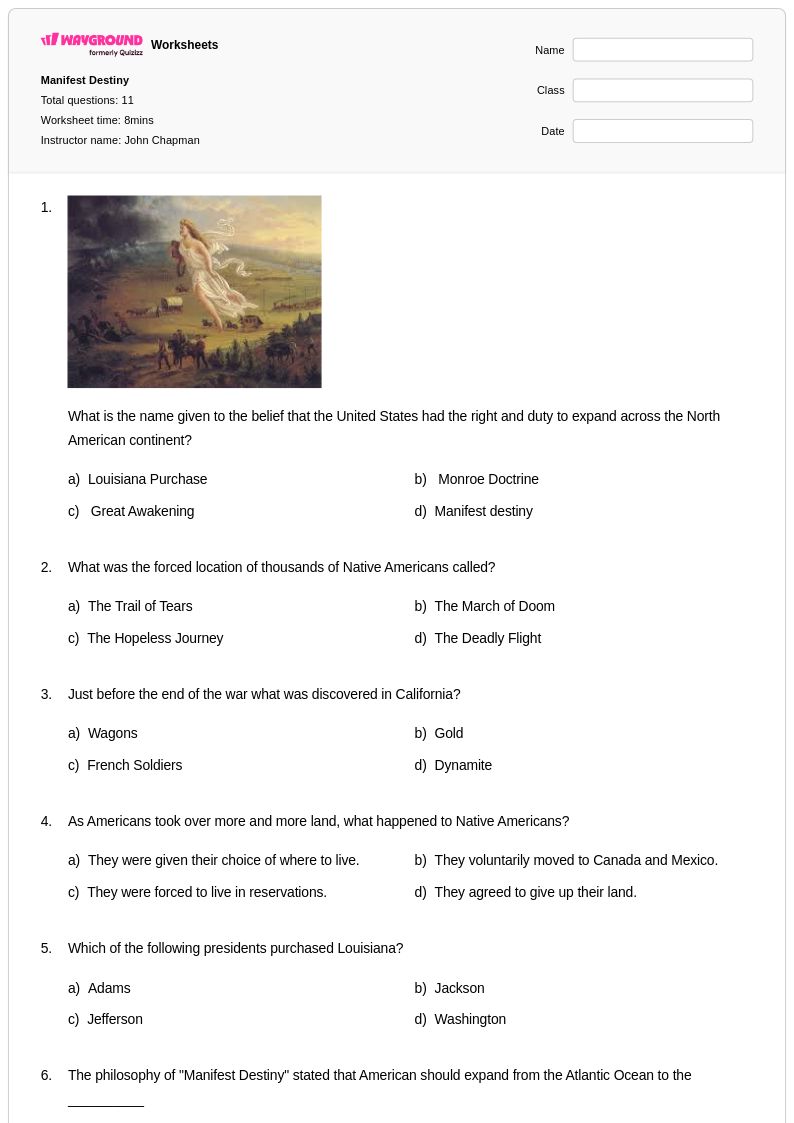
John O'Sullivan's 1845 essay 'Annexation' is the foundational text for introducing the term and ideology. Political cartoons like 'American Progress' by John Gast (1872) are highly accessible and allow students to practice visual primary source analysis, identifying symbols and perspective. Pairing these with testimonies or accounts from Native American or Mexican perspectives gives students a more complete and historically honest picture of expansion's impact.
What worksheet activities best help students practice historical thinking around Manifest Destiny?
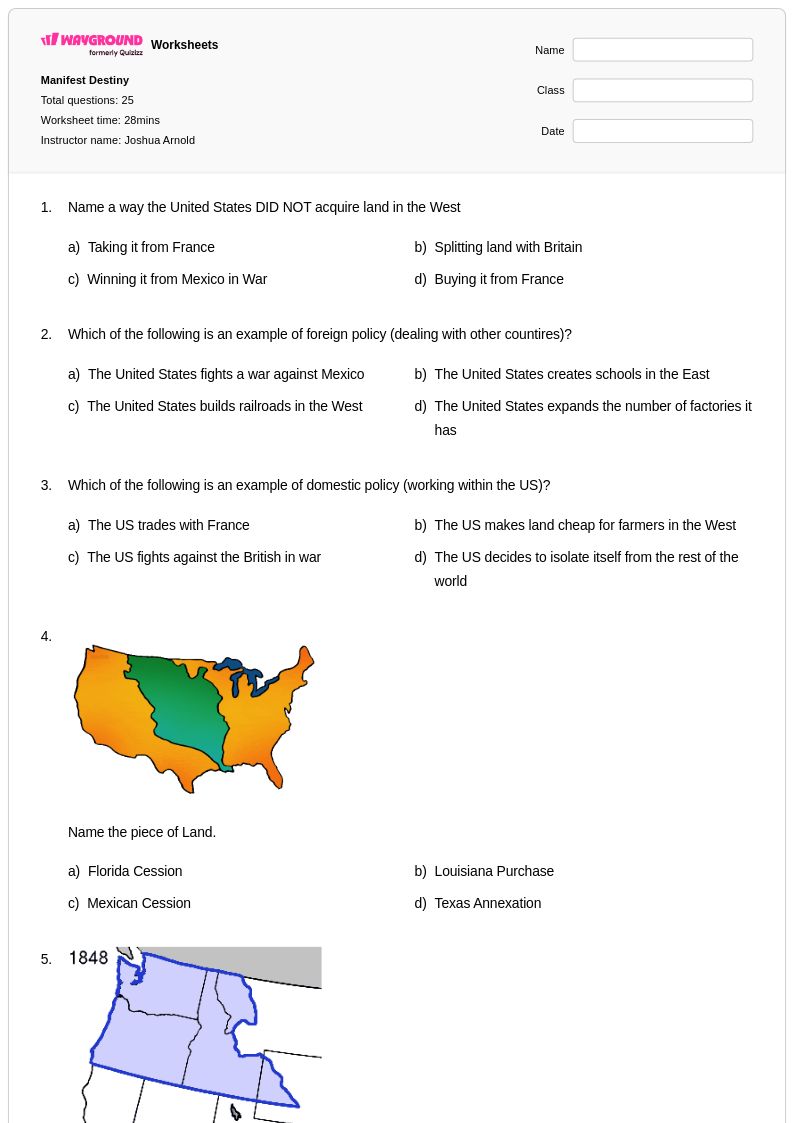
Map-based exercises that require students to trace territorial acquisitions chronologically build geographic reasoning while reinforcing cause-and-effect thinking about how land was obtained. Primary source analysis activities that ask students to identify the author's perspective, intended audience, and purpose develop document-based argumentation skills directly applicable to standardized assessments. Practice problems examining the consequences of expansionist policies on Native American populations and Mexican-American relations push students beyond memorization into genuine historical analysis.
How does Manifest Destiny connect to sectional tensions and the Civil War?
As the United States acquired vast new territories through the 1840s and 1850s, the central question of whether those territories would permit or prohibit slavery intensified the divide between North and South. Compromises like the Missouri Compromise and later the Compromise of 1850 were direct legislative responses to the territorial expansion driven by Manifest Destiny ideology. Students who understand this connection can trace a clear causal thread from westward expansion to secession, which is a critical skill for U.S. history coursework and standardized exams.
How do I use Wayground's Manifest Destiny worksheets in my classroom?
Wayground's Manifest Destiny worksheets are available as printable PDFs for traditional classroom use and in digital formats for technology-integrated or blended learning environments, and teachers can also host them as a quiz directly on Wayground. All materials include complete answer keys, making them practical for independent practice, collaborative group work, or homework assignments. Wayground also supports student-level accommodations such as extended time, read aloud, and reduced answer choices, which allows teachers to differentiate the same worksheet for students with varying needs without separate materials.