Free Printable Causes of the Spanish-american War Worksheets for Class 6
Explore Wayground's free Class 6 printable worksheets and practice problems on the causes of the Spanish-American War, complete with PDF downloads and answer keys to help students master this pivotal period in U.S. History.
Explore printable Causes of the Spanish-american War worksheets for Class 6
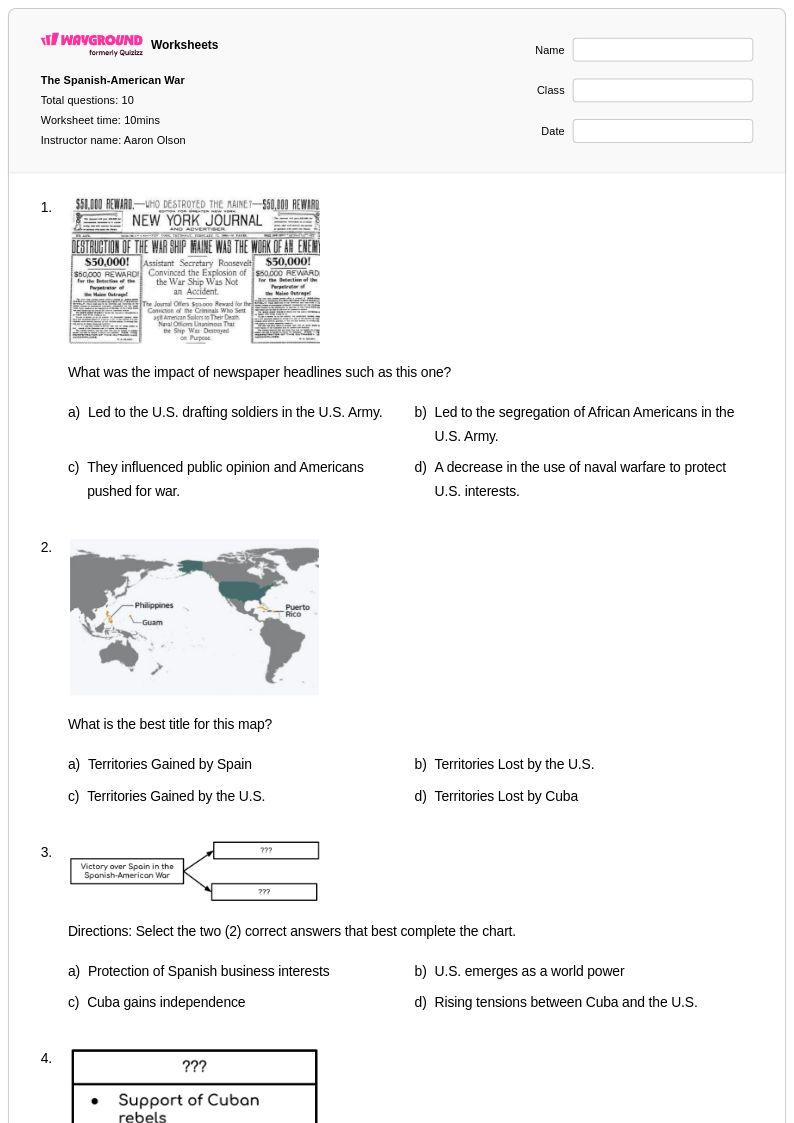
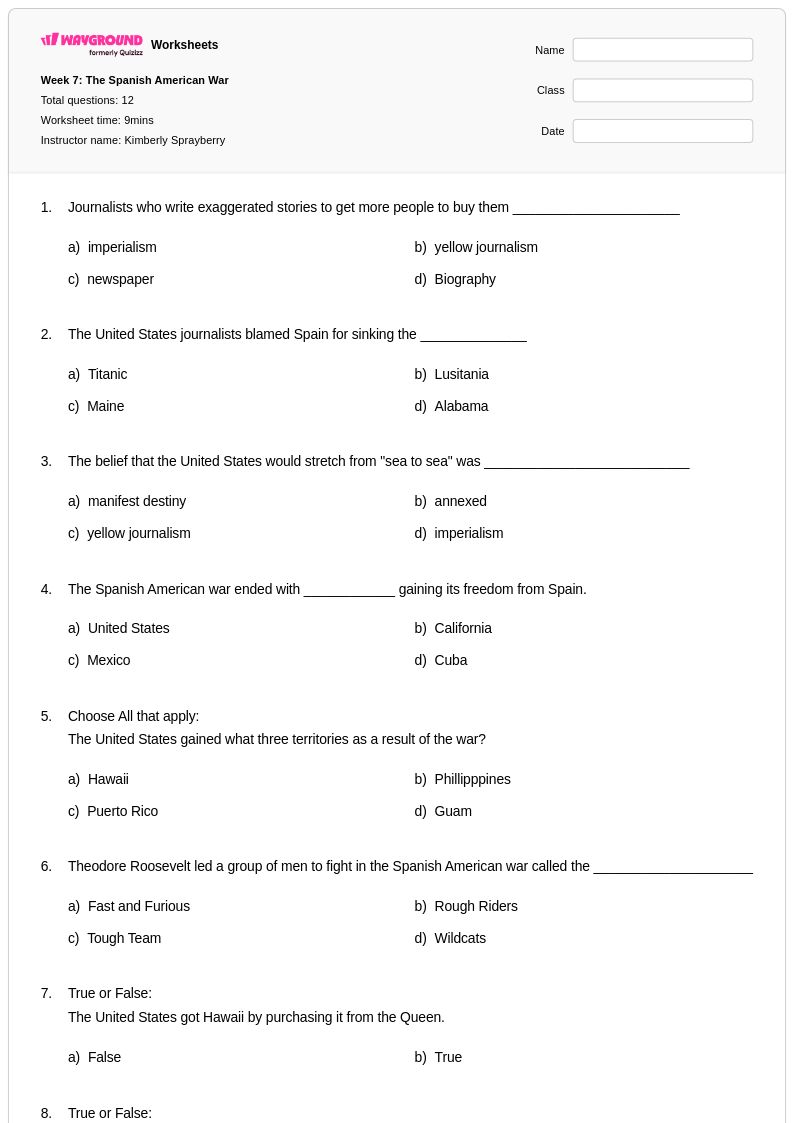
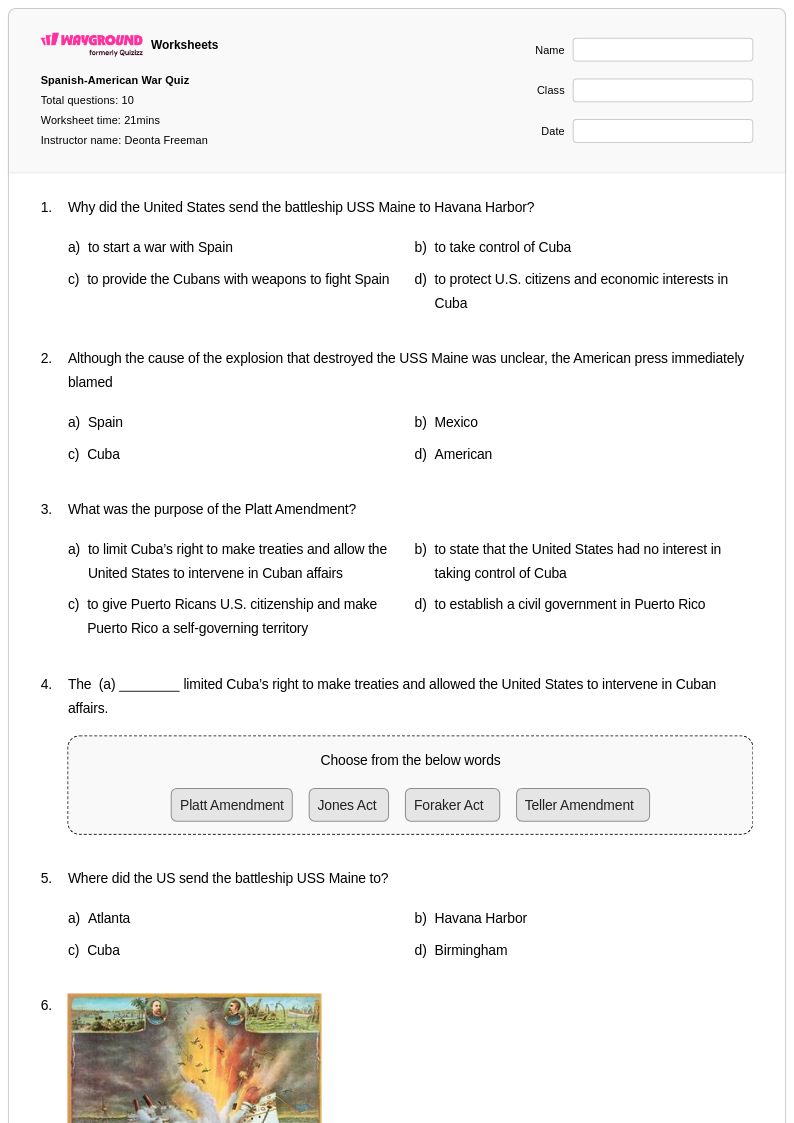
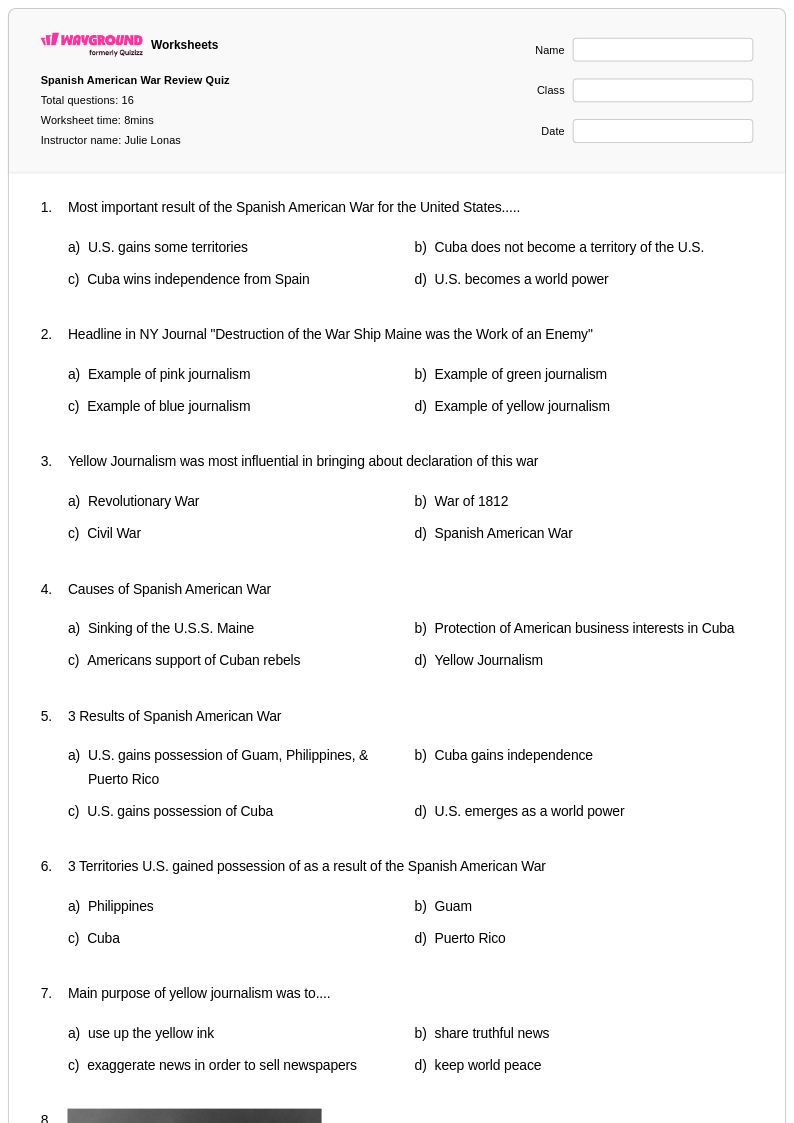
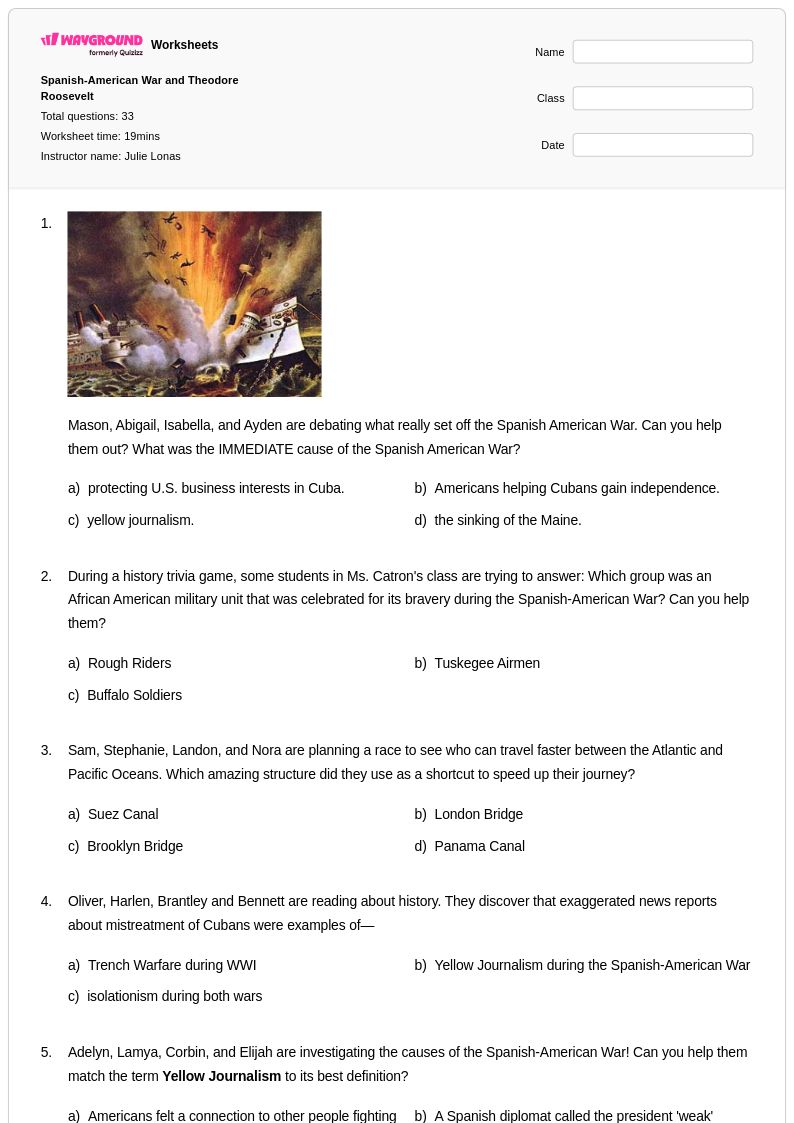
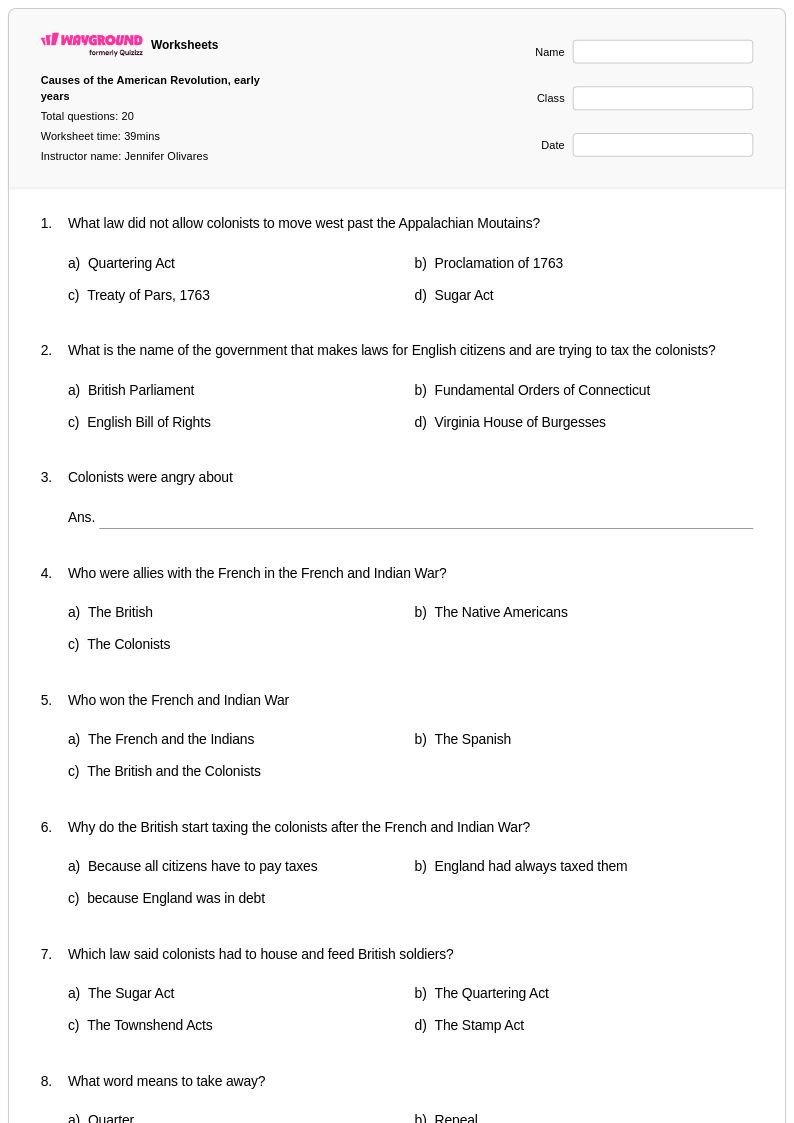
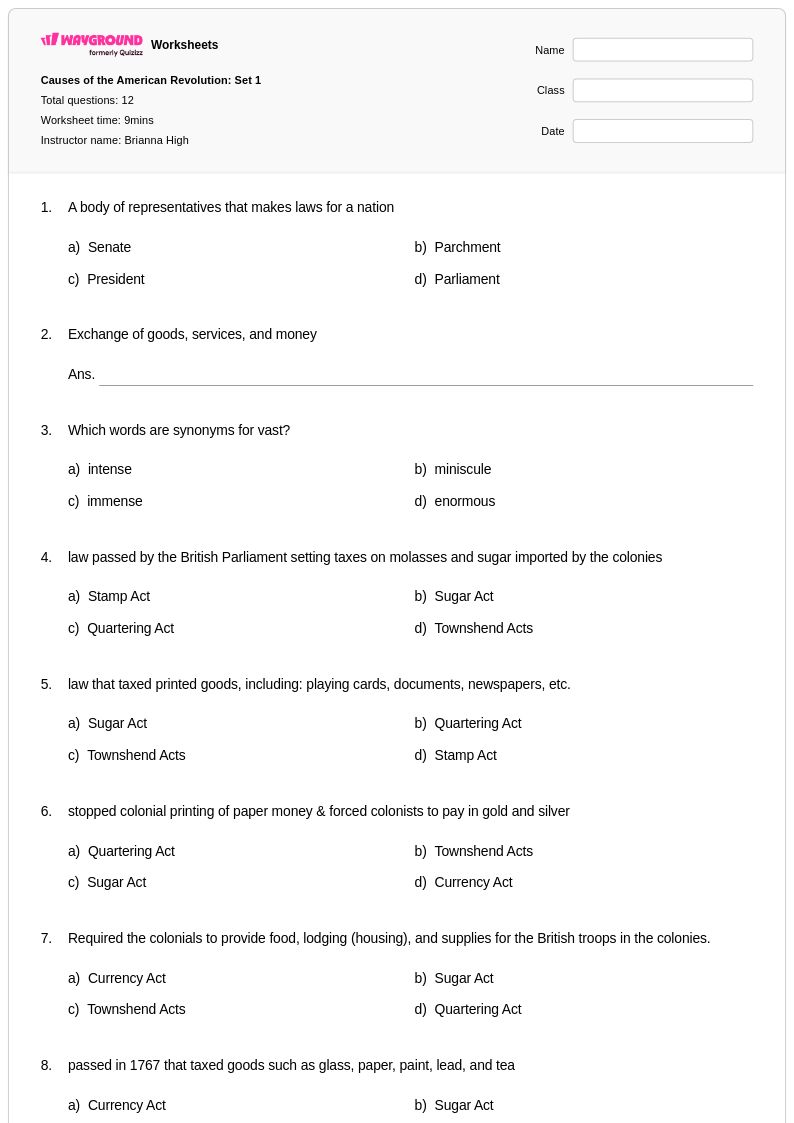
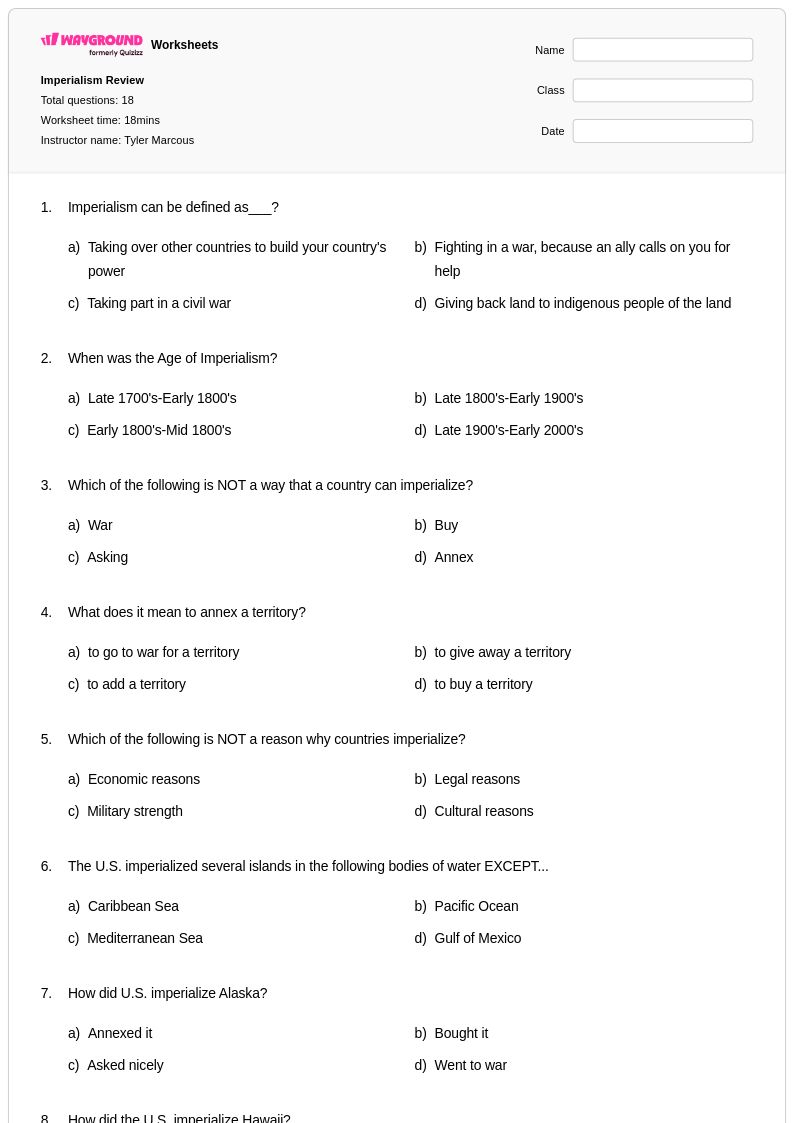
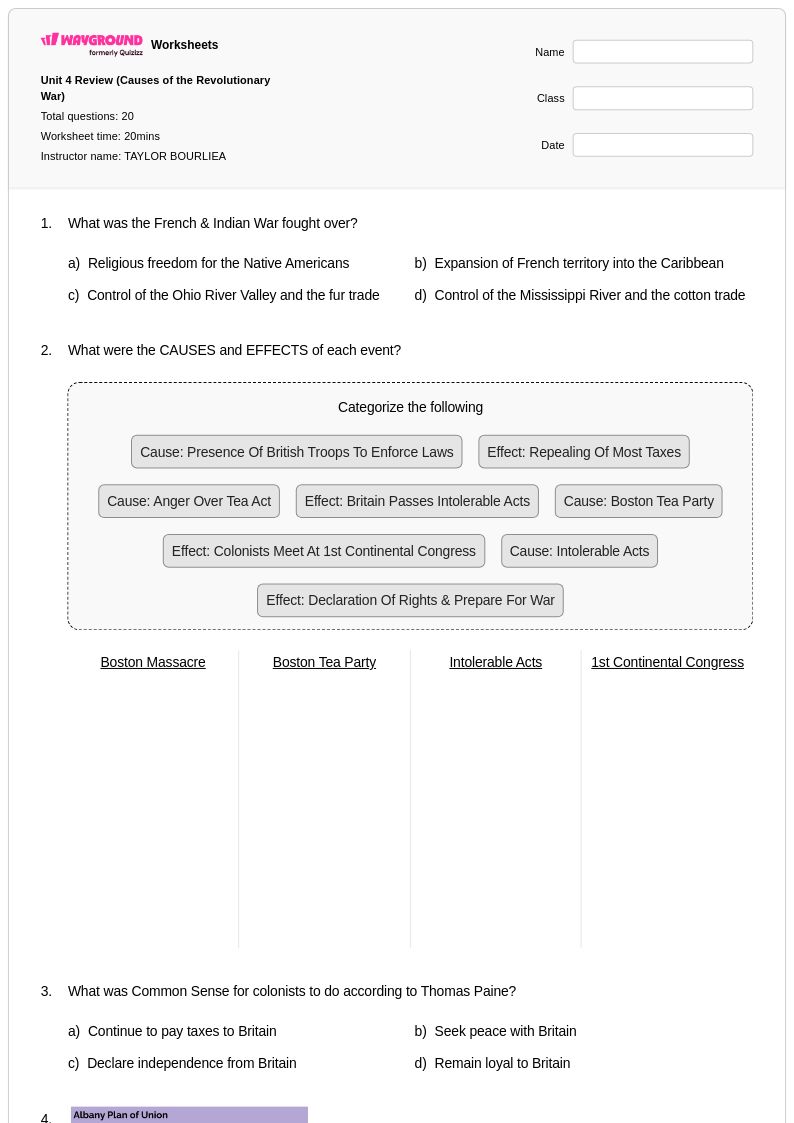
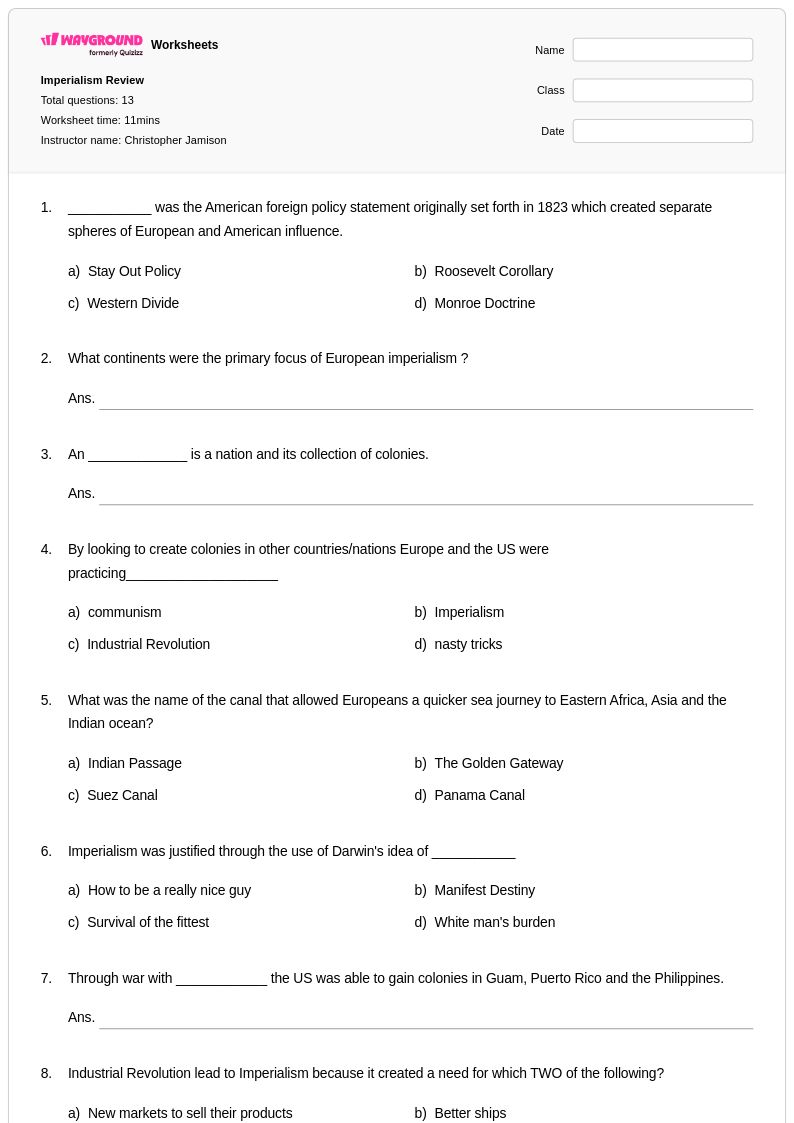
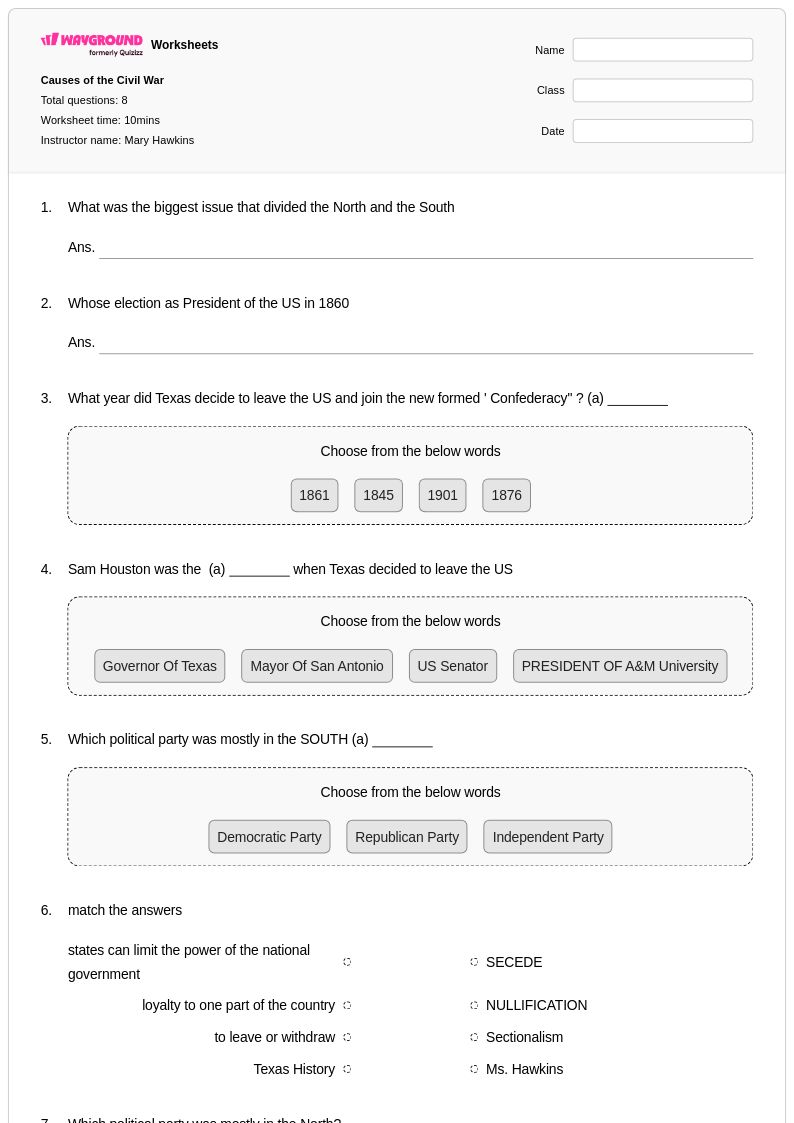
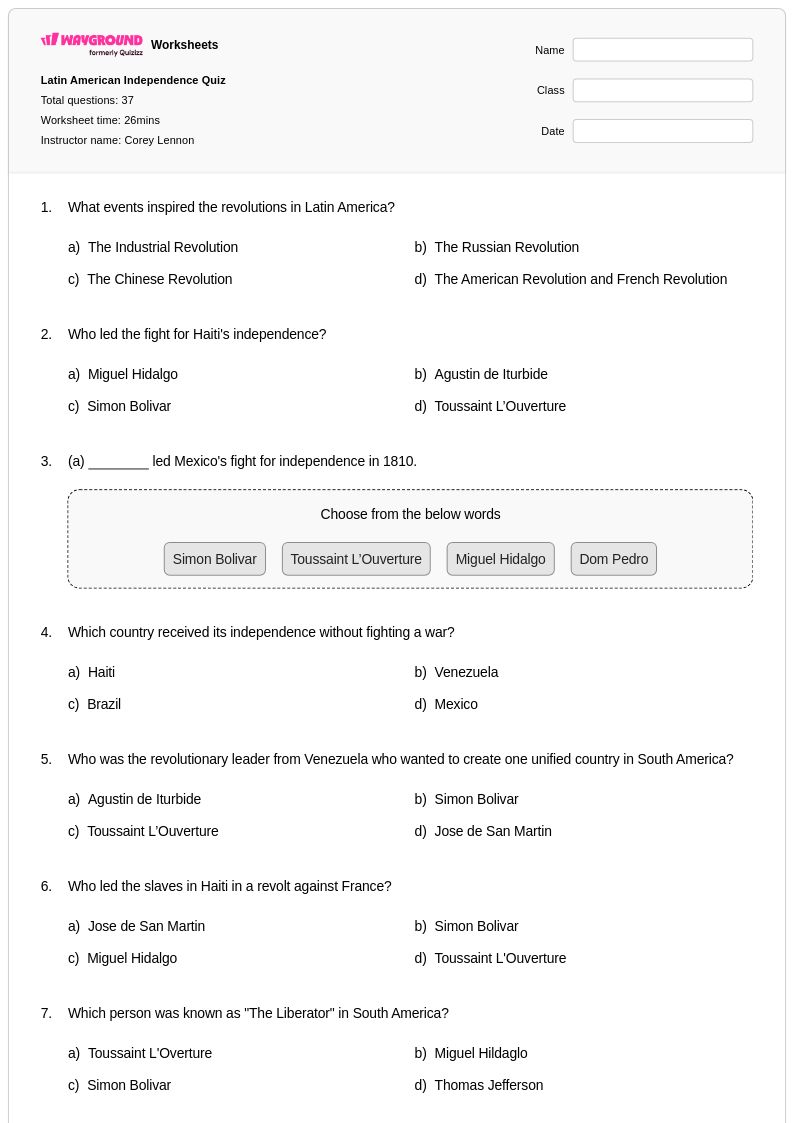
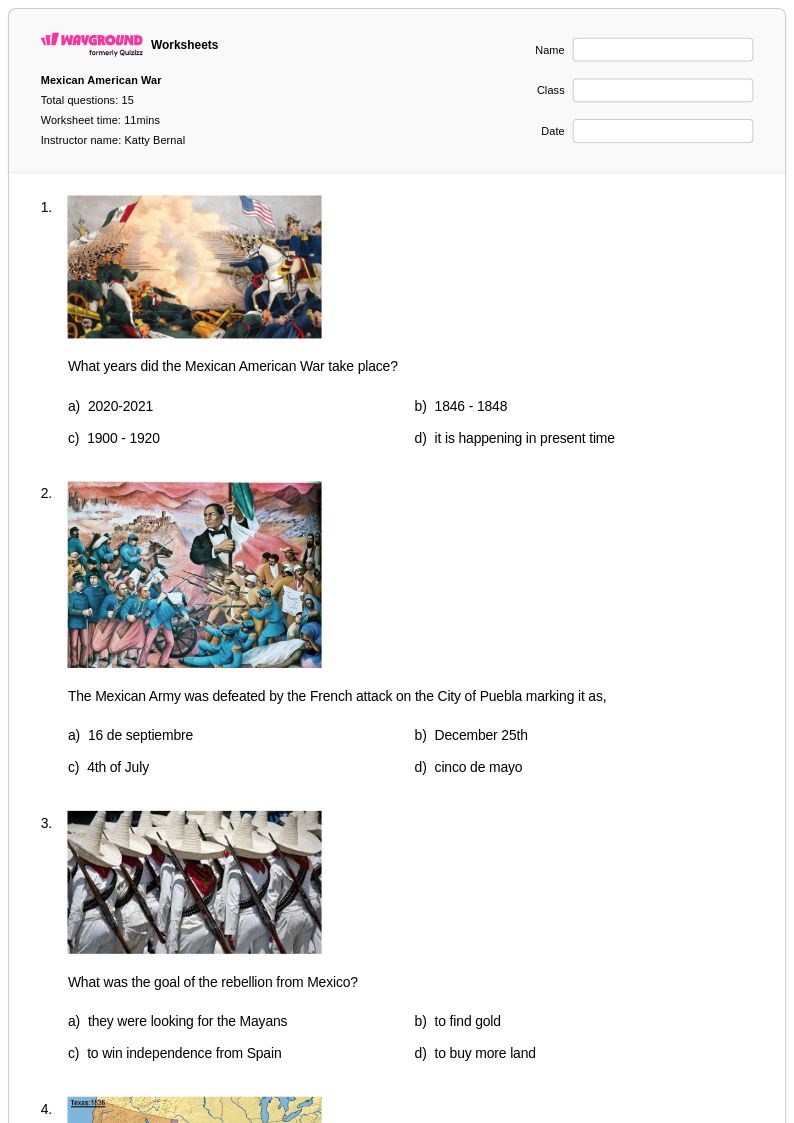
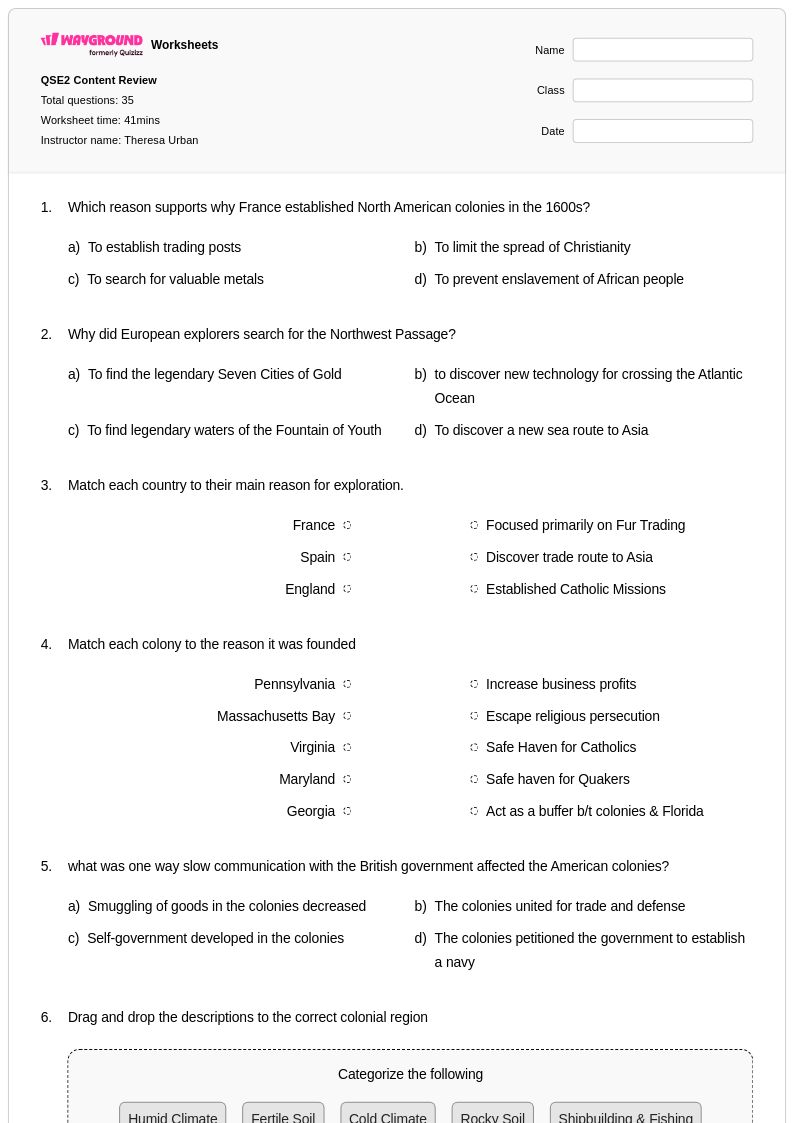
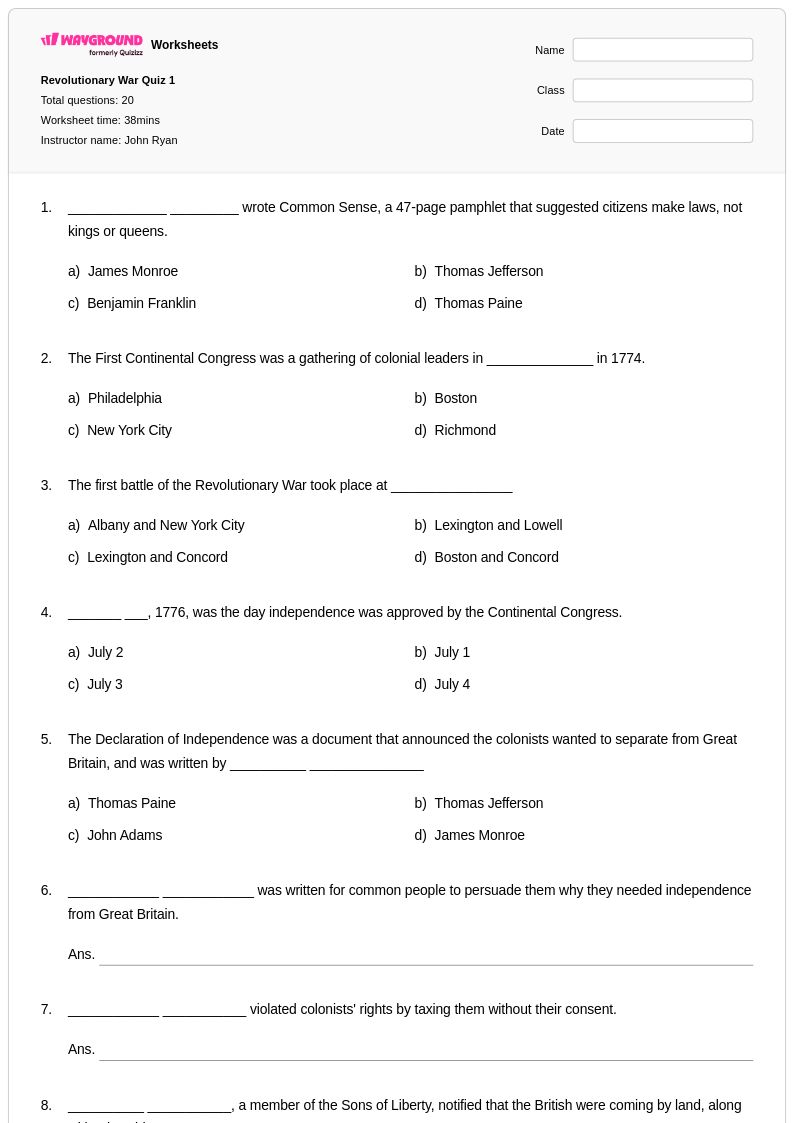
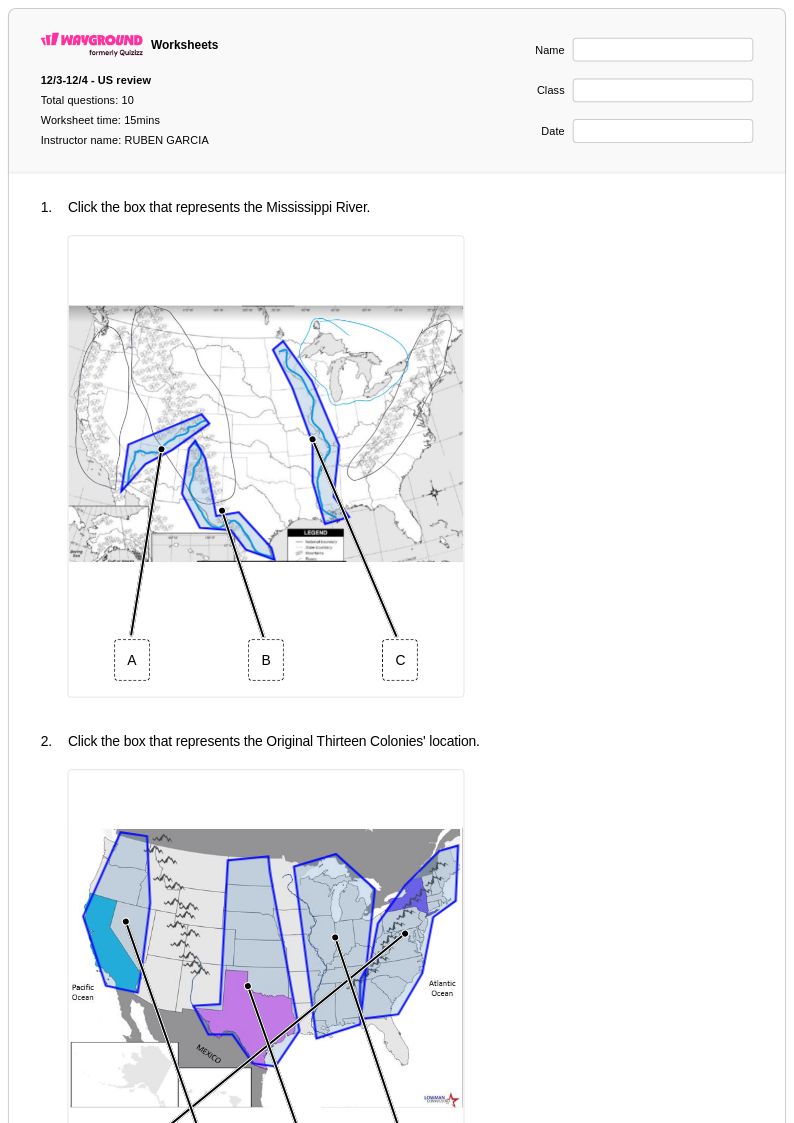
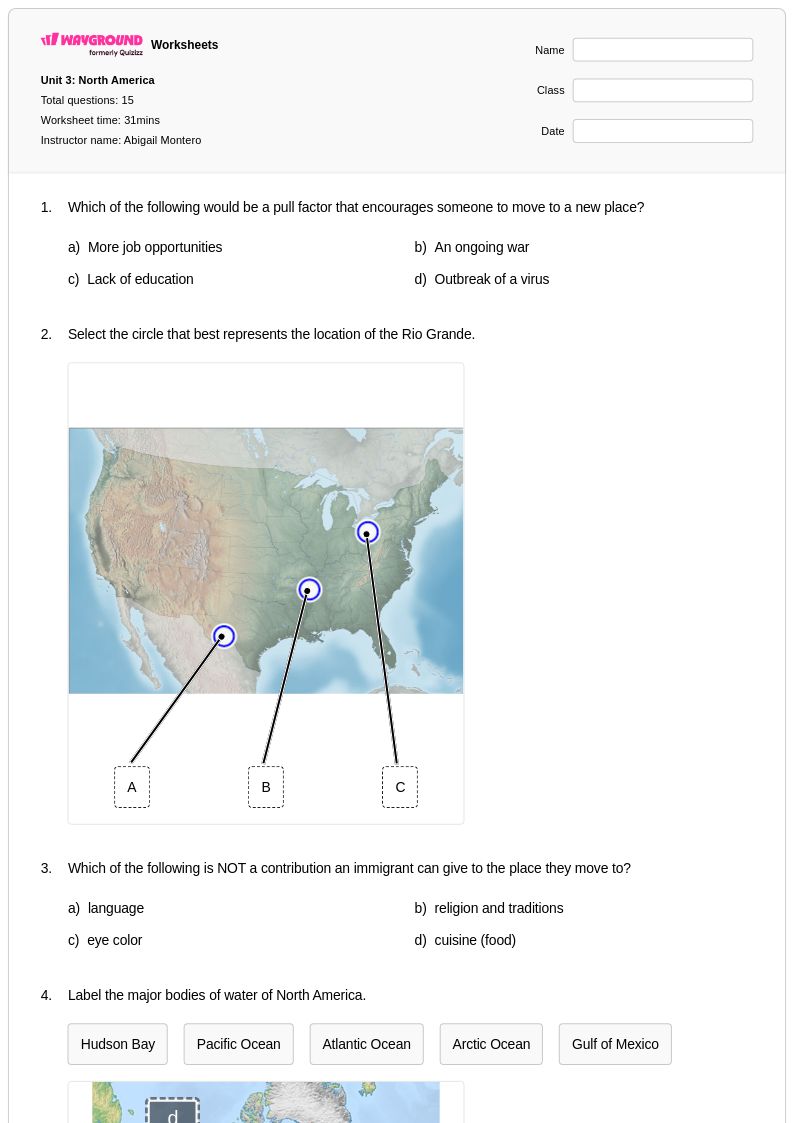
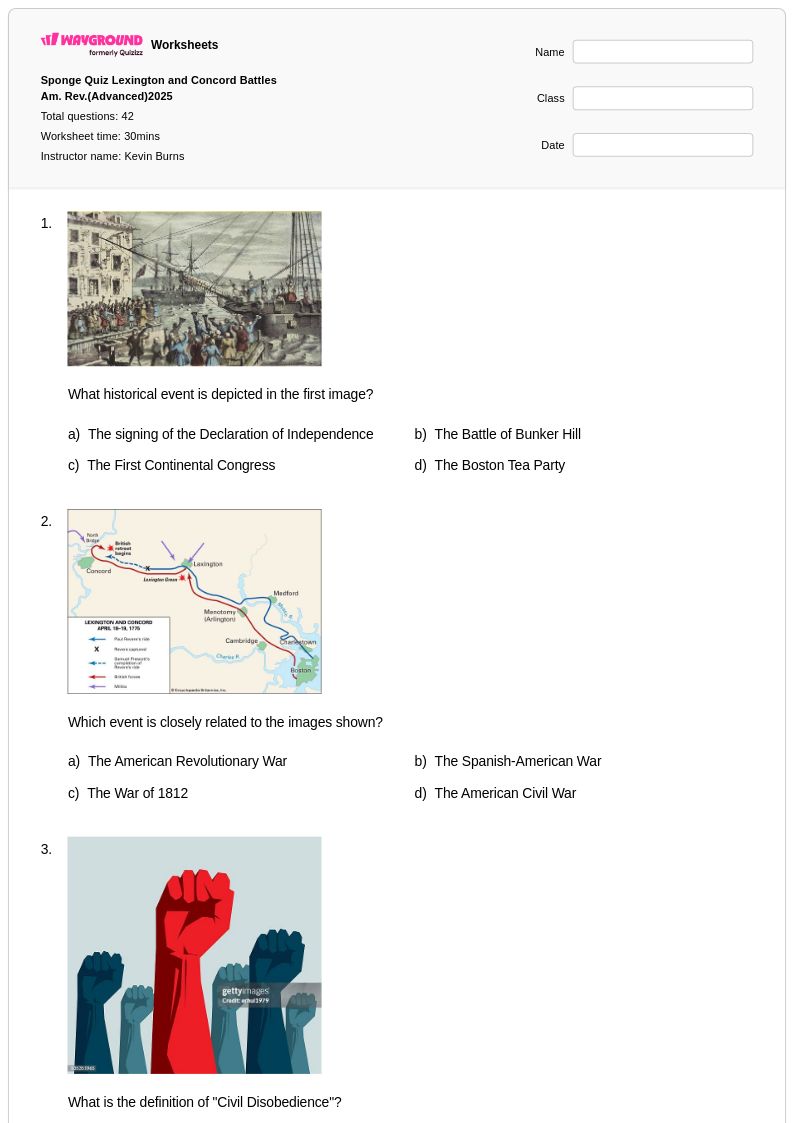
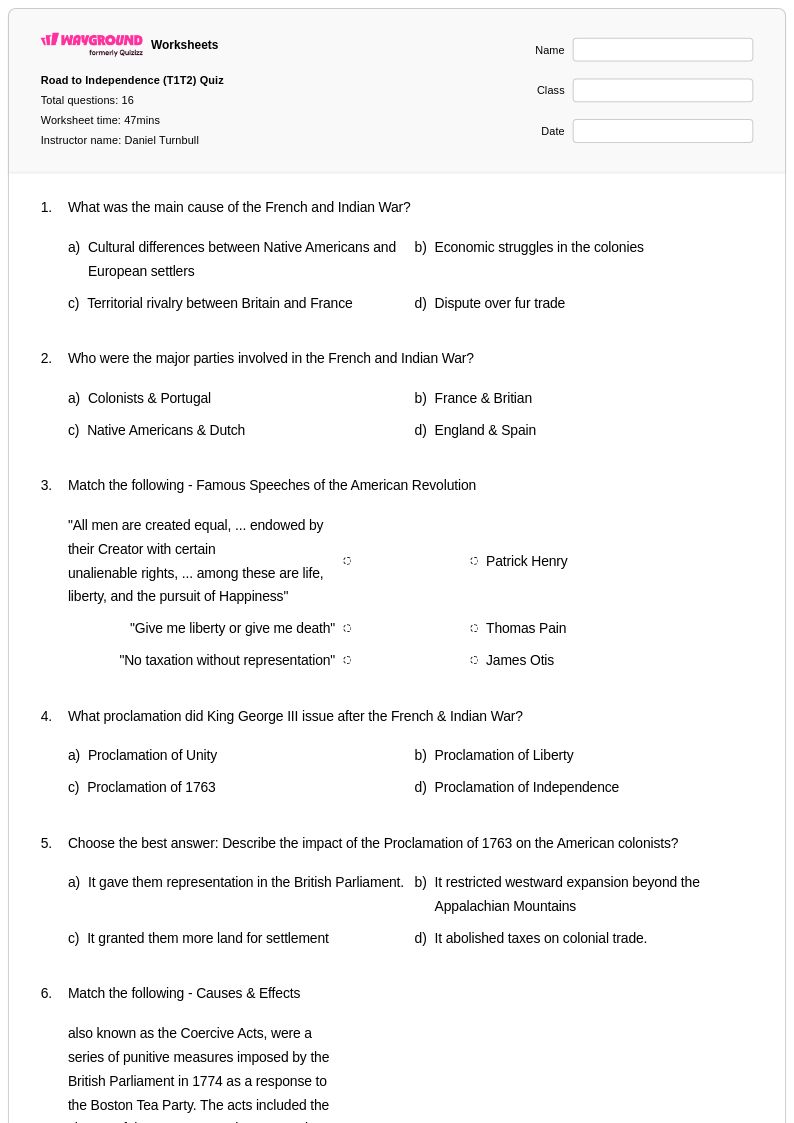
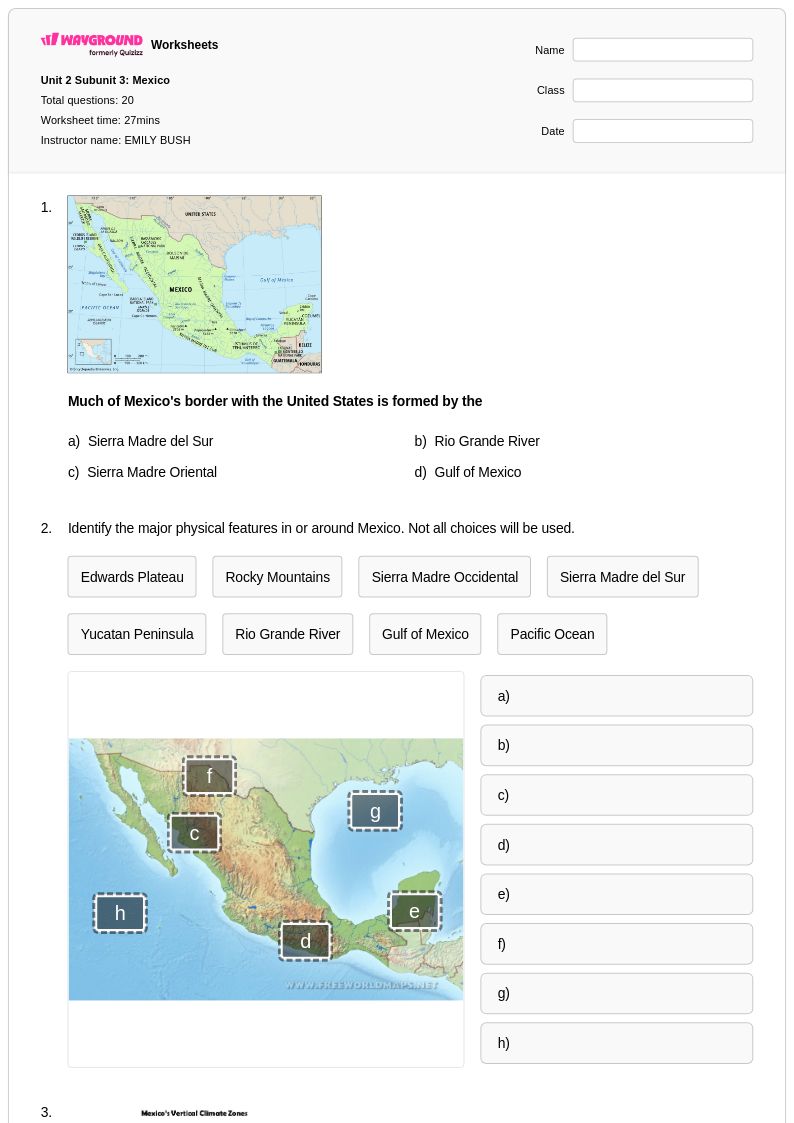
The causes of the Spanish-American War provide Class 6 students with an essential foundation for understanding how international conflicts develop and how the United States emerged as a global power at the turn of the 20th century. Wayground's comprehensive worksheet collection guides students through the complex factors that led to this pivotal 1898 conflict, including the explosion of the USS Maine, yellow journalism's role in shaping public opinion, and America's growing imperial ambitions. These carefully crafted practice problems help students analyze primary source documents, evaluate multiple causation factors, and develop critical thinking skills essential for historical inquiry. Each worksheet comes with a detailed answer key to support both independent study and classroom instruction, and teachers can access these resources as free printables in convenient PDF format for seamless distribution and homework assignments.
Wayground, formerly Quizizz, empowers educators with millions of teacher-created resources specifically designed to make the causes of the Spanish-American War accessible and engaging for middle school learners. The platform's advanced search and filtering capabilities allow teachers to quickly locate worksheets that align with state social studies standards and match their students' specific learning needs. Whether planning introductory lessons on 19th-century American expansionism or designing remediation activities for students struggling with cause-and-effect relationships, teachers can customize these materials to support differentiated instruction across diverse classroom environments. The flexible format options, including both digital presentations and printable PDF versions, enable seamless integration into traditional classrooms, hybrid learning models, and remote instruction while providing consistent opportunities for skill practice and enrichment activities that deepen students' understanding of this transformative period in American history.
FAQs
How do I teach the causes of the Spanish-American War to my students?
Teaching the causes of the Spanish-American War is most effective when students examine multiple overlapping factors rather than a single trigger. Start with the context of Spanish colonial rule in Cuba and the Philippines, then layer in yellow journalism, the USS Maine explosion, the De Lôme Letter, and American imperial ambitions. Using primary source documents alongside cause-and-effect frameworks helps students understand how domestic pressures and foreign policy decisions intersected to push the U.S. toward war in 1898.
What exercises help students practice analyzing the causes of the Spanish-American War?
Effective practice exercises include chronological sequencing of key events, cause-and-effect graphic organizers, and document analysis tasks using sources like the De Lôme Letter or newspaper headlines from the yellow journalism era. Asking students to categorize causes as political, economic, or humanitarian encourages analytical thinking rather than simple memorization. Synthesis tasks that require students to draw connections across multiple sources are especially valuable for building historical reasoning skills.
What are common misconceptions students have about the causes of the Spanish-American War?
A common misconception is that the USS Maine explosion was the sole or confirmed cause of the war, when in fact its cause was never definitively established and yellow journalism amplified uncertainty into public outrage. Students also tend to overlook the role of American imperial ambitions and economic interests, focusing instead on humanitarian concerns as the primary motivation. Another frequent error is treating the war as an isolated event rather than connecting it to broader patterns of U.S. expansionism in the late 19th century.
How did yellow journalism contribute to the Spanish-American War?
Yellow journalism, practiced by newspapers like William Randolph Hearst's New York Journal and Joseph Pulitzer's New York World, used sensationalized and often exaggerated reporting to inflame American public opinion against Spain. Coverage of Spanish atrocities in Cuba and the dramatic framing of the USS Maine explosion as a deliberate act of aggression created widespread public demand for military intervention. This media influence is a critical case study in how the press can shape foreign policy decisions, making it a central topic in any unit on the war's causes.
How can I use Wayground's causes of the Spanish-American War worksheets in my classroom?
Wayground's worksheets on the causes of the Spanish-American War are available as printable PDFs for traditional classroom distribution and in digital formats for technology-integrated or remote learning environments, and can also be hosted as a quiz directly on Wayground. Teachers can use them for direct instruction, independent practice, or formative assessment, and each worksheet includes a complete answer key to support grading and independent student review. The range of difficulty levels makes them suitable for differentiated instruction across mixed-ability classes.
How do I differentiate instruction when teaching the causes of the Spanish-American War?
Differentiation can be achieved by selecting materials that range from basic factual recall tasks to advanced analytical exercises requiring students to evaluate multiple perspectives and synthesize primary sources. For students who need additional support, Wayground's digital format includes accommodation options such as read aloud, reduced answer choices, and extended time, which can be configured individually without affecting the experience of other students. For advanced learners, pushing beyond event recall toward evaluating competing historical interpretations of U.S. motivations deepens critical thinking.