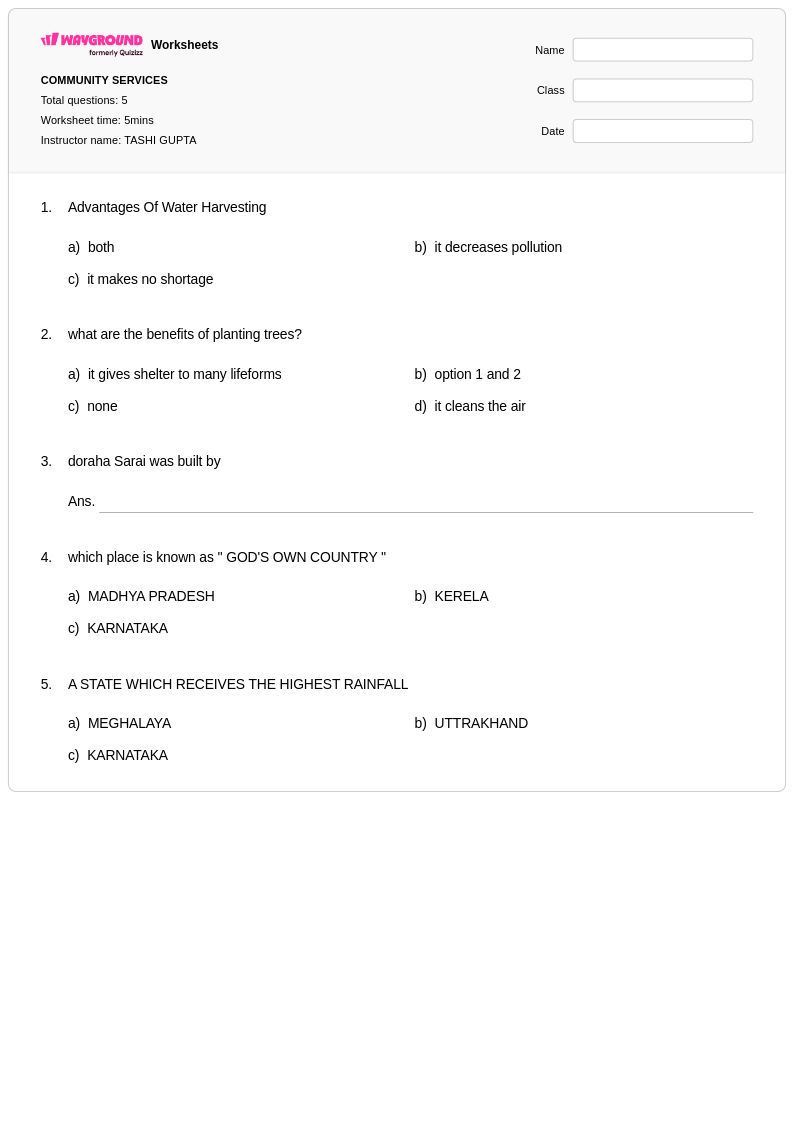
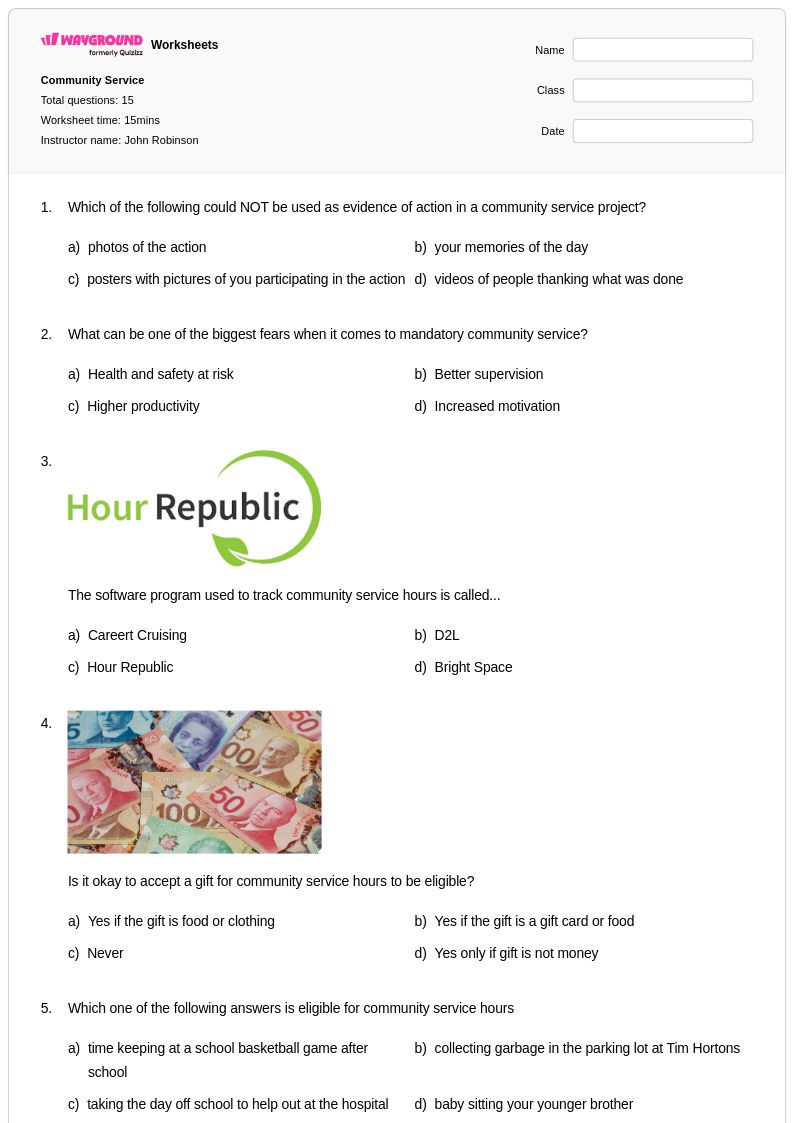
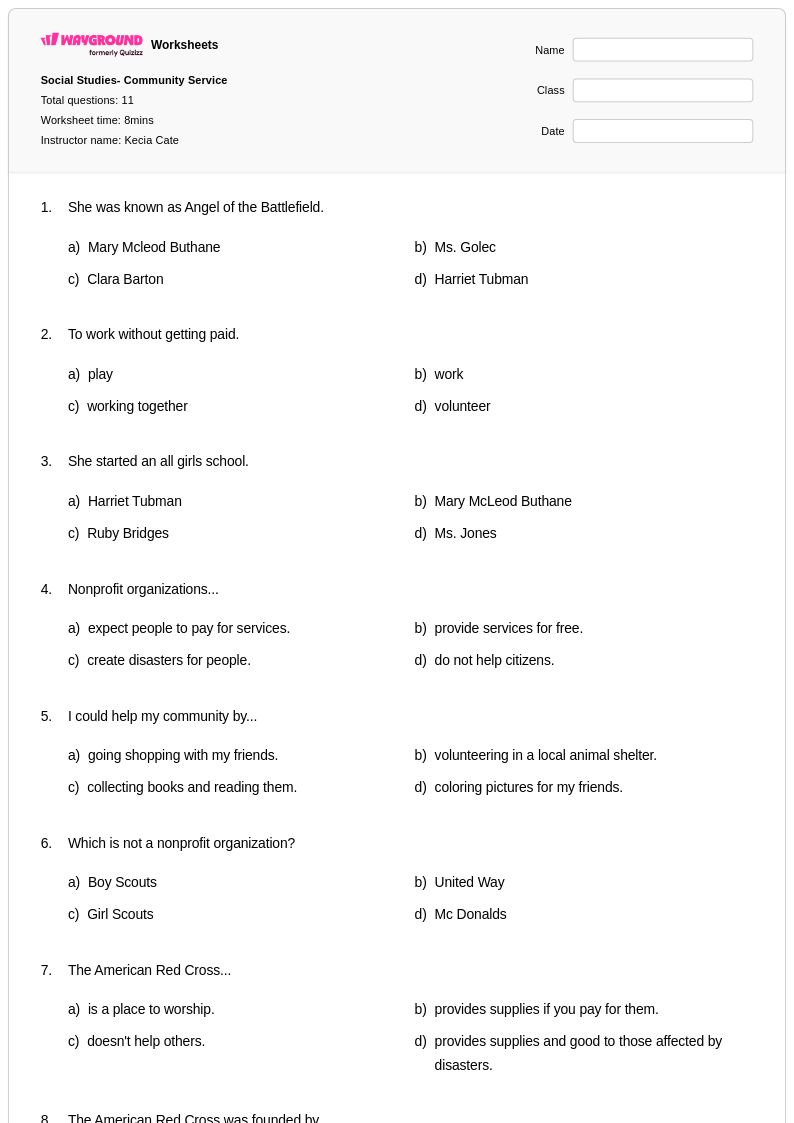
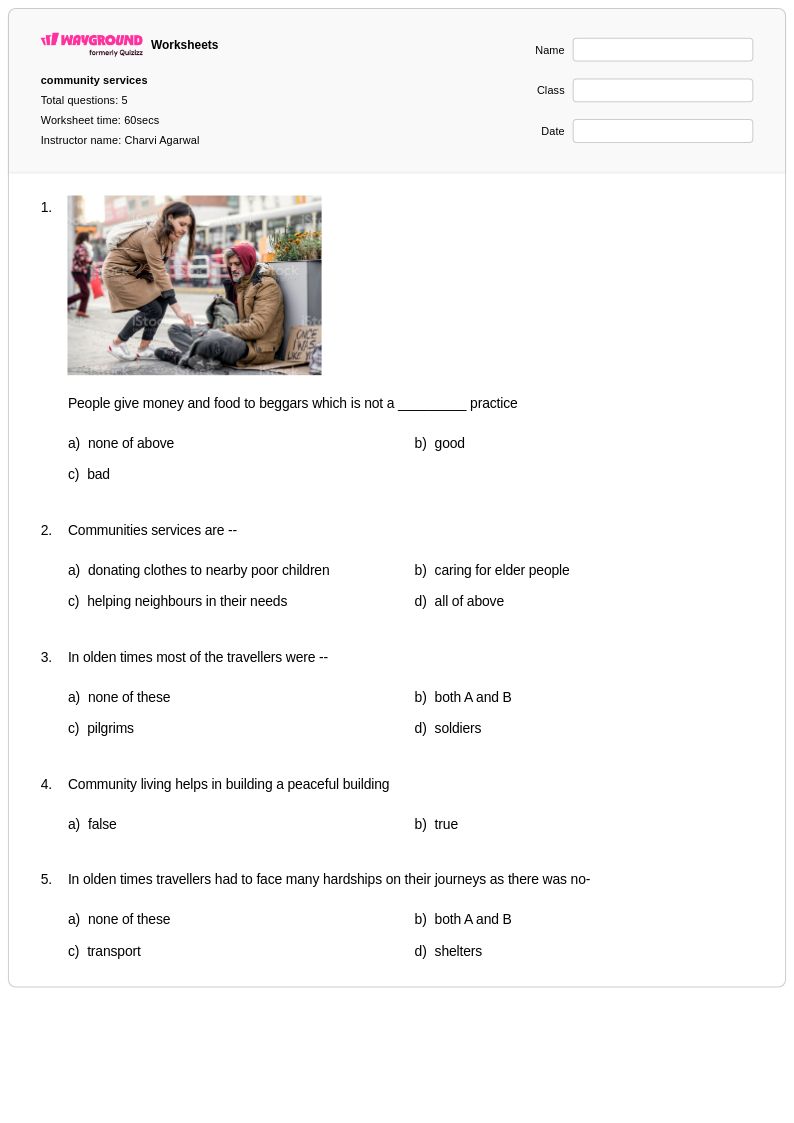
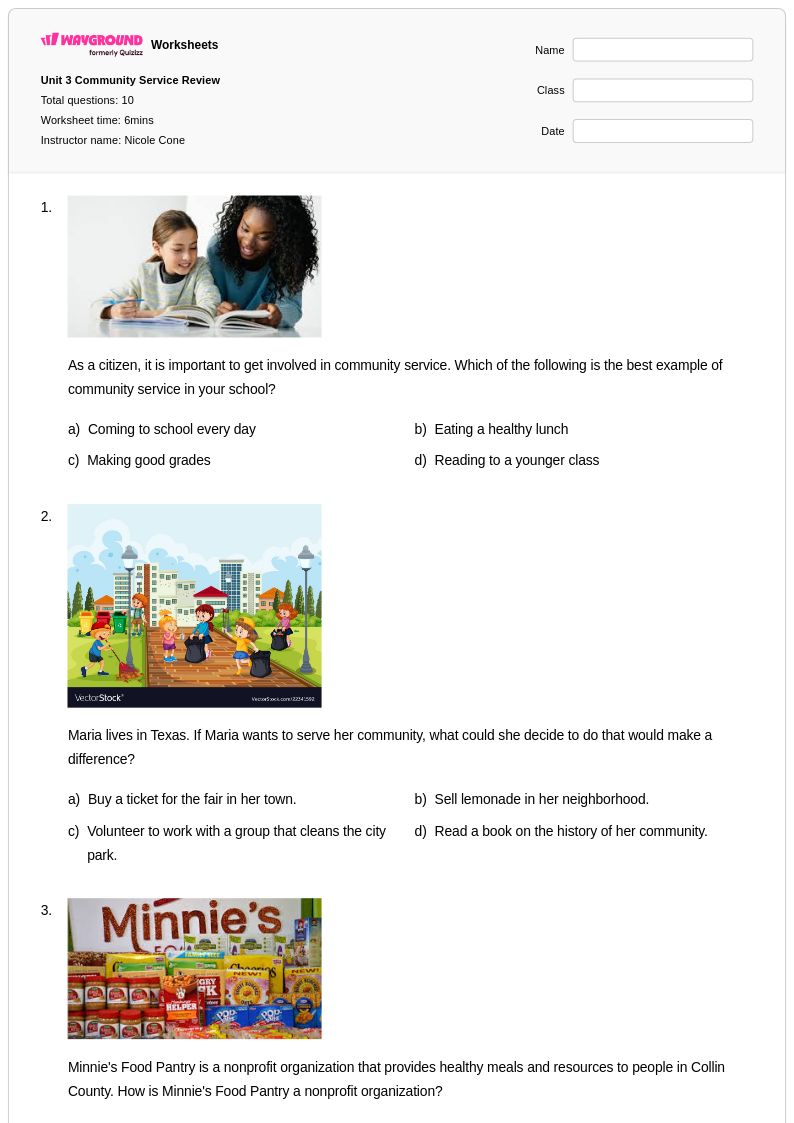
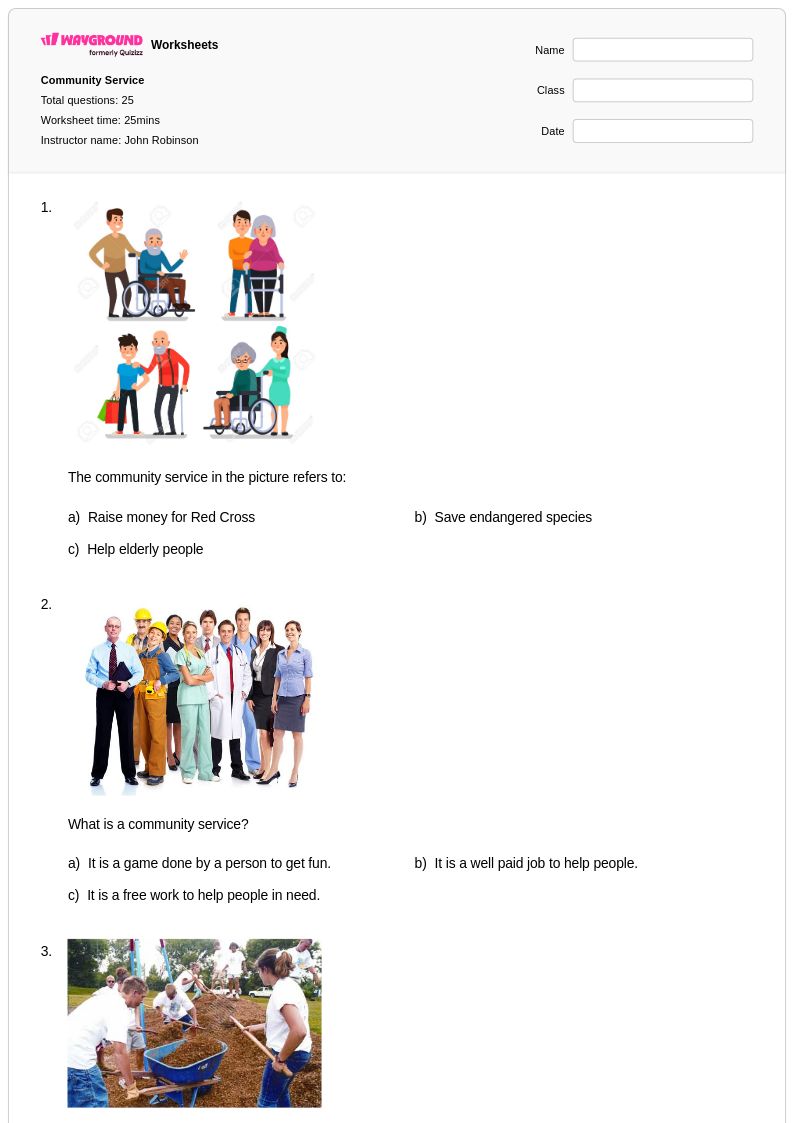
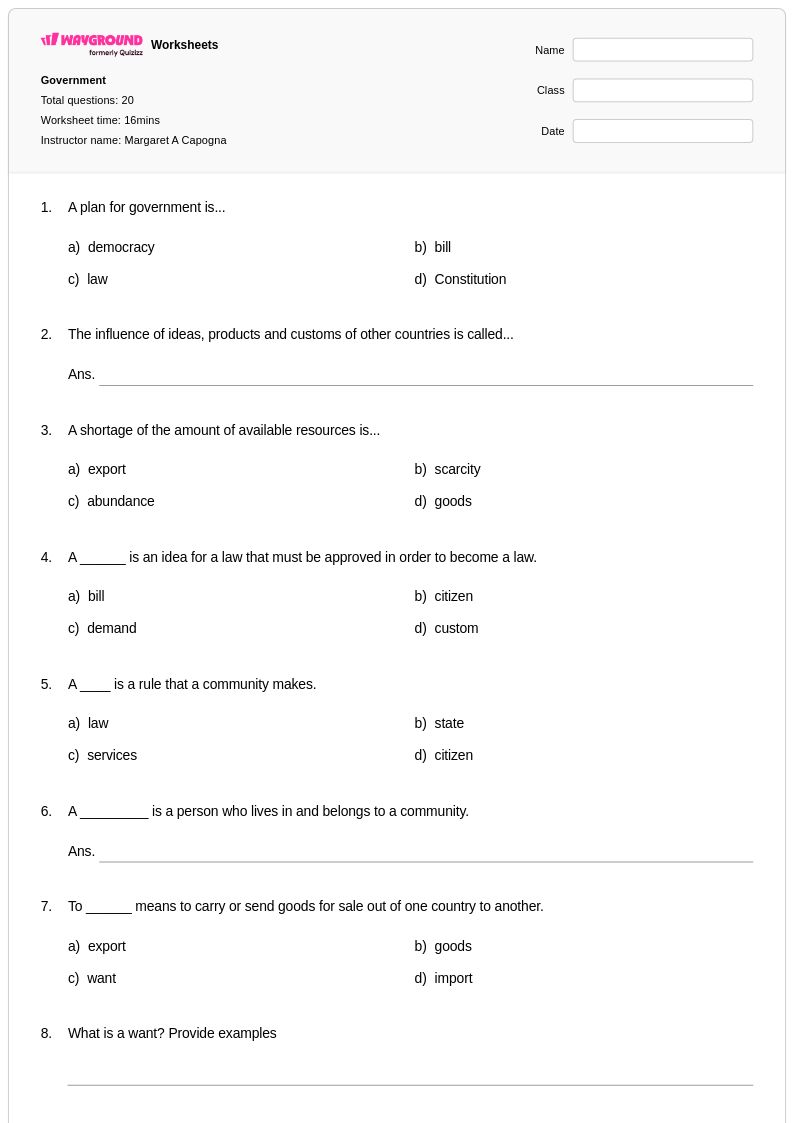
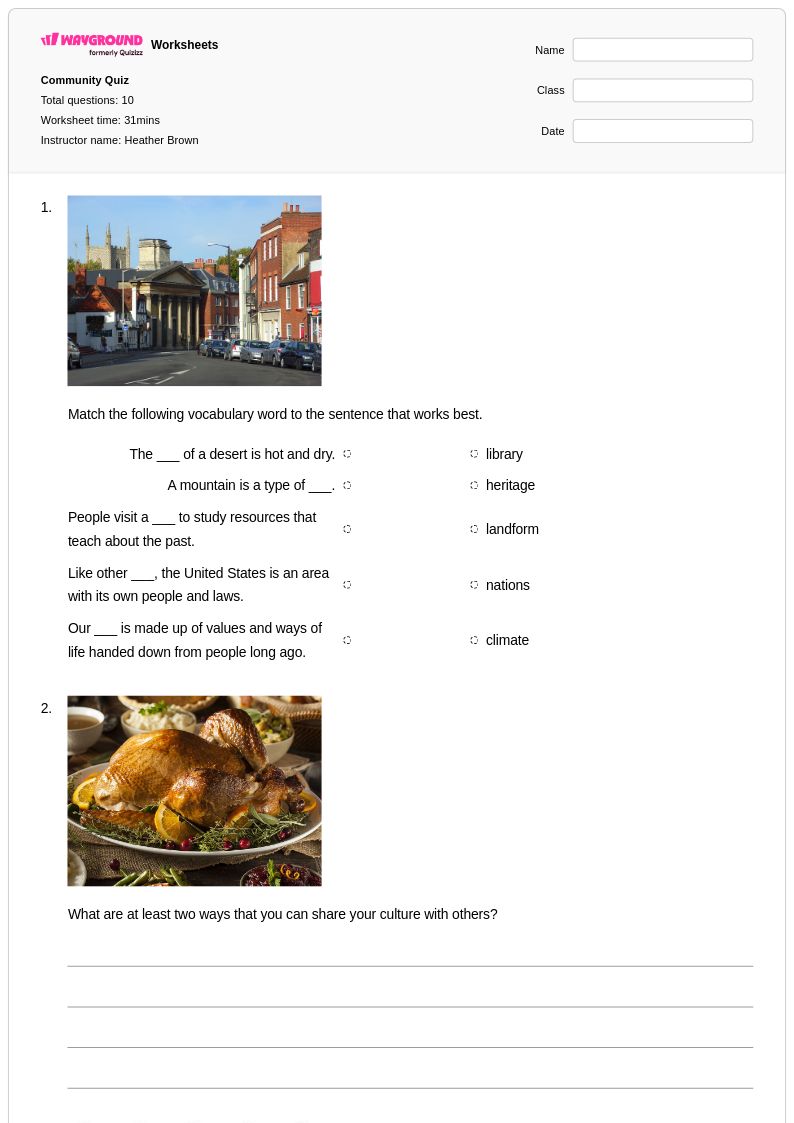
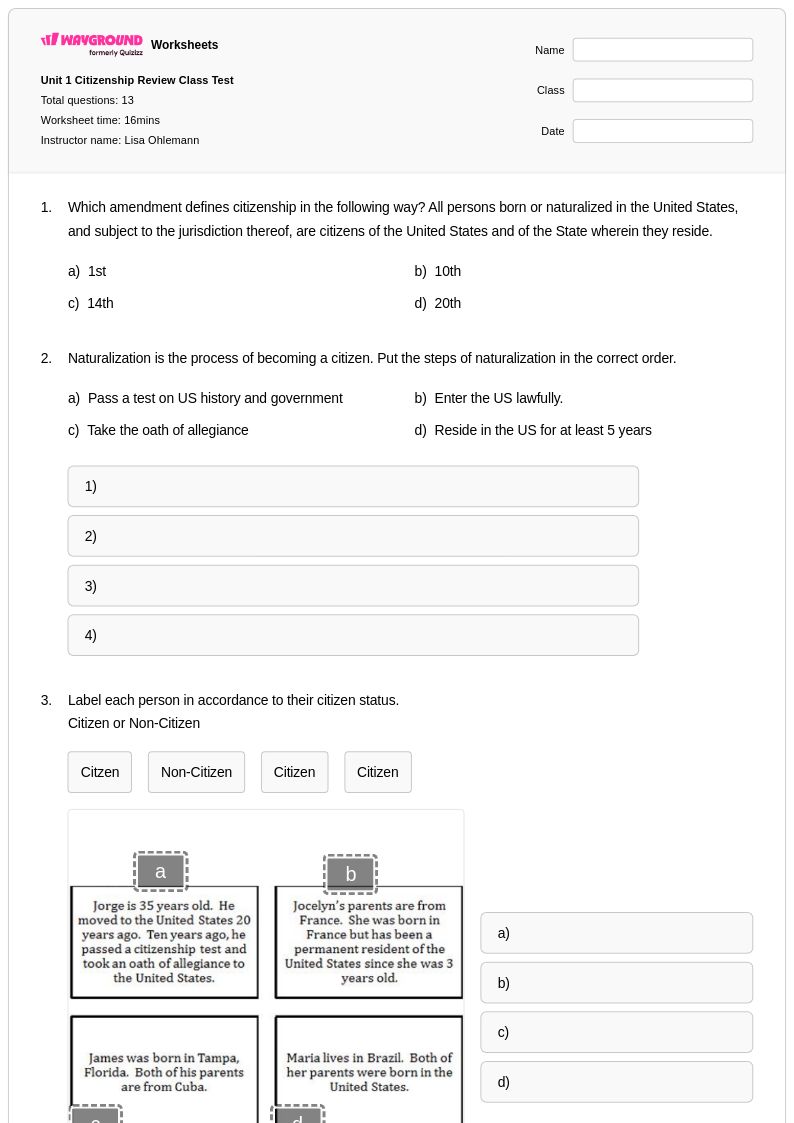
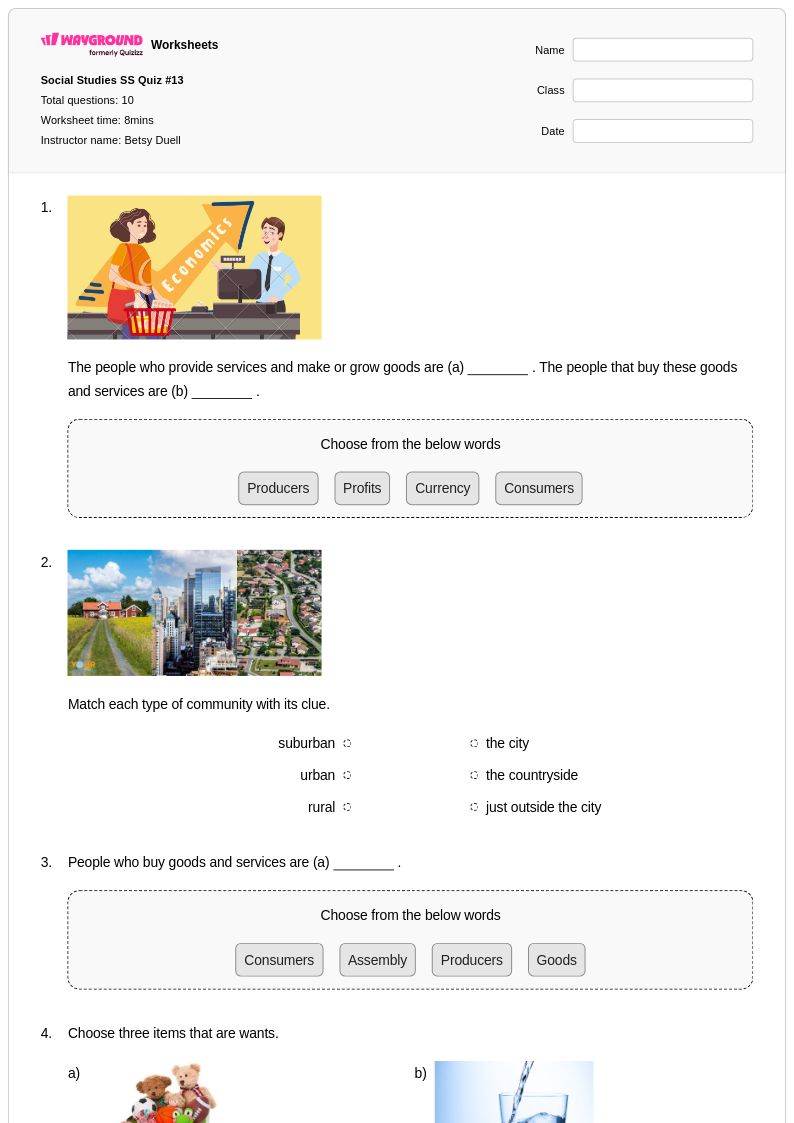
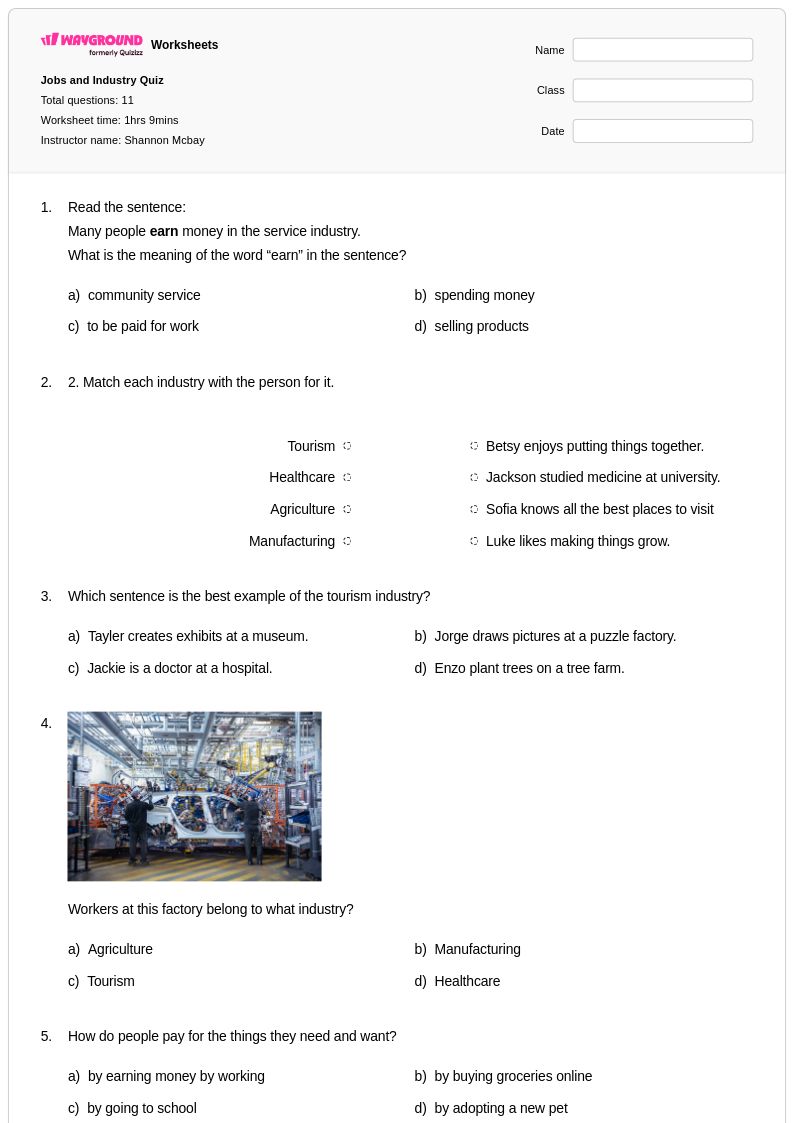
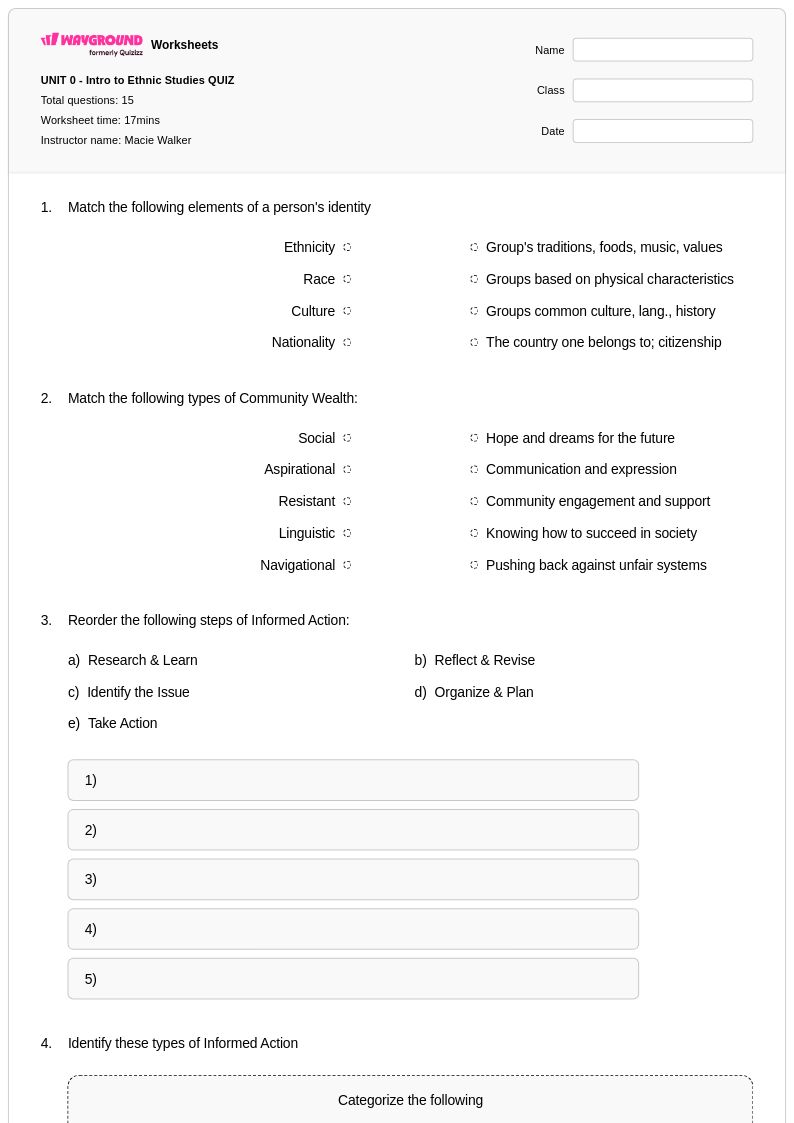
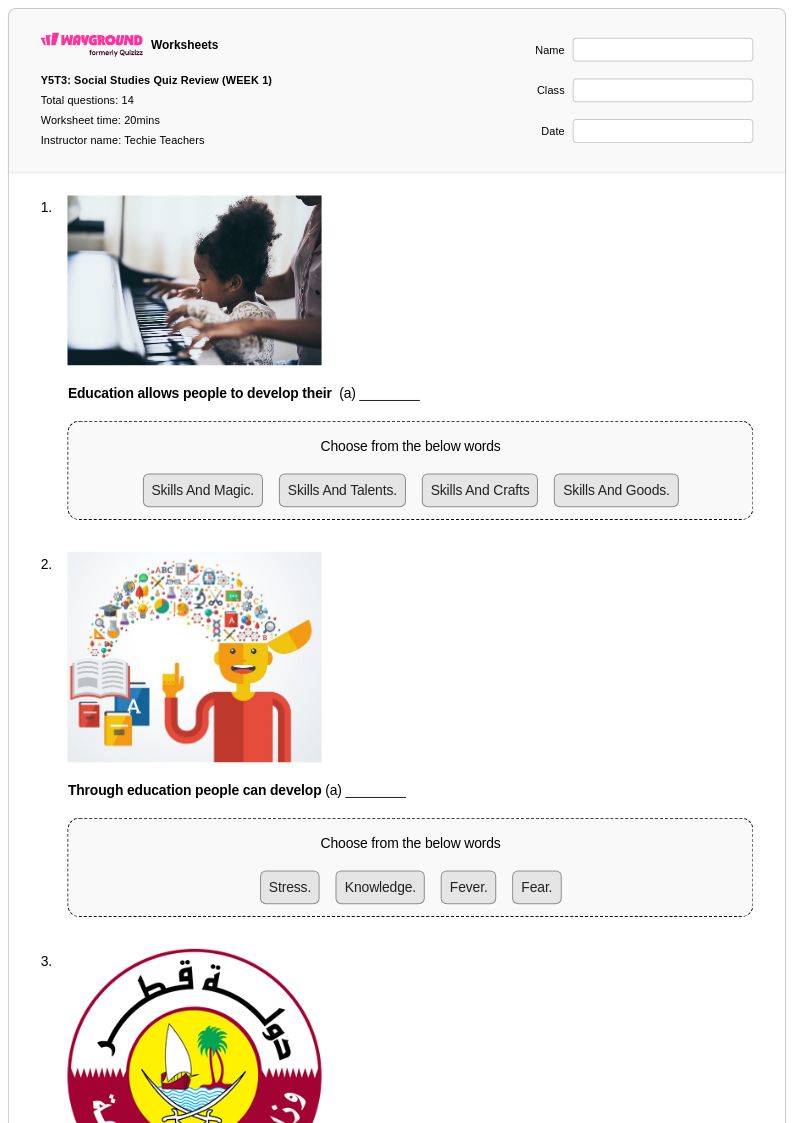
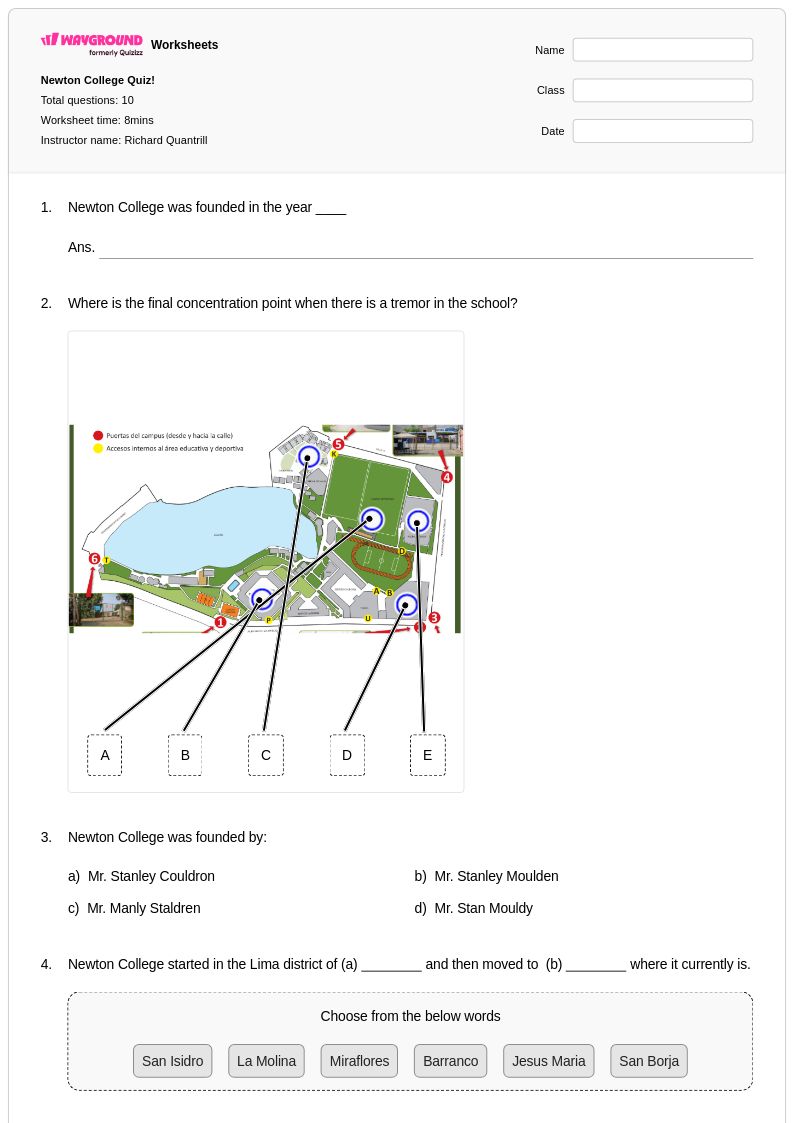
Explore Wayground's free community service worksheets and printables that help students develop civic responsibility, understand volunteer opportunities, and practice essential social skills through engaging activities with comprehensive answer keys.
Community service worksheets available through Wayground (formerly Quizizz) provide students with comprehensive resources to explore civic responsibility and meaningful ways to contribute to their communities. These educational materials strengthen critical social skills including empathy, collaboration, problem-solving, and civic awareness while helping students understand the importance of volunteerism and community engagement. The worksheet collection covers diverse community service opportunities, from environmental conservation projects to helping elderly neighbors, with each printable resource featuring clear instructions, reflection questions, and comprehensive answer keys. Students can practice identifying community needs, planning service projects, and understanding the broader impact of volunteer work through thoughtfully designed practice problems that connect classroom learning to real-world application.
Wayground (formerly Quizizz) supports educators with an extensive collection of teacher-created community service resources drawn from millions of high-quality materials developed by experienced practitioners. The platform's robust search and filtering capabilities enable teachers to quickly locate worksheets that align with specific learning standards and match their students' developmental needs. These differentiation tools allow for seamless customization of content complexity and focus areas, ensuring that all learners can engage meaningfully with community service concepts regardless of their starting point. Available in both printable pdf formats and interactive digital versions, these resources facilitate flexible lesson planning while supporting targeted remediation for students who need additional practice understanding civic concepts and enrichment opportunities for those ready to explore advanced community leadership skills.
FAQs
How do I teach community service concepts to students?
Teaching community service effectively starts with connecting abstract civic values to concrete, relatable actions students can take in their own communities. Begin by introducing key concepts like empathy, volunteerism, and civic responsibility, then have students identify real local needs before progressing to planning hypothetical or actual service projects. Structured reflection activities help students internalize why community contribution matters, not just what it looks like in practice.
What activities help students practice community service skills in the classroom?
Effective classroom activities for community service include needs-assessment exercises where students analyze a community scenario and identify gaps, project-planning worksheets that walk through goal-setting and resource allocation, and reflection prompts that ask students to evaluate the impact of volunteer actions. These structured exercises build the empathy, collaboration, and problem-solving skills that underpin meaningful civic participation.
What misconceptions do students commonly have about community service?
A common misconception is that community service is only about large-scale, organized events rather than everyday acts of contribution to neighbors and local environments. Students also frequently underestimate the planning and empathy required to serve effectively, assuming good intentions alone are sufficient. Addressing these gaps early helps students develop a more accurate and sustainable understanding of civic responsibility.
How can I differentiate community service worksheets for students at different skill levels?
For students who need additional support, simplify reflection prompts to focus on one community need at a time and provide sentence starters to scaffold written responses. More advanced students can tackle open-ended project design challenges that require them to consider budget, timeline, and community impact simultaneously. On Wayground, teachers can also apply accommodations such as read aloud, reduced answer choices, and extended time to individual students without disrupting the experience for the rest of the class.
How do I use Wayground's community service worksheets in my classroom?
Wayground's community service worksheets are available as printable PDFs for traditional classroom use and in digital formats for technology-integrated or hybrid learning environments. Teachers can also host them as a quiz directly on Wayground, making it easy to track student responses and progress in one place. Each worksheet includes comprehensive answer keys, so teachers can use them for guided instruction, independent practice, or formative assessment without additional preparation.
How do community service worksheets help students develop social-emotional skills?
Community service worksheets build social-emotional skills by placing students in scenarios that require perspective-taking, collaborative decision-making, and thoughtful reflection on the needs of others. Activities that ask students to plan a service project or respond to a neighbor's challenge directly exercise empathy and problem-solving in a low-stakes, structured setting. Over time, this type of practice helps students internalize prosocial values rather than simply reciting them.