Free Printable Components of Blood Worksheets for Class 7
Explore Class 7 components of blood worksheets and printables from Wayground that help students master red blood cells, white blood cells, platelets, and plasma through engaging practice problems with complete answer keys.
Explore printable Components of Blood worksheets for Class 7
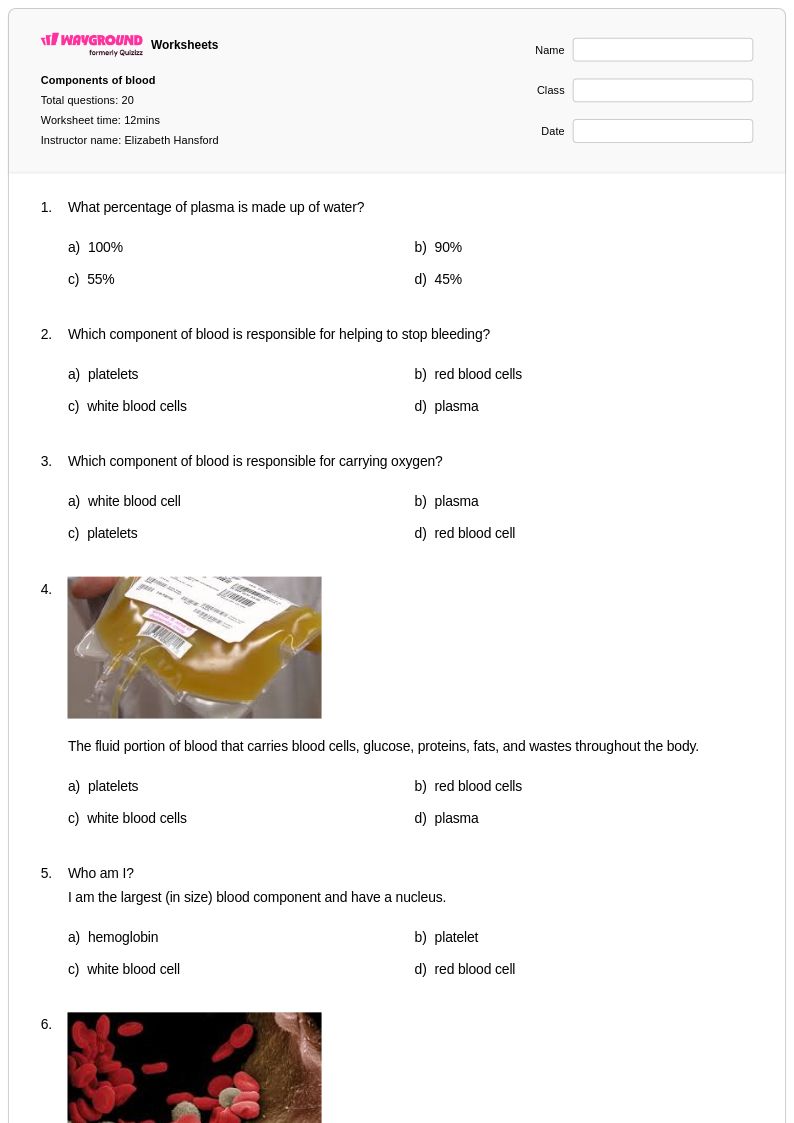
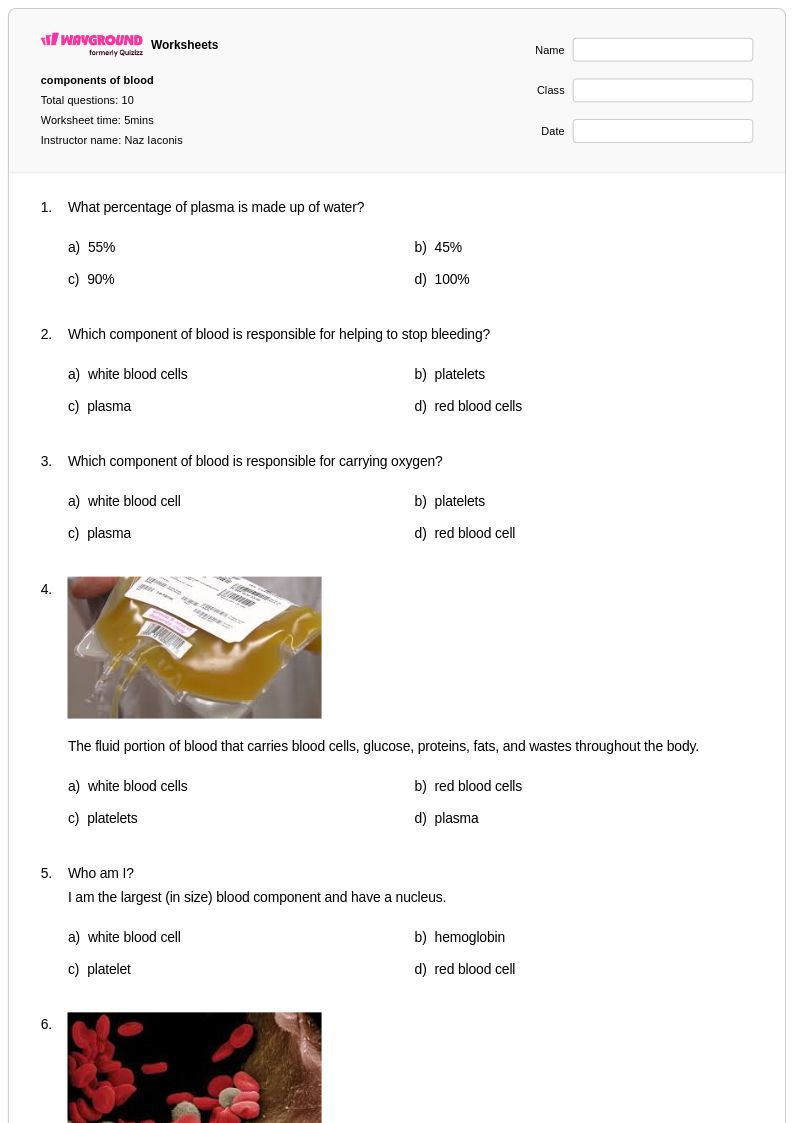
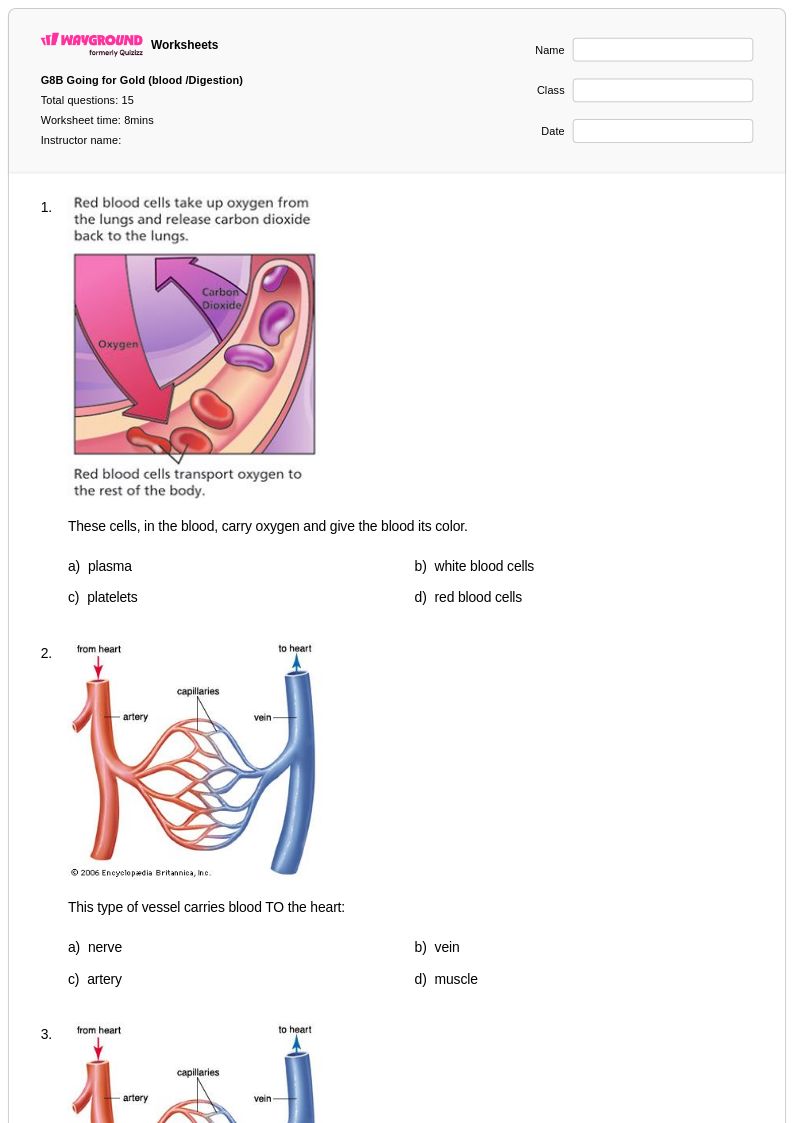
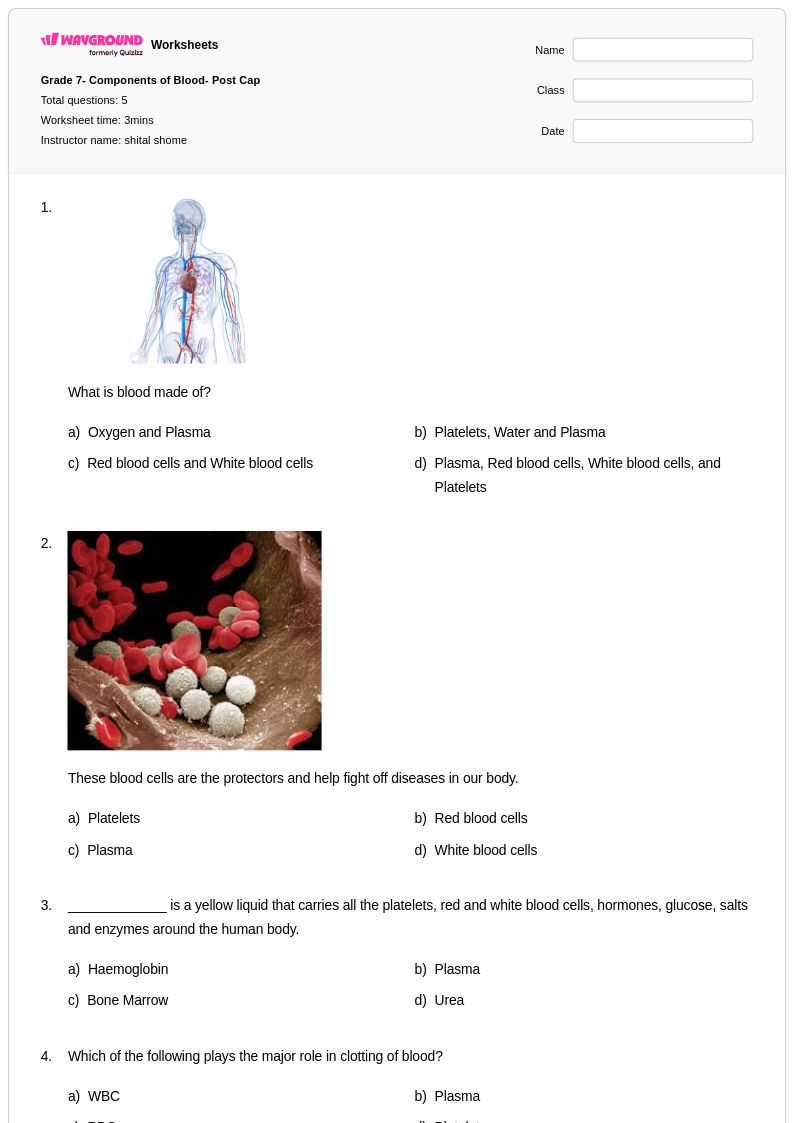
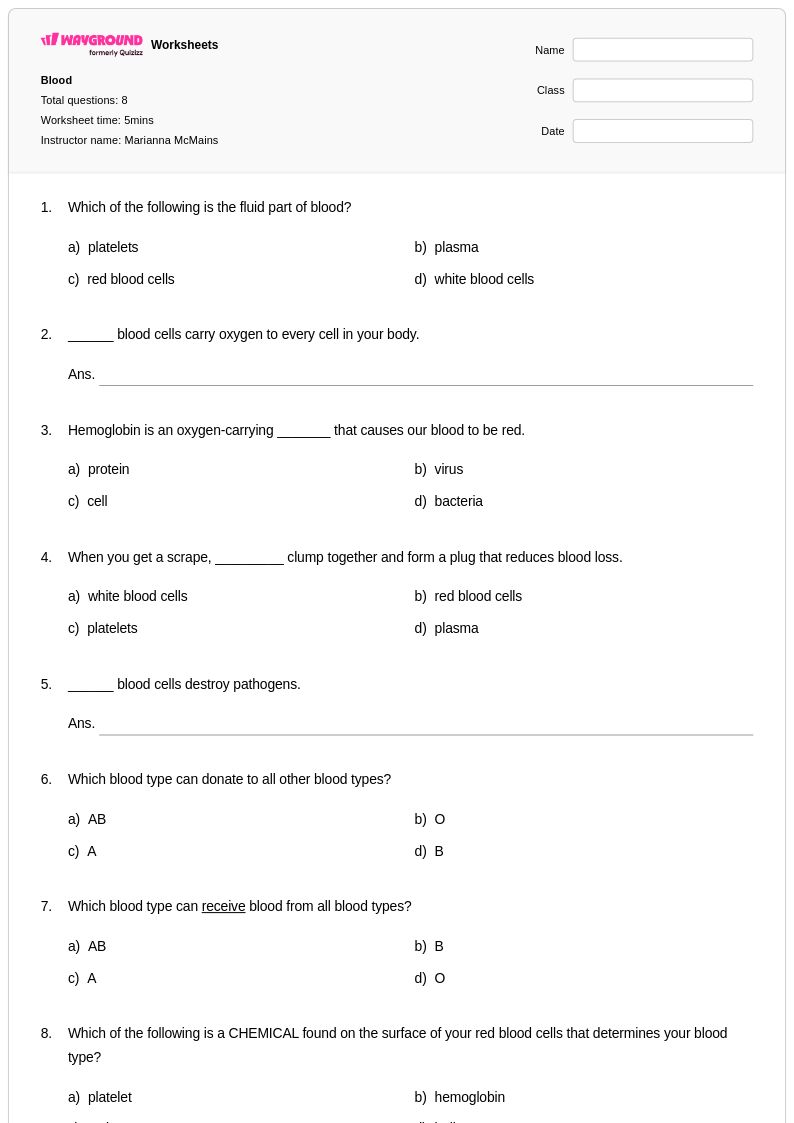
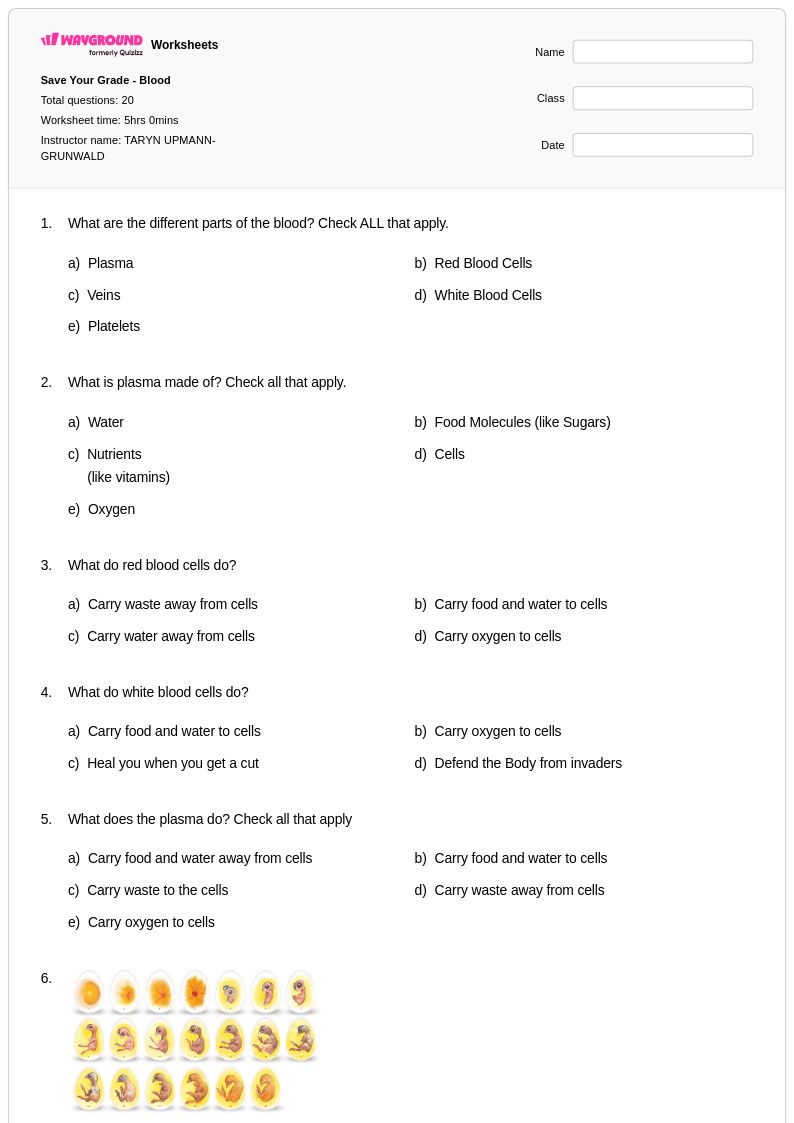
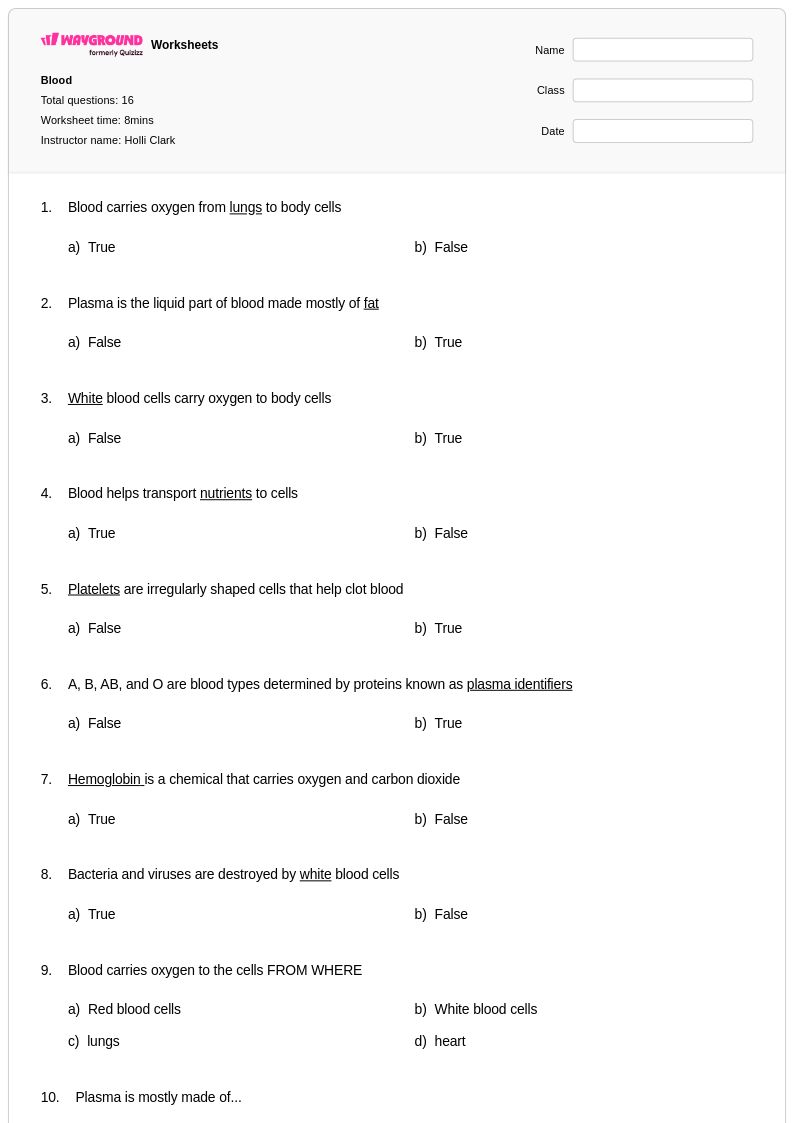
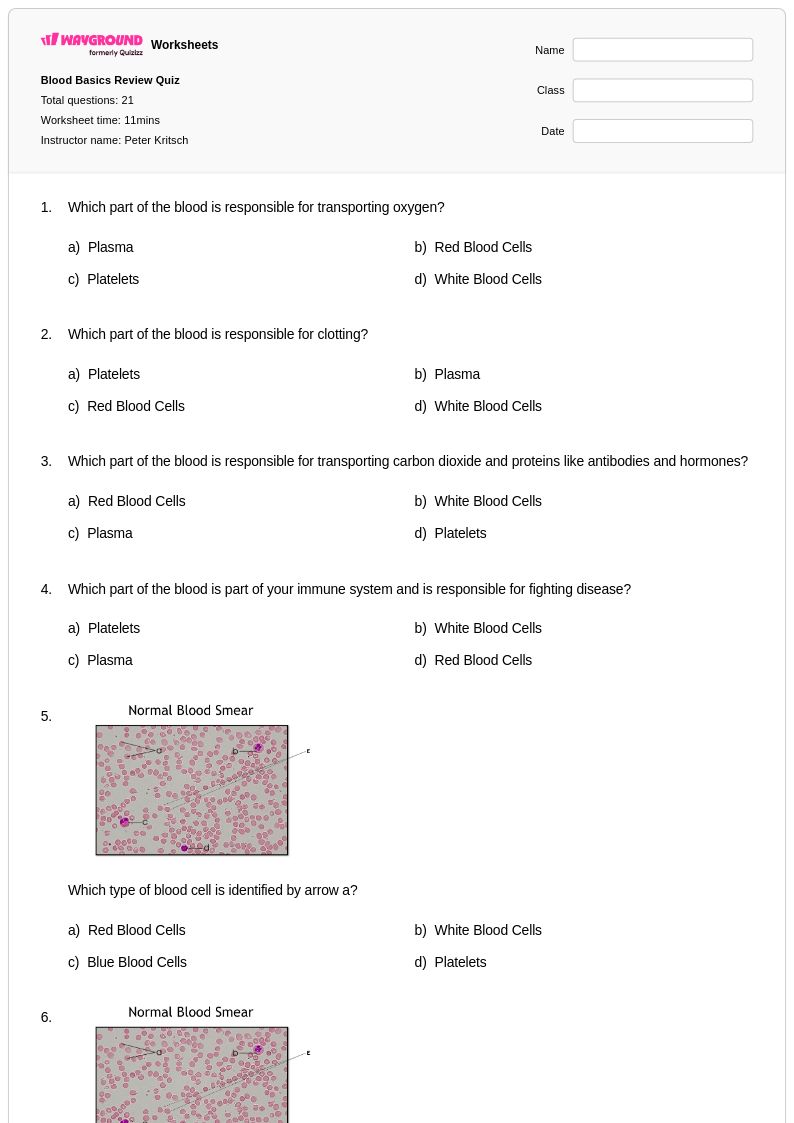
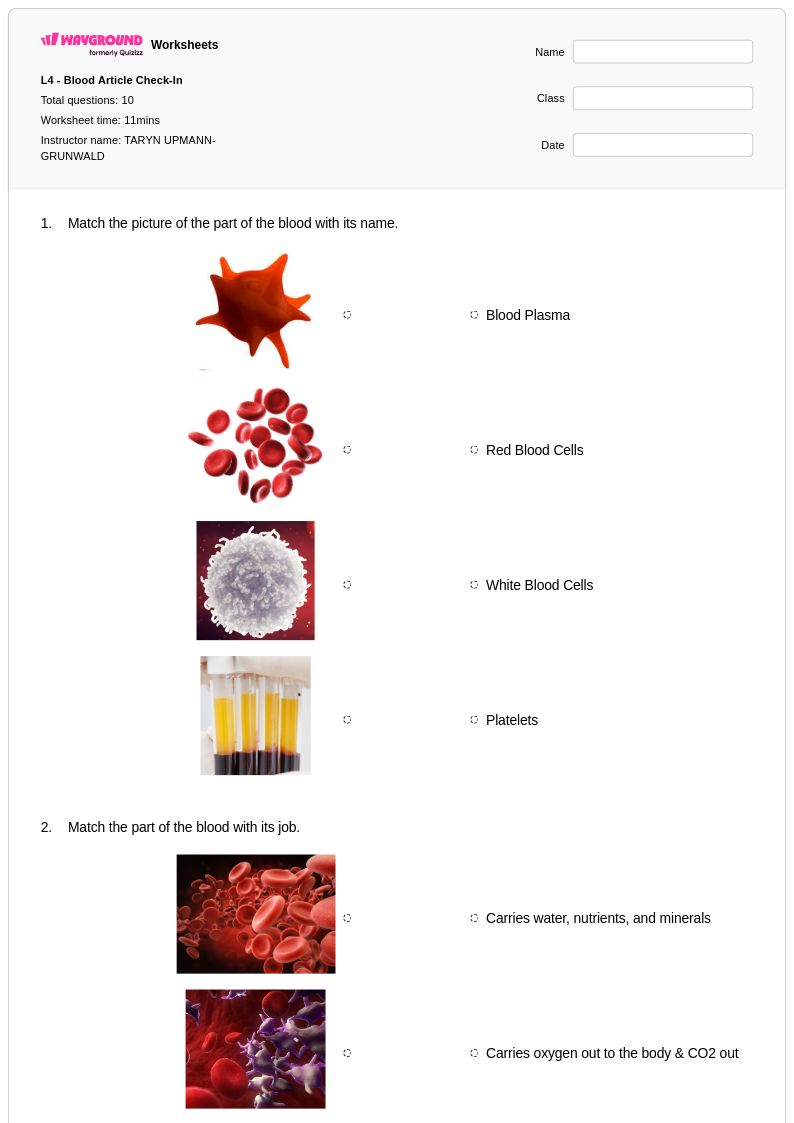
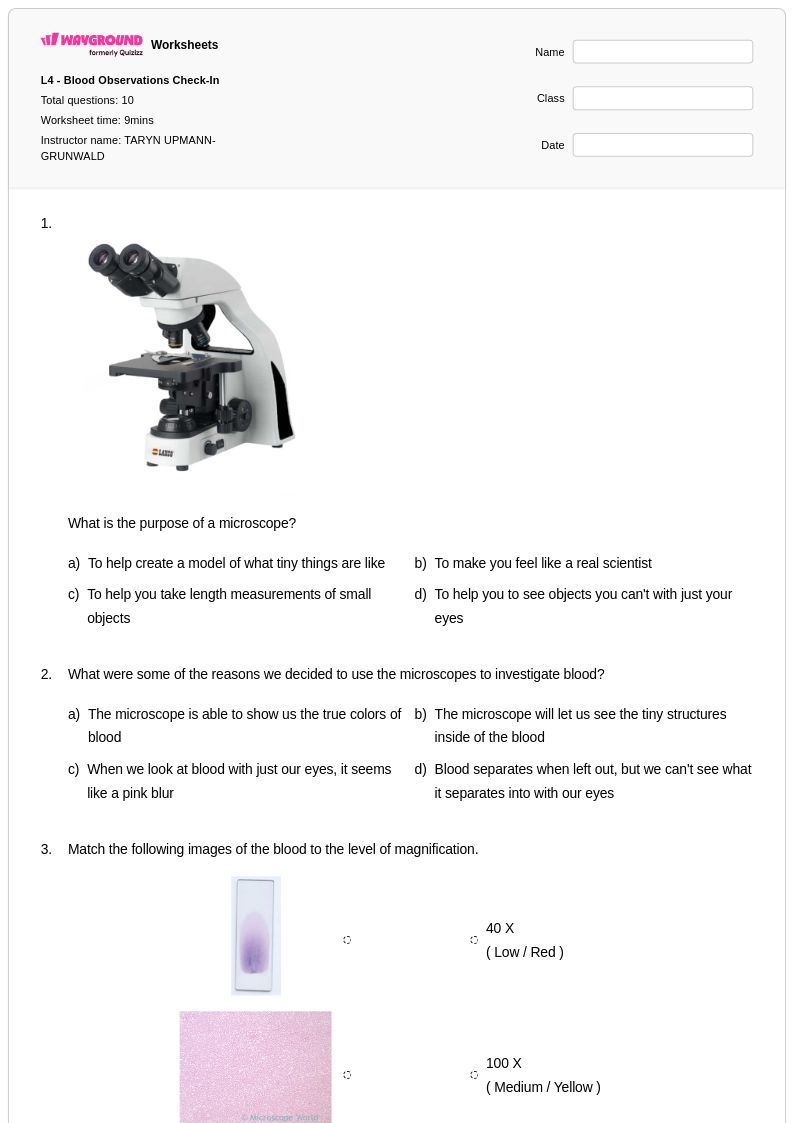
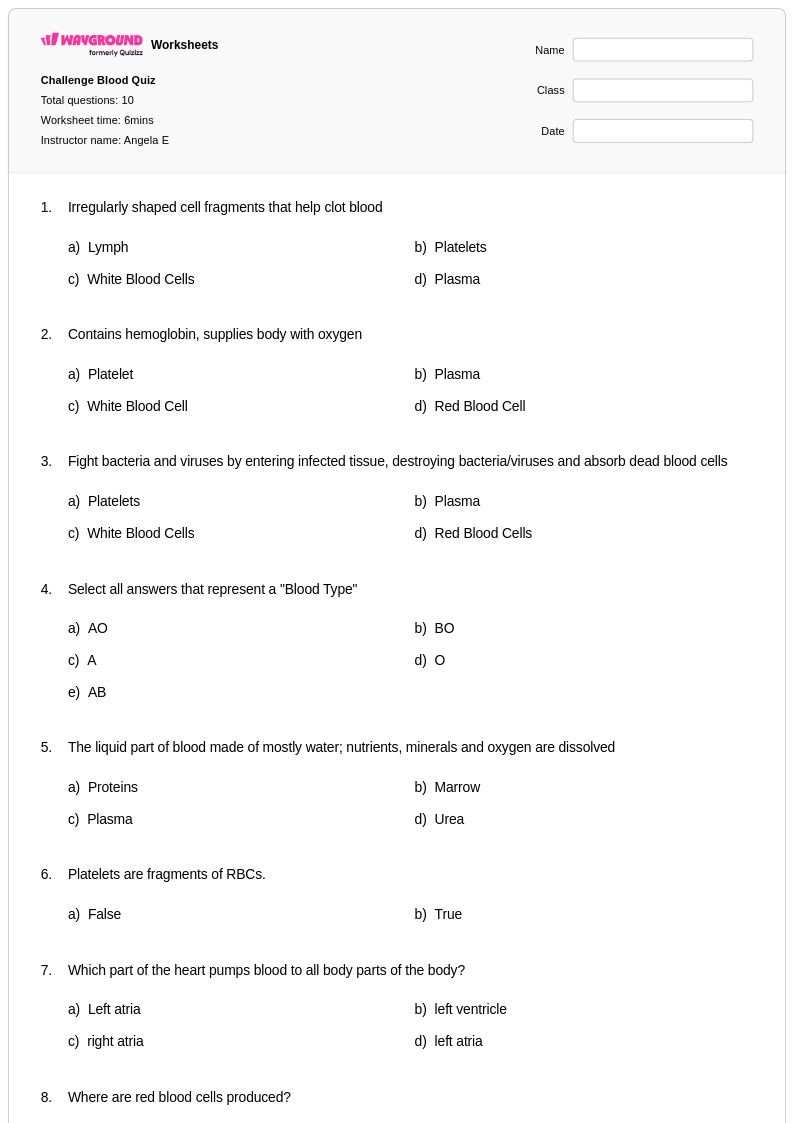
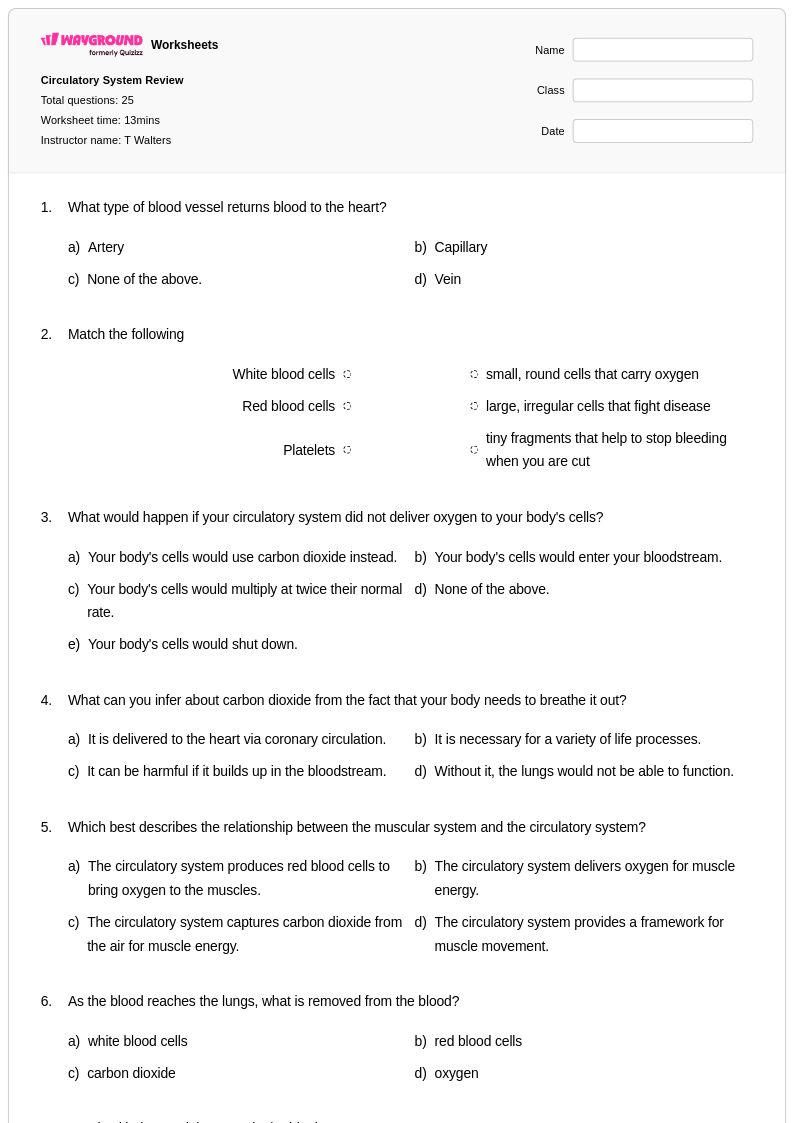
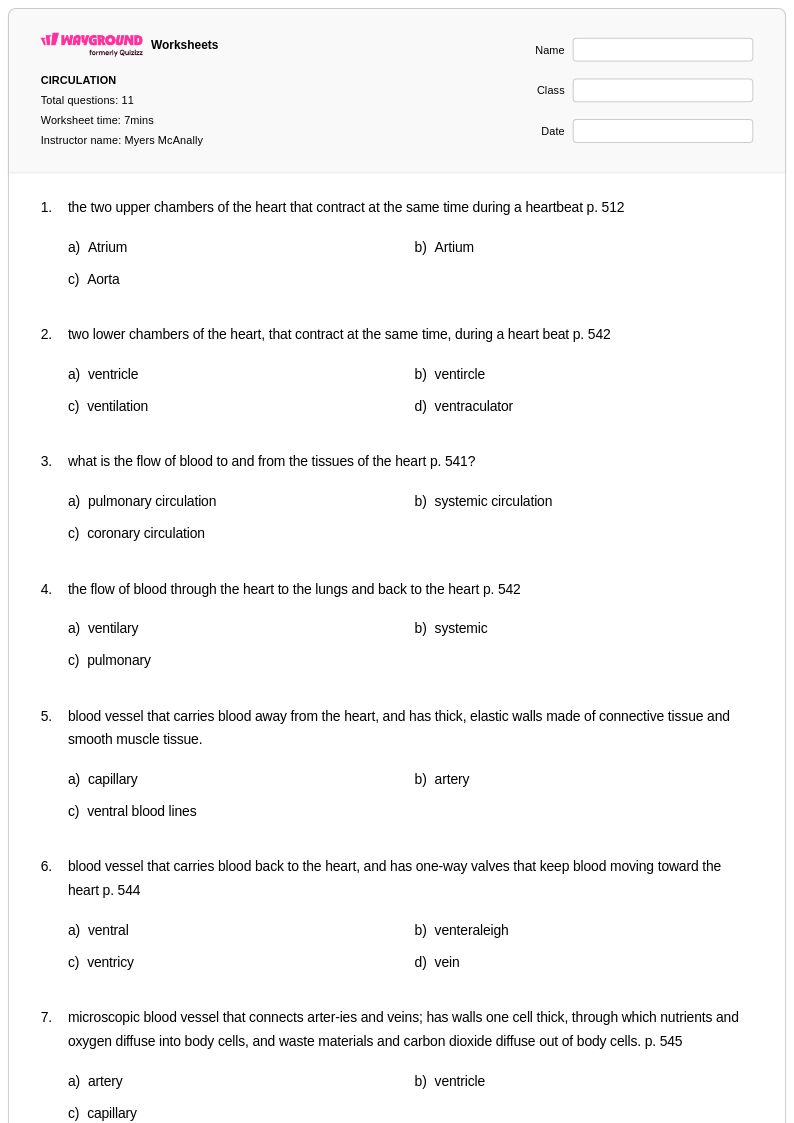
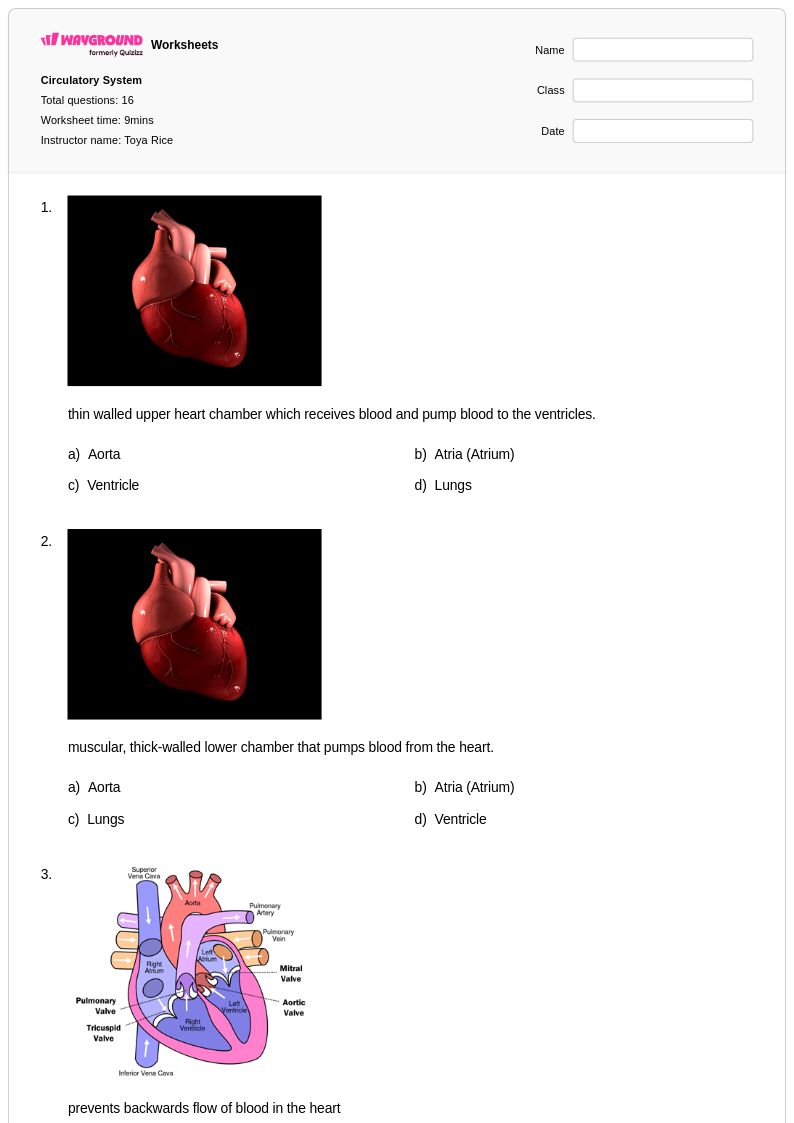
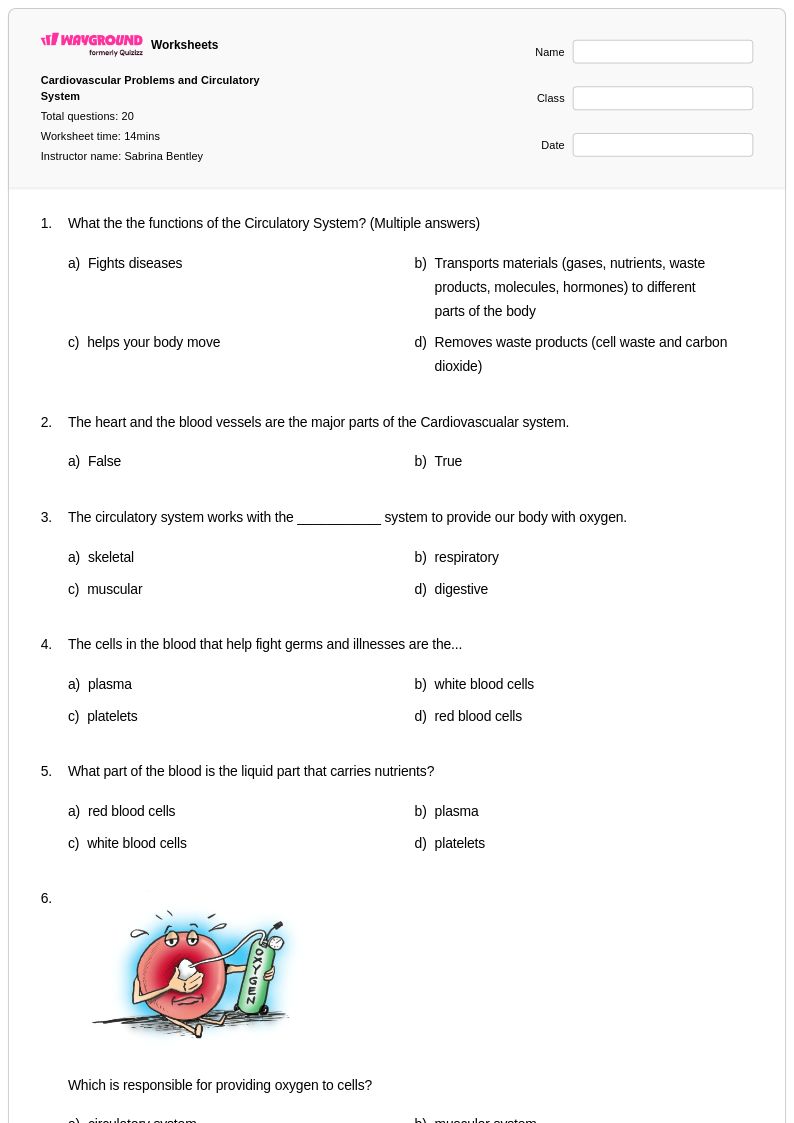
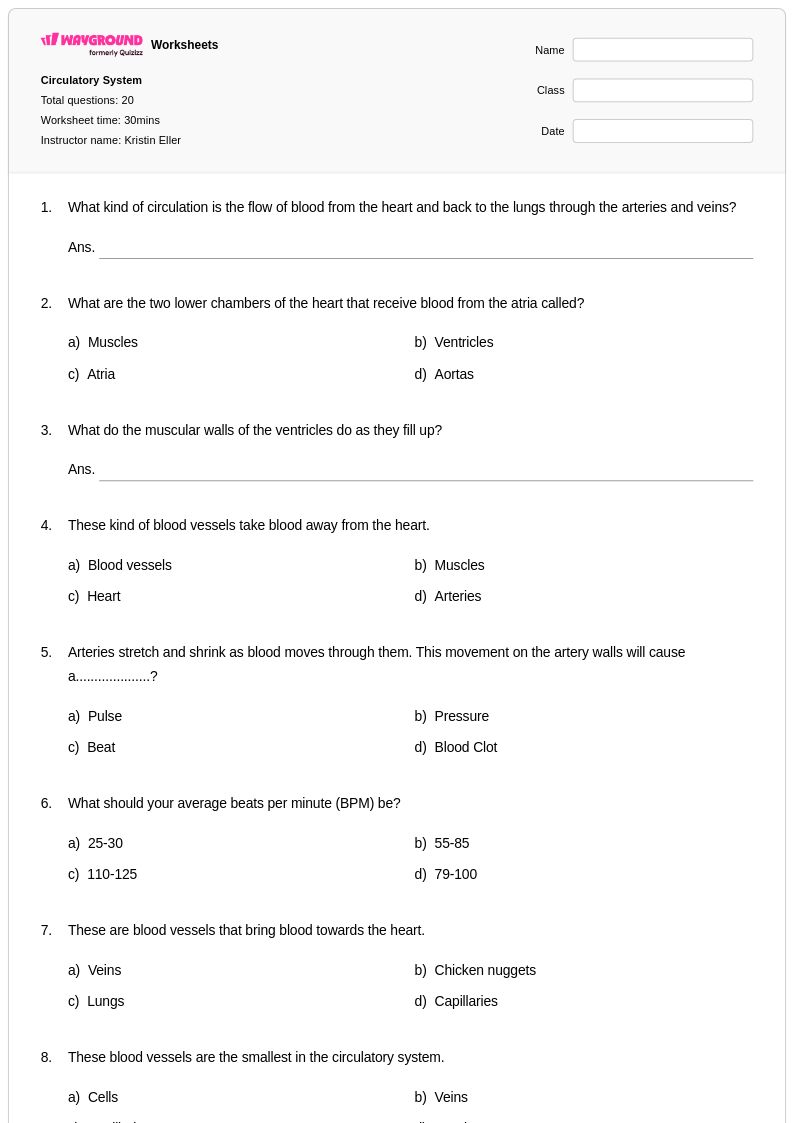
Components of Blood worksheets for Class 7 students available through Wayground (formerly Quizizz) provide comprehensive coverage of the four primary blood components: red blood cells, white blood cells, platelets, and plasma. These expertly designed worksheets strengthen students' understanding of how each component functions within the circulatory system, from oxygen transport by erythrocytes to immune defense mechanisms of leukocytes and the clotting process involving platelets. The practice problems guide students through identifying cellular structures under microscopic views, analyzing blood composition percentages, and connecting component functions to overall cardiovascular health. Each worksheet includes a detailed answer key and is available as free printables in pdf format, making them accessible resources for both classroom instruction and independent study of this fundamental biological concept.
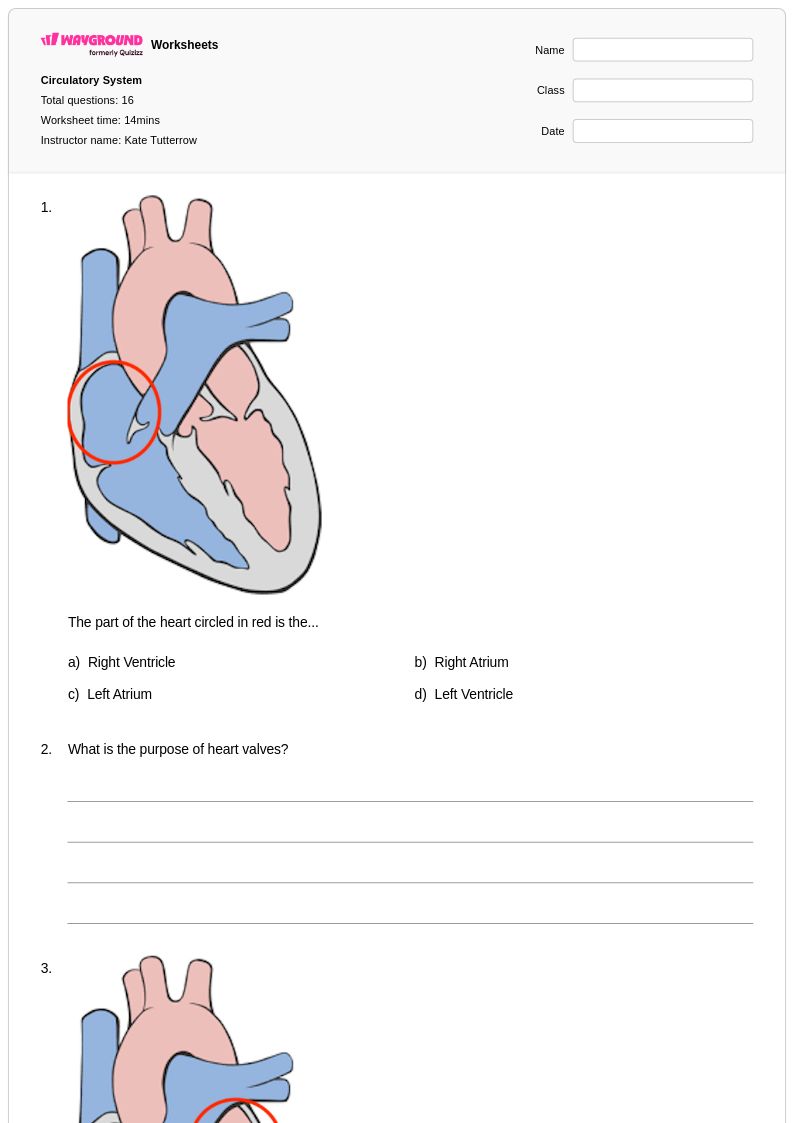
Wayground (formerly Quizizz) supports science educators with an extensive collection of teacher-created resources covering blood components and related circulatory system topics, all searchable through advanced filtering options that align with state and national science standards. Teachers can access millions of worksheets that offer built-in differentiation tools, allowing instructors to customize content difficulty levels to meet diverse learning needs within their Class 7 classrooms. The platform's flexible format options include both printable pdf versions for traditional worksheet distribution and digital formats for interactive learning experiences. These comprehensive resources streamline lesson planning while providing targeted materials for remediation of struggling students, enrichment opportunities for advanced learners, and systematic skill practice that reinforces mastery of blood component identification, function, and interrelationships within human physiology.
FAQs
How do I teach the components of blood to biology students?
Start by introducing the four primary blood components: red blood cells, white blood cells, platelets, and plasma, and connect each component to its specific function in the circulatory system. Use microscopic diagrams to help students visualize cellular structures before moving into function-based analysis. Building from structure to function gives students a framework for understanding how blood composition directly affects human health.
What exercises help students practice identifying the components of blood?
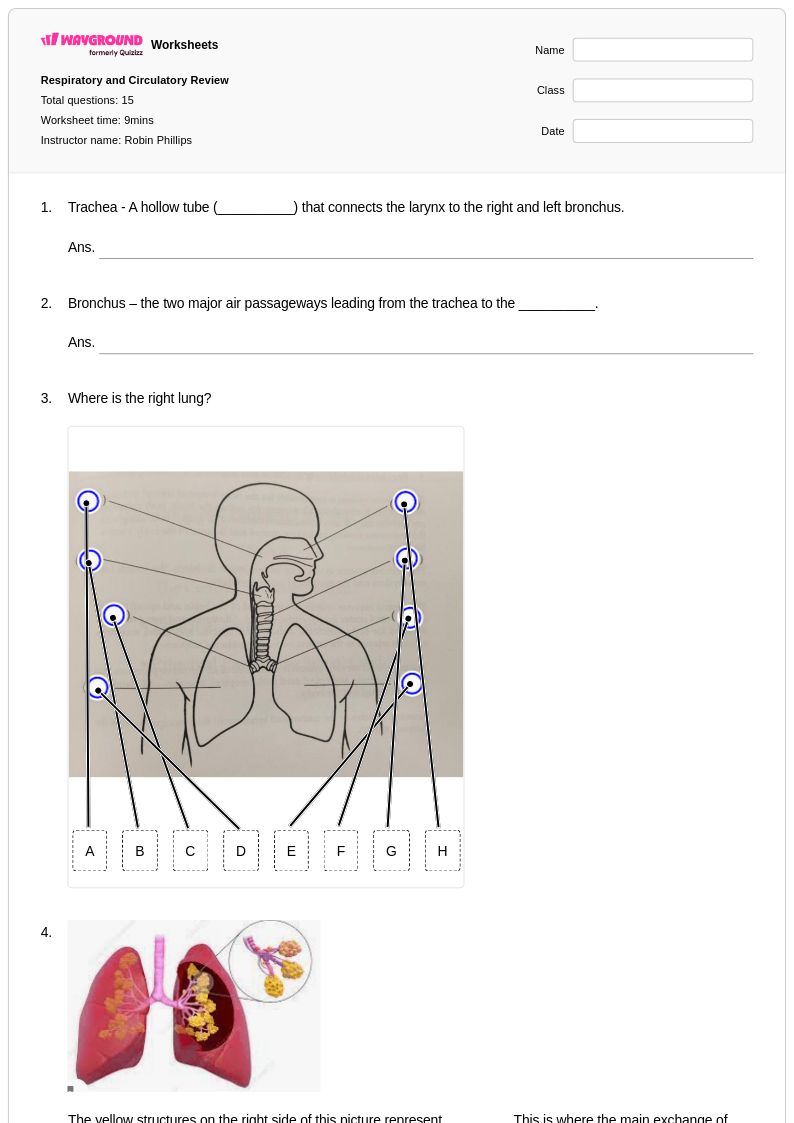
Effective practice includes labeling diagrams of blood cells, matching each component to its physiological role, and analyzing blood composition data from sample scenarios. Exercises that ask students to distinguish between red blood cells, white blood cells, platelets, and plasma under simulated microscopic conditions reinforce both recognition and comprehension. Repeated exposure to these component-function pairings builds retention for assessments.
What mistakes do students commonly make when learning about blood components?
A common misconception is that white blood cells are the most abundant component, when in fact red blood cells make up the majority of blood's cellular content. Students also frequently confuse the role of platelets with that of white blood cells, mistakenly attributing immune functions to platelets rather than clotting. Additionally, many students overlook plasma as a component, not recognizing it as the liquid medium that carries cells, nutrients, and proteins.
How can I use components of blood worksheets in my classroom?
Components of blood worksheets on Wayground are available as printable PDFs for traditional classroom use and in digital formats for technology-integrated or hybrid environments, and can also be hosted as a quiz directly on Wayground. Teachers can use them for initial concept introduction, guided practice, or review before assessments. Each worksheet includes a complete answer key, making them practical for both teacher-led instruction and independent student work.
How do I differentiate instruction when teaching blood components to students with varying ability levels?
For students who need additional support, Wayground's built-in accommodation tools allow teachers to enable features such as Read Aloud for students who benefit from audio support, reduced answer choices to lower cognitive load, and extended time per question. These settings can be applied to individual students without notifying the rest of the class, so differentiation happens seamlessly. For advanced learners, worksheets can be used as enrichment activities that go deeper into the interconnected relationships between blood components and systemic physiology.
How does understanding blood components connect to broader biology standards?
The components of blood sit at the intersection of cell biology and human physiology, making this topic relevant to circulatory system units, cellular function standards, and homeostasis concepts. Understanding how red blood cells transport oxygen, white blood cells coordinate immune response, platelets enable clotting, and plasma maintains fluid balance gives students a concrete, function-driven model of how organ systems maintain health. This topic frequently appears in state science standards tied to human body systems.