
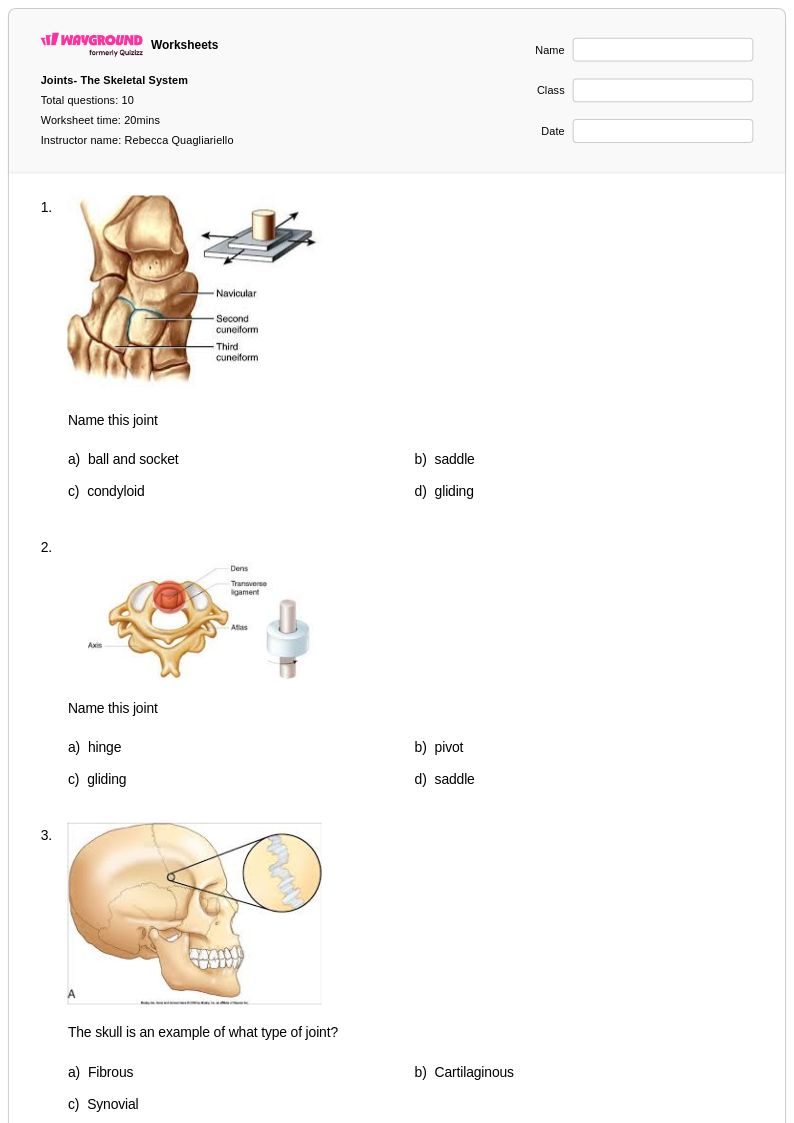
10 Q
7th - 8th
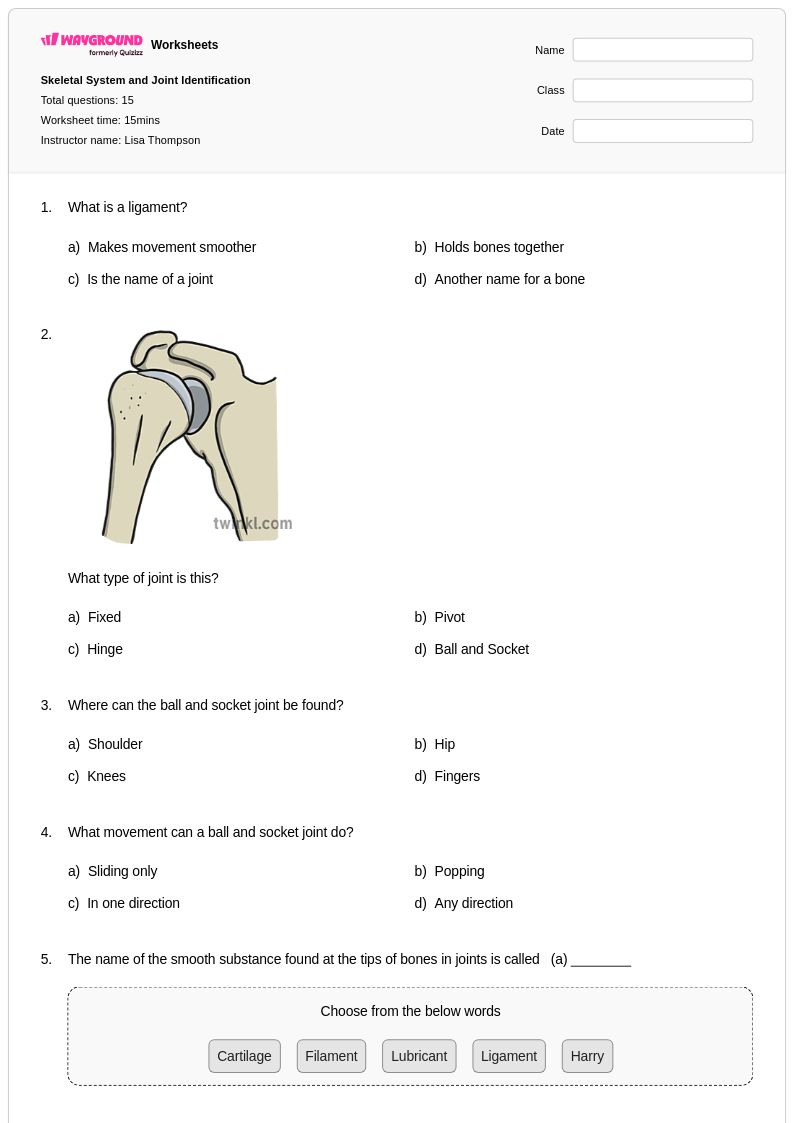
15 Q
7th - Uni
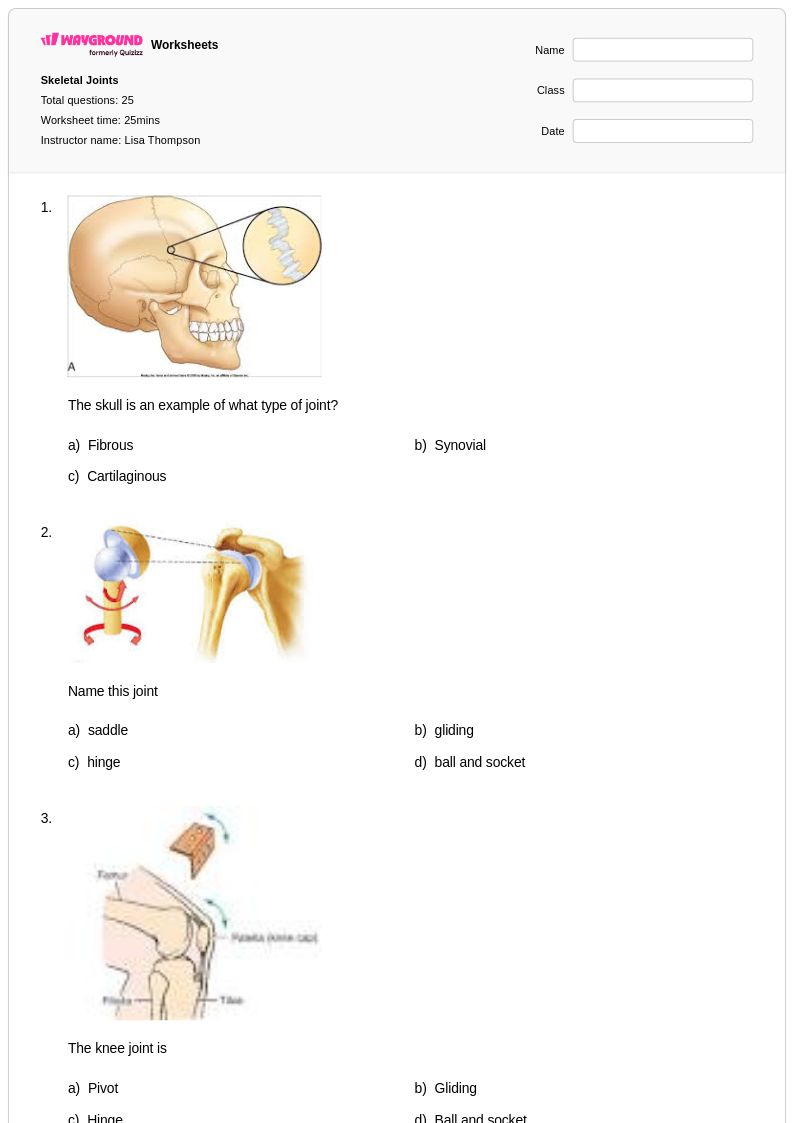
25 Q
7th - Uni
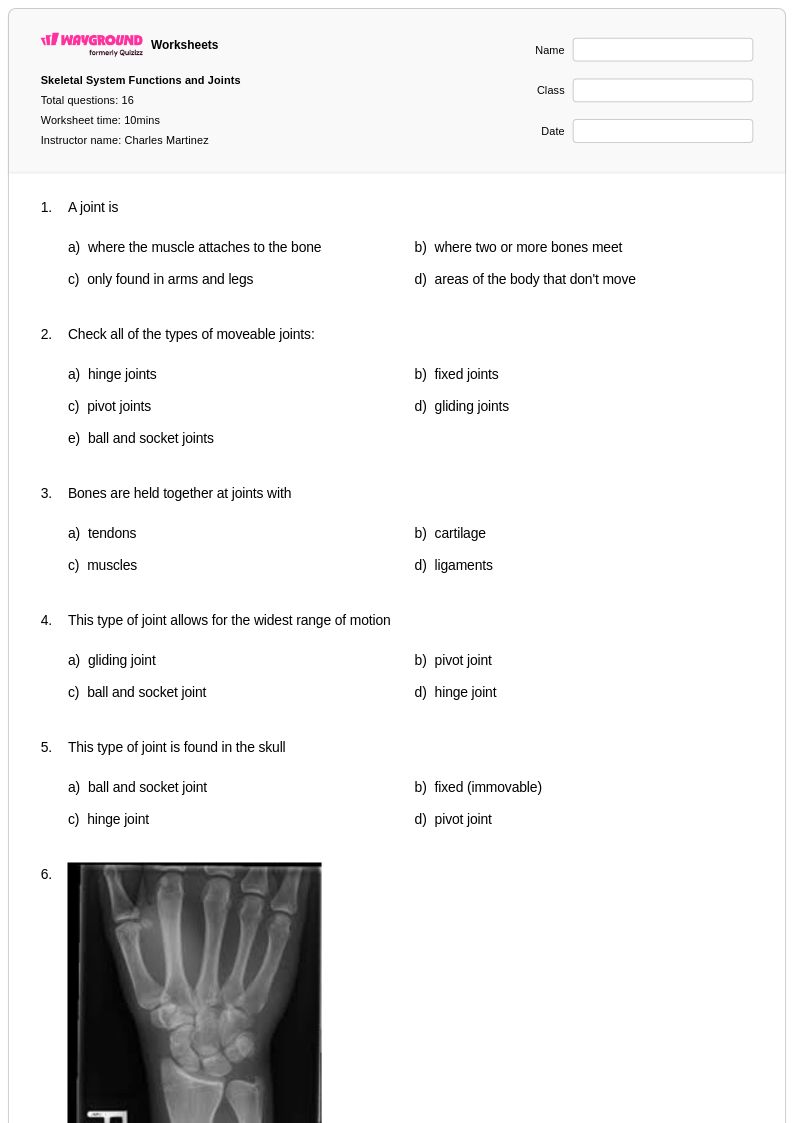
16 Q
6th - 10th
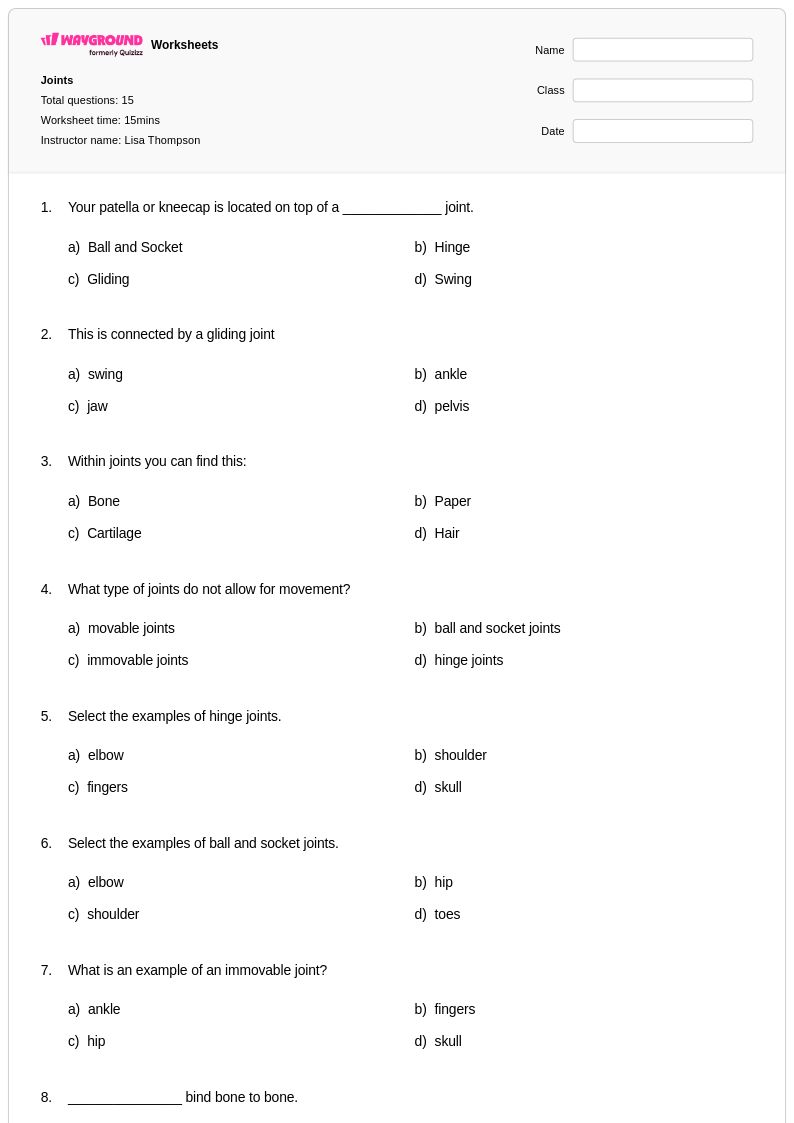
15 Q
5th - Uni
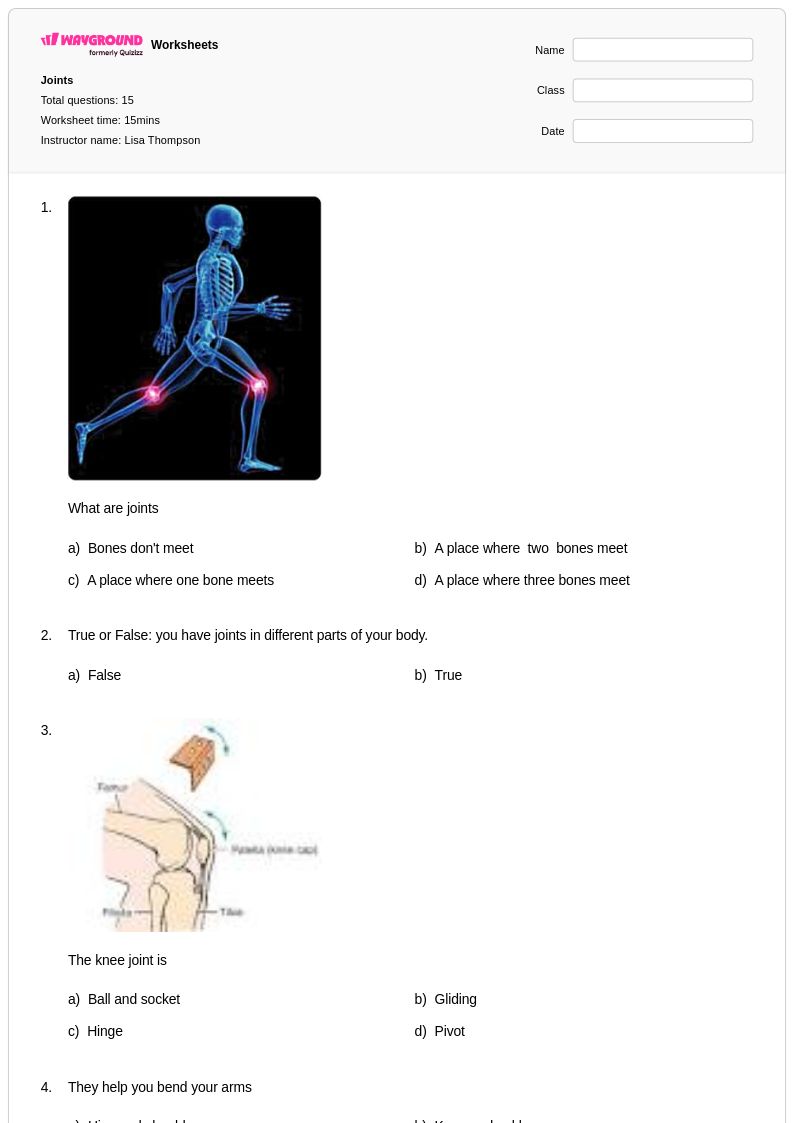
15 Q
5th - Uni
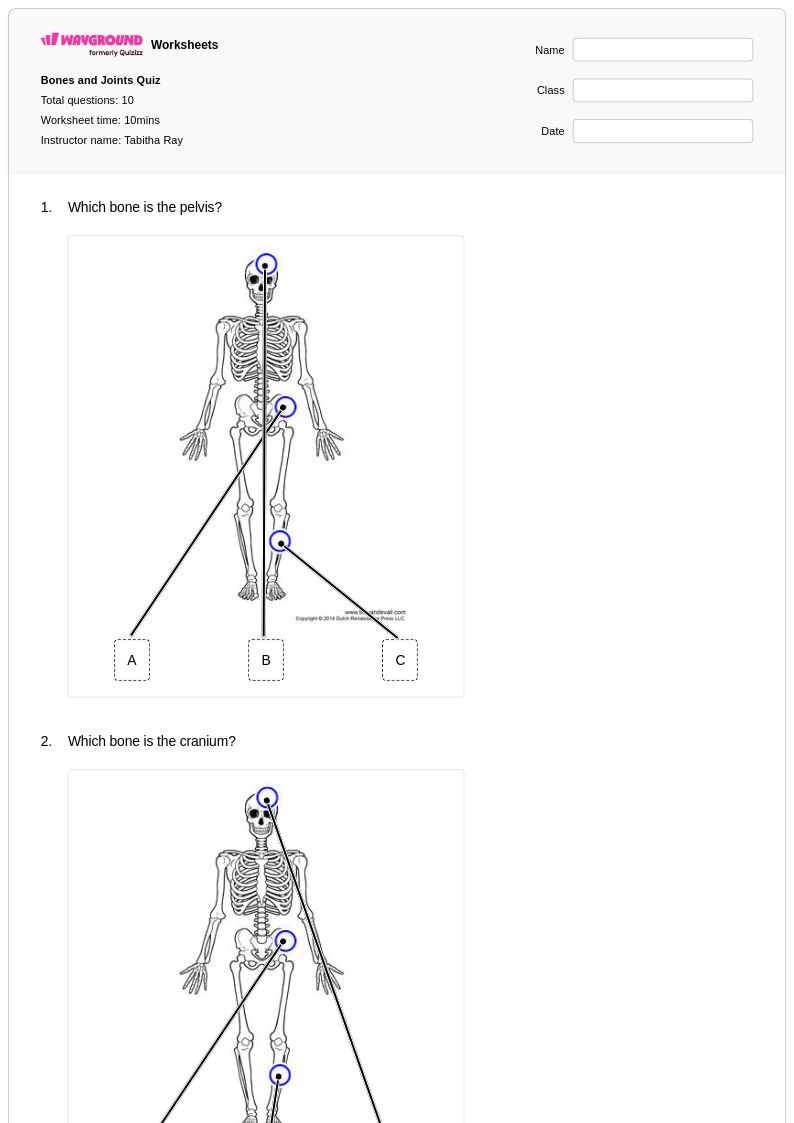
10 Q
7th
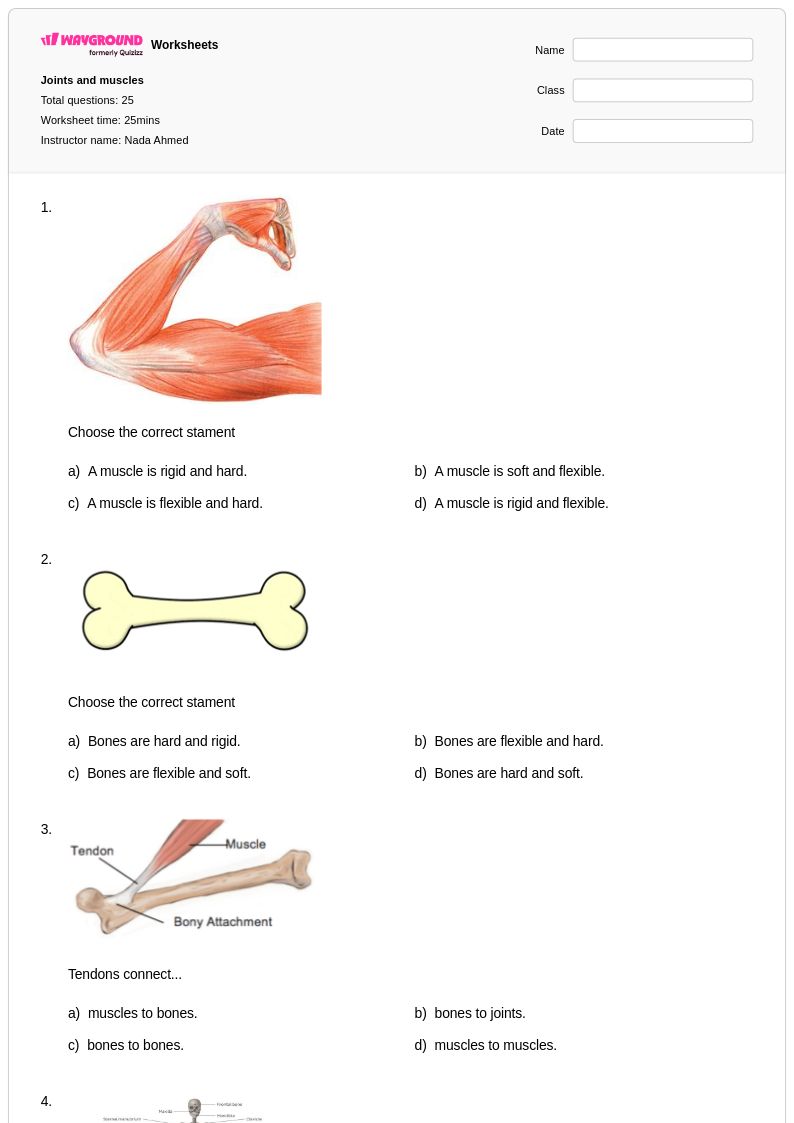
25 Q
7th
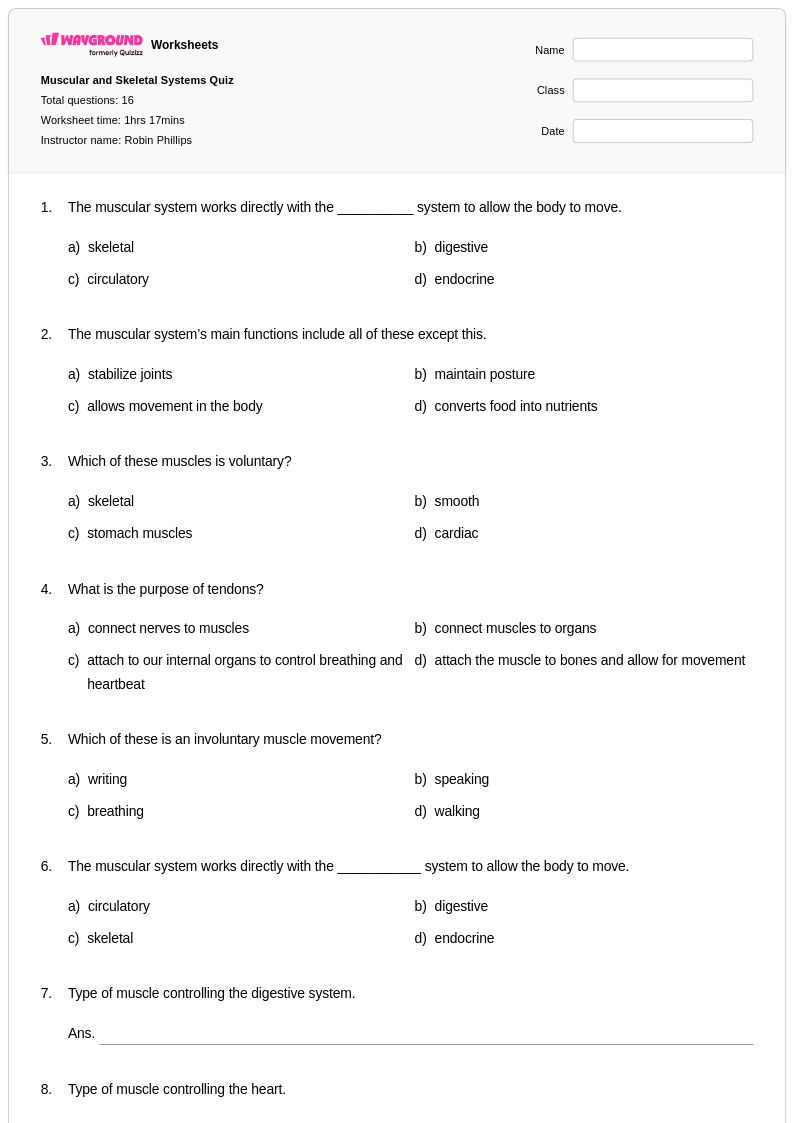
16 Q
7th
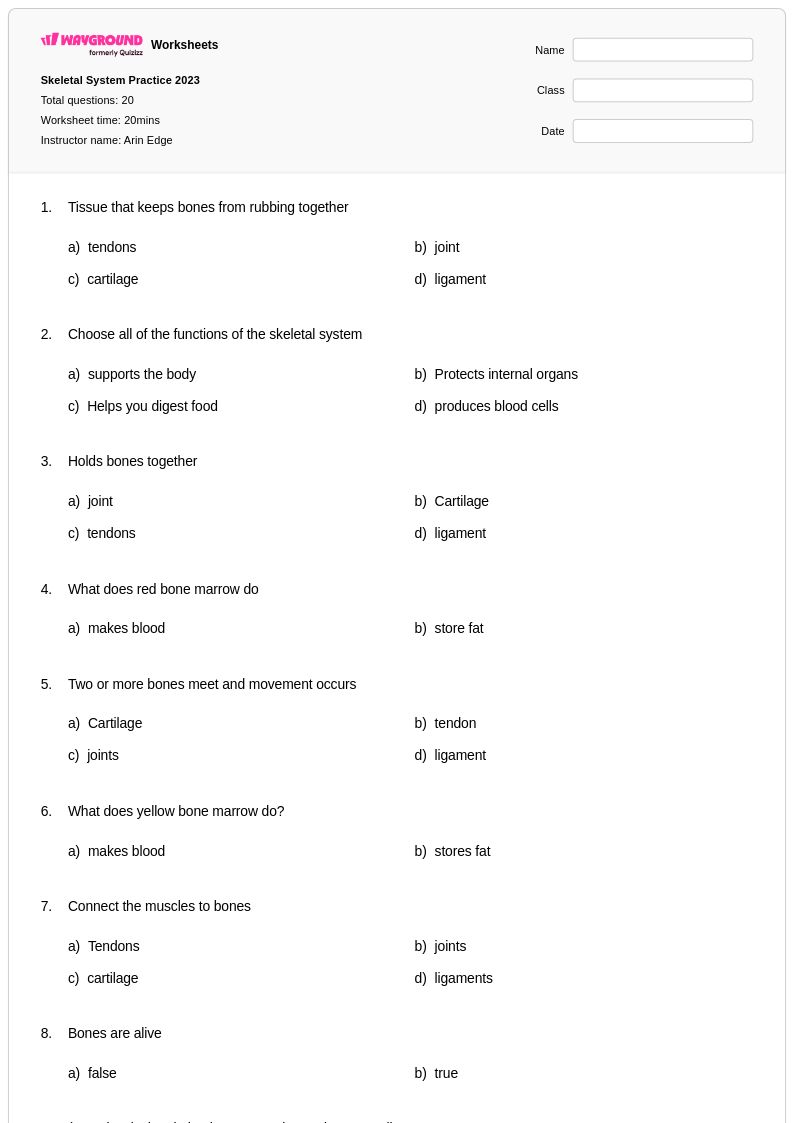
20 Q
7th
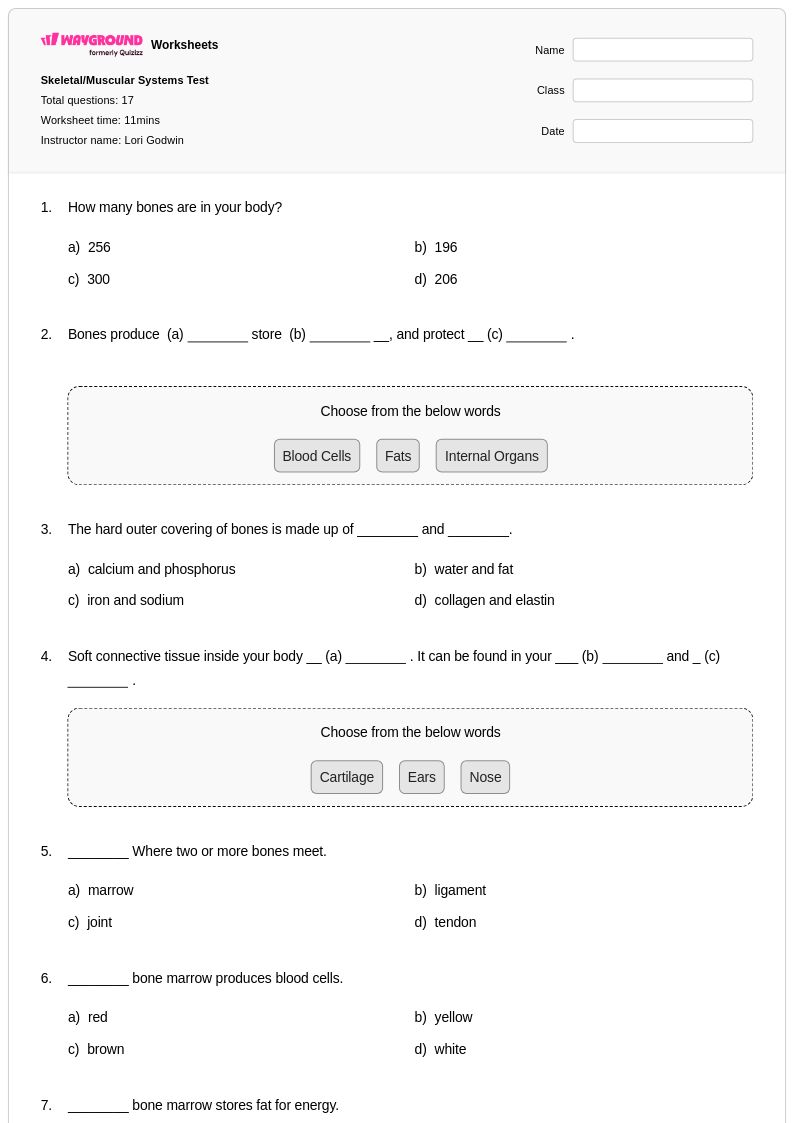
17 Q
7th
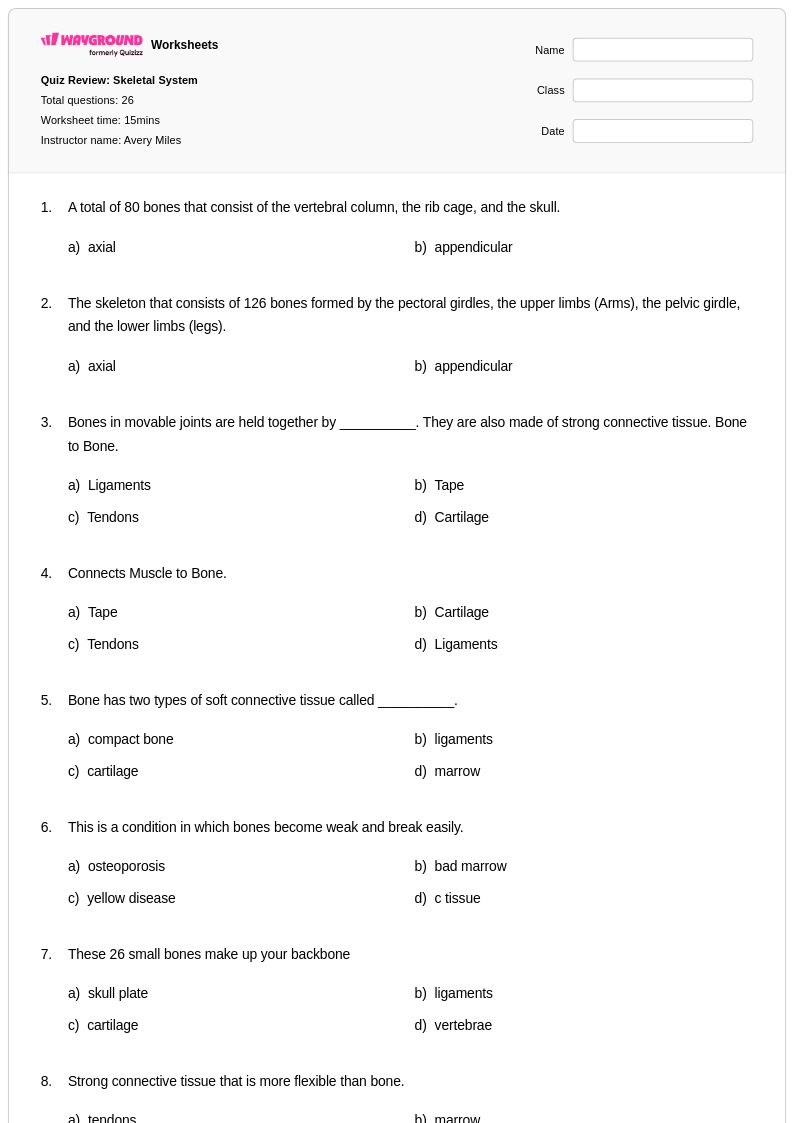
26 Q
7th
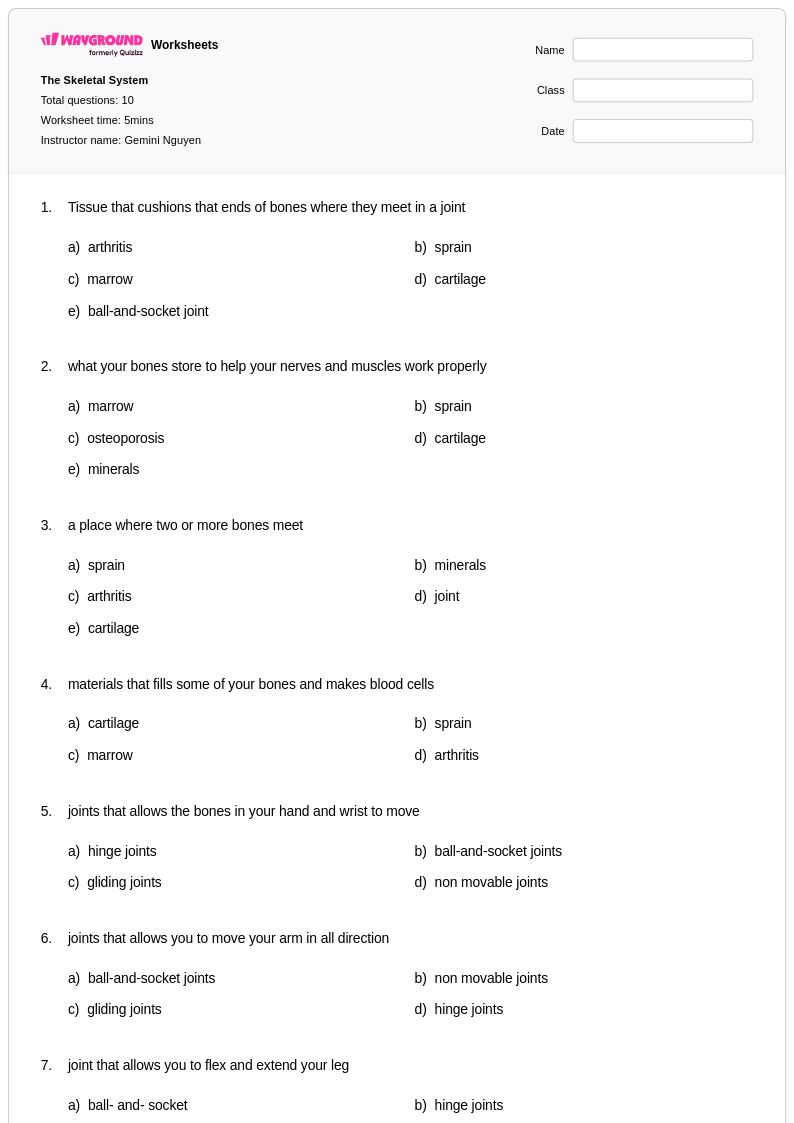
10 Q
6th - 7th
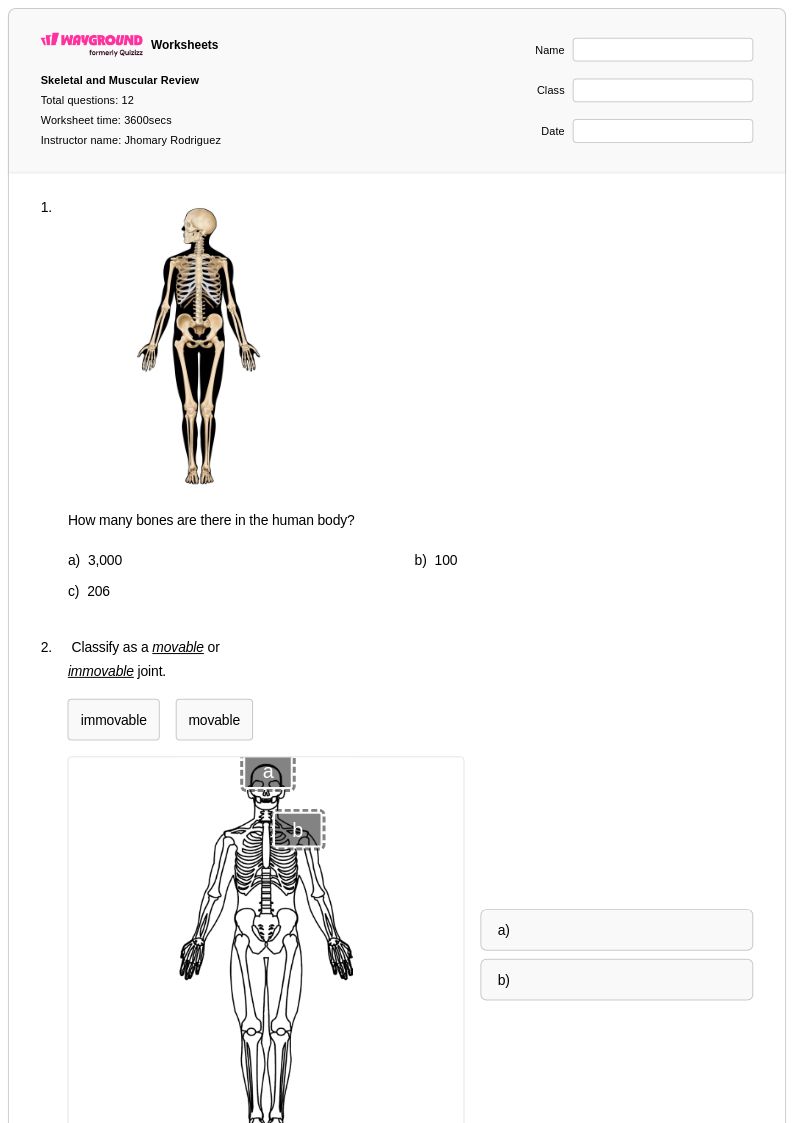
12 Q
6th - 8th
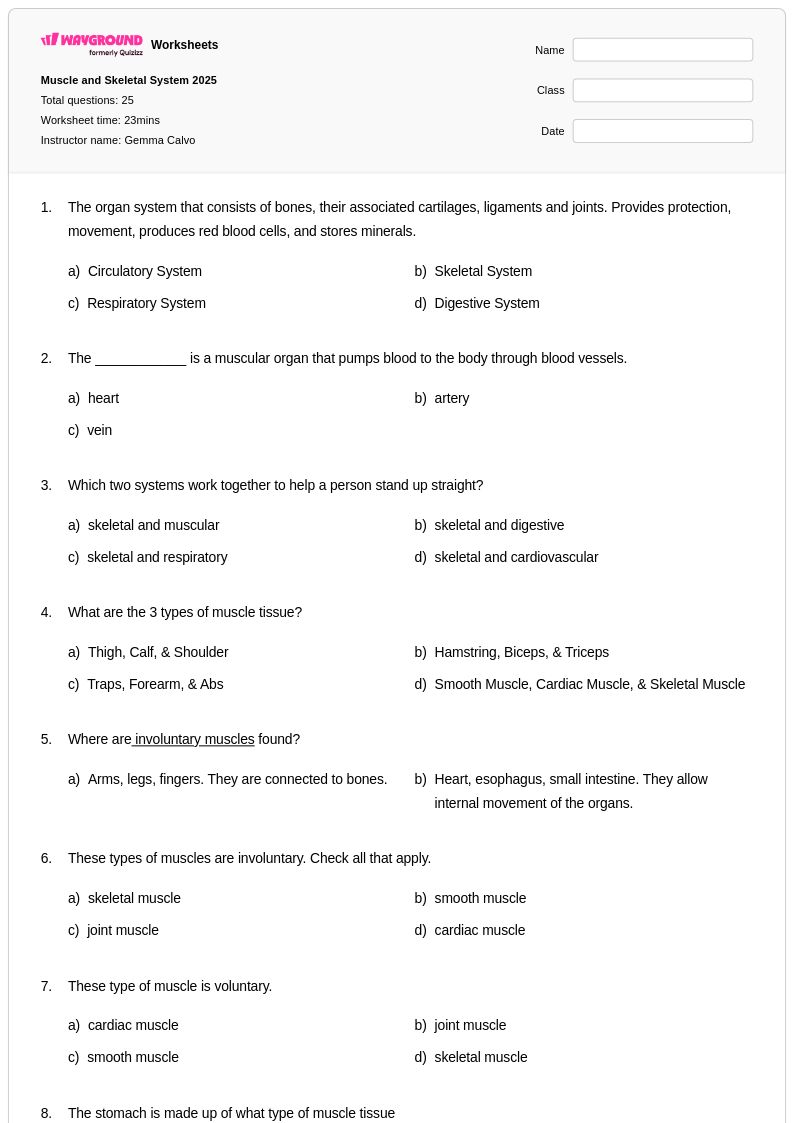
25 Q
7th
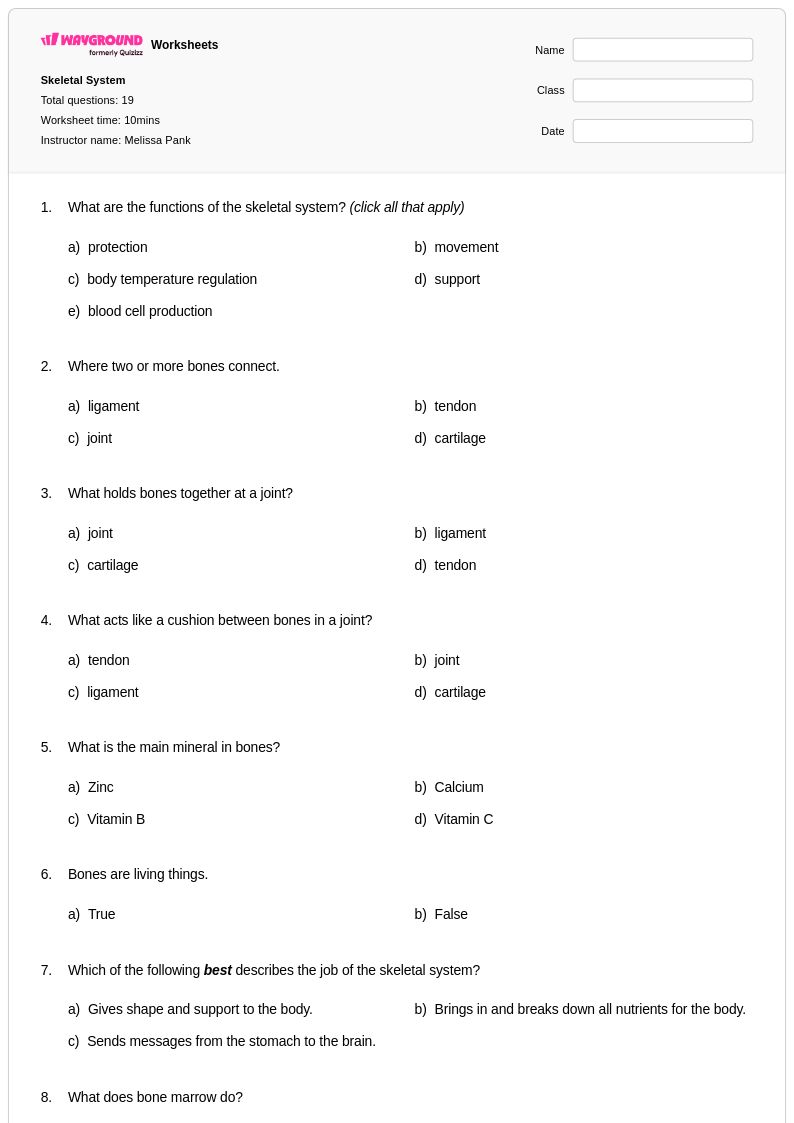
19 Q
7th
20 Q
7th
40 Q
7th

39 Q
7th
15 Q
7th - Uni
15 Q
7th - 8th
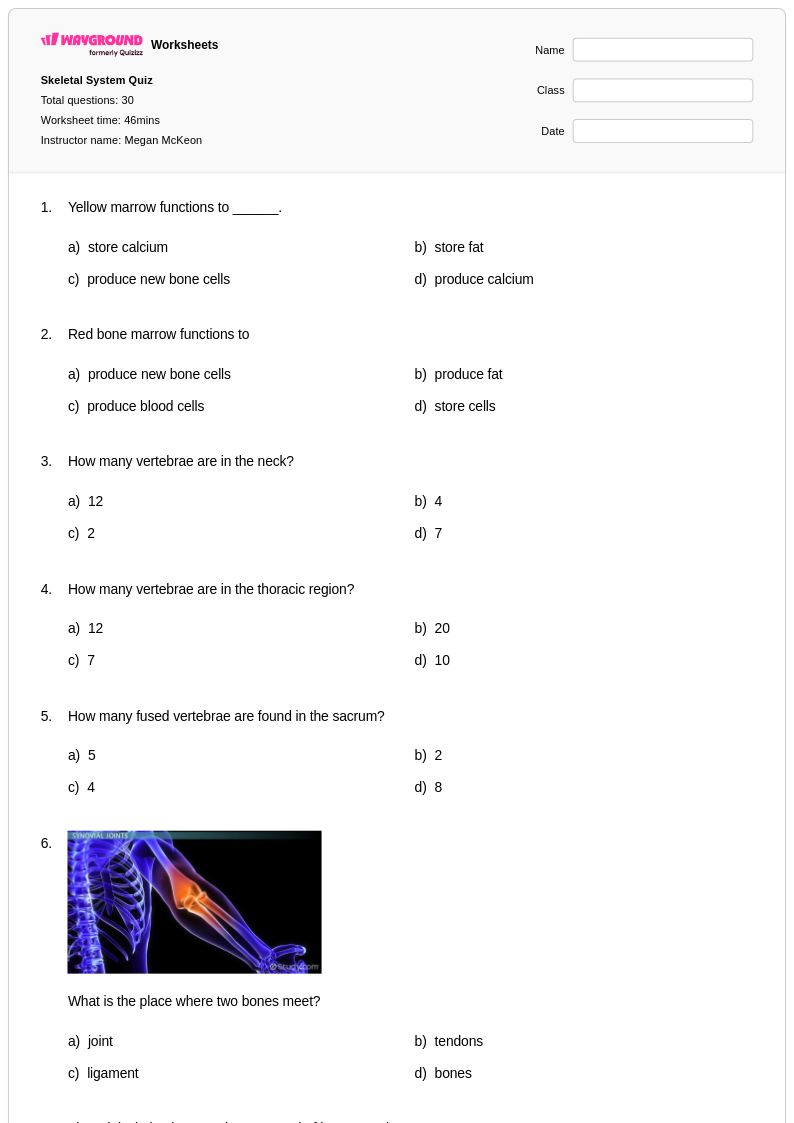
30 Q
7th
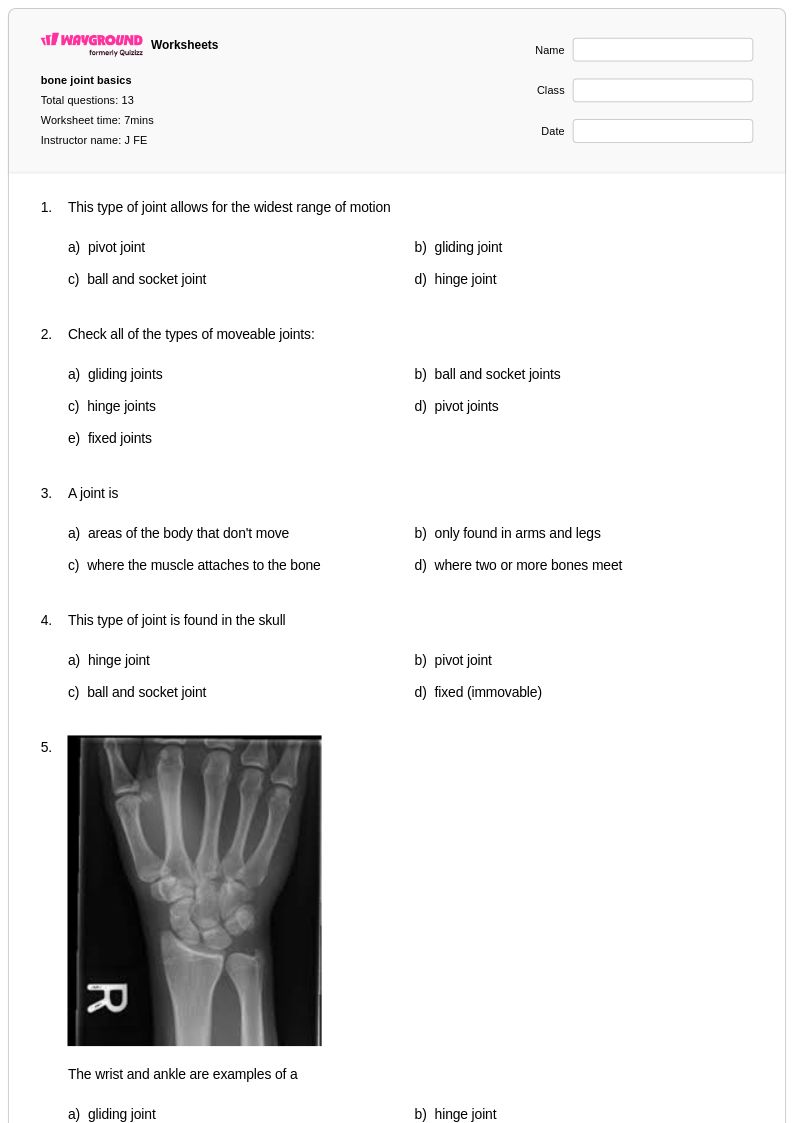
13 Q
6th - 8th
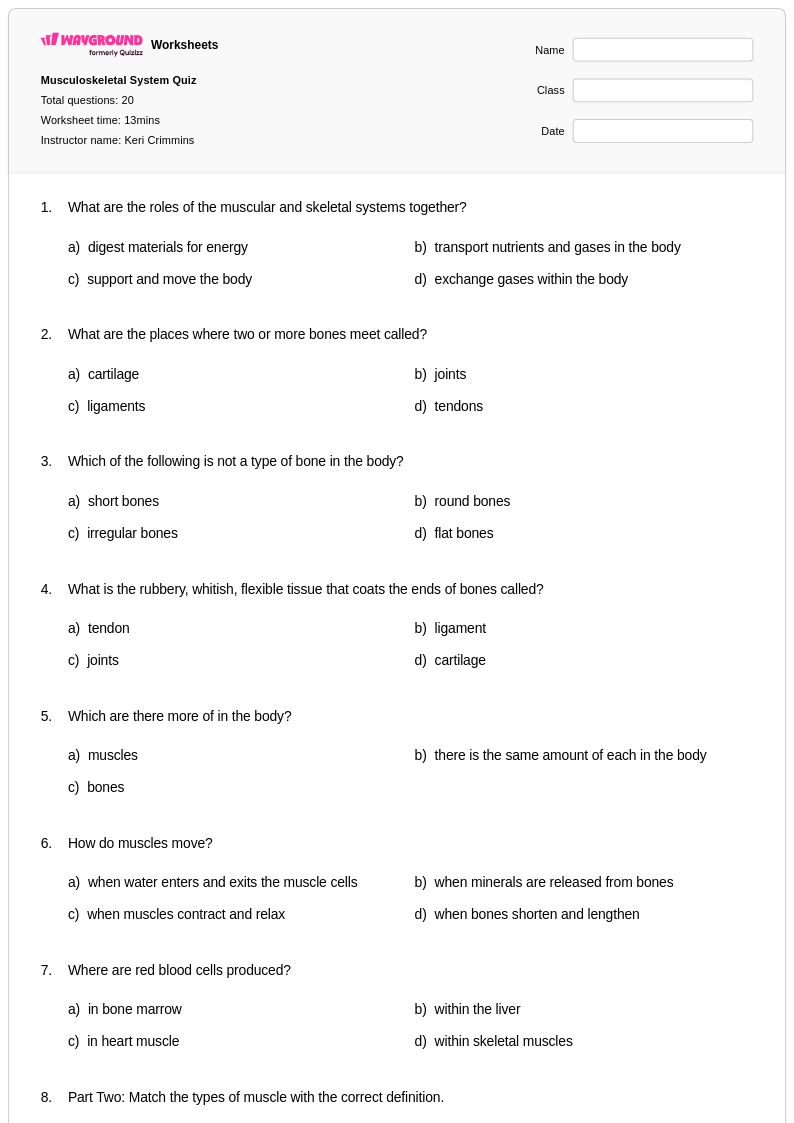
20 Q
7th - Uni
Explore Other Subject Worksheets for class 7
Explore printable Joints worksheets for Class 7
Class 7 joints worksheets through Wayground (formerly Quizizz) provide comprehensive coverage of the human skeletal system's connection points, helping students master the classification and function of different joint types including hinge, ball-and-socket, pivot, and gliding joints. These educational resources strengthen critical biology skills such as anatomical identification, structural analysis, and understanding movement mechanics through detailed diagrams, labeling exercises, and comparative analysis activities. Students engage with practice problems that reinforce their knowledge of synovial joints, cartilaginous joints, and fibrous joints while developing scientific vocabulary essential for advanced biology concepts. Each worksheet collection includes answer keys and is available as free printables in pdf format, ensuring teachers have reliable assessment tools for measuring student comprehension of joint structure and function.
Wayground (formerly Quizizz) supports educators with millions of teacher-created joint worksheets that feature robust search and filtering capabilities, allowing instructors to quickly locate resources aligned with specific curriculum standards and learning objectives. The platform's differentiation tools enable teachers to customize worksheet difficulty levels and content focus areas, accommodating diverse learning needs within Class 7 biology classrooms. These comprehensive collections are available in both printable and digital formats, including downloadable pdf versions that facilitate seamless integration into lesson planning and homework assignments. Teachers utilize these versatile resources for targeted skill practice, remediation support for struggling learners, and enrichment opportunities for advanced students, ensuring all pupils develop solid foundational knowledge of joint anatomy and biomechanics essential for future life science studies.