Free Printable Plant Reproduction Worksheets for Class 7
Explore Class 7 plant reproduction worksheets and free printables from Wayground that help students master pollination, fertilization, and seed development through engaging practice problems with complete answer keys.
Explore printable Plant Reproduction worksheets for Class 7
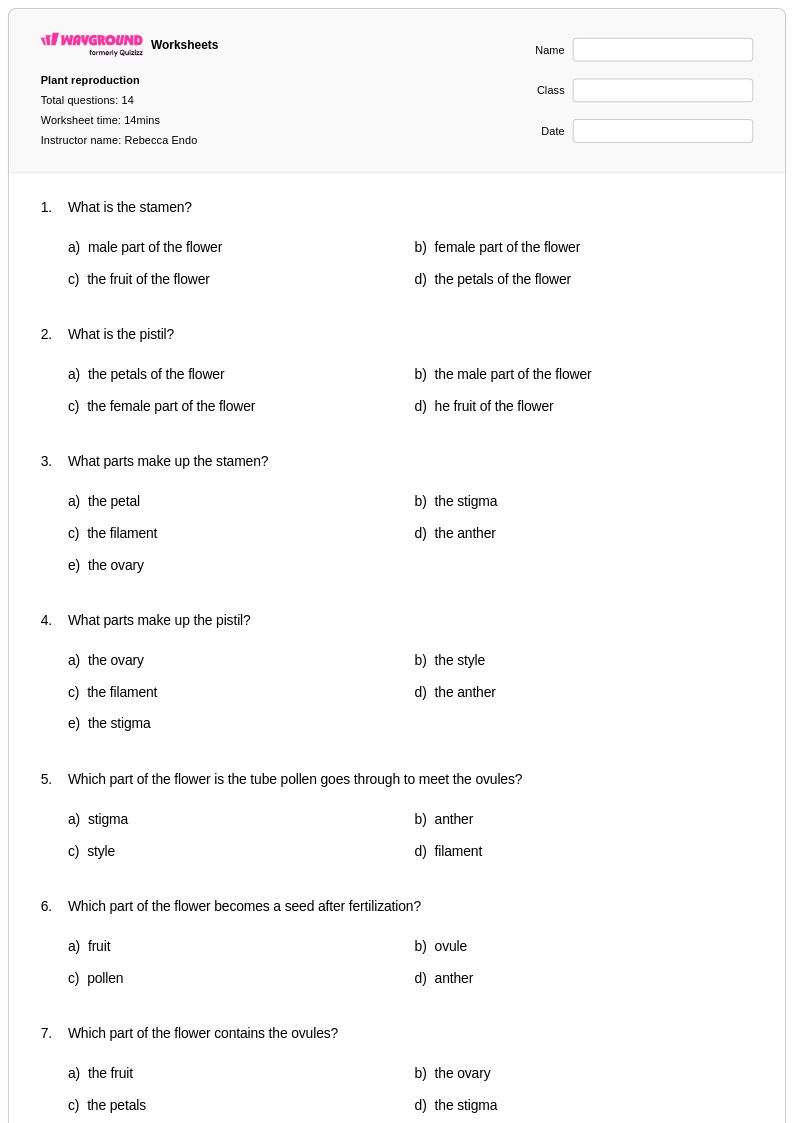
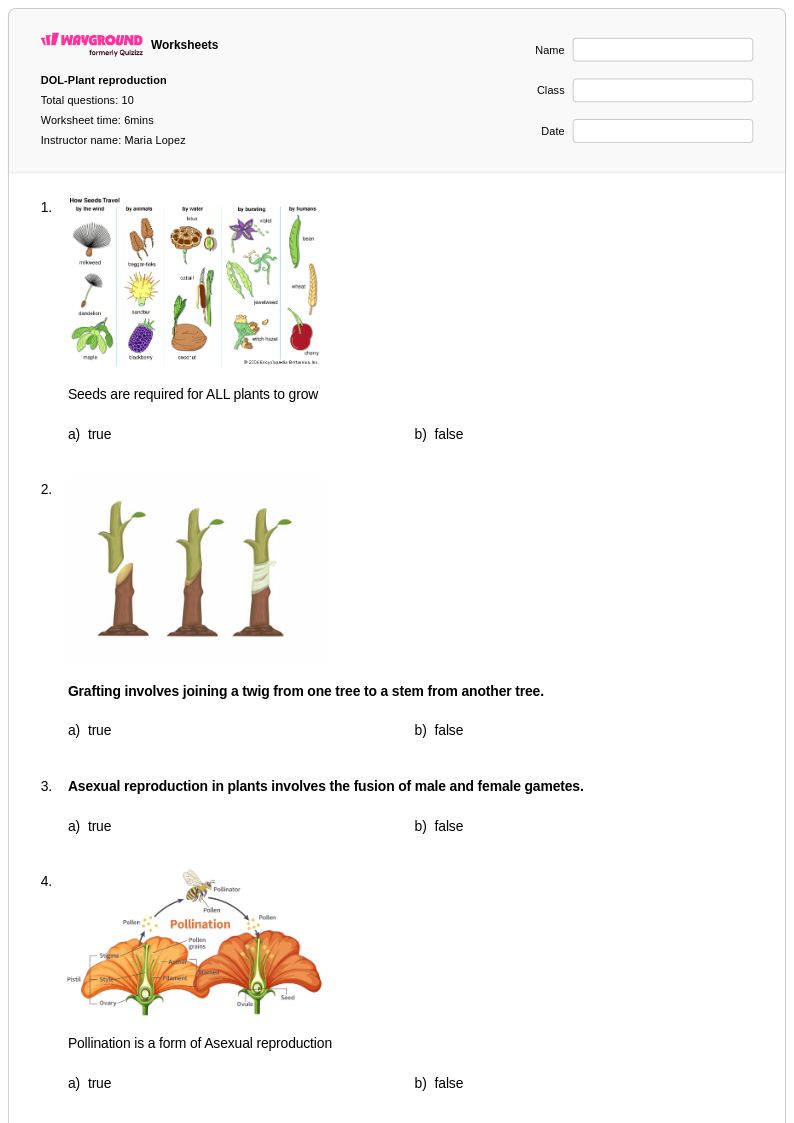
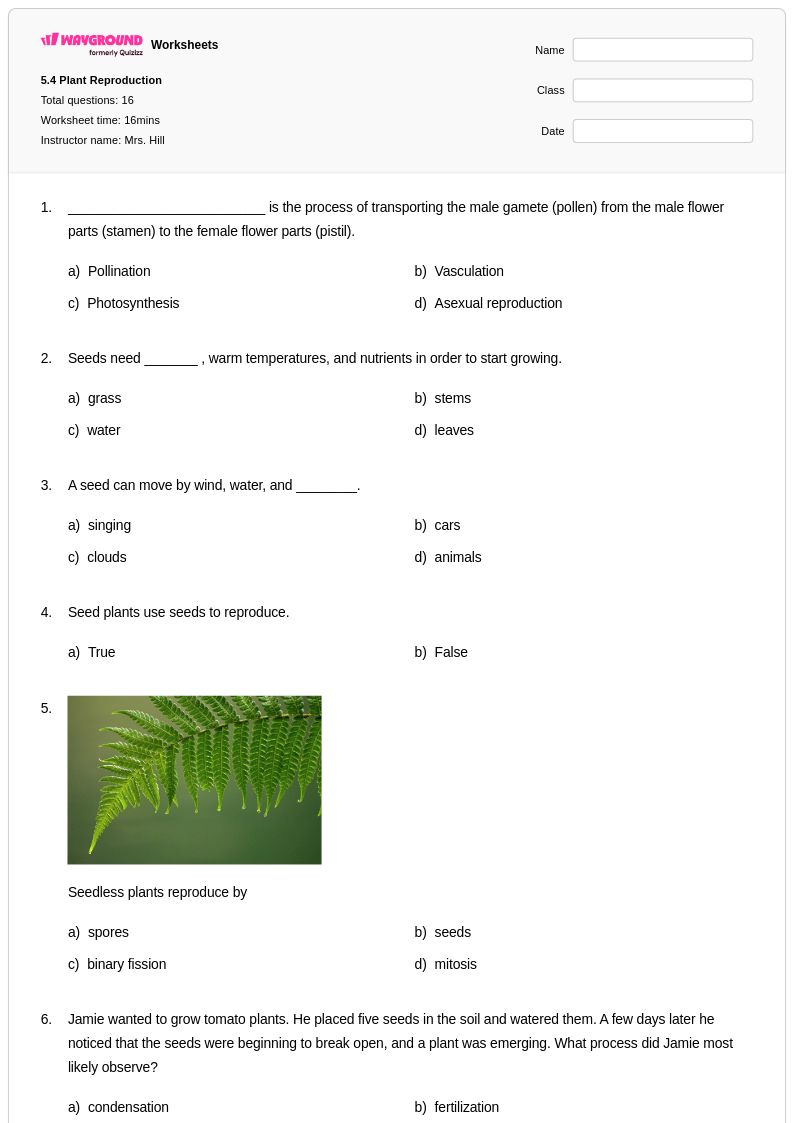
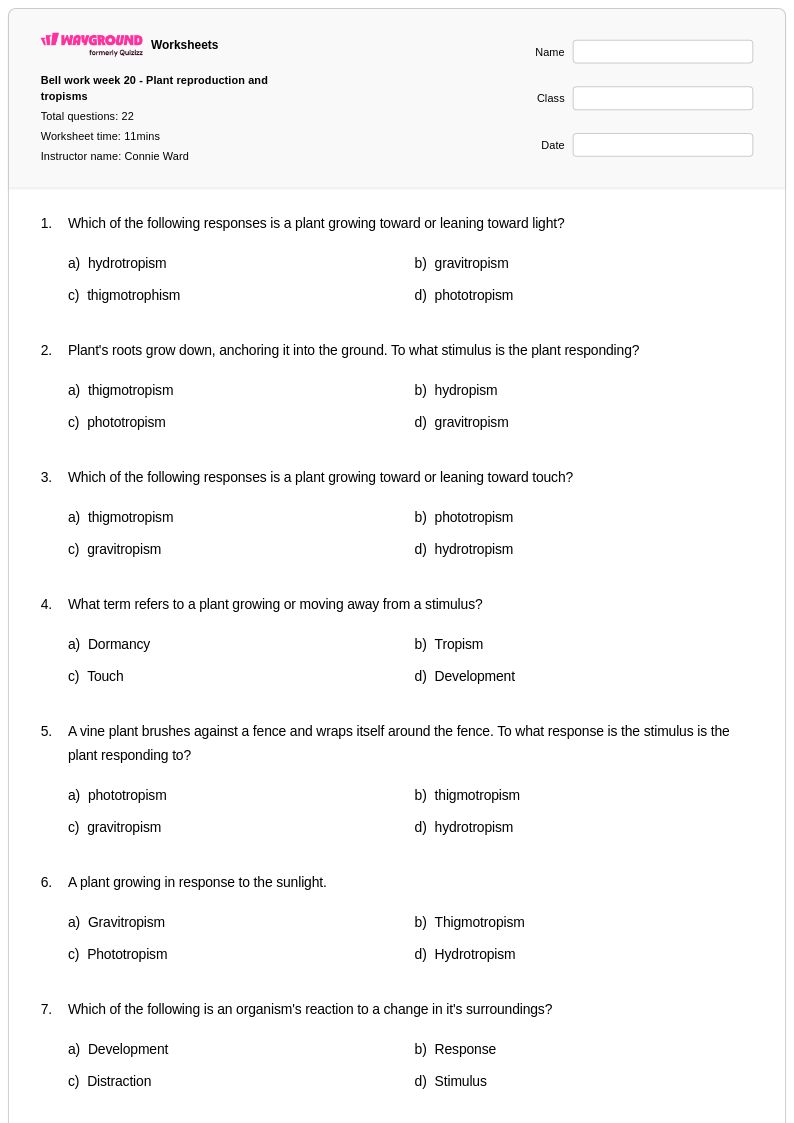
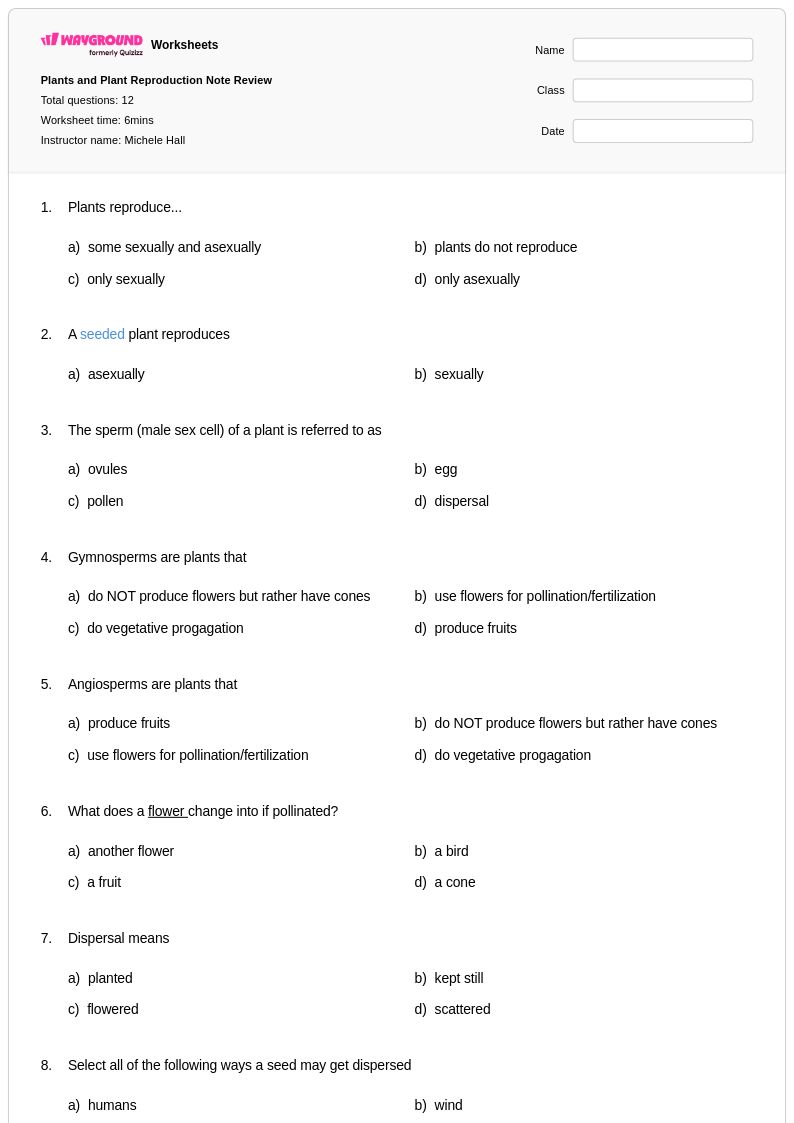
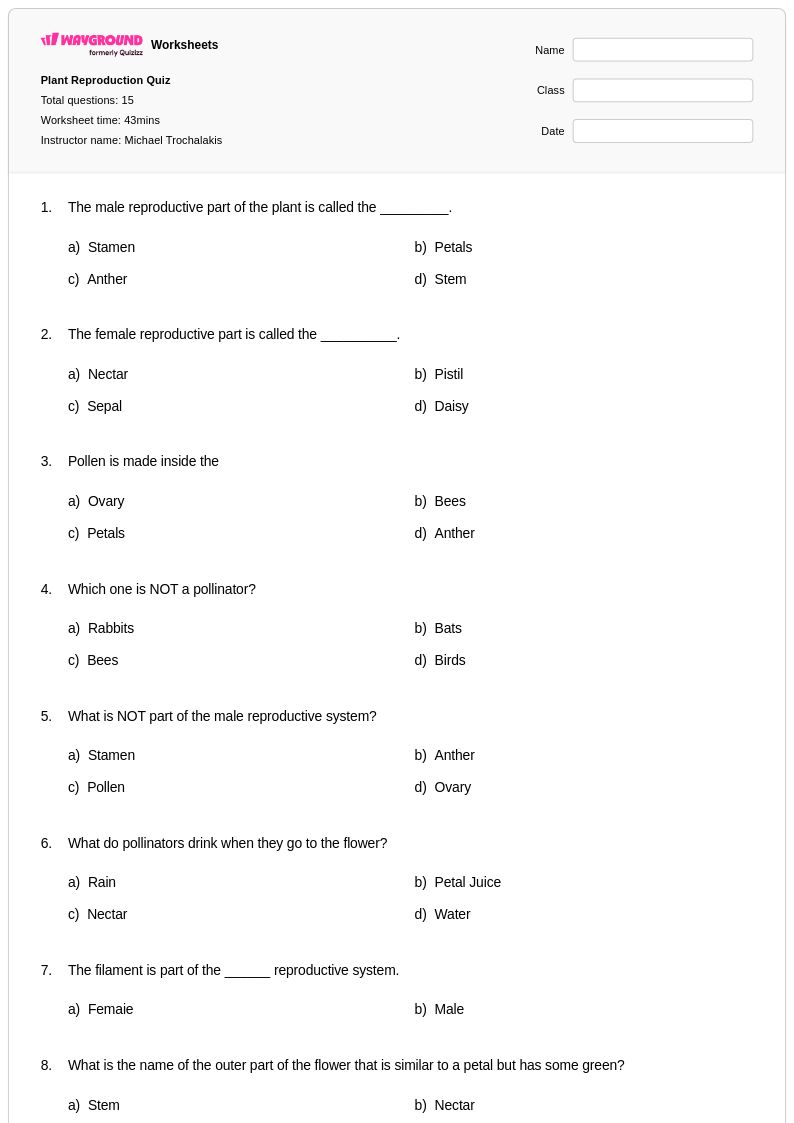
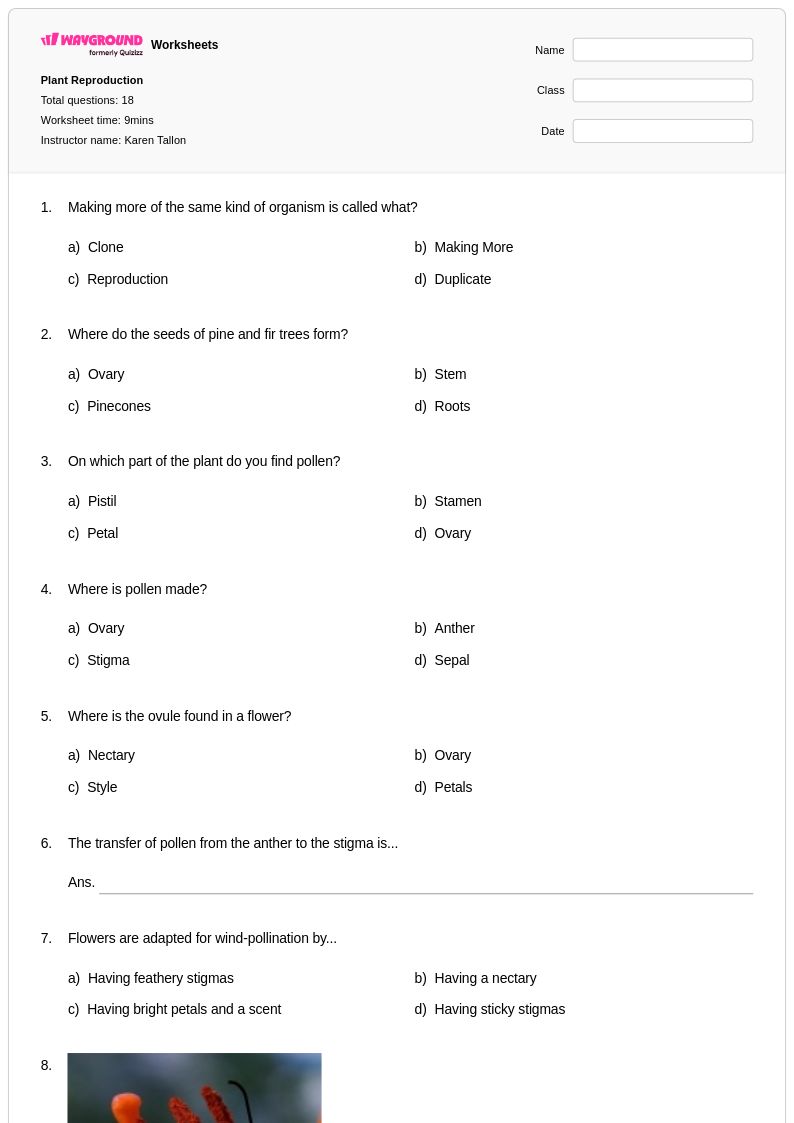
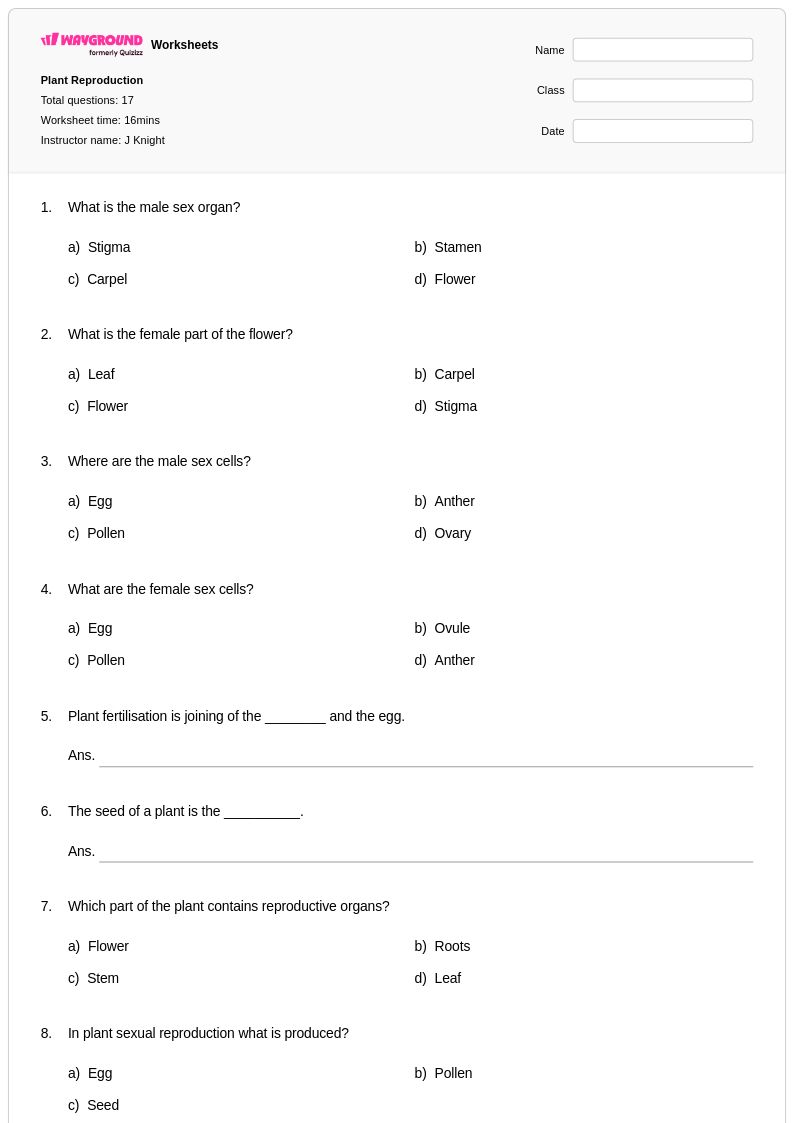
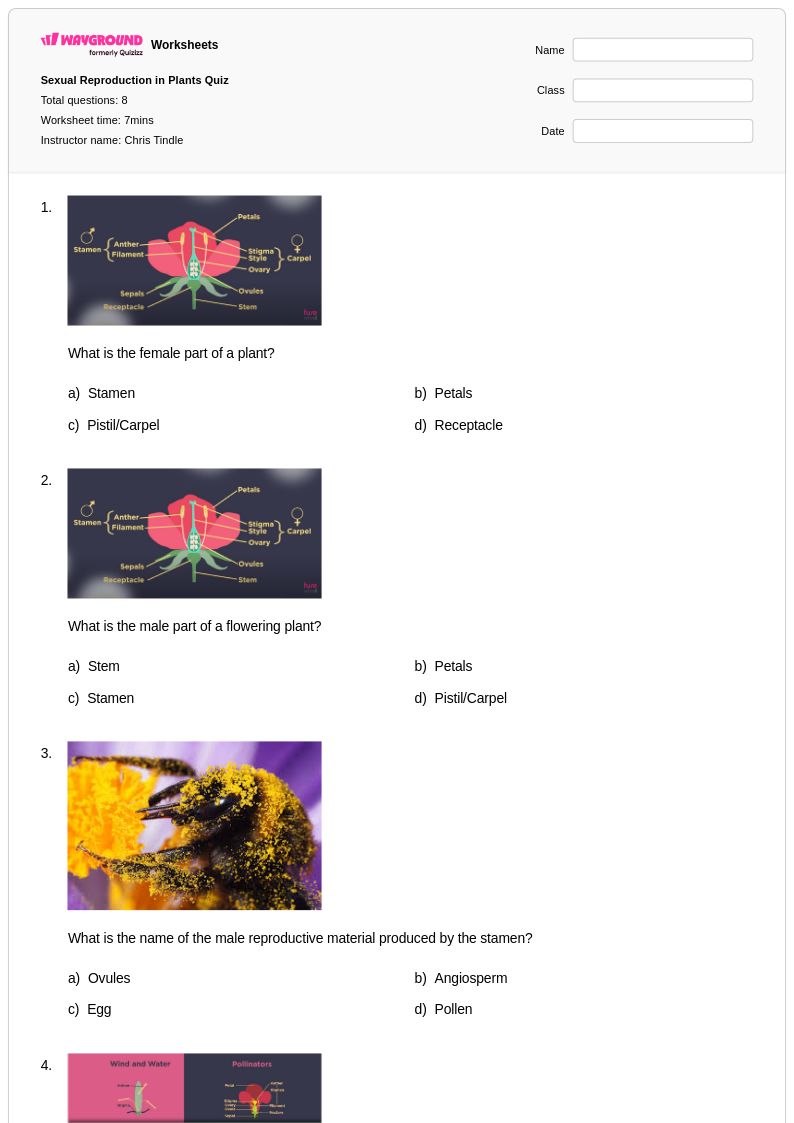
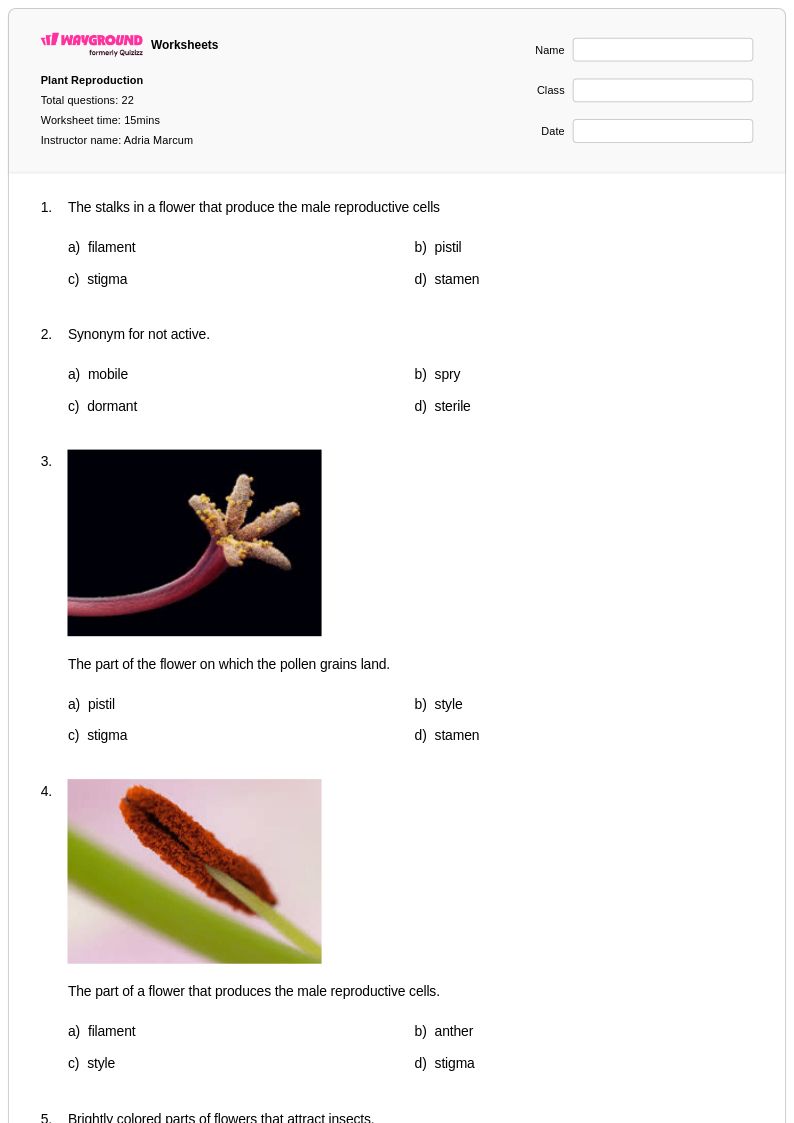
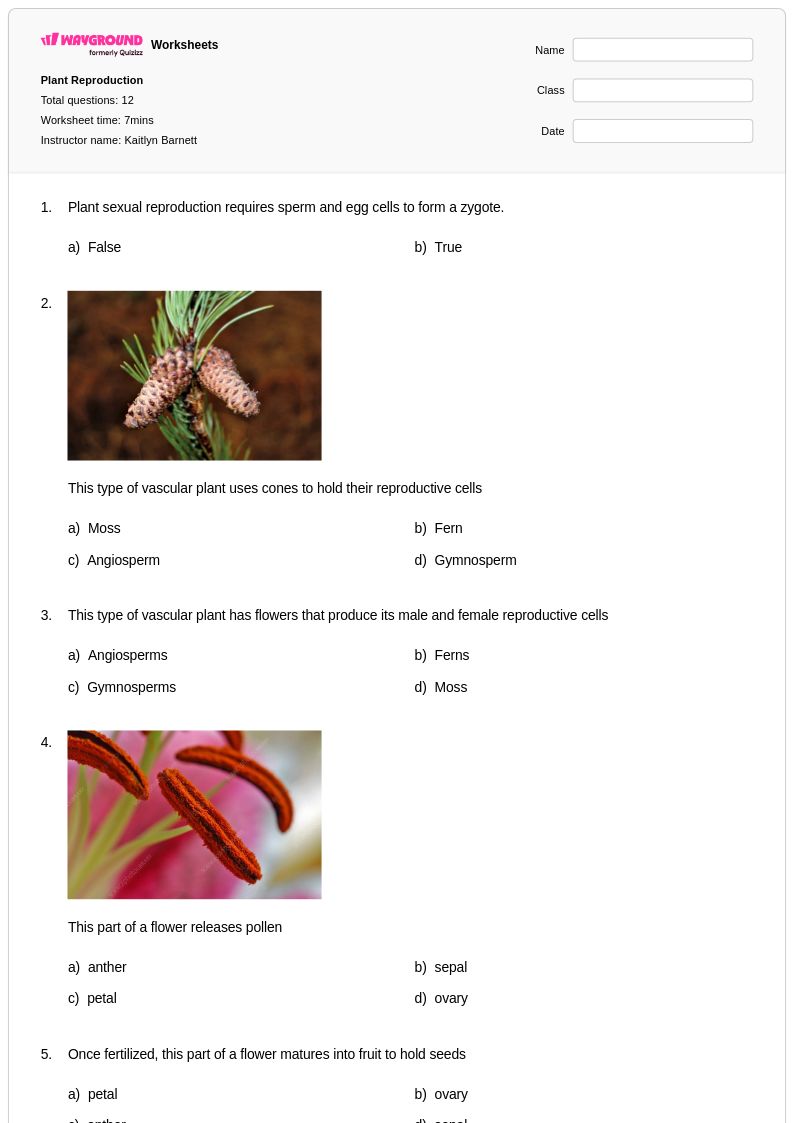
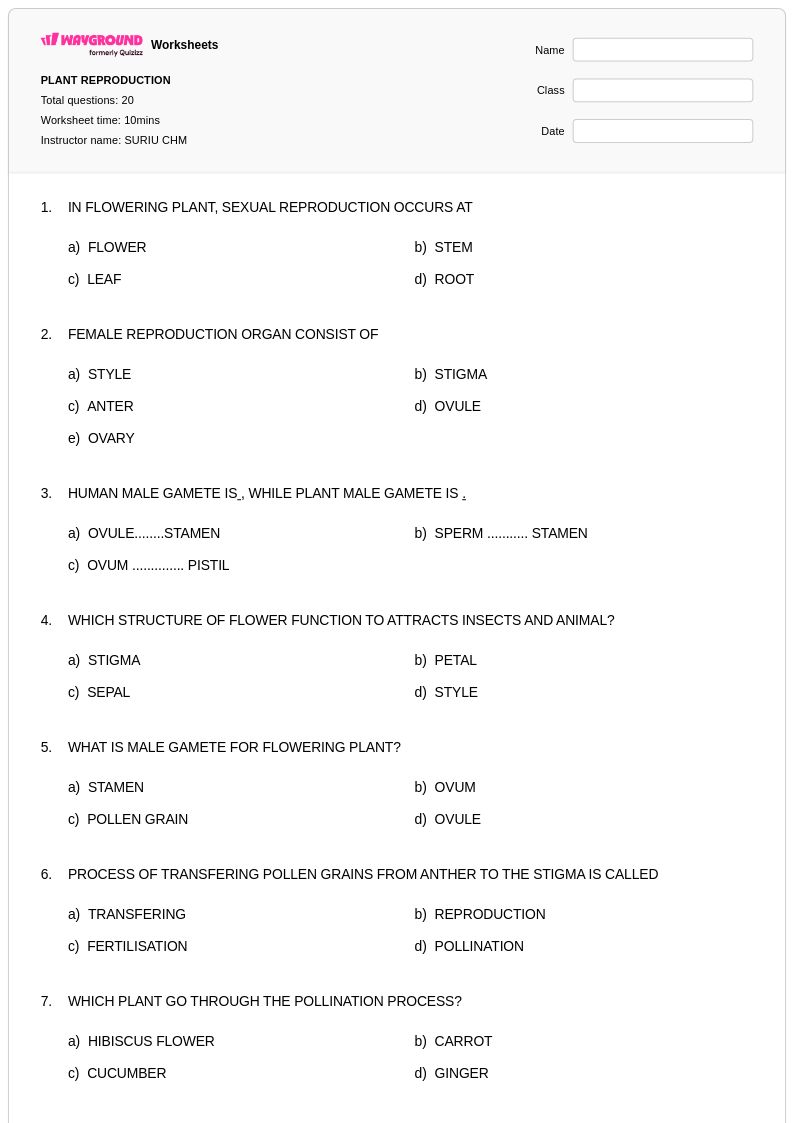
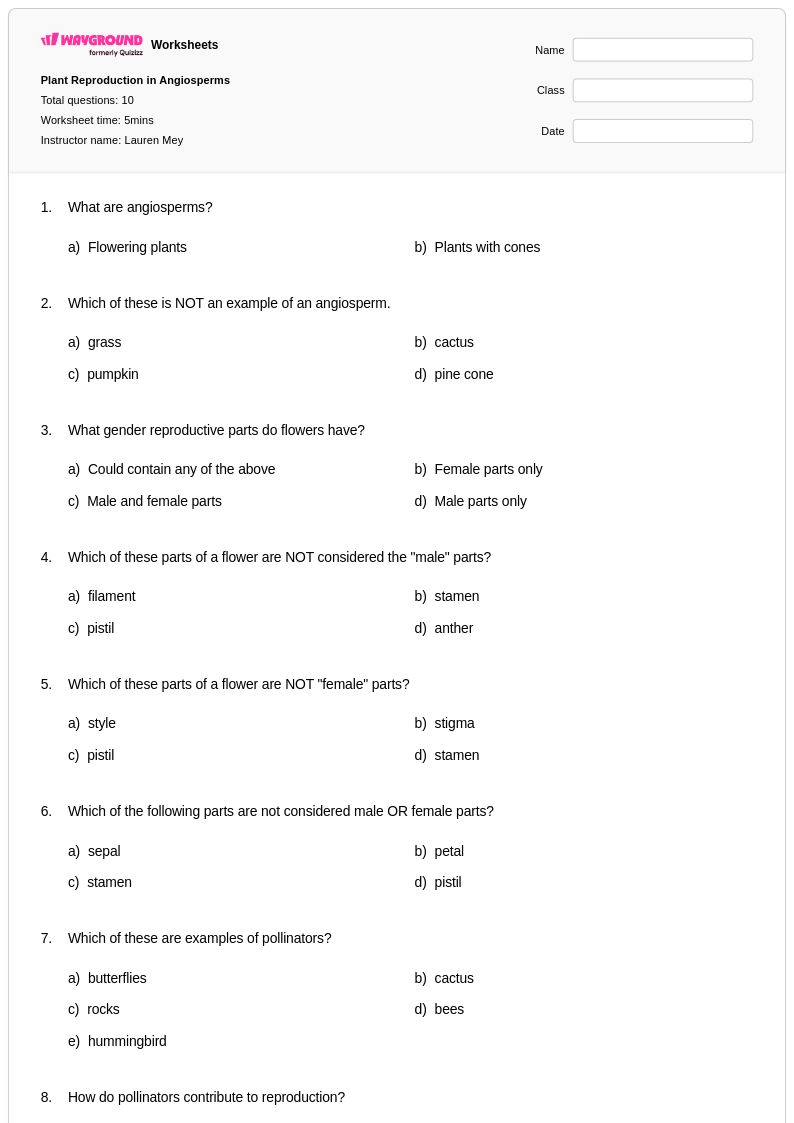
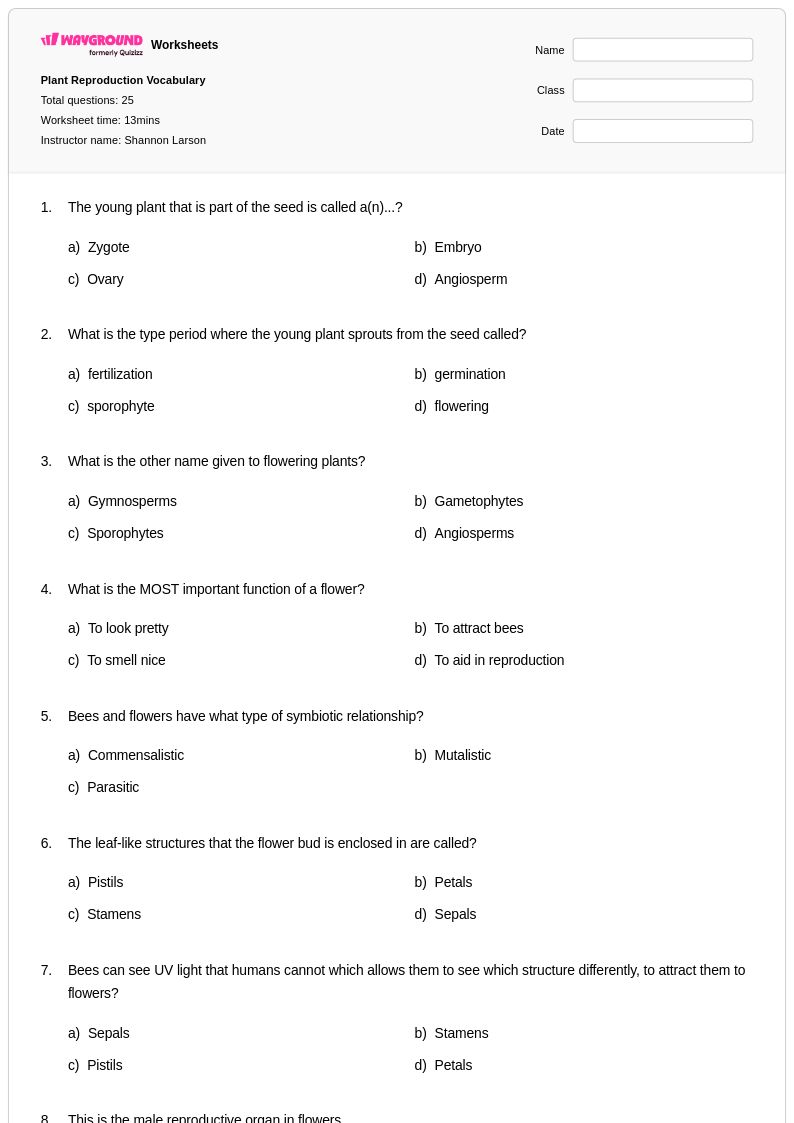
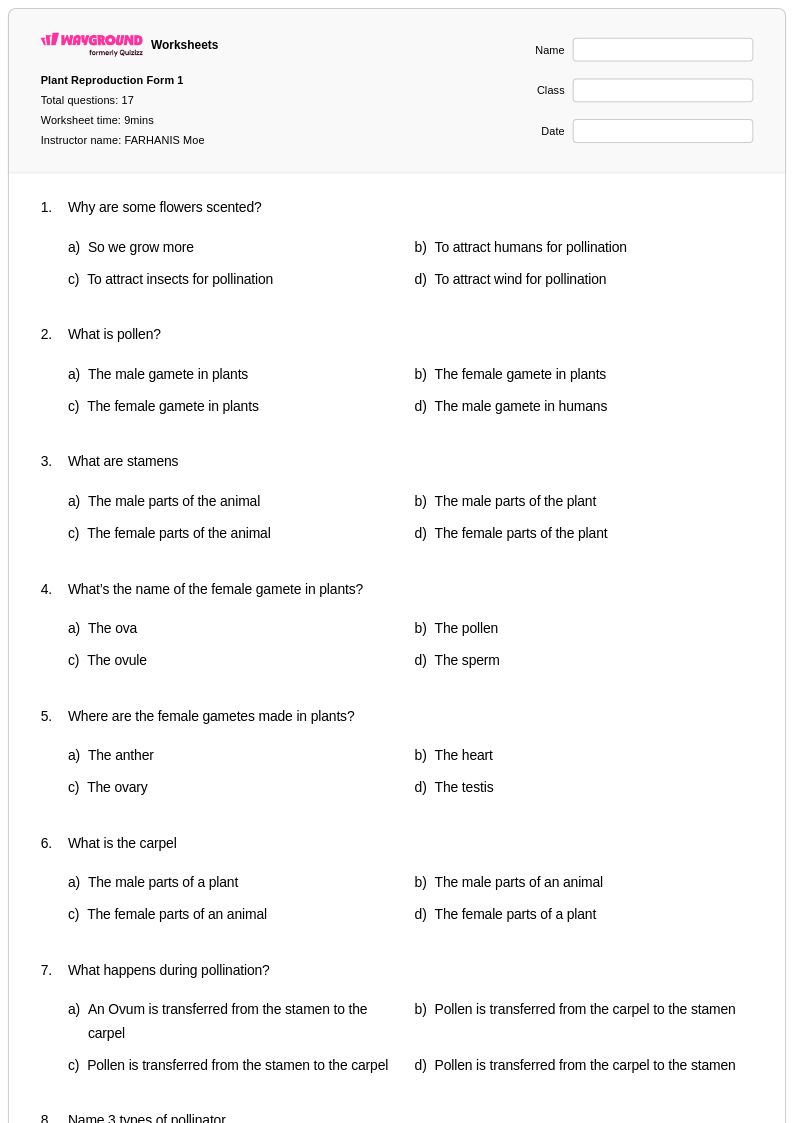
Plant reproduction worksheets for Class 7 students available through Wayground (formerly Quizizz) provide comprehensive coverage of how flowering plants, gymnosperms, and other plant species create new generations through sexual and asexual reproduction methods. These carefully designed educational resources strengthen students' understanding of essential botanical concepts including pollination mechanisms, seed formation, spore production, vegetative propagation, and the alternation of generations in plant life cycles. The practice problems guide seventh-grade learners through complex processes such as fertilization in angiosperms, the role of pollinators in plant reproduction, and the differences between monoecious and dioecious plants, while answer keys support both independent study and classroom instruction. Teachers can access these free printables in convenient pdf format, making it easy to distribute materials that reinforce critical thinking skills about plant biology and reproductive strategies.
Wayground (formerly Quizizz) empowers educators with an extensive collection of teacher-created plant reproduction worksheets specifically aligned with Class 7 science standards and learning objectives. The platform's robust search and filtering capabilities allow teachers to quickly locate resources that match their specific curriculum needs, whether focusing on flower anatomy, seed dispersal mechanisms, or comparing sexual versus asexual reproduction in plants. These versatile materials support differentiated instruction through customizable difficulty levels and are available in both printable and digital formats, enabling seamless integration into diverse classroom environments and remote learning situations. The comprehensive worksheet collection serves multiple pedagogical purposes, from introducing new concepts about plant reproductive structures to providing targeted remediation for struggling students and enrichment opportunities for advanced learners exploring topics like cross-pollination and hybrid formation.
FAQs
How do I teach plant reproduction to middle or high school students?
Start by distinguishing sexual reproduction (involving pollination, fertilization, and seed formation) from asexual reproduction (such as vegetative propagation, runners, and budding) so students build a clear conceptual framework before encountering details. Use flower dissection activities or labeled diagrams to ground abstract processes like pollen transfer and ovule fertilization in observable structures. From there, move into life cycle comparisons, including the alternation of generations in plants, to show how reproductive strategies vary across species and environments.
What exercises help students practice plant reproduction concepts?
Labeling diagrams of flower anatomy, matching pollination mechanisms to plant types, and sequencing the stages of seed formation and dispersal are all high-value practice tasks for this topic. Comparison exercises that ask students to contrast sexual and asexual reproduction reinforce categorical thinking, while scenario-based questions about reproductive strategies help students apply concepts to real plant survival contexts. Worksheets that combine diagram interpretation with short-answer questions are especially effective for checking both recall and understanding.
What misconceptions do students commonly have about plant reproduction?
A frequent misconception is that all plants reproduce only through seeds, causing students to overlook asexual methods like stolons, rhizomes, and bulb division that are common in many species. Students also often confuse pollination with fertilization, treating them as the same event rather than understanding pollination as pollen transfer and fertilization as the union of gametes that follows. Another common error is assuming that wind-pollinated plants produce showy flowers, when in fact they typically have reduced, inconspicuous flowers adapted for pollen dispersal rather than attracting pollinators.
How do I use Wayground's plant reproduction worksheets in my classroom?
Wayground's plant reproduction worksheets are available as printable PDFs for traditional classroom use and in digital formats for technology-integrated environments, making them suitable for in-person, hybrid, or remote instruction. Teachers can assign them as independent practice, guided group work, or homework, and can also host them as a quiz directly on Wayground to collect student responses and track performance. Each worksheet includes a complete answer key, supporting both teacher-led review and student self-assessment.
How do I differentiate plant reproduction instruction for students with varying skill levels?
For students who need additional support, simplify tasks by focusing on one reproductive pathway at a time, such as tracing only the steps of pollination before introducing seed dispersal or asexual methods. On Wayground, teachers can apply individual accommodations including read aloud support, reduced answer choices, and extended time, which are saved per student and reusable across sessions without disrupting the rest of the class. For advanced learners, push complexity by asking students to evaluate the evolutionary advantages of different reproductive strategies or analyze how environmental conditions influence pollinator relationships.
How does plant reproduction connect to broader life science standards?
Plant reproduction sits at the intersection of genetics, ecology, and evolutionary biology, making it a high-leverage topic for building cross-cutting conceptual understanding. Pollination and seed dispersal connect directly to ecosystem interdependence and plant-animal relationships, while the alternation of generations ties into broader concepts of cell division and the role of meiosis in producing genetic variation. Teaching plant reproduction well positions students to understand adaptation, species survival, and biodiversity at a systems level.