Free Printable Spinal Cord and Nerves Worksheets for Class 7
Class 7 biology worksheets on spinal cord and nerves help students master the central nervous system through engaging printables, practice problems, and comprehensive answer keys available as free PDF downloads from Wayground.
Explore printable Spinal Cord and Nerves worksheets for Class 7
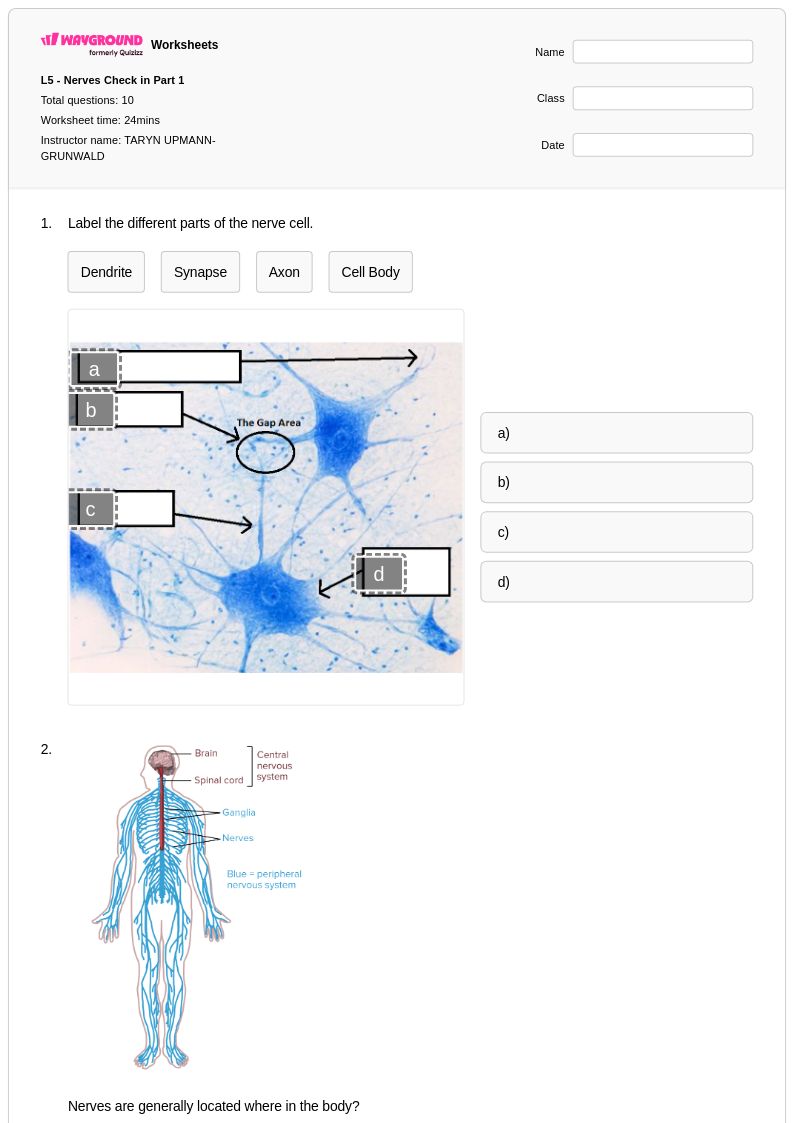
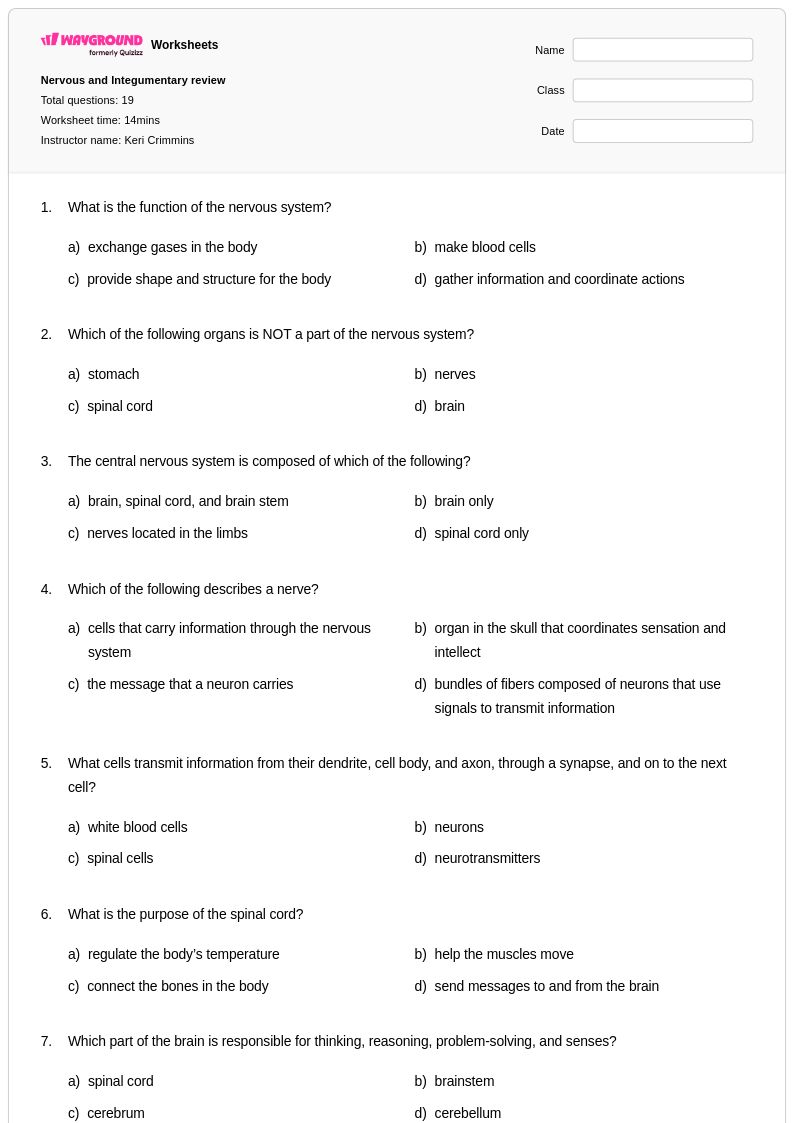
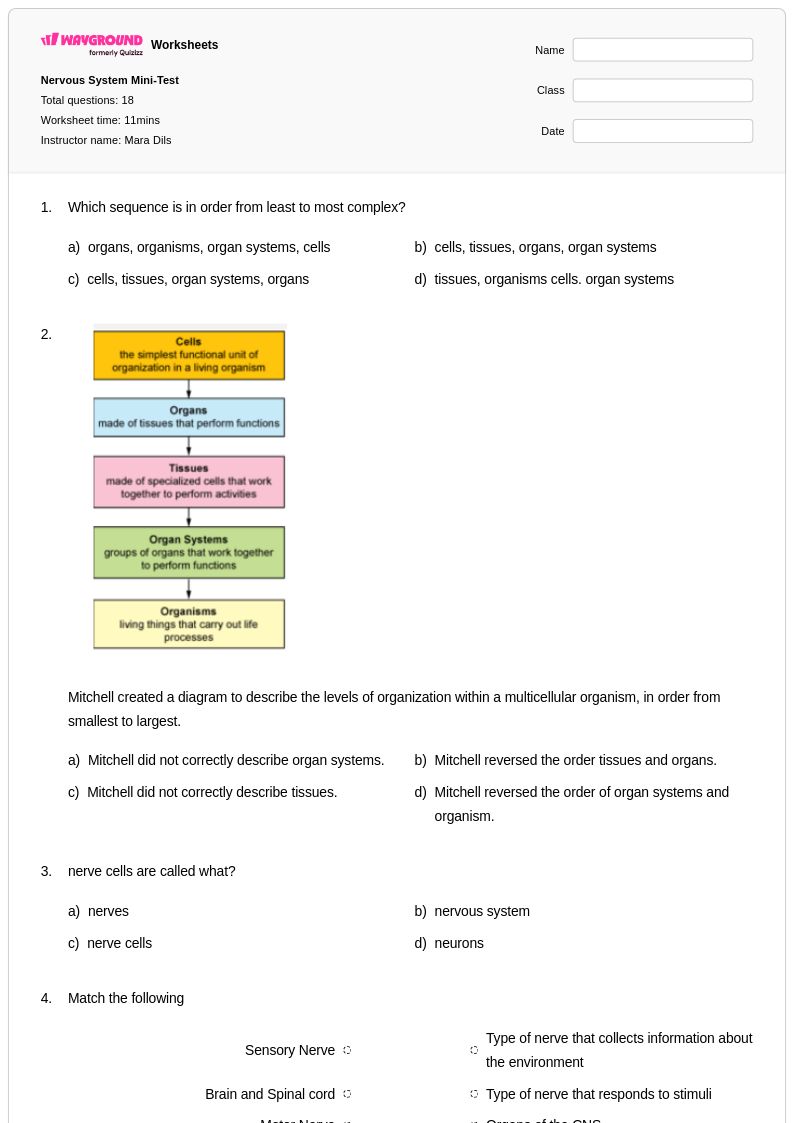
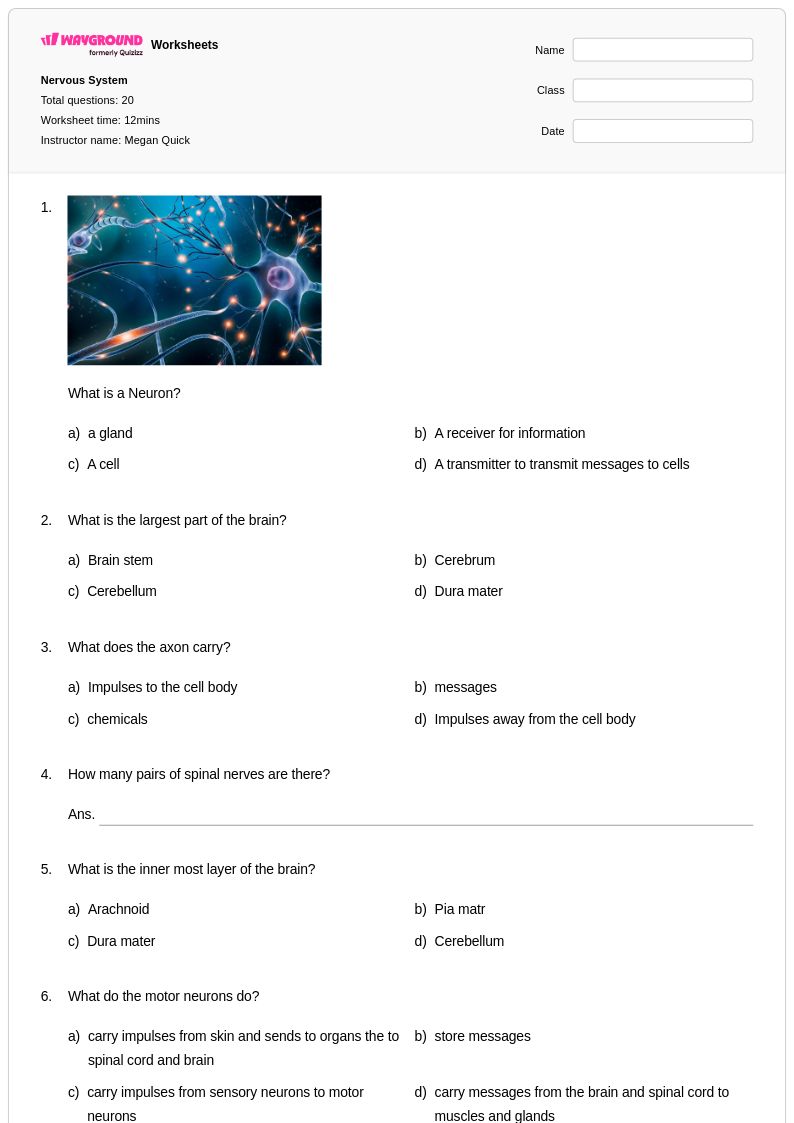
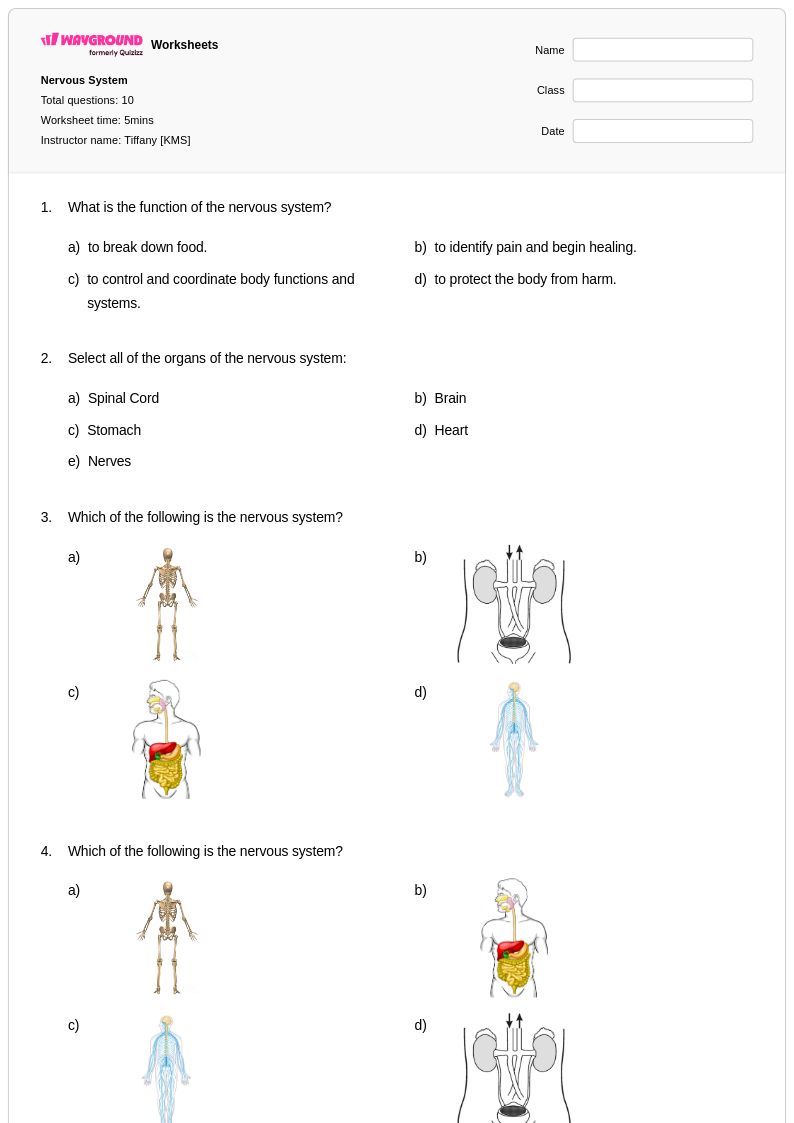
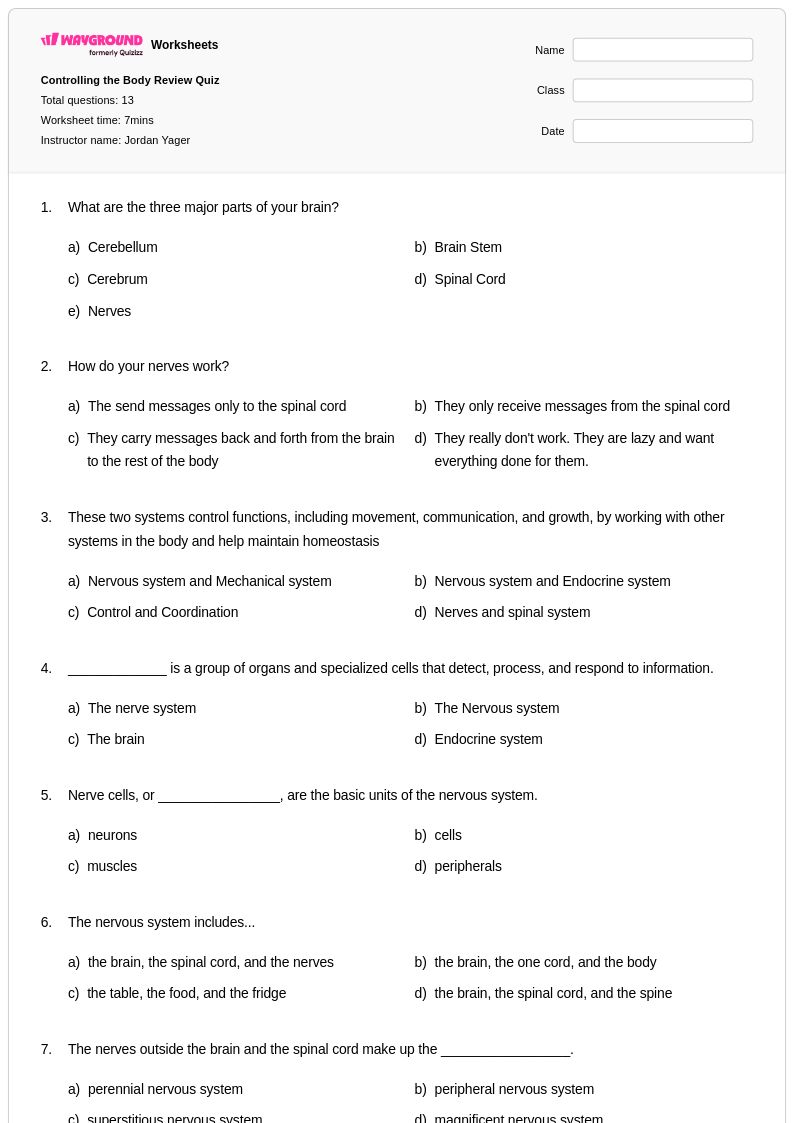
Spinal cord and nerves worksheets for Class 7 students through Wayground (formerly Quizizz) provide comprehensive coverage of the central and peripheral nervous systems, focusing on the critical anatomical structures and physiological processes that enable communication throughout the human body. These educational resources strengthen students' understanding of how the spinal cord serves as the main pathway for nerve signals traveling between the brain and body, while exploring the intricate network of sensory and motor nerves that control reflexes, movement, and sensation. Each worksheet includes detailed practice problems that challenge students to identify spinal cord anatomy, trace nerve pathways, and analyze reflex arcs, with accompanying answer keys that support independent learning and self-assessment. The free printables and pdf materials allow students to master complex concepts such as nerve impulse transmission, spinal cord protection mechanisms, and the distinction between voluntary and involuntary nervous system responses.
Wayground (formerly Quizizz) empowers educators with millions of teacher-created resources specifically designed for spinal cord and nerves instruction, featuring robust search and filtering capabilities that help locate materials perfectly suited to Class 7 biology curriculum requirements and standards alignment. Teachers can access differentiation tools that accommodate diverse learning needs, from struggling students who require foundational nerve structure practice to advanced learners ready for complex neurological case studies and enrichment activities. The platform's flexible customization options enable educators to modify existing worksheets or combine multiple resources for comprehensive lesson planning, while the availability of both printable and digital formats, including downloadable pdf versions, ensures seamless integration into any classroom environment. These features streamline instructional planning and provide targeted remediation opportunities, allowing teachers to address specific gaps in student understanding of nervous system concepts while offering varied skill practice that reinforces learning objectives.
FAQs
How do I teach spinal cord anatomy to biology students?
Start by establishing the spinal cord's role as the primary communication highway between the brain and the peripheral nervous system before introducing structural details. Teach the organization of gray and white matter as distinct functional zones, then layer in ascending and descending tracts to show how sensory and motor signals travel in opposite directions. Using labeled diagrams of cross-sections alongside reflex arc diagrams helps students connect structure to function early in the unit.
How do I explain the difference between the central and peripheral nervous systems to students?
The central nervous system consists of the brain and spinal cord, while the peripheral nervous system includes all the cranial and spinal nerves that extend outward to organs, muscles, and sensory receptors. A useful classroom strategy is to use a hub-and-spoke analogy: the spinal cord is the central hub, and spinal nerves are the spokes radiating outward to the body. Having students trace specific nerve pathways from stimulus to response reinforces how both systems work together in real time.
What exercises help students practice identifying nerve pathways and spinal cord structures?
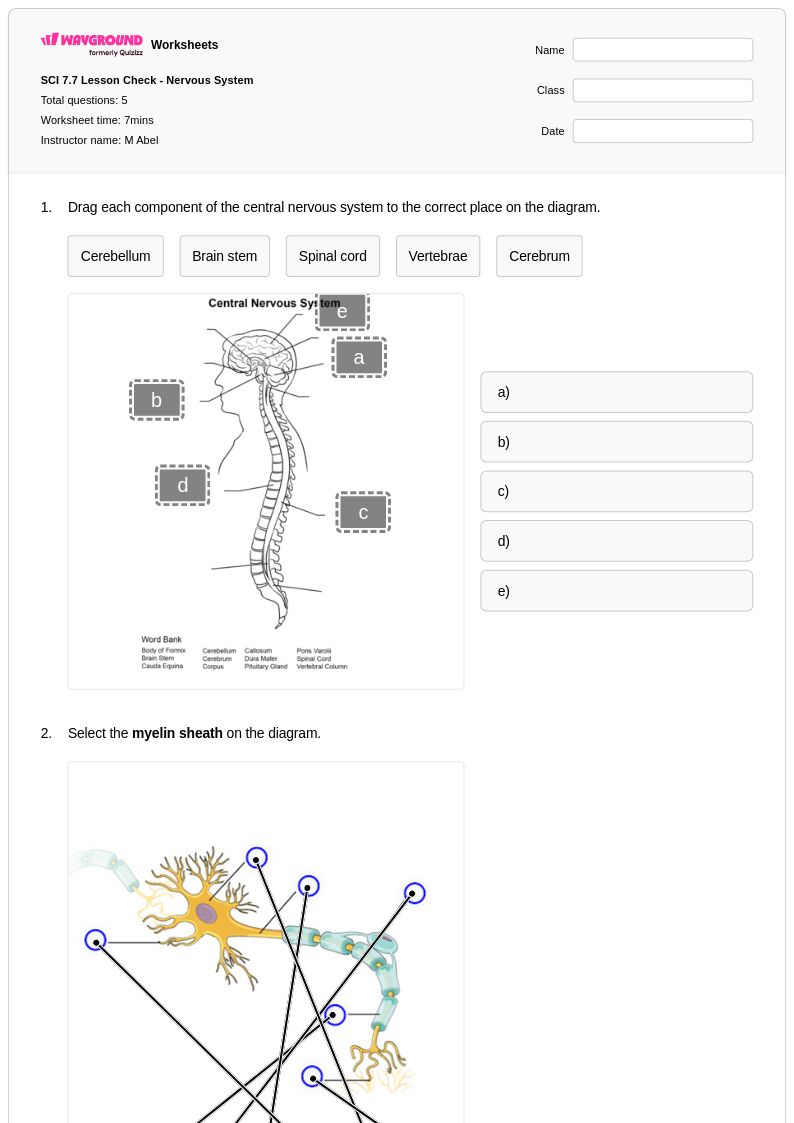
Practice problems that ask students to trace a signal through a reflex arc, from receptor to effector, are particularly effective for building pathway literacy. Labeling exercises on spinal cord cross-sections help students distinguish gray matter horns from white matter tracts, while case-based problems involving spinal cord injuries challenge students to connect anatomical location to specific functional deficits. Varying between diagram completion and short-answer analysis ensures students can both recognize and explain the structures.
What common mistakes do students make when learning about the spinal cord and nerves?
One of the most frequent errors is confusing ascending and descending tracts: students often reverse which carries sensory information and which carries motor commands. Students also commonly misidentify the dorsal and ventral horns of gray matter, mixing up their roles in sensory versus motor processing. Another persistent misconception is treating spinal nerves and cranial nerves as interchangeable, when they differ in origin, number, and the functions they serve.
How can I use spinal cord and nerves worksheets to support students with different learning needs?
Wayground's spinal cord and nerves worksheets are available in both printable PDF and digital formats, making them flexible for classroom, hybrid, and independent study settings, and they can be hosted as a quiz directly on Wayground. For students who need additional support, Wayground's digital platform offers built-in accommodations including read-aloud functionality, reduced answer choices, extended time, and adjustable reading modes, all configurable per individual student without disrupting the rest of the class. These settings are reusable across sessions, reducing the setup burden for teachers managing differentiated instruction in neuroanatomy units.
How do spinal cord injury case studies help students understand neuroanatomy?
Case studies involving spinal cord injuries are among the most effective tools for making abstract anatomy clinically meaningful, because they require students to apply knowledge of tract locations and nerve levels to explain real functional outcomes. When students are asked why a cervical injury produces different deficits than a lumbar injury, they must reason through the anatomy rather than simply recall it. This approach also naturally introduces the concept of dermatomes and myotomes, deepening understanding of how spinal nerve levels map to specific body regions.