Free Printable Consecutive Integers Worksheets for Class 6
Class 6 consecutive integers worksheets from Wayground help students master identifying and working with sequential whole numbers through engaging printables, practice problems, and comprehensive answer keys for effective mathematical learning.
Explore printable Consecutive Integers worksheets for Class 6
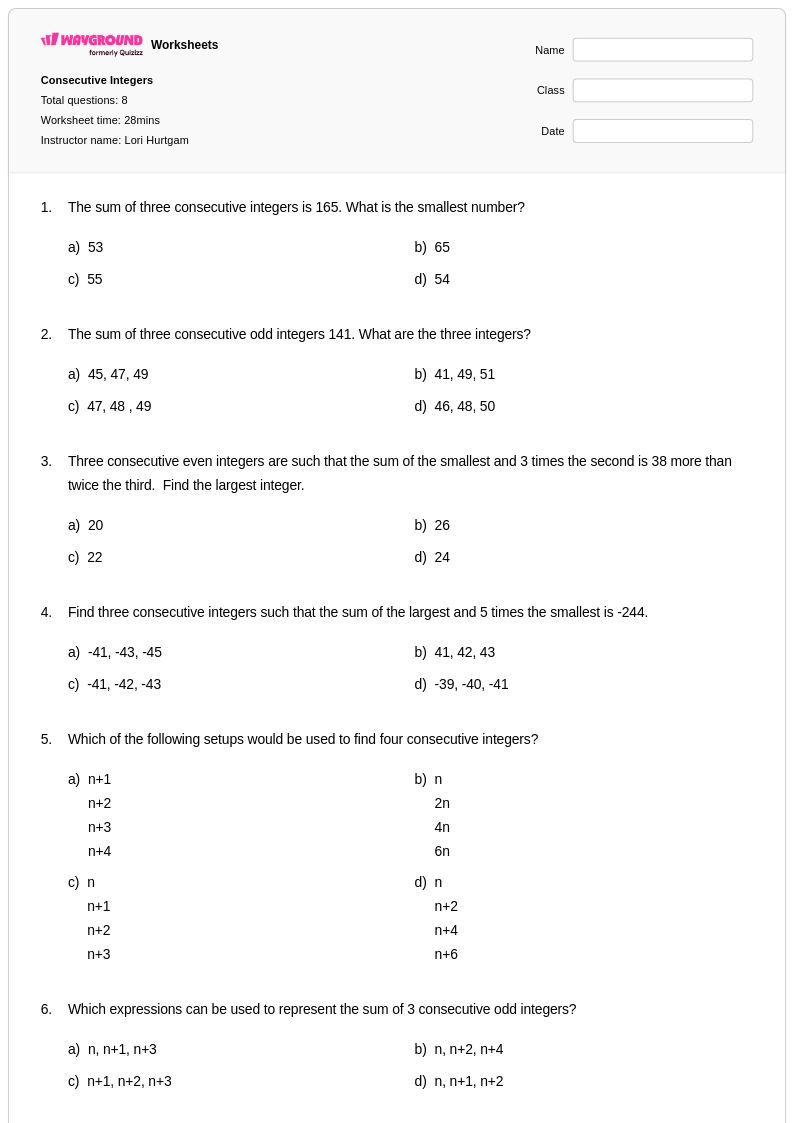
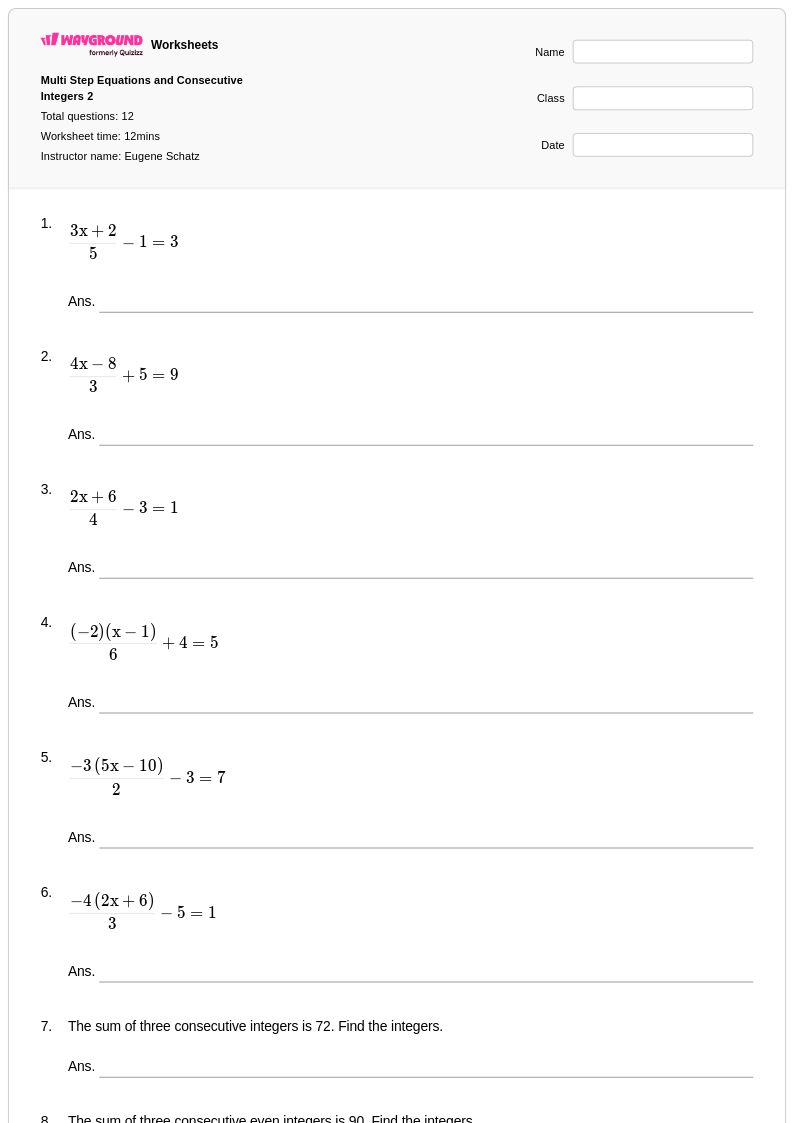
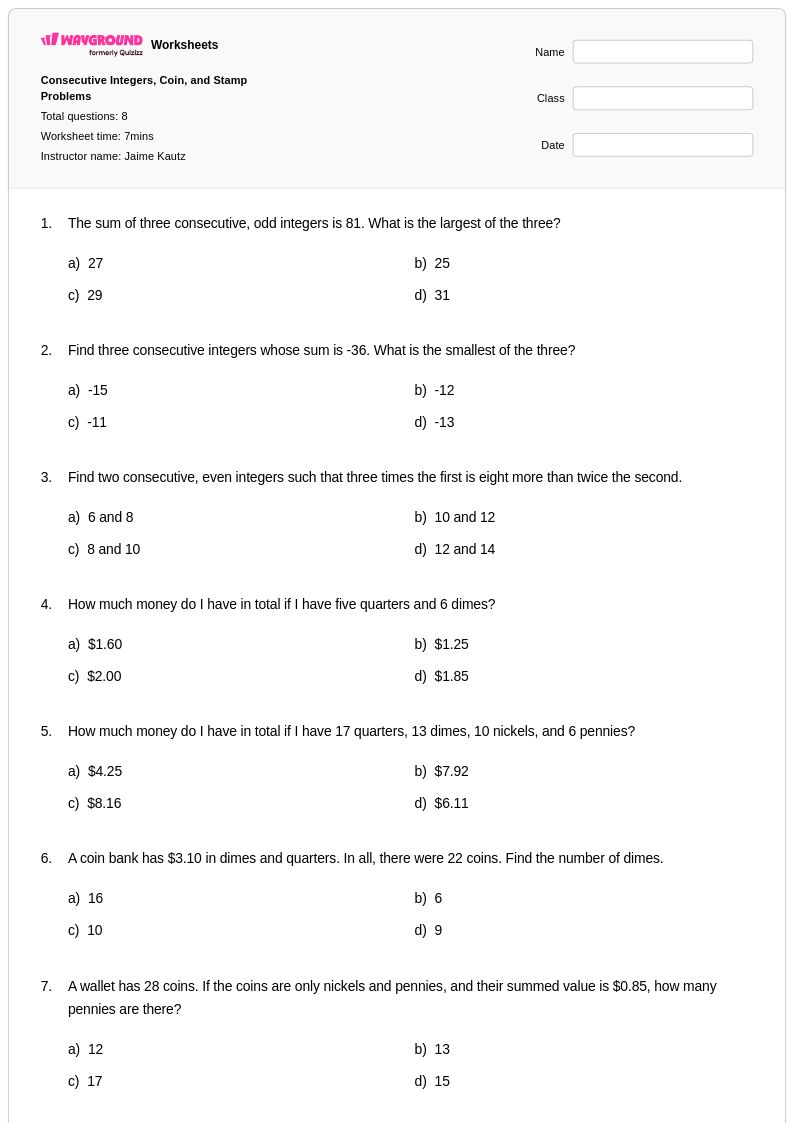
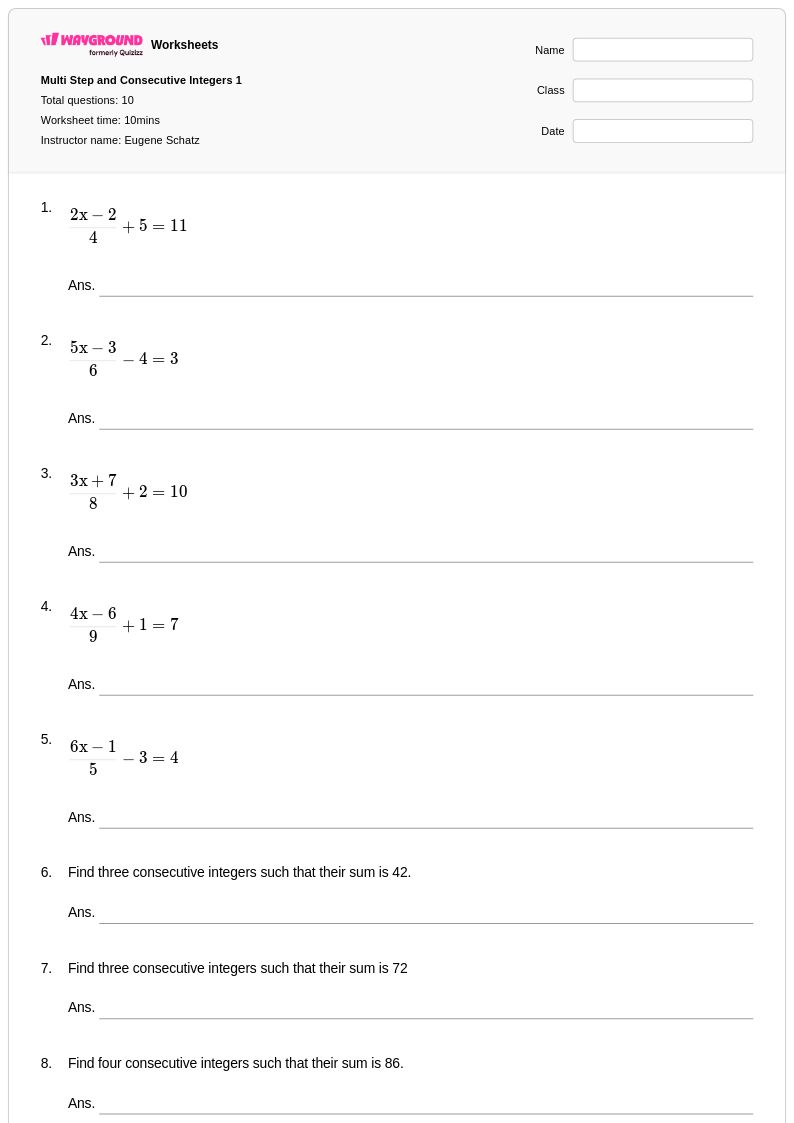
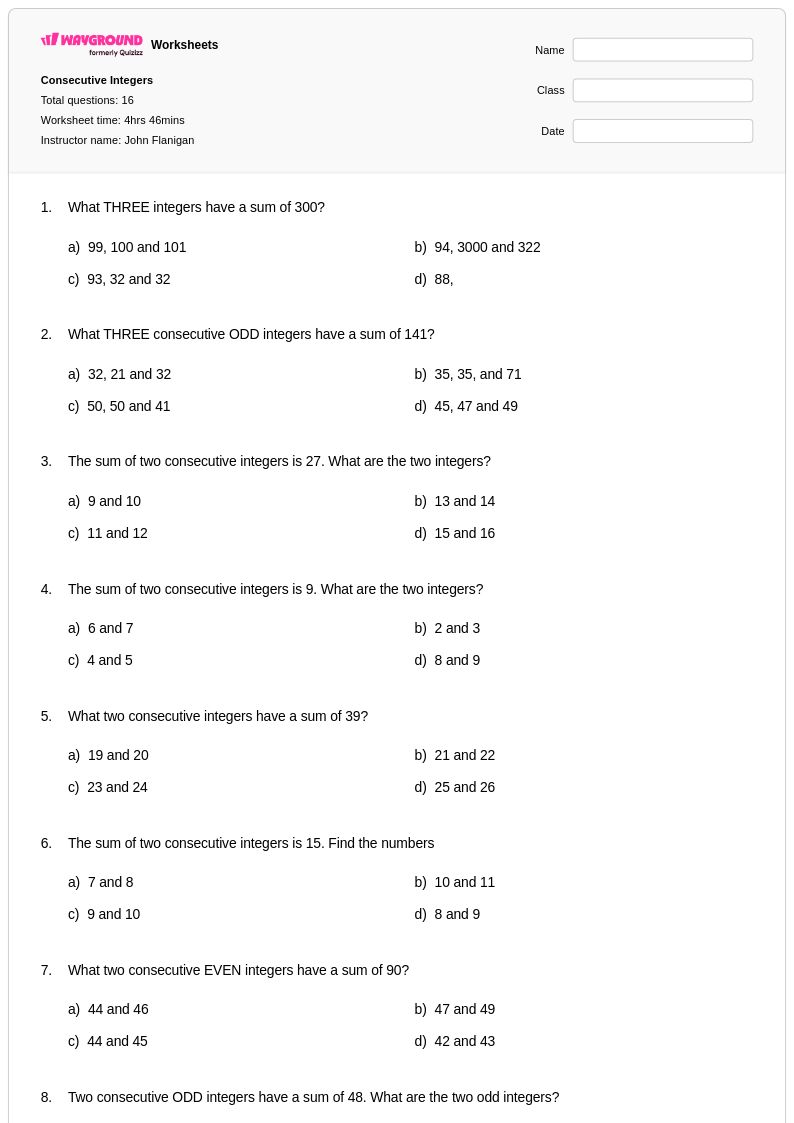
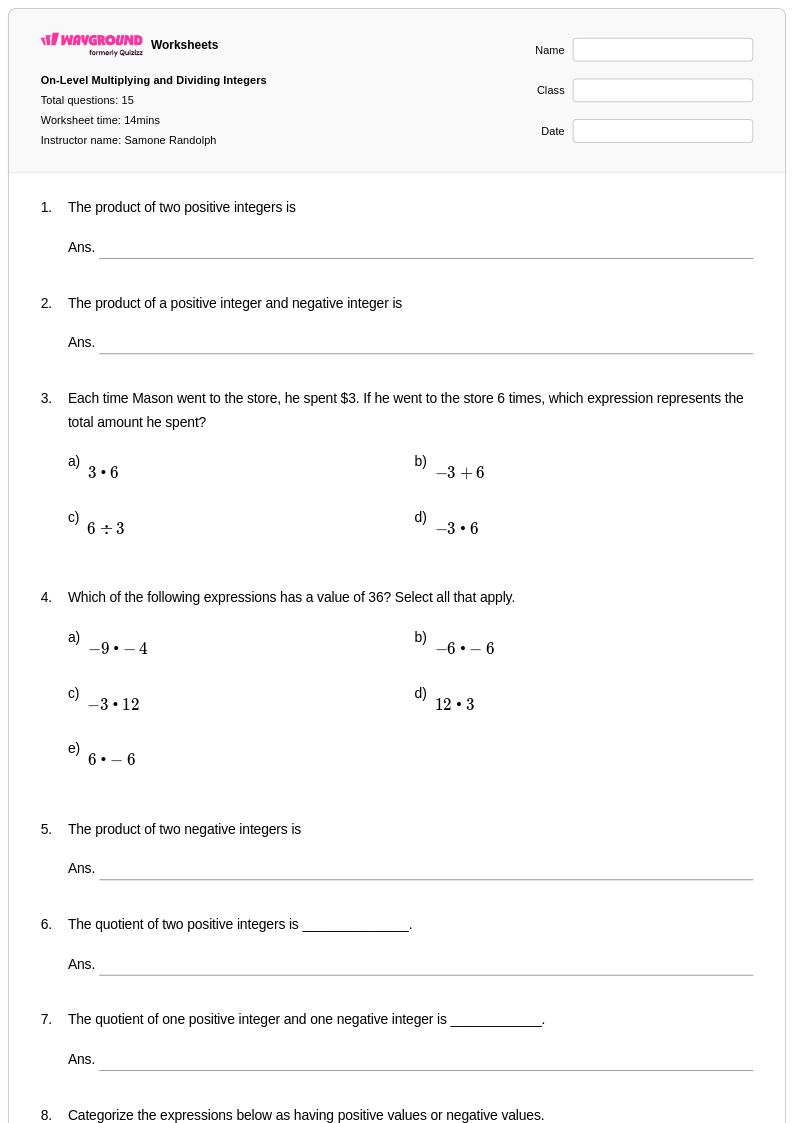
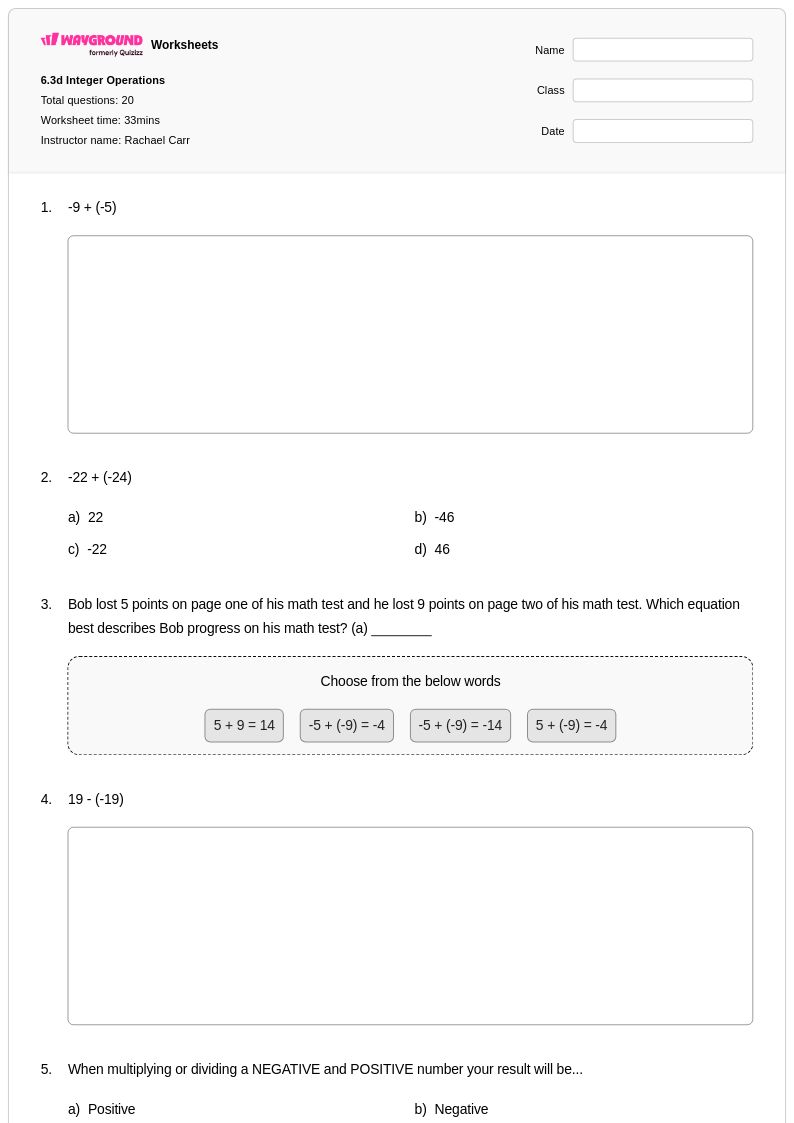
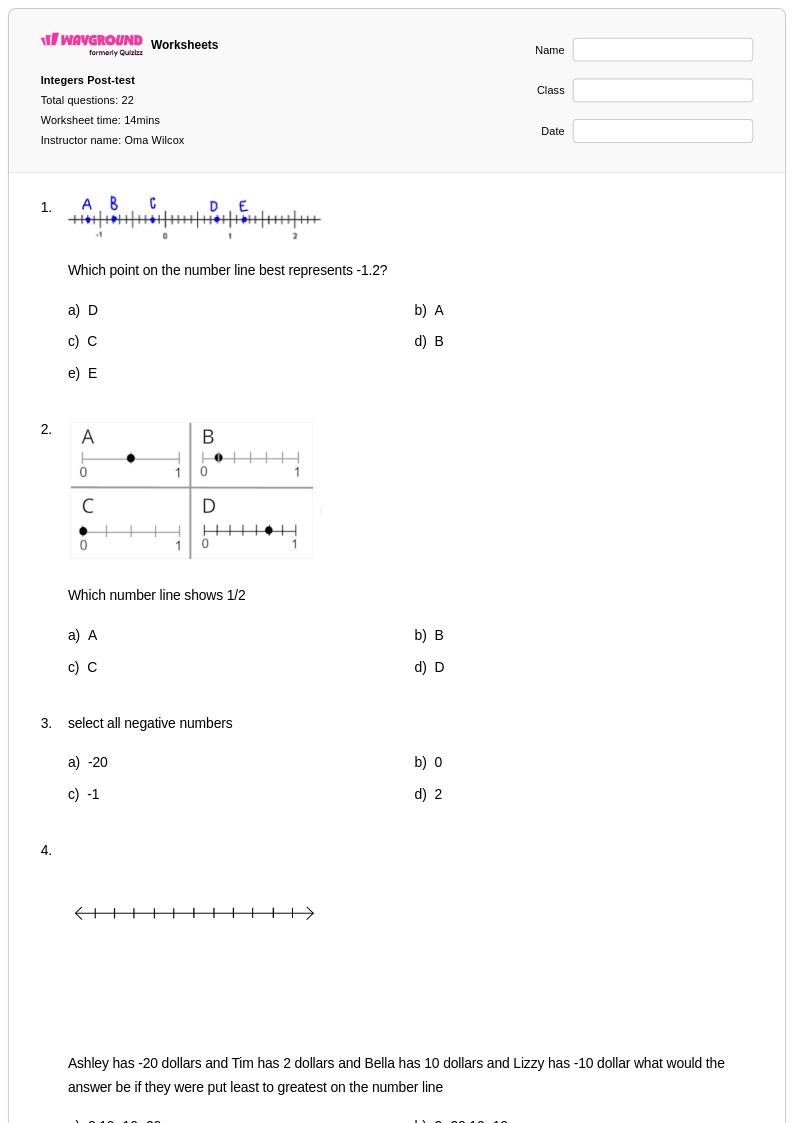
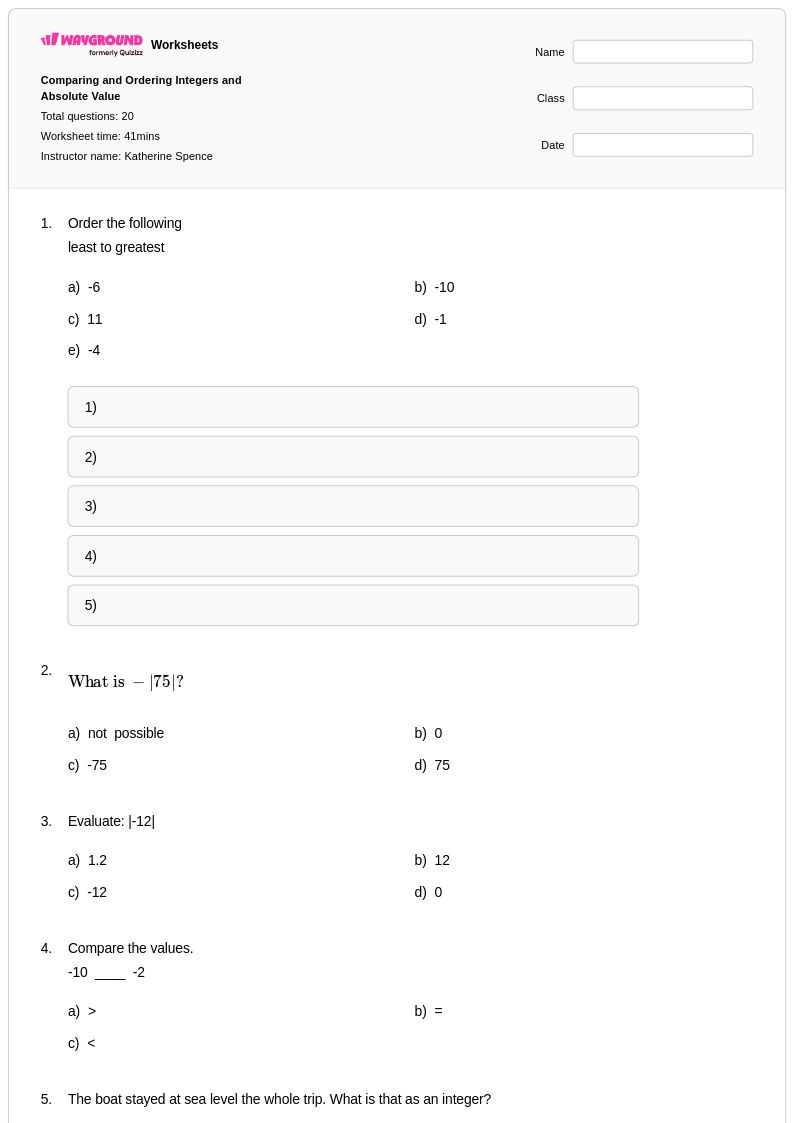
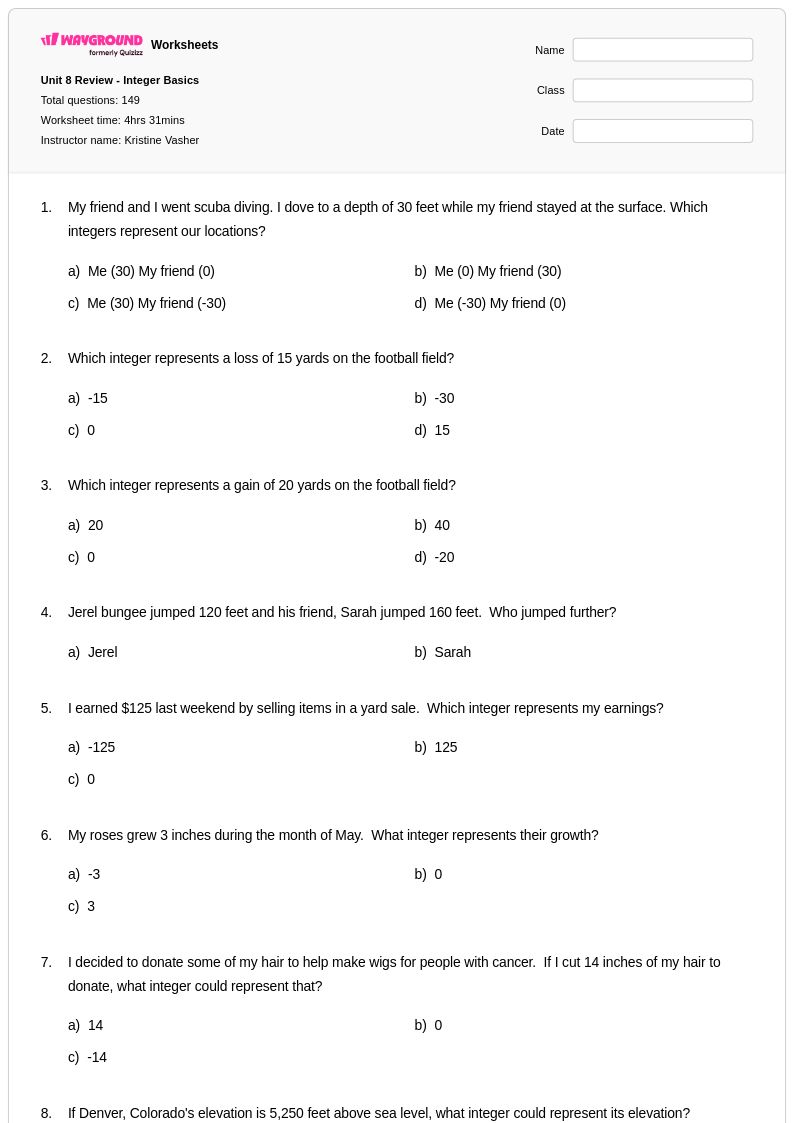
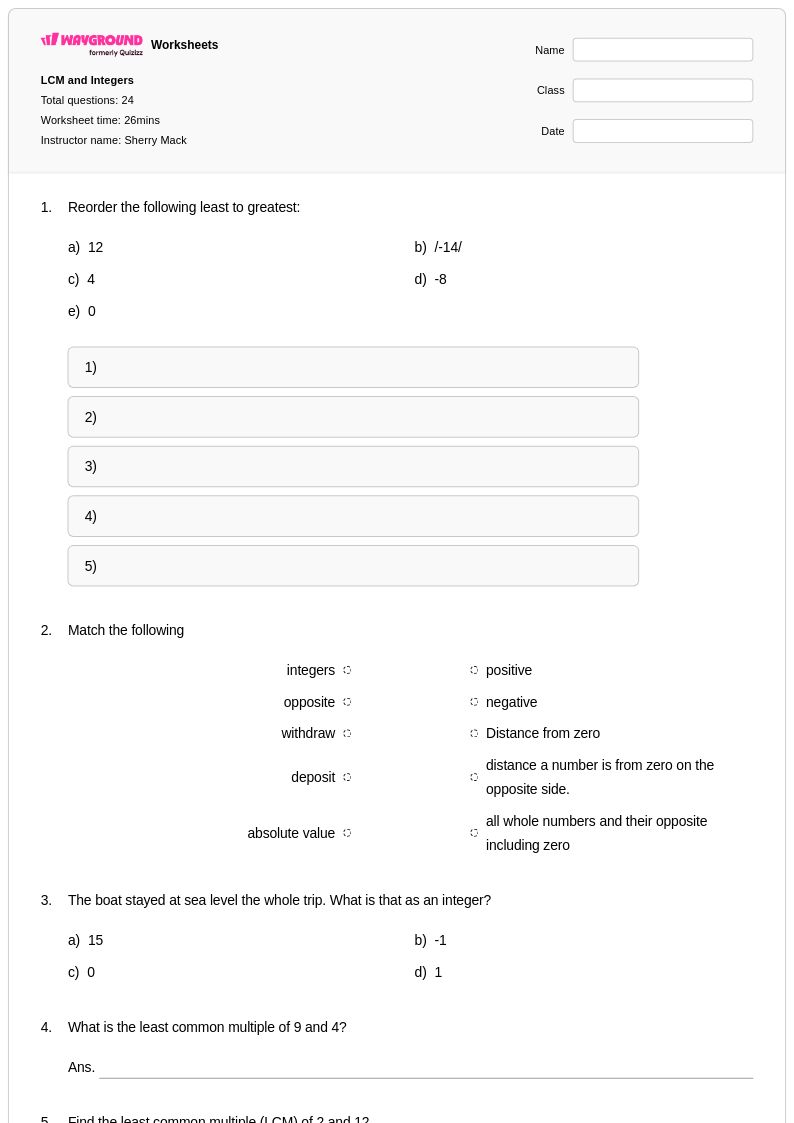
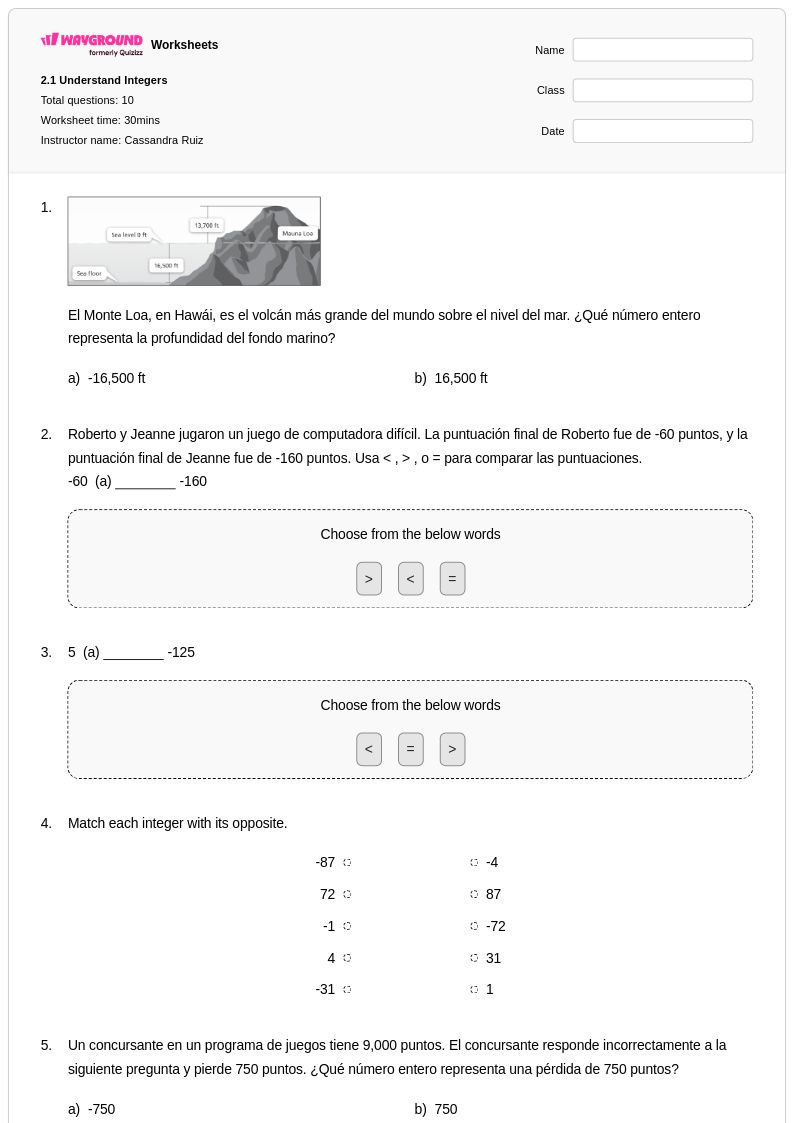
Consecutive integers worksheets for Class 6 students available through Wayground (formerly Quizizz) provide essential practice for developing algebraic thinking and number pattern recognition skills. These comprehensive printables focus on helping students understand the relationship between numbers that follow one another in sequence, such as 7, 8, 9 or -3, -2, -1, building the foundation for more advanced mathematical concepts. Students work through carefully crafted practice problems that challenge them to identify, continue, and analyze consecutive integer patterns, while also solving word problems that require finding unknown consecutive integers when given their sum or other relationships. Each worksheet includes a detailed answer key and is available as a free pdf download, making it easy for educators to incorporate these valuable resources into their number sense curriculum and provide students with targeted skill reinforcement.
Wayground (formerly Quizizz) empowers teachers with access to millions of teacher-created consecutive integers worksheets specifically designed for Class 6 mathematics instruction. The platform's robust search and filtering capabilities allow educators to quickly locate materials that align with their specific curriculum standards and learning objectives, while differentiation tools enable customization to meet diverse student needs within the same classroom. Teachers can seamlessly switch between printable pdf formats for traditional paper-and-pencil practice and digital formats for interactive learning experiences, providing flexibility for various instructional settings. These extensive resources support comprehensive lesson planning by offering materials suitable for initial skill introduction, targeted remediation for struggling learners, and enrichment activities for advanced students, ensuring that all sixth-grade students can master the critical concept of consecutive integers and strengthen their overall number sense abilities.
FAQs
How do I teach consecutive integers to sixth graders?
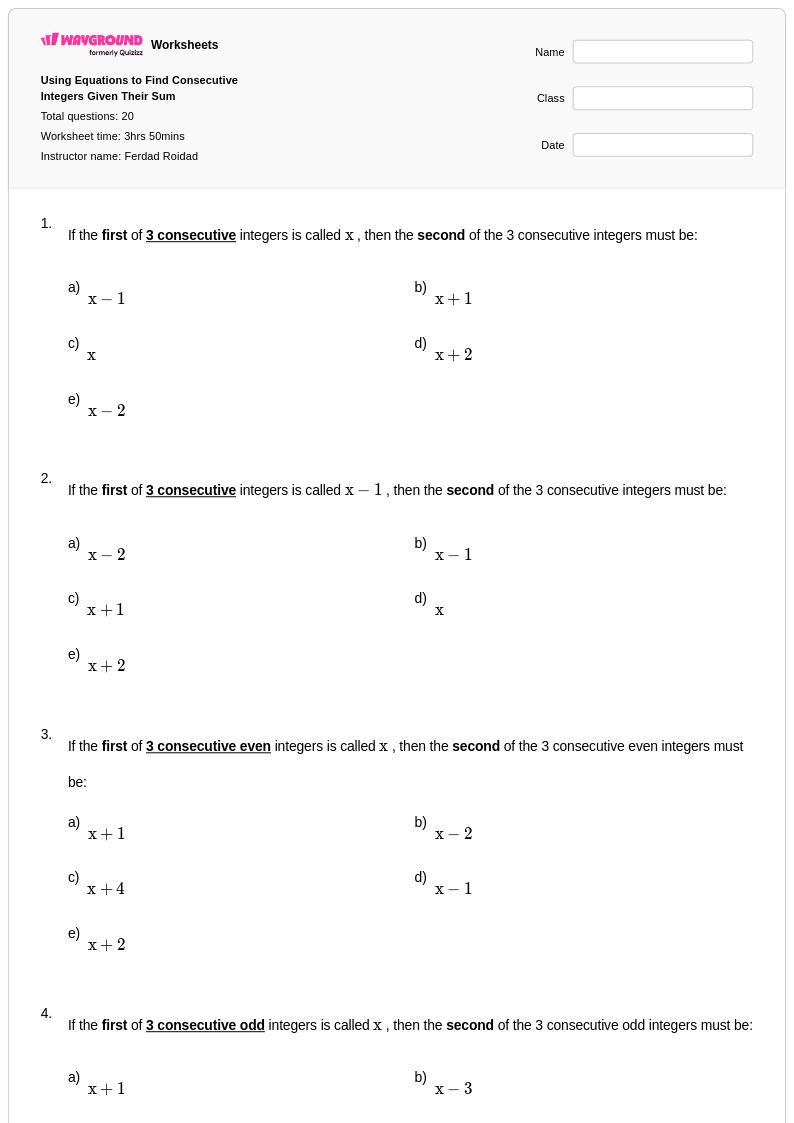
Use a number line to establish that consecutive integers differ by one, including sequences with negative values or zero. Once students can identify and continue patterns, introduce n, n + 1, and n + 2 as representations and connect them to simple problems that provide the integers' sum.
What exercises help Grade 6 students practice consecutive integers?
Sixth graders benefit from identifying consecutive numbers, completing sequences, locating missing integers, and analyzing patterns that include positive and negative values. Simple word problems involving a given sum help students move from number sense to introductory algebraic reasoning.
What mistakes do Grade 6 students make with consecutive integers?
Common errors include counting by two instead of one, assuming consecutive integers must be positive, and mishandling a sequence that crosses zero. When variables are introduced, students may also write n for every integer instead of n, n + 1, and n + 2.
How can I use a Grade 6 consecutive integers worksheet from Wayground?
Grade 6 worksheets are available as printable PDFs and digital formats, accommodating classroom, homework, and independent-practice needs. Teachers can host a worksheet as a digital quiz on Wayground or print and assign it on paper; every worksheet includes a complete answer key, and paper submissions can be scanned or captured for grading with the Wayground for Teachers app.
How do consecutive integers fit into the Grade 6 Common Core math progression?
In the Common Core progression, Grade 6 students expand their number system knowledge to negative integers and begin using variables and equations to represent relationships. Consecutive-integer problems connect these strands by pairing ordered integer patterns with expressions such as n + 1 and straightforward equation solving.
What grade do students learn consecutive integers?
Consecutive integers are commonly introduced or reinforced in Grade 6 as students extend number sense to negative values and begin formal algebraic reasoning. At this level, instruction typically emphasizes recognizing sequences, representing successive integers, and solving accessible problems involving a given sum.
How can I differentiate a Grade 6 consecutive integers worksheet?
Give developing learners number lines, short sequences, and positive-number examples before introducing negative integers or equations; challenge proficient students with sequences spanning zero and multi-step word problems. Wayground supports alternate worksheet versions through adjustable font spacing and size, a dyslexia-friendly font, and translation, while digital sessions can provide individual extended time, Read Aloud, reduced answer choices, or reading mode.