
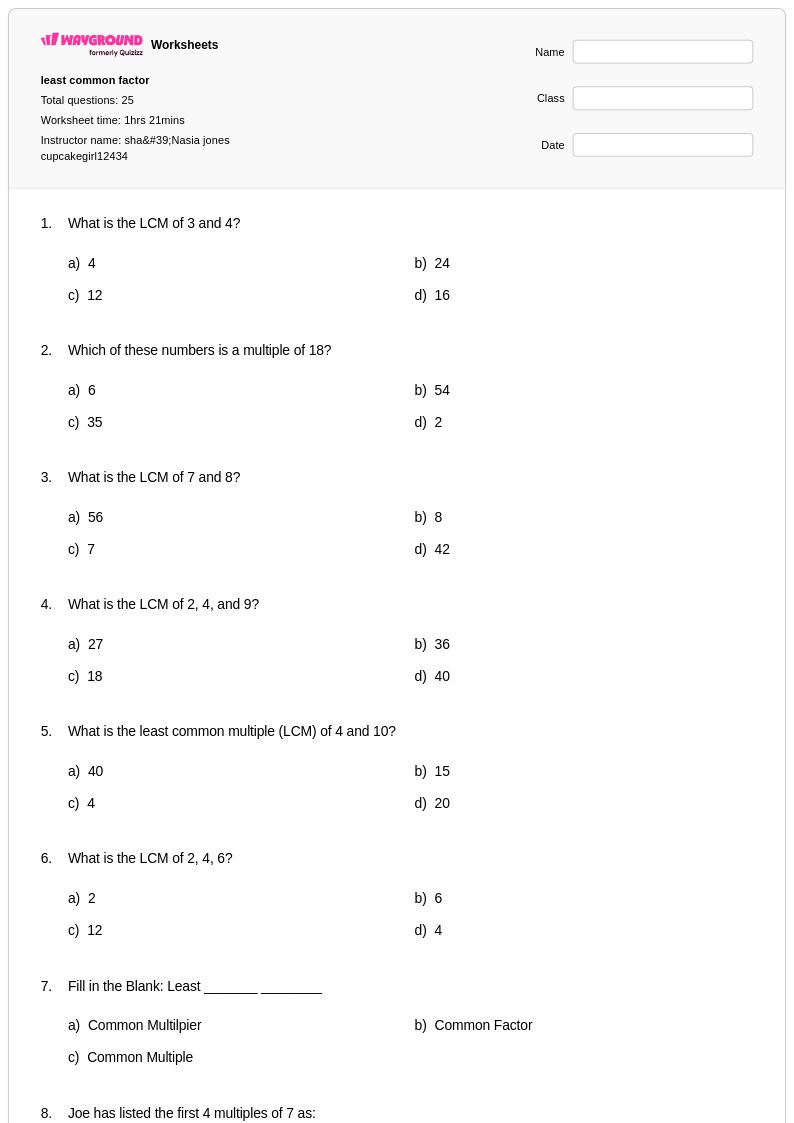
25 Q
6th
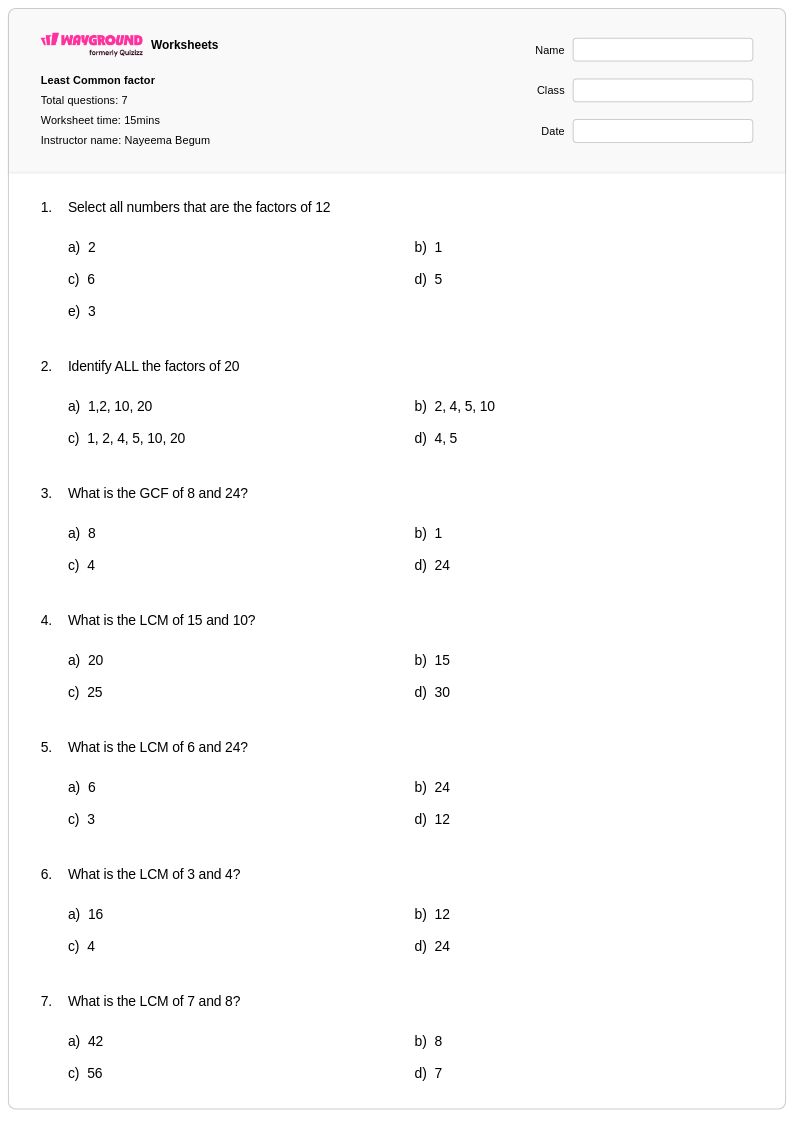
7 Q
6th
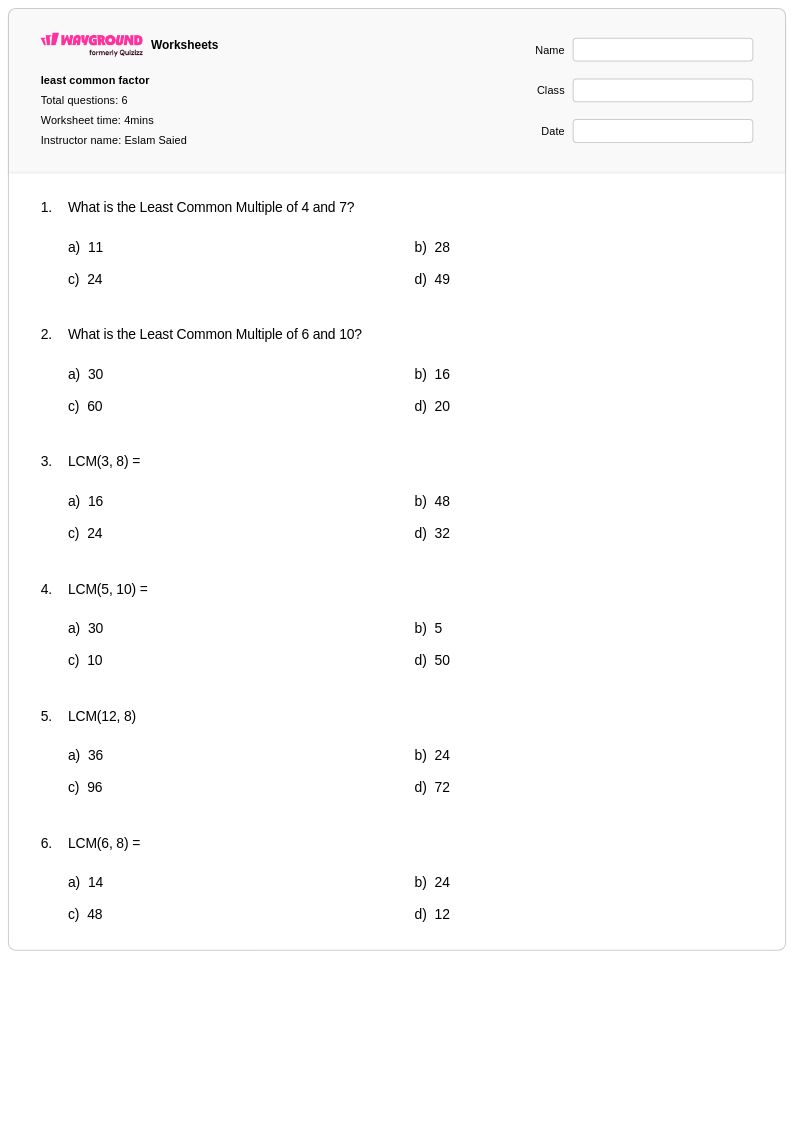
6 Q
6th
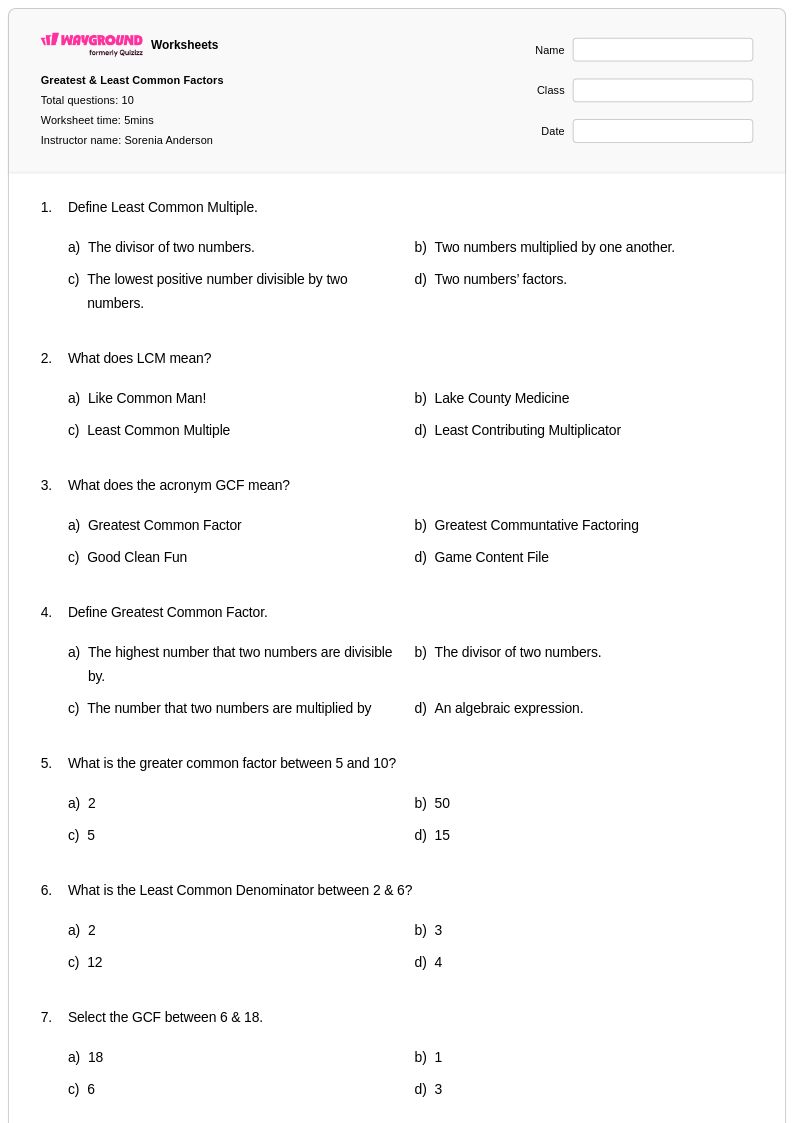
10 Q
6th
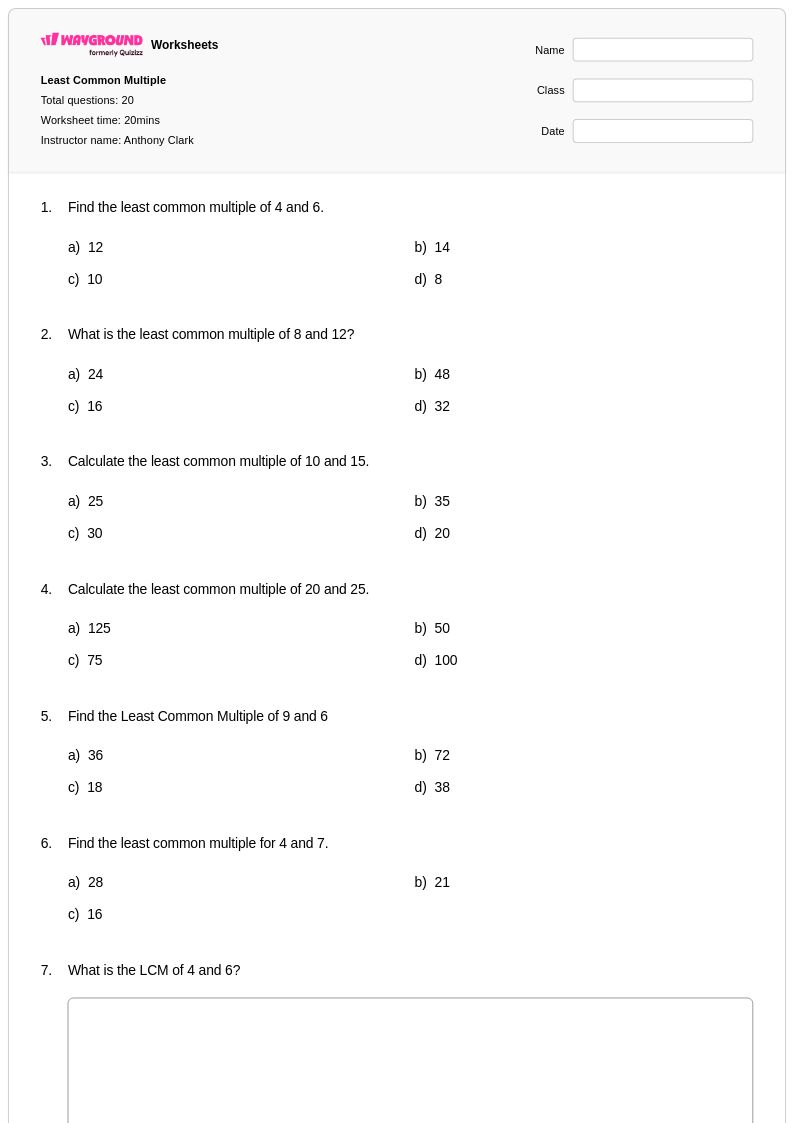
20 Q
5th - Uni
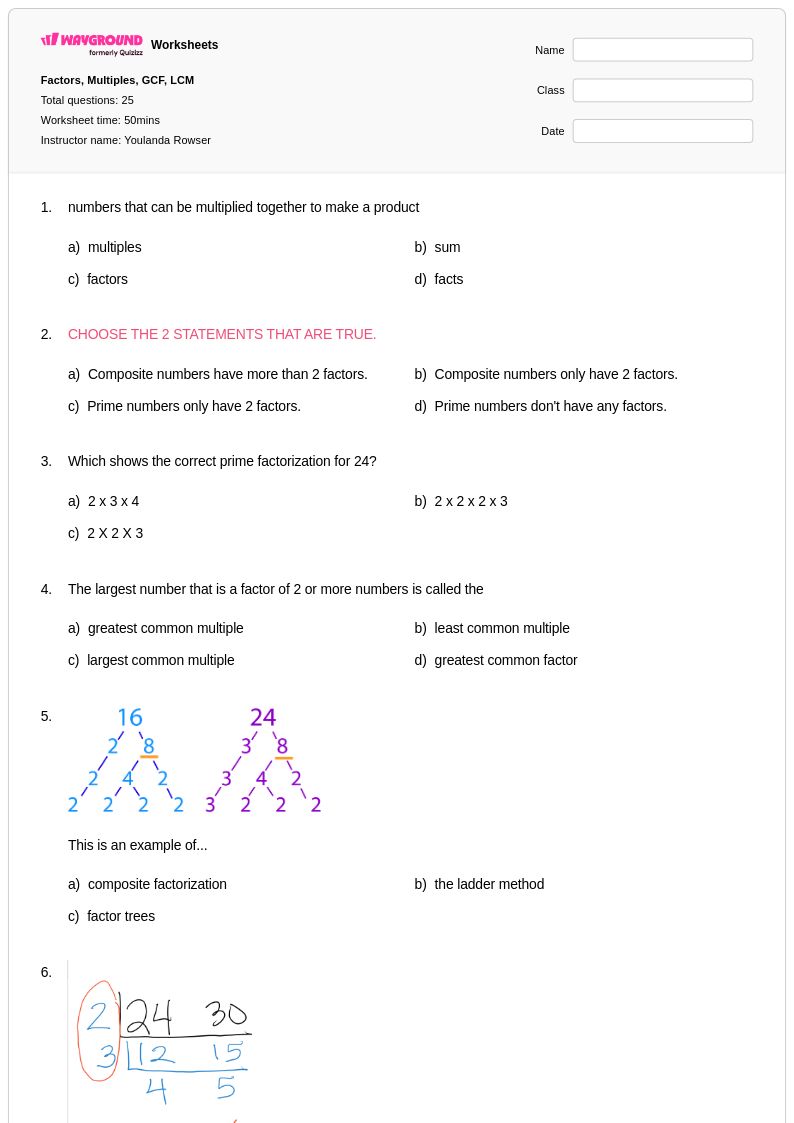
25 Q
6th
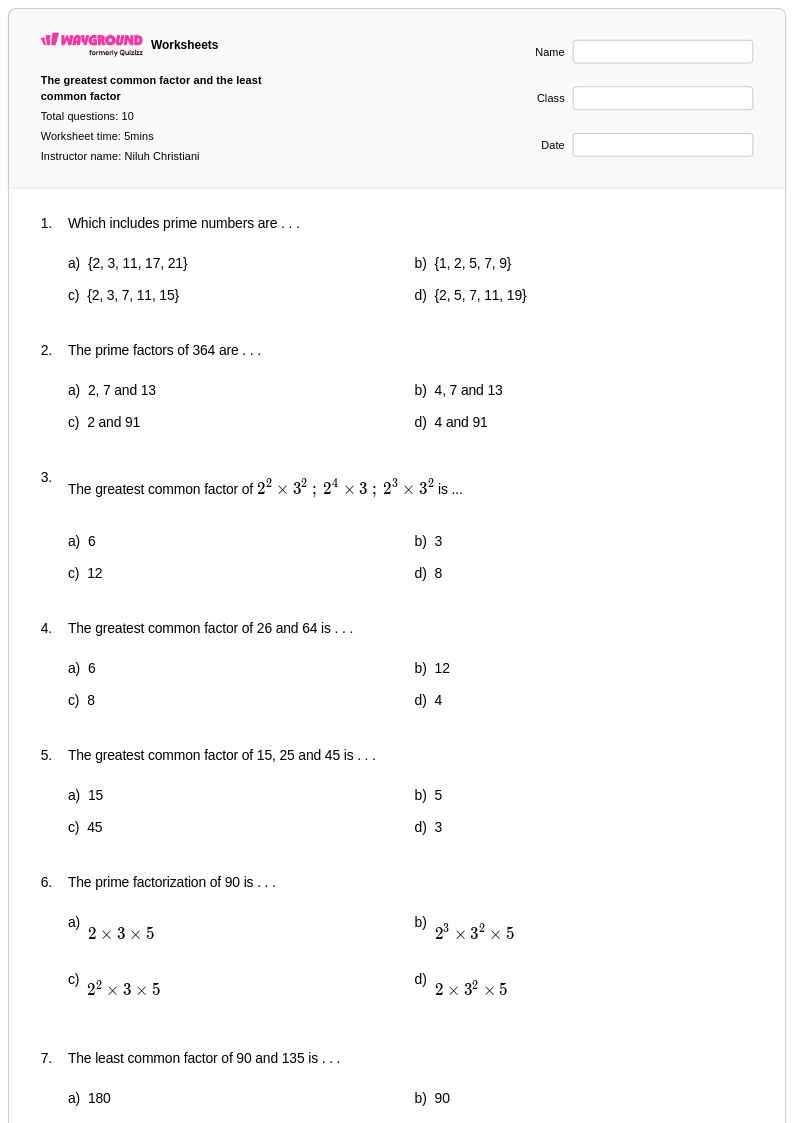
10 Q
6th
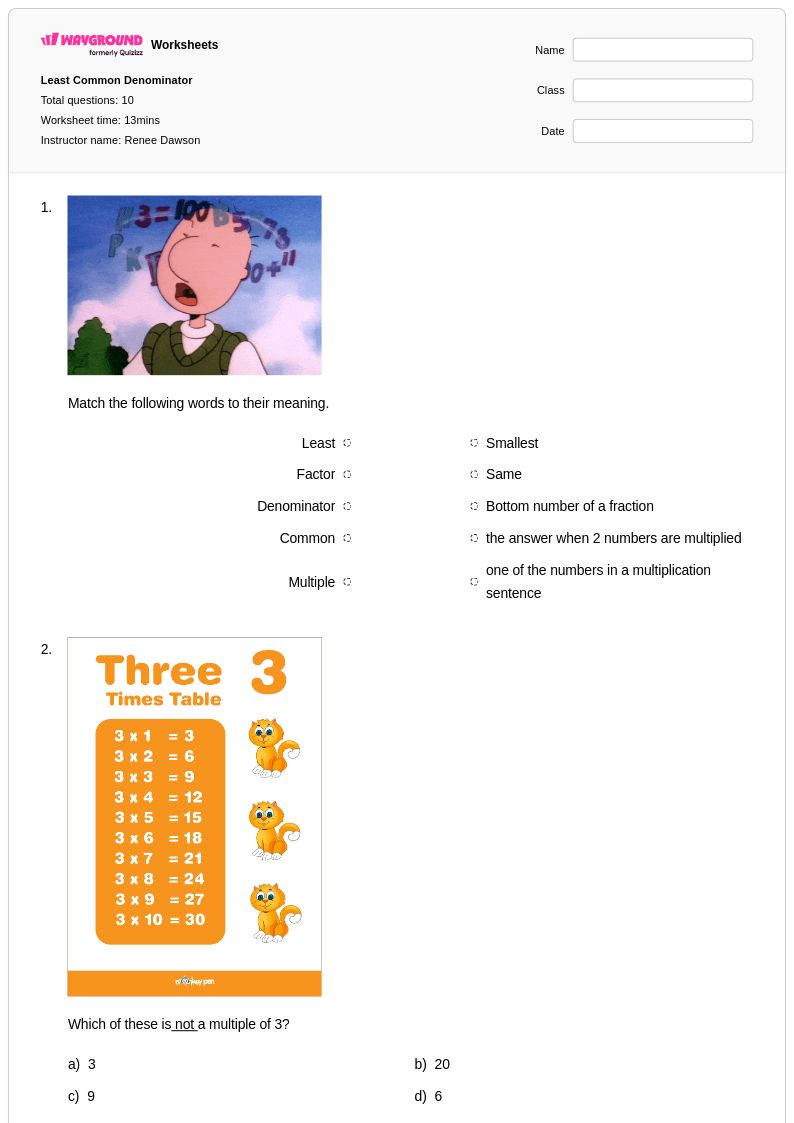
10 Q
3rd - 6th
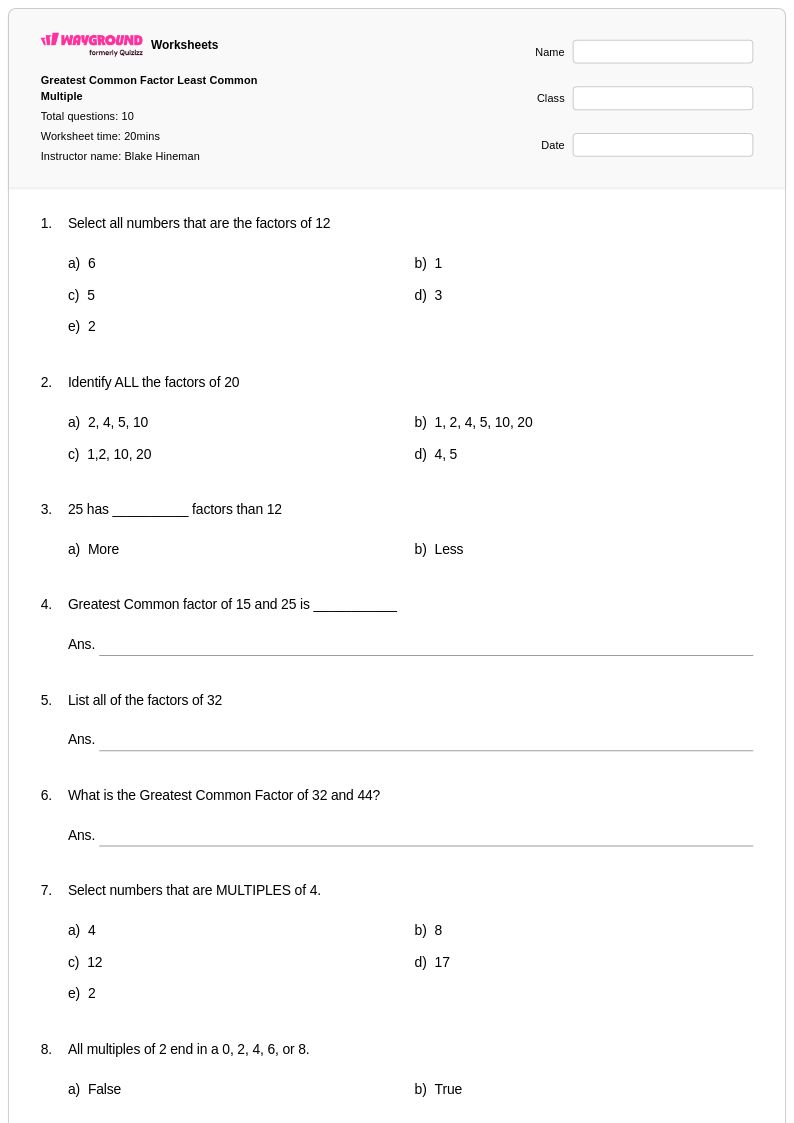
10 Q
5th - 7th
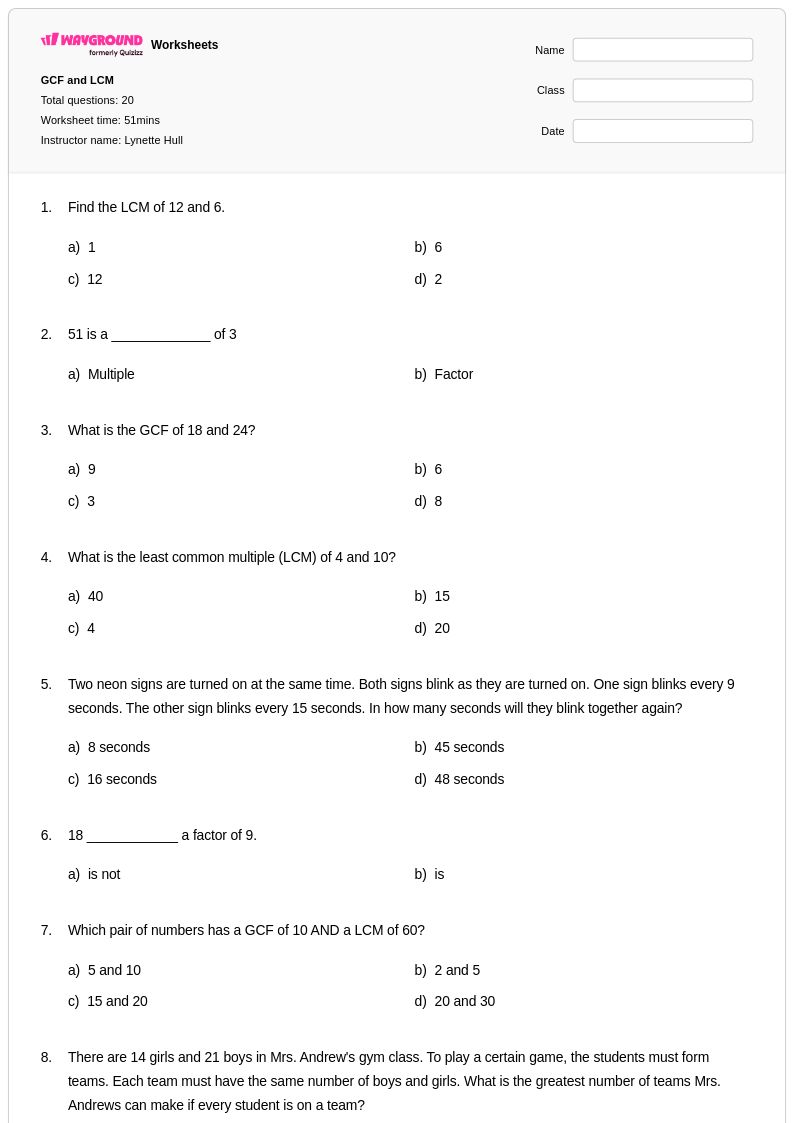
20 Q
6th
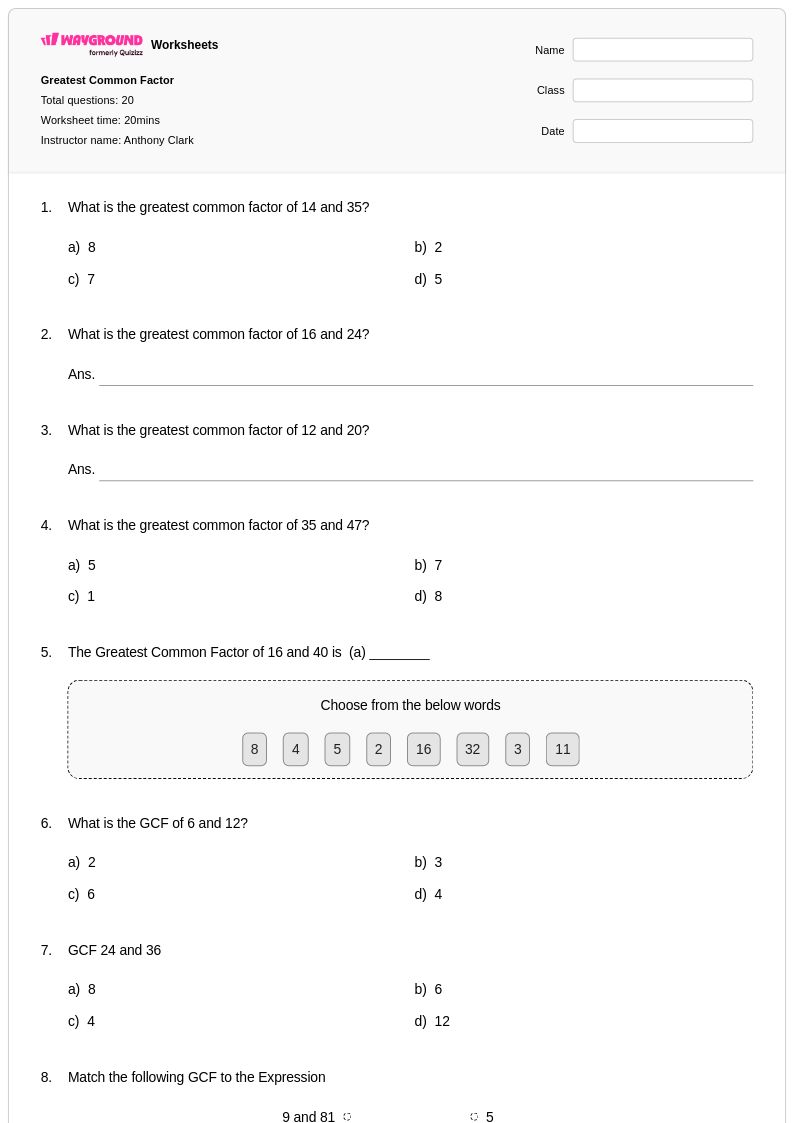
20 Q
6th - Uni
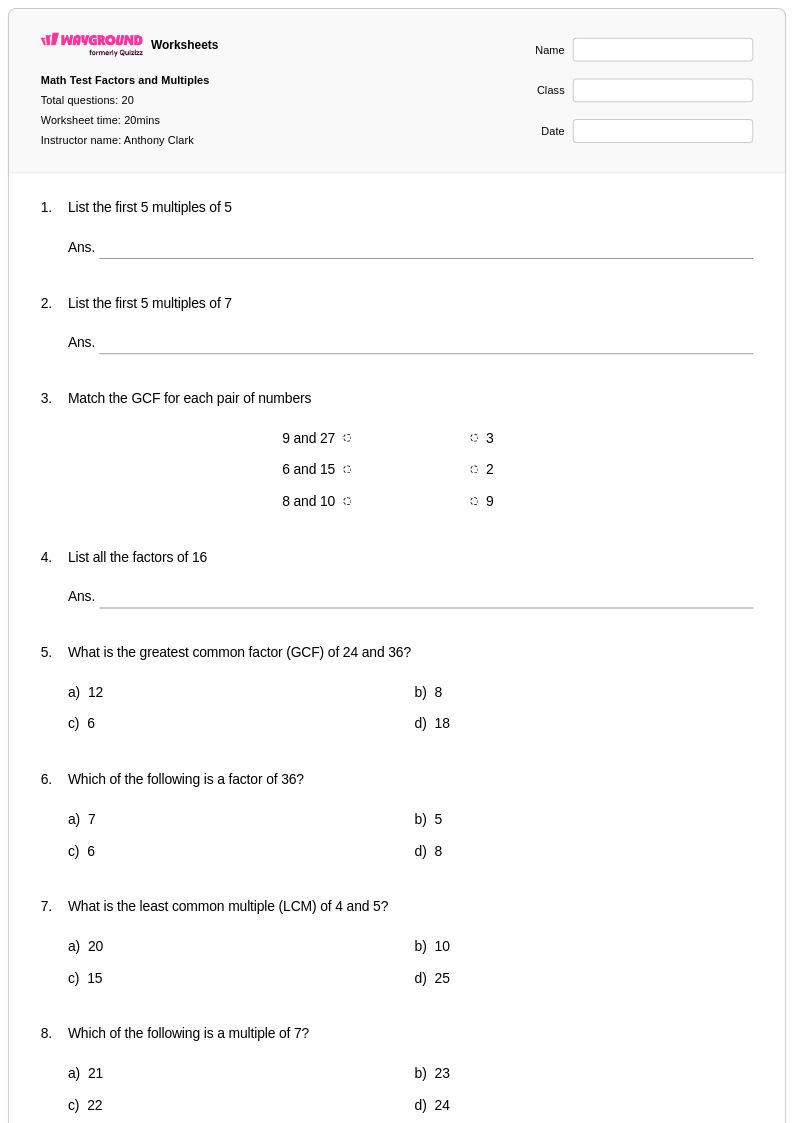
20 Q
5th - Uni
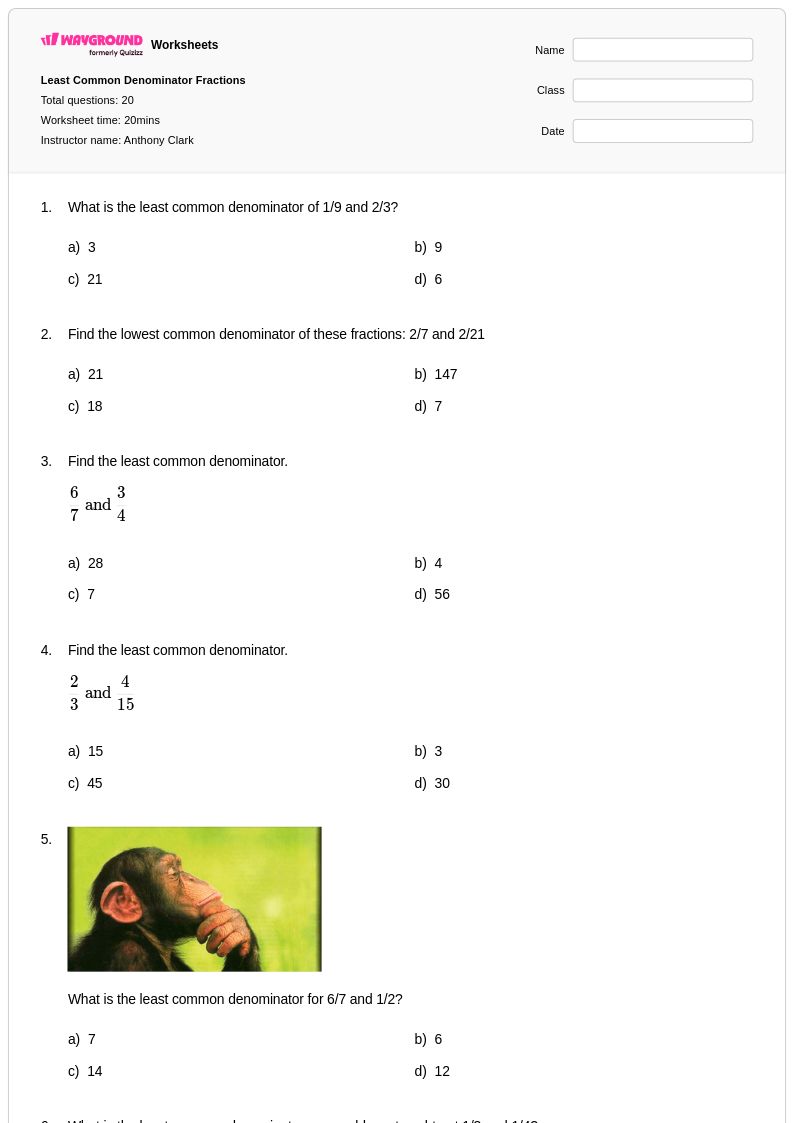
20 Q
5th - Uni
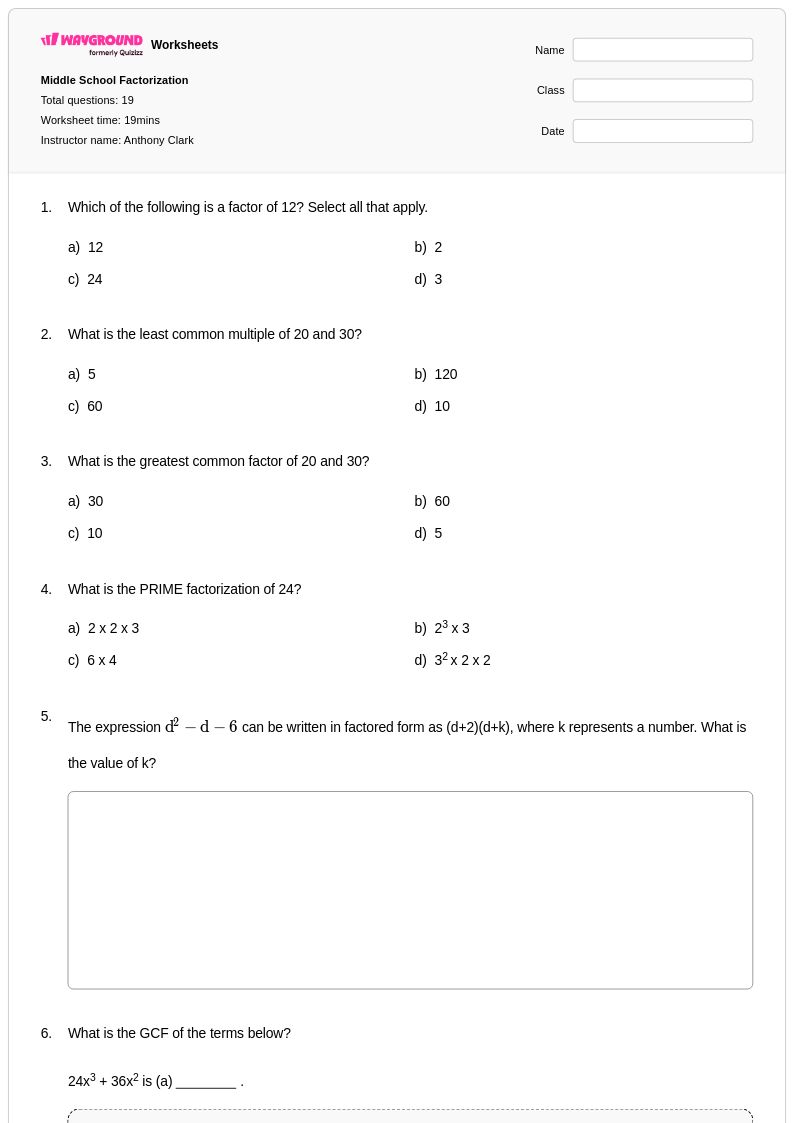
19 Q
6th - Uni
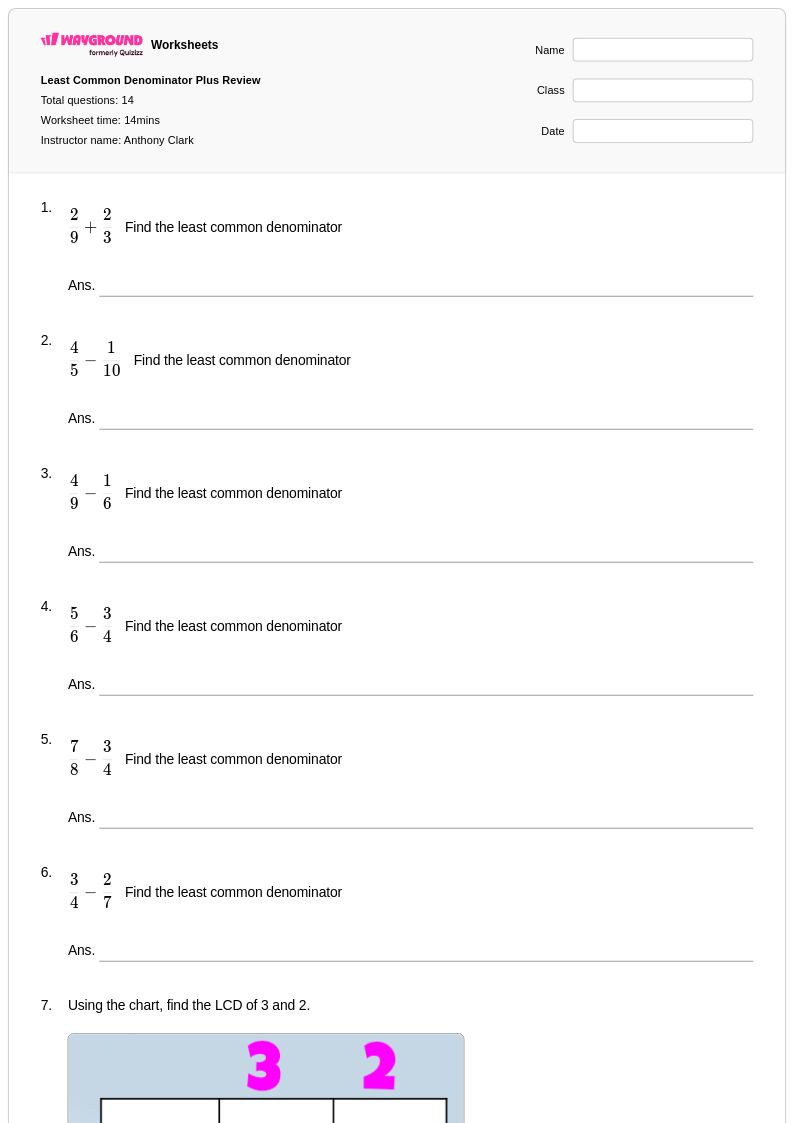
14 Q
5th - Uni
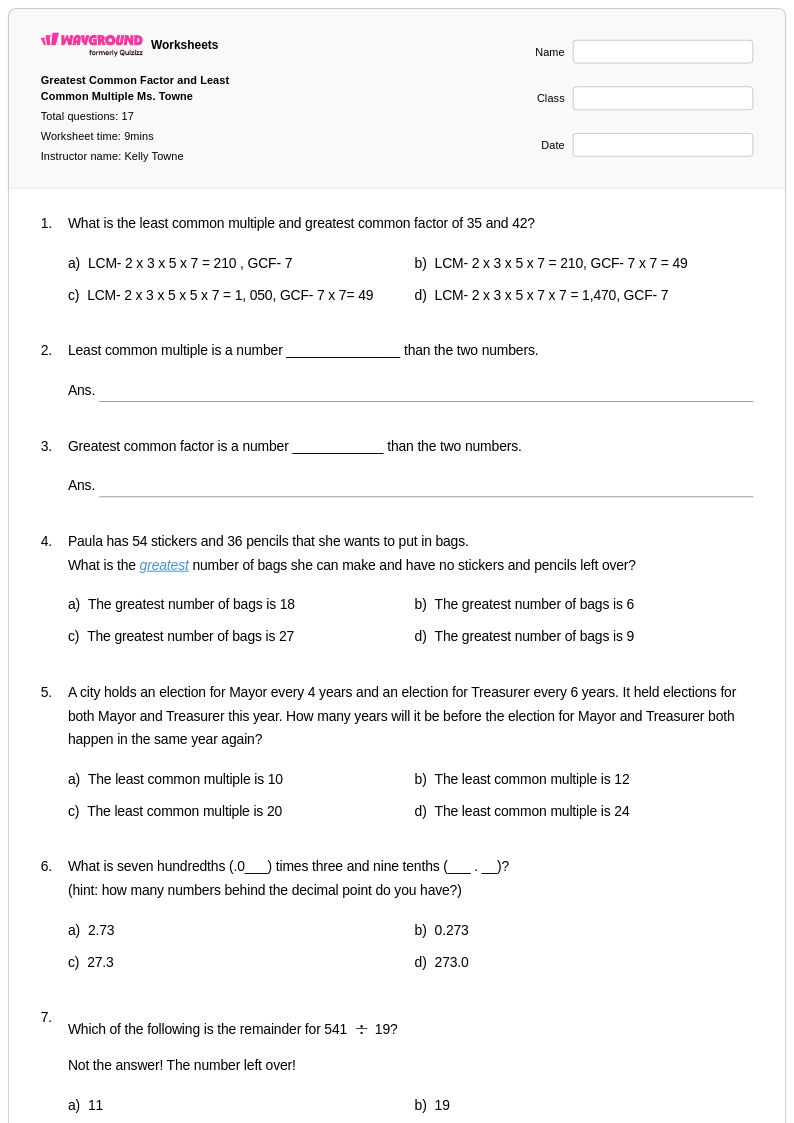
17 Q
6th
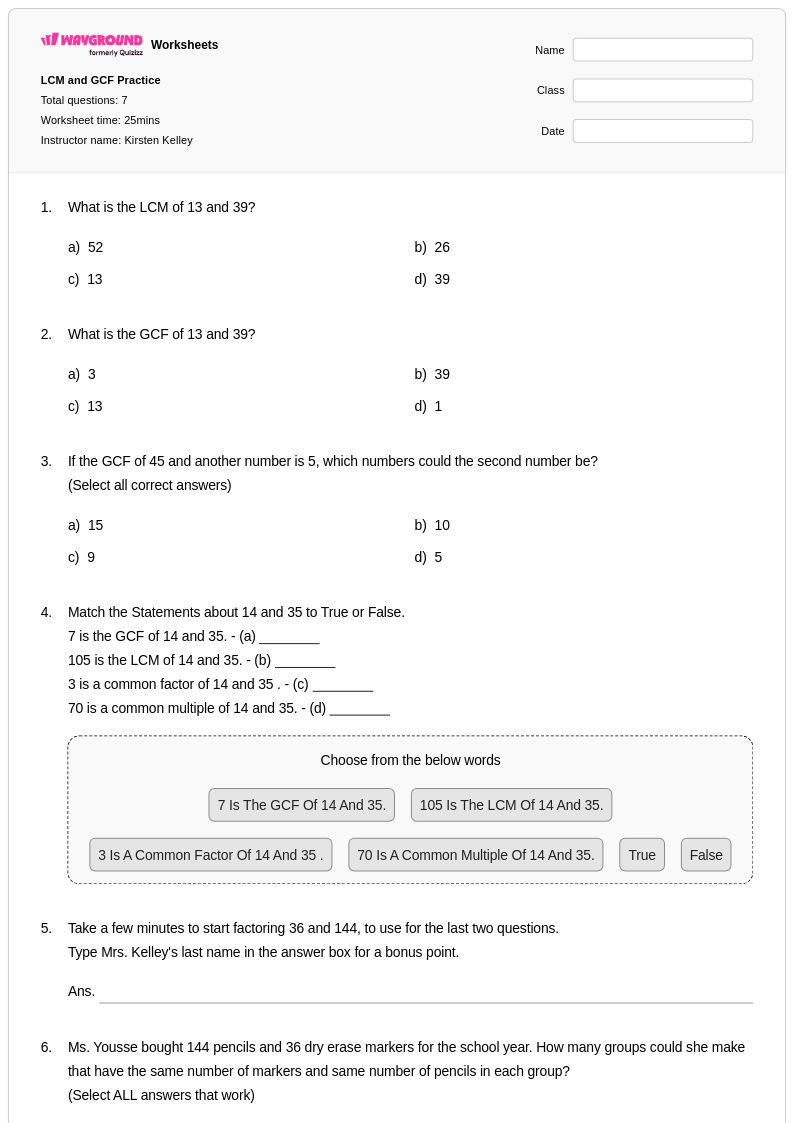
7 Q
6th
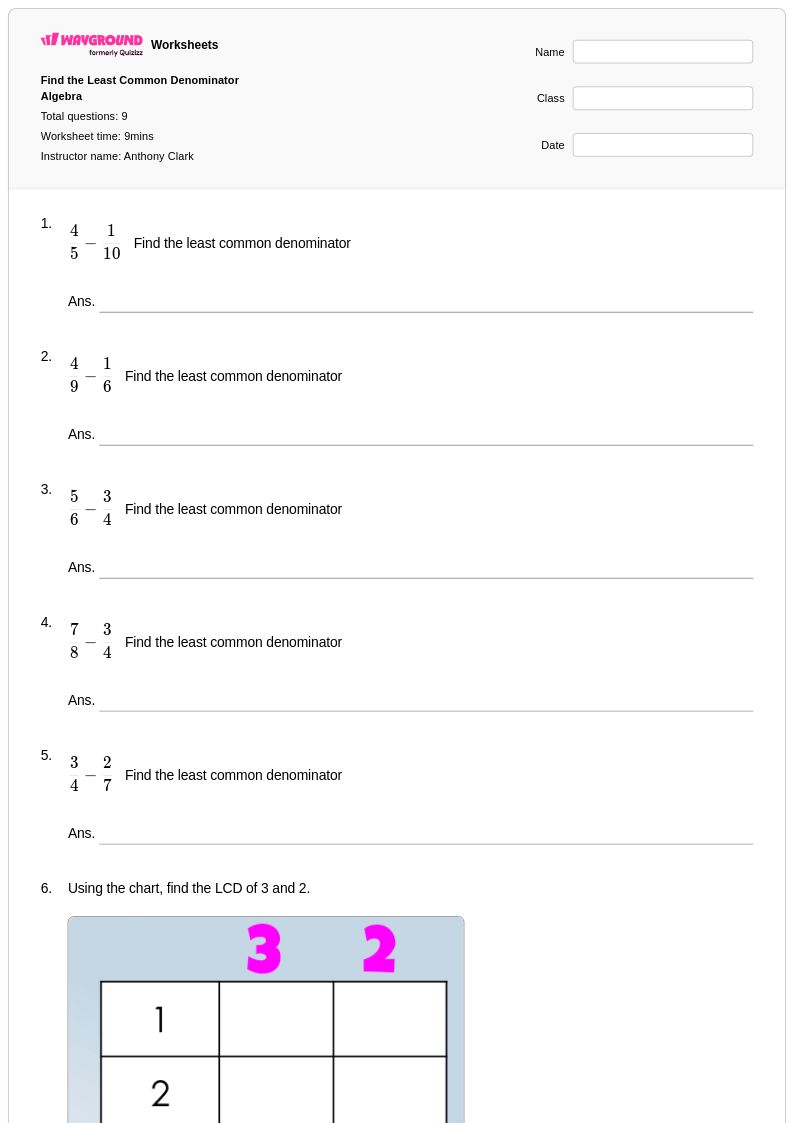
9 Q
5th - Uni
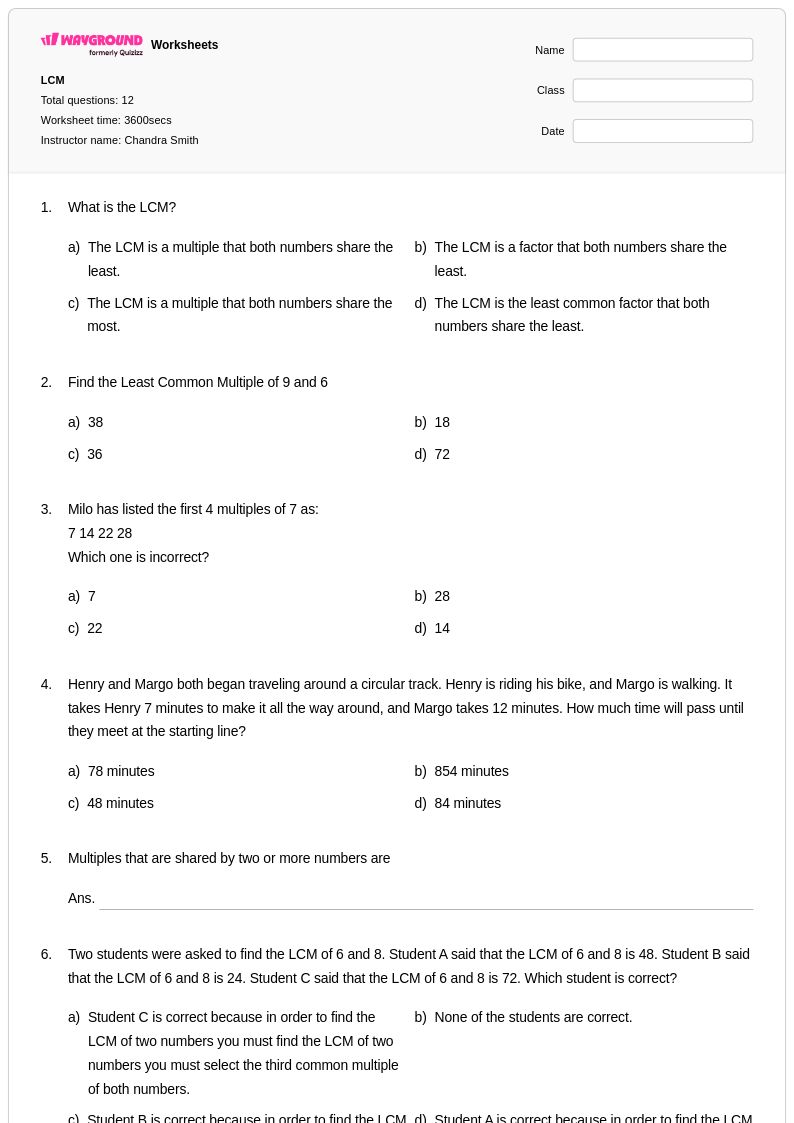
12 Q
6th
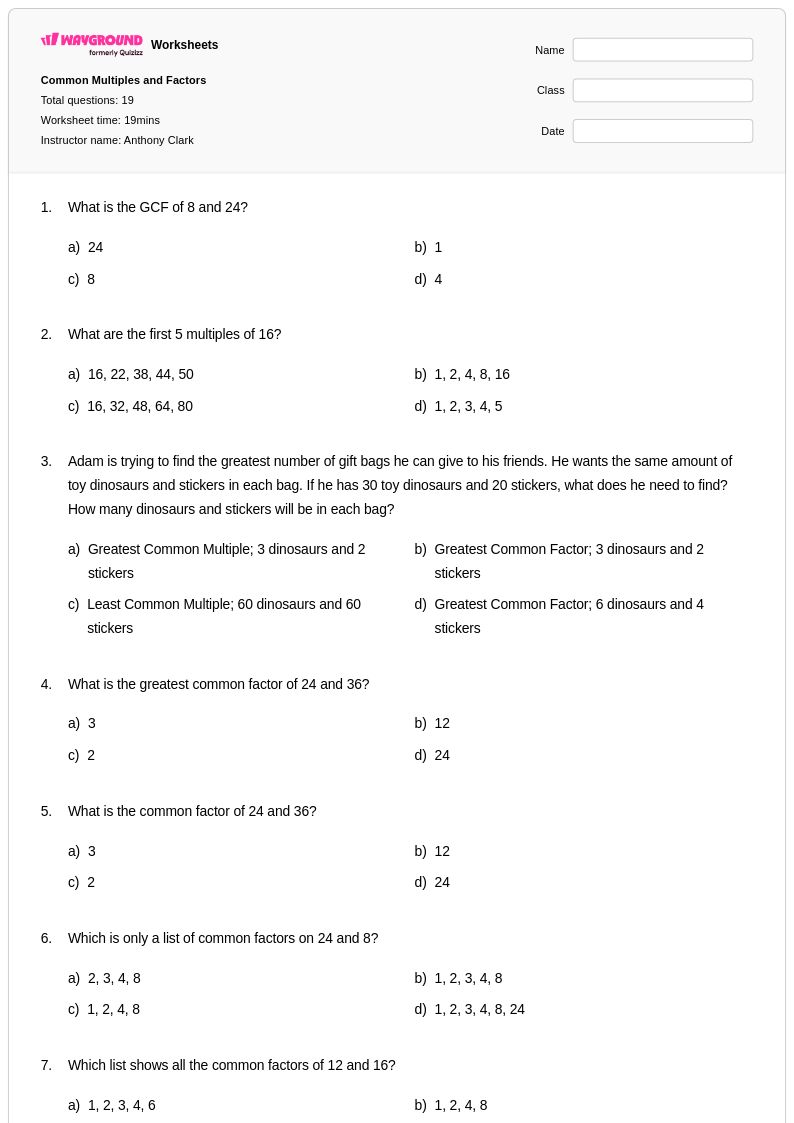
19 Q
4th - Uni
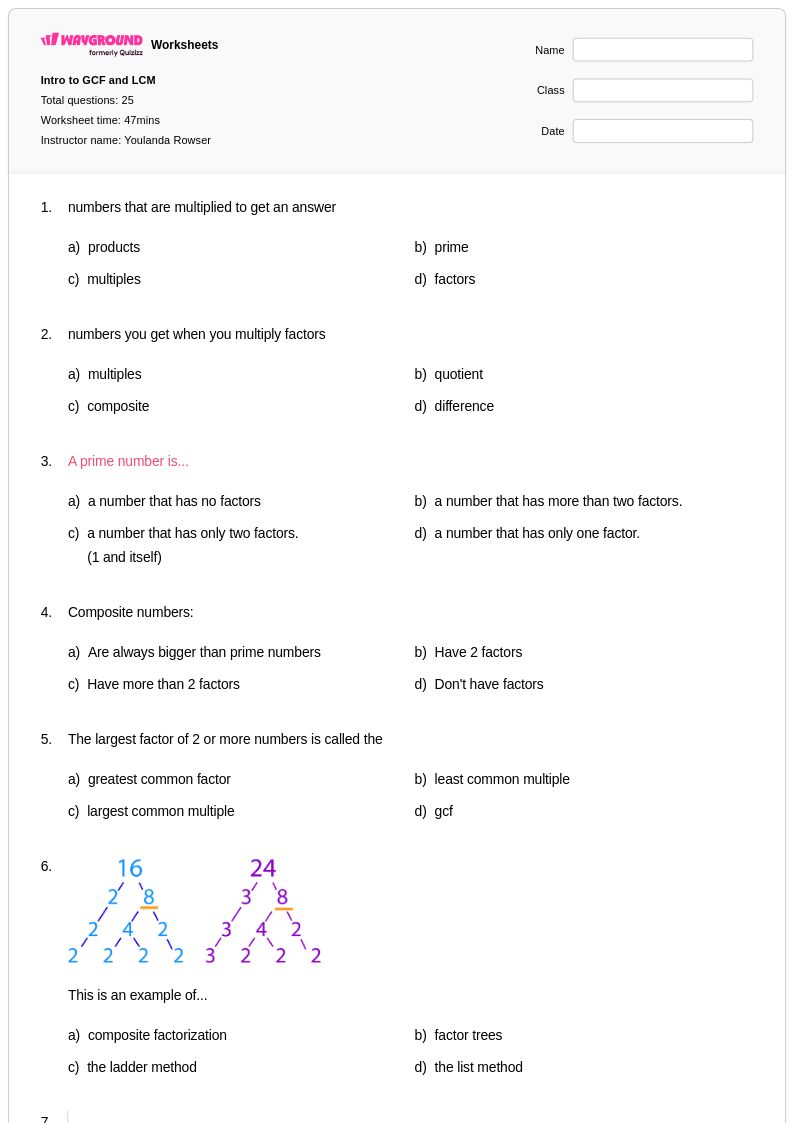
25 Q
6th
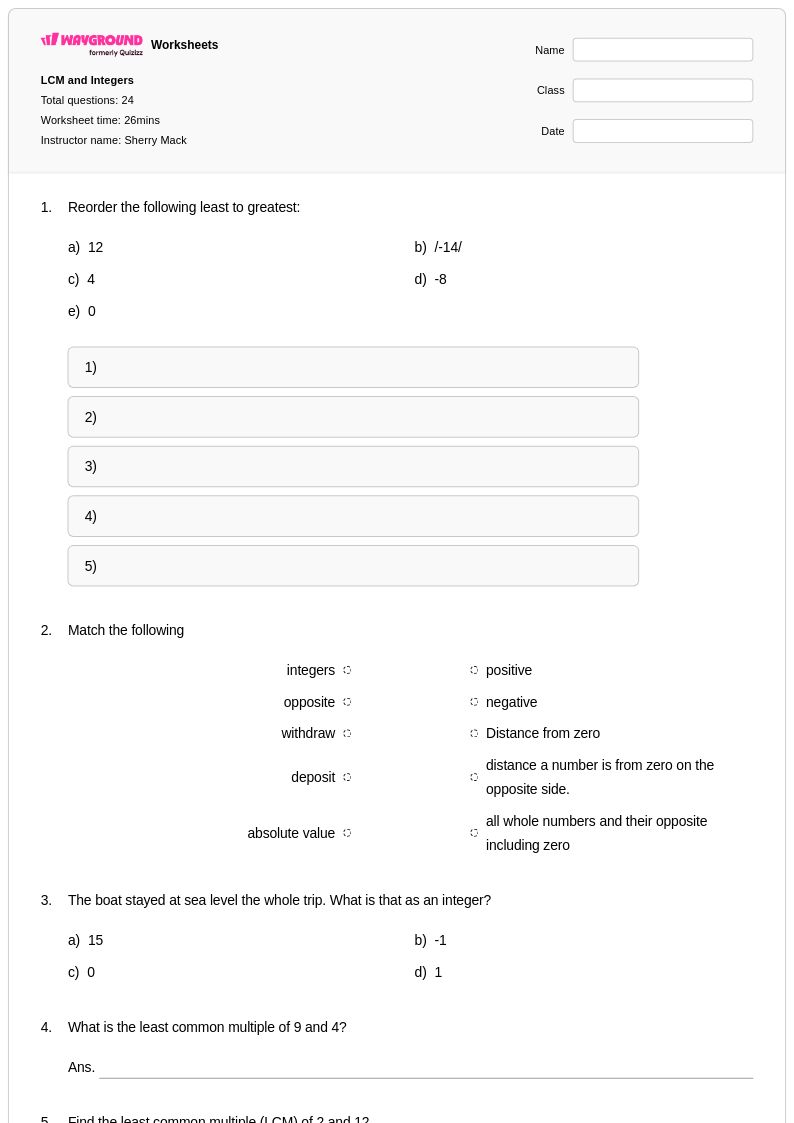
24 Q
6th
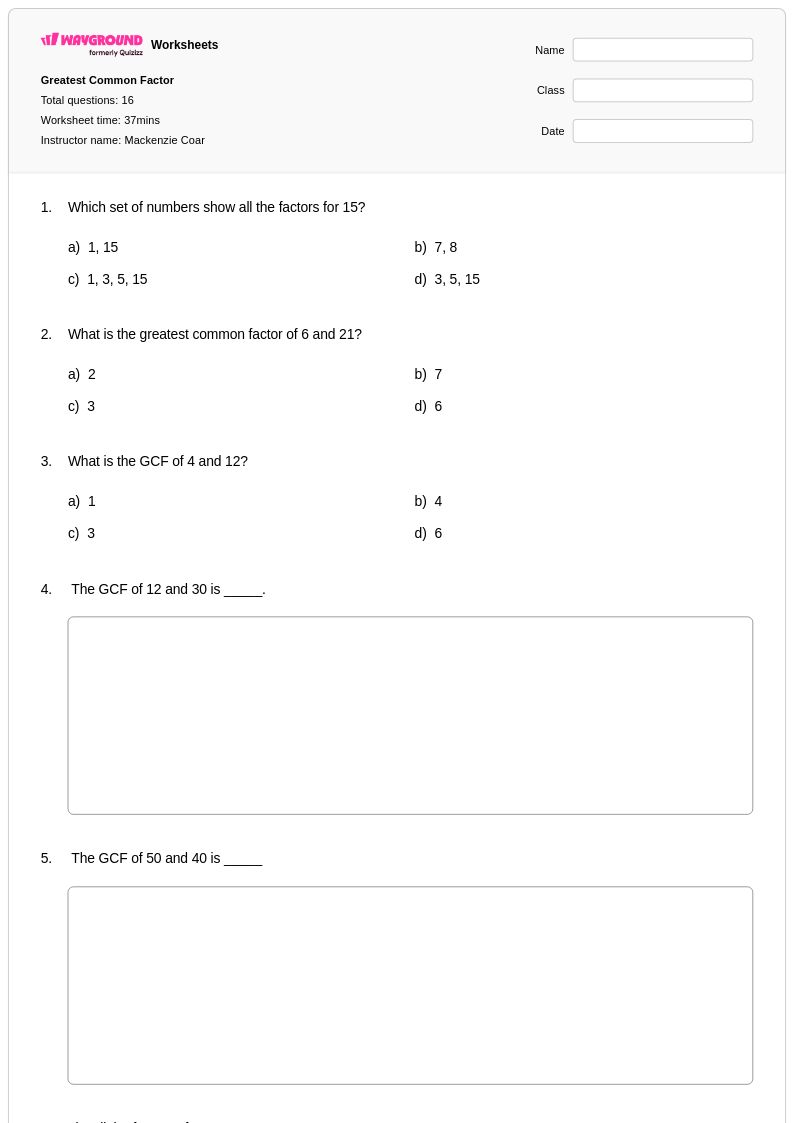
16 Q
6th
Explore Other Subject Worksheets for class 6
Explore printable Least Common Factor worksheets for Class 6
Least Common Factor worksheets for Class 6 through Wayground (formerly Quizizz) provide comprehensive practice materials that help students master this fundamental number sense concept. These carefully designed worksheets guide sixth-grade learners through systematic approaches to finding the smallest positive integer that is divisible by two or more given numbers, strengthening their understanding of divisibility rules, prime factorization, and mathematical relationships between numbers. Each worksheet collection includes detailed answer keys and step-by-step solutions, making them valuable resources for both independent practice and guided instruction. Available as free printables in convenient pdf format, these practice problems range from basic two-number comparisons to more complex multi-number scenarios that challenge students to apply their knowledge of factors and multiples in increasingly sophisticated ways.
Wayground (formerly Quizizz) empowers teachers with access to millions of educator-created least common factor resources, featuring robust search and filtering capabilities that allow instructors to quickly locate materials aligned with specific curriculum standards and learning objectives. The platform's differentiation tools enable teachers to customize worksheets based on individual student needs, whether for remediation of foundational concepts or enrichment activities for advanced learners. Available in both printable and digital formats including downloadable pdfs, these resources support flexible lesson planning and can be seamlessly integrated into various instructional approaches. Teachers can efficiently modify problem sets, adjust difficulty levels, and organize materials for targeted skill practice, making it easier to address diverse learning needs while ensuring all Class 6 students develop confidence in working with least common factors as part of their broader number sense development.
FAQs
What are the 6th-grade expectations for learning GCF and LCM?
How can I teach the application of the Greatest Common Factor (GCF)?
What's an efficient method for finding the GCF of larger numbers?
Why do students confuse GCF and LCM?
How does finding the GCF align with 6th-grade Common Core standards?
How can I use this worksheet to support my 6th-grade math lesson?