Free Printable Evaluating Powers Worksheets for Class 6
Class 6 students can master evaluating powers with Wayground's comprehensive collection of free worksheets, featuring engaging practice problems, printable PDFs, and complete answer keys to build strong mathematical foundations.
Explore printable Evaluating Powers worksheets for Class 6
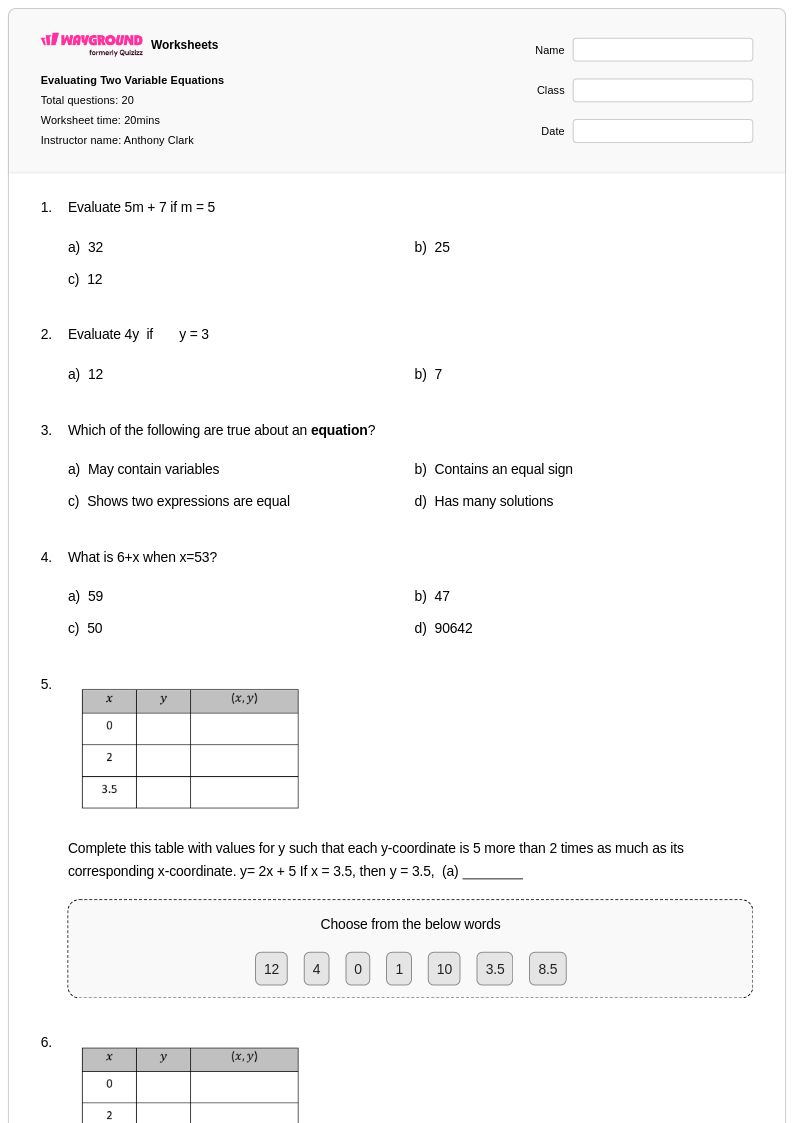
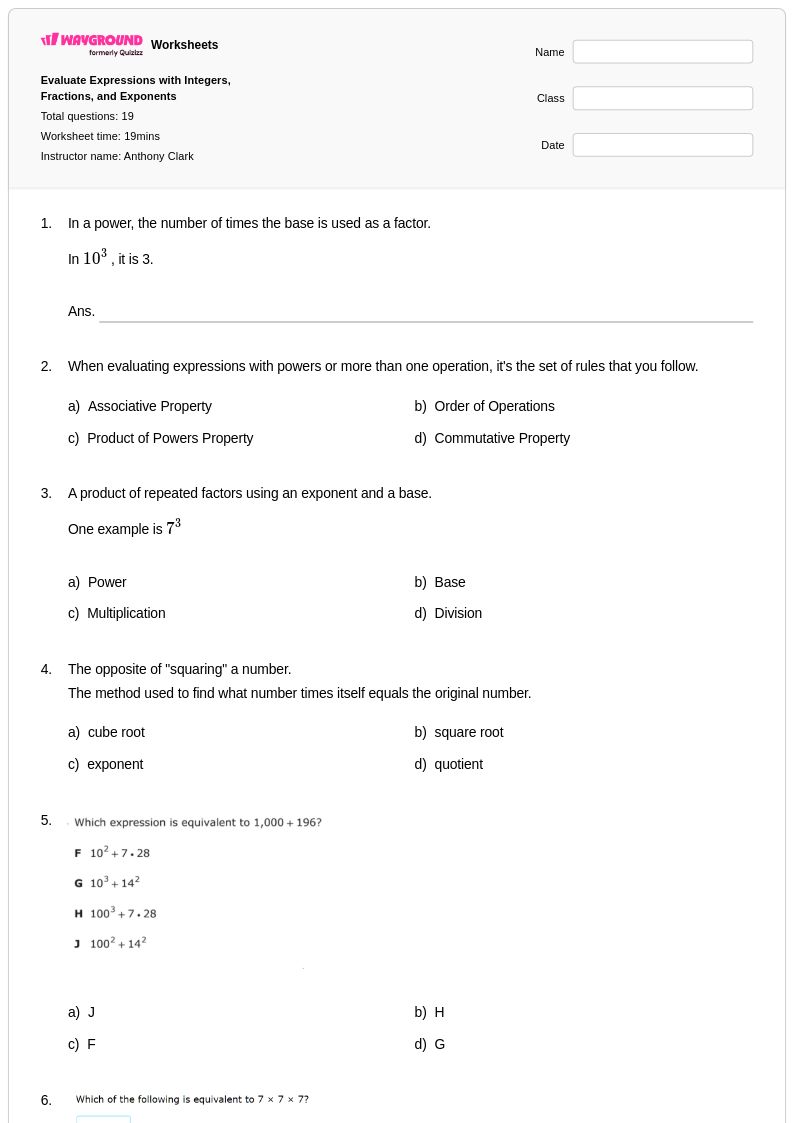
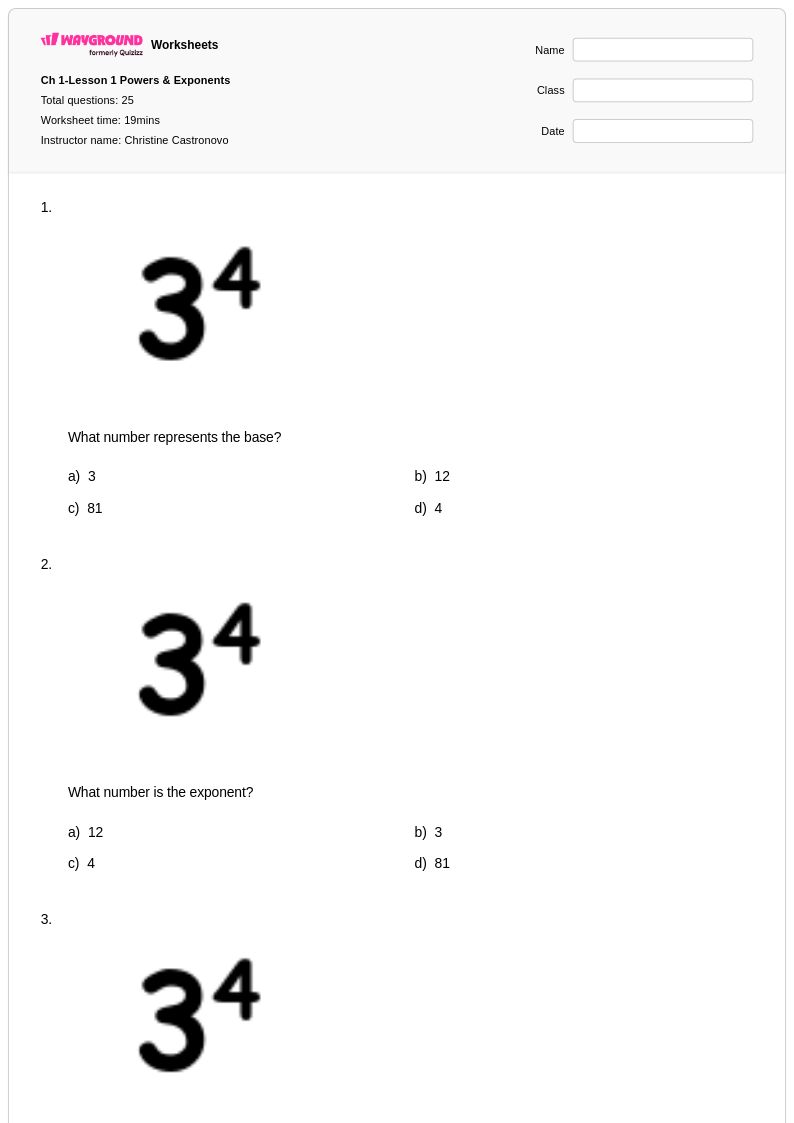
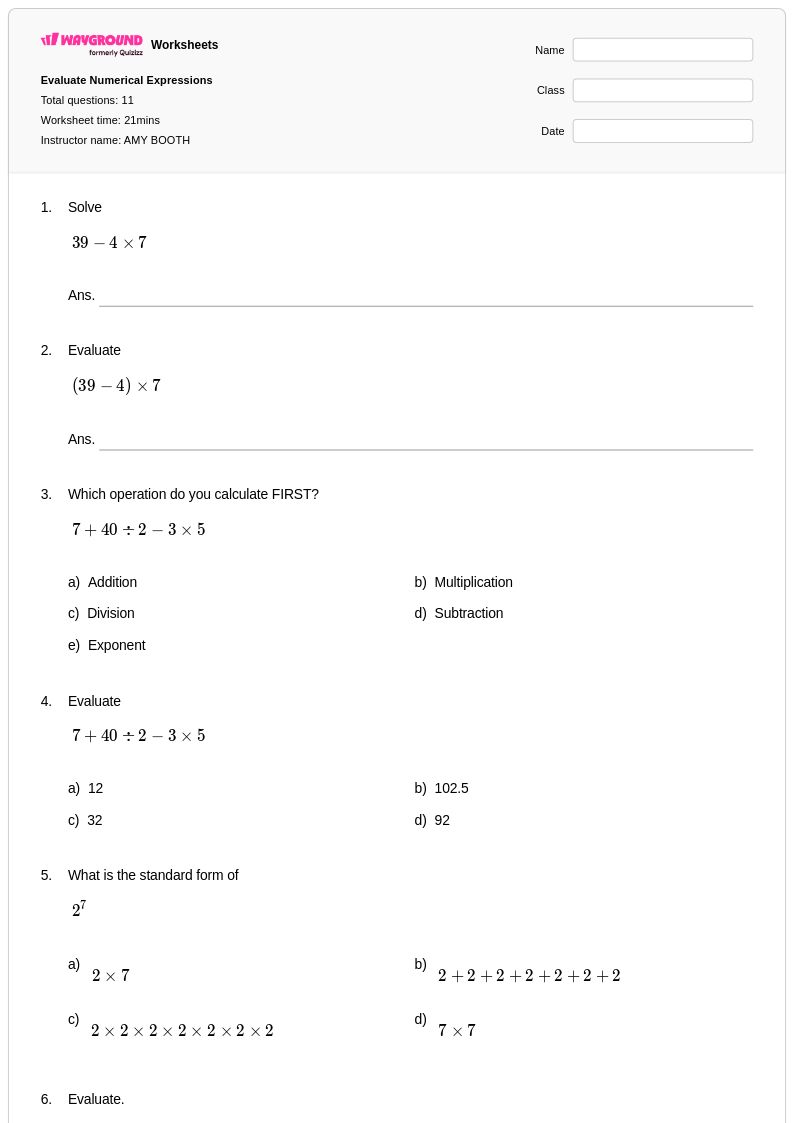
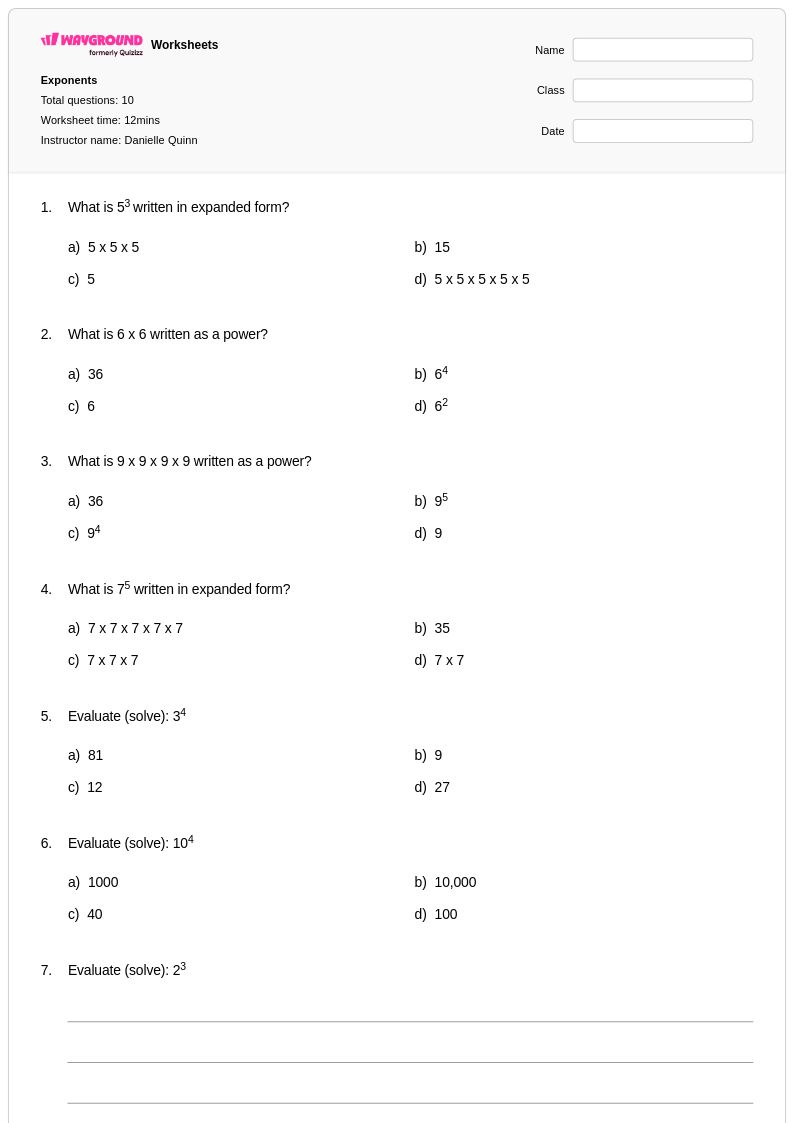
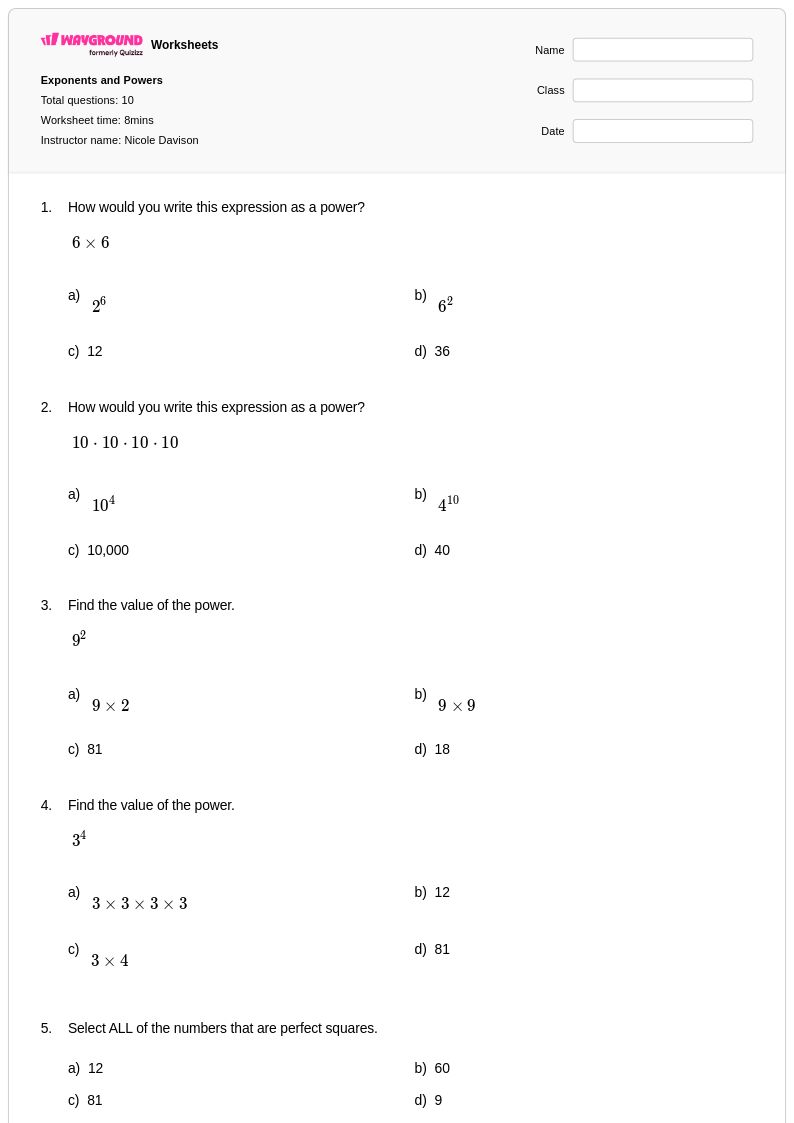
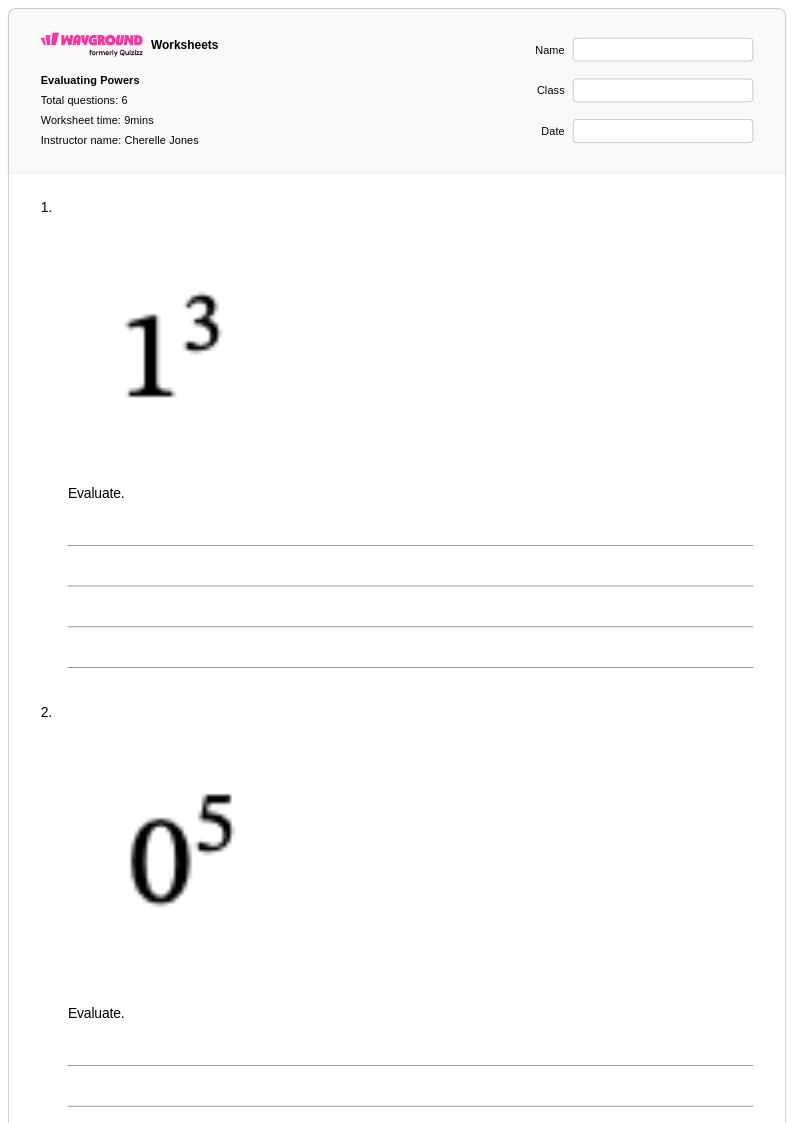
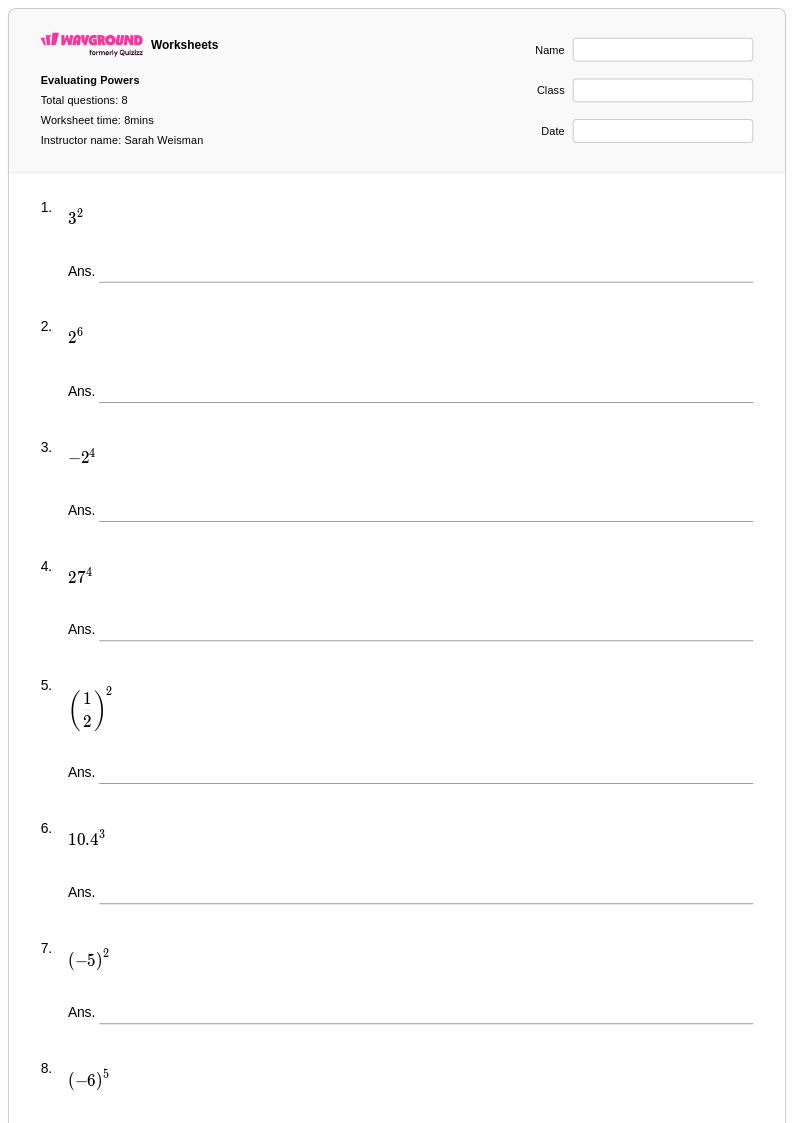
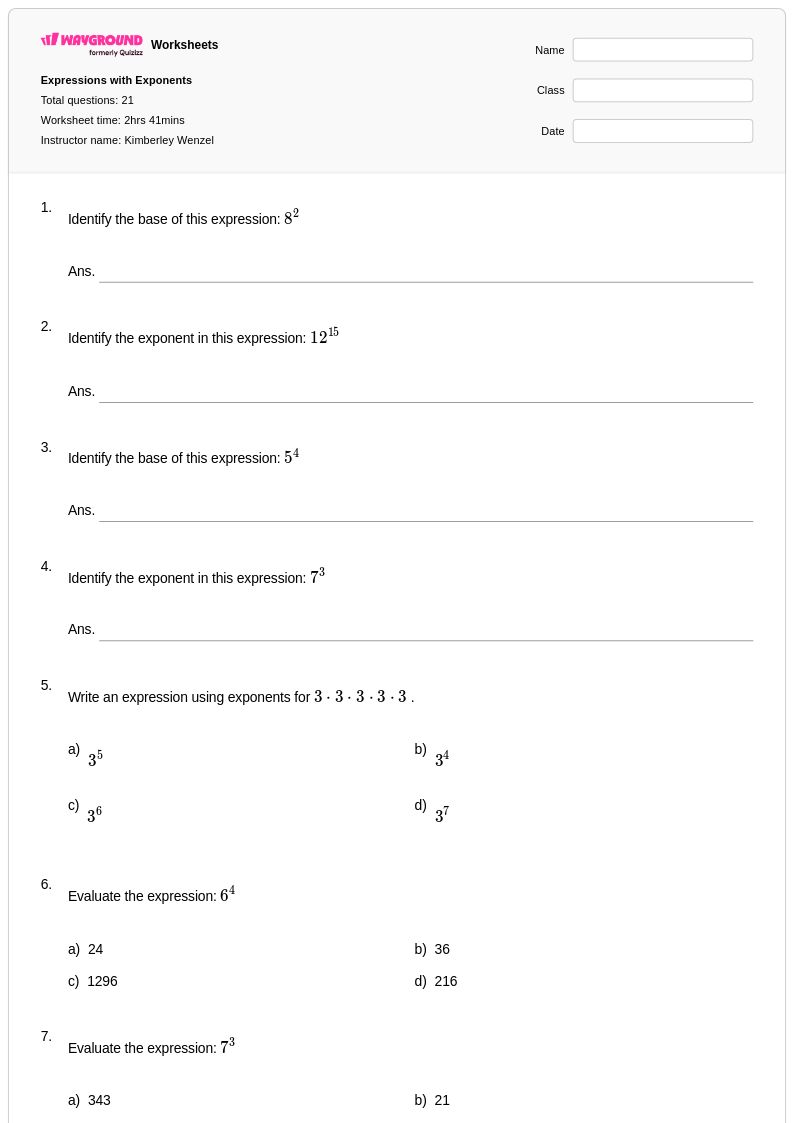
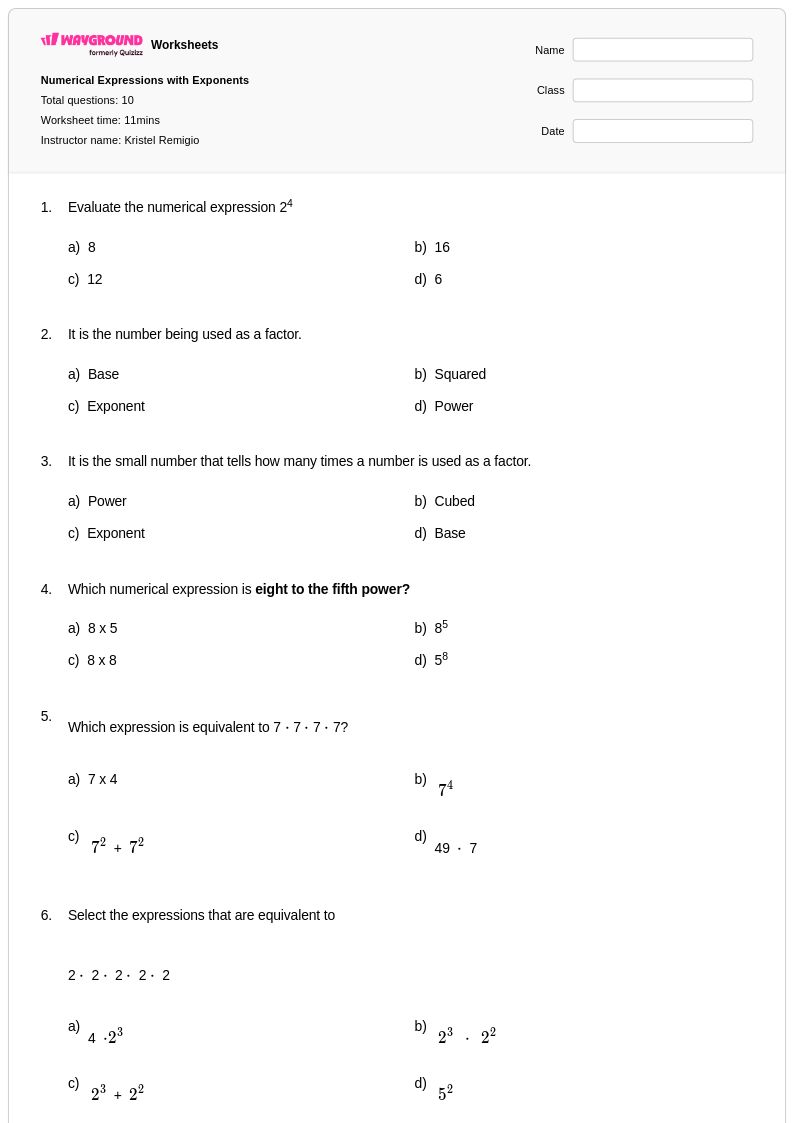
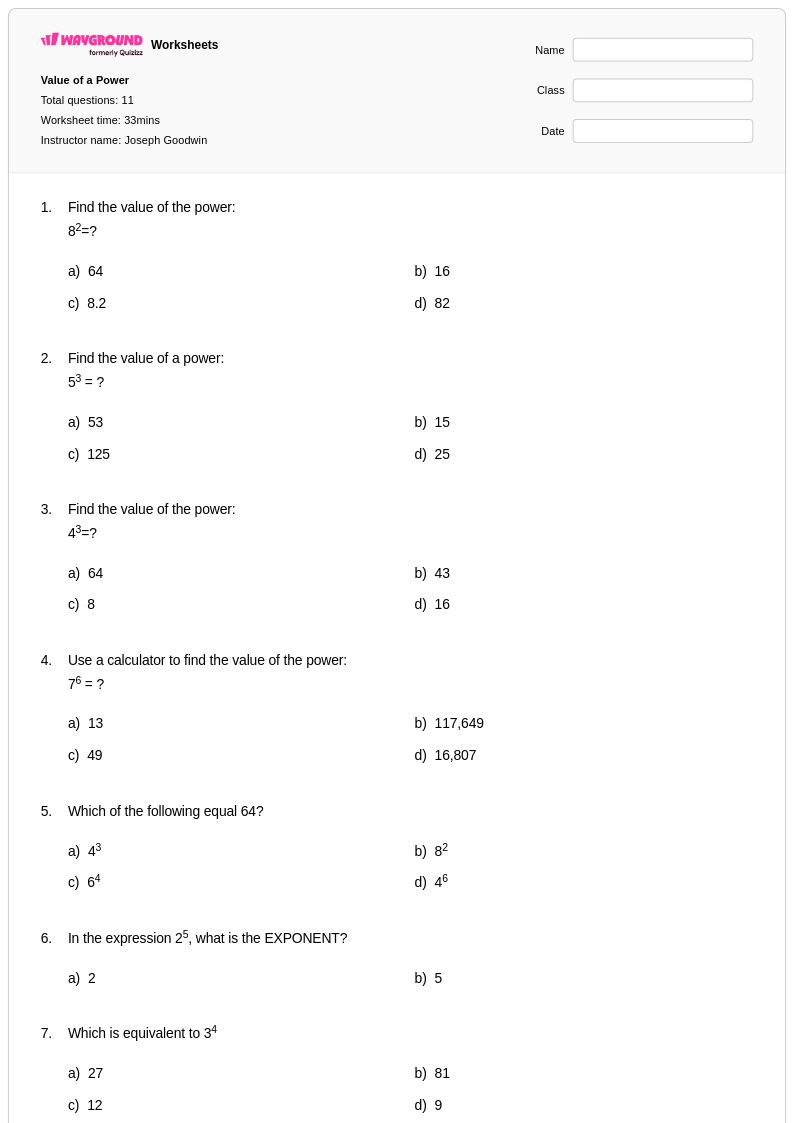
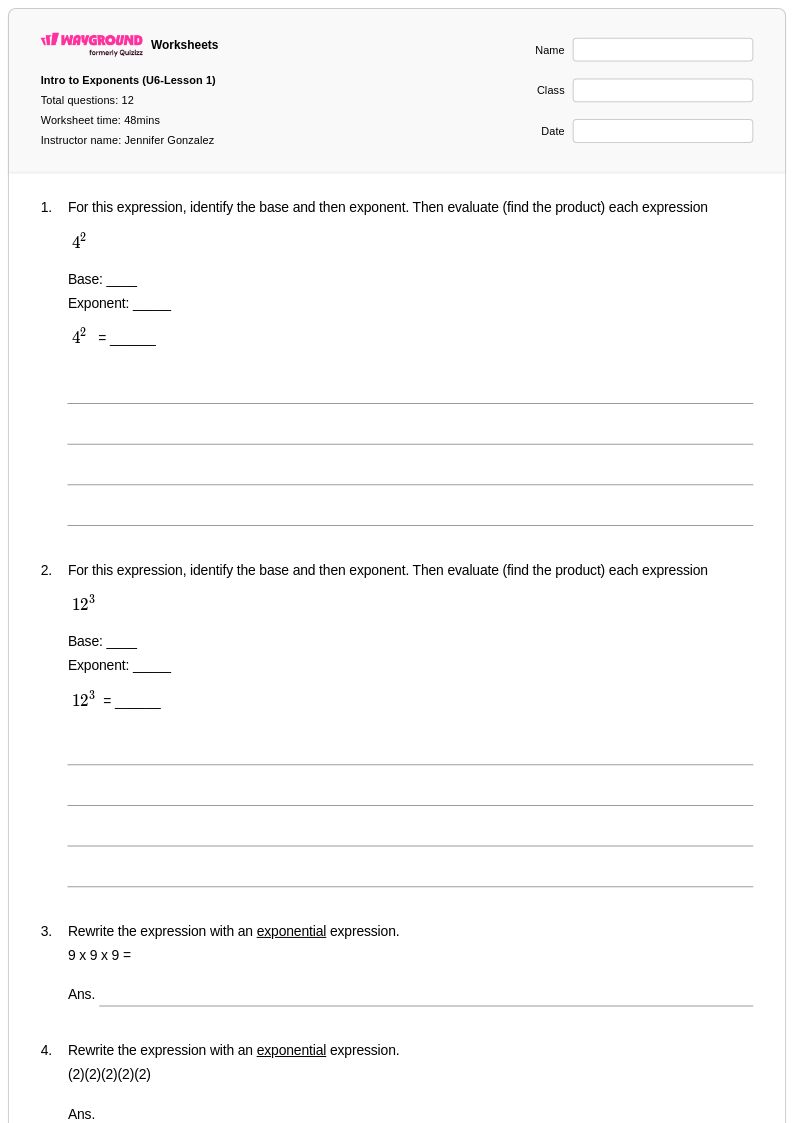
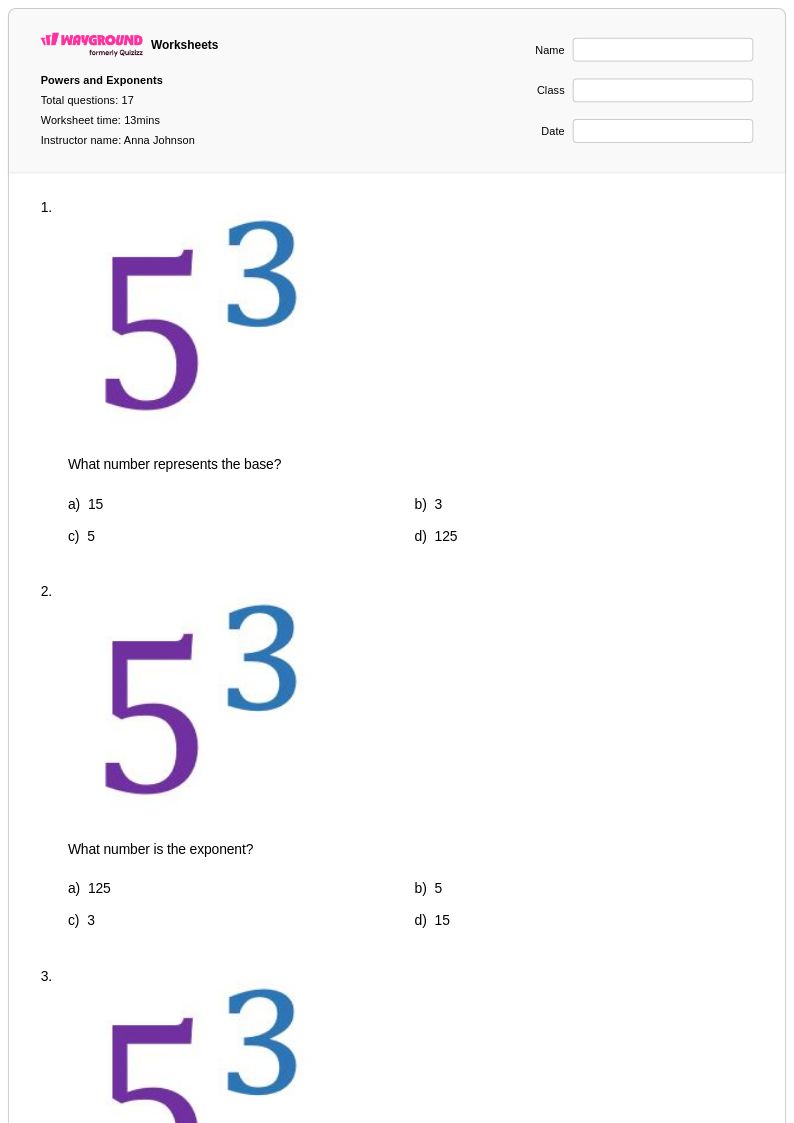
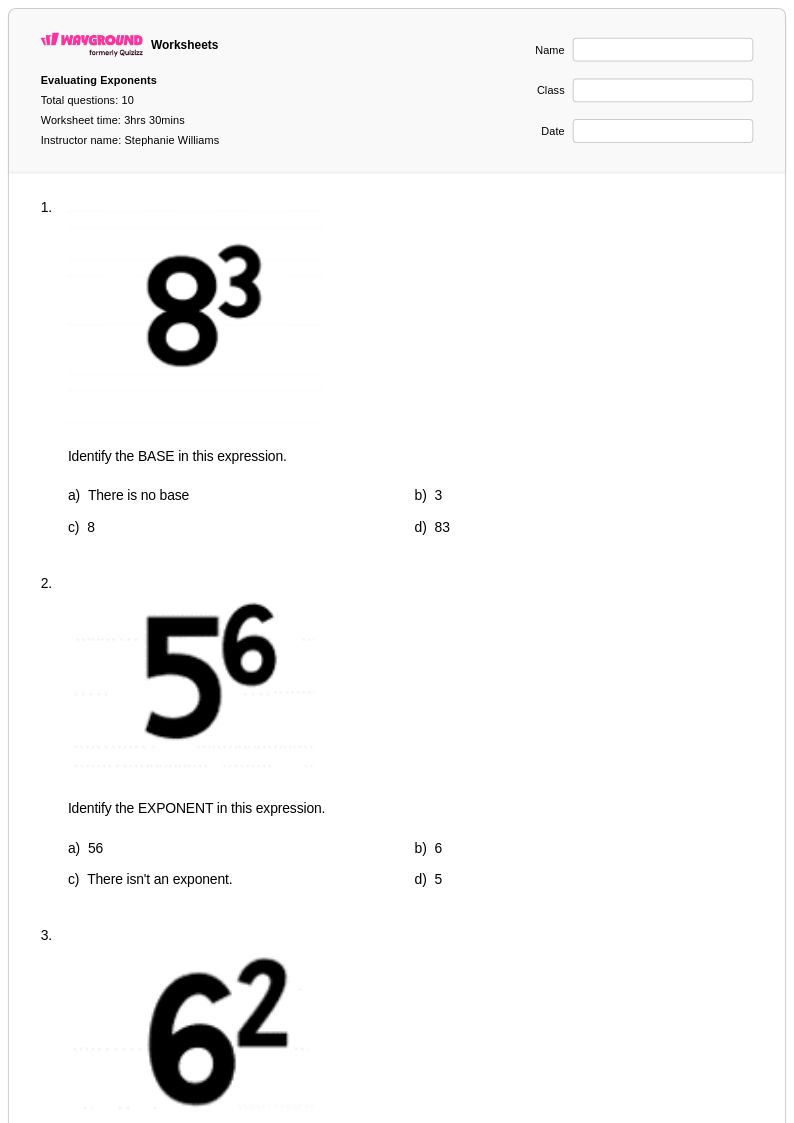
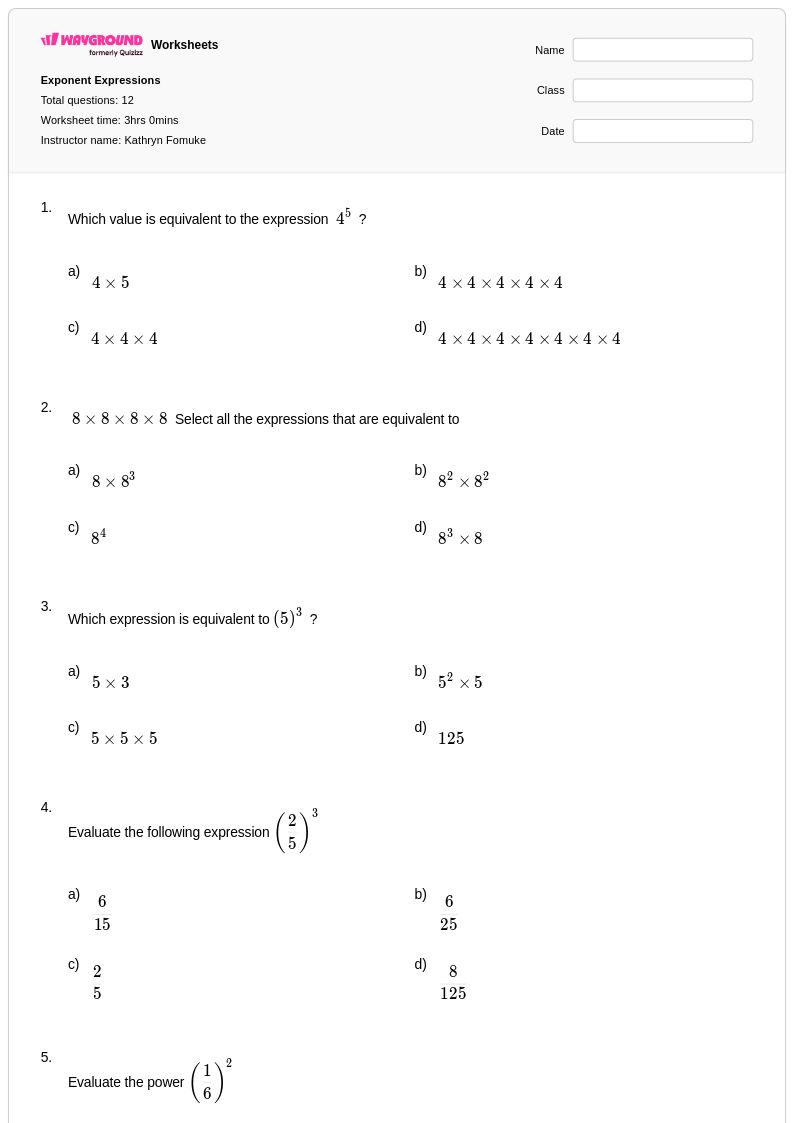
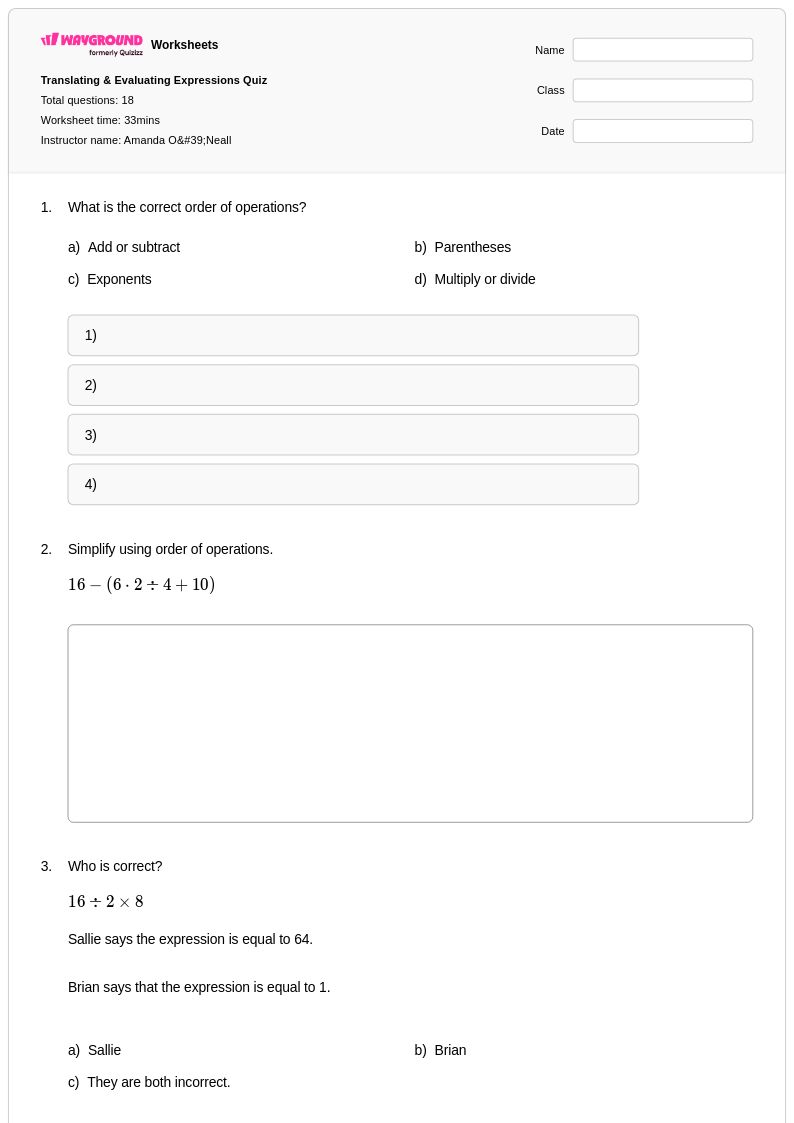
Evaluating Powers worksheets for Class 6 students available through Wayground (formerly Quizizz) provide comprehensive practice with exponential notation and computational skills essential for middle school mathematics. These carefully designed worksheets help students master the fundamental concept of expressing repeated multiplication through exponential form, calculating the value of powers with various bases and exponents, and understanding the relationship between powers and their numerical equivalents. Students work through systematic practice problems that build confidence in evaluating expressions like 2⁴, 5³, and 10², while developing mental math strategies for common powers. Each worksheet collection includes detailed answer keys and is available as free printables in convenient PDF format, allowing students to work independently while teachers can quickly assess understanding and identify areas needing additional support.
Wayground (formerly Quizizz) empowers educators with millions of teacher-created resources specifically focused on evaluating powers and related Class 6 number sense concepts. The platform's robust search and filtering capabilities enable teachers to quickly locate worksheets aligned with state and national mathematics standards, while built-in differentiation tools support diverse learning needs within the classroom. Teachers can customize existing worksheets or create new ones, adjusting difficulty levels and problem types to match their students' current skill levels. Available in both printable PDF format and interactive digital versions, these resources streamline lesson planning and provide flexible options for skill practice, targeted remediation for struggling learners, and enrichment opportunities for advanced students ready to explore more complex exponential relationships.
FAQs
How do I introduce evaluating powers to 6th graders?
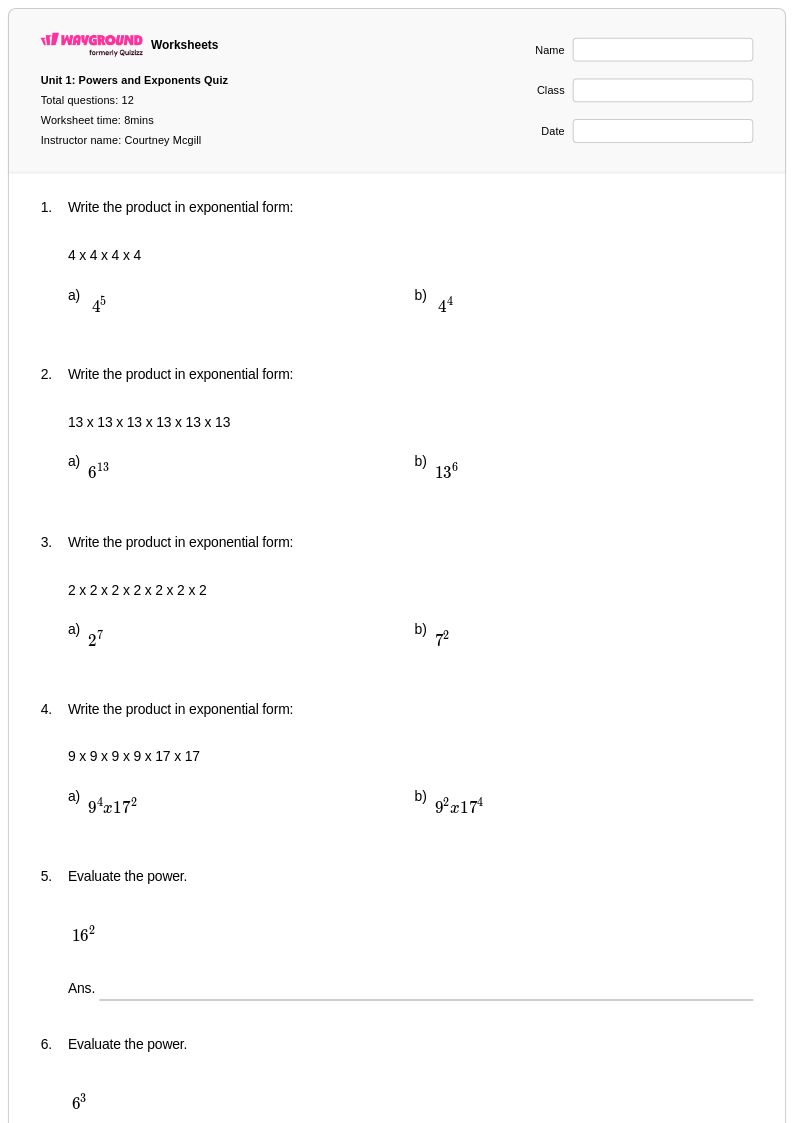
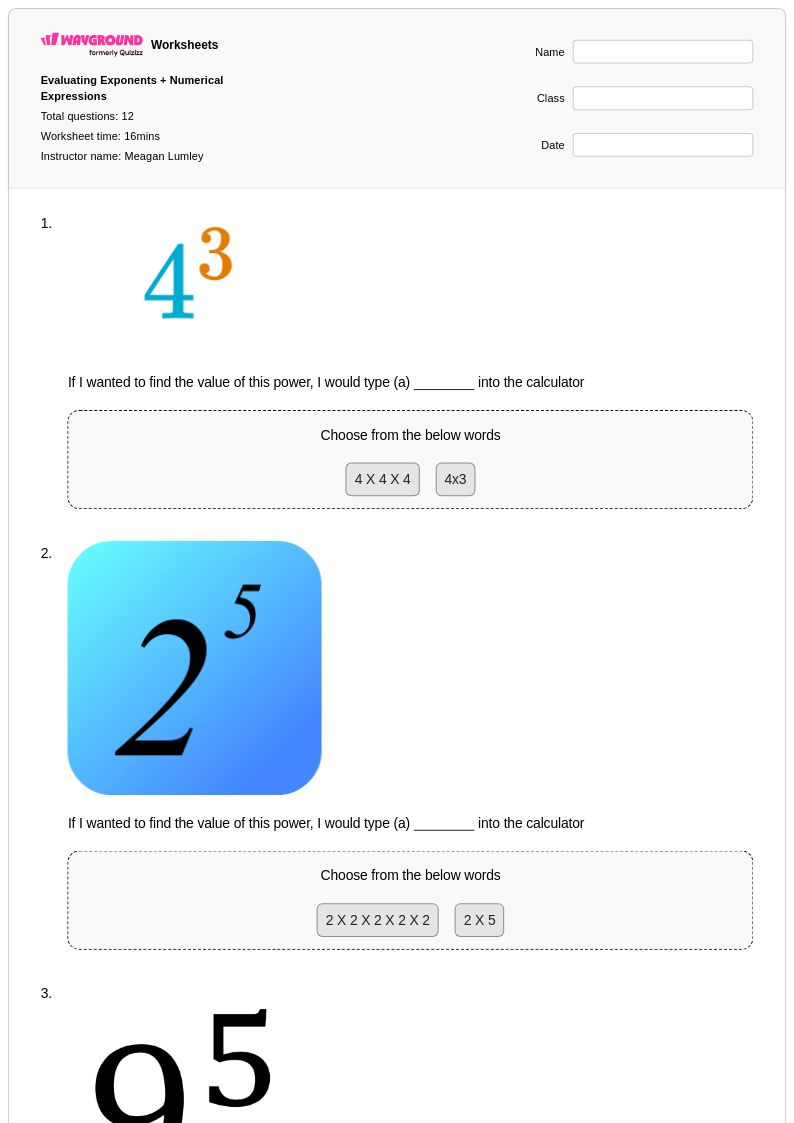
The key is making sure students understand what exponential notation actually means before they calculate anything. Write out 2⁴ as 2 × 2 × 2 × 2 on the board and count the factors together — students who skip this step almost always default to multiplying base by exponent. Start with bases of 2, 5, and 10 because students can verify the results mentally, which builds confidence before you move to less familiar bases.
What exercises help 6th graders practice evaluating powers?
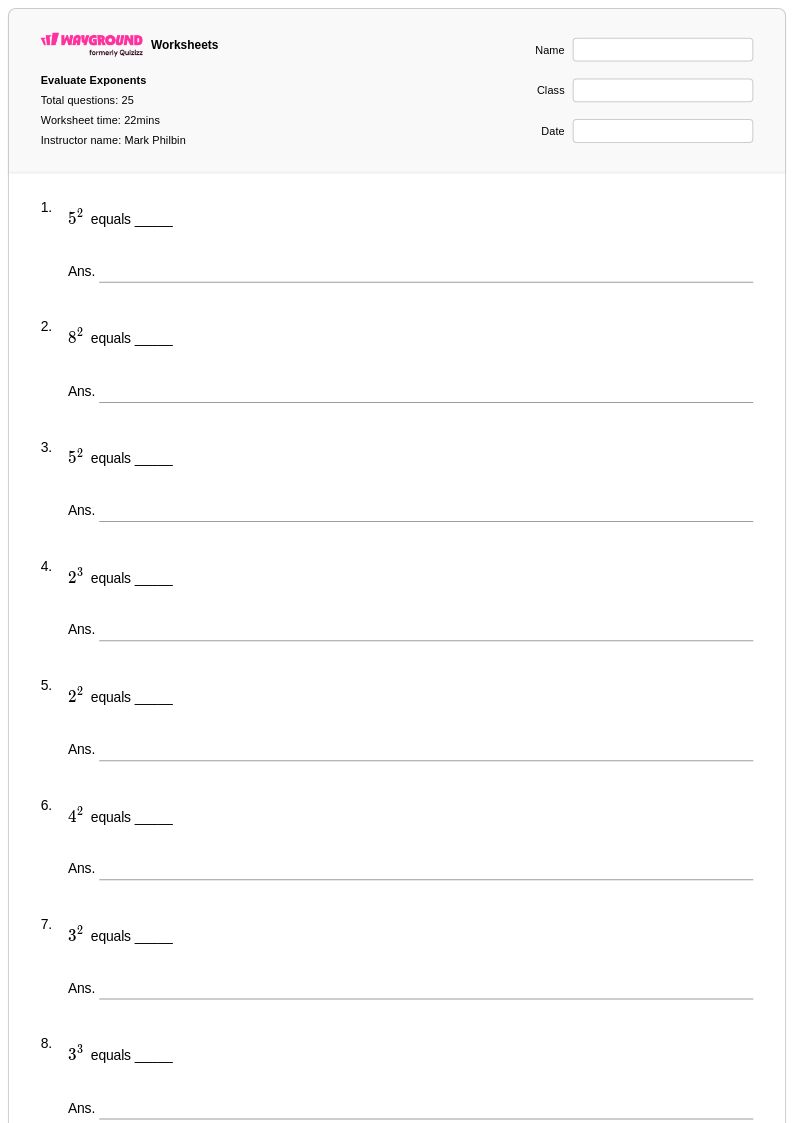
Begin with straightforward evaluation: give students expressions like 3², 4³, and 10² and have them expand and calculate. Once that's solid, mix in problems that ask them to move in both directions — given a value like 64, can they identify it as 2⁶ or 4³? Wayground's Grade 6 evaluating powers worksheets are structured to build from basic evaluation toward that kind of flexible thinking.
What mistakes do 6th graders commonly make when evaluating powers?
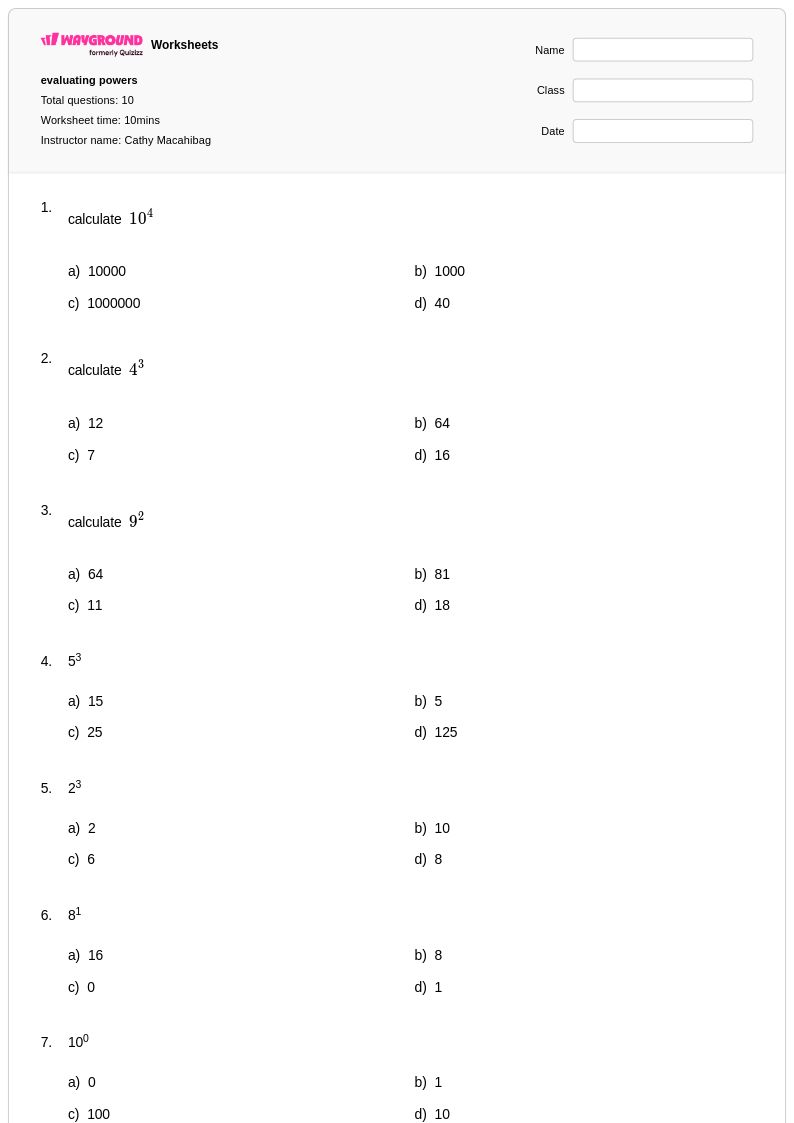
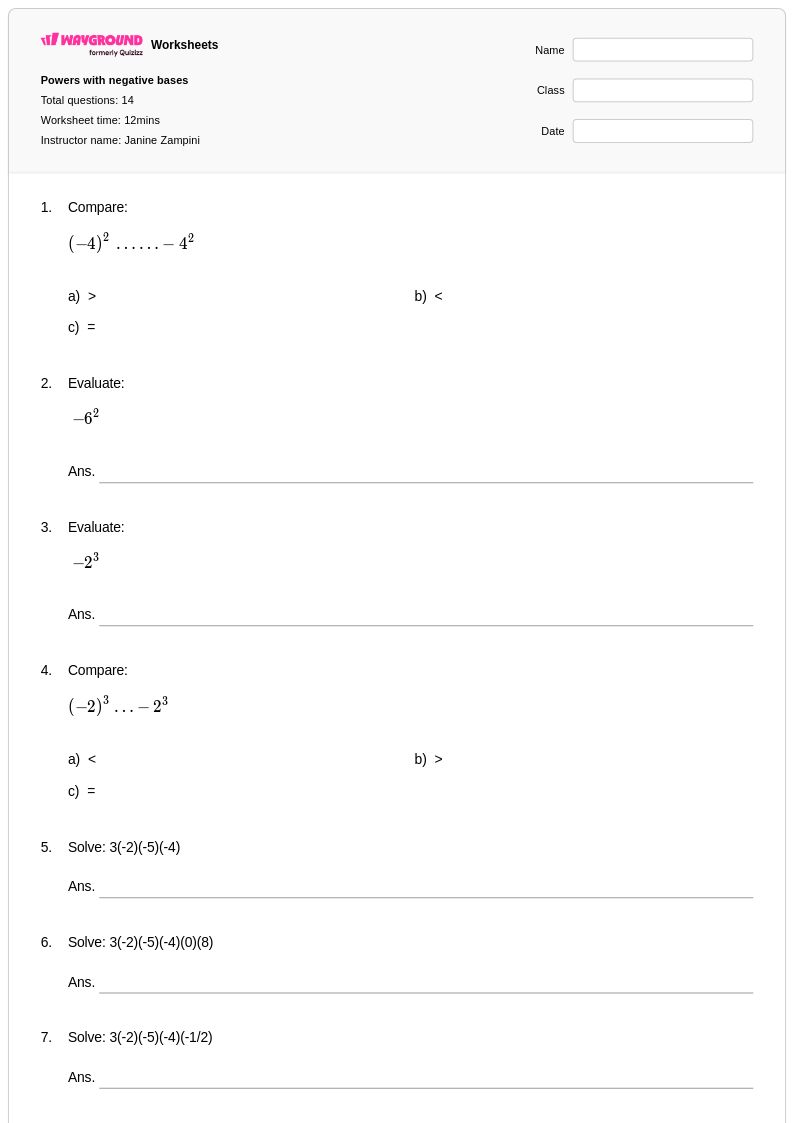
The most common error is treating the exponent as a multiplier: students write 5³ = 15 instead of 125. A close second is misreading the base when a negative sign is involved — though most Grade 6 work stays with positive bases, any early exposure to negatives tends to produce sign errors. Students also frequently stumble on 10-based powers, writing 10³ = 30 rather than 1,000.
How do I use Wayground's Grade 6 evaluating powers worksheets?
Each worksheet includes a complete answer key, so they work well for independent practice, homework, or a quick formative check. You can assign them as a digital quiz on Wayground — students complete the problems on-screen and you see results right away — or print the PDF for paper-based work. Printed worksheets are easy to grade using the Wayground for Teachers app, which lets you scan student submissions directly.
Is evaluating powers part of the 6th grade Common Core math curriculum?
Yes. Common Core introduces exponents formally in Grade 6 as part of the expressions and equations domain. Students learn to read and write exponential notation and evaluate numerical expressions involving whole-number exponents — so 2⁴ or 5³ is exactly the kind of problem Grade 6 standards target. This lays the groundwork for applying exponent rules with integer exponents in Grades 7 and 8.
What grade level is evaluating powers typically taught?
Evaluating powers with whole-number exponents is a Grade 6 topic in most US curricula, aligned with Common Core's introduction of exponential notation. Students revisit and extend the concept in Grades 7 and 8, adding negative and zero exponents, fractional bases, and scientific notation.

![[3.3] Evaluate Exponents - Printable Evaluating-powers Worksheets Class 6 - Wayground](https://quizizz-static.s3.amazonaws.com/_media/worksheets-new/602abca1359741001beb58a6-33-evaluate-exponents)