
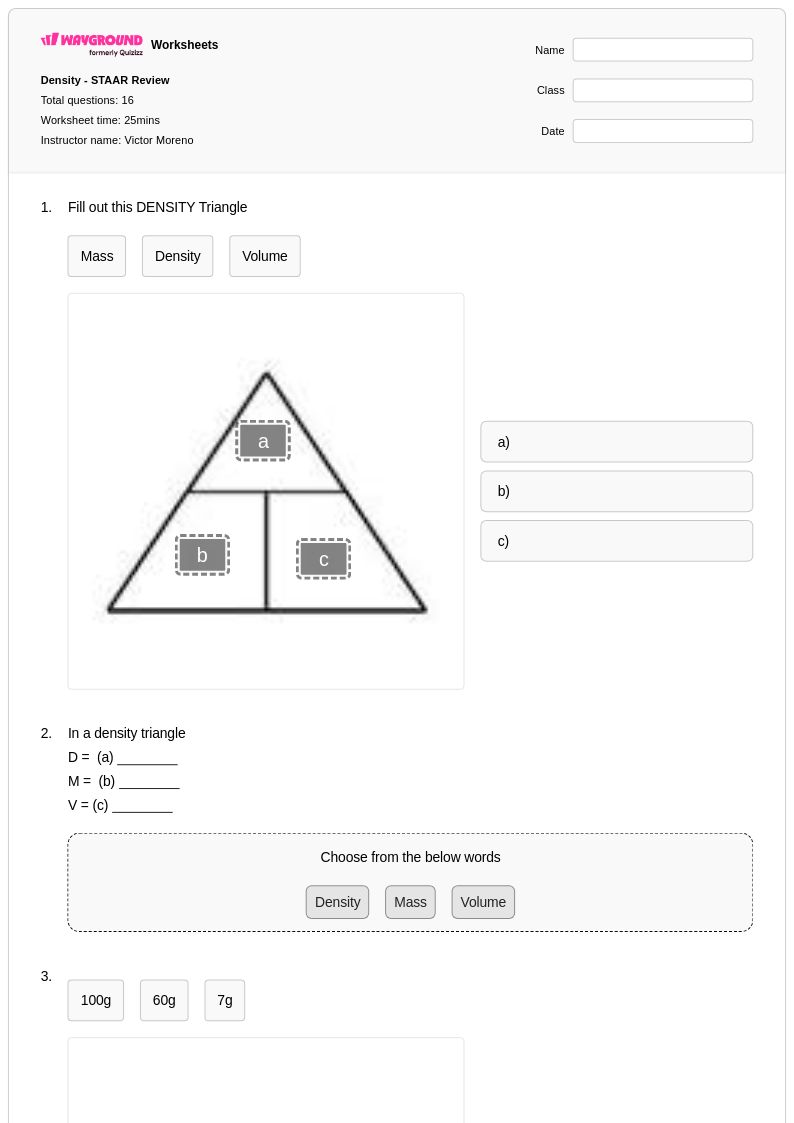
16 Q
9th
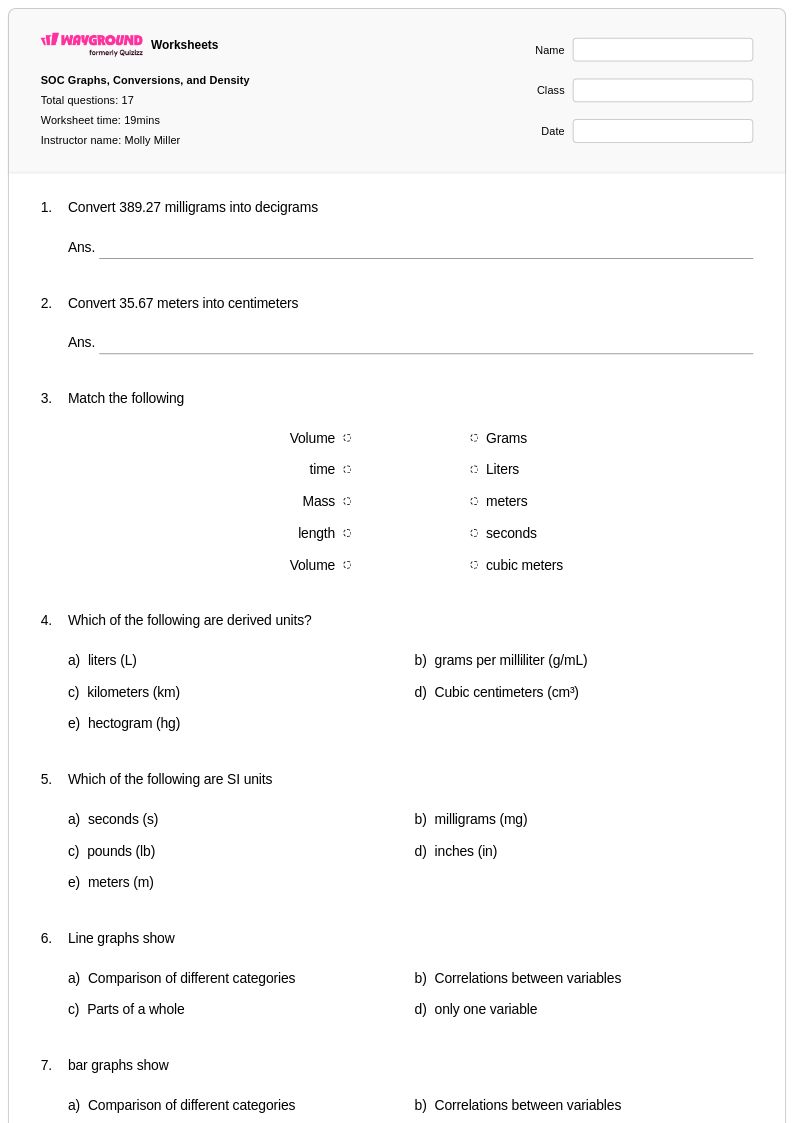
17 Q
9th
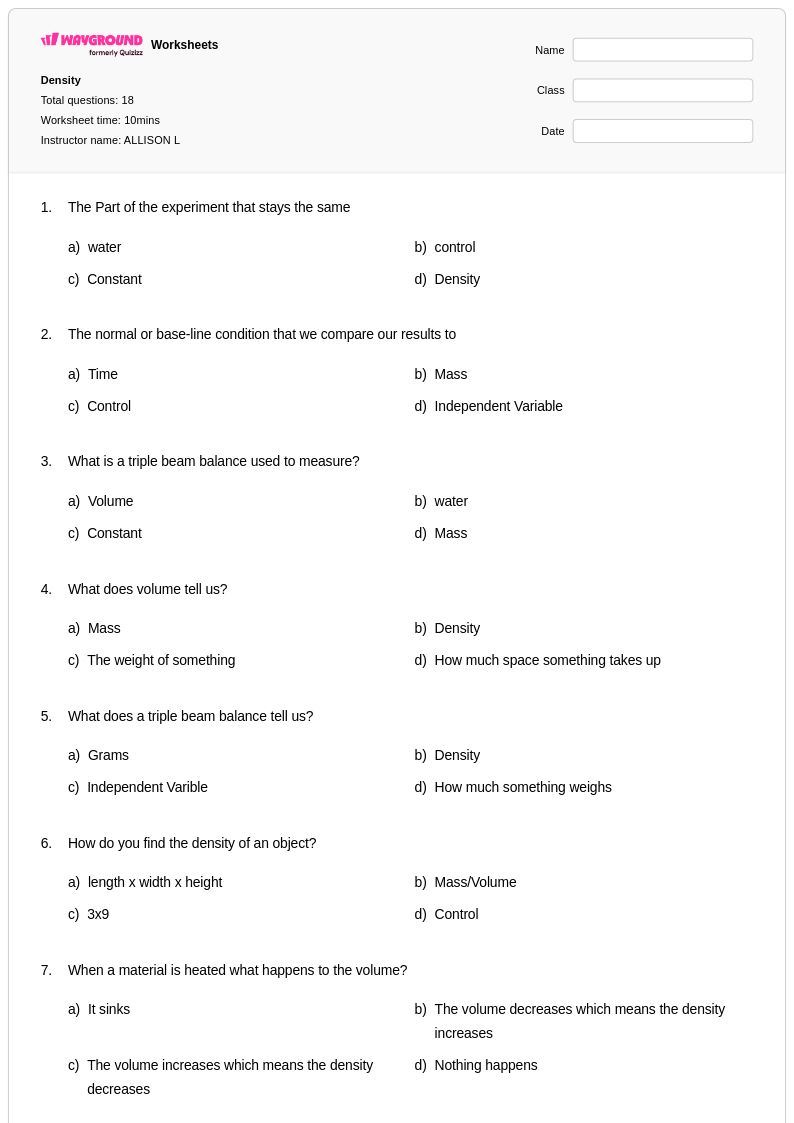
18 Q
9th
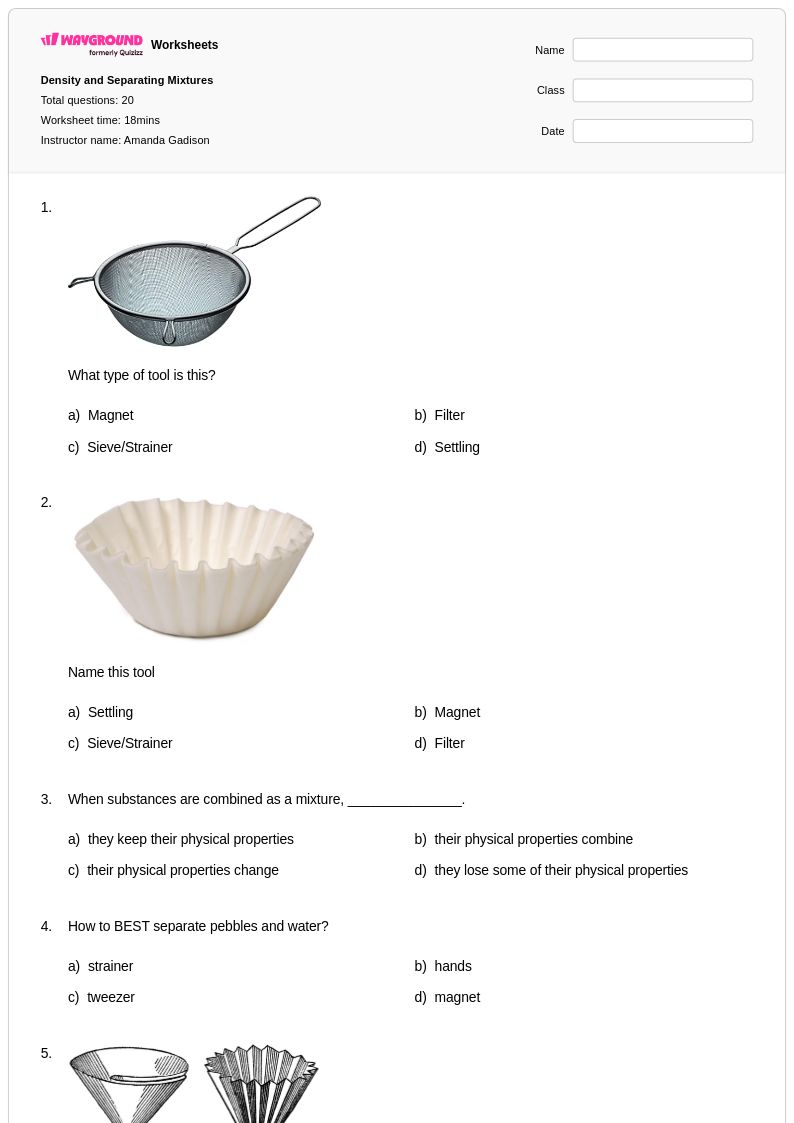
20 Q
5th - Uni
10 Q
9th
40 Q
9th - 12th
22 Q
9th - 12th
13 Q
6th - Uni
25 Q
9th
10 Q
9th - Uni
15 Q
6th - Uni
25 Q
5th - Uni
10 Q
9th - 12th
25 Q
6th - Uni
25 Q
6th - Uni
15 Q
9th
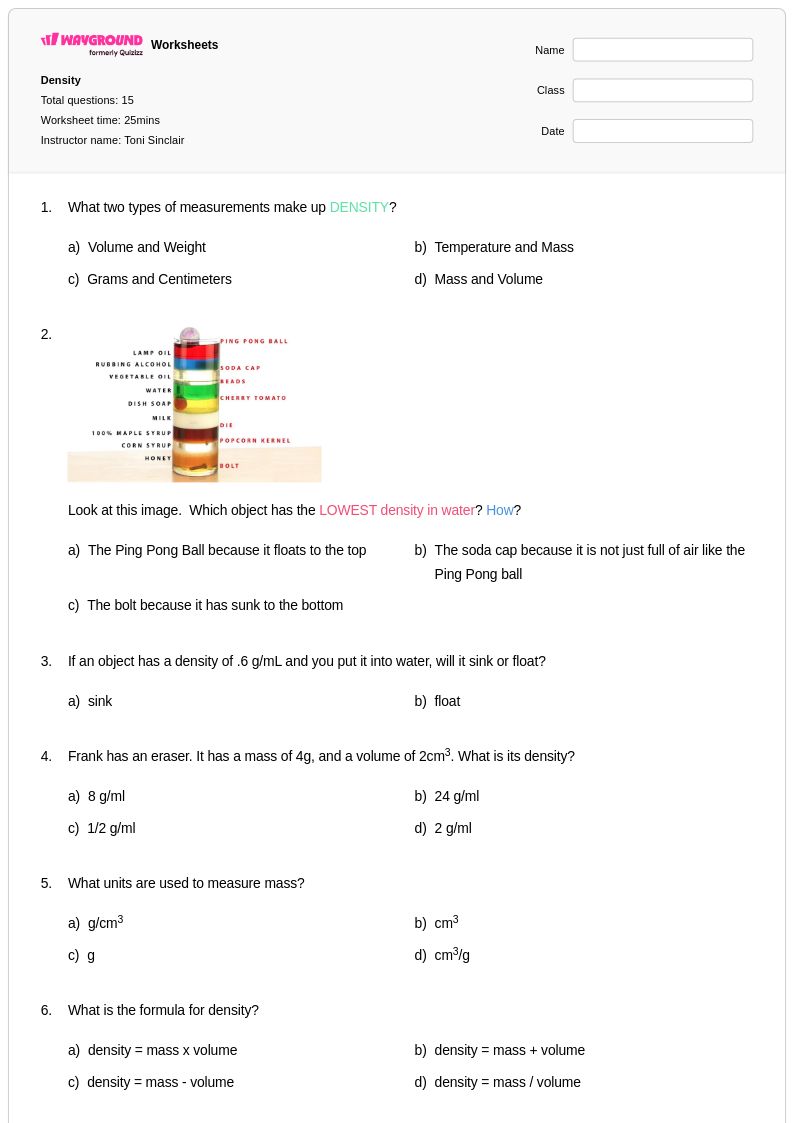
15 Q
8th - 9th
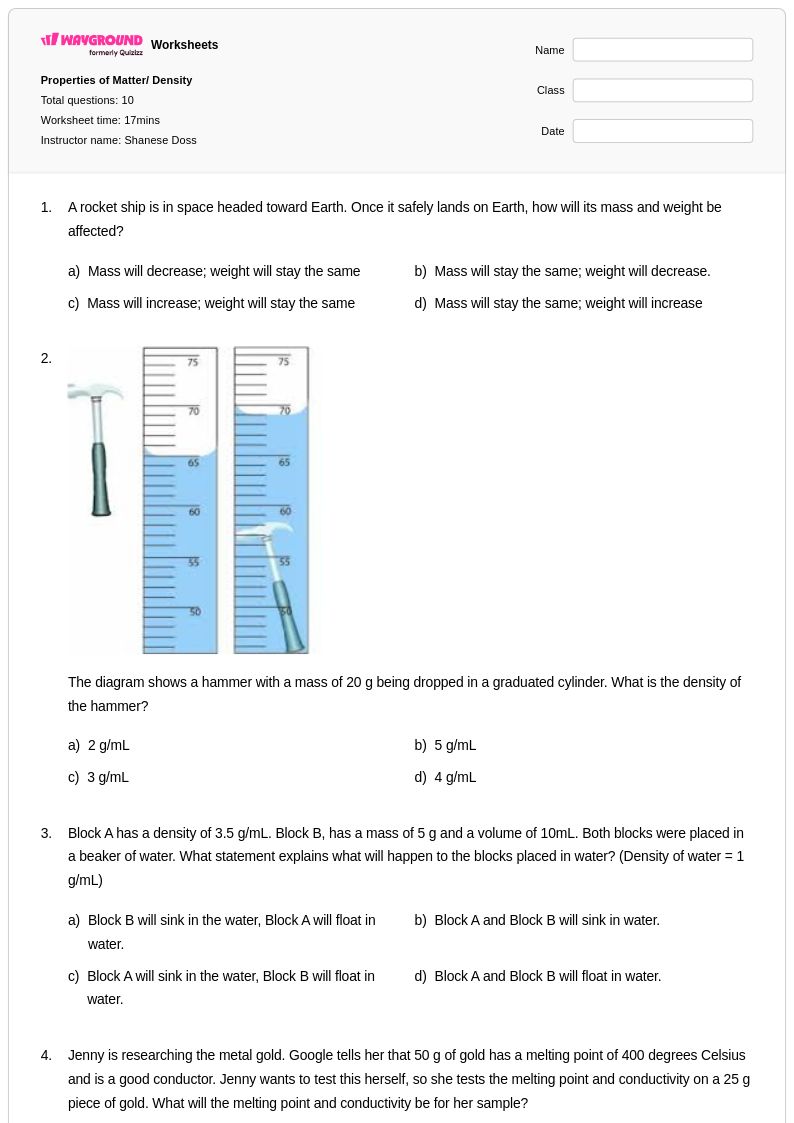
10 Q
6th - 9th
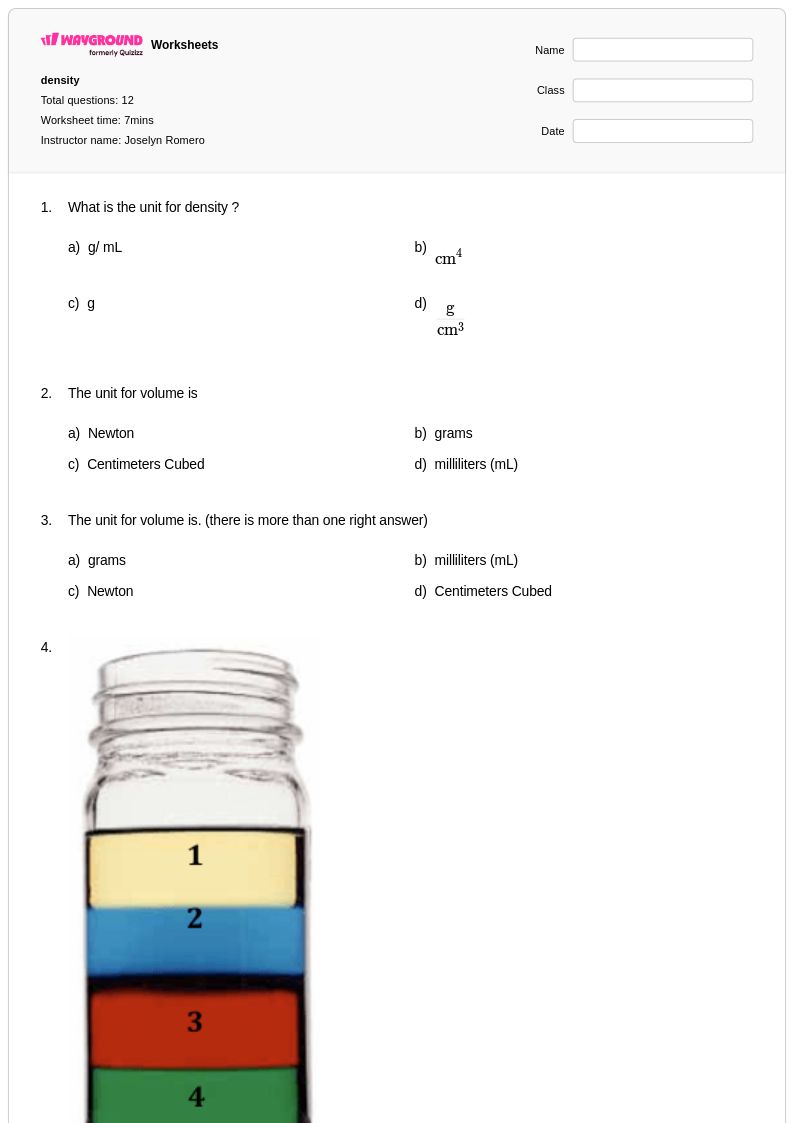
12 Q
9th - 12th
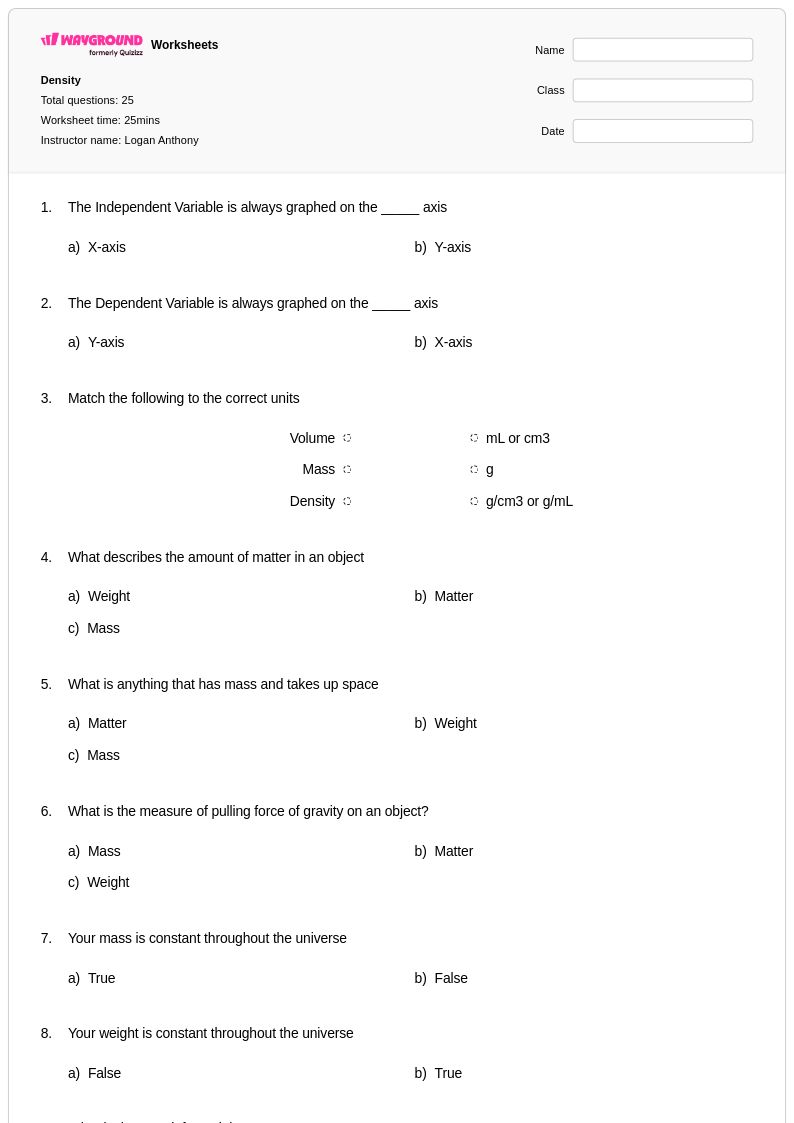
25 Q
9th - 12th
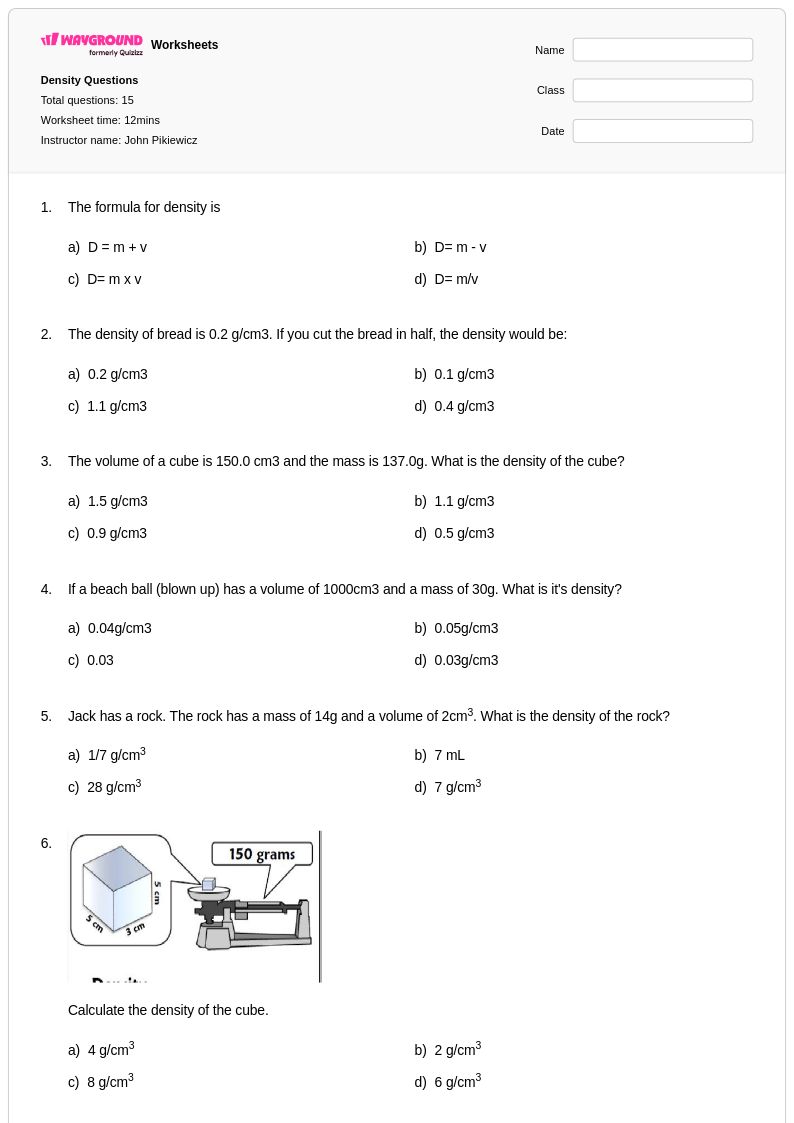
15 Q
9th - 10th
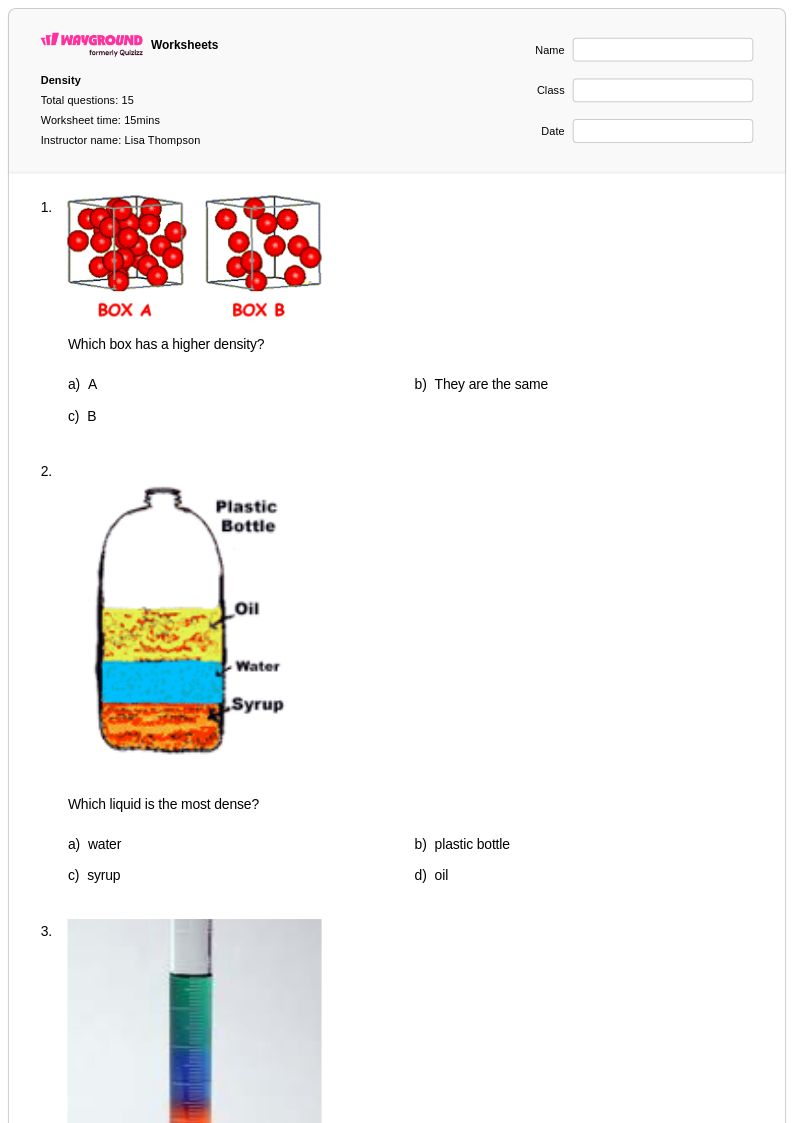
15 Q
6th - Uni
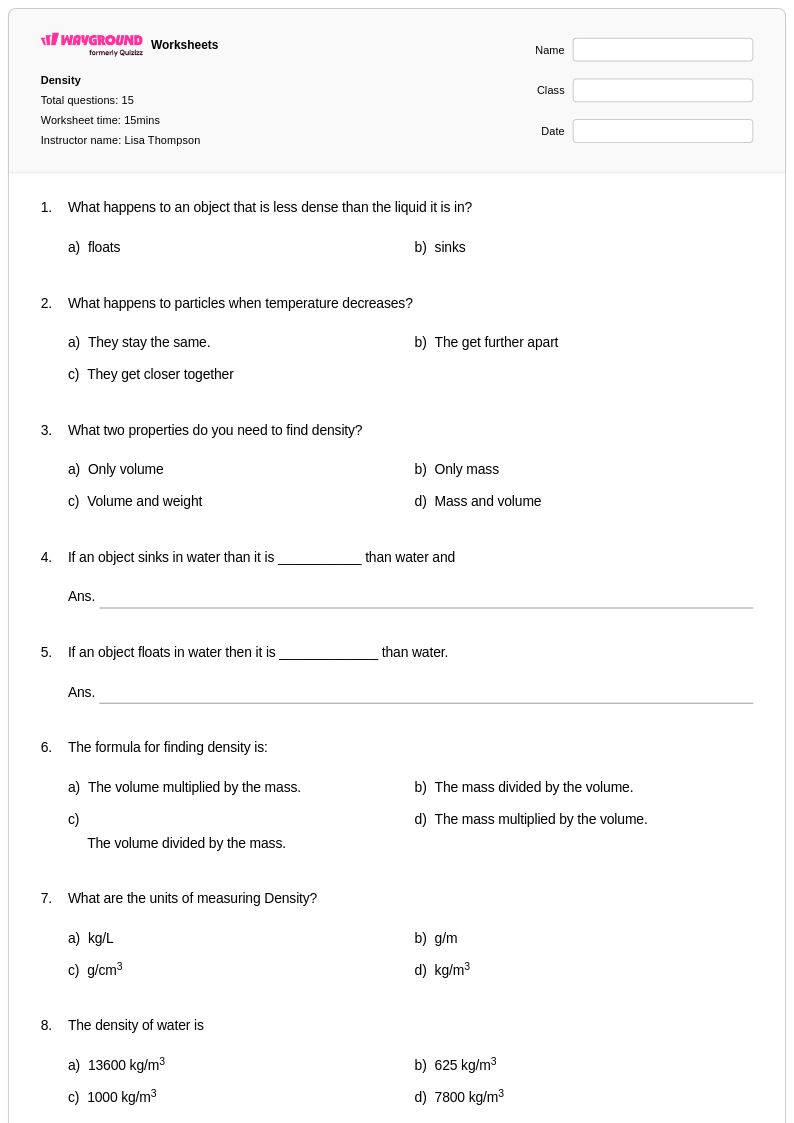
15 Q
6th - Uni
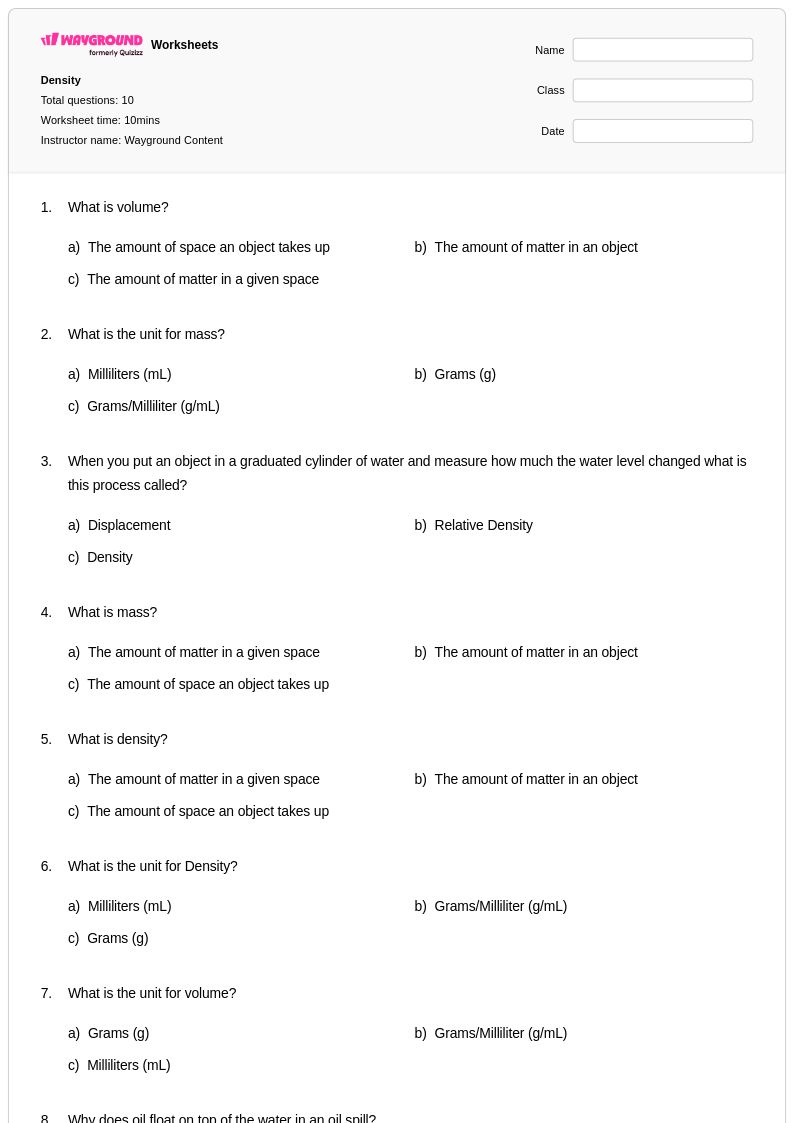
10 Q
9th
Explore Other Subject Worksheets for class 9
Explore printable Density worksheets for Class 9
Class 9 density worksheets available through Wayground (formerly Quizizz) provide comprehensive practice with one of physics' most fundamental concepts, helping students master the relationship between mass, volume, and density across various materials and substances. These carefully designed resources strengthen critical skills including density calculations using the formula D=m/V, unit conversions between grams per cubic centimeter and kilograms per cubic meter, and problem-solving techniques for determining unknown variables when given partial information. Students work through practice problems involving regular and irregular solids, liquids of different densities, and real-world applications such as determining whether objects will float or sink. Each worksheet includes detailed answer keys that guide students through step-by-step solutions, and the materials are available as free printables in convenient PDF format for seamless classroom distribution and home study.
Wayground (formerly Quizizz) empowers teachers with an extensive collection of millions of teacher-created density worksheets, offering robust search and filtering capabilities that allow educators to quickly locate materials aligned with specific learning standards and student needs. The platform's differentiation tools enable teachers to customize worksheets for various skill levels, from basic density identification exercises for struggling learners to complex multi-step problems involving density applications in engineering and material science for advanced students. These resources support flexible lesson planning by providing both printable PDF versions for traditional paper-and-pencil work and digital formats for interactive online learning environments. Teachers utilize these comprehensive worksheet collections for targeted skill practice, remediation sessions to address conceptual gaps, and enrichment activities that challenge students to apply density concepts to sophisticated real-world scenarios in physics and chemistry.
FAQs
How do I teach density to middle or high school students?
What kinds of practice problems help students get better at density calculations?
What mistakes do students commonly make when solving density problems?
How do I differentiate density worksheets for students at different skill levels?
How can I use Wayground's density worksheets in my classroom?
How do density worksheets support lab activities in a physics class?