Free Printable Wave Superposition Worksheets for Class 9
Class 9 wave superposition worksheets from Wayground offer comprehensive printables and practice problems that help students master interference patterns, constructive and destructive waves, with detailed answer keys and free PDF resources.
Explore printable Wave Superposition worksheets for Class 9
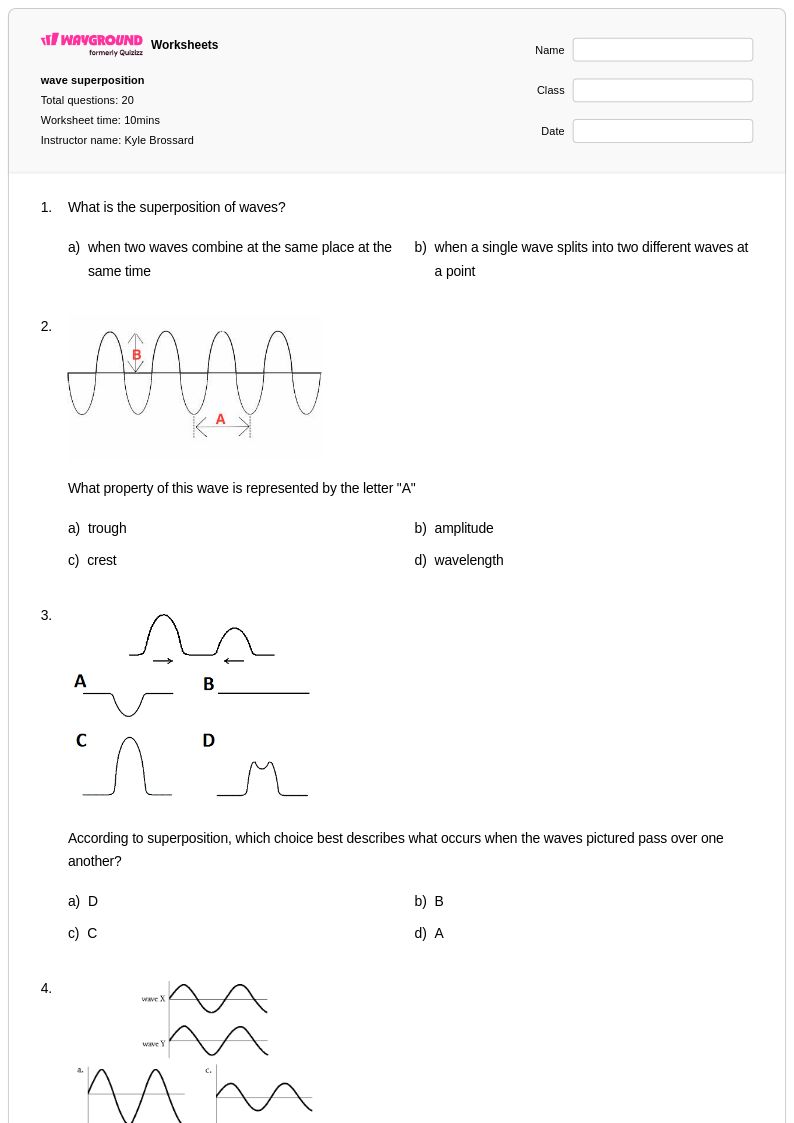
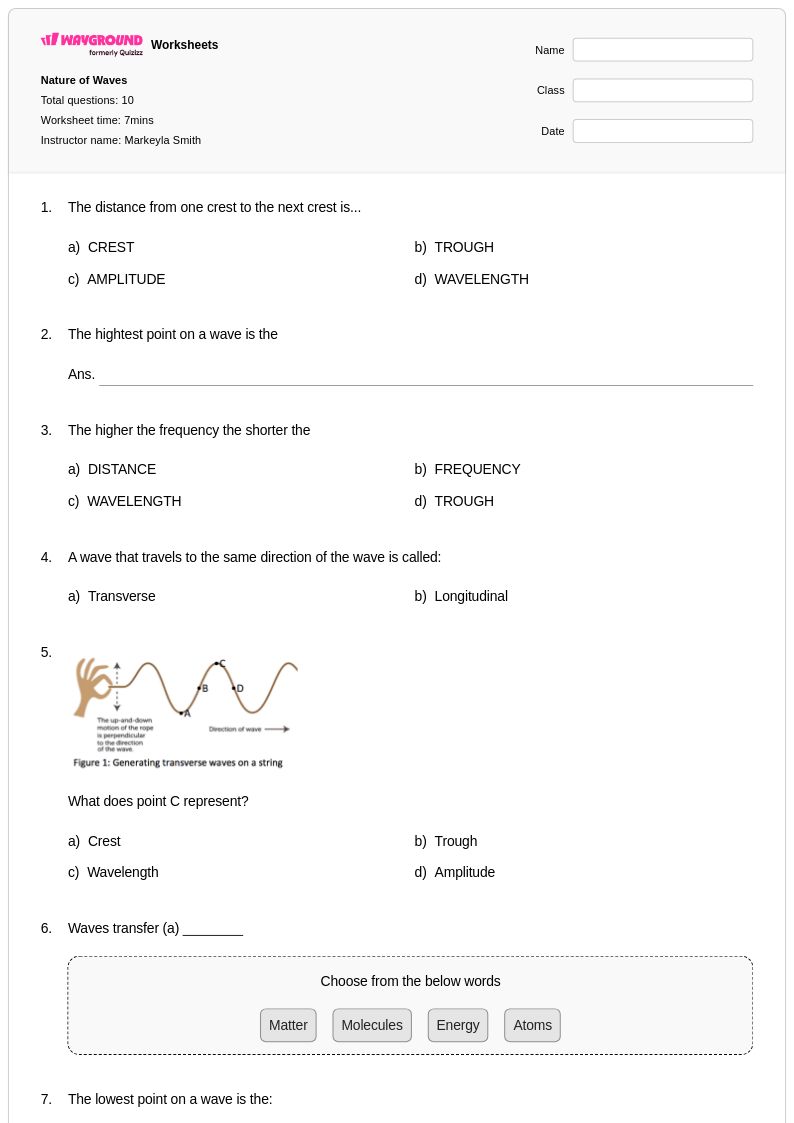
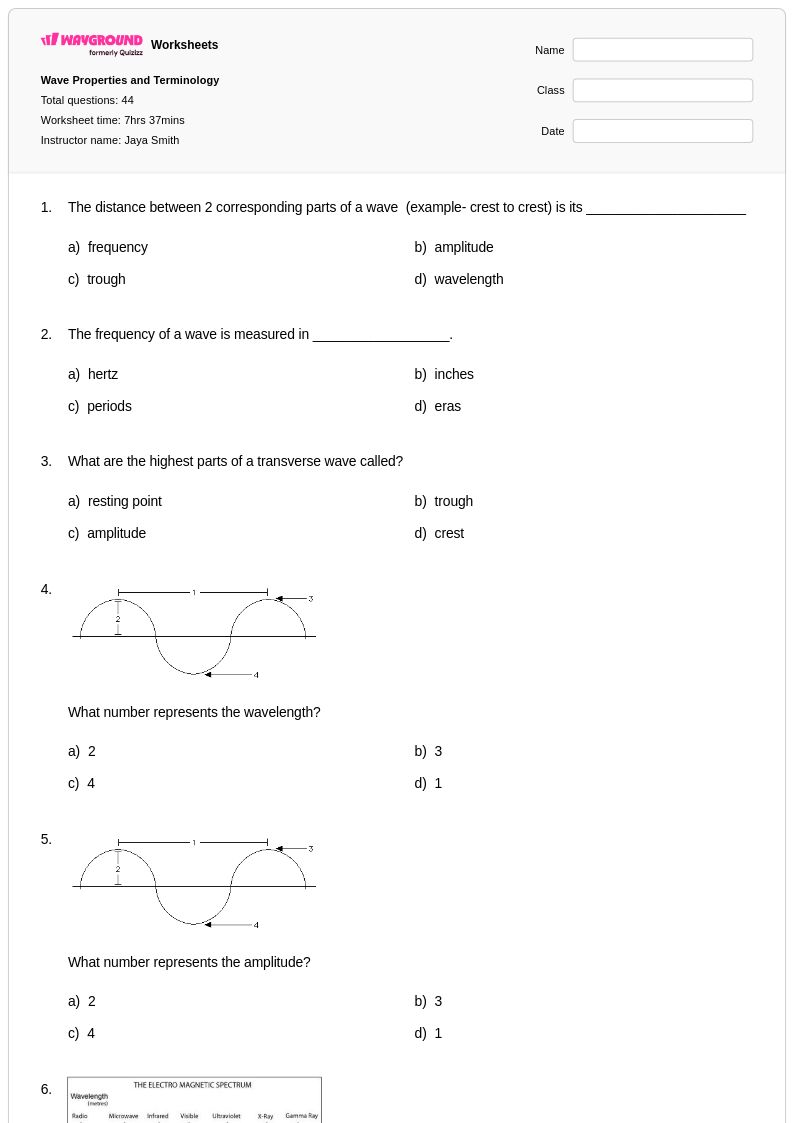
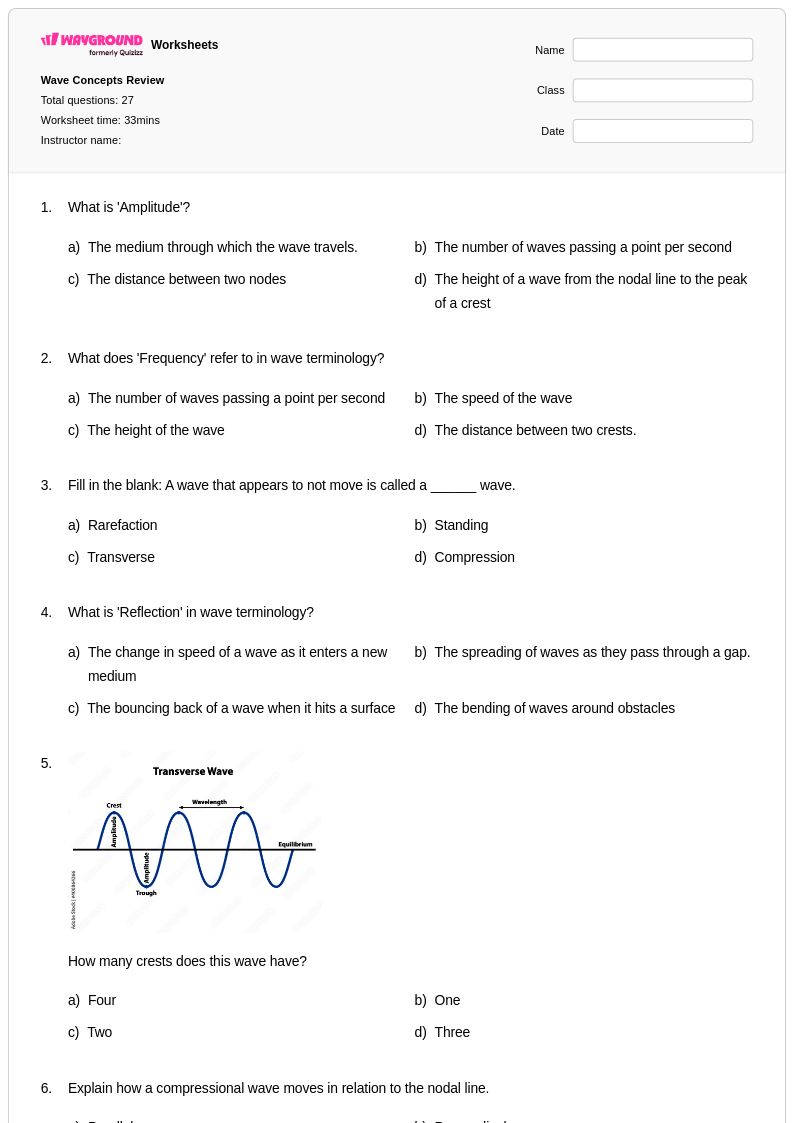
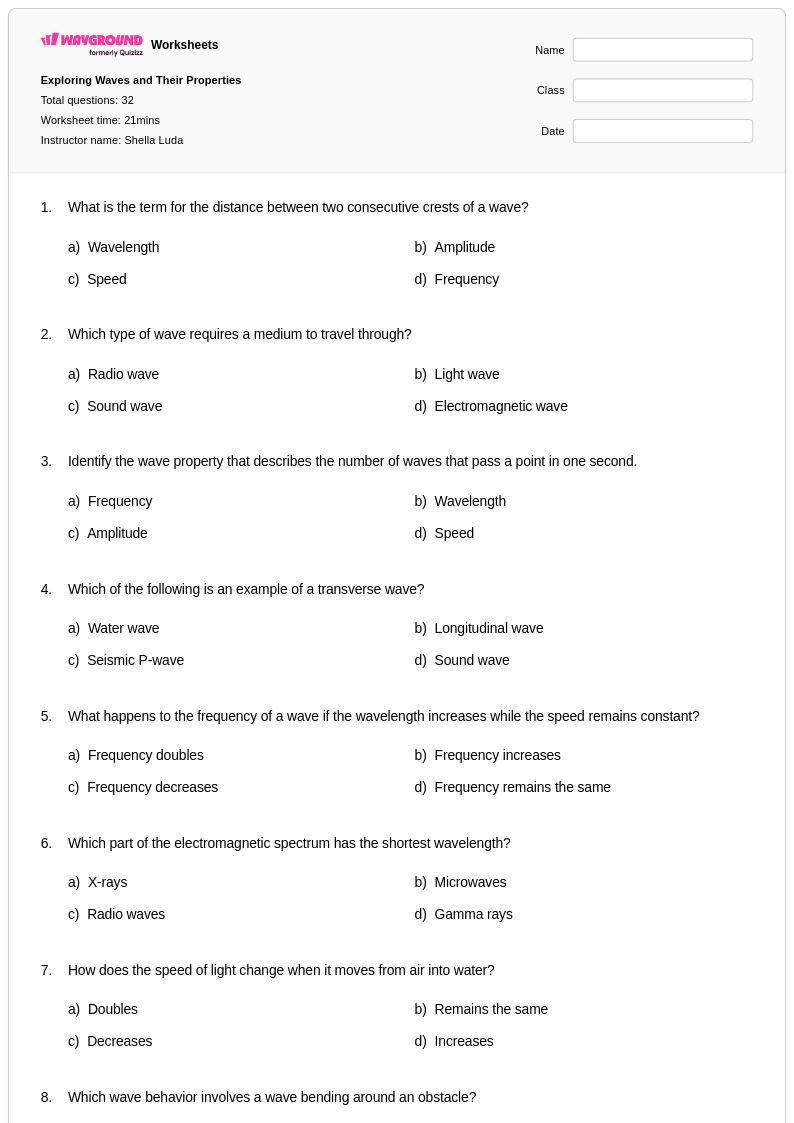
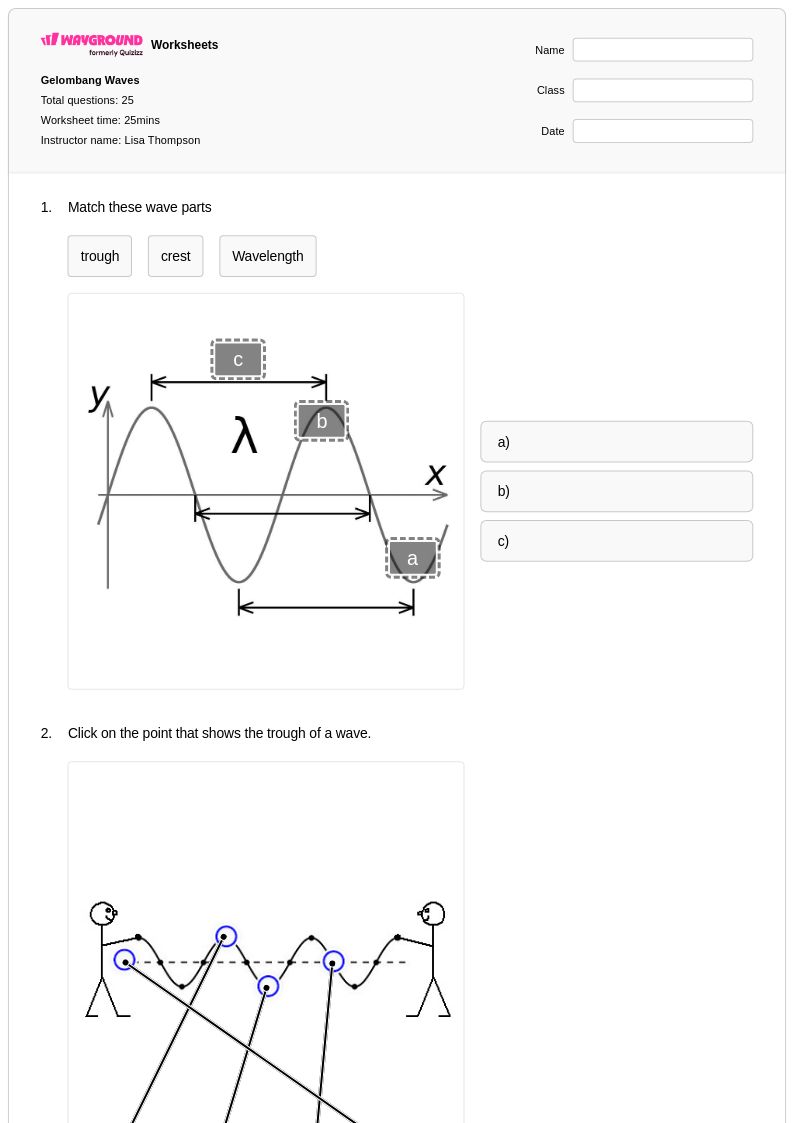
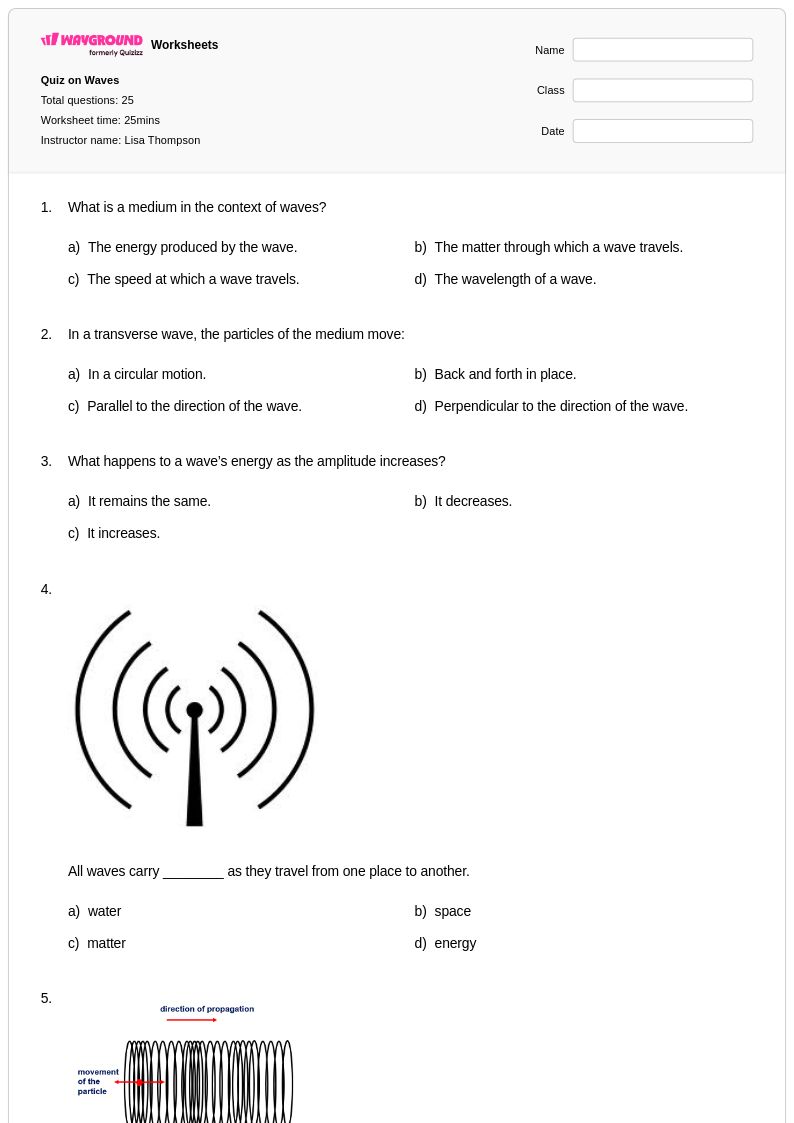
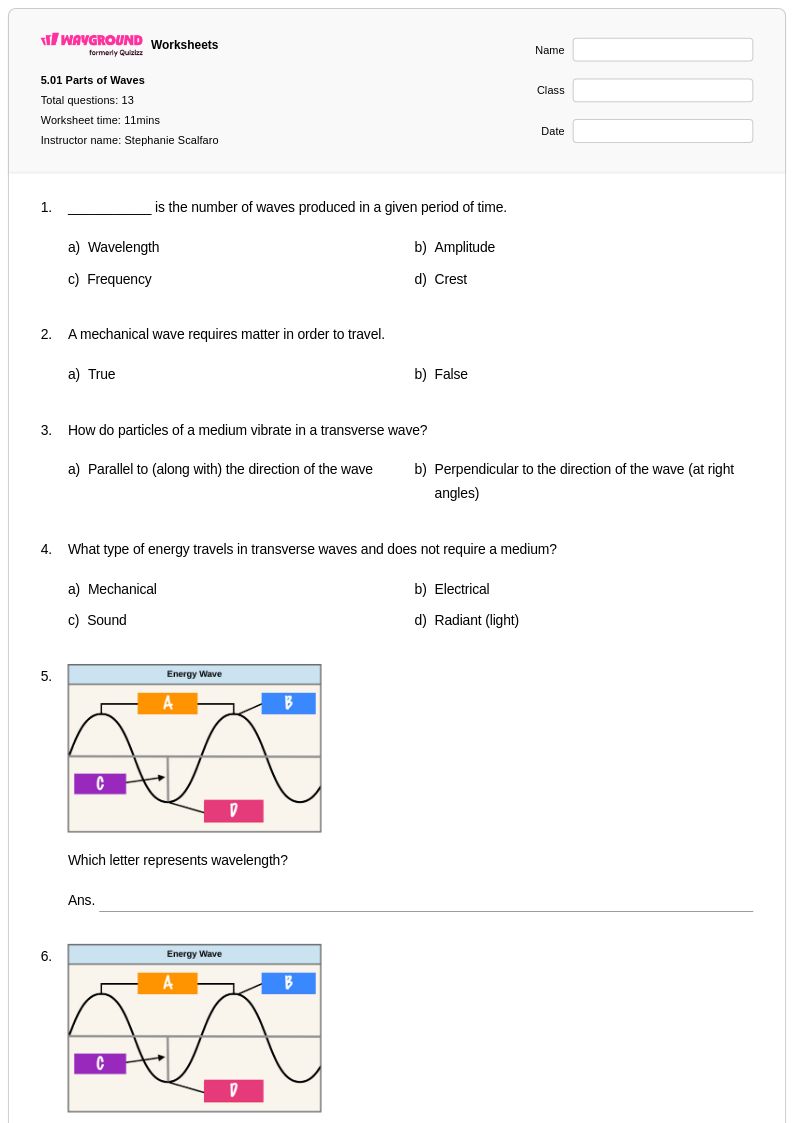
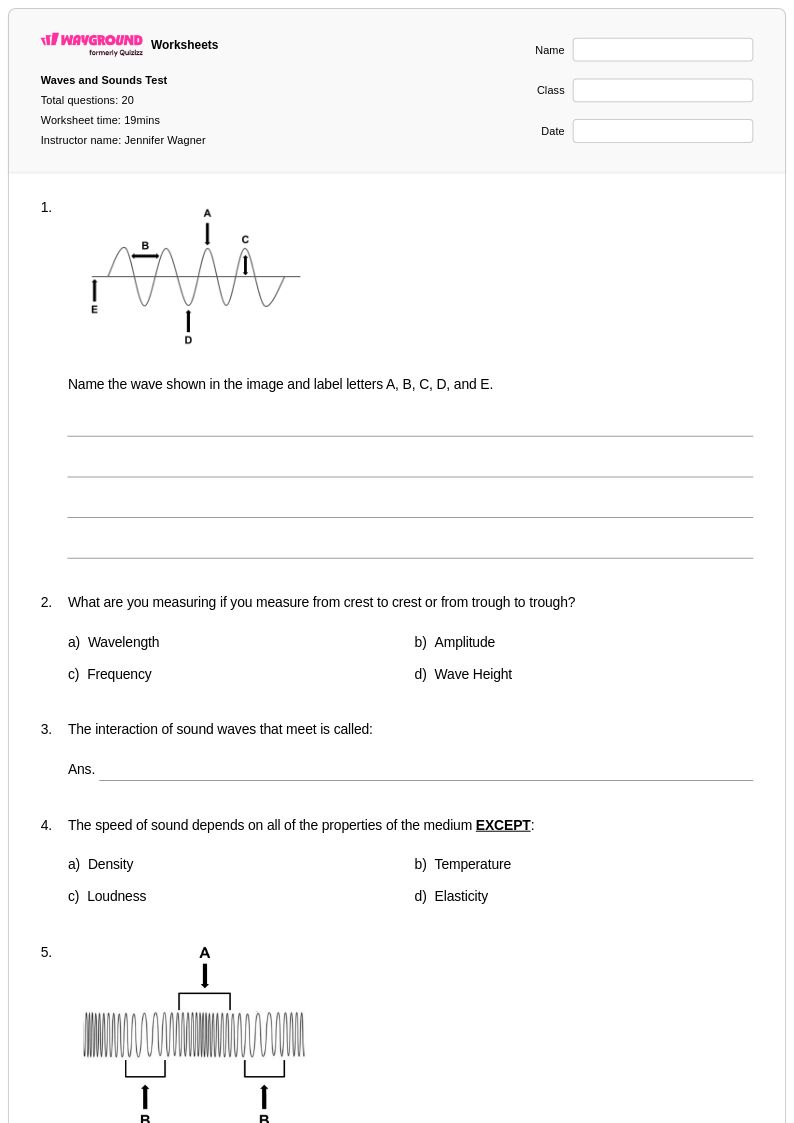
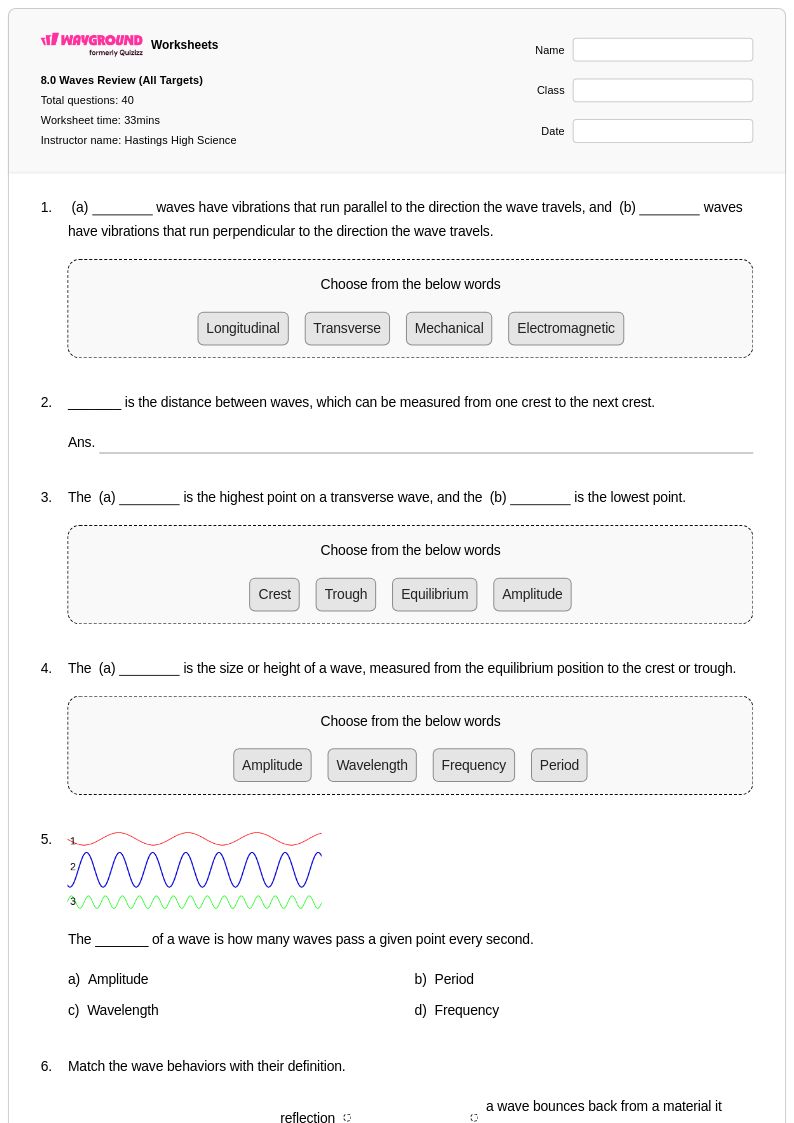
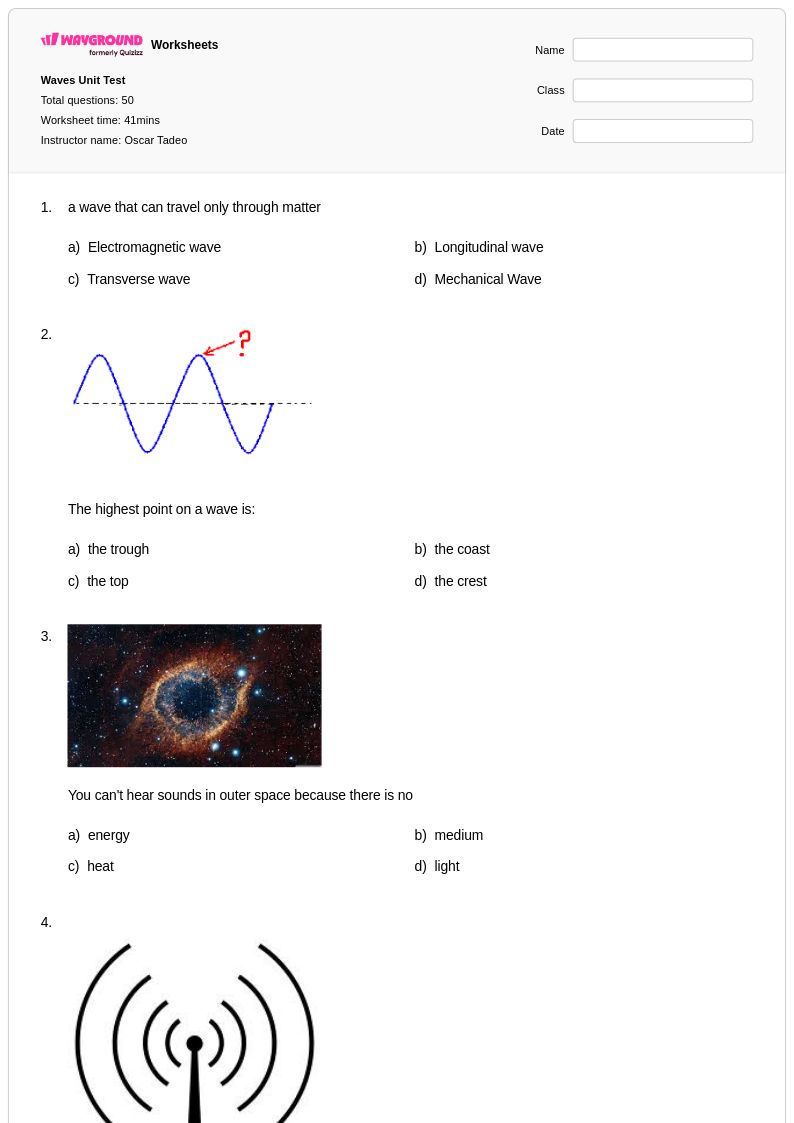
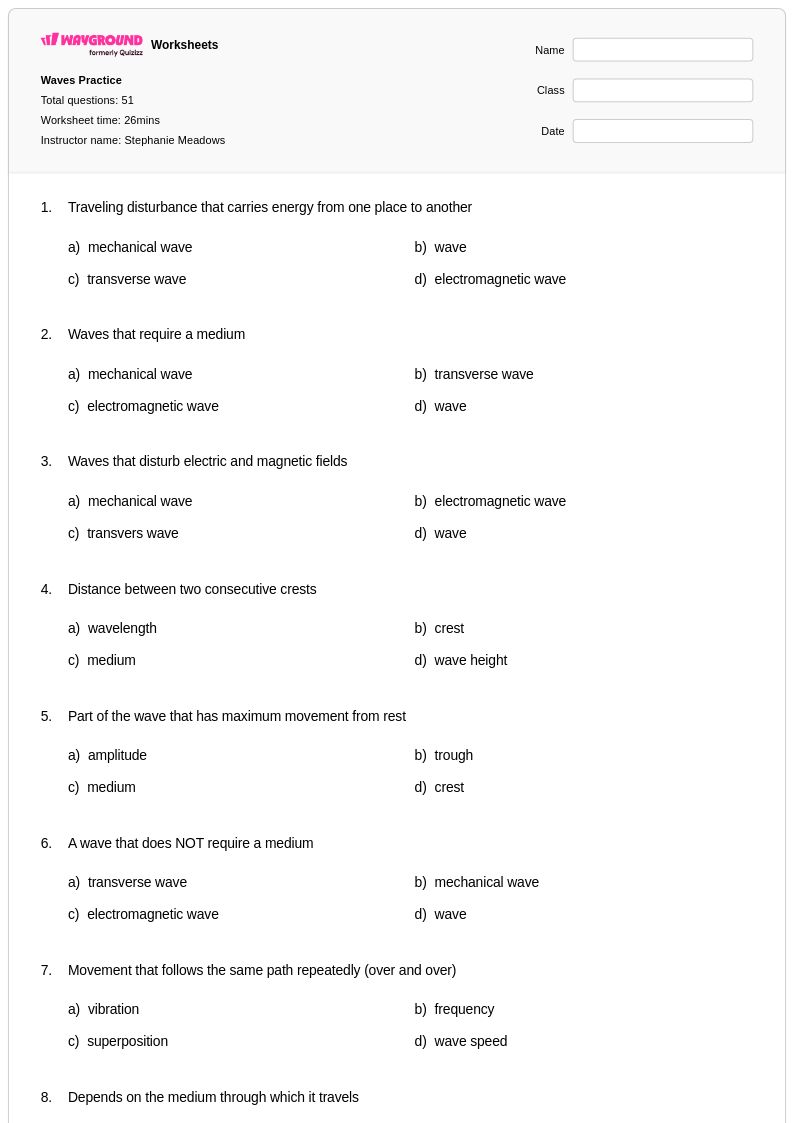
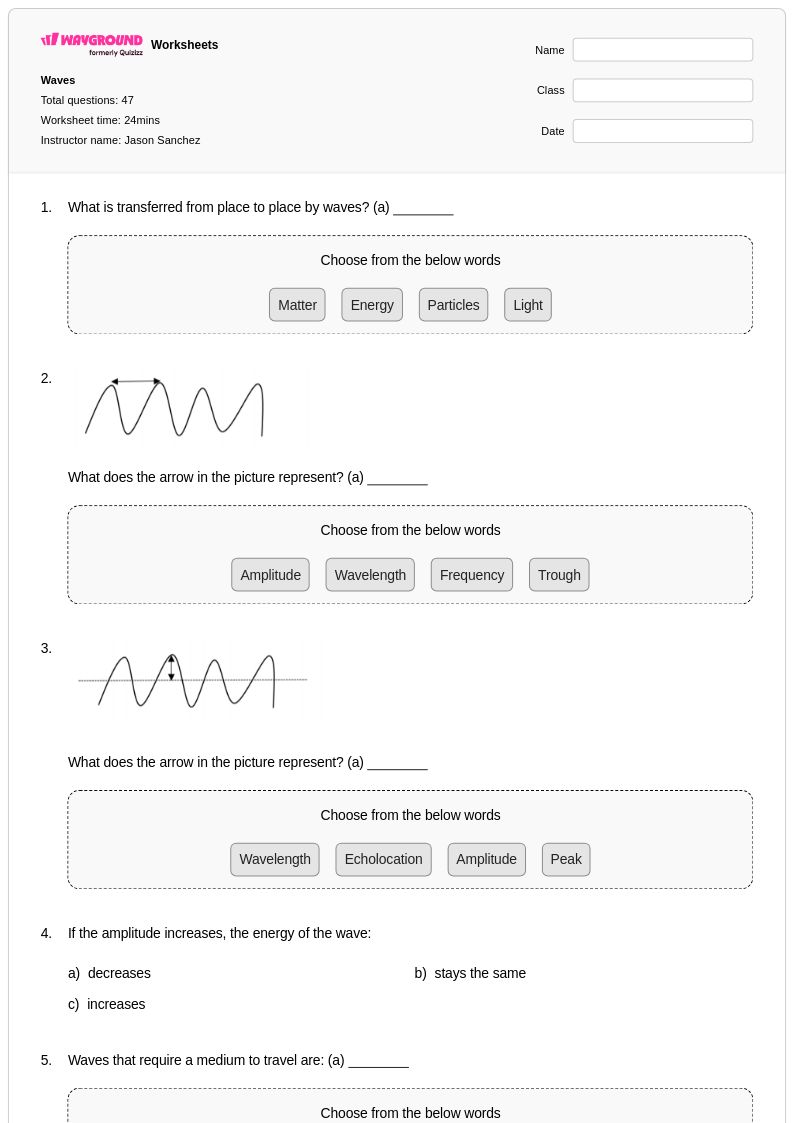
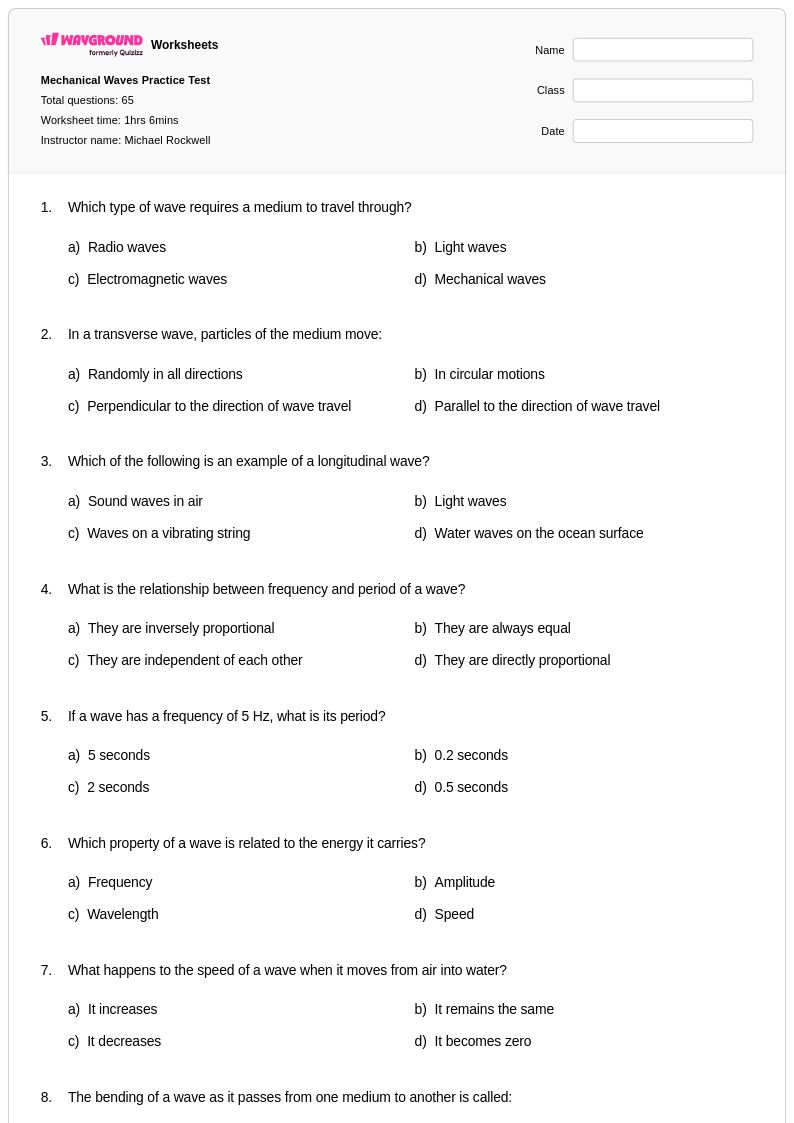
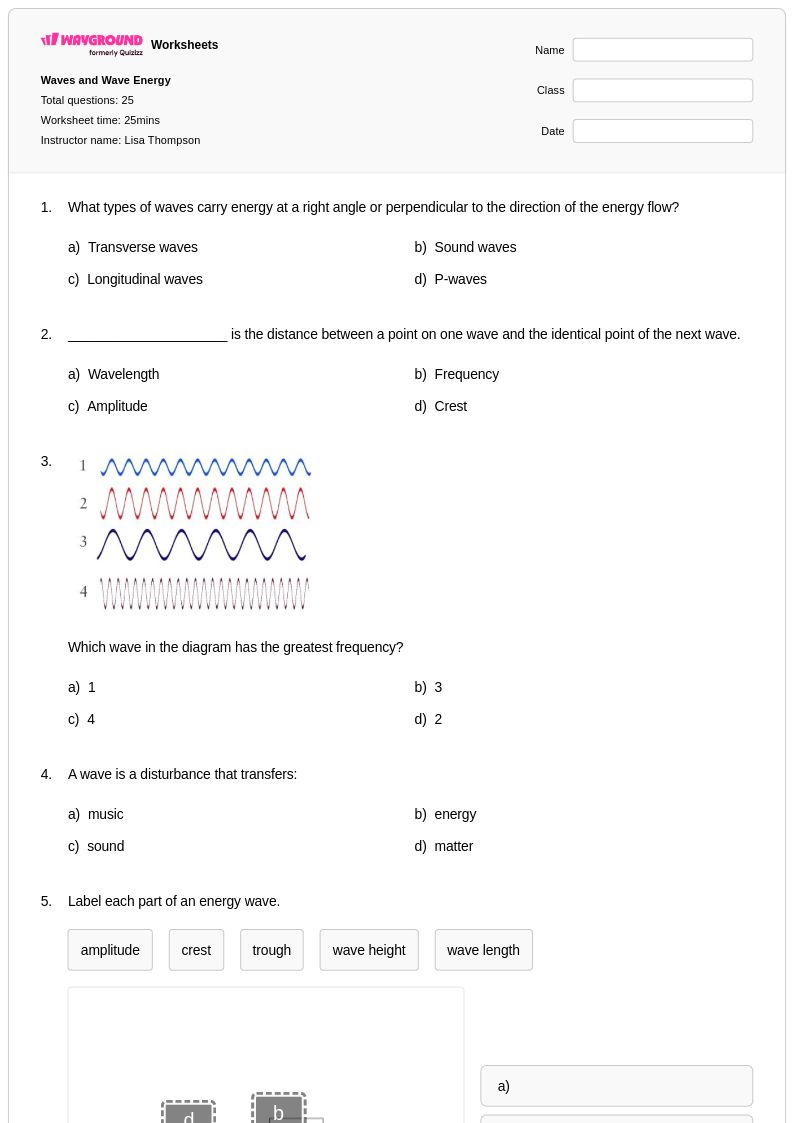
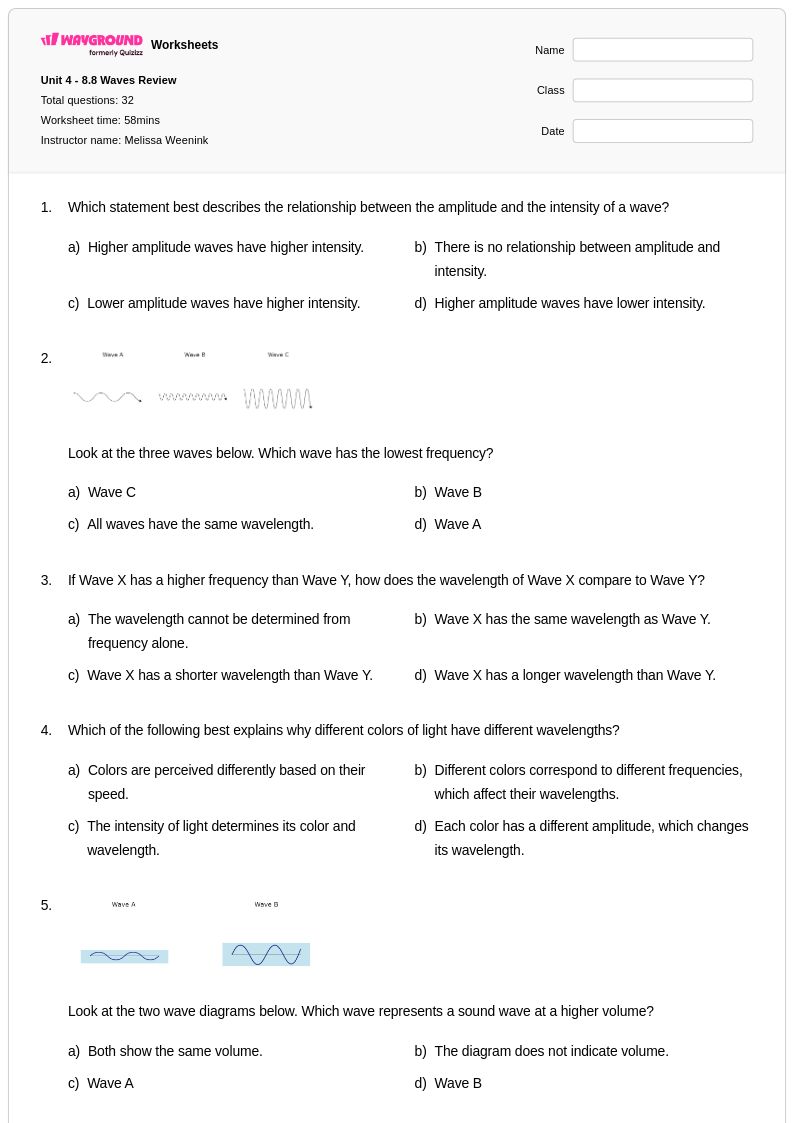
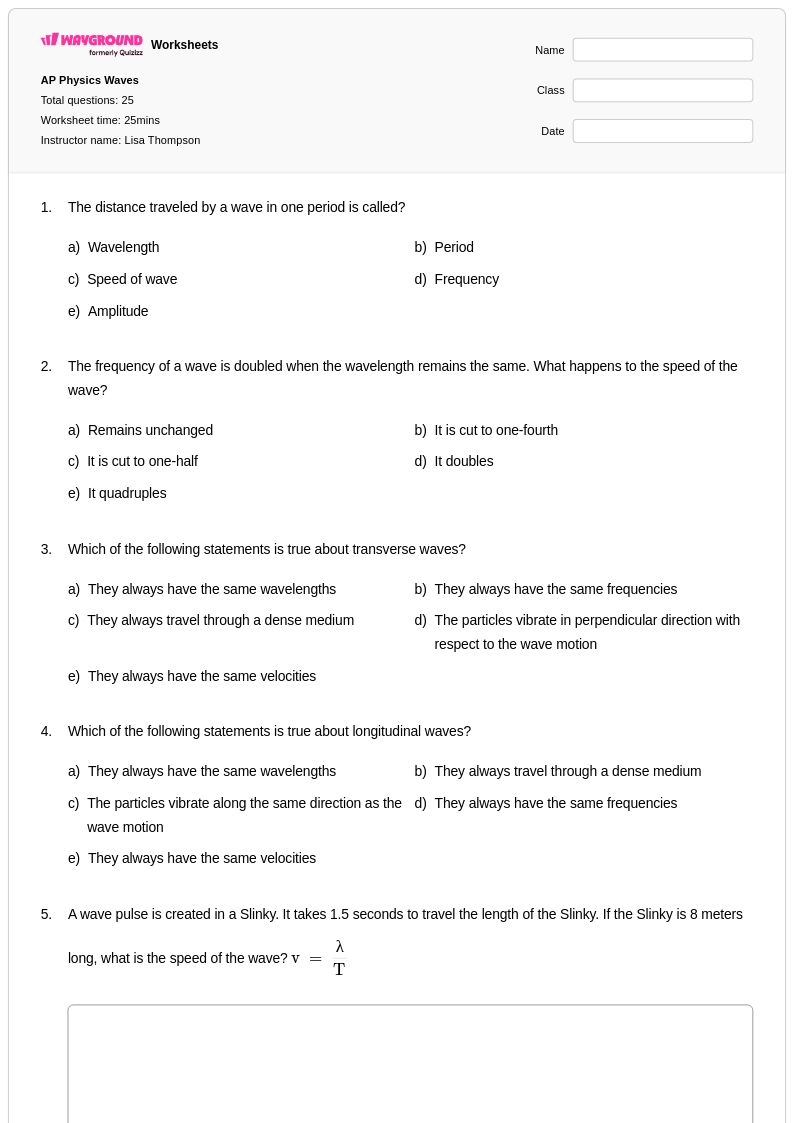
Wave superposition worksheets for Class 9 physics students available through Wayground (formerly Quizizz) provide comprehensive practice with one of the most fundamental concepts in wave behavior. These carefully designed resources help students master the principles of constructive and destructive interference, understand how waves combine when they meet, and analyze the resulting amplitude patterns. The worksheets strengthen critical thinking skills through practice problems that require students to predict interference patterns, calculate resultant wave amplitudes, and interpret wave diagrams showing superposition effects. Each worksheet collection includes detailed answer keys and is available as free printables in pdf format, making it easy for educators to incorporate hands-on wave superposition exercises into their physics curriculum while supporting students who need additional practice with these challenging concepts.
Wayground (formerly Quizizz) empowers physics teachers with access to millions of teacher-created wave superposition resources that can be easily searched, filtered, and customized to meet specific classroom needs. The platform's robust collection includes worksheets aligned with physics education standards, featuring differentiation tools that allow educators to modify content complexity for students at varying skill levels. Teachers can seamlessly switch between printable pdf formats for traditional classroom use and digital interactive versions for technology-enhanced learning environments. These flexible worksheet options support comprehensive lesson planning by providing materials suitable for initial concept introduction, targeted remediation for struggling learners, enrichment activities for advanced students, and ongoing skill practice that reinforces understanding of wave interference principles throughout the Class 9 physics curriculum.
FAQs
How do I teach wave superposition to physics students?
Start by building student understanding of individual wave properties — amplitude, frequency, and phase — before introducing the superposition principle. Use visual overlays or graphing tools to show students how two waves combine point-by-point along a medium, distinguishing clearly between constructive interference (in-phase waves producing larger amplitude) and destructive interference (out-of-phase waves reducing or canceling amplitude). Hands-on simulations or ripple tank demonstrations can make abstract wave interactions concrete before students move to mathematical problem sets.
What exercises help students practice wave superposition?
Effective practice exercises include drawing resultant waveforms by adding displacements at each point, calculating resultant amplitudes for waves with given phase differences, and identifying whether two overlapping waves produce constructive or destructive interference. Problems that progress from simple in-phase or perfectly out-of-phase cases to partial interference and beat frequency calculations build computational fluency alongside conceptual understanding. Practice sets that connect superposition to standing wave formation and node/antinode patterns help students see how the principle extends across multiple wave contexts.
What mistakes do students commonly make with wave superposition?
A common error is assuming waves physically merge and lose their individual identities after interacting — students need reinforcement that waves pass through each other unchanged after superposition occurs. Many students also struggle to correctly add wave displacements at specific points along a medium, especially when waves are partially out of phase rather than perfectly in or out of phase. Confusing amplitude with intensity, or misapplying phase angle relationships when calculating resultant waves, are additional error patterns that targeted practice problems can help address.
How do I use Wayground's wave superposition worksheets in my classroom?
Wayground's wave superposition worksheets are available as printable PDFs for traditional classroom use and in digital formats for technology-integrated learning environments, including the option to host them as a quiz directly on Wayground. The digital format allows you to assign worksheets as formative assessments and receive immediate feedback on student understanding of interference patterns and standing wave formation. Wayground also supports student-level accommodations such as extended time, read aloud, and reduced answer choices, which can be configured individually so that students who need support receive it without disrupting the rest of the class.
How do standing waves relate to wave superposition, and how should I introduce this connection?
Standing waves are a direct application of superposition: they form when two identical waves traveling in opposite directions continuously interfere, producing fixed nodes (points of destructive interference) and antinodes (points of constructive interference). Introducing this connection after students are comfortable with basic constructive and destructive interference helps them see superposition as a unifying principle rather than an isolated concept. Worksheet problems that ask students to identify node and antinode positions from superimposed wave diagrams reinforce this link effectively.
How can I differentiate wave superposition instruction for students at different skill levels?
For students who are still building foundational skills, focus on graphical addition of waves with whole-number amplitudes before introducing phase angle calculations. Advanced learners can work through beat frequency problems, phasor addition, or multi-wave superposition scenarios that require applying the principle algebraically. On Wayground, differentiation tools allow teachers to customize worksheets and apply student-level accommodations — such as reduced answer choices or read aloud — to individual students, so remediation and enrichment can happen simultaneously within the same assignment.