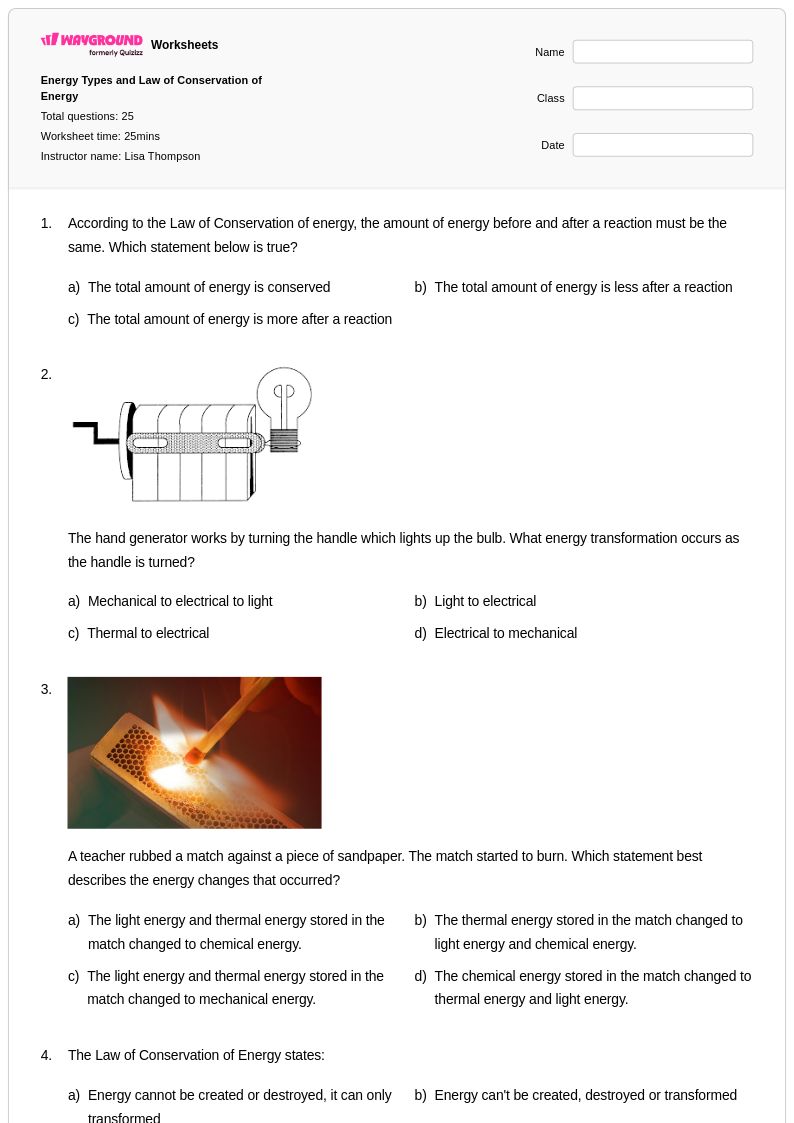
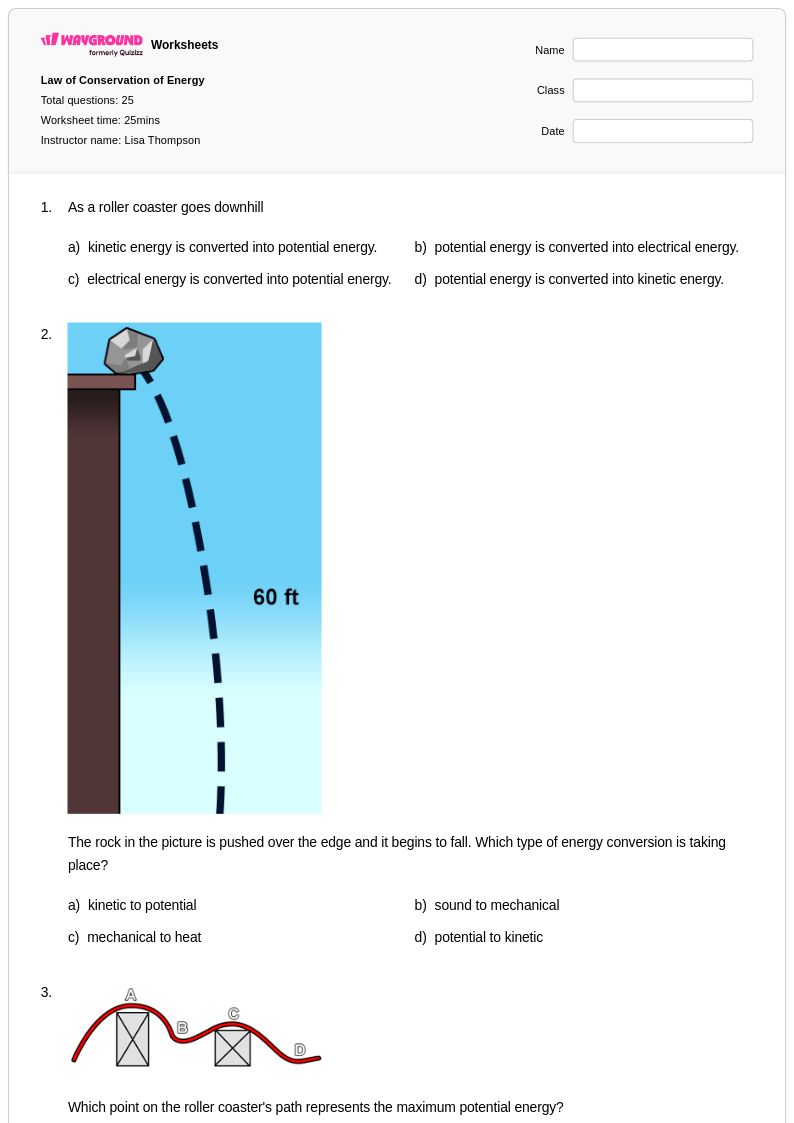
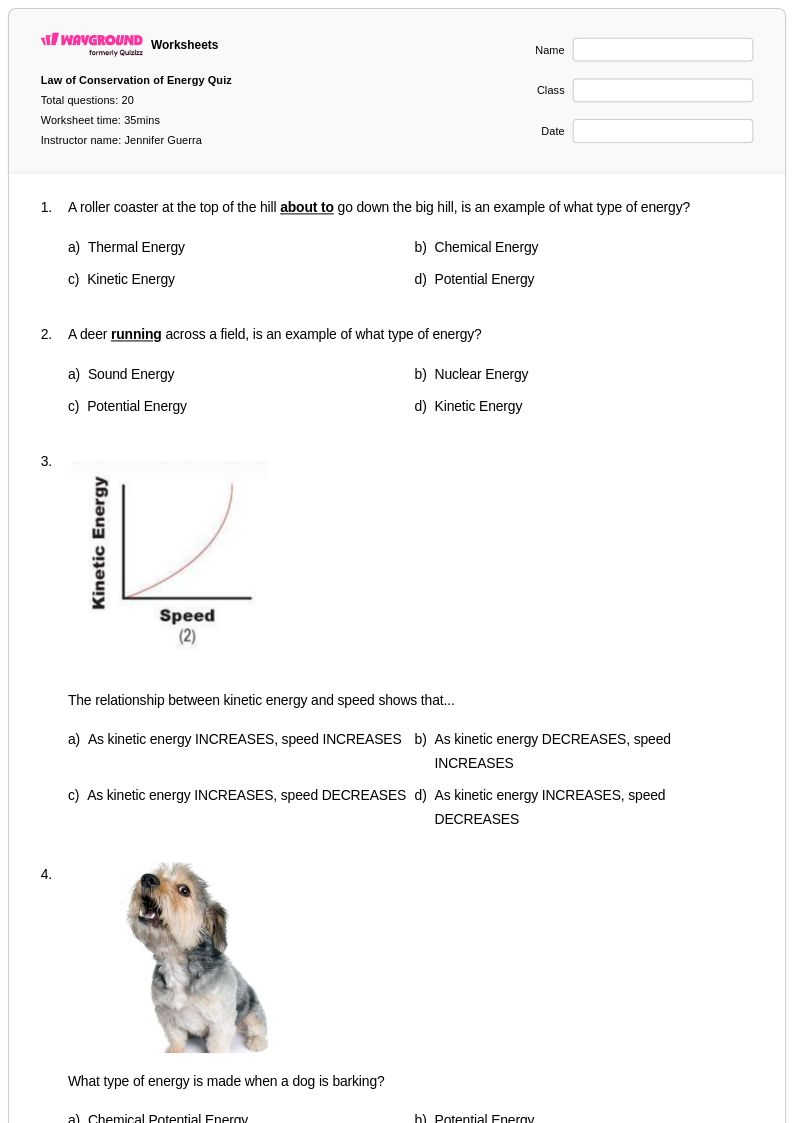
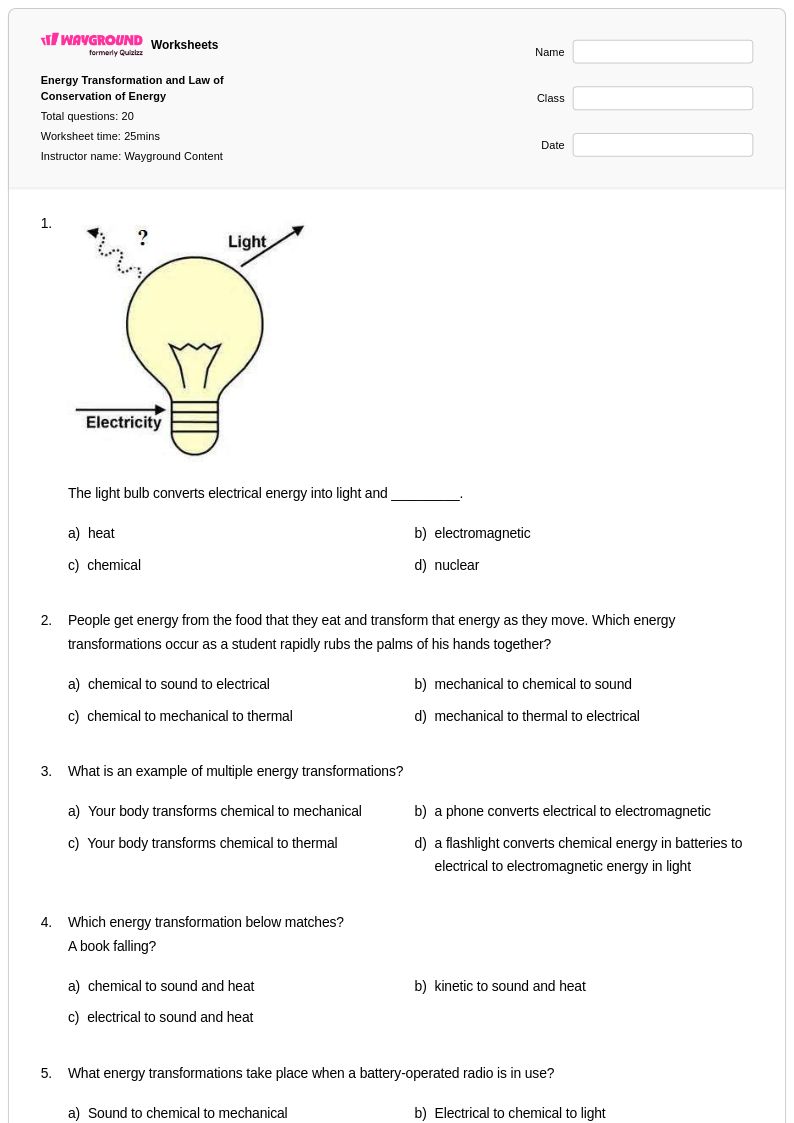
Free Printable Law of Conservation of Energy Worksheets for Class 9
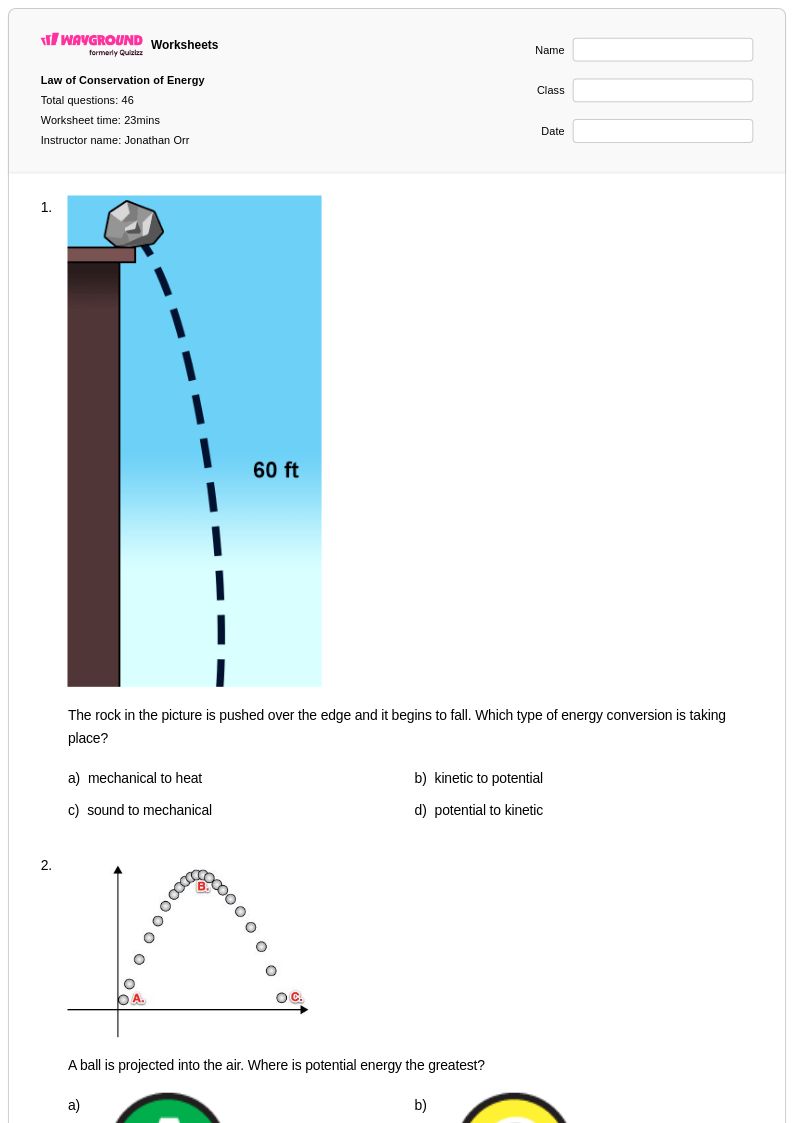
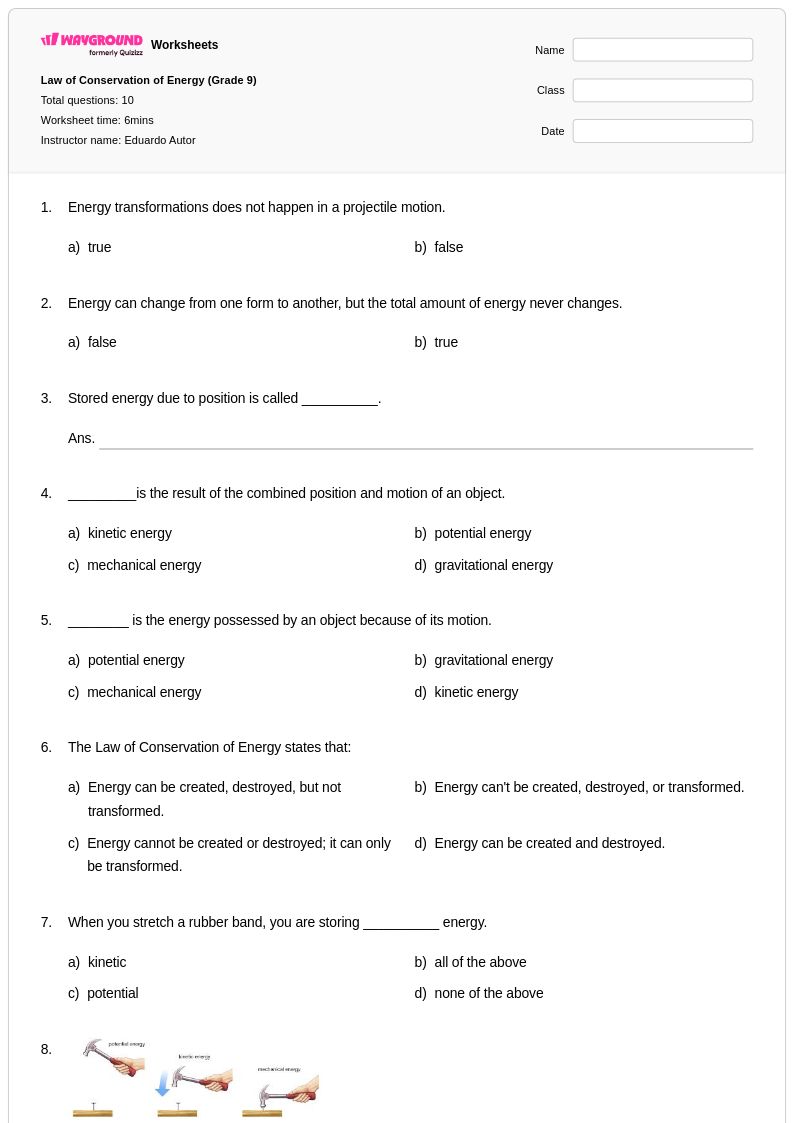
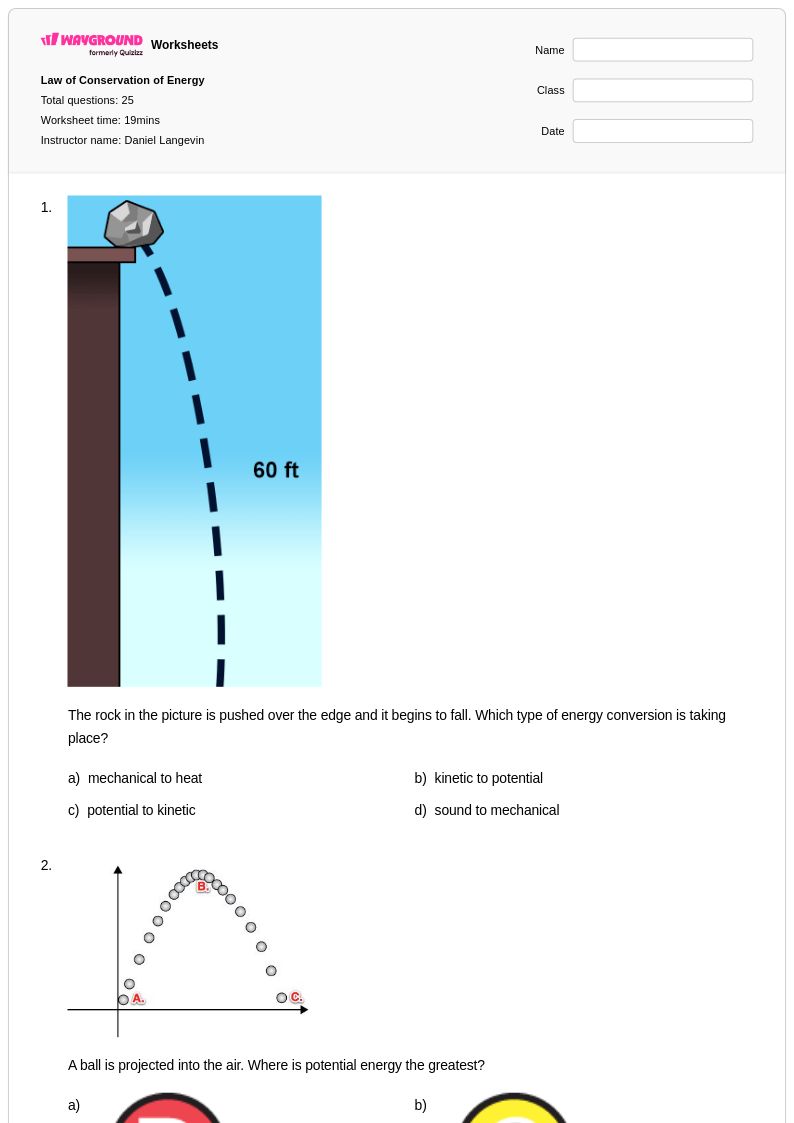
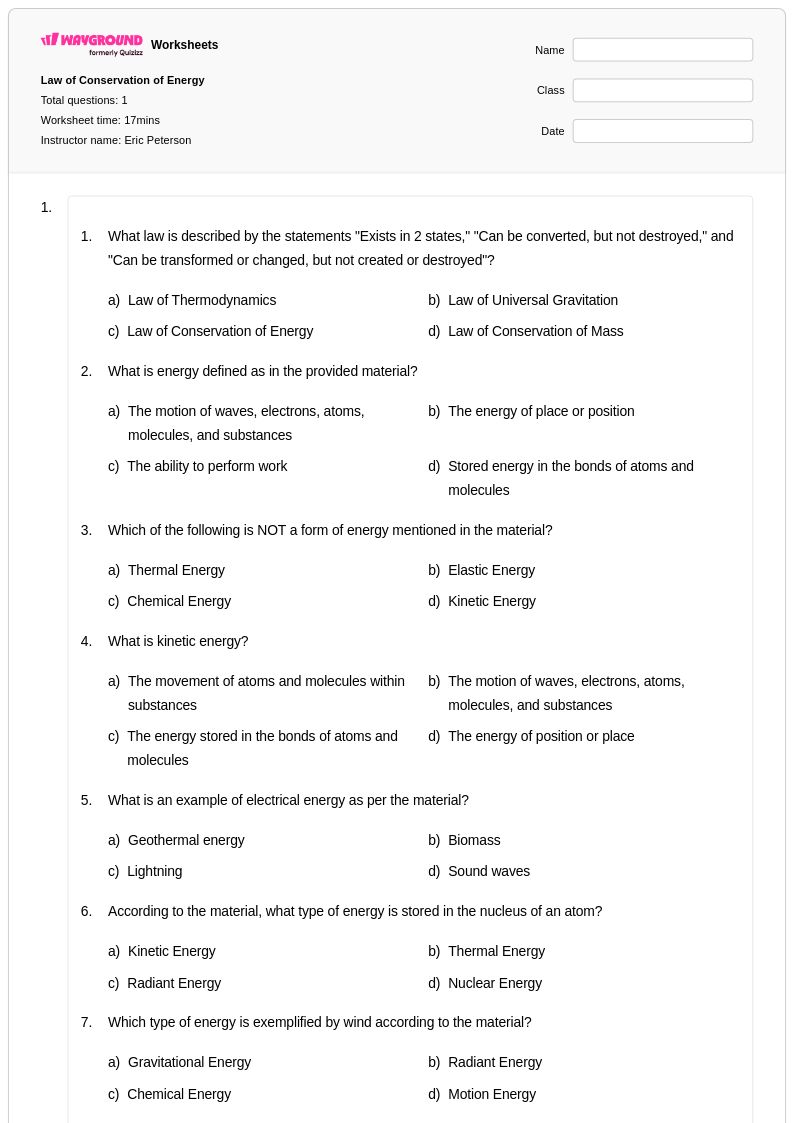
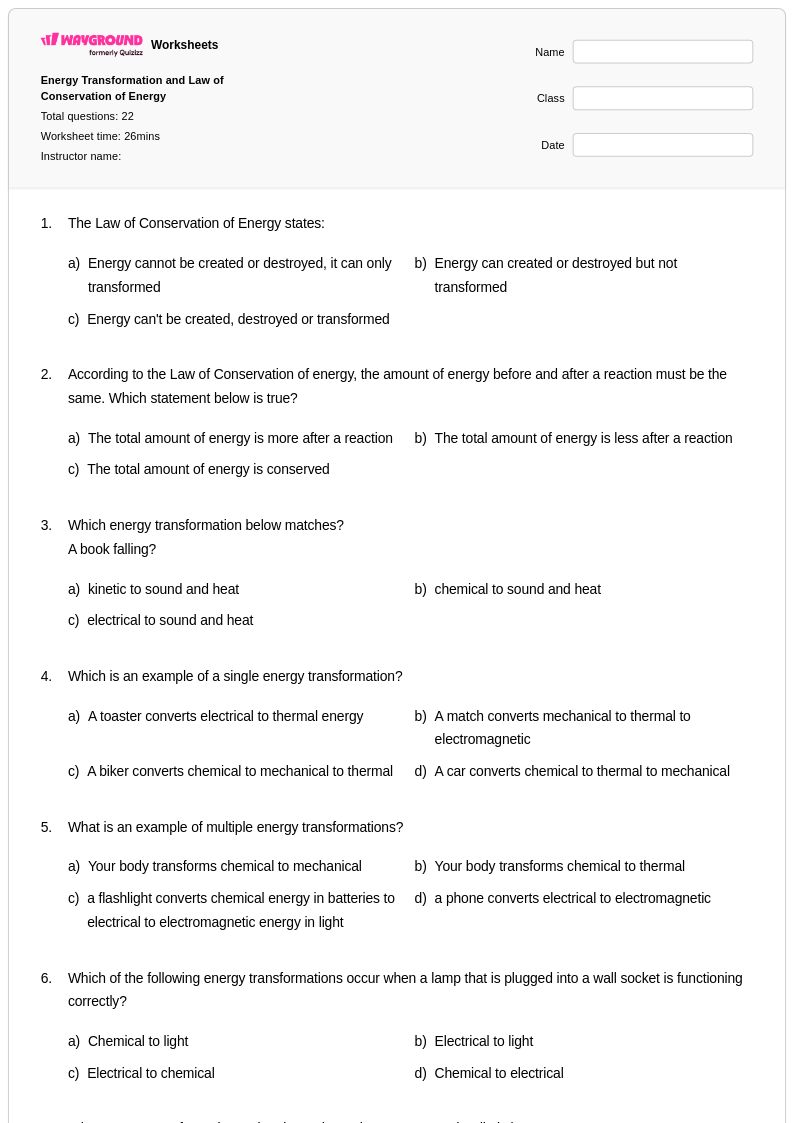
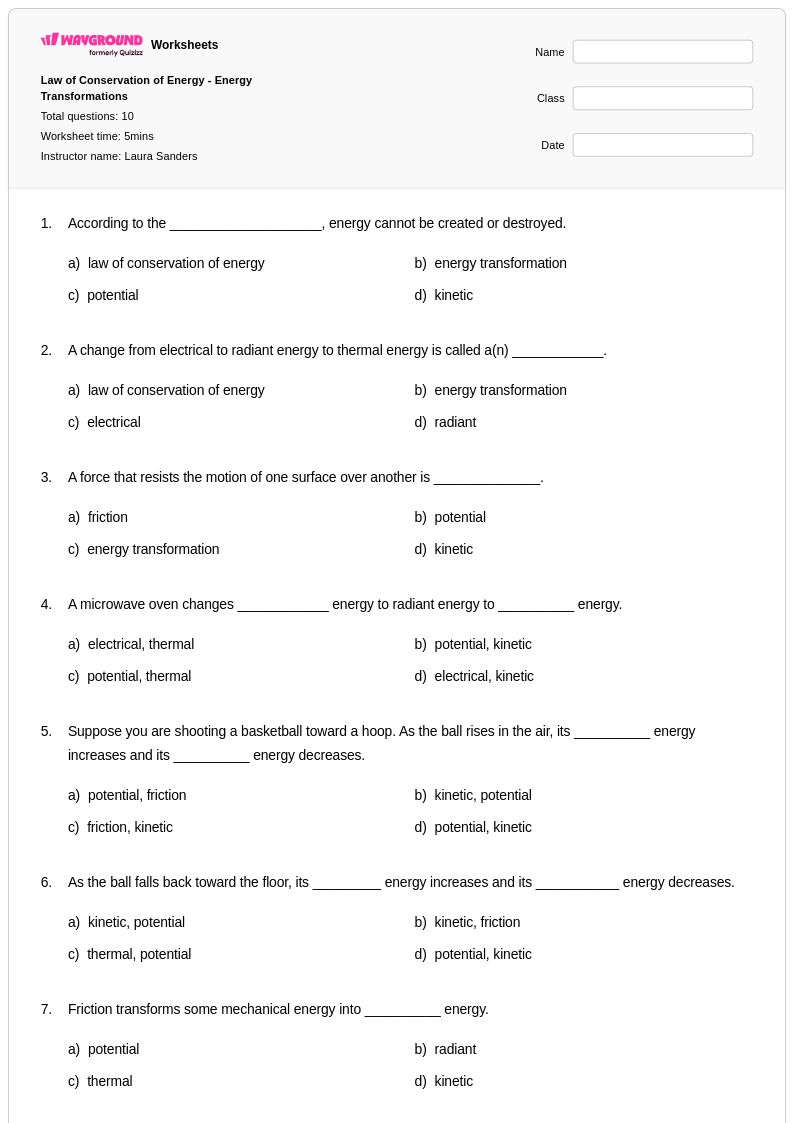
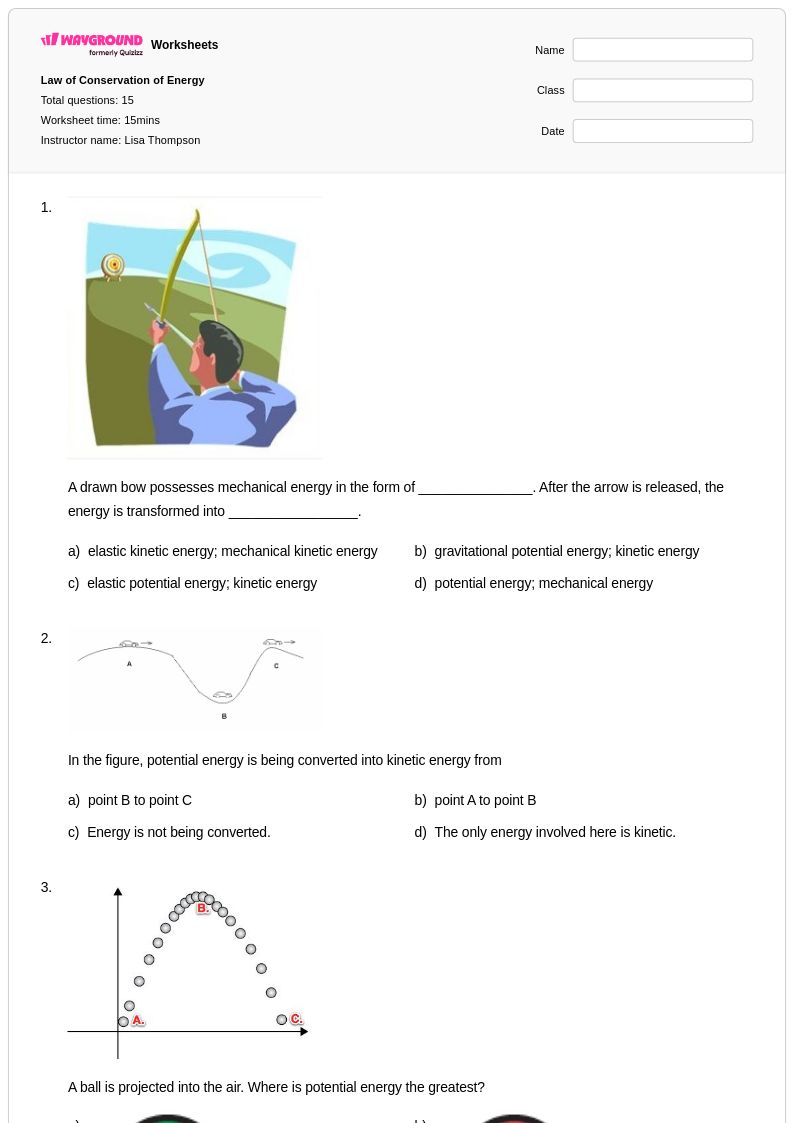
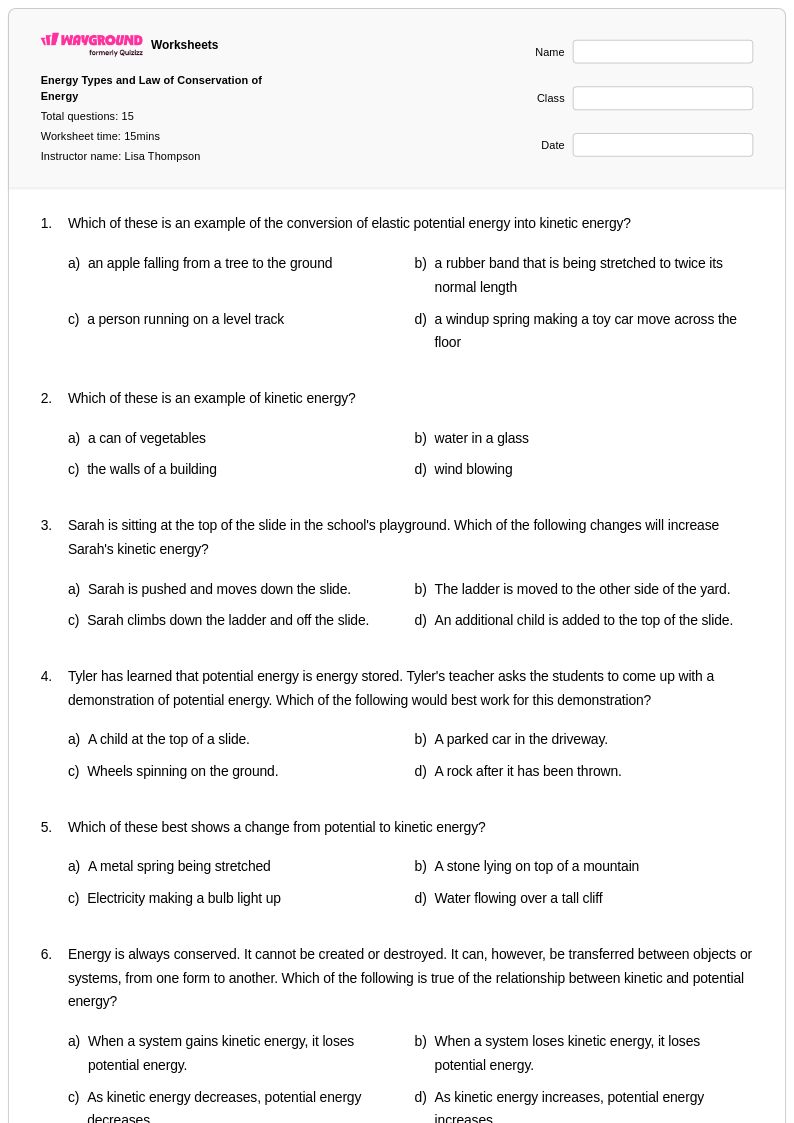
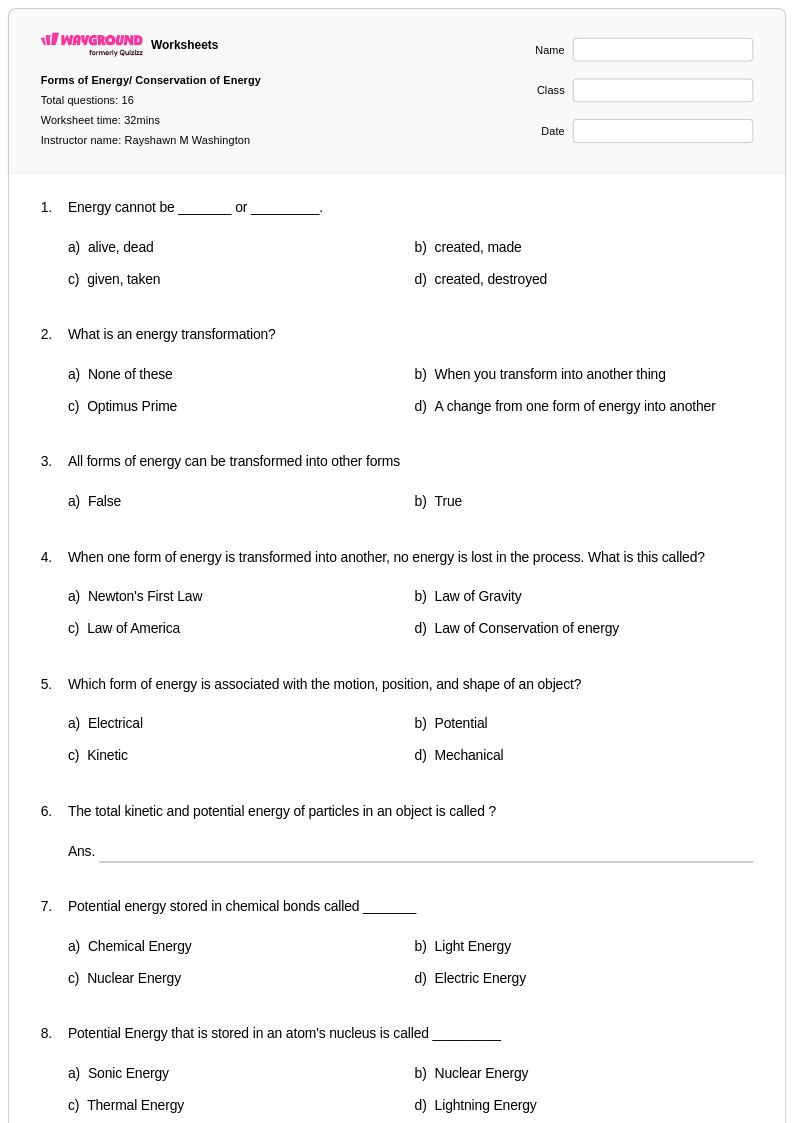
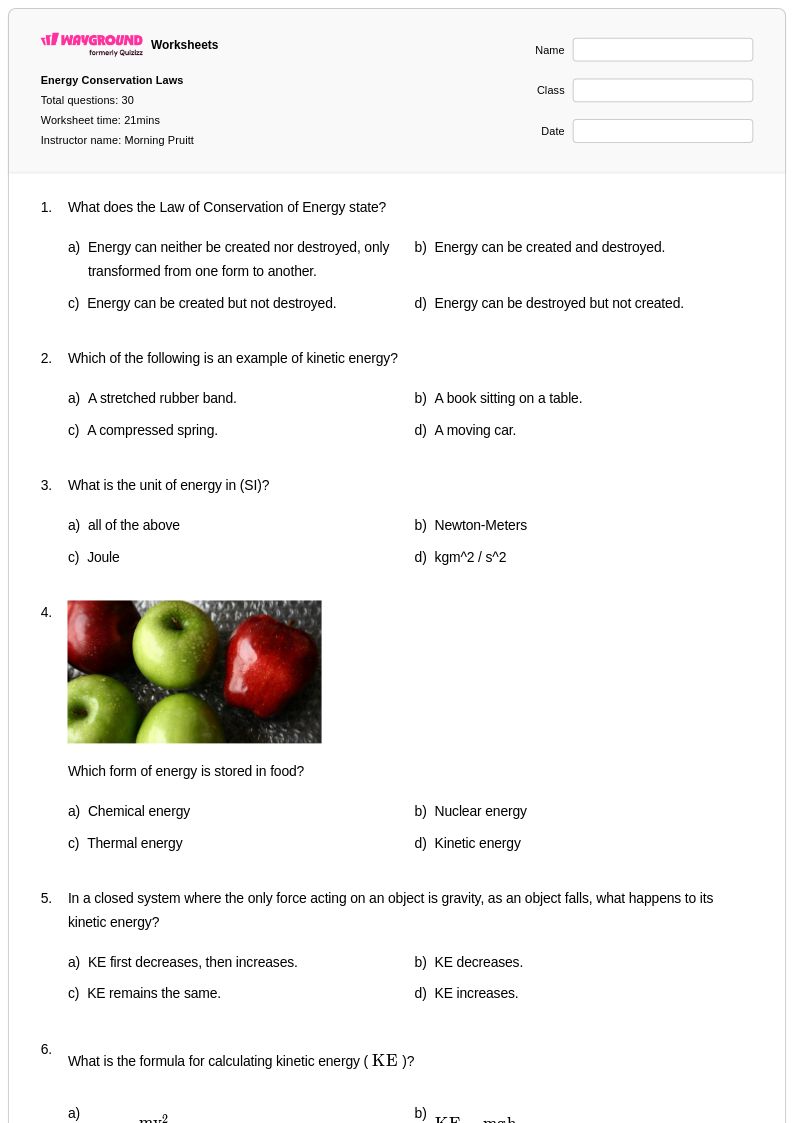
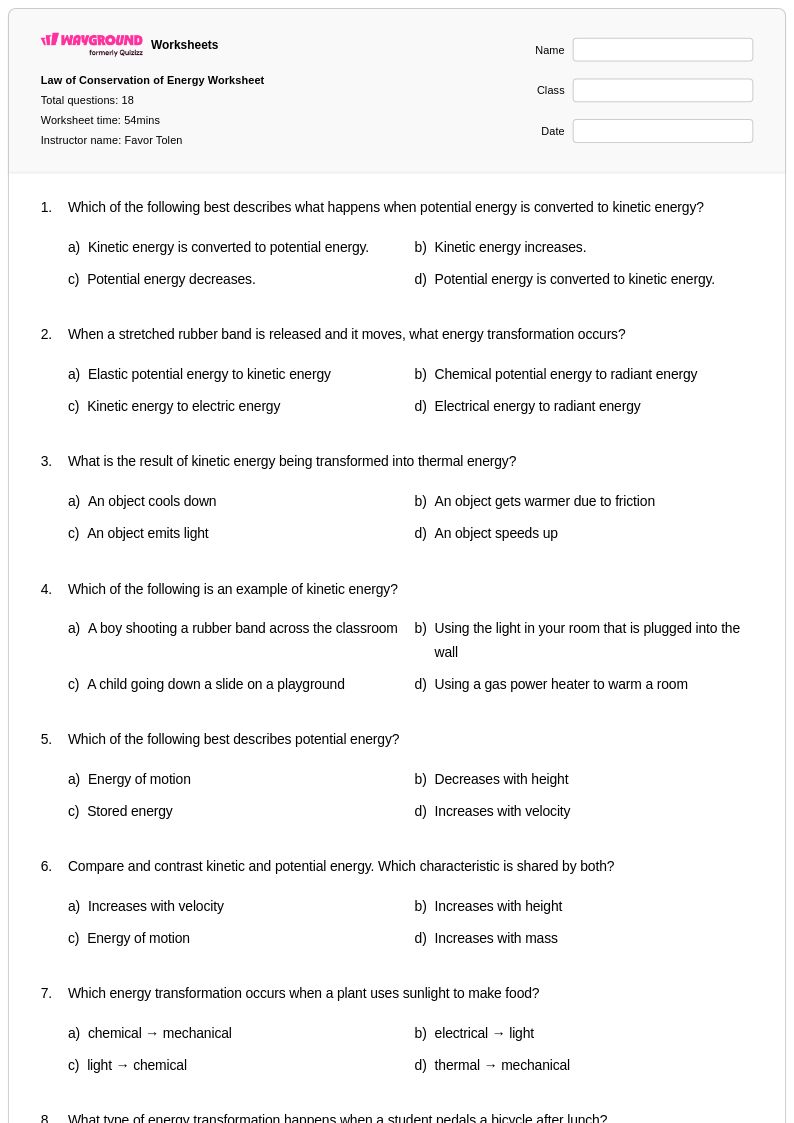
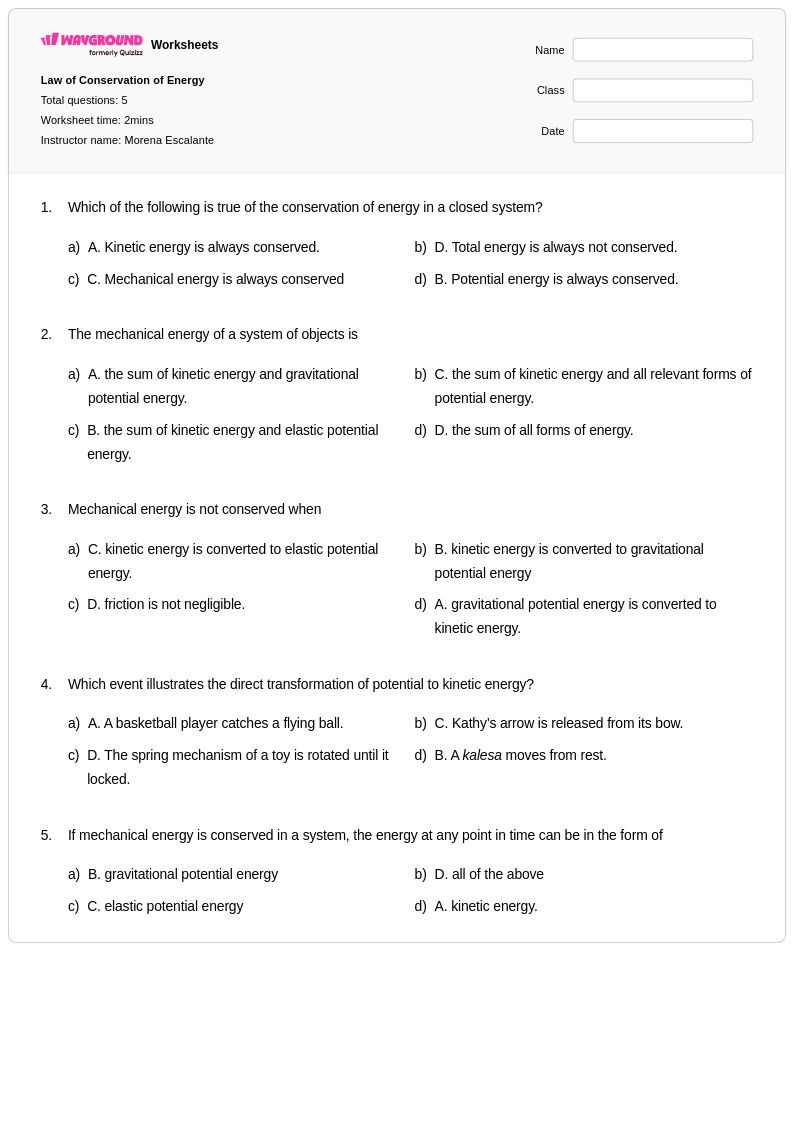
Class 9 Physics worksheets on the Law of Conservation of Energy help students master energy transformation principles through comprehensive printables, practice problems, and answer keys available as free PDF downloads from Wayground.
Explore printable Law of Conservation of Energy worksheets for Class 9
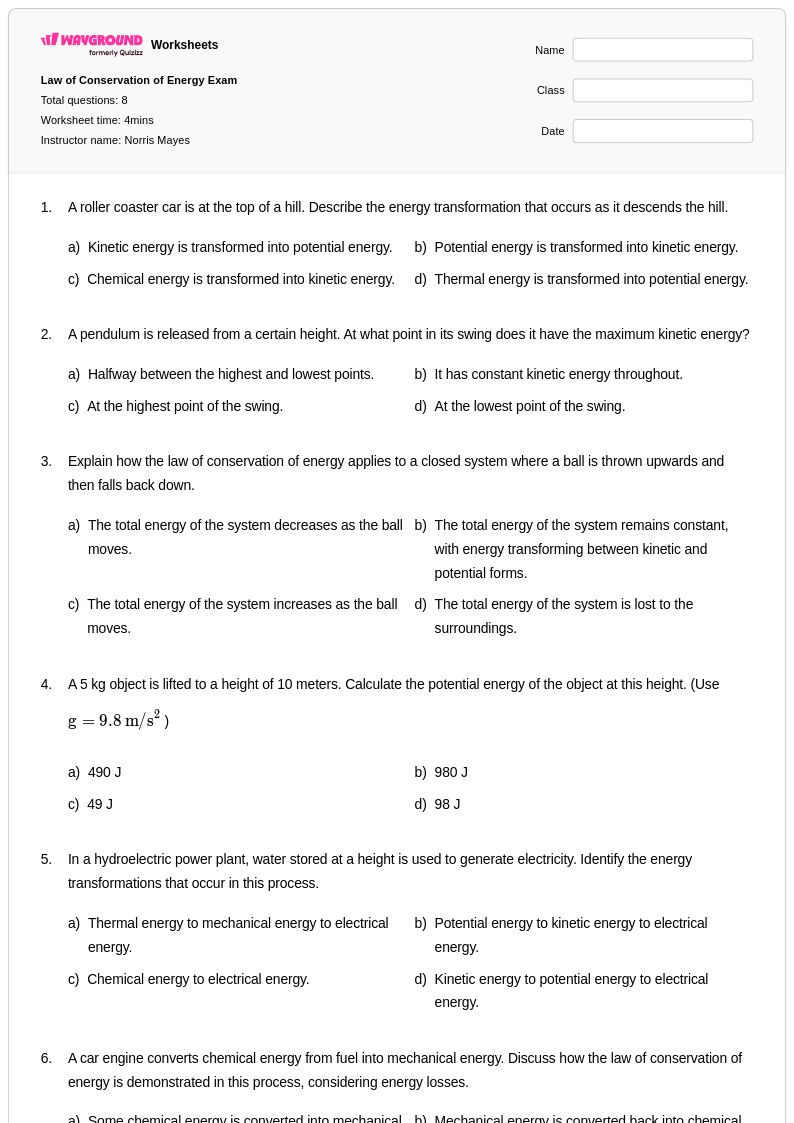
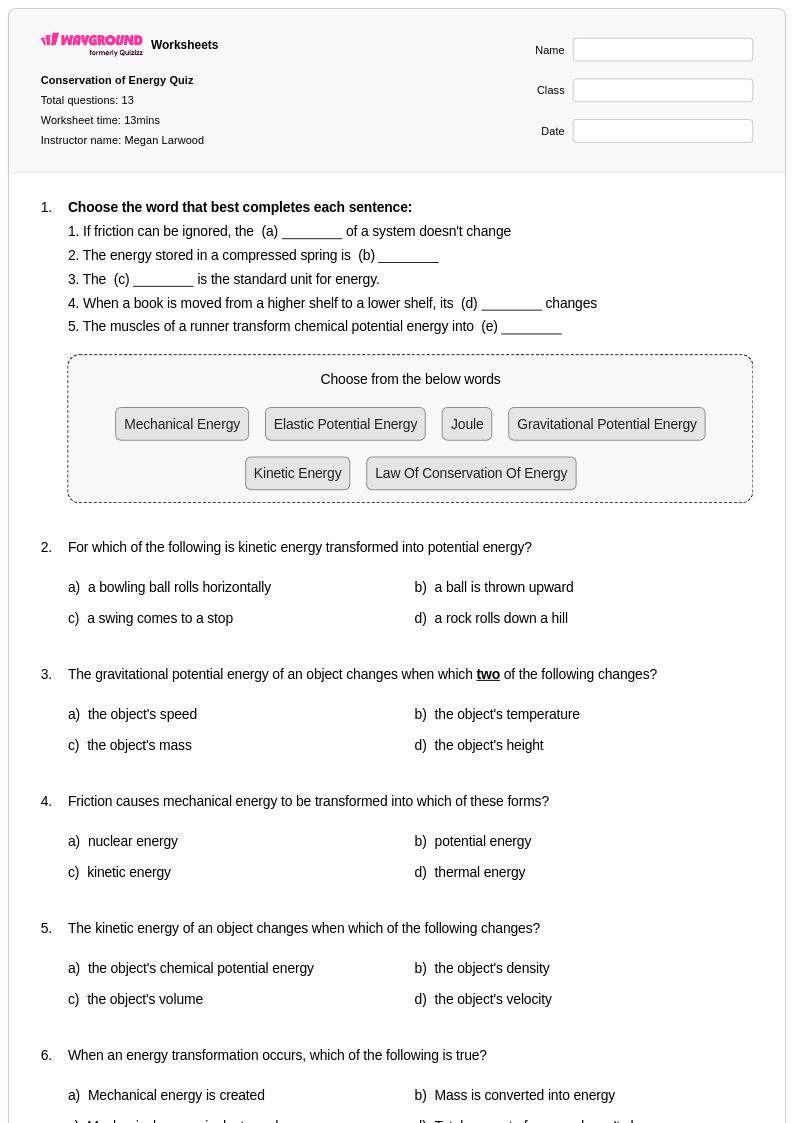
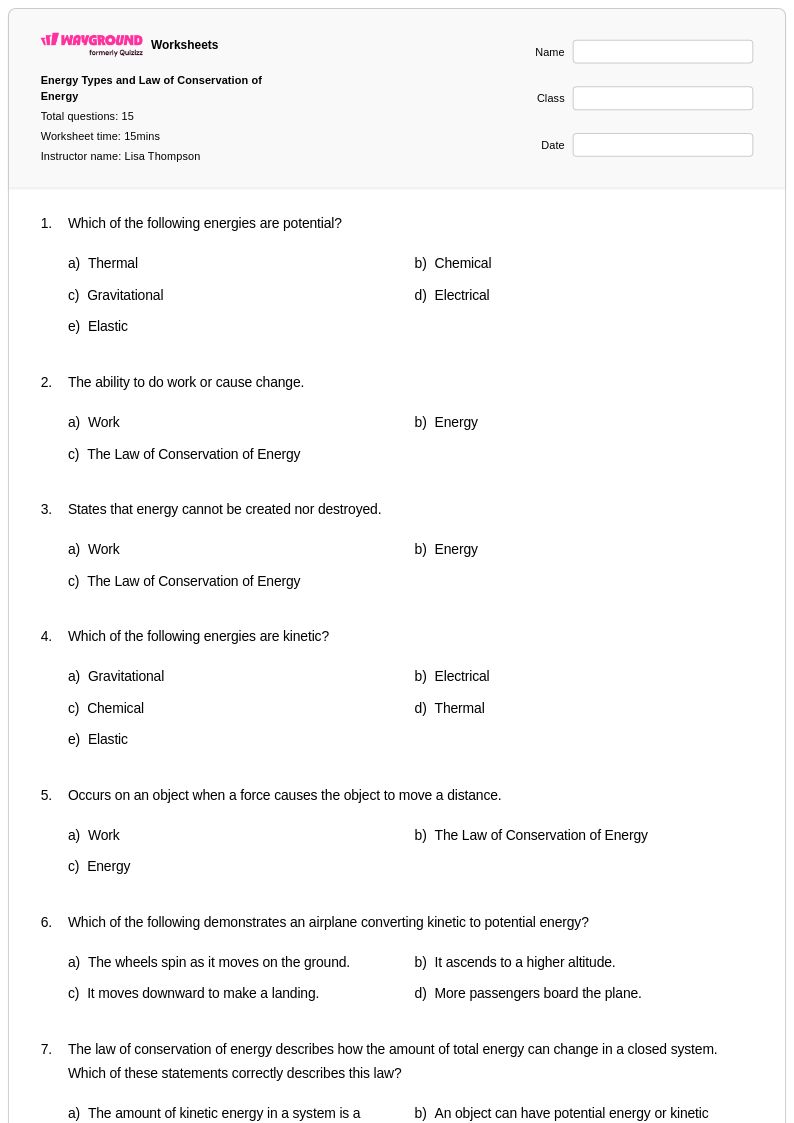
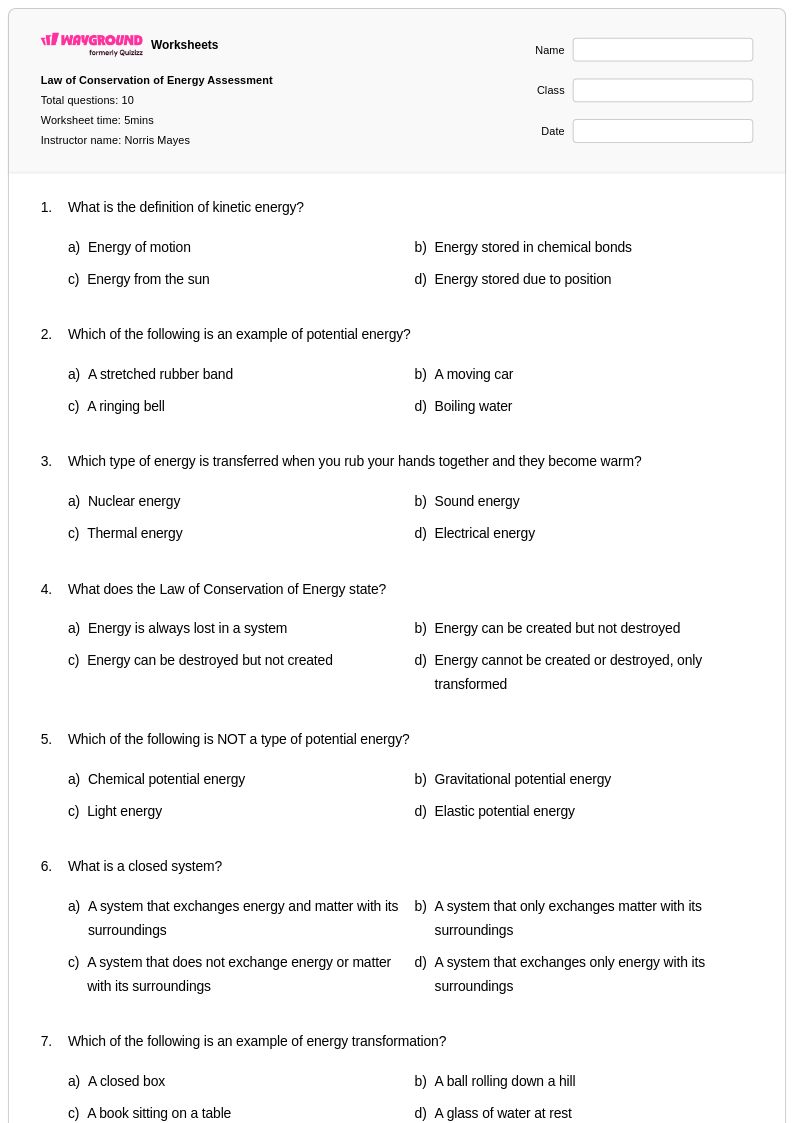
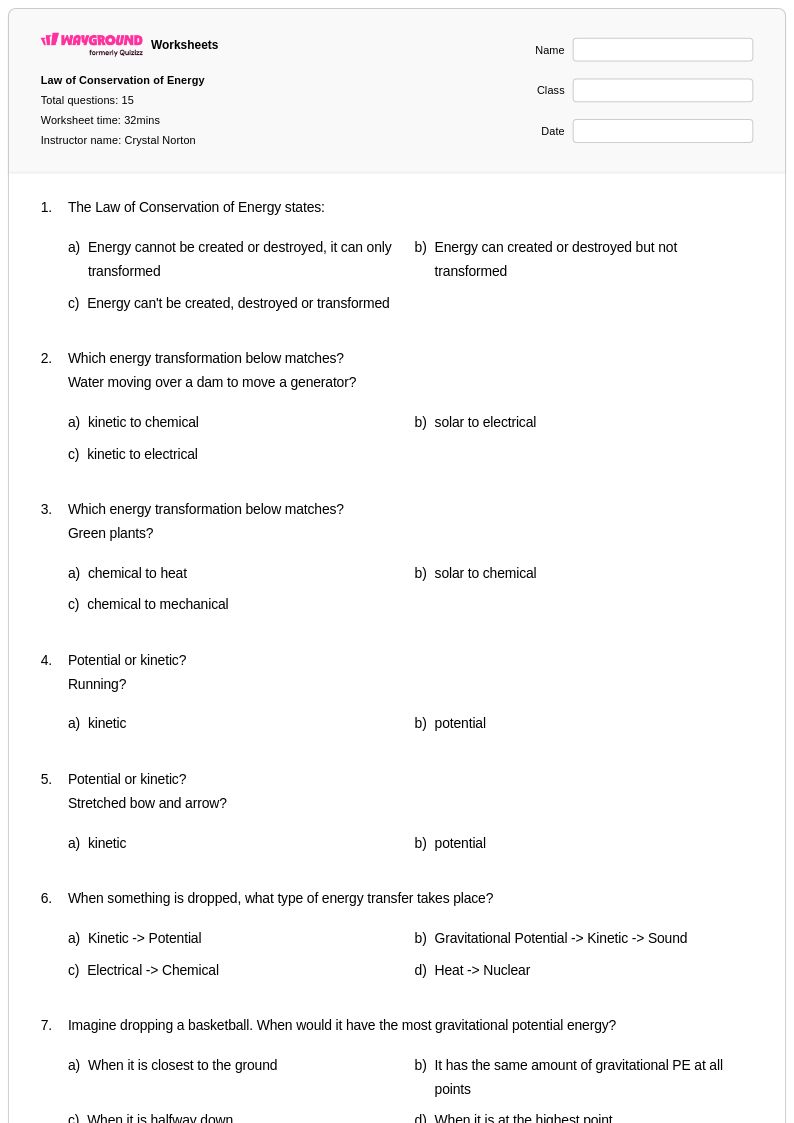
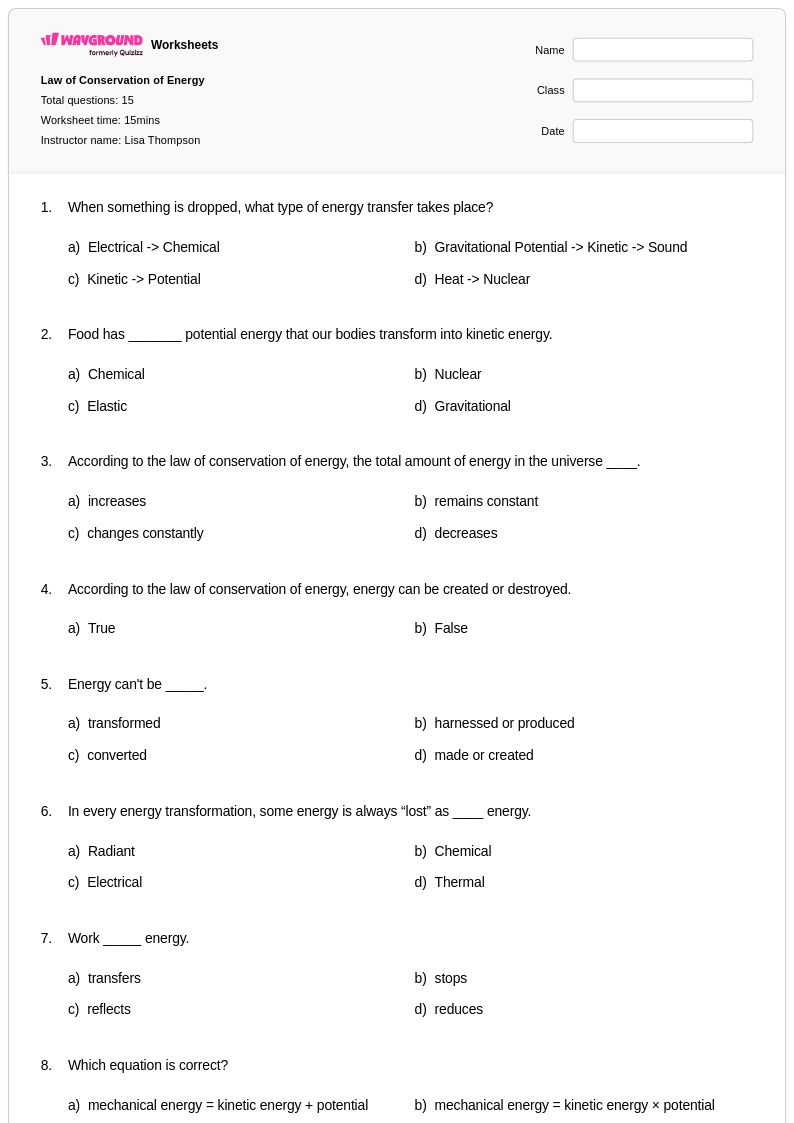
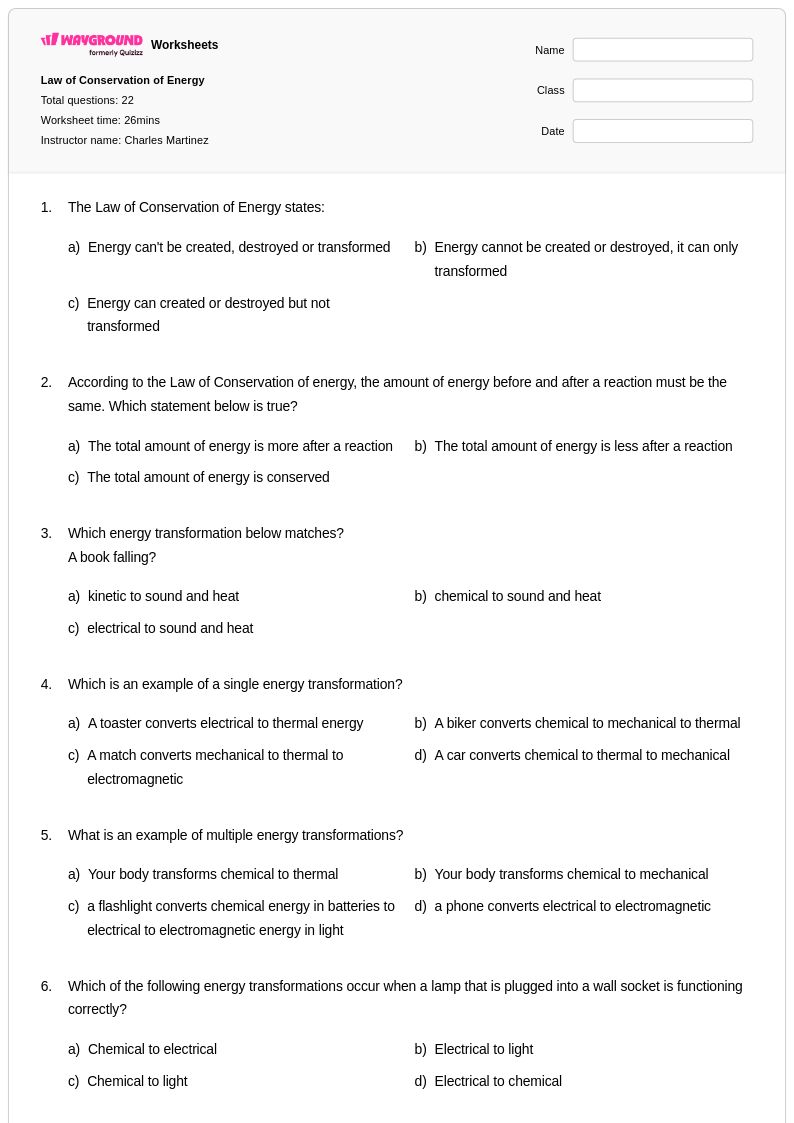
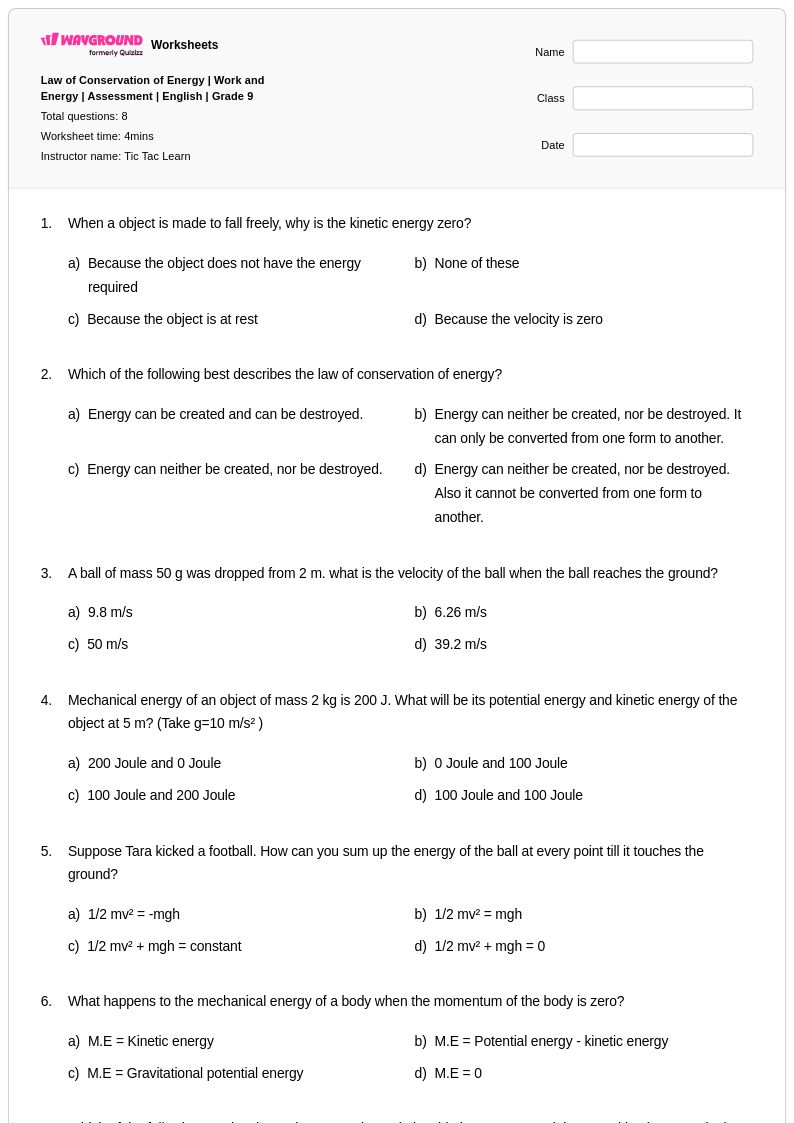
Class 9 Law of Conservation of Energy worksheets available through Wayground (formerly Quizizz) provide comprehensive practice materials that help students master this fundamental physics principle. These expertly designed worksheets guide students through real-world applications of energy conservation, including mechanical energy transformations, potential and kinetic energy calculations, and energy transfer scenarios in closed systems. The collection includes practice problems ranging from basic conceptual questions to complex multi-step calculations, complete with detailed answer keys that enable independent learning and self-assessment. Teachers can access these free printable resources in convenient PDF format, making them ideal for classroom instruction, homework assignments, and test preparation while strengthening students' analytical thinking and problem-solving abilities in physics.
Wayground (formerly Quizizz) empowers educators with millions of teacher-created Law of Conservation of Energy resources that streamline lesson planning and enhance student engagement. The platform's robust search and filtering capabilities allow teachers to quickly locate worksheets aligned with specific curriculum standards and learning objectives, while differentiation tools enable customization for diverse learning needs and ability levels. These comprehensive worksheet collections are available in both printable PDF format and interactive digital versions, providing flexibility for traditional classroom settings and technology-enhanced learning environments. Teachers can efficiently implement targeted skill practice, remediation support for struggling students, and enrichment activities for advanced learners, ensuring that all Class 9 students develop a solid understanding of energy conservation principles through varied and engaging practice opportunities.
FAQs
How do I teach the law of conservation of energy to physics students?
Start by grounding students in the core principle: energy cannot be created or destroyed, only converted from one form to another. Use concrete, familiar systems like pendulums, roller coasters, and springs to illustrate kinetic-to-potential energy transformations before introducing equations. Scaffolding from qualitative descriptions to quantitative problem-solving helps students build both conceptual and mathematical fluency with energy conservation.
What types of practice problems help students understand conservation of energy?
Effective practice problems for energy conservation involve real-world systems where students must track energy transformations across multiple stages, such as a roller coaster moving from peak to valley or a pendulum swinging through its arc. Problems that require students to calculate kinetic energy, potential energy, and total mechanical energy at different points reinforce the idea that total energy remains constant in a closed system. Mixing conceptual questions with calculation-based problems ensures students develop both procedural fluency and deeper understanding.
What mistakes do students commonly make when solving conservation of energy problems?
A frequent error is treating kinetic and potential energy as independent quantities rather than understanding they are interconvertible parts of a fixed total mechanical energy. Students also commonly forget to account for reference height when calculating gravitational potential energy, leading to inconsistent results across a problem. Another widespread misconception is assuming that energy 'disappears' when work is done against friction, rather than recognizing it has been transformed into thermal energy.
How can I differentiate conservation of energy worksheets for students at different skill levels?
For students who need additional support, begin with single-step problems that isolate one energy transformation before progressing to multi-stage systems. More advanced students can be challenged with problems involving energy losses due to friction or air resistance, requiring them to account for non-conservative forces. On Wayground, teachers can apply accommodations such as read aloud support, reduced answer choices, and extended time to individual students, allowing the same worksheet to serve a range of learners without disrupting the rest of the class.
How do I use Wayground's law of conservation of energy worksheets in my classroom?
Wayground's conservation of energy worksheets are available as printable PDFs for traditional classroom use and in digital formats for technology-integrated or online learning environments. Teachers can also host worksheets directly as a quiz on Wayground, enabling real-time student responses and streamlined grading. Each worksheet includes a complete answer key, making them suitable for independent practice, guided instruction, remediation sessions, or enrichment activities.
How does conservation of energy connect to other physics topics students will encounter?
The law of conservation of energy is foundational to nearly every area of physics, including mechanics, thermodynamics, and electromagnetism. A solid understanding of energy transformations between kinetic, potential, and thermal forms prepares students for topics like work-energy theorem, elastic and inelastic collisions, and thermodynamic cycles. Establishing this conceptual grounding early makes it significantly easier for students to analyze complex physical systems in advanced coursework.