Free Printable Simple Harmonic Motion Worksheets for Class 9
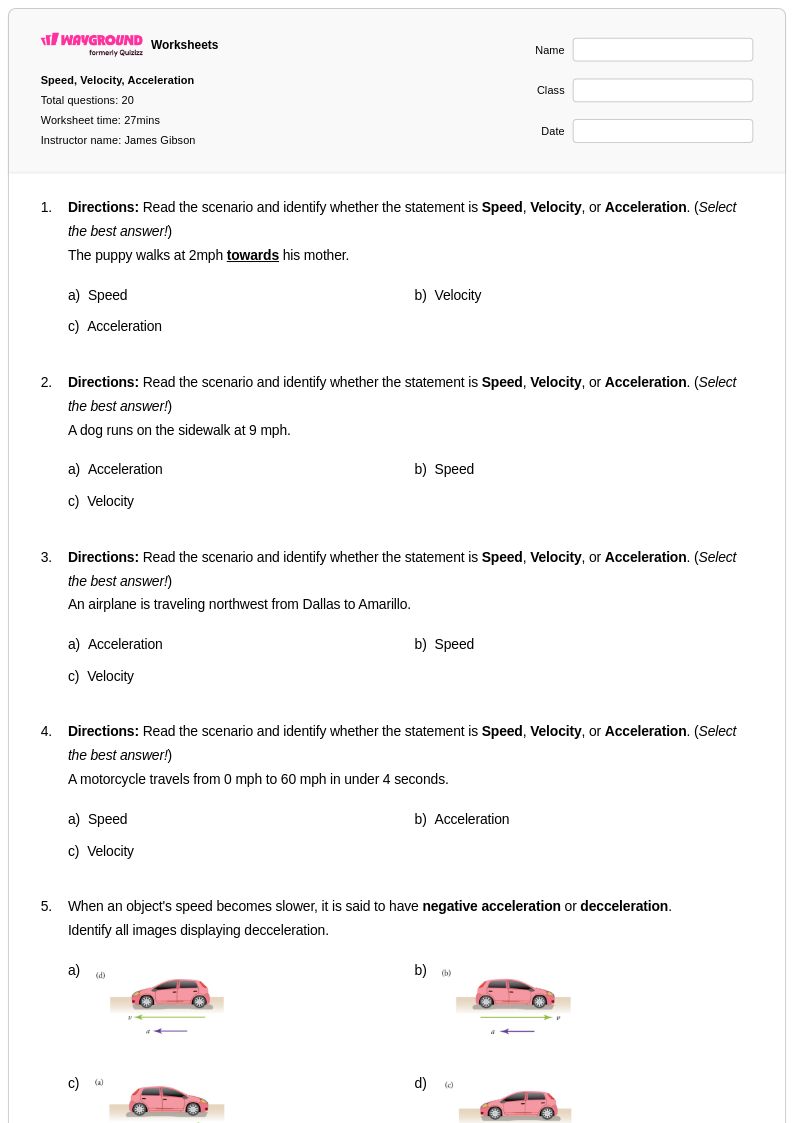
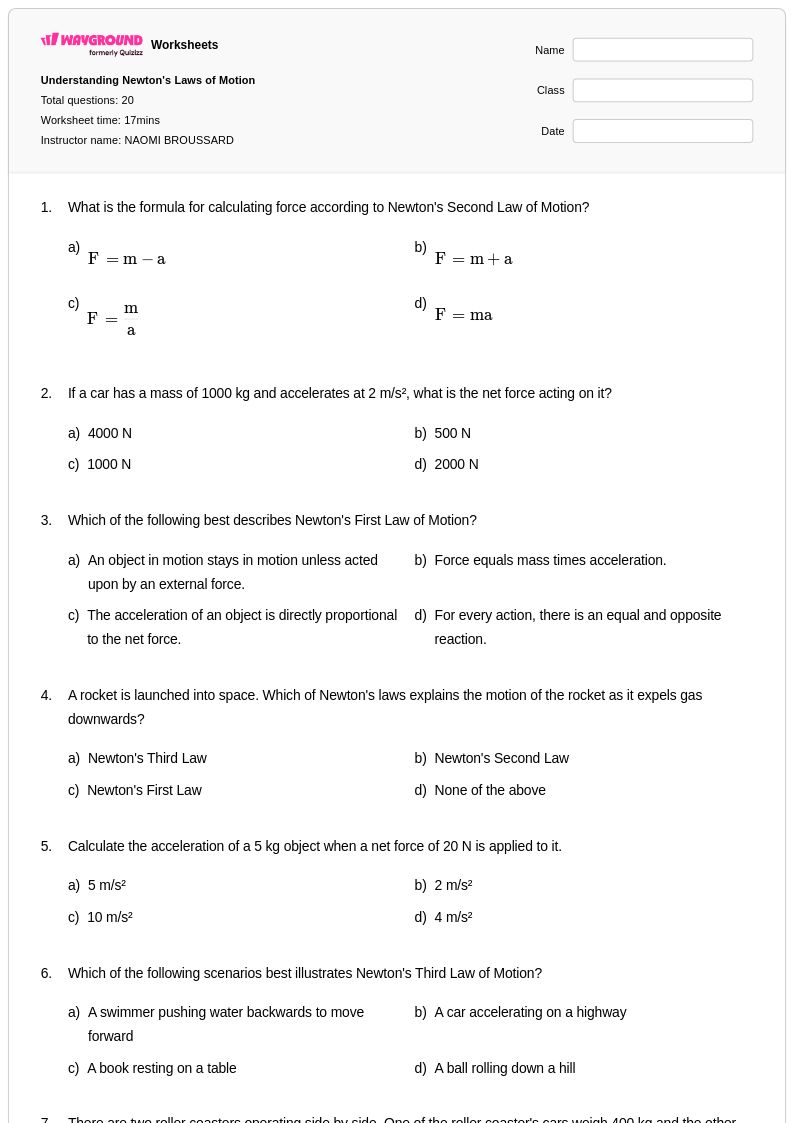
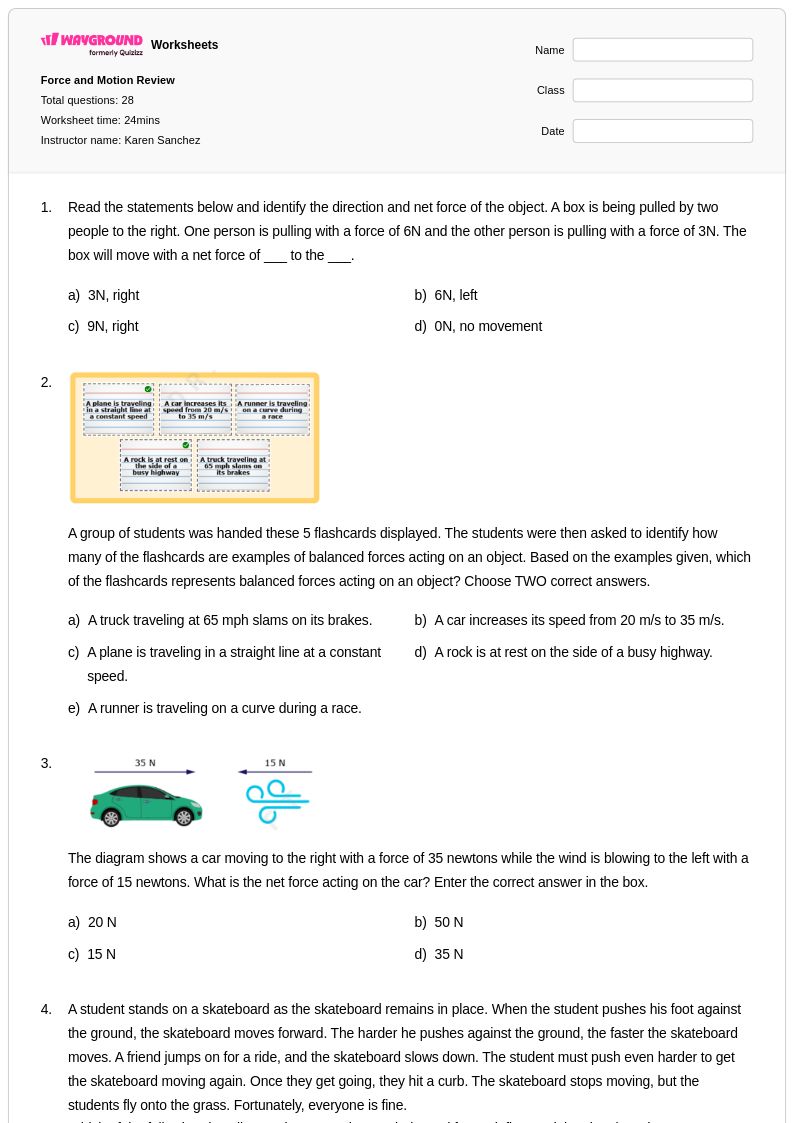
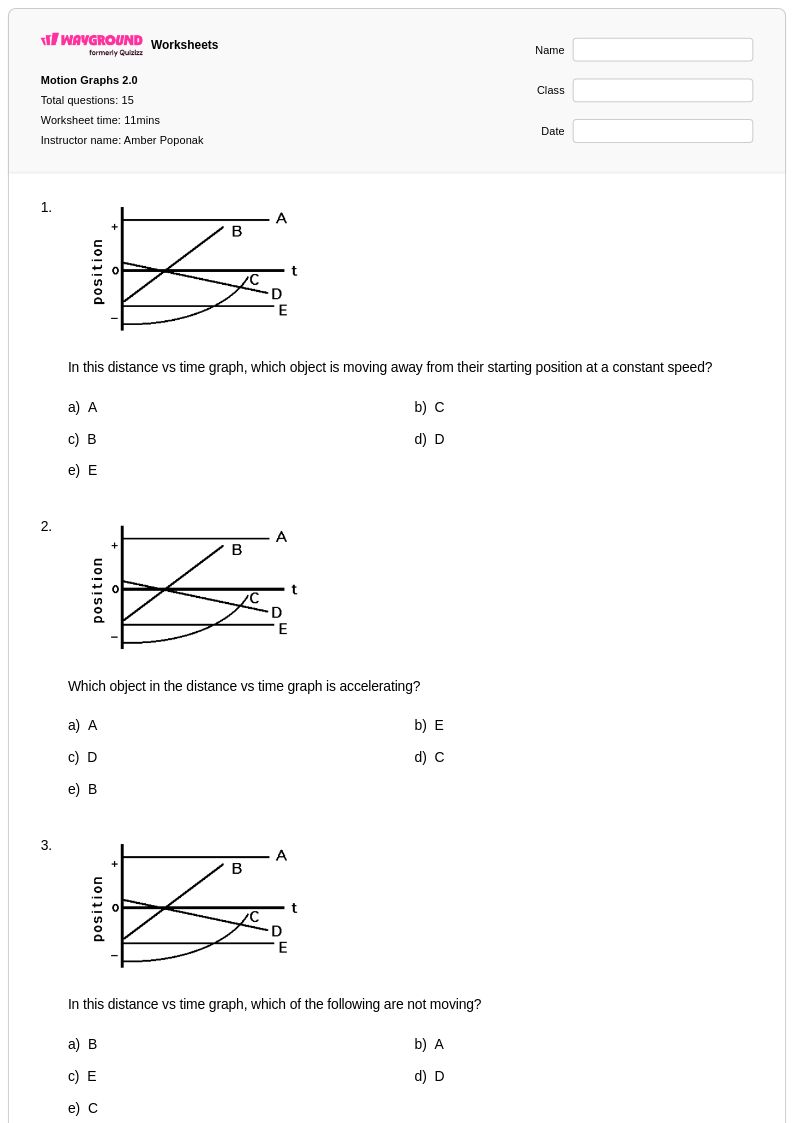
Free Class 9 Simple Harmonic Motion worksheets and printables help students master oscillatory motion concepts through practice problems, PDF exercises, and complete answer keys for comprehensive physics understanding.
Explore printable Simple Harmonic Motion worksheets for Class 9
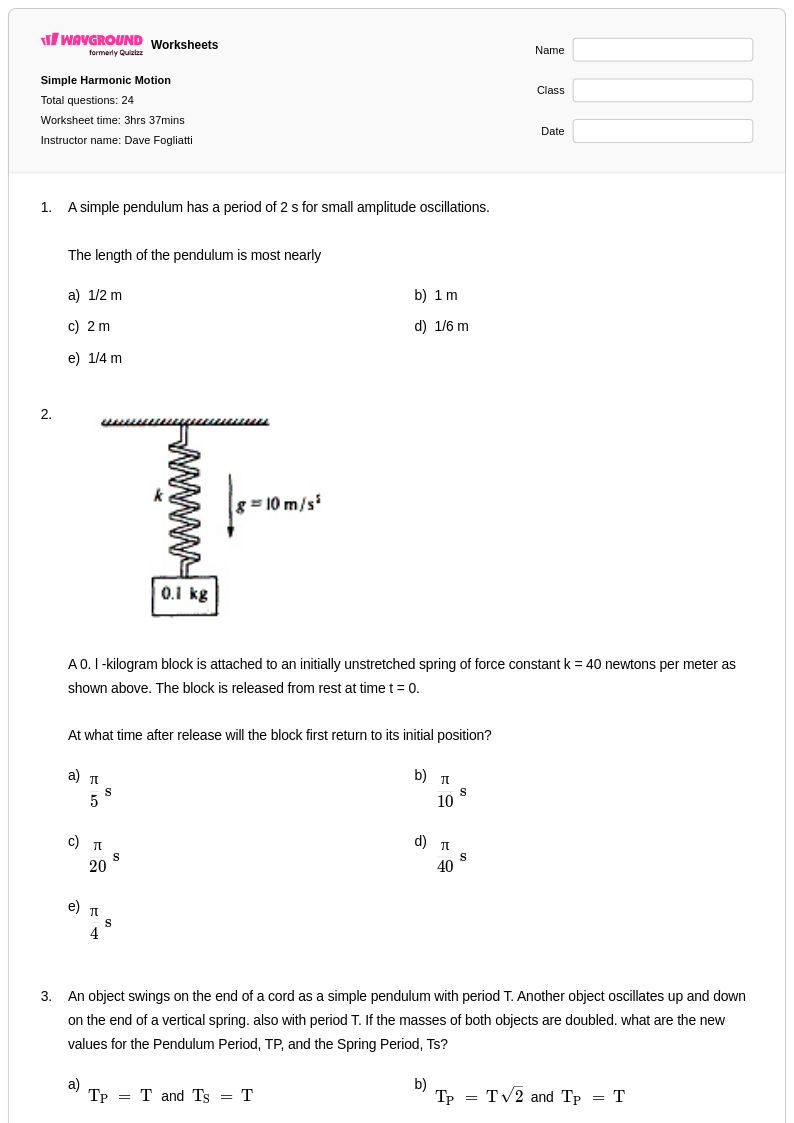
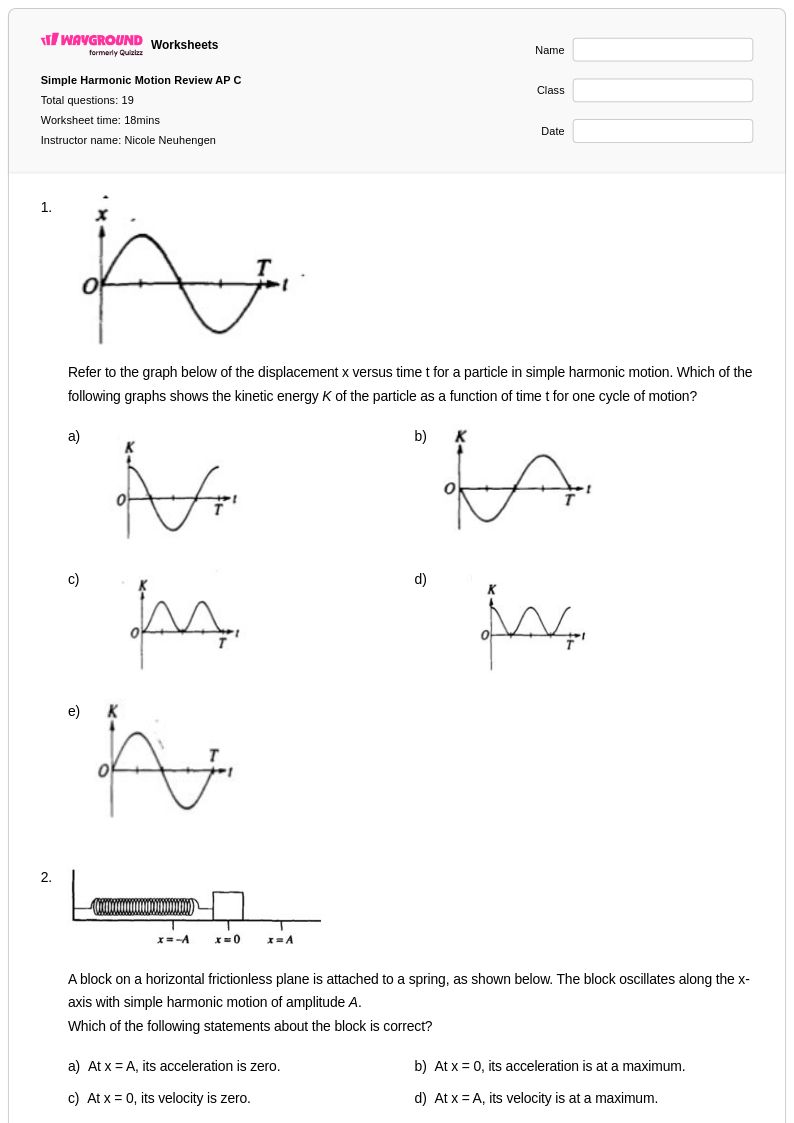
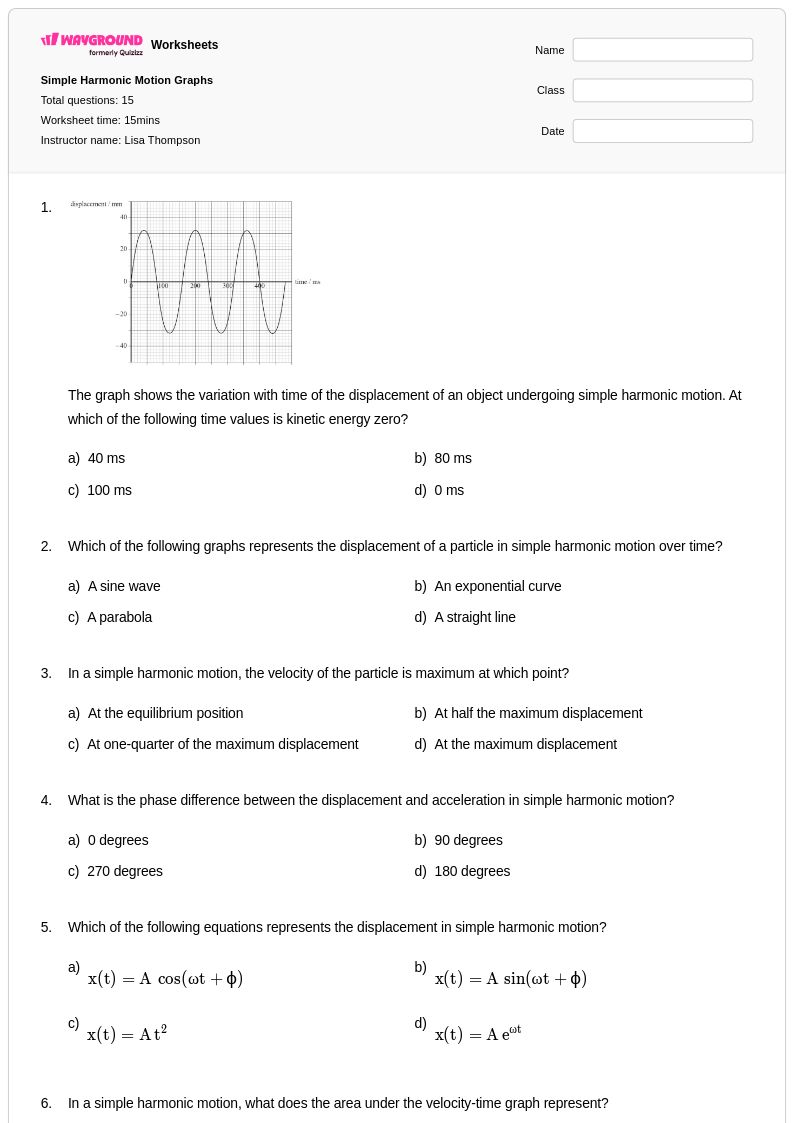
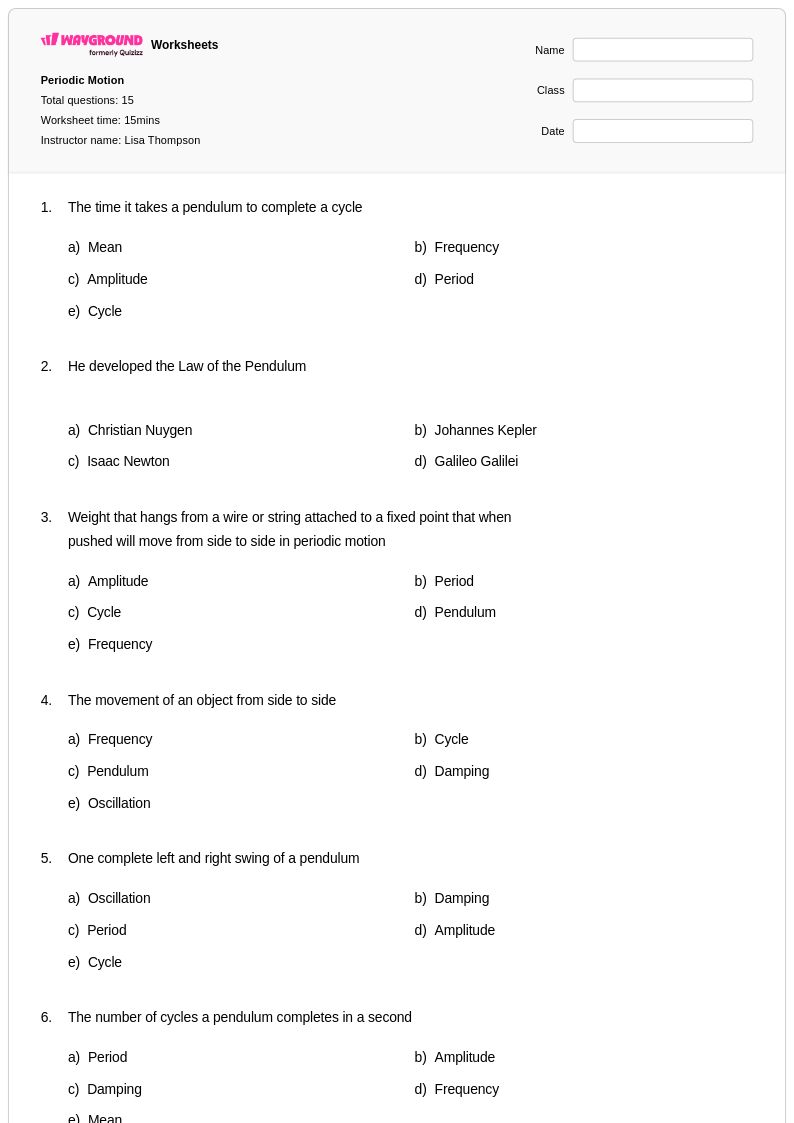
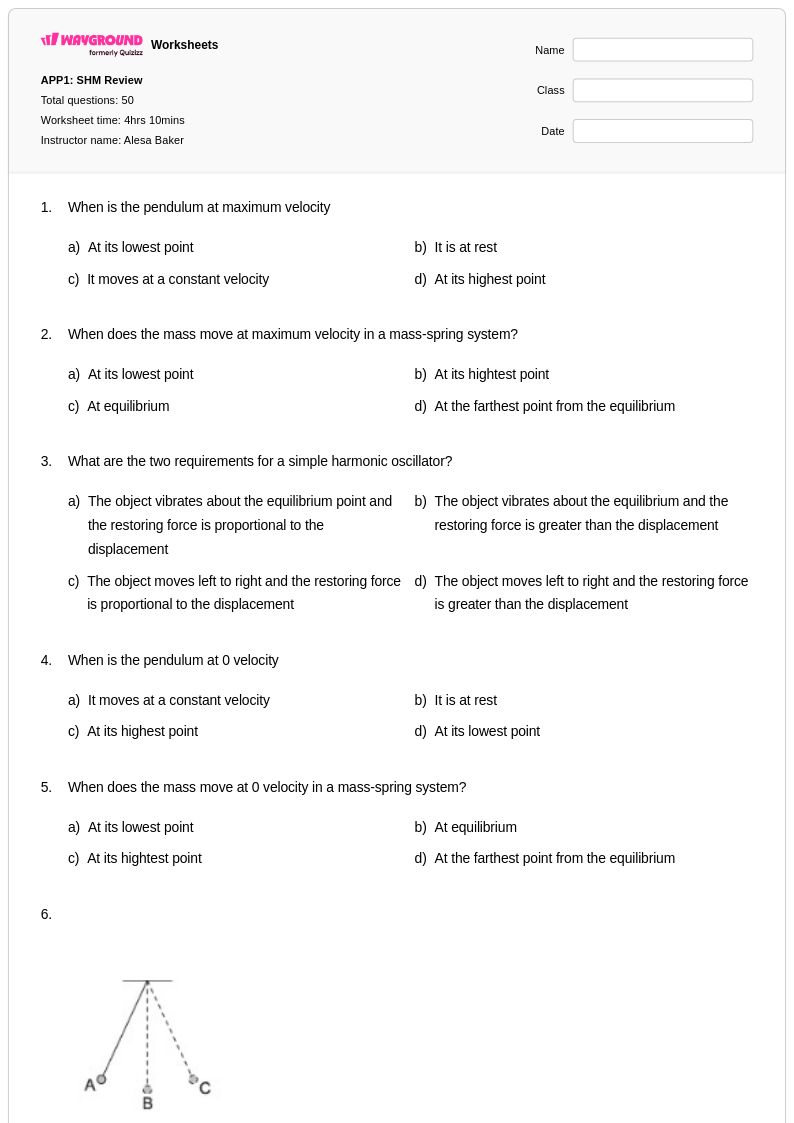
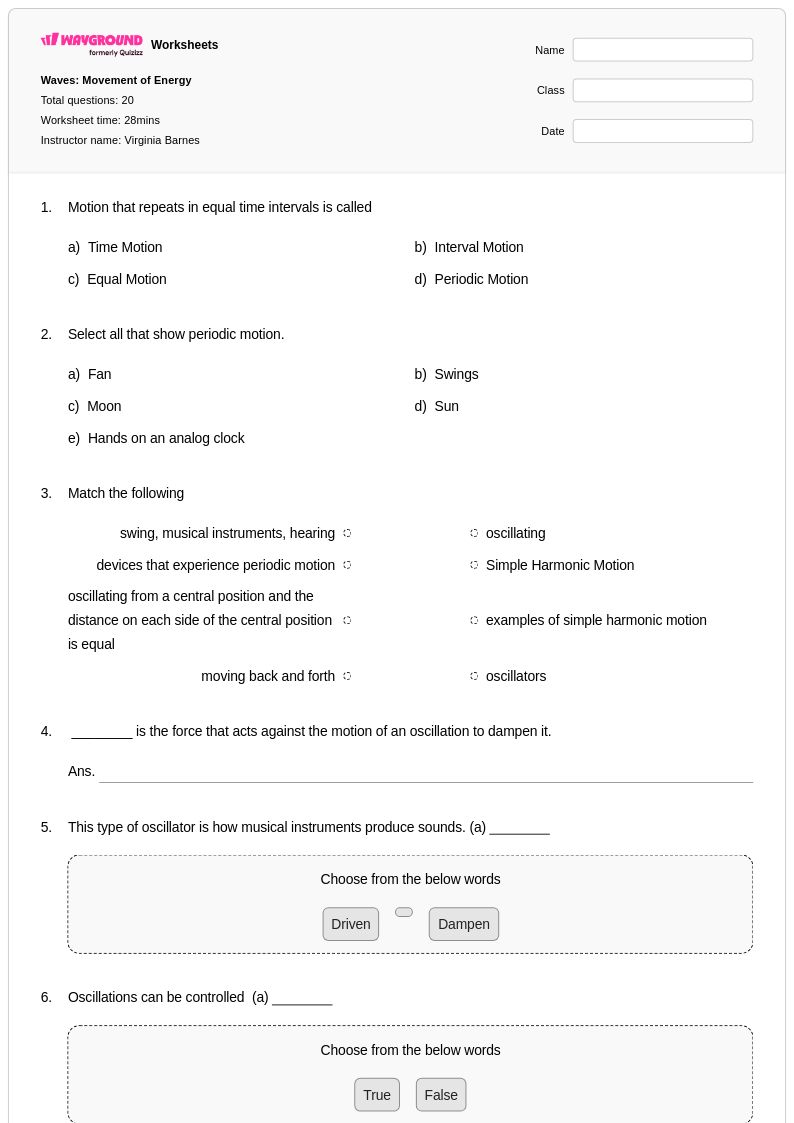
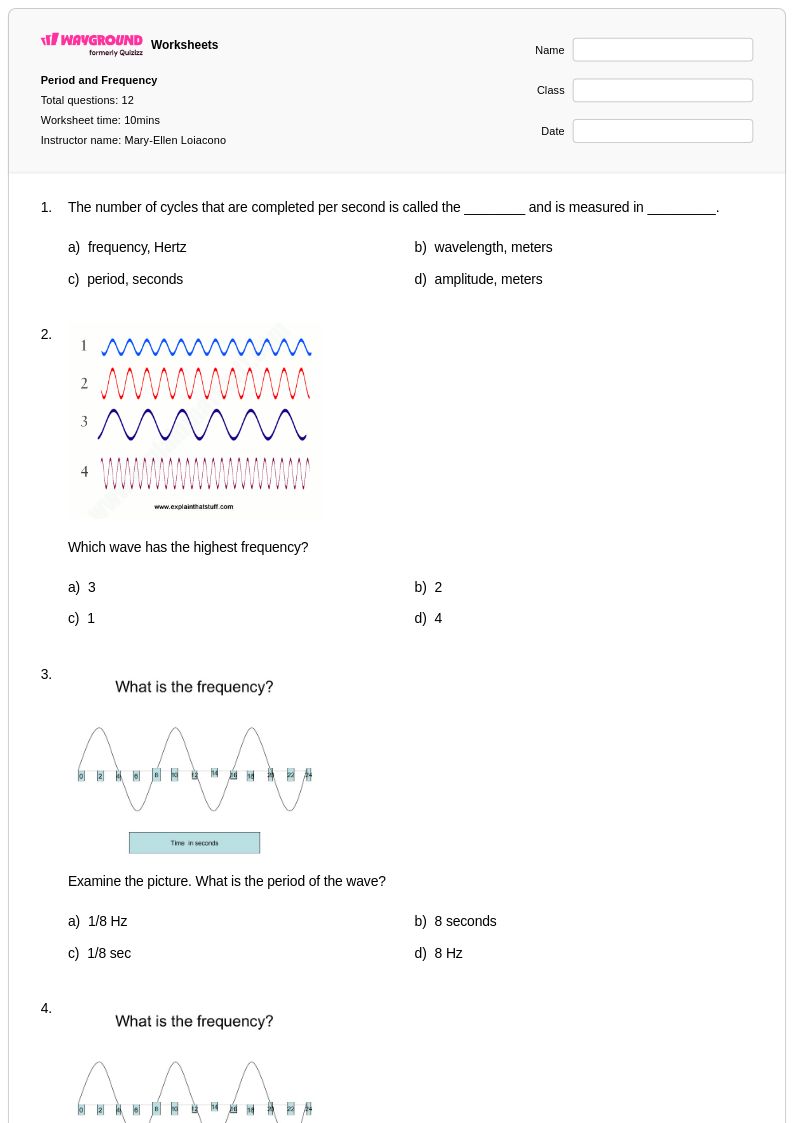
Simple harmonic motion worksheets for Class 9 physics provide students with essential practice in understanding oscillatory systems, periodic motion, and the mathematical relationships that govern vibrating objects. These comprehensive resources available through Wayground (formerly Quizizz) help students master fundamental concepts including displacement, amplitude, frequency, period, and phase relationships in systems such as pendulums, springs, and wave motion. The worksheets strengthen critical analytical skills by challenging students to interpret graphs of position versus time, calculate angular frequency and spring constants, and solve problems involving energy conservation in oscillating systems. Each worksheet collection includes detailed answer keys and is available as free printables in convenient PDF format, making it easy for students to work through practice problems systematically while building confidence in applying harmonic motion principles.
Wayground (formerly Quizizz) empowers educators with access to millions of teacher-created simple harmonic motion worksheets specifically designed for Class 9 physics instruction. The platform's robust search and filtering capabilities allow teachers to quickly locate resources aligned with specific curriculum standards and learning objectives, whether focusing on basic oscillatory motion concepts or more advanced applications involving damped and forced oscillations. Teachers can easily differentiate instruction by selecting worksheets that match individual student needs, customize existing materials to emphasize particular problem-solving strategies, and access resources in both printable and digital formats including downloadable PDFs. This flexibility supports comprehensive lesson planning while providing targeted materials for remediation of struggling students, enrichment opportunities for advanced learners, and consistent skill practice that reinforces mathematical modeling of periodic phenomena throughout the physics curriculum.
FAQs
How do I teach simple harmonic motion in a physics class?
Start by grounding students in Hooke's Law and the restoring force concept before introducing sinusoidal motion equations. Use physical demonstrations such as a spring-mass system or a pendulum to make the oscillation cycle concrete before moving to mathematical formulations. Once students can visualize period, frequency, and amplitude in a real system, they're better prepared to work through the equations analytically. Connecting energy transformations — kinetic to potential and back — helps students see SHM as a unified concept rather than a set of disconnected formulas.
What types of practice problems help students get better at simple harmonic motion?
Effective SHM practice should span several problem types: period and frequency calculations for both spring-mass systems and pendulums, amplitude and phase relationship analysis, and energy conservation problems within an oscillating system. Students also benefit from problems that require them to apply Hooke's Law to find spring constants and from graph-based questions that ask them to interpret sinusoidal displacement-time curves. Mixing quantitative calculation problems with conceptual questions about what changes when mass, spring constant, or amplitude is varied builds both procedural fluency and deeper understanding.
What mistakes do students commonly make when solving simple harmonic motion problems?
One of the most frequent errors is confusing period and frequency — students often invert the relationship or use the wrong formula for the context. Many students also incorrectly assume that amplitude affects the period of a spring-mass or pendulum system, when in fact it does not for ideal SHM. Another common mistake is applying the pendulum period formula to a spring-mass system or vice versa, especially under time pressure. Students frequently struggle with energy transformation problems because they forget that total mechanical energy remains constant throughout the oscillation cycle.
How do I differentiate simple harmonic motion instruction for students at different levels?
For struggling learners, focus first on conceptual understanding — what oscillation means, what restoring force does — before introducing equations. Scaffolded worksheets that provide formula reference sheets or partially worked examples reduce cognitive load without removing the mathematical challenge. For advanced students, extend into phase relationships, damped oscillations, or forced resonance to deepen engagement. On Wayground, teachers can apply accommodations such as reduced answer choices or read-aloud support to individual students while the rest of the class receives standard settings, making differentiation manageable without separate lesson plans.
How can I use Wayground's simple harmonic motion worksheets in my classroom?
Wayground's Simple Harmonic Motion worksheets are available as printable PDFs, making them easy to assign as in-class practice, lab follow-ups, or homework. They are also available in digital formats, which allows teachers to assign them in technology-integrated classrooms or remote learning settings. Teachers can host the worksheets as a quiz directly on Wayground, enabling automatic grading and immediate feedback. Each worksheet includes a complete answer key, so students can self-assess or teachers can use them for efficient scoring.
How do I assess whether students actually understand simple harmonic motion versus just memorizing formulas?
True understanding shows when students can explain why changing the mass on a spring affects period but changing amplitude does not, rather than simply recalling the formula. Assessment tasks that ask students to sketch displacement-time graphs from a written description, or to identify errors in a worked solution, reveal conceptual gaps that calculation drills alone miss. Including problems that embed SHM in unfamiliar contexts — such as a floating buoy or a vibrating string — tests whether students can transfer their understanding beyond the standard spring and pendulum setups.