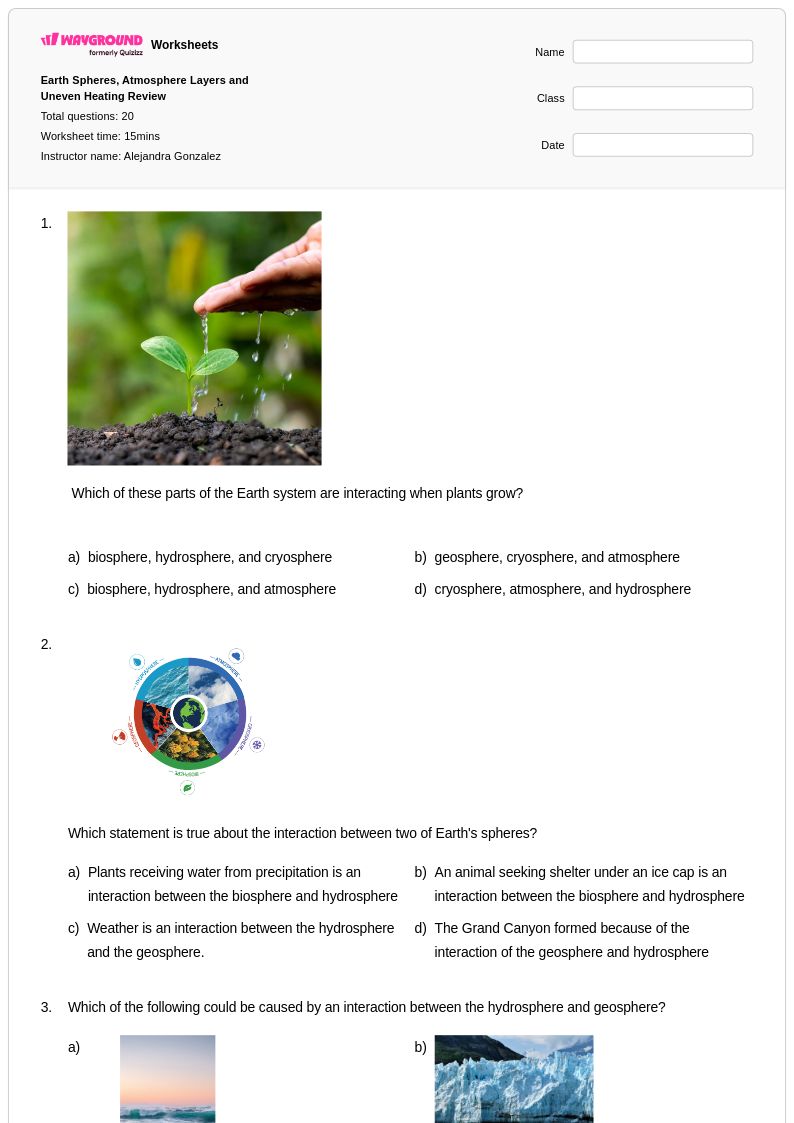
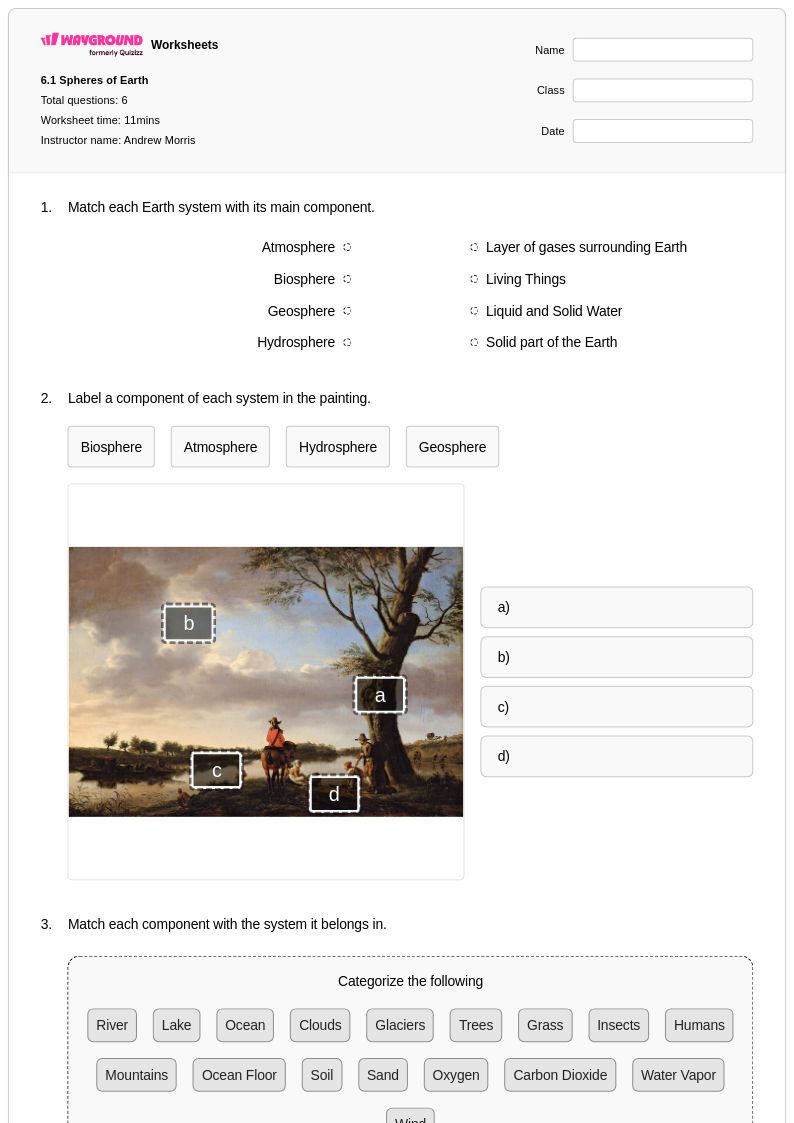
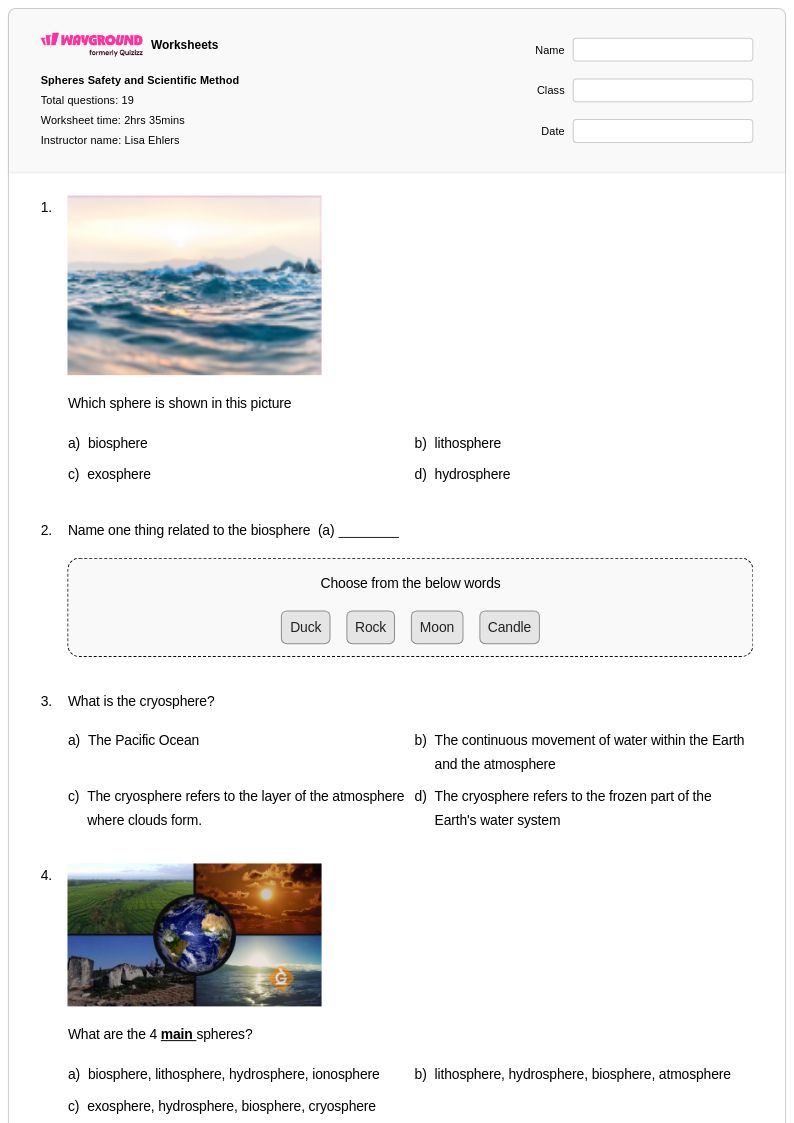
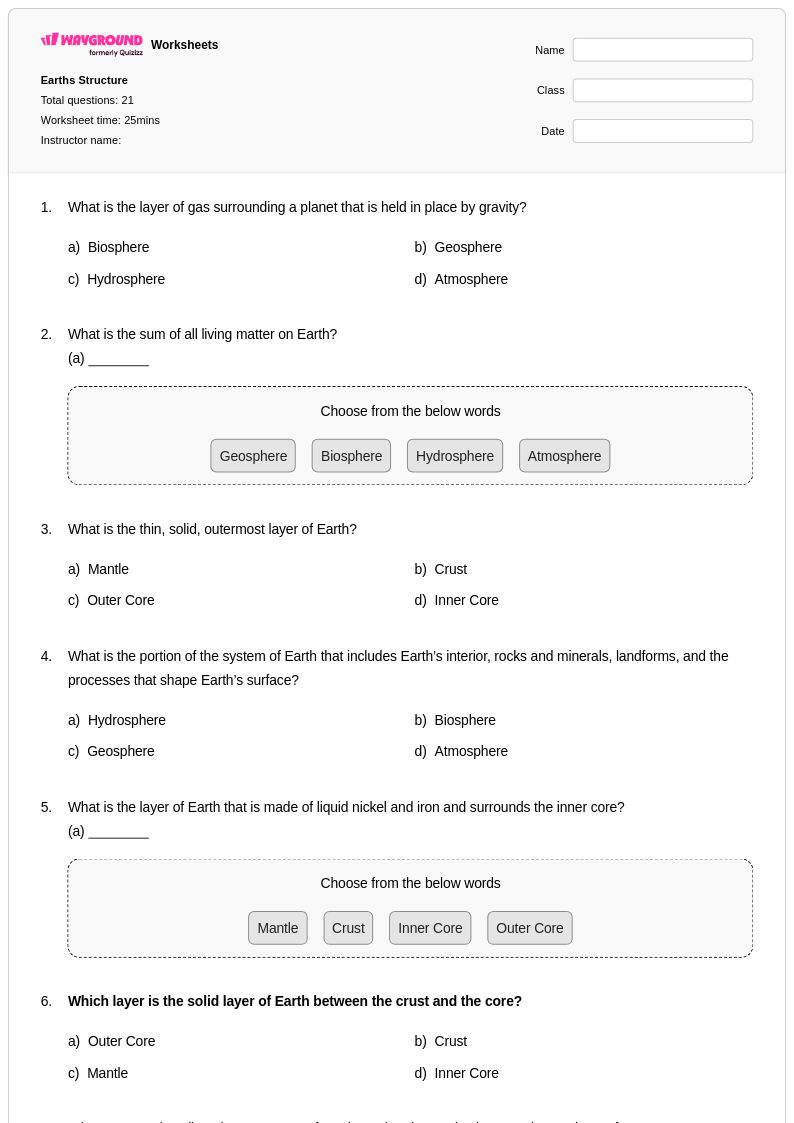
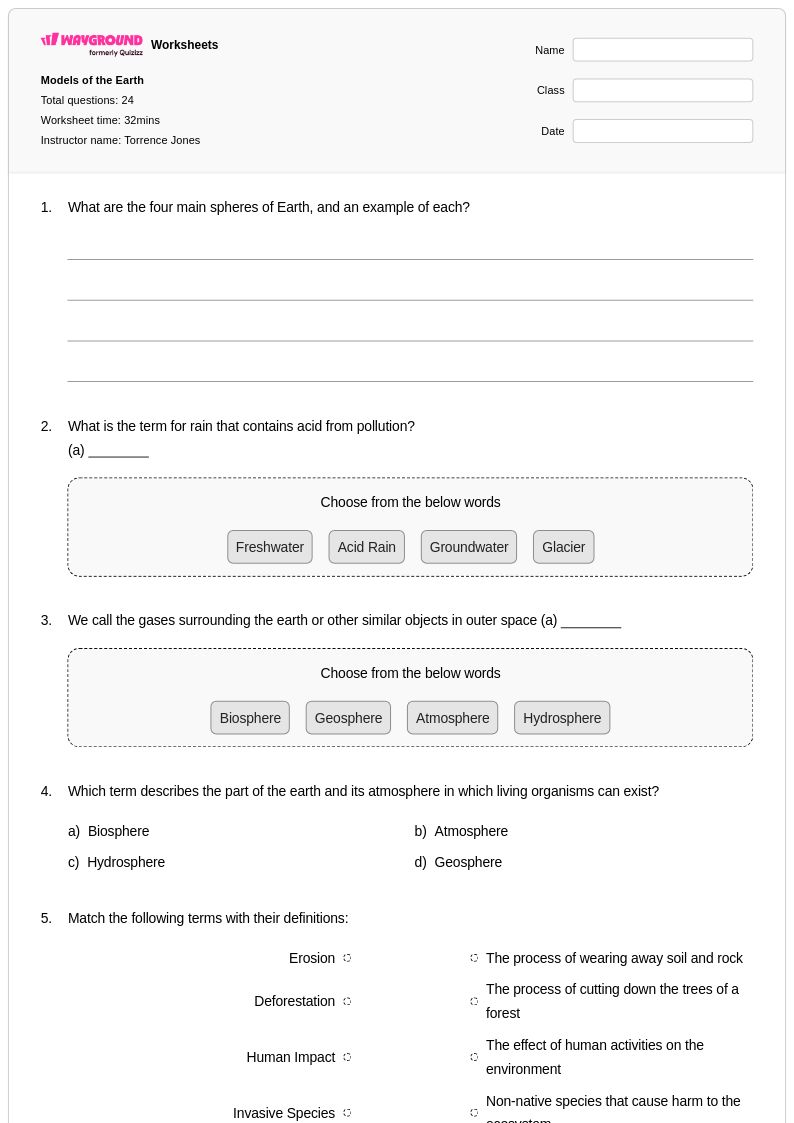
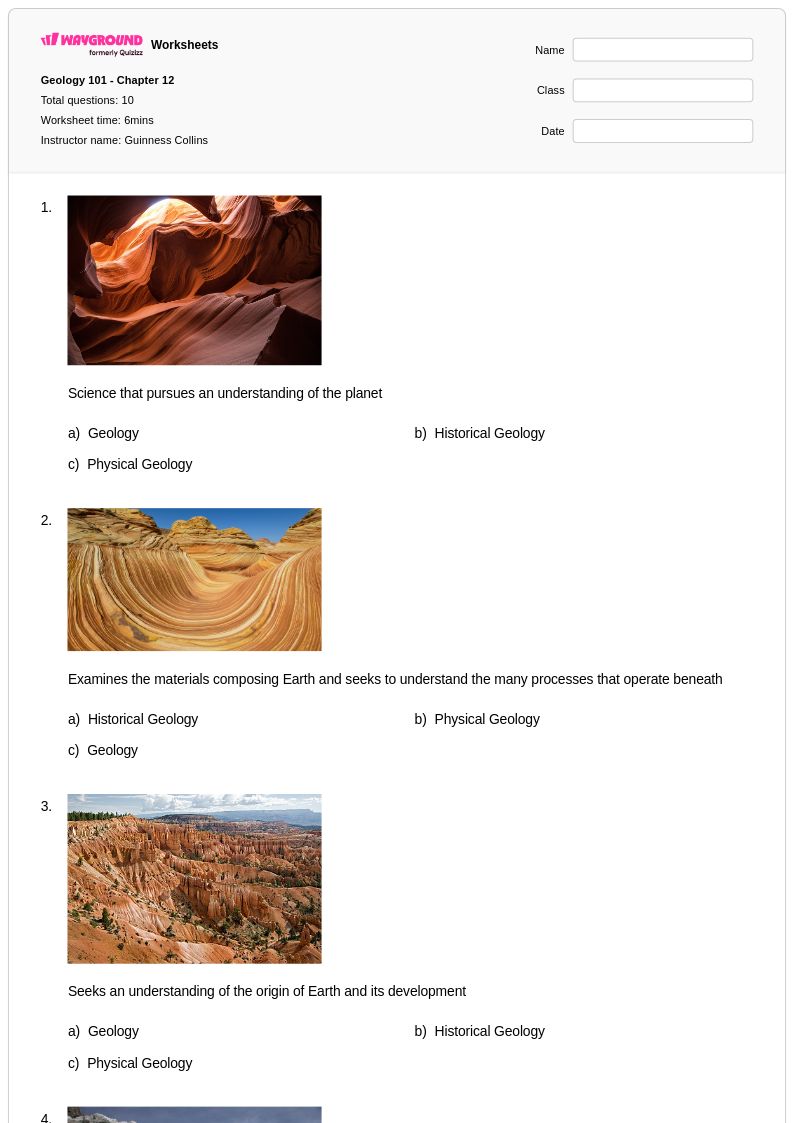
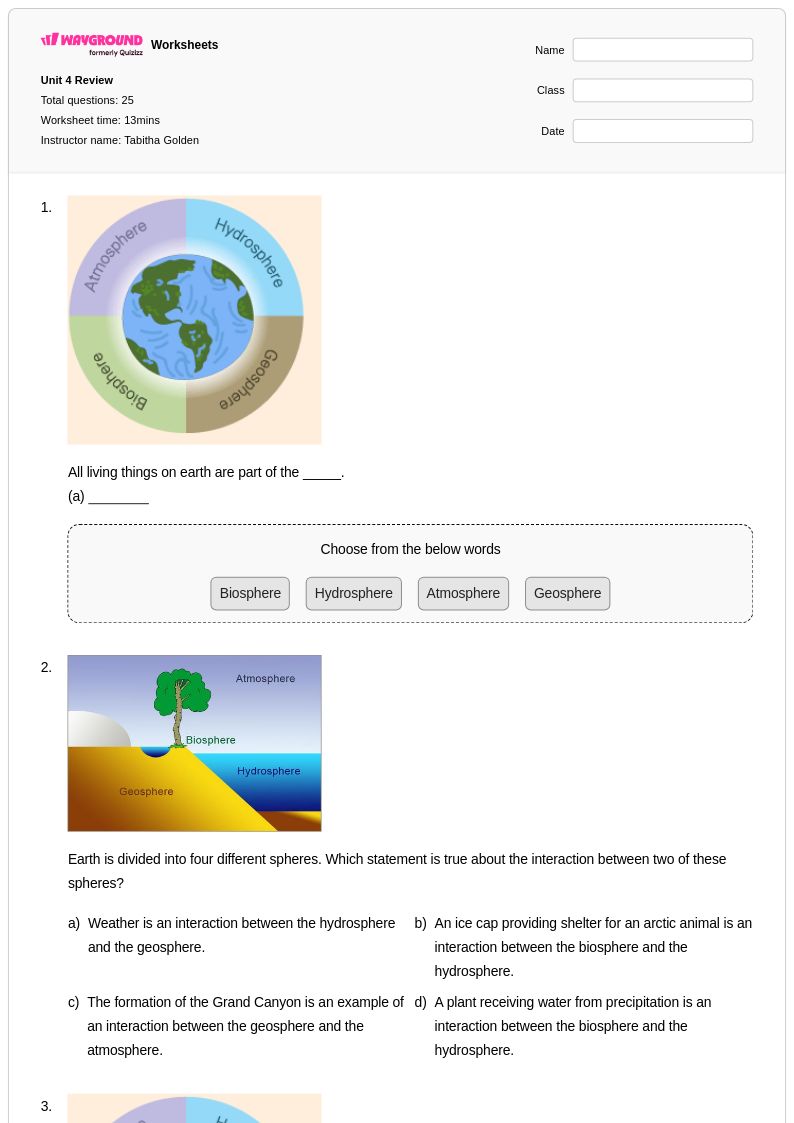
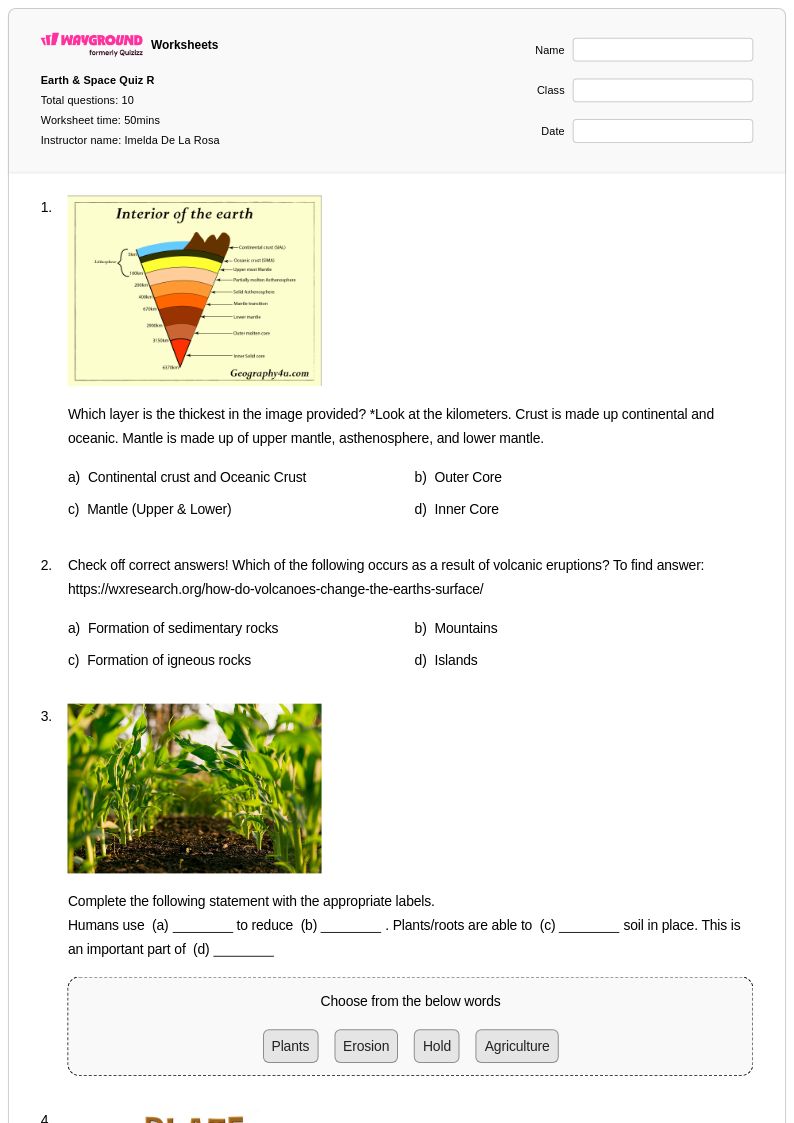
Explore Wayground's comprehensive collection of free Earth Spheres worksheets and printables that help students master the interactions between the atmosphere, hydrosphere, geosphere, and biosphere through engaging practice problems and detailed answer keys.
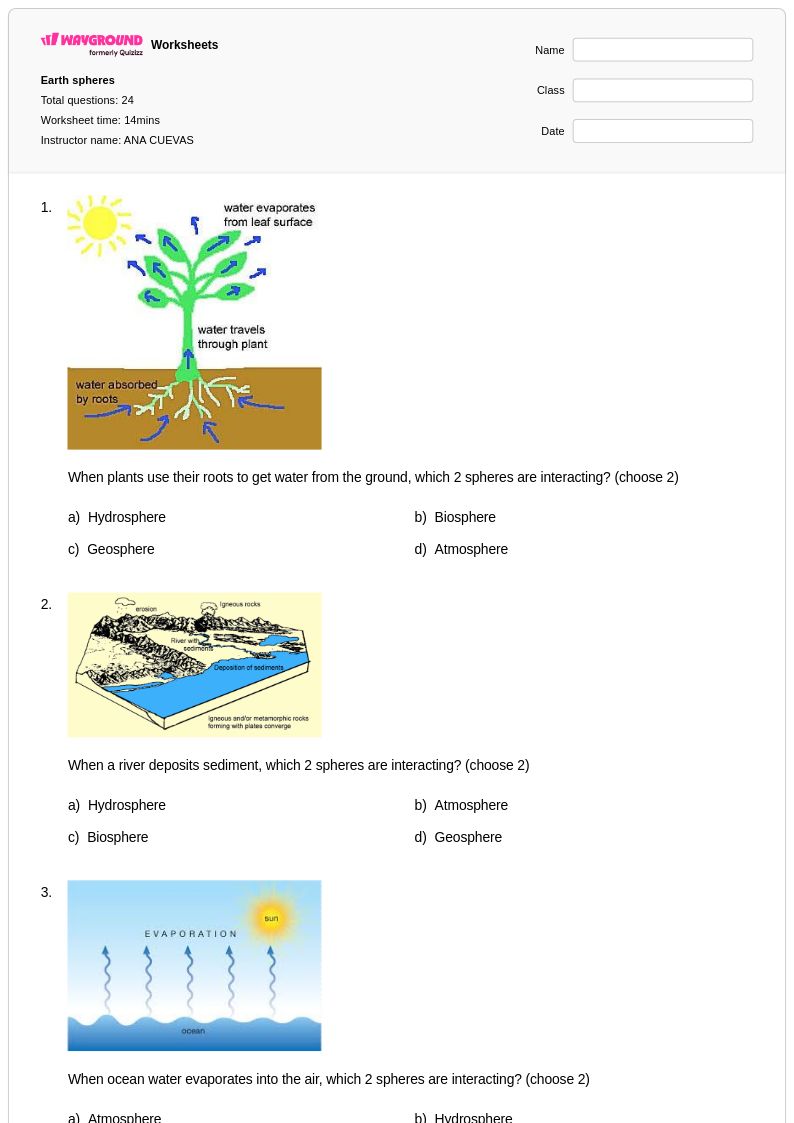
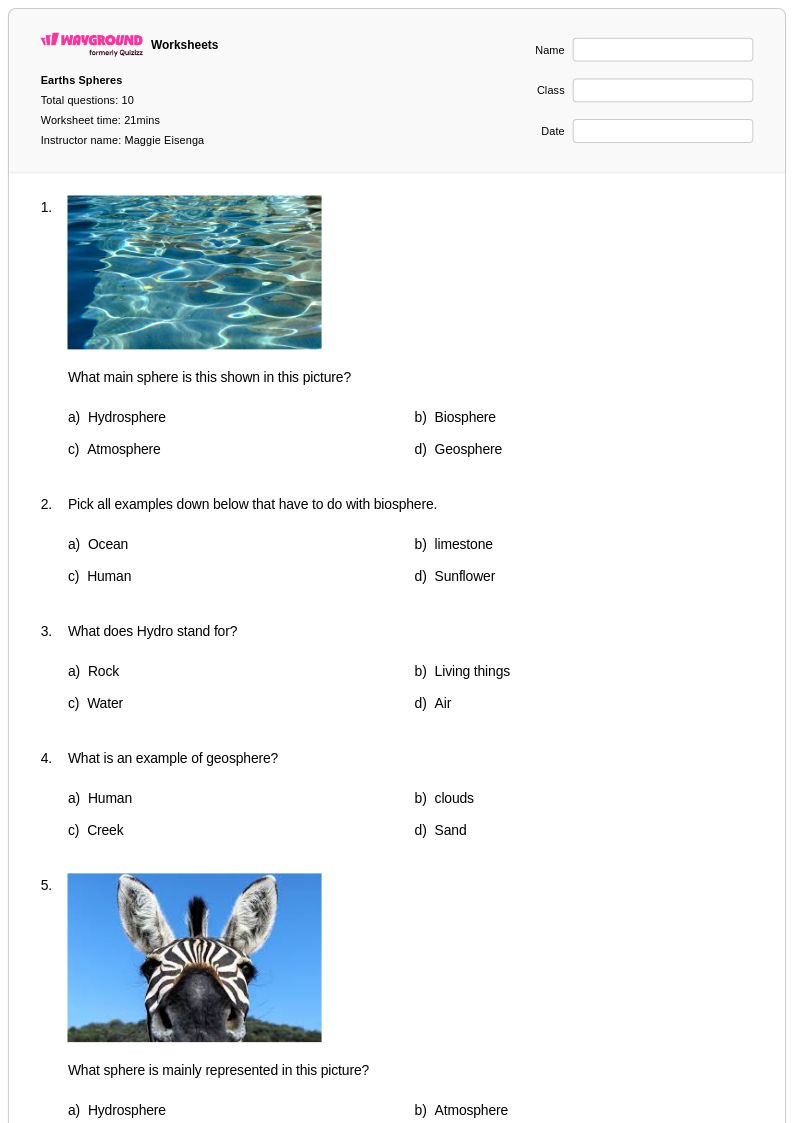
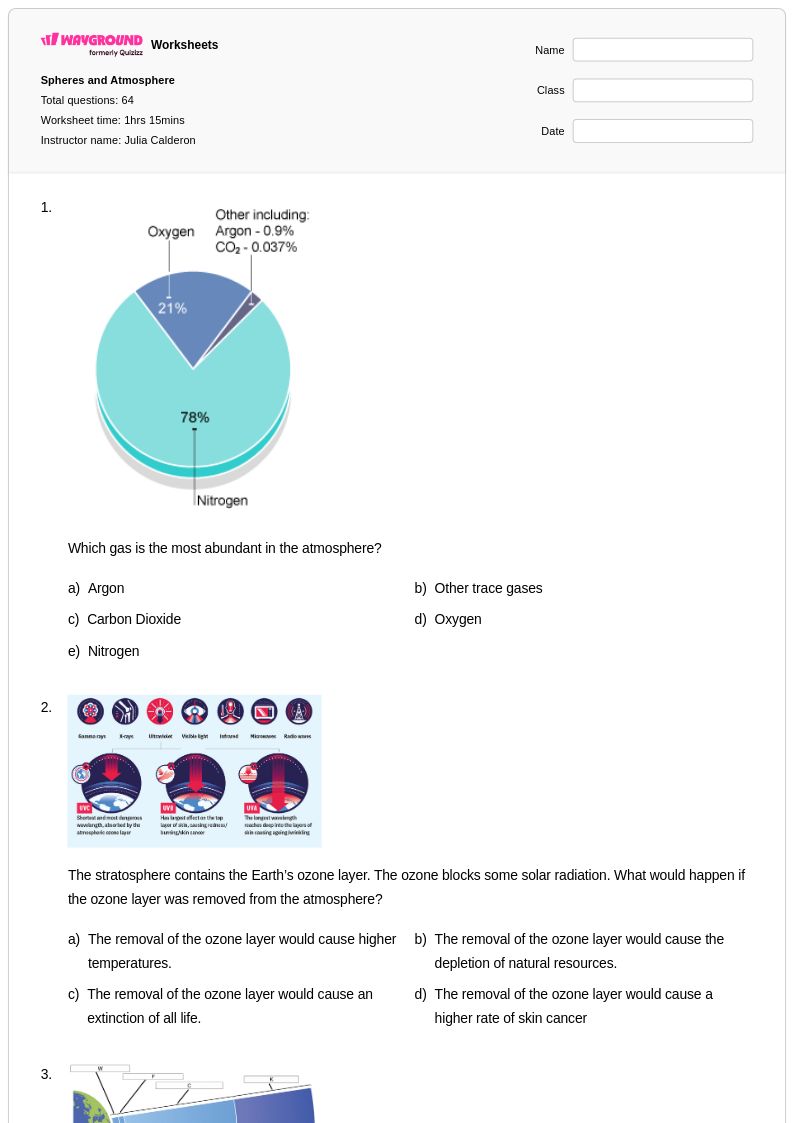
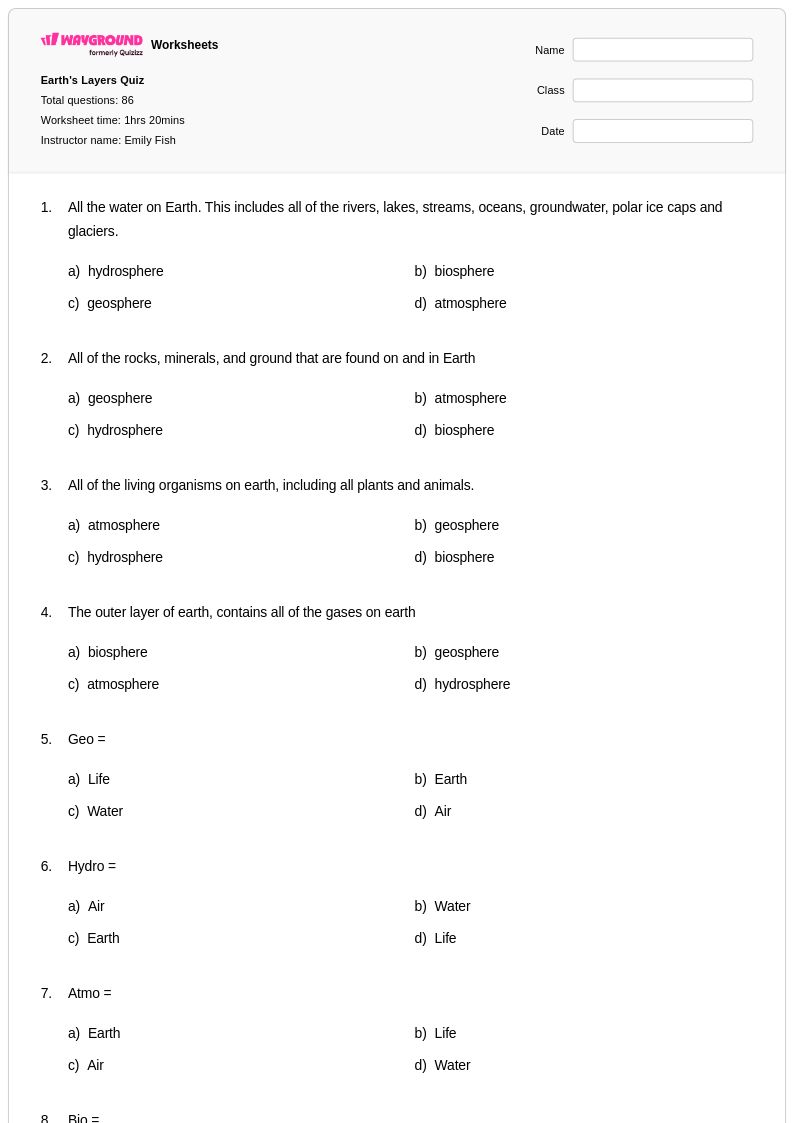
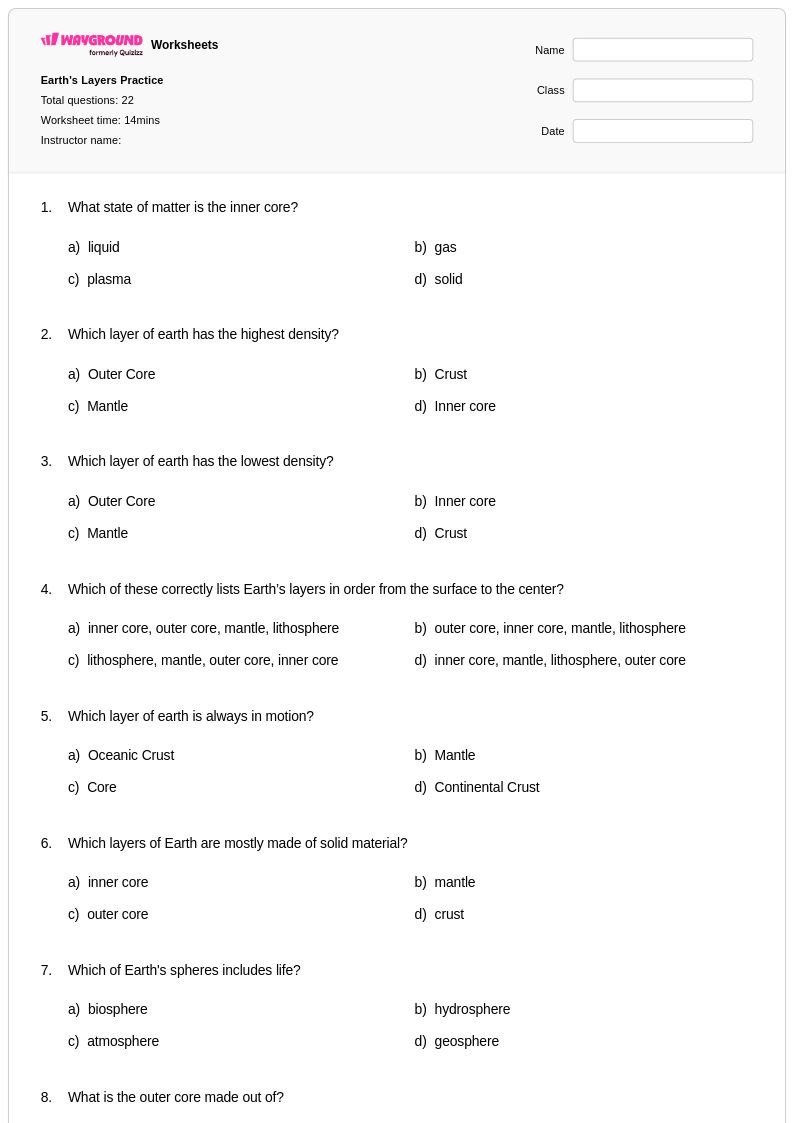
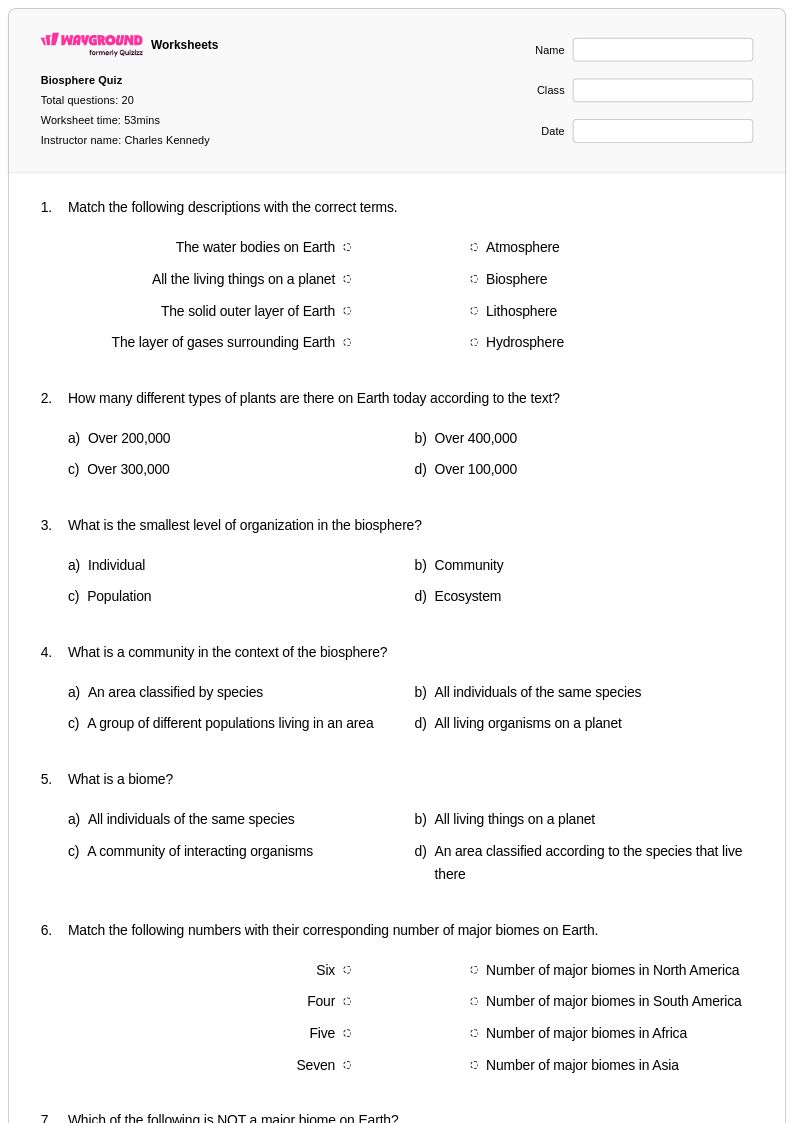
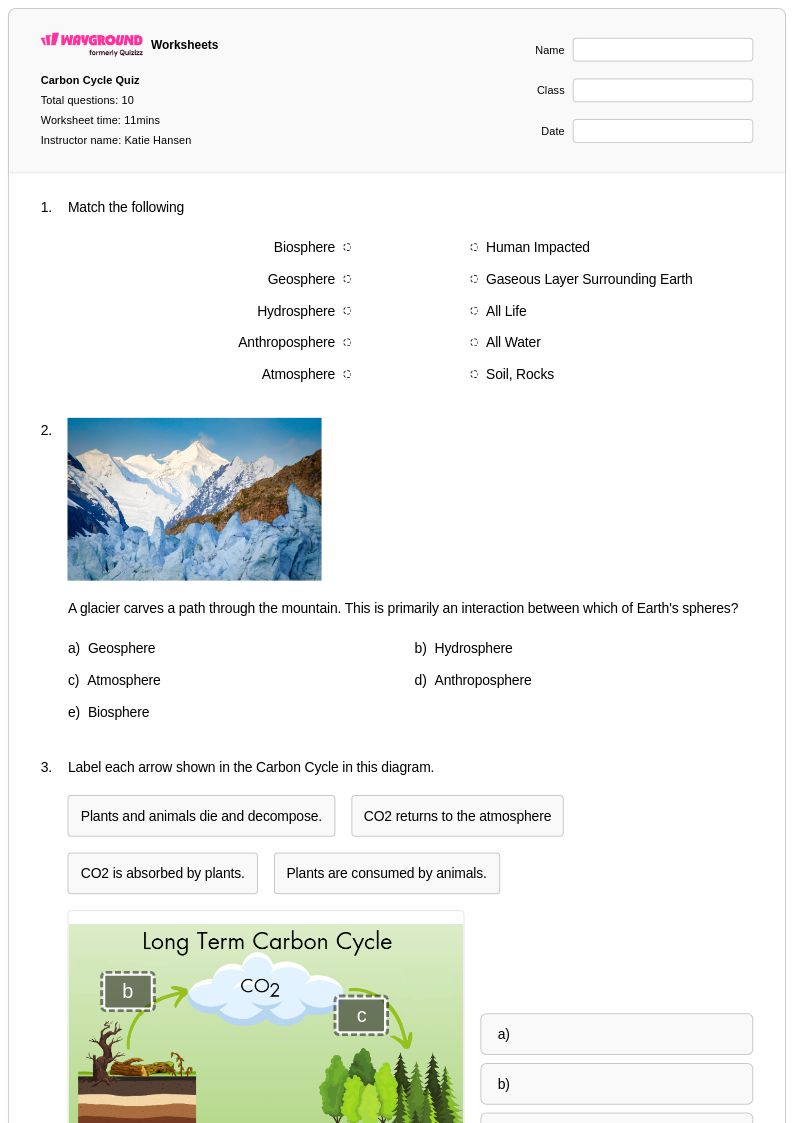
Earth Spheres worksheets available through Wayground (formerly Quizizz) provide comprehensive educational resources that help students understand the interconnected systems that make up our planet. These carefully designed materials focus on the four primary Earth spheres—the geosphere (solid Earth), hydrosphere (water systems), atmosphere (air and weather), and biosphere (living organisms)—while exploring how these spheres interact to create Earth's dynamic environment. The worksheets strengthen critical thinking skills through practice problems that require students to analyze sphere interactions, identify examples of each sphere in real-world scenarios, and understand processes like the water cycle and rock cycle that connect multiple spheres. Each worksheet collection includes detailed answer keys and is available as free printables in pdf format, making it easy for educators to implement immediate assessment and provide students with clear learning objectives.
Wayground (formerly Quizizz) supports educators with millions of teacher-created Earth Spheres resources that can be easily accessed through robust search and filtering capabilities, allowing teachers to find materials perfectly suited to their classroom needs. The platform's standards alignment ensures that worksheets meet curriculum requirements while differentiation tools enable teachers to modify content for diverse learning levels and abilities. These flexible customization options, combined with both printable and digital formats including downloadable pdfs, make lesson planning more efficient and effective. Teachers can utilize these comprehensive worksheet collections for targeted skill practice, remediation support for struggling students, and enrichment opportunities for advanced learners, while the extensive resource library provides ongoing support for reinforcing Earth science concepts throughout the academic year.
FAQs
How do I teach Earth's four spheres to middle school students?
Start by grounding students in the four systems individually: the geosphere (solid Earth and landforms), hydrosphere (all water systems), atmosphere (air, gases, and weather), and biosphere (all living organisms). Once students can identify and define each sphere, shift instruction toward sphere interactions, such as how volcanic eruptions from the geosphere release gases into the atmosphere, or how precipitation from the atmosphere feeds rivers in the hydrosphere. Using real-world events like hurricanes or wildfires as case studies helps students see how multiple spheres operate simultaneously.
What exercises help students practice identifying Earth sphere interactions?
Scenario-based practice is most effective: present a natural event or process and ask students to identify which spheres are involved and how they interact. For example, analyzing the water cycle requires students to connect the hydrosphere, atmosphere, and geosphere. Worksheets that ask students to classify real-world examples into the correct sphere, then explain connections between spheres, build both recall and analytical skills progressively.
What mistakes do students commonly make when learning about Earth's spheres?
The most common misconception is treating the four spheres as entirely separate systems rather than overlapping, interdependent ones. Students also frequently misclassify examples, placing soil or sediment in the hydrosphere rather than the geosphere, or forgetting that the biosphere includes all ecosystems rather than just animals. Another error is assuming that one sphere is responsible for a single process, when cycles like the rock cycle or water cycle actively involve three or more spheres.
How can I use Earth Spheres worksheets to differentiate instruction?
Differentiation for Earth Spheres can involve tiered tasks: foundational worksheets ask students to define and classify each sphere, while more advanced versions require students to explain multi-sphere interactions or evaluate the impact of human activity across spheres. On Wayground, teachers can also apply student-level accommodations such as read aloud, reduced answer choices, and extended time to support diverse learners, with each accommodation applied individually without affecting the experience of other students.
How do I use Wayground's Earth Spheres worksheets in my classroom?
Wayground's Earth Spheres worksheets are available as printable PDFs for traditional classroom use and in digital formats for technology-integrated environments, including the option to host them as a quiz directly on Wayground. Teachers can use them for direct instruction support, formative assessment after introducing the four spheres, or as review tools before a unit test. Answer keys are included with each worksheet, making it straightforward to check student understanding and provide targeted feedback.
How do the water cycle and rock cycle connect to Earth sphere interactions?
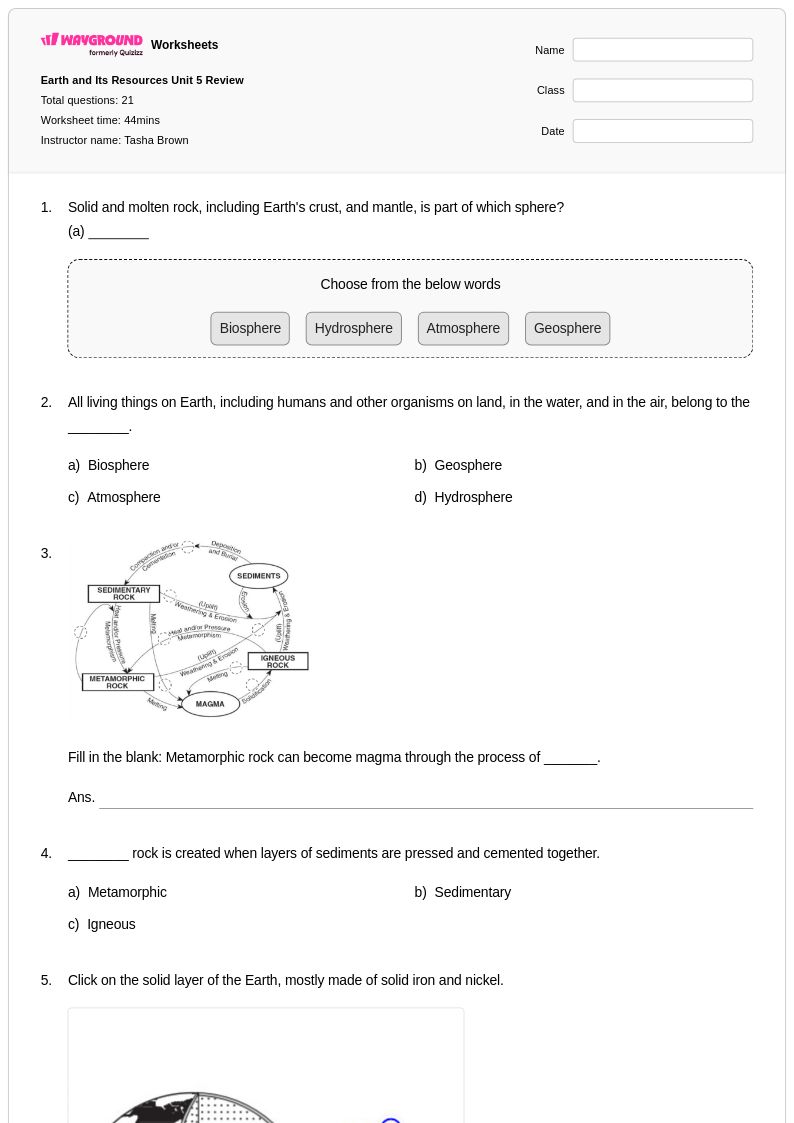
Both the water cycle and rock cycle serve as concrete examples of multi-sphere interaction. The water cycle connects the hydrosphere, atmosphere, and geosphere as water evaporates, condenses, precipitates, and flows across or beneath Earth's surface. The rock cycle involves the geosphere being shaped by forces from the atmosphere and hydrosphere through weathering and erosion. Teaching these cycles explicitly as cross-sphere processes helps students move beyond memorizing definitions toward understanding Earth as a dynamic, integrated system.