Free Printable Gene Regulation Worksheets for Class 12
Explore Wayground's comprehensive Class 12 gene regulation worksheets featuring free printables and practice problems with answer keys to help students master transcriptional control, epigenetics, and regulatory mechanisms in molecular biology.
Explore printable Gene Regulation worksheets for Class 12
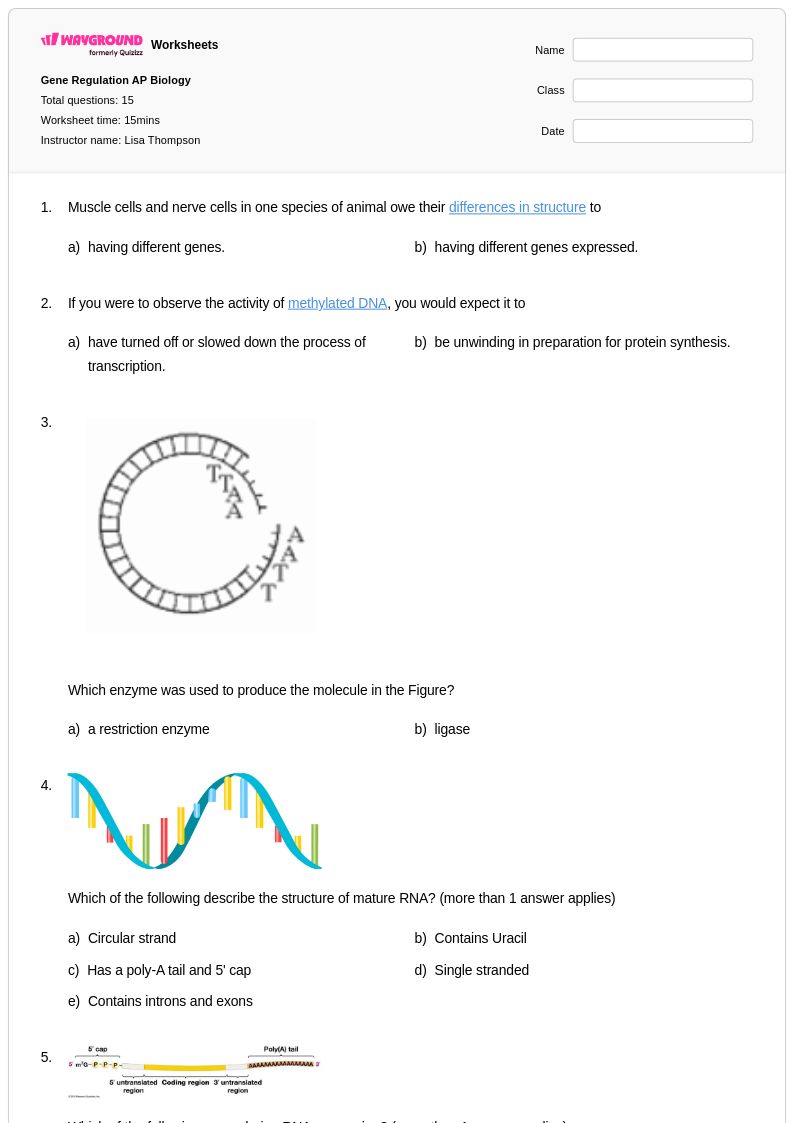
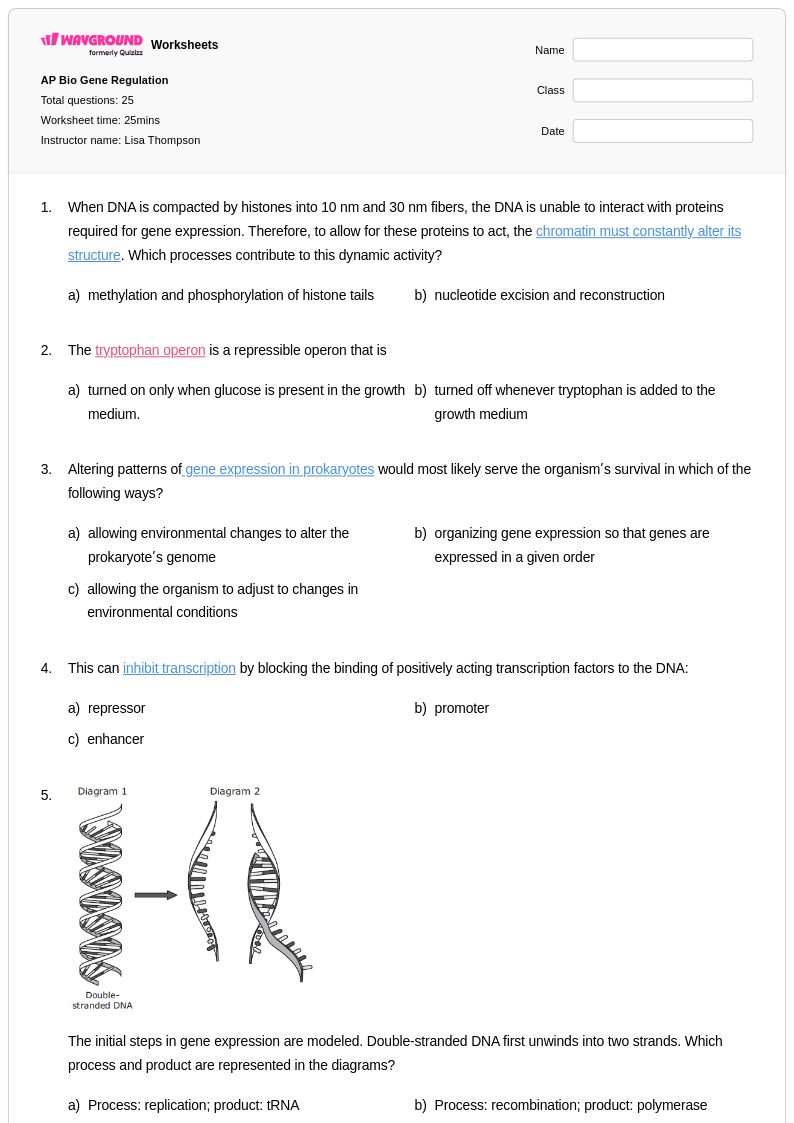
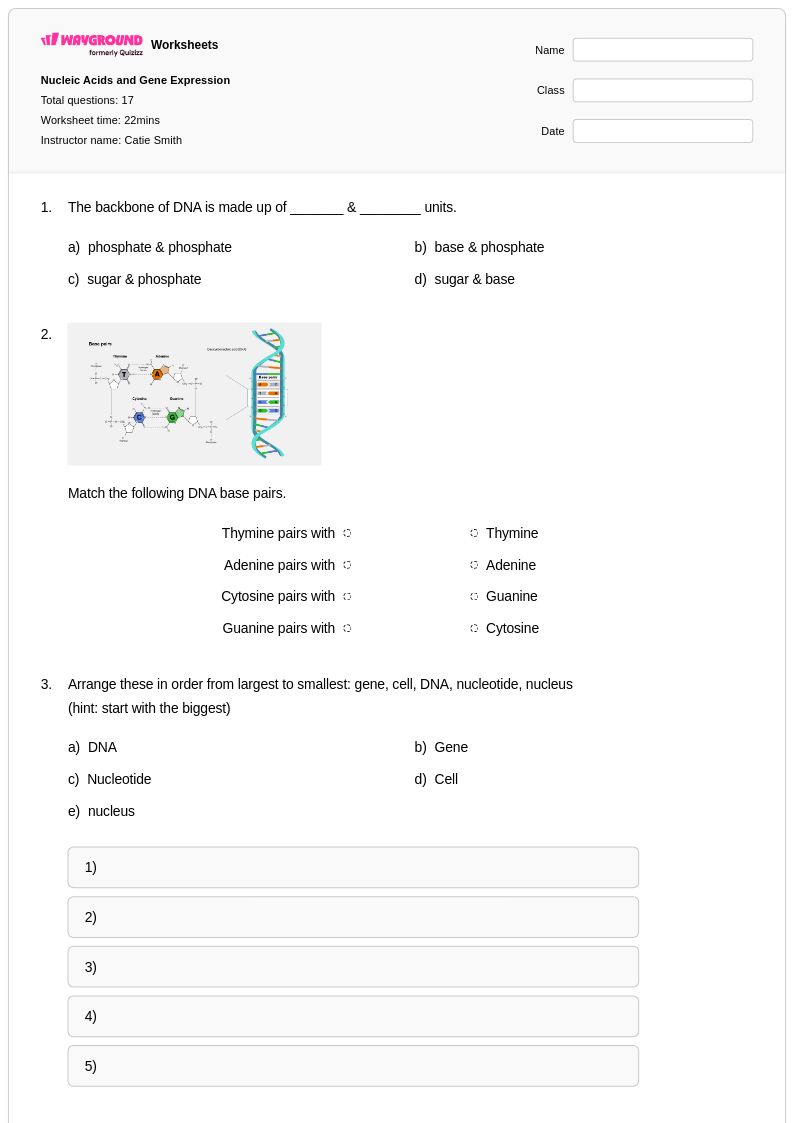
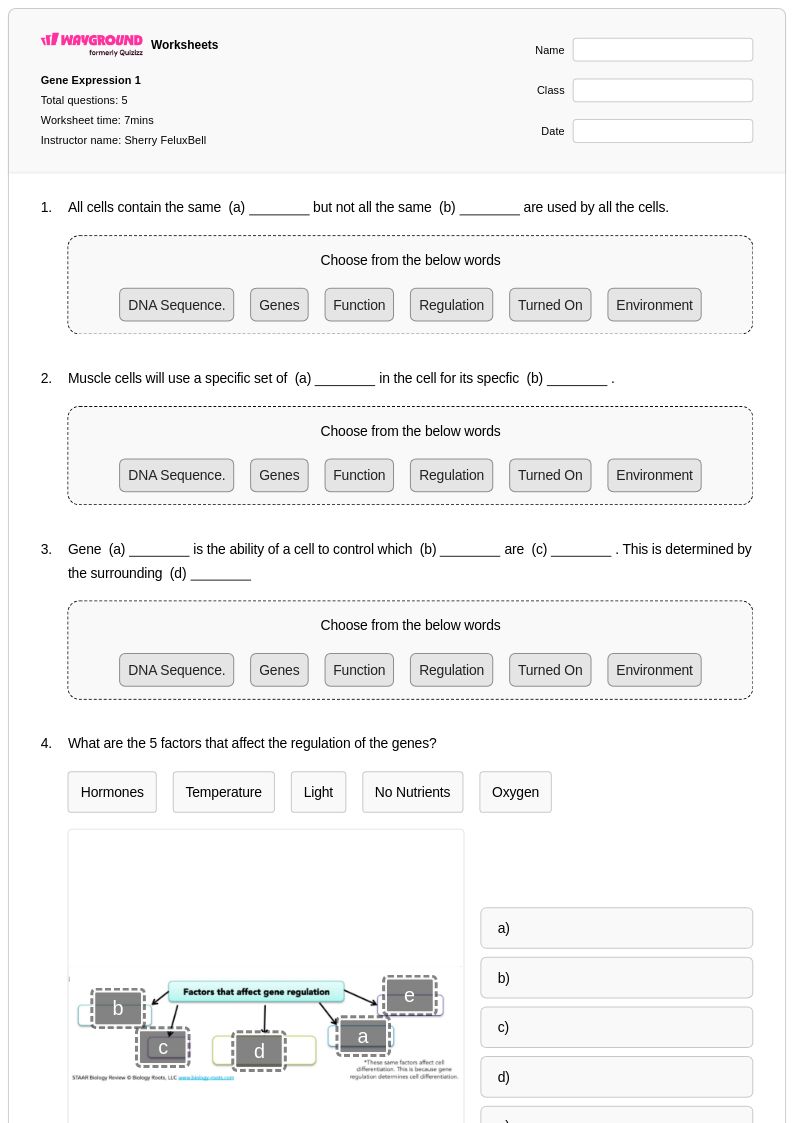
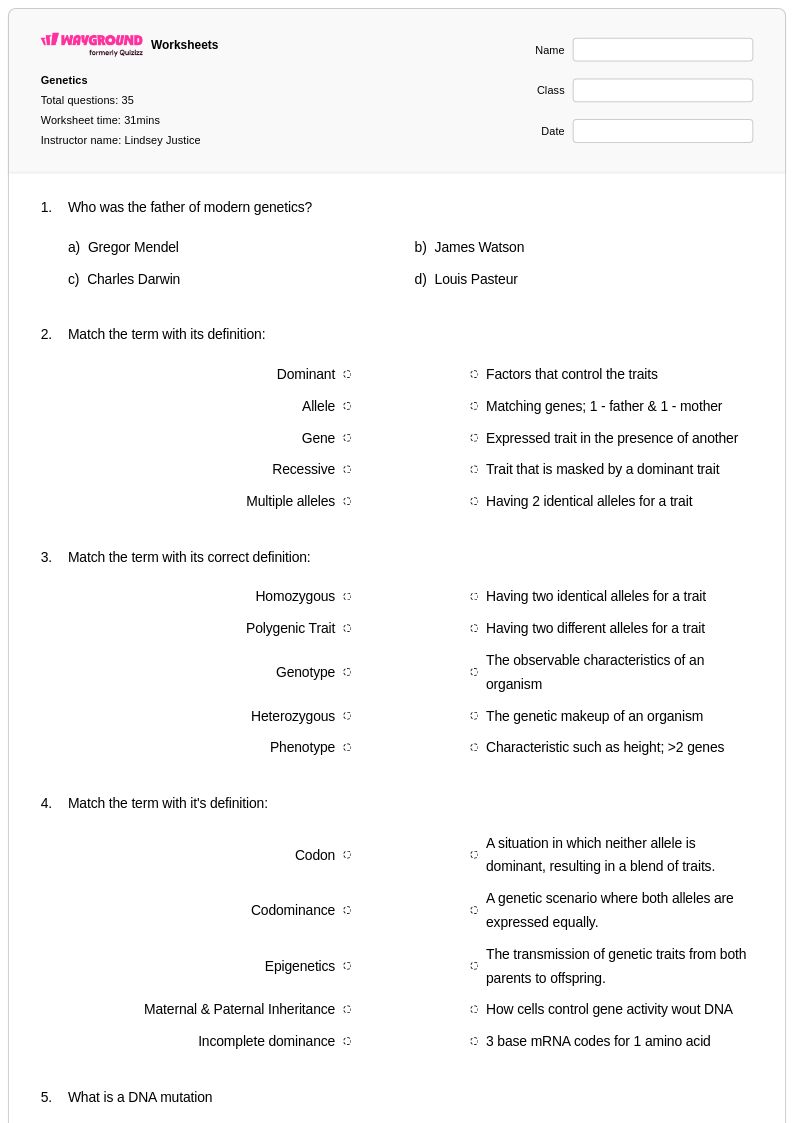
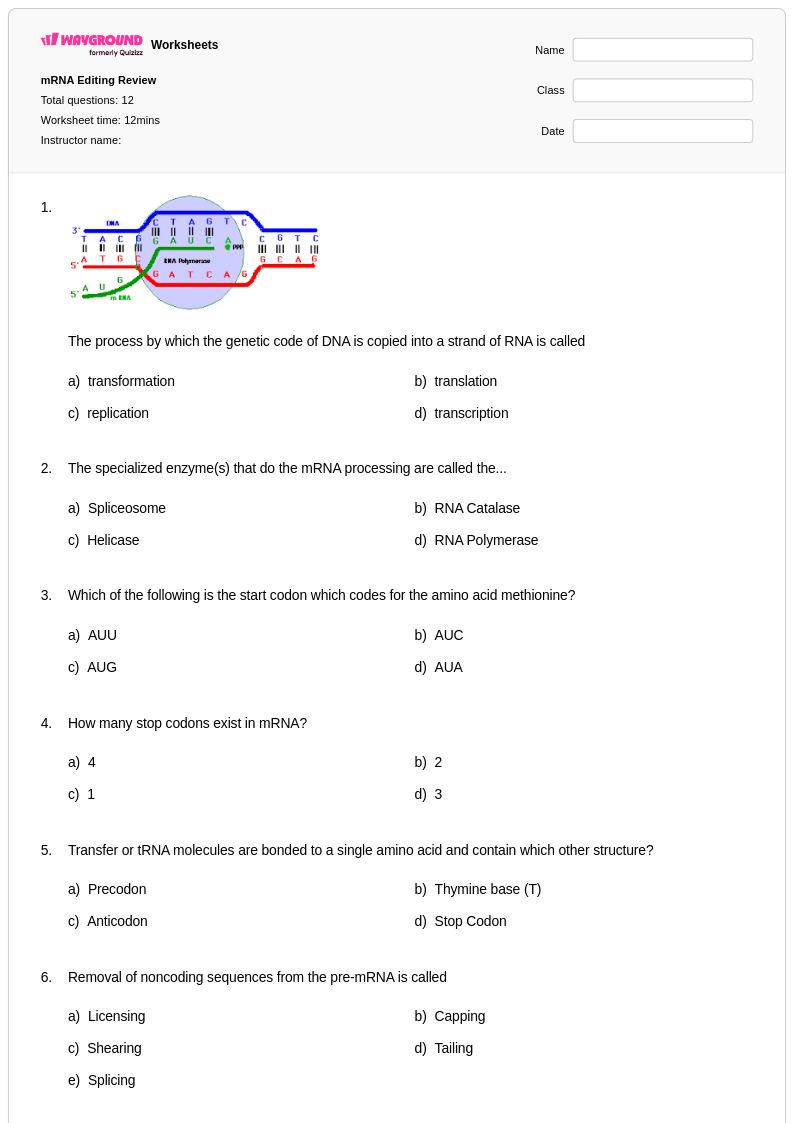
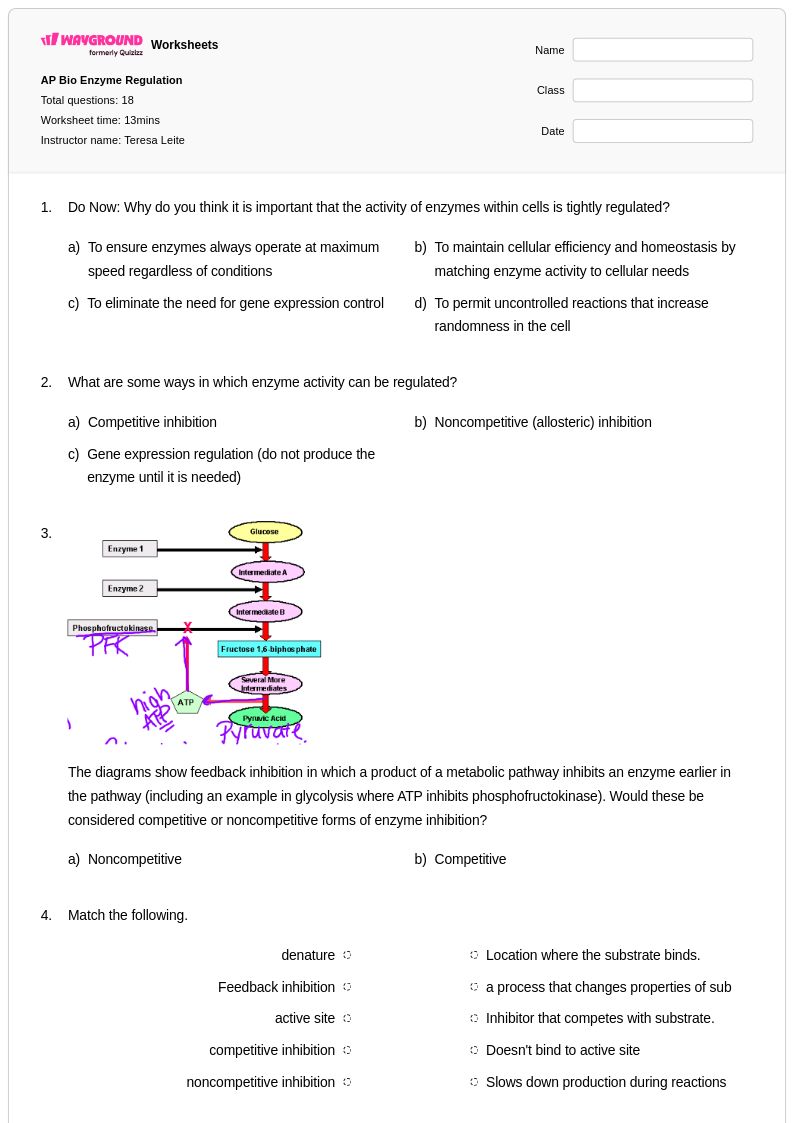
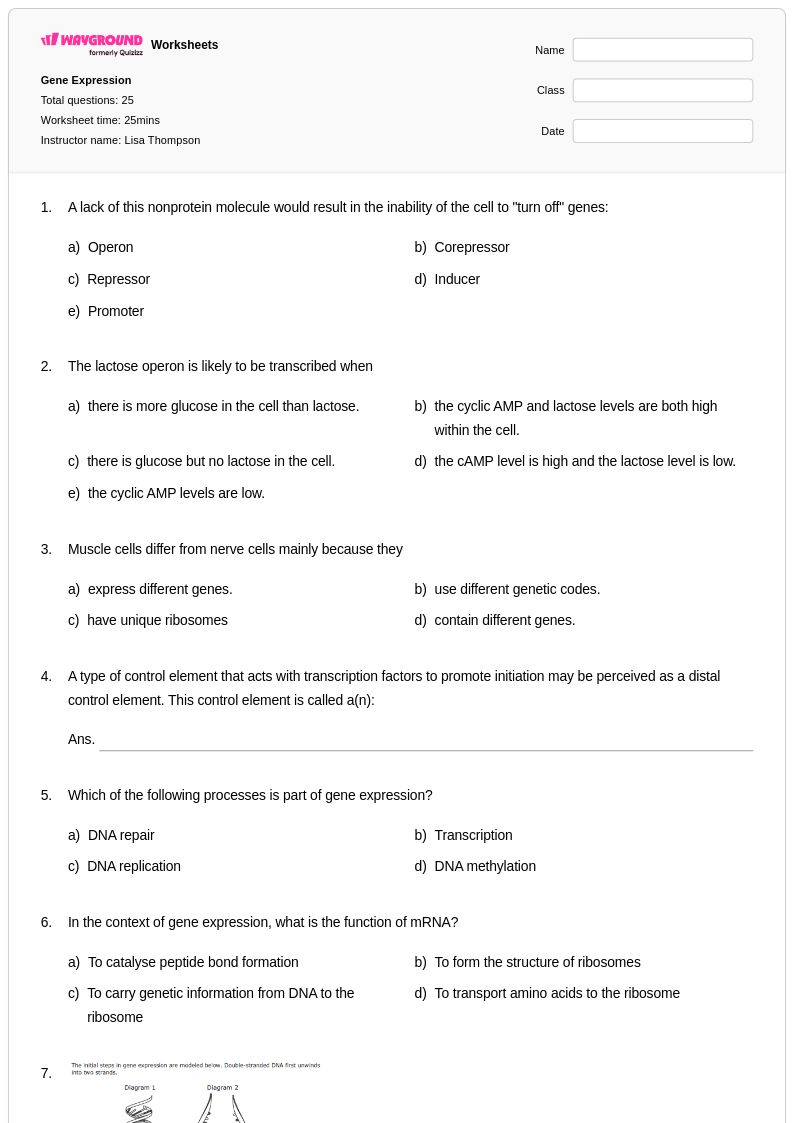
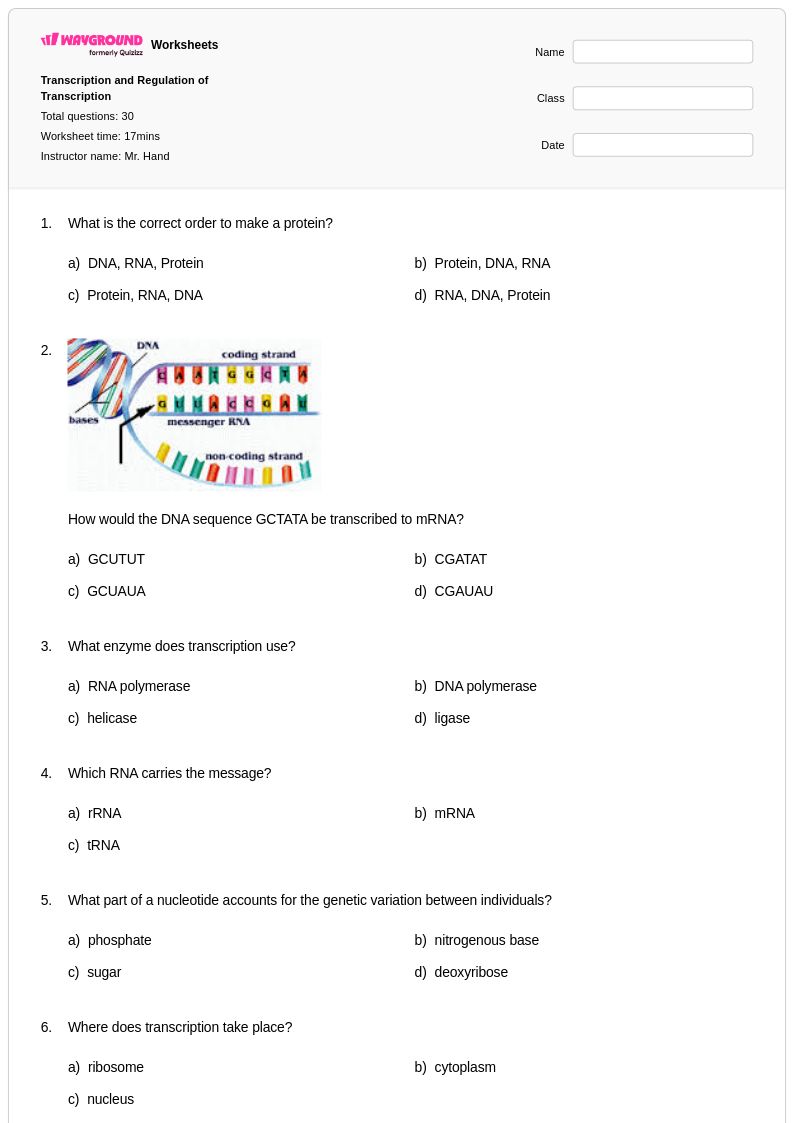
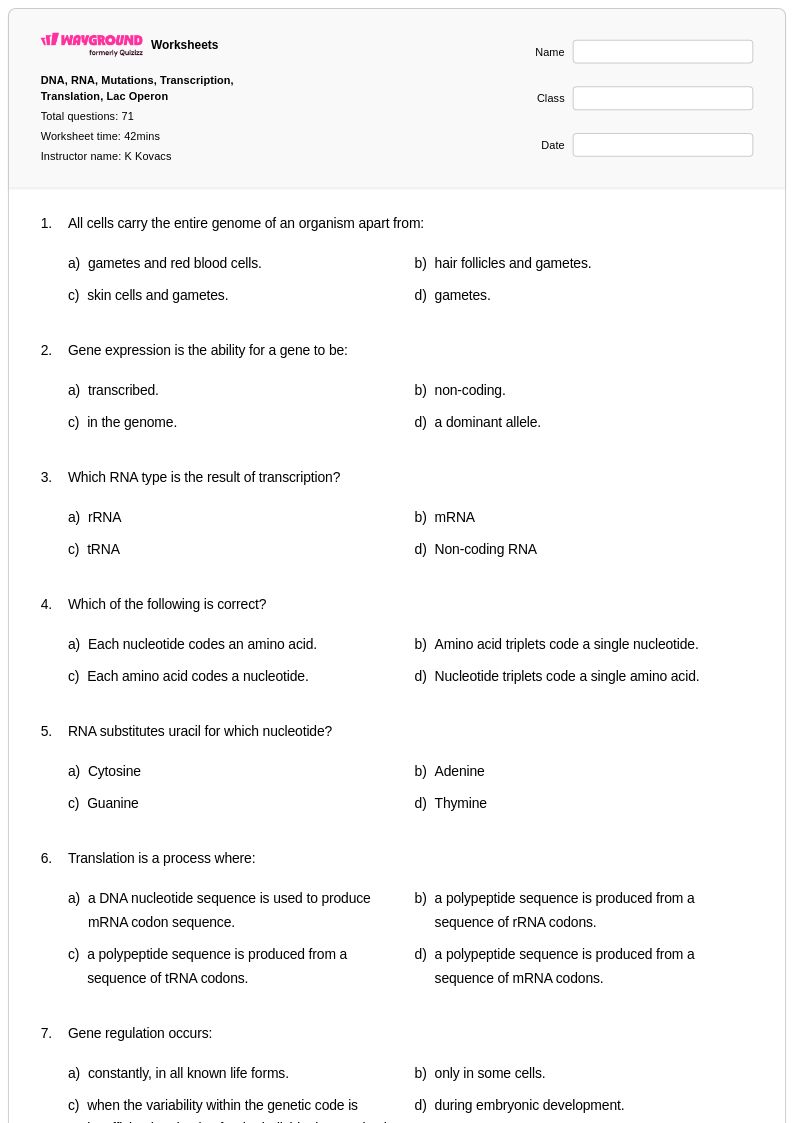
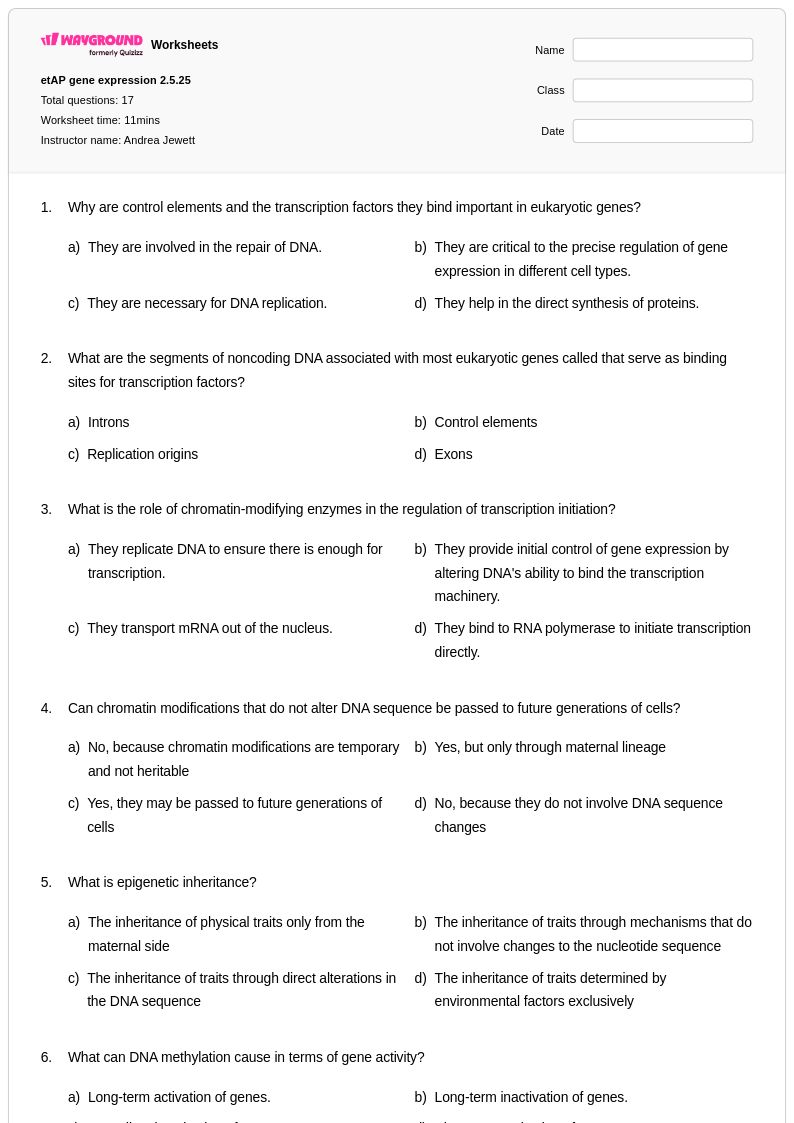
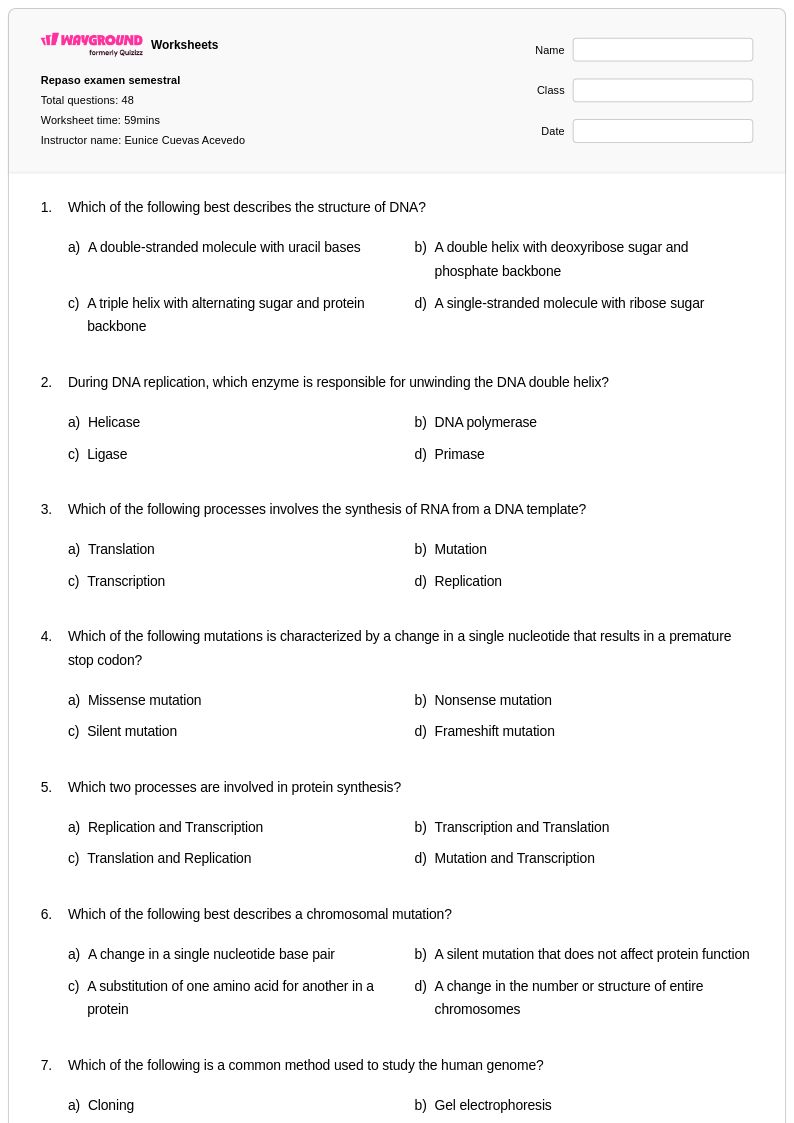
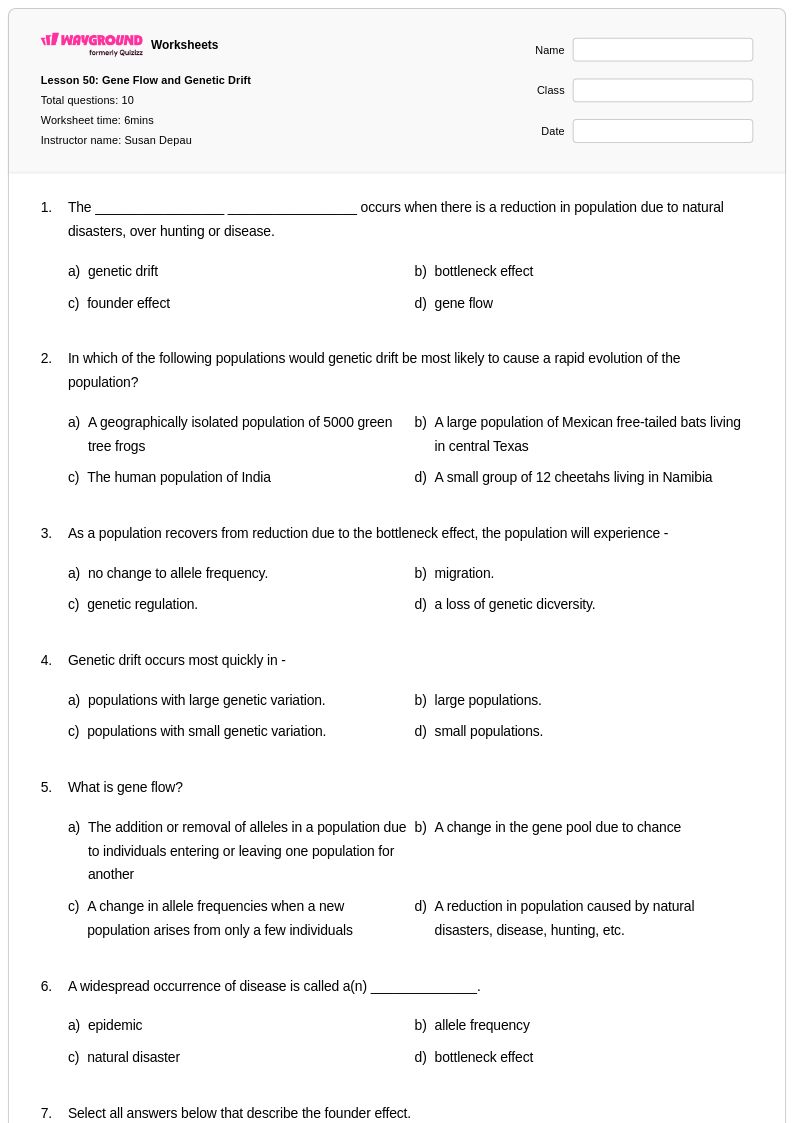
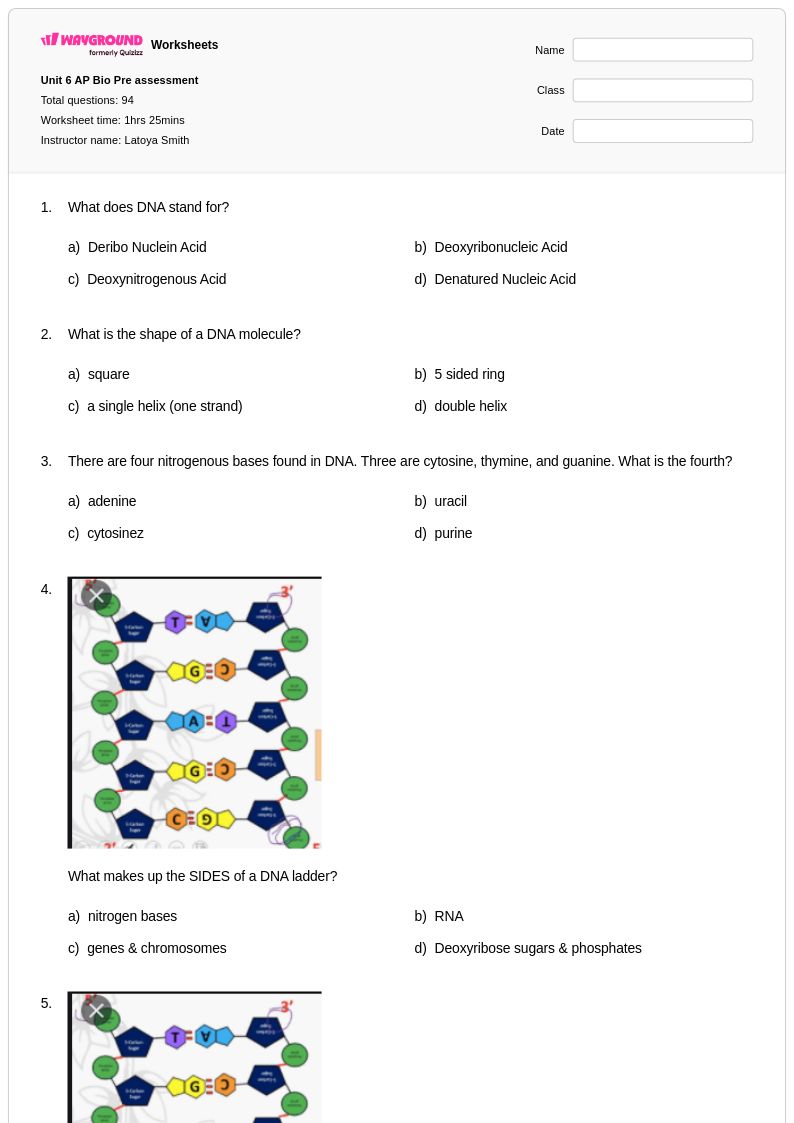
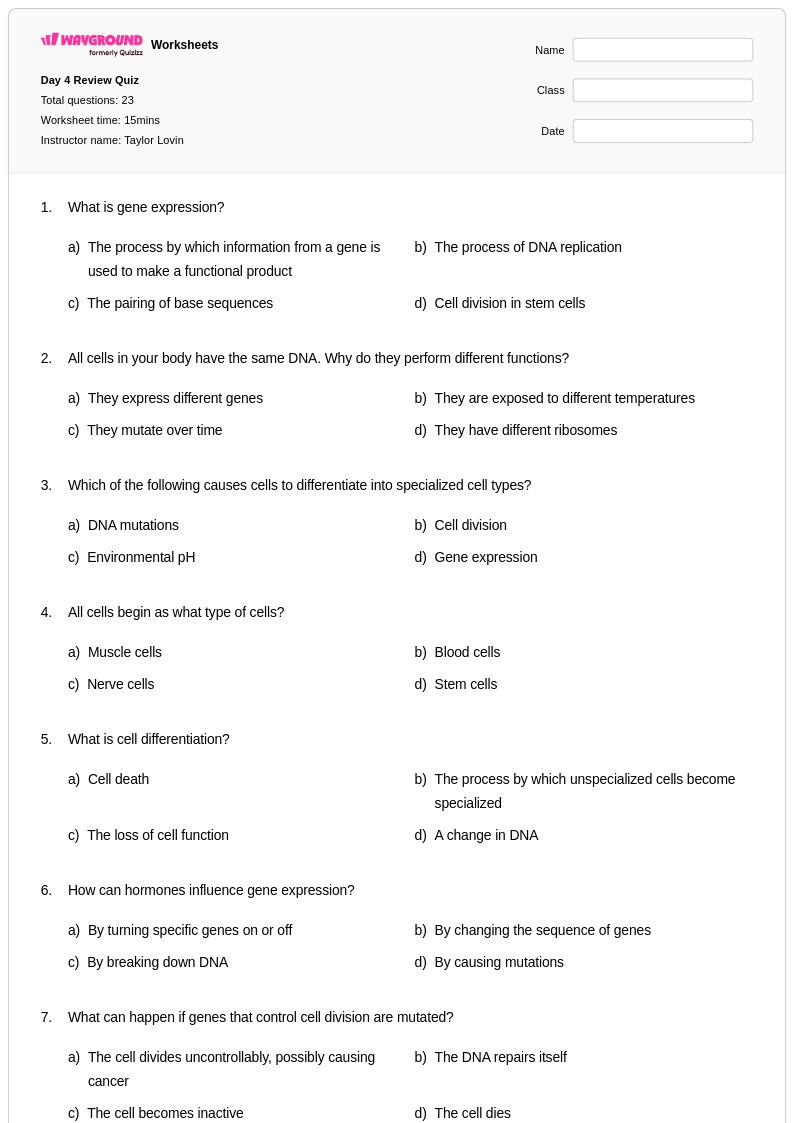
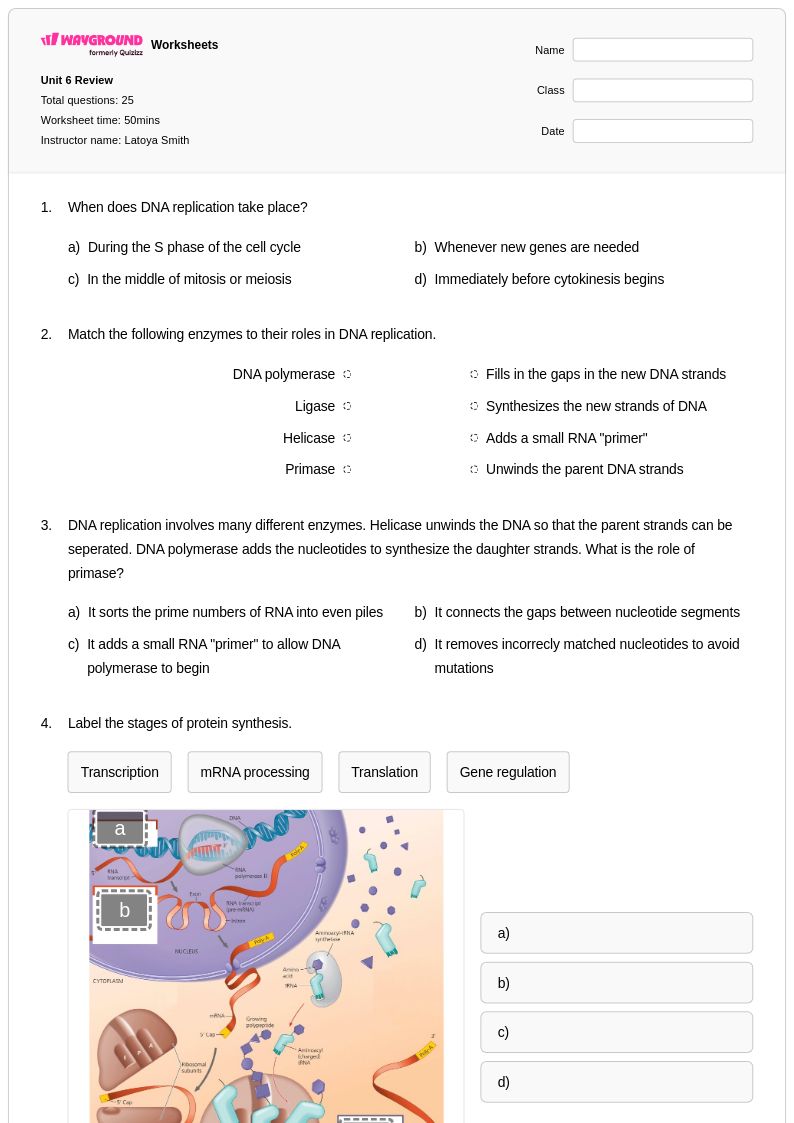
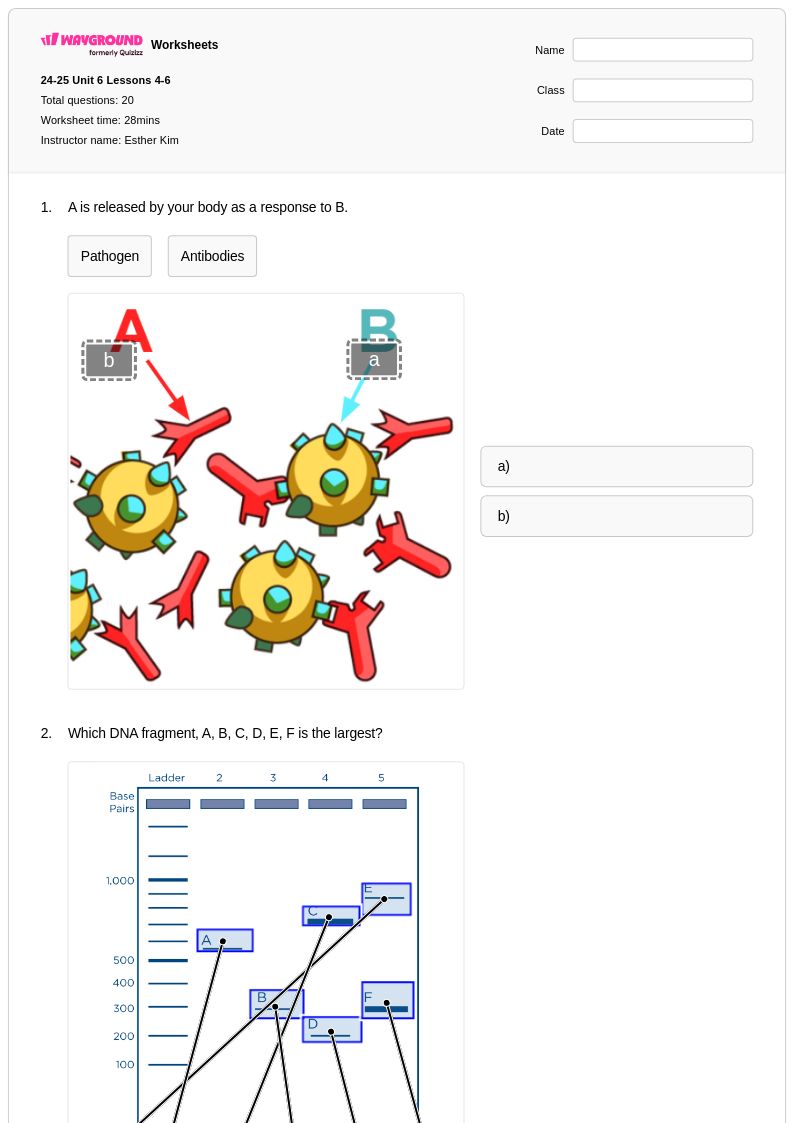
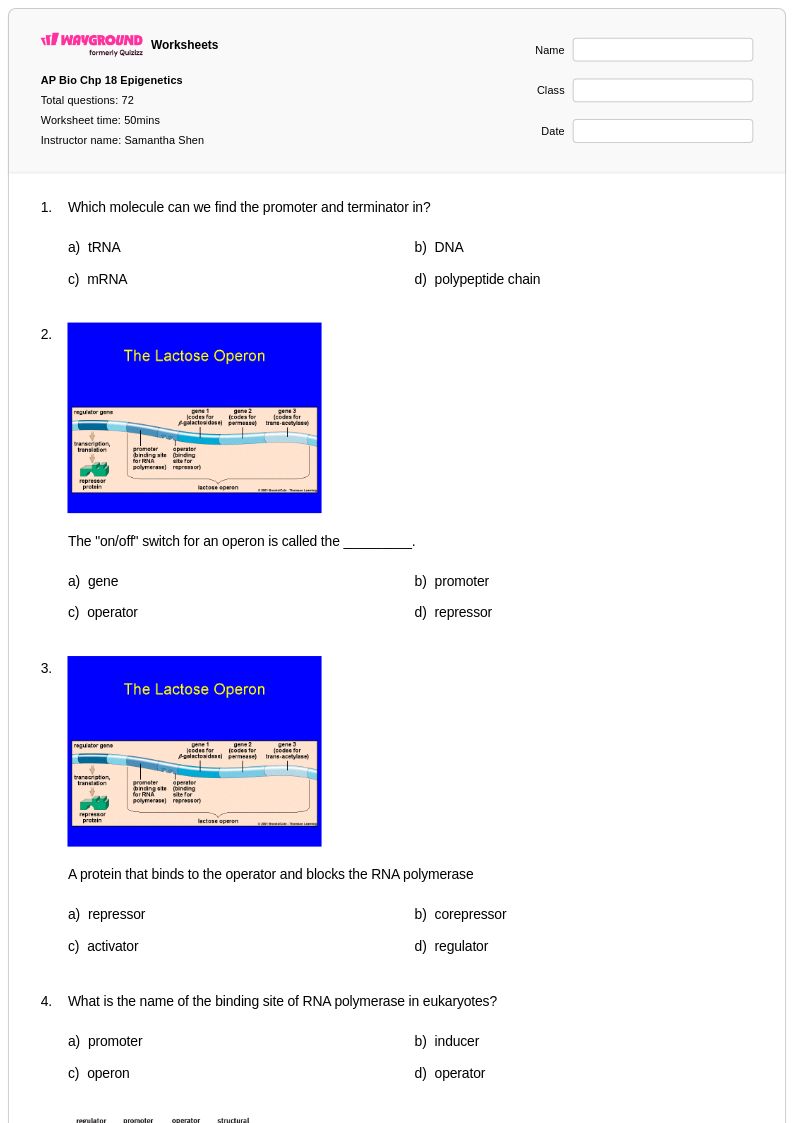
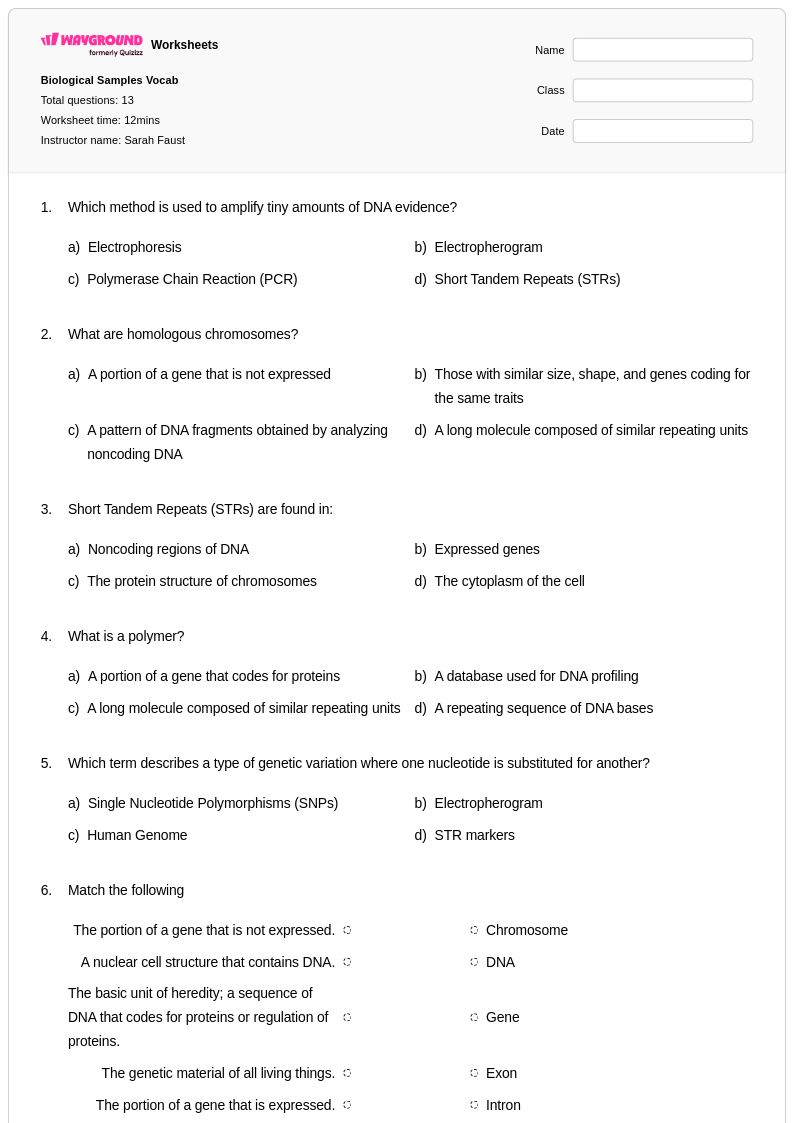
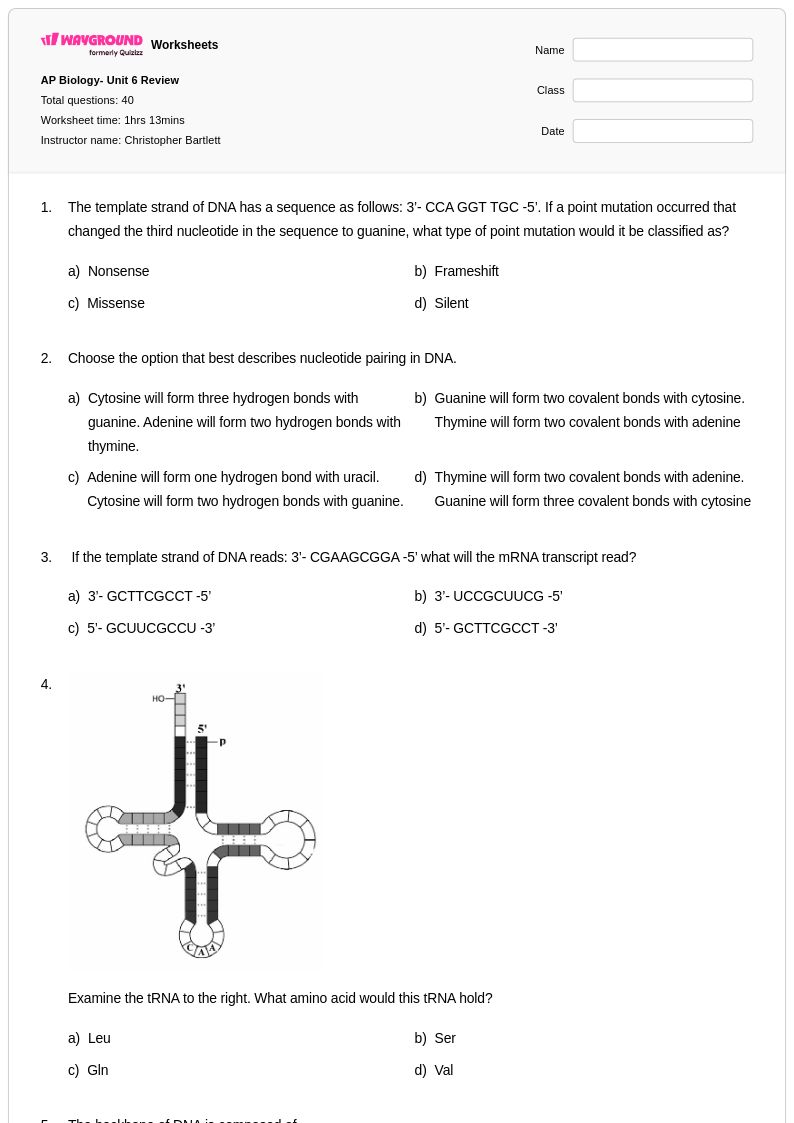
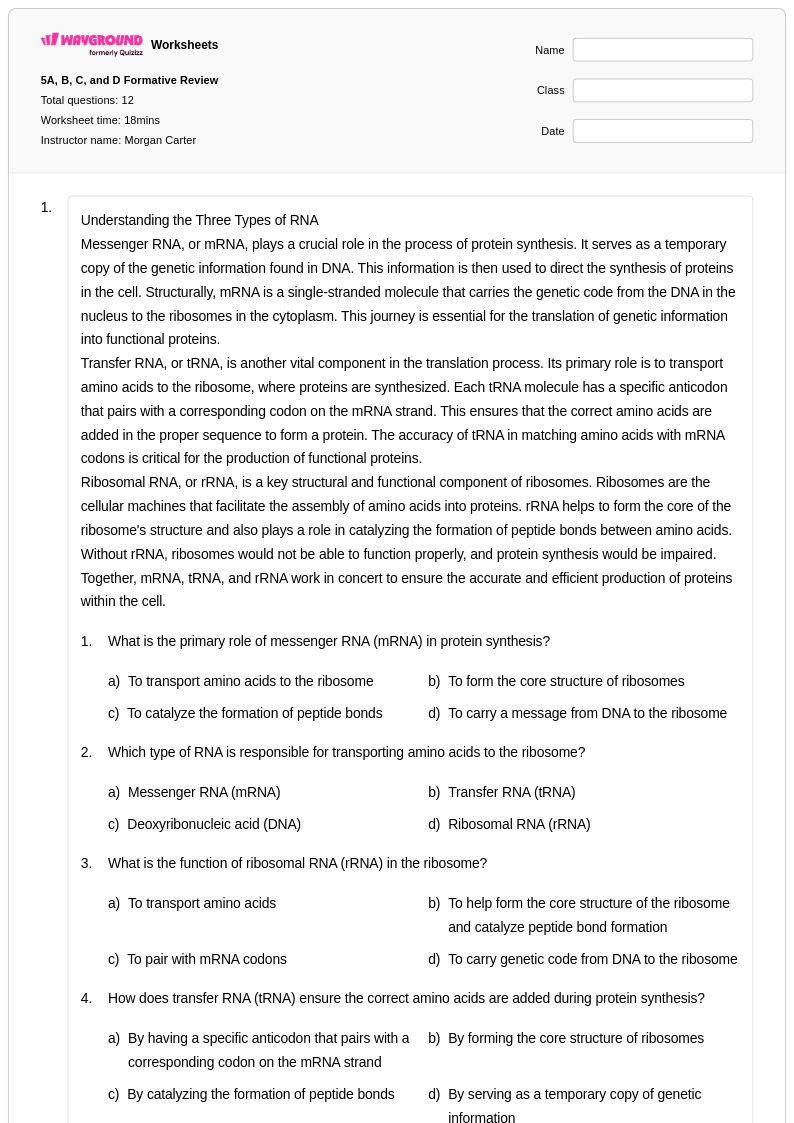
Gene regulation worksheets for Class 12 students available through Wayground (formerly Quizizz) provide comprehensive coverage of the complex molecular mechanisms that control gene expression in prokaryotic and eukaryotic cells. These expertly designed resources strengthen students' understanding of transcriptional control, post-transcriptional modifications, epigenetic regulation, and the role of regulatory proteins in determining when and how genes are activated or silenced. Students engage with practice problems that explore operons like the lac and trp systems, enhancer and silencer sequences, chromatin remodeling, and the impact of environmental factors on gene expression patterns. Each worksheet includes detailed answer keys that guide students through intricate regulatory pathways, while free printable formats make these materials accessible for both classroom instruction and independent study sessions.
Wayground (formerly Quizizz) empowers educators with millions of teacher-created gene regulation resources that can be easily searched and filtered to match specific curriculum standards and learning objectives. The platform's robust differentiation tools allow teachers to customize worksheets based on individual student needs, offering both challenging enrichment activities for advanced learners and targeted remediation exercises for those requiring additional support. These materials are available in both printable pdf formats for traditional paper-based assignments and digital versions that facilitate interactive online learning experiences. Teachers can efficiently plan comprehensive gene regulation units by accessing pre-made assessments, practice activities, and skill-building exercises that align with advanced biology standards, ensuring students develop mastery of these fundamental molecular biology concepts through varied and engaging worksheet collections.
FAQs
How do I teach gene regulation to high school biology students?
Start by grounding students in the central dogma before introducing gene regulation as the cell's mechanism for controlling when and how genes are expressed. Teach prokaryotic regulation first using the lac operon as a concrete model, then build toward eukaryotic transcription factors, enhancers, and silencers. Connecting regulation to real biological outcomes, such as cell differentiation or disease, helps students see why regulatory control matters beyond the molecular level.
What practice problems help students understand transcriptional control?
Effective practice problems ask students to predict gene expression outcomes when specific regulatory proteins are present or absent, analyze promoter and enhancer sequences, and interpret experimental data from reporter gene assays. Problems that require students to trace regulatory pathways from signal to transcription factor to gene output build the analytical thinking this topic demands. Worksheets that integrate chromatin remodeling and DNA methylation alongside classic transcription factor problems give students a more complete picture of transcriptional control.
What mistakes do students commonly make when learning gene regulation?
A frequent misconception is that genes are either simply 'on' or 'off,' rather than subject to graded, combinatorial control by multiple regulatory factors. Students also commonly confuse the roles of promoters, enhancers, and silencers, or assume enhancers must be physically adjacent to the gene they regulate. Another common error is conflating transcriptional regulation with post-transcriptional mechanisms like microRNA regulation and alternative splicing, which operate on mRNA after it has already been produced.
How do I differentiate gene regulation instruction for students at different levels?
For students who are struggling, focus on prokaryotic operons as a simplified model before introducing eukaryotic complexity. Advanced students can engage with epigenetic mechanisms, regulatory networks, and the effects of mutations on regulatory sequences. On Wayground, teachers can assign accommodations such as read aloud support, reduced answer choices, and extended time to individual students, allowing the same worksheet to serve a heterogeneous class without singling out students who need additional support.
How can I use Wayground's gene regulation worksheets in my classroom?
Wayground's gene regulation worksheets are available as printable PDFs for traditional classroom use and in digital formats for technology-integrated learning environments, and can also be hosted as a quiz directly on Wayground. Each worksheet includes a comprehensive answer key, making them practical for independent practice, guided review, or formative assessment. Wayground's filtering tools allow teachers to locate worksheets aligned to specific standards and academic levels, whether the focus is prokaryotic operons, eukaryotic transcription factors, or epigenetic modifications.
How do I help students understand epigenetics within a gene regulation unit?
Frame epigenetics as a layer of regulatory control above the DNA sequence itself, using chromatin remodeling and DNA methylation as entry points. Help students understand that methylation typically silences genes while histone acetylation generally promotes transcription, and that these modifications can be heritable without changing the underlying sequence. Connecting epigenetic regulation to real phenomena, such as genomic imprinting or cancer biology, makes the concept more meaningful and memorable for students.