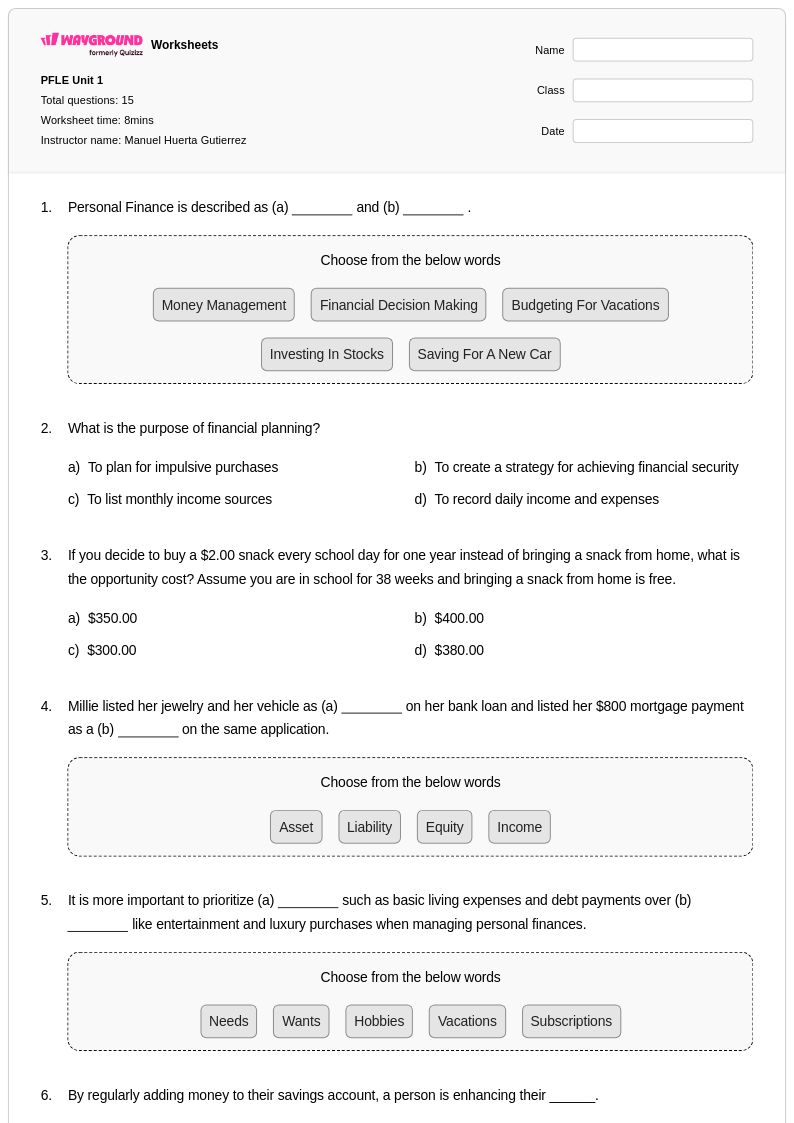
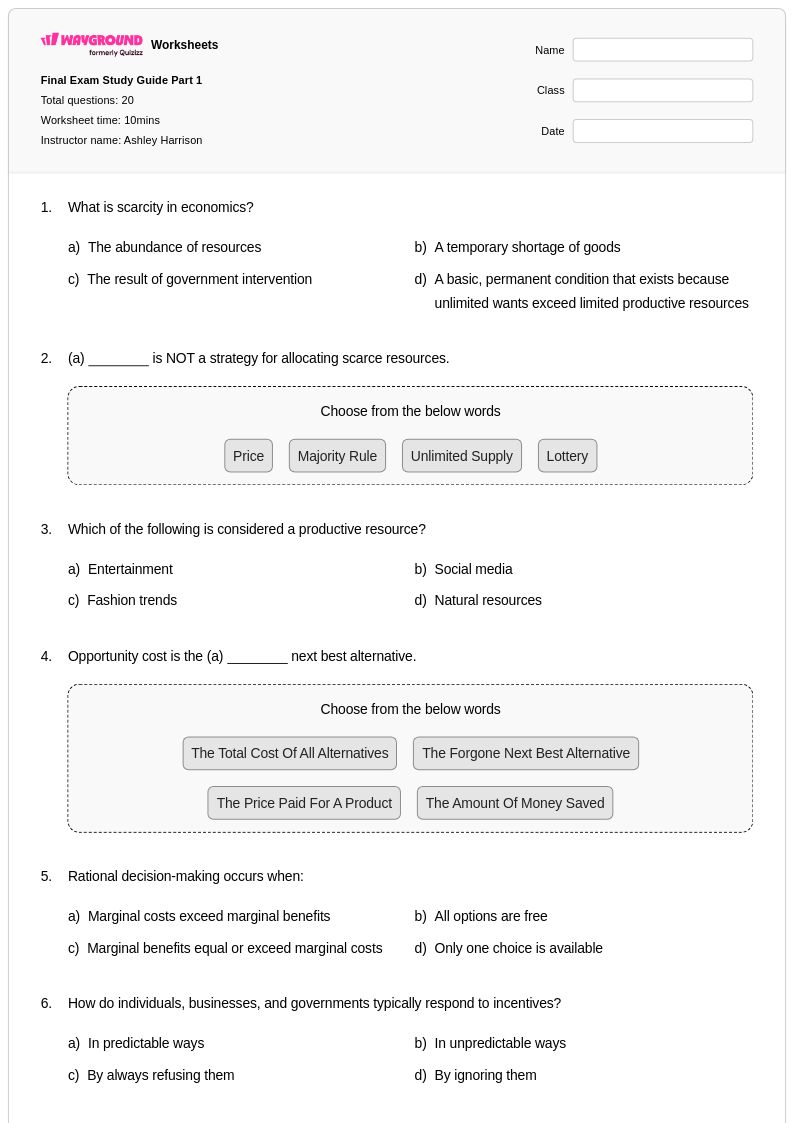
Free Printable Goal Planning Worksheets for Kindergarten
Kindergarten goal planning worksheets from Wayground help young students learn essential life skills through engaging printables and practice activities that teach setting simple objectives, with free PDFs and answer keys included.
Explore printable Goal Planning worksheets for Kindergarten
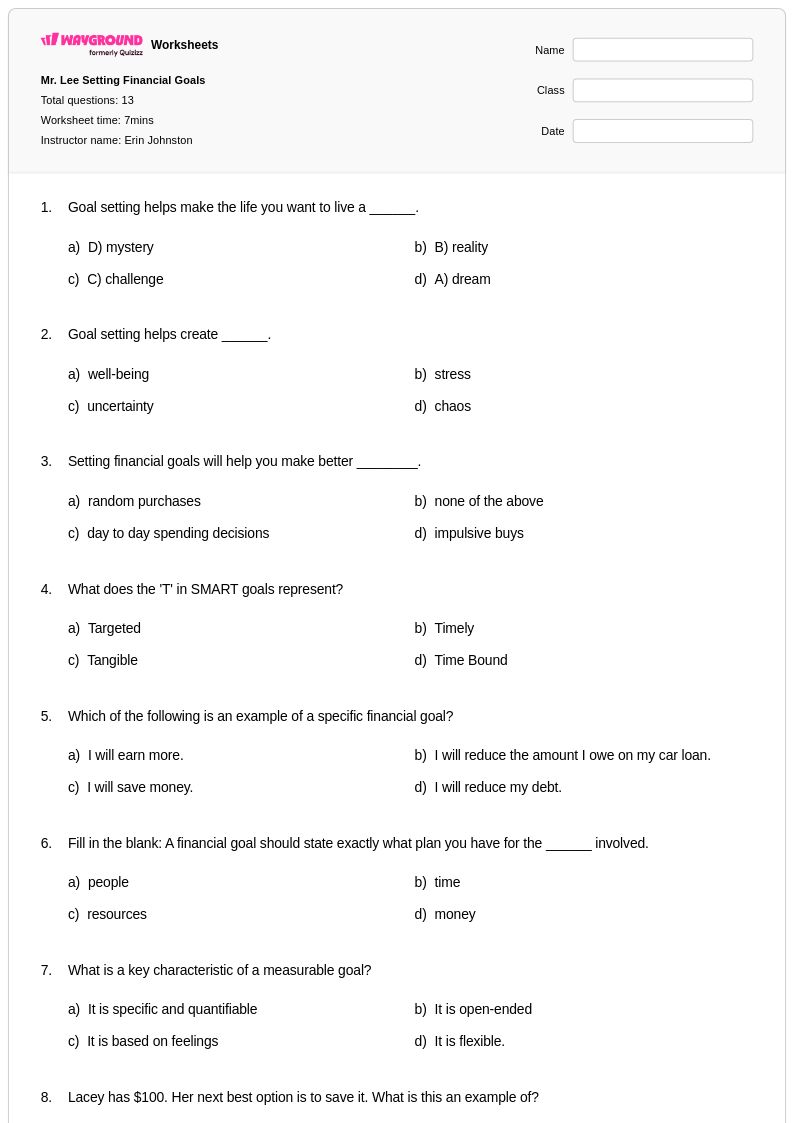
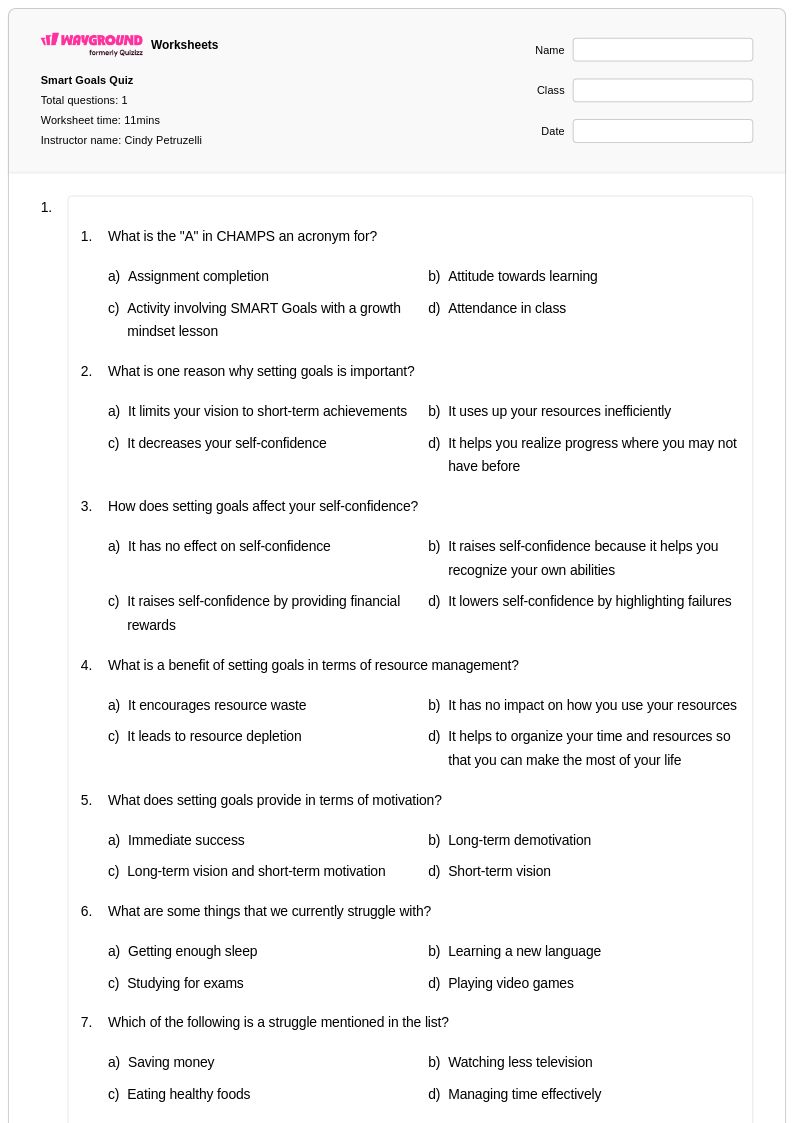
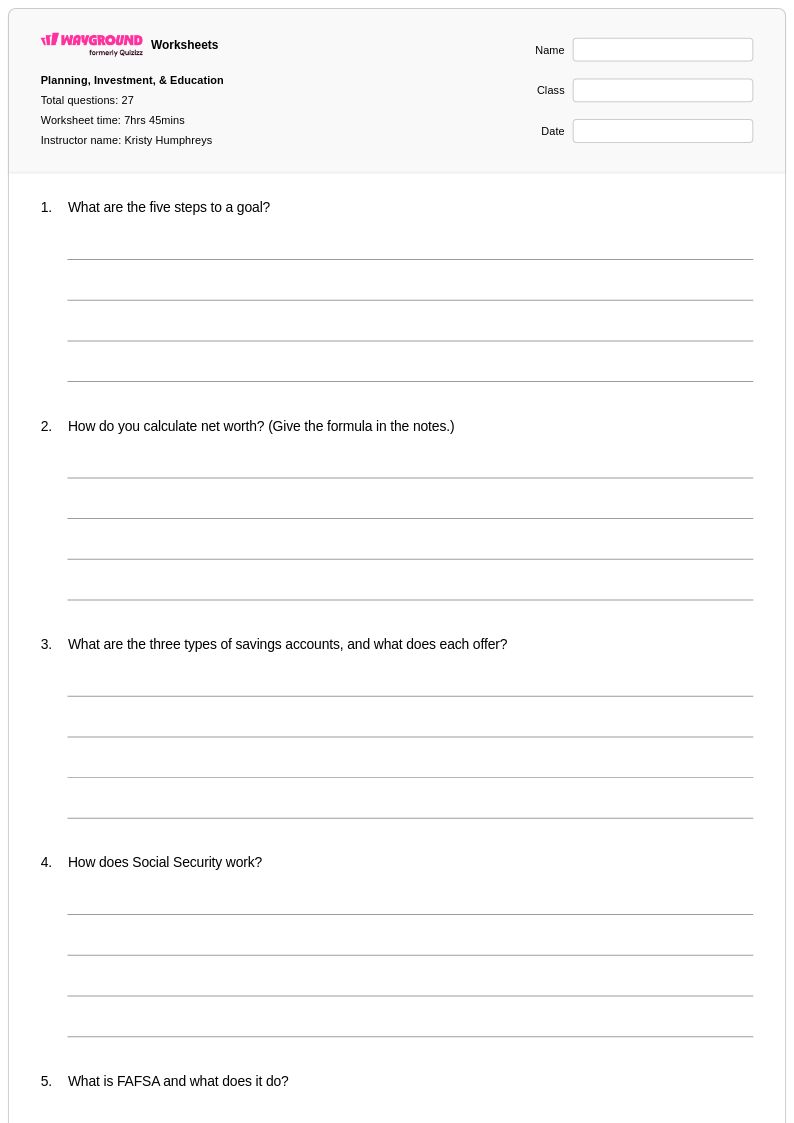
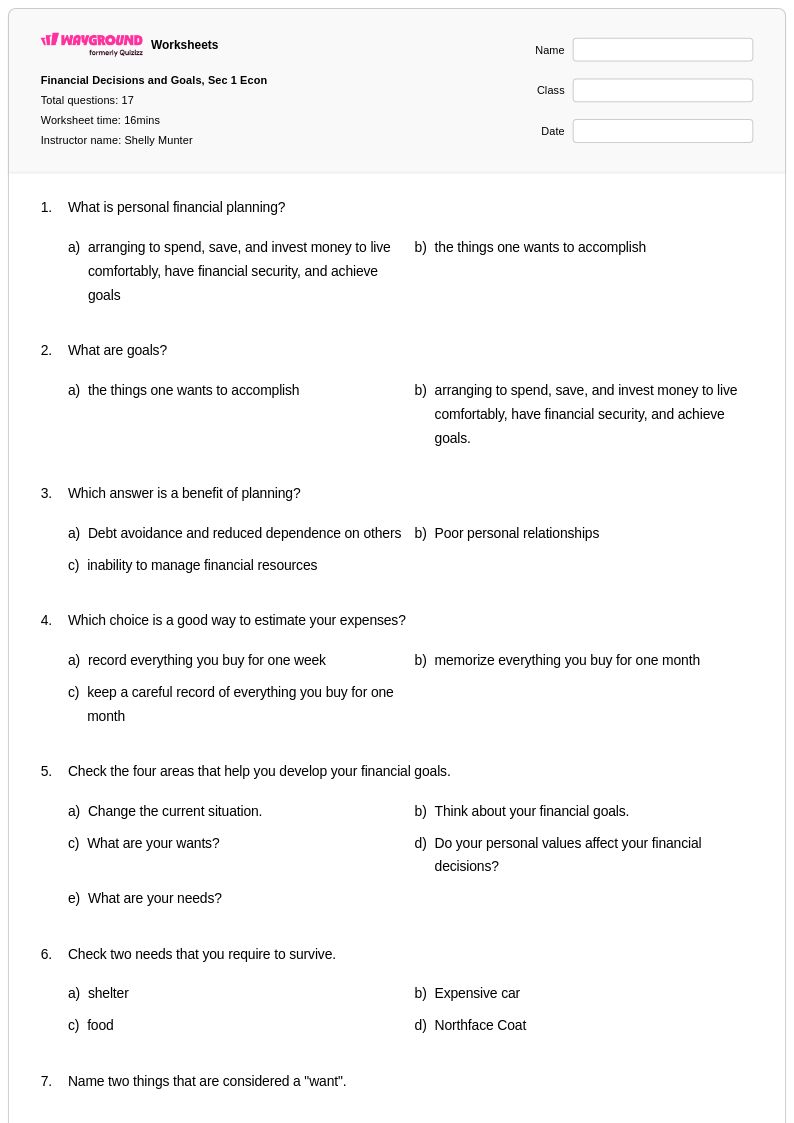
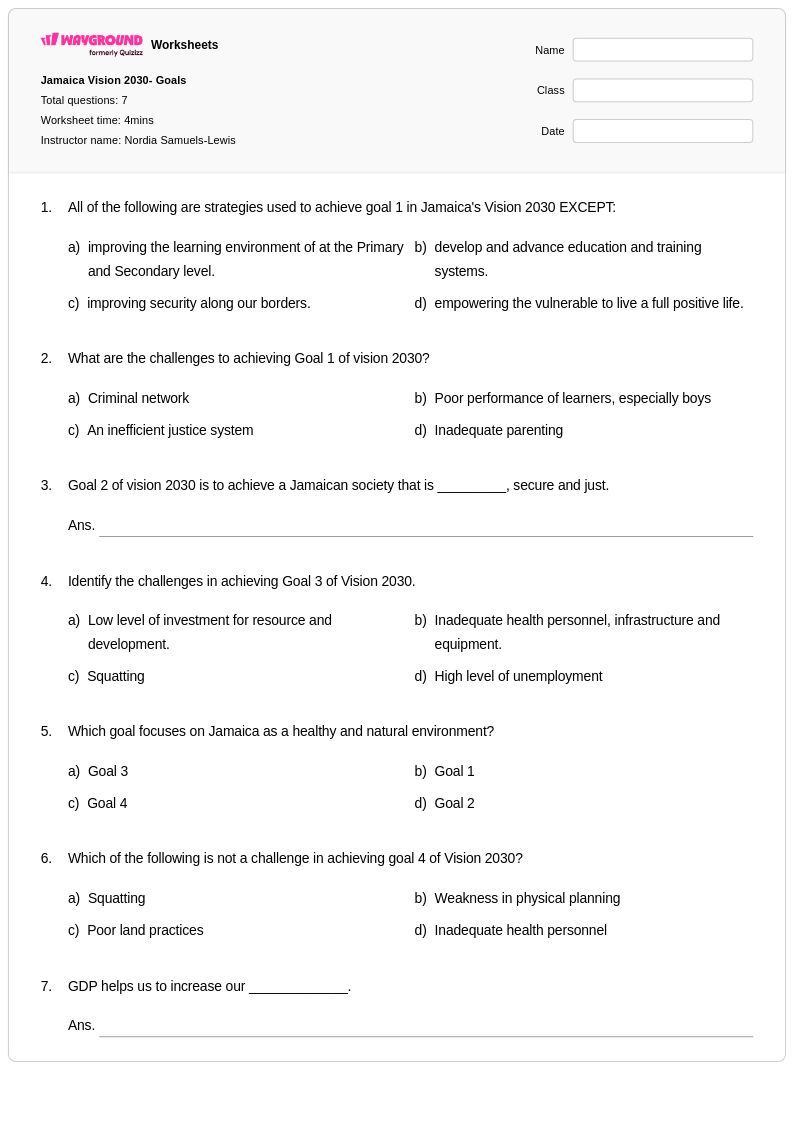
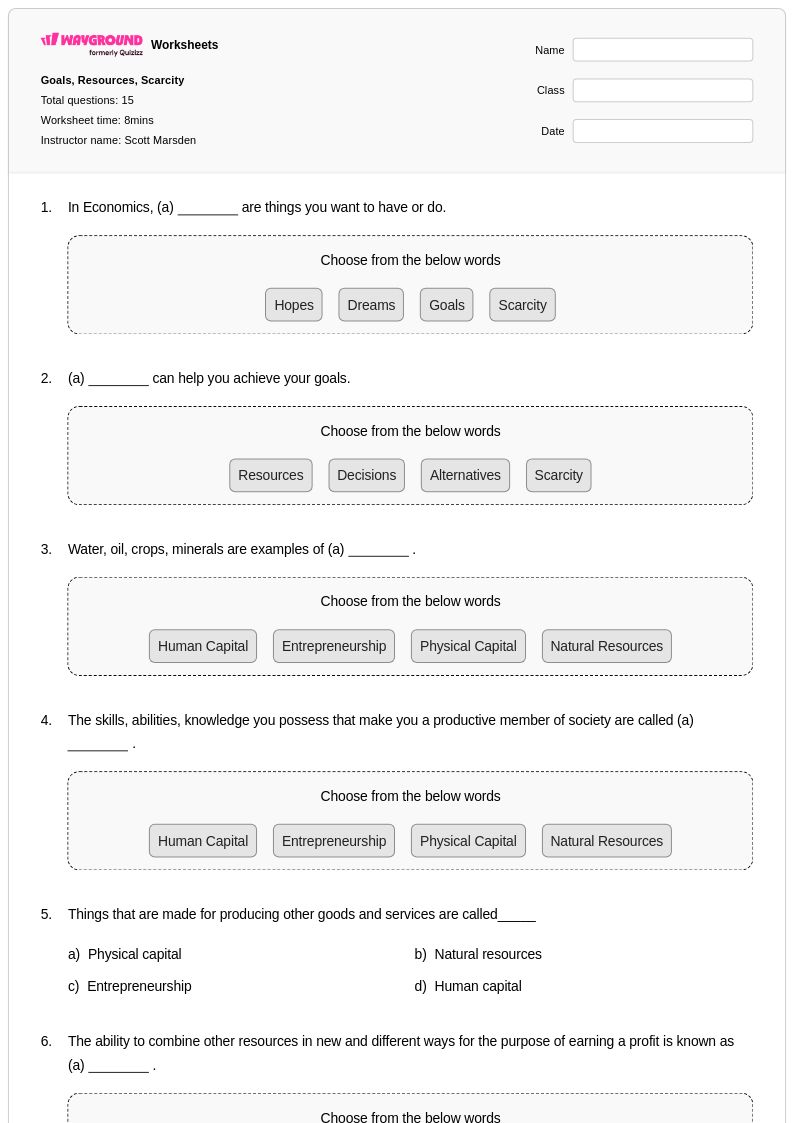
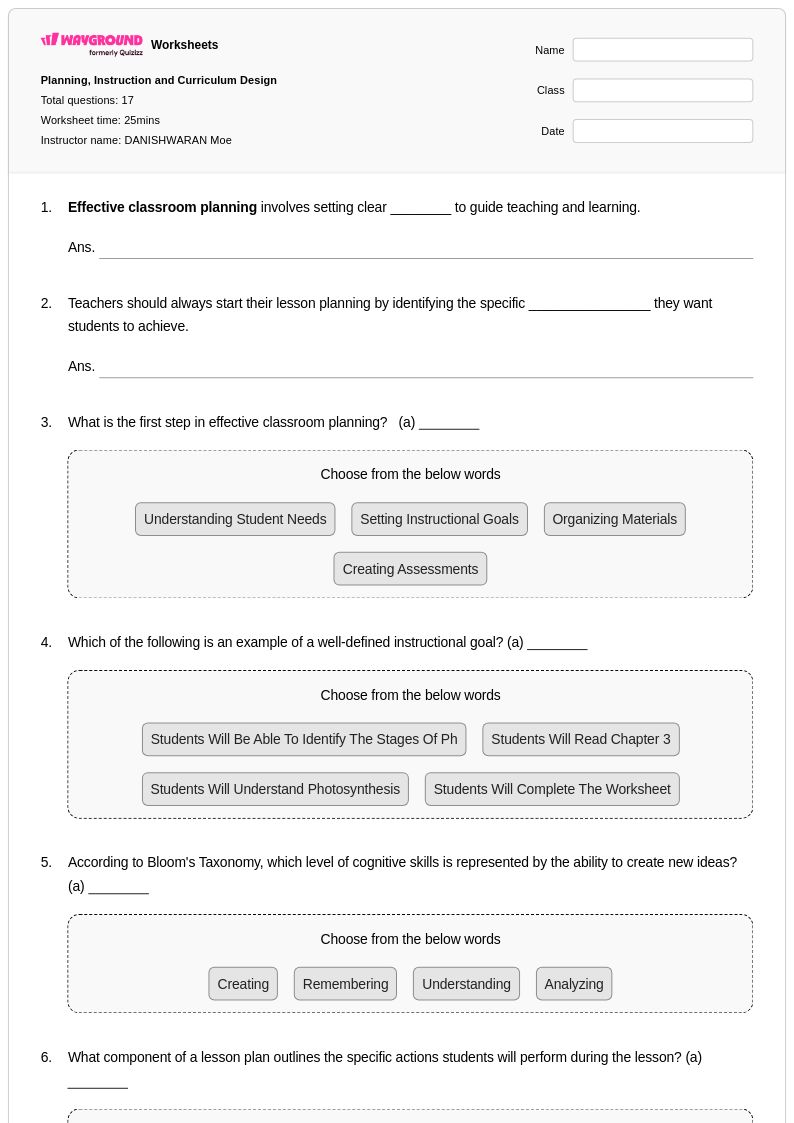
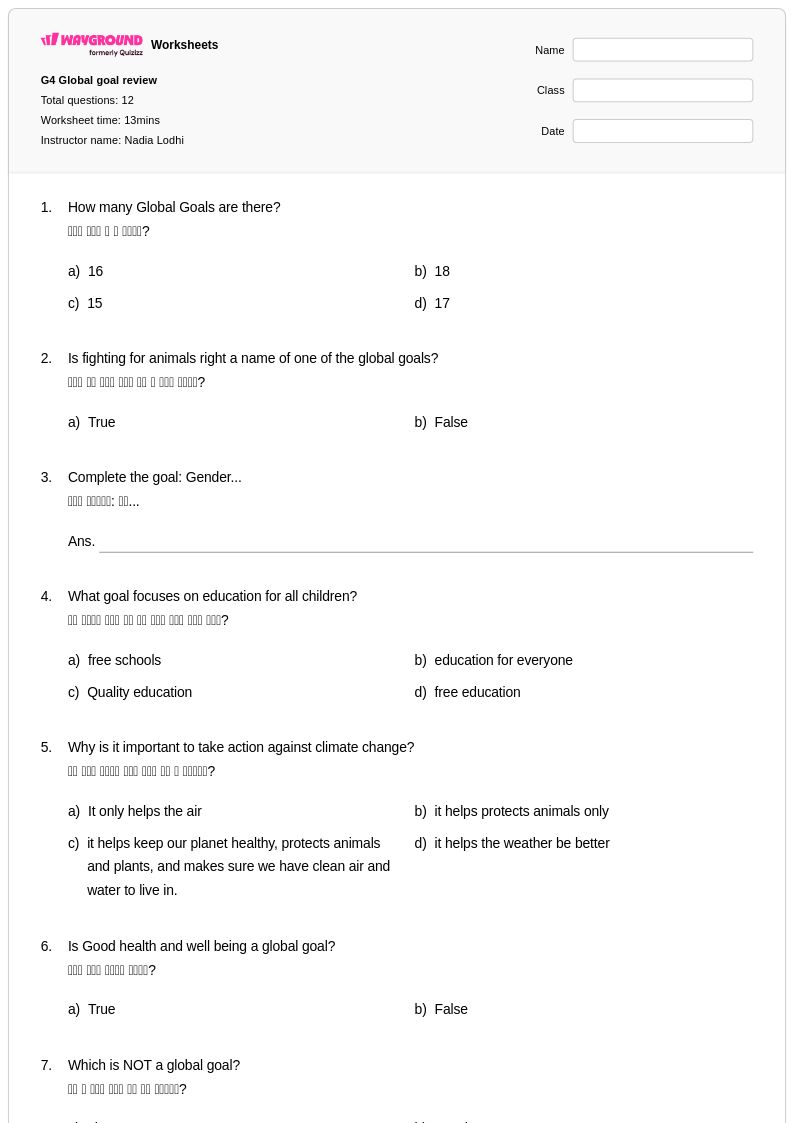
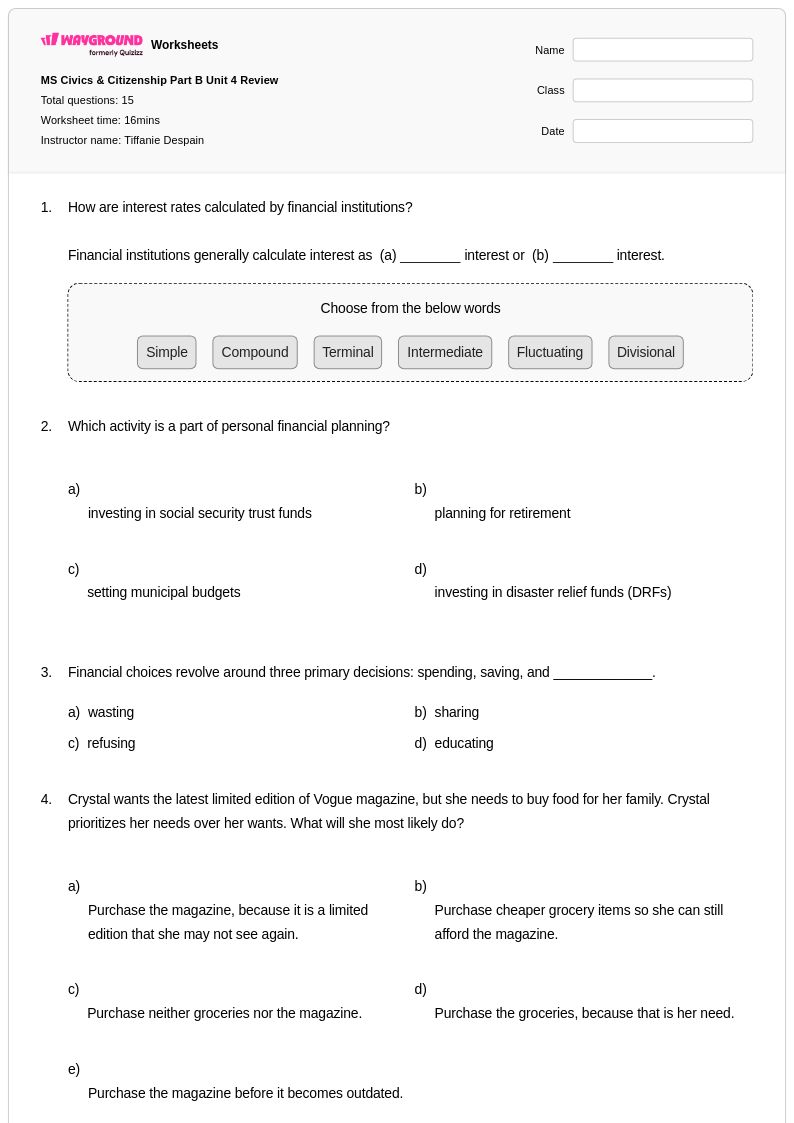
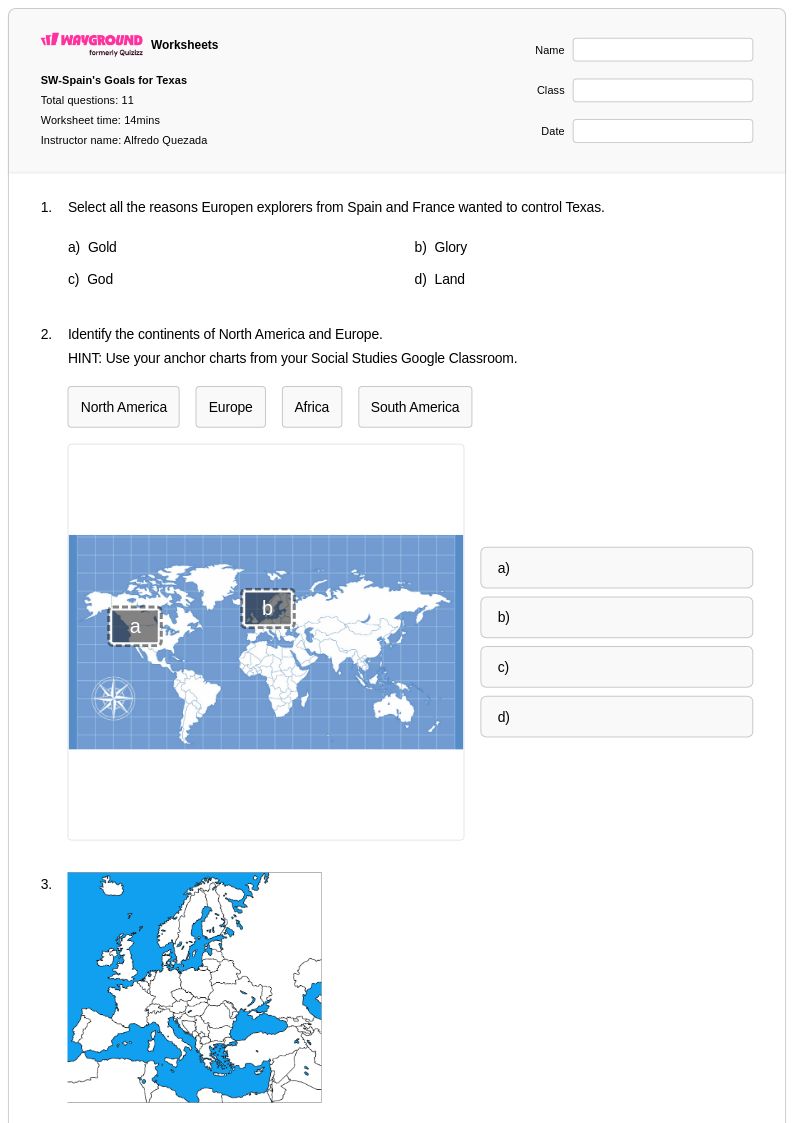
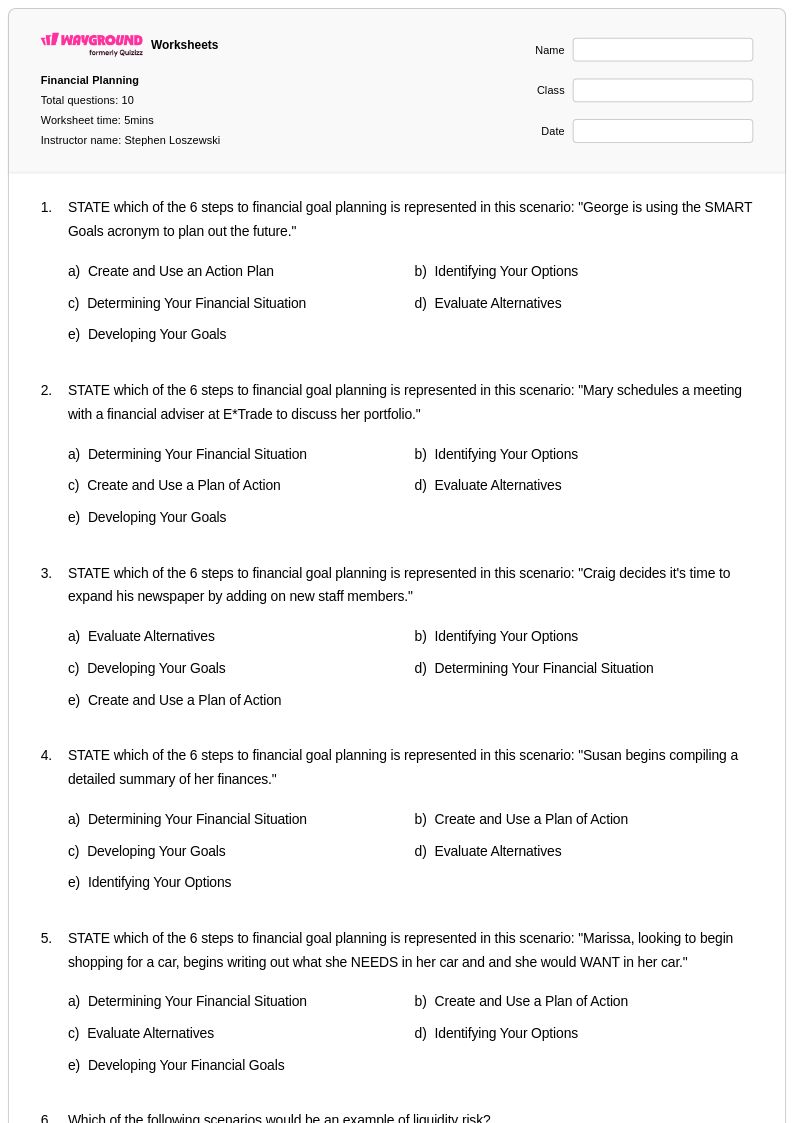
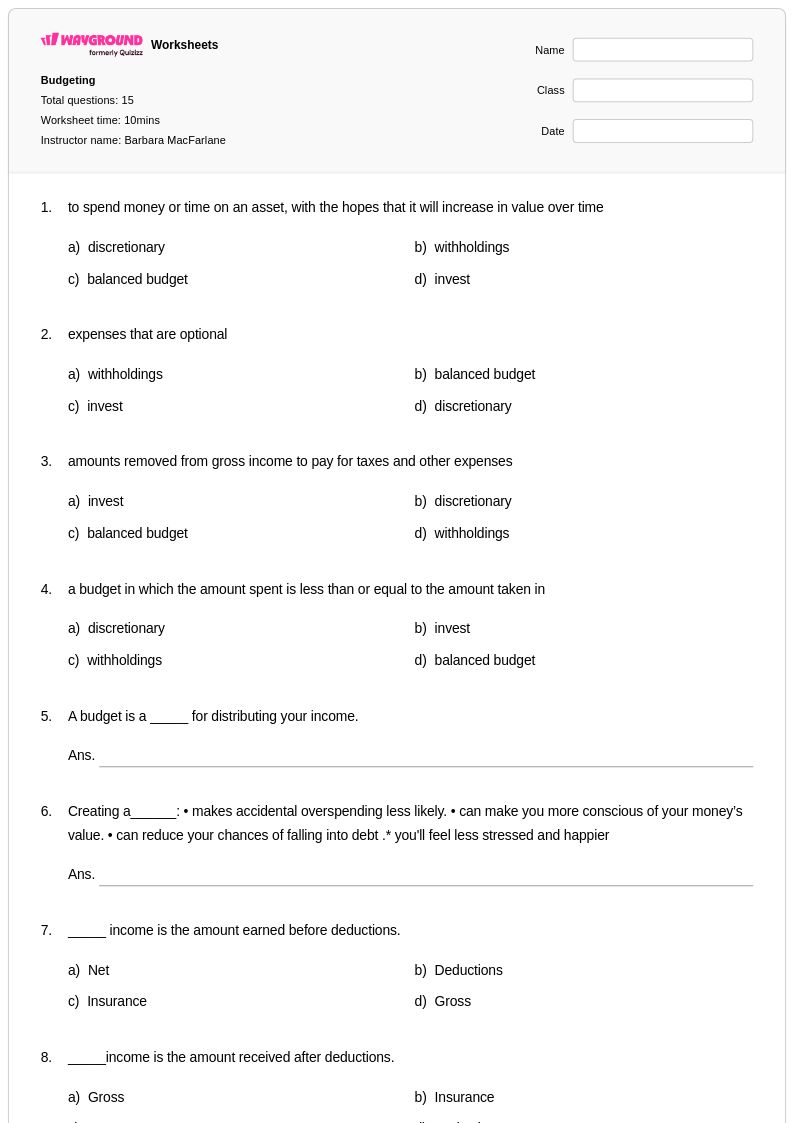
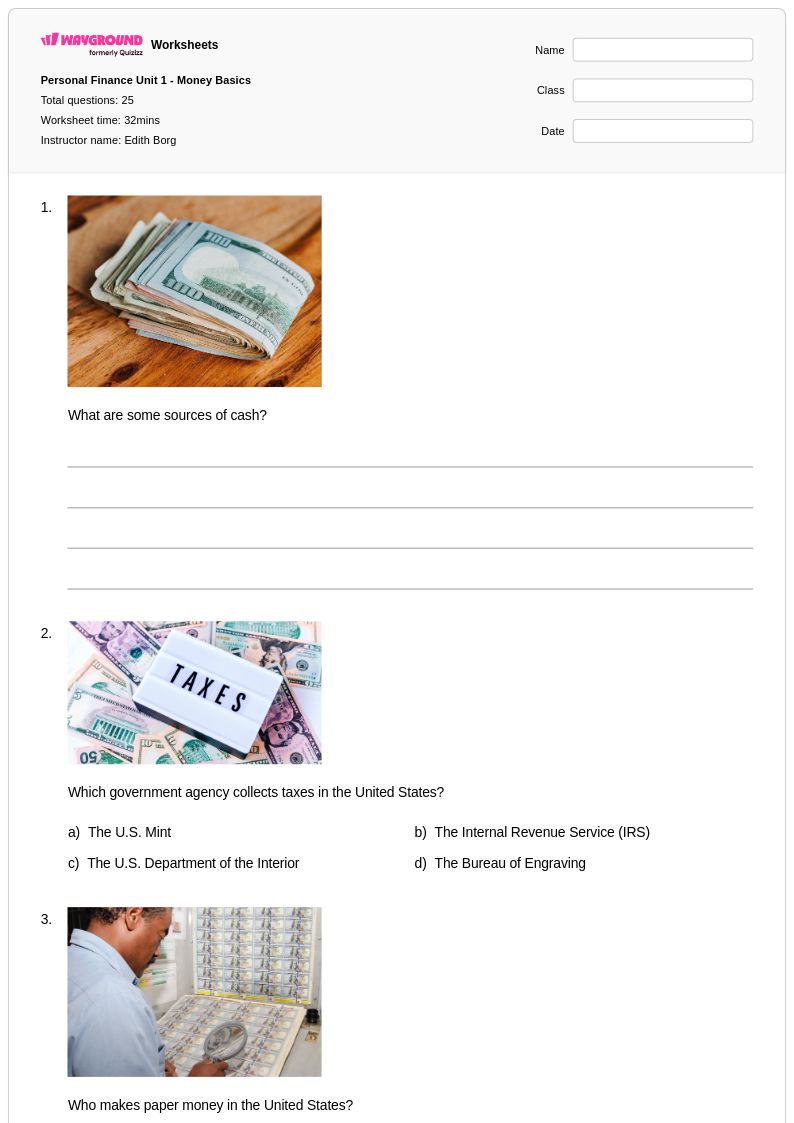
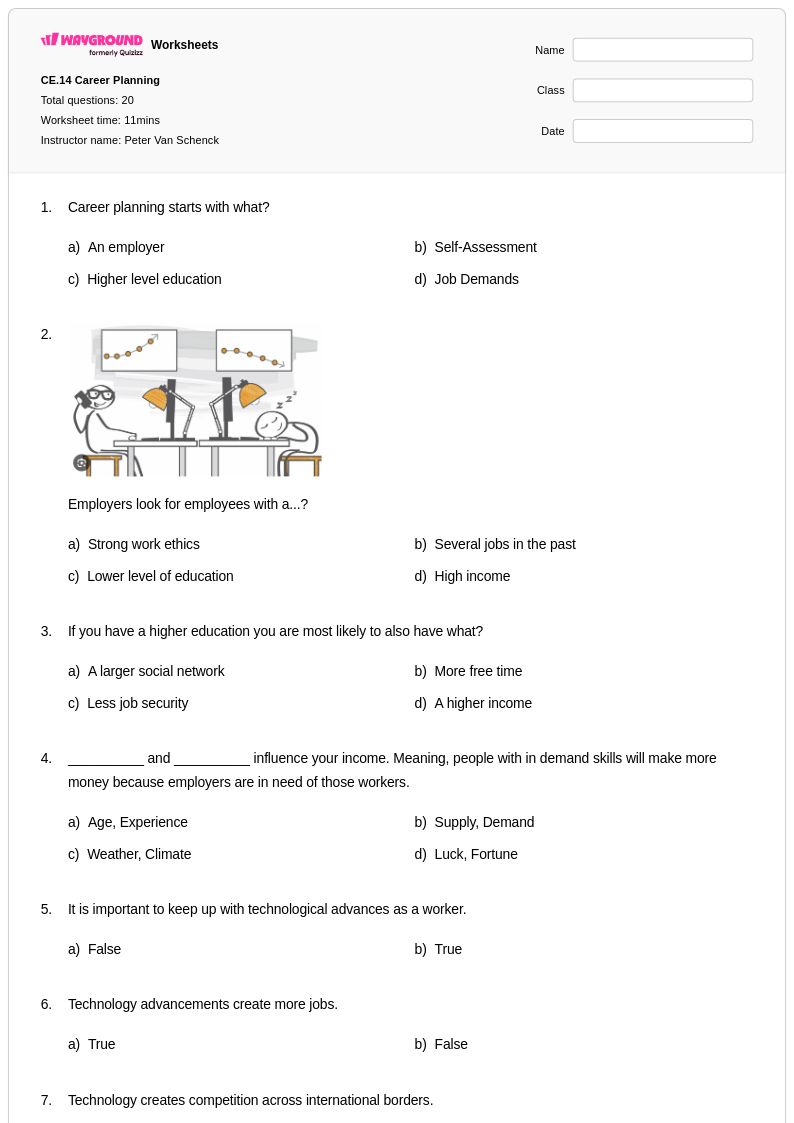
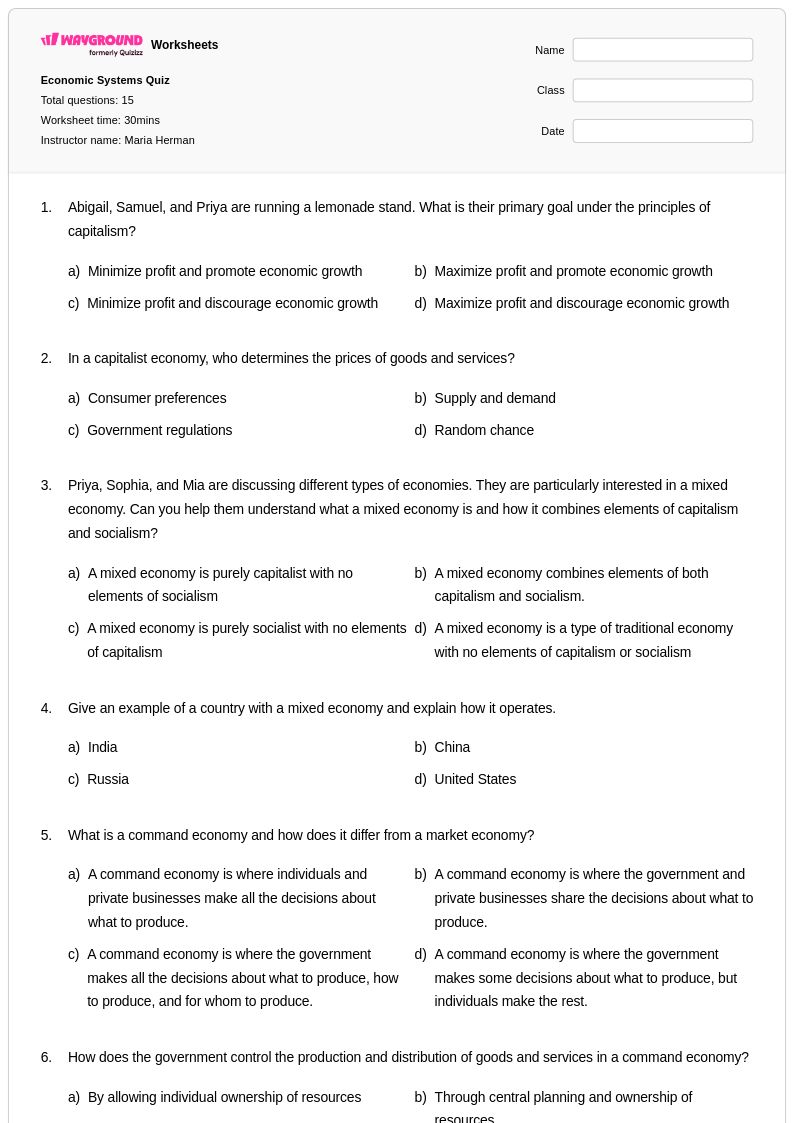
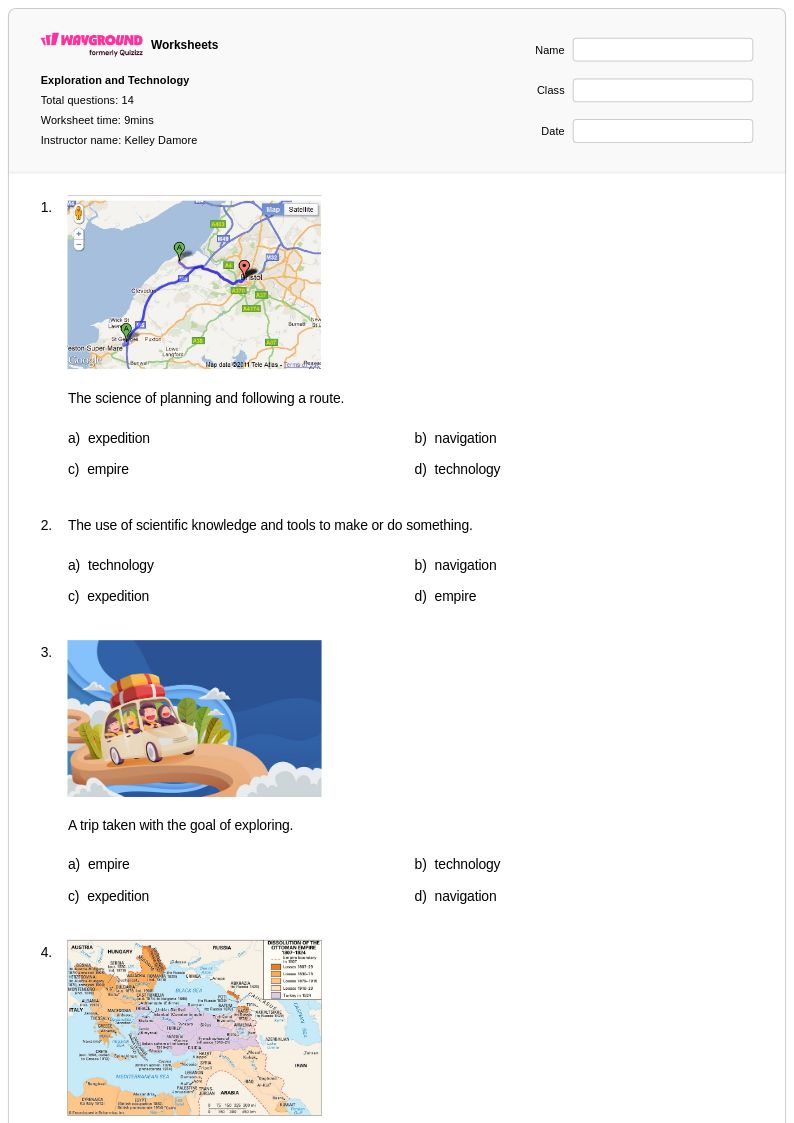
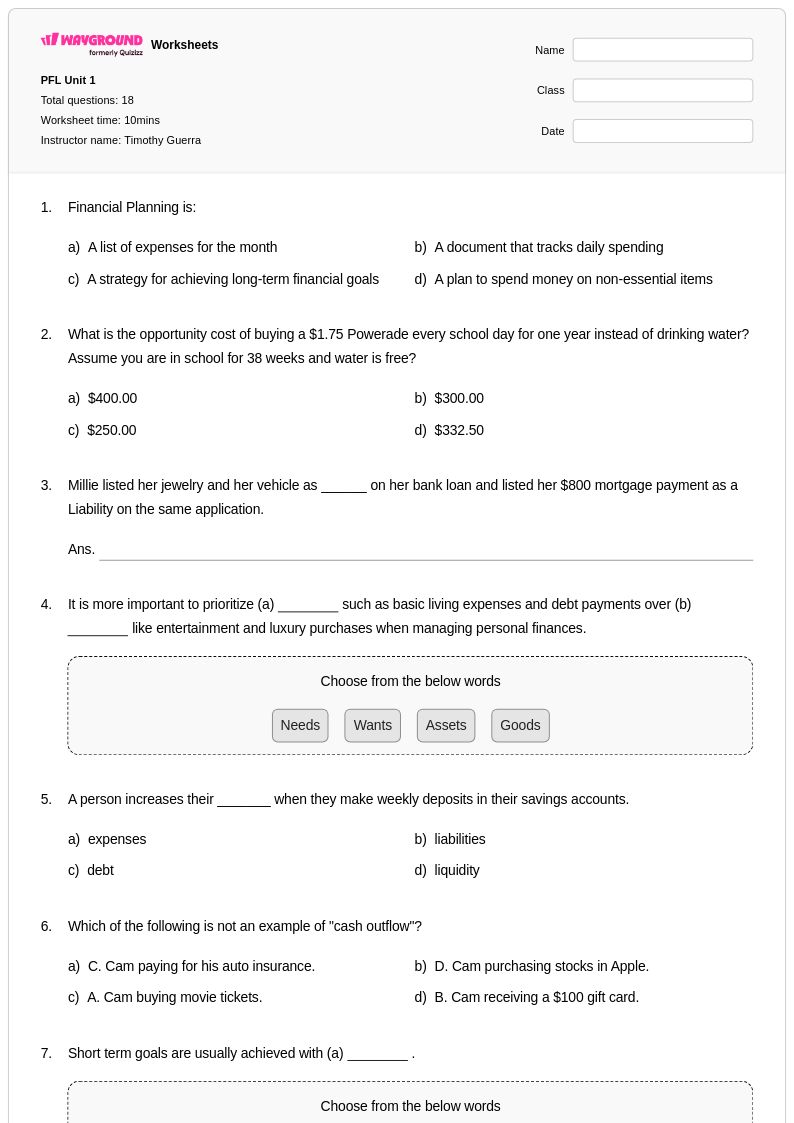
Goal planning worksheets for kindergarten students through Wayground (formerly Quizizz) introduce young learners to the fundamental social skill of setting and working toward achievable objectives. These carefully designed printables help children understand the concept of planning ahead, breaking down simple tasks into manageable steps, and celebrating their accomplishments along the way. The practice problems within these worksheets focus on age-appropriate scenarios such as organizing their backpack, completing a puzzle, or helping with classroom cleanup, allowing kindergarteners to develop essential executive functioning skills through concrete, relatable examples. Each worksheet comes with a comprehensive answer key that guides educators in facilitating meaningful discussions about the goal-setting process, while the free pdf format ensures easy access for both classroom instruction and home reinforcement activities.
Wayground's extensive collection of millions of teacher-created resources provides educators with robust support for implementing goal planning instruction in their kindergarten social studies curriculum. The platform's advanced search and filtering capabilities allow teachers to quickly locate worksheets that align with specific learning standards and accommodate diverse student needs through built-in differentiation tools. Whether educators require printable materials for hands-on activities or digital formats for interactive learning experiences, the flexible customization options enable seamless adaptation to various teaching styles and classroom environments. This comprehensive approach empowers teachers to effectively plan structured lessons, provide targeted remediation for students who need additional support, offer enrichment opportunities for advanced learners, and create consistent skill practice routines that reinforce the important social-emotional learning foundations essential for kindergarten success.
FAQs
How do I teach goal planning to students?
Effective goal planning instruction begins with helping students distinguish between short-term and long-term objectives, then guiding them to break larger goals into smaller, actionable steps. Structured activities like SMART goal frameworks give students a repeatable process they can apply across academic, personal, and community contexts. Modeling the planning process explicitly, then gradually releasing responsibility to students, builds the self-regulation skills that make goal-setting transfer beyond the classroom.
What activities help students practice goal planning skills?
Practical scenarios that require students to set a goal, identify obstacles, and build a timeline are among the most effective practice formats for goal planning. Worksheets that prompt reflection on past goals alongside planning for future ones reinforce the connection between accountability and achievement. Repeated practice across different contexts, from academic deadlines to personal commitments, helps students internalize goal-setting as a habitual process rather than a one-time exercise.
What mistakes do students commonly make when learning to plan goals?
The most common error is setting goals that are either too vague or too ambitious, without a realistic plan for how to achieve them. Students often skip the step of breaking a goal into manageable sub-tasks, which leads to frustration and abandonment. Another frequent misconception is treating goal-setting as a one-time event rather than an ongoing process of reflection and adjustment.
How can I differentiate goal planning instruction for students with different needs?
For students who need additional support, reducing the complexity of scenarios and providing sentence starters or structured templates lowers the cognitive barrier to entry. On Wayground, teachers can enable accommodations such as Read Aloud so questions are read to students who struggle with reading independently, or adjust font sizes using reading mode for accessibility. These settings can be applied to individual students without alerting the rest of the class, allowing seamless differentiation within a single assignment.
How do I use goal planning worksheets from Wayground in my classroom?
Wayground's goal planning worksheets are available as printable PDFs for traditional classroom use and in digital formats for technology-integrated environments, giving teachers flexibility depending on their setup. Teachers can also host the worksheets as a live or asynchronous quiz directly on Wayground, with complete answer keys included for efficient grading. The materials are designed to work for targeted skill practice, remediation with struggling learners, or enrichment for students who are ready to go deeper into strategic planning concepts.
How does goal planning connect to social-emotional learning?
Goal planning is a foundational SEL competency because it requires students to practice self-reflection, decision-making, time management, and personal accountability simultaneously. When students learn to set realistic objectives and monitor their own progress, they develop the internal locus of control that supports both academic resilience and personal well-being. Embedding goal planning practice into regular instruction reinforces that success is a process, not a fixed outcome.