Free Printable Traffic Safety: One Way Streets Worksheets for Kindergarten
Help kindergarten students learn essential traffic safety skills with our free one way streets worksheets, featuring engaging printables and practice problems with answer keys to build road awareness.
Explore printable Traffic Safety: One Way Streets worksheets for Kindergarten
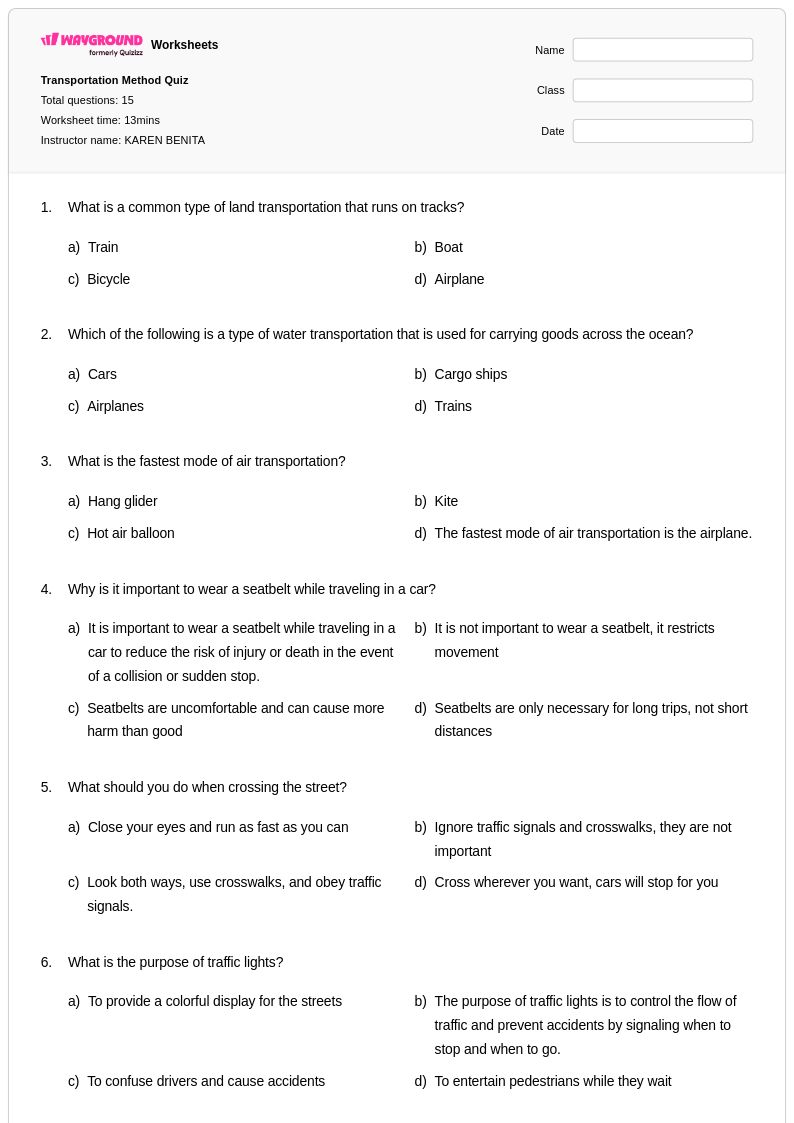
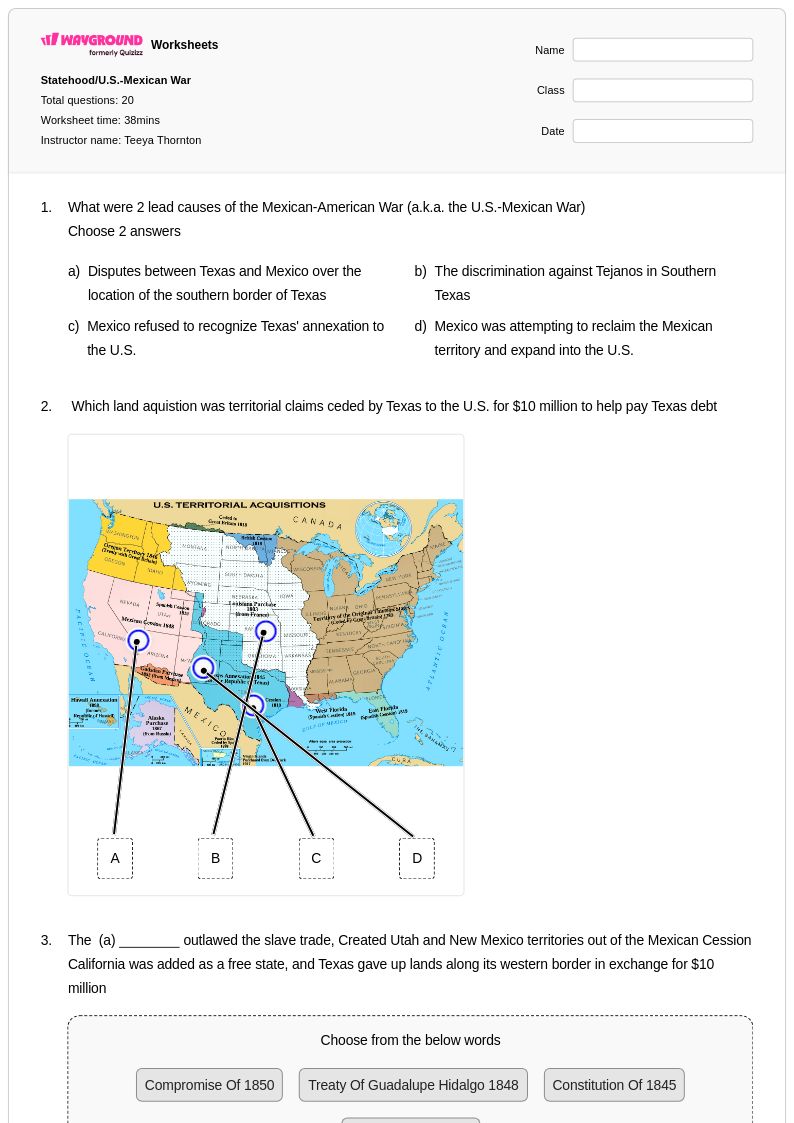
Traffic safety education for kindergarten students becomes engaging and effective through Wayground's comprehensive collection of one-way street worksheets that introduce young learners to essential road awareness concepts. These carefully designed social studies resources help kindergarten children develop critical safety skills by teaching them to recognize directional traffic patterns, understand basic street signs, and build foundational knowledge about pedestrian safety in urban environments. The worksheets feature age-appropriate activities that combine visual learning with hands-on practice problems, allowing students to identify one-way street indicators, trace safe walking paths, and demonstrate proper street-crossing behaviors. Each printable resource includes detailed answer keys that support both independent learning and guided instruction, while the free pdf format ensures easy accessibility for classroom use and home practice.
Wayground's extensive library of teacher-created traffic safety materials provides educators with millions of professionally developed resources specifically designed to support kindergarten social skills instruction. The platform's advanced search and filtering capabilities enable teachers to quickly locate one-way street worksheets that align with state safety standards and match their specific classroom needs for differentiation and skill-building activities. These digital and printable materials offer flexible customization options that allow educators to modify content for various learning levels, supporting both remediation for struggling students and enrichment opportunities for advanced learners. The comprehensive collection streamlines lesson planning by providing ready-to-use resources that can be seamlessly integrated into traffic safety units, morning circle discussions, or community helper themes, ensuring that kindergarten students develop essential pedestrian awareness skills through structured, curriculum-aligned practice.
FAQs
How do I teach students about one-way streets and traffic safety?
Start by explaining the purpose of one-way street systems in urban environments, such as reducing head-on collisions and improving traffic flow. Use directional signage examples and real-world maps to help students visualize how one-way systems work. Then shift to pedestrian safety, emphasizing why students must still check both directions before crossing even on a one-way street, since cyclists and emergency vehicles may travel against the flow.
What exercises help students practice one-way street safety skills?
Effective practice activities include scenario-based problems where students identify correct crossing procedures, analyze traffic flow diagrams, and determine safe pedestrian routes on maps that include one-way streets. Worksheets that ask students to match directional signs with their meanings and apply safety rules to varied urban scenarios build both recognition skills and practical judgment. Repeated exposure to different street configurations helps students generalize these skills beyond a single memorized example.
What misconceptions do students commonly have about one-way streets?
A frequent misconception is that pedestrians only need to look in one direction before crossing a one-way street, which is dangerous because cyclists, delivery vehicles, and emergency responders may legally or illegally travel in either direction. Students also sometimes confuse one-way streets with divided roads, failing to understand the distinct signage and traffic rules that apply to each. Addressing these errors directly with scenario-based problems helps students build safer, more accurate mental models.
How do I use one-way street safety worksheets in my classroom?
These worksheets work well as structured independent practice after direct instruction on traffic signs and pedestrian safety protocols. Each worksheet includes a complete answer key, making them effective for self-assessment, partner review, or teacher-led correction. They are available as printable PDFs for traditional classroom or homework use and in digital formats for technology-integrated environments, and teachers can also host them as a quiz directly on Wayground to track student responses.
How can I support students with different learning needs when teaching traffic safety?
On Wayground, teachers can apply individual accommodations such as Read Aloud for students who need questions and content read to them, reduced answer choices to lower cognitive load, and extended time per question for students who need more processing time. These settings can be assigned to individual students while the rest of the class receives default settings, and they are saved for reuse across future sessions. This makes it straightforward to support diverse learners within the same traffic safety lesson without disrupting the flow for the whole class.
Why is understanding one-way streets an important part of pedestrian safety education?
One-way streets are a fundamental feature of most urban environments, and misunderstanding how they work is a direct safety risk for pedestrians and cyclists. Teaching students to recognize one-way signage, understand traffic flow direction, and apply correct crossing procedures gives them practical skills they will use in real-world settings. Civic responsibility and spatial awareness are also reinforced when students learn how one-way systems are designed to reduce accidents and manage urban traffic.