Free Printable Good Manners Worksheets for Kindergarten
Kindergarten good manners worksheets and printables help young students practice essential social skills through engaging activities, free PDFs, and guided exercises with answer keys.
Explore printable Good Manners worksheets for Kindergarten
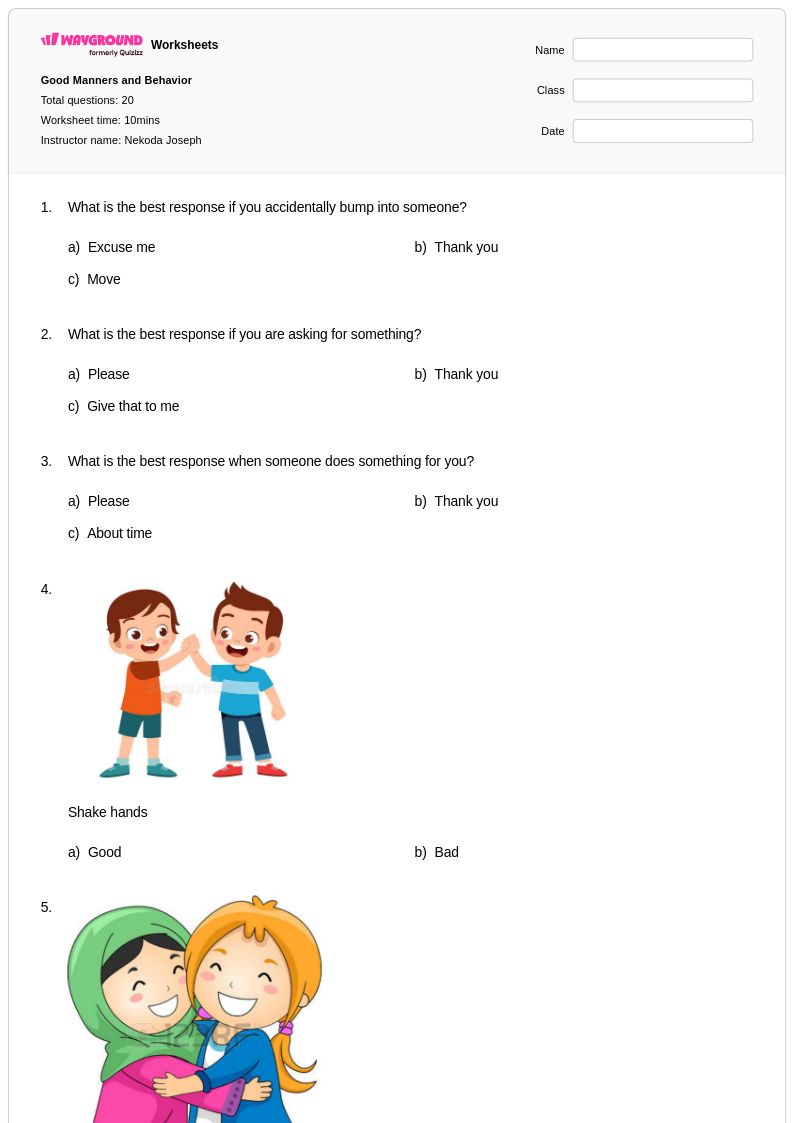
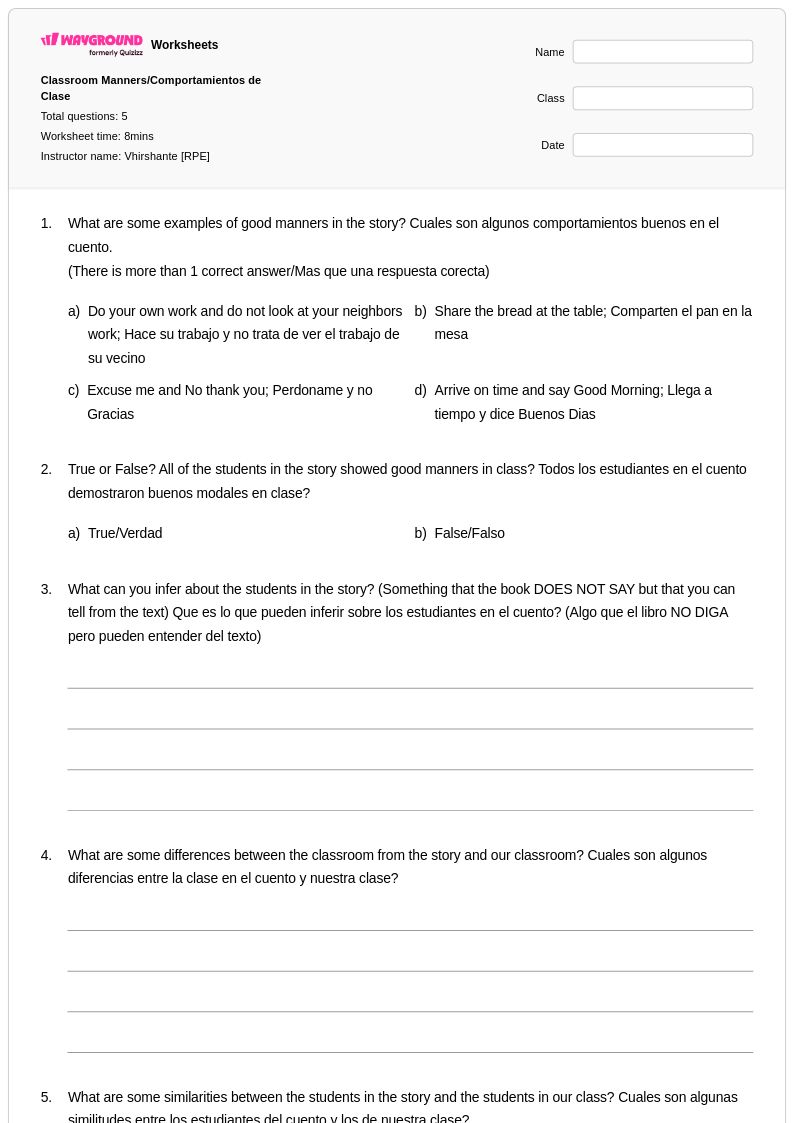
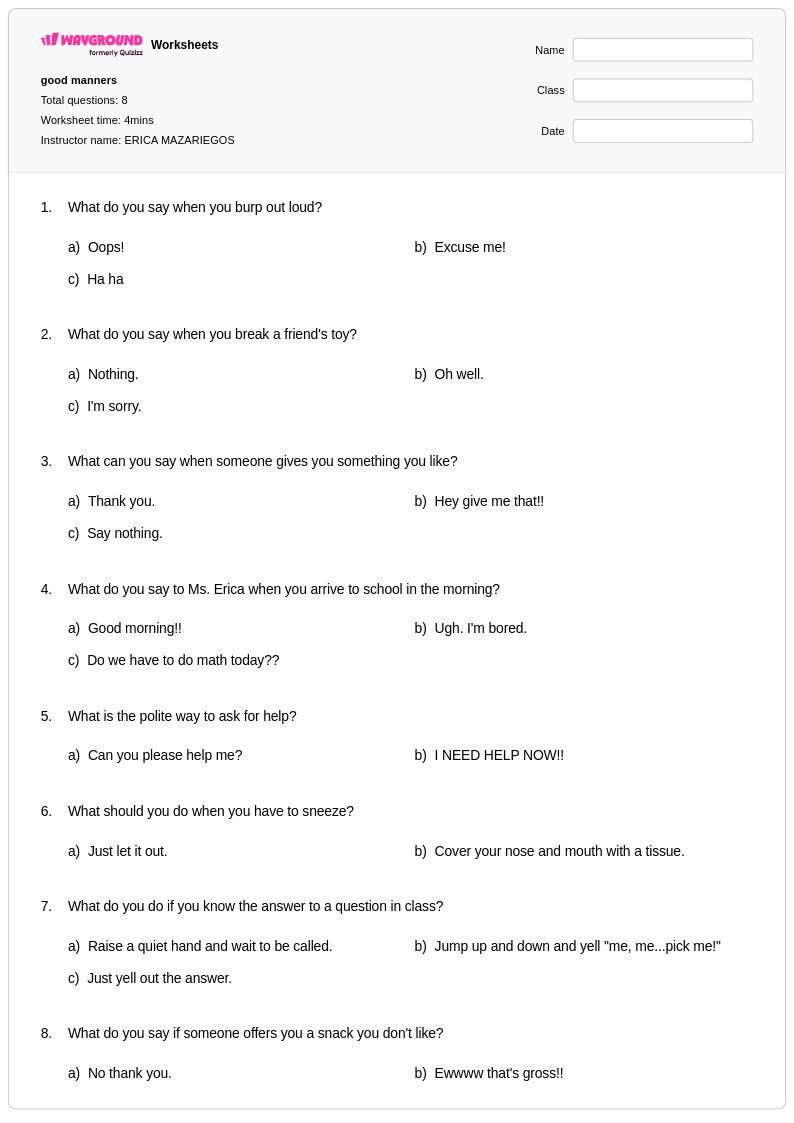
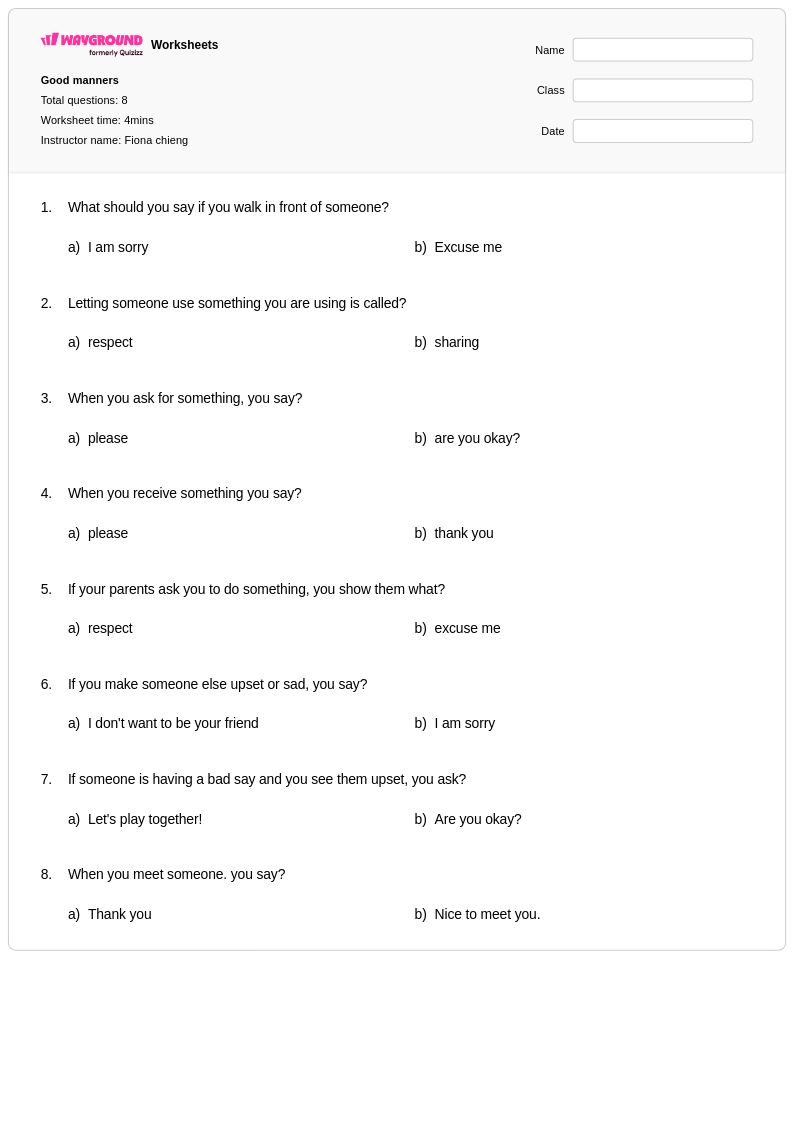
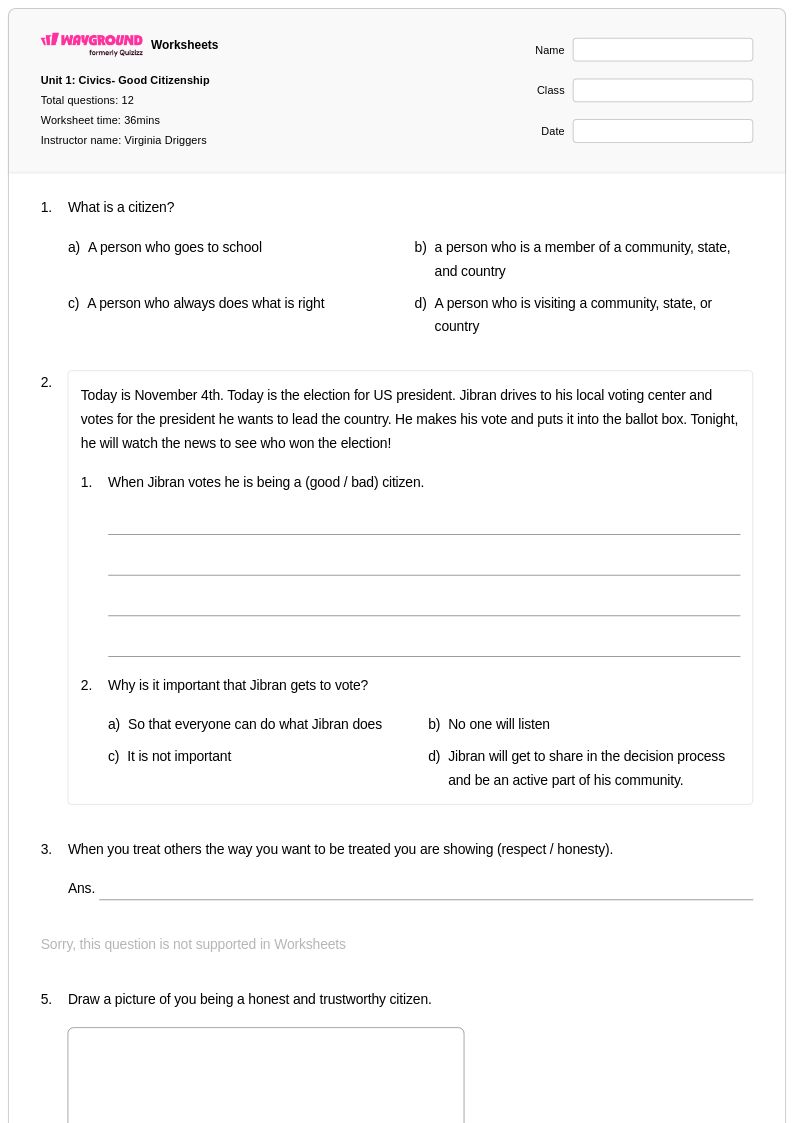
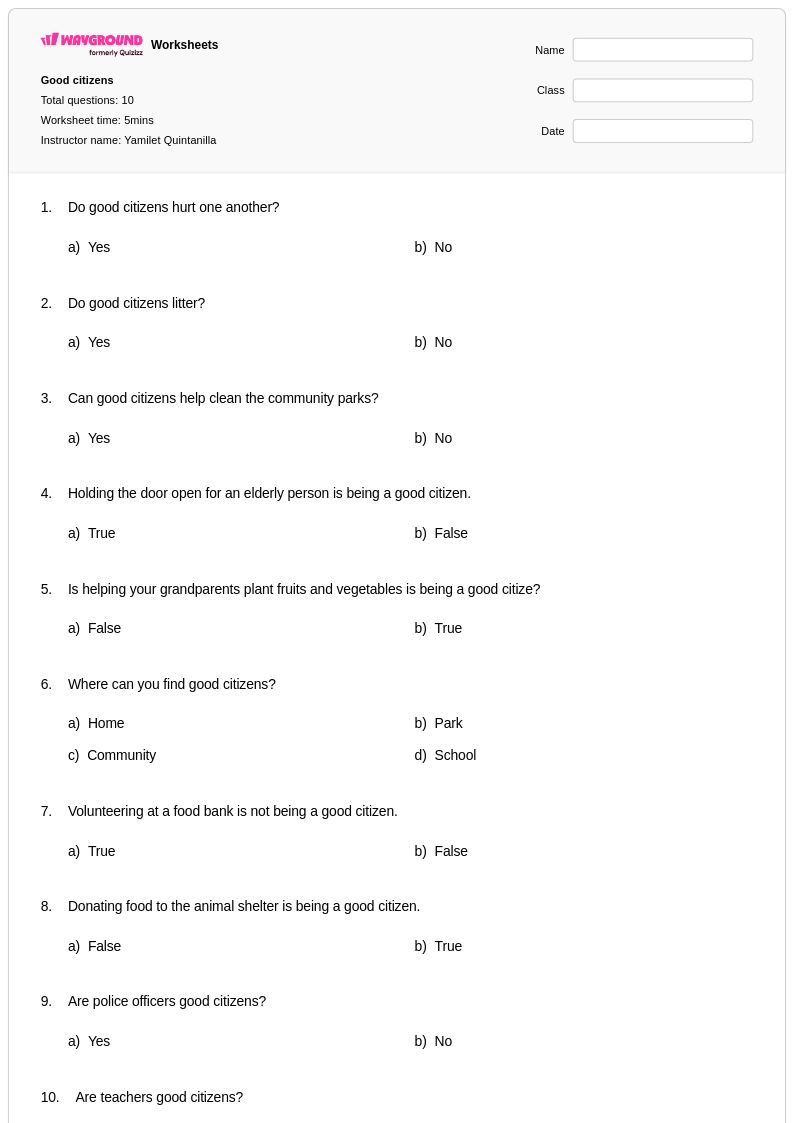
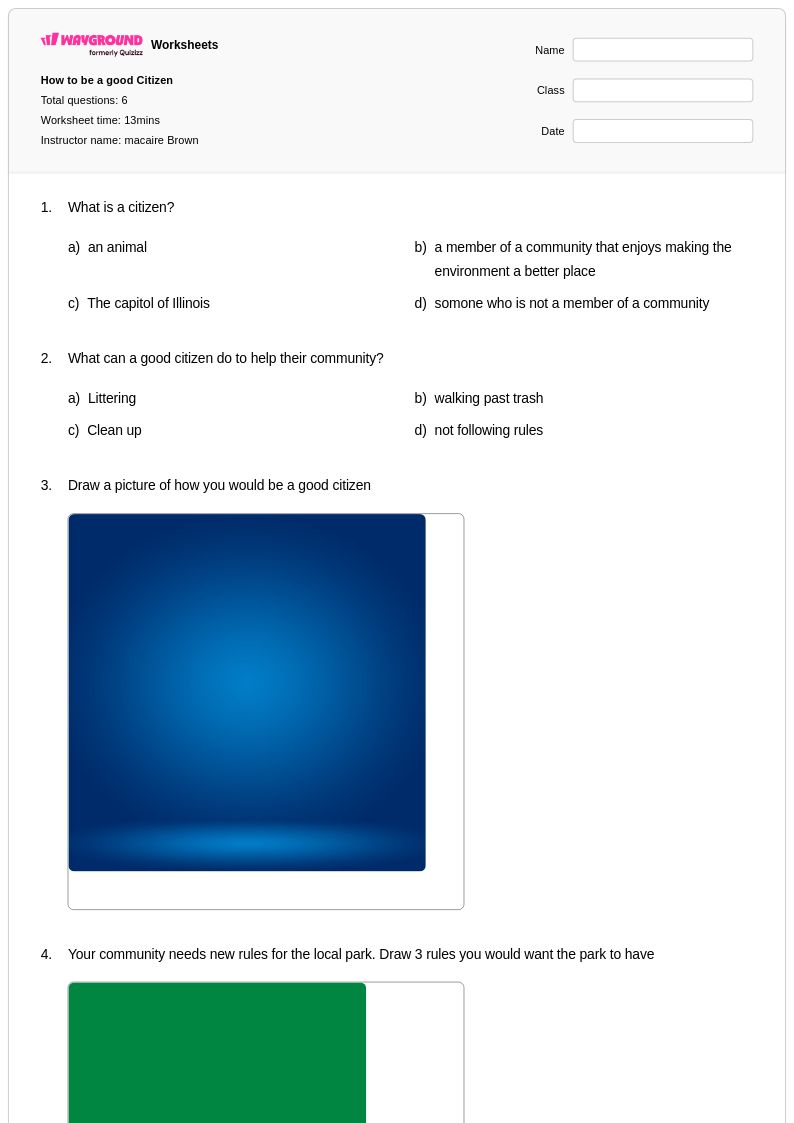
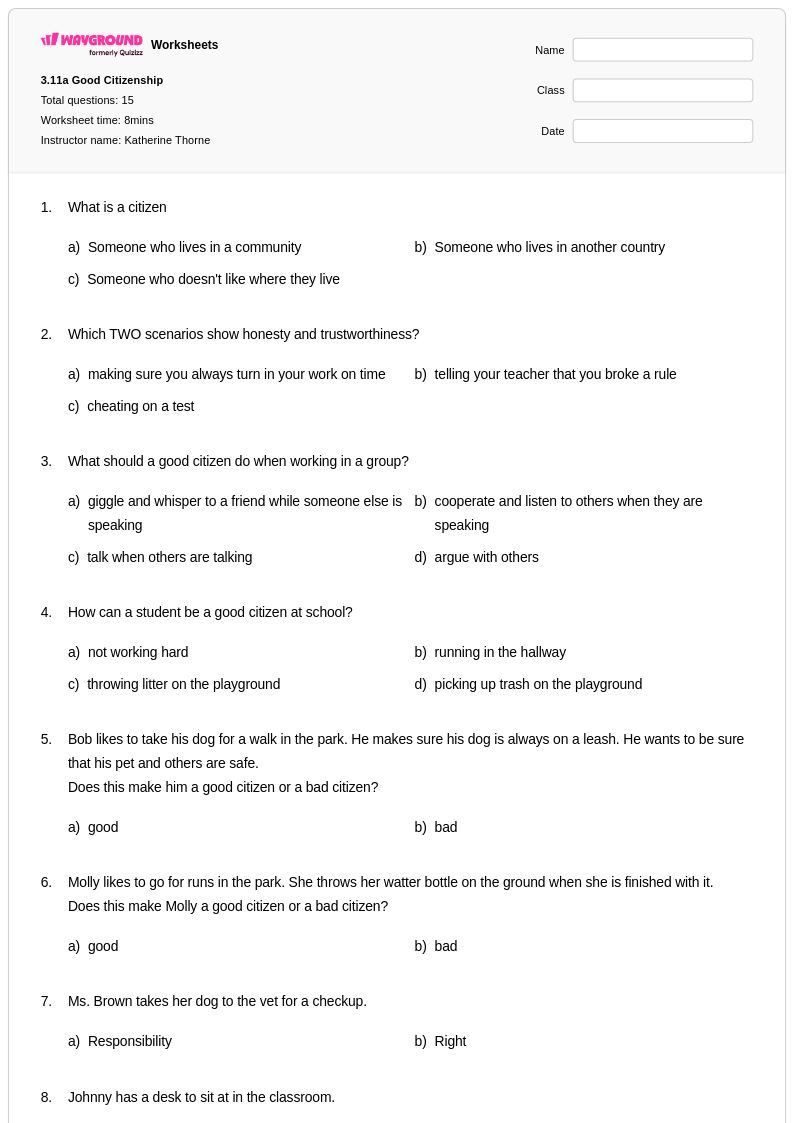
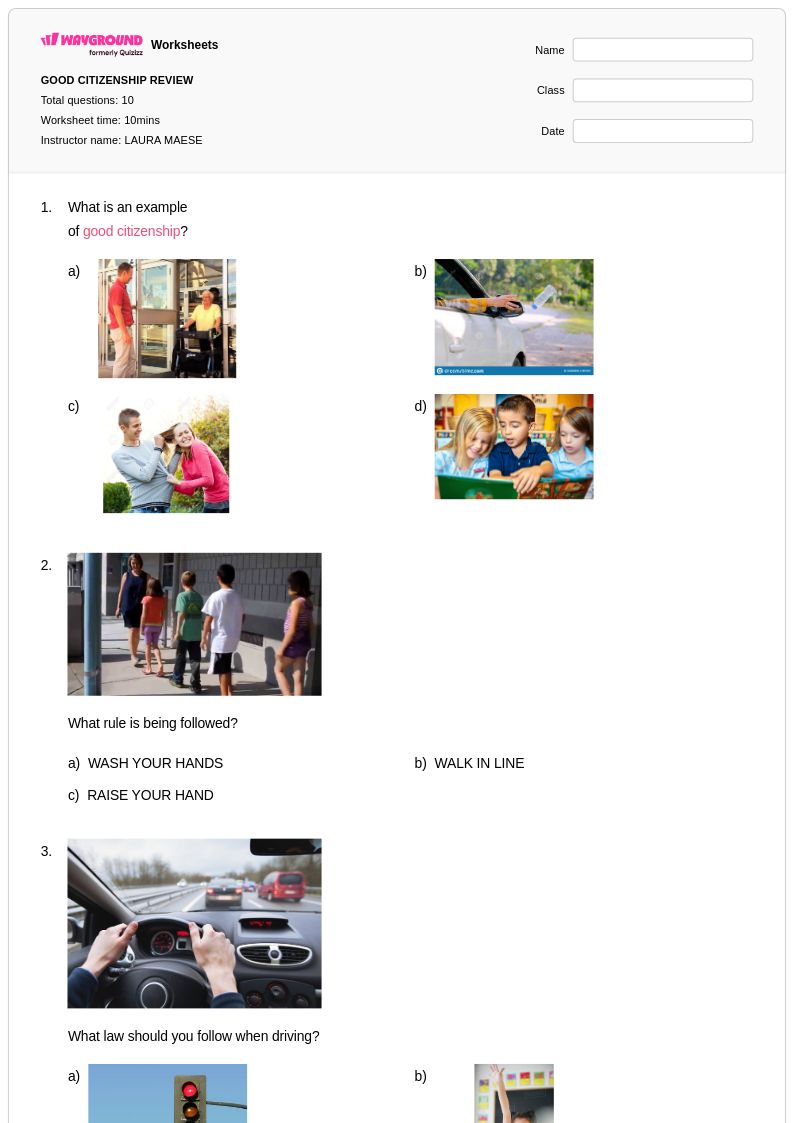
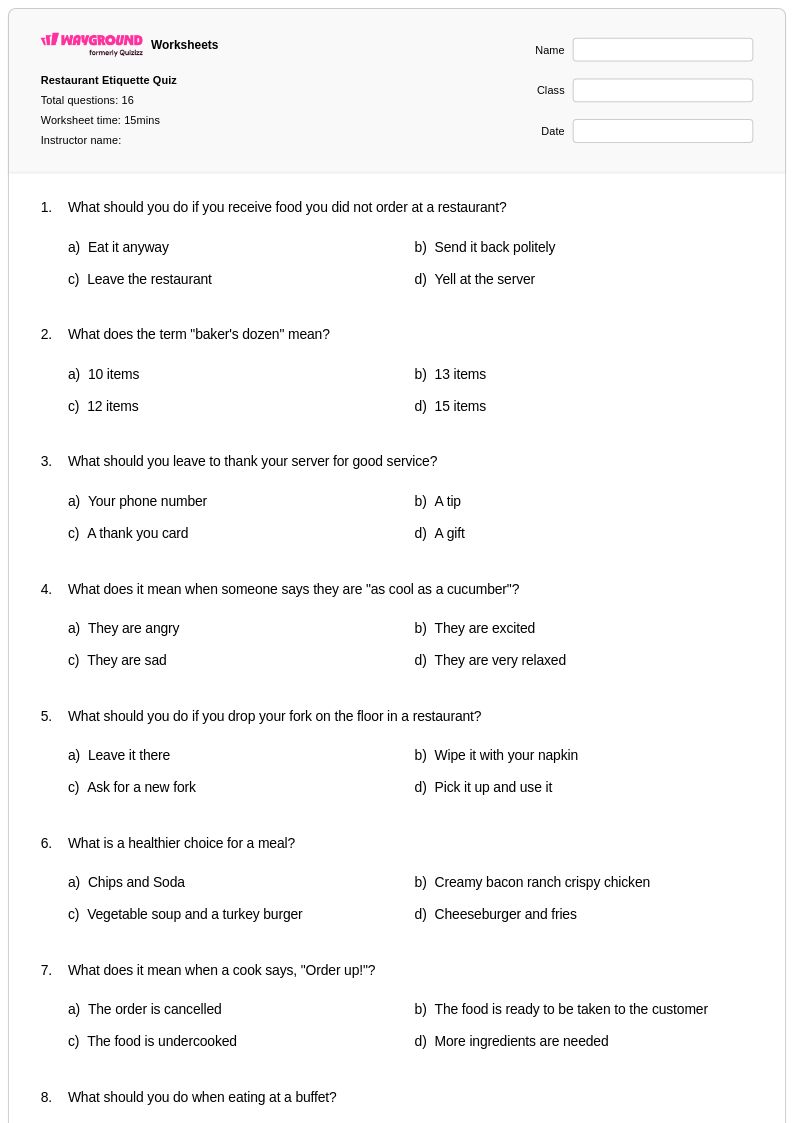
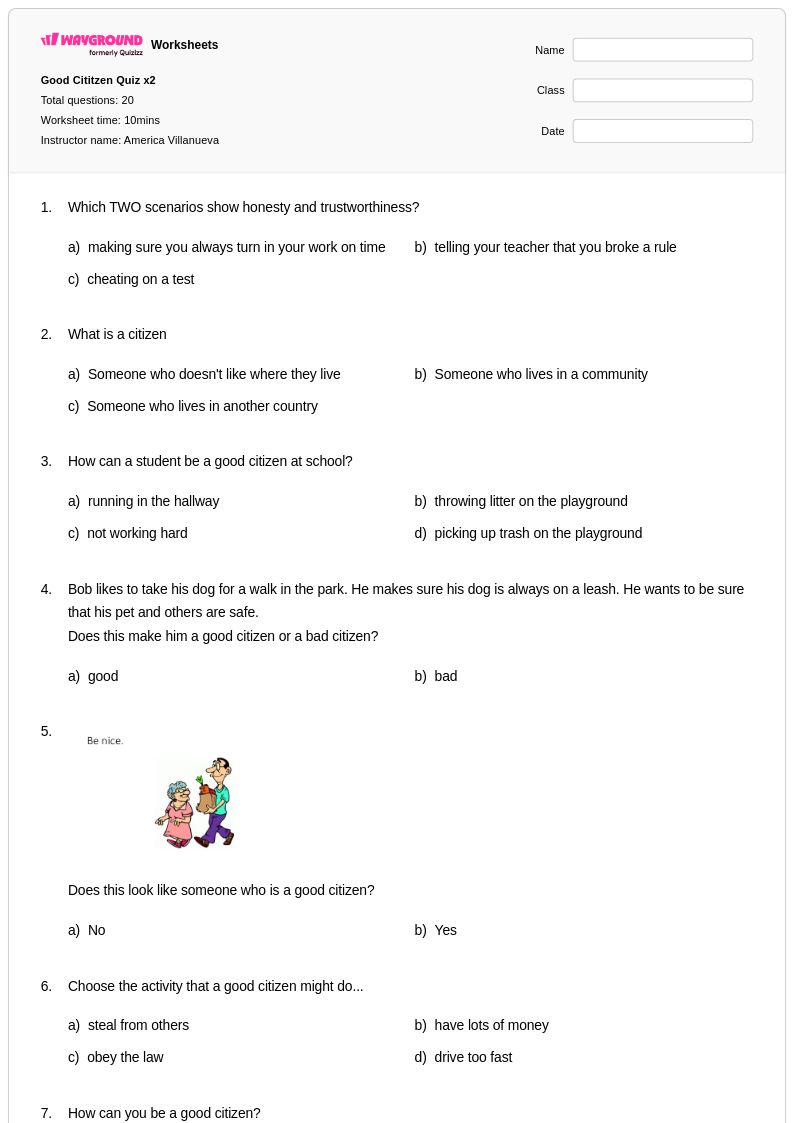
Good manners worksheets for kindergarten students available through Wayground (formerly Quizizz) provide essential foundation-building activities that help young learners develop proper social etiquette and interpersonal skills. These carefully designed printables focus on fundamental courtesy concepts such as saying "please" and "thank you," appropriate greetings, table manners, and respectful behavior toward peers and adults. Each worksheet includes age-appropriate practice problems featuring relatable scenarios that kindergarten students encounter daily, allowing them to identify polite behaviors and practice good manners in structured activities. The comprehensive collection includes both student worksheets and corresponding answer keys in convenient pdf format, enabling teachers to efficiently assess student understanding while providing free, accessible resources that reinforce positive social interactions in the classroom and beyond.
Wayground (formerly Quizizz) empowers educators with millions of teacher-created good manners resources specifically tailored for kindergarten social studies instruction, featuring robust search and filtering capabilities that help teachers quickly locate materials aligned with their curriculum standards and classroom needs. The platform's differentiation tools allow instructors to customize worksheets for various learning levels within their kindergarten classrooms, ensuring that all students can successfully engage with good manners concepts regardless of their individual developmental stages. Teachers benefit from flexible formatting options that include both printable pdf versions for traditional classroom use and digital formats for interactive learning experiences, supporting diverse instructional approaches for planning daily lessons, providing targeted remediation for students who need additional practice, offering enrichment activities for advanced learners, and delivering consistent skill practice that reinforces proper social behavior throughout the academic year.
FAQs
How do I teach good manners to elementary students?
Teaching good manners works best when embedded in everyday classroom routines rather than treated as a standalone lesson. Start with concrete, high-frequency behaviors like saying 'please,' 'thank you,' and 'excuse me,' then expand to situational etiquette such as table manners, taking turns, and respectful listening. Role-play scenarios and real-world practice problems help students internalize these behaviors because they connect abstract social rules to familiar situations. Consistent reinforcement across the school day — not just during dedicated instruction — is what builds lasting habits.
What activities help students practice good manners in the classroom?
Scenario-based activities are among the most effective for practicing good manners because they ask students to apply courtesy behaviors in realistic social situations rather than just define them. Worksheets that present everyday interactions — such as receiving a gift, disagreeing with a classmate, or joining a conversation — give students structured opportunities to evaluate and practice appropriate responses. Reflective exercises, where students explain why a particular response is more respectful than another, deepen understanding beyond surface-level compliance. These activities work well as independent practice, partner work, or brief class discussions.
What mistakes do students commonly make when learning about good manners?
A common misconception is that good manners are simply a set of rules to memorize rather than context-dependent social skills that require judgment. Students often struggle to transfer mannerly behavior from one setting to another — knowing to say 'please' at home but not applying the same principle during group work at school. Another frequent error is confusing compliance with genuine respect; students may perform the correct behavior without understanding its purpose in building positive relationships. Instruction that connects specific behaviors to their social impact helps students move beyond rote compliance toward authentic courtesy.
How can I use Good Manners worksheets to support character education goals?
Good manners worksheets align naturally with character education objectives because they address the behavioral expressions of core values like respect, empathy, and responsibility. Use them to anchor lessons around specific scenarios — table manners, digital communication etiquette, or interacting with adults — and pair the worksheet practice with class discussion to surface the reasoning behind each behavior. This approach helps students connect individual actions to broader community values, which reinforces character education themes beyond the worksheet itself. They are also useful for home-school communication, giving families a consistent framework to reinforce at home.
How do I use Wayground's Good Manners worksheets in my classroom?
Wayground's Good Manners worksheets are available as printable PDFs for traditional classroom use and in digital formats for technology-integrated learning environments, so they fit seamlessly into both in-person and remote instruction. Teachers can assign them as individual practice, use them for small group discussion, or host them as a quiz directly on Wayground for immediate feedback. The included answer keys make assessment straightforward, and digital delivery options allow teachers to apply accommodations such as read aloud or extended time for students who need additional support.
How do I differentiate Good Manners instruction for students with different learning needs?
Differentiation in good manners instruction often means adjusting the complexity of social scenarios and the level of scaffolding provided. For students who need additional support, reduced answer choices and read-aloud features can lower the cognitive load while keeping the learning objective intact. On Wayground, teachers can apply individual accommodations — including read aloud, extended time, and reduced answer choices — to specific students without affecting the experience of the rest of the class. These settings are reusable across future sessions, which reduces setup time for teachers managing diverse classroom needs.