Free Printable Healthy Relationships Worksheets for Kindergarten
Explore Wayground's free kindergarten healthy relationships worksheets and printables that help young learners develop essential social skills through engaging practice problems, complete with answer keys for effective learning assessment.
Explore printable Healthy Relationships worksheets for Kindergarten
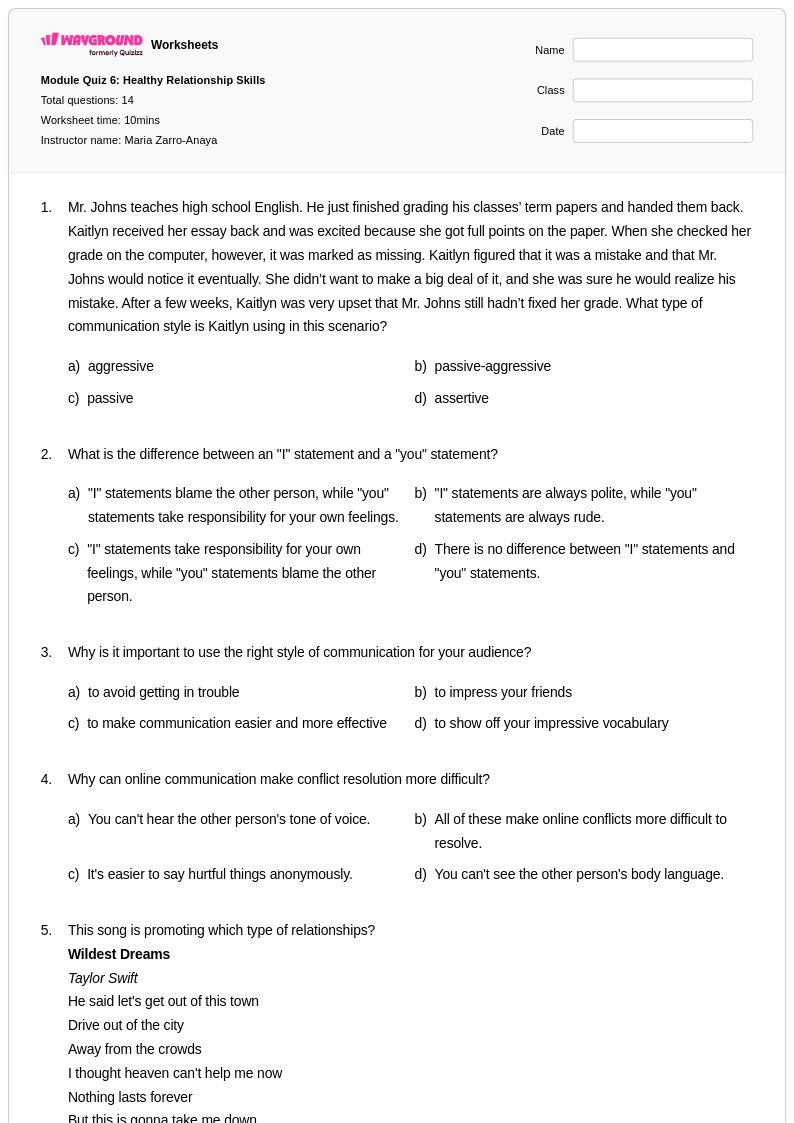
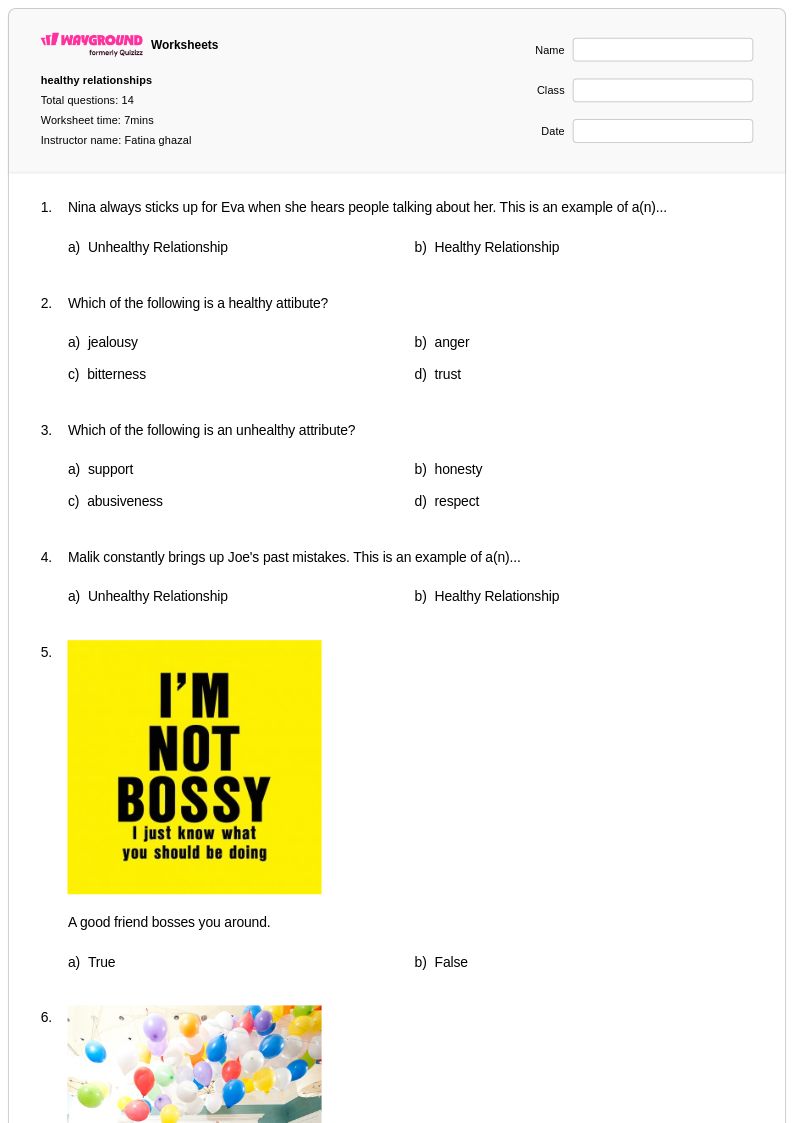
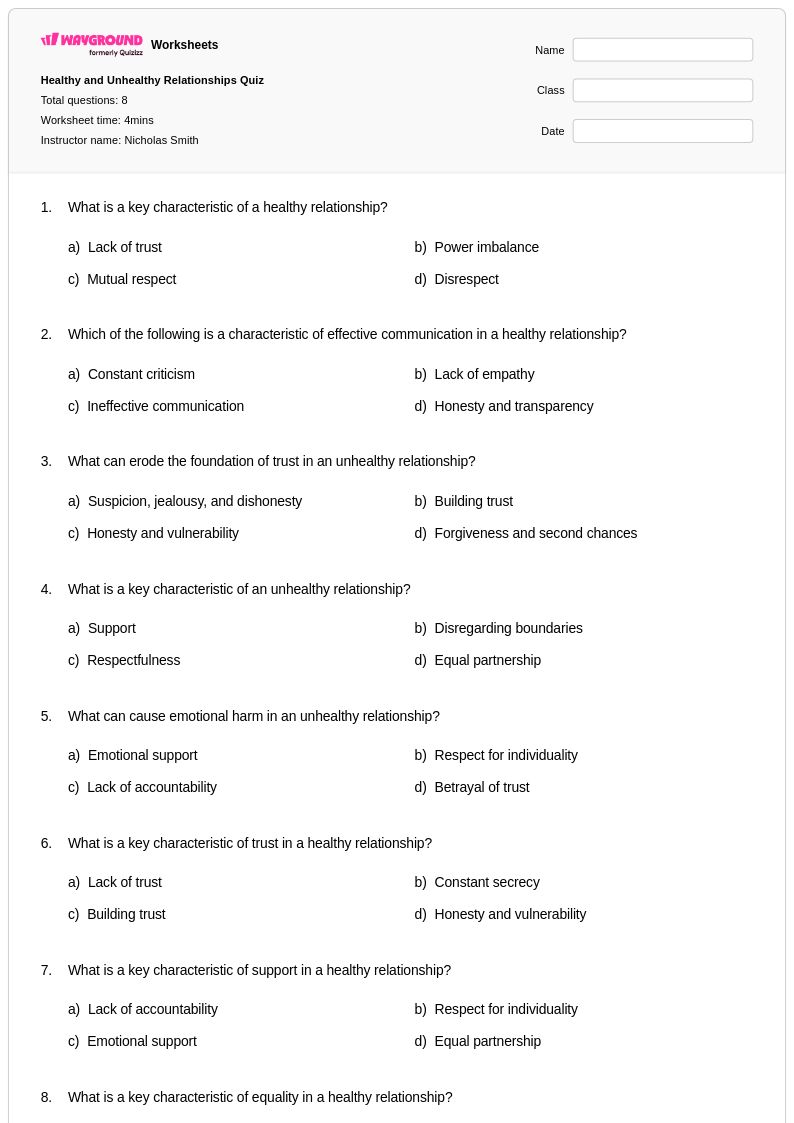
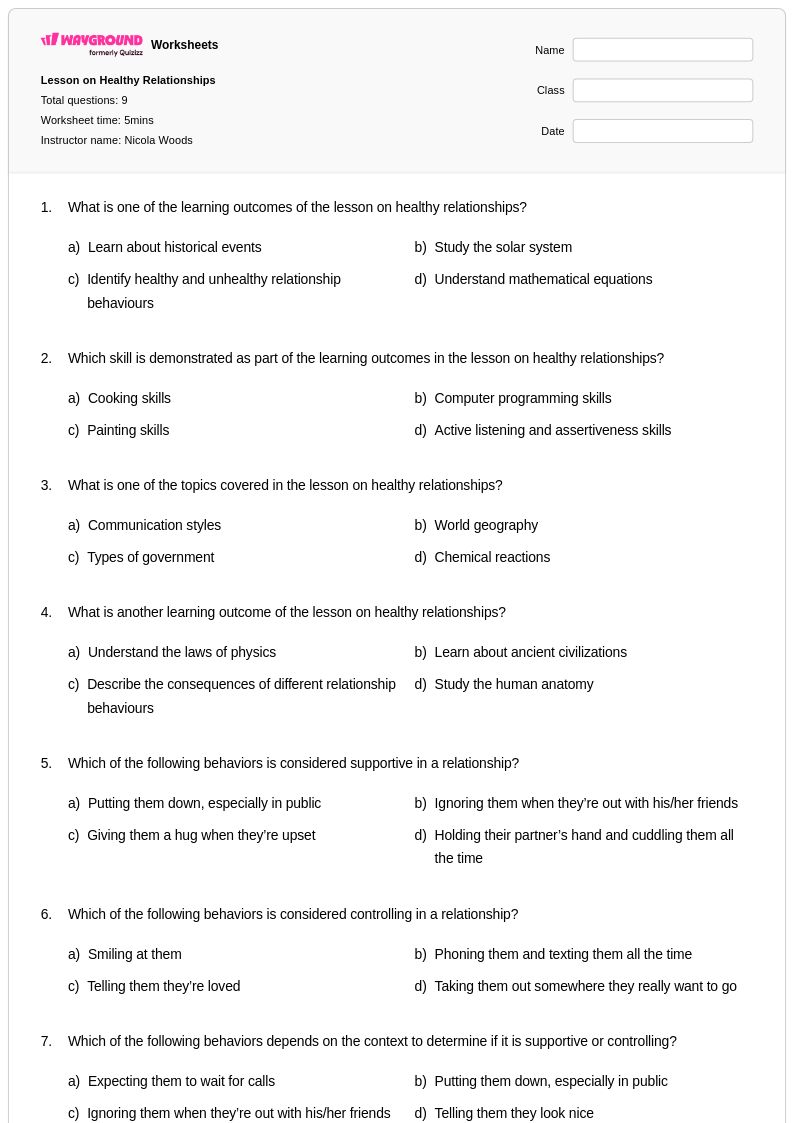
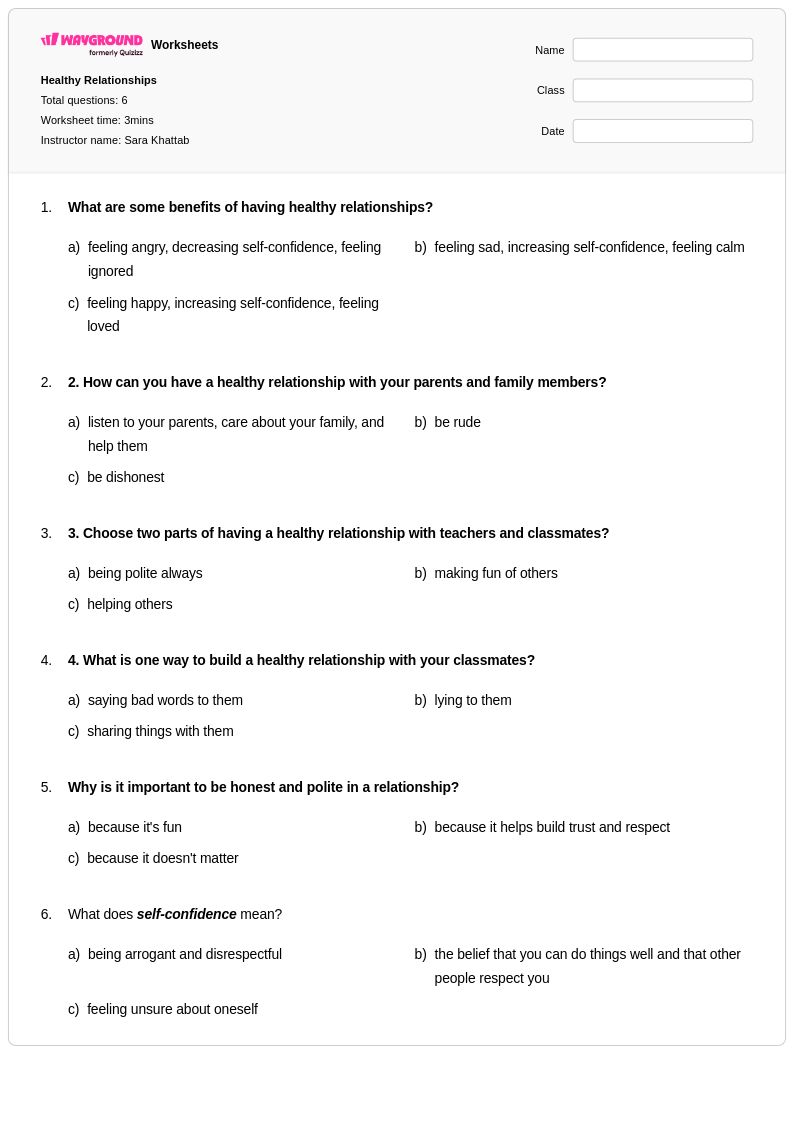
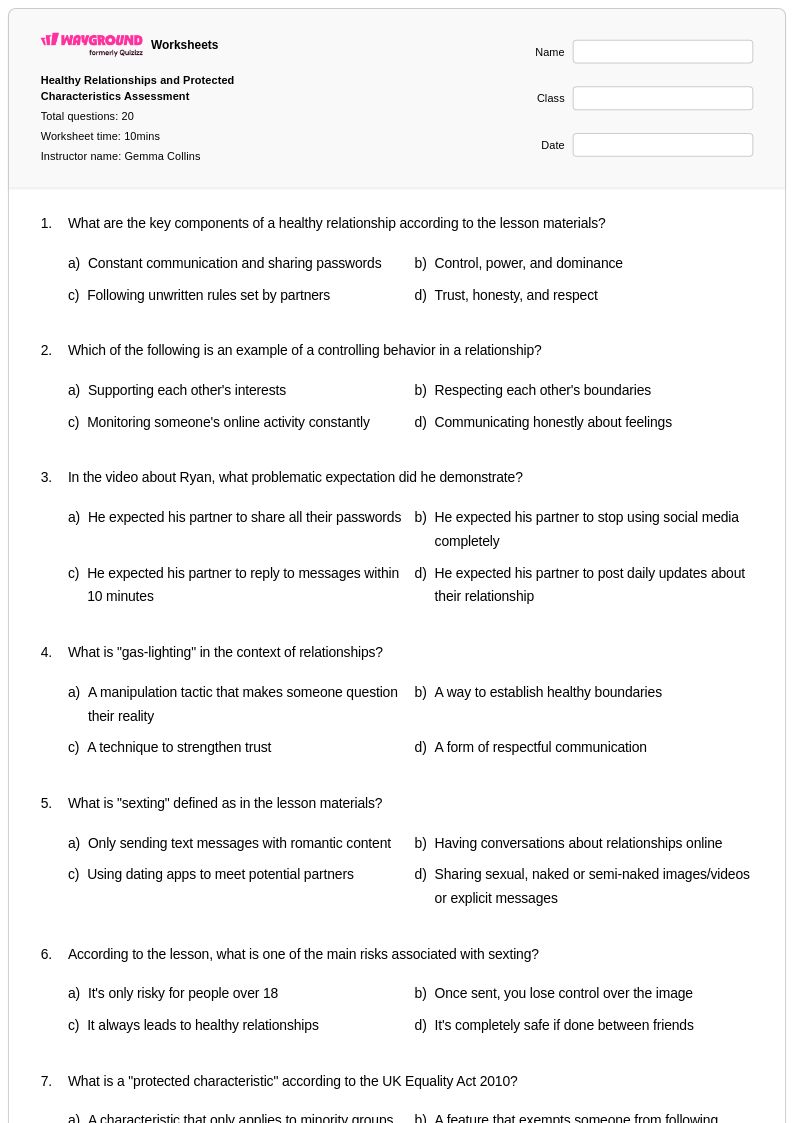
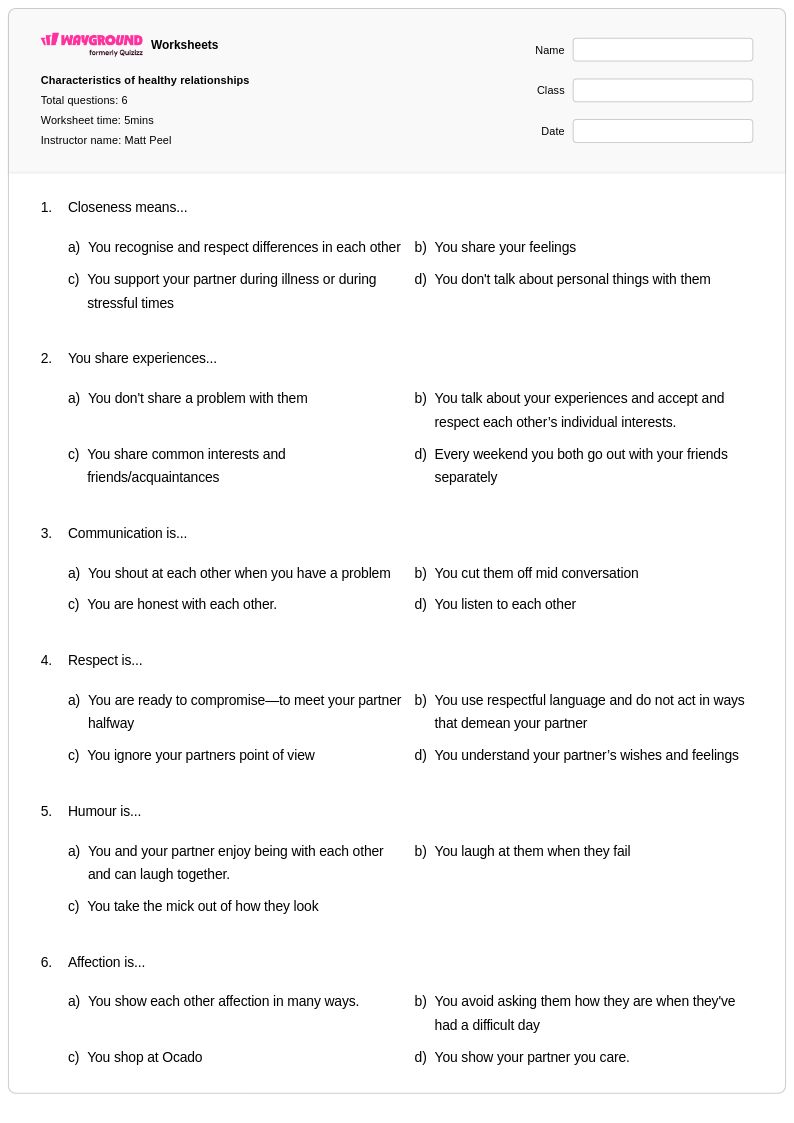
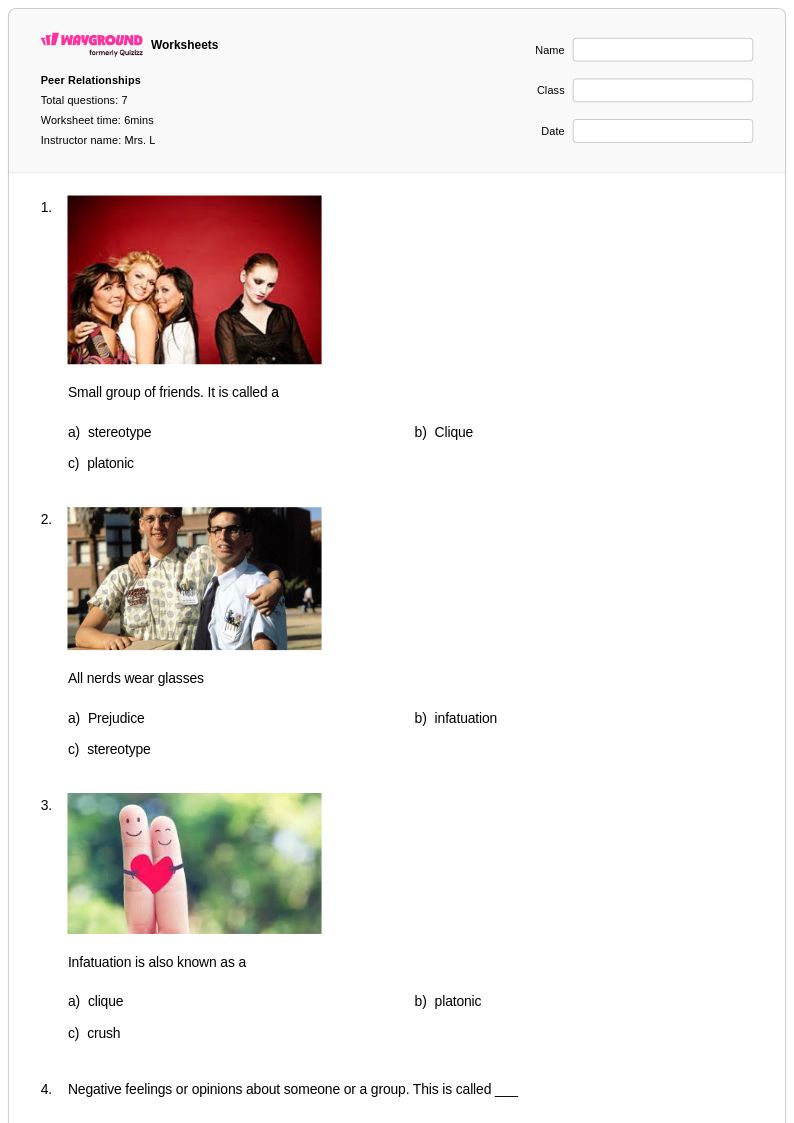
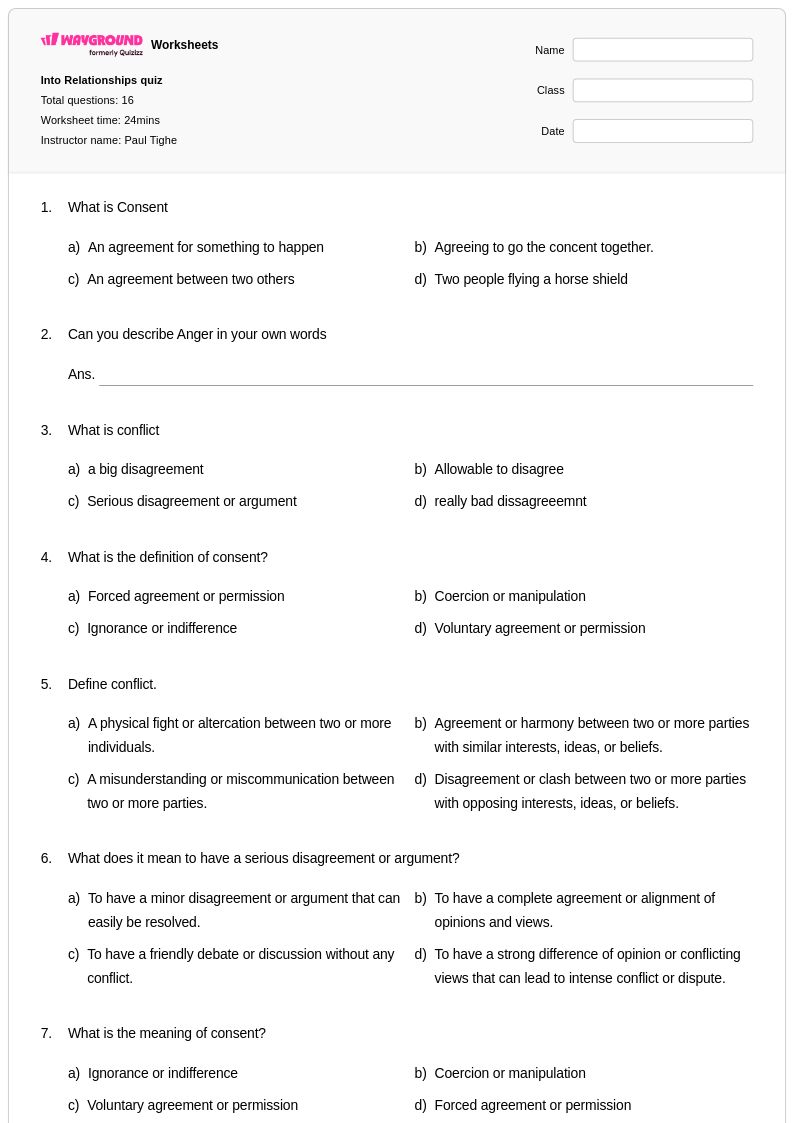
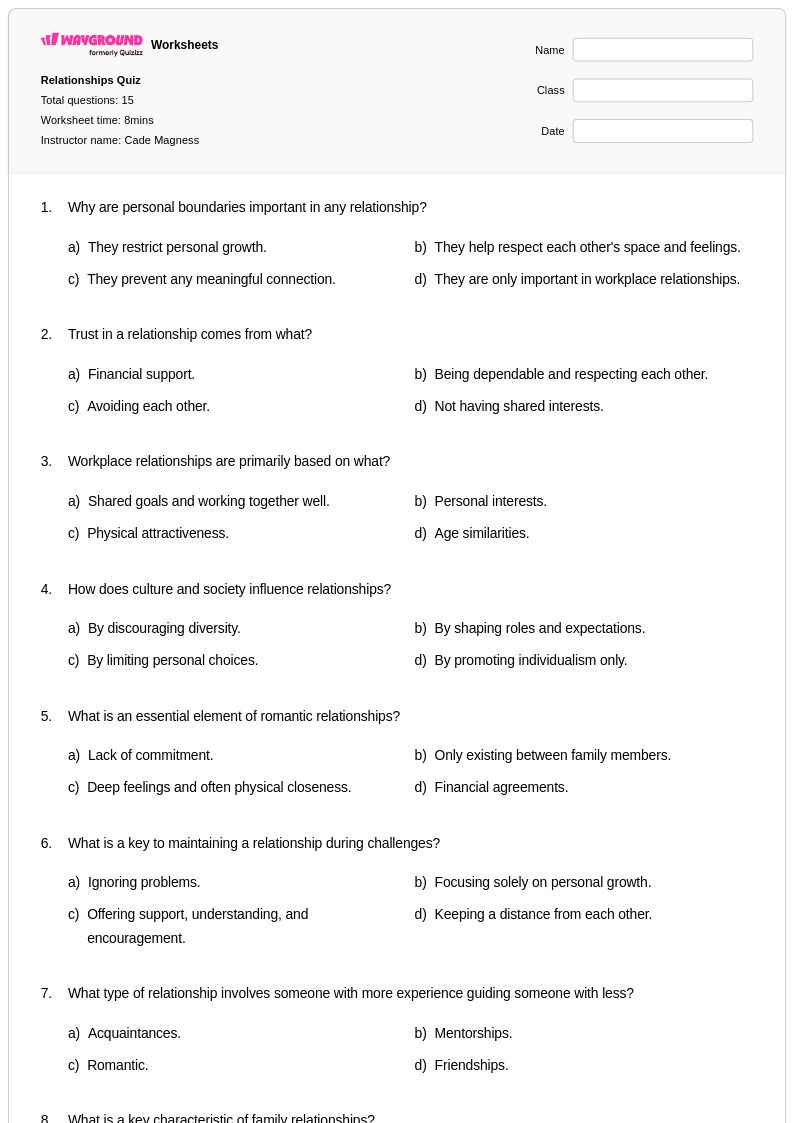
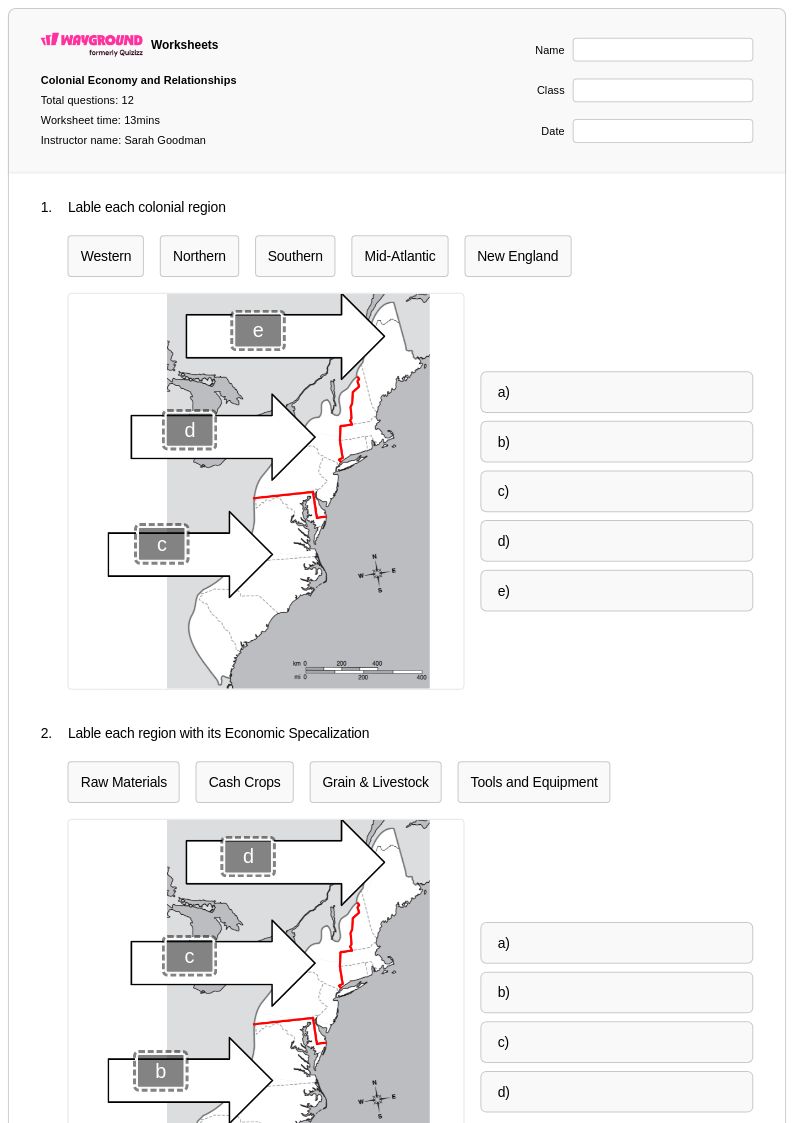
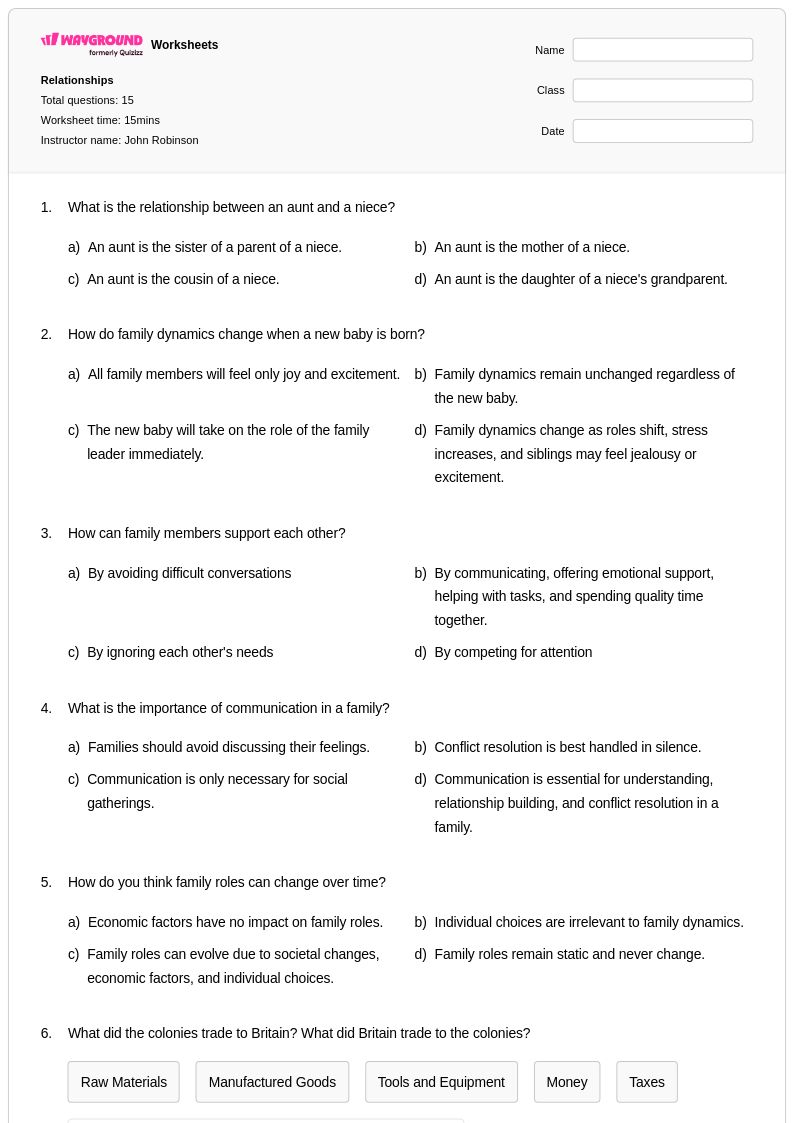
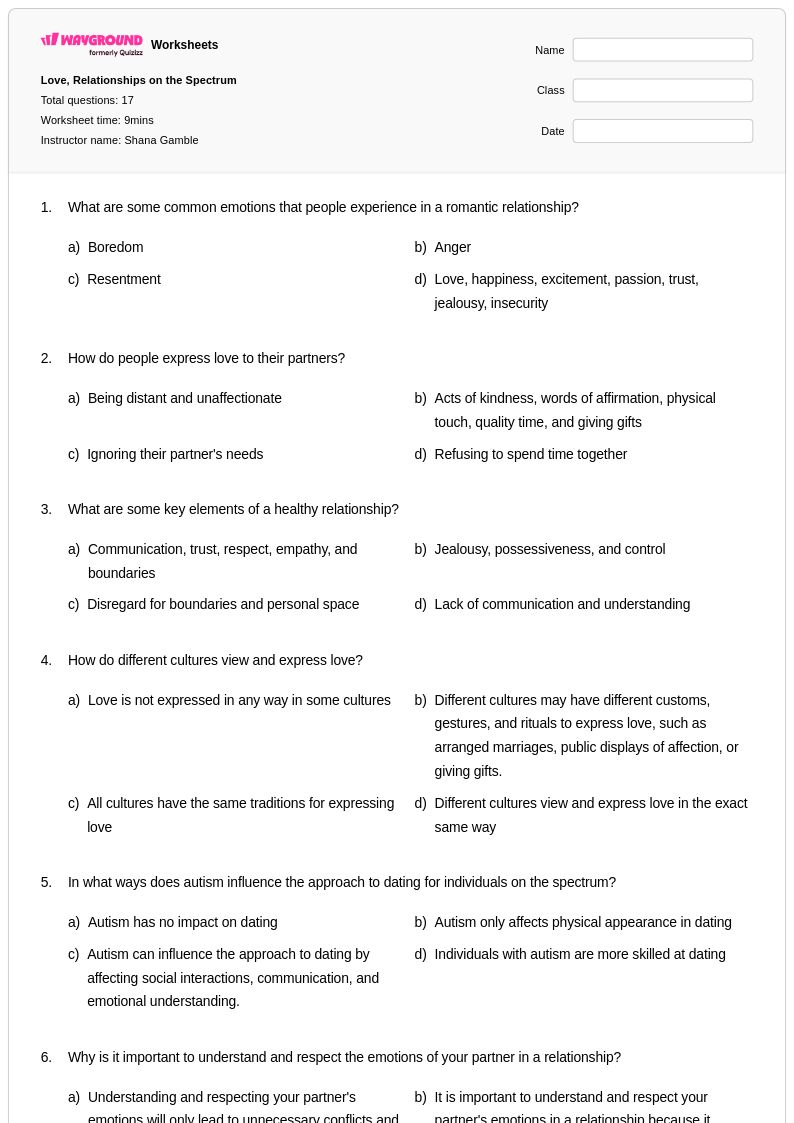
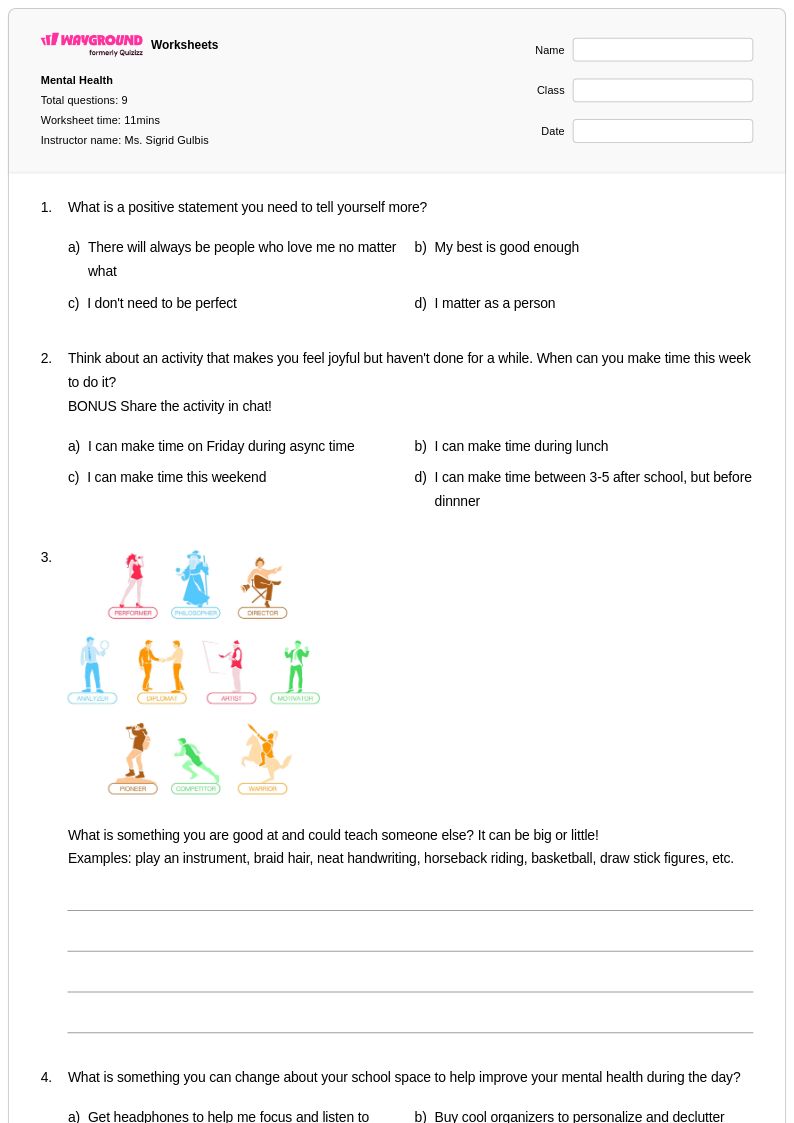
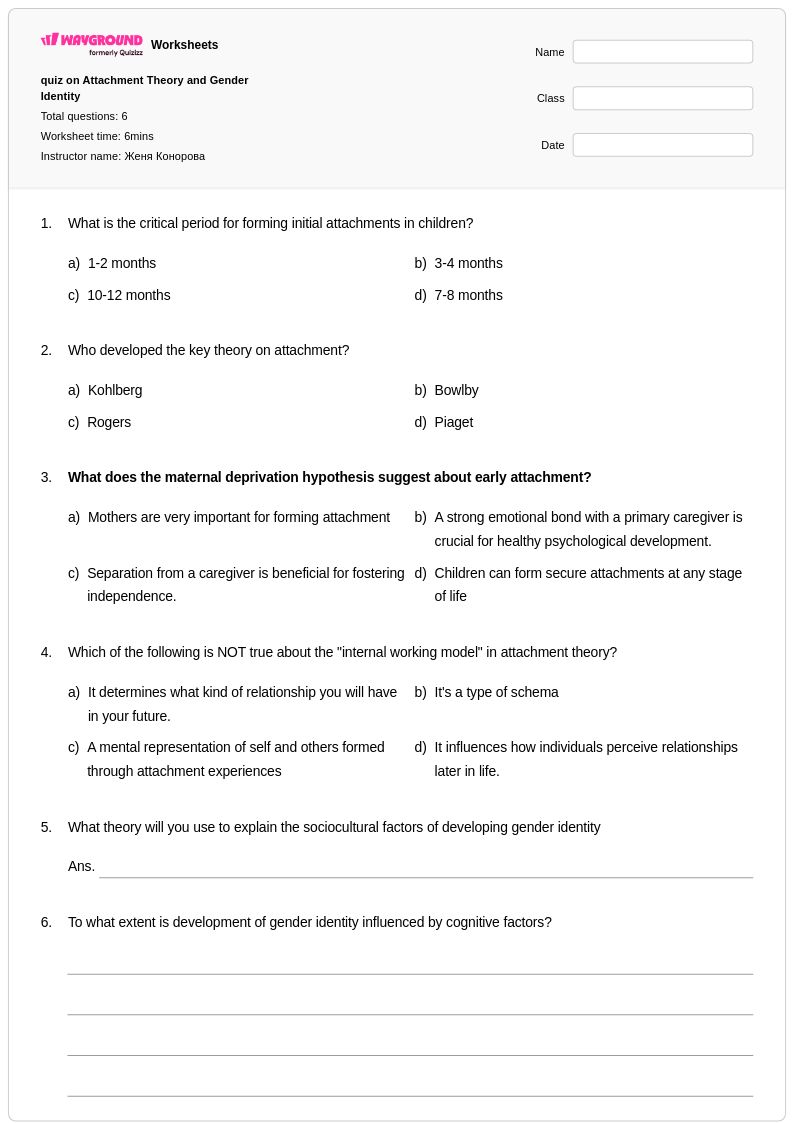
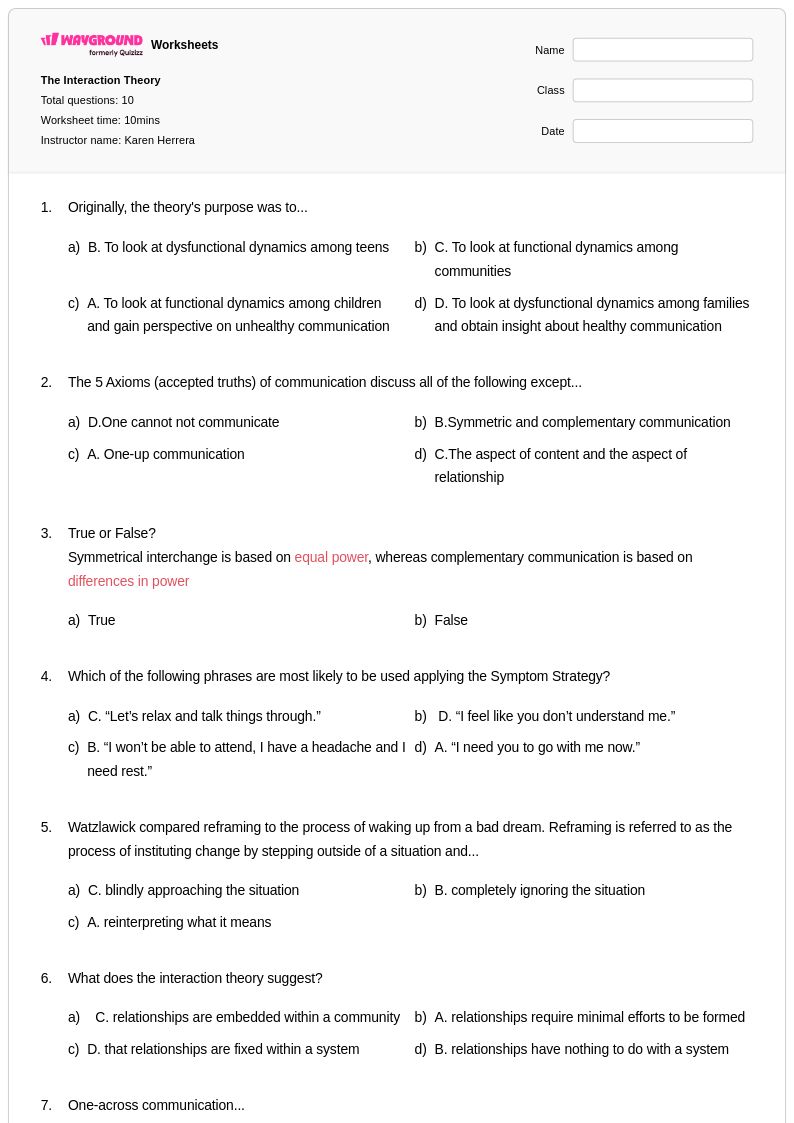
Healthy relationships worksheets for kindergarten students through Wayground (formerly Quizizz) provide foundational social-emotional learning experiences that help young learners understand friendship, kindness, and appropriate social interactions. These carefully designed printables focus on essential relationship skills such as sharing, taking turns, showing empathy, and communicating feelings in constructive ways. Each worksheet collection includes comprehensive answer keys and practice problems that guide kindergarten students through scenarios involving conflict resolution, boundary setting, and cooperative play. The free pdf resources emphasize visual learning approaches appropriate for early elementary students, incorporating picture-based activities, simple role-playing exercises, and guided discussion prompts that strengthen children's ability to form positive connections with peers and adults.
Wayground (formerly Quizizz) empowers educators with millions of teacher-created healthy relationships resources specifically aligned to kindergarten social studies standards and developmental milestones. The platform's robust search and filtering capabilities allow teachers to quickly locate worksheets that match their students' specific needs, whether for whole-class instruction, small group interventions, or individual skill practice. Differentiation tools enable seamless customization of content difficulty and format, supporting diverse learning styles and abilities within the kindergarten classroom. Available in both printable pdf format and interactive digital versions, these comprehensive worksheet collections facilitate flexible lesson planning while providing targeted resources for remediation and enrichment activities that build students' social competency and emotional intelligence throughout the school year.
FAQs
How do I teach healthy relationships in the classroom?
Teaching healthy relationships works best when students can analyze real scenarios and practice applying skills like active listening, boundary setting, and empathy in structured contexts. Start by establishing a safe classroom environment where students feel comfortable discussing interpersonal dynamics, then use guided activities that ask students to compare positive and unhealthy relationship characteristics. Scenario-based practice helps students move from abstract concepts to concrete decision-making skills they can apply with peers, family members, and community members.
What topics should healthy relationship worksheets cover?
Effective healthy relationship worksheets should address effective communication, conflict resolution, boundary setting, empathy development, and the ability to distinguish between positive and unhealthy relationship dynamics. Students benefit from practice that spans multiple relationship contexts, including friendships, family relationships, and peer interactions. Covering these areas together builds a cohesive social-emotional skill set rather than isolated concepts.
What exercises help students practice healthy relationship skills?
Scenario analysis exercises are among the most effective, asking students to read a social situation and identify appropriate responses or flag warning signs of unhealthy dynamics. Role-play reflection prompts, conflict resolution planning activities, and boundary-setting response tasks all reinforce practical application. Structured practice problems that ask students to generate strategies for building meaningful connections are especially useful for developing transferable interpersonal skills.
What mistakes do students commonly make when learning about healthy relationships?
A common misconception is that conflict automatically signals an unhealthy relationship — students often need explicit instruction to understand that respectful disagreement and resolution are normal parts of healthy dynamics. Students also frequently struggle to distinguish assertive communication from aggression, which can lead to misapplying boundary-setting concepts. Providing clear contrasting examples of positive versus unhealthy behaviors helps students build more accurate mental models.
How can I differentiate healthy relationships instruction for students with different needs?
For students who need additional support, simplifying scenario complexity and reducing answer choices can lower cognitive load while keeping them engaged with core concepts. For advanced learners, extending scenarios to include more nuanced social dynamics, such as navigating peer pressure or analyzing family relationship patterns, provides meaningful enrichment. On Wayground, teachers can apply accommodations like read aloud, reduced answer choices, and extended time to individual students so each learner engages with the material at an appropriate level.
How do I use Wayground's healthy relationships worksheets in my classroom?
Wayground's healthy relationships worksheets are available as printable PDFs for traditional classroom use and in digital formats for technology-integrated environments, giving teachers flexibility depending on their setting. Teachers can also host worksheets directly as a quiz on Wayground, enabling real-time student responses and built-in progress monitoring. Each worksheet includes a complete answer key, which streamlines assessment and ensures teachers can efficiently review student understanding of relationship concepts and interaction patterns.