
21 Q
9th - 12th
10 Q
9th - 12th
15 Q
9th - 12th
20 Q
9th - 12th
10 Q
9th
11 Q
8th - Uni
14 Q
9th - 12th
20 Q
8th - Uni
29 Q
9th
13 Q
9th
25 Q
9th - 12th
20 Q
8th - 10th
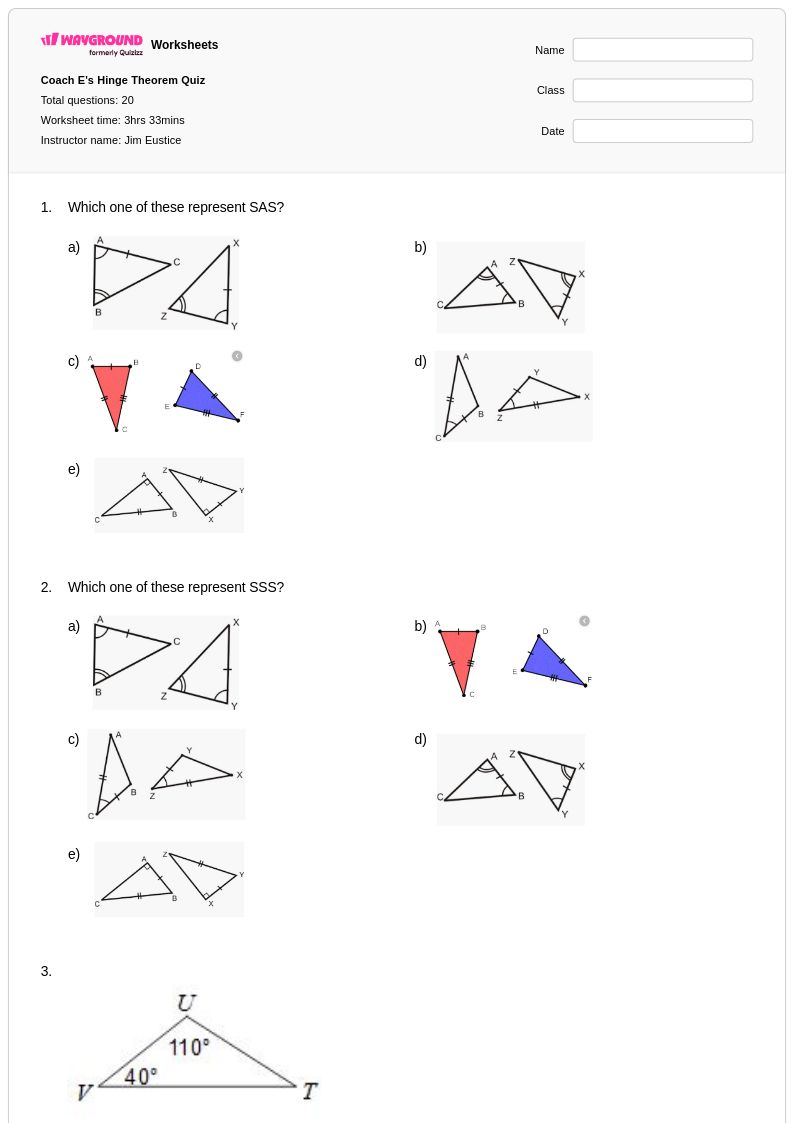
20 Q
9th - 10th
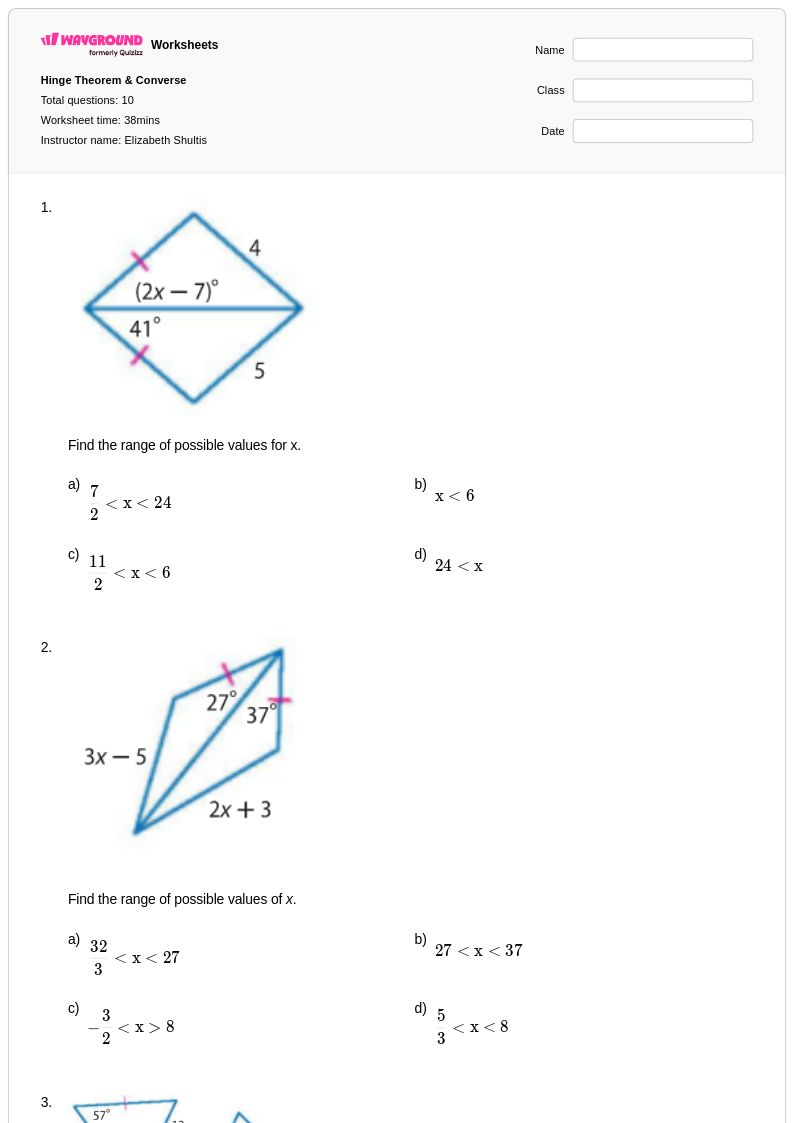
10 Q
9th - 12th
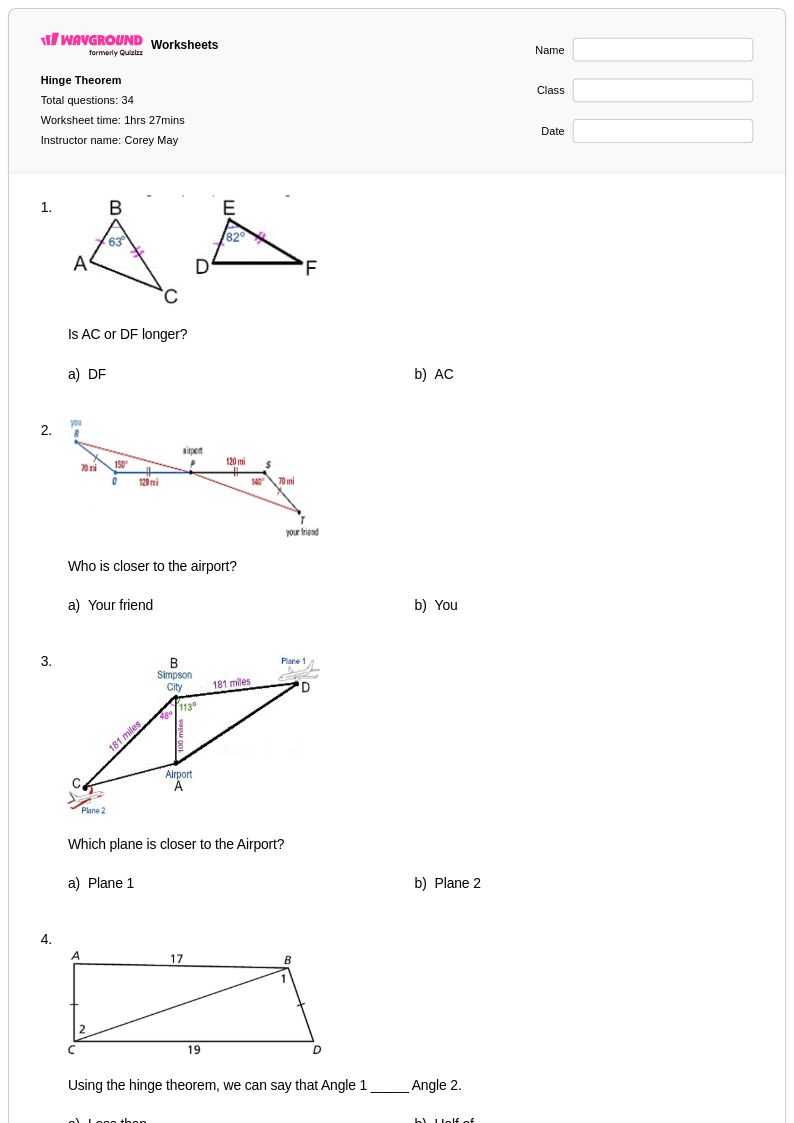
34 Q
9th - 12th
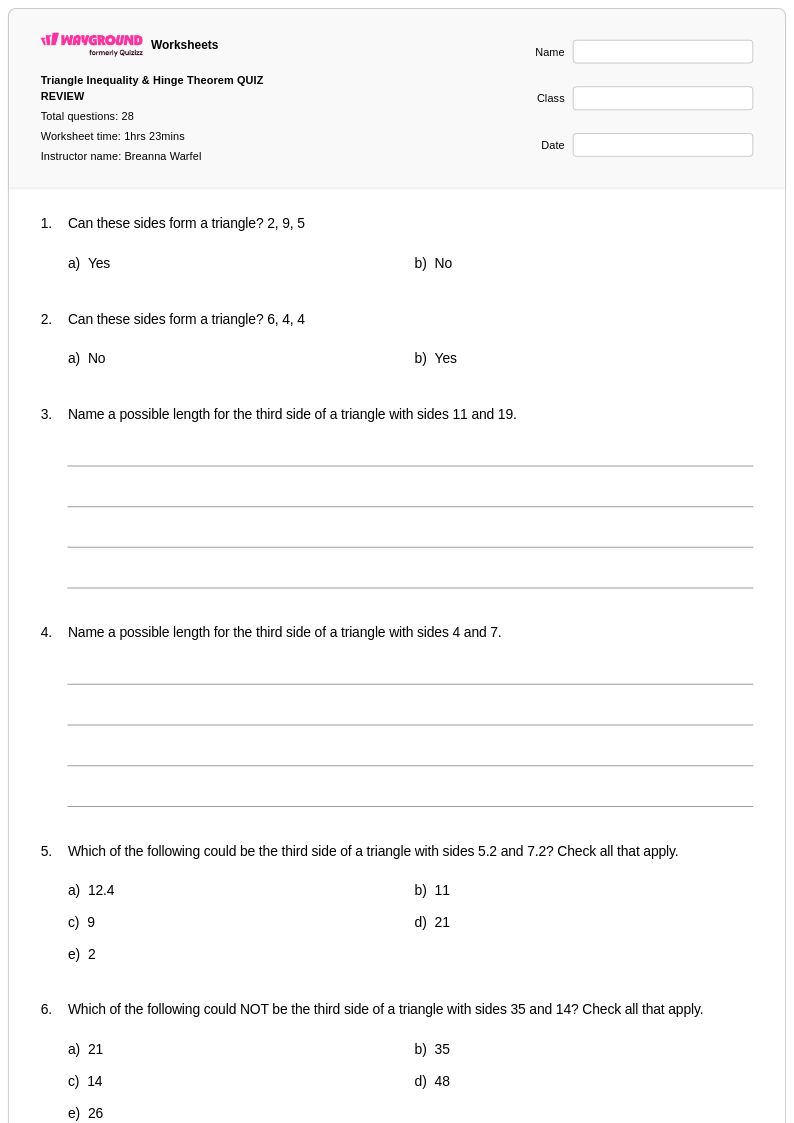
28 Q
8th - 12th
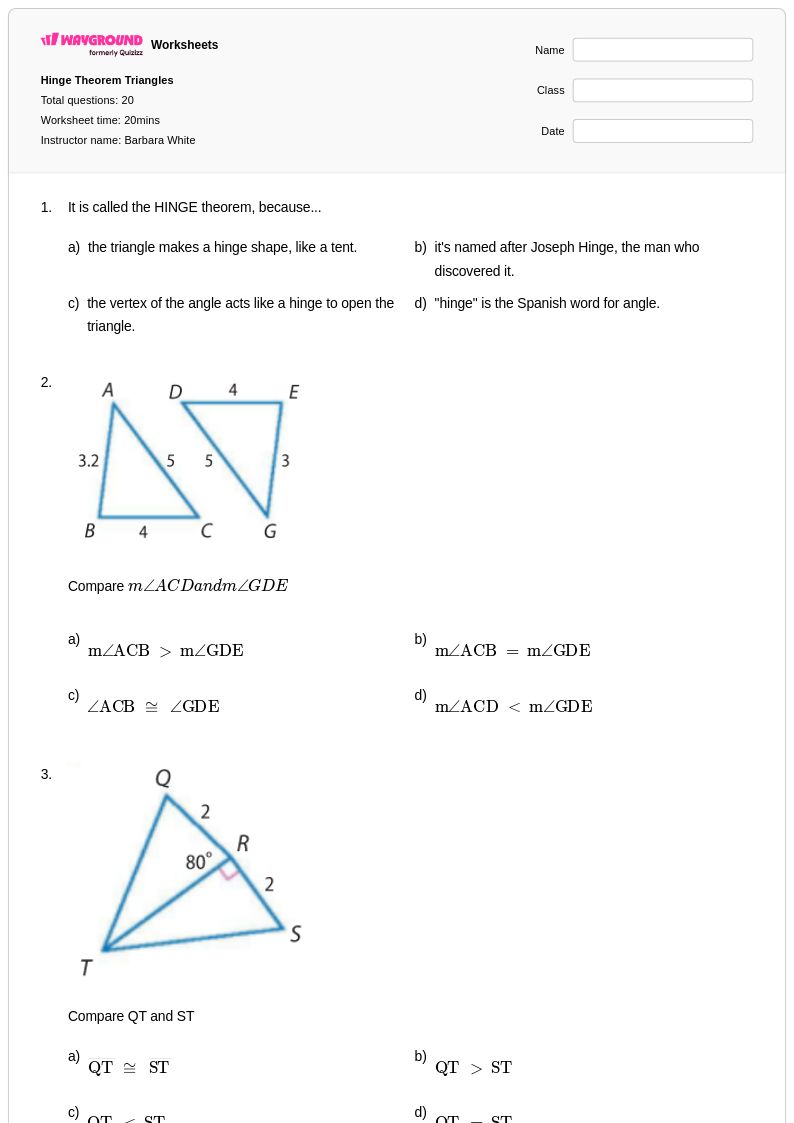
20 Q
8th - 10th
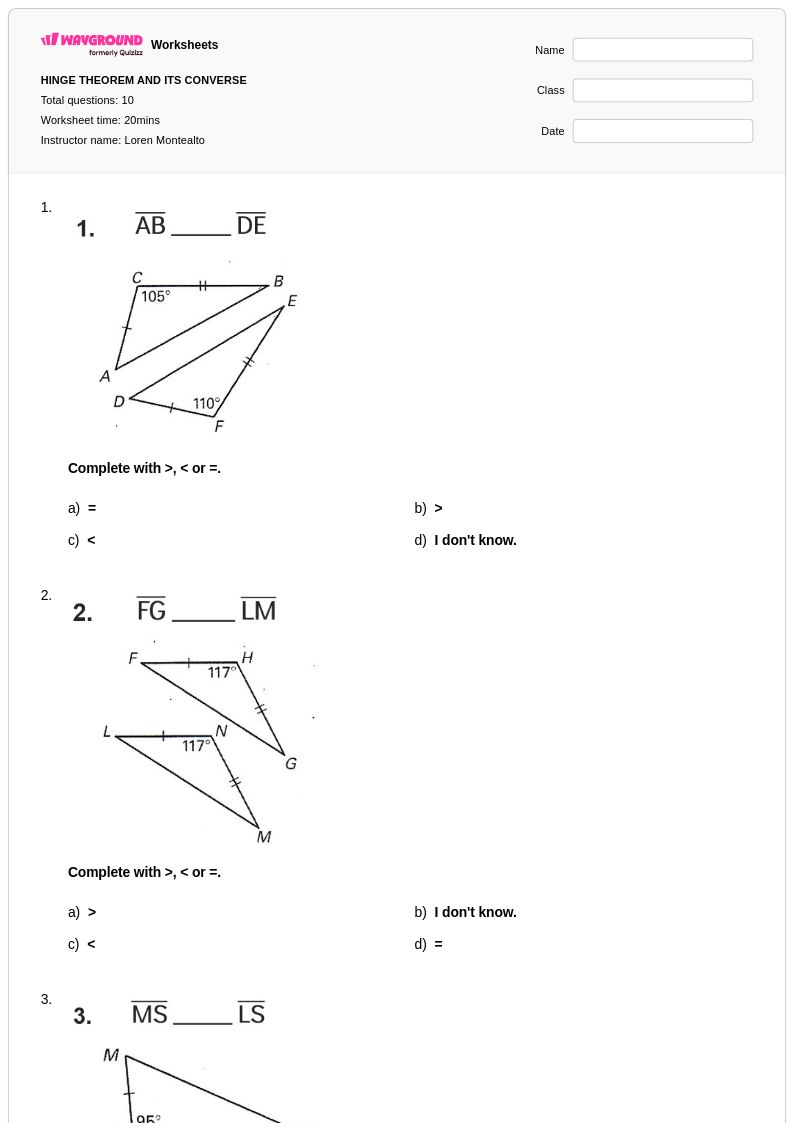
10 Q
8th - 12th

14 Q
9th
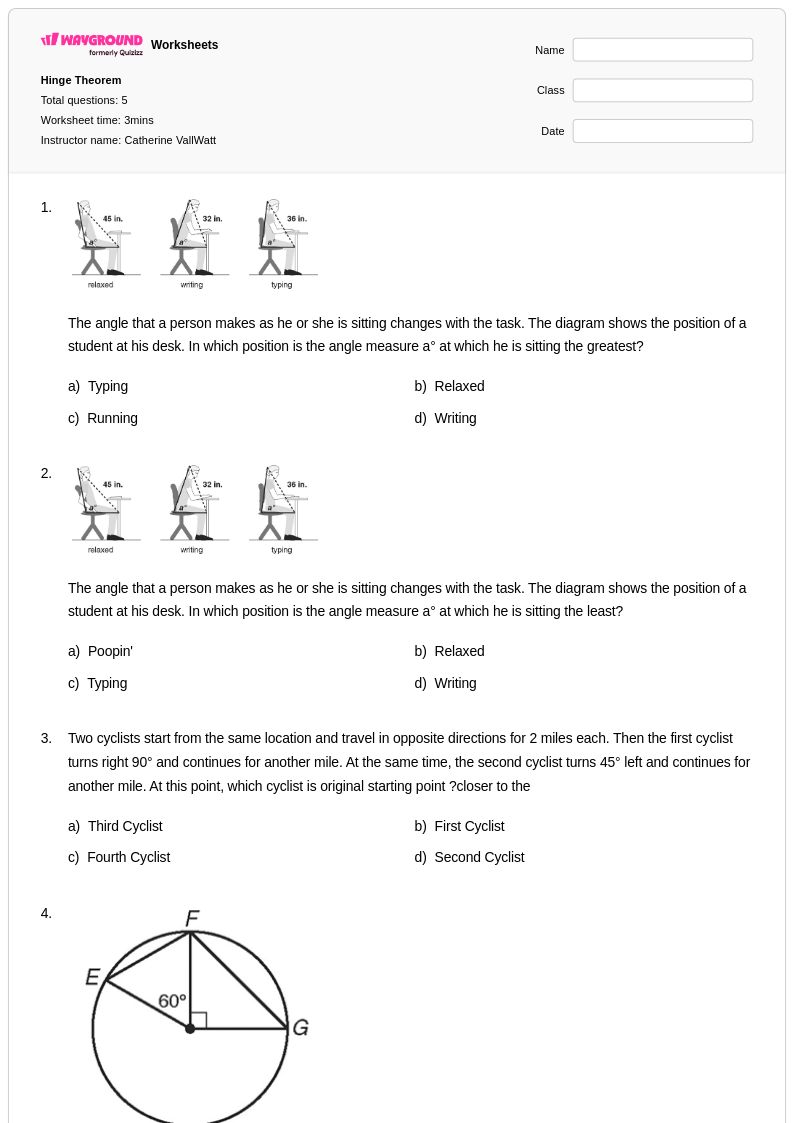
5 Q
6th - 10th
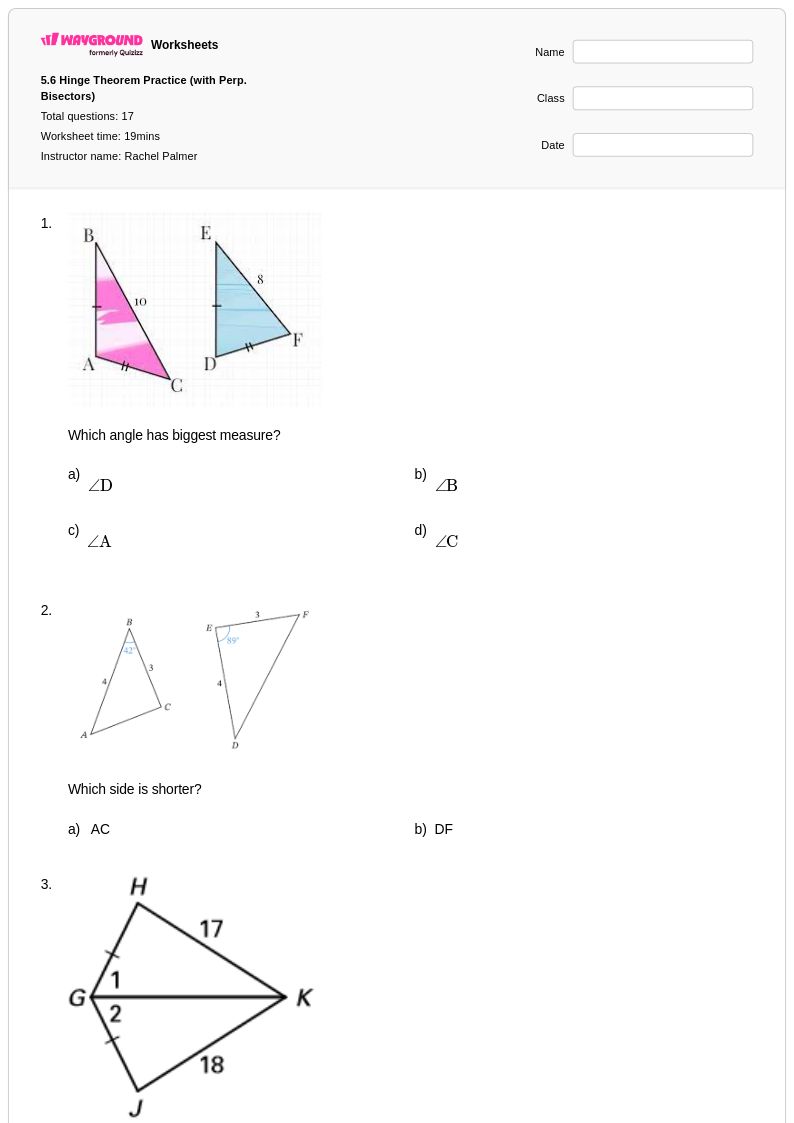
17 Q
9th - 12th
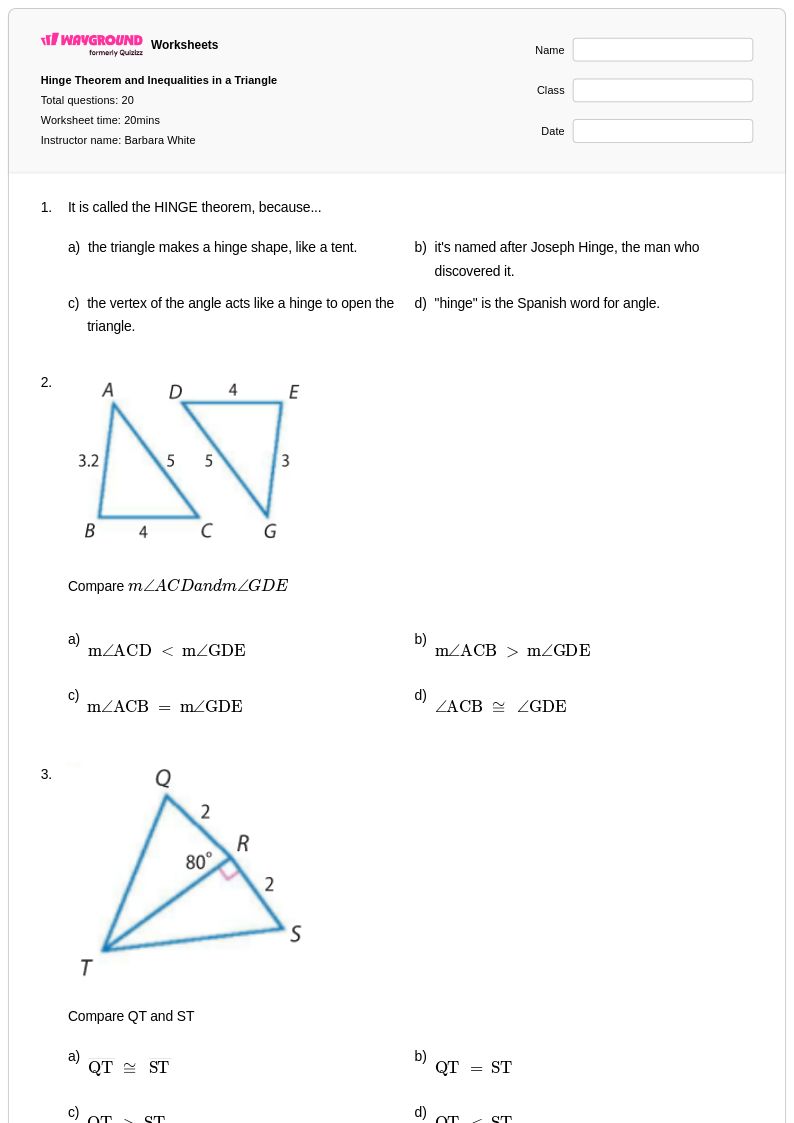
20 Q
8th - 10th
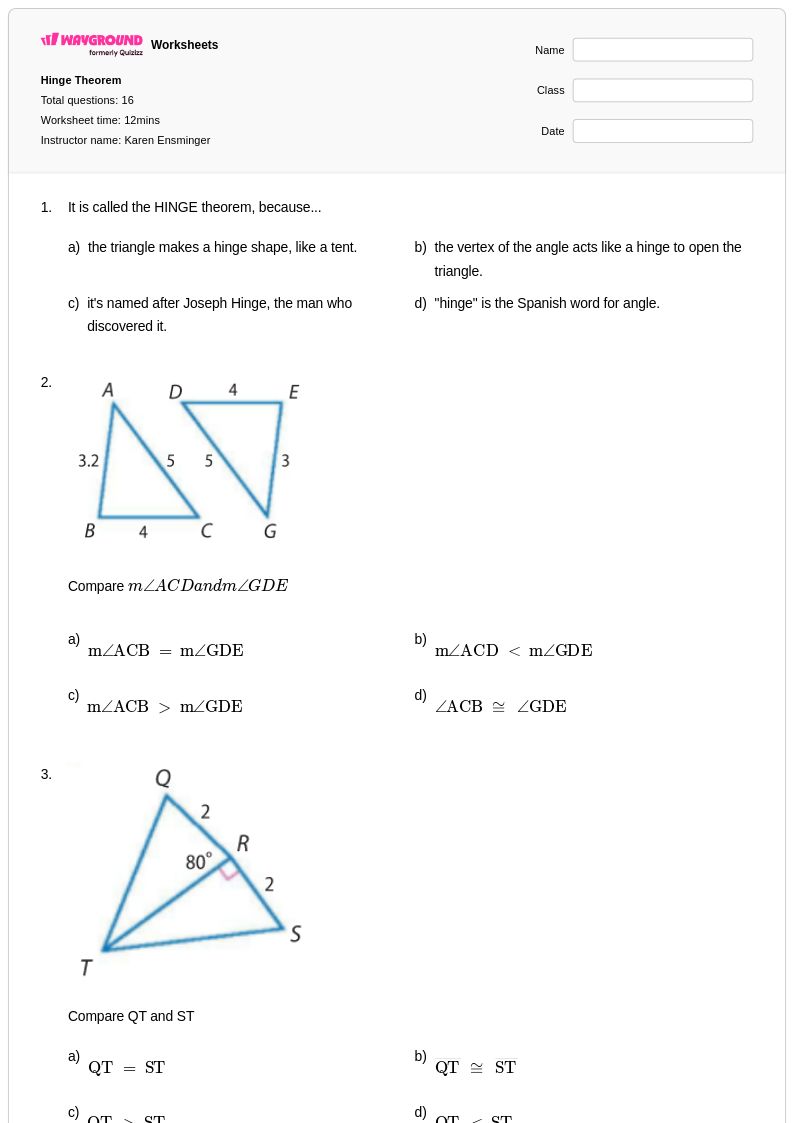
16 Q
9th
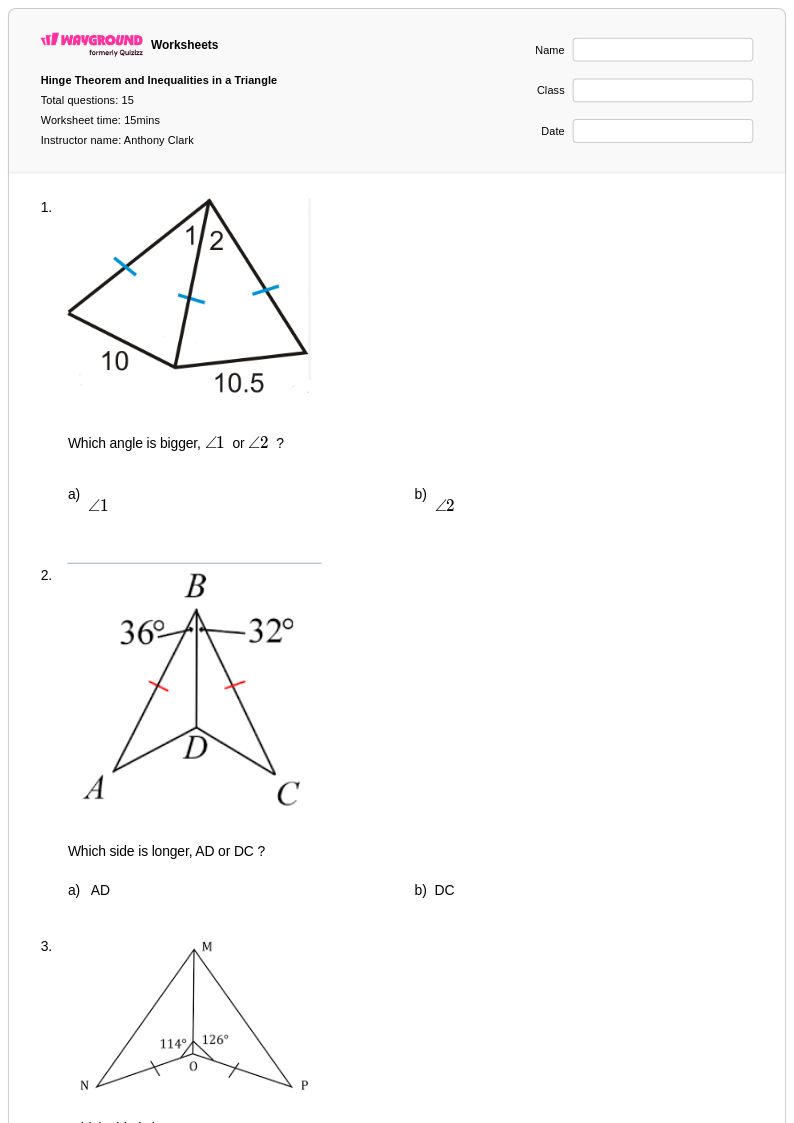
15 Q
8th - Uni
Explore Other Subject Worksheets for class 9
Explore printable Hinge Theorem worksheets for Class 9
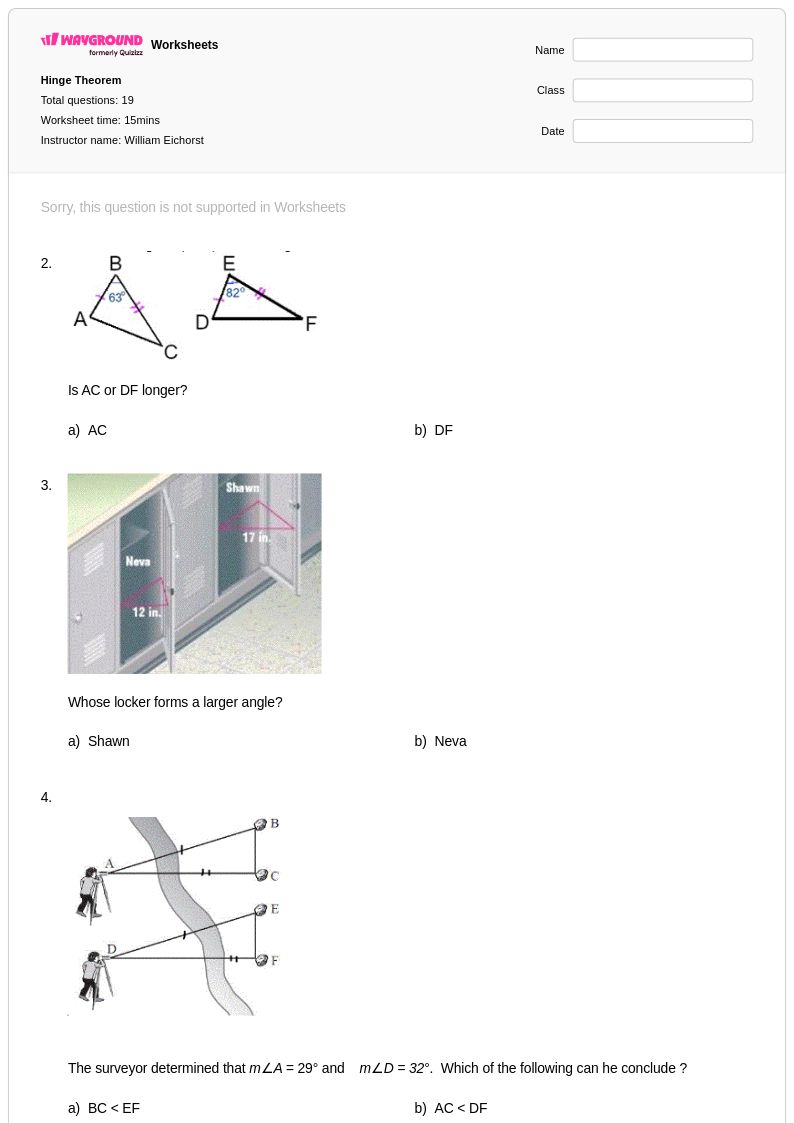
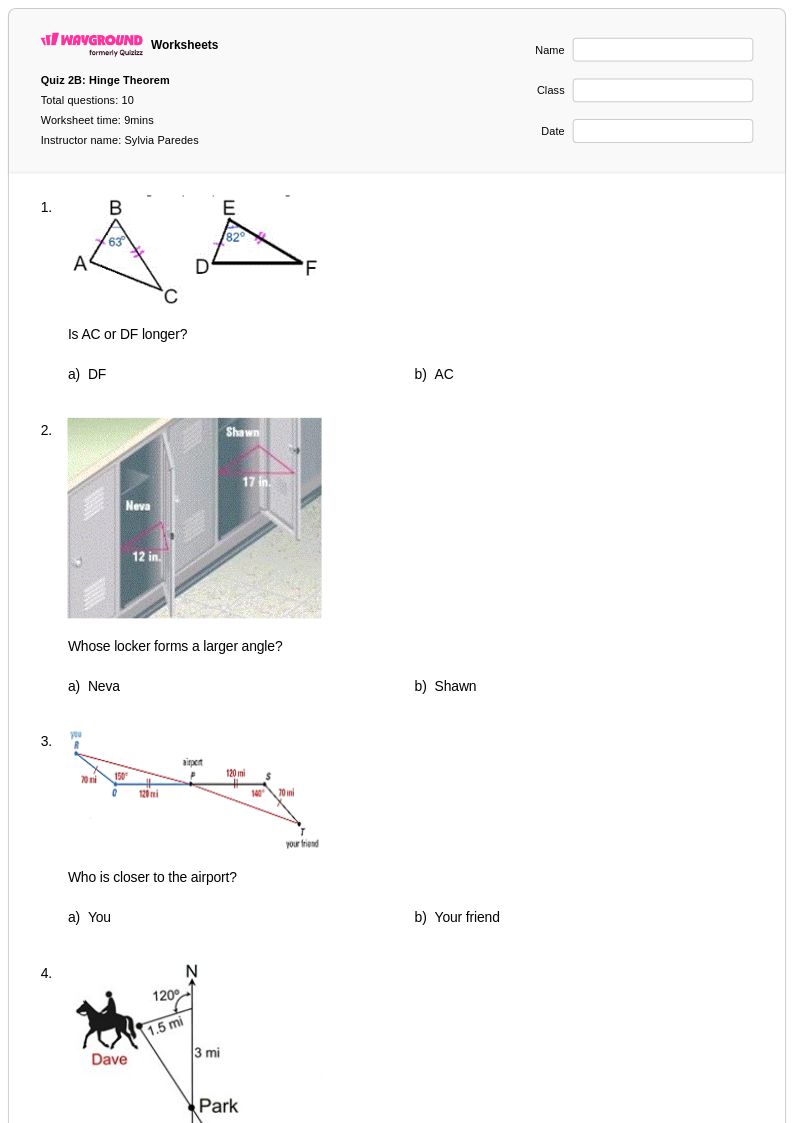
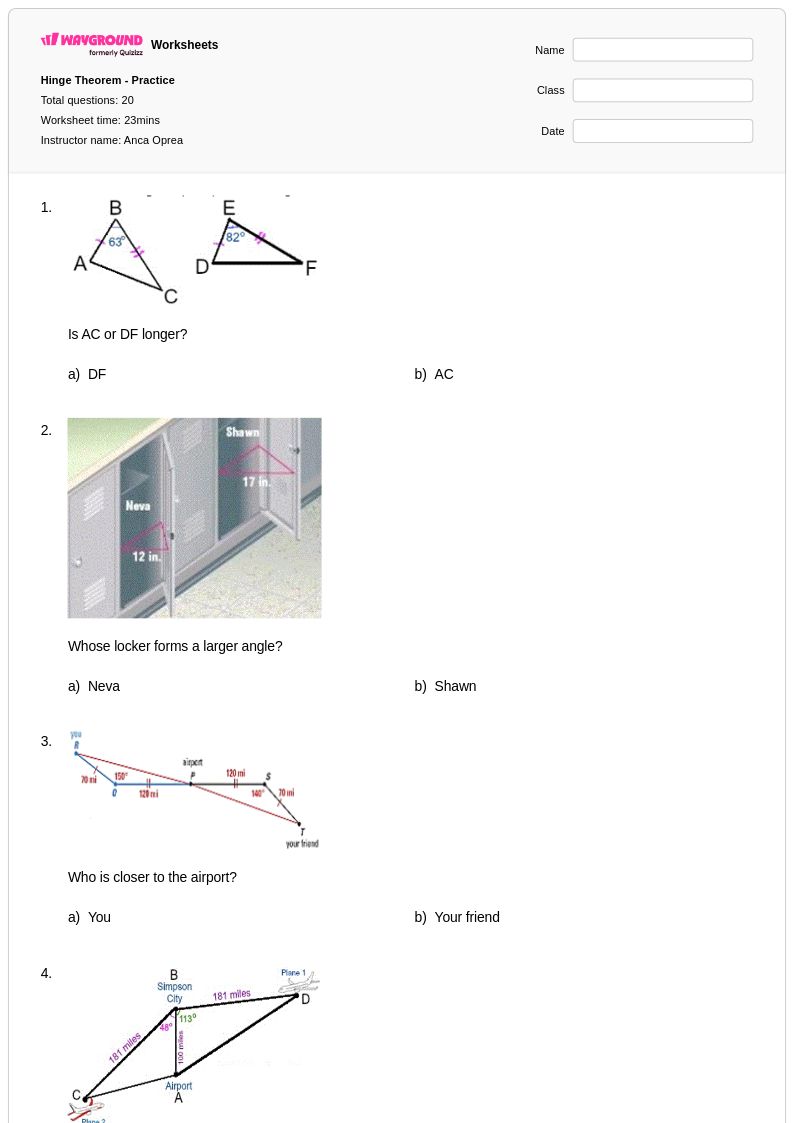
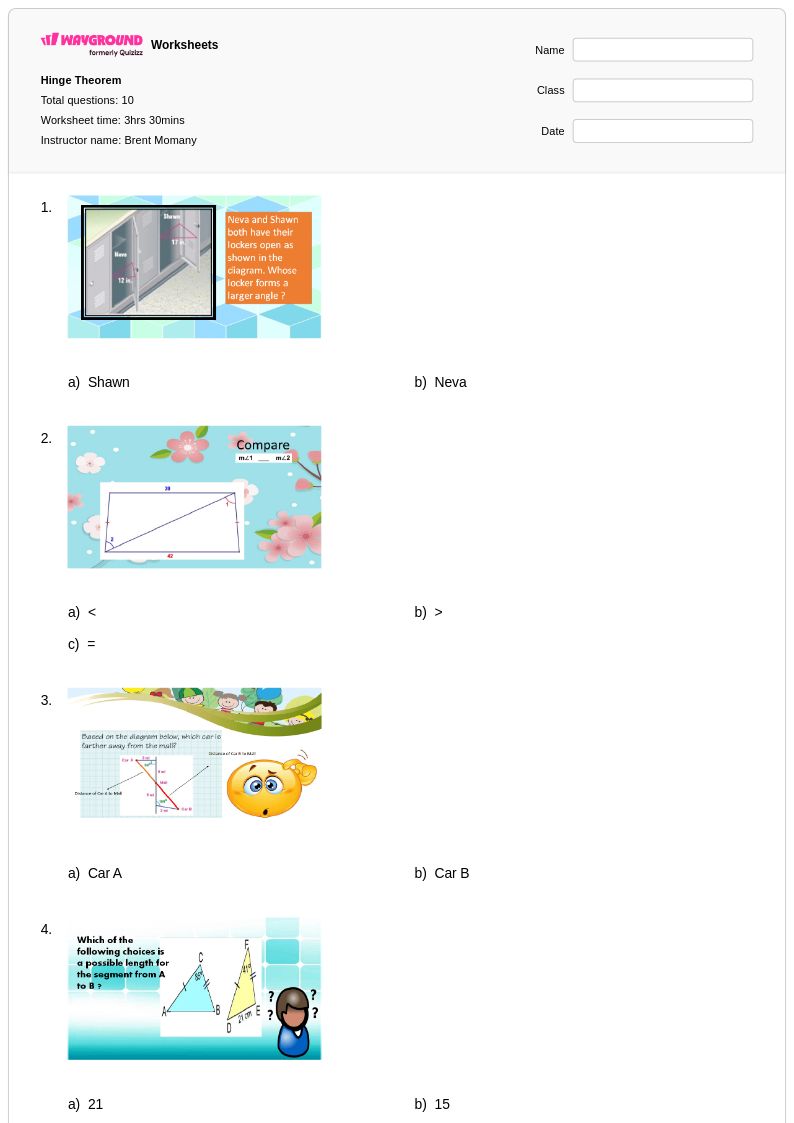
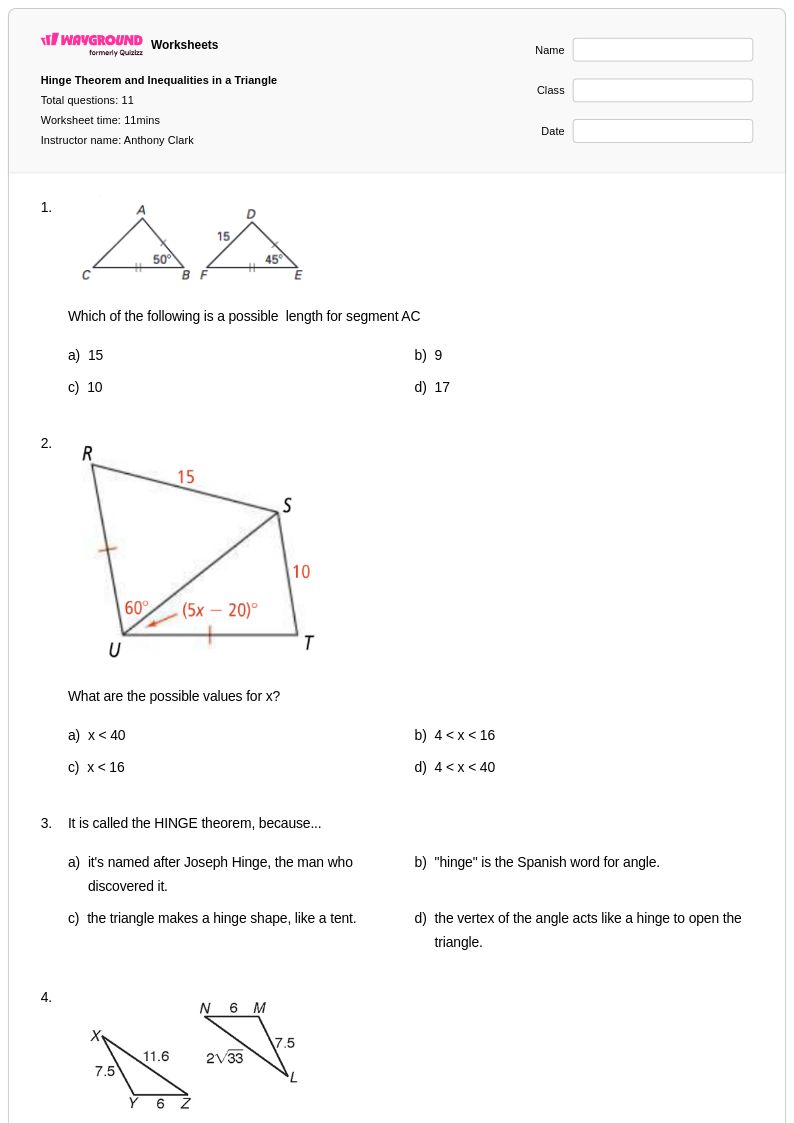
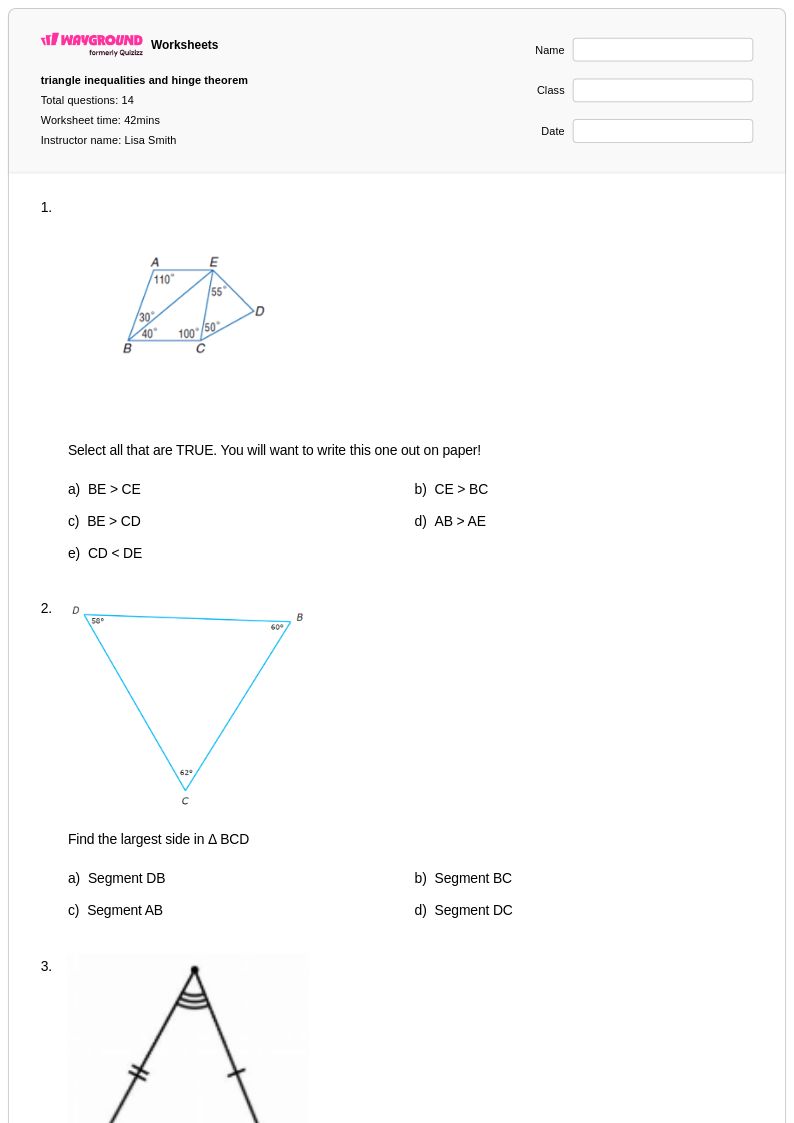
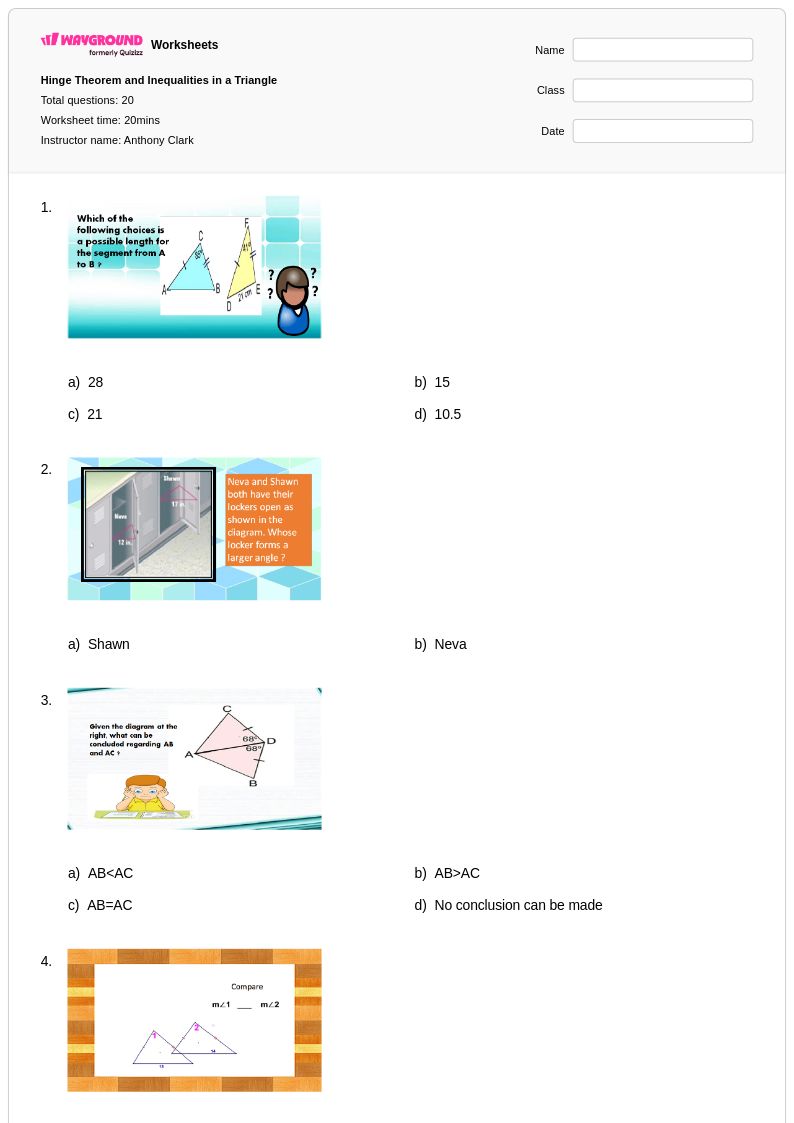
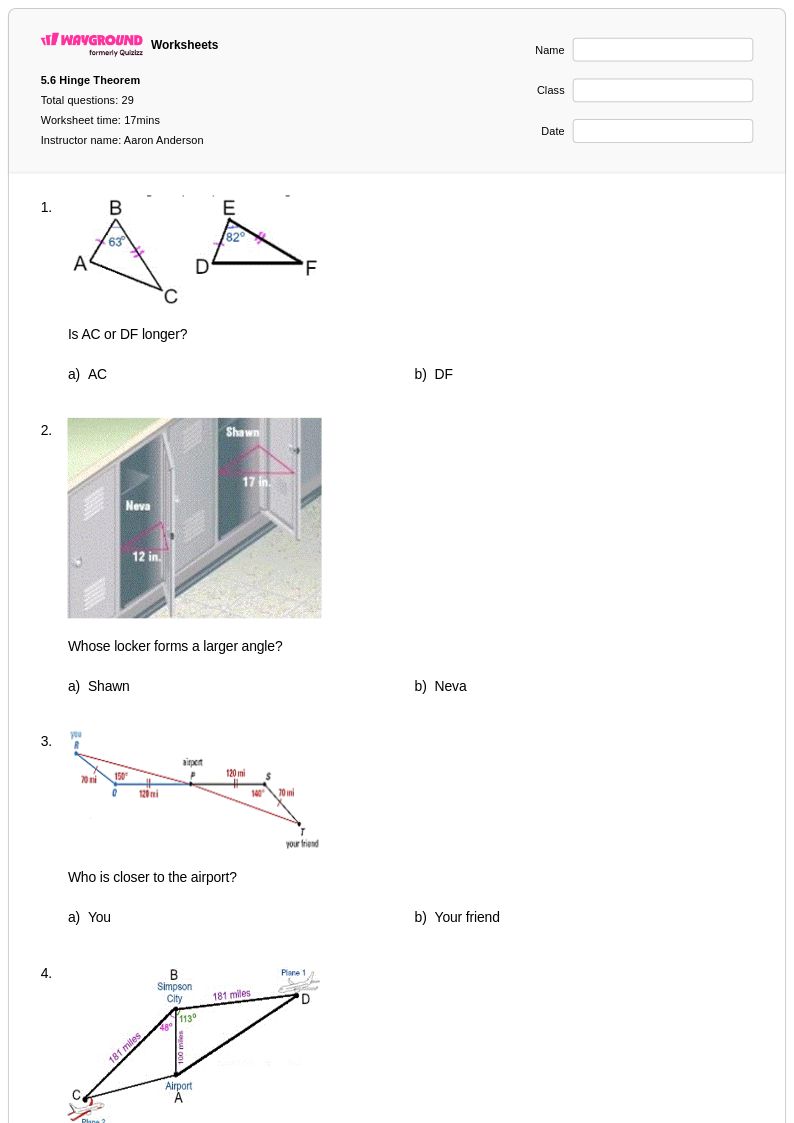
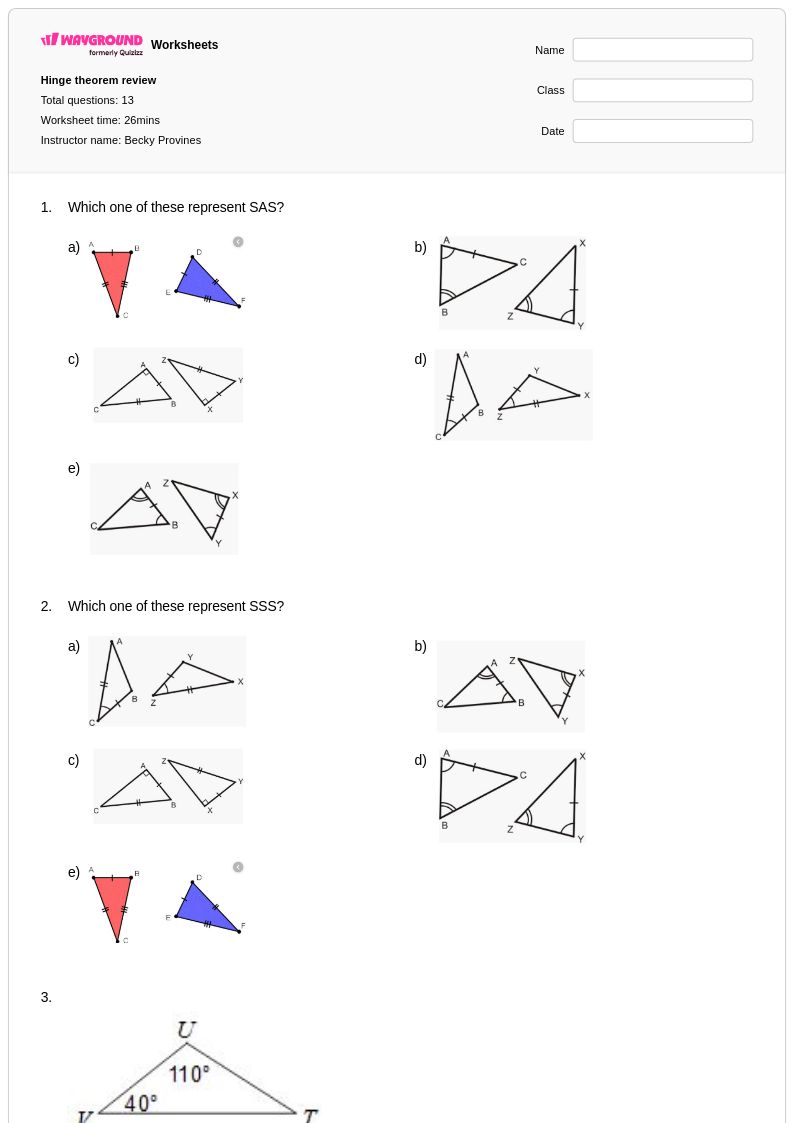
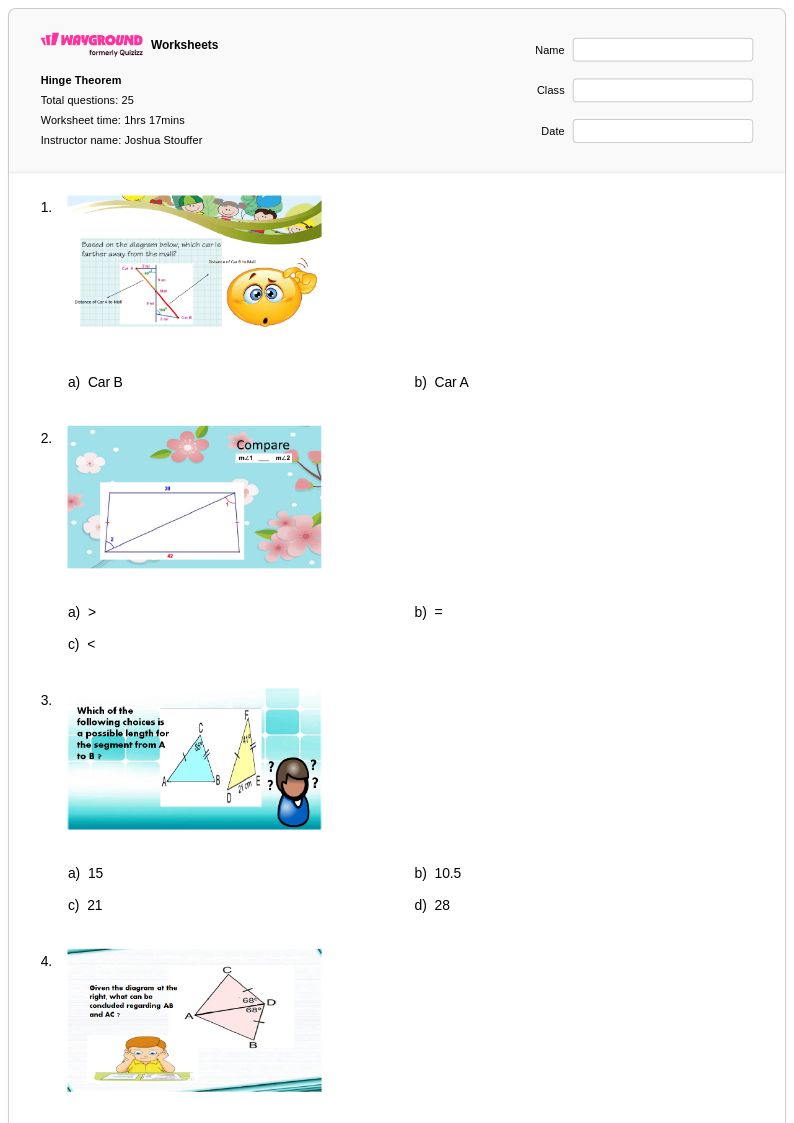
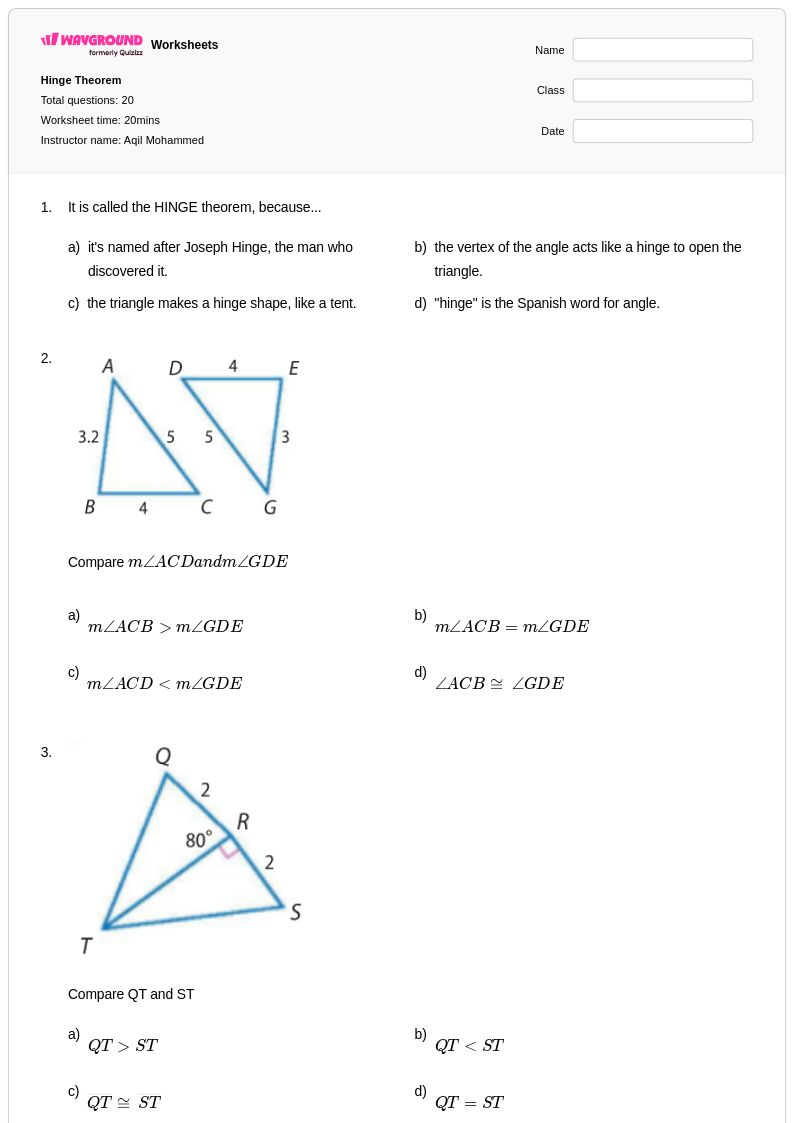
Hinge Theorem worksheets for Class 9 students available through Wayground provide comprehensive practice with this fundamental geometric principle that relates side lengths to angle measures in triangles. These expertly designed resources help students master the concept that when two sides of one triangle are congruent to two sides of another triangle, the triangle with the larger included angle will have the longer third side, and conversely, the triangle with the longer third side will have the larger included angle. The worksheets strengthen critical thinking skills through systematic practice problems that require students to compare triangles, analyze given information, and apply logical reasoning to determine relationships between angles and sides. Each worksheet includes a complete answer key and is available as a free printable pdf, making it easy for educators to incorporate immediate feedback and assessment into their geometry instruction.
Wayground supports mathematics teachers with an extensive collection of teacher-created Hinge Theorem resources that can be easily located through robust search and filtering capabilities designed specifically for educational content. The platform's millions of worksheets are aligned with curriculum standards and offer differentiation tools that allow educators to customize materials for varying student ability levels, from basic concept introduction to advanced proof-writing applications. Teachers can access these resources in both printable pdf format and interactive digital versions, providing flexibility for classroom instruction, homework assignments, and independent study sessions. This comprehensive approach enables educators to effectively plan lessons, provide targeted remediation for struggling students, offer enrichment opportunities for advanced learners, and deliver consistent skill practice that builds student confidence in applying the Hinge Theorem across diverse geometric problem-solving scenarios.
FAQs
Is the Hinge Theorem typically taught in 9th grade?
What's a good way to teach the Hinge Theorem for the first time?
What exercises are best for 9th graders learning the Hinge Theorem?
What's a common misconception for students new to the Hinge Theorem?
How can I assign this Grade 9 Hinge Theorem worksheet?
How does the Hinge Theorem connect to other 9th-grade geometry topics?