Free Printable Finding Quadrant of an Angle Worksheets for Class 9
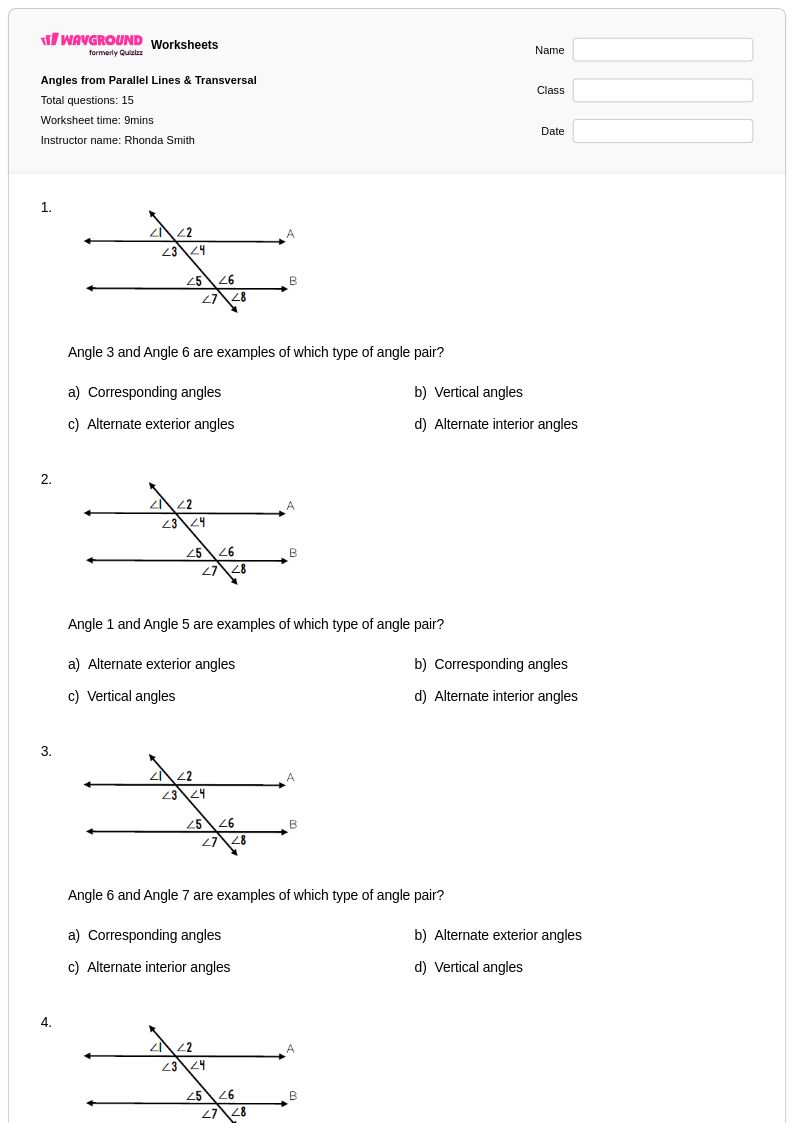
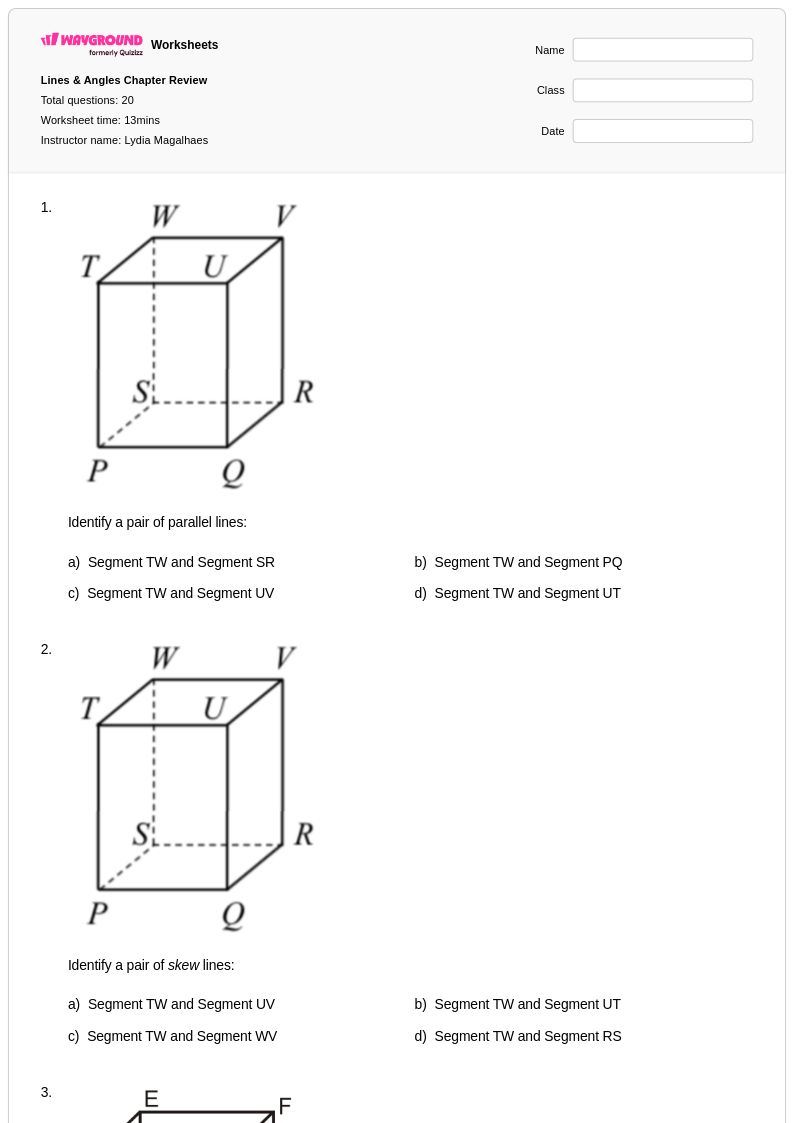
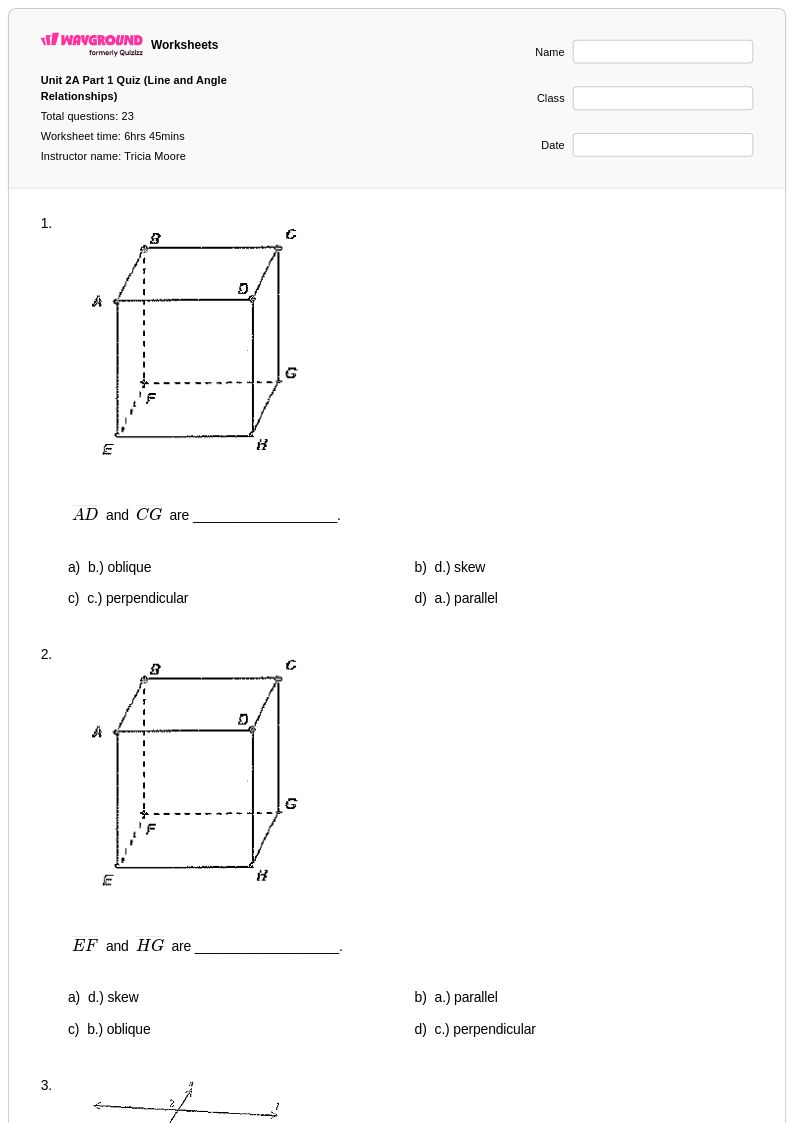
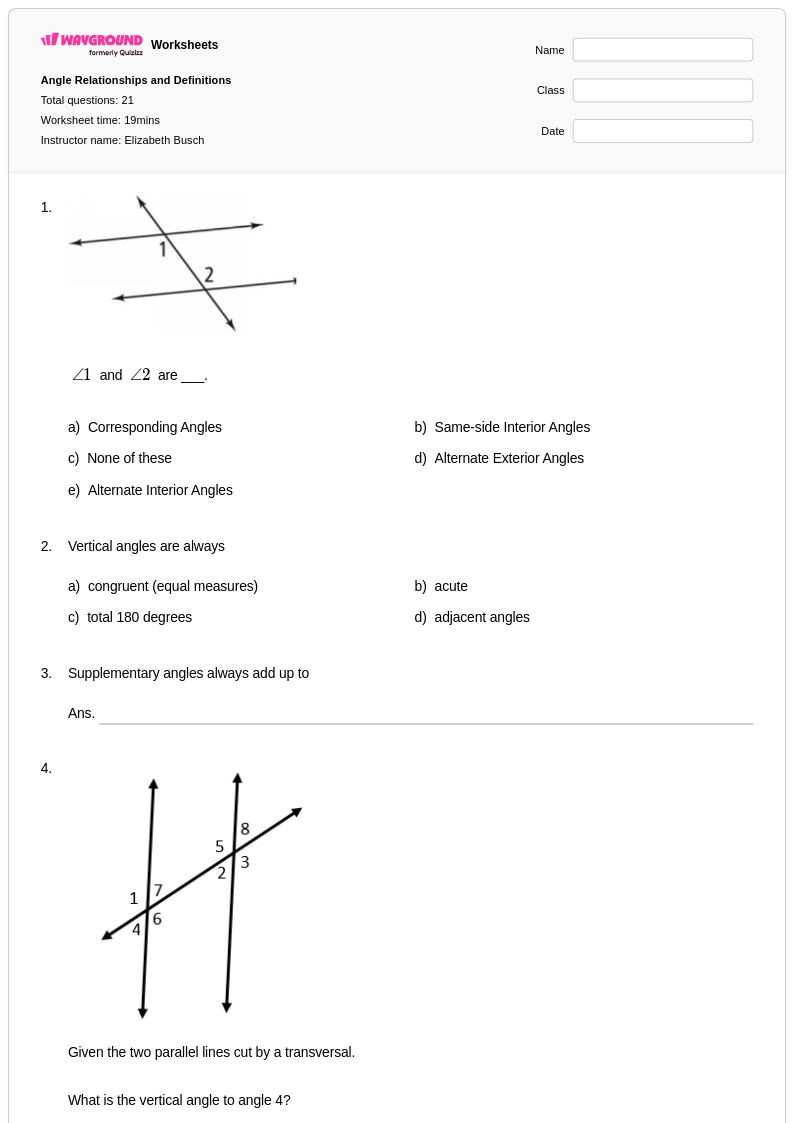
Class 9 students can master finding quadrant of an angle with Wayground's comprehensive collection of free geometry worksheets, featuring printable PDFs with practice problems and complete answer keys.
Explore printable Finding Quadrant of an Angle worksheets for Class 9
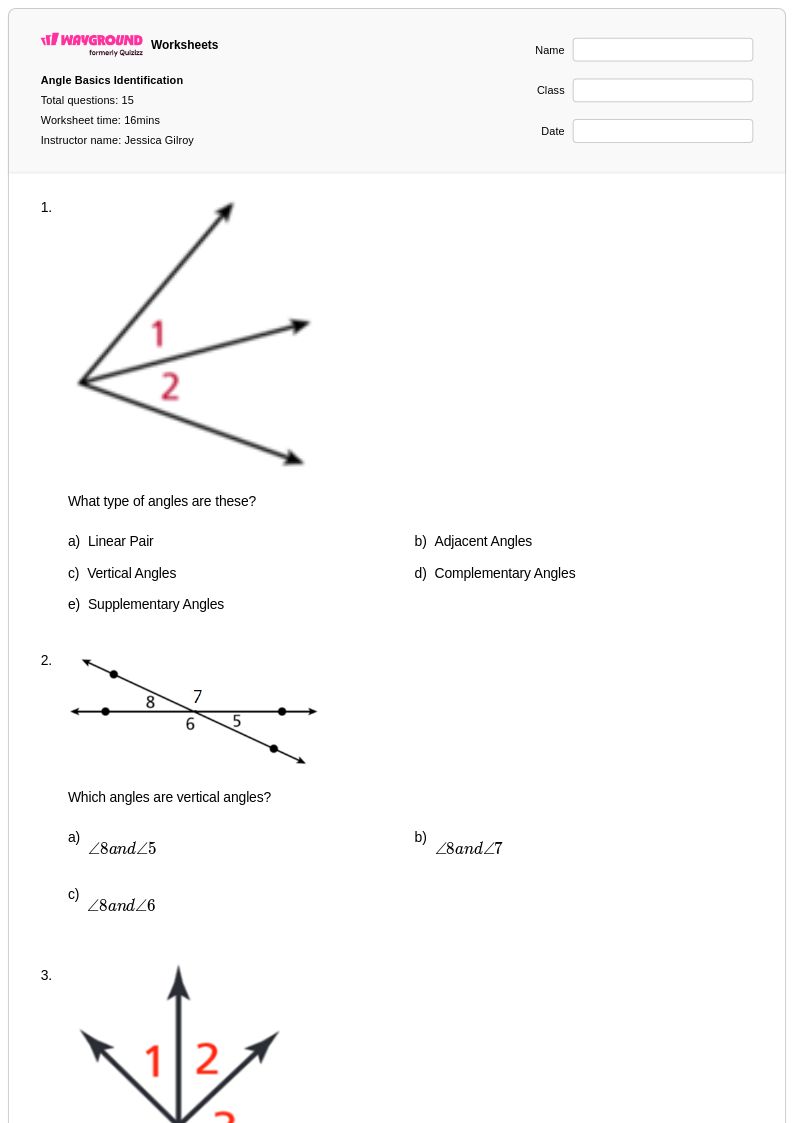
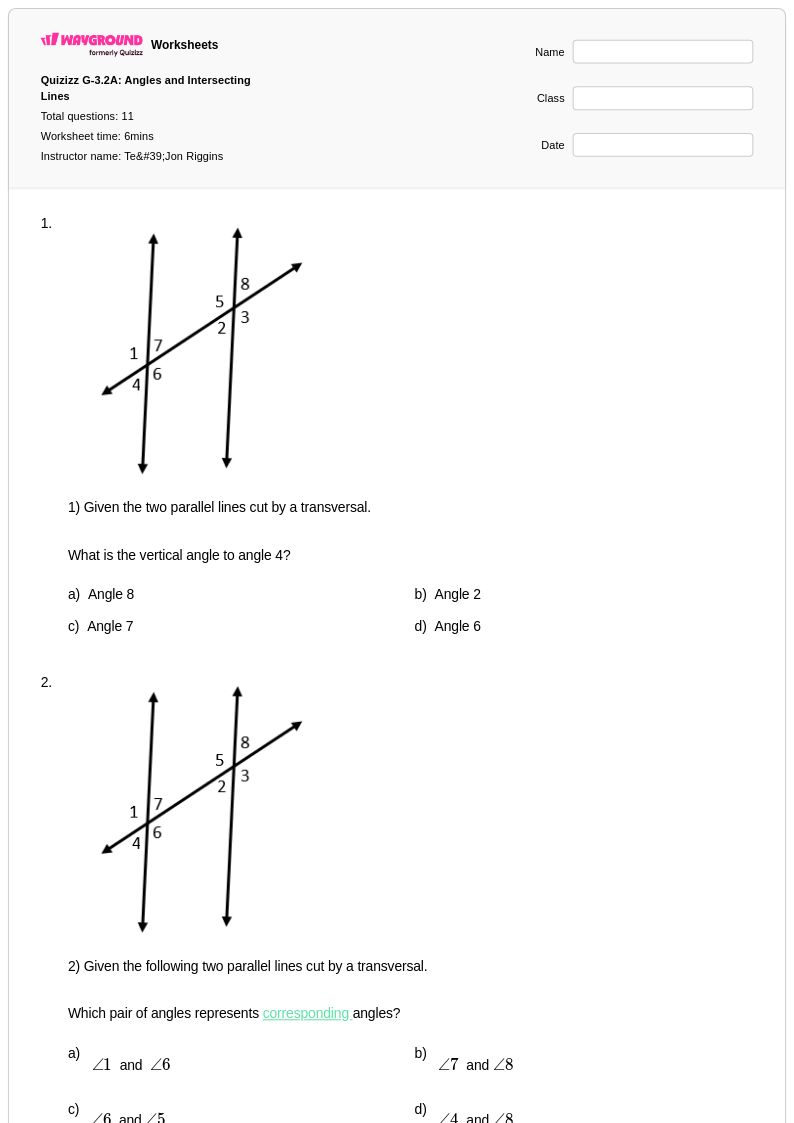
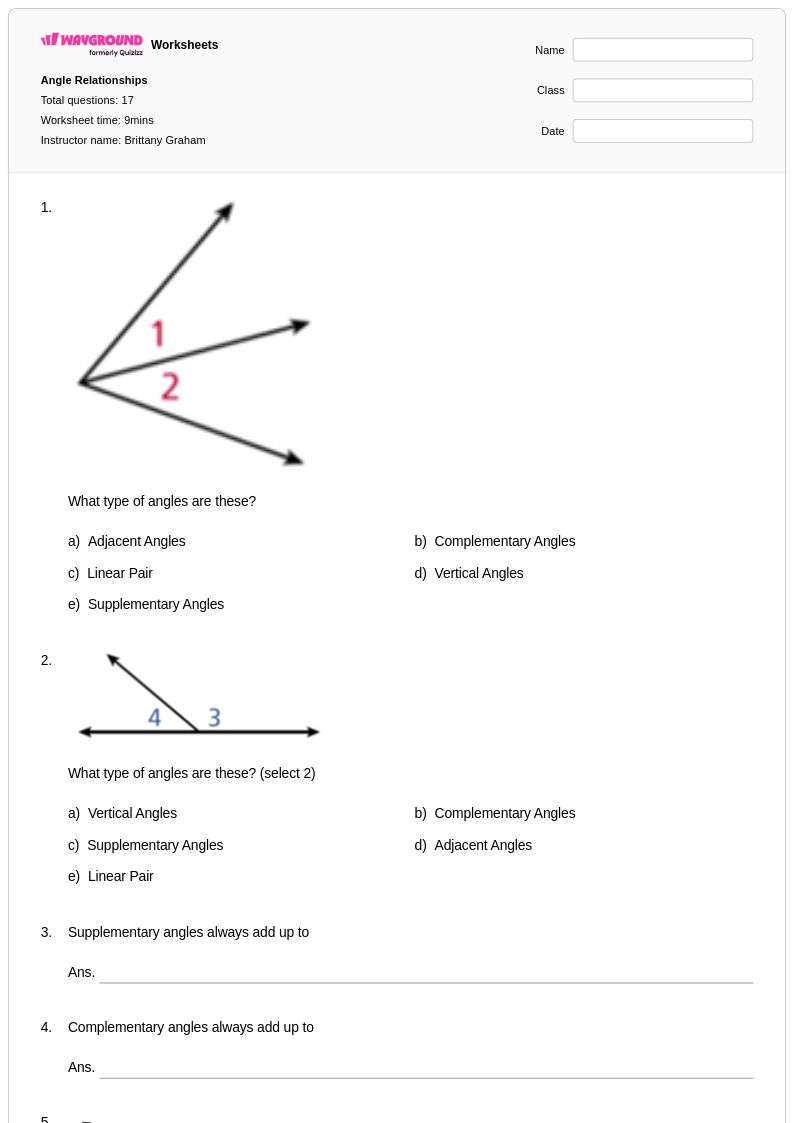
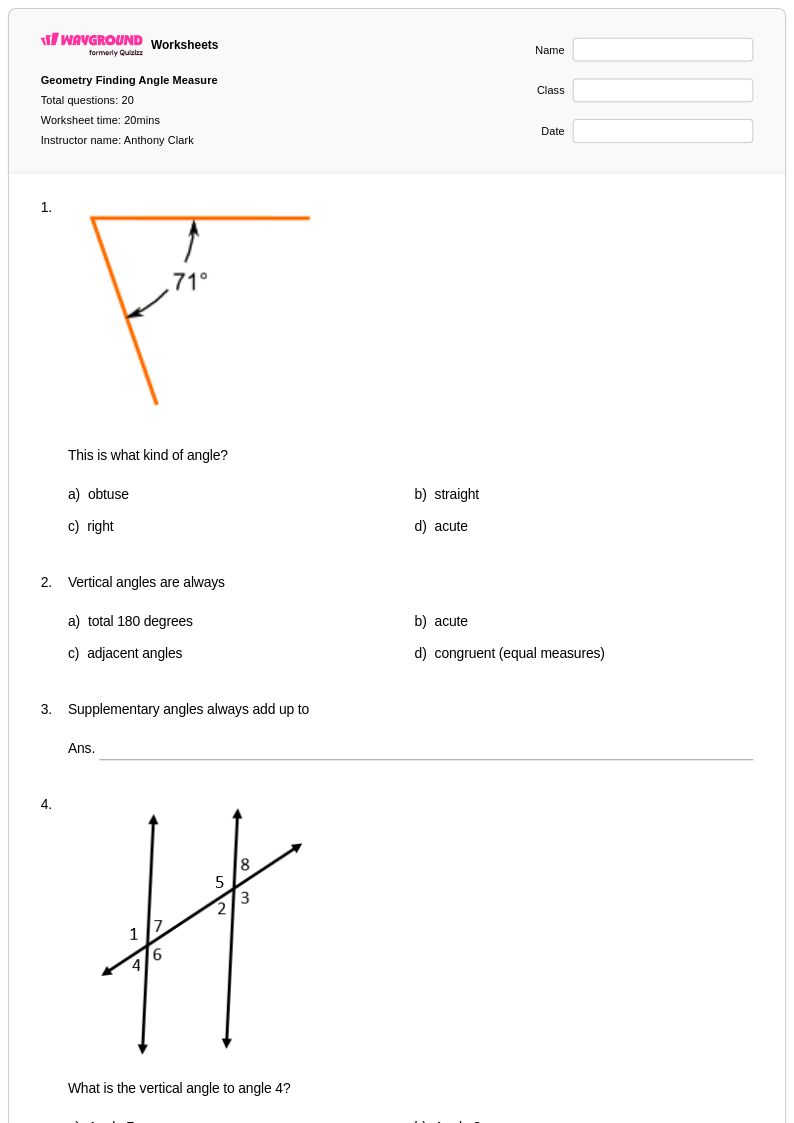
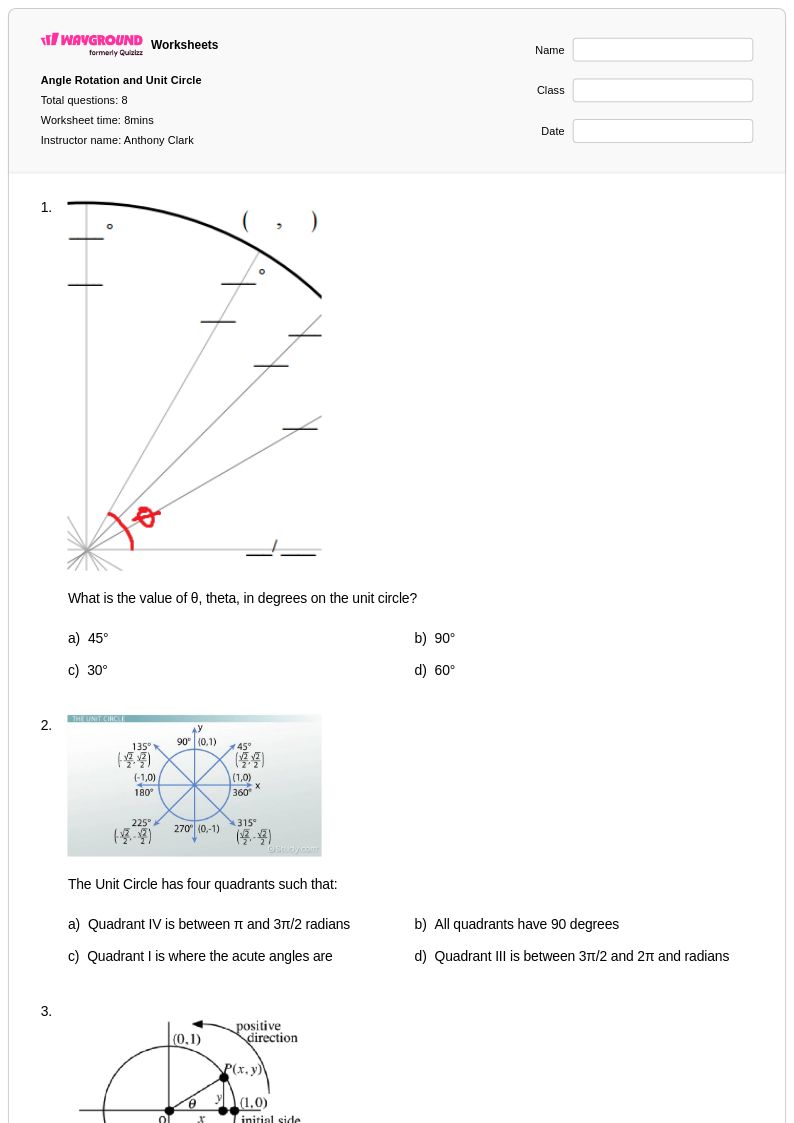
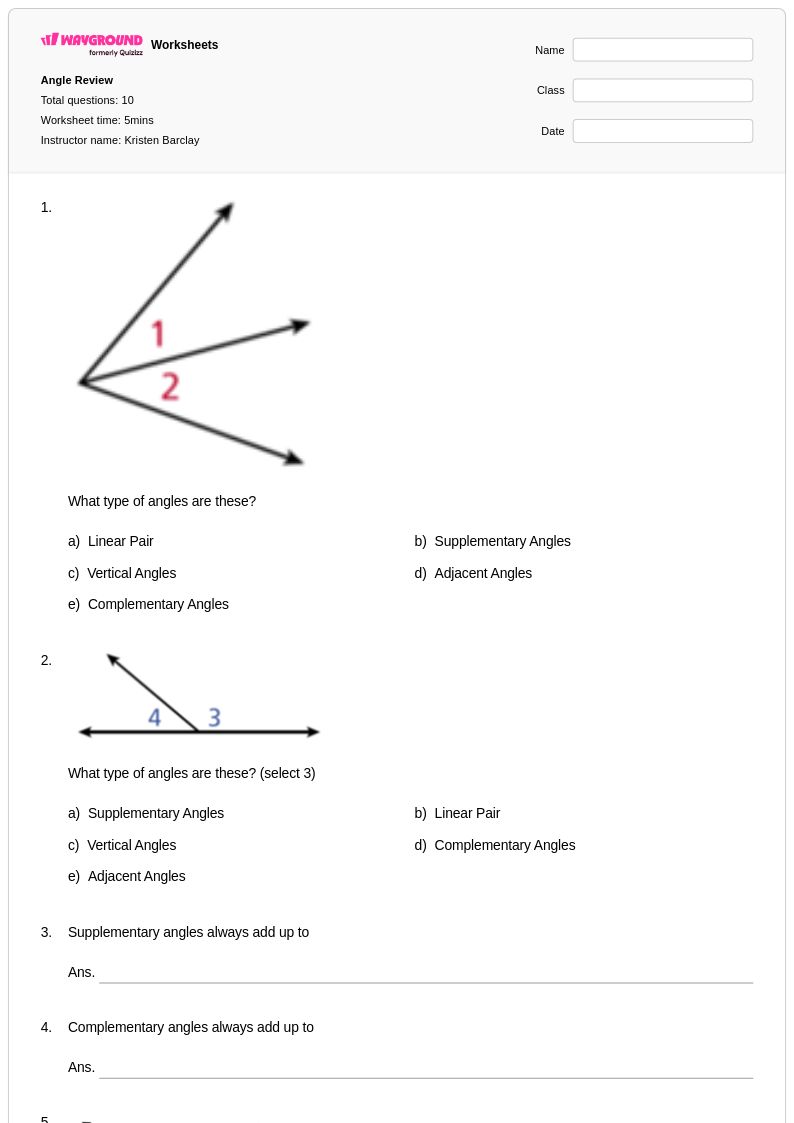
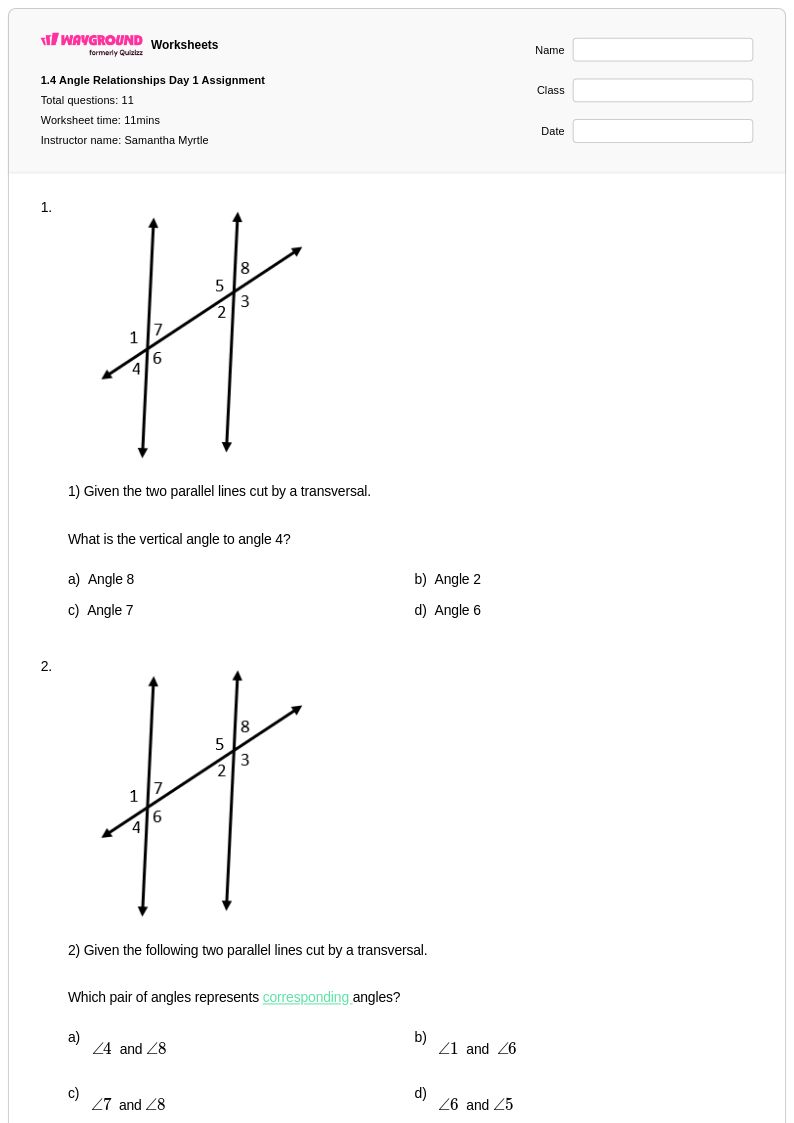
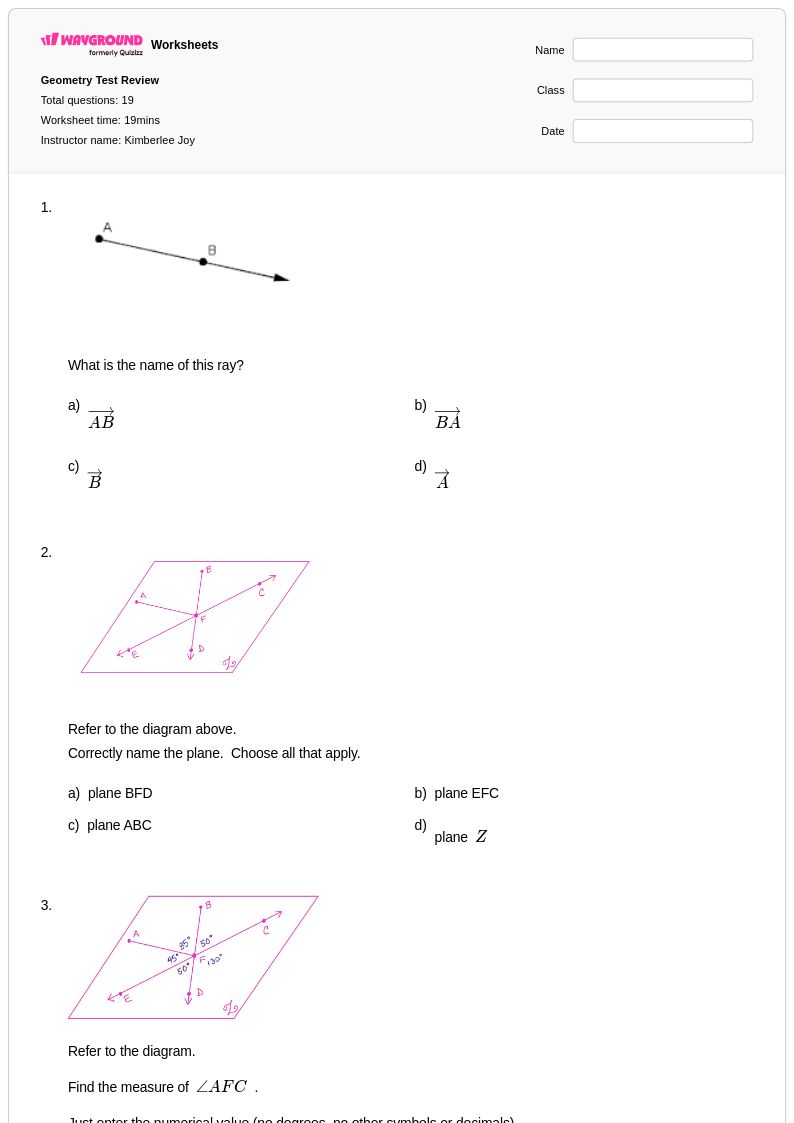
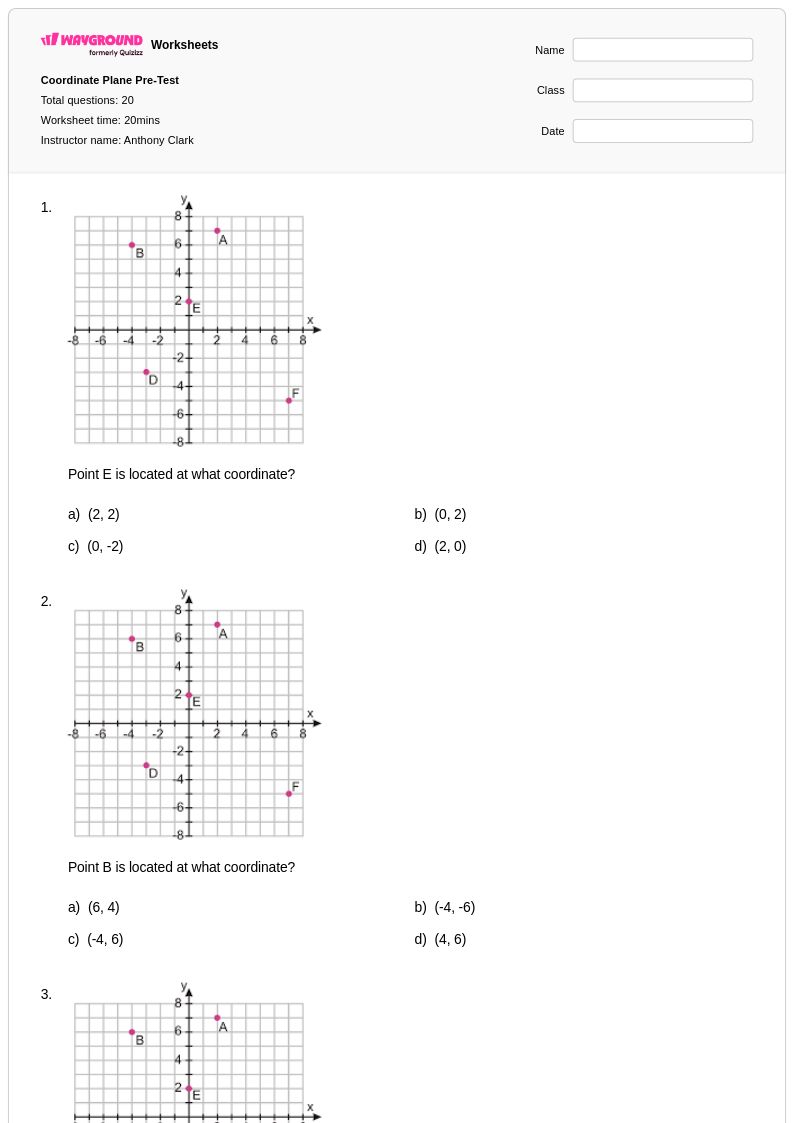
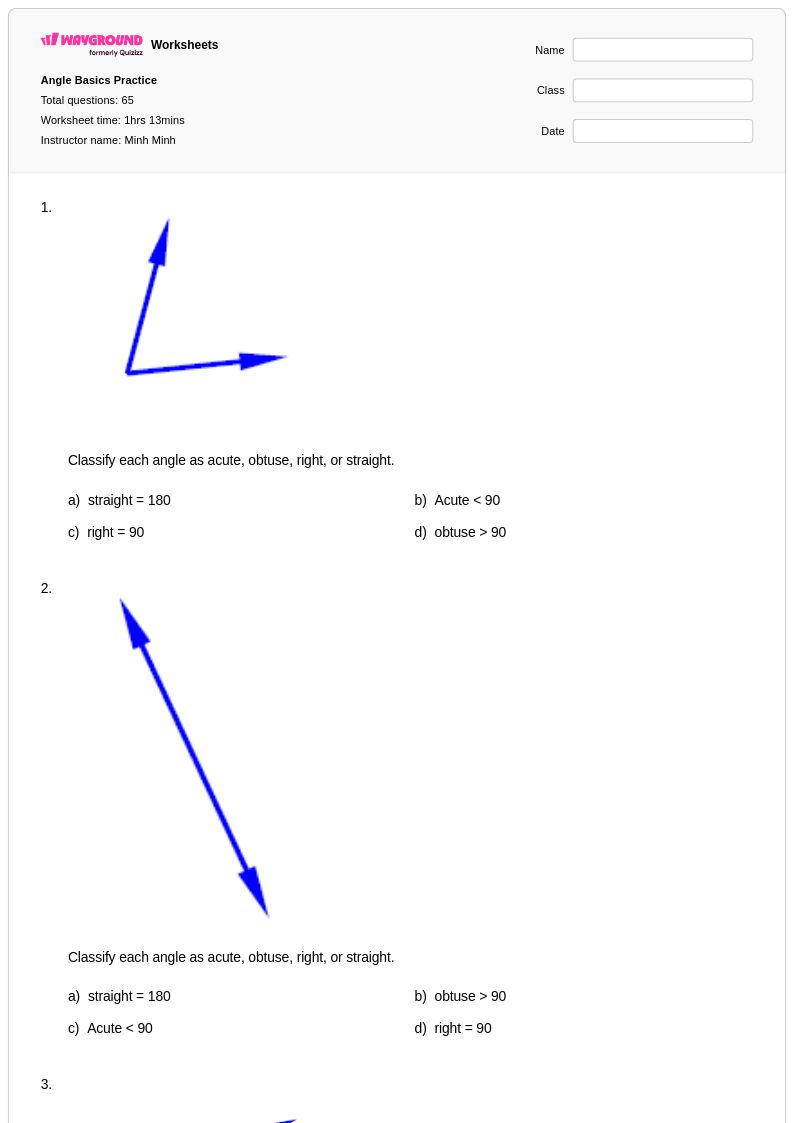
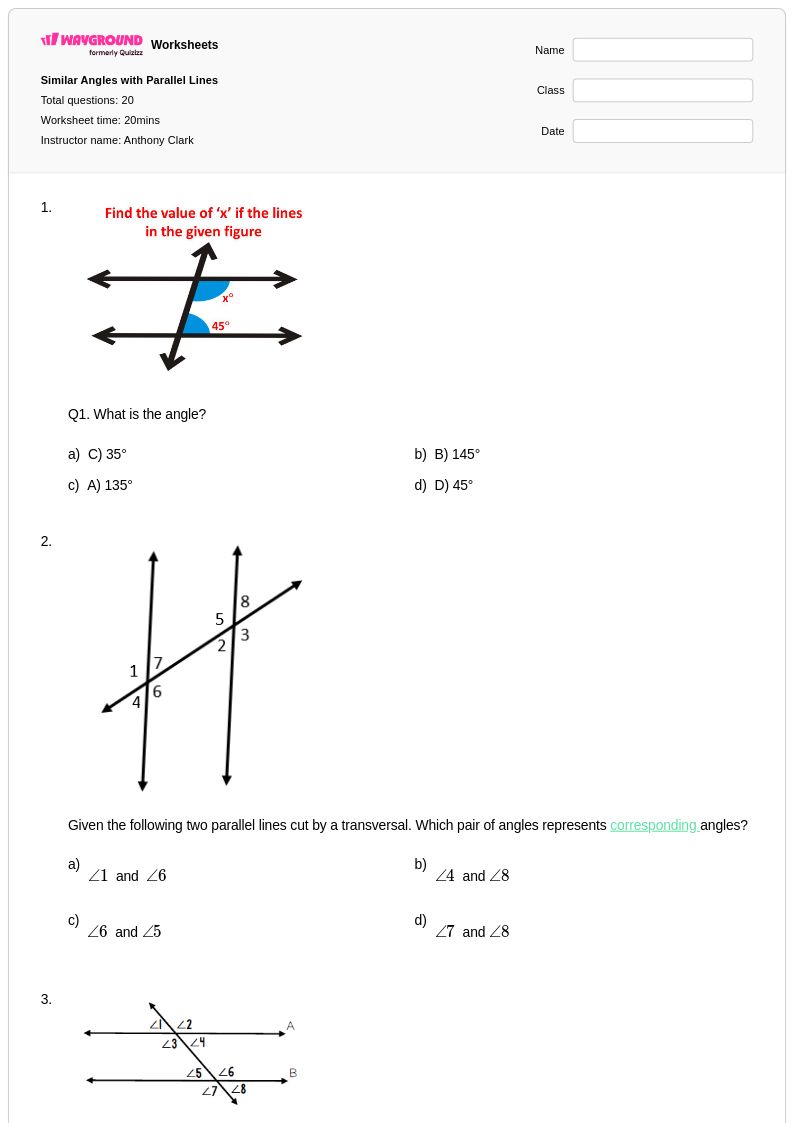
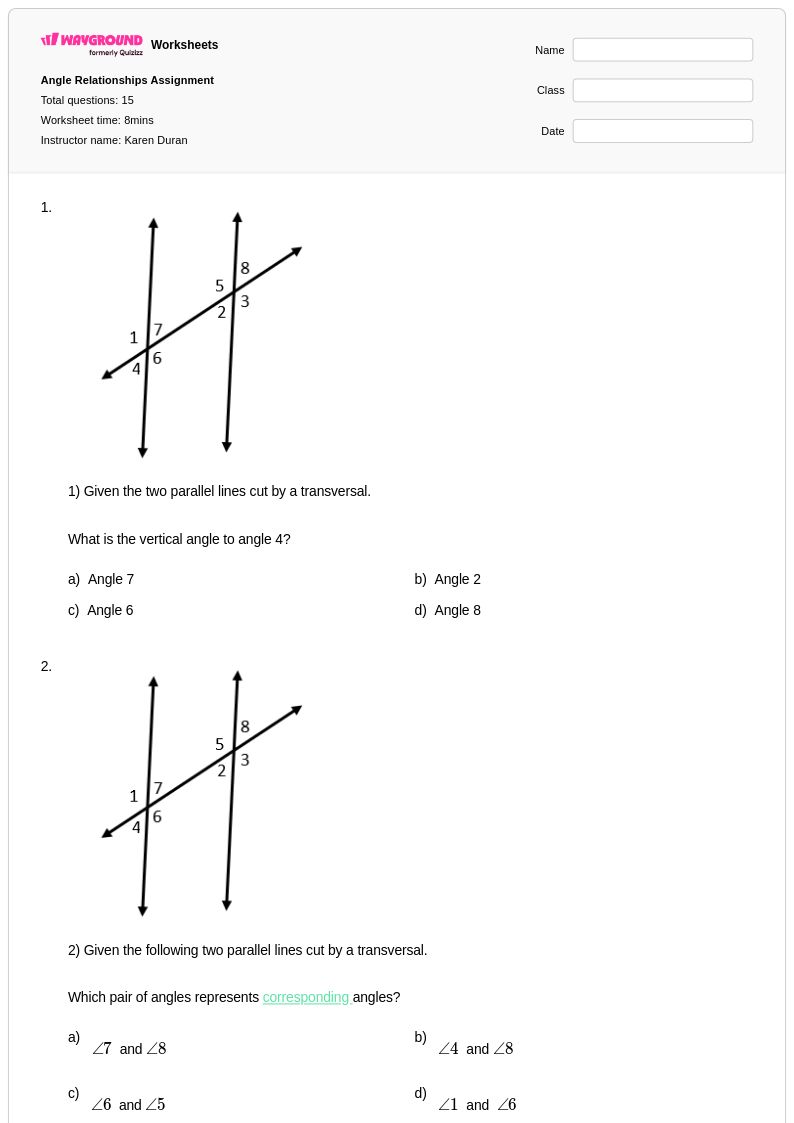
Finding quadrant of an angle worksheets for Class 9 students provide comprehensive practice with coordinate plane analysis and angle measurement concepts. These mathematics resources from Wayground (formerly Quizizz) help students master the essential skill of determining which quadrant contains the terminal side of angles measured in both degrees and radians. The worksheets strengthen students' understanding of the coordinate system, positive and negative angle rotations, and the relationship between angle measures and their positions on the unit circle. Each printable resource includes detailed practice problems that progress from basic quadrant identification to more complex scenarios involving coterminal angles and reference angles, with answer keys provided to support independent learning and immediate feedback.
Wayground (formerly Quizizz) empowers mathematics teachers with millions of expertly crafted worksheet collections that address Class 9 geometry standards and learning objectives. The platform's advanced search and filtering capabilities allow educators to quickly locate age-appropriate materials for finding quadrant of an angle, with options to customize difficulty levels and problem types to meet diverse classroom needs. Teachers can access these resources in both digital and printable PDF formats, making them ideal for traditional classroom instruction, homework assignments, remediation sessions, and enrichment activities. The extensive differentiation tools enable instructors to modify worksheets for students at various skill levels, while the standards-aligned content ensures that practice problems directly support curriculum goals and prepare students for assessments covering coordinate geometry and trigonometric concepts.
FAQs
How do I teach finding the quadrant of an angle to Grade 9 students?
At Grade 9, students are typically entering geometry or precalculus, so quadrant identification should be taught in the context of the unit circle and trigonometric functions — not just as a coordinate plane exercise. Establish standard position clearly, then connect quadrant placement to the signs of sine and cosine: in Quadrant II, sine is positive and cosine is negative, and that sign pattern follows directly from where the terminal side lands. Teaching it this way means students aren't learning quadrant identification in isolation — they're building the framework they'll use every time they evaluate a trig function.
What practice problems should Grade 9 students work through for angle quadrant identification?
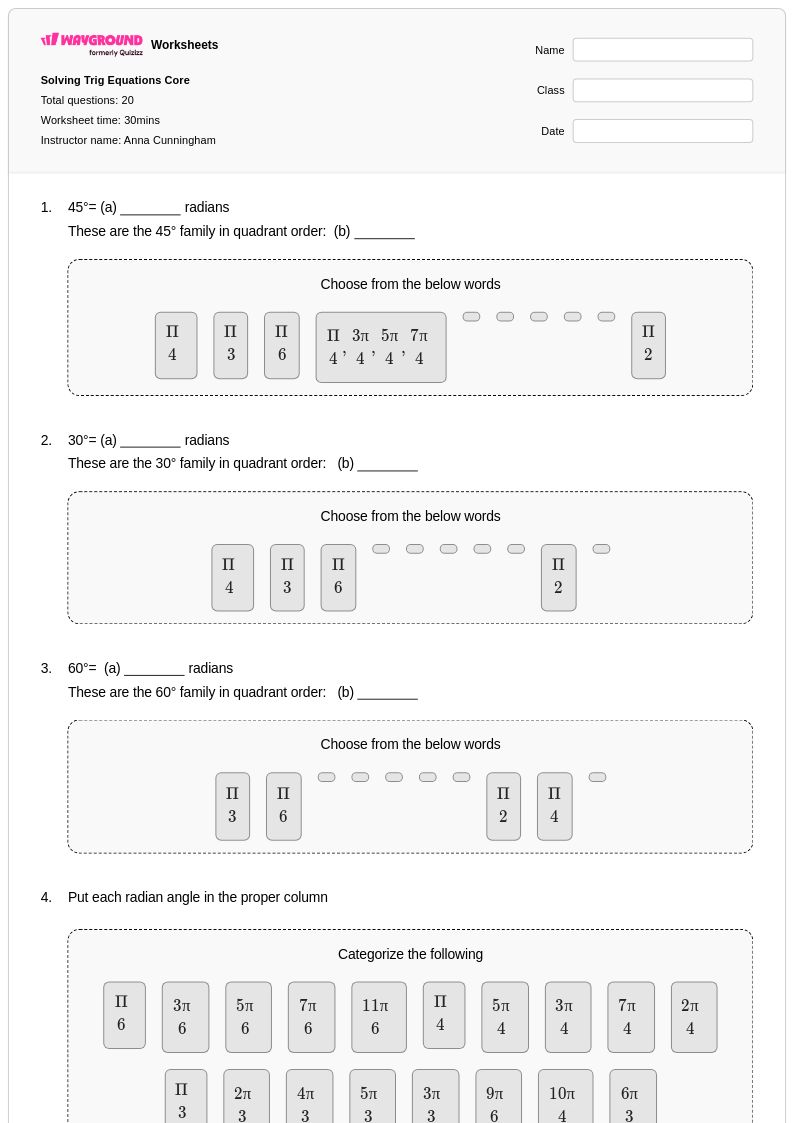
Grade 9 students need fluency with all of the following: positive and negative angles in degrees, angles greater than 360°, radian measure (including common values like π/3, 5π/4, and 7π/6), coterminal angles, and reference angles. These worksheets cover that full range. Radian measure deserves particular attention at this level — students who can only identify quadrants in degrees will struggle once trig functions are introduced in radian form.
What mistakes do Grade 9 students make when identifying the quadrant of an angle?
The most persistent error at Grade 9 is misplacing angles given in radians — students who are comfortable with degrees often lose their bearings when they see 5π/4 and can't quickly visualize where that lands. A second common mistake: students correctly identify the quadrant for a positive angle but then mishandle its negative coterminal equivalent, placing –π/4 in Quadrant II instead of Quadrant IV. Keeping a labeled unit circle visible during early practice and requiring students to convert between degrees and radians before answering both help.
How do I use these Grade 9 worksheets in my classroom?
These worksheets are available as printable PDFs and as digital quizzes hosted on Wayground. The digital format works well for immediate feedback — students see results right away, and you can review class-wide patterns before the next lesson. Every worksheet includes a complete answer key, so either format supports independent practice. If you print them, the Wayground for Teachers app lets you scan student work for grading rather than marking each paper by hand.
How does quadrant identification fit into the Grade 9 curriculum under Common Core?
Common Core's high school geometry and functions standards expect students to extend their understanding of angle measure to the full coordinate plane, working with angles in standard position as a foundation for trigonometric functions. Quadrant identification is the first concrete step in that progression: before students can evaluate sin(150°) or cos(5π/4), they need to know which quadrant the terminal side is in and what the reference angle is. This skill connects directly to the unit circle work that runs through precalculus and into calculus.
How can I support diverse learners with these Grade 9 angle quadrant worksheets?
For students who struggle with the vocabulary-heavy setup of angle problems, Wayground's Read Aloud feature reads question text aloud, which helps ELL students and those with reading difficulties engage with the math itself rather than getting stuck on language. Extended time is worth enabling for students who need to sketch angles before answering — that visual step takes time but is often the difference between a guess and a reasoned answer. You can also generate a translated version of the worksheet for students whose primary language isn't English, keeping the mathematical content identical.