Free Printable Finding Quadrant of an Angle worksheets
Master finding quadrant of an angle with Wayground's comprehensive collection of free geometry worksheets, featuring printable PDFs with practice problems and detailed answer keys to strengthen mathematical reasoning skills.
Explore printable Finding Quadrant of an Angle worksheets
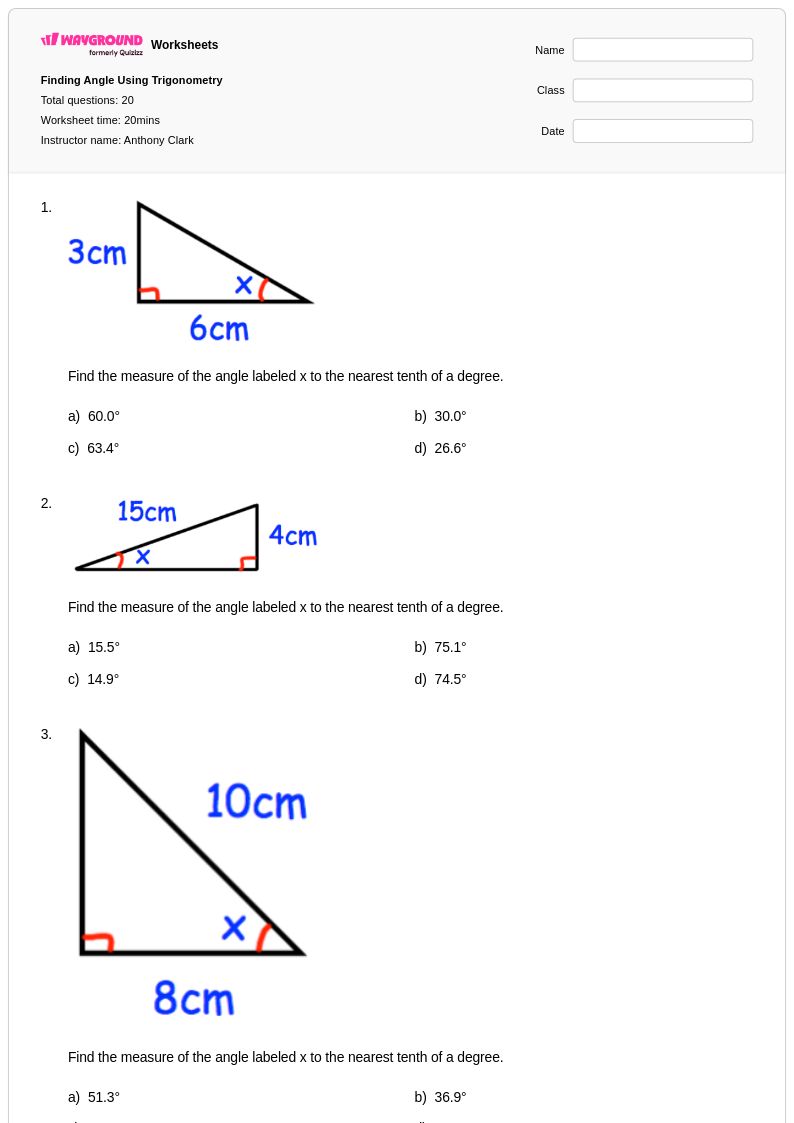
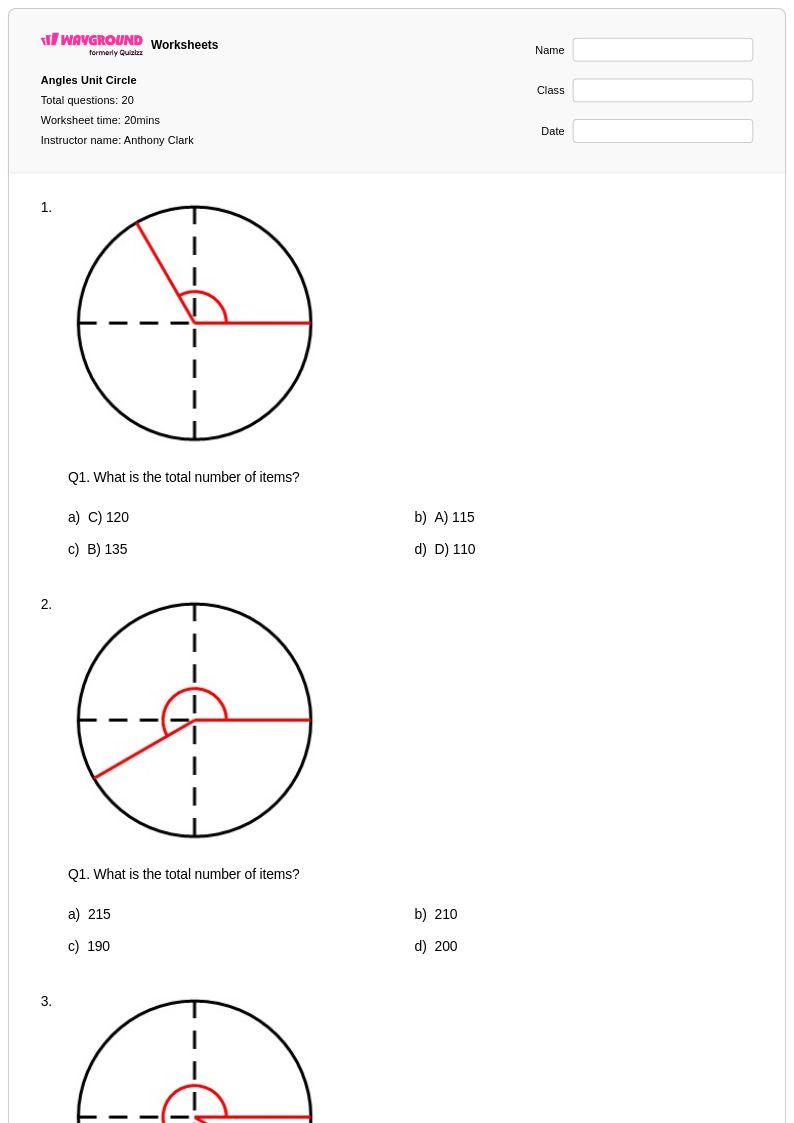
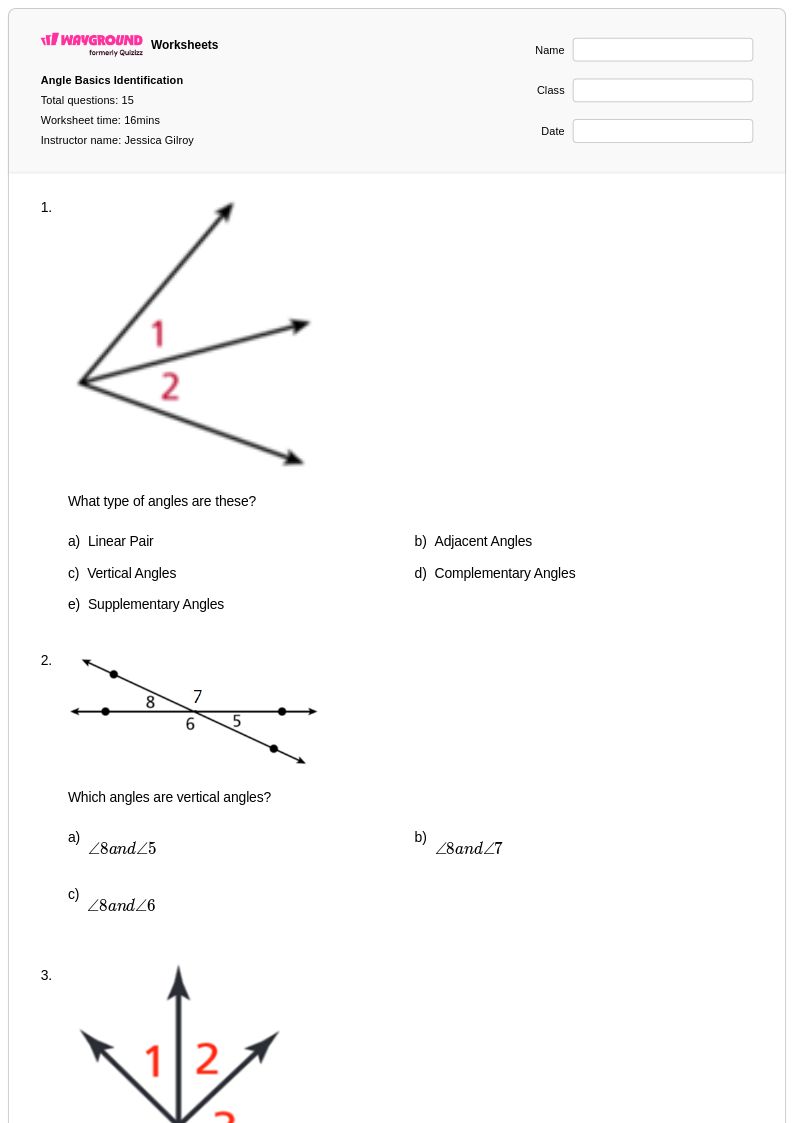
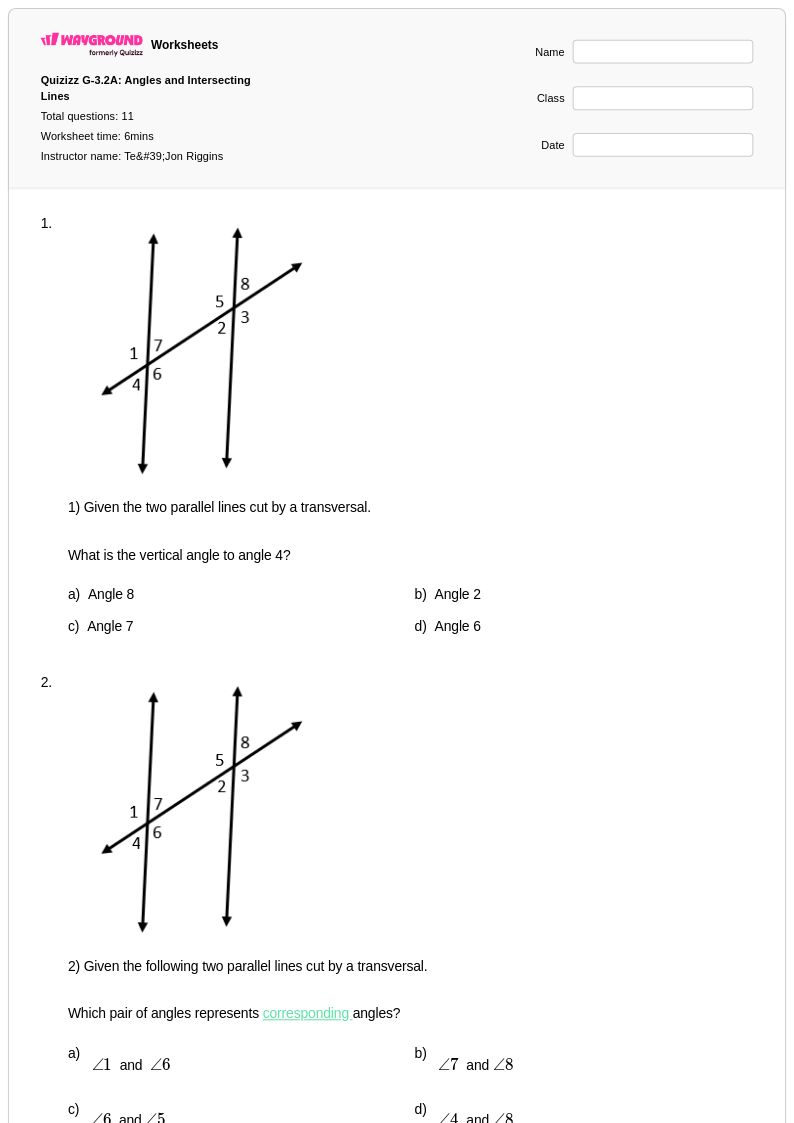
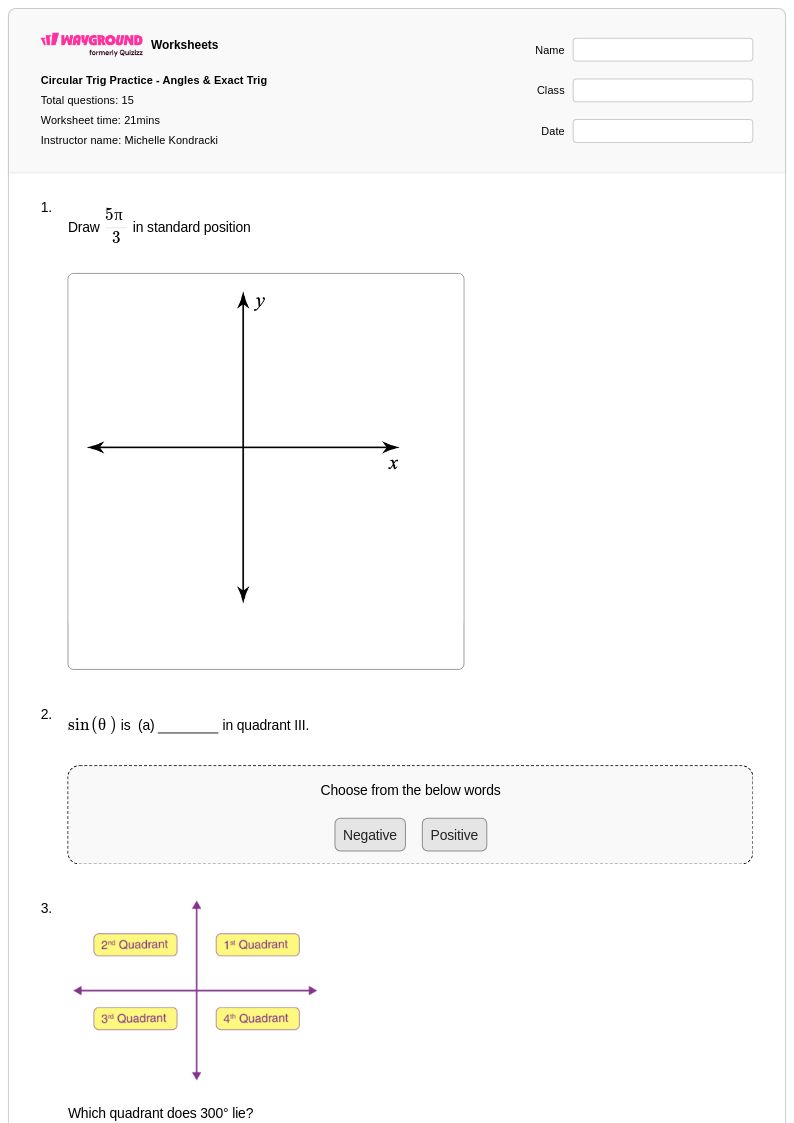
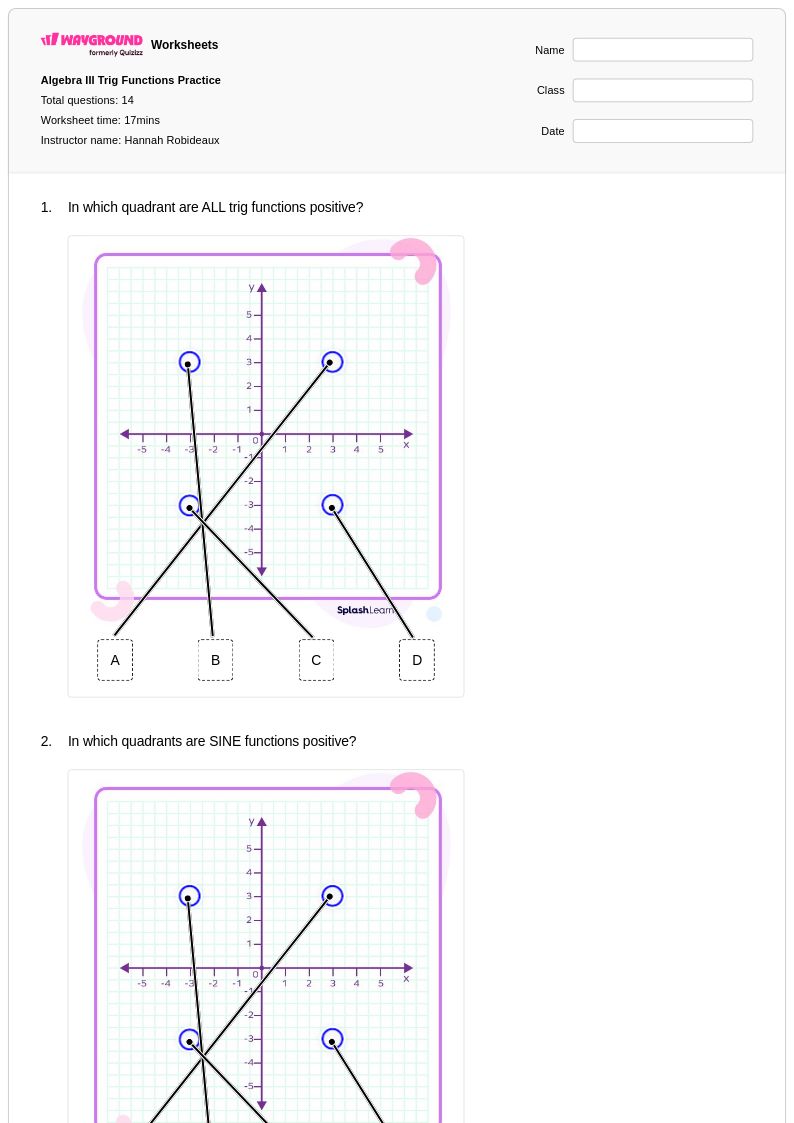
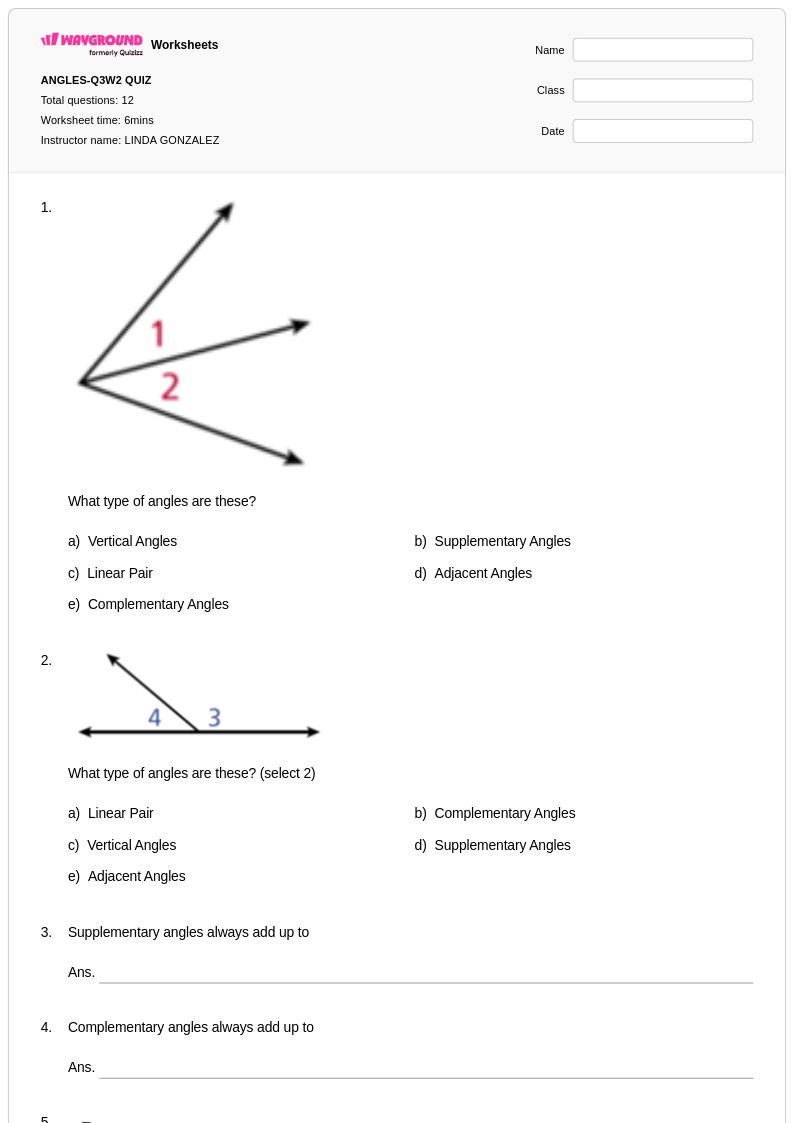
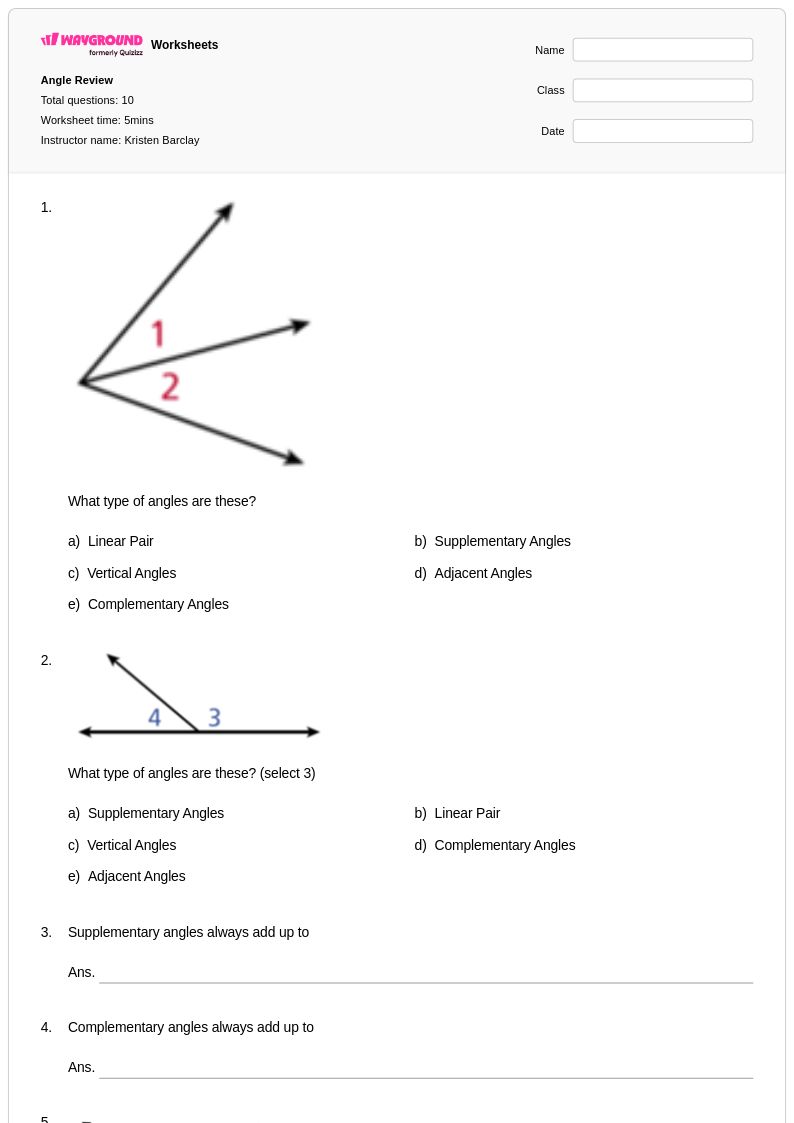
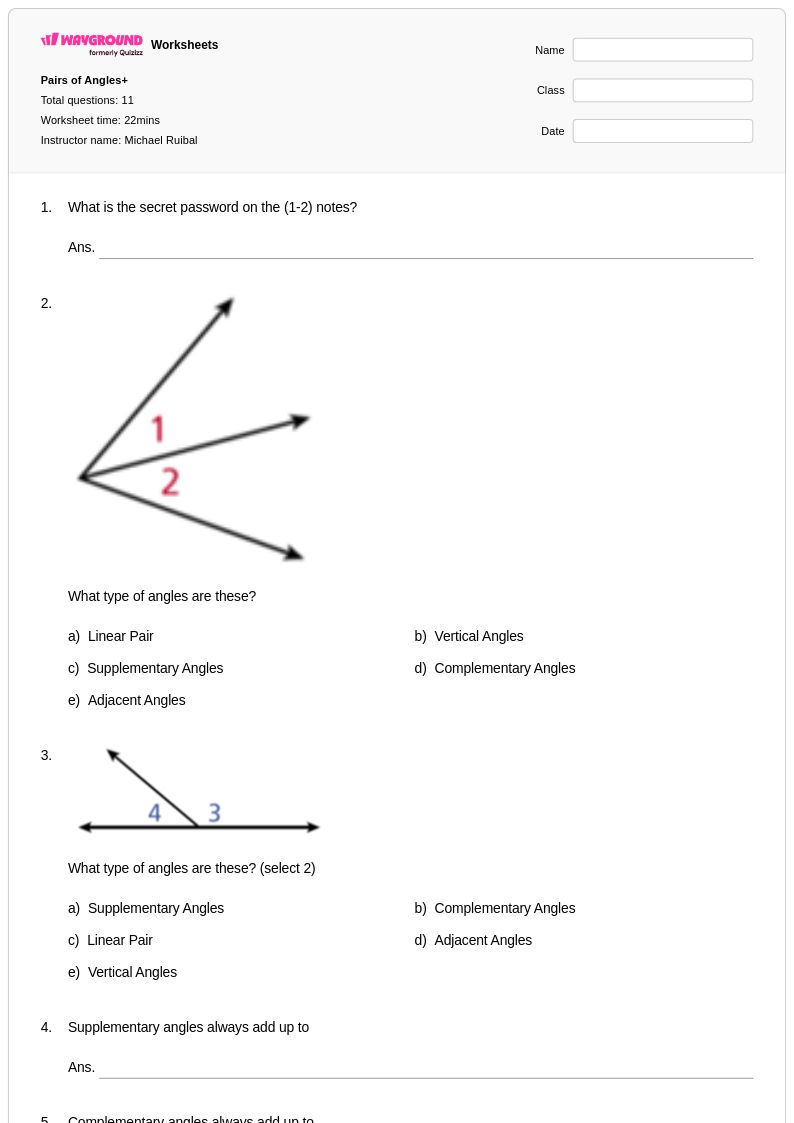
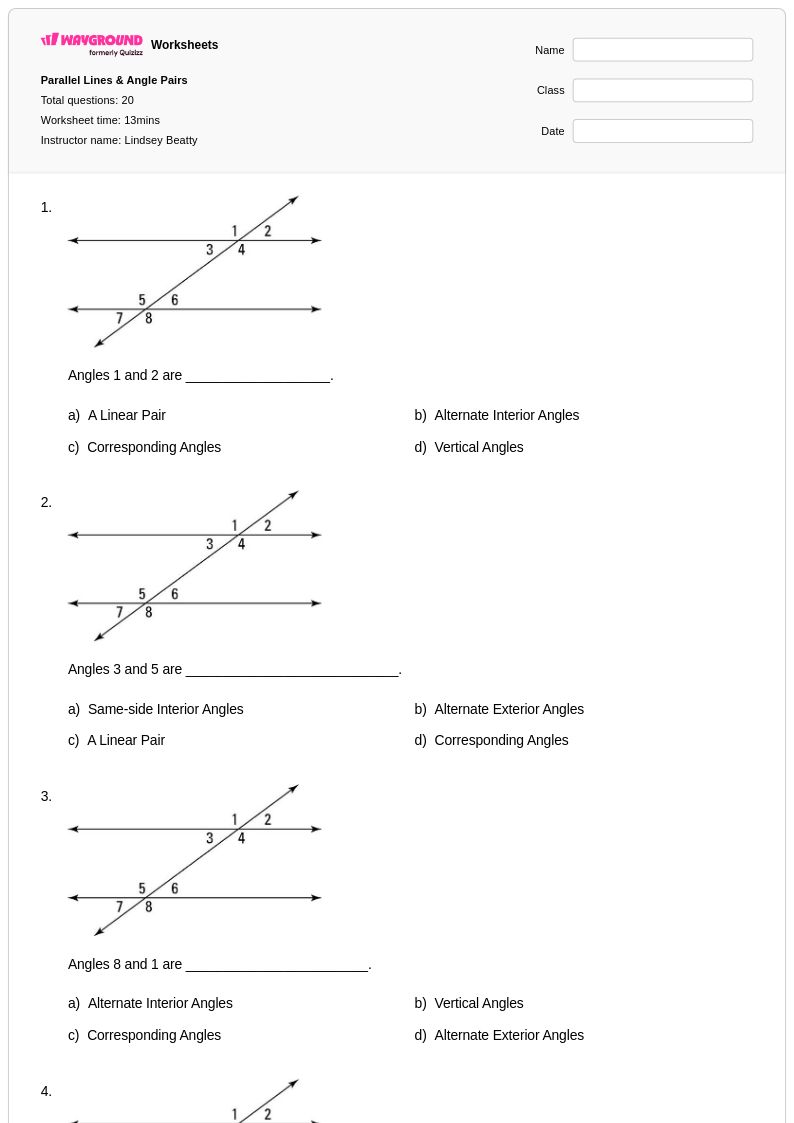
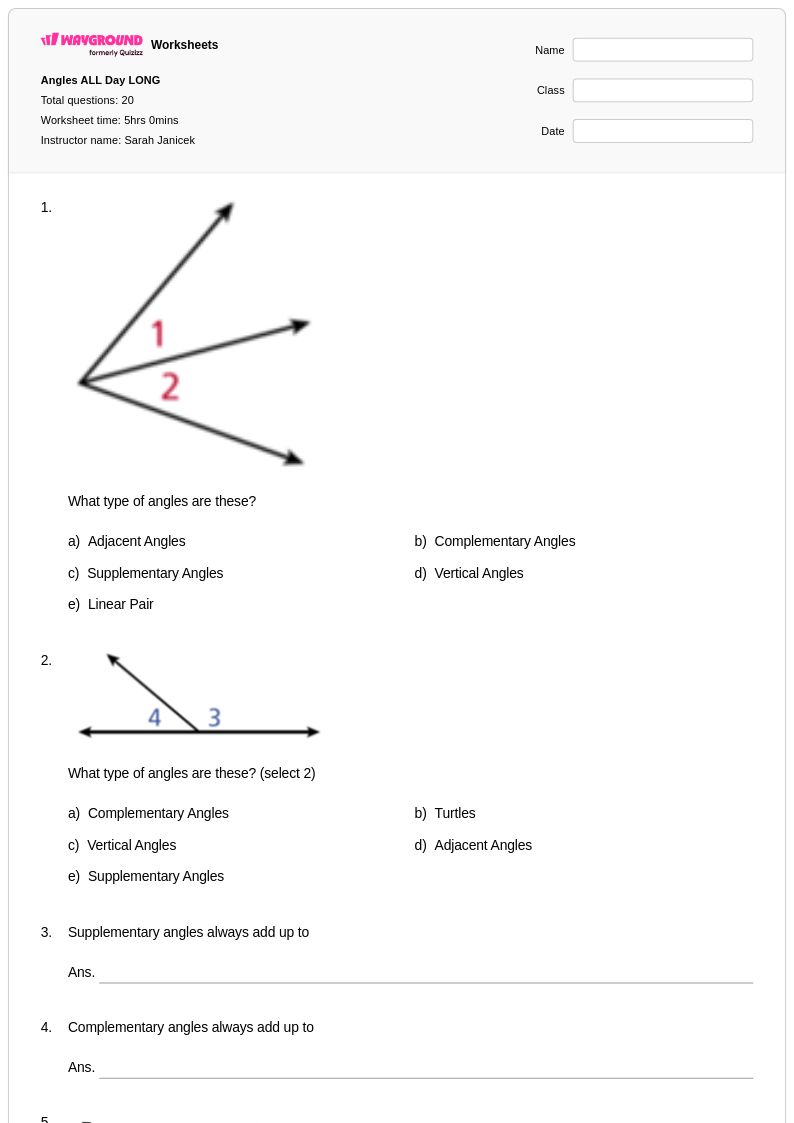
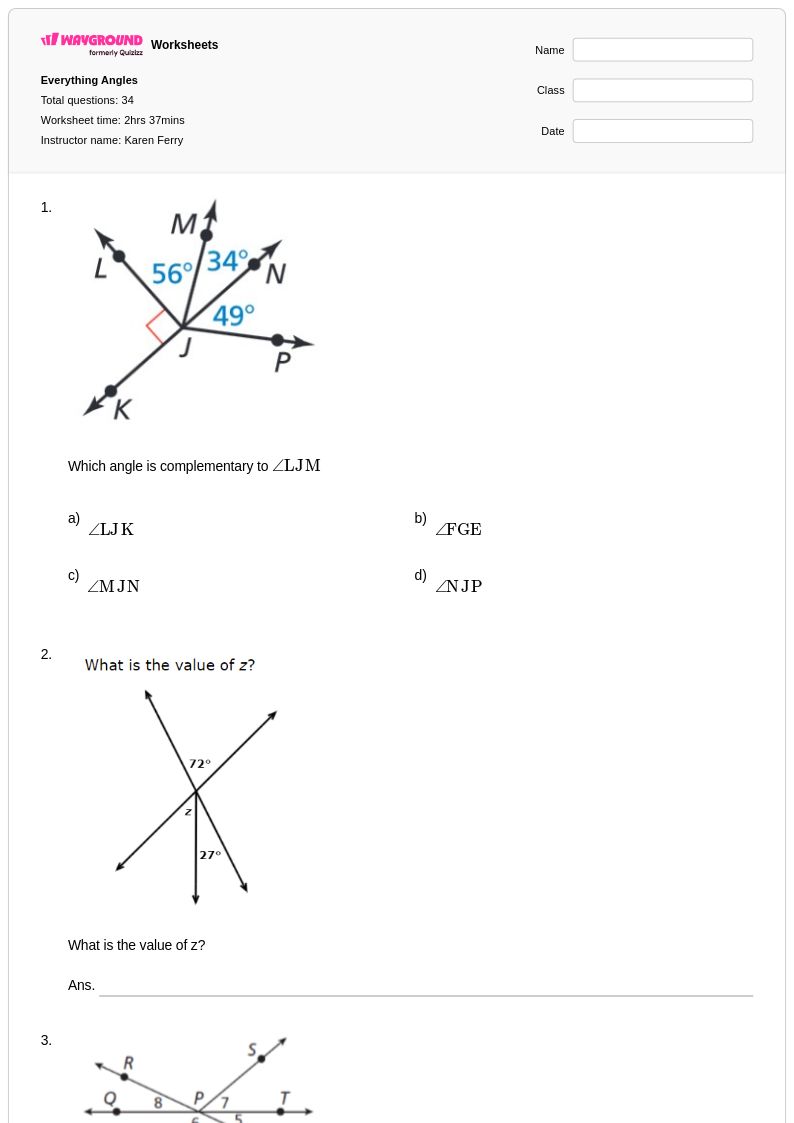
Finding quadrant of an angle worksheets available through Wayground (formerly Quizizz) provide comprehensive practice for students learning to identify the location of angles in the coordinate plane's four quadrants. These expertly designed resources strengthen essential skills in angle measurement, coordinate geometry, and spatial reasoning by guiding students through systematic approaches to determine whether angles terminate in Quadrant I, II, III, or IV. The worksheets feature varied practice problems that challenge students to work with angles in both degree and radian measures, including reference angles, coterminal angles, and angles greater than 360 degrees. Each printable worksheet includes detailed answer keys that show step-by-step solutions, making these free resources invaluable for both independent study and classroom instruction in developing quadrant identification proficiency.
Wayground (formerly Quizizz) supports mathematics educators with an extensive collection of finding quadrant of an angle worksheets created by millions of teachers worldwide, offering robust search and filtering capabilities that allow instructors to locate materials perfectly suited to their curriculum needs. The platform's standards alignment features ensure that worksheet selections support specific learning objectives, while built-in differentiation tools enable teachers to customize difficulty levels and problem types to accommodate diverse student abilities. These versatile resources are available in both printable pdf format for traditional classroom use and digital formats for online learning environments, providing educators with flexible options for lesson planning, targeted skill remediation, and enrichment activities. The comprehensive nature of these teacher-created materials streamlines preparation time while ensuring students receive focused practice in this fundamental geometry concept.
FAQs
How do I teach students to find the quadrant of an angle?
Start with the coordinate plane itself — make sure students can name the four quadrants and describe what signs the x- and y-coordinates carry in each one. Then introduce standard position: the initial side along the positive x-axis, the terminal side rotating counterclockwise for positive angles and clockwise for negative ones. Once that mental model is solid, students can determine the quadrant by asking where the terminal side lands after the rotation. For angles greater than 360°, have students find the coterminal angle first by subtracting 360° until the result falls in the 0°–360° range, then identify the quadrant from there.
What kinds of practice problems help students get better at identifying angle quadrants?
Students need exposure to several problem types before this skill sticks: positive angles in standard position (the straightforward case), negative angles that rotate clockwise, angles greater than 360° that require finding a coterminal angle first, and angles given in radians rather than degrees. These worksheets include all of those variations, so students aren't just pattern-matching on easy cases — they're building a flexible understanding of how angle measure maps to position on the coordinate plane.
What mistakes do students commonly make when finding the quadrant of an angle?
Three errors come up repeatedly. First, students forget that negative angles rotate clockwise, so they place a –90° angle in Quadrant IV instead of recognizing it lands on the negative y-axis. Second, they mishandle angles greater than 360° — they try to place 450° directly instead of reducing it to 90° first. Third, students working in radians often lose track of where π, π/2, and 3π/2 fall on the circle, leading to off-by-one-quadrant errors. Drilling coterminal angle reduction and keeping a labeled unit circle visible during early practice addresses all three.
How do I use these worksheets in my classroom?
You can run them as a digital quiz hosted on Wayground — students submit answers online and you get results immediately — or print the PDF and assign it on paper, which works well for classes where you want students off screens. Every worksheet includes a complete answer key, so students can self-check during independent practice. If you go the printable route, the Wayground for Teachers app lets you scan or photograph completed worksheets to grade them without manual tallying.
How does finding the quadrant of an angle fit into the high school math curriculum?
In Common Core-aligned courses, quadrant identification is a bridge skill. Students arrive having worked with the coordinate plane since middle school, but in high school geometry and precalculus they encounter angles in standard position for the first time — a shift from plotting points to tracking rotations. Mastering quadrant placement is a prerequisite for reference angles, and reference angles are the foundation for evaluating trigonometric functions at any angle. Without this step, the unit circle becomes a memorization exercise rather than something students can reason through.
How can I differentiate this practice for students at different skill levels?
For students who are still shaky on the coordinate plane itself, Wayground's reduced answer choices accommodation narrows the options displayed, lowering the cognitive load while they build confidence. The Read Aloud feature helps students who struggle with math vocabulary — hearing "terminal side" and "standard position" read aloud while they work reinforces the language alongside the concept. For students who need a visual scaffold, you can generate an alternate worksheet version with larger font and wider spacing so the coordinate diagrams are easier to read and annotate.